



GSK-843
Based on 8 publication(s) in Google Scholar
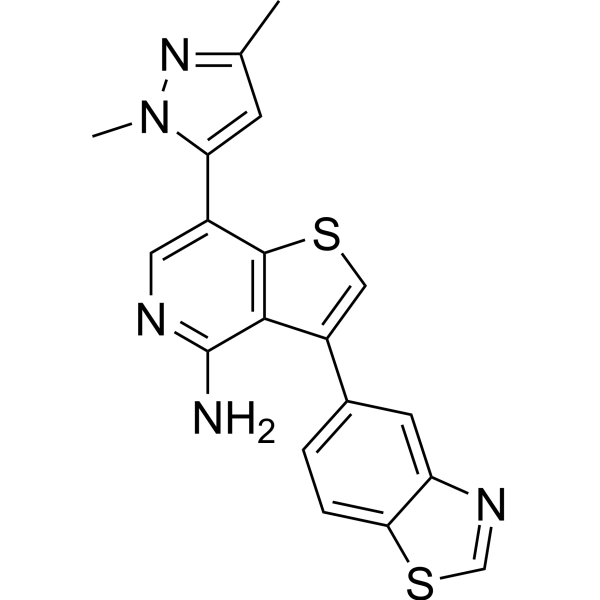
GSK-843 (GSK'843) is a receptor-interacting protein kinase 3 (RIP3 or RIPK3) inhibitor, which binds RIP3 kinase domain with an IC50 of 8.6 nM, and inhibits kinase activity with an IC50 of 6.5 nM. GSK-843 can be used for the research of inflammation.
For research use only. We do not sell to patients.
- Purity : 99.53%
- CAS No.: 1601496-05-2
- Formula: C19H15N5S2
- Molecular Weight:377.49
-
Storage:Powder -20°C, 3 years ; In solvent -80°C, 1 year , -20°C, 6 months

To place orders, for customer services and technical support, please contact: MedChemExpress USA
Tel: 609-228-6898 E-mail: [email protected] [email protected]


-
 Biological Activity
-
Chemical Information
-
Solvent & Solubility
- Protocols
- Purity & Documentation
- References
-
 Help & FAQs


-
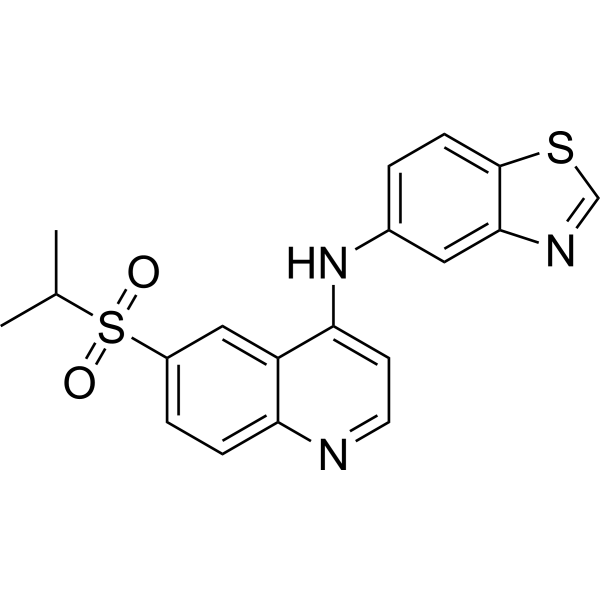
HY-101872
GSK-872RIPK3 Inhibitor -
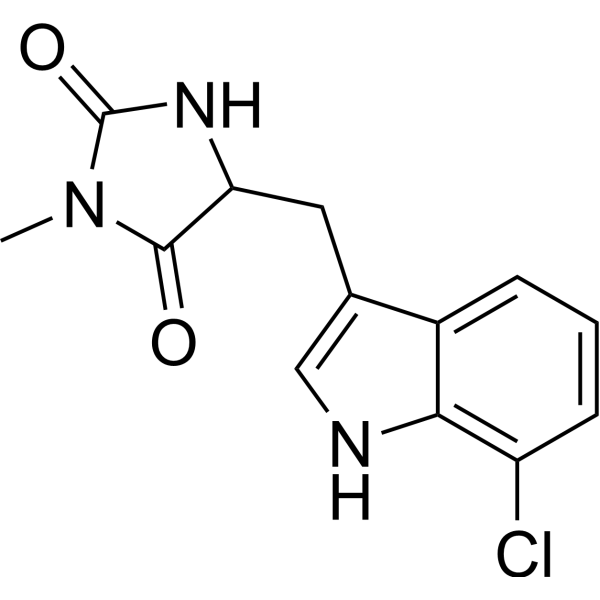
HY-14622A
Necrostatin 2 racemateRIPK1 Inhibitor -
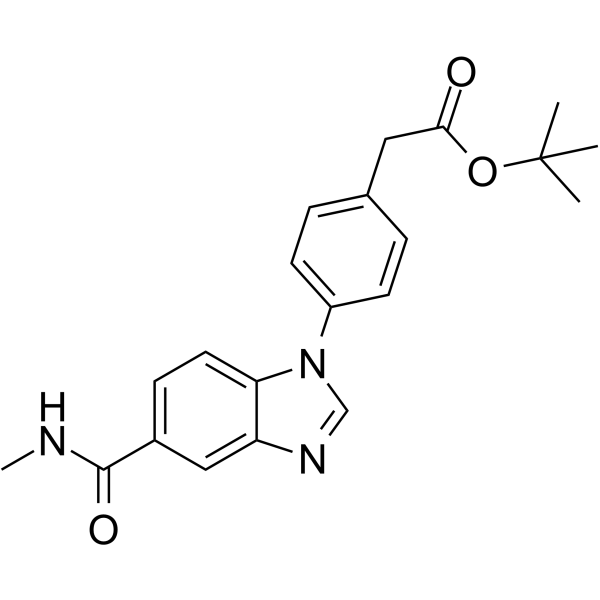
HY-104021
GSK840RIPK3 Inhibitor -
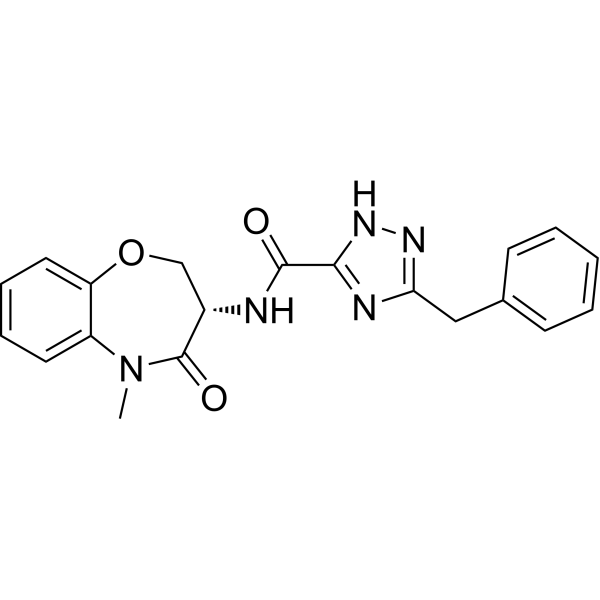
HY-101760
GSK2982772RIPK1 Inhibitor -
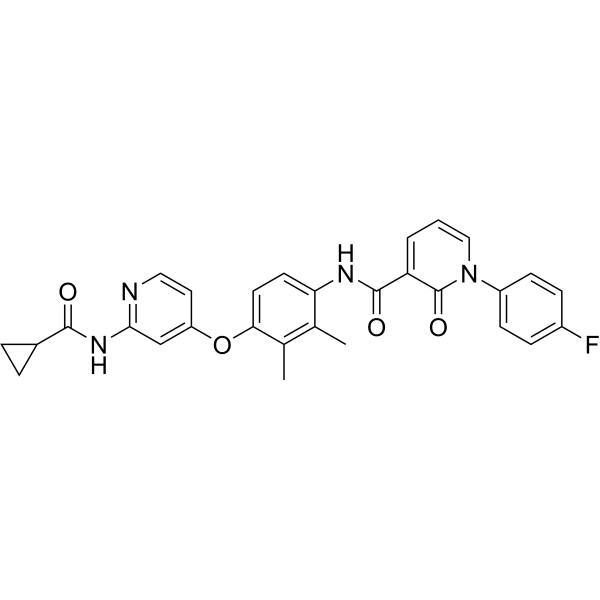
HY-131064
RIPK3-IN-1RIPK3 Inhibitor -
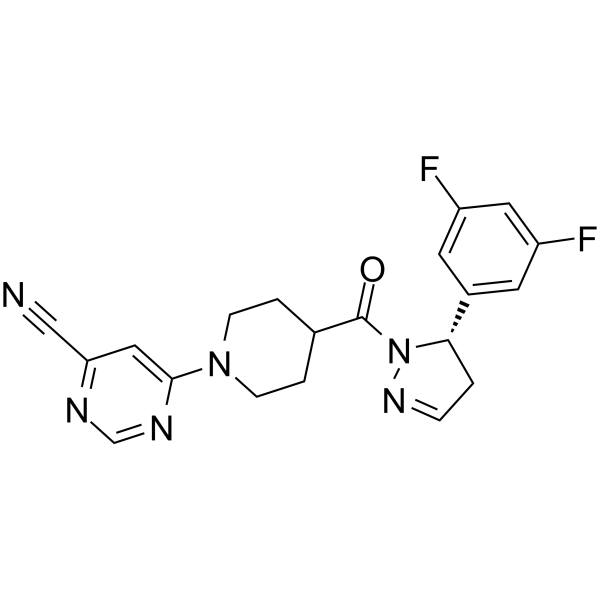
HY-114492
GSK547RIPK1 Inhibitor -
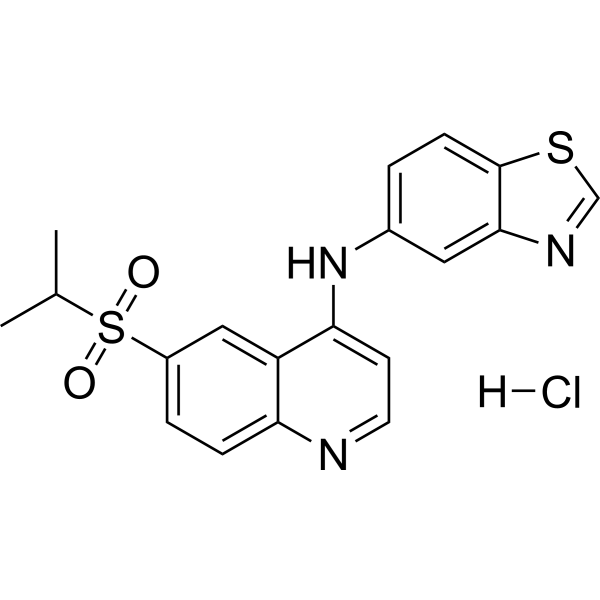
HY-101872A
GSK-872 hydrochlorideRIPK3 Inhibitor -
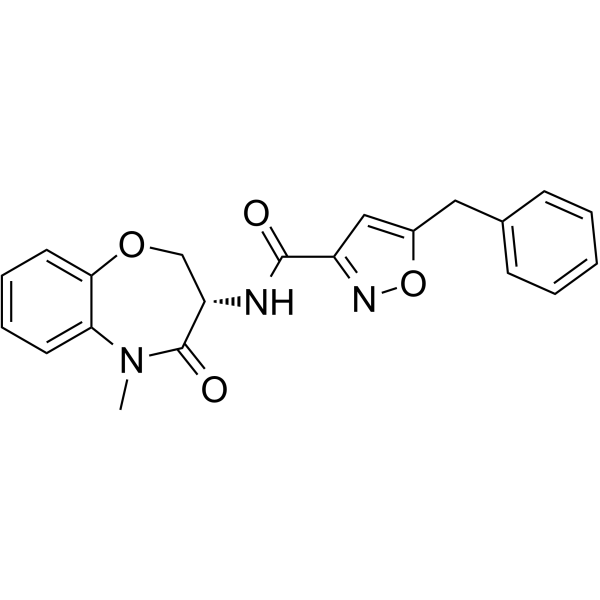
HY-100131
GSK481RIP1 Kinase Inhibitor -
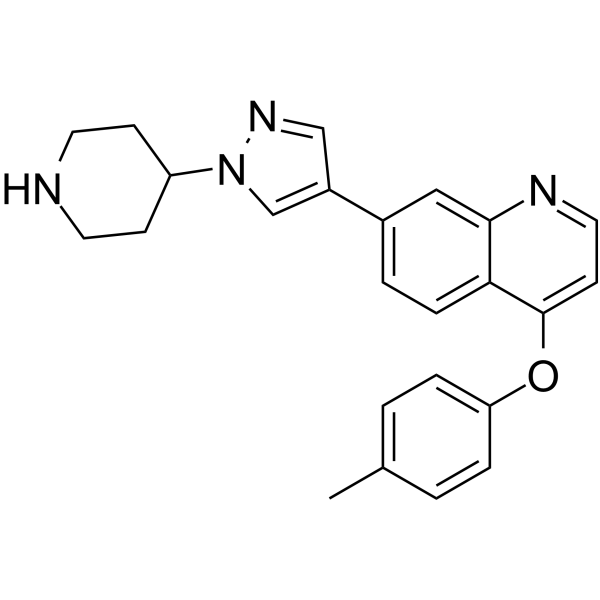
HY-114349
HS-1371RIP kinase Inhibitor -
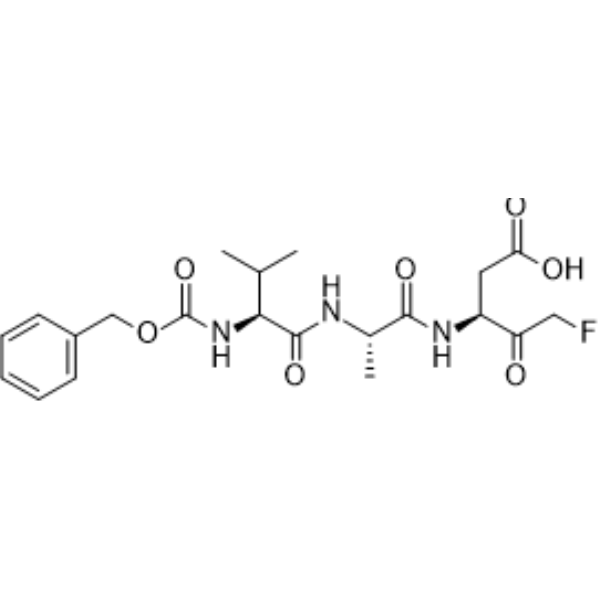
HY-16658B
Z-VAD-FMKPan-Caspase Inhibitor -
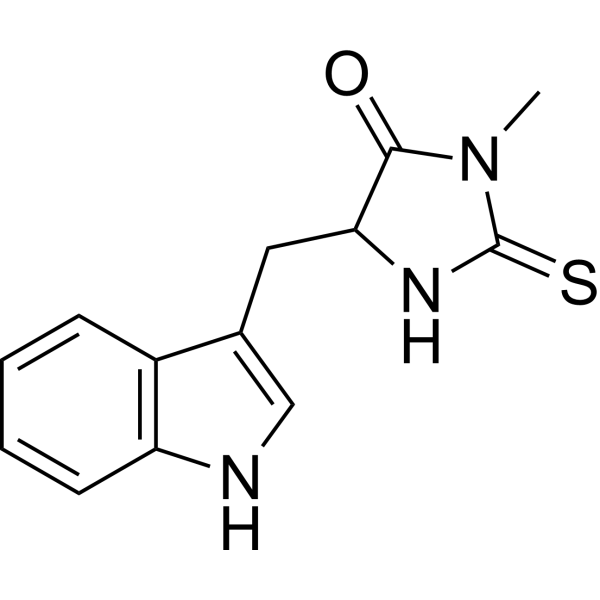
HY-15760
Necrostatin-1RIPK1 Inhibitor -
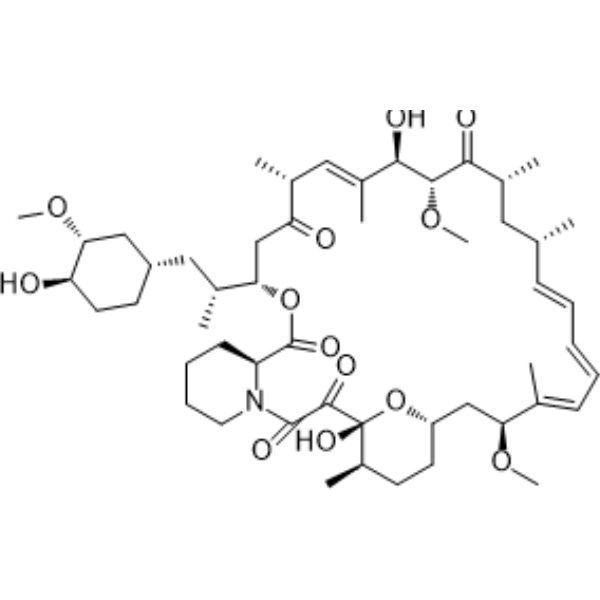
HY-10219
RapamycinmTOR Inhibitor
Publications Citing Use of MedChemExpress (MCE) GSK-843
More- Nat Commun. 2025 May 8;16(1):4288. [Abstract]
- Sci Adv. 2025 Aug 15;11(33):eadv0871. [Abstract]
- Cell Death Differ. 2025 Dec 12. [Abstract]
- Cancer Lett. 2023 Jun 28:564:216208. [Abstract]
- Cell Death Discov. 2022 Feb 26;8(1):88. [Abstract]
- Cell Rep. 2026 Mar 20;45(4):117130. [Abstract]
- Mol Immunol. 2021 Jan:129:86-93. [Abstract]
- University of Cologne. 2024.


Biological Activity
Description
IC50 & Target
|
RIPK3 |
In Vitro
GSK-843 (3-10 μM; 18 h) induces apoptosis[1]. GSK-843 (0.3-3 μM; 18 h) suppresses TNF-induced death and virus-induced cell necrosis[2].
MedChemExpress (MCE) has not independently confirmed the accuracy of these methods. They are for reference only.
-
Cell Line:SVEC, L929, 3T3SA and mouse embryo fibroblast (MEF)
-
Concentration:3 and 10 μM
-
Incubation Time:18 hours
-
Result:Decreased the cell viability of SVEC, L929, 3T3SA and MEF cells, and induced caspase activation followed by apoptotic cell death.
-
Cell Line:3T3-SA and SVEC4-10 cells
-
Concentration:0.3, 1 and 3 μM
-
Incubation Time:18 hours
-
Result:Dose-dependently suppressed TNF-induced death and virus-induced necrosis to improved cell viability.


Chemical Information
-
CAS No. 1601496-05-2
-
Appearance Solid
-
Molecular Weight 377.49
-
Formula C19H15N5S2
-
Color Light yellow to yellow
-
SMILES
NC1=NC=C(C2=CC(C)=NN2C)C3=C1C(C4=CC=C(SC=N5)C5=C4)=CS3
-
Synonyms
GSK'843
-
Shipping
Room temperature in continental US; may vary elsewhere.
-
Storage
Powder -20°C 3 years In solvent -80°C 1 year -20°C 6 months


Publications (8)
-
Journal Impact Factor
-
Most Recent
-
Nat Commun
Structure-based design of potent and selective inhibitors targeting RIPK3 for eliminating on-target toxicity in vitro. [Abstract]2025 May 8;16(1):4288. PMID: 40341069 -
Sci Adv
Reprogramming RIPK3-induced cell death in malignant B cells promotes immune-mediated tumor control. [Abstract]2025 Aug 15;11(33):eadv0871. PMID: 40815638 -
Cell Death Differ
cFLIP suppresses caspase-1- and MLKL-independent perinatal lethality driven by auto-processing impaired caspase-8 D387A. [Abstract]2025 Dec 12. PMID: 41381861 -
Cancer Lett
Myeloid-derived suppressor cells deficient in cholesterol biosynthesis promote tumor immune evasion. [Abstract]2023 Jun 28:564:216208. PMID: 37150500 -
Cell Death Discov
Loss of Ripk3 attenuated neutrophil accumulation in a lipopolysaccharide-induced zebrafish inflammatory model. [Abstract]2022 Feb 26;8(1):88. PMID: 35220408 -
Cell Rep
Autoinhibitory control of MLKL governs pseudokinase domain phosphorylation and oligomerization during necroptosis. [Abstract]2026 Mar 20;45(4):117130. PMID: 41863805 -
Mol Immunol
2021 Jan:129:86-93. PMID: 33221042 -


Solvent & Solubility
In Vitro:
DMSO : 50 mg/mL (132.45 mM; Need ultrasonic; Hygroscopic DMSO has a significant impact on the solubility of product, please use newly opened DMSO)
Please refer to the solubility information to select the appropriate solvent. Once prepared, please aliquot and store the solution to prevent product inactivation from repeated freeze-thaw cycles.
Storage method and period of stock solution: -80°C, 1 year; -20°C, 6 months. When stored at -80°C, please use it within 1 year. When stored at -20°C, please use it within 6 months.
Please refer to the solubility information to select the appropriate solvent. Once prepared, please aliquot and store the solution to prevent product inactivation from repeated freeze-thaw cycles.
Storage method and period of stock solution: -80°C, 1 year; -20°C, 6 months. When stored at -80°C, please use it within 1 year. When stored at -20°C, please use it within 6 months.
Concentration (start) × Volume (start) = Concentration (final) × Volume (final)
In Vivo:
Select the appropriate dissolution method based on your experimental animal and administration route.
- For the following dissolution methods, please ensure to first prepare a clear stock solution using an In Vitro approach and then sequentially add co-solvents:
- To ensure reliable experimental results, the clarified stock solution can be appropriately stored based on storage conditions. As for the working solution for In Vivo experiments, it is recommended to prepare freshly and use it on the same day.
- The percentages shown for the solvents indicate their volumetric ratio in the final prepared solution. If precipitation or phase separation occurs during preparation, heat and/or sonication can be used to aid dissolution.
Add each solvent one by one: 10% DMSO 90% (20% SBE-β-CD in Saline)
Solubility: 4.8 mg/mL (12.72 mM); Suspended solution; Need ultrasonic
This protocol yields a suspended solution of 4.8 mg/mL. Suspended solution can be used for oral and intraperitoneal injection.
Taking 1 mL working solution as an example, add 100 μL DMSO stock solution (48.0 mg/mL) to 900 μL 20% SBE-β-CD in Saline, and mix evenly.
Preparation of 20% SBE-β-CD in Saline (4°C, storage for one week): 2 g SBE-β-CD powder is dissolved in 10 mL Saline, completely dissolve until clear.
Add each solvent one by one: 10% DMSO 40% PEG300 5% Tween-80 45% Saline
Solubility: ≥ 2.08 mg/mL (5.51 mM); Clear solution
This protocol yields a clear solution of ≥ 2.08 mg/mL (saturation unknown).
Taking 1 mL working solution as an example, add 100 μL DMSO stock solution (20.8 mg/mL) to 400 μL PEG300, and mix evenly; then add 50 μL Tween-80 and mix evenly; then add 450 μL Saline to adjust the volume to 1 mL.
Preparation of Saline: Dissolve 0.9 g sodium chloride in ddH₂O and dilute to 100 mL to obtain a clear Saline solution.
In Vivo Dissolution Calculator
Please enter the basic information of animal experiments:
-
-
-
-
Recommended: Prepare an additional quantity of animals to account for potential losses during experiments.
Please enter your animal formula composition:
-
%DMSO +
Recommended: Keep the proportion of DMSO in working solution below 2% if your animal is weak.
-
%+
-
+%Tween-80 + +
-
%Saline +
The co-solvents required include: DMSO, . All of co-solvents are available by MedChemExpress (MCE). , Tween 80. All of co-solvents are available by MedChemExpress (MCE).
Working solution concentration: 0.22 mg/mL
Method for preparing stock solution: mg drug dissolved in μL DMSO. Stock solution concentration: mg/mL.
1. Take μL DMSO stock solution;
2. Add μL .
μL , mix evenly;
3. Then add μL Tween 80, mix evenly;
4. Then add μL
Please ensure that the stock solution in the first step is dissolved to a clear state, and add co-solvents in sequence. You can use ultrasonic heating (ultrasonic cleaner, recommended frequency 20-40 kHz), vortexing, etc. to assist dissolution.


Purity & Documentation
-
Data Sheet (278 KB)
-
SDS (251 KB)
- English - EN (251 KB)
- Français - FR (251 KB)
- Deutsch - DE (251 KB)
- Norwegian - NO (251 KB)
- Español - ES (251 KB)
- Swedish - SV (251 KB)
- Italian - IT (251 KB)
- Korean - KR (251 KB)
- Portuguese - PT (251 KB)
-
Handling Instructions (2659 KB)
References


Complete Stock Solution Preparation Table
Please refer to the solubility information to select the appropriate solvent. Once prepared, please aliquot and store the solution to prevent product inactivation from repeated freeze-thaw cycles.
Storage method and period of stock solution: -80°C, 1 year; -20°C, 6 months. When stored at -80°C, please use it within 1 year. When stored at -20°C, please use it within 6 months.
| Optional Solvent | Concentration Solvent Mass | 1 mg | 5 mg | 10 mg | 25 mg |
|---|---|---|---|---|---|
| DMSO | 1 mM | 2.6491 mL | 13.2454 mL | 26.4908 mL | 66.2269 mL |
| 5 mM | 0.5298 mL | 2.6491 mL | 5.2982 mL | 13.2454 mL | |
| 10 mM | 0.2649 mL | 1.3245 mL | 2.6491 mL | 6.6227 mL | |
| 15 mM | 0.1766 mL | 0.8830 mL | 1.7661 mL | 4.4151 mL | |
| 20 mM | 0.1325 mL | 0.6623 mL | 1.3245 mL | 3.3113 mL | |
| 25 mM | 0.1060 mL | 0.5298 mL | 1.0596 mL | 2.6491 mL | |
| 30 mM | 0.0883 mL | 0.4415 mL | 0.8830 mL | 2.2076 mL | |
| 40 mM | 0.0662 mL | 0.3311 mL | 0.6623 mL | 1.6557 mL | |
| 50 mM | 0.0530 mL | 0.2649 mL | 0.5298 mL | 1.3245 mL | |
| 60 mM | 0.0442 mL | 0.2208 mL | 0.4415 mL | 1.1038 mL | |
| 80 mM | 0.0331 mL | 0.1656 mL | 0.3311 mL | 0.8278 mL | |
| 100 mM | 0.0265 mL | 0.1325 mL | 0.2649 mL | 0.6623 mL |


GSK-843 Related Classifications
HY-125402 Related Classifications
 Powered by Bioz