



Anti-inflammatory agent 35
Based on 1 publication(s) in Google Scholar
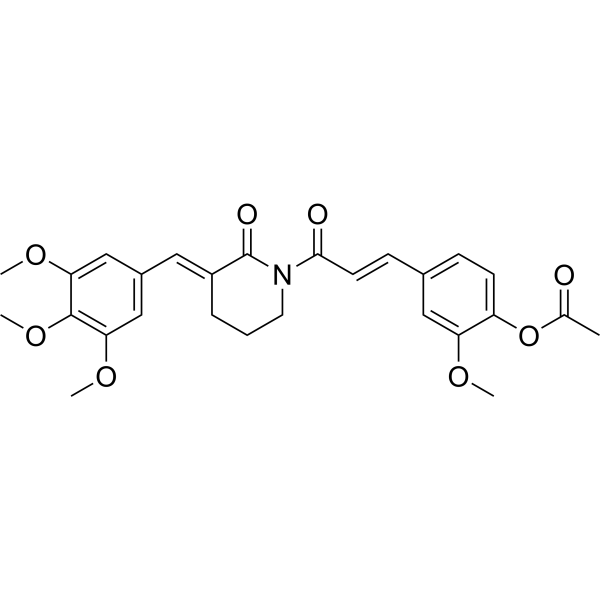
Anti-inflammatory agent 35 (compound 5a27) is an orally active curcumin analogue with anti-inflammatory activity. Anti-inflammatory agent 35 blocks mitogen-activated protein kinase (MAPK) signaling and p65 nuclear translocation of NF-kB. Anti-inflammatory agent 35 also inhibits yellow neutrophil infiltration and pro-inflammatory cytokine production. Anti-inflammatory agent 35 significantly attenuates lipopolysaccharide (LPS)-induced acute lung injury (ALI) in vivo.
For research use only. We do not sell to patients.
- Purity : 99.77%
- CAS No.: 2293951-00-3
- Formula: C27H29NO8
- Molecular Weight:495.52
-
Storage:
4°C, protect from light
* In solvent : -80°C, 6 months; -20°C, 1 month (protect from light)

To place orders, for customer services and technical support, please contact: MedChemExpress USA
Tel: 609-228-6898 E-mail: [email protected] [email protected]


-
 Biological Activity
-
Chemical Information
-
Solvent & Solubility
- Protocols
- Purity & Documentation
- References
-
 Help & FAQs


-
HY-N0188
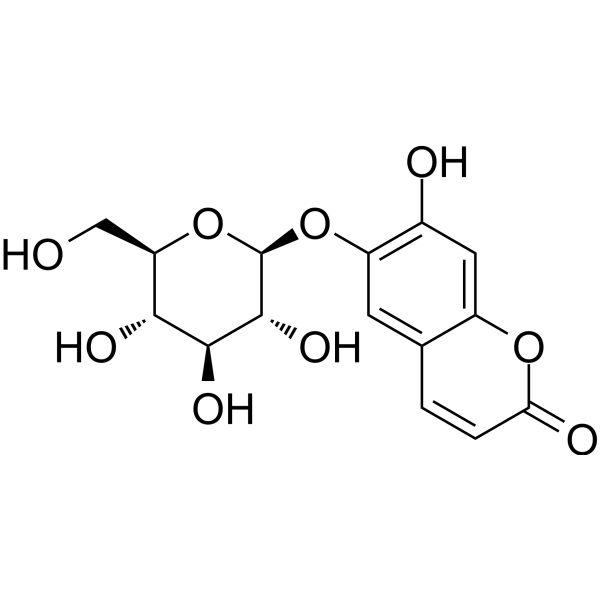
Esculinp38 MAPK Inhibitor -
HY-N0262
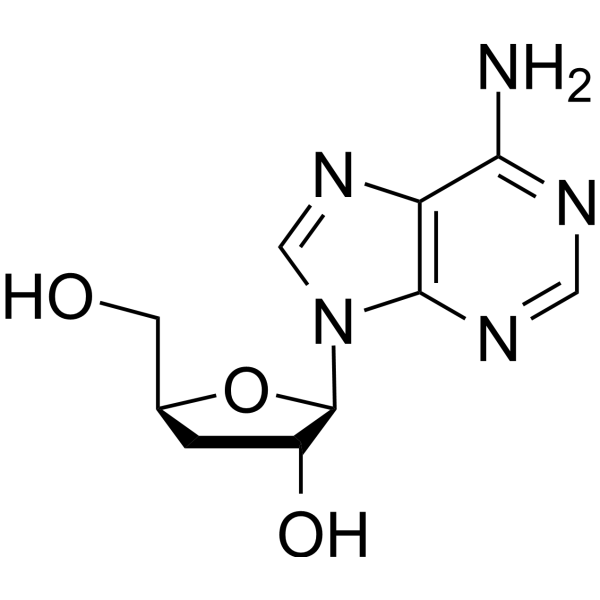
CordycepinBacterial Inhibitor -
HY-152860
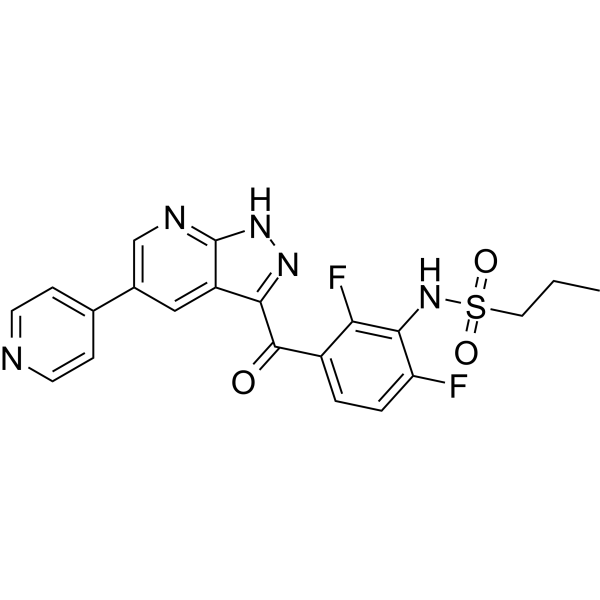
DarizmetinibMAP2K Inhibitor -
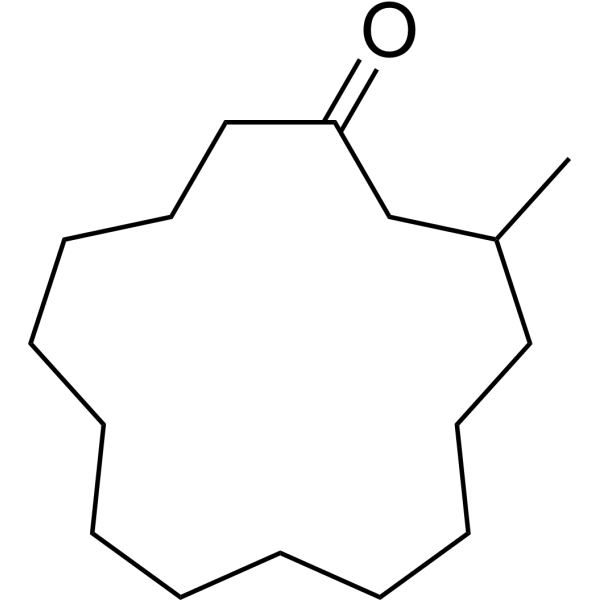
HY-N0633
MusconeTNF Receptor Inhibitor -
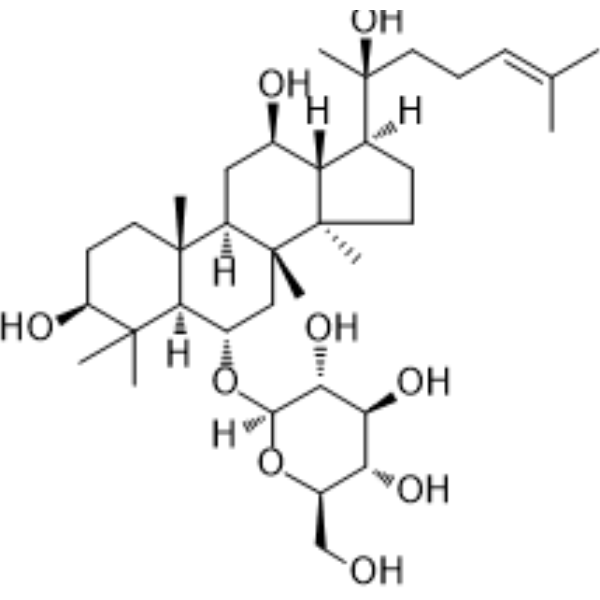
HY-N0604
Ginsenoside Rh1Endogenous Metabolite -

HY-Y1322
Triphenyl phosphateEndocrine Disruptor -
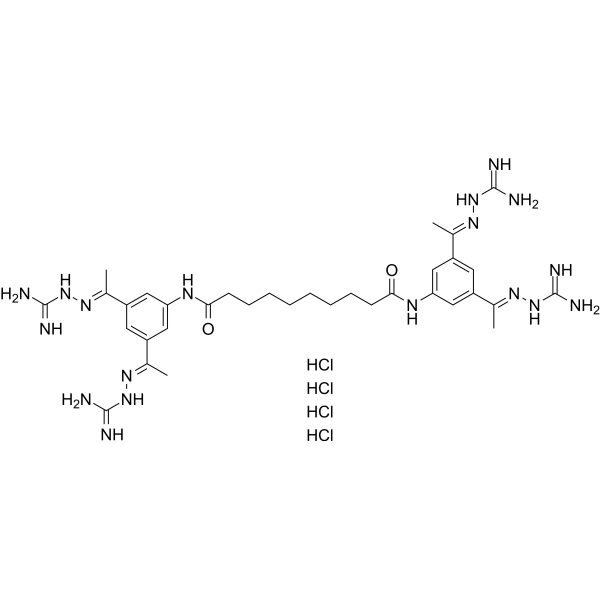
HY-15509A
Semapimod tetrahydrochlorideProinflammatory Cytokine Inhibitor -
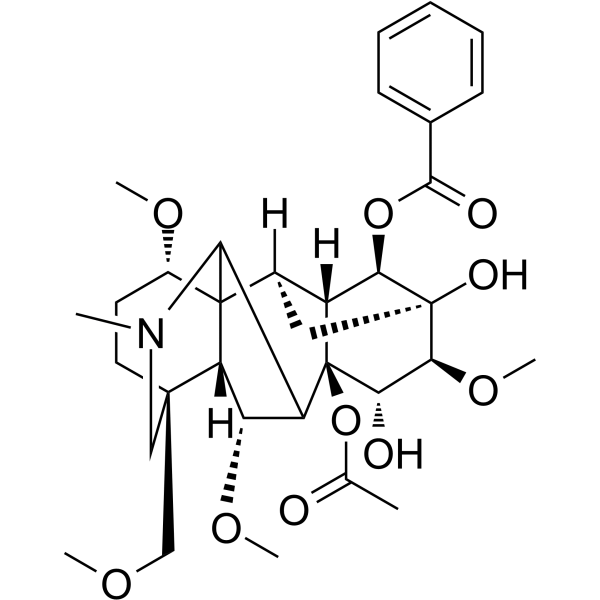
HY-N0267
HypaconitineTNF Receptor Inhibitor -

HY-N0262R
Cordycepin (Standard)Bacterial Inhibitor -
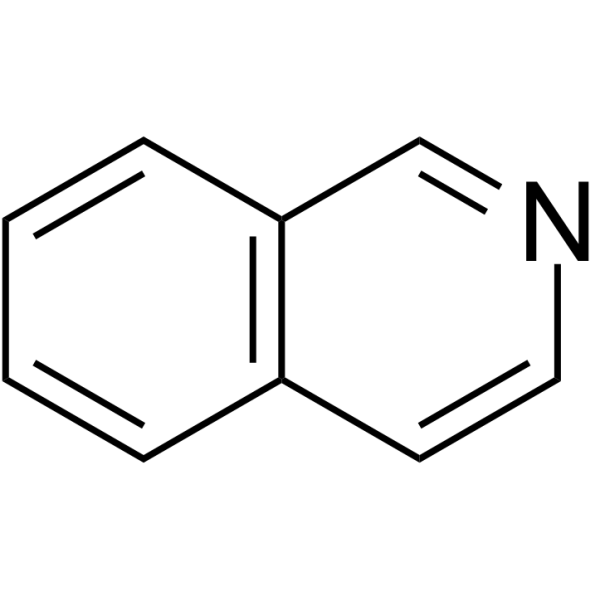
HY-W012732
IsoquinolineAlkaloid -
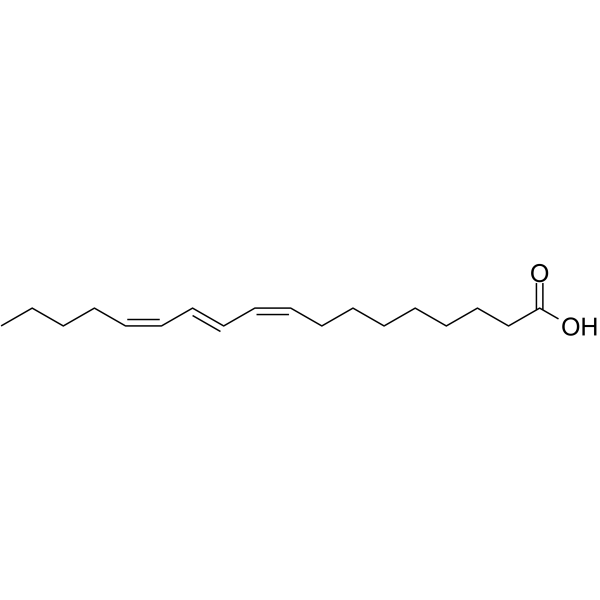
HY-139066
Punicic acidBioactive Compound -
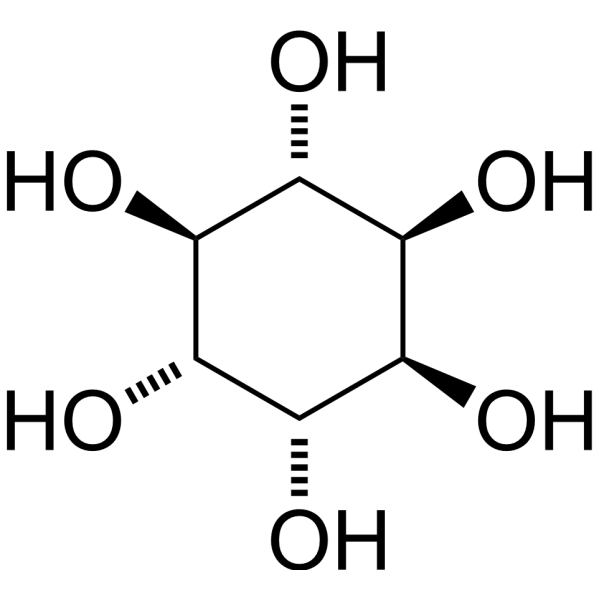
HY-N3021
D-chiro-InositolEndogenous Metabolite
Publications Citing Use of MedChemExpress (MCE) Anti-inflammatory agent 35
More

Biological Activity
Description
IC50 & Target
[1]|
p38 MAPK |
ERK |
I-kappaBalpha |
IL-6 |
p65 |
NF-κB |
Cellular Effect
|
Cell Line

|
Type | Value | Description | References |
|---|---|---|---|---|
| RAW264.7 | IC50 |
2.33 μM
Compound: 5a27
|
Inhibition of MAPK/NFkappaB in ICR mouse RAW264.7 cells assessed as reduction in LPS-induced TNFalpha production pretreated for 0.5 hrs followed by LPS challenge and measured after 24 hrs by ELISA
Inhibition of MAPK/NFkappaB in ICR mouse RAW264.7 cells assessed as reduction in LPS-induced TNFalpha production pretreated for 0.5 hrs followed by LPS challenge and measured after 24 hrs by ELISA
|
[PMID: 30780088] |
| RAW264.7 | IC50 |
2.4 μM
Compound: 5a27
|
Inhibition of MAPK/NFkappaB in ICR mouse RAW264.7 cells assessed as reduction in LPS-induced IL6 production pretreated for 0.5 hrs followed by LPS challenge and measured after 24 hrs by ELISA
Inhibition of MAPK/NFkappaB in ICR mouse RAW264.7 cells assessed as reduction in LPS-induced IL6 production pretreated for 0.5 hrs followed by LPS challenge and measured after 24 hrs by ELISA
|
[PMID: 30780088] |
In Vitro
Anti-inflammatory agent 35 (compound 5a27) (10 μM; 30 min) inhibits the production of proinflammatory cytokines (IL-6, TNF-α) induced by LPS (0.5 μg/mL; 24 h) without cytotoxicity in mouse primary macrophages (MPMs). Anti-inflammatory agent 35 inhibits the production of IL-6, TNF-α with IC50s of 2.23 μM and 2.40 μM, respectively[1].
Anti-inflammatory agent 35 (10 μM; 30 min) significantly inhibits LPS-induced activation in RAW 264.7 mouse macrophages. And it markedly inhibits p-p38 and p-ERK, decreases IκB level, indicating the suppression of MAPK and NF-κB signaling[1].
MedChemExpress (MCE) has not independently confirmed the accuracy of these methods. They are for reference only.
-
Cell Line:RAW 264.7 mouse macrophages
-
Concentration:10 μM
-
Incubation Time:30 min; followed by incubation with 0.5 μg/mL LPS for another 30 min
-
Result:Decreased the phosphorylation of p38 and ERK. And down-regulated IκB (inhibitor of NF-κB), inhibits the transcription of TNF-α, IL-6, IL-1β, ICAM-1.
In Vivo
Anti-inflammatory agent 35 (10 mg/kg; ip; once daily for 1 week) improves LPS-induced ALI by inhibiting inflammation in mice model[1].
The pharmacokinetic parameters in rats[1]
| Route | Dose (mg/kg) | AUC(0-t) (μg/L·h) | AUC(0-∞) (μg/L·h) | MRT(0-t) (h) | MRT(0-∞) (h) | t1/2 (h) | Tmax (h) | CLz/F (L/h/kg) | Vz/F (L/kg) | Cmax |
| p.o | 50 | 231.2 | 325.6 | 7.8 | 12.3 | 6.7 | 3.3 | 5062.6 | 827.1 | 113.3 |
| i.v | 5 | 34.3 | 122.4 | 11.3 | 19.9 | 0.2 | 0.1 | 404.4 | 59.5 | 16.4 |
MedChemExpress (MCE) has not independently confirmed the accuracy of these methods. They are for reference only.
-
Animal Model:ALI mouse model (C57BL/6 mice)[1]
-
Dosage:10 mg/kg
-
Administration:Intraperitoneal injection, once daily for 1 week; 30 min later every dose, followed by 5 mg/kg LPS, intratracheal injection
-
Result:Significantly normalized the wet/dry ratio of lungs.


Chemical Information
-
CAS No. 2293951-00-3
-
Appearance Solid
-
Molecular Weight 495.52
-
Formula C27H29NO8
-
Color White to off-white
-
SMILES
CC(OC1=CC=C(/C=C/C(N2C(/C(CCC2)=C/C3=CC(OC)=C(OC)C(OC)=C3)=O)=O)C=C1OC)=O
-
Shipping
Room temperature in continental US; may vary elsewhere.
-
Storage
4°C, protect from light
* In solvent : -80°C, 6 months; -20°C, 1 month (protect from light)


Publications (1)
-
Journal Impact Factor
-
Most Recent
-
Virology
Anti-inflammatory agent 35 reduces ASFV replication by suppressing the nuclear translocation of p65. [Abstract]2025 Oct:611:110664. PMID: 40848492


Solvent & Solubility
In Vitro:
DMSO : 16.67 mg/mL (33.64 mM; ultrasonic and warming and heat to 60°C; Hygroscopic DMSO has a significant impact on the solubility of product, please use newly opened DMSO)
Please refer to the solubility information to select the appropriate solvent. Once prepared, please aliquot and store the solution to prevent product inactivation from repeated freeze-thaw cycles.
Storage method and period of stock solution: -80°C, 6 months; -20°C, 1 month (protect from light). When stored at -80°C, please use it within 6 months. When stored at -20°C, please use it within 1 month.
Please refer to the solubility information to select the appropriate solvent. Once prepared, please aliquot and store the solution to prevent product inactivation from repeated freeze-thaw cycles.
Storage method and period of stock solution: -80°C, 6 months; -20°C, 1 month (protect from light). When stored at -80°C, please use it within 6 months. When stored at -20°C, please use it within 1 month.
Concentration (start) × Volume (start) = Concentration (final) × Volume (final)
In Vivo:
Select the appropriate dissolution method based on your experimental animal and administration route.
- For the following dissolution methods, please ensure to first prepare a clear stock solution using an In Vitro approach and then sequentially add co-solvents:
- To ensure reliable experimental results, the clarified stock solution can be appropriately stored based on storage conditions. As for the working solution for In Vivo experiments, it is recommended to prepare freshly and use it on the same day.
- The percentages shown for the solvents indicate their volumetric ratio in the final prepared solution. If precipitation or phase separation occurs during preparation, heat and/or sonication can be used to aid dissolution.
In Vivo Dissolution Calculator
Please enter the basic information of animal experiments:
-
-
-
-
Recommended: Prepare an additional quantity of animals to account for potential losses during experiments.
Please enter your animal formula composition:
-
%DMSO +
Recommended: Keep the proportion of DMSO in working solution below 2% if your animal is weak.
-
%+
-
+%Tween-80 + +
-
%Saline +
The co-solvents required include: DMSO, . All of co-solvents are available by MedChemExpress (MCE). , Tween 80. All of co-solvents are available by MedChemExpress (MCE).
Working solution concentration: 0.22 mg/mL
Method for preparing stock solution: mg drug dissolved in μL DMSO. Stock solution concentration: mg/mL. * In solvent : -80°C, 6 months; -20°C, 1 month (protect from light)
1. Take μL DMSO stock solution;
2. Add μL .
μL , mix evenly;
3. Then add μL Tween 80, mix evenly;
4. Then add μL
Please ensure that the stock solution in the first step is dissolved to a clear state, and add co-solvents in sequence. You can use ultrasonic heating (ultrasonic cleaner, recommended frequency 20-40 kHz), vortexing, etc. to assist dissolution.


Purity & Documentation
-
Data Sheet (277 KB)
-
SDS (252 KB)
- English - EN (252 KB)
- Français - FR (252 KB)
- Deutsch - DE (252 KB)
- Norwegian - NO (252 KB)
- Español - ES (252 KB)
- Swedish - SV (252 KB)
- Italian - IT (252 KB)
- Korean - KR (252 KB)
- Portuguese - PT (252 KB)
-
Handling Instructions (2659 KB)
References


Complete Stock Solution Preparation Table
Please refer to the solubility information to select the appropriate solvent. Once prepared, please aliquot and store the solution to prevent product inactivation from repeated freeze-thaw cycles.
Storage method and period of stock solution: -80°C, 6 months; -20°C, 1 month (protect from light). When stored at -80°C, please use it within 6 months. When stored at -20°C, please use it within 1 month.
| Optional Solvent | Concentration Solvent Mass | 1 mg | 5 mg | 10 mg | 25 mg |
|---|---|---|---|---|---|
| DMSO | 1 mM | 2.0181 mL | 10.0904 mL | 20.1808 mL | 50.4521 mL |
| 5 mM | 0.4036 mL | 2.0181 mL | 4.0362 mL | 10.0904 mL | |
| 10 mM | 0.2018 mL | 1.0090 mL | 2.0181 mL | 5.0452 mL | |
| 15 mM | 0.1345 mL | 0.6727 mL | 1.3454 mL | 3.3635 mL | |
| 20 mM | 0.1009 mL | 0.5045 mL | 1.0090 mL | 2.5226 mL | |
| 25 mM | 0.0807 mL | 0.4036 mL | 0.8072 mL | 2.0181 mL | |
| 30 mM | 0.0673 mL | 0.3363 mL | 0.6727 mL | 1.6817 mL |


Anti-inflammatory agent 35 Related Classifications
HY-148552 Related Classifications
 Powered by Bioz