



cRIPGBM chloride

Based on 1 Customer Validation
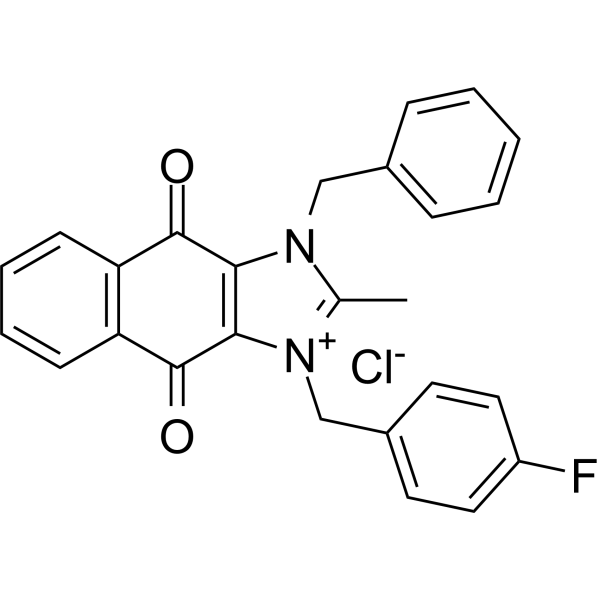
cRIPGBM chloride, an orally active, proapoptotic derivative. cRIPGBM can be generated from glioblastoma multiforme (GBM) cancer stem cells (CSCs). cRIPGBM(chloride) targets to receptor-interacting protein kinase 2 (RIPK2) to induce caspase 1-dependent apoptosis. cRIPGBM(chloride) suppresses the formation of RIPK2/TAK1 (prosurvival complex), and increases the formation of RIPK2/caspase 1 (proapoptotic complex). cRIPGBM(chloride) exerts potent anti-tumor activity in vivo in animal models.
Nur für Forschungszwecke. Wir verkaufen nicht an Patienten.
- Reinheit : 99.82%
- CAS. Nr.: 2361988-77-2
- Formel: C26H20ClFN2O2
- Molecular Weight:446.90
-
Speicherung:
4°C, sealed storage, away from moisture
* In solvent : -80°C, 6 months; -20°C, 1 month (sealed storage, away from moisture)

To place orders, for customer services and technical support, please contact: MedChemExpress USA
Tel: 609-228-6898 E-mail: [email protected] [email protected]


-
 Biologische Aktivität
-
Chemical Information
-
Lösungsmittel & Löslichkeit
- Protokoll
- Reinheit & Dokumentation
- Verweise
-
 Help & FAQs


-
HY-122910
RIPGBMApoptosis Inducer -
HY-B0006
Carvedilolβ/α-1 Blocker -
HY-18343A
CP-31398 dihydrochloridep53 Stabilizer -
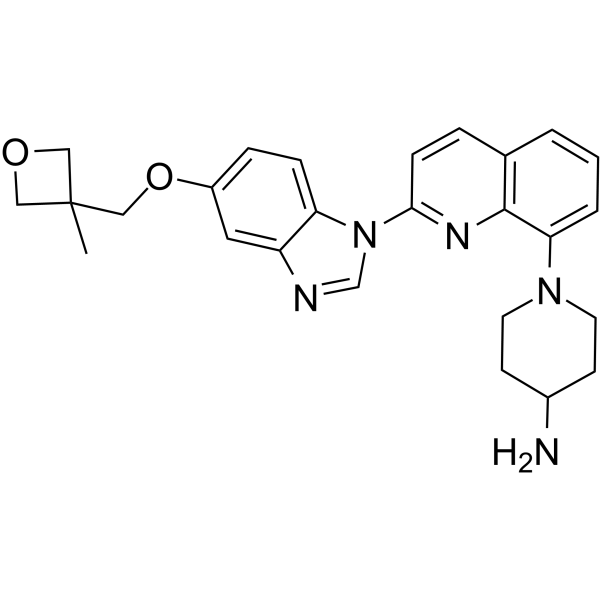
HY-13223
CrenolanibFLT3 Inhibitor -
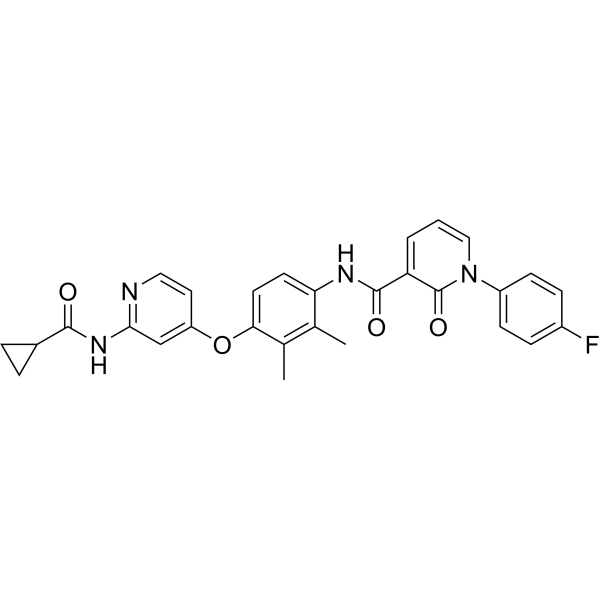
HY-131064
RIPK3-IN-1RIPK3 Inhibitor -
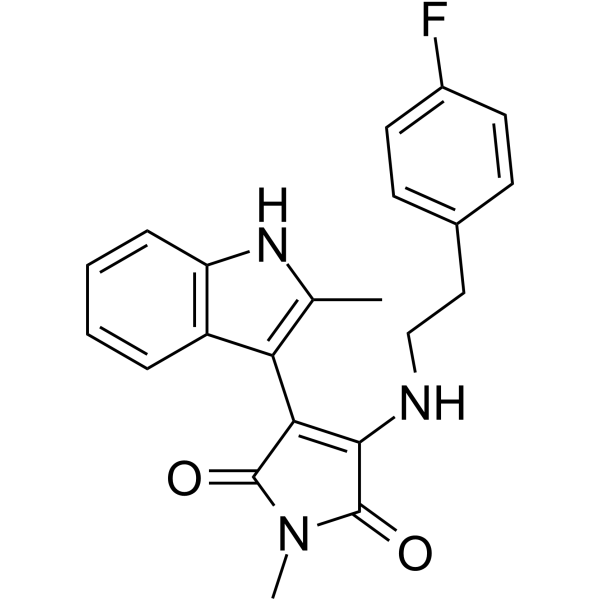
HY-12292
IM-12GSK-3β Inhibitor -
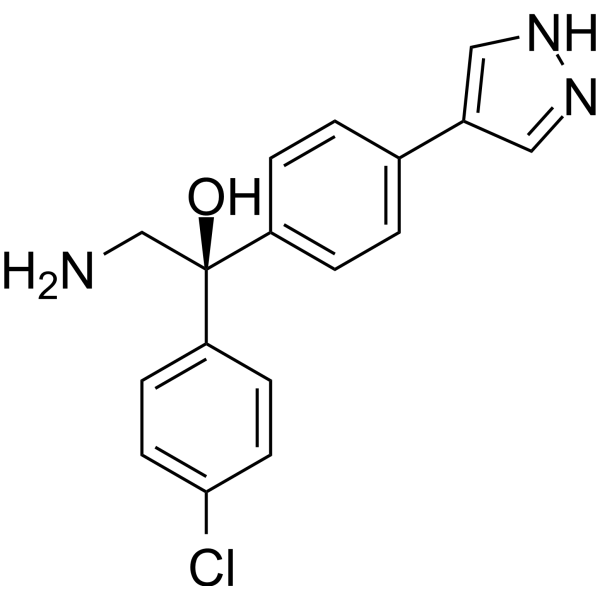
HY-16071
AT13148AGC Kinase Inhibitor -
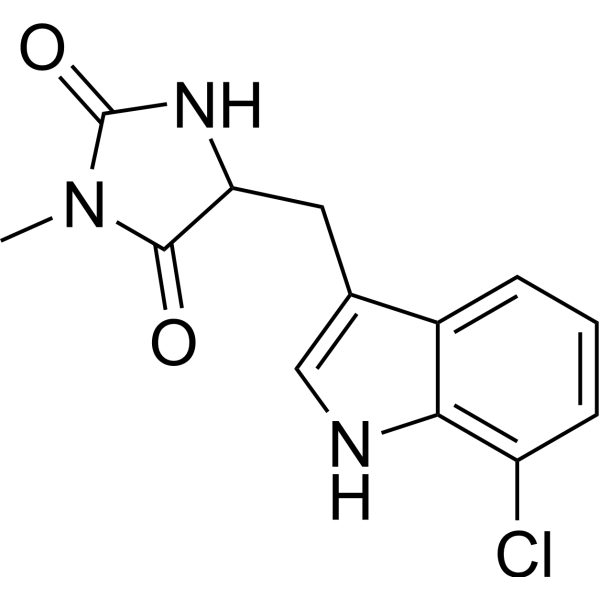
HY-14622A
Necrostatin 2 racemateRIPK1 Inhibitor -
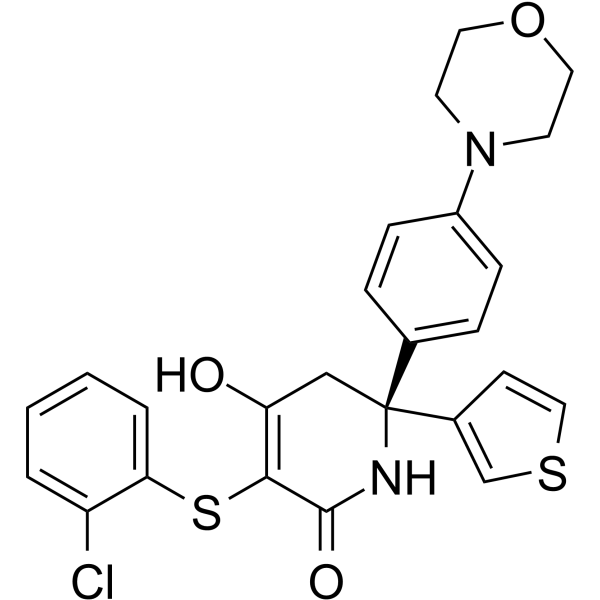
HY-100742B
(S)-GNE-140LDHA/LDHB Inhibitor -
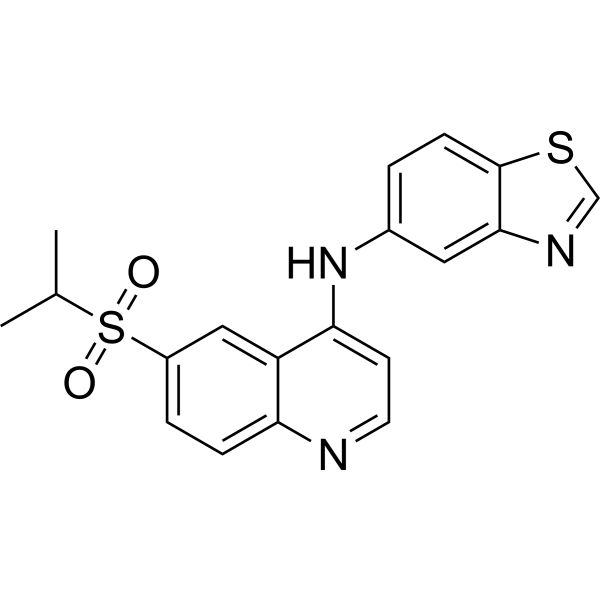
HY-101872
GSK-872RIPK3 Inhibitor -
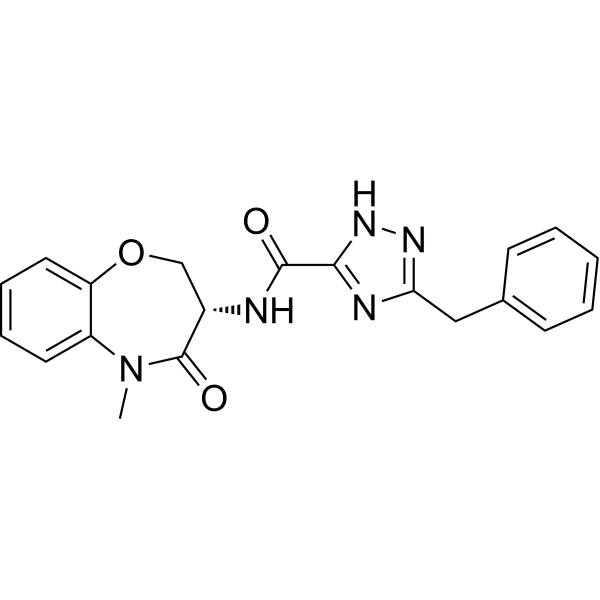
HY-101760
GSK2982772RIPK1 Inhibitor -
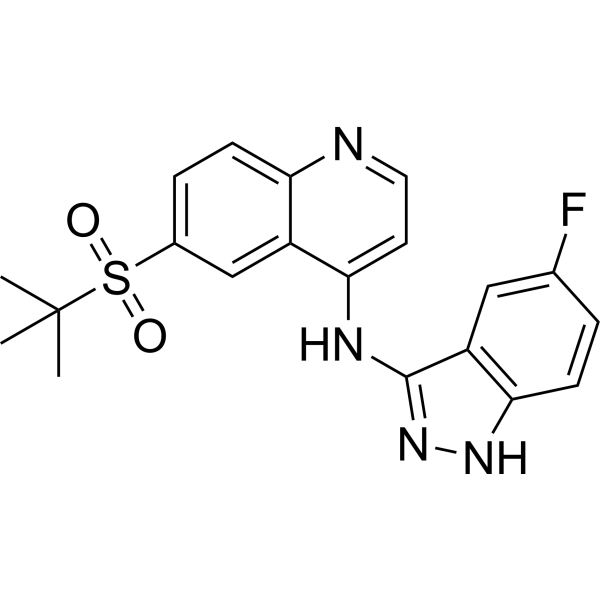
HY-100339
GSK583RIPK2 Inhibitor
Alle Caspase Isoform-spezifische Produkte anzeigen
More

Biologische Aktivität
Beschreibung
IC50 & Target
[1]|
Caspase-1 |
RIPK2 |
In Vitro
cRIPGBM chloride (0.25 μM; 0-24 h) time-dependently activates caspase 1, caspase 9, and caspase 7, as well as PARP cleavage, in CBM-1 GBM CSCs[1].
cRIPGBM chloride (0.125 μM, 0.25 μM; 24 h) induces cell apoptosis mediated by caspase 1 in CBM-1 GBM CSCs[1].
MedChemExpress (MCE) has not independently confirmed the accuracy of these methods. They are for reference only.
-
Cell Line:GBM-1 GBM CSCs
-
Concentration:50 nM, 100 nM, 125 nM, 250 nM, and 500 nM
-
Incubation Time:3 h, 6 h, 12 h, and 24 h
-
Result:Had the ability to regulate RIPK2 to act as a prosurvival or proapoptotic molecule. Significantly reduced RIPK2 binding to cIAP2 in a dose-dependent manner.
In Vivo
MedChemExpress (MCE) has not independently confirmed the accuracy of these methods. They are for reference only.
-
Animal Model:Orthotopic intracranial xenograft model in mouse[1]
-
Dosage:50 mg/kg
-
Administration:PO; twice daily, 8 h apart, starting at day 7 postinjection; last for 5 weeks
-
Result:Monitored by Fluorescence Tomography System. Decreased the tumor signal, as well as tumor size.


Chemical Information
-
CAS. Nr. 2361988-77-2
-
Appearance Solid
-
Molecular Weight 446.90
-
Formel C26H20ClFN2O2
-
Color Light yellow to yellow
-
SMILES
O=C(C1=C2[N+](CC3=CC=C(F)C=C3)=C(C)N1CC4=CC=CC=C4)C5=C(C=CC=C5)C2=O.[Cl-]
-
Versand
Room temperature in continental US; may vary elsewhere.
-
Speicherung
4°C, sealed storage, away from moisture
* In solvent : -80°C, 6 months; -20°C, 1 month (sealed storage, away from moisture)


Lösungsmittel & Löslichkeit
In Vitro:
DMSO : 25 mg/mL (55.94 mM; ultrasonic and warming and heat to 60°C; Hygroscopic DMSO has a significant impact on the solubility of product, please use newly opened DMSO)
Please refer to the solubility information to select the appropriate solvent. Once prepared, please aliquot and store the solution to prevent product inactivation from repeated freeze-thaw cycles.
Storage method and period of stock solution: -80°C, 6 months; -20°C, 1 month (sealed storage, away from moisture). When stored at -80°C, please use it within 6 months. When stored at -20°C, please use it within 1 month.
Please refer to the solubility information to select the appropriate solvent. Once prepared, please aliquot and store the solution to prevent product inactivation from repeated freeze-thaw cycles.
Storage method and period of stock solution: -80°C, 6 months; -20°C, 1 month (sealed storage, away from moisture). When stored at -80°C, please use it within 6 months. When stored at -20°C, please use it within 1 month.
Konzentration (Stammlösung) × Volumen (Stammlösung) = Konzentration (Ziellösung) × Volumen (Ziellösung)


Reinheit & Dokumentation
-
Data Sheet (278 KB)
-
SDS (761 KB)
- English - EN (761 KB)
- Français - FR (761 KB)
- Deutsch - DE (761 KB)
- Norwegian - NO (761 KB)
- Español - ES (761 KB)
- Swedish - SV (761 KB)
- Italian - IT (761 KB)
- Korean - KR (761 KB)
- Portuguese - PT (761 KB)
-
Handling Instructions (2659 KB)
Verweise


Complete Stock Solution Preparation Table
Please refer to the solubility information to select the appropriate solvent. Once prepared, please aliquot and store the solution to prevent product inactivation from repeated freeze-thaw cycles.
Storage method and period of stock solution: -80°C, 6 months; -20°C, 1 month (sealed storage, away from moisture). When stored at -80°C, please use it within 6 months. When stored at -20°C, please use it within 1 month.
| Optional Solvent | Concentration Solvent Mass | 1 mg | 5 mg | 10 mg | 25 mg |
|---|---|---|---|---|---|
| DMSO | 1 mM | 2.2376 mL | 11.1882 mL | 22.3764 mL | 55.9409 mL |
| 5 mM | 0.4475 mL | 2.2376 mL | 4.4753 mL | 11.1882 mL | |
| 10 mM | 0.2238 mL | 1.1188 mL | 2.2376 mL | 5.5941 mL | |
| 15 mM | 0.1492 mL | 0.7459 mL | 1.4918 mL | 3.7294 mL | |
| 20 mM | 0.1119 mL | 0.5594 mL | 1.1188 mL | 2.7970 mL | |
| 25 mM | 0.0895 mL | 0.4475 mL | 0.8951 mL | 2.2376 mL | |
| 30 mM | 0.0746 mL | 0.3729 mL | 0.7459 mL | 1.8647 mL | |
| 40 mM | 0.0559 mL | 0.2797 mL | 0.5594 mL | 1.3985 mL | |
| 50 mM | 0.0448 mL | 0.2238 mL | 0.4475 mL | 1.1188 mL |


cRIPGBM chloride Related Classifications
HY-115630 Related Classifications
 Powered by Bioz