



Hypericin
Based on 8 publication(s) in Google Scholar
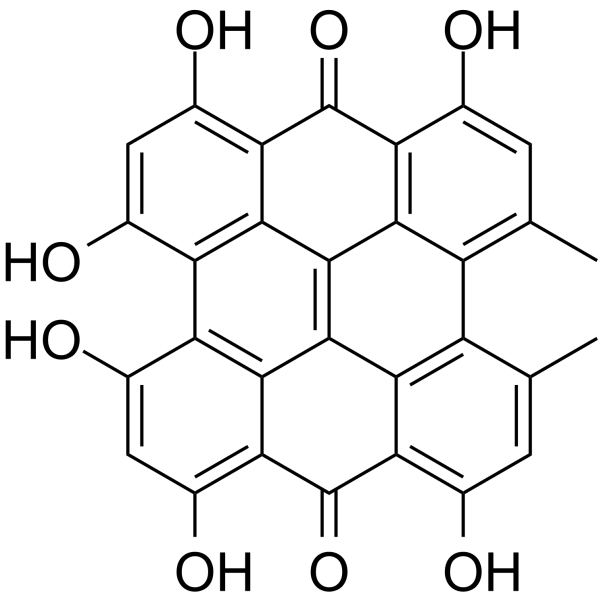
Hypericin is a naturally occurring substance found in Hyperlcurn perforatum L. Hypericin is an inhibitor of PKC (protein kinase C), MAO (monoaminoxidase), dopamine-beta-hydroxylase, reverse transcriptase, telomerase and CYP (cytochrome P450). Hypericin shows antitumor, antiviral, antidepressive activities, and can induce apoptosis.
For research use only. We do not sell to patients.
- Purity : 98.79%
- CAS No.: 548-04-9
- Formula: C30H16O8
- Molecular Weight:504.44
-
Storage:Powder -20°C, 3 years , 4°C, 2 years ; In solvent -80°C, 6 months , -20°C, 1 month

To place orders, for customer services and technical support, please contact: MedChemExpress USA
Tel: 609-228-6898 E-mail: [email protected] [email protected]


-
 Biological Activity
-
Chemical Information
-
Solvent & Solubility
- Protocols
- Purity & Documentation
- References
-
 Help & FAQs


-
HY-N0822
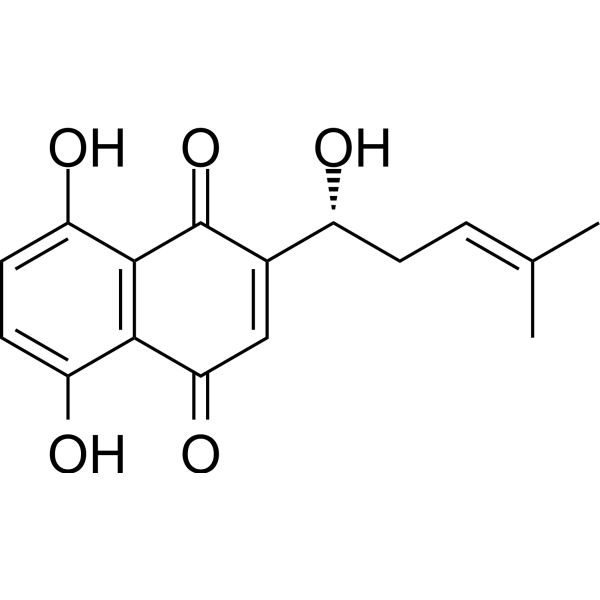
ShikoninChloride Channel Inhibitor -
HY-N0123
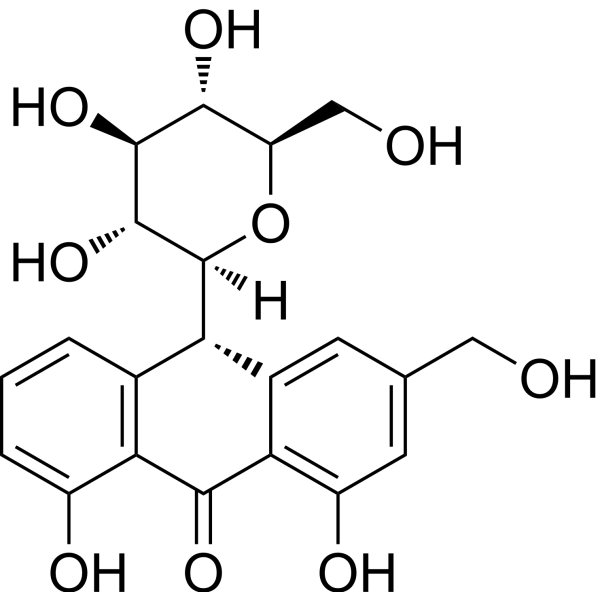
Aloin-AAnticancer Agent -
HY-17514
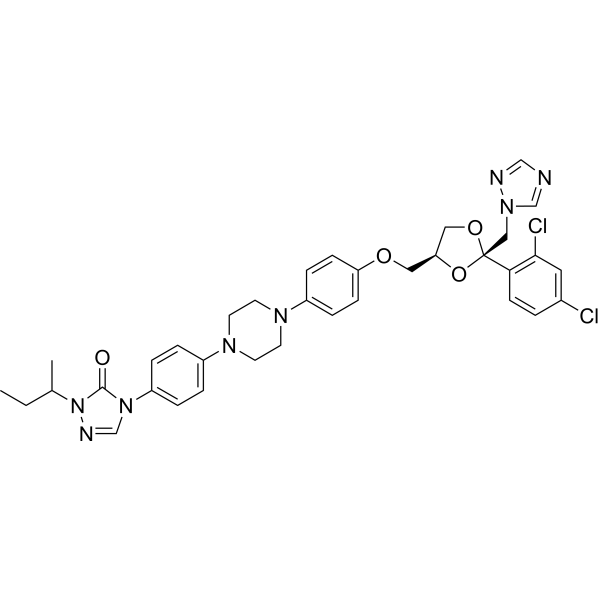
ItraconazoleAntifungal Agent -
HY-N0063
Punicalagin3CLpro Inhibitor -
HY-15531
VenetoclaxBCL-2 Inhibitor -
HY-N2575
Hypocrellin APhotosensitizer -
HY-N6972
CepharanthineAnti-infection Agent -
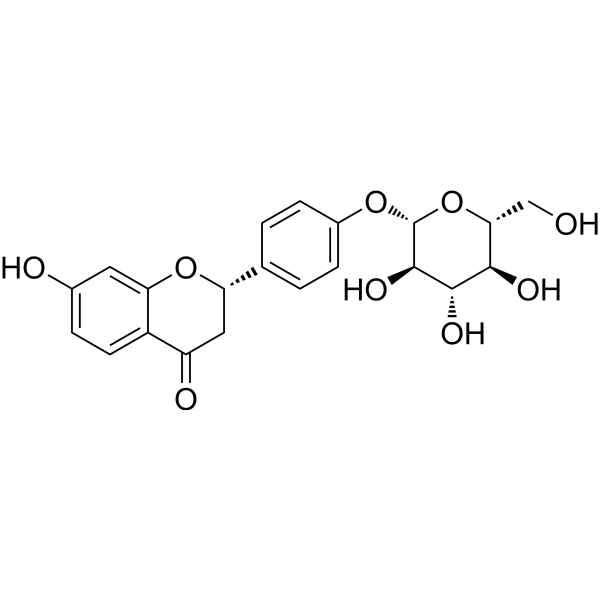
HY-N0376
LiquiritinAKR1C1 Inhibitor -
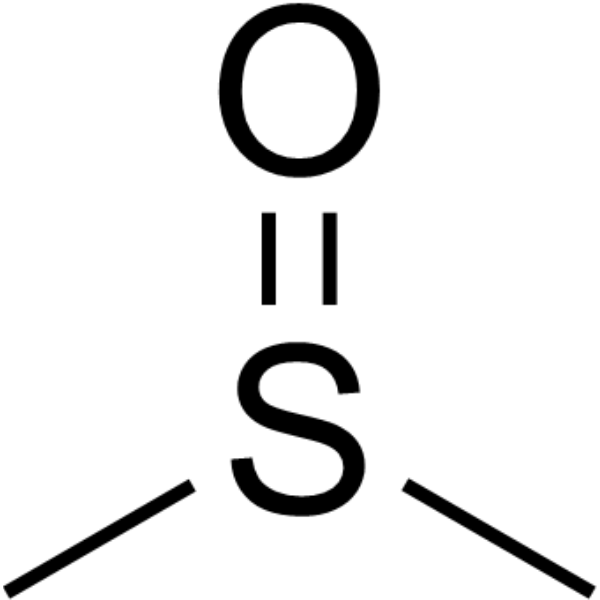
HY-Y0320C
Dimethyl sulfoxideAprotic Solvent -
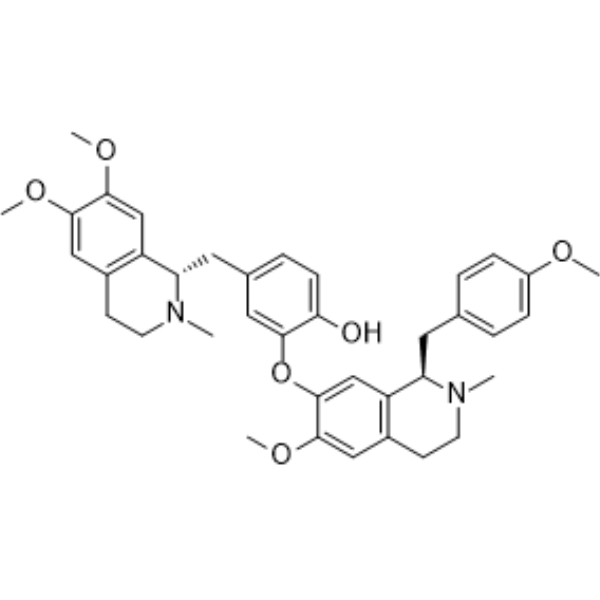
HY-N0441
NeferineAutophagy Modulator -
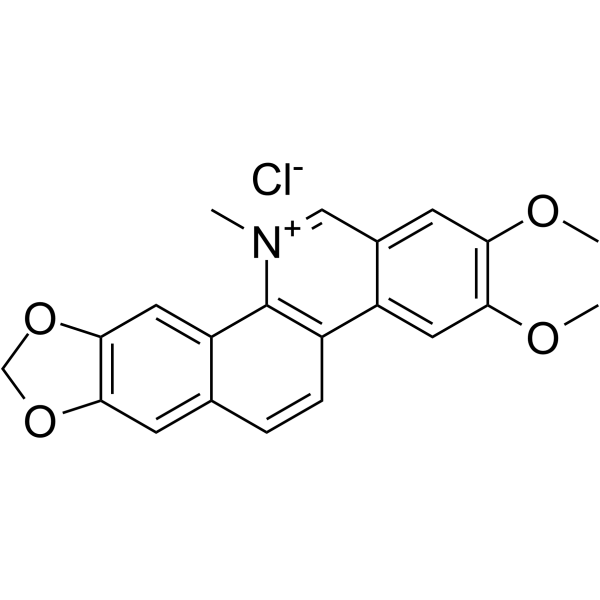
HY-N0498
Nitidine chlorideAnti-malarial Agent -
HY-N0052A
Sanguinarine chlorideApoptosis Inducer
Publications Citing Use of MedChemExpress (MCE) Hypericin
More- Signal Transduct Target Ther. 2026 Mar 26;11(1):113. [Abstract]
- Carbon. 2024 Sep.
- Int J Nanomedicine. 2025 Feb 4:20:1529-1541. [Abstract]
- Cancers (Basel). 2022 Mar 19;14(6):1575. [Abstract]
- Rheumatology (Oxford). 2025 Aug 13:keaf437. [Abstract]
- Mol Immunol. 2025 Mar 27:181:160-168. [Abstract]
- Vet Microbiol. 2026 May:316:110992. [Abstract]
- Biomed Pharmacother. 2023 Nov:167:115545. [Abstract]
 Customer Validation & Images

-
Cell Proliferation/Viability Assay
-
Cell Imaging/Staining
-
Flow Cytometry
-
In Vivo Efficacy Study
-
WB
All Antibiotic Isoforms
More

Biological Activity
Description
Cellular Effect
|
Cell Line

|
Type | Value | Description | References |
|---|---|---|---|---|
| CHO | IC50 |
0.3 μM
Compound: 1
|
Inhibition of recombinant CRF1 receptor expressed in CHO cells assessed as inhibition of CRF-induced cAMP formation
Inhibition of recombinant CRF1 receptor expressed in CHO cells assessed as inhibition of CRF-induced cAMP formation
|
[PMID: 20408551] |
| HaCaT | IC50 |
1.7 μM
Compound: 6p ; Hypericin
|
Antiproliferative (inhibition of cell growth) activity against HaCaT cells (human keratinocyte line)
Antiproliferative (inhibition of cell growth) activity against HaCaT cells (human keratinocyte line)
|
[PMID: 9371243] |
In Vitro
Hypericin (0.25-4 μM; 24 h) inhibits the growth of fibroblasts (Fb), melanocytes (Mc), and keratinocytes (Kc)[2].
Hypericin (3 μM; 24 h) treatment can induce cells apoptosis[2].
MedChemExpress (MCE) has not independently confirmed the accuracy of these methods. They are for reference only.
-
Cell Line:Fibroblasts (Fb), melanocytes (Mc), and keratinocytes (Kc)
-
Concentration:0.25 μM; 0.5 μM; 1 μM; 2 μM; 3 μM; 4 μM
-
Incubation Time:24 hours
-
Result:Showed the LD50 for Fb and Mc at 1.75 μM and 3.5 μM, respectively, and for Kc at a greater dose than 4 μM.
-
Cell Line:Fibroblasts (Fb), melanocytes (Mc), and keratinocytes (Kc)
-
Concentration:3 μM
-
Incubation Time:24 hours
-
Result:Showed a significant (p<0.001) early apoptotic Fb population (64%), and a smaller, significant (p<0.05) early apoptotic Mc population (20%).
In Vivo
MedChemExpress (MCE) has not independently confirmed the accuracy of these methods. They are for reference only.
-
Animal Model:18-20 week-old female BALB/c mice injected with CT26 carcinomas[3]
-
Dosage:10 mg/kg
-
Administration:Intravenous injection; 10 mg/kg; once
-
Result:Showed a four times delayed tumor growth compared to the control groups.
Clinical Trial
| NCT Number | Sponsor | Condition | Start Date |
Phase
|
|---|---|---|---|---|
| NCT01329991 | 2011-05 | PHASE1 |


Chemical Information
-
CAS No. 548-04-9
-
Appearance Solid
-
Molecular Weight 504.44
-
Formula C30H16O8
-
Color Brown to black
-
SMILES
O=C1C2=C(O)C=C(O)C3=C2C4=C(C5=C6C(O)=CC(C)=C5C7=C4C1=C(O)C=C7C)C8=C3C(O)=CC(O)=C8C6=O
-
Structure Classification
-
Initial Source
-
Shipping
Room temperature in continental US; may vary elsewhere.
-
Storage
Powder -20°C 3 years 4°C 2 years In solvent -80°C 6 months -20°C 1 month


Publications (8)
-
Journal Impact Factor
-
Most Recent
-
Signal Transduct Target Ther
Short-chain acyl-CoA dehydrogenase initiates mtDNA demethylation and leakage to fuel antitumor immunity in colorectal cancer. [Abstract]2026 Mar 26;11(1):113. PMID: 41888107 -
-
Int J Nanomedicine
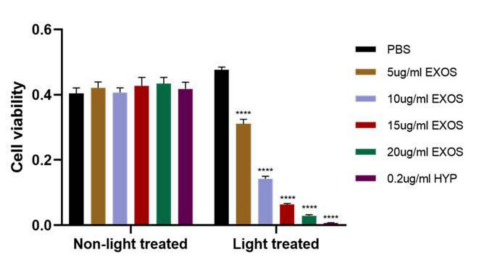
Hypericum Perforatum-Derived Exosomes-Like Nanovesicles: A Novel Natural Photosensitizer for Effective Tumor Photodynamic Therapy. [Abstract]2025 Feb 4:20:1529-1541. PMID: 39925681
Hypericin purchased from MedChemExpress. Usage Cited in: Int J Nanomedicine. 2025 Feb 4:20:1529-1541. [Abstract]
WM-266-4 cells were co-cultured with different concentrations of HPDENs for 12 hours. The PBS group served as the negative control, while the Hypericin (0.2 μg/mL) group served as the positive control. Cells were then irradiated with an LED at 4 mW/cm² for 10 minutes or left untreated. Data are expressed as means ± SEM.
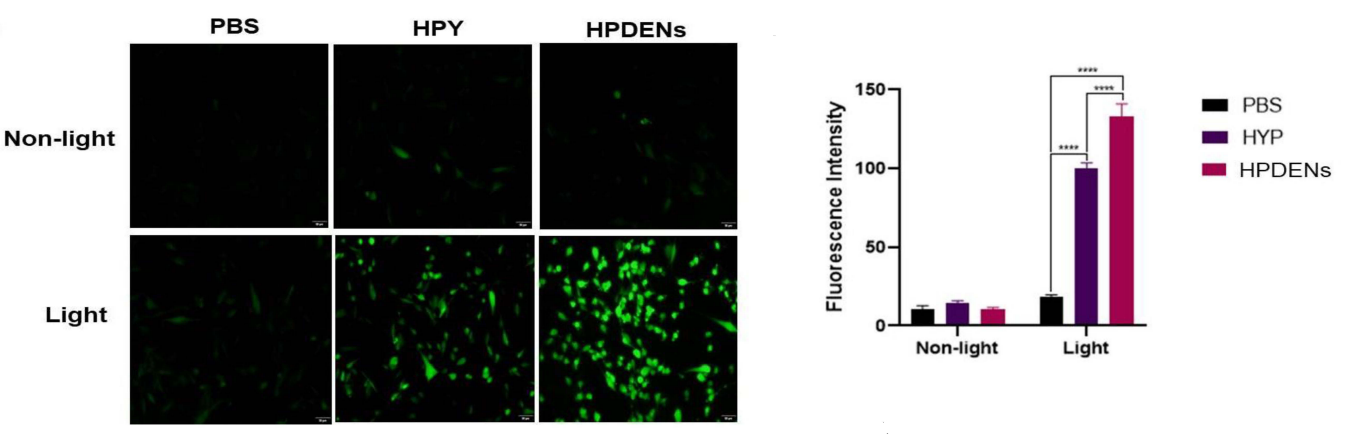
Hypericin purchased from MedChemExpress. Usage Cited in: Int J Nanomedicine. 2025 Feb 4:20:1529-1541. [Abstract]
Fluorescence microscopy images depict cellular reactive oxygen species levels following treatment with PBS, Hypericin (0.2 μg/mL), and HPDENs with or without LED illumination. Scale bar: 100 μm. Graphic represents cellular ROS levels observed in fluorescence microscopy images. n=3. Data are expressed as means ± SEM.
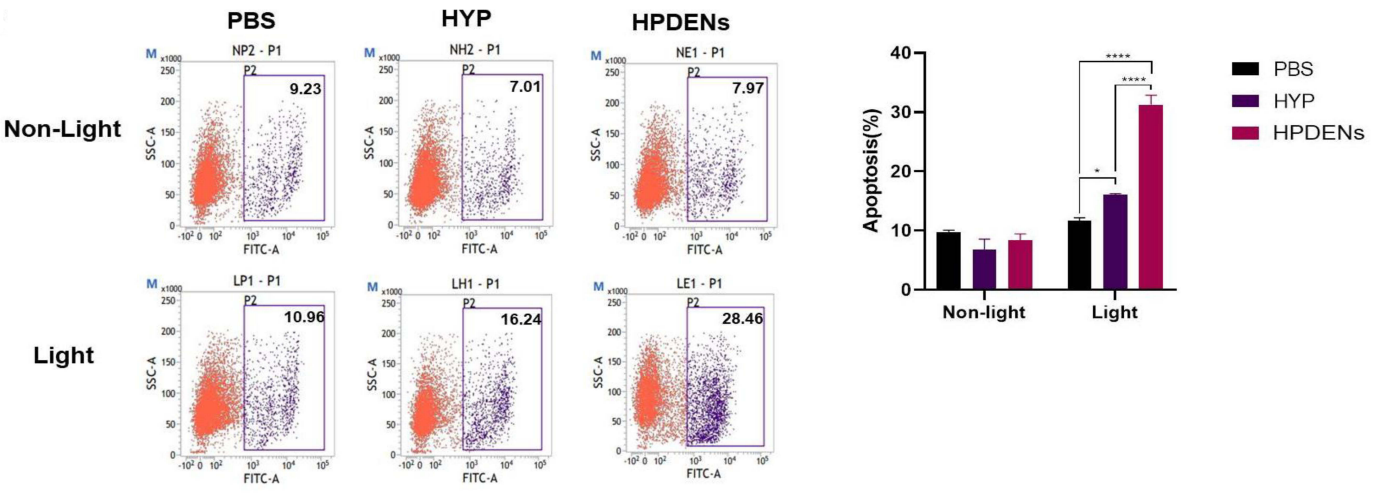
Hypericin purchased from MedChemExpress. Usage Cited in: Int J Nanomedicine. 2025 Feb 4:20:1529-1541. [Abstract]
Hypericin (0.2 μg/mL). Flow cytometry was employed to assess the expression of apoptosis-related genes in Annexin V-labeled cells. Quantitation of FITC-positive results obtained through flow cytometry. n=3. Data are expressed as means ± SEM.
-
Cancers (Basel)
Identification of New Vulnerabilities in Conjunctival Melanoma Using Image-Based High Content Drug Screening. [Abstract]2022 Mar 19;14(6):1575. PMID: 35326726 -
Rheumatology (Oxford)
Autophagy inhibitors block pathogenic NET release in immune-mediated inflammatory disease without impairing host defence. [Abstract]2025 Aug 13:keaf437. PMID: 40802538 -
Mol Immunol
Hypericin impedes M2 macrophage polarization and protects against Hepatocellular carcinoma. [Abstract]2025 Mar 27:181:160-168. PMID: 40153953 -
Vet Microbiol
The Chinese medicine monomer Schisandrin C inhibits PRRSV infection by regulating the OGT-PI3K/AKT/mTOR signaling pathway. [Abstract]2026 May:316:110992. PMID: 41865607 -
Biomed Pharmacother
2023 Nov:167:115545. PMID: 37734259
Hypericin purchased from MedChemExpress. Usage Cited in: Biomed Pharmacother. 2023 Nov:167:115545. [Abstract]
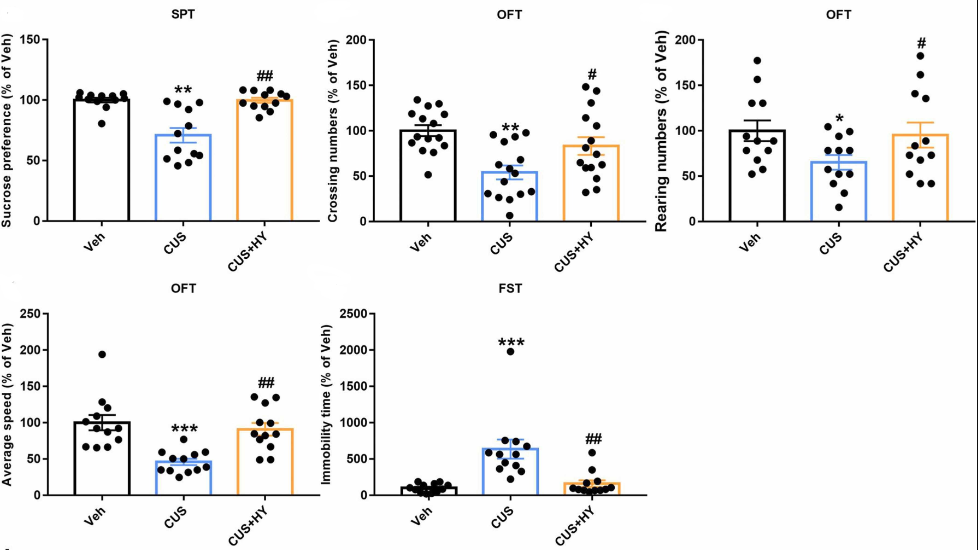
Hypericin (0.2 mg/kg, gavage). Changes in body weight. (csingle bondh) Behavioral tests: SPT. Quantitation of crossing number of rats in OFT. Rearing number of rats in OFT. The average speed of rats in OFT. Immobility time in FST.
Hypericin purchased from MedChemExpress. Usage Cited in: Biomed Pharmacother. 2023 Nov:167:115545. [Abstract]
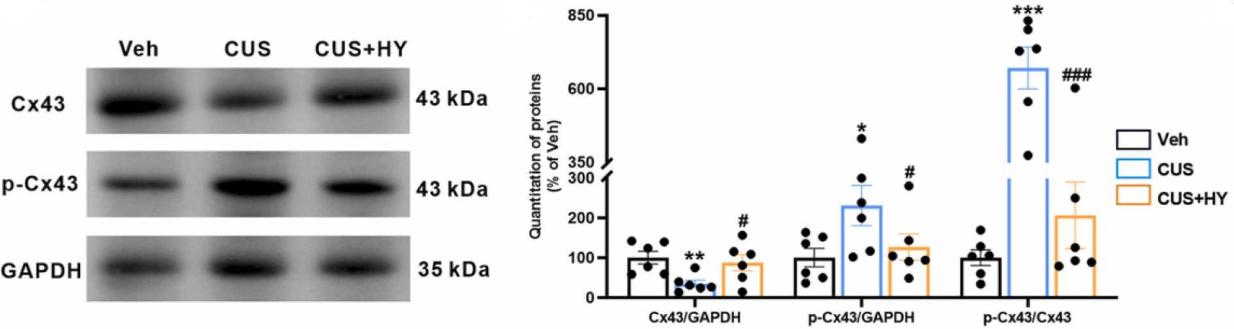
Hypericin (0.2 mg/kg, gavage). Western blots and analysis showed that lower levels of Cx43 were restored by HY treatment in CUS rats. Representative bands of Cx43, p-Cx43 at Serine-368, and GAPDH. GAPDH was used as a loading control. Quantitation of Cx43/GAPDH, p-Cx43/GAPDH and p-Cx43/Cx43.
Hypericin purchased from MedChemExpress. Usage Cited in: Biomed Pharmacother. 2023 Nov:167:115545. [Abstract]
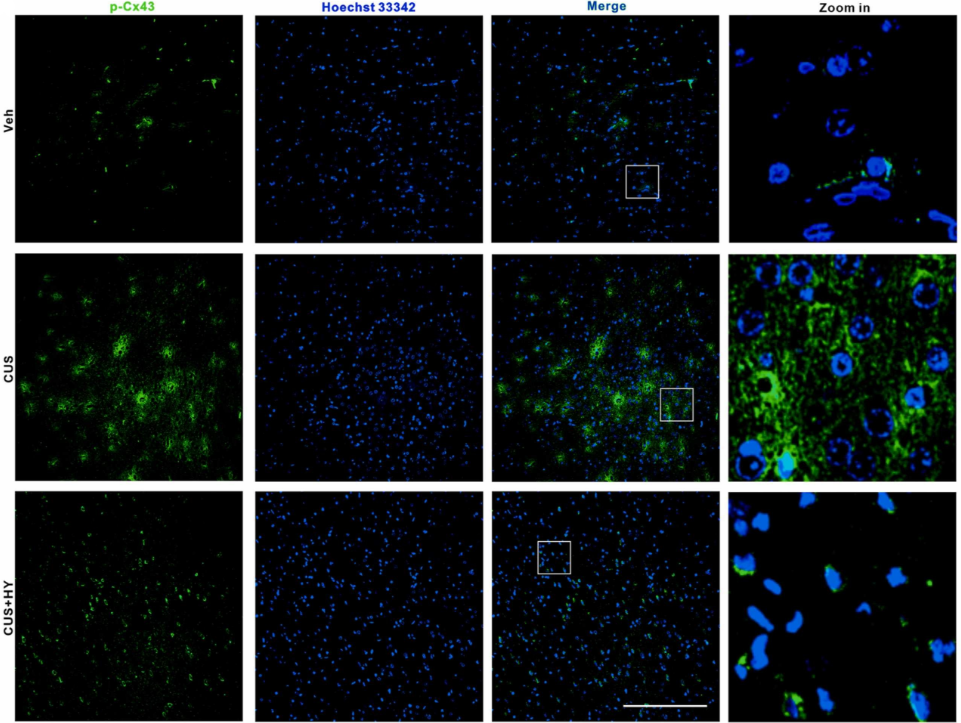
Hypericin (0.2 mg/kg, gavage). Immunofluorescent staining of p-Cx43. Cx43 or p-Cx43 was labeled with green fluorescence and nuclei were labeled by Hoechst 33342 with blue fluorescence. Scale bar: 200 µm.
Hypericin purchased from MedChemExpress. Usage Cited in: Biomed Pharmacother. 2023 Nov:167:115545. [Abstract]
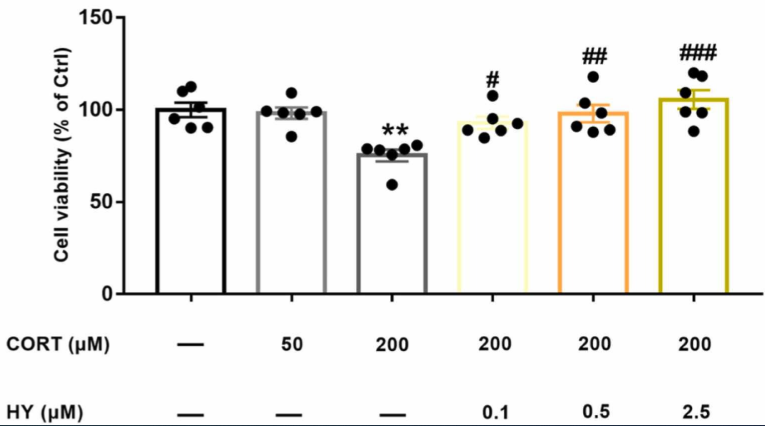
Cell viability of CORT-treated astrocytes was improved by Hypericin (0.1, 0.5, 2.5 μM). Results were expressed as percentages of the Ctrl group. Data were obtained from six independent experiments and shown as the mean ± SEM.


Solvent & Solubility
In Vitro:
DMSO : 250 mg/mL (495.60 mM; ultrasonic and warming and heat to 60°C; Hygroscopic DMSO has a significant impact on the solubility of product, please use newly opened DMSO)
Please refer to the solubility information to select the appropriate solvent. Once prepared, please aliquot and store the solution to prevent product inactivation from repeated freeze-thaw cycles.
Storage method and period of stock solution: -80°C, 6 months; -20°C, 1 month. When stored at -80°C, please use it within 6 months. When stored at -20°C, please use it within 1 month.
Please refer to the solubility information to select the appropriate solvent. Once prepared, please aliquot and store the solution to prevent product inactivation from repeated freeze-thaw cycles.
Storage method and period of stock solution: -80°C, 6 months; -20°C, 1 month. When stored at -80°C, please use it within 6 months. When stored at -20°C, please use it within 1 month.
Concentration (start) × Volume (start) = Concentration (final) × Volume (final)
In Vivo:
Select the appropriate dissolution method based on your experimental animal and administration route.
- For the following dissolution methods, please ensure to first prepare a clear stock solution using an In Vitro approach and then sequentially add co-solvents:
- To ensure reliable experimental results, the clarified stock solution can be appropriately stored based on storage conditions. As for the working solution for In Vivo experiments, it is recommended to prepare freshly and use it on the same day.
- The percentages shown for the solvents indicate their volumetric ratio in the final prepared solution. If precipitation or phase separation occurs during preparation, heat and/or sonication can be used to aid dissolution.
Add each solvent one by one: 10% DMSO 40% PEG300 5% Tween-80 45% Saline
Solubility: 2.08 mg/mL (4.12 mM); Suspended solution; Need ultrasonic
This protocol yields a suspended solution of 2.08 mg/mL. Suspended solution can be used for oral and intraperitoneal injection.
Taking 1 mL working solution as an example, add 100 μL DMSO stock solution (20.8 mg/mL) to 400 μL PEG300, and mix evenly; then add 50 μL Tween-80 and mix evenly; then add 450 μL Saline to adjust the volume to 1 mL.
Preparation of Saline: Dissolve 0.9 g sodium chloride in ddH₂O and dilute to 100 mL to obtain a clear Saline solution.
Add each solvent one by one: 10% DMSO 90% (20% SBE-β-CD in Saline)
Solubility: 2.08 mg/mL (4.12 mM); Clear solution; Need ultrasonic
This protocol yields a clear solution of 2.08 mg/mL.
Taking 1 mL working solution as an example, add 100 μL DMSO stock solution (20.8 mg/mL) to 900 μL 20% SBE-β-CD in Saline, and mix evenly.
Preparation of 20% SBE-β-CD in Saline (4°C, storage for one week): 2 g SBE-β-CD powder is dissolved in 10 mL Saline, completely dissolve until clear.
For the following dissolution methods, please prepare the working solution directly:
It is recommended to prepare fresh solutions and use them promptly within a short period of time.
The percentages shown for the solvents indicate their volumetric ratio in the final prepared solution. If precipitation or phase separation occurs during preparation, heat and/or sonication can be used to aid dissolution.
In Vivo Dissolution Calculator
Please enter the basic information of animal experiments:
-
-
-
-
Recommended: Prepare an additional quantity of animals to account for potential losses during experiments.
Please enter your animal formula composition:
-
%DMSO +
Recommended: Keep the proportion of DMSO in working solution below 2% if your animal is weak.
-
%+
-
+%Tween-80 + +
-
%Saline +
The co-solvents required include: DMSO, . All of co-solvents are available by MedChemExpress (MCE). , Tween 80. All of co-solvents are available by MedChemExpress (MCE).
Working solution concentration: 0.22 mg/mL
Method for preparing stock solution: mg drug dissolved in μL DMSO. Stock solution concentration: mg/mL.
1. Take μL DMSO stock solution;
2. Add μL .
μL , mix evenly;
3. Then add μL Tween 80, mix evenly;
4. Then add μL
Please ensure that the stock solution in the first step is dissolved to a clear state, and add co-solvents in sequence. You can use ultrasonic heating (ultrasonic cleaner, recommended frequency 20-40 kHz), vortexing, etc. to assist dissolution.


Purity & Documentation
-
Data Sheet (289 KB)
-
SDS (393 KB)
- English - EN (393 KB)
- Français - FR (393 KB)
- Deutsch - DE (393 KB)
- Norwegian - NO (393 KB)
- Español - ES (393 KB)
- Swedish - SV (393 KB)
- Italian - IT (393 KB)
- Korean - KR (393 KB)
- Portuguese - PT (393 KB)
-
Handling Instructions (2659 KB)
References
[1]. A Kubin, et al. Hypericin--the facts about a controversial agent. Curr Pharm Des. 2005;11(2):233-53. [Content Brief]
[2]. A Popovic, et al. Differential susceptibility of primary cultured human skin cells to hypericin PDT in an in vitro model. J Photochem Photobiol B. 2015 Aug;149:249-56. [Content Brief]
[3]. Renata Sanovic, et al. Low dose hypericin-PDT induces complete tumor regression in BALB/c mice bearing CT26 colon carcinoma. Photodiagnosis Photodyn Ther. 2011 Dec;8(4):291-6. [Content Brief]


Complete Stock Solution Preparation Table
Please refer to the solubility information to select the appropriate solvent. Once prepared, please aliquot and store the solution to prevent product inactivation from repeated freeze-thaw cycles.
Storage method and period of stock solution: -80°C, 6 months; -20°C, 1 month. When stored at -80°C, please use it within 6 months. When stored at -20°C, please use it within 1 month.
| Optional Solvent | Concentration Solvent Mass | 1 mg | 5 mg | 10 mg | 25 mg |
|---|---|---|---|---|---|
| DMSO | 1 mM | 1.9824 mL | 9.9120 mL | 19.8240 mL | 49.5599 mL |
| 5 mM | 0.3965 mL | 1.9824 mL | 3.9648 mL | 9.9120 mL | |
| 10 mM | 0.1982 mL | 0.9912 mL | 1.9824 mL | 4.9560 mL | |
| 15 mM | 0.1322 mL | 0.6608 mL | 1.3216 mL | 3.3040 mL | |
| 20 mM | 0.0991 mL | 0.4956 mL | 0.9912 mL | 2.4780 mL | |
| 25 mM | 0.0793 mL | 0.3965 mL | 0.7930 mL | 1.9824 mL | |
| 30 mM | 0.0661 mL | 0.3304 mL | 0.6608 mL | 1.6520 mL | |
| 40 mM | 0.0496 mL | 0.2478 mL | 0.4956 mL | 1.2390 mL | |
| 50 mM | 0.0396 mL | 0.1982 mL | 0.3965 mL | 0.9912 mL | |
| 60 mM | 0.0330 mL | 0.1652 mL | 0.3304 mL | 0.8260 mL | |
| 80 mM | 0.0248 mL | 0.1239 mL | 0.2478 mL | 0.6195 mL | |
| 100 mM | 0.0198 mL | 0.0991 mL | 0.1982 mL | 0.4956 mL |


Hypericin Related Classifications
HY-N0453 Related Classifications
 Powered by Bioz
Keywords
- Hypericin
- 548-04-9
- Apoptosis
- Influenza Virus
- Antibiotic
- Monoamine Oxidase
- PKC
- Cytochrome P450
- Dopamine β-hydroxylase
- Reverse Transcriptase
- Telomerase
- Hypericum
- protein kinase C
- MAO
- monoaminoxidase
- dopamine-beta-hydroxylase
- reverse transcriptase
- telomerase and CYP
- cytochrome P450
- antitumor activity
- antiviral activity
- antidepressive activity
- apoptosis
- fibroblasts
- melanocytes
- keratinocytes
- Inhibitor
- inhibitor
- inhibit