



PKI (14-24)amide
Based on 1 publication(s) in Google Scholar
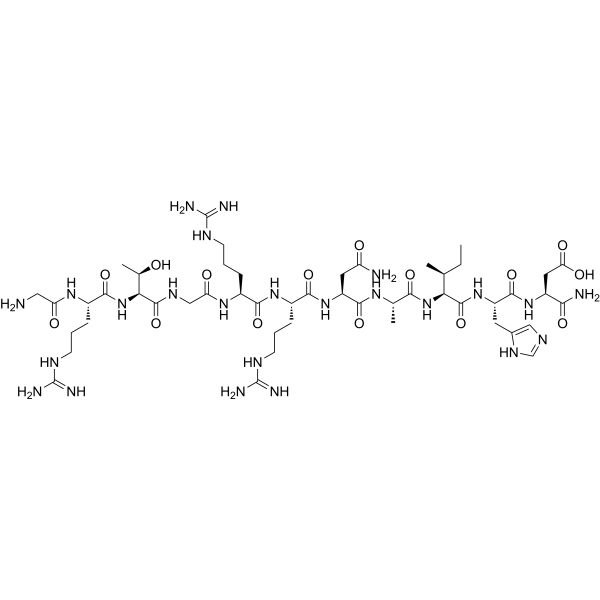
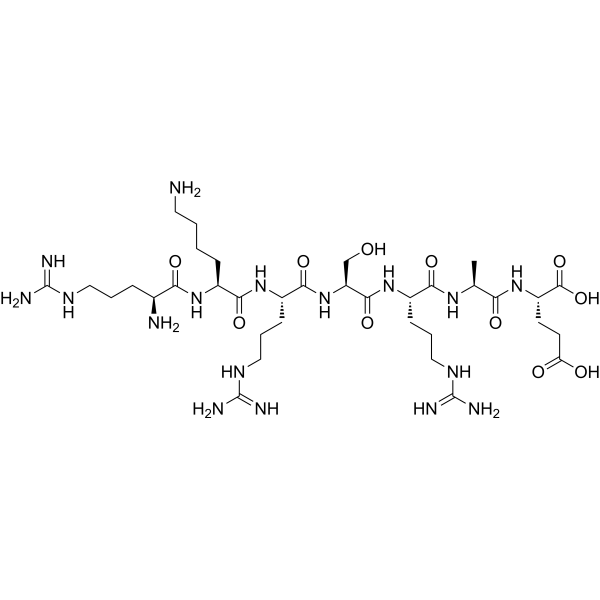
PKI (14-24)amide is a potent PKA inhibitor. PKI (14-24)amide strongly inhibited cyclic AMP-dependent protein kinase activity in the cell homogenate.
Nos produits utilisent uniquement pour la recherche. Nous ne vendons pas aux patients.
- CAS No.: 100853-61-0
- Formule: C49H86N24O15
- Masse moléculaire:1251.36
-
Stockage:
Please store the product under the recommended conditions in the Certificate of Analysis.

To place orders, for customer services and technical support, please contact: MedChemExpress USA
Tel: 609-228-6898 E-mail: [email protected] [email protected]


-
 Activité biologique
-
Chemical Information
-
Solvant et solubilité
- Protocole
- Pureté et documentation
- Références
-
 Help & FAQs


-
HY-P0248
KemptidePKA Substrate -
HY-P0222
PKI(5-24)PKA Inhibitor -
HY-P1597
MalantidePKA Substrate -
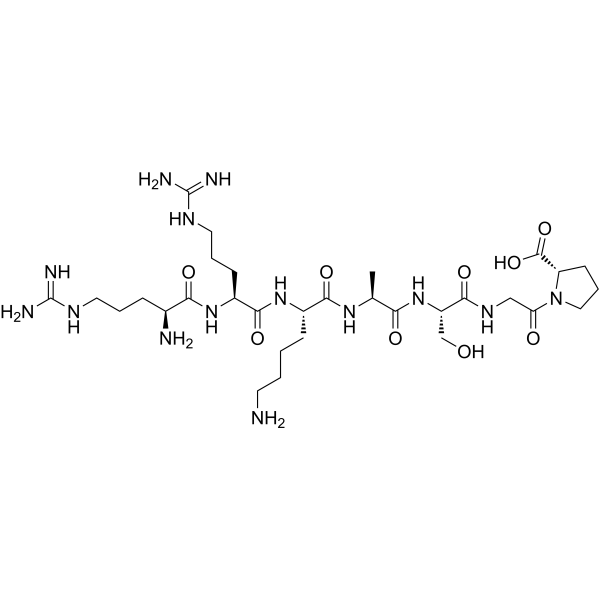
HY-P3745
H1-7 (histone H1 phosphorylation site), PKA SubstratePKA Substrate -
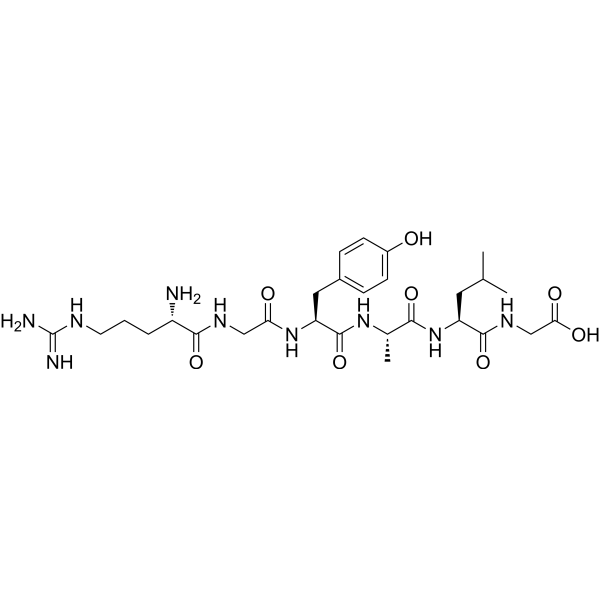
HY-P3786
H-Arg-Gly-Tyr-Ala-Leu-Gly-OHProtein Kinase Inhibitor -
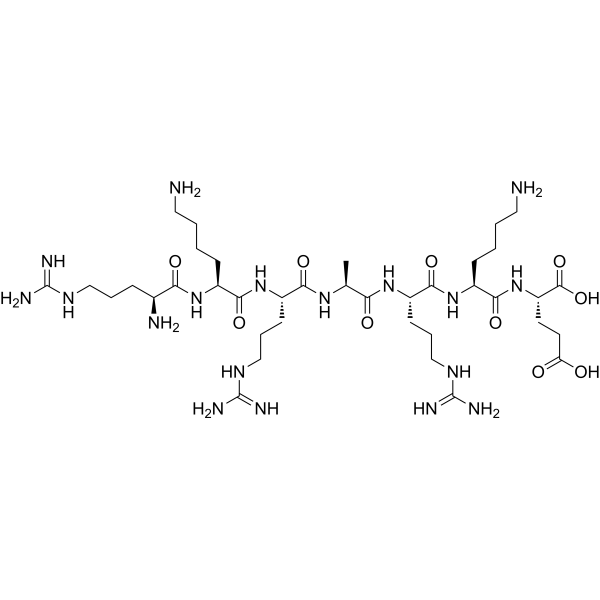
HY-P1292
PKG inhibitor peptidePKG Inhibitor -
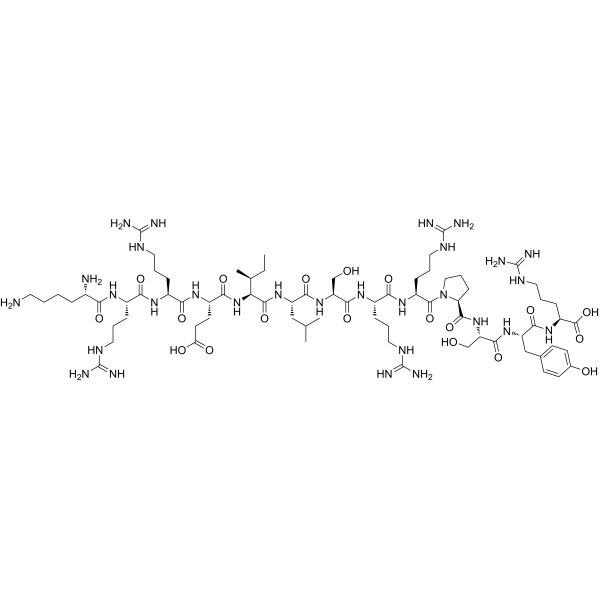
HY-P1595
CREBtidePKA/PKC Substrate -
HY-P1561
PKG SubstratePKG Substrate
Publications Citing Use of MedChemExpress (MCE) PKI (14-24)amide
More

Activité biologique
Description
In Vitro
PKI (14-24)amide does not inhibit cyclic AMP-evoked amylase release from saponin-permeabilized cells[2].
MedChemExpress (MCE) has not independently confirmed the accuracy of these methods. They are for reference only.


Chemical Information
-
CAS No. 100853-61-0
-
Masse moléculaire 1251.36
-
Formule C49H86N24O15
-
Sequence Shortening
GRTGRRNAIHD-NH2
-
Livraison
Room temperature in continental US; may vary elsewhere.
-
Stockage
Please store the product under the recommended conditions in the Certificate of Analysis.


Publications (1)
-
Journal Impact Factor
-
Most Recent


Solvant et solubilité
In Vitro
H2O
Peptide Solubility and Storage Guidelines:
1. Calculate the length of the peptide.
2. Calculate the overall charge of the entire peptide according to the following table:
| Contents | Assign value | |
|---|---|---|
| Acidic amino acid | Asp (D), Glu (E), and the C-terminal -COOH. | -1 |
| Basic amino acid | Arg (R), Lys (K), His (H), and the N-terminal -NH2 | +1 |
| Neutral amino acid | Gly (G), Ala (A), Leu (L), Ile (I), Val (V), Cys (C), Met (M), Thr (T), Ser (S), Phe (F), Tyr (Y), Trp (W), Pro (P), Asn (N), Gln (Q) | 0 |
3. Recommended solution:
| Overall charge of peptide | Details |
|---|---|
| Negative (<0) |
1. Try to dissolve the peptide in water first. 2. If water fails, add NH4OH (<50 μL). 3. If the peptide still does not dissolve, add DMSO (50-100 μL) to solubilize the peptide. |
| Positive (>0) |
1. Try to dissolve the peptide in water first. 2. If water fails, try dissolving the peptide in a 10%-30% acetic acid solution. 3. If the peptide still does not dissolve, try dissolving the peptide in a small amount of DMSO. |
| Zero (=0) |
1. Try to dissolve the peptide in organic solvent (acetonitrile, methanol, etc.) first. 2. For very hydrophobic peptides, try dissolving the peptide in a small amount of DMSO, and then dilute the solution with water to the desired concentration. |


Pureté et documentation
Références
[1]. Nörenberg W, et al. Adenosine A2A receptors inhibit the conductance of NMDA receptor channels in rat neostriatal neurons. Amino Acids. 1998;14(1-3):33-9. [Content Brief]
[2]. Takuma T. Evidence against direct involvement of cyclic AMP-dependent protein phosphorylation in the exocytosis of amylase. Biochem J. 1988 Dec 15;256(3):867-71. [Content Brief]

Calculators
Concentration (start) × Volume (start) = Concentration (final) × Volume (final)


PKI (14-24)amide Related Classifications
HY-P3929 Related Classifications
 Powered by Bioz