



Copanlisib dihydrochloride
Based on 36 publication(s) in Google Scholar
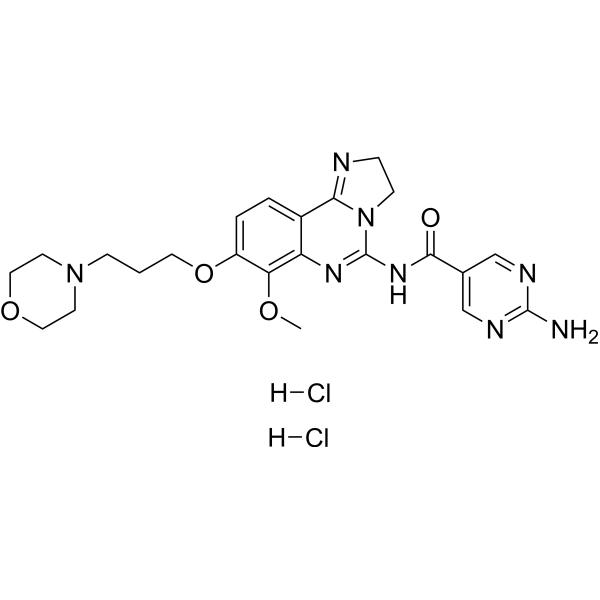
Copanlisib dihydrochloride (BAY 80-6946 dihydrochloride) is a potent, selective and ATP-competitive pan-class I PI3K inhibitor, with IC50s of 0.5 nM, 0.7 nM, 3.7 nM and 6.4 nM for PI3Kα, PI3Kδ, PI3Kβ and PI3Kγ, respectively. Copanlisib dihydrochloride has more than 2,000-fold selectivity against other lipid and protein kinases, except for mTOR. Copanlisib dihydrochloride has superior antitumor activity.
For research use only. We do not sell to patients.
- Purity : 99.55%
- CAS No.: 1402152-13-9
- Formula: C23H30Cl2N8O4
- Molecular Weight:553.44
-
Storage:
4°C, sealed storage, away from moisture
* In solvent : -80°C, 6 months; -20°C, 1 month (sealed storage, away from moisture)

To place orders, for customer services and technical support, please contact: MedChemExpress USA
Tel: 609-228-6898 E-mail: [email protected] [email protected]


-
 Biological Activity
-
Chemical Information
-
Solvent & Solubility
- Protocols
- Purity & Documentation
- References
-
 Help & FAQs


-
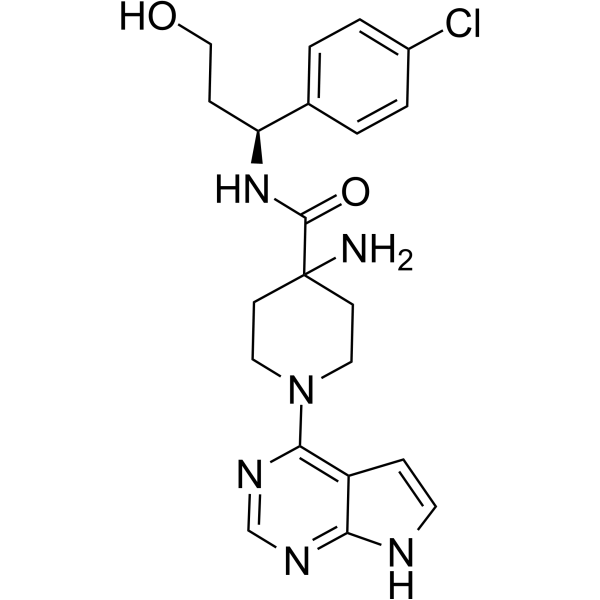
HY-15431
CapivasertibAkt Inhibitor -
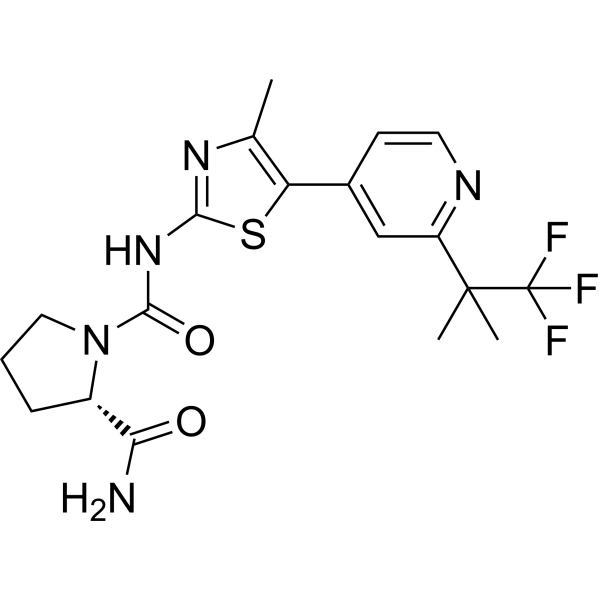
HY-15244
AlpelisibPI3Kα Inhibitor -
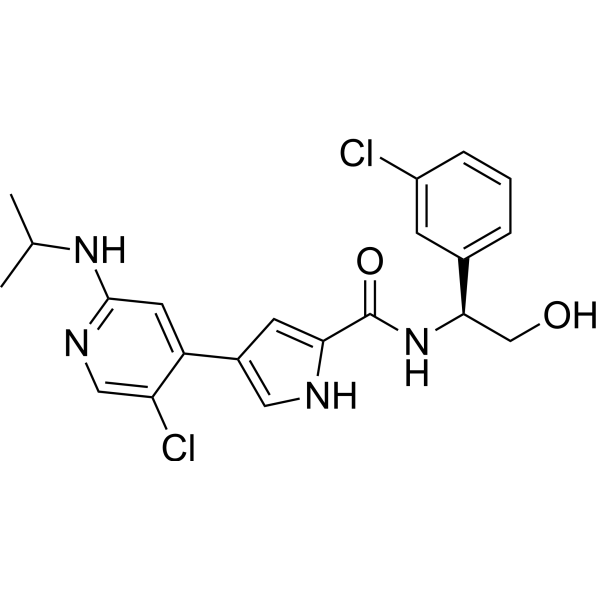
HY-15816
UlixertinibERK1/2 Inhibitor -
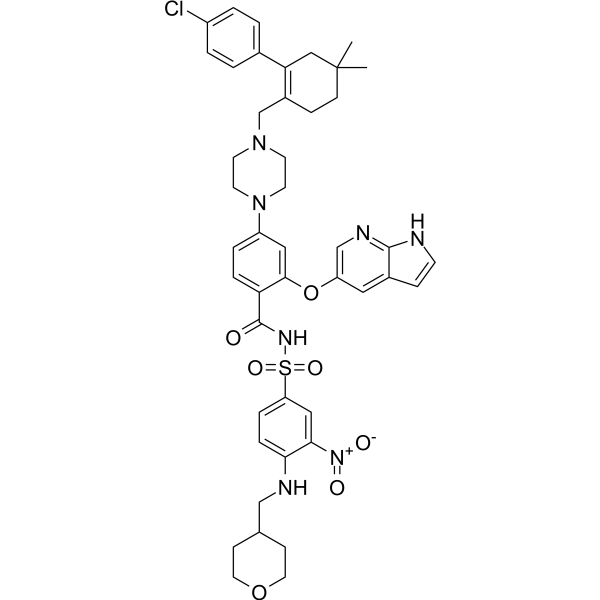
HY-15531
VenetoclaxBCL-2 Inhibitor -
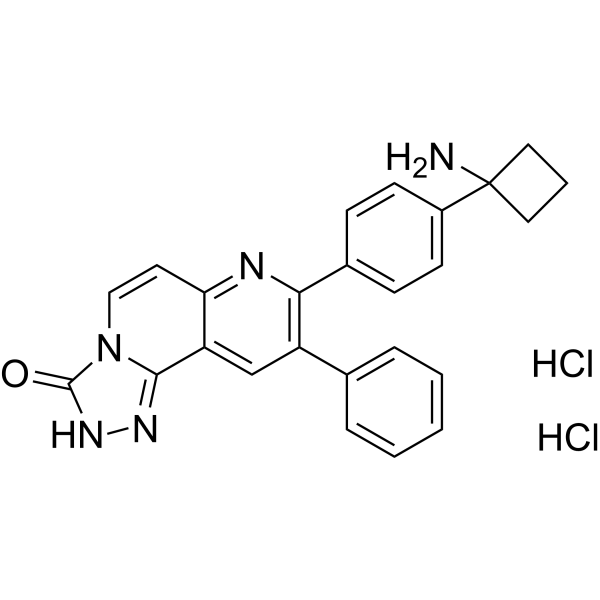
HY-10358
MK-2206 dihydrochlorideAllosteric Akt Inhibitor -
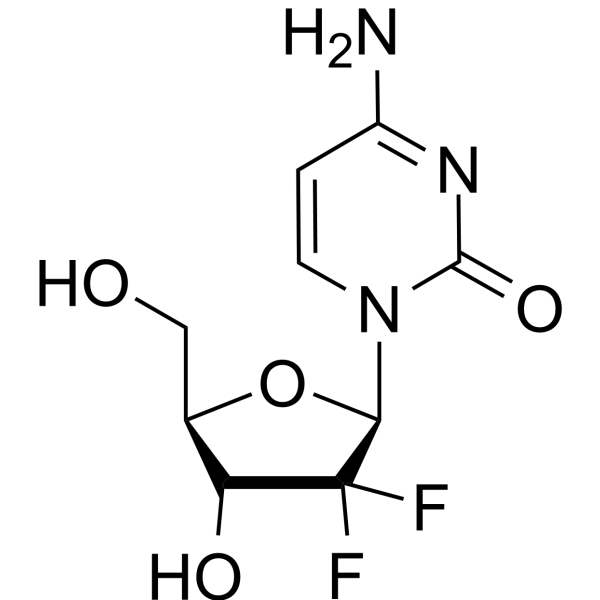
HY-17026
GemcitabineDNA Synthesis Inhibitor -
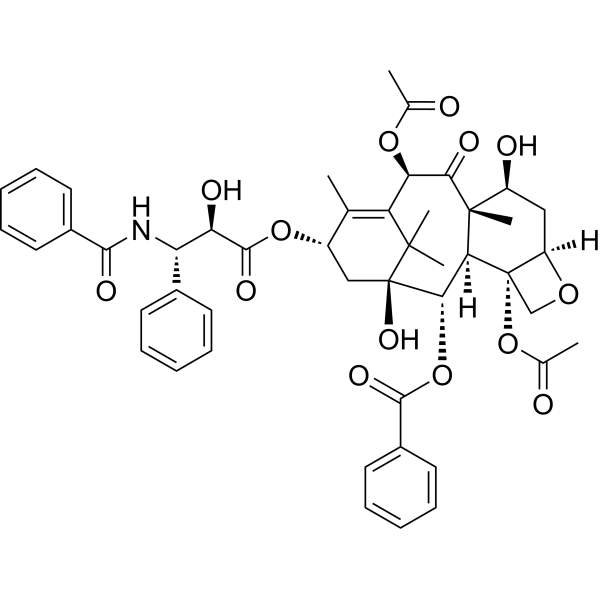
HY-B0015
PaclitaxelAntitumor Agent -
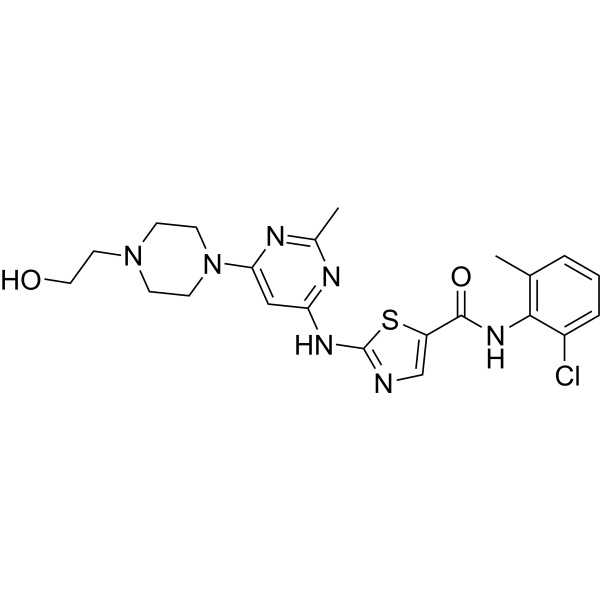
HY-10181
DasatinibSrc/Bcr-Abl Inhibitor -
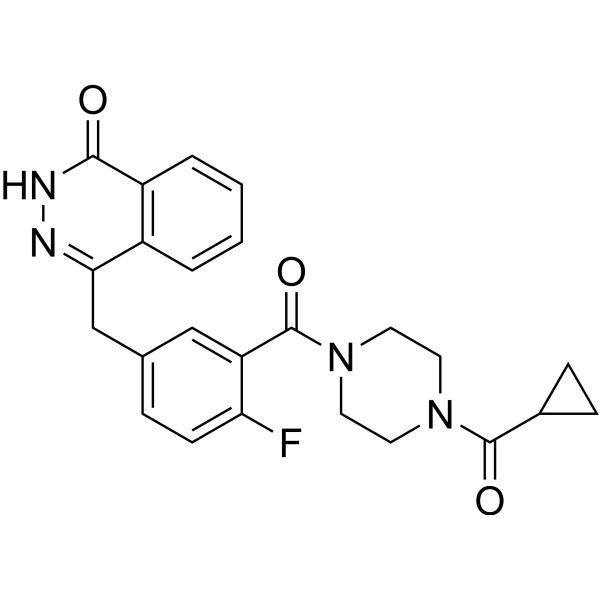
HY-10162
OlaparibPARP Inhibitor -
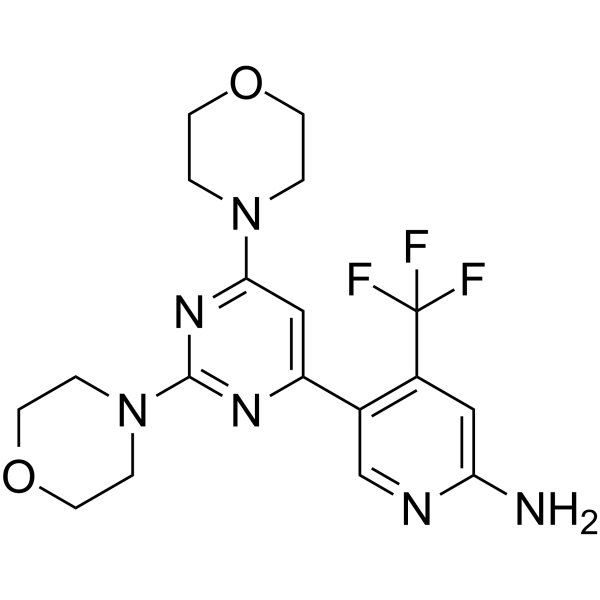
HY-70063
BuparlisibPI3K Inhibitor -
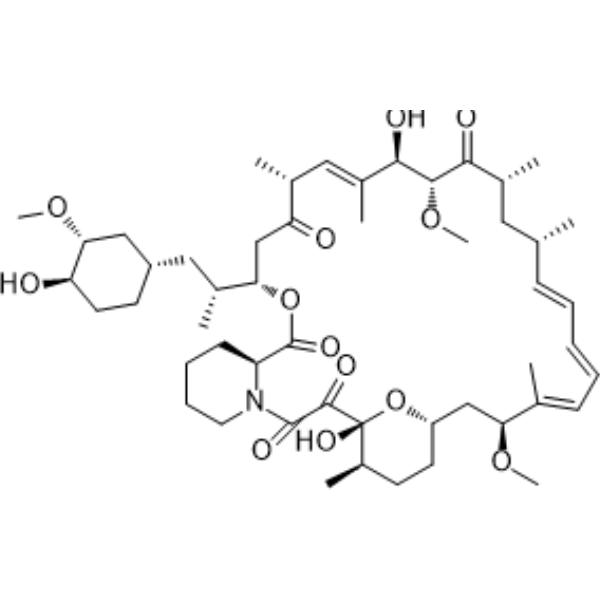
HY-10219
RapamycinmTOR Inhibitor -
HY-16297
Abemaciclib methanesulfonateCDK4/6 Inhibitor
Publications Citing Use of MedChemExpress (MCE) Copanlisib dihydrochloride
More- Signal Transduct Target Ther. 2025 Oct 31;10(1):356. [Abstract]
- Science. 2017 Dec 1;358(6367):eaan4368. [Abstract]
- Mol Cancer. 2024 Sep 30;23(1):215. [Abstract]
- Mol Cancer. 2023 Mar 30;22(1):64. [Abstract]
- Cancer Discov. 2025 Jan 13;15(1):202-226. [Abstract]
- Nat Cancer. 2024 Aug;5(8):1250-1266. [Abstract]
- Blood. 2019 Jan 3;133(1):70-80. [Abstract]
- Cancer Res. 2025 Dec 31. [Abstract]
- Theranostics. 2020 Jan 1;10(4):1531-1543. [Abstract]
- Genes Dis. 2021 Jul 1;9(6):1650-1661. [Abstract]
- J Clin Invest. 2021 Dec 15;131(24):e140436. [Abstract]
- Carbohydr Polym. 2024 Feb 15:326:121637. [Abstract]
- Cancer Lett. 2022 Jan 1:524:151-160. [Abstract]
- J Immunother Cancer. 2022 Mar;10(3):e003402. [Abstract]
- Br J Cancer. 2025 Oct 6. [Abstract]
- Blood Adv. 2022 Apr 12;6(7):2346-2360. [Abstract]
- Front Immunol. 2021 Oct 15;12:699478. [Abstract]
- Mol Cancer Ther. 2025 Jul 10. [Abstract]
- Mol Syst Biol. 2024 Jan;20(1):28-55. [Abstract]
- Cell Biosci. 2022 Dec 30;12(1):210. [Abstract]
- Cell Biosci. 2022 Aug 2;12(1):122. [Abstract]
- Cell Biosci. 2020 Feb 12:10:16. [Abstract]
- RSC Adv. 2019 Feb 21;9(11):6409-6418. [Abstract]
- Cell Rep Methods. 2026 Jun 15;6(6):101339. [Abstract]
- Bioorg Chem. 2025 Jun 15:160:108424. [Abstract]
- Sci Rep. 2025 Aug 10;15(1):29265. [Abstract]
- J Cell Mol Med. 2026 Apr;30(7):e71101. [Abstract]
- FASEB J. 2026 Jun 15;40(11):e71954. [Abstract]
- Toxicol Appl Pharmacol. 2026 Jun 17:514:117914. [Abstract]
- Mol Carcinog. 2024 Jul;63(7):1334-1348. [Abstract]
- Front Oncol. 2022 Sep 8:12:944537. [Abstract]
- Front Oncol. 2021 Jul 13:11:704042. [Abstract]
- Breast Cancer Res Treat. 2020 Jan;179(2):337-347. [Abstract]
- Technical University of Dresden. 2025.
- Université de Lausanne. 2024 Feb 7.
- J Oncol. 2022 Apr 29;2022:1515416. [Abstract]
 Customer Validation & Images

-
Apoptosis Analysis
-
WB

-
WB
-
Cell Proliferation/Viability Assay
-
In Vivo Efficacy Study


Biological Activity
Description
IC50 & Target
[1]|
PI3Kα 0.5 nM (IC50) |
PI3Kδ 0.7 nM (IC50) |
PI3Kβ 3.7 nM (IC50) |
PI3Kγ 6.4 nM (IC50) |
mTOP 45 nM (IC50) |
In Vitro
Copanlisib (BAY 80-6946; 20-200 nM; 24 hours; BT20 breast cancer cells) treatmemnt induces apoptosis in a subset of tumor cell lines that are resistant to Lapatinib and Trastuzumab[1].
Copanlisib (BAY 80-6946; 0.5-500 nM; 2 hours; ELT3 cells) treatmemnt shows complete inhibition of PI3K-mediated AKT phosphorylation in ELT3 cells[1].
Copanlisib potently inhibits cell proliferation in a panel of human tumor cell lines. Copanlisib has mean IC50 values of 19 nM against cell lines with PIK3CA-activating mutations and 17 nM against HER2-positive cell lines, whereas the activity in PIK3CA wild-type and HER2-negative cells is about 40-fold less potent[1].
MedChemExpress (MCE) has not independently confirmed the accuracy of these methods. They are for reference only. Further protocols information, click here.
-
Cell Line:BT20 breast cancer cells
-
Concentration:20 nM and 62 nM, 200 nM
-
Incubation Time:24 hours
-
Result:Significantly increased caspase9 activities. Also increased levels of phosphorylated p53 at Ser15and cleaved PARP. Induced caspase-9 activation with an EC50 of 340 nM.
-
Cell Line:ELT3 cells
-
Concentration:0.5 nM, 5 nM, 50 nM, 500 nM
-
Incubation Time:2 hours
-
Result:Complete inhibition of PI3K-mediated AKT phosphorylation was clearly shown at a concentration of 5 nM.
In Vivo
MedChemExpress (MCE) has not independently confirmed the accuracy of these methods. They are for reference only.
-
Animal Model:Athymic nude rats injected with KPL4 tumor cells[1]
-
Dosage:0.5 mg/kg, 1 mg/kg, 3 mg/kg or 6 mg/kg
-
Administration:Intravenous injection; every second day, every third day; for 60 days
-
Result:On day 25, tumor growth inhibition (TGI) rates of 77%, 84%, 99%, and 100% were observed at doses of 0.5, 1, 3, and 6 mg/kg, respectively. All rats remained tumor free at the termination of the study on day 73.


Chemical Information
-
CAS No. 1402152-13-9
-
Appearance Solid
-
Molecular Weight 553.44
-
Formula C23H30Cl2N8O4
-
Color Off-white to light yellow
-
SMILES
O=C(C1=CN=C(N)N=C1)NC2=NC3=C(OC)C(OCCCN4CCOCC4)=CC=C3C5=NCCN25.[H]Cl.[H]Cl
-
Synonyms
BAY 80-6946 dihydrochloride
-
Shipping
Room temperature in continental US; may vary elsewhere.
-
Storage
4°C, sealed storage, away from moisture
* In solvent : -80°C, 6 months; -20°C, 1 month (sealed storage, away from moisture)


Publications (36)
-
Journal Impact Factor
-
Most Recent
-
Signal Transduct Target Ther
Alpha-enolase influences ATP pool of cytoplasm and lactate homeostasis by regulating glycolysis in gastric cancer. [Abstract]2025 Oct 31;10(1):356. PMID: 41168198 -
Science
2017 Dec 1;358(6367):eaan4368. PMID: 29191878 -
Mol Cancer
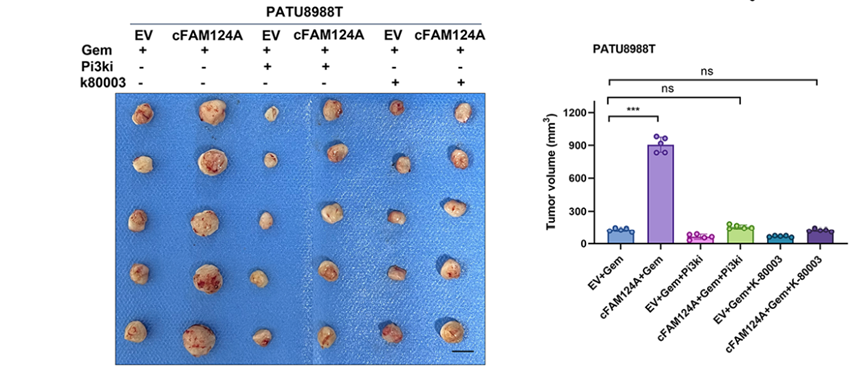
Sulindac (K-80003) with nab-paclitaxel and gemcitabine overcomes drug-resistant pancreatic cancer. [Abstract]2024 Sep 30;23(1):215. PMID: 39350121
Copanlisib dihydrochloride purchased from MedChemExpress. Usage Cited in: Mol Cancer. 2024 Sep 30;23(1):215. [Abstract]
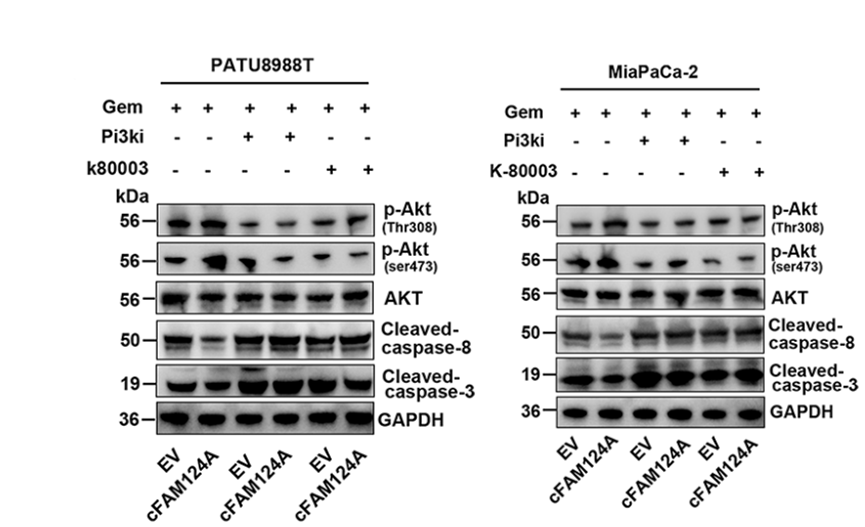
Western blot analysis of Akt, p-Akt (Ser473), p-Akt (Thr308), and cleaved caspase 3/8 expression after 6 h of treatment with copanlisib (2 nM, pan-PI3K inhibitor) and GEM treatment.
Copanlisib dihydrochloride purchased from MedChemExpress. Usage Cited in: Mol Cancer. 2024 Sep 30;23(1):215. [Abstract]
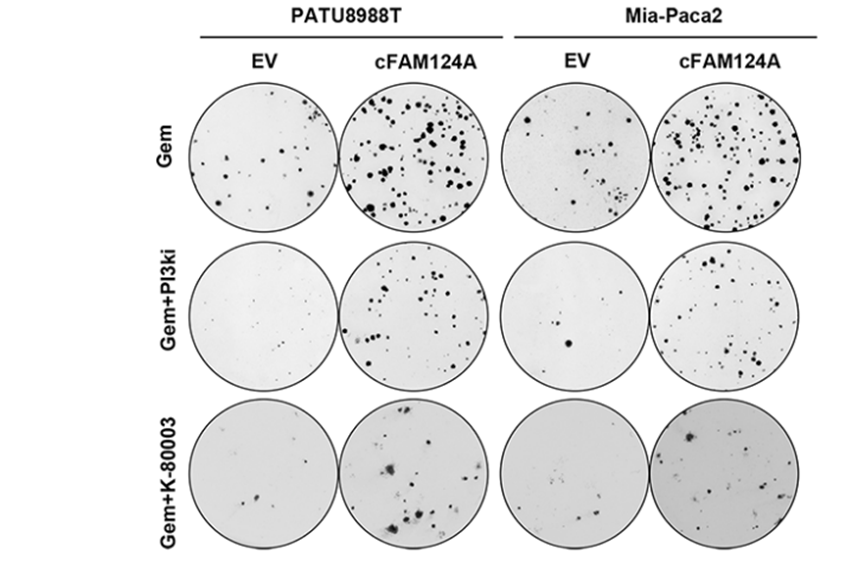
Colony formation by cells overexpressing cFAM124A after 6 h of treatment with different inhibitors and GEM treatment in 6-well dishes (800 cells/well) for 2 weeks. Each inhibitor, Copanlisib (2 nM, pan-PI3K inhibitor) or K-80003 (5 nM, tRXRα-dependent Akt activation inhibitor).
Copanlisib dihydrochloride purchased from MedChemExpress. Usage Cited in: Mol Cancer. 2024 Sep 30;23(1):215. [Abstract]
Subcutaneous xenograft model of mice in the different groups treated with GEM (40 mg/kg i.p. 2×/week for 4 weeks), Copanlisib (1 mg/kg, iv. 2×/week for 4 weeks), or K-80003 (20 mg/ kg i.p. 2×/week for 4 weeks) at 2 weeks after subcutaneous injection of 5 × 10⁶ cells overexpressing cFAM124A and control cells.
-
Mol Cancer
CDK9 inhibition induces epigenetic reprogramming revealing strategies to circumvent resistance in lymphoma. [Abstract]2023 Mar 30;22(1):64. PMID: 36998071 -
Cancer Discov
Neuro-mesenchymal interaction mediated by a β2 adrenergic-nerve growth factor feedforward loop promotes colorectal cancer progression. [Abstract]2025 Jan 13;15(1):202-226. PMID: 39137067 -
Nat Cancer
A first-in-class selective inhibitor of EGFR and PI3K offers a single-molecule approach to targeting adaptive resistance. [Abstract]2024 Aug;5(8):1250-1266. PMID: 38992135 -
Blood
Targeted inhibition of PI3Kα/δ is synergistic with BCL-2 blockade in genetically defined subtypes of DLBCL. [Abstract]2019 Jan 3;133(1):70-80. PMID: 30322870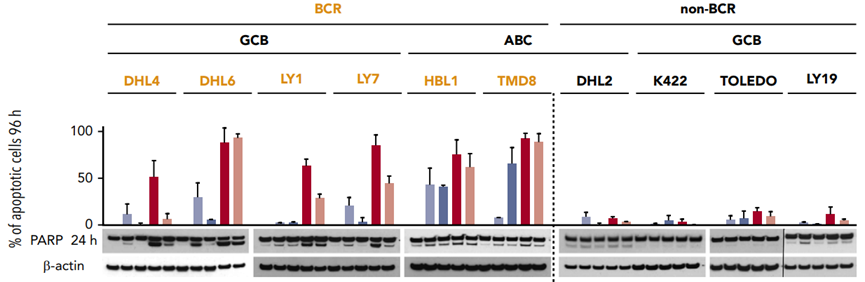
Copanlisib dihydrochloride purchased from MedChemExpress. Usage Cited in: Blood. 2019 Jan 3;133(1):70-80. [Abstract]
Induction of apoptosis after 96-hour exposure to DMSO, Entospletinib (ENTO, 2 μM), Ibrutinib (IBRU, 0.1 μM), Copanlisib (COPA, 0.25 μM), or Pictilisib (PICTI, 0.5 μM) shown as percentage of annexin V/PI-positive cells plus or minus SEM from at least 3 biological replicates.
Copanlisib dihydrochloride purchased from MedChemExpress. Usage Cited in: Blood. 2019 Jan 3;133(1):70-80. [Abstract]
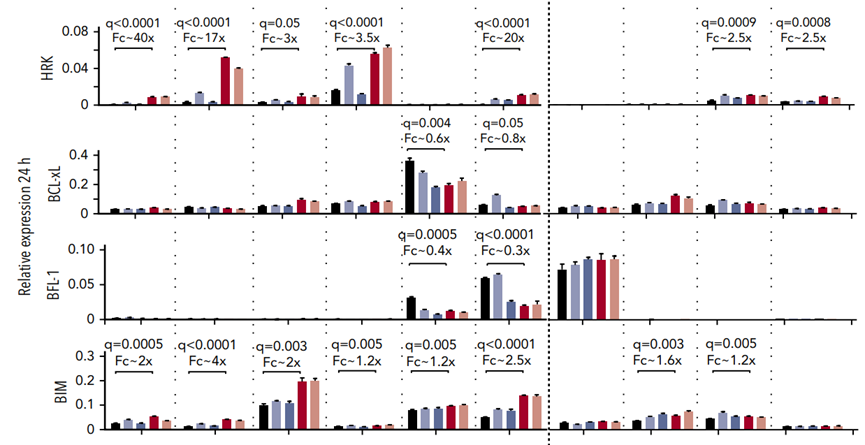
HRK, BCL-xL, BFL-1, or BIM transcript abundance after 24-hour exposure to DMSO, Entospletinib (2 μM), Ibrutinib (0.1 μM), Copanlisib (0.25 μM), or Pictilisib (0.5 μM) was determined with RT-qPCR relative to PPIA.
-
Cancer Res
2025 Dec 31. PMID: 41474982 -
Theranostics
Response to mTOR and PI3K inhibitors in enzalutamide-resistant luminal androgen receptor triple-negative breast cancer patient-derived xenografts. [Abstract]2020 Jan 1;10(4):1531-1543. PMID: 32042320 -
Genes Dis
PGRN exacerbates the progression of non-small cell lung cancer via PI3K/AKT/Bcl-2 antiapoptotic signaling. [Abstract]2021 Jul 1;9(6):1650-1661. PMID: 36157487 -
J Clin Invest
WWP1 inactivation enhances efficacy of PI3K inhibitors while suppressing their toxicities in breast cancer models. [Abstract]2021 Dec 15;131(24):e140436. PMID: 34907909 -
Carbohydr Polym
Inulin-like polysaccharide ABWW may impede CCl4 induced hepatic stellate cell activation through mediating the FAK/PI3K/AKT signaling pathway in vitro & in vivo. [Abstract]2024 Feb 15:326:121637. PMID: 38142102 -
Cancer Lett
EZH2 inhibition confers PIK3CA-driven lung tumors enhanced sensitivity to PI3K inhibition. [Abstract]2022 Jan 1:524:151-160. PMID: 34655667 -
J Immunother Cancer
PI3K activation allows immune evasion by promoting an inhibitory myeloid tumor microenvironment. [Abstract]2022 Mar;10(3):e003402. PMID: 35264433 -
Br J Cancer
Bypassing cisplatin resistance in Nrf2 hyperactivated head and neck cancer through effective PI3Kinase targeting. [Abstract]2025 Oct 6. PMID: 41053162
Copanlisib dihydrochloride purchased from MedChemExpress. Usage Cited in: Br J Cancer. 2025 Oct 6. [Abstract]
Representative western blot analysis of selected PI3K downstream target proteins in HN30R8 and HN31P10 cisplatin-resistant HNSCC cells after Copanlisib (Copanlisib dihydrochloride; 5-1000 nM; 6 h), with β-actin as a loading control. Acute exposure to Copanlisib did not significantly inhibit AKT phosphorylation but reduced the phosphorylation of p70 S6, 4E-BP1 and S6.
-
Blood Adv
Triple combination of BET plus PI3K and NF-κB inhibitors exhibit synergistic activity in adult T-cell leukemia/lymphoma. [Abstract]2022 Apr 12;6(7):2346-2360. PMID: 35030628 -
Front Immunol
"γδT Cell-IL17A-Neutrophil" Axis Drives Immunosuppression and Confers Breast Cancer Resistance to High-Dose Anti-VEGFR2 Therapy. [Abstract]2021 Oct 15;12:699478. PMID: 34721375 -
Mol Cancer Ther
2025 Jul 10. PMID: 40635161 -
Mol Syst Biol
Illuminating phenotypic drug responses of sarcoma cells to kinase inhibitors by phosphoproteomics. [Abstract]2024 Jan;20(1):28-55. PMID: 38177929 -
Cell Biosci
Inhibition of PI3 kinase isoform p110α suppresses neuroblastoma growth and induces the reduction of Anaplastic Lymphoma Kinase. [Abstract]2022 Dec 30;12(1):210. PMID: 36585695 -
Cell Biosci
AKT phosphorylation as a predictive biomarker for PI3K/mTOR dual inhibition-induced proteolytic cleavage of mTOR companion proteins in small cell lung cancer. [Abstract]2022 Aug 2;12(1):122. PMID: 35918763 -
Cell Biosci
Loss of PI3 kinase association improves the sensitivity of secondary mutation of KIT to Imatinib. [Abstract]2020 Feb 12:10:16. PMID: 32082541 -
RSC Adv
Reactive intermediates in copanlisib metabolism identified by LC-MS/MS: phase I metabolic profiling. [Abstract]2019 Feb 21;9(11):6409-6418. PMID: 35517257 -
Cell Rep Methods
Tumor immune microenvironment reconstitution in patient-derived organoids enables therapy modeling for NSCLC. [Abstract]2026 Jun 15;6(6):101339. PMID: 42134319
Copanlisib dihydrochloride purchased from MedChemExpress. Usage Cited in: Cell Rep Methods. 2026 Jun 15;6(6):101339. [Abstract]
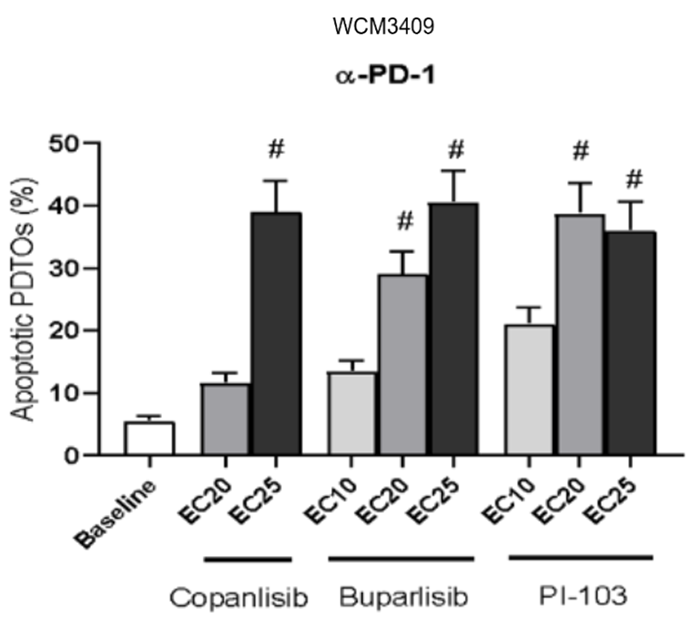
Apoptotic WCM3409 PDTOs were quantified in the presence of α-PD-1 after Copanlisib (Copanlisib dihydrochloride; EC10 0.005 μM-EC25 0.021 μM; 3-day pretreatment followed by 1-day co-culture). The addition of Copanlisib increased killing levels in the presence of α-PD-1 and α-PD-1 plus α-TIM3 (5 μg/ml) for WCM3409.
-
Bioorg Chem
2025 Jun 15:160:108424. PMID: 40209351 -
Sci Rep
Afatinib amplifies cAMP-induced fluid secretion in a mouse mini-gut model via TMEM16A-mediated fluid secretion and secretory cell differentiation. [Abstract]2025 Aug 10;15(1):29265. PMID: 40784986 -
J Cell Mol Med
2026 Apr;30(7):e71101. PMID: 41896195 -
FASEB J
Polyphosphates Attenuate Interleukin-12 Production in Macrophages Infected With Legionella pneumophila. [Abstract]2026 Jun 15;40(11):e71954. PMID: 42219888 -
Toxicol Appl Pharmacol
2026 Jun 17:514:117914. PMID: 42309492 -
Mol Carcinog
Four and a half LIM domains 2 (FHL2) attenuates tumorigenesis of gastrointestinal stromal tumors (GISTs) by negatively regulating KIT signaling. [Abstract]2024 Jul;63(7):1334-1348. PMID: 38629424 -
Front Oncol
Co-administration of MDR1 and BCRP or EGFR/PI3K inhibitors overcomes lenvatinib resistance in hepatocellular carcinoma. [Abstract]2022 Sep 8:12:944537. PMID: 36158676
Copanlisib dihydrochloride purchased from MedChemExpress. Usage Cited in: Front Oncol. 2022 Sep 8:12:944537. [Abstract]
MTT results and combination index (CI) plots evaluated Huh7 lenvatinib-resistant (Huh7 LR) cell viability after Copanlisib (Copanlisib dihydrochloride; 12.5-25 nM; 96 h) alone or in combination with lenvatinib. Copanlisib significantly enhanced the inhibitory effect of lenvatinib on Huh7 LR cell proliferation.

Copanlisib dihydrochloride purchased from MedChemExpress. Usage Cited in: Front Oncol. 2022 Sep 8:12:944537. [Abstract]
Micrographs showed the morphology of Huh7 lenvatinib-resistant (Huh7 LR) cells after Copanlisib (Copanlisib dihydrochloride; 3 μM; 72 h) alone or in combination with lenvatinib. Copanlisib enhanced the pro-apoptotic effect of lenvatinib in Huh7 LR cells.

Copanlisib dihydrochloride purchased from MedChemExpress. Usage Cited in: Front Oncol. 2022 Sep 8:12:944537. [Abstract]
Flow cytometry plots showed apoptosis in Huh7 LR cells after copanlisib (Copanlisib dihydrochloride; 3 μM; 72 h) alone or in combination with lenvatinib. Copanlisib significantly enhanced the pro-apoptotic effect of lenvatinib.
-
Front Oncol
Patient-Derived Xenograft Models for Intrahepatic Cholangiocarcinoma and Their Application in Guiding Personalized Medicine. [Abstract]2021 Jul 13:11:704042. PMID: 34327143 -
Breast Cancer Res Treat
2020 Jan;179(2):337-347. PMID: 31655920 -
-
-
J Oncol
2022 Apr 29;2022:1515416. PMID: 35528239


Solvent & Solubility
In Vitro:
H2O : 50 mg/mL (90.34 mM; Need ultrasonic)
DMSO : 5 mg/mL (9.03 mM; ultrasonic and warming and heat to 60°C; Hygroscopic DMSO has a significant impact on the solubility of product, please use newly opened DMSO)
Please refer to the solubility information to select the appropriate solvent. Once prepared, please aliquot and store the solution to prevent product inactivation from repeated freeze-thaw cycles.
Storage method and period of stock solution: -80°C, 6 months; -20°C, 1 month (sealed storage, away from moisture). When stored at -80°C, please use it within 6 months. When stored at -20°C, please use it within 1 month.
* Note: If you choose water as the stock solution, please dilute it to the working solution, then filter and sterilize it with a 0.22 μm filter before use.
Please refer to the solubility information to select the appropriate solvent. Once prepared, please aliquot and store the solution to prevent product inactivation from repeated freeze-thaw cycles.
Storage method and period of stock solution: -80°C, 6 months; -20°C, 1 month (sealed storage, away from moisture). When stored at -80°C, please use it within 6 months. When stored at -20°C, please use it within 1 month.
* Note: If you choose water as the stock solution, please dilute it to the working solution, then filter and sterilize it with a 0.22 μm filter before use.
Concentration (start) × Volume (start) = Concentration (final) × Volume (final)
In Vivo:
For the following dissolution methods, please prepare the working solution directly:
It is recommended to prepare fresh solutions and use them promptly within a short period of time.
The percentages shown for the solvents indicate their volumetric ratio in the final prepared solution. If precipitation or phase separation occurs during preparation, heat and/or sonication can be used to aid dissolution.
Add each solvent one by one: PBS
Solubility: 100 mg/mL (180.69 mM); Clear solution; Need ultrasonic

Protocols
-
Subcutaneous Cell-Line-Derived Xenograft
Subcutaneous cell-line-derived xenograft (CDX) models are established by implanting cultured human cancer cell lines into immunodeficient mice, where the injected cells form localized tumors that can be monitored in vivo as a measure of tumorigenic potential, growth kinetics, and treatment response. These models are widely used in oncology research because they allow reproducible tumor formation and enable comparative assessment of tumor growth between different cell lines or genetic manipulations in a controlled in vivo microenvironment. Subcutaneous implantation of cancer cells in immunodeficient mice is a standard approach for evaluating tumor growth behavior and therapeutic response across multiple cancer types, including prostate, esophageal, pancreatic, and colon cancer models.


Purity & Documentation
-
Data Sheet (277 KB)
-
SDS (419 KB)
- English - EN (419 KB)
- Français - FR (419 KB)
- Deutsch - DE (419 KB)
- Norwegian - NO (419 KB)
- Español - ES (419 KB)
- Swedish - SV (419 KB)
- Italian - IT (419 KB)
- Korean - KR (419 KB)
- Portuguese - PT (419 KB)
-
Handling Instructions (2659 KB)
References


Complete Stock Solution Preparation Table
Please refer to the solubility information to select the appropriate solvent. Once prepared, please aliquot and store the solution to prevent product inactivation from repeated freeze-thaw cycles.
Storage method and period of stock solution: -80°C, 6 months; -20°C, 1 month (sealed storage, away from moisture). When stored at -80°C, please use it within 6 months. When stored at -20°C, please use it within 1 month.
| Optional Solvent | Concentration Solvent Mass | 1 mg | 5 mg | 10 mg | 25 mg |
|---|---|---|---|---|---|
| DMSO / H2O | 1 mM | 1.8069 mL | 9.0344 mL | 18.0688 mL | 45.1720 mL |
| 5 mM | 0.3614 mL | 1.8069 mL | 3.6138 mL | 9.0344 mL | |
| H2O | 10 mM | 0.1807 mL | 0.9034 mL | 1.8069 mL | 4.5172 mL |
| 15 mM | 0.1205 mL | 0.6023 mL | 1.2046 mL | 3.0115 mL | |
| 20 mM | 0.0903 mL | 0.4517 mL | 0.9034 mL | 2.2586 mL | |
| 25 mM | 0.0723 mL | 0.3614 mL | 0.7228 mL | 1.8069 mL | |
| 30 mM | 0.0602 mL | 0.3011 mL | 0.6023 mL | 1.5057 mL | |
| 40 mM | 0.0452 mL | 0.2259 mL | 0.4517 mL | 1.1293 mL | |
| 50 mM | 0.0361 mL | 0.1807 mL | 0.3614 mL | 0.9034 mL | |
| 60 mM | 0.0301 mL | 0.1506 mL | 0.3011 mL | 0.7529 mL | |
| 80 mM | 0.0226 mL | 0.1129 mL | 0.2259 mL | 0.5647 mL |
* Note: If you choose water as the stock solution, please dilute it to the working solution, then filter and sterilize it with a 0.22 μm filter before use.


Copanlisib dihydrochloride Related Classifications
HY-15346A Related Classifications
 Powered by Bioz