



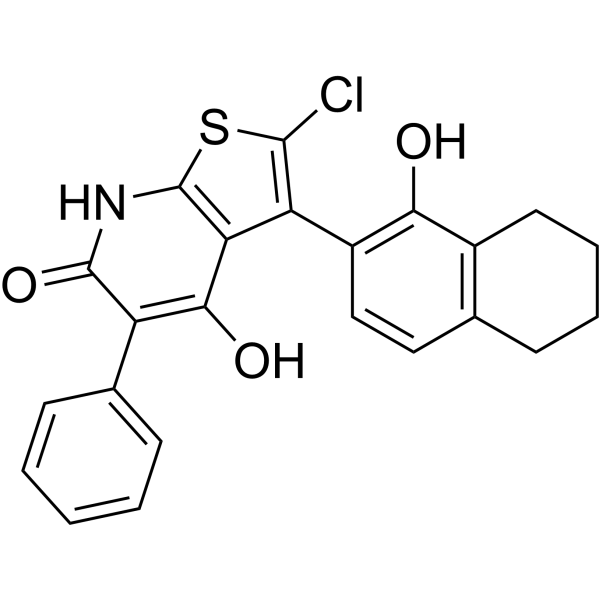
PXL770

Based on 1 Customer Validation
PXL770 is an orally active, direct allosteric AMP-activated protein kinase (AMPK) activator. PXL770 decreases C26:0 levels, improves mitochondrial respiration, reduces expression of proinflammatory genes and induces expression of compensatory transporters (ABCD2/3) in ALD fibroblasts/lymphocytes. PXL770 normalizes plasma VLCFA levels, significantly reduces elevated VLCFA levels in brain and spinal cord in Abcd1 KO mice. PXL770 improves glycemia, dyslipidemia, and insulin resistance in ob/ob and high-fat diet (HFD)-fed mice. PXL770 can be used for the study of X-linked adrenoleukodystrophy (ALD), autosomal dominant polycystic kidney disease and nonalcoholic steatohepatitis (NASH).
연구목적의 판매만을 진행합니다. 환자를 대상으로 한 판매는 하지 않습니다.
- Purity : 99.56%
- CAS No.: 1523493-53-9
- 화학식: C23H18ClNO3S
- 분자량:423.91
-
보관:
4°C, sealed storage, away from moisture and light
* In solvent : -80°C, 6 months; -20°C, 1 month (sealed storage, away from moisture and light)

To place orders, for customer services and technical support, please contact: MedChemExpress USA
Tel: 609-228-6898 E-mail: [email protected] [email protected]


-
 Biological Activity
-
Chemical Information
-
용액&용해도
- Protocol
- 순도&문서
- References
-
 Help & FAQs


All AMPK Isoforms
More

Biological Activity
제품 설명
IC50 & Target
[2]|
AMPK α1β1γ1 16.2 nM (EC50) |
AMPK α2β1γ1 1338 nM (EC50) |
AMPK α1β2γ1 1.3 μM (EC50) |
AMPK α1β1γ2 42.1 nM (EC50) |
AMPK α1β1γ2 68.7 nM (EC50) |
AMPK α2β1γ3 41.5 nM (EC50) |
AMPK α1β1γ3 64 nM (EC50) |
In Vitro
PXL770 (0.1-50 μM, 7 d) reduces C26:0 levels (IC50 = 3.1 μM), normalizes C24:0 levels and C26:0/C22:0 ratio in AMN/C-ALD fibroblasts and Abcd1 KO mouse glial cells[1].
PXL770 (25-50 μM, 72 h) improves mitochondrial function in C-ALD fibroblasts and AMN fibroblasts[1].
PXL770 (5-50 μM, 72 h) upregulates ABCD2 and ABCD3 mRNA expression in AMN/C-ALD fibroblasts[1].
PXL770 (10 μM, 72 h) downregulates proinflammatory genes (NFKB, CCL5, CCR3, NOS2) in C-ALD lymphocytes and TNFα/IL1β-stimulated Abcd1 KO mouse glial cells[1].
PXL770 shows in vitro activation effects on different recombinant AMPK heterotrimeric proteins with EC50 values of 16.2 nM (α1β1γ1), 42.1 nM (α1β1γ2), 64 nM (α1β1γ3), 1338 nM (α2β1γ1), 68.7 nM (α2β1γ2), 41.5 nM (α2β1γ3), 1.3 μM (α1β2γ1)[2].
PXL770 (0.5-3.5 μM) inhibits TGF-β-induced activation of human primary hepatic stellate cells (HSCs), reducing ACTA2 and COL1A1 gene expression and procollagen α1 protein secretion[2].
PXL770 (2.6-2.8 μM) inhibits de novo lipogenesis (DNL) in primary human and mouse hepatocytes in a dose-dependent manner, with IC50 values of 2.6 μM (human) and 2.8 μM (mouse)[2].
PXL770 (25-50 μM) activates AMPK in M1-polarized human macrophages (moMacs) and LPS (HY-D1056)-primed human dendritic cells (moDCs) dose-dependently, reducing secretion of pro-inflammatory cytokines (TNF-α, IL-6 in moMacs; TNF-α, IL-6, IL-12p70 in moDCs[2].
PXL770 (50 μM) suppresses IL-1β-induced nuclear factor κB (NF-κB) nuclear activity and LPS-induced IL-1β, IL-6 secretion in epididymal adipose tissue explants of ob/ob mice[2].
MedChemExpress (MCE) has not independently confirmed the accuracy of these methods. They are for reference only. Further protocols information, click here.
-
Cell Line:C-ALD lymphocytes and TNFα/IL1β-stimulated Abcd1 KO mouse glial cells
-
Concentration:10 μM
-
Incubation Time:72 h
-
Result:Downregulated proinflammatory genes (NFKB, CCL5, CCR3, NOS2) in C-ALD lymphocytes and TNFα/IL1β-stimulated Abcd1 KO mouse glial cells.
In Vivo
PXL770 (35-75 mg/kg, p.o., twice daily) inhibits hepatic de novo lipogenesis (DNL) in fasted-refed C57BL/6J mice, as shown by reduced 3H2O incorporation into liver lipids[2].
PXL770 (75 mg/kg, p.o., twice daily, 5 days) improves glucose tolerance in ob/ob mice[2].
PXL770 (35-75 mg/kg, p.o., twice daily, 6-8 weeks) increases steady-state glucose infusion rate (SSGIR) and decreases hepatic glucose production rate (GPR) in high-fat diet (HFD)-fed mice[2].
MedChemExpress (MCE) has not independently confirmed the accuracy of these methods. They are for reference only.
-
Animal Model:6-8-week-old Abcd1 KO mice[1]
-
Dosage:75 mg/kg
-
Administration:p.o., twice daily, 8 weeks
-
Result:Normalized plasma C26:0 levels.
Reduced brain C26:0 levels and C24:0 levels.
-
Animal Model:6-week-old mice were fed a high-fat diet (60% of energy from fat) for 10 weeks to establish a metabolic syndrome model[2]
-
Dosage:35, 75 mg/kg
-
Administration:p.o., twice daily, 6, 8 weeks
-
Result:Increased steady-state glucose infusion rate (SSGIR). Decreased hepatic glucose production rate (GPR) during euglycemic hyperinsulinemic clamp. Activated AMPK in liver, adipose tissue, and whole blood. Reduced liver steatosis, inflammation, and hepatocellular ballooning scores. Decreased liver triglyceride (TG) content and plasma alanine aminotransferase (ALT), aspartate aminotransferase (AST) levels. Reduced total liver leukocytes, monocytes, and resident macrophages. Downregulated hepatic profibrogenic gene (TGF-β, PDGF, COL1A1, COL3A1, TIMP1, TIMP2) expression.
Clinical Trial
| NCT Number | Sponsor | Condition | Start Date |
Phase

|
|---|---|---|---|---|
| NCT01329991 | Plexxikon| | 2011-05 | PHASE1 |


Chemical Information
-
CAS No. 1523493-53-9
-
Appearance Solid
-
분자량 423.91
-
화학식 C23H18ClNO3S
-
Color White to off-white
-
SMILES
O=C1NC2=C(C(O)=C1C3=CC=CC=C3)C(C4=C(O)C(CCCC5)=C5C=C4)=C(Cl)S2
-
선적
Room temperature in continental US; may vary elsewhere.
-
보관
4°C, sealed storage, away from moisture and light
* In solvent : -80°C, 6 months; -20°C, 1 month (sealed storage, away from moisture and light)


용액&용해도
In Vitro:
DMSO : 120 mg/mL (283.08 mM; Need ultrasonic; Hygroscopic DMSO has a significant impact on the solubility of product, please use newly opened DMSO)
Please refer to the solubility information to select the appropriate solvent. Once prepared, please aliquot and store the solution to prevent product inactivation from repeated freeze-thaw cycles.
Storage method and period of stock solution: -80°C, 6 months; -20°C, 1 month (sealed storage, away from moisture and light). When stored at -80°C, please use it within 6 months. When stored at -20°C, please use it within 1 month.
Please refer to the solubility information to select the appropriate solvent. Once prepared, please aliquot and store the solution to prevent product inactivation from repeated freeze-thaw cycles.
Storage method and period of stock solution: -80°C, 6 months; -20°C, 1 month (sealed storage, away from moisture and light). When stored at -80°C, please use it within 6 months. When stored at -20°C, please use it within 1 month.
Concentration (start) × Volume (start) = Concentration (final) × Volume (final)
In Vivo:
Select the appropriate dissolution method based on your experimental animal and administration route.
- For the following dissolution methods, please ensure to first prepare a clear stock solution using an In Vitro approach and then sequentially add co-solvents:
- To ensure reliable experimental results, the clarified stock solution can be appropriately stored based on storage conditions. As for the working solution for In Vivo experiments, it is recommended to prepare freshly and use it on the same day.
- The percentages shown for the solvents indicate their volumetric ratio in the final prepared solution. If precipitation or phase separation occurs during preparation, heat and/or sonication can be used to aid dissolution.
Add each solvent one by one: 10% DMSO 40% PEG300 5% Tween-80 45% Saline
Solubility: ≥ 3 mg/mL (7.08 mM); Clear solution
This protocol yields a clear solution of ≥ 3 mg/mL (saturation unknown).
Taking 1 mL working solution as an example, add 100 μL DMSO stock solution (30.0 mg/mL) to 400 μL PEG300, and mix evenly; then add 50 μL Tween-80 and mix evenly; then add 450 μL Saline to adjust the volume to 1 mL.
Preparation of Saline: Dissolve 0.9 g sodium chloride in ddH₂O and dilute to 100 mL to obtain a clear Saline solution.
In Vivo Dissolution Calculator
Please enter the basic information of animal experiments:
-
-
-
-
Recommended: Prepare an additional quantity of animals to account for potential losses during experiments.
Please enter your animal formula composition:
-
%DMSO +
Recommended: Keep the proportion of DMSO in working solution below 2% if your animal is weak.
-
%+
-
+%Tween-80 + +
-
%Saline +
The co-solvents required include: DMSO, . All of co-solvents are available by MedChemExpress (MCE). , Tween 80. All of co-solvents are available by MedChemExpress (MCE).
Working solution concentration: 0.22 mg/mL
Method for preparing stock solution: mg drug dissolved in μL DMSO. Stock solution concentration: mg/mL. * In solvent : -80°C, 6 months; -20°C, 1 month (sealed storage, away from moisture and light)
1. Take μL DMSO stock solution;
2. Add μL .
μL , mix evenly;
3. Then add μL Tween 80, mix evenly;
4. Then add μL
Please ensure that the stock solution in the first step is dissolved to a clear state, and add co-solvents in sequence. You can use ultrasonic heating (ultrasonic cleaner, recommended frequency 20-40 kHz), vortexing, etc. to assist dissolution.

Protocol
-
RNA extraction experimental
By lysing cells, releasing RNA, and removing impurities such as proteins and DNA, high-purity RNA products are finally obtained. The commonly used traditional method is the guanidine isothiocyanate/phenol/chloroform method (Trizol), which is suitable for a variety of animal materials including animal tissues, microorganisms, cultured cells, etc., and most plant materials.
-
Research Protocol for Endocrine Diseases
Endocrine diseases often arise from disrupted hormone production, hormone signaling, or target-tissue responsiveness; for diabetes-focused endocrine disease models, insulin signaling regulates glucose uptake, hepatic glucose output, lipid metabolism, and β-cell compensation. Type 2 diabetes develops through interacting defects in insulin resistance, β-cell dysfunction, adipose inflammation, hepatic glucose overproduction, altered incretin signaling, and ectopic lipid metabolism. A major unresolved question is whether endocrine dysfunction is driven primarily by target-tissue insulin resistance, intrinsic β-cell failure, immune/inflammatory stress, or combined multi-organ failure that differs by disease stage.
-
Research Protocol for Metabolic Diseases
AMP-activated protein kinase, AMPK, is a conserved cellular energy sensor that responds to reduced cellular energy status and coordinates metabolism by increasing ATP-generating catabolic pathways while suppressing ATP-consuming anabolic processes. In metabolic disease research, the AMPK pathway is experimentally relevant because it regulates hepatic lipid synthesis, fatty acid oxidation, glucose production, skeletal-muscle glucose disposal, mTORC1-linked biosynthesis, autophagy, mitochondrial homeostasis, and whole-body energy balance. The central pathway logic is that energy stress, metformin, exercise-like stimulation, or direct AMPK activators increase AMPKα Thr172 phosphorylation and downstream substrate phosphorylation, including ACC and RAPTOR. Phosphorylation of ACC suppresses lipogenesis and supports fatty acid oxidation, whereas phosphorylation of RAPTOR suppresses mTORC1 signaling and links cellular energy status to growth and protein synthesis control. The pathway is linked


순도&문서
-
Data Sheet (287 KB)
-
SDS (252 KB)
- English - EN (252 KB)
- Français - FR (252 KB)
- Deutsch - DE (252 KB)
- Norwegian - NO (252 KB)
- Español - ES (252 KB)
- Swedish - SV (252 KB)
- Italian - IT (252 KB)
- Korean - KR (252 KB)
- Portuguese - PT (252 KB)
-
Handling Instructions (2659 KB)
References
[1]. Monternier PA, et al. Beneficial Effects of the Direct AMP-Kinase Activator PXL770 in In Vitro and In Vivo Models of X-Linked Adrenoleukodystrophy. J Pharmacol Exp Ther. 2022 Aug;382(2):208-222. [Content Brief]
[2]. Gluais-Dagorn P, et al. Direct AMPK Activation Corrects NASH in Rodents Through Metabolic Effects and Direct Action on Inflammation and Fibrogenesis. Hepatol Commun. 2022 Jan;6(1):101-119. [Content Brief]
[3]. Dagorn PG, et al. A novel direct adenosine monophosphate kinase activator ameliorates disease progression in preclinical models of Autosomal Dominant Polycystic Kidney Disease. [Content Brief]


Complete Stock Solution Preparation Table
Please refer to the solubility information to select the appropriate solvent. Once prepared, please aliquot and store the solution to prevent product inactivation from repeated freeze-thaw cycles.
Storage method and period of stock solution: -80°C, 6 months; -20°C, 1 month (sealed storage, away from moisture and light). When stored at -80°C, please use it within 6 months. When stored at -20°C, please use it within 1 month.
| Optional Solvent | Concentration Solvent Mass | 1 mg | 5 mg | 10 mg | 25 mg |
|---|---|---|---|---|---|
| DMSO | 1 mM | 2.3590 mL | 11.7950 mL | 23.5899 mL | 58.9748 mL |
| 5 mM | 0.4718 mL | 2.3590 mL | 4.7180 mL | 11.7950 mL | |
| 10 mM | 0.2359 mL | 1.1795 mL | 2.3590 mL | 5.8975 mL | |
| 15 mM | 0.1573 mL | 0.7863 mL | 1.5727 mL | 3.9317 mL | |
| 20 mM | 0.1179 mL | 0.5897 mL | 1.1795 mL | 2.9487 mL | |
| 25 mM | 0.0944 mL | 0.4718 mL | 0.9436 mL | 2.3590 mL | |
| 30 mM | 0.0786 mL | 0.3932 mL | 0.7863 mL | 1.9658 mL | |
| 40 mM | 0.0590 mL | 0.2949 mL | 0.5897 mL | 1.4744 mL | |
| 50 mM | 0.0472 mL | 0.2359 mL | 0.4718 mL | 1.1795 mL | |
| 60 mM | 0.0393 mL | 0.1966 mL | 0.3932 mL | 0.9829 mL | |
| 80 mM | 0.0295 mL | 0.1474 mL | 0.2949 mL | 0.7372 mL | |
| 100 mM | 0.0236 mL | 0.1179 mL | 0.2359 mL | 0.5897 mL |


PXL770 Related Classifications
HY-160004 Related Classifications
 Powered by Bioz