



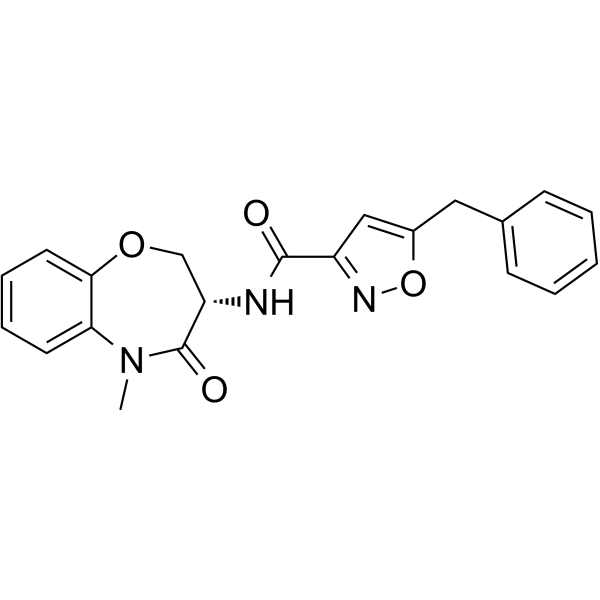
GSK481
Based on 1 publication(s) in Google Scholar
GSK481 is a highly potent, selective, and specific receptor interacting protein 1 (RIP1) kinase inhibitor with an IC50 of 1.3 nM, which inhibits Ser166 phosphorylation in wild-type human RIP1 (IC50=2.8 nM). GSK481 also exhibits excellent translation in the U937 cellular assay with an IC50 of 10 nM.
For research use only. We do not sell to patients.
- Purity : 98.04%
- CAS No.: 1622849-58-4
- Formula: C21H19N3O4
- Molecular Weight:377.39
-
Storage:Powder -20°C, 3 years , 4°C, 2 years ; In solvent -80°C, 2 years , -20°C, 1 year

To place orders, for customer services and technical support, please contact: MedChemExpress USA
Tel: 609-228-6898 E-mail: [email protected] [email protected]


-
 Biological Activity
-
Chemical Information
-
Solvent & Solubility
- Protocols
- Purity & Documentation
- References
-
 Help & FAQs


-
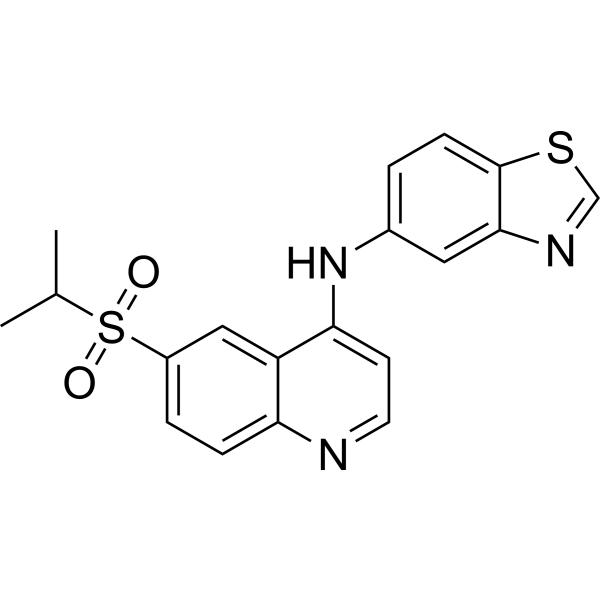
HY-101872
GSK-872RIPK3 Inhibitor -
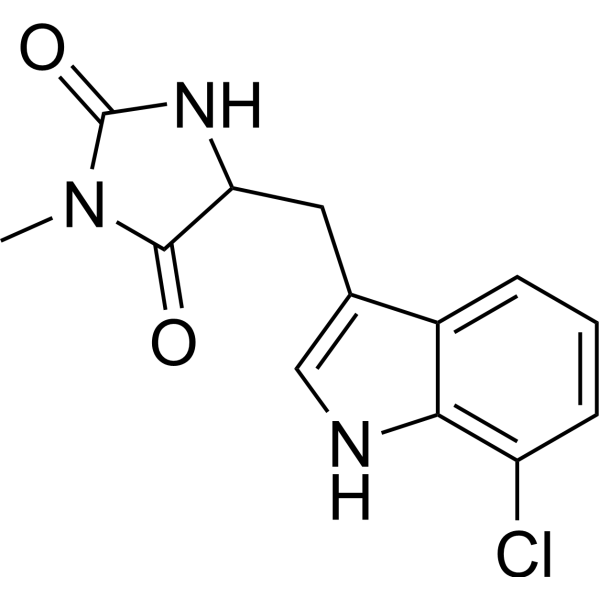
HY-14622A
Necrostatin 2 racemateRIPK1 Inhibitor -
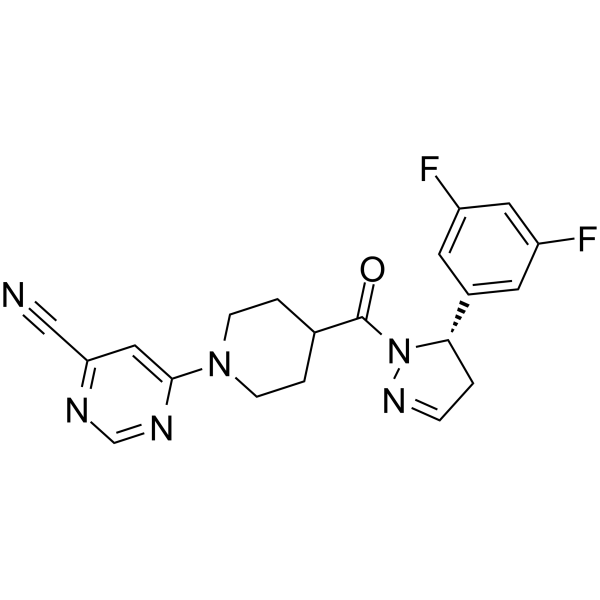
HY-114492
GSK547RIPK1 Inhibitor -
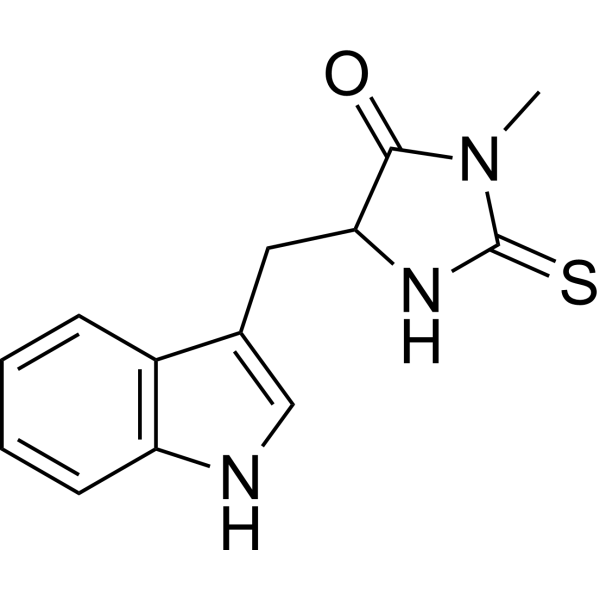
HY-15760
Necrostatin-1RIPK1 Inhibitor -
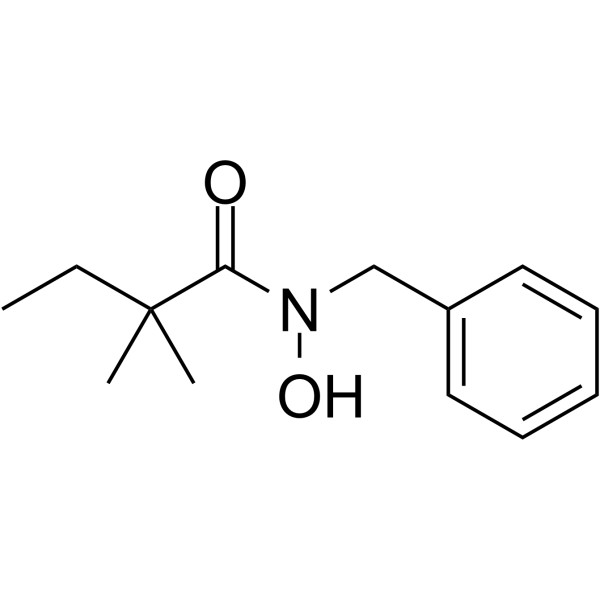
HY-101032
RIPA-56RIP1 Inhibitor -
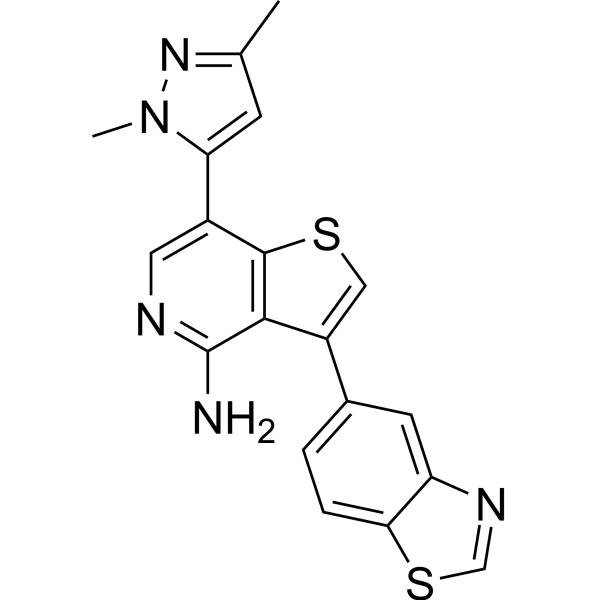
HY-125402
GSK-843RIP3 Inhibitor -
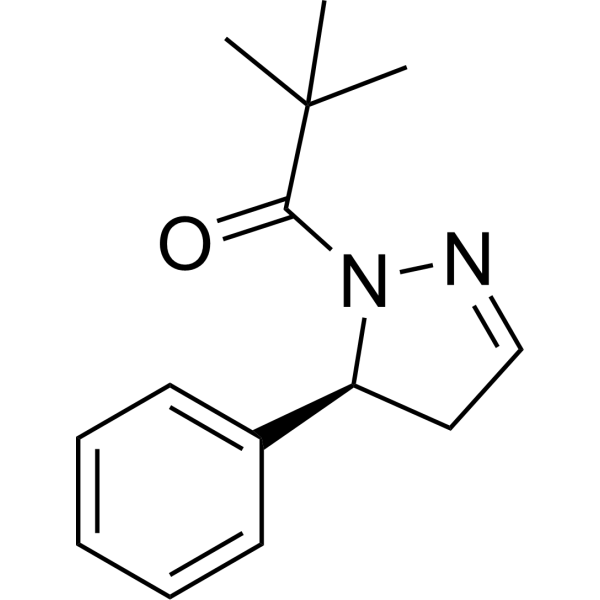
HY-103028A
GSK963RIP1 Kinase Inhibitor -
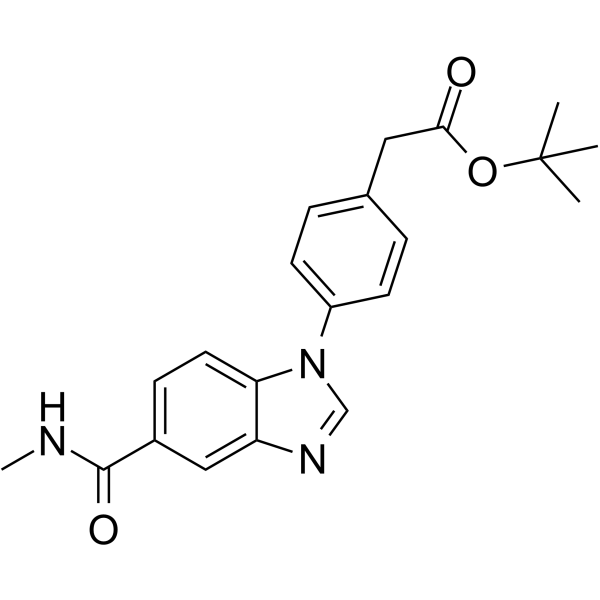
HY-104021
GSK840RIPK3 Inhibitor -
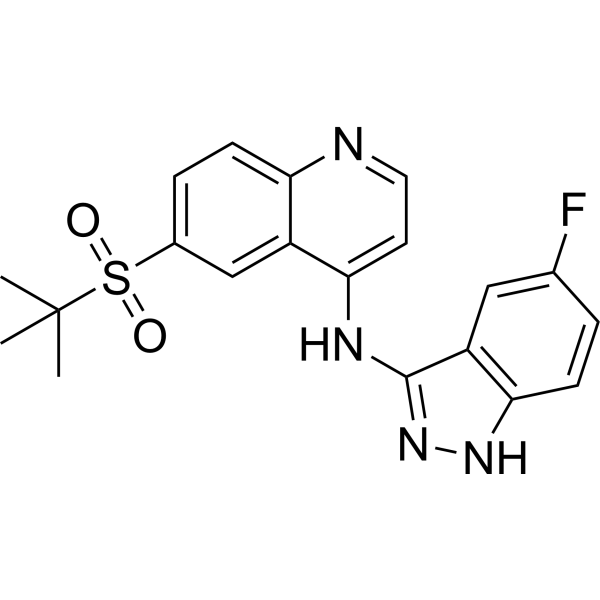
HY-100339
GSK583RIPK2 Inhibitor -
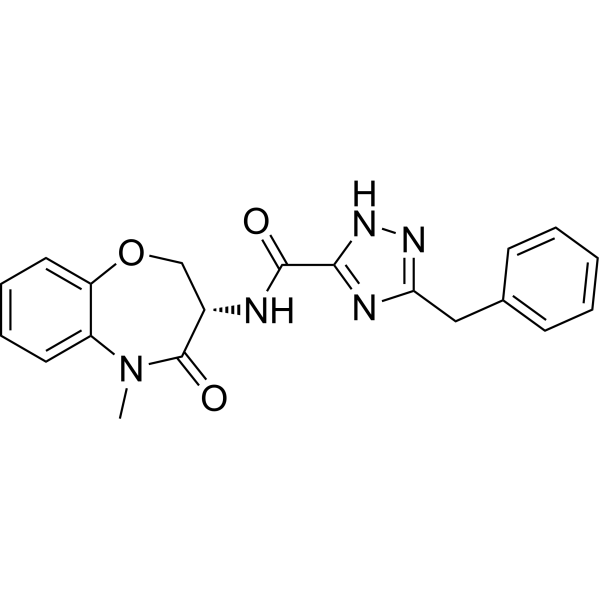
HY-101760
GSK2982772RIPK1 Inhibitor -

HY-100131R
GSK481 (Standard)RIP1 Kinase Inhibitor -
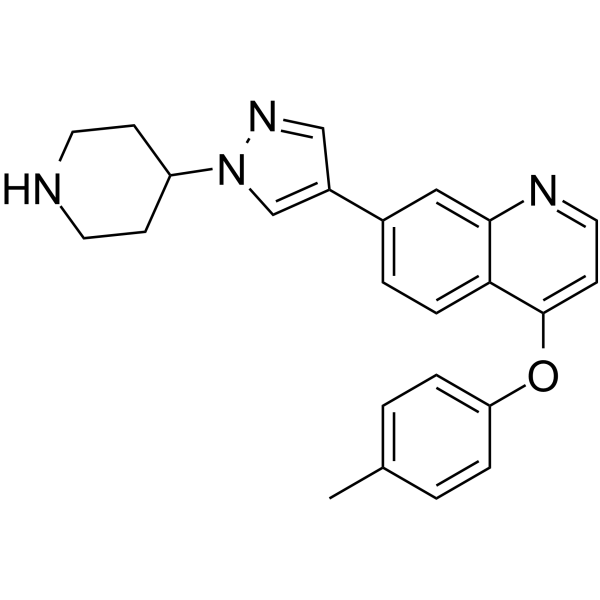
HY-114349
HS-1371RIP kinase Inhibitor
Publications Citing Use of MedChemExpress (MCE) GSK481
More

Biological Activity
Description
IC50 & Target
IC50: 1.3 nM (RIP1), 2.8 nM (Ser166 phosphorylation in wild-type human RIP1)[1]
Cellular Effect
|
Cell Line

|
Type | Value | Description | References |
|---|---|---|---|---|
| HEK-293T | IC50 |
>10 μM
Compound: 14; GSK'481
|
Inhibition of mouse WT RIP1 transfected in HEK293T cells assessed as reduction in S166 phosphorylation by ELISA
Inhibition of mouse WT RIP1 transfected in HEK293T cells assessed as reduction in S166 phosphorylation by ELISA
|
[PMID: 26854747] |
| HEK-293T | IC50 |
110 nM
Compound: 14; GSK'481
|
Inhibition of mouse RIP1 V159L mutant transfected in HEK293T cells assessed as reduction in S166 phosphorylation by ELISA
Inhibition of mouse RIP1 V159L mutant transfected in HEK293T cells assessed as reduction in S166 phosphorylation by ELISA
|
[PMID: 26854747] |
| HEK-293T | IC50 |
12 nM
Compound: 14; GSK'481
|
Inhibition of mouse RIP1 V159L/T164M/Q176L/S180D/S181G mutant transfected in HEK293T cells assessed as reduction in S166 phosphorylation by ELISA
Inhibition of mouse RIP1 V159L/T164M/Q176L/S180D/S181G mutant transfected in HEK293T cells assessed as reduction in S166 phosphorylation by ELISA
|
[PMID: 26854747] |
| HEK-293T | IC50 |
18 nM
Compound: 14; GSK'481
|
Inhibition of mouse RIP1 15 point mutant transfected in HEK293T cells assessed as reduction in S166 phosphorylation by ELISA
Inhibition of mouse RIP1 15 point mutant transfected in HEK293T cells assessed as reduction in S166 phosphorylation by ELISA
|
[PMID: 26854747] |
| HEK-293T | IC50 |
2.8 nM
Compound: 14; GSK'481
|
Inhibition of human WT RIP1 infected in HEK293T cells assessed as reduction in S166 phosphorylation by ELISA
Inhibition of human WT RIP1 infected in HEK293T cells assessed as reduction in S166 phosphorylation by ELISA
|
[PMID: 26854747] |
| L929 | IC50 |
3.2 μM
Compound: 14; GSK'481
|
Inhibition of mouse RIP1 in mouse L929 cells assessed as inhibition of TNF/zVAD.fmk induced necroptosis by Cell titer-Glo luminescence assay
Inhibition of mouse RIP1 in mouse L929 cells assessed as inhibition of TNF/zVAD.fmk induced necroptosis by Cell titer-Glo luminescence assay
|
[PMID: 26854747] |
| U-937 | IC50 |
10 nM
Compound: (S)-GSK481
|
Anti-necroptotic activity against TNFalph/Z-VAD-FMK-induced human U-937 cells assessed as cell viability measured after 19 to 21 hrs by CellTiter-Glo luminescent cell viability assay
Anti-necroptotic activity against TNFalph/Z-VAD-FMK-induced human U-937 cells assessed as cell viability measured after 19 to 21 hrs by CellTiter-Glo luminescent cell viability assay
|
[PMID: 33964444] |
| U-937 | IC50 |
10 nM
Compound: 14; GSK'481
|
Inhibition of human RIP1 in human U937 cells assessed as inhibition of TNF/zVAD.fmk induced necroptosis after 24 hrs by Cell titer-Glo luminescence assay
Inhibition of human RIP1 in human U937 cells assessed as inhibition of TNF/zVAD.fmk induced necroptosis after 24 hrs by Cell titer-Glo luminescence assay
|
[PMID: 26854747] |
In Vitro
GSK481 (300 nM; 2 hours; Jurkat cells) abrogates the RIP3 up-regulation induces by both TNFa and shikonin in live and dead cells, indicating that necroptosis is in fact induced by both agents[2].
MedChemExpress (MCE) has not independently confirmed the accuracy of these methods. They are for reference only.
-
Cell Line:Jurkat cells
-
Concentration:300 nM
-
Incubation Time:2 hours
-
Result:Increased levels of detectable apoptosis induced by TNFa and shikonin.
In Vivo
MedChemExpress (MCE) has not independently confirmed the accuracy of these methods. They are for reference only.


Chemical Information
-
CAS No. 1622849-58-4
-
Appearance Solid
-
Molecular Weight 377.39
-
Formula C21H19N3O4
-
Color Light brown to brown
-
SMILES
O=C(C1=NOC(CC2=CC=CC=C2)=C1)N[C@H]3COC4=CC=CC=C4N(C)C3=O
-
Shipping
Room temperature in continental US; may vary elsewhere.
-
Storage
Powder -20°C 3 years 4°C 2 years In solvent -80°C 2 years -20°C 1 year


Publications (1)
-
Journal Impact Factor
-
Most Recent
-
Nat Commun
Human iPSC-based Modeling of Pulmonary Fibrosis Reveals p300/CBP Inhibition Suppresses Alveolar Transitional Cell State. [Abstract]2026 Feb 12;17(1):1214. PMID: 41680175


Solvent & Solubility
In Vitro:
DMSO : ≥ 35 mg/mL (92.74 mM; Hygroscopic DMSO has a significant impact on the solubility of product, please use newly opened DMSO)
* "≥" means soluble, but saturation unknown.
Please refer to the solubility information to select the appropriate solvent. Once prepared, please aliquot and store the solution to prevent product inactivation from repeated freeze-thaw cycles.
Storage method and period of stock solution: -80°C, 2 years; -20°C, 1 year. When stored at -80°C, please use it within 2 years. When stored at -20°C, please use it within 1 year.
Please refer to the solubility information to select the appropriate solvent. Once prepared, please aliquot and store the solution to prevent product inactivation from repeated freeze-thaw cycles.
Storage method and period of stock solution: -80°C, 2 years; -20°C, 1 year. When stored at -80°C, please use it within 2 years. When stored at -20°C, please use it within 1 year.
Concentration (start) × Volume (start) = Concentration (final) × Volume (final)
In Vivo:
Select the appropriate dissolution method based on your experimental animal and administration route.
- For the following dissolution methods, please ensure to first prepare a clear stock solution using an In Vitro approach and then sequentially add co-solvents:
- To ensure reliable experimental results, the clarified stock solution can be appropriately stored based on storage conditions. As for the working solution for In Vivo experiments, it is recommended to prepare freshly and use it on the same day.
- The percentages shown for the solvents indicate their volumetric ratio in the final prepared solution. If precipitation or phase separation occurs during preparation, heat and/or sonication can be used to aid dissolution.
Add each solvent one by one: 10% DMSO 40% PEG300 5% Tween-80 45% Saline
Solubility: ≥ 2.5 mg/mL (6.62 mM); Clear solution
This protocol yields a clear solution of ≥ 2.5 mg/mL (saturation unknown).
Taking 1 mL working solution as an example, add 100 μL DMSO stock solution (25.0 mg/mL) to 400 μL PEG300, and mix evenly; then add 50 μL Tween-80 and mix evenly; then add 450 μL Saline to adjust the volume to 1 mL.
Preparation of Saline: Dissolve 0.9 g sodium chloride in ddH₂O and dilute to 100 mL to obtain a clear Saline solution.
Add each solvent one by one: 10% DMSO 90% (20% SBE-β-CD in Saline)
Solubility: 2.5 mg/mL (6.62 mM); Suspended solution; Need ultrasonic
This protocol yields a suspended solution of 2.5 mg/mL. Suspended solution can be used for oral and intraperitoneal injection.
Taking 1 mL working solution as an example, add 100 μL DMSO stock solution (25.0 mg/mL) to 900 μL 20% SBE-β-CD in Saline, and mix evenly.
Preparation of 20% SBE-β-CD in Saline (4°C, storage for one week): 2 g SBE-β-CD powder is dissolved in 10 mL Saline, completely dissolve until clear.
In Vivo Dissolution Calculator
Please enter the basic information of animal experiments:
-
-
-
-
Recommended: Prepare an additional quantity of animals to account for potential losses during experiments.
Please enter your animal formula composition:
-
%DMSO +
Recommended: Keep the proportion of DMSO in working solution below 2% if your animal is weak.
-
%+
-
+%Tween-80 + +
-
%Saline +
The co-solvents required include: DMSO, . All of co-solvents are available by MedChemExpress (MCE). , Tween 80. All of co-solvents are available by MedChemExpress (MCE).
Working solution concentration: 0.22 mg/mL
Method for preparing stock solution: mg drug dissolved in μL DMSO. Stock solution concentration: mg/mL.
1. Take μL DMSO stock solution;
2. Add μL .
μL , mix evenly;
3. Then add μL Tween 80, mix evenly;
4. Then add μL
Please ensure that the stock solution in the first step is dissolved to a clear state, and add co-solvents in sequence. You can use ultrasonic heating (ultrasonic cleaner, recommended frequency 20-40 kHz), vortexing, etc. to assist dissolution.


Purity & Documentation
-
Data Sheet (275 KB)
-
SDS (396 KB)
- English - EN (396 KB)
- Français - FR (396 KB)
- Deutsch - DE (396 KB)
- Norwegian - NO (396 KB)
- Español - ES (396 KB)
- Swedish - SV (396 KB)
- Italian - IT (396 KB)
- Korean - KR (396 KB)
- Portuguese - PT (396 KB)
-
Handling Instructions (2659 KB)
References
[1]. Harris PA et al. DNA-Encoded Library Screening Identifies Benzo[b][1,4]oxazepin-4-ones as Highly Potent and Monoselective Receptor Interacting Protein 1 Kinase Inhibitors. J Med Chem, 2016 Mar 10, 59(5):2163-78. [Content Brief]
[2]. Lee HL, et al. Simultaneous flow cytometric immunophenotyping of necroptosis, apoptosis and RIP1-dependent apoptosis. Methods. 2018 Feb 1;134-135:56-66. [Content Brief]


Complete Stock Solution Preparation Table
Please refer to the solubility information to select the appropriate solvent. Once prepared, please aliquot and store the solution to prevent product inactivation from repeated freeze-thaw cycles.
Storage method and period of stock solution: -80°C, 2 years; -20°C, 1 year. When stored at -80°C, please use it within 2 years. When stored at -20°C, please use it within 1 year.
| Optional Solvent | Concentration Solvent Mass | 1 mg | 5 mg | 10 mg | 25 mg |
|---|---|---|---|---|---|
| DMSO | 1 mM | 2.6498 mL | 13.2489 mL | 26.4978 mL | 66.2445 mL |
| 5 mM | 0.5300 mL | 2.6498 mL | 5.2996 mL | 13.2489 mL | |
| 10 mM | 0.2650 mL | 1.3249 mL | 2.6498 mL | 6.6244 mL | |
| 15 mM | 0.1767 mL | 0.8833 mL | 1.7665 mL | 4.4163 mL | |
| 20 mM | 0.1325 mL | 0.6624 mL | 1.3249 mL | 3.3122 mL | |
| 25 mM | 0.1060 mL | 0.5300 mL | 1.0599 mL | 2.6498 mL | |
| 30 mM | 0.0883 mL | 0.4416 mL | 0.8833 mL | 2.2081 mL | |
| 40 mM | 0.0662 mL | 0.3312 mL | 0.6624 mL | 1.6561 mL | |
| 50 mM | 0.0530 mL | 0.2650 mL | 0.5300 mL | 1.3249 mL | |
| 60 mM | 0.0442 mL | 0.2208 mL | 0.4416 mL | 1.1041 mL | |
| 80 mM | 0.0331 mL | 0.1656 mL | 0.3312 mL | 0.8281 mL |


GSK481 Related Classifications
HY-100131 Related Classifications
 Powered by Bioz