



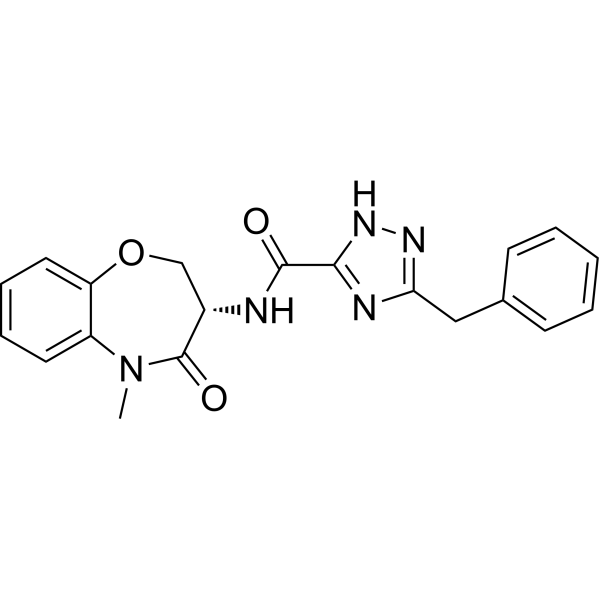
GSK2982772
Based on 9 publication(s) in Google Scholar
GSK2982772 is a potent, orally active and ATP competitive RIP1 kinase inhibitor with IC50 values of 16 nM and 20 nM for human and monkey RIP1, respectively.
For research use only. We do not sell to patients.
- Purity : 99.79%
- CAS No.: 1622848-92-3
- Formula: C20H19N5O3
- Molecular Weight:377.40
-
Storage:Powder -20°C, 3 years , 4°C, 2 years ; In solvent -80°C, 2 years , -20°C, 1 year

To place orders, for customer services and technical support, please contact: MedChemExpress USA
Tel: 609-228-6898 E-mail: [email protected] [email protected]


-
 Biological Activity
-
Chemical Information
-
Solvent & Solubility
- Protocols
- Purity & Documentation
- References
-
 Help & FAQs


-
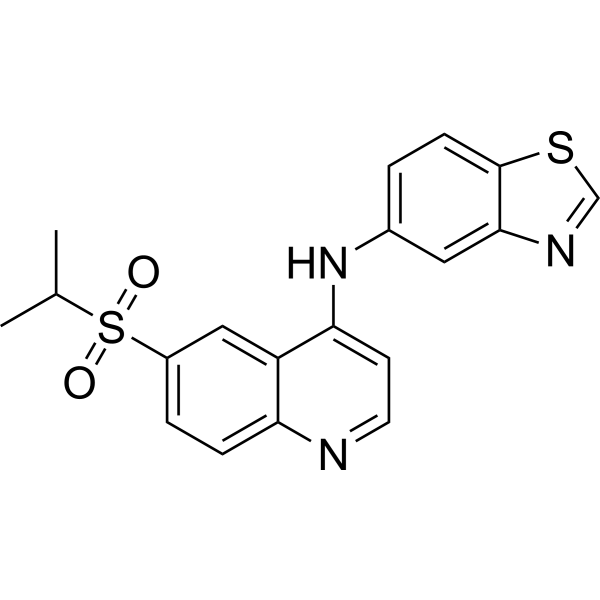
HY-101872
GSK-872RIPK3 Inhibitor -
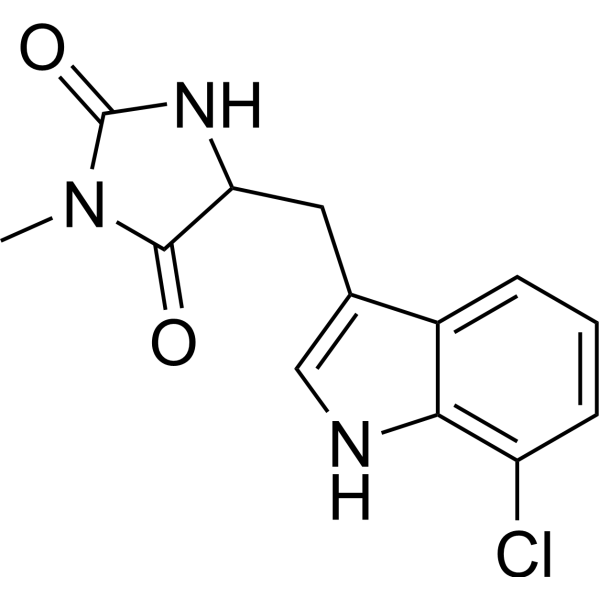
HY-14622A
Necrostatin 2 racemateRIPK1 Inhibitor -
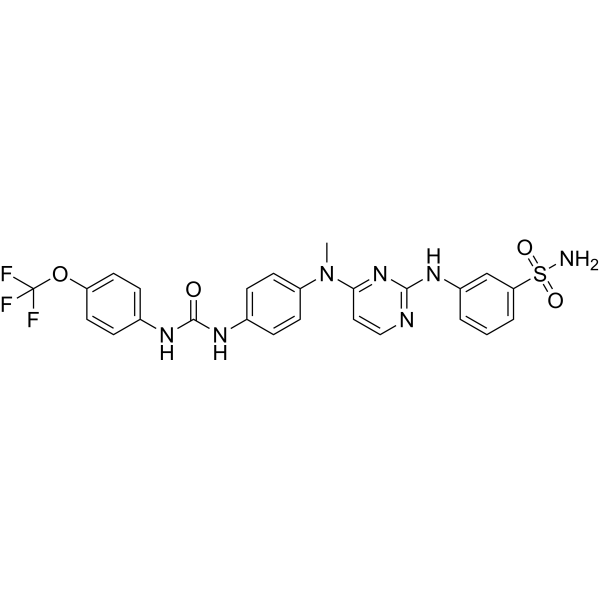
HY-112292
GW806742XMLKL/VEGFR2 Inhibitor -
HY-15760
Necrostatin-1RIPK1 Inhibitor -
HY-104021
GSK840RIPK3 Inhibitor -
HY-114371
EclitasertibRIPK1 Inhibitor -
HY-128348
PK68RIPK1 Inhibitor -
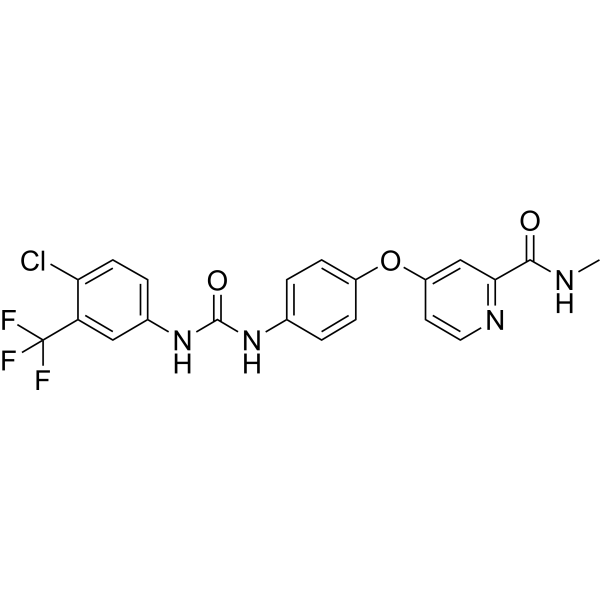
HY-10201
SorafenibMultikinase Inhibitor -
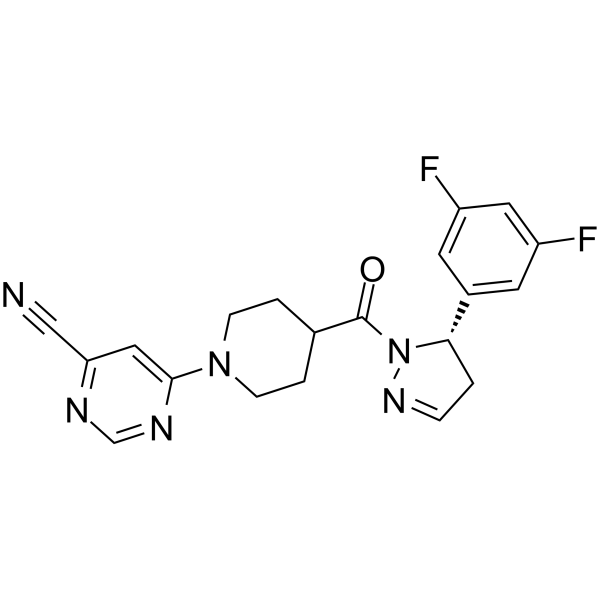
HY-114492
GSK547RIPK1 Inhibitor -
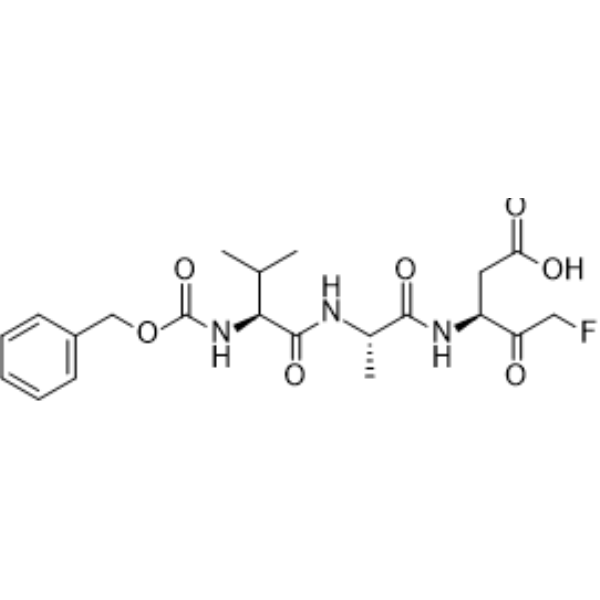
HY-16658B
Z-VAD-FMKPan-Caspase Inhibitor -
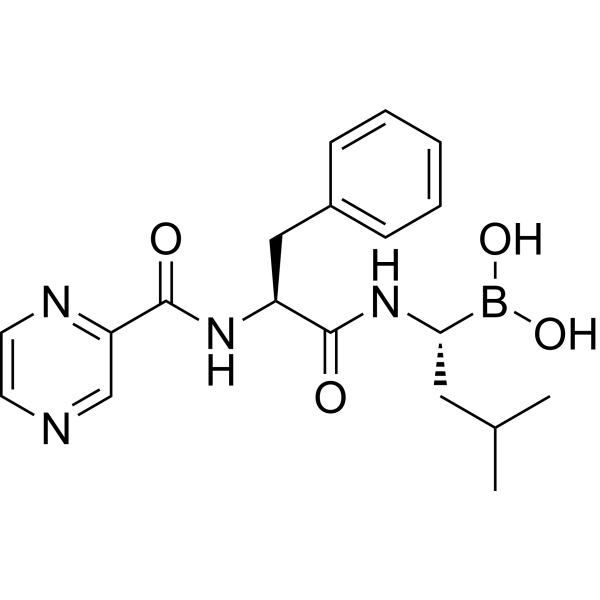
HY-10227
BortezomibProteasome Inhibitor -
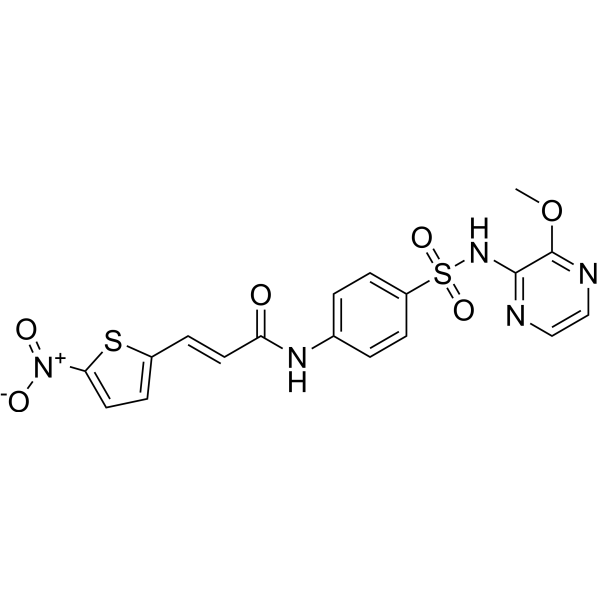
HY-100573
NecrosulfonamideMLKL/GSDMD Inhibitor
Publications Citing Use of MedChemExpress (MCE) GSK2982772
More- Nat Commun. 2026 Feb 12;17(1):1214. [Abstract]
- Cell Death Dis. 2025 Oct 24;16(1):759. [Abstract]
- Cell Death Discov. 2024 Mar 23;10(1):152. [Abstract]
- J Med Chem. 2025 Oct 23;68(20):21766-21785. [Abstract]
- Biochem Pharmacol. 2026 Apr:246:117727. [Abstract]
- Biochem Pharmacol. 2020 Feb:172:113751. [Abstract]
- Int J Mol Sci. 2025 Jun 10;26(12):5555. [Abstract]
- PLoS One. 2024 Nov 1;19(11):e0308647. [Abstract]
- bioRxiv. 2026 Jun 29.
 Customer Validation & Images

-
Cell Proliferation/Viability Assay
-
Cell Imaging/Staining


Biological Activity
Description
IC50 & Target
IC50: 16 nM (human RIP1 FP)IC50: 20 nM (monkey RIP1 FP)IC50: 2 μM (rat RIP1 FP)IC50: 2.5 μM (mouse RIP1 FP)[1]
Cellular Effect
|
Cell Line

|
Type | Value | Description | References |
|---|---|---|---|---|
| HEK293 | IC50 |
195 μM
Compound: 5; GSK2982772
|
Inhibition of human ERG expressed in HEK293 cells
Inhibition of human ERG expressed in HEK293 cells
|
[PMID: 28151659] |
| HT-29 | CC50 |
>100 μM
Compound: A3; GSK2982772; GSK'772
|
Cytotoxicity against human HT-29 cells by Cell Titer Glo assay
Cytotoxicity against human HT-29 cells by Cell Titer Glo assay
|
[PMID: 38309200] |
| HT-29 | CC50 |
>100 μM
Compound: GSK'772
|
Cytotoxicity against human HT-29 cells assessed as reduction in cell viability measured for 16 to 24 hrs by Cell-titer-glo assay
Cytotoxicity against human HT-29 cells assessed as reduction in cell viability measured for 16 to 24 hrs by Cell-titer-glo assay
|
[PMID: 36724216] |
| HT-29 | CC50 |
>50 μM
Compound: 1; GSK772
|
Cytotoxicity against human HT-29 cells assessed as reduction in cell viability measured after 8 to 10 hrs by celltiter-glo luminescent cell viability assay
Cytotoxicity against human HT-29 cells assessed as reduction in cell viability measured after 8 to 10 hrs by celltiter-glo luminescent cell viability assay
|
[PMID: 33930803] |
| HT-29 | CC50 |
>50 μM
Compound: GSK'772
|
Cytotoxicity against human HT-29 cells assessed as reduction in cell viability by celltiter-glo luminescent cell viability assay
Cytotoxicity against human HT-29 cells assessed as reduction in cell viability by celltiter-glo luminescent cell viability assay
|
[PMID: 36288088] |
| HT-29 | CC50 |
>50 μM
Compound: GSK2982772
|
Cytotoxicity against human HT-29 cells assessed as reduction in cell viability
Cytotoxicity against human HT-29 cells assessed as reduction in cell viability
|
[PMID: 37364415] |
| HT-29 | CC50 |
>50 μM
Compound: GSK'772
|
Cytotoxicity against human HT-29 cells assessed as reduction in cell viability
Cytotoxicity against human HT-29 cells assessed as reduction in cell viability
|
[PMID: 35398729] |
| HT-29 | CC50 |
>50 μM
Compound: GSK'772
|
Cytotoxicity against human HT-29 cells
Cytotoxicity against human HT-29 cells
|
[PMID: 38484677] |
| HT-29 | EC50 |
0.0036 μM
Compound: 1; GSK772
|
Anti-necroptotic activity in human HT-29 cells assessed as inhibition of hTNFalpha/Z-VAD-fmk (TSZ)-induced necroptosis by measuring increase in cell viability measured after 8 to 10 hrs by celltiter-glo luminescent cell viability assay
Anti-necroptotic activity in human HT-29 cells assessed as inhibition of hTNFalpha/Z-VAD-fmk (TSZ)-induced necroptosis by measuring increase in cell viability measured after 8 to 10 hrs by celltiter-glo luminescent cell viability assay
|
[PMID: 33930803] |
| HT-29 | EC50 |
2.78 nM
Compound: GSK2982772
|
Anti-necroptosis activity against TSZ-induced human HT-29 cells
Anti-necroptosis activity against TSZ-induced human HT-29 cells
|
[PMID: 38171150] |
| HT-29 | EC50 |
2.9 nM
Compound: A3; GSK2982772; GSK'772
|
Anti-necroptic activity against human HT-29 cells assessed as cell viability pretreated with compound followed by TNF-alpha/Smac mimetic/Z-VAD-FMK stimulation for 16 hrs by Cell Titer Glo assay
Anti-necroptic activity against human HT-29 cells assessed as cell viability pretreated with compound followed by TNF-alpha/Smac mimetic/Z-VAD-FMK stimulation for 16 hrs by Cell Titer Glo assay
|
[PMID: 38309200] |
| HT-29 | EC50 |
3.6 nM
Compound: GSK'772
|
Anti-necroptotic activity in TSZ induced human HT-29 cells assessed as increase in cell viability pretreated with compound followed by TSZ stimulation and measured after 16 hrs by celltiter-glo luminescent cell viability assay
Anti-necroptotic activity in TSZ induced human HT-29 cells assessed as increase in cell viability pretreated with compound followed by TSZ stimulation and measured after 16 hrs by celltiter-glo luminescent cell viability assay
|
[PMID: 36288088] |
| HT-29 | EC50 |
3.6 nM
Compound: GSK'772
|
Anti-necroptosis activity against human HT-29 cells assessed as inhibition of TSZ-induced necroptosis preincubated for 30 mins followed by compound addition and measured for 16 hrs by Cell-titer-glo assay
Anti-necroptosis activity against human HT-29 cells assessed as inhibition of TSZ-induced necroptosis preincubated for 30 mins followed by compound addition and measured for 16 hrs by Cell-titer-glo assay
|
[PMID: 36724216] |
| HT-29 | EC50 |
4.1 nM
Compound: GSK2982772
|
Anti-necroptotic activity against TSZ induced necroptosis in human HT-29 cells preincubated for 12 hrs followed by TSZ addition by CellTiter-Glo luminescent cell viability assay
Anti-necroptotic activity against TSZ induced necroptosis in human HT-29 cells preincubated for 12 hrs followed by TSZ addition by CellTiter-Glo luminescent cell viability assay
|
[PMID: 37364415] |
| HT-29 | EC50 |
4.1 nM
Compound: GSK'772
|
Anti-necroptosis activity against human HT-29 cell assessed as inhibition of TSZ-induced necroptosis by chemiluminescence assay
Anti-necroptosis activity against human HT-29 cell assessed as inhibition of TSZ-induced necroptosis by chemiluminescence assay
|
[PMID: 38484677] |
| HT-29 | IC50 |
4.1 nM
Compound: 6; GSK2982772
|
Induction of necroptosis in human HT-29 cells assessed as increase in TNFalpha/AT-406/zVAD-FMK-induced LDH release preincubated with cells followed by TNFalpha/AT-406/zVAD-FMK addition measured after 16 to 20 hrs by CytoTox 96 nonradioactive cytotoxicity
Induction of necroptosis in human HT-29 cells assessed as increase in TNFalpha/AT-406/zVAD-FMK-induced LDH release preincubated with cells followed by TNFalpha/AT-406/zVAD-FMK addition measured after 16 to 20 hrs by CytoTox 96 nonradioactive cytotoxicity
|
[PMID: 29485864] |
| L929 | EC50 |
1260 nM
Compound: GSK2982772
|
Anti-necroptosis activity against TSZ-induced mouse L929 cells
Anti-necroptosis activity against TSZ-induced mouse L929 cells
|
[PMID: 38171150] |
| U-937 | EC50 |
1.27 nM
Compound: GSK2982772
|
Anti-necroptosis activity against TSZ-induced human U-937 cells
Anti-necroptosis activity against TSZ-induced human U-937 cells
|
[PMID: 38171150] |
| U-937 | IC50 |
6.3 nM
Compound: GSK2982772; 40
|
Anti-necrotic activity in human U-937 cells
Anti-necrotic activity in human U-937 cells
|
[PMID: 36346971] |
In Vitro
GSK2982772 shows more than 1,000-fold selectivity for ERK5 over a panel of over 339 kinases at 10 μM. In stimulated cellular systems,GSK2982772 is also able to reduce spontaneous production of cytokines (IL-1β and IL-6) in a concentration-dependent fashion from ulcerative colitis explant tissue in overnight incubations. GSK2982772 produces a weak concentration dependent inhibition of hERG in human embryonic kidney (HEK-293) cells, with an estimated IC50 of 195 μM, and also shows a weak activation of the human Pregnane X receptor (hPXR) with an EC50 of 13 μM[1].
MedChemExpress (MCE) has not independently confirmed the accuracy of these methods. They are for reference only. Further protocols information, click here.
In Vivo
In the corresponding TNF/zVAD model, GSK2982772 shows 13, 63, and 93% protection from temperature loss over 3 h. GSK2982772 displays a good free fraction in blood in rats (4.2%), dogs (11%), cynomolgus monkeys (11%), and humans (7.4%)[1].
GSK2982772 has a good pharmacokinetic profile across both rats and monkeys. GSK2982772 distributes into a range of tissues including the colon, liver, kidney, and heart at concentrations comparable to those of blood[1].
However, GSK2982772 has low brain penetration in rat (4%) despite possessing good cell permeability (21×10-6 cm/s)[1].
GSK2982772 itself does not possess good blood-brain barrier (BBB) permeability and may only enter brain tissue under pathological conditions where the BBB is compromised[2].
GSK2982772 (2.5 mg/kg, i.p., once daily for 3 weeks) can cross the compromised BBB in AAV-TAUnk01L transgenic mice (a tauopathy pathological model with potentially increased BBB permeability), exerting an inhibitory effect on TAU-induced astrocyte activation; however, under normal physiological conditions, its BBB permeability is impaired due to P-glycoprotein efflux, making it difficult to enter brain tissue[2].
MedChemExpress (MCE) has not independently confirmed the accuracy of these methods. They are for reference only.
Clinical Trial
| NCT Number | Sponsor | Condition | Start Date |
Phase
|
|---|---|---|---|---|
| NCT01329991 | Plexxikon| | 2011-05 | PHASE1 |


Chemical Information
-
CAS No. 1622848-92-3
-
Appearance Solid
-
Molecular Weight 377.40
-
Formula C20H19N5O3
-
Color White to yellow
-
SMILES
O=C(C1=NC(CC2=CC=CC=C2)=NN1)N[C@H]3COC4=CC=CC=C4N(C)C3=O
-
Shipping
Room temperature in continental US; may vary elsewhere.
-
Storage
Powder -20°C 3 years 4°C 2 years In solvent -80°C 2 years -20°C 1 year


Publications (9)
-
Journal Impact Factor
-
Most Recent
-
Nat Commun
Human iPSC-based Modeling of Pulmonary Fibrosis Reveals p300/CBP Inhibition Suppresses Alveolar Transitional Cell State. [Abstract]2026 Feb 12;17(1):1214. PMID: 41680175 -
Cell Death Dis
RIPK3 promotes skin inflammation by enhancing IL-36α signaling and necroptosis in keratinocytes. [Abstract]2025 Oct 24;16(1):759. PMID: 41136377 -
Cell Death Discov
RIPK1 inhibitor ameliorates pulmonary injury by modulating the function of neutrophils and vascular endothelial cells. [Abstract]2024 Mar 23;10(1):152. PMID: 38521771 -
J Med Chem
Discovery of a 1 H-Pyrazol-3-Amine Derivative as a Novel, Selective, and Orally Available RIPK1 Inhibitor for the Treatment of Inflammatory Disease. [Abstract]2025 Oct 23;68(20):21766-21785. PMID: 41077763 -
Biochem Pharmacol
Structural and molecular characterization of a small-molecule TNF-α-TNFR1 inhibitor modulating cell death signaling. [Abstract]2026 Apr:246:117727. PMID: 41571205 -
Biochem Pharmacol
RIPK1 inhibitor ameliorates colitis by directly maintaining intestinal barrier homeostasis and regulating following IECs-immuno crosstalk. [Abstract]2020 Feb:172:113751. PMID: 31837309 -
Int J Mol Sci
RIPK1 in Diffuse Glioma Pathology: From Prognosis Marker to Potential Therapeutic Target. [Abstract]2025 Jun 10;26(12):5555. PMID: 40565018
GSK2982772 purchased from MedChemExpress. Usage Cited in: Int J Mol Sci. 2025 Jun 10;26(12):5555. [Abstract]
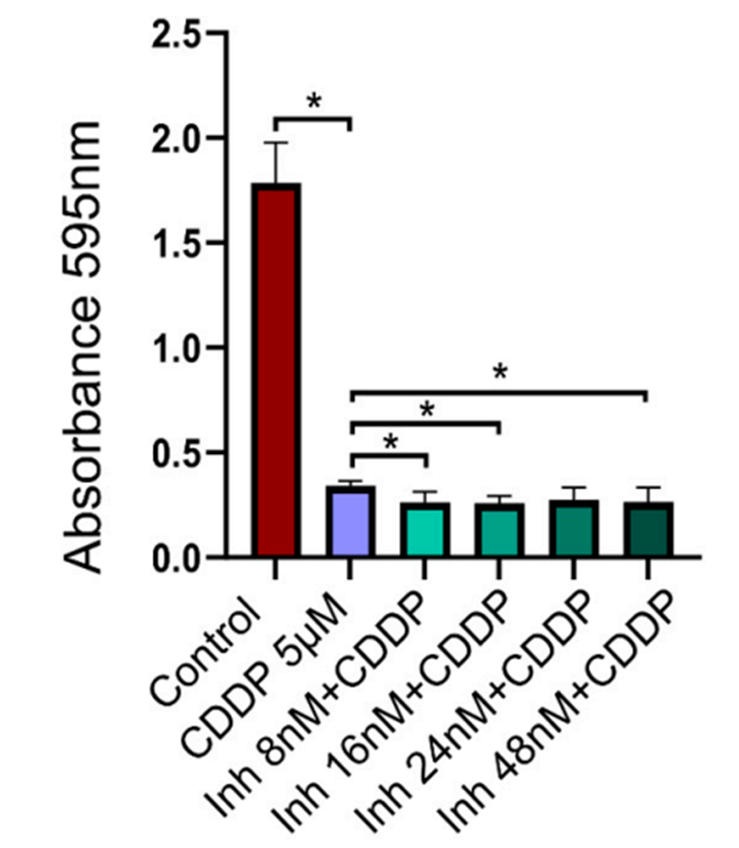
Combined treatment of GSK2982772 (8, 16, 24, 48 nM) + cisplatin (CDDP) (5 μM) inhibits GBM cell growth.
GSK2982772 purchased from MedChemExpress. Usage Cited in: Int J Mol Sci. 2025 Jun 10;26(12):5555. [Abstract]
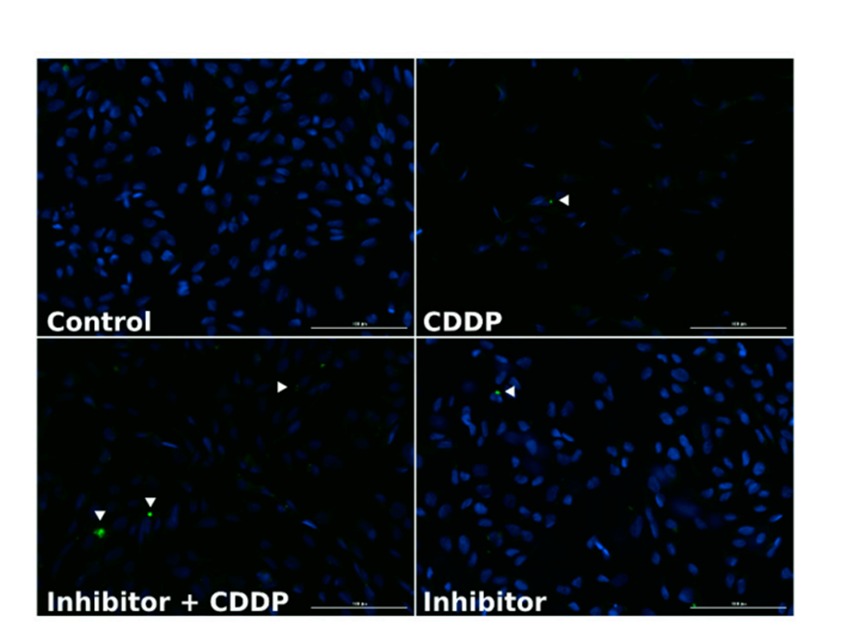
TUNEL results revealed higher levels of apoptosis induction when cells were sensitized with GSK2982772 and subsequently treated with CDDP.
-
PLoS One
A novel small molecule screening assay using normal human chondrocytes toward osteoarthritis drug discovery. [Abstract]2024 Nov 1;19(11):e0308647. PMID: 39485774 -


Solvent & Solubility
In Vitro:
DMSO : 250 mg/mL (662.43 mM; Need ultrasonic; Hygroscopic DMSO has a significant impact on the solubility of product, please use newly opened DMSO)
H2O : < 0.1 mg/mL (insoluble)
Please refer to the solubility information to select the appropriate solvent. Once prepared, please aliquot and store the solution to prevent product inactivation from repeated freeze-thaw cycles.
Storage method and period of stock solution: -80°C, 2 years; -20°C, 1 year. When stored at -80°C, please use it within 2 years. When stored at -20°C, please use it within 1 year.
Please refer to the solubility information to select the appropriate solvent. Once prepared, please aliquot and store the solution to prevent product inactivation from repeated freeze-thaw cycles.
Storage method and period of stock solution: -80°C, 2 years; -20°C, 1 year. When stored at -80°C, please use it within 2 years. When stored at -20°C, please use it within 1 year.
Concentration (start) × Volume (start) = Concentration (final) × Volume (final)
In Vivo:
Select the appropriate dissolution method based on your experimental animal and administration route.
- For the following dissolution methods, please ensure to first prepare a clear stock solution using an In Vitro approach and then sequentially add co-solvents:
- To ensure reliable experimental results, the clarified stock solution can be appropriately stored based on storage conditions. As for the working solution for In Vivo experiments, it is recommended to prepare freshly and use it on the same day.
- The percentages shown for the solvents indicate their volumetric ratio in the final prepared solution. If precipitation or phase separation occurs during preparation, heat and/or sonication can be used to aid dissolution.
Add each solvent one by one: 10% DMSO 40% PEG300 5% Tween-80 45% Saline
Solubility: ≥ 2.08 mg/mL (5.51 mM); Clear solution
This protocol yields a clear solution of ≥ 2.08 mg/mL (saturation unknown).
Taking 1 mL working solution as an example, add 100 μL DMSO stock solution (20.8 mg/mL) to 400 μL PEG300, and mix evenly; then add 50 μL Tween-80 and mix evenly; then add 450 μL Saline to adjust the volume to 1 mL.
Preparation of Saline: Dissolve 0.9 g sodium chloride in ddH₂O and dilute to 100 mL to obtain a clear Saline solution.
Add each solvent one by one: 10% DMSO 90% (20% SBE-β-CD in Saline)
Solubility: ≥ 2.08 mg/mL (5.51 mM); Clear solution
This protocol yields a clear solution of ≥ 2.08 mg/mL (saturation unknown).
Taking 1 mL working solution as an example, add 100 μL DMSO stock solution (20.8 mg/mL) to 900 μL 20% SBE-β-CD in Saline, and mix evenly.
Preparation of 20% SBE-β-CD in Saline (4°C, storage for one week): 2 g SBE-β-CD powder is dissolved in 10 mL Saline, completely dissolve until clear.
In Vivo Dissolution Calculator
Please enter the basic information of animal experiments:
-
-
-
-
Recommended: Prepare an additional quantity of animals to account for potential losses during experiments.
Please enter your animal formula composition:
-
%DMSO +
Recommended: Keep the proportion of DMSO in working solution below 2% if your animal is weak.
-
%+
-
+%Tween-80 + +
-
%Saline +
The co-solvents required include: DMSO, . All of co-solvents are available by MedChemExpress (MCE). , Tween 80. All of co-solvents are available by MedChemExpress (MCE).
Working solution concentration: 0.22 mg/mL
Method for preparing stock solution: mg drug dissolved in μL DMSO. Stock solution concentration: mg/mL.
1. Take μL DMSO stock solution;
2. Add μL .
μL , mix evenly;
3. Then add μL Tween 80, mix evenly;
4. Then add μL
Please ensure that the stock solution in the first step is dissolved to a clear state, and add co-solvents in sequence. You can use ultrasonic heating (ultrasonic cleaner, recommended frequency 20-40 kHz), vortexing, etc. to assist dissolution.

Protocols
-
Cell Cytotoxicity Assay
Cytotoxicity assays are usually based on the assessment of cell membrane damage, which can also be indirectly detected by measuring cell viability. Detection methods include MTT assay, CKK-8 assay, LDH assay and ATP assay, etc.


Purity & Documentation
-
Data Sheet (279 KB)
-
SDS (396 KB)
- English - EN (396 KB)
- Français - FR (396 KB)
- Deutsch - DE (396 KB)
- Norwegian - NO (396 KB)
- Español - ES (396 KB)
- Swedish - SV (396 KB)
- Italian - IT (396 KB)
- Korean - KR (396 KB)
- Portuguese - PT (396 KB)
-
Handling Instructions (2659 KB)
References


Complete Stock Solution Preparation Table
Please refer to the solubility information to select the appropriate solvent. Once prepared, please aliquot and store the solution to prevent product inactivation from repeated freeze-thaw cycles.
Storage method and period of stock solution: -80°C, 2 years; -20°C, 1 year. When stored at -80°C, please use it within 2 years. When stored at -20°C, please use it within 1 year.
| Optional Solvent | Concentration Solvent Mass | 1 mg | 5 mg | 10 mg | 25 mg |
|---|---|---|---|---|---|
| DMSO | 1 mM | 2.6497 mL | 13.2485 mL | 26.4971 mL | 66.2427 mL |
| 5 mM | 0.5299 mL | 2.6497 mL | 5.2994 mL | 13.2485 mL | |
| 10 mM | 0.2650 mL | 1.3249 mL | 2.6497 mL | 6.6243 mL | |
| 15 mM | 0.1766 mL | 0.8832 mL | 1.7665 mL | 4.4162 mL | |
| 20 mM | 0.1325 mL | 0.6624 mL | 1.3249 mL | 3.3121 mL | |
| 25 mM | 0.1060 mL | 0.5299 mL | 1.0599 mL | 2.6497 mL | |
| 30 mM | 0.0883 mL | 0.4416 mL | 0.8832 mL | 2.2081 mL | |
| 40 mM | 0.0662 mL | 0.3312 mL | 0.6624 mL | 1.6561 mL | |
| 50 mM | 0.0530 mL | 0.2650 mL | 0.5299 mL | 1.3249 mL | |
| 60 mM | 0.0442 mL | 0.2208 mL | 0.4416 mL | 1.1040 mL | |
| 80 mM | 0.0331 mL | 0.1656 mL | 0.3312 mL | 0.8280 mL | |
| 100 mM | 0.0265 mL | 0.1325 mL | 0.2650 mL | 0.6624 mL |


GSK2982772 Related Classifications
HY-101760 Related Classifications
 Powered by Bioz