



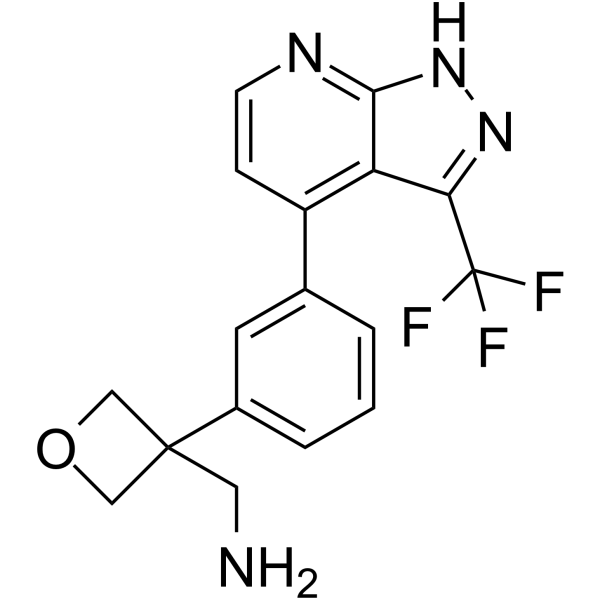
PKC-theta inhibitor 1

Based on 1 Customer Validation
PKC-theta inhibitor 1 is an orally active and selective ATP-competitive inhibitor of Protein Kinase Cθ (PKCθ), with a Ki value of 6 nM. PKC-theta inhibitor 1 inhibits T-cell-mediated inflammatory responses by suppressing the release of proinflammatory cytokines (IL-2 IC50 = 0.21 μM in anti-CD3/CD28-stimulated PBMCs; IL-17 IC50 = 1 μM in CD3/CD28-stimulated Th17 cells) PKC-theta inhibitor 1 significantly reduces symptoms in mice with ongoing experimental autoimmune encephalomyelitis (EAE). PKC-theta inhibitor 1 can be used for the study of T-cell-mediated inflammatory diseases such as multiple sclerosis.
For research use only. We do not sell to patients.
- Purity : 99.45%
- CAS No.: 1160501-81-4
- Formula: C17H15F3N4O
- Molecular Weight:348.32
-
Storage:Powder -20°C, 3 years , 4°C, 2 years ; In solvent -80°C, 6 months , -20°C, 1 month

To place orders, for customer services and technical support, please contact: MedChemExpress USA
Tel: 609-228-6898 E-mail: [email protected] [email protected]


-
 Biological Activity
-
Chemical Information
-
Solvent & Solubility
- Protocols
- Purity & Documentation
- References
-
 Help & FAQs


-
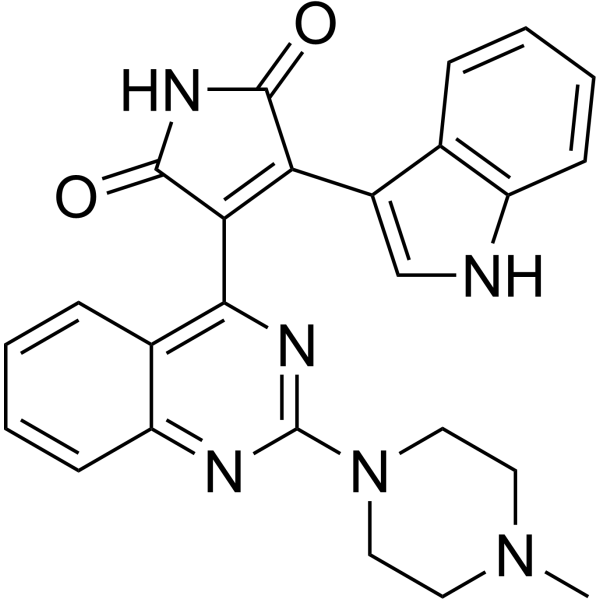
HY-10343
SotrastaurinPan-PKC Inhibitor -
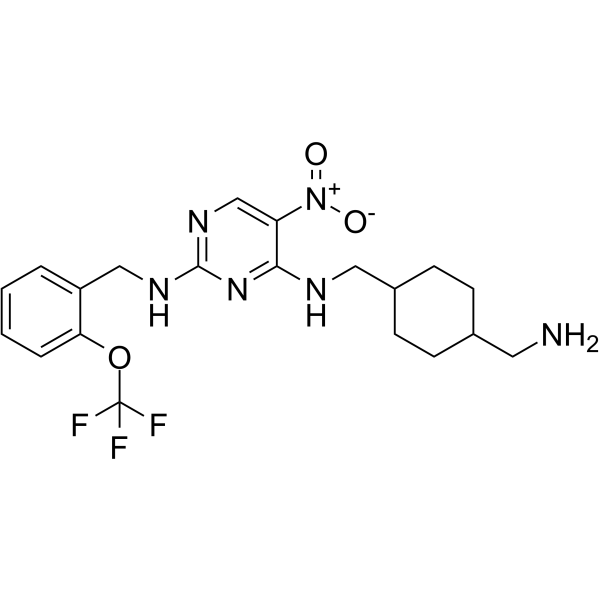
HY-112681
PKC-theta inhibitor 2PKC-θ Inhibitor -
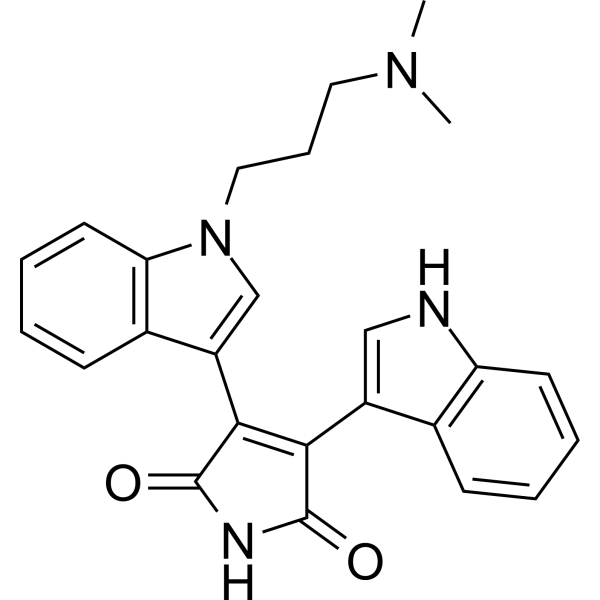
HY-13867
Bisindolylmaleimide IPKC Inhibitor -
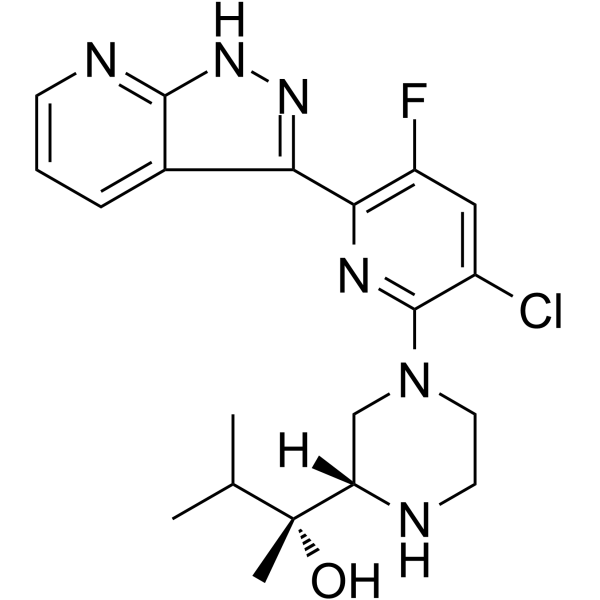
HY-112782
VTX-27PKC θ Inhibitor -
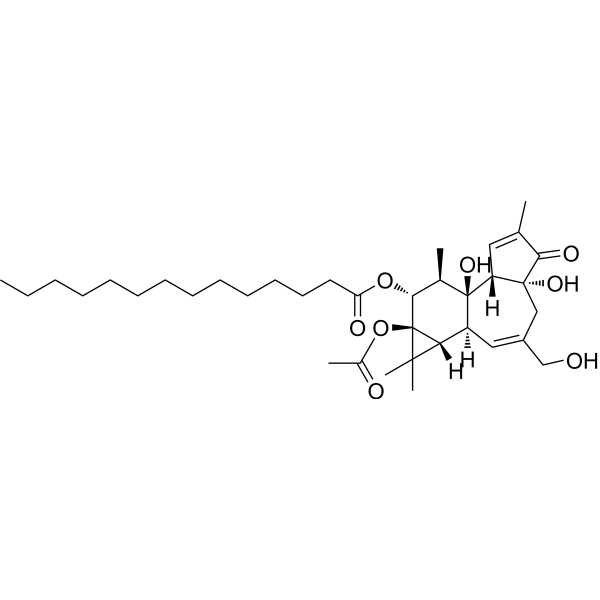
HY-18739
Phorbol 12-myristate 13-acetatePKC Activator -
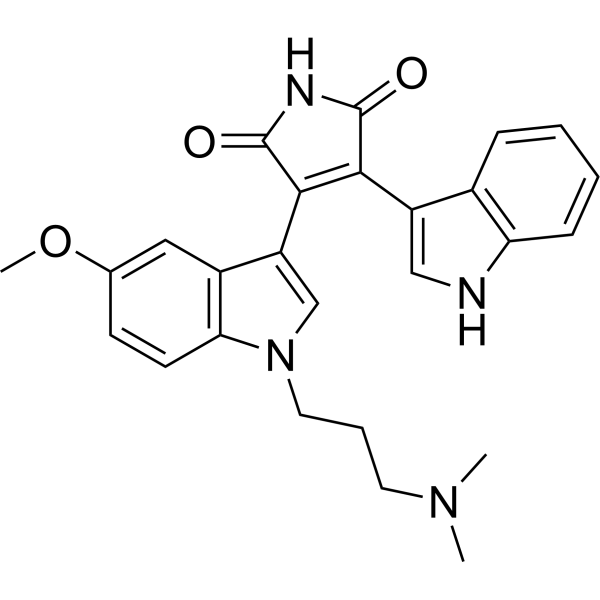
HY-13689
Go 6983PKC Inhibitor -
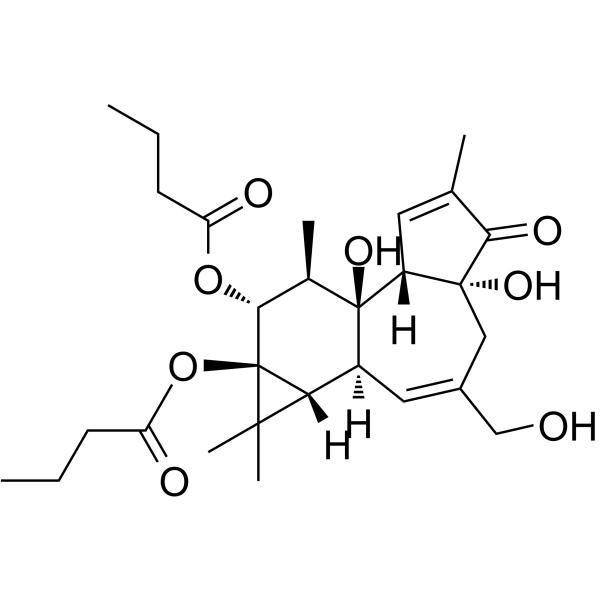
HY-18985
Phorbol 12,13-dibutyratePKC Activator -
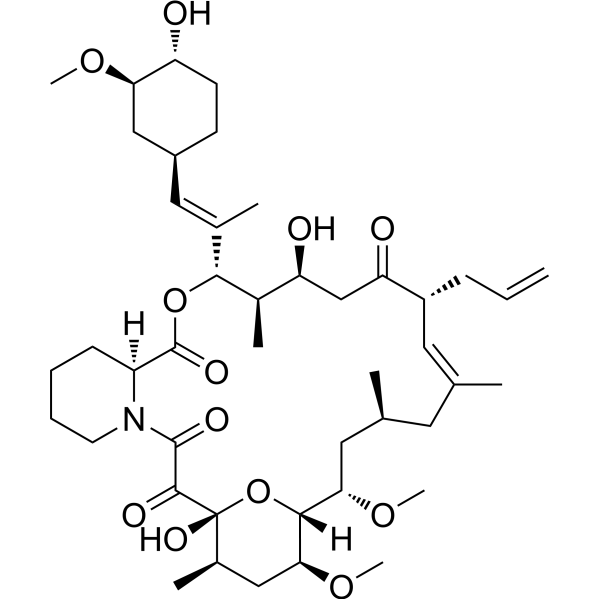
HY-13756
TacrolimusCalcineurin Inhibitor -
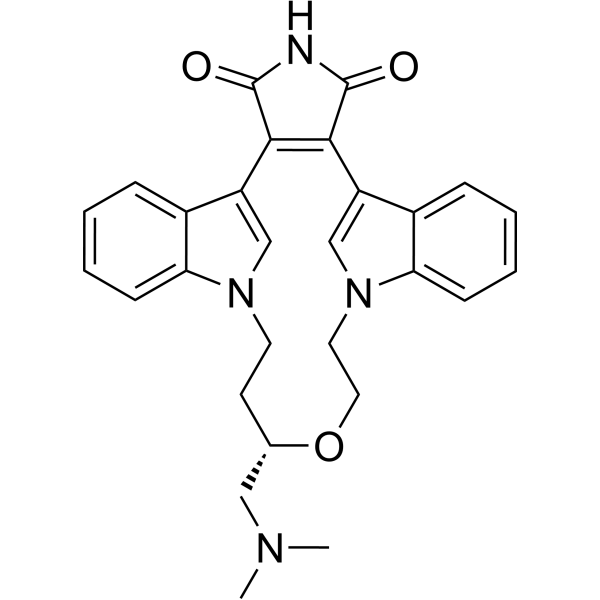
HY-10195
RuboxistaurinPKCβ Inhibitor -
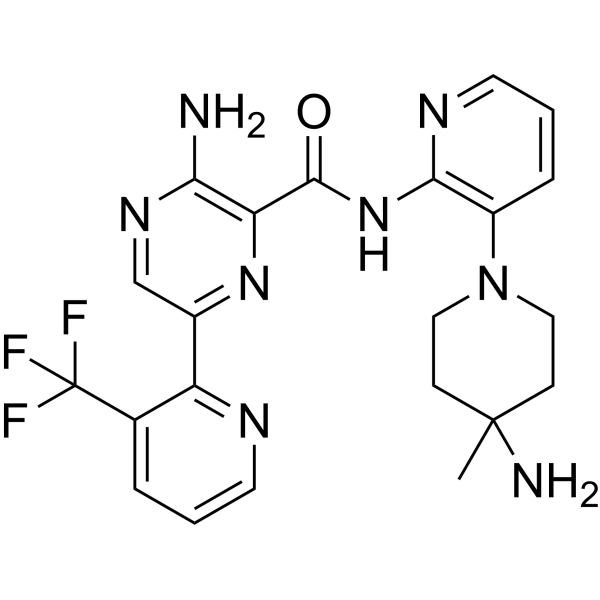
HY-101569
DarovasertibPKC Inhibitor -
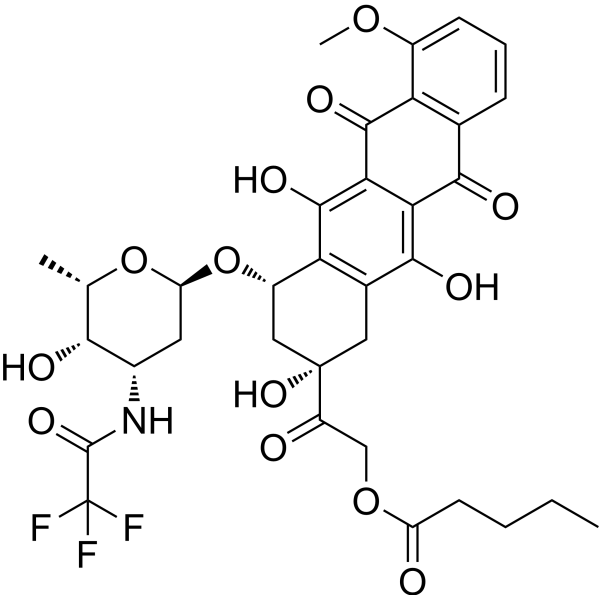
HY-13772
ValrubicinAntibiotic -
HY-12307
(-)-Indolactam VPKC Activator


Biological Activity
Description
IC50 & Target
[1]|
PKCθ 6 nM (Ki) |
PKCδ 392 μM (Ki) |
PKCα 1020 μM (Ki) |
IL-2 production 0.21 μM (IC50) |
Cellular Effect
|
Cell Line

|
Type | Value | Description | References |
|---|---|---|---|---|
| HFL1 | IC50 |
>10 μM
Compound: 22
|
Cytotoxicity against human HFL1 cells assessed as growth inhibition measured after 48 hrs by 3H-thymidine incorporation assay
Cytotoxicity against human HFL1 cells assessed as growth inhibition measured after 48 hrs by 3H-thymidine incorporation assay
|
[PMID: 31417666] |
| PBMC | IC50 |
0.21 μM
Compound: 22
|
Inhibition of IL-2 secretion from human PBMC cells stimulated with anti-CD3/CD28 measured after 24 hrs by bead-based FLISA
Inhibition of IL-2 secretion from human PBMC cells stimulated with anti-CD3/CD28 measured after 24 hrs by bead-based FLISA
|
[PMID: 31417666] |
In Vitro
PKC-theta inhibitor 1 (Compound 22) exhibits potent PKCθ inhibitory activity with a Ki value of 6 nM, and shows high selectivity over PKCδ and PKCα with selectivity ratios of 392 and 1020, respectively[1].
PKC-theta inhibitor 1inhibits IL-2 release in anti-CD3/CD28-stimulated PBMCs, with an IC50 value of 0.21 μM[1].
PKC-theta inhibitor 1 suppresses IL-17 release in CD3/CD28-stimulated Th17 cells, with an IC50 value of 1 μM[1].
PKC-theta inhibitor 1 demonstrates good permeability in Caco-2 cells, with an A-B permeability of 19 × 10-6 cm/s) and an efflux ratio (E.R.) of 2.4[1].
MedChemExpress (MCE) has not independently confirmed the accuracy of these methods. They are for reference only. Further protocols information, click here.
In Vivo
MedChemExpress (MCE) has not independently confirmed the accuracy of these methods. They are for reference only.
-
Animal Model:MOG antigen was used to immunize C57BL6 mice, and the mice were allowed to develop symptoms of EAE to construct the model[1]
-
Dosage:25 mg/kg, 50 mg/kg, 100 mg/kg
-
Administration:p.o., 14 days
-
Result:Reduced symptoms in mice with ongoing EAE at the 50 mg/kg dose.


Chemical Information
-
CAS No. 1160501-81-4
-
Appearance Solid
-
Molecular Weight 348.32
-
Formula C17H15F3N4O
-
Color White to off-white
-
SMILES
NCC1(C2=CC=CC(C3=C4C(NN=C4C(F)(F)F)=NC=C3)=C2)COC1
-
Shipping
Room temperature in continental US; may vary elsewhere.
-
Storage
Powder -20°C 3 years 4°C 2 years In solvent -80°C 6 months -20°C 1 month


Solvent & Solubility
In Vitro:
DMSO : 50 mg/mL (143.55 mM; Need ultrasonic; Hygroscopic DMSO has a significant impact on the solubility of product, please use newly opened DMSO)
Please refer to the solubility information to select the appropriate solvent. Once prepared, please aliquot and store the solution to prevent product inactivation from repeated freeze-thaw cycles.
Storage method and period of stock solution: -80°C, 6 months; -20°C, 1 month. When stored at -80°C, please use it within 6 months. When stored at -20°C, please use it within 1 month.
Please refer to the solubility information to select the appropriate solvent. Once prepared, please aliquot and store the solution to prevent product inactivation from repeated freeze-thaw cycles.
Storage method and period of stock solution: -80°C, 6 months; -20°C, 1 month. When stored at -80°C, please use it within 6 months. When stored at -20°C, please use it within 1 month.
Concentration (start) × Volume (start) = Concentration (final) × Volume (final)
In Vivo:
Select the appropriate dissolution method based on your experimental animal and administration route.
- For the following dissolution methods, please ensure to first prepare a clear stock solution using an In Vitro approach and then sequentially add co-solvents:
- To ensure reliable experimental results, the clarified stock solution can be appropriately stored based on storage conditions. As for the working solution for In Vivo experiments, it is recommended to prepare freshly and use it on the same day.
- The percentages shown for the solvents indicate their volumetric ratio in the final prepared solution. If precipitation or phase separation occurs during preparation, heat and/or sonication can be used to aid dissolution.
Add each solvent one by one: 10% DMSO 40% PEG300 5% Tween-80 45% Saline
Solubility: ≥ 1.25 mg/mL (3.59 mM); Clear solution
This protocol yields a clear solution of ≥ 1.25 mg/mL (saturation unknown).
Taking 1 mL working solution as an example, add 100 μL DMSO stock solution (12.5 mg/mL) to 400 μL PEG300, and mix evenly; then add 50 μL Tween-80 and mix evenly; then add 450 μL Saline to adjust the volume to 1 mL.
Preparation of Saline: Dissolve 0.9 g sodium chloride in ddH₂O and dilute to 100 mL to obtain a clear Saline solution.
Add each solvent one by one: 10% DMSO 90% (20% SBE-β-CD in Saline)
Solubility: ≥ 1.25 mg/mL (3.59 mM); Clear solution
This protocol yields a clear solution of ≥ 1.25 mg/mL (saturation unknown).
Taking 1 mL working solution as an example, add 100 μL DMSO stock solution (12.5 mg/mL) to 900 μL 20% SBE-β-CD in Saline, and mix evenly.
Preparation of 20% SBE-β-CD in Saline (4°C, storage for one week): 2 g SBE-β-CD powder is dissolved in 10 mL Saline, completely dissolve until clear.
In Vivo Dissolution Calculator
Please enter the basic information of animal experiments:
-
-
-
-
Recommended: Prepare an additional quantity of animals to account for potential losses during experiments.
Please enter your animal formula composition:
-
%DMSO +
Recommended: Keep the proportion of DMSO in working solution below 2% if your animal is weak.
-
%+
-
+%Tween-80 + +
-
%Saline +
The co-solvents required include: DMSO, . All of co-solvents are available by MedChemExpress (MCE). , Tween 80. All of co-solvents are available by MedChemExpress (MCE).
Working solution concentration: 0.22 mg/mL
Method for preparing stock solution: mg drug dissolved in μL DMSO. Stock solution concentration: mg/mL.
1. Take μL DMSO stock solution;
2. Add μL .
μL , mix evenly;
3. Then add μL Tween 80, mix evenly;
4. Then add μL
Please ensure that the stock solution in the first step is dissolved to a clear state, and add co-solvents in sequence. You can use ultrasonic heating (ultrasonic cleaner, recommended frequency 20-40 kHz), vortexing, etc. to assist dissolution.

Protocols
-
Cell Cytotoxicity Assay
Cytotoxicity assays are usually based on the assessment of cell membrane damage, which can also be indirectly detected by measuring cell viability. Detection methods include MTT assay, CKK-8 assay, LDH assay and ATP assay, etc.
-
Naïve CD4+ T-cell subset differentiation/polarization
Naïve CD4+ T-cell subset differentiation/polarization is an in vitro assay in which purified naïve CD4+ T cells are activated through TCR and CD28 costimulation and cultured with defined cytokines and neutralizing antibodies to generate Th0, Th1, Th2, Th17, or induced Treg-like populations. Differentiation is detected by subset-associated cytokines and transcription factors: IFN-γ/T-bet for Th1, IL-4/GATA3 for Th2, IL-17A/RORγt for Th17, and Foxp3 for induced Treg cells. The assay readout is usually generated by intracellular cytokine staining after restimulation, transcription-factor staining by flow cytometry, ELISA of secreted cytokines, or gene-expression analysis. The result reflects cytokine-directed lineage commitment or polarization rather than antigen-specific immune protection by itself.


Purity & Documentation
-
Data Sheet (279 KB)
-
SDS (251 KB)
- English - EN (251 KB)
- Français - FR (251 KB)
- Deutsch - DE (251 KB)
- Norwegian - NO (251 KB)
- Español - ES (251 KB)
- Swedish - SV (251 KB)
- Italian - IT (251 KB)
- Korean - KR (251 KB)
- Portuguese - PT (251 KB)
-
Handling Instructions (2659 KB)
References


Complete Stock Solution Preparation Table
Please refer to the solubility information to select the appropriate solvent. Once prepared, please aliquot and store the solution to prevent product inactivation from repeated freeze-thaw cycles.
Storage method and period of stock solution: -80°C, 6 months; -20°C, 1 month. When stored at -80°C, please use it within 6 months. When stored at -20°C, please use it within 1 month.
| Optional Solvent | Concentration Solvent Mass | 1 mg | 5 mg | 10 mg | 25 mg |
|---|---|---|---|---|---|
| DMSO | 1 mM | 2.8709 mL | 14.3546 mL | 28.7092 mL | 71.7731 mL |
| 5 mM | 0.5742 mL | 2.8709 mL | 5.7418 mL | 14.3546 mL | |
| 10 mM | 0.2871 mL | 1.4355 mL | 2.8709 mL | 7.1773 mL | |
| 15 mM | 0.1914 mL | 0.9570 mL | 1.9139 mL | 4.7849 mL | |
| 20 mM | 0.1435 mL | 0.7177 mL | 1.4355 mL | 3.5887 mL | |
| 25 mM | 0.1148 mL | 0.5742 mL | 1.1484 mL | 2.8709 mL | |
| 30 mM | 0.0957 mL | 0.4785 mL | 0.9570 mL | 2.3924 mL | |
| 40 mM | 0.0718 mL | 0.3589 mL | 0.7177 mL | 1.7943 mL | |
| 50 mM | 0.0574 mL | 0.2871 mL | 0.5742 mL | 1.4355 mL | |
| 60 mM | 0.0478 mL | 0.2392 mL | 0.4785 mL | 1.1962 mL | |
| 80 mM | 0.0359 mL | 0.1794 mL | 0.3589 mL | 0.8972 mL | |
| 100 mM | 0.0287 mL | 0.1435 mL | 0.2871 mL | 0.7177 mL |


PKC-theta inhibitor 1 Related Classifications
HY-126328 Related Classifications
 Powered by Bioz