



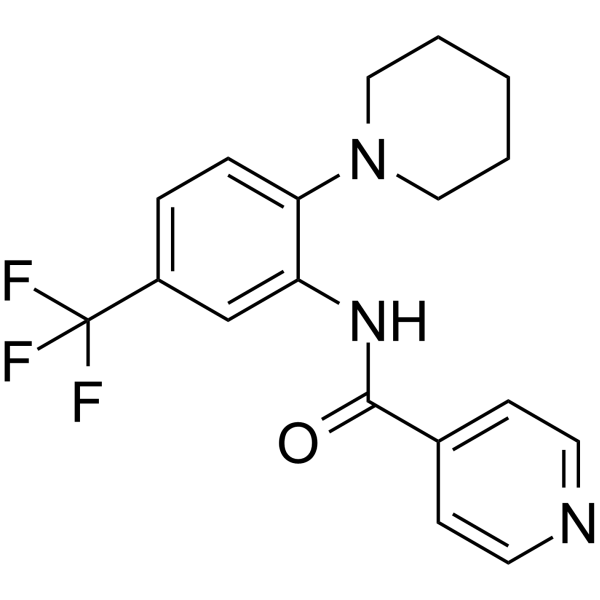
SRPIN340
Based on 17 publication(s) in Google Scholar
SRPIN340 is an ATP-competitive serine-arginine-rich protein kinase (SRPK) inhibitor, with a Ki of 0.89 μM for SRPK1.
For research use only. We do not sell to patients.
- Purity : 99.62%
- CAS No.: 218156-96-8
- Formula: C18H18F3N3O
- Molecular Weight:349.35
-
Storage:Powder -20°C, 3 years , 4°C, 2 years ; In solvent -80°C, 2 years , -20°C, 1 year

To place orders, for customer services and technical support, please contact: MedChemExpress USA
Tel: 609-228-6898 E-mail: [email protected] [email protected]


-
 Biological Activity
-
Chemical Information
-
Solvent & Solubility
- Purity & Documentation
- References
-
 Help & FAQs


-
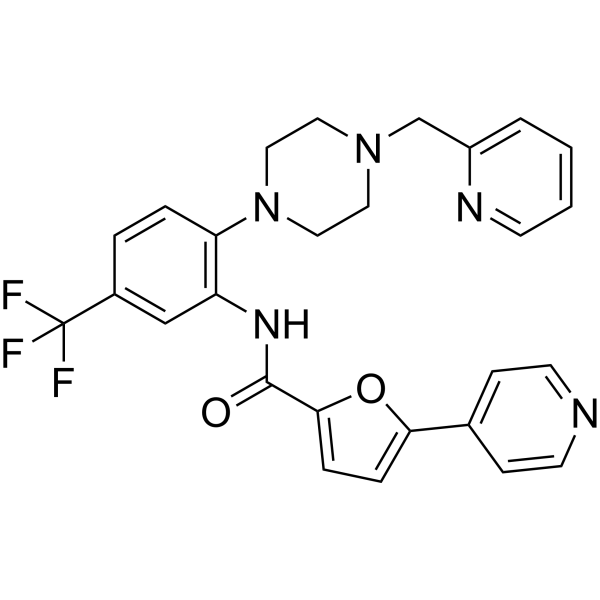
HY-117661
SPHINX31SRPK1 Inhibitor -
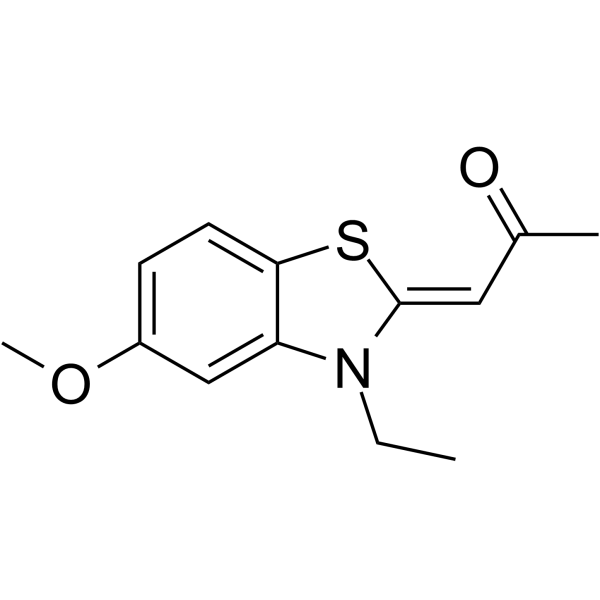
HY-15338
TG003CLK1 Inhibitor -
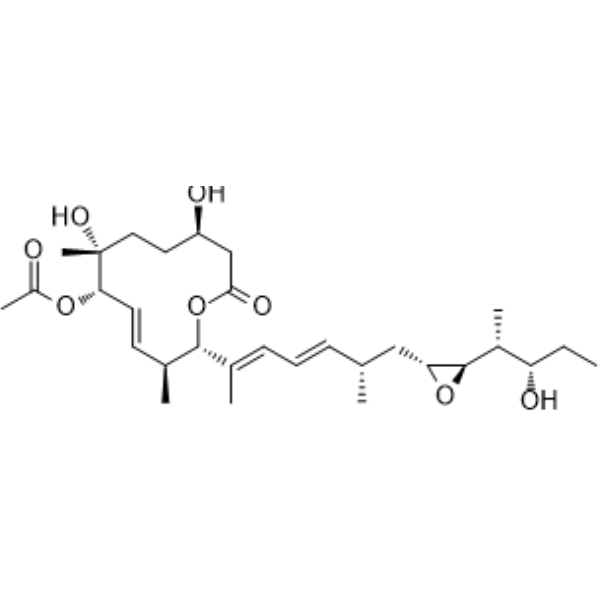
HY-16399
Pladienolide BSplicing Inhibitor -
HY-N2117
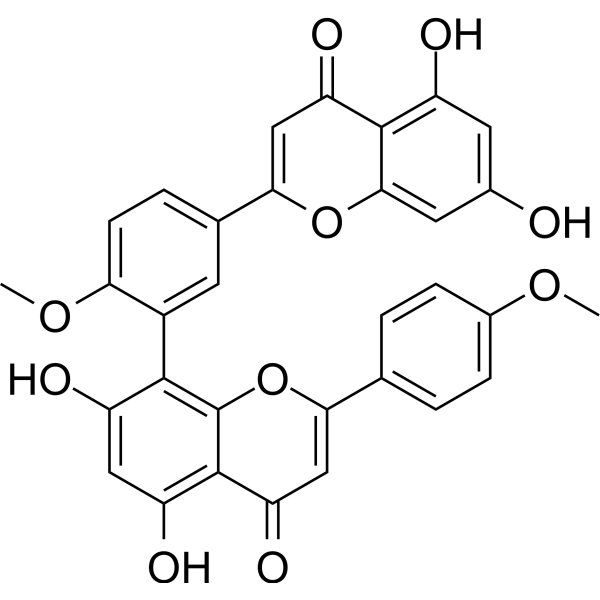
Isoginkgetinpre-mRNA Splicing Inhibitor -
HY-13650
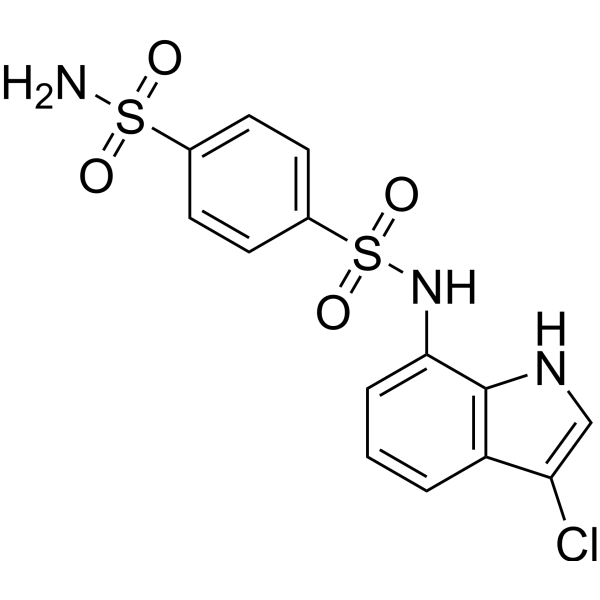
IndisulamCarbonic Anhydrase Inhibitor/RBM39 Molecular Glue Degrader -
HY-116856
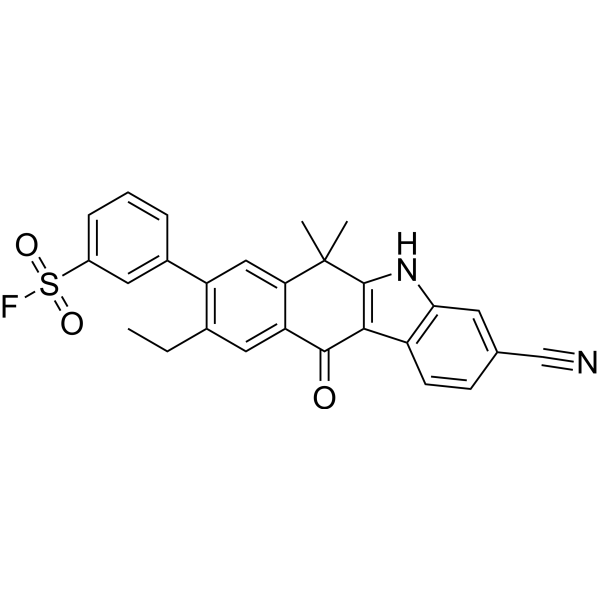
SRPKIN-1SRPK1/2 Inhibitor -
HY-10182
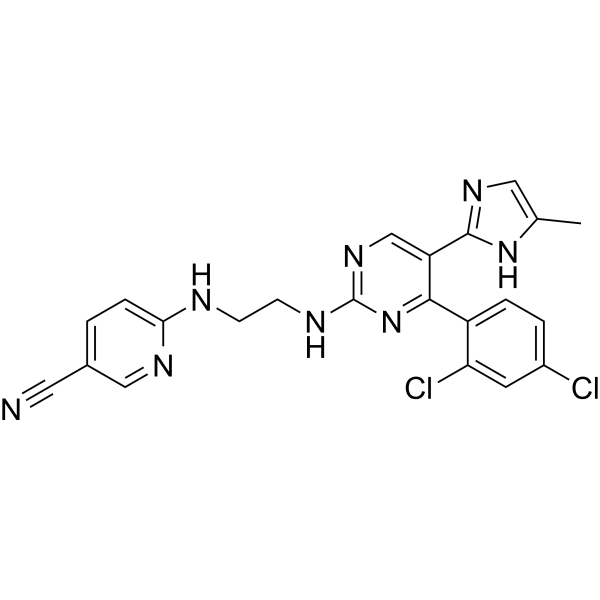
LaduviglusibGSK-3 Inhibitor -
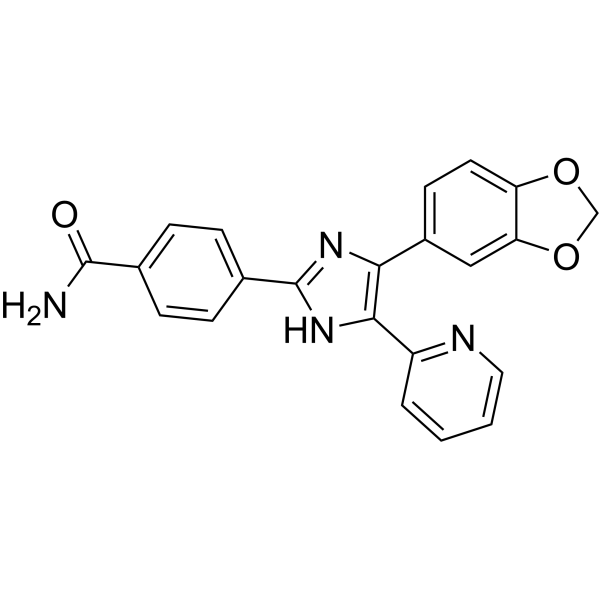
HY-10431
SB-431542TGF-β Receptor Kinase Inhibitor -
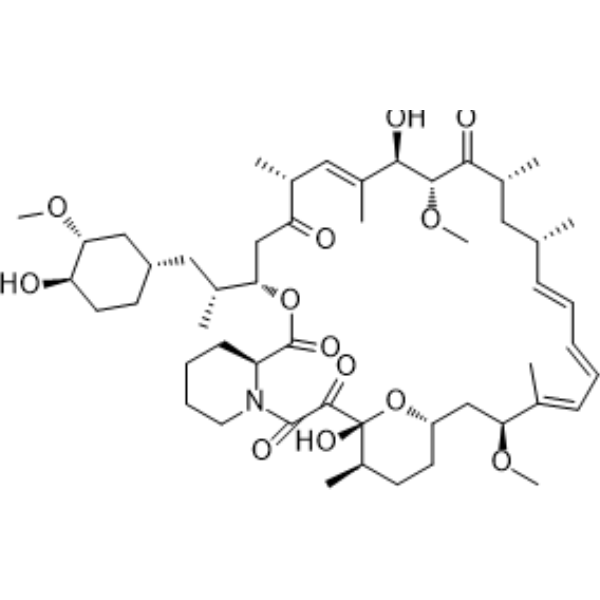
HY-10219
RapamycinmTOR Inhibitor -
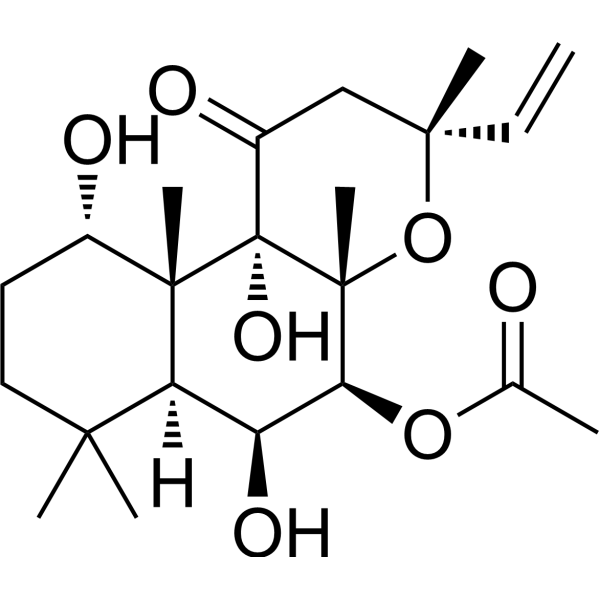
HY-15371
ForskolinAdenylate Cyclase Activator -
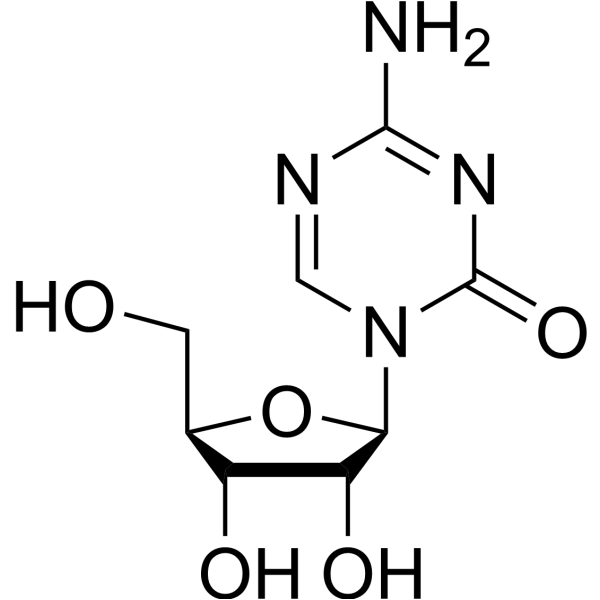
HY-10586
5-AzacytidineDNMT Inhibitor -
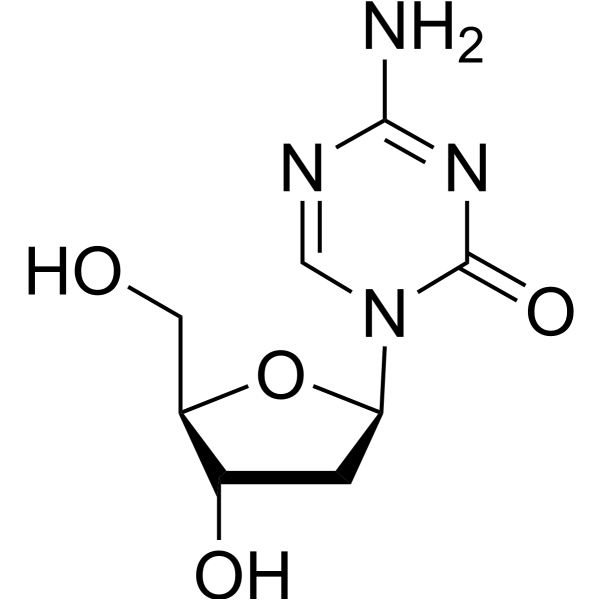
HY-A0004
DecitabineDNMT Inhibitor
Publications Citing Use of MedChemExpress (MCE) SRPIN340
More- Nat Commun. 2026 May 29. [Abstract]
- Nucleic Acids Res. 2021 Mar 18;49(5):2509-2521. [Abstract]
- Adv Sci (Weinh). 2025 Jul 11:e05479. [Abstract]
- Oncogene. 2024 Nov;43(48):3532-3544. [Abstract]
- EMBO J. 2024 Oct;43(20):4752-4785. [Abstract]
- Sci Signal. 2022 Oct 25;15(757):eabm0808. [Abstract]
- Cell Mol Life Sci. 2022 Aug 5;79(8):467. [Abstract]
- Commun Biol. 2024 Dec 30;7(1):1712. [Abstract]
- iScience. 2025 Jul 7;28(8):113073. [Abstract]
- Mol Oncol. 2024 Oct;18(10):2510-2523. [Abstract]
- Clin Immunol. 2026 Jan:282:110634. [Abstract]
- BMC Cancer. 2022 Oct 27;22(1):1100. [Abstract]
- Toxins. 2024 Sep 14;16(9):394. [Abstract]
- Glycobiology. 2024 Dec 10;34(12):cwae081. [Abstract]
- Biochem Biophys Res Commun. 2019 Feb 26;510(1):97-103. [Abstract]
- bioRxiv. 2020 Dec 16:2020.08.14.251207. [Abstract]
- bioRxiv. 2020 Feb.
 Customer Validation & Images

-
WB
-
IF
-
Cell Proliferation/Viability Assay
-
Microbiological Assay
-
WB


Biological Activity
Description
IC50 & Target
Ki: 0.89 μM (SRPK1)[1]
Cellular Effect
|
Cell Line

|
Type | Value | Description | References |
|---|---|---|---|---|
| HL-60 | IC50 |
38.3 μM
Compound: SRPIN340
|
Cytotoxicity against human HL60 cells assessed as reduction in cell viability up to 200 uM after 48 hrs by MTT assay
Cytotoxicity against human HL60 cells assessed as reduction in cell viability up to 200 uM after 48 hrs by MTT assay
|
[PMID: 28407594] |
| Jurkat | IC50 |
75.4 μM
Compound: SRPIN340
|
Cytotoxicity against human Jurkat cells assessed as reduction in cell viability up to 200 uM after 48 hrs by MTT assay
Cytotoxicity against human Jurkat cells assessed as reduction in cell viability up to 200 uM after 48 hrs by MTT assay
|
[PMID: 28407594] |
| NALM-6 | IC50 |
70.6 μM
Compound: SRPIN340
|
Cytotoxicity against human NALM6 cells assessed as reduction in cell viability up to 200 uM after 48 hrs by MTT assay
Cytotoxicity against human NALM6 cells assessed as reduction in cell viability up to 200 uM after 48 hrs by MTT assay
|
[PMID: 28407594] |
In Vitro
SRPIN340 is a serine-arginine-rich protein kinase (SRPK) inhibitor, with a Ki of 0.89 μM for SRPK1. SRPIN340 also inhibits SRPK2, but shows no significant inhibition on other SRPK, such as Clk1 and Clk4. SRPIN340 promotes degradation of SRp75, which is necessary for HIV expression. SRPIN340 suppresses the propagation of Sindbis virus (IC50, 60 μM) as well as severe acute respiratory syndrome virus[1]. SRPIN340 shows inhibitory effect on leukemia cell lines, such as AML HL60, ALL-T Molt4 and Jurkat, with IC50s of 44.7 μM, 92.2 μM and 82.3 μM, respectively[2].
MedChemExpress (MCE) has not independently confirmed the accuracy of these methods. They are for reference only. .


Chemical Information
-
CAS No. 218156-96-8
-
Appearance Solid
-
Molecular Weight 349.35
-
Formula C18H18F3N3O
-
Color White to light yellow
-
SMILES
O=C(NC1=CC(C(F)(F)F)=CC=C1N2CCCCC2)C3=CC=NC=C3
-
Synonyms
SRPK inhibitor
-
Shipping
Room temperature in continental US; may vary elsewhere.
-
Storage
Powder -20°C 3 years 4°C 2 years In solvent -80°C 2 years -20°C 1 year


Publications (17)
-
Journal Impact Factor
-
Most Recent
-
Nat Commun
Native long-read RNA sequencing of human monocytes reveals activation-induced alternative splicing toward functional isoforms. [Abstract]2026 May 29. PMID: 42215459 -
Nucleic Acids Res
Aberrant splicing in neuroblastoma generates RNA-fusion transcripts and provides vulnerability to spliceosome inhibitors. [Abstract]2021 Mar 18;49(5):2509-2521. PMID: 33555349
SRPIN340 purchased from MedChemExpress. Usage Cited in: Nucleic Acids Res. 2021 Mar 18;49(5):2509-2521. [Abstract]
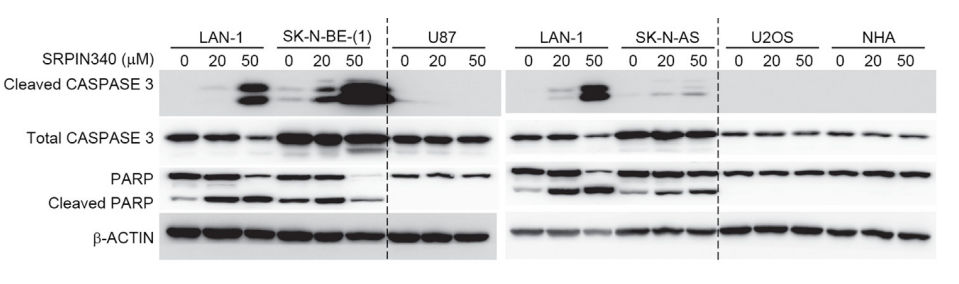
Induction of apoptosis in LAN-1,SK-N-BE(1) and SK-N-AS neuroblastoma cells (NB), but not in human glioma (GBM) cells (U87), osteosarcoma cells (U2OS) or normal human astrocytes (NHA) upon SRPIN340 treatment (20–50 μM) for 48 h, as detected by western blotting of full-length CASPASE-3, cleaved CASPASE-3, full-length PARP and cleaved PARP; β-ACTIN was used as a loading control. LAN-1 cells were included in the western blots for comparison.
-
Adv Sci (Weinh)
API5 Phosphorylation Promotes Antiviral Immunity by Inhibiting Degradation of Cytosolic RNA Sensor RLRs. [Abstract]2025 Jul 11:e05479. PMID: 40641422
SRPIN340 purchased from MedChemExpress. Usage Cited in: Adv Sci (Weinh). 2025 Jul 11:e05479. [Abstract]
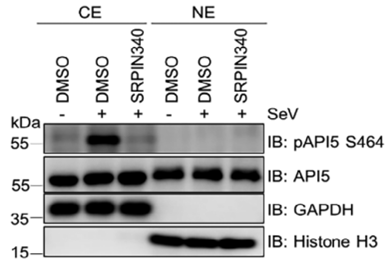
A549 cells were treated with SRPK1 kinase inhibitor SRPIN340 (10 µM) for 6 h, and then were infected by SeV for 12 h. The cellular lysates were used for cellular fractionation and immunoblotting with pAPI5. GAPDH and Histone H3 were markers of cytoplasmic elements (CE) and nuclear elements (NE), respectively. The results showed that the SRPK1-specific inhibitor SRPIN340 effectively blocked SeV-induced API5 phosphorylation.
-
Oncogene
Aberrant FAM135B attenuates the efficacy of chemotherapy in colorectal cancer by modulating SRSF1-mediated alternative splicing. [Abstract]2024 Nov;43(48):3532-3544. PMID: 39397154 -
EMBO J
2024 Oct;43(20):4752-4785. PMID: 39256562 -
Sci Signal
Host protein kinases required for SARS-CoV-2 nucleocapsid phosphorylation and viral replication. [Abstract]2022 Oct 25;15(757):eabm0808. PMID: 36282911
SRPIN340 purchased from MedChemExpress. Usage Cited in: Sci Signal. 2022 Oct 25;15(757):eabm0808. [Abstract]
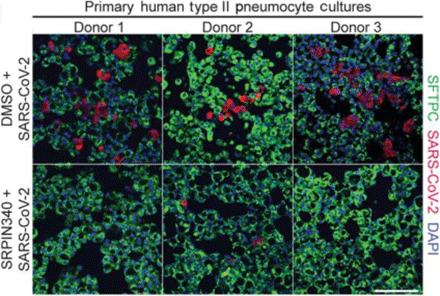
Representative primary human type II pneumocyte culture images from samples that are pretreated with SRPIN340 (53 μM; 12 h) before they are infected with SARS-CoV-2. 24 hours later, the cells are fixed and stained for SARS-CoV-2, DNA with DAPI, and surfactant protein C (SFTPC). Scale bar, 100 μm.
SRPIN340 purchased from MedChemExpress. Usage Cited in: Sci Signal. 2022 Oct 25;15(757):eabm0808. [Abstract]
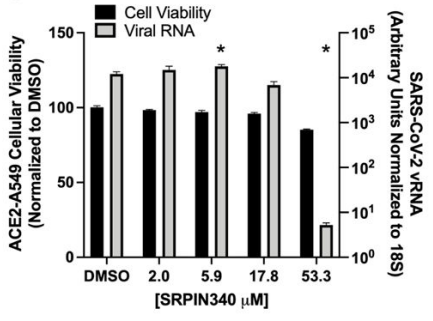
Cellular viability (left axis) was measured after ACE2-A549 cells were treated with the indicated concentrations of SRPIN340 (2-53.5 μM) before infection. Data are from six independent replicates. SARS-CoV-2 viral RNA (right axis) was measured by qRT-PCR analysis 24 hours after infection. Data are from four independent biological replicates.
SRPIN340 purchased from MedChemExpress. Usage Cited in: Sci Signal. 2022 Oct 25;15(757):eabm0808. [Abstract]
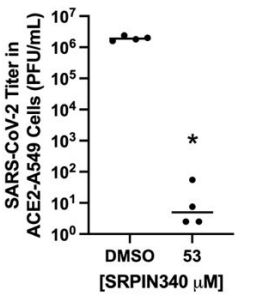
Infectious viral titers were measured by plaque assay of the supernatants of cells that were treated with SRPIN340 (53 μM) and infected for 48 hours.
-
Cell Mol Life Sci
Global phosphoproteomic analysis identified key kinases regulating male meiosis in mouse. [Abstract]2022 Aug 5;79(8):467. PMID: 35930080 -
Commun Biol
2024 Dec 30;7(1):1712. PMID: 39738787 -
iScience
2025 Jul 7;28(8):113073. PMID: 40727937 -
Mol Oncol
2024 Oct;18(10):2510-2523. PMID: 38775167 -
Clin Immunol
IMPDH2 facilitates CD4+ T cell activation through AKT/mTOR pathway by upregulating SRPK1 in myasthenia gravis. [Abstract]2026 Jan:282:110634. PMID: 41213488 -
BMC Cancer
Inhibition of SRPK1, a key splicing regulator, exhibits antitumor and chemotherapeutic-sensitizing effects on extranodal NK/T-cell lymphoma cells. [Abstract]2022 Oct 27;22(1):1100. PMID: 36303126 -
Toxins
Proteome and Phosphoproteome Profiling Reveal the Toxic Mechanism of Clostridium perfringens Epsilon Toxin in MDCK Cells. [Abstract]2024 Sep 14;16(9):394. PMID: 39330852 -
Glycobiology
Compromised CDK12 activity causes dependency on the high activity of O-GlcNAc transferase. [Abstract]2024 Dec 10;34(12):cwae081. PMID: 39361894 -
Biochem Biophys Res Commun
SRPIN340 protects heart muscle from oxidative damage via SRPK1/2 inhibition-mediated AKT activation. [Abstract]2019 Feb 26;510(1):97-103. PMID: 30661787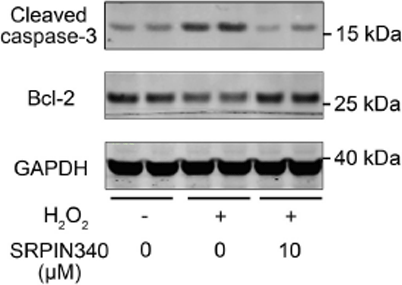
SRPIN340 purchased from MedChemExpress. Usage Cited in: Biochem Biophys Res Commun. 2019 Feb 26;510(1):97-103. [Abstract]
Bcl-2 protein expression and cleaved caspase-3 protein expression are analyzed by Western blot with or without the treatment of SRPIN340.
-
bioRxiv
The FDA-approved drug Alectinib compromises SARS-CoV-2 nucleocapsid phosphorylation and inhibits viral infection in vitro. [Abstract]2020 Dec 16:2020.08.14.251207. PMID: 32817937 -


Solvent & Solubility
In Vitro:
DMSO : ≥ 42 mg/mL (120.22 mM; Hygroscopic DMSO has a significant impact on the solubility of product, please use newly opened DMSO)
* "≥" means soluble, but saturation unknown.
Please refer to the solubility information to select the appropriate solvent. Once prepared, please aliquot and store the solution to prevent product inactivation from repeated freeze-thaw cycles.
Storage method and period of stock solution: -80°C, 2 years; -20°C, 1 year. When stored at -80°C, please use it within 2 years. When stored at -20°C, please use it within 1 year.
Please refer to the solubility information to select the appropriate solvent. Once prepared, please aliquot and store the solution to prevent product inactivation from repeated freeze-thaw cycles.
Storage method and period of stock solution: -80°C, 2 years; -20°C, 1 year. When stored at -80°C, please use it within 2 years. When stored at -20°C, please use it within 1 year.
Concentration (start) × Volume (start) = Concentration (final) × Volume (final)
In Vivo:
Select the appropriate dissolution method based on your experimental animal and administration route.
- For the following dissolution methods, please ensure to first prepare a clear stock solution using an In Vitro approach and then sequentially add co-solvents:
- To ensure reliable experimental results, the clarified stock solution can be appropriately stored based on storage conditions. As for the working solution for In Vivo experiments, it is recommended to prepare freshly and use it on the same day.
- The percentages shown for the solvents indicate their volumetric ratio in the final prepared solution. If precipitation or phase separation occurs during preparation, heat and/or sonication can be used to aid dissolution.
Add each solvent one by one: 10% DMSO 90% (20% SBE-β-CD in Saline)
Solubility: ≥ 2.5 mg/mL (7.16 mM); Clear solution
This protocol yields a clear solution of ≥ 2.5 mg/mL (saturation unknown).
Taking 1 mL working solution as an example, add 100 μL DMSO stock solution (25.0 mg/mL) to 900 μL 20% SBE-β-CD in Saline, and mix evenly.
Preparation of 20% SBE-β-CD in Saline (4°C, storage for one week): 2 g SBE-β-CD powder is dissolved in 10 mL Saline, completely dissolve until clear.
In Vivo Dissolution Calculator
Please enter the basic information of animal experiments:
-
-
-
-
Recommended: Prepare an additional quantity of animals to account for potential losses during experiments.
Please enter your animal formula composition:
-
%DMSO +
Recommended: Keep the proportion of DMSO in working solution below 2% if your animal is weak.
-
%+
-
+%Tween-80 + +
-
%Saline +
The co-solvents required include: DMSO, . All of co-solvents are available by MedChemExpress (MCE). , Tween 80. All of co-solvents are available by MedChemExpress (MCE).
Working solution concentration: 0.22 mg/mL
Method for preparing stock solution: mg drug dissolved in μL DMSO. Stock solution concentration: mg/mL.
1. Take μL DMSO stock solution;
2. Add μL .
μL , mix evenly;
3. Then add μL Tween 80, mix evenly;
4. Then add μL
Please ensure that the stock solution in the first step is dissolved to a clear state, and add co-solvents in sequence. You can use ultrasonic heating (ultrasonic cleaner, recommended frequency 20-40 kHz), vortexing, etc. to assist dissolution.


Purity & Documentation
-
Data Sheet (279 KB)
-
SDS (393 KB)
- English - EN (393 KB)
- Français - FR (393 KB)
- Deutsch - DE (393 KB)
- Norwegian - NO (393 KB)
- Español - ES (393 KB)
- Swedish - SV (393 KB)
- Italian - IT (393 KB)
- Korean - KR (393 KB)
- Portuguese - PT (393 KB)
-
Handling Instructions (2659 KB)
References
[1]. Fukuhara T, et al. Utilization of host SR protein kinases and RNA-splicing machinery during viral replication. Proc Natl Acad Sci U S A. 2006 Jul 25;103(30):11329-33. [Content Brief]
[2]. Siqueira RP, et al. Potential Antileukemia Effect and Structural Analyses of SRPK Inhibition by N-(2-(Piperidin-1-yl)-5-(Trifluoromethyl)Phenyl)Isonicotinamide (SRPIN340). PLoS One. 2015 Aug 5;10(8):e0134882. [Content Brief]


Complete Stock Solution Preparation Table
Please refer to the solubility information to select the appropriate solvent. Once prepared, please aliquot and store the solution to prevent product inactivation from repeated freeze-thaw cycles.
Storage method and period of stock solution: -80°C, 2 years; -20°C, 1 year. When stored at -80°C, please use it within 2 years. When stored at -20°C, please use it within 1 year.
| Optional Solvent | Concentration Solvent Mass | 1 mg | 5 mg | 10 mg | 25 mg |
|---|---|---|---|---|---|
| DMSO | 1 mM | 2.8625 mL | 14.3123 mL | 28.6246 mL | 71.5615 mL |
| 5 mM | 0.5725 mL | 2.8625 mL | 5.7249 mL | 14.3123 mL | |
| 10 mM | 0.2862 mL | 1.4312 mL | 2.8625 mL | 7.1561 mL | |
| 15 mM | 0.1908 mL | 0.9542 mL | 1.9083 mL | 4.7708 mL | |
| 20 mM | 0.1431 mL | 0.7156 mL | 1.4312 mL | 3.5781 mL | |
| 25 mM | 0.1145 mL | 0.5725 mL | 1.1450 mL | 2.8625 mL | |
| 30 mM | 0.0954 mL | 0.4771 mL | 0.9542 mL | 2.3854 mL | |
| 40 mM | 0.0716 mL | 0.3578 mL | 0.7156 mL | 1.7890 mL | |
| 50 mM | 0.0572 mL | 0.2862 mL | 0.5725 mL | 1.4312 mL | |
| 60 mM | 0.0477 mL | 0.2385 mL | 0.4771 mL | 1.1927 mL | |
| 80 mM | 0.0358 mL | 0.1789 mL | 0.3578 mL | 0.8945 mL | |
| 100 mM | 0.0286 mL | 0.1431 mL | 0.2862 mL | 0.7156 mL |


SRPIN340 Related Classifications
HY-13949 Related Classifications
 Powered by Bioz