



SKP2 Antibody (YA1332)
(Synonyms: SKP2; FBXL1; S-phase kinase-associated protein 2; Cyclin-A/CDK2-associated protein p45; F-box protein Skp2; F-box/LRR-repeat protein 1; p45skp2)Based on 1 Customer Validation
SKP2 Antibody (YA1332) is a Rabbit-derived and non-conjugated IgG monoclonal antibody, targeting to SKP2.
-
Host:
Rabbit
-
Isotype:
IgG
-
Application:
WB, IHC-P, ICC/IF, FC
-
Reactivity :
Human, Mouse, Rat
-
Formulation:
Supplied in 50mM Tris-Glycine(pH 7.4), 0.15M NaCl, 40%Glycerol, 0.01% sodium azide and 0.05% BSA.
-
Conjugation:
Non-conjugated


To place orders, for customer services and technical support, please contact: MedChemExpress USA
Tel: 609-228-6898 E-mail: [email protected] [email protected]





Applications
| Application |
WB

WB: Western Blot
|
IHC-P
IHC-P: Immunohistochemistry-Paraffin
|
ICC/IF
ICC/IF: Immunocytochemistry/
Immunofluorescence |
FC
FC: Flow Cytometry
|
|---|---|---|---|---|
| Dilution Ratio | 1:500-1:1000 | 1:50-1:100 | 1:50-1:200 | 1:50-1:100 |


Product Details
SKP2 Antibody (YA1332) is a Rabbit-derived and non-conjugated IgG monoclonal antibody, targeting to SKP2.
-
Host Rabbit

-
Clonality Recombinant,Monoclonal

-
Species ReactivityHuman, Mouse, Rat
-
Observed Molecular WeightObserved band size: 48 kDa
Note: Due to possible protein modifications or aggregation, the molecular weight should be confirmed by actual measurement, and the predicted value is for reference only.

-
Calculated Molecular Weight Predicted band size: 48 kDa

Entrez Gene: 6502 Human ; 27401 Mouse ; 294790 Rat
SwissProt: Q13309 Human ; Q9Z0Z3 Mouse ;
OMIM: 601436 Human
A synthesized peptide derived from human SKP2 aa11-75.
Endogenous
Affinity Chromatography
Non-conjugated
Unmodified
IgG


Product Properties
-
Appearance
Solution
-
Formulation
Supplied in 50mM Tris-Glycine(pH 7.4), 0.15M NaCl, 40%Glycerol, 0.01% sodium azide and 0.05% BSA.
-
Concentration
Batch-dependent, Please check the COA for the concentration of each lot. Check Lot Concentration
-
Storage & Stability
Stored at -20°C for 1 year. Avoid repeated freeze / thaw cycles.
-
Shipping
Shipping with blue ice.


Verification Images
-
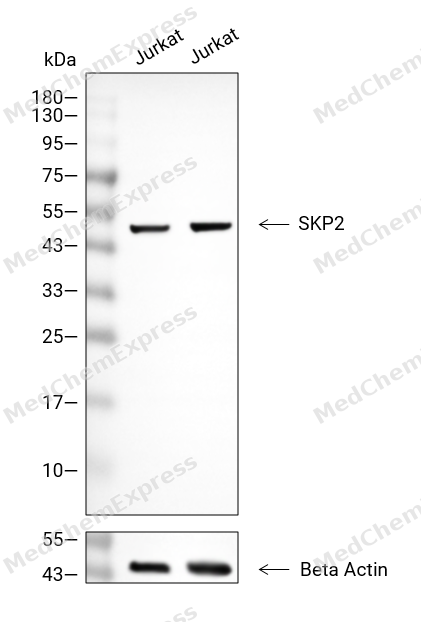 Western blot analysis of extracts from Jurkat (lane 2(20μg), Jurkat (lane 3(40μg), using SKP2 Antibody. Proteins were transferred to a PVDF membrane and blocked with 5% BSA in TBST for 2 hour at room temperature. The primary antibody and Loading control antibody (Beta Actin, HY-P80438, 1/3000) was used in 5% BSA in TBST at 4°C overnight. Goat Anti-Mouse/Rabbit IgG-HRP Secondary Antibody (HY-P8004/HY-P8001, 1/10,000) was used for 1 hour at room temperature.
 -
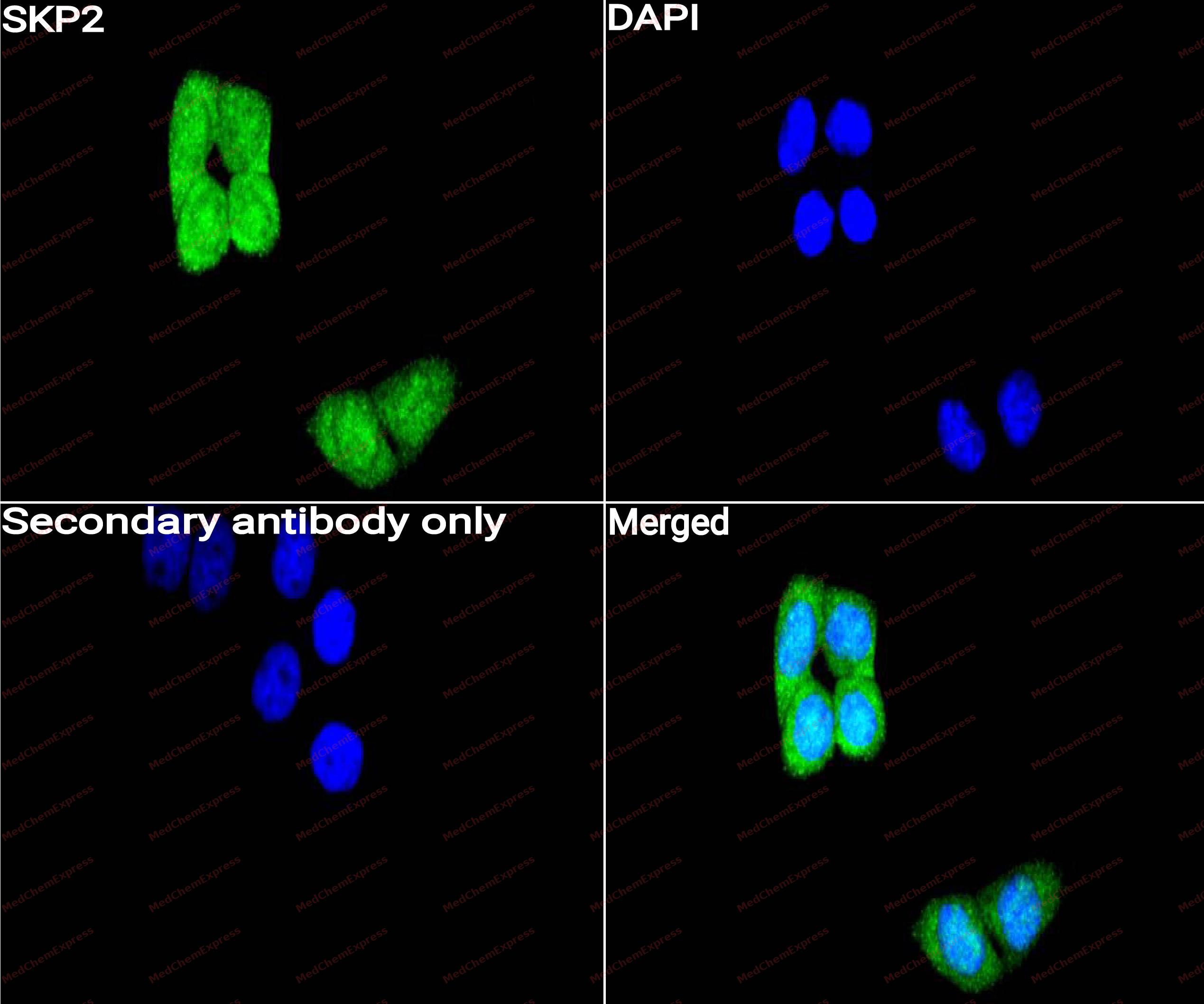 Immunocytochemistry analysis of Hela cells labeling SKP2 with SKP2 Antibody (HY-P81587) at 1/50 dilution. Cells were fixed in 4% paraformaldehyde for 15 minutes at room temperature, permeabilized with 0.1% Triton X-100 for 10 minutes at room temperature, then blocked with QuickBlock™ Blocking Buffer for Immunol Staining for 10 min at room temperature. Cells were then incubated with SKP2 Antibody (HY-P81587) at 1/50 dilution in QuickBlock™ Blocking Buffer for Immunol Staining at 4 ℃. Alexa Fluor® 488-conjugated AffiniPure Goat Anti-Rabbit IgG H&L(HY-P8002, Green) was used as the secondary antibody at 1/1,000 dilution. PBS instead of the primary antibody was used as the secondary antibody only control. The Nuclear counterstain was DAPI (Blue).
 -
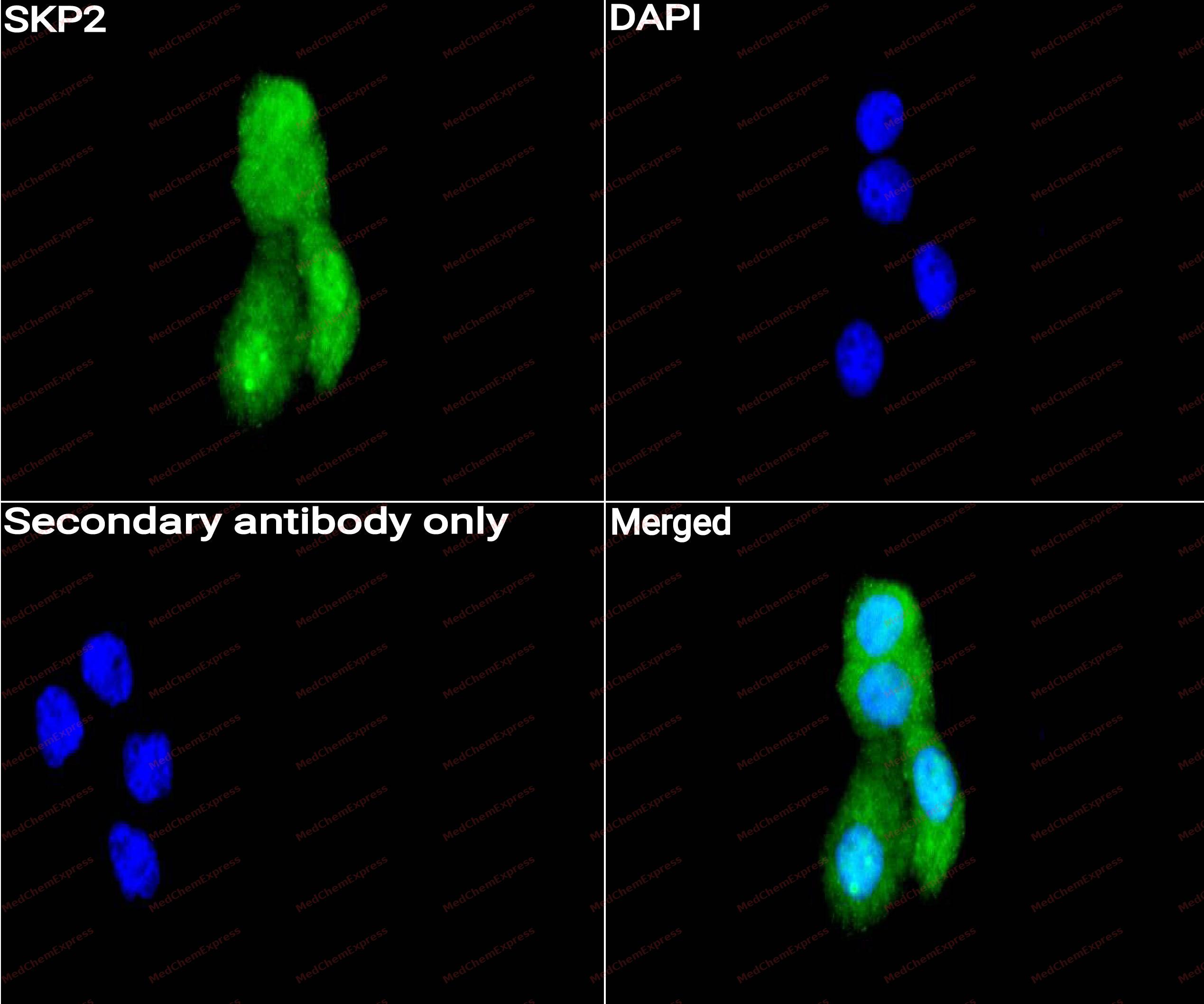 Immunocytochemistry analysis of A549 cells labeling SKP2 with SKP2 Antibody (HY-P81587) at 1/50 dilution. Cells were fixed in 4% paraformaldehyde for 15 minutes at room temperature, permeabilized with 0.1% Triton X-100 for 10 minutes at room temperature, then blocked with QuickBlock™ Blocking Buffer for Immunol Staining for 10 min at room temperature. Cells were then incubated with SKP2 Antibody (HY-P81587)at 1/50 dilution in QuickBlock™ Blocking Buffer for Immunol Staining at 4 ℃. Alexa Fluor® 488-conjugated AffiniPure Goat Anti-Rabbit IgG H&L(HY-P8002,Green) was used as the secondary antibody at 1/1,000 dilution. PBS instead of the primary antibody was used as the secondary antibody only control. The Nuclear counterstain was DAPI (Blue).
 -
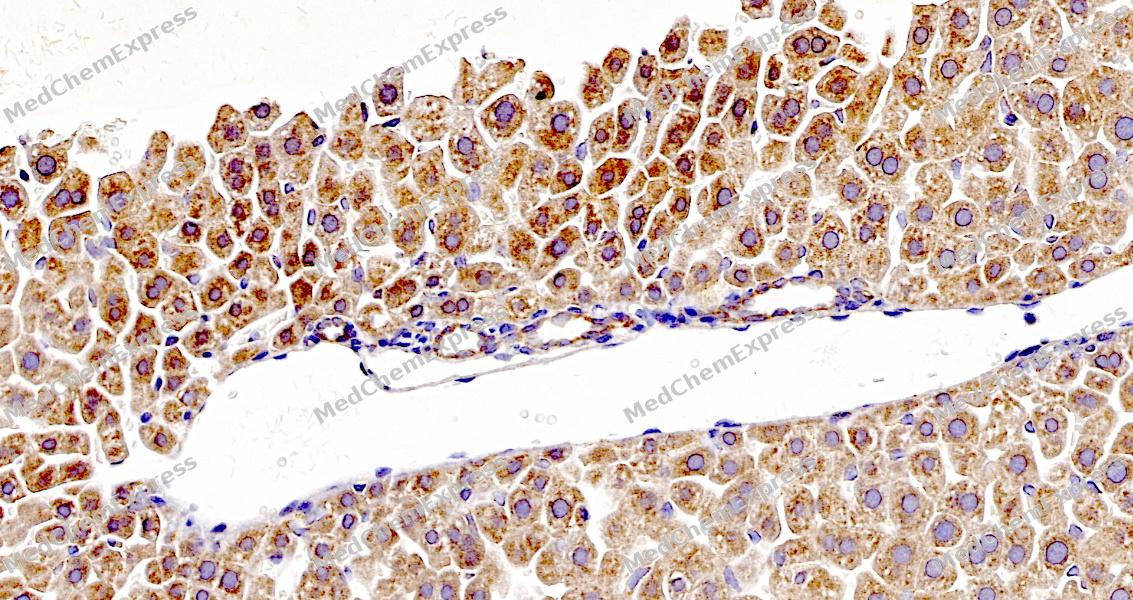 Immunohistochemical analysis of paraffin-embedded mouse liver tissue using SKP2 Antibody. The section was pre-treated using heat mediated antigen retrieval with sodium citrate buffer (pH 6.0) for 8 minutes. The tissues were blocked in QuickBlock for 20 minutes at room temperature, washed with ddH2O and PBS, and then probed with the primary antibody at 1/100 dilution in 4℃ overnight. The detection was performed using an HRP conjugated compact polymer system. DAB was used as the chromogen. Tissues were counterstained with hematoxylin and mounted with DPX.
 -
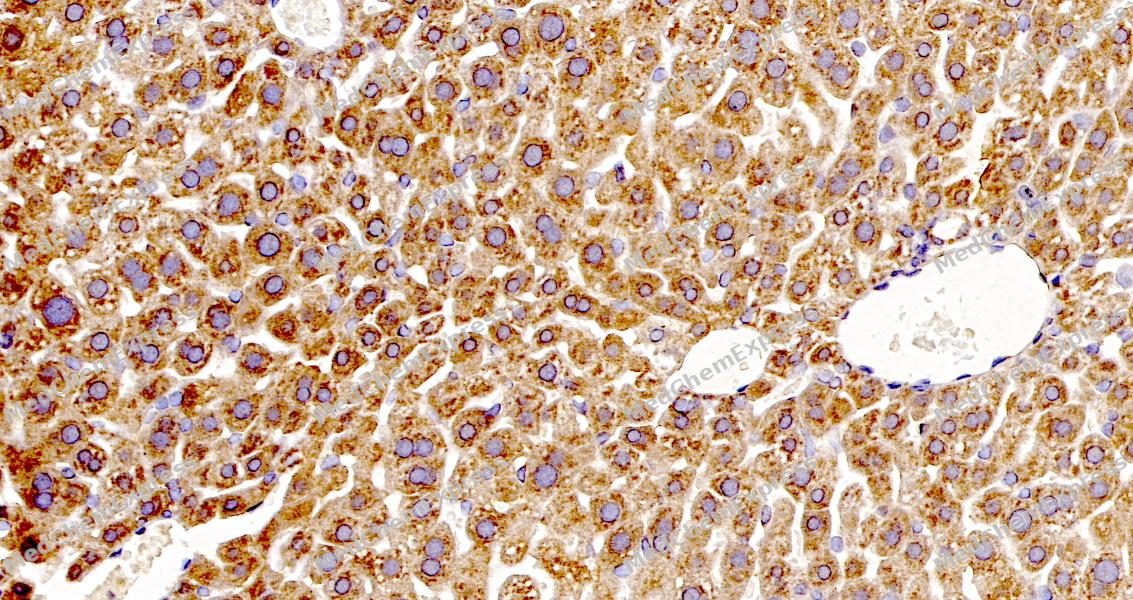 Immunohistochemical analysis of paraffin-embedded mouse liver tissue using SKP2 Antibody. The section was pre-treated using heat mediated antigen retrieval with sodium citrate buffer (pH 6.0) for 8 minutes. The tissues were blocked in QuickBlock for 20 minutes at room temperature, washed with ddH2O and PBS, and then probed with the primary antibody at 1/100 dilution in 4℃ overnight. The detection was performed using an HRP conjugated compact polymer system. DAB was used as the chromogen. Tissues were counterstained with hematoxylin and mounted with DPX.
 -
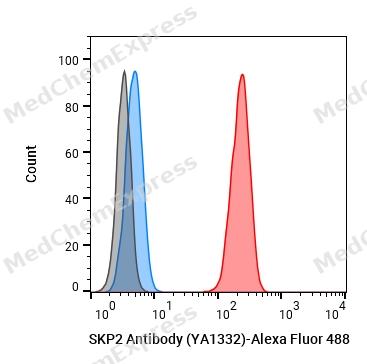 Flow cytometric analysis of 1X10^6 Hela cells labeling SKP2 Antibody (YA1332) (HY-P81587, red). Cells were fixed with 4% paraformaldehyde and permeabilised with 90% methanol. Then stained with the primary antibody at 1/50 dilution for an hour at 4℃. Alexa Fluor® 488-conjugated AffiniPure Goat Anti-Rabbit IgG H&L (HY-P8002) was used as the secondary antibody at 1/1,000 dilution for 30 minutes at 4℃. Rabbit IgG Isotype Control (HY-P80879, blue) was used as the isotype control, cells without incubation with primary antibody were used as the unlabeled control (black).


Background
-
Function
Skp2 (S-phase kinase-associated protein 2) is an F-box protein that functions as the substrate-recognition component of the SCF (SKP1-CUL1-F-box) E3 ubiquitin ligase complex and regulates proteasome-dependent turnover of key cell-cycle regulators, most notably the cyclin-dependent kinase inhibitor p27^Kip1^[1][1]. Mechanistically, Skp2 promotes ubiquitination and degradation of phosphorylated p27, thereby facilitating G1/S transition and sustained cellular proliferation[1][2]. Through its E3 ligase activity, Skp2 has emerged as a central regulator of cell-cycle progression and oncogenic signaling pathways that influence tumor growth, survival, and stem-cell-associated phenotypes[1][3]. In cancer models, genetic or pharmacological inhibition of Skp2 suppresses tumor cell survival, impairs cancer stem cell maintenance, and reduces tumor progression, supporting its utility as an experimental target for mechanistic and translational studies[1]. Compared with related F-box proteins, Skp2 is distinguished by its requirement for the accessory protein Cks1 during efficient recognition and ubiquitination of p27, highlighting a unique substrate-recruitment mechanism within the SCF ubiquitin ligase family[2]. This functional specificity has motivated the development of Skp2-directed inhibitors and chemical probes designed to disrupt Skp2-mediated p27 ubiquitination and degradation[4][5]. Therefore, Skp2 represents an important molecular node linking ubiquitin-mediated proteolysis, cell-cycle control, and cancer-associated biological processes, making it a valuable target for experimental research and therapeutic investigation[1][3].
-
Subcellular Localization
Cytoplasm; Nucleus
-
Isoforms & Post-Translational Modification
Q13309 has 3 isomers: Q13309-1: 47761 Da (predicted); Q13309-2: 46576 Da (predicted); Q13309-4: 23763 Da (predicted).
Phosphorylated on serine and threonine resudues in response to DNA damage, promoting 'Lys-63'-linked ubiquitination of NBN;Ubiquitinated by the APC/C complex, leading to its degradation by the proteasome. Deubiquitinated by USP13;Acetylation at Lys-68 and Lys-71 increases stability through impairment of APC/C-mediated proteolysis and promotes cytoplasmic retention. Deacetylated by SIRT3 -
Subunit
Part of a SCF(SKP2) complex consisting of CUL1, RBX1, SKP1 and SKP2. Component of a SCF(SKP2)-like complex containing CUL1, SKP1, TRIM21 and SKP2. Interacts directly with CUL1 and SKP1. Interacts with CKS1. Interacts with ASB2 which is the substrate-recognition component of a probable ECS E3 ubiquitin-protein ligase complex; ASB2 is likely to bridge the formation of dimeric E3-ubiquitin-protein ligase complexes composed of an ECS complex and an SCF(SKP2) complex (PubMed:21119685). Interacts with the cyclin-A-CDK2 complex. Interacts with ORC1, phosphorylated CDT1, phosphorylated RBL2, ELF4, phosphorylated RAG2, FOXO1, UBP43, MYC, TOB1, TAL1 and KMT2A/MLL1. Interacts with TRIM21. Interacts with cyclin-E (By similarity). Interacts with IFI27; promotes the ubiquitin-mediated proteasomal degradation of hepatitis C virus/HCV non-structural protein NS5A (PubMed:27194766). Interacts with CARM1 (By similarity)
-
SwissProt ID
-
Synonyms
SKP2; FBXL1; S-phase kinase-associated protein 2; Cyclin-A/CDK2-associated protein p45; F-box protein Skp2; F-box/LRR-repeat protein 1; p45skp2
-
Research Field
Cell Biology


Documentation
-
Data Sheet (262 KB)
-
SDS (252 KB)
- English - EN (252 KB)
- Français - FR (252 KB)
- Deutsch - DE (252 KB)
- Norwegian - NO (252 KB)
- Español - ES (252 KB)
- Swedish - SV (252 KB)
- Italian - IT (252 KB)
- Korean - KR (252 KB)
- Portuguese - PT (252 KB)
-
User Guide for Antibodies (1077 KB)
References
[1]. Rabezanahary H, et al. Live virus neutralizing antibodies against pre and post Omicron strains in food and retail workers in Québec, Canada. Heliyon. 2024 May 21;10(10):e31026. [Content Brief]
[2]. Kiros M, et al. Trends in HIV-1 pretreatment drug resistance and HIV-1 variant dynamics among antiretroviral therapy-naive Ethiopians from 2003 to 2018: a pooled sequence analysis. Virol J. 2023 Oct 25;20(1):243. [Content Brief]
[3]. Cai Z, et al. The Skp2 Pathway: A Critical Target for Cancer Therapy. Semin Cancer Biol. 2020 Dec;67(Pt 2):16-33. [Content Brief]
[4]. Aye Y, et al. Clofarabine targets the large subunit (α) of human ribonucleotide reductase in live cells by assembly into persistent hexamers. Chem Biol. 2012 Jul 27;19(7):799-805. [Content Brief]
[5]. Lough L, et al. Chemical probes of Skp2-mediated p27 ubiquitylation and degradation. Medchemcomm. 2018 Jun 11;9(7):1093-1104. [Content Brief]

 Powered by Bioz
