1. Search Result
Search Result
Results for "

HEPG2

" in MedChemExpress (MCE) Product Catalog:

1135

Inhibitors & Agonists

18

Fluorescent Dyes

14

Biochemical Assay Reagents

29

Peptides

1

MCE Kits

8

Inhibitory Antibodies

301

Natural
Products

23

Isotope-Labeled Compounds

4

Click Chemistry

7

Oligonucleotides

Cat. No. Product Name Target Research Areas Chemical Structure
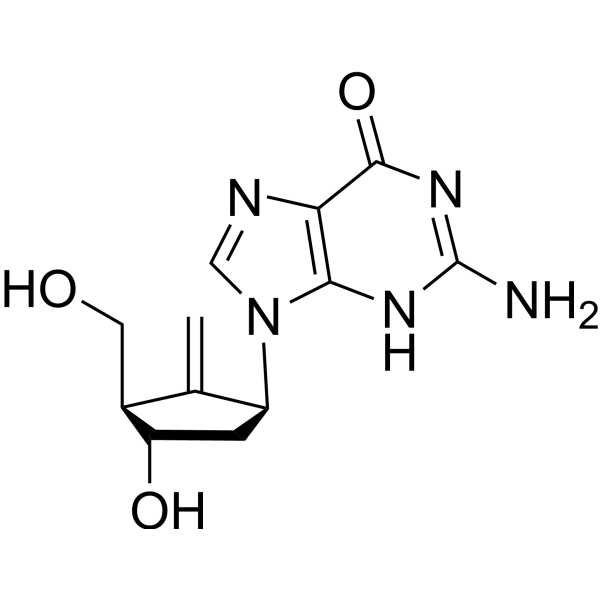
  • HY-13623
    Entecavir
    15+ Cited Publications

    BMS200475; SQ34676

    HBV Infection Cancer
    Entecavir (SQ 34676; BMS 200475) is a potent and selective inhibitor of HBV, with an EC50 of 3.75 nM in HepG2 cell.
    Entecavir
  • HY-N0125
    Diosmetin
    Maximum Cited Publications
    20 Publications Verification

    Cytochrome P450 Cancer
    Diosmetin is a natural flavonoid which inhibits human CYP1A enzyme activity with an IC50 of 40 μM in HepG2 cell.
    Diosmetin
  • HY-N0316
    Mollugin
    2 Publications Verification

    JAK NF-κB Reactive Oxygen Species (ROS) Apoptosis VEGFR c-Myc Cancer
    Mollugin is an orally active and potent NF-κB inhibitor. Mollugin induces S-phase arrest of HepG2 cells, and increased intracellular reactive oxygen species (ROS) levels. Mollugin induces DNA damage in HepG2 cells, as well as an increase in the expression of p-H2AX. Mollugin shows anti-cancer effect by inhibiting TNF-α-induced NF-κB activation. Mollugin enhances the osteogenic action of BMP-2 (bone morphogenetic protein 2) via the p38-Smad signaling pathway [2] .
    Mollugin
  • HY-178018

    iOXCT1

    Mitochondrial Metabolism Cancer
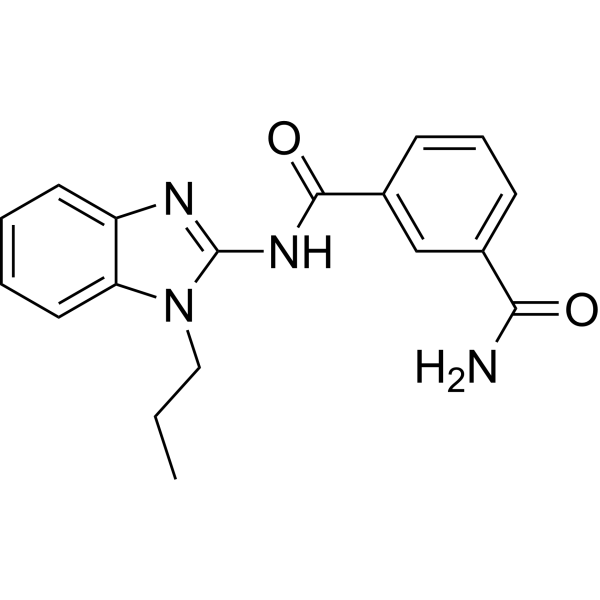
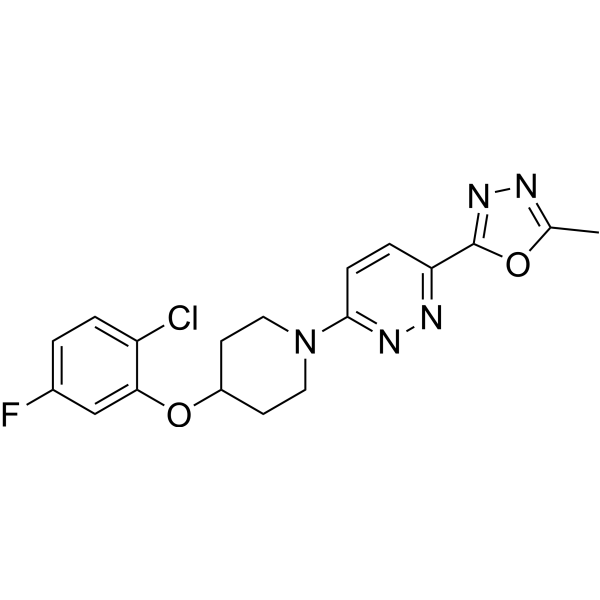
    D574-0246 is a dual-activity inhibitor of OXCT1, inhibiting both the ketolytic and succinyltransferase activities of OXCT1. D574-0246 reduces substrate-specific (LACTB K284) and global protein succinylation and decreases OXCT1 ketolytic activity in HepG2 cells. D574-0246 inhibits the viability of HCC cells (IC50: 16.49 μM in PLC cells, 6.656 μM in HepG2 cells). D574-0246 exerts anti-tumor efficacy in nude mice bearing OXCT1-overexpressing HepG2 xenograft tumors. D574-0246 can be used for the study of hepatocellular carcinoma (HCC) .
    D574-0246
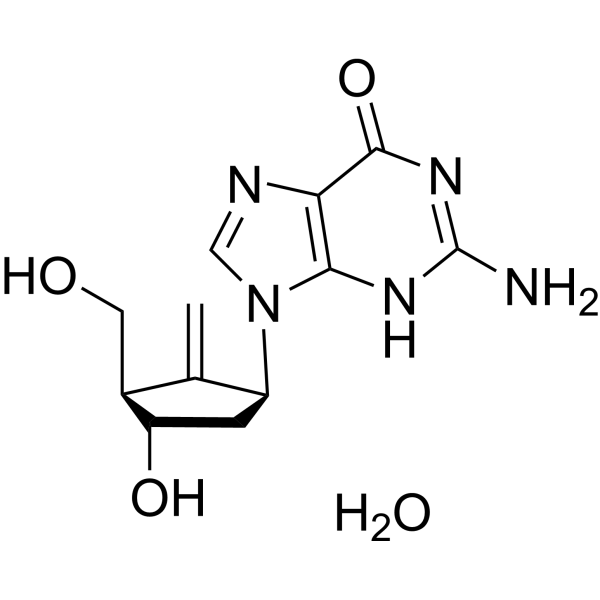
  • HY-13623A
    Entecavir monohydrate
    15+ Cited Publications

    BMS200475 monohydrate; SQ34676 monohydrate

    HBV Infection Cancer
    Entecavir monohydrate (BMS200475 monohydrate; SQ34676 monohydrate) is a potent and selective inhibitor of HBV, with an EC50 of 3.75 nM in HepG2 cell.
    Entecavir monohydrate
  • HY-10332
    (Z)-Semaxanib
    3 Publications Verification

    (Z)-SU5416

    c-Met/HGFR Cancer
    (Z)-Semaxanib (compound (z)-1) is a potent tyrosine kinase inhibitor. (Z)-Semaxanib shows cytotoxicity for TAMH and HepG2 cells with IC50s of 6.28 µM and 8.17 µM, respectively .
    (Z)-Semaxanib
  • HY-113000

    Endogenous Metabolite Cardiovascular Disease
    Cetoleic acid is a long-chain monounsaturated fatty acid found in deep-sea fish. Cetoleic acid can promote the synthesis of ALA in human HepG2 cells and EPA in vitro in salmon liver cells, affecting cholesterol levels in rodents. Cetoleic acid has potential applications in cardiovascular disease research [2].
    Cetoleic acid
  • HY-75564

    Endogenous Metabolite Cancer
    Cyclo(Ala-Gly), a metabolite of a mangrove endophytic fungus, Penicillium thomi, exhibits cytotoxicity against A549, HepG2 and HT29 cells. The IC50 values range from 9.5 to 18.1 μM .
    Cyclo(Ala-Gly)
  • HY-N6683

    Drug Metabolite Cancer
    15-Acetyl-deoxynivalenol is a highly toxic trichothecene found in cereals, and a metabolite of deoxynivalenol, exhibits toxicity to HepG2 cells .
    15-Acetyl-deoxynivalenol
  • HY-D1255

    Fluorescent Dye Cancer
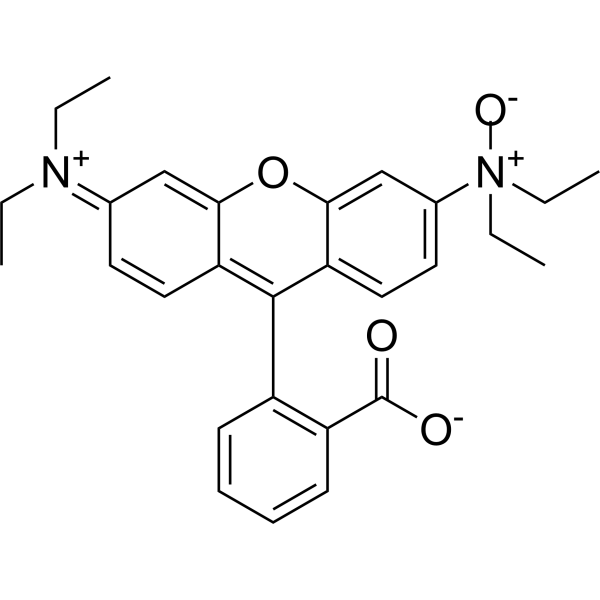
    Sel-green, a selective selenol fluorescent probe, is applied to quantify the Sec content in the selenoenzyme thioredoxin reductase and image endogenous Sec in live HepG2 cells .
    Sel-green
  • HY-174830

    PD-1/PD-L1 Cancer
    GJ19 is a PD-L1 inhibitor with an IC50 of 32.06 nM. GJ19 can effectively bind to human/murine PD-L1 protein with Kd values of 171 and 290 nM, respectively. GJ19 concentration-dependently promotes HepG2 cell mortality in a co-culture model of HepG2/hPD-L1 and Jurkat T/hPD-1 cells. GJ19 effectively suppresses tumor growth in a B16-F10 melanoma mouse model. GJ19 can be used for the study of tumor immunotherapy .
    GJ19
  • HY-137605

    Transmembrane Glycoprotein Cancer
    WSF1-IN-1 (compound 136), an orally active WSF1 inhibitor, can be used in the study for WSF1 (Wolfram syndrome) related tumors, with IC50 values of 0.33 μM and >27 μM in HepG2 parental and HepG2 WFS1 KO cell lines, respectively .
    WSF1-IN-1
  • HY-100303A
    FR194738
    2 Publications Verification

    Squalene Monooxygenase Metabolic Disease
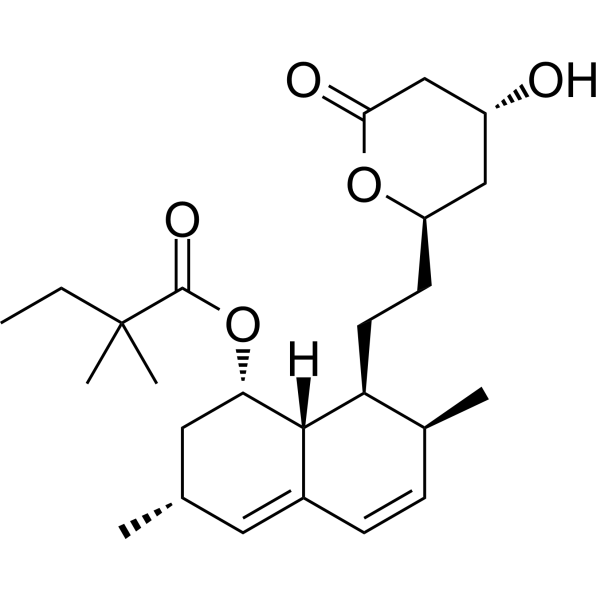
    FR194738 is a squalene epoxidase inhibitor. FR194738 inhibits squalene epoxidase activity in HepG2 cell homogenates with an IC50 of 9.8 nM.
    FR194738
  • HY-175208

    Hippo (MST) Caspase Bcl-2 Family Apoptosis Cancer
    MST3-IN-1 is a selective and orally active MST3 inhibitor, with an IC50 of 122.4 nM. MST3-IN-1 shows antiproliferative activity against HepG2 cell. MST3-IN-1 effectively induces apoptosis in HepG2 cells, and halts the cell cycle at the G2/M transition. MST3-IN-1 significantly suppressed tumor growth in HepG2 xenograft mice. MST3-IN-1 can be used for the study of liver cancer .
    MST3-IN-1
  • HY-P1935

    Biochemical Assay Reagents Cancer
    Cyclo(Ala-Pro) is an anticancer agent that is toxic to cancer cells such as A549, HCT-116 and HepG2 .
    Cyclo(Ala-​Pro)
  • HY-204056

    Telomerase Cancer
    Telomerase-IN-8 is an orally active telomerase inhibitor, with an IC50 value of 0.98 μM. Telomerase-IN-8 exhibits potent antiproliferative activity against multiple tumor cell lines, including PC3, Bcap-37, MGC-803 and HepG2. Telomerase-IN-8 demonstrates potent antitumor efficacy in S180 sarcoma or HepG2 hepatoma xenograft mice. Telomerase-IN-8 can be used for the study of telomerase-targeted anticancer .
    Telomerase-IN-8
  • HY-N7321

    Others Cancer
    Eucomol has potent cytotoxicity against KKU-M156 and HepG2 cells with the IC50 values of 7.12 and 25.76? μg/mL, respectively. Eucomol can be isolated from an ethanolic extract of D. cochinchinensis .
    Eucomol
  • HY-170027

    HIF/HIF Prolyl-Hydroxylase AMPK Cancer
    LW1564 is an inhibitor for HIF-1α with an IC50 of 1.2 µM in HepG2. LW1564 inhibits mitochondrial respiration, reduces ATP production, stimulates HIF-1α degradation, and inhibits proliferation of various cancer cells with GI50 of 0.4-4.6 μM. LW1564 activates AMPK signaling pathway and inhibits lipid synthesis. LW1564 exhibits antitumor in HepG2 xenograft mouse model .
    LW1564
  • HY-116920

    Reactive Oxygen Species (ROS) Microtubule/Tubulin Cancer
    Alyssin, found in Cruciferous Vegetables, exerts anticancer activity in HepG2 by increasing intracellular reactive oxygen species and tubulin depolymerization .
    Alyssin
  • HY-168187

    Src Cancer
    Src Inhibitor 3 (Compound 7d) is a Src inhibitor with an IC50 of 285 nM. Src Inhibitor 3 inhibits HepG2 cells proliferative with an IC50 of 1.55 μM .
    Src Inhibitor 3
  • HY-N10846

    Others Others
    Neotriptonoterpene, a compound isolated from T. regelii, shows weak cytotoxic activity against A2780, HepG2 and MCF-7 cells with IC50 values of 65.80, 35.45 and 64.80 µM respectively .
    Neotriptonoterpene
  • HY-170992

    Autophagy CDK Atg8/LC3 PINK1/Parkin Cancer
    Autophagy agonist-1 (compound 22) is an Autophagy agonist. Autophagy agonist-1 exhibits significant anticancer activity against HepG2 cells and normal cells with IC50s of 8.8 μM and > 50 μM. Autophagy agonist-1 induces G1/S phase cell cycle arrest and inhibits CDK4 and CyclinD1 expression while upregulating P21. Autophagy agonist-1 promotes the accumulation of autophagosomes and the proteins LC3 and PINK1, enhancing autophagy and mitophagy in HepG2 cells .
    Autophagy agonist-1
  • HY-151573

    EGFR CDK Cancer
    EGFR/CDK2-IN-1 (Compound 3b) is an EGFR/CDK2 inhibitor. EGFR/CDK2-IN-1 shows good cytotoxicity against MCF7 and HepG2 cells. EGFR/CDK2-IN-1 can be used in cancer research .
    EGFR/CDK2-IN-1
  • HY-146045

    Parasite Infection
    Antiparasitic agent-7 (compound 5d) has selectively antiparasitic activity against Leishmania infantum (L. infantum) with an IC50 value of 2.85 μM. Antiparasitic agent-7 also has certain cytotoxicity against HepG2 (CC50 = 10.61 μM) .
    Antiparasitic agent-7
  • HY-175208A

    Hippo (MST) Caspase Bcl-2 Family Apoptosis Cancer
    MST3-IN-1 TFA (Compound LD-1) is a selective and orally active MST3 inhibitor, with an IC50 of 122.4 nM. MST3-IN-1 TFA shows antiproliferative activity against HepG2 cell. MST3-IN-1 TFA effectively induces Apoptosis in HepG2 cells, and halts the cell cycle at the G2/M transition. MST3-IN-1 TFA significantly suppressed tumor growth in HepG2 xenograft mice. MST3-IN-1 TFA can be used for the study of liver cancer .
    MST3-IN-1 TFA
  • HY-151066

    PD-1/PD-L1 Cancer
    BMS-1233 is an orally active inhibitor for programmed cell death-ligand 1 (PD-L1), with IC50 of 14.5 nM. BMS-1233 promotes cell death of HepG2 in a Jurkat T cell and HepG2 cell co-culture model, exhibits antitumor activity against melanoma in mouse model .
    BMS-1233
  • HY-N12158

    Apoptosis Cancer
    Pipermethystine is an alkaloid that can be isolated from the Kava plant. Pipermethystine decreases HepG2 cell cellular ATP levels, mitochondrial membrane potential, and induces apoptosis .
    Pipermethystine
  • HY-176416

    Deubiquitinase Cancer
    USP7-IN-17 (compound M15) is a potent USP7 inhibitor. USP7-IN-17 inhibits HepG2 cell activity with an IC50 of 4.38 μM .
    USP7-IN-17
  • HY-N8361

    HIV Apoptosis Infection Cancer
    Glycoborinine, a natural carbazole alkaloid, can be isolated from Glycosmis pentaphylla. Glycoborinine induces HepG2 cell apoptosis through mitochondrial pathway. Glycoborinine also inhibits HIV replication in cells [2].
    Glycoborinine
  • HY-126644

    Bacterial Fungal Infection Cancer
    Halocyamine B exhibits antimicrobial activity against a variety of bacteria and yeasts. Halocyamine B exhibits cytotoxicity to cultured neural cells of rat fetal brain, mouse neuroblastoma N18 cells, and human hepatoma HepG2 cells .
    Halocyamine B
  • HY-N9966

    Others Others
    Sanggenol O? is an active product that can be extracted from Morus alba. Sanggenol O? has hepatoprotective and neuroprotective activities with EC50s more than 80 μM in HepG2 and HT22 cells .
    Sanggenol O
  • HY-147839

    Topoisomerase Apoptosis Cancer
    Topoisomerase II inhibitor 10 (compound 32a) is a potent topoisomerase II inhibitor with an IC50 value of 7.45 μM. Topoisomerase II inhibitor 10 causes cell cycle arrest at G2-M phase and induces apoptosis of HepG-2 cells. Topoisomerase II inhibitor 10 has excellent anti-proliferative activities against HepG-2, MCF-7, and HCT-116 cells .
    Topoisomerase II inhibitor 10
  • HY-N7980

    NF-κB Cancer
    Rubipodanone A, a naphthohydroquinone dimer, shows cytotoxicity against A549, BEL-7402, HeLa, HepG2, SGC-7901 and U251 cells. Rubipodanone A also shows obvious activating effect at 20 and 40 μM for NF-κB .
    Rubipodanone A
  • HY-N1323

    HBV Infection
    Sanggenol P, a flavonoid, shows anti-HBV activity on HepG2.2.15 cell line in vitro .
    Sanggenol P
  • HY-175176

    HDAC Apoptosis Pyroptosis Reactive Oxygen Species (ROS) Caspase Cancer
    HDAC1/6-IN-3 is a potent HDAC inhibitor. HDAC1/6-IN-3 shows excellent inhibitory activities against HDAC1 (IC50 = 1.1 nM) and HDAC6 (IC50 = 2.7 nM). HDAC1/6-IN-3 significantly arrests HepG2 cells at the G0/G1 phase and induces apoptosis and pyroptosis. HDAC1/6-IN-3 exhibits significant antitumor activity in the HepG2 xenograft mode. HDAC1/6-IN-3 can be used for the study of cancers such as liver cancer, lung cancer, colon cancer and breast cancer .
    HDAC1/6-IN-3
  • HY-N8882

    Others Cancer
    Oleoside 11-methyl ester is a secoiridoid glucoside and possesses a strong cytotoxic activity against Hep-G2 cells .
    Oleoside 11-methyl ester
  • HY-146465

    Microtubule/Tubulin Cancer
    Anticancer agent 60 (compound 3h) has antiproliferative activity against human HepG2 cells (IC50 = 4.13 μM) and presents antitumor efficacy in a human HepG2 xenograft mouse model .
    Anticancer agent 60
  • HY-149815

    HBV Infection Inflammation/Immunology
    HBV-IN-33 (C-49), a HBV inhibitor, notably suppresses HBV replication in HepAD38, HepG2-HBV1.3 and HepG2-NTCP cells .
    HBV-IN-33
  • HY-N11433

    Others Others
    Celosin L is a triterpenoid saponin with hepaprotective activity. Celosin L exhibits protective effects against APAP-induced hepatotoxicity in HepG2 cells .
    Celosin L
  • HY-N10089

    Others Cancer
    Psiguadial D is a terpenoid that can be isolated from Psidium guajava, and it has a strong inhibitory effect on the growth of HepG2 cells, with an IC50value of 128.3 nM .
    Psiguadial D
  • HY-115962

    Drug Derivative Cancer
    Anticancer agent 37 (compound 18), a sulfonylurea derivative, is a potent anticancer agent. Anticancer agent 37 inhibits HePG2 cell growth with an IC50 of 17.2 µg/mL .
    Anticancer agent 37
  • HY-N10207

    Endogenous Metabolite Infection Cancer
    Penicitide A is a marine secondary metabolite. Penicitide A shows moderate cytotoxicity against pathogen A. brassicae and the human hepatocellular liver carcinoma (HepG2) cell line .
    Penicitide A
  • HY-N12288

    Others Cancer
    Wangzaozin A is an ent-kaurene diterpenoid. Wangzaozin A has cytotoxic against HepG2 cells and Tb cells with IC50 of 1.41 μM and 0.32 μM, respectively .
    Wangzaozin A
  • HY-145821

    Microtubule/Tubulin Cancer
    Tubulin inhibitor 15 is a potent tubulin inhibitor. Tubulin inhibitor 15 shows antiproliferative activity. Tubulin inhibitor 15 shows cytotoxicity in HepG2 cells .
    Tubulin inhibitor 15
  • HY-145822

    Microtubule/Tubulin Cancer
    Tubulin inhibitor 16 is a potent tubulin inhibitor. Tubulin inhibitor 16 shows antiproliferative activity. Tubulin inhibitor 16 shows cytotoxicity in HepG2 cells .
    Tubulin inhibitor 16
  • HY-146082

    Biochemical Assay Reagents Cancer
    (Z)-α-Cyanostilbene (compound 8), a dicyano substituted acrylonitrile, shows selective antiproliferative activity against HeLa and HepG2 cells, with IC50s of 0.33 and 0.52 μM, respectively .
    (Z)-α-Cyanostilbene
  • HY-147198

    Parasite Infection
    Antimalarial agent 13 (Compound 1) is a potent antimalarial agent. Antimalarial agent 13 shows inhibition with EC50 values of 124 nM and 2.5 μM against P. falciparum parasite and HepG2, respectively .
    Antimalarial agent 13
  • HY-176431

    Endogenous Metabolite Metabolic Disease
    TLCD1-IN-1 (compound MB-4A) is a covalent TLCD1 inhibitor. TLCD1-IN-1 stereoselectively engages and inhibits TLCD1 in HepG2 cells .
    TLCD1-IN-1
  • HY-116920A

    Reactive Oxygen Species (ROS) Microtubule/Tubulin Cancer
    (R)-Alyssin is a enantiomer of Alyssin (HY-116920). Alyssin, found in Cruciferous Vegetables, exerts anticancer activity in HepG2 by increasing intracellular reactive oxygen species and tubulin depolymerization .
    (R)-Alyssin
  • HY-116920B

    Reactive Oxygen Species (ROS) Microtubule/Tubulin Cancer
    (S)-Alyssin is a enantiomer of Alyssin (HY-116920). Alyssin, found in Cruciferous Vegetables, exerts anticancer activity in HepG2 by increasing intracellular reactive oxygen species and tubulin depolymerization .
    (S)-Alyssin

Inquiry Online

Your information is safe with us. * Required Fields.

Salutation


Country or Region *

Applicant Name *


Organization Name *

Department *


Email Address *


Product Name *

Cat. No.


Requested quantity *

Phone Number *


Remarks

Inquiry Online

Inquiry Information

Product Name:
Cat. No.:
Quantity:
MCE Japan Authorized Agent:

