



eIF4A3-IN-1
Based on 4 publication(s) in Google Scholar
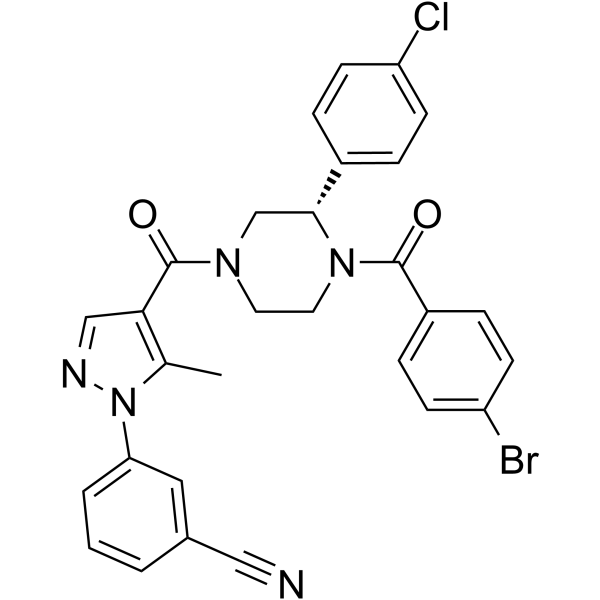
eIF4A3-IN-1 is a selective eIF4A3 inhibitor (IC50: 0.26 μM; Kd: 0.043 μM) with cellular nonsense-mediated RNA decay (NMD) inhibitory activity. eIF4A3-IN-1 can specifically bind to the non-ATP binding site of eIF4A3. eIF4A3-IN-1 has anti-tumor and analgesic activities.
商品は「研究用試薬」です。人や動物の医療用・臨床診断用・食品用の製品ではありません。
研究用途以外に使用した場合、当社は一切の責任を負いかねます。
- 純度 : 99.96%
- CAS 番号: 2095486-67-0
- 分子式: C29H23BrClN5O2
- 分子量:588.88
-
保管条件:Powder -20°C, 3 years , 4°C, 2 years ; In solvent -80°C, 2 years , -20°C, 1 year

To place orders, for customer services and technical support, please contact: MedChemExpress USA
Tel: 609-228-6898 E-mail: [email protected] [email protected]


-
 生物活性
生物活性
-
化学情報
-
溶剤 & 溶解度
- 純度とドキュメンテーション
- 参考文献
-
 Help & FAQs


-
HY-101785
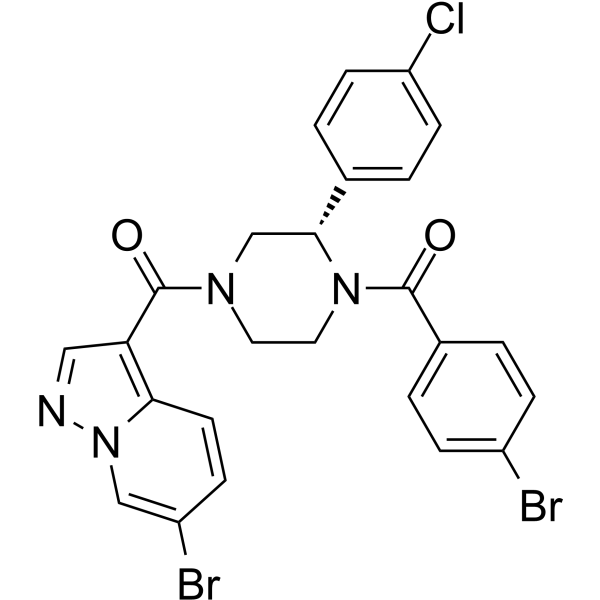
eIF4A3-IN-2eIF4A3 Inhibitor -
HY-19356
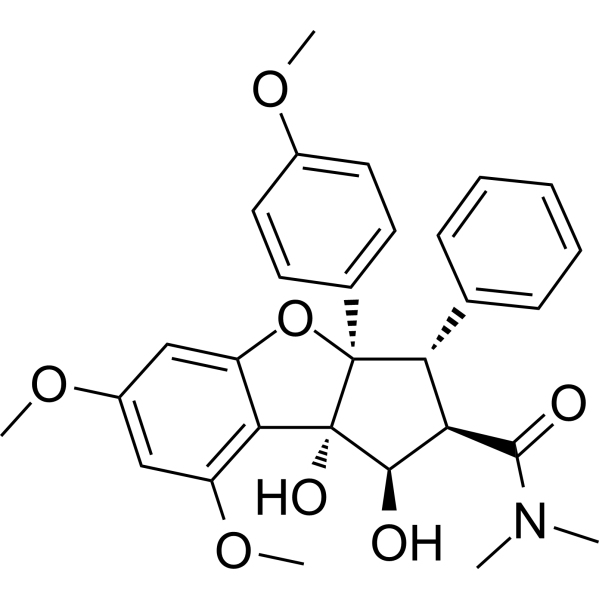
RocaglamideNF-κB Inhibitor -
HY-111374
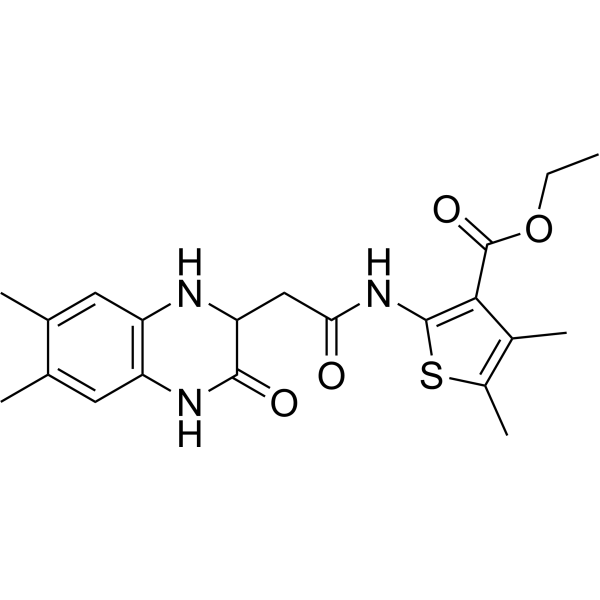
NMDI14NMD/Upf1 Inhibitor -
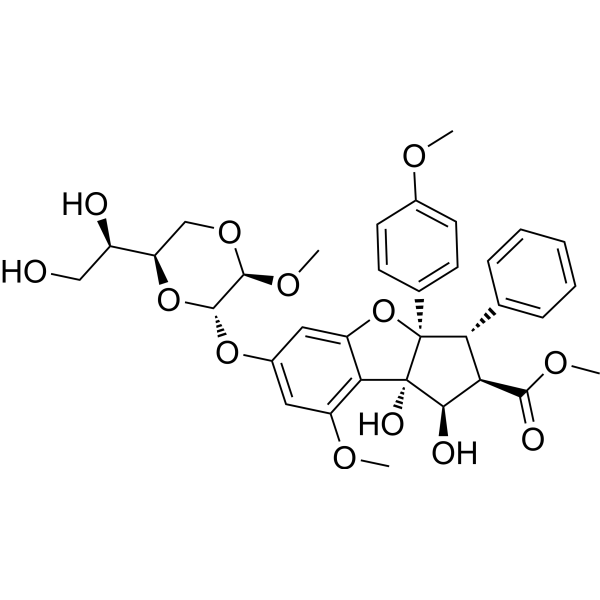
HY-13251
SilvestroleIF4A Inhibitor -
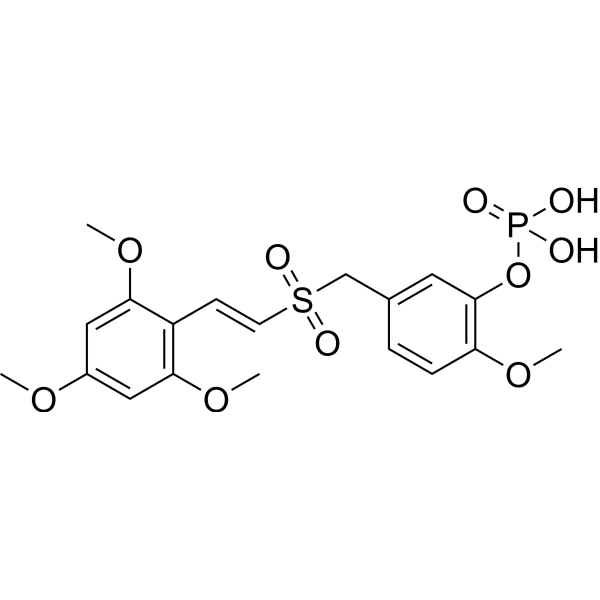
HY-16366
BriciclibeIF4E Inhibitor -
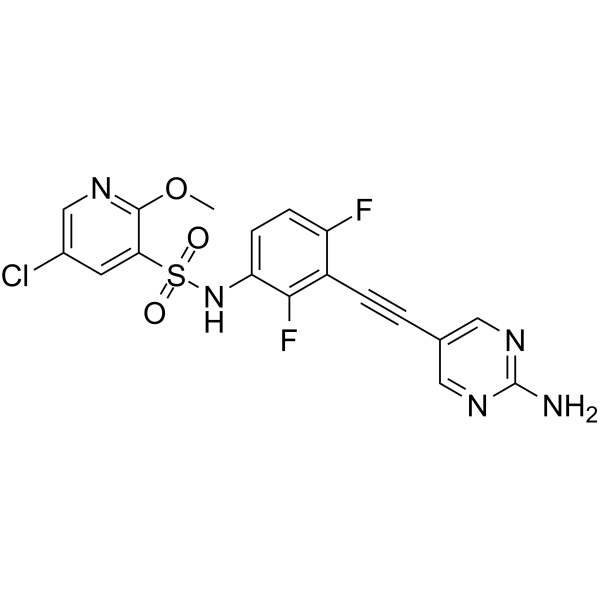
HY-112654
GCN2iBGCN2 Kinase Inhibitor -
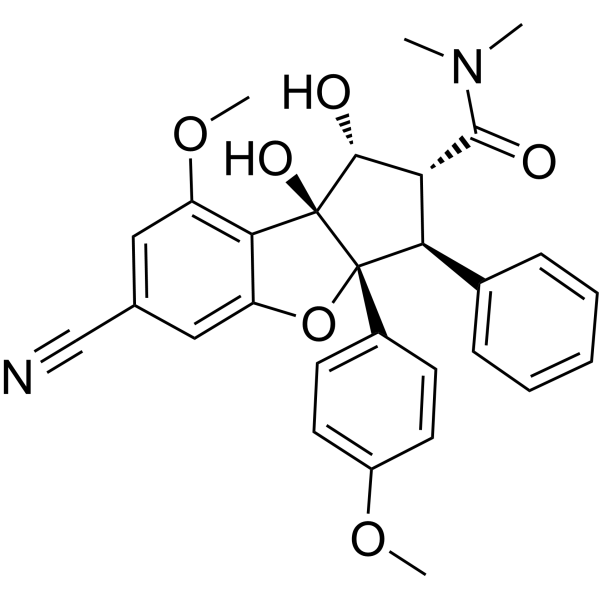
HY-148452
eIF4A3-IN-18eIF4F Inhibitor -
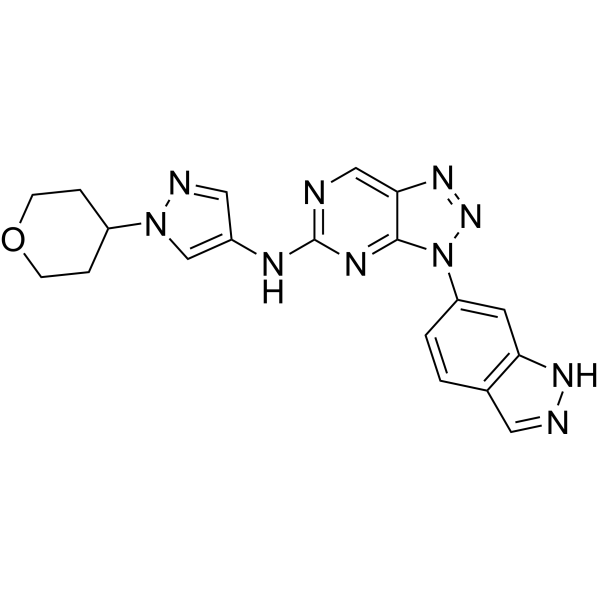
HY-100877
GCN2-IN-1GCN2 Inhibitor -

HY-101513R
eIF4A3-IN-1 (Standard)eIF4A3 Inhibitor -
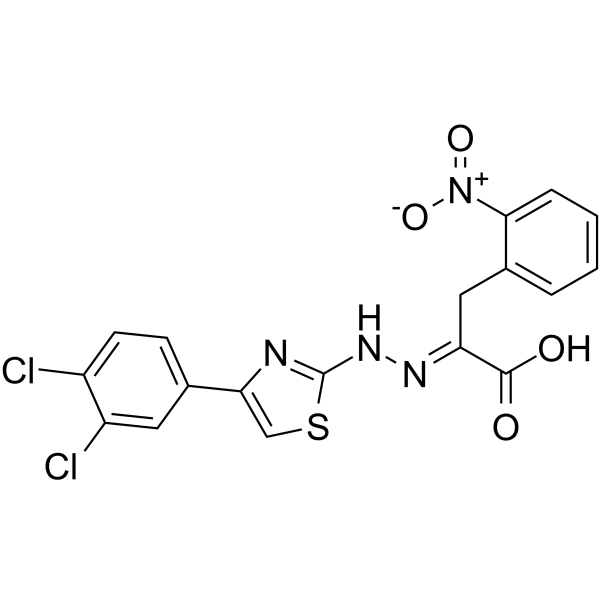
HY-19831A
(Z)-4EGI-1eIF4E/eIF4G Interaction Inhibitor -
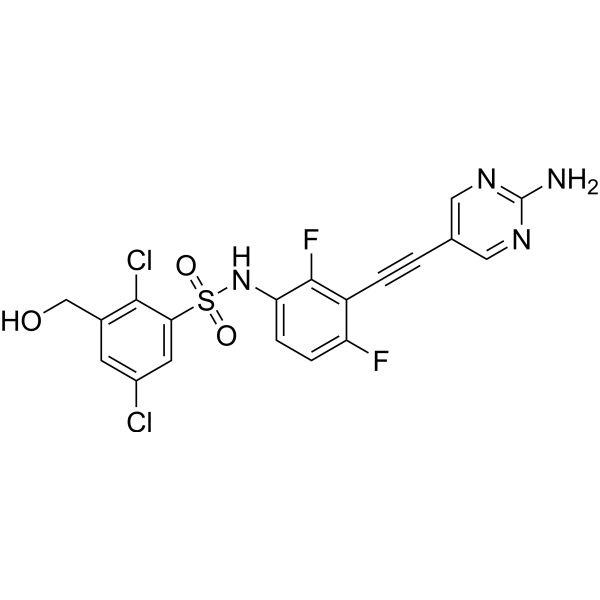
HY-130240
GCN2-IN-6eIF Inhibitor -
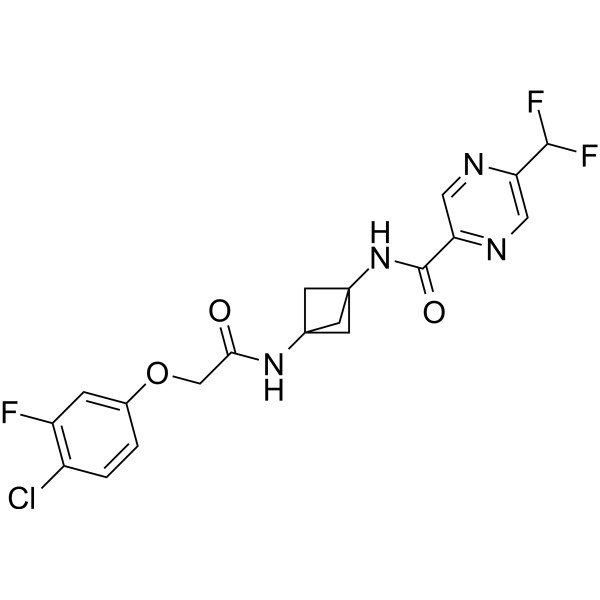
HY-125021
2BActeIF2B Activator
MedChemExpress(MCE)の使用を引用している文献 eIF4A3-IN-1
More

生物活性
製品説明
IC50 & Target
[1]|
eIF4 |
体外実験
eIF4A3-IN-1 (Compound 53a) (3-10 μM; 6 h) can effectively inhibit NMD in HEK293T cells transfected with the NMD reporter gene[1].
eIF4A3-IN-1 (3 nM; 1-10 days) can inhibit the proliferation, colony formation, and tumor sphere size of hepatocellular carcinoma cell lines[2].
MedChemExpress (MCE) has not independently confirmed the accuracy of these methods. They are for reference only.
-
Cell Line:HepG2, Hep3B and SNU-387 cell lines
-
Concentration:3 nM
-
Incubation Time:24, 48 and 72 h
-
Result:Significantly decreased cell viability in HepG2, Hep3B and SNU-387 cell lines.
体内実験
MedChemExpress (MCE) has not independently confirmed the accuracy of these methods. They are for reference only.
-
Animal Model:Adult Sprague-Dawley rats aged 7 weeks old (200-250 g) treated spinal nerve ligation to neuropathic pain model[3]
-
Dosage:10, 30 and 100 nM, 10 μL
-
Administration:Intrathecal injection; twice daily; 3 days
-
Result:Dose-dependently alleviates allodynia-like behaviors in rats.
Reversed the increased expression of eIF4A3, SMG1 kinase, and phosphorylated UPF1 and the decreased expression of μ-opioid receptor caused by spinal nerve ligation.
Reversed the changes in the interactions of related proteins and immunofluorescence-related indicators, and reduced the content of co-immunoprecipitated μ-opioid receptor mRNA bound to phosphorylated UPF1.


化学情報
-
CAS 番号 2095486-67-0
-
性状 Solid
-
分子量 588.88
-
分子式 C29H23BrClN5O2
-
Color White to off-white
-
SMILES
ClC(C=C1)=CC=C1[C@@H]2N(C(C3=CC=C(Br)C=C3)=O)CCN(C(C4=C(C)N(C5=CC=CC(C#N)=C5)N=C4)=O)C2
-
輸送条件
Room temperature in continental US; may vary elsewhere.
-
保管条件
Powder -20°C 3 years 4°C 2 years In solvent -80°C 2 years -20°C 1 year


Publications (4)
-
Journal Impact Factor
-
Most Recent
-
Anesthesiology
Phosphorylated upstream frameshift 1-dependent nonsense-mediated μ opioid receptor mRNA decay in the spinal cord contributes to the development of neuropathic allodynia-like behavior in rats. [Abstract]2023 Jun 1;138(6):634-655. PMID: 36867667 -
Clin Transl Med
Spliceosomal profiling identifies EIF4A3 as a novel oncogene in hepatocellular carcinoma acting through the modulation of FGFR4 splicing. [Abstract]2022 Nov;12(11):e1102. PMID: 36419260 -
Exp Cell Res
2021 Nov 1;408(1):112855. PMID: 34599930 -
Biochem Biophys Res Commun
Chemical inhibition of eIF4A3 abolishes UPF1 recruitment onto mRNA encoding NMD factors and restores their expression. [Abstract]2025 Feb 2:747:151270. PMID: 39787791


溶剤 & 溶解度
体外:
DMSO : 200 mg/mL (339.63 mM; Need ultrasonic; Hygroscopic DMSO has a significant impact on the solubility of product, please use newly opened DMSO)
Please refer to the solubility information to select the appropriate solvent. Once prepared, please aliquot and store the solution to prevent product inactivation from repeated freeze-thaw cycles.
Storage method and period of stock solution: -80°C, 2 years; -20°C, 1 year. When stored at -80°C, please use it within 2 years. When stored at -20°C, please use it within 1 year.
Please refer to the solubility information to select the appropriate solvent. Once prepared, please aliquot and store the solution to prevent product inactivation from repeated freeze-thaw cycles.
Storage method and period of stock solution: -80°C, 2 years; -20°C, 1 year. When stored at -80°C, please use it within 2 years. When stored at -20°C, please use it within 1 year.
濃度 (開始) × 体積 (開始) = 濃度 (終了) × 体積 (終了)
体内:
Select the appropriate dissolution method based on your experimental animal and administration route.
- For the following dissolution methods, please ensure to first prepare a clear stock solution using an In Vitro approach and then sequentially add co-solvents:
- To ensure reliable experimental results, the clarified stock solution can be appropriately stored based on storage conditions. As for the working solution for In Vivo experiments, it is recommended to prepare freshly and use it on the same day.
- The percentages shown for the solvents indicate their volumetric ratio in the final prepared solution. If precipitation or phase separation occurs during preparation, heat and/or sonication can be used to aid dissolution.
In Vivo Dissolution Calculator
Please enter the basic information of animal experiments:
-
-
-
-
Recommended: Prepare an additional quantity of animals to account for potential losses during experiments.
Please enter your animal formula composition:
-
%DMSO +
Recommended: Keep the proportion of DMSO in working solution below 2% if your animal is weak.
-
%+
-
+%Tween-80 + +
-
%Saline +
The co-solvents required include: DMSO, . All of co-solvents are available by MedChemExpress (MCE). , Tween 80. All of co-solvents are available by MedChemExpress (MCE).
Working solution concentration: 0.22 mg/mL
Method for preparing stock solution: mg drug dissolved in μL DMSO. Stock solution concentration: mg/mL.
1. Take μL DMSO stock solution;
2. Add μL .
μL , mix evenly;
3. Then add μL Tween 80, mix evenly;
4. Then add μL
Please ensure that the stock solution in the first step is dissolved to a clear state, and add co-solvents in sequence. You can use ultrasonic heating (ultrasonic cleaner, recommended frequency 20-40 kHz), vortexing, etc. to assist dissolution.


純度とドキュメンテーション
-
データシート (282 KB)
-
SDS (251 KB)
- English - EN (251 KB)
- Français - FR (251 KB)
- Deutsch - DE (251 KB)
- Norwegian - NO (251 KB)
- Español - ES (251 KB)
- Swedish - SV (251 KB)
- Italian - IT (251 KB)
- Korean - KR (251 KB)
- Portuguese - PT (251 KB)
-
取扱説明書 (2659 KB)
参考文献
[1]. Ito M, et al. Discovery of Novel 1,4-Diacylpiperazines as Selective and Cell-Active eIF4A3 Inhibitors. J Med Chem. 2017 Apr 27;60(8):3335-3351. [Content Brief]
[2]. López-Cánovas JL, et al. Spliceosomal profiling identifies EIF4A3 as a novel oncogene in hepatocellular carcinoma acting through the modulation of FGFR4 splicing. Clin Transl Med. 2022 Nov;12(11):e1102. [Content Brief]
[3]. Hsieh MC, et al. Phosphorylated Upstream Frameshift 1-dependent Nonsense-mediated μ-Opioid Receptor mRNA Decay in the Spinal Cord Contributes to the Development of Neuropathic Allodynia-like Behavior in Rats. Anesthesiology. 2023 Jun 1;138(6):634-655. [Content Brief]


Complete Stock Solution Preparation Table
Please refer to the solubility information to select the appropriate solvent. Once prepared, please aliquot and store the solution to prevent product inactivation from repeated freeze-thaw cycles.
Storage method and period of stock solution: -80°C, 2 years; -20°C, 1 year. When stored at -80°C, please use it within 2 years. When stored at -20°C, please use it within 1 year.
| Optional Solvent | Concentration Solvent Mass | 1 mg | 5 mg | 10 mg | 25 mg |
|---|---|---|---|---|---|
| DMSO | 1 mM | 1.6981 mL | 8.4907 mL | 16.9814 mL | 42.4535 mL |
| 5 mM | 0.3396 mL | 1.6981 mL | 3.3963 mL | 8.4907 mL | |
| 10 mM | 0.1698 mL | 0.8491 mL | 1.6981 mL | 4.2453 mL | |
| 15 mM | 0.1132 mL | 0.5660 mL | 1.1321 mL | 2.8302 mL | |
| 20 mM | 0.0849 mL | 0.4245 mL | 0.8491 mL | 2.1227 mL | |
| 25 mM | 0.0679 mL | 0.3396 mL | 0.6793 mL | 1.6981 mL | |
| 30 mM | 0.0566 mL | 0.2830 mL | 0.5660 mL | 1.4151 mL | |
| 40 mM | 0.0425 mL | 0.2123 mL | 0.4245 mL | 1.0613 mL | |
| 50 mM | 0.0340 mL | 0.1698 mL | 0.3396 mL | 0.8491 mL | |
| 60 mM | 0.0283 mL | 0.1415 mL | 0.2830 mL | 0.7076 mL | |
| 80 mM | 0.0212 mL | 0.1061 mL | 0.2123 mL | 0.5307 mL | |
| 100 mM | 0.0170 mL | 0.0849 mL | 0.1698 mL | 0.4245 mL |


eIF4A3-IN-1 関連分類
HY-101513 関連分類
 Powered by Bioz