



Aclimostat

Based on 1 Customer Validation
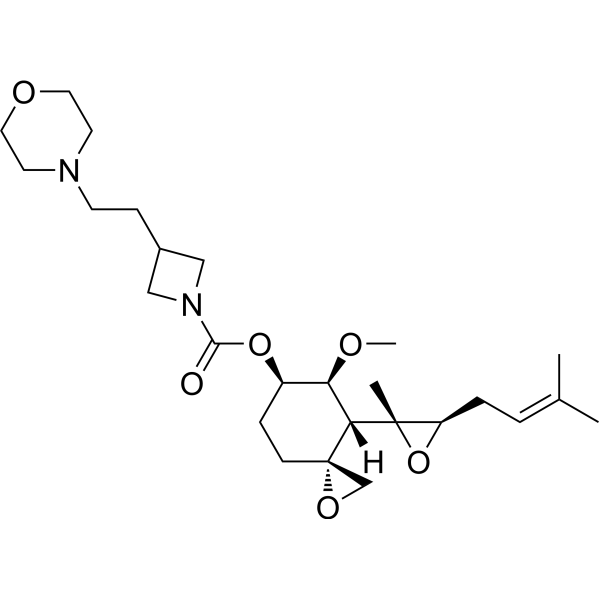
Aclimostat (ZGN-1061) is a methionine aminopeptidase 2 (MetAP2) inhibitor. Aclimostat exhibits anti-obesity, anti-diabetic and ovarian cancer-related activities, and does not readily distribute to the central nervous system. Aclimostat acts on the active site of MetAP2 via irreversible covalent binding, and blocks enzyme activity through interactions with His231 and His339. Aclimostat regulates gene expression, reduces fat mass, plasma glucose, insulin levels, LDL-C, hs-CRP and leptin levels, while increasing adiponectin levels. Aclimostat can be used in research related to type 2 diabetes, overweight, obesity and ovarian cancer.
For research use only. We do not sell to patients.
- Purity : 98.0%
- CAS No.: 2082752-83-6
- Formula: C26H42N2O6
- Molecular Weight:478.62
-
Storage:
4°C, stored under nitrogen
* In solvent : -80°C, 6 months; -20°C, 1 month (stored under nitrogen)

To place orders, for customer services and technical support, please contact: MedChemExpress USA
Tel: 609-228-6898 E-mail: [email protected] [email protected]


-
 Biological Activity
-
Chemical Information
-
Solvent & Solubility
- Protocols
- Purity & Documentation
- References
-
 Help & FAQs




Biological Activity
Description
|
MetAp2 |
In Vitro
Aclimostat (ZGN-1061) (6 nM; 2-24 h) induces nearly identical gene expression changes to Beloranib (HY-14811) in HepG2 cells after 2-hour and 24-hour exposures to 6 nM, with high concordance across genes linked to metabolic efficacy[2].
Aclimostat (1-72 h) inhibits HUVEC proliferation with an EC50 of 0.24 nM after continuous 72-hour exposure, but does not affect proliferation with short-term exposures of 4 hours or less at concentrations up to 50× the EC50[2].
Aclimostat (10 nM; 2 h, assessed over 72 h post-washout) shows transient target engagement in HUVECs, with covalent binding to the MetAP2 active site declining over 72 hours after a 2-hour 10 nM exposure, and no sustained accumulation of the MetAP2 substrate THX 1-6[2].
Aclimostat (10 nM; 2 h, assessed over 72 h post-washout) shows transient target engagement in HepG2 cells, with covalent binding to the MetAP2 active site declining over 72 hours after a 2-hour 10 nM exposure[2].
ZGN-1061 binds strongly to human MetAP2 with a docking score of -7.2 kcal/mol, interacting with key active site residues critical for MetAP2 function[5].
Aclimostat (1-20 nM; 4-72 h) increases p21 and reduces TM protein levels in HUVECs, but does not affect these proteins with shorter 4-hour or 8-hour exposures, and does not alter p53, vWF, or PAI-1 levels at any tested concentration or time[2].
ZGN-1061 (0-5000 nM; 1-6 days) inhibits proliferation of A2780 and SKOV3 ovarian cancer cells, with enhanced efficacy and lower IC50 values in METAP2-overexpressing SKOV3 cells compared to control SKOV3 cells, and attenuated efficacy in METAP2-knockdown A2780 cells compared to control A2780 cells[3].
MedChemExpress (MCE) has not independently confirmed the accuracy of these methods. They are for reference only. Further protocols information, click here.
-
Cell Line:HUVEC (human umbilical vein endothelial cell)
-
Concentration:1 nM, 10 nM, 20 nM
-
Incubation Time:4 h; 8 h; 72 h
-
Result:Did not alter p53 or von Willebrand factor (vWF) protein levels at any concentration or incubation time.
Increased p21 and reduced thrombomodulin (TM) protein levels at all concentrations after 72-hour incubation.
Showed no meaningful changes in p21 and TM protein levels with 4-hour or 8-hour incubations.
Had no effect on plasminogen activator inhibitor-1 (PAI-1) protein levels at any concentration or time point.
-
Cell Line:A2780 ovarian cancer cells (control and METAP2-knockdown), SKOV3 ovarian cancer cells (control and METAP2-overexpressing)
-
Concentration:0-5000 nM
-
Incubation Time:1-6 days
-
Result:Significantly inhibited proliferation in control A2780 cells.
Showed attenuated inhibitory effect in METAP2-knockdown A2780 cells.
Exhibited enhanced anti-proliferative activity in METAP2-overexpressing SKOV3 cells compared to control SKOV3 cells.
Reduced IC50 values in METAP2-overexpressing SKOV3 cells relative to control SKOV3 cells.
In Vivo
ZGN-1061 (s.c.; daily; 28 days) reduces body weight by 25% and improves glucose and insulin levels in diet-induced obese insulin-resistant mice[5].
Aclimostat (2 mg/kg; s.c.; every 3 days; 10 days) is well tolerated in healthy beagle dogs, with no adverse effects on coagulation markers or hematology parameters[2].
Aclimostat (2-25 mg/kg; s.c.; every 3 days; 28 days) is well tolerated in Sprague Dawley rats, with minimal, reversible toxic effects[2].
Aclimostat (0.1 mg/kg; s.c.; every 3 days; 4 weeks) exhibits potent activity against ovarian cancer in subcutaneous xenograft models, with significantly enhanced efficacy in METAP2-overexpressing tumors[3].
MedChemExpress (MCE) has not independently confirmed the accuracy of these methods. They are for reference only.
-
Animal Model:C57BL/6J (male, 7 to 8 weeks old at study start, high-fat diet-induced obese model)[2]
-
Dosage:0.3 mg/kg
-
Administration:s.c.; daily; 4 weeks
-
Result:Reduced body weight by 25%, primarily due to reduced fat mass.
Significantly increased percent lean mass relative to vehicle at Weeks 2 and 4.
Reduced mean daily energy intake to 0.35 kJ/g lean mass at Week 2, comparable to vehicle levels by Week 4.
Improved fasting glucose and insulin levels, with a statistically significant reduction in HOMA-IR index relative to vehicle.
Produced statistically significant reductions in low-density and high-density lipoprotein cholesterol, alongside increased β-hydroxybutyrate levels and reduced leptin levels.
Increased target engagement (measured by N-terminal methionine of thioredoxin [THX 1-6]) from below the limit of detection to a level comparable to beloranib.
-
Animal Model:Beagle (male, 10 to 20 months old)[2]
-
Dosage:2 mg/kg
-
Administration:s.c.; every 3 days; 10 days
-
Result:Produced no adverse changes in clinical observations, hematology (including platelet count), or coagulation markers (D-dimer, thrombin time, antithrombin III).
Caused weight loss over the study period, but food intake remained unchanged, and all animals survived the scheduled dosing period.
-
Animal Model:Sprague Dawley (male and female, 9−10 weeks old)[2]
-
Dosage:2 mg/kg; 6 mg/kg; 25 mg/kg
-
Administration:s.c.; every 3 days; 28 days
-
Result:Observed no mortality at any dose tested.
Showed the highest dose (25 mg/kg) was well tolerated, with increased injection site irritation and inflammation that largely resolved after the 10-week recovery period (minimal fibrosis noted in 3/10 rats).
Produced minimal, low-incidence findings including mixed cell inflammation in the lung and individual hepatocellular necrosis, which resolved after dosing ceased.
At the no observed adverse effect level (NOAEL), produced repeat-dose AUC0-t values of 409 ng×h/mL (males) and 288 ng×h/mL (females), with Cₘₐₓ values 21- to 52-fold higher than beloranib at its respective NOAEL.
-
Animal Model:BALB/c nude (female)[3]
-
Dosage:0.1 mg/kg
-
Administration:s.c.; every 3 days; 4 weeks
-
Result:Markedly suppressed tumor progression, with significantly greater efficacy observed in METAP2-overexpressing xenografts.
Showed significantly higher tumor weight inhibition in METAP2-overexpressing xenografts compared to control xenografts.
Was well-tolerated with no significant body weight changes or signs of toxicity.
Clinical Trial
| NCT Number | Sponsor | Condition | Start Date |
Phase

|
|---|---|---|---|---|
| NCT01329991 | Plexxikon| | 2011-05 | PHASE1 |


Chemical Information
-
CAS No. 2082752-83-6
-
Appearance Solid
-
Molecular Weight 478.62
-
Formula C26H42N2O6
-
Color White to off-white
-
SMILES
C[C@]1([C@H](O1)C/C=C(C)\C)[C@]2([H])[C@]3(CC[C@H]([C@H]2OC)OC(N4CC(C4)CCN5CCOCC5)=O)CO3
-
Synonyms
ZGN-1061
-
Shipping
Room temperature in continental US; may vary elsewhere.
-
Storage
4°C, stored under nitrogen
* In solvent : -80°C, 6 months; -20°C, 1 month (stored under nitrogen)


Solvent & Solubility
In Vitro:
DMSO : 230 mg/mL (480.55 mM; Need ultrasonic; Hygroscopic DMSO has a significant impact on the solubility of product, please use newly opened DMSO)
Please refer to the solubility information to select the appropriate solvent. Once prepared, please aliquot and store the solution to prevent product inactivation from repeated freeze-thaw cycles.
Storage method and period of stock solution: -80°C, 6 months; -20°C, 1 month (stored under nitrogen). When stored at -80°C, please use it within 6 months. When stored at -20°C, please use it within 1 month.
Please refer to the solubility information to select the appropriate solvent. Once prepared, please aliquot and store the solution to prevent product inactivation from repeated freeze-thaw cycles.
Storage method and period of stock solution: -80°C, 6 months; -20°C, 1 month (stored under nitrogen). When stored at -80°C, please use it within 6 months. When stored at -20°C, please use it within 1 month.
Concentration (start) × Volume (start) = Concentration (final) × Volume (final)

Protocols
-
RT-PCR
Reverse transcription technology uses RNA as a template to synthesize DNA. RT-PCR is simple, specific and sensitive, and can be used to detect gene expression levels and expression differences in cells; detect RNA virus content; clone cDNA sequences of specific genes.
-
RNA extraction experimental
By lysing cells, releasing RNA, and removing impurities such as proteins and DNA, high-purity RNA products are finally obtained. The commonly used traditional method is the guanidine isothiocyanate/phenol/chloroform method (Trizol), which is suitable for a variety of animal materials including animal tissues, microorganisms, cultured cells, etc., and most plant materials.
-
Research Protocol for Endocrine Diseases
Endocrine diseases often arise from disrupted hormone production, hormone signaling, or target-tissue responsiveness; for diabetes-focused endocrine disease models, insulin signaling regulates glucose uptake, hepatic glucose output, lipid metabolism, and β-cell compensation. Type 2 diabetes develops through interacting defects in insulin resistance, β-cell dysfunction, adipose inflammation, hepatic glucose overproduction, altered incretin signaling, and ectopic lipid metabolism. A major unresolved question is whether endocrine dysfunction is driven primarily by target-tissue insulin resistance, intrinsic β-cell failure, immune/inflammatory stress, or combined multi-organ failure that differs by disease stage.
-
Research Protocol for Metabolic Diseases
AMP-activated protein kinase, AMPK, is a conserved cellular energy sensor that responds to reduced cellular energy status and coordinates metabolism by increasing ATP-generating catabolic pathways while suppressing ATP-consuming anabolic processes. In metabolic disease research, the AMPK pathway is experimentally relevant because it regulates hepatic lipid synthesis, fatty acid oxidation, glucose production, skeletal-muscle glucose disposal, mTORC1-linked biosynthesis, autophagy, mitochondrial homeostasis, and whole-body energy balance. The central pathway logic is that energy stress, metformin, exercise-like stimulation, or direct AMPK activators increase AMPKα Thr172 phosphorylation and downstream substrate phosphorylation, including ACC and RAPTOR. Phosphorylation of ACC suppresses lipogenesis and supports fatty acid oxidation, whereas phosphorylation of RAPTOR suppresses mTORC1 signaling and links cellular energy status to growth and protein synthesis control. The pathway is linked
-
Real Time qPCR (Q-PCR)
Real-time quantitative PCR (qPCR) quantifies an amplifiable nucleic-acid target by monitoring fluorescence during PCR cycling rather than measuring product only after amplification. The increase in fluorescence tracks accumulation of PCR product, and the quantification cycle (Cq; historically also Ct/CP) is related to the initial amount of target: samples containing more starting target generally reach the defined fluorescence threshold in fewer cycles.


Purity & Documentation
-
Data Sheet (294 KB)
-
SDS (252 KB)
- English - EN (252 KB)
- Français - FR (252 KB)
- Deutsch - DE (252 KB)
- Norwegian - NO (252 KB)
- Español - ES (252 KB)
- Swedish - SV (252 KB)
- Italian - IT (252 KB)
- Korean - KR (252 KB)
- Portuguese - PT (252 KB)
-
Handling Instructions (2659 KB)
References
[1]. Wentworth JM, et al. The methionine aminopeptidase 2 inhibitor ZGN-1061 improves glucose control and weight in overweight and obese individuals with type 2 diabetes: A randomized, placebo-controlled trial. Diabetes, obesity & metabolism. 2020 Jul;22(7):1215-1219. [Content Brief]
[2]. Burkey BF, et al. Preclinical Efficacy and Safety of the Novel Antidiabetic, Antiobesity MetAP2 Inhibitor ZGN-1061. J Pharmacol Exp Ther. 2018 May;365(2):301-313. [Content Brief]
[3]. Wu L, et al. METAP2 inhibits K48-linked ubiquitination of YTHDF2 to promote ovarian cancer progression. Oncogene. 2025 Dec;44(46):4505-4519. [Content Brief]
[4]. Malloy J, et al. Single and multiple dose evaluation of a novel MetAP2 inhibitor: Results of a randomized, double-blind, placebo-controlled clinical trial. Diabetes, obesity & metabolism. 2018 Aug;20(8):1878-1884. [Content Brief]
[5]. Moon DO, et al. MetAP2 as a Therapeutic Target for Obesity and Type 2 Diabetes: Structural Insights, Mechanistic Roles, and Inhibitor Development. Biomolecules. 2024 Dec 10;14(12):1572. [Content Brief]


Complete Stock Solution Preparation Table
Please refer to the solubility information to select the appropriate solvent. Once prepared, please aliquot and store the solution to prevent product inactivation from repeated freeze-thaw cycles.
Storage method and period of stock solution: -80°C, 6 months; -20°C, 1 month (stored under nitrogen). When stored at -80°C, please use it within 6 months. When stored at -20°C, please use it within 1 month.
| Optional Solvent | Concentration Solvent Mass | 1 mg | 5 mg | 10 mg | 25 mg |
|---|---|---|---|---|---|
| DMSO | 1 mM | 2.0893 mL | 10.4467 mL | 20.8934 mL | 52.2335 mL |
| 5 mM | 0.4179 mL | 2.0893 mL | 4.1787 mL | 10.4467 mL | |
| 10 mM | 0.2089 mL | 1.0447 mL | 2.0893 mL | 5.2234 mL | |
| 15 mM | 0.1393 mL | 0.6964 mL | 1.3929 mL | 3.4822 mL | |
| 20 mM | 0.1045 mL | 0.5223 mL | 1.0447 mL | 2.6117 mL | |
| 25 mM | 0.0836 mL | 0.4179 mL | 0.8357 mL | 2.0893 mL | |
| 30 mM | 0.0696 mL | 0.3482 mL | 0.6964 mL | 1.7411 mL | |
| 40 mM | 0.0522 mL | 0.2612 mL | 0.5223 mL | 1.3058 mL | |
| 50 mM | 0.0418 mL | 0.2089 mL | 0.4179 mL | 1.0447 mL | |
| 60 mM | 0.0348 mL | 0.1741 mL | 0.3482 mL | 0.8706 mL | |
| 80 mM | 0.0261 mL | 0.1306 mL | 0.2612 mL | 0.6529 mL | |
| 100 mM | 0.0209 mL | 0.1045 mL | 0.2089 mL | 0.5223 mL |


Aclimostat Related Classifications
HY-114196 Related Classifications
 Powered by Bioz