



Omeprazole sulfide
Based on 2 publication(s) in Google Scholar
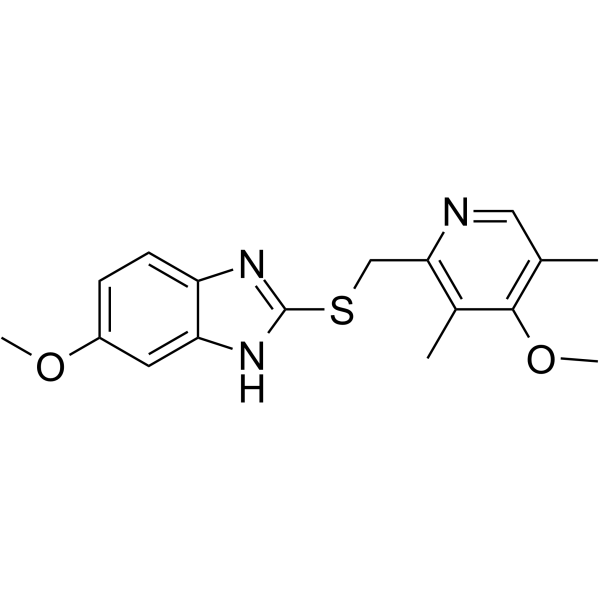
Omeprazole sulfide (Ufiprazole) is a metabolic degradation product of Omeprazole (HY-B0113). Omeprazole sulfide acts as a modulator of AhR. Omeprazole sulfide in cells with low CYP3A4 expression, functions as an AhR antagonist; however, in cells with high CYP3A4 expression, it is rapidly metabolized to Omeprazole, thereby acting as an AhR agonist. Omeprazole sulfide exhibits antibacterial activity when conjugated with silver nanoparticles (AgNPs). Omeprazole sulfide can be used in research on acid suppression and bacterial infections.
For research use only. We do not sell to patients.
- Purity: 99.88%
- CAS No.: 73590-85-9
- Formula: C17H19N3O2S
- Molecular Weight:329.43
-
Storage:Powder -20°C, 3 years , 4°C, 2 years ; In solvent -80°C, 2 years , -20°C, 1 year

To place orders, for customer services and technical support, please contact: MedChemExpress USA
Tel: 609-228-6898 E-mail: [email protected] [email protected]


-
 Biological Activity
-
Chemical Information
-
Solvent & Solubility
- Purity & Documentation
- References
-
 Help & FAQs


-
HY-G0007
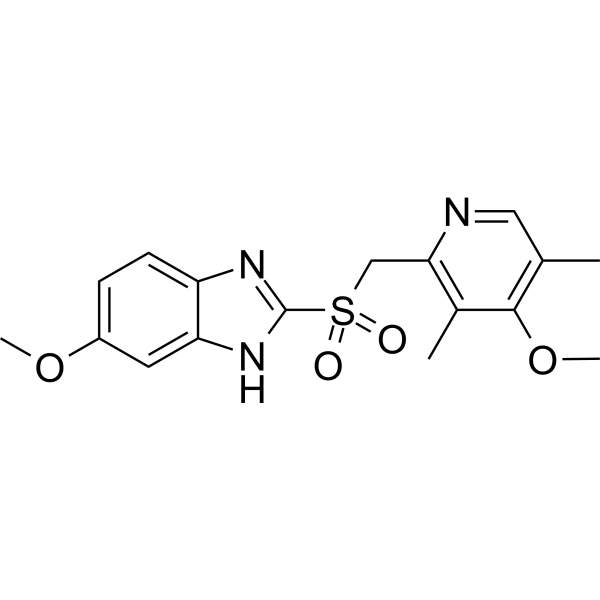
Omeprazole sulfone -
HY-13662
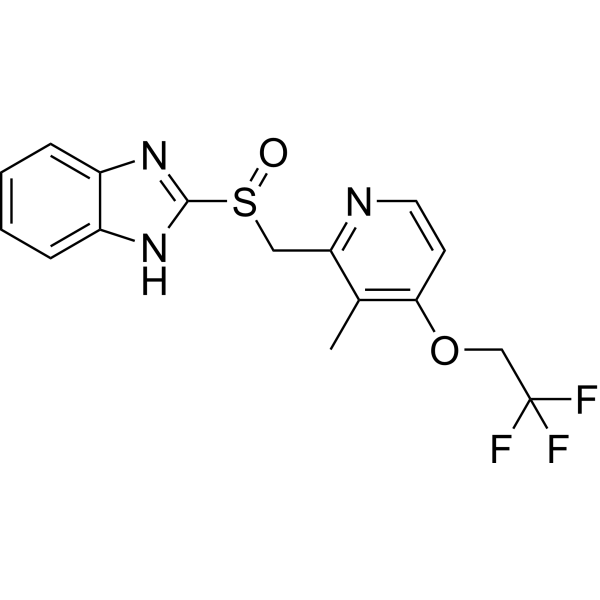
Lansoprazole -
HY-100599
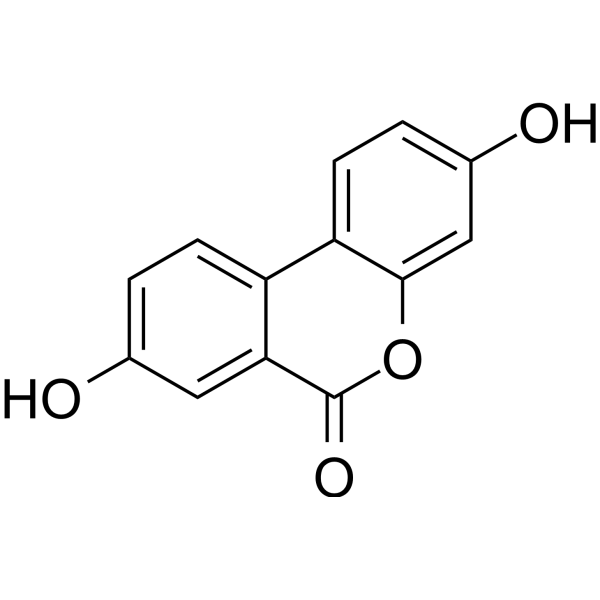
Urolithin A -

HY-G0006R
Omeprazole sulfide (Standard) -
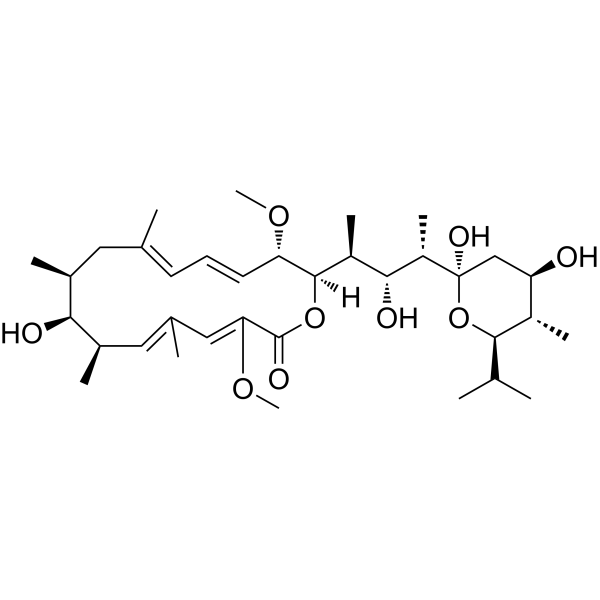
HY-100558
Bafilomycin A1 -
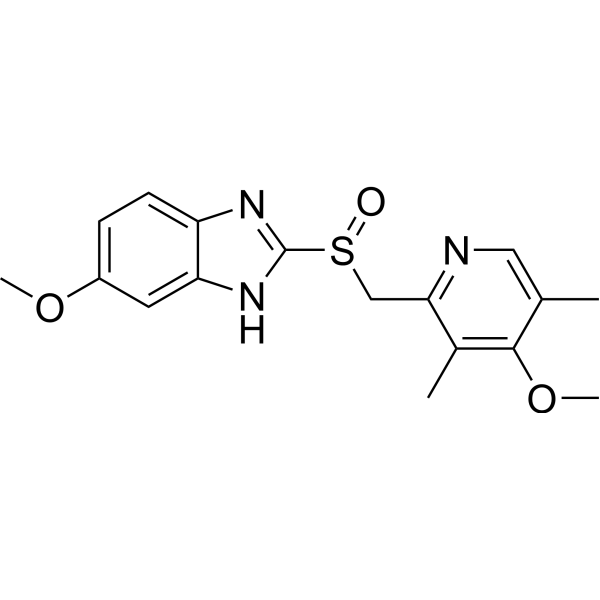
HY-B0113
Omeprazole -
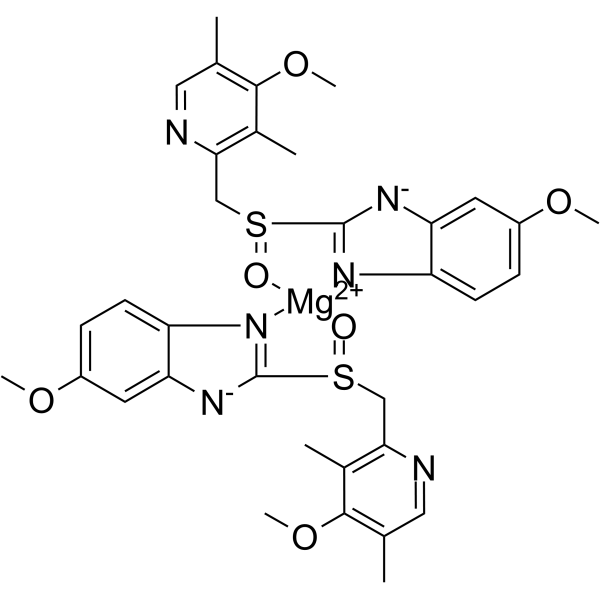
HY-B1446
Esomeprazole magnesium -
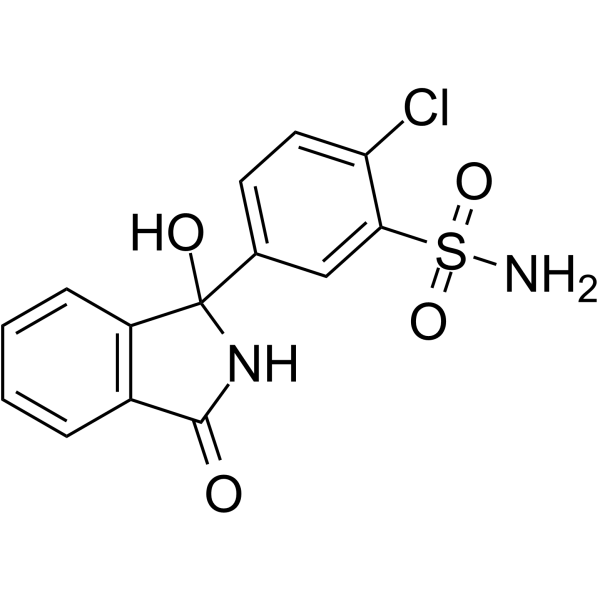
HY-15833
Chlorthalidone -
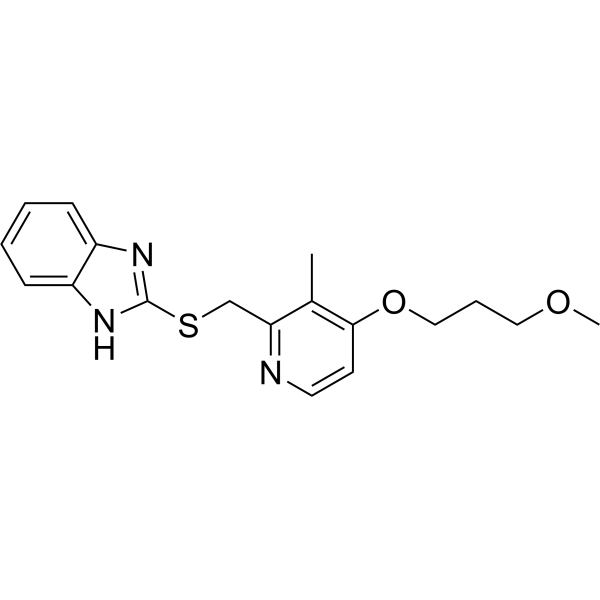
HY-W003467
Rabeprazole Sulfide -
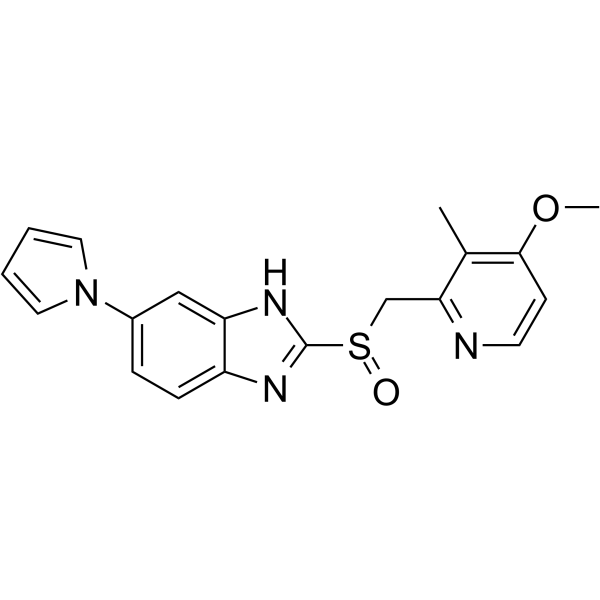
HY-101664
Ilaprazole -
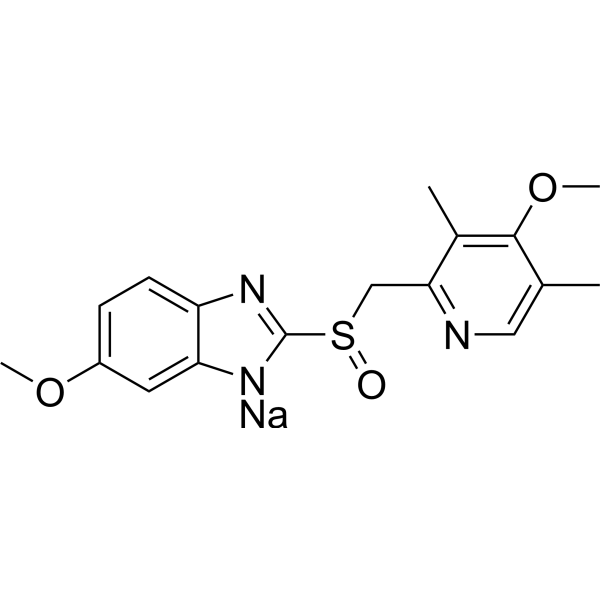
HY-B0113A
Omeprazole sodium -

HY-G0007R
Omeprazole sulfone (Standard)
Publications Citing Use of MedChemExpress (MCE) Omeprazole sulfide
More

Biological Activity
Description
Cellular Effect
|
Cell Line

|
Type | Value | Description | References |
|---|---|---|---|---|
| HEK293 | EC50 |
3900 nM
Compound: 1b
|
Agonist activity at recombinant BRS-3 receptor expressed in baculovirus-transduced HEK293 cells assessed as intracellular calcium mobilization by FLIPR assay
Agonist activity at recombinant BRS-3 receptor expressed in baculovirus-transduced HEK293 cells assessed as intracellular calcium mobilization by FLIPR assay
|
[PMID: 18818070] |
In Vitro
Omeprazole sulfide (100 μM; 30 min) induces a unique conformational change in mouse AhR, resulting in a trypsin digestion pattern distinct from that of unliganded or agonist-bound receptors in Hepa-1c1c7 cell cytoplasmic extracts[1].
Omeprazole sulfide (15 μM; 2 h) blocks AhR-mediated nuclear translocation of mouse AhR in Hepa-1c1c7 cells[1].
Omeprazole sulfide (15 μM; 5.5 h) blocks TCDD-mediated degradation of mouse AhR and inhibits TCDD-induced CYP1A1 protein expression in Hepa-1c1c7 cells[1].
Omeprazole sulfide (5-50 μM; 8 h) acts as an AhR antagonist in mouse Hepa-1c1c7 and human HepG2 hepatocellular carcinoma cells, and inhibits TCDD-induced CYP1A1 mRNA expression in a concentration-dependent manner, with an inhibition rate of over 80% after treatment with 50 μM for 8 h[1].
Omeprazole sulfide (1-100 μM; 16 h) inhibits ligand-induced AhR transcriptional activity in mouse Hepa-1c1c7 and human HepG2 hepatocellular carcinoma cells, with an IC50 value of 1 to 10 μM after 16 h of incubation[1].
Omeprazole sulfide (1-50 μM; 8 h) inhibits agonist-induced conversion of mouse AhR to its DNA-binding form in cytoplasmic extracts of Hepa-1c1c7 cells, with complete inhibition achieved after treatment at 50 μM for 8 h[1].
Omeprazole sulfide (3-50 μM; 8 h) acts as an AhR agonist in freshly seeded primary human hepatocytes and induces CYP1A1 mRNA expression[1].
Omeprazole sulfide (5-60 μM; 8 h) switches from an AhR antagonist to an agonist in primary human hepatocytes depending on cellular metabolic capacity: it acts as an antagonist in low-metabolism control cells or ketoconazole-treated cells, whereas it functions as an agonist in rifampicin-pretreated cells with induced CYP3A4 activity[1].
Omeprazole sulfide forms stable spherical Ag@OMPS nanoparticles, which inhibit the growth of tested Gram-positive and Gram-negative bacterial strains, producing measurable inhibition zones with a maximum diameter of 5 mm[2].
MedChemExpress (MCE) has not independently confirmed the accuracy of these methods. They are for reference only.
-
Cell Line:mouse Hepa-1c1c7 cell cytosolic extracts
-
Concentration:100 μM
-
Incubation Time:30 min (30°C, during trypsin digestion)
-
Result:Induced a distinct AhR proteolytic digest pattern, with the absence of a 23 kDa fragment that was present in unliganded or agonist-bound AhR samples.
-
Cell Line:mouse Hepa-1c1c7 cells
-
Concentration:15 μM; 10 nM TCDD (co-treatment)
-
Incubation Time:2 h
-
Result:Did not induce AhR nuclear translocation alone; blocked TCDD-mediated AhR nuclear translocation, keeping AhR localized in the cytosol when co-treated with TCDD.
-
Cell Line:mouse Hepa-1c1c7 cells
-
Concentration:15 μM; 1.5 nM TCDD (co-treatment)
-
Incubation Time:1.5, 3.5, 5.5 h
-
Result:Did not alter AhR protein levels or induce CYP1A1 alone; blocked TCDD-mediated AhR degradation and inhibited CYP1A1 protein induction when co-treated with TCDD.


Chemical Information
-
CAS No. 73590-85-9
-
Appearance Solid
-
Molecular Weight 329.43
-
Formula C17H19N3O2S
-
Color White to off-white
-
SMILES
CC(C(OC)=C(C)C=N1)=C1CSC2=NC3=CC=C(OC)C=C3N2
-
Synonyms
Ufiprazole
-
Shipping
Room temperature in continental US; may vary elsewhere.
-
Storage
Powder -20°C 3 years 4°C 2 years In solvent -80°C 2 years -20°C 1 year


Publications (2)
-
Journal Impact Factor
-
Most Recent
-
ACS Environ Au
Machine Learning-Assisted Recognition of Environmental Sulfur-Containing Chemicals in Nontargeted Mass Spectrometry Analysis of Inadequate Mass Resolution. [Abstract]2025 Aug 5;5(6):573-582. PMID: 41277996 -
Anal Chem
Exposome-Scale Investigation of Cl-/Br-Containing Chemicals Using High-Resolution Mass Spectrometry, Multistage Machine Learning, and Cloud Computing. [Abstract]2025 Jun 3;97(21):11099-11109. PMID: 40401576


Solvent & Solubility
In Vitro:
DMSO : 100 mg/mL (303.55 mM; Need ultrasonic; Hygroscopic DMSO has a significant impact on the solubility of product, please use newly opened DMSO)
Please refer to the solubility information to select the appropriate solvent. Once prepared, please aliquot and store the solution to prevent product inactivation from repeated freeze-thaw cycles.
Storage method and period of stock solution: -80°C, 2 years; -20°C, 1 year. When stored at -80°C, please use it within 2 years. When stored at -20°C, please use it within 1 year.
Please refer to the solubility information to select the appropriate solvent. Once prepared, please aliquot and store the solution to prevent product inactivation from repeated freeze-thaw cycles.
Storage method and period of stock solution: -80°C, 2 years; -20°C, 1 year. When stored at -80°C, please use it within 2 years. When stored at -20°C, please use it within 1 year.
Concentration (start) × Volume (start) = Concentration (final) × Volume (final)
In Vivo:
Select the appropriate dissolution method based on your experimental animal and administration route.
- For the following dissolution methods, please ensure to first prepare a clear stock solution using an In Vitro approach and then sequentially add co-solvents:
- To ensure reliable experimental results, the clarified stock solution can be appropriately stored based on storage conditions. As for the working solution for In Vivo experiments, it is recommended to prepare freshly and use it on the same day.
- The percentages shown for the solvents indicate their volumetric ratio in the final prepared solution. If precipitation or phase separation occurs during preparation, heat and/or sonication can be used to aid dissolution.
Add each solvent one by one: 10% DMSO 40% PEG300 5% Tween-80 45% Saline
Solubility: ≥ 2.5 mg/mL (7.59 mM); Clear solution
This protocol yields a clear solution of ≥ 2.5 mg/mL (saturation unknown).
Taking 1 mL working solution as an example, add 100 μL DMSO stock solution (25.0 mg/mL) to 400 μL PEG300, and mix evenly; then add 50 μL Tween-80 and mix evenly; then add 450 μL Saline to adjust the volume to 1 mL.
Preparation of Saline: Dissolve 0.9 g sodium chloride in ddH₂O and dilute to 100 mL to obtain a clear Saline solution.
Add each solvent one by one: 10% DMSO 90% (20% SBE-β-CD in Saline)
Solubility: ≥ 2.5 mg/mL (7.59 mM); Clear solution
This protocol yields a clear solution of ≥ 2.5 mg/mL (saturation unknown).
Taking 1 mL working solution as an example, add 100 μL DMSO stock solution (25.0 mg/mL) to 900 μL 20% SBE-β-CD in Saline, and mix evenly.
Preparation of 20% SBE-β-CD in Saline (4°C, storage for one week): 2 g SBE-β-CD powder is dissolved in 10 mL Saline, completely dissolve until clear.
In Vivo Dissolution Calculator
Please enter the basic information of animal experiments:
-
-
-
-
Recommended: Prepare an additional quantity of animals to account for potential losses during experiments.
Please enter your animal formula composition:
-
%DMSO +
Recommended: Keep the proportion of DMSO in working solution below 2% if your animal is weak.
-
%+
-
+%Tween-80 + +
-
%Saline +
The co-solvents required include: DMSO, . All of co-solvents are available by MedChemExpress (MCE). , Tween 80. All of co-solvents are available by MedChemExpress (MCE).
Working solution concentration: 0.22 mg/mL
Method for preparing stock solution: mg drug dissolved in μL DMSO. Stock solution concentration: mg/mL.
1. Take μL DMSO stock solution;
2. Add μL .
μL , mix evenly;
3. Then add μL Tween 80, mix evenly;
4. Then add μL
Please ensure that the stock solution in the first step is dissolved to a clear state, and add co-solvents in sequence. You can use ultrasonic heating (ultrasonic cleaner, recommended frequency 20-40 kHz), vortexing, etc. to assist dissolution.


Purity & Documentation
-
Data Sheet (277 KB)
-
SDS (393 KB)
- English - EN (393 KB)
- Français - FR (393 KB)
- Deutsch - DE (393 KB)
- Norwegian - NO (393 KB)
- Español - ES (393 KB)
- Swedish - SV (393 KB)
- Italian - IT (393 KB)
- Korean - KR (393 KB)
- Portuguese - PT (393 KB)
-
Handling Instructions (2659 KB)
References


Complete Stock Solution Preparation Table
Please refer to the solubility information to select the appropriate solvent. Once prepared, please aliquot and store the solution to prevent product inactivation from repeated freeze-thaw cycles.
Storage method and period of stock solution: -80°C, 2 years; -20°C, 1 year. When stored at -80°C, please use it within 2 years. When stored at -20°C, please use it within 1 year.
| Optional Solvent | Concentration Solvent Mass | 1 mg | 5 mg | 10 mg | 25 mg |
|---|---|---|---|---|---|
| DMSO | 1 mM | 3.0355 mL | 15.1777 mL | 30.3555 mL | 75.8887 mL |
| 5 mM | 0.6071 mL | 3.0355 mL | 6.0711 mL | 15.1777 mL | |
| 10 mM | 0.3036 mL | 1.5178 mL | 3.0355 mL | 7.5889 mL | |
| 15 mM | 0.2024 mL | 1.0118 mL | 2.0237 mL | 5.0592 mL | |
| 20 mM | 0.1518 mL | 0.7589 mL | 1.5178 mL | 3.7944 mL | |
| 25 mM | 0.1214 mL | 0.6071 mL | 1.2142 mL | 3.0355 mL | |
| 30 mM | 0.1012 mL | 0.5059 mL | 1.0118 mL | 2.5296 mL | |
| 40 mM | 0.0759 mL | 0.3794 mL | 0.7589 mL | 1.8972 mL | |
| 50 mM | 0.0607 mL | 0.3036 mL | 0.6071 mL | 1.5178 mL | |
| 60 mM | 0.0506 mL | 0.2530 mL | 0.5059 mL | 1.2648 mL | |
| 80 mM | 0.0379 mL | 0.1897 mL | 0.3794 mL | 0.9486 mL | |
| 100 mM | 0.0304 mL | 0.1518 mL | 0.3036 mL | 0.7589 mL |


Omeprazole sulfide Related Classifications
HY-G0006 Related Classifications
 Powered by Bioz