



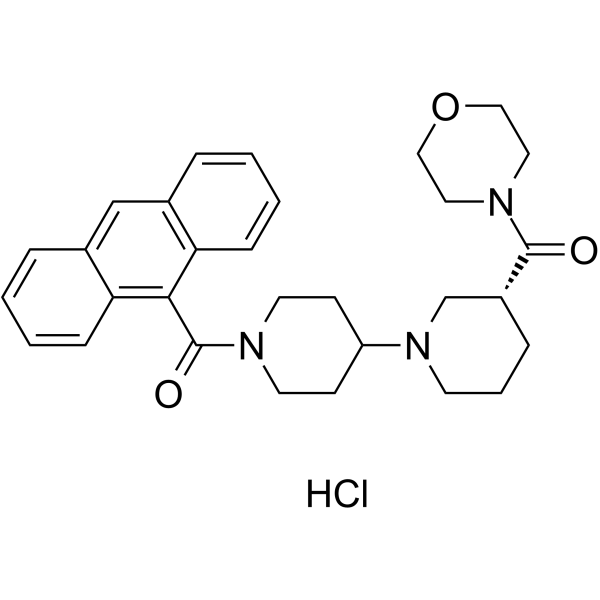
CP-640186 hydrochloride
Based on 12 publication(s) in Google Scholar
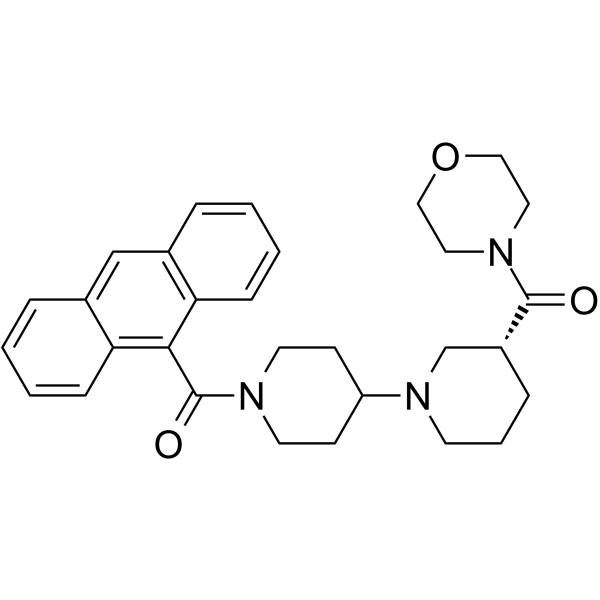
CP-640186 hydrochloride is an orally active and cell-permeable Acetyl-CoA carboxylase (ACC) inhibitor with IC50s of 53 nM and 61 nM for rat liver ACC1 and rat skeletal muscle ACC2 respectively. Acetyl-CoA carboxylase (ACC) is a key enzyme of fatty acid metabolism that enables the synthesis of malonyl-CoA. CP-640186 hydrochloride can also stimulate muscle fatty acid oxidation.
For research use only. We do not sell to patients.
- Purity : 99.65%
- CAS No.: 591778-70-0
- Formula: C30H36ClN3O3
- Molecular Weight:522.08
-
Storage:
4°C, sealed storage, away from moisture
* In solvent : -80°C, 2 years; -20°C, 1 year (sealed storage, away from moisture)

To place orders, for customer services and technical support, please contact: MedChemExpress USA
Tel: 609-228-6898 E-mail: [email protected] [email protected]


-
 Biological Activity
-
Chemical Information
-
Solvent & Solubility
- Purity & Documentation
- References
-
 Help & FAQs


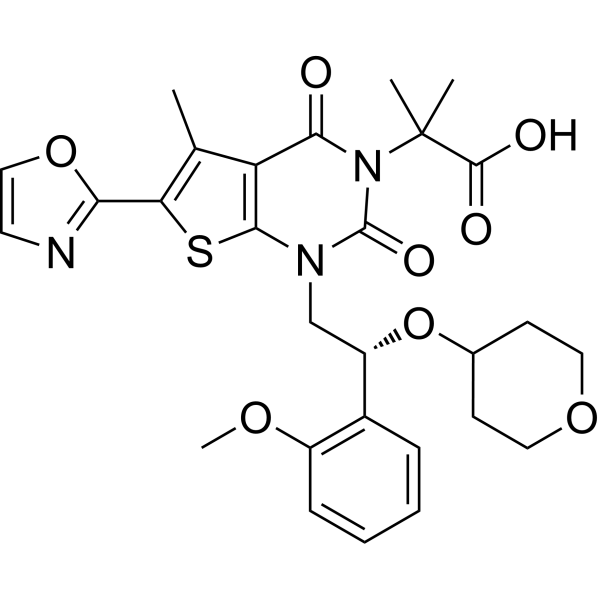
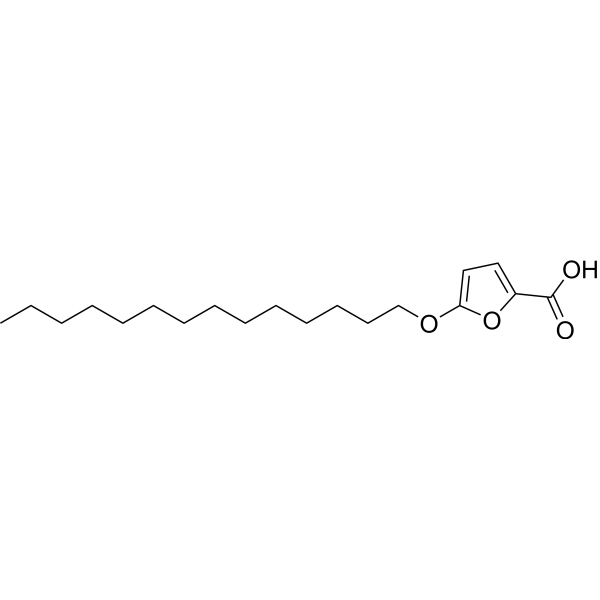
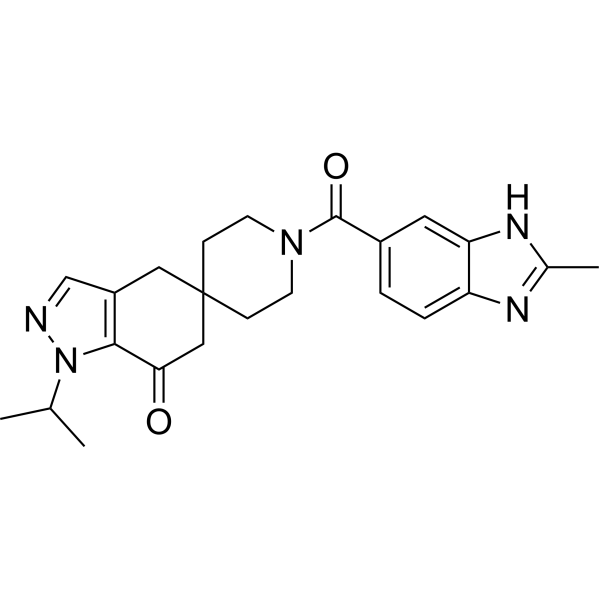



Publications Citing Use of MedChemExpress (MCE) CP-640186 hydrochloride
More- Nat Commun. 2024 Oct 21;15(1):9062. [Abstract]
- Cell Death Dis. 2025 Oct 7;16(1):715. [Abstract]
- J Exp Med. 2021 Dec 6;218(12):e20210639. [Abstract]
- Nutrients. 2021 May 21;13(6):1740. [Abstract]
- Vet Res. 2026 May 9;57(1):72. [Abstract]
- Viruses. 2019 Dec 10;11(12):1145. [Abstract]
- Front Oncol. 2021 Apr 22:11:665763. [Abstract]
- Am J Transl Res. 2019 Nov 15;11(11):7104-7114. [Abstract]
- bioRxiv. 2026 Jul 3.
- bioRxiv. 2025 Aug 26:2025.08.21.671640. [Abstract]
- bioRxiv. 2024 May 25.
- Seoul National University. 2015 Aug.


Biological Activity
Description
IC50 & Target
IC50: 53 nM (rat liver ACC1) and 61 nM (rat skeletal muscle ACC2)[1]
In Vitro
CP-640186 (20 μM; 48 h) treatment can inhibit H460 cell growth[3]. CP-640186 (0.1 nM-100 μM; 2 h) treatment increases fatty acid metabolism in a concentration-dependent manner in C2C12 cells and muscle strips[1]. CP-640186 (0.62-1.8 μM; 2 h) treatment inhibits fatty acid synthesis and TG synthesis in HepG2 cells[1].
MedChemExpress (MCE) has not independently confirmed the accuracy of these methods. They are for reference only.
-
Cell Line:Human fibroblasts and H460 cells
-
Concentration:20 µM
-
Incubation Time:48 hours
-
Result:Led to a ∼30% decrease in cell number compared to vehicle-treated controls.
-
Cell Line:C2C12 cells and muscle strips
-
Concentration:0.1 nM-100 µM
-
Incubation Time:2 hours
-
Result:Stimulated palmitate acid oxidation with an EC50 of 57 nM and a maximal stimulation of 280% in C2C12 cells.
Stimulated palmitate acid oxidation with an EC50 of 1.3 μM and a maximal stimulation of 240% in isolated rat epitrochlearis muscle.
-
Cell Line:HepG2 cells
-
Concentration:0.62-1.8 µM
-
Incubation Time:6 hours
-
Result:Inhibited fatty acid synthesis and TG synthesis in HepG2 cells with EC50s of 0.62 μM and 1.8 μM, respecticely.
In Vivo
CP-640186 (intravenous injection and oral gavage; Intravenous dose, 5 mg/kg; oral dose, 10 mg/kg; once) shows lowe drug exposure in the rat than the ob/ob mouse at equal doses[1].
CP-640186 (oral gavage; 100 mg/kg; once) treatment shows a complete shift from carbohydrate utilization to fatty acid utilization as a source of energy at high exposure level[1].
MedChemExpress (MCE) has not independently confirmed the accuracy of these methods. They are for reference only.
-
Animal Model:Male ob/ob mice[1]
-
Dosage:4.6-21 mg/kg
-
Administration:Oral gavage; 4.6-21 mg/kg; once
-
Result:Demonstrated acute efficacy for up to 8 h after oral administration, exhibiting ED50 values of 4.6, 9.7, and 21 mg/kg, at 1, 4, and 8 h, respectively, after treatment.
-
Animal Model:Male Sprague-Dawley rats[1]
-
Dosage:Intravenous dose, 5 mg/kg; oral dose, 10 mg/kg
-
Administration:Intravenous injection and oral gavage; intravenous dose, 5 mg/kg; oral dose, 10 mg/kg; once
-
Result:Showed a plasma half-life of 1.5 h, a bioavailability of 39%, a Clp of 65 ml/min/kg, a Vdss of 5 liters/kg, an oral Tmax of 1.0 h, an oral Cmax of 345 ng/mL, and an oral AUC0-∞ of 960 ng•h/mL.
-
Animal Model:Male ob/ob mice[1]
-
Dosage:Intravenous dose, 5 mg/kg; oral dose, 10 mg/kg
-
Administration:Intravenous injection and oral gavage; Intravenous dose, 5 mg/kg; oral dose, 10 mg/kg; once
-
Result:Showed a plasma half-life of 1.1 h, a bioavailability of 50%, a Clp of 54 ml/min/kg, an oral Tmax of 0.25 h, an oral Cmax of 2177 ng/mL, and an oral AUC0-∞ of 3068 ng•h/mL.
-
Animal Model:Twenty male Sprague-Dawley rats (350-400 g) fasted and then refed a high sucrose diet for 2 days; additional eight rats fasted for 24 h[1]
-
Dosage:100 mg/kg
-
Administration:Oral gavage; 100 mg/kg; once
-
Result:Resulted in time-dependent reductions in RQ (a ratio of CO2 production to O2 consumption) of up to 64%.


Chemical Information
-
CAS No. 591778-70-0
-
Appearance Solid
-
Molecular Weight 522.08
-
Formula C30H36ClN3O3
-
Color Light yellow to pink
-
SMILES
O=C([C@H]1CN(C2CCN(C(C3=C(C=CC=C4)C4=CC5=C3C=CC=C5)=O)CC2)CCC1)N6CCOCC6.Cl
-
Shipping
Room temperature in continental US; may vary elsewhere.
-
Storage
4°C, sealed storage, away from moisture
* In solvent : -80°C, 2 years; -20°C, 1 year (sealed storage, away from moisture)


Publications (12)
-
Journal Impact Factor
-
Most Recent
-
Nat Commun
Altered drug metabolism and increased susceptibility to fatty liver disease in a mouse model of myotonic dystrophy. [Abstract]2024 Oct 21;15(1):9062. PMID: 39433769 -
Cell Death Dis
Fatty acid synthase-mediated lipid droplet formation enhances macrophage killing of Staphylococcus aureus. [Abstract]2025 Oct 7;16(1):715. PMID: 41057302 -
J Exp Med
ACC1-expressing pathogenic T helper 2 cell populations facilitate lung and skin inflammation in mice. [Abstract]2021 Dec 6;218(12):e20210639. PMID: 34813654 -
Nutrients
High Fat Activates O-GlcNAcylation and Affects AMPK/ACC Pathway to Regulate Lipid Metabolism. [Abstract]2021 May 21;13(6):1740. PMID: 34063748 -
Vet Res
2026 May 9;57(1):72. PMID: 42106845 -
Viruses
Fatty Acids Regulate Porcine Reproductive and Respiratory Syndrome Virus Infection via the AMPK-ACC1 Signaling Pathway. [Abstract]2019 Dec 10;11(12):1145. PMID: 31835577 -
Front Oncol
2021 Apr 22:11:665763. PMID: 33968771 -
Am J Transl Res
lncRNA PCAT-1 interacting with FZD6 contributes to the malignancy of acute myeloid leukemia cells through activating Wnt/β-catenin signaling pathway. [Abstract]2019 Nov 15;11(11):7104-7114. PMID: 31814913 -
-
bioRxiv
2025 Aug 26:2025.08.21.671640. PMID: 40909529 -
-


Solvent & Solubility
In Vitro:
H2O : 50 mg/mL (95.77 mM; Need ultrasonic)
DMSO : ≥ 48 mg/mL (91.94 mM; Hygroscopic DMSO has a significant impact on the solubility of product, please use newly opened DMSO)
* "≥" means soluble, but saturation unknown.
Please refer to the solubility information to select the appropriate solvent. Once prepared, please aliquot and store the solution to prevent product inactivation from repeated freeze-thaw cycles.
Storage method and period of stock solution: -80°C, 2 years; -20°C, 1 year (sealed storage, away from moisture). When stored at -80°C, please use it within 2 years. When stored at -20°C, please use it within 1 year.
* Note: If you choose water as the stock solution, please dilute it to the working solution, then filter and sterilize it with a 0.22 μm filter before use.
Please refer to the solubility information to select the appropriate solvent. Once prepared, please aliquot and store the solution to prevent product inactivation from repeated freeze-thaw cycles.
Storage method and period of stock solution: -80°C, 2 years; -20°C, 1 year (sealed storage, away from moisture). When stored at -80°C, please use it within 2 years. When stored at -20°C, please use it within 1 year.
* Note: If you choose water as the stock solution, please dilute it to the working solution, then filter and sterilize it with a 0.22 μm filter before use.
Concentration (start) × Volume (start) = Concentration (final) × Volume (final)
In Vivo:
Select the appropriate dissolution method based on your experimental animal and administration route.
- For the following dissolution methods, please ensure to first prepare a clear stock solution using an In Vitro approach and then sequentially add co-solvents:
- To ensure reliable experimental results, the clarified stock solution can be appropriately stored based on storage conditions. As for the working solution for In Vivo experiments, it is recommended to prepare freshly and use it on the same day.
- The percentages shown for the solvents indicate their volumetric ratio in the final prepared solution. If precipitation or phase separation occurs during preparation, heat and/or sonication can be used to aid dissolution.
Add each solvent one by one: 10% DMSO 40% PEG300 5% Tween-80 45% Saline
Solubility: ≥ 2.5 mg/mL (4.79 mM); Clear solution
This protocol yields a clear solution of ≥ 2.5 mg/mL (saturation unknown).
Taking 1 mL working solution as an example, add 100 μL DMSO stock solution (25.0 mg/mL) to 400 μL PEG300, and mix evenly; then add 50 μL Tween-80 and mix evenly; then add 450 μL Saline to adjust the volume to 1 mL.
Preparation of Saline: Dissolve 0.9 g sodium chloride in ddH₂O and dilute to 100 mL to obtain a clear Saline solution.
Add each solvent one by one: 10% DMSO 90% (20% SBE-β-CD in Saline)
Solubility: ≥ 2.5 mg/mL (4.79 mM); Clear solution
This protocol yields a clear solution of ≥ 2.5 mg/mL (saturation unknown).
Taking 1 mL working solution as an example, add 100 μL DMSO stock solution (25.0 mg/mL) to 900 μL 20% SBE-β-CD in Saline, and mix evenly.
Preparation of 20% SBE-β-CD in Saline (4°C, storage for one week): 2 g SBE-β-CD powder is dissolved in 10 mL Saline, completely dissolve until clear.
For the following dissolution methods, please prepare the working solution directly:
It is recommended to prepare fresh solutions and use them promptly within a short period of time.
The percentages shown for the solvents indicate their volumetric ratio in the final prepared solution. If precipitation or phase separation occurs during preparation, heat and/or sonication can be used to aid dissolution.
Add each solvent one by one: PBS
Solubility: 100 mg/mL (191.54 mM); Clear solution; Need ultrasonic
In Vivo Dissolution Calculator
Please enter the basic information of animal experiments:
-
-
-
-
Recommended: Prepare an additional quantity of animals to account for potential losses during experiments.
Working solution concentration: 0.22 mg/mL
This product has good water solubility, please refer to the measured solubility data in water/PBS/Saline for details.


Purity & Documentation
-
Data Sheet (285 KB)
-
SDS (394 KB)
- English - EN (394 KB)
- Français - FR (394 KB)
- Deutsch - DE (394 KB)
- Norwegian - NO (394 KB)
- Español - ES (394 KB)
- Swedish - SV (394 KB)
- Italian - IT (394 KB)
- Korean - KR (394 KB)
- Portuguese - PT (394 KB)
-
Handling Instructions (2659 KB)
References
[1]. Harwood HJ Jr, et al. Isozyme-nonselective N-substituted bipiperidylcarboxamide acetyl-CoA carboxylase inhibitors reduce tissue malonyl-CoA concentrations, inhibit fatty acid synthesis, and increase fatty acid oxidation in cultured cells and in experimental animals. J Biol Chem. 2003 Sep 26;278(39):37099-111. [Content Brief]
[2]. Yamashita T, et al. Design, synthesis, and structure-activity relationships of spirolactones bearing 2-ureidobenzothiophene as acetyl-CoA carboxylases inhibitors. Bioorg Med Chem Lett. 2011 Nov 1;21(21):6314-8. [Content Brief]
[3]. Daniel Hess, et al. Inhibition of stearoylCoA desaturase activity blocks cell cycle progression and induces programmed cell death in lung cancer cells. PLoS One. 2010 Jun 30;5(6):e11394. [Content Brief]


Complete Stock Solution Preparation Table
Please refer to the solubility information to select the appropriate solvent. Once prepared, please aliquot and store the solution to prevent product inactivation from repeated freeze-thaw cycles.
Storage method and period of stock solution: -80°C, 2 years; -20°C, 1 year (sealed storage, away from moisture). When stored at -80°C, please use it within 2 years. When stored at -20°C, please use it within 1 year.
| Optional Solvent | Concentration Solvent Mass | 1 mg | 5 mg | 10 mg | 25 mg |
|---|---|---|---|---|---|
| DMSO / H2O | 1 mM | 1.9154 mL | 9.5771 mL | 19.1542 mL | 47.8854 mL |
| 5 mM | 0.3831 mL | 1.9154 mL | 3.8308 mL | 9.5771 mL | |
| 10 mM | 0.1915 mL | 0.9577 mL | 1.9154 mL | 4.7885 mL | |
| 15 mM | 0.1277 mL | 0.6385 mL | 1.2769 mL | 3.1924 mL | |
| 20 mM | 0.0958 mL | 0.4789 mL | 0.9577 mL | 2.3943 mL | |
| 25 mM | 0.0766 mL | 0.3831 mL | 0.7662 mL | 1.9154 mL | |
| 30 mM | 0.0638 mL | 0.3192 mL | 0.6385 mL | 1.5962 mL | |
| 40 mM | 0.0479 mL | 0.2394 mL | 0.4789 mL | 1.1971 mL | |
| 50 mM | 0.0383 mL | 0.1915 mL | 0.3831 mL | 0.9577 mL | |
| 60 mM | 0.0319 mL | 0.1596 mL | 0.3192 mL | 0.7981 mL | |
| 80 mM | 0.0239 mL | 0.1197 mL | 0.2394 mL | 0.5986 mL |
* Note: If you choose water as the stock solution, please dilute it to the working solution, then filter and sterilize it with a 0.22 μm filter before use.


CP-640186 hydrochloride Related Classifications
HY-15259A Related Classifications
 Powered by Bioz