



TOFA
Based on 11 publication(s) in Google Scholar
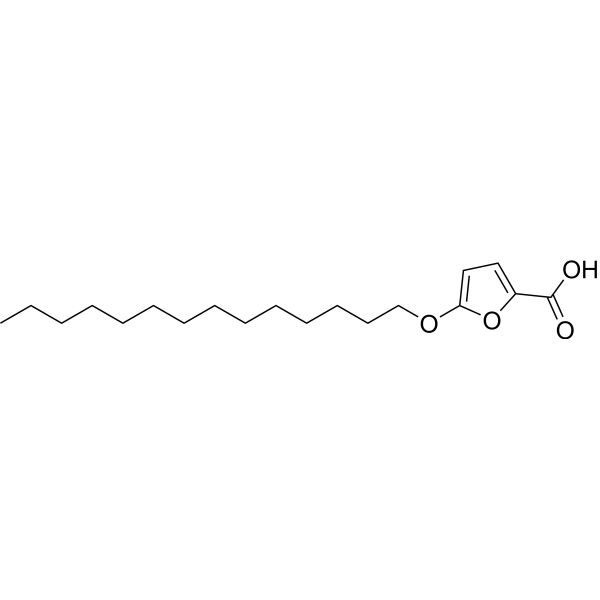
TOFA (RMI14514;MDL14514) is an allosteric inhibitor of acetyl-CoA carboxylase-α (ACCA ).
Nur für Forschungszwecke. Wir verkaufen nicht an Patienten.
- Reinheit : 99.91%
- CAS. Nr.: 54857-86-2
- Formel: C19H32O4
- Molecular Weight:324.45
-
Speicherung:Powder -20°C, 3 years , 4°C, 2 years ; In solvent -80°C, 1 year , -20°C, 6 months

To place orders, for customer services and technical support, please contact: MedChemExpress USA
Tel: 609-228-6898 E-mail: [email protected] [email protected]


-
 Biologische Aktivität
-
Chemical Information
-
Lösungsmittel & Löslichkeit
- Reinheit & Dokumentation
- Verweise
-
 Help & FAQs


-
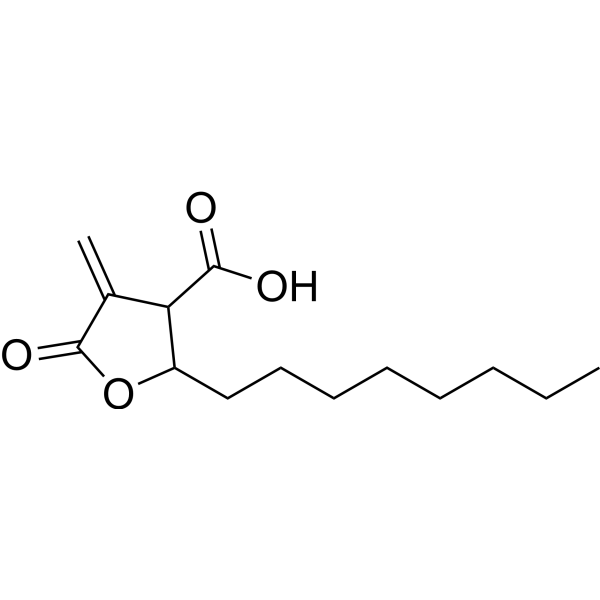
HY-12364
C75Fatty Acid Synthase Inhibitor -
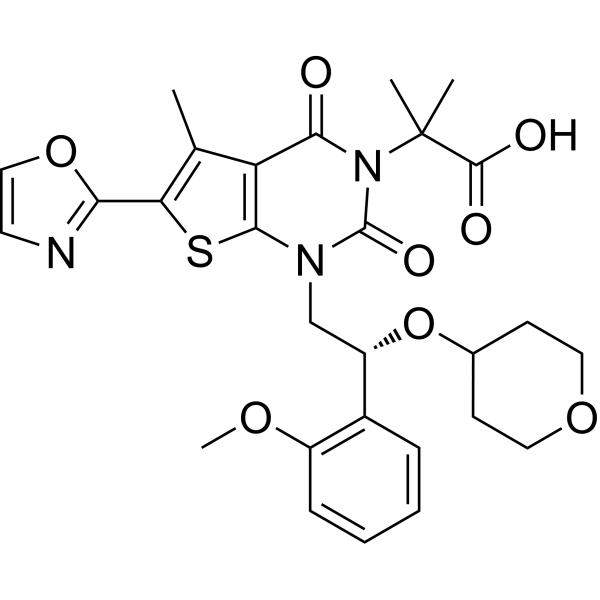
HY-16901
FirsocostatACC Inhibitor -
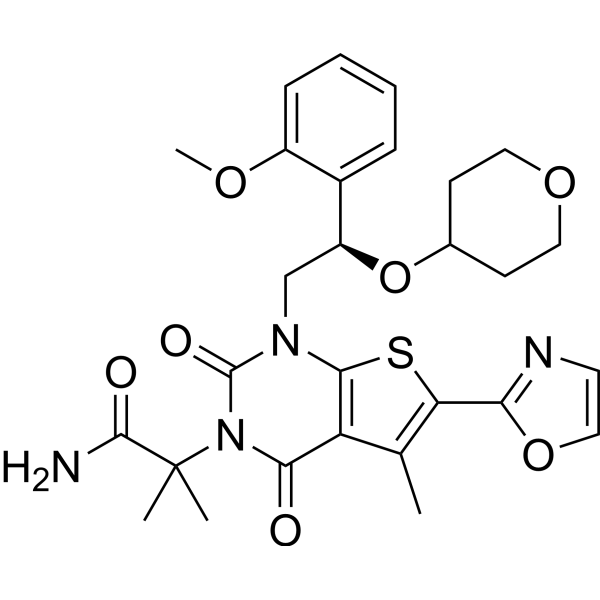
HY-101842
ND-646ACC Inhibitor -
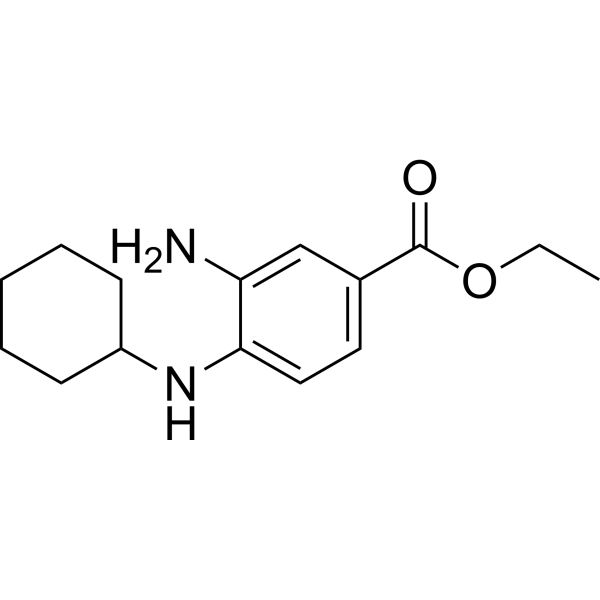
HY-100579
Ferrostatin-1Ferroptosis Inhibitor -
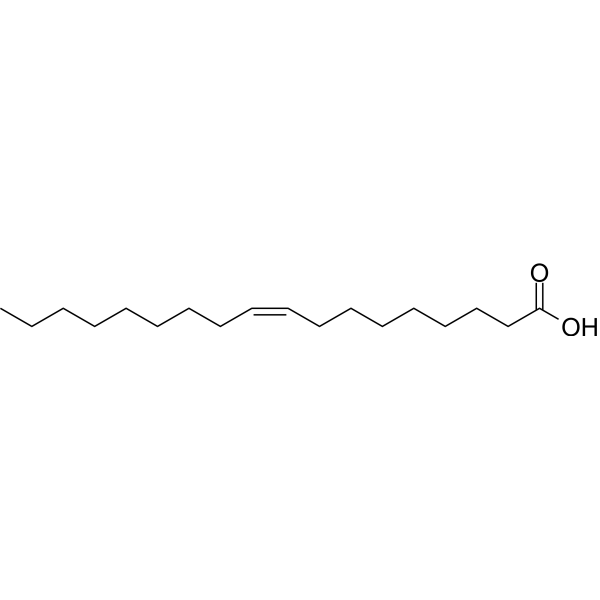
HY-N1446
Oleic acidMonounsaturated Fatty Acid -
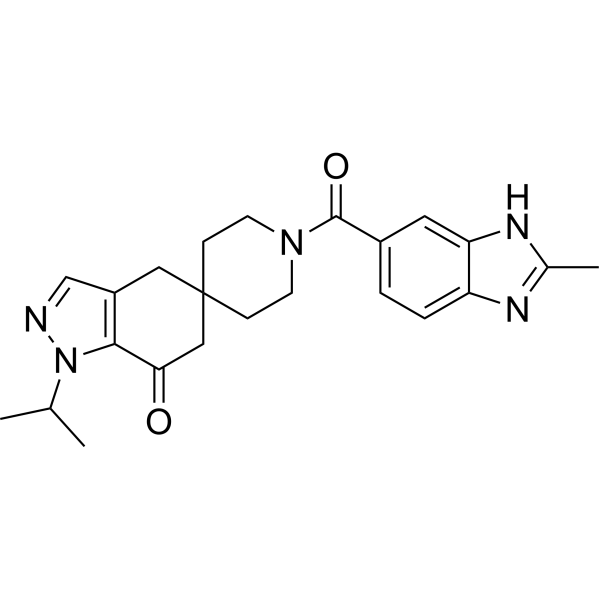
HY-12942
PF-05175157Acetyl-CoA Carboxylase Inhibitor -
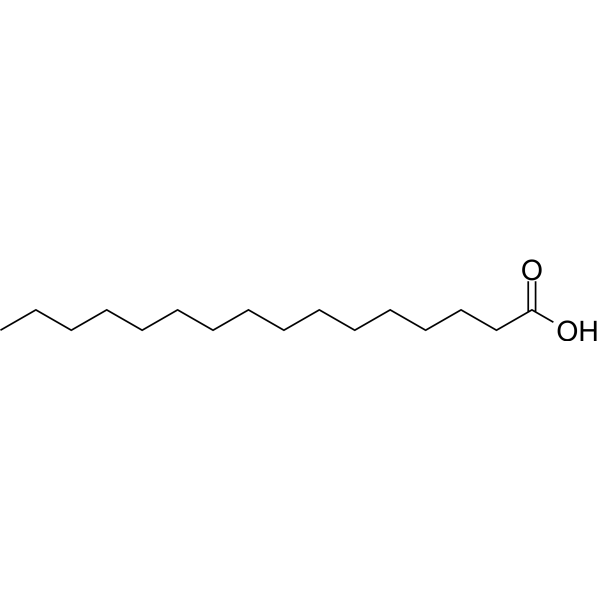
HY-N0830
Palmitic acidEndogenous Metabolite -
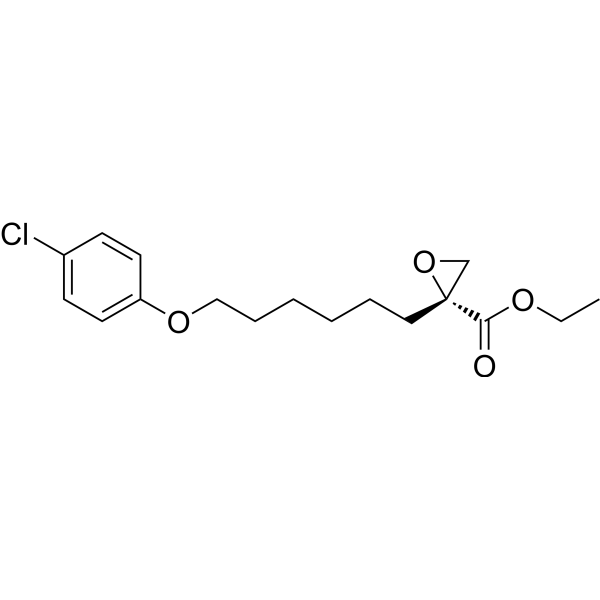
HY-50202
EtomoxirCPT1a Inhibitor -
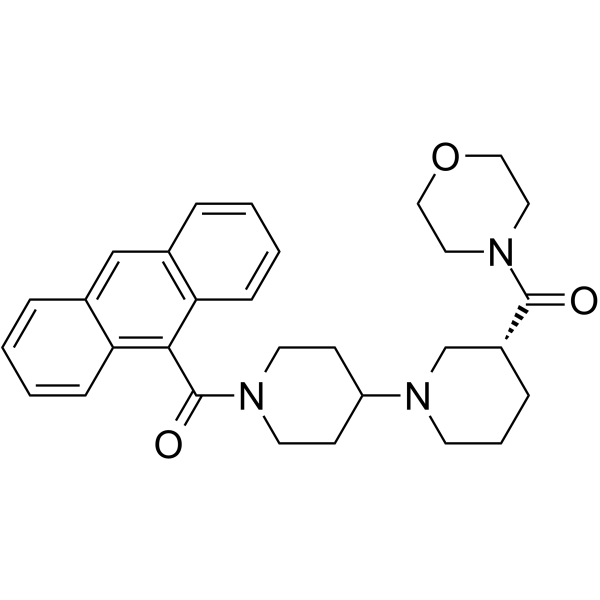
HY-15259
CP-640186ACC Inhibitor -
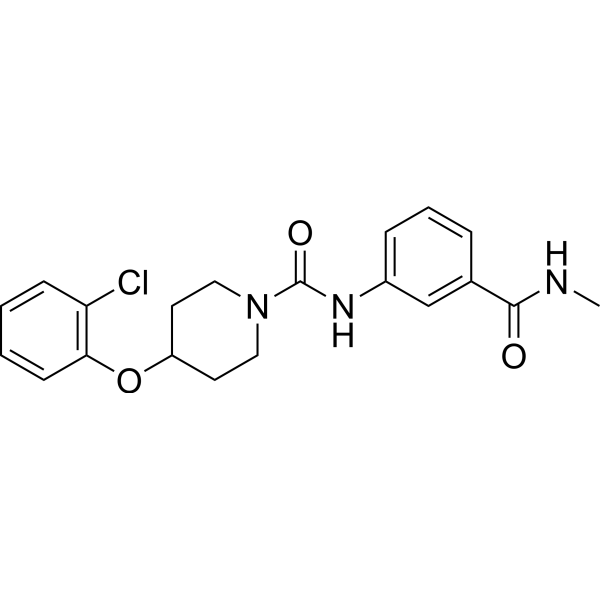
HY-50709
A939572SCD1 Inhibitor -
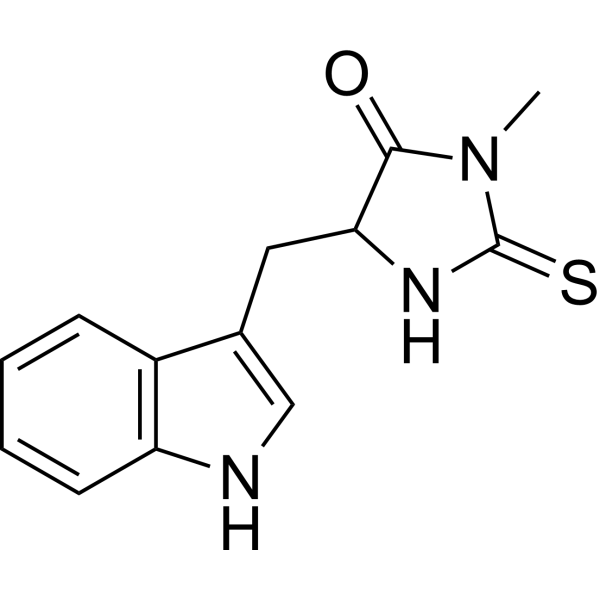
HY-15760
Necrostatin-1RIPK1 Inhibitor -
HY-A0210
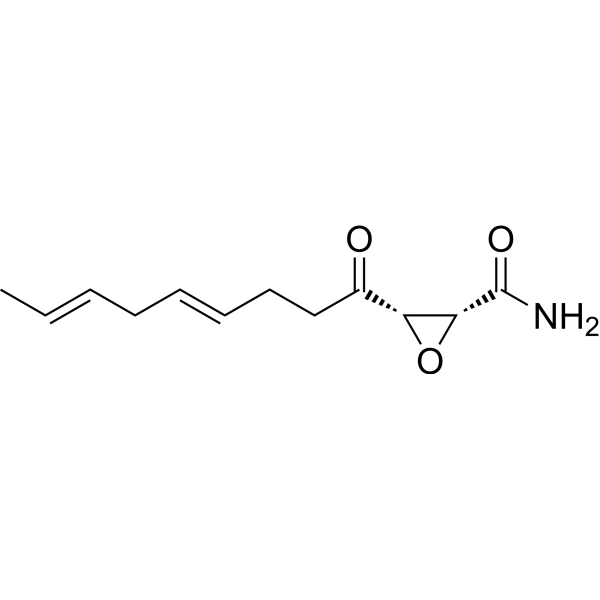
CeruleninFASN Inhibitor
Publications Citing Use of MedChemExpress (MCE) TOFA
More- Adv Mater. 2023 Jul;35(30):e2211415. [Abstract]
- Cell Rep. 2026 Mar 13;45(3):117106. [Abstract]
- Neurosci Bull. 2025 Jun 28. [Abstract]
- Ecotoxicol Environ Saf. 2022 May 1;236:113467. [Abstract]
- J Integr Agric. 2023 Nov 24.
- Eur J Pharm Sci. 2025 Jun 1:209:107092. [Abstract]
- iScience. 2021 May 25;24(6):102651. [Abstract]
- J Virol. 2021 Aug 10;95(17):e0078121. [Abstract]
- J Biol Chem. 2021 Aug;297(2):100950. [Abstract]
- IUBMB Life. 2026 Jan;78(1):e70084. [Abstract]
- bioRxiv. 2024 August 23.
 Customer Validation & Images

-
Cell Proliferation/Viability Assay
-
Cell Proliferation/Viability Assay
-
Others
-
In Vivo Efficacy Study
-
WB


Biologische Aktivität
Beschreibung
Cellular Effect
|
Cell Line

|
Type | Value | Description | References |
|---|---|---|---|---|
| MCF7 | IC50 |
12.3 μM
Compound: 116, TOFA
|
Inhibition of acetyl coA carboxylase in human MCF7 cells
Inhibition of acetyl coA carboxylase in human MCF7 cells
|
[PMID: 21726077] |
In Vitro
TOFA (5-tetradecyloxy-2-furoic acid) is cytotoxic to lung cancer cells NCI-H460 and colon carcinoma cells HCT-8 and HCT-15, with an IC50 at approximately 5.0, 5.0, and 4.5 μg/mL, respectively. TOFA at 1.0–20.0 μg/mL effectively blocks fatty acid synthesis and induces cell death in a dose-dependent manner[1]. TOFA is found to be cytotoxic to COC1 and COC1/DDP cells with IC50 values of ~26.1 and 11.6 μg/mL, respectively. TOFA inhibits the proliferation of the cancer cells examined in a time and dose dependent manner, arrests the cells in the G0/G1 cell cycle phase and induces apoptosis[2]. Acetyl-CoA-carboxylase-α (ACCA) is a key enzyme in the regulation of fatty acids synthesis. Inhibition of ACCA by TOFA decreases fatty acid synthesis and induces caspase activation and cell death in most PCa cell lines[3].
MedChemExpress (MCE) has not independently confirmed the accuracy of these methods. They are for reference only. .
In Vivo
MedChemExpress (MCE) has not independently confirmed the accuracy of these methods. They are for reference only.


Chemical Information
-
CAS. Nr. 54857-86-2
-
Appearance Solid
-
Molecular Weight 324.45
-
Formel C19H32O4
-
Color White to off-white
-
SMILES
O=C(C1=CC=C(OCCCCCCCCCCCCCC)O1)O
-
Synonyms
RMI14514; MDL14514
-
Versand
Room temperature in continental US; may vary elsewhere.
-
Speicherung
Powder -20°C 3 years 4°C 2 years In solvent -80°C 1 year -20°C 6 months


Publications (11)
-
Journal Impact Factor
-
Most Recent
-
Adv Mater
Slimming and Reinvigorating Tumor-Associated Dendritic Cells with Hierarchical Lipid Rewiring Nanoparticles. [Abstract]2023 Jul;35(30):e2211415. PMID: 37096955
TOFA purchased from MedChemExpress. Usage Cited in: Adv Mater. 2023 Jul;35(30):e2211415. [Abstract]
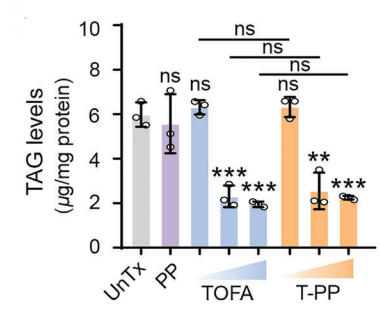
TAG levels in DCs after indicated treatment. Free TOFA (1, 5, and 10 µg /mL) or T-PP (PP NPs: 0.2 mg/mL; TOFA: 1, 5, and 10 µg/mL) were used.
-
Cell Rep
Scap stabilizes PKM2 to promote glycolysis and enhance anti-fungal immunity in macrophages. [Abstract]2026 Mar 13;45(3):117106. PMID: 41831231 -
Neurosci Bull
2025 Jun 28. PMID: 40580390 -
Ecotoxicol Environ Saf
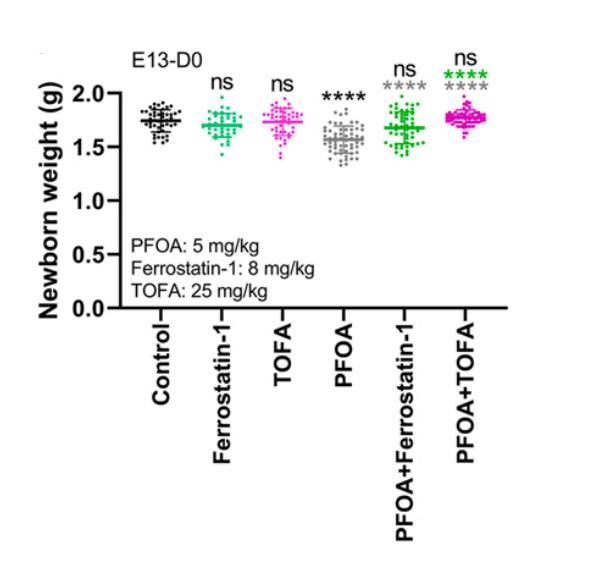
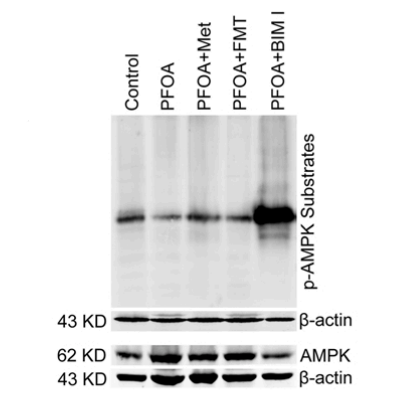
Perfluorooctanoic acid alters the developmental trajectory of female germ cells and embryos in rodents and its potential mechanism. [Abstract]2022 May 1;236:113467. PMID: 35390687
TOFA purchased from MedChemExpress. Usage Cited in: Ecotoxicol Environ Saf. 2022 May 1;236:113467. [Abstract]
TOFA (25 mg/kg). The scatter plot shows the weight of newborn mice born to pregnant mice that received the specified chemical treatment from day 13 of gestation to day 0 (E13-D0).
TOFA purchased from MedChemExpress. Usage Cited in: Ecotoxicol Environ Saf. 2022 May 1;236:113467. [Abstract]
TOFA (25 mg/kg). Livers of newborn that were derived from dams receiving the indicated treatment from E13-D0 were subjected to IB assay with antibodies against AMPK and p-AMPK substance.
-
-
Eur J Pharm Sci
Covalent binding of 5-tetradecyloxy-2-furoic acid (TOFA) and c(RGDfK) and its co-delivery with Lipusu, a novel synergistic strategy to inhibit the proliferation of nasopharyngeal cancer. [Abstract]2025 Jun 1:209:107092. PMID: 40228725
TOFA purchased from MedChemExpress. Usage Cited in: Eur J Pharm Sci. 2025 Jun 1:209:107092. [Abstract]
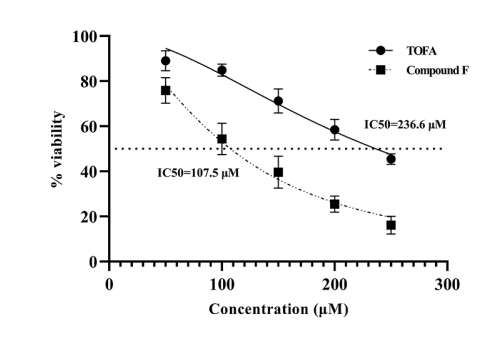
Dose-response curves of TOFA and compound F after 24 h on HONE-1 cells.
TOFA purchased from MedChemExpress. Usage Cited in: Eur J Pharm Sci. 2025 Jun 1:209:107092. [Abstract]
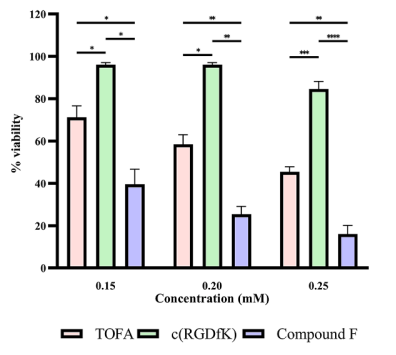
Cytotoxicity of TOFA, c(RGDfK) and F at three concentrations in HONE-1 cells.
-
iScience
Combined epigenetic and metabolic treatments overcome differentiation blockade in acute myeloid leukemia. [Abstract]2021 May 25;24(6):102651. PMID: 34151238 -
J Virol
Fatty Acid Synthase Is Involved in Classical Swine Fever Virus Replication by Interaction with NS4B. [Abstract]2021 Aug 10;95(17):e0078121. PMID: 34132567 -
J Biol Chem
Hydrogen sulfide stimulates lipid biogenesis from glutamine that is dependent on the mitochondrial NAD(P)H pool. [Abstract]2021 Aug;297(2):100950. PMID: 34252456 -
IUBMB Life
AdipoRon Suppresses Multiple Myeloma Proliferation Through AMPK-Mediated Metabolic Reprogramming and Apoptosis Induction. [Abstract]2026 Jan;78(1):e70084. PMID: 41503835 -


Lösungsmittel & Löslichkeit
In Vitro:
DMSO : 11.36 mg/mL (35.01 mM; Need ultrasonic; Hygroscopic DMSO has a significant impact on the solubility of product, please use newly opened DMSO)
Please refer to the solubility information to select the appropriate solvent. Once prepared, please aliquot and store the solution to prevent product inactivation from repeated freeze-thaw cycles.
Storage method and period of stock solution: -80°C, 1 year; -20°C, 6 months. When stored at -80°C, please use it within 1 year. When stored at -20°C, please use it within 6 months.
Please refer to the solubility information to select the appropriate solvent. Once prepared, please aliquot and store the solution to prevent product inactivation from repeated freeze-thaw cycles.
Storage method and period of stock solution: -80°C, 1 year; -20°C, 6 months. When stored at -80°C, please use it within 1 year. When stored at -20°C, please use it within 6 months.
Konzentration (Stammlösung) × Volumen (Stammlösung) = Konzentration (Ziellösung) × Volumen (Ziellösung)
In Vivo:
Select the appropriate dissolution method based on your experimental animal and administration route.
- For the following dissolution methods, please ensure to first prepare a clear stock solution using an In Vitro approach and then sequentially add co-solvents:
- To ensure reliable experimental results, the clarified stock solution can be appropriately stored based on storage conditions. As for the working solution for In Vivo experiments, it is recommended to prepare freshly and use it on the same day.
- The percentages shown for the solvents indicate their volumetric ratio in the final prepared solution. If precipitation or phase separation occurs during preparation, heat and/or sonication can be used to aid dissolution.
In Vivo Dissolution Calculator
Please enter the basic information of animal experiments:
-
-
-
-
Recommended: Prepare an additional quantity of animals to account for potential losses during experiments.
Please enter your animal formula composition:
-
%DMSO +
Recommended: Keep the proportion of DMSO in working solution below 2% if your animal is weak.
-
%+
-
+%Tween-80 + +
-
%Saline +
The co-solvents required include: DMSO, . All of co-solvents are available by MedChemExpress (MCE). , Tween 80. All of co-solvents are available by MedChemExpress (MCE).
Working solution concentration: 0.22 mg/mL
Method for preparing stock solution: mg drug dissolved in μL DMSO. Stock solution concentration: mg/mL.
1. Take μL DMSO stock solution;
2. Add μL .
μL , mix evenly;
3. Then add μL Tween 80, mix evenly;
4. Then add μL
Please ensure that the stock solution in the first step is dissolved to a clear state, and add co-solvents in sequence. You can use ultrasonic heating (ultrasonic cleaner, recommended frequency 20-40 kHz), vortexing, etc. to assist dissolution.


Reinheit & Dokumentation
-
Data Sheet (271 KB)
-
SDS (393 KB)
- English - EN (393 KB)
- Français - FR (393 KB)
- Deutsch - DE (393 KB)
- Norwegian - NO (393 KB)
- Español - ES (393 KB)
- Swedish - SV (393 KB)
- Italian - IT (393 KB)
- Korean - KR (393 KB)
- Portuguese - PT (393 KB)
-
Handling Instructions (2659 KB)
Verweise
[1]. Wang C, et al. Acetyl-CoA carboxylase-alpha inhibitor TOFA induces human cancer cell apoptosis. Biochem Biophys Res Commun. 2009 Jul 31;385(3):302-6. [Content Brief]
[2]. Li S, et al. TOFA suppresses ovarian cancer cell growth in vitro and in vivo. Mol Med Rep. 2013 Aug;8(2):373-8. [Content Brief]
[3]. Guseva NV, et al. TOFA (5-tetradecyl-oxy-2-furoic acid) reduces fatty acid synthesis, inhibits expression of AR, neuropilin-1 and Mcl-1 and kills prostate cancer cells independent of p53 status. Cancer Biol Ther. 2011 Jul 1;12(1):80-5. [Content Brief]


Complete Stock Solution Preparation Table
Please refer to the solubility information to select the appropriate solvent. Once prepared, please aliquot and store the solution to prevent product inactivation from repeated freeze-thaw cycles.
Storage method and period of stock solution: -80°C, 1 year; -20°C, 6 months. When stored at -80°C, please use it within 1 year. When stored at -20°C, please use it within 6 months.
| Optional Solvent | Concentration Solvent Mass | 1 mg | 5 mg | 10 mg | 25 mg |
|---|---|---|---|---|---|
| DMSO | 1 mM | 3.0821 mL | 15.4107 mL | 30.8214 mL | 77.0535 mL |
| 5 mM | 0.6164 mL | 3.0821 mL | 6.1643 mL | 15.4107 mL | |
| 10 mM | 0.3082 mL | 1.5411 mL | 3.0821 mL | 7.7053 mL | |
| 15 mM | 0.2055 mL | 1.0274 mL | 2.0548 mL | 5.1369 mL | |
| 20 mM | 0.1541 mL | 0.7705 mL | 1.5411 mL | 3.8527 mL | |
| 25 mM | 0.1233 mL | 0.6164 mL | 1.2329 mL | 3.0821 mL | |
| 30 mM | 0.1027 mL | 0.5137 mL | 1.0274 mL | 2.5684 mL |


TOFA Related Classifications
HY-101068 Related Classifications
 Powered by Bioz