



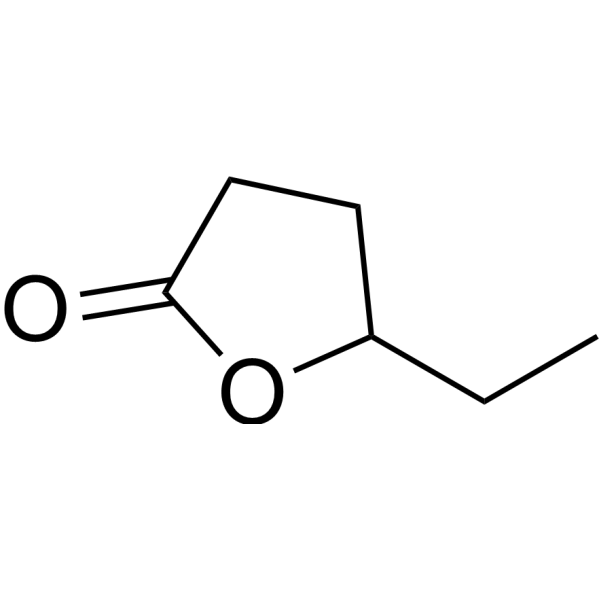
γ-Hexalactone

Based on 1 Customer Validation
γ-Hexalactone (γ-Caprolactone) is a gamma-lactone found in ripe fruits. γ-Hexalactone induces DNA damage in human lymphocytes and HepG2 cells, modulates cytokine secretion in human lymphocytes, and reduces recombinant PON1 activity. γ-Hexalactone serves as a dose-dependent oviposition inhibitor against Bactrocera oleae. γ-Hexalactone can be used for the research of Bactrocera oleae pest management.
Nos produits utilisent uniquement pour la recherche. Nous ne vendons pas aux patients.
- Pureté : 99.46%
- CAS No.: 695-06-7
- Formule: C6H10O2
- Masse moléculaire:114.14
-
Stockage:Pure form -20°C, 3 years , 4°C, 2 years ; In solvent -80°C, 6 months , -20°C, 1 month

To place orders, for customer services and technical support, please contact: MedChemExpress USA
Tel: 609-228-6898 E-mail: [email protected] [email protected]


-
 Activité biologique
-
Chemical Information
-
Solvant et solubilité
- Protocole
- Pureté et documentation
- Références
-
 Help & FAQs


-
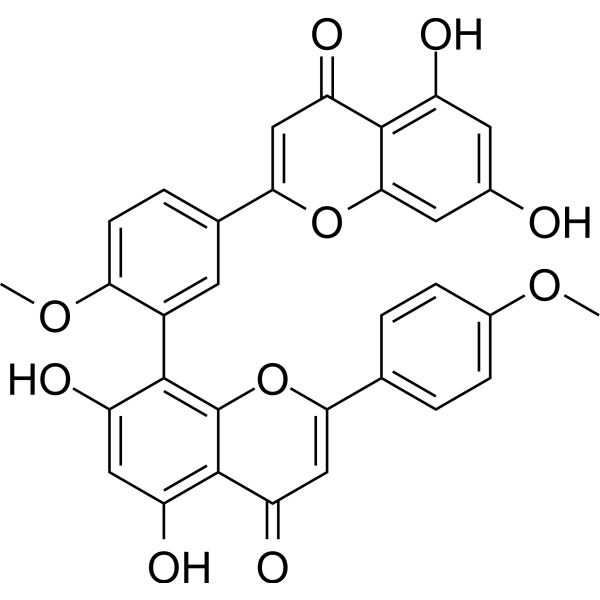
HY-N2117
Isoginkgetinpre-mRNA Splicing Inhibitor -

HY-W015892R
γ-Hexalactone (Standard)Natural Product -
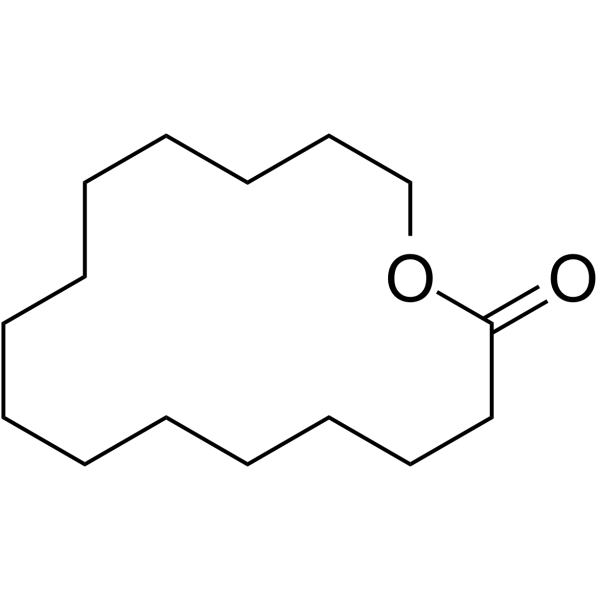
HY-W035362
ω-PentadecalactoneFragrance Ingredient -
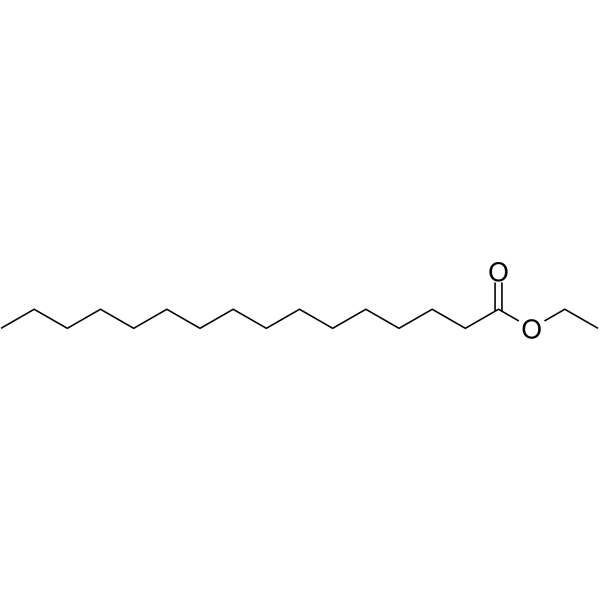
HY-N2086
Ethyl palmitateCHIKV Virus Inhibitor -
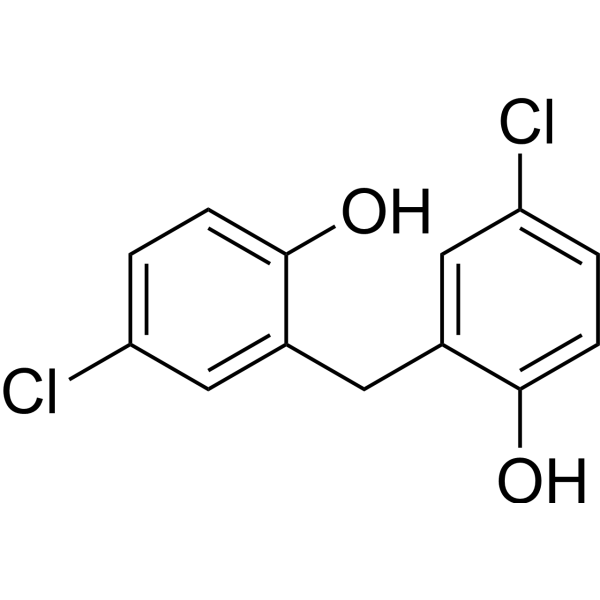
HY-12638
DichlorophenParasite Inhibitor -
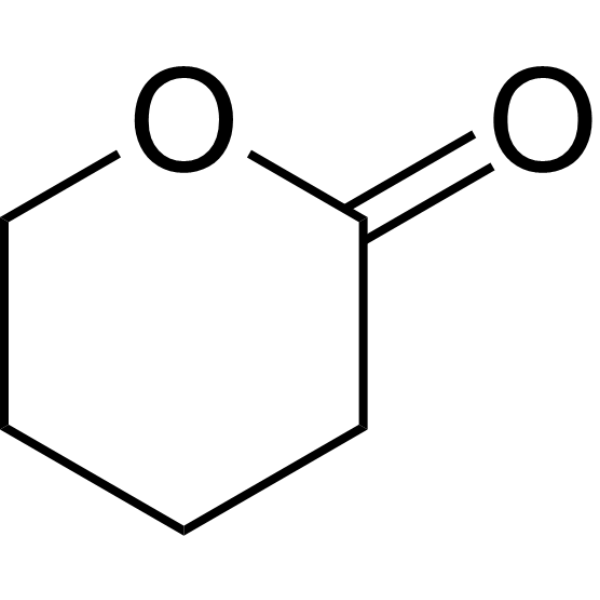
HY-W012997
Tetrahydro-2H-pyran-2-oneDrug Intermediate -

HY-W015451
2,7-DihydroxynaphthaleneAromatic Substrate -

HY-W017562
γ-OctalactoneAromatic Lactone Compound -

HY-N2086R
Ethyl palmitate (Standard)Fatty Acid Ethyl Ester -

HY-W035362R
ω-Pentadecalactone (Standard)Fragrance Ingredient -

HY-119392
16-HexadecanolideBiochemical Assay Reagents -

HY-W012997R
Tetrahydro-2H-pyran-2-one (Standard)Drug Intermediate
Voir tous les produits spécifiques à Isoform TNF Receptor
More

Activité biologique
Description
IC50 & Target
[2]|
IL-1 |
IL-6 |
IL-10 |
TNF-α |
In Vitro
γ-Hexalactone (10-100 mM; 3 h) induces minimal DNA damage alone in HepG2 cells, but co-incubation with rPON1 drastically increases DNA damage at 100 mM[1].
γ-Hexalactone (0.0515-5.15 μM; 72 h) induces significant DNA damage in cultured human peripheral blood lymphocytes at 5.15 μM[2].
γ-Hexalactone (0.0515-5.15 μM; 72 h) exhibits immunomodulatory effects in cultured human peripheral blood lymphocytes, increasing proinflammatory cytokine IL-1 levels at all tested concentrations, and further increasing IL-6, TNF-α, IFN-γ, and decreasing IL-10 levels at the highest tested concentration of 5.15 μM[2].
γ-Hexalactone (0.0515-5.15 μM; 72 h) displays no obvious cytotoxicity in cultured human lymphocytes[2].
γ-Hexalactone (1.0 mg; 24 h) significantly reduces oviposition activity of female Bactrocera oleae after mating, with a mean oviposition activity index (OAI) of -0.56[3].
MedChemExpress (MCE) has not independently confirmed the accuracy of these methods. They are for reference only.
-
Cell Line:human peripheral blood lymphocytes
-
Concentration:0.0515 μM, 0.515 μM, 5.15 μM
-
Incubation Time:72 h
-
Result:Maintains total lymphocyte counts similar to the negative control across all tested concentrations.
Keeps lymphocyte viability above 96% across all tested concentrations.
Exhibits no significant cytotoxicity.
-
Cell Line:cultured human peripheral blood lymphocytes
-
Concentration:0.0515 μM, 0.515 μM, 5.15 μM
-
Incubation Time:72 h
-
Result:Upregulated IL‑1 levels at all tested concentrations, elevated IL‑6, TNF‑α, and IFN‑γ levels while reducing IL‑10 levels at 5.15 μM, and exerted no significant effects on IL‑6, TNF‑α, IFN‑γ, or IL‑10 levels at 0.515 μM or 0.0515 μM.
In Vivo
γ-Hexalactone (100-1000 mg/kg/day; p.o.; daily; gestation days 6-19) has a developmental toxicity NOAEL of 300 mg/kg/day in pregnant Sprague Dawley rats, with no adverse maternal effects and only isolated, non-dose-related fetal changes[4].
γ-Hexalactone (3.5% intradermal; 100% topical) does not induce skin sensitization in Hartley guinea pigs when tested via intradermal and topical exposure in a maximization test[4].
MedChemExpress (MCE) has not independently confirmed the accuracy of these methods. They are for reference only.
-
Animal Model:Sprague Dawley (both sexes, 5 rats/sex/dose)[4]
-
Dosage:30 mg/kg/day; 100 mg/kg/day; 300 mg/kg/day; 1000 mg/kg/day
-
Administration:p.o.; daily; 28 days
-
Result:Showed no treatment‑related mortality or body weight loss, induced low‑incidence only at the highest dose, increased liver weights reversibly in a high‑dose‑dependent manner, caused mild reversible hepatic changes regarded as adaptive.
-
Animal Model:Sprague Dawley (female, 25 rats/dose, pregnant)[4]
-
Dosage:100 mg/kg/day; 300 mg/kg/day; 1000 mg/kg/day
-
Administration:p.o.; daily; gestation days 6-19
-
Result:Showed no treatment-related changes in maternal animals.
Significantly decreased fetal body weight at 1000 mg/kg/day within historical control ranges.
Caused isolated fetal malformations at 300 mg/kg/day with no dose-related tendency.
Produced fetal skeletal variants within historical control ranges unrelated to treatment.


Chemical Information
-
CAS No. 695-06-7
-
Appearance Liquid (Density: 1.023 g/cm3 )
-
Masse moléculaire 114.14
-
Formule C6H10O2
-
Color Colorless to light yellow
-
SMILES
O=C1OC(CC)CC1
-
Synonyms
γ-Caprolactone
-
Structure Classification
-
Initial Source
-
Livraison
Room temperature in continental US; may vary elsewhere.
-
Stockage
Pure form -20°C 3 years 4°C 2 years In solvent -80°C 6 months -20°C 1 month


Solvant et solubilité
In Vitro:
DMSO : 100 mg/mL (876.12 mM; Need ultrasonic; Hygroscopic DMSO has a significant impact on the solubility of product, please use newly opened DMSO)
Please refer to the solubility information to select the appropriate solvent. Once prepared, please aliquot and store the solution to prevent product inactivation from repeated freeze-thaw cycles.
Storage method and period of stock solution: -80°C, 6 months; -20°C, 1 month. When stored at -80°C, please use it within 6 months. When stored at -20°C, please use it within 1 month.
Please refer to the solubility information to select the appropriate solvent. Once prepared, please aliquot and store the solution to prevent product inactivation from repeated freeze-thaw cycles.
Storage method and period of stock solution: -80°C, 6 months; -20°C, 1 month. When stored at -80°C, please use it within 6 months. When stored at -20°C, please use it within 1 month.
Concentration (start) × Volume (start) = Concentration (final) × Volume (final)
In Vivo:
Select the appropriate dissolution method based on your experimental animal and administration route.
- For the following dissolution methods, please ensure to first prepare a clear stock solution using an In Vitro approach and then sequentially add co-solvents:
- To ensure reliable experimental results, the clarified stock solution can be appropriately stored based on storage conditions. As for the working solution for In Vivo experiments, it is recommended to prepare freshly and use it on the same day.
- The percentages shown for the solvents indicate their volumetric ratio in the final prepared solution. If precipitation or phase separation occurs during preparation, heat and/or sonication can be used to aid dissolution.
Add each solvent one by one: 10% DMSO 40% PEG300 5% Tween-80 45% Saline
Solubility: ≥ 2.5 mg/mL (21.90 mM); Clear solution
This protocol yields a clear solution of ≥ 2.5 mg/mL (saturation unknown).
Taking 1 mL working solution as an example, add 100 μL DMSO stock solution (25.0 mg/mL) to 400 μL PEG300, and mix evenly; then add 50 μL Tween-80 and mix evenly; then add 450 μL Saline to adjust the volume to 1 mL.
Preparation of Saline: Dissolve 0.9 g sodium chloride in ddH₂O and dilute to 100 mL to obtain a clear Saline solution.
Add each solvent one by one: 10% DMSO 90% (20% SBE-β-CD in Saline)
Solubility: ≥ 2.5 mg/mL (21.90 mM); Clear solution
This protocol yields a clear solution of ≥ 2.5 mg/mL (saturation unknown).
Taking 1 mL working solution as an example, add 100 μL DMSO stock solution (25.0 mg/mL) to 900 μL 20% SBE-β-CD in Saline, and mix evenly.
Preparation of 20% SBE-β-CD in Saline (4°C, storage for one week): 2 g SBE-β-CD powder is dissolved in 10 mL Saline, completely dissolve until clear.
In Vivo Dissolution Calculator
Please enter the basic information of animal experiments:
-
-
-
-
Recommended: Prepare an additional quantity of animals to account for potential losses during experiments.
Please enter your animal formula composition:
-
%DMSO +
Recommended: Keep the proportion of DMSO in working solution below 2% if your animal is weak.
-
%+
-
+%Tween-80 + +
-
%Saline +
The co-solvents required include: DMSO, . All of co-solvents are available by MedChemExpress (MCE). , Tween 80. All of co-solvents are available by MedChemExpress (MCE).
Working solution concentration: 0.22 mg/mL
Method for preparing stock solution: mg drug dissolved in μL DMSO. Stock solution concentration: mg/mL.
1. Take μL DMSO stock solution;
2. Add μL .
μL , mix evenly;
3. Then add μL Tween 80, mix evenly;
4. Then add μL
Please ensure that the stock solution in the first step is dissolved to a clear state, and add co-solvents in sequence. You can use ultrasonic heating (ultrasonic cleaner, recommended frequency 20-40 kHz), vortexing, etc. to assist dissolution.


Pureté et documentation
-
Fiche technique (282 KB)
-
SDS (396 KB)
- English - EN (396 KB)
- Français - FR (396 KB)
- Deutsch - DE (396 KB)
- Norwegian - NO (396 KB)
- Español - ES (396 KB)
- Swedish - SV (396 KB)
- Italian - IT (396 KB)
- Korean - KR (396 KB)
- Portuguese - PT (396 KB)
-
Instruction de manipulation (2659 KB)
Références
[1]. Shangula S, et al. PON1 increases cellular DNA damage by lactone substrates. Arch Toxicol. 2019;93(7):2035-2043. [Content Brief]
[2]. Zuravski L, et al. Gamma-hexalactone flavoring causes DNA lesion and modulates cytokines secretion at non-cytotoxic concentrations. BMC Pharmacol Toxicol. 2019;20(Suppl 1):79. Published 2019 Dec 19. [Content Brief]
[4]. Api AM, et al. Update to RIFM fragrance ingredient safety assessment, γ-hexalactone, CAS Registry Number 695-06-7. Food Chem Toxicol. 2026;210 Suppl 1:115886. [Content Brief]
[5]. Xin R, et al. E-Nose and GC-MS Reveal a Difference in the Volatile Profiles of White- and Red-Fleshed Peach Fruit. Sensors (Basel). 2018;18(3):765. Published 2018 Mar 2. [Content Brief]


Complete Stock Solution Preparation Table
Please refer to the solubility information to select the appropriate solvent. Once prepared, please aliquot and store the solution to prevent product inactivation from repeated freeze-thaw cycles.
Storage method and period of stock solution: -80°C, 6 months; -20°C, 1 month. When stored at -80°C, please use it within 6 months. When stored at -20°C, please use it within 1 month.
| Optional Solvent | Concentration Solvent Mass | 1 mg | 5 mg | 10 mg | 25 mg |
|---|---|---|---|---|---|
| DMSO | 1 mM | 8.7612 mL | 43.8059 mL | 87.6117 mL | 219.0293 mL |
| 5 mM | 1.7522 mL | 8.7612 mL | 17.5223 mL | 43.8059 mL | |
| 10 mM | 0.8761 mL | 4.3806 mL | 8.7612 mL | 21.9029 mL | |
| 15 mM | 0.5841 mL | 2.9204 mL | 5.8408 mL | 14.6020 mL | |
| 20 mM | 0.4381 mL | 2.1903 mL | 4.3806 mL | 10.9515 mL | |
| 25 mM | 0.3504 mL | 1.7522 mL | 3.5045 mL | 8.7612 mL | |
| 30 mM | 0.2920 mL | 1.4602 mL | 2.9204 mL | 7.3010 mL | |
| 40 mM | 0.2190 mL | 1.0951 mL | 2.1903 mL | 5.4757 mL | |
| 50 mM | 0.1752 mL | 0.8761 mL | 1.7522 mL | 4.3806 mL | |
| 60 mM | 0.1460 mL | 0.7301 mL | 1.4602 mL | 3.6505 mL | |
| 80 mM | 0.1095 mL | 0.5476 mL | 1.0951 mL | 2.7379 mL | |
| 100 mM | 0.0876 mL | 0.4381 mL | 0.8761 mL | 2.1903 mL |


γ-Hexalactone Related Classifications
HY-W015892 Related Classifications
 Powered by Bioz