



Ethyl palmitate
Based on 2 publication(s) in Google Scholar
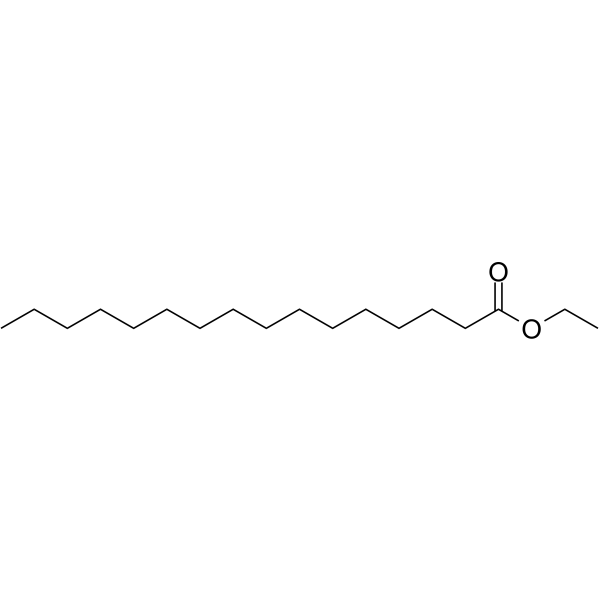
Ethyl palmitate (Ethyl hexadecanoate) is a CHIKV virus inhibitor with an EC50 value of 0.0068 μM. Ethyl palmitate can reduce levels of TNF-α, IL-6, and NF-κB in endotoxemic rats, showing anti-inflammatory activity.
For research use only. We do not sell to patients.
- Purity : 99.09%
- CAS No.: 628-97-7
- Formula: C18H36O2
- Molecular Weight:284.48
-
Storage:Pure form -20°C, 3 years , 4°C, 2 years ; In solvent -80°C, 6 months , -20°C, 1 month

To place orders, for customer services and technical support, please contact: MedChemExpress USA
Tel: 609-228-6898 E-mail: [email protected] [email protected]


-
 Biological Activity
-
Chemical Information
-
Solvent & Solubility
- Protocols
- Purity & Documentation
- References
-
 Help & FAQs


-
HY-B2235
LecithinEndogenous Metabolite -
HY-N7103
Ethyl oleateFatty Acid Ester -

HY-N2086R
Ethyl palmitate (Standard)Fatty Acid Ethyl Ester -
HY-N2598
Methyl oleateFAME -

HY-W013809R
Ethyl stearate (Standard)Biochemical Assay Reagent -
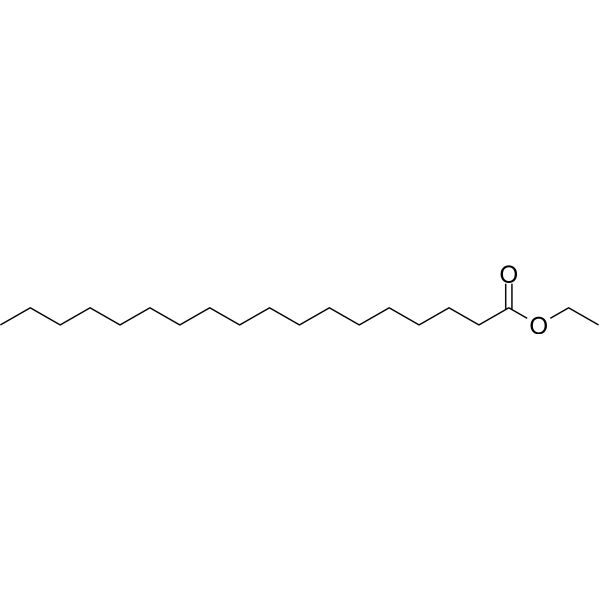
HY-W013809
Ethyl stearateBiochemical Assay Reagent -
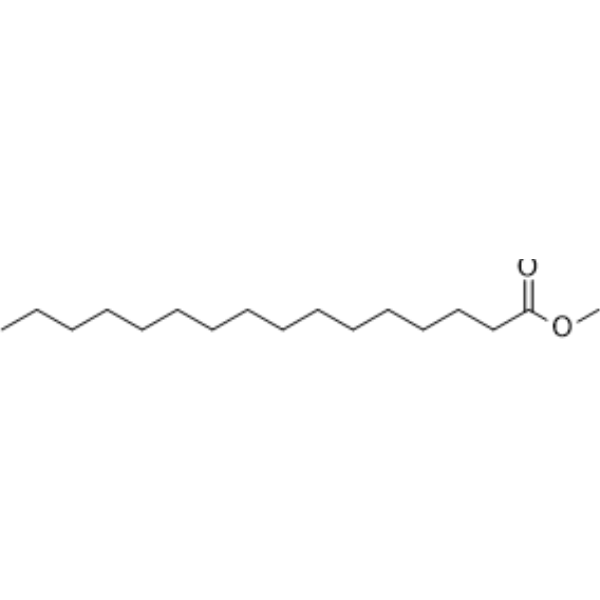
HY-N1482
Methyl palmitateAnti-inflammatory Agent -
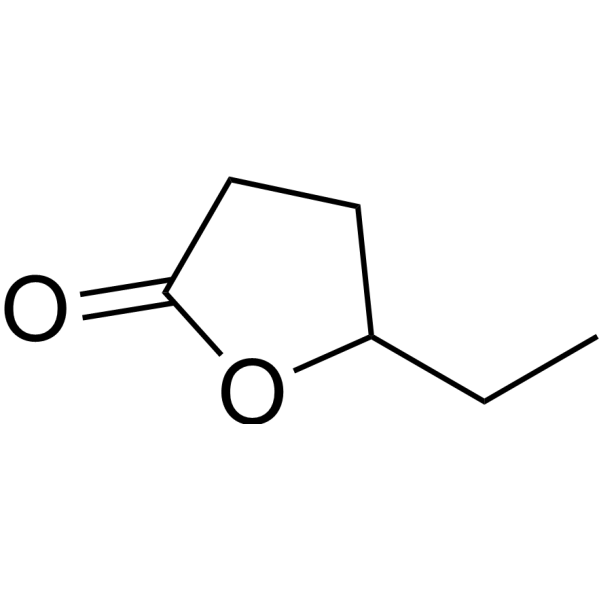
HY-W015892
γ-HexalactoneNatural Product -
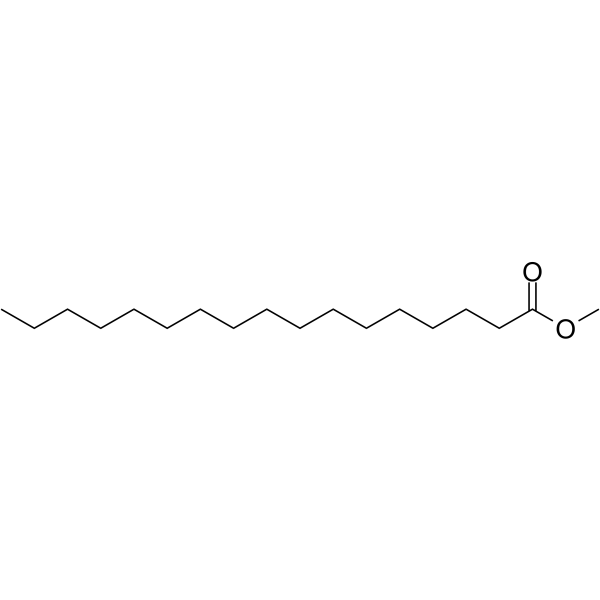
HY-W004290
Methyl heptadecanoateInternal Standard for Biodiesel -
HY-134119
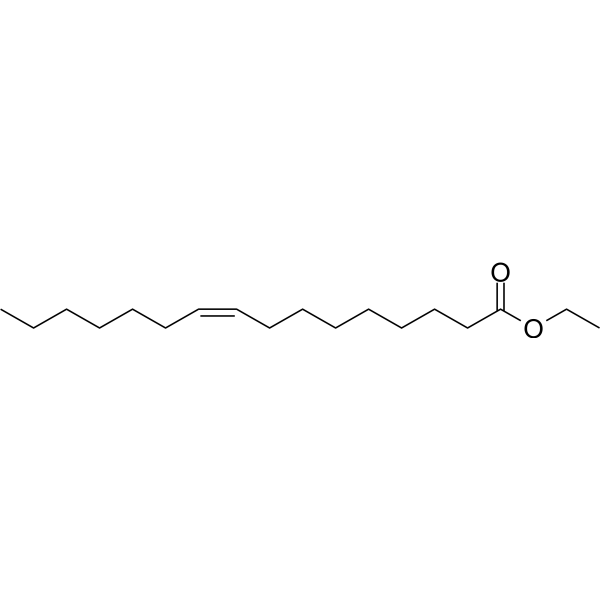
Ethyl palmitoleateBiochemical Assay Reagent -
HY-N2073
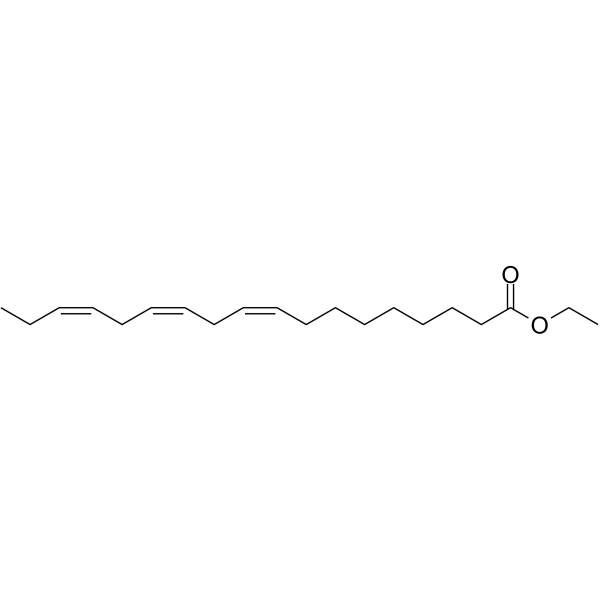
Ethyl linolenateMelanogenesis Inhibitor -
HY-B1934
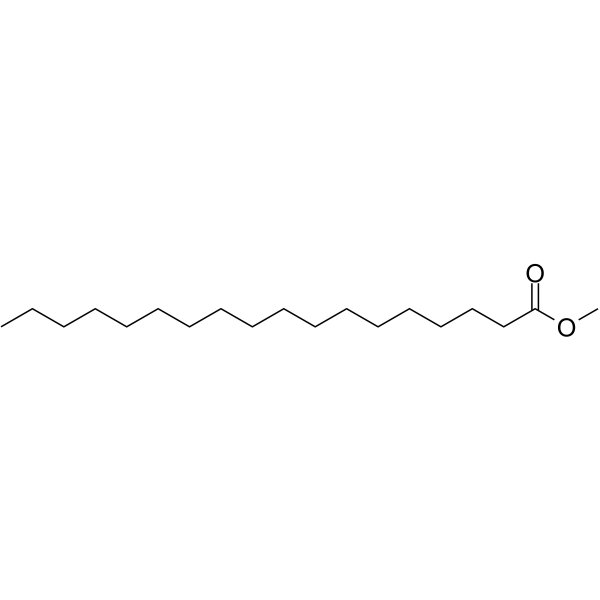
Methyl stearateFatty Acid Methyl Ester
Publications Citing Use of MedChemExpress (MCE) Ethyl palmitate
More

Biological Activity
Description
In Vitro
Ethyl palmitate (1 μg/mL; 24, 48 h) can inhibit the expression and viral activity of CHIKV virus E2 protein, with an EC50 value of 0.0068 μM[2].
MedChemExpress (MCE) has not independently confirmed the accuracy of these methods. They are for reference only.
-
Cell Line:CHIKV infected Vero cells
-
Concentration:1 μg/mL
-
Incubation Time:24, 48 h
-
Result:Resulted in no expression of CHIKV E2 protein.
In Vivo
MedChemExpress (MCE) has not independently confirmed the accuracy of these methods. They are for reference only.
-
Animal Model:A rat model of lipopolysaccharide (LPS)-induced endotoxemia[1].
-
Dosage:10 mL/kg
-
Administration:Intraperitoneal injection (i.p.); once
-
Result:Reduced plasma levels of tumor necrosis factor-α (TNF-α) and interleukin-6 (IL-6), decreased NF-κB expression in liver and lung tissues and ameliorated histopathological changes caused by LPS.
-
Animal Model:12 dogs of both sexes, weighing between 5.0 and 11.2 kg[3].
-
Dosage:1.5 mg/kg
-
Administration:Intravenous injection (i.v.); once daily; 3 weeks
-
Result:Inhibited the phagocytic activity of red blood cells and led to hepatocyte degeneration and local necrosis.


Chemical Information
-
CAS No. 628-97-7
-
Appearance <24°C Solid,>26°C Liquid
-
Molecular Weight 284.48
-
Formula C18H36O2
-
Color Colorless to light yellow
-
SMILES
CCCCCCCCCCCCCCCC(OCC)=O
-
Synonyms
Ethyl hexadecanoate
-
Structure Classification
-
Shipping
Room temperature in continental US; may vary elsewhere.
-
Storage
Pure form -20°C 3 years 4°C 2 years In solvent -80°C 6 months -20°C 1 month


Publications (2)
-
Journal Impact Factor
-
Most Recent
-
PLoS Biol
2024 Jun 27;22(6):e3002672. PMID: 38935621 -
bioRxiv
An efficient behavioral screening platform classifies natural products and other chemical cues according to their chemosensory valence in C. elegans. [Abstract]2024 Apr 3:2023.06.02.542933. PMID: 37333363


Solvent & Solubility
In Vitro:
DMSO : 100 mg/mL (351.52 mM; Need ultrasonic; Hygroscopic DMSO has a significant impact on the solubility of product, please use newly opened DMSO)
Please refer to the solubility information to select the appropriate solvent. Once prepared, please aliquot and store the solution to prevent product inactivation from repeated freeze-thaw cycles.
Storage method and period of stock solution: -80°C, 6 months; -20°C, 1 month. When stored at -80°C, please use it within 6 months. When stored at -20°C, please use it within 1 month.
Please refer to the solubility information to select the appropriate solvent. Once prepared, please aliquot and store the solution to prevent product inactivation from repeated freeze-thaw cycles.
Storage method and period of stock solution: -80°C, 6 months; -20°C, 1 month. When stored at -80°C, please use it within 6 months. When stored at -20°C, please use it within 1 month.
Concentration (start) × Volume (start) = Concentration (final) × Volume (final)
In Vivo:
Select the appropriate dissolution method based on your experimental animal and administration route.
- For the following dissolution methods, please ensure to first prepare a clear stock solution using an In Vitro approach and then sequentially add co-solvents:
- To ensure reliable experimental results, the clarified stock solution can be appropriately stored based on storage conditions. As for the working solution for In Vivo experiments, it is recommended to prepare freshly and use it on the same day.
- The percentages shown for the solvents indicate their volumetric ratio in the final prepared solution. If precipitation or phase separation occurs during preparation, heat and/or sonication can be used to aid dissolution.
Add each solvent one by one: 10% DMSO 40% PEG300 5% Tween-80 45% Saline
Solubility: ≥ 2.5 mg/mL (8.79 mM); Clear solution
This protocol yields a clear solution of ≥ 2.5 mg/mL (saturation unknown).
Taking 1 mL working solution as an example, add 100 μL DMSO stock solution (25.0 mg/mL) to 400 μL PEG300, and mix evenly; then add 50 μL Tween-80 and mix evenly; then add 450 μL Saline to adjust the volume to 1 mL.
Preparation of Saline: Dissolve 0.9 g sodium chloride in ddH₂O and dilute to 100 mL to obtain a clear Saline solution.
Add each solvent one by one: 10% DMSO 90% (20% SBE-β-CD in Saline)
Solubility: ≥ 2.5 mg/mL (8.79 mM); Clear solution
This protocol yields a clear solution of ≥ 2.5 mg/mL (saturation unknown).
Taking 1 mL working solution as an example, add 100 μL DMSO stock solution (25.0 mg/mL) to 900 μL 20% SBE-β-CD in Saline, and mix evenly.
Preparation of 20% SBE-β-CD in Saline (4°C, storage for one week): 2 g SBE-β-CD powder is dissolved in 10 mL Saline, completely dissolve until clear.
In Vivo Dissolution Calculator
Please enter the basic information of animal experiments:
-
-
-
-
Recommended: Prepare an additional quantity of animals to account for potential losses during experiments.
Please enter your animal formula composition:
-
%DMSO +
Recommended: Keep the proportion of DMSO in working solution below 2% if your animal is weak.
-
%+
-
+%Tween-80 + +
-
%Saline +
The co-solvents required include: DMSO, . All of co-solvents are available by MedChemExpress (MCE). , Tween 80. All of co-solvents are available by MedChemExpress (MCE).
Working solution concentration: 0.22 mg/mL
Method for preparing stock solution: mg drug dissolved in μL DMSO. Stock solution concentration: mg/mL.
1. Take μL DMSO stock solution;
2. Add μL .
μL , mix evenly;
3. Then add μL Tween 80, mix evenly;
4. Then add μL
Please ensure that the stock solution in the first step is dissolved to a clear state, and add co-solvents in sequence. You can use ultrasonic heating (ultrasonic cleaner, recommended frequency 20-40 kHz), vortexing, etc. to assist dissolution.


Purity & Documentation
-
Data Sheet (273 KB)
-
SDS (396 KB)
- English - EN (396 KB)
- Français - FR (396 KB)
- Deutsch - DE (396 KB)
- Norwegian - NO (396 KB)
- Español - ES (396 KB)
- Swedish - SV (396 KB)
- Italian - IT (396 KB)
- Korean - KR (396 KB)
- Portuguese - PT (396 KB)
-
Handling Instructions (2659 KB)
References
[1]. Saeed NM, et al. Anti-inflammatory activity of methyl palmitate and ethyl palmitate in different experimental rat models. Toxicol Appl Pharmacol. 2012 Oct 1;264(1):84-93. [Content Brief]
[2]. Sagna A, et al. Ethyl palmitate, an anti-chikungunya virus principle from Sauropus androgynus, a medicinal plant used to alleviate fever in ethnomedicine. J Ethnopharmacol. 2023 Jun 12;309:116366. [Content Brief]
[3]. Areekul S, et al. Studies on liver blood flow and phagocytic activity of reticuloendothelial system in dogs treated with ethyl palmitate. Southeast Asian J Trop Med Public Health. 1973 Sep;4(3):395-9. [Content Brief]


Complete Stock Solution Preparation Table
Please refer to the solubility information to select the appropriate solvent. Once prepared, please aliquot and store the solution to prevent product inactivation from repeated freeze-thaw cycles.
Storage method and period of stock solution: -80°C, 6 months; -20°C, 1 month. When stored at -80°C, please use it within 6 months. When stored at -20°C, please use it within 1 month.
| Optional Solvent | Concentration Solvent Mass | 1 mg | 5 mg | 10 mg | 25 mg |
|---|---|---|---|---|---|
| DMSO | 1 mM | 3.5152 mL | 17.5759 mL | 35.1519 mL | 87.8796 mL |
| 5 mM | 0.7030 mL | 3.5152 mL | 7.0304 mL | 17.5759 mL | |
| 10 mM | 0.3515 mL | 1.7576 mL | 3.5152 mL | 8.7880 mL | |
| 15 mM | 0.2343 mL | 1.1717 mL | 2.3435 mL | 5.8586 mL | |
| 20 mM | 0.1758 mL | 0.8788 mL | 1.7576 mL | 4.3940 mL | |
| 25 mM | 0.1406 mL | 0.7030 mL | 1.4061 mL | 3.5152 mL | |
| 30 mM | 0.1172 mL | 0.5859 mL | 1.1717 mL | 2.9293 mL | |
| 40 mM | 0.0879 mL | 0.4394 mL | 0.8788 mL | 2.1970 mL | |
| 50 mM | 0.0703 mL | 0.3515 mL | 0.7030 mL | 1.7576 mL | |
| 60 mM | 0.0586 mL | 0.2929 mL | 0.5859 mL | 1.4647 mL | |
| 80 mM | 0.0439 mL | 0.2197 mL | 0.4394 mL | 1.0985 mL | |
| 100 mM | 0.0352 mL | 0.1758 mL | 0.3515 mL | 0.8788 mL |


Ethyl palmitate Related Classifications
HY-N2086 Related Classifications
 Powered by Bioz