



Insecticide
-
Insecticide (66)

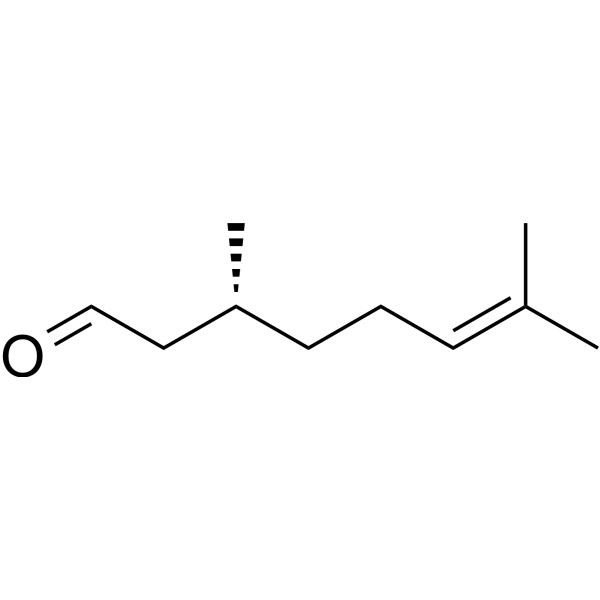
- Formula: C10H18O
- Molecular Weight: 154.25
(R)-(+)-Citronellal ((+)-Citronellal) is a monoterpenoid compound and is one of the main components of essential oils from plants such as lemon grass. (R)-(+)-Citronellal has antibacterial, antifungal, and insecticidal activities. (R)-(+)-Citronellal alleviates the bitterness of caffeine by antagonizing the bitter taste receptors Tas2r43 (IC50 = 84 μM) and Tas2R46. (R)-(+)-Citronellal generates analgesic activity by activating the opioid receptor (broad-spectrum opioid receptor) pathway, and its effect is particularly significant for inflammatory pain.
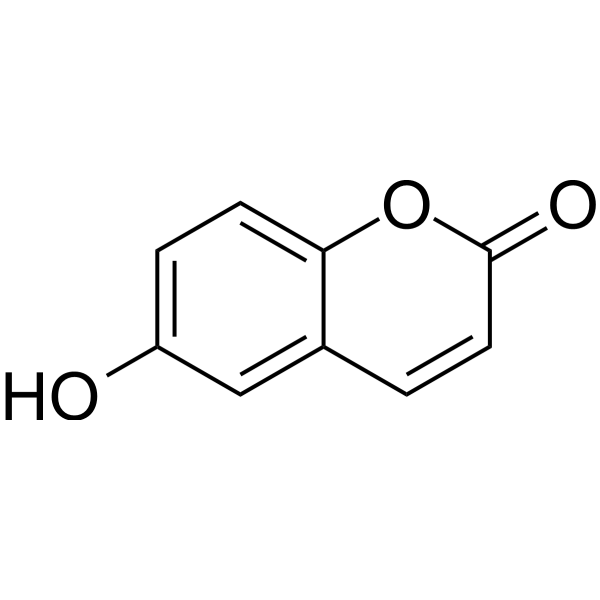
- Formula: C9H6O3
- Molecular Weight: 162.14
6-Hydroxycoumarin is a plant-derived secondary metabolite of the coumarin class, possessing insecticidal, antitumor, and other biological activities. 6-Hydroxycoumarin targets the midgut tissue of the red imported fire ant (Solenopsis invicta), inhibits CYP450, induces elevated activities of GST, CarE, and SOD, disrupts mitochondrial ultrastructure, triggers apoptosis, and also impairs insect neuromuscular behavior. 6-Hydroxycoumarin exhibits photoallergic properties and serves as an intermediate for the synthesis of isoxazolyl and triazolyl derivatives. 6-Hydroxycoumarin is applicable to research related to red imported fire ant control.

- Formula: C23H22F7IN2O4S
- Molecular Weight: 682.39
Flubendiamide (NNI-0001) is an orally active phthalic diamide insecticide that acts by targeting insect ryanodine receptors (RyRs), causing insect muscle dysfunction, paralysis and death. Flubendiamide disrupts molting, metamorphosis and reproductive processes, induces oxidative stress by increasing the levels of ROS/RNS, MDA and 8OHdG and decreasing the levels of SOD, CAT and GST, activates the CncC/Maf apoptosis pathway, impairs calcium homeostasis, promotes adipogenesis, increases triglyceride accumulation, and upregulates the expression of regulatory factors for adipocyte differentiation and adipogenesis.
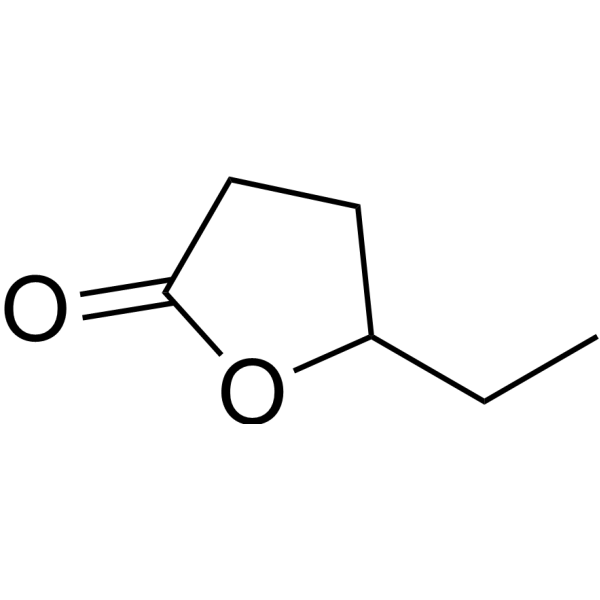
- Formula: C6H10O2
- Molecular Weight: 114.14
γ-Hexalactone (γ-Caprolactone) is a gamma-lactone found in ripe fruits. γ-Hexalactone induces DNA damage in human lymphocytes and HepG2 cells, modulates cytokine secretion in human lymphocytes, and reduces recombinant PON1 activity. γ-Hexalactone serves as a dose-dependent oviposition inhibitor against Bactrocera oleae. γ-Hexalactone can be used for the research of Bactrocera oleae pest management.

- Formula: C6H6O3
- Molecular Weight: 126.11
2,3-Dimethylmaleic anhydride is biofumigant found in Colocasia esculenta var. esculenta (L.) Schott. 2,3-Dimethylmaleic anhydride is highly toxic to insect pests for stored grains even at very low concentration, but has no adverse effect on seed germination. 2,3-Dimethylmaleic anhydride can be used as insecticide.
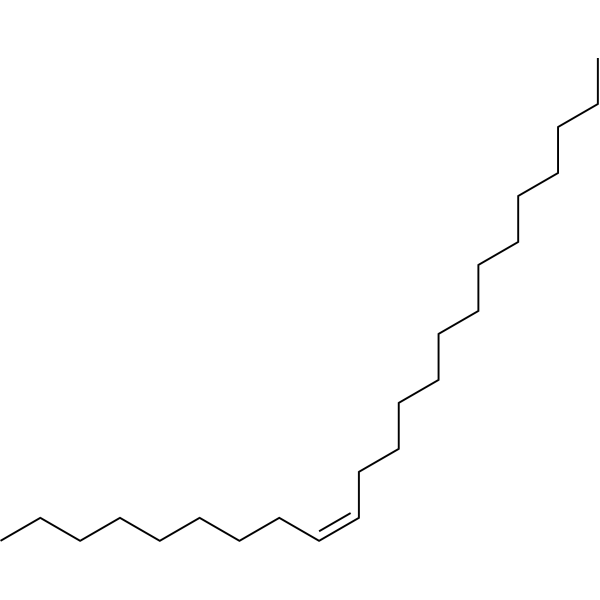
- Formula: C23H46
- Molecular Weight: 322.61
(Z)-9-Tricosene (cis-9-Tricosene) is an insect pheromone found in dipteran flies. (Z)-9-Tricosene has multiple functions as a sex pheromone, aggregation pheromone and aphrodisiac pheromone, and mediates insect behaviors such as attraction, oviposition and mating via antennal receptors (e.g., the Or7a receptor). (Z)-9-Tricosene can be used in studies related to insecticides and insect chemical ecology.

- Formula: C23H46
- Molecular Weight: 322.61
(Z)-9-Tricosene (Standard) (cis-9-Tricosene (Standard)) is the analytical standard of (Z)-9-Tricosene (HY-W009165). This product is intended for research and analytical applications. (Z)-9-Tricosene (cis-9-Tricosene) is an insect pheromone found in dipteran flies. (Z)-9-Tricosene has multiple functions as a sex pheromone, aggregation pheromone and aphrodisiac pheromone, and mediates insect behaviors such as attraction, oviposition and mating via antennal receptors (e.g., the Or7a receptor). (Z)-9-Tricosene can be used in studies related to insecticides and insect chemical ecology.

- Formula: C15H22O6
- Molecular Weight: 298.33
Hydroheptelidic acid is a novel orally active sesquiterpene lactone metabolite discovered in the endophytic fungus Phyllosticta sp. strain 76 from conifers. Hydroheptelidic acid exhibits insecticidal activity against Choristoneura fumiferana larvae. Hydroheptelidic acid can be used in research related to pest control.

- Formula: C17H17ClN4O4S
- Molecular Weight: 408.86
Insecticidal agent 42 is an insecticide. Insecticidal agent 42 inhibits AChE, leading to acetylcholine accumulation and disruption of neurotransmission. Insecticidal agent 42 binds to the active pocket of AChBP, interfering with neural signaling pathways. Insecticidal agent 42 inhibits Ca2+, Mg2+-ATPase and Na+, K+-ATPase. Insecticidal agent 42 disrupts neuronal homeostasis, causing insect death, and exhibits systemic root-to-stem transport. Insecticidal agent 42 can be used for insecticidal research.
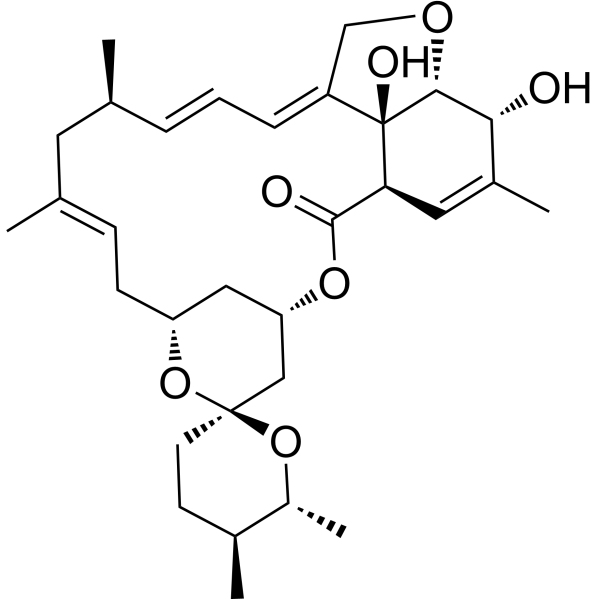
- Formula: C31H44O7
- Molecular Weight: 528.68
Milbemycin A3 is a 16-membered macrocyclic lactone compound found in the soil bacterium Saccharopolyspora hygroscopicus subsp. aureolacrimosus. Milbemycin A3 enhances the opening of glutamate- and GABA-gated chloride channels and exhibits insecticidal activity. Milbemycin A3 can be used in insect resistance-related research.

- Formula: C7H12O2
- Molecular Weight: 128.17
Prenyl acetate is an insecticide. At low concentrations, prenyl acetate exhibits an attractant effect on worker ants of the red imported fire ant, and it elicits strong antennal electroantennogram (EAG) responses in all castes of the red imported fire ant. Prenyl acetate shows low toxicity to mammals. It can be used in research related to the control of the red imported fire ant (Solenopsis invicta) .

- Formula: C10H10O2
- Molecular Weight: 162.19
(E)-4-Methoxycinnamaldehyde acts as an oviposition deterrent against Delia antiqua, with a BR90 (concentration eliciting 90% deterrency) of 0.38% when formulated in Polyethylene glycol (HY-Y0873A). (E)-4-Methoxycinnamaldehyde is used to study oviposition behavior in Delia antiqua.

- Formula: C15H20KNO9S2
- Molecular Weight: 461.55
Gluconasturtiin potassium is an orally active glucosinolate found in the roots of Brassica juncea and Brassica hirta. Gluconasturtiin potassium acts as a feeding activator for P. maculipennis larvae at low concentrations, while it exhibits toxicity to the larvae at high concentrations.

- Formula: C28H36O5
- Molecular Weight: 452.58
Nimonol (Nimocinol) is a tetranortriterpenoid limonoid present in the leaves of Azadirachta indica, and it undergoes photolysis to generate Nimonolide. Nimonol interferes with insect growth processes, exerts antifeedant and insecticidal effects, and exhibits insecticidal toxicity against the fourth-instar larvae of Aedes aegypti. Nimonol is used in research related to pest control.

- Formula: C15H28O6
- Molecular Weight: 304.38
Ascr#10 (Asc-C9) is an orally active thermogenesis inducer and insecticide that can be obtained from Monochamus alternatus. Ascr#10 binds to the insect adipokinetic hormone (AKH) receptor (Ka=272 µM) and stimulates mitochondrial biogenesis via the PGC1α-UCP4 axis. Consequently, Ascr#10 induces UCP4-mediated uncoupled respiration, reduces the ATP/ADP ratio and accelerates lipid mobilization, thereby driving the thermogenesis process. Ascr#10 delays pupation and exerts specific chemotaxis toward dispersive fourth-stage pinewood nematode LIV larvae. Ascr#10 promotes cold acclimation of Monochamus alternatus larvae through metabolic inhibition and cryoprotectant accumulation, enhancing their survival rate under cold stress. Ascr#10 also induces browning of white adipose tissue and activates brown adipose tissue in mice, thereby helping the body resist cold and tumor growth. Ascr#10 can be widely applied to research related to pine wilt disease, lung tumors and cold stress.

- Formula: C18H23NO3
- Molecular Weight: 301.38
(Rac)-Spirotetramat-enol is a ligand of acetyl-CoA carboxylase (ACC) that can be used for the synthesis of PROTAC ACC degrader-1 (HY-169008). (Rac)-Spirotetramat-enol binds to the carboxyltransferase domain and inhibits ACC activity in insects and spider mites. (Rac)-Spirotetramat-enol exhibits insecticidal activity against nymphs of the black bean aphid. (Rac)-Spirotetramat-enol can be used in studies related to black bean aphid infestation.

- Formula: C37H66O7
- Molecular Weight: 622.92
Annonin VI is an inhibitor of NADH:ubiquinone oxidoreductase (complex I; complex I) and glucose:ubiquinone oxidoreductase discovered in the seeds of Annona squamosa. Annonin VI exhibits an IC50 of 0.02 nmol/mg protein against bovine heart complex I, and an IC50 of 12.4 nmol/mg protein against glucose dehydrogenase (GDH) derived from Gluconobacter oxydans. Annonin VI acts in a partially competitive manner on the region associated with the ubiquinone catalytic site of complex I, blocking electron transfer from high-potential iron-sulfur clusters to ubiquinone. Annonin VI binds competitively with ubiquinone at the homologous ubiquinone site on GDH. Annonin VI can be used in the research of bacterial infections, insecticides, and cancer.

- Formula: C8H5Br2N
- Molecular Weight: 274.94
4,6-Dibromo indole is a natural product found in the adipose tissue of bottlenose dolphins, algae, and invertebrates including species of the genus Tubastrea, with multiple activities such as nematicidal and antifungal properties. 4,6-Dibromo indole inhibits the motility of Caenorhabditis elegans and induces a multi-stage nematicidal effect. 4,6-Dibromo indole inhibits the growth, biofilm formation, and yeast-hypha transition of Candida, induces ROS accumulation, disrupts hyphal networks, and reduces biofilm biomass. 4,6-Dibromo indole can be used in studies on crop damage related to nematode infestation and Candida infection.
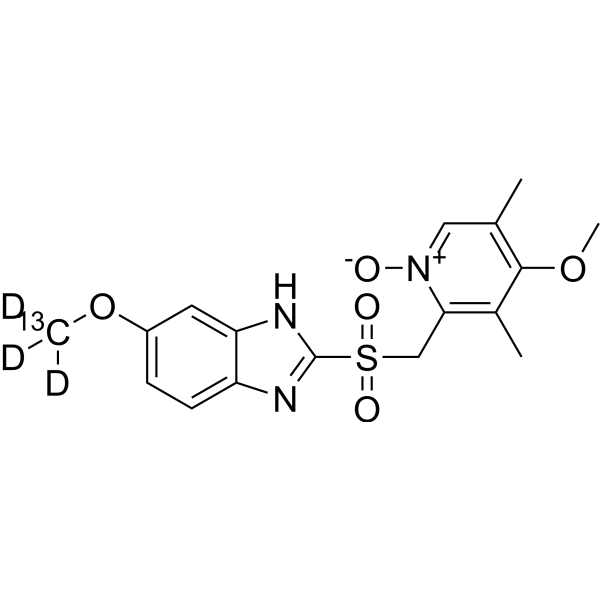
- Formula: C1613CH16D3N3O5S
- Molecular Weight: 381.43
Omeprazole sulfone N-Oxide-13C,d3 is the 13C,d3 Omeprazole sulfone N-Oxide (HY-138199). Omeprazole sulfone N-Oxide is an Omeprazole (HY-B0113) analog with binding affinity to Nilaparvata lugens choline acetyltransferase (ChAT).
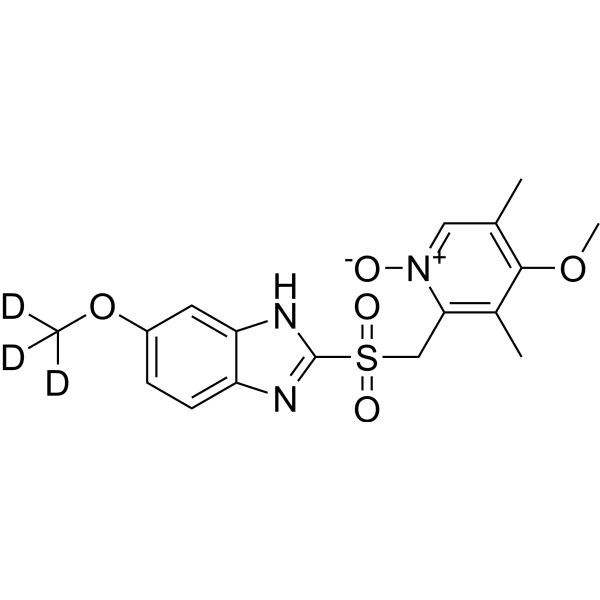
- Formula: C17H16D3N3O5S
- Molecular Weight: 380.43
Omeprazole sulfone N-Oxide-d3 is the d3-labeled Omeprazole sulfone N-Oxide (HY-138199). Omeprazole sulfone N-Oxide is an Omeprazole (HY-B0113) analog with binding affinity to Nilaparvata lugens choline acetyltransferase (ChAT).



