



Entecavir
Based on 20 publication(s) in Google Scholar
Entecavir (SQ 34676; BMS 200475) is a potent and selective inhibitor of HBV, with an EC50 of 3.75 nM in HepG2 cell.
For research use only. We do not sell to patients.
- Purity : 99.86%
- CAS No.: 142217-69-4
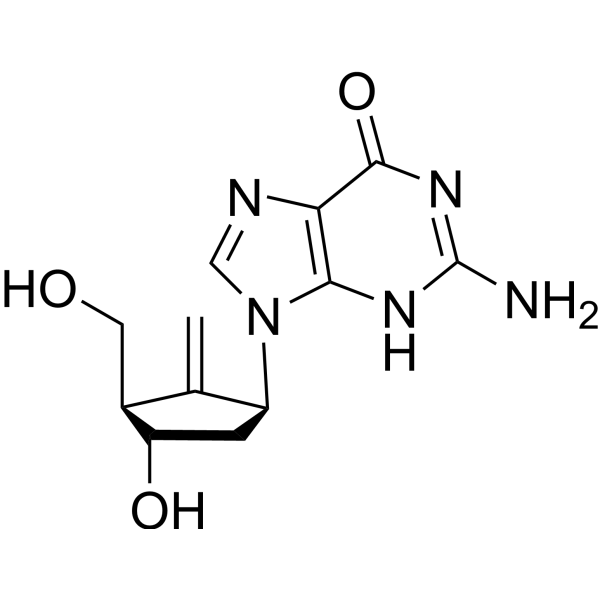
- Formula: C12H15N5O3
- Molecular Weight:277.28
-
Storage:Powder -20°C, 3 years , 4°C, 2 years ; In solvent -80°C, 6 months , -20°C, 1 month

To place orders, for customer services and technical support, please contact: MedChemExpress USA
Tel: 609-228-6898 E-mail: [email protected] [email protected]


-
 Biological Activity
-
Chemical Information
-
Solvent & Solubility
- Purity & Documentation
- References
-
 Help & FAQs


-
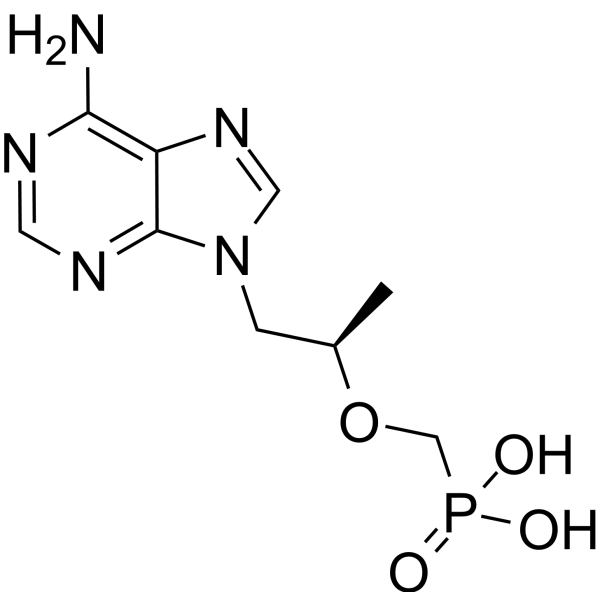
HY-13910
TenofovirNucleotide Reverse Transcriptase Inhibitor -
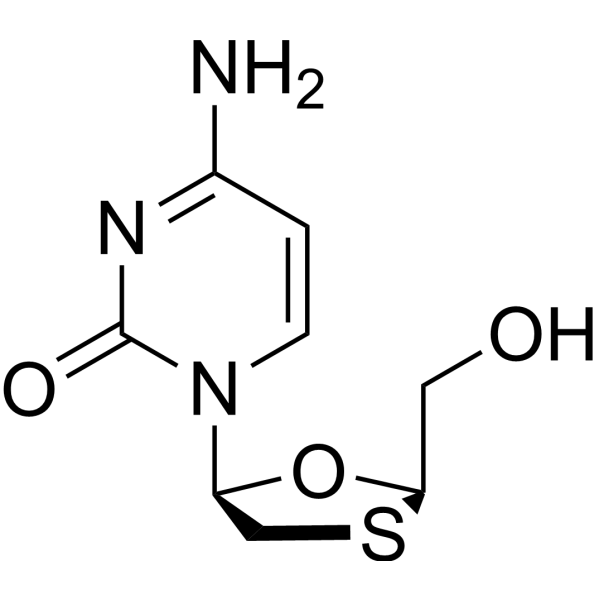
HY-B0250
LamivudineReverse Transcriptase Inhibitor -
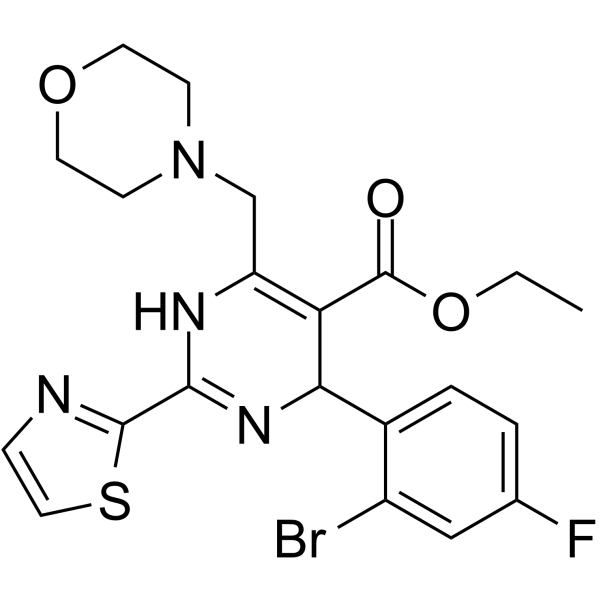
HY-108917
MorphothiadinHBV Inhibitor -
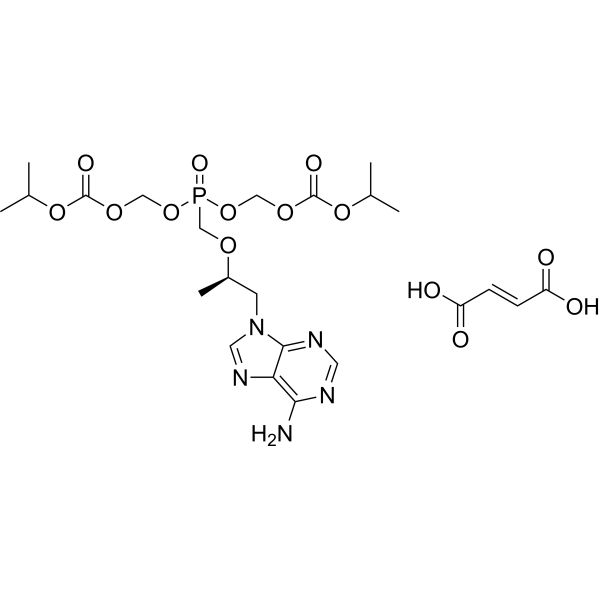
HY-13782
Tenofovir Disoproxil fumarateNucleotide Reverse Transcriptase Inhibitor -
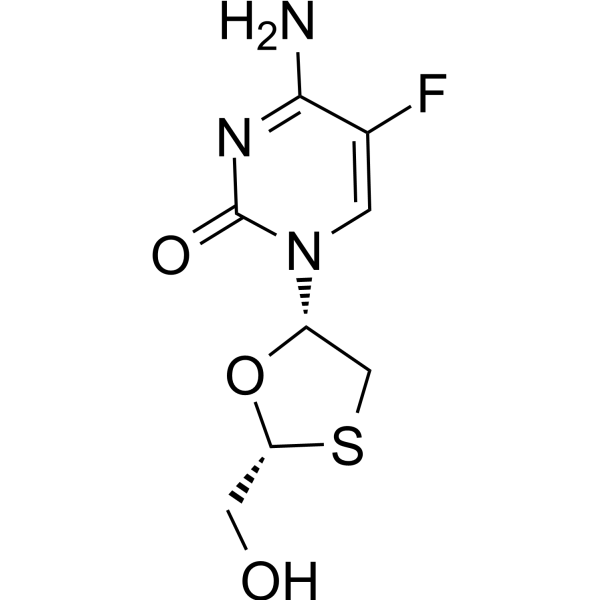
HY-17427
EmtricitabineNRT Inhibitor -
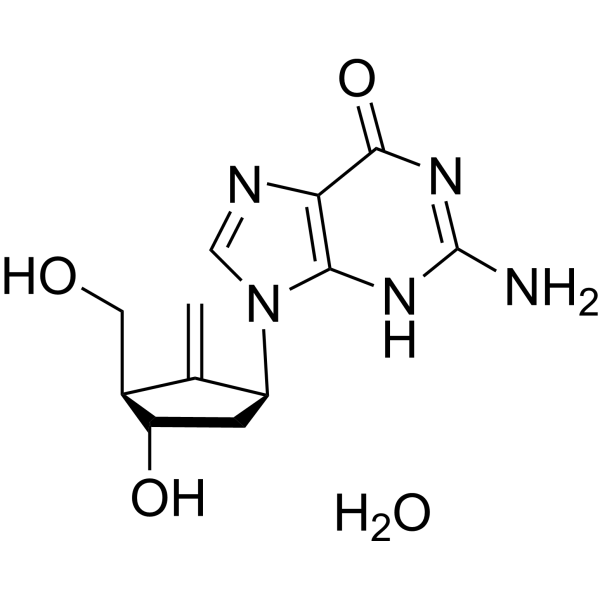
HY-13623A
Entecavir monohydrateHBV Inhibitor -
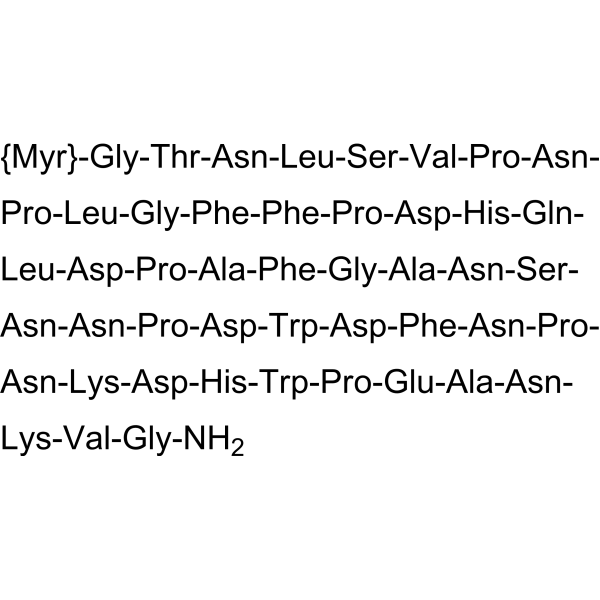
HY-P3465
BulevirtideNTCP Inhibitor -
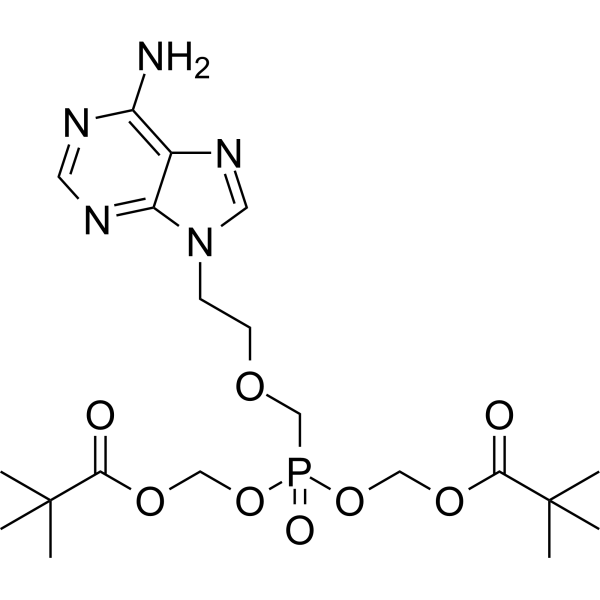
HY-B0255
Adefovir dipivoxilAdefovir Prodrug -
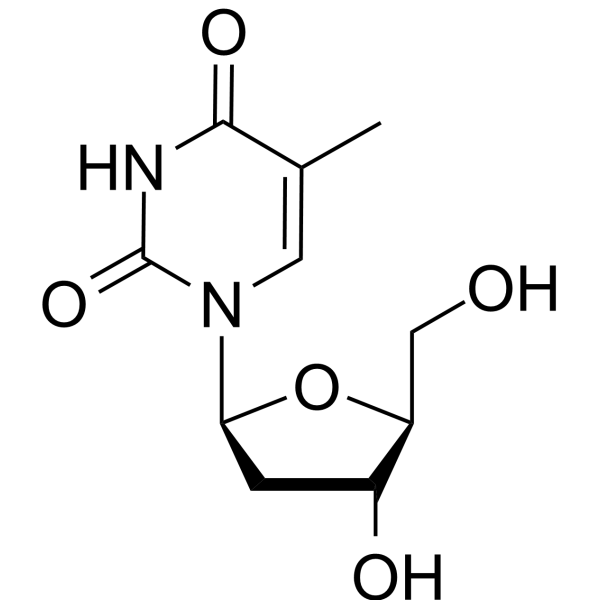
HY-B0017
TelbivudineHBV Replication Inhibitor -
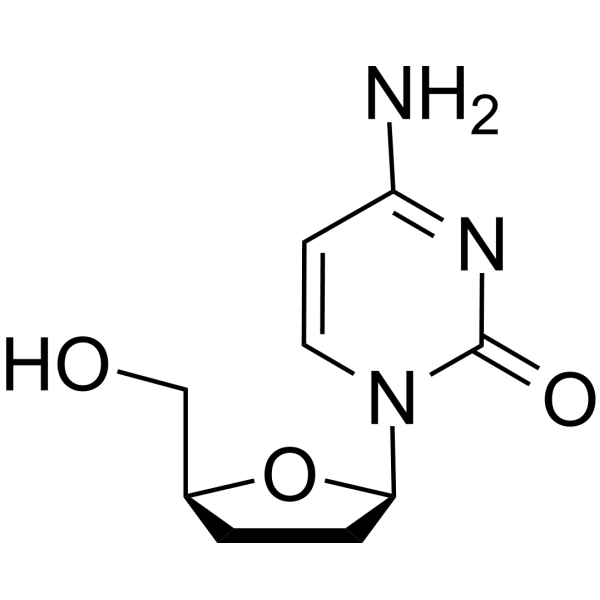
HY-17392
ZalcitabineReverse Transcriptase Inhibitor -
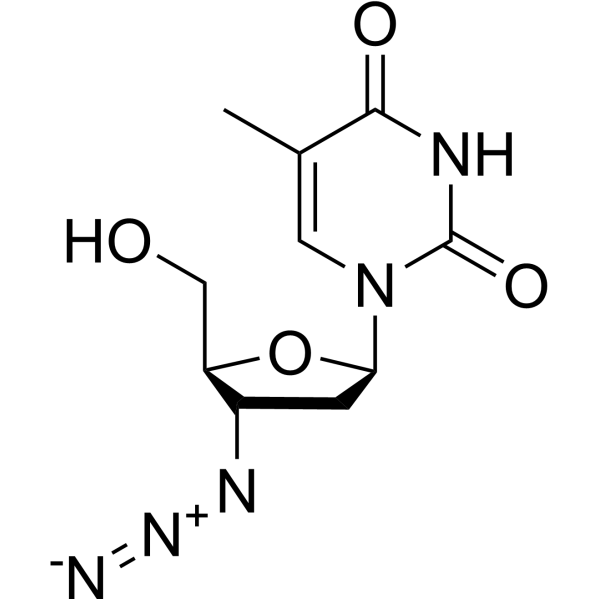
HY-17413
ZidovudineNucleoside Reverse Transcriptase Inhibitor -
HY-B0116
StavudineNucleoside Reverse Transcriptase Inhibitor
Publications Citing Use of MedChemExpress (MCE) Entecavir
More- Genes Dis. 2025 Sep 23.
- Adv Sci (Weinh). 2022 May;9(16):e2103135. [Abstract]
- Cell Mol Gastroenterol Hepatol. 2022;13(4):1001-1017. [Abstract]
- J Med Chem. 2023 Oct 26;66(20):13968-13990. [Abstract]
- Emerg Microbes Infect. 2021 Dec;10(1):37-50. [Abstract]
- J Gastroenterol. 2021 Feb;56(2):168-180. [Abstract]
- Front Pharmacol. 2022 Sep 26:13:907921. [Abstract]
- PLoS Pathog. 2025 Aug 4;21(8):e1013390. [Abstract]
- PLoS Pathog. 2025 Jan 3;21(1):e1012824. [Abstract]
- PLoS Pathog. 2025 Jan 2;21(1):e1012800. [Abstract]
- PLoS Pathog. 2021 Aug 9;17(8):e1009838. [Abstract]
- Mol Pharm. 2018 Dec 3;15(12):5646-5652. [Abstract]
- Biomedicines. 2022 Apr 14;10(4):900. [Abstract]
- Antiviral Res. 2020 Aug:180:104826. [Abstract]
- J Virol. 2026 May 14:e0003526. [Abstract]
- Viruses. 2023 May 18;15(5):1195. [Abstract]
- J Glob Antimicrob Resist. 2022 Dec:31:371-378. [Abstract]
- Virus Res. 2019 Oct 2:271:197677. [Abstract]
- J Pharmacol Sci. 2020 Sep;144(1):43-51. [Abstract]
- bioRxiv. 2020 May.
 Customer Validation & Images

-
Bio/Physico-chemical Assay
-
Flow Cytometry
-
Cell Imaging/Staining
-
WB
-
RT-PCR


Biological Activity
Description
IC50 & Target
EC50: 3.75 nM (anti-HBV, HepG2 cell)[2]
Cellular Effect
|
Cell Line

|
Type | Value | Description | References |
|---|---|---|---|---|
| HepG2 | CC50 |
30 μM
Compound: 76
|
Cytotoxicity against human HepG2 cells
Cytotoxicity against human HepG2 cells
|
[PMID: 36858050] |
| HepG2 | EC50 |
3.75 nM
Compound: 76
|
Antitumor activity against human HepG2 cells assessed as reduction in cell growth
Antitumor activity against human HepG2 cells assessed as reduction in cell growth
|
[PMID: 36858050] |
| HepG2 2.2.15 | CC50 |
>1 μM
Compound: ETV
|
Cytotoxicity against human HepG2.2.15 cells harboring HBV genome incubated for 8 days by MTT assay
Cytotoxicity against human HepG2.2.15 cells harboring HBV genome incubated for 8 days by MTT assay
|
[PMID: 37229833] |
In Vitro
BMS-200475 has a EC50 of 3.75 nM against HBV. It is incorporated into the protein primer of HBV and subsequently inhibits the priming step of the reverse transcriptase. The antiviral activity of BMS-200475 is significantly less against the other RNA and DNA viruses[1]. Entecavir is more readily phosphorylated to its active metabolites than other deoxyguanosine analogs (penciclovir, ganciclovir, lobucavir, and aciclovir) or lamivudine. The intracellular half-life of entecavir is 15 h[2].
MedChemExpress (MCE) has not independently confirmed the accuracy of these methods. They are for reference only.
In Vivo
MedChemExpress (MCE) has not independently confirmed the accuracy of these methods. They are for reference only.
Clinical Trial
| NCT Number | Sponsor | Condition | Start Date |
Phase
|
|---|---|---|---|---|
| NCT01329991 | Plexxikon| | 2011-05 | PHASE1 |


Chemical Information
-
CAS No. 142217-69-4
-
Appearance Solid
-
Molecular Weight 277.28
-
Formula C12H15N5O3
-
Color White to off-white
-
SMILES
NC(N1)=NC(C2=C1N([C@@H](C[C@H](O)[C@H]3CO)C3=C)C=N2)=O
-
Synonyms
BMS200475; SQ34676
-
Shipping
Room temperature in continental US; may vary elsewhere.
-
Storage
Powder -20°C 3 years 4°C 2 years In solvent -80°C 6 months -20°C 1 month


Publications (20)
-
Journal Impact Factor
-
Most Recent
-
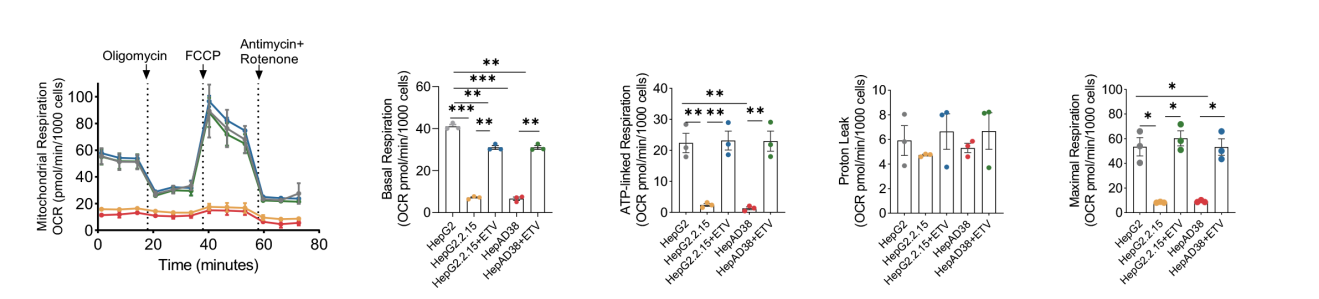
Entecavir purchased from MedChemExpress. Usage Cited in: Genes Dis. 2025 Sep 23.
OCR was measured by Seahorse analyzer to determine basal respiration, ATP-linked respiration, proton leak, and maximal respiration capacity in HepG2 and HBV-replication hepatoma cell lines (HepG2.2.15 and HepAD38) with or without Entecavir (ETV: 20 μM) treatment.
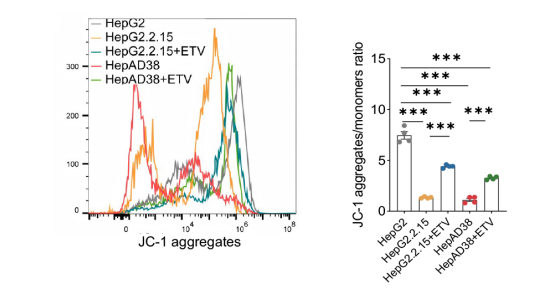
Entecavir purchased from MedChemExpress. Usage Cited in: Genes Dis. 2025 Sep 23.
MMP was detected using JC-1 dye by flow cytometry in HepG2, HepG2.2.15, and HepAD38 with or without Entecavir (ETV) treatment.
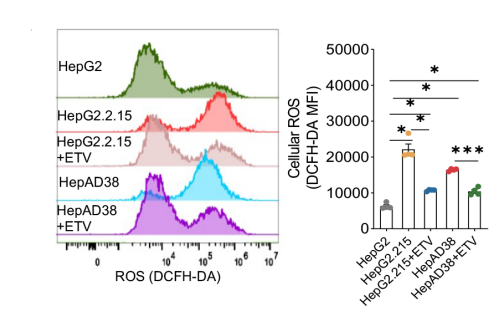
Entecavir purchased from MedChemExpress. Usage Cited in: Genes Dis. 2025 Sep 23.
Cellular ROS levels were determined using DCFH-DA dye by flow cytometry in HepG2, HepG2.2.15, and HepAD38 with or without Entecavir (ETV) treatment. Higher MFI of DCFH-DA dye indicated more ROS production in cells.
-
Adv Sci (Weinh)
LINC01431 Promotes Histone H4R3 Methylation to Impede HBV Covalently Closed Circular DNA Transcription by Stabilizing PRMT1. [Abstract]2022 May;9(16):e2103135. PMID: 35398991 -
Cell Mol Gastroenterol Hepatol
2022;13(4):1001-1017. PMID: 34896285
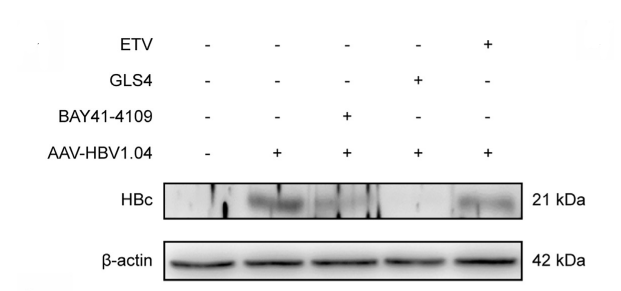
Entecavir purchased from MedChemExpress. Usage Cited in: Cell Mol Gastroenterol Hepatol. 2022;13(4):1001-1017. [Abstract]
AML12 cells were seeded in 24-well plates at a dose of 5 × 10⁴ vg/cell and transduced with AAV-HBV1.04. Twenty-four hours after transduction, cells were treated with BAY 41-4109 (5 μM), GLS4 (0.2 μM), Entecavir (ETV: 0.5 μM), or dimethyl sulfoxide (DMSO), and cells were collected 7 days after transduction. HBc levels were detected by Western blot.
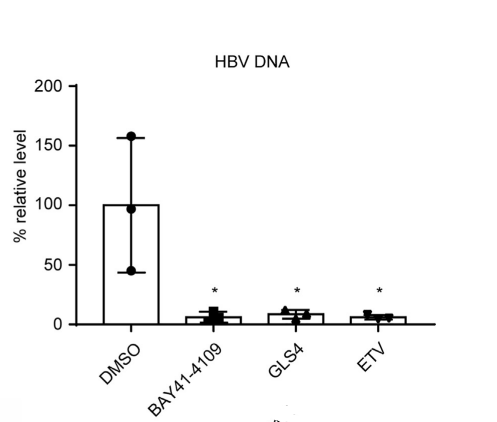
Entecavir purchased from MedChemExpress. Usage Cited in: Cell Mol Gastroenterol Hepatol. 2022;13(4):1001-1017. [Abstract]
AML12 cells were seeded in 24-well plates at a dose of 5 × 10⁴ vg/cell and transduced with AAV-HBV1.04. Twenty-four hours after transduction, cells were treated with BAY 41-4109 (5 μM), GLS4 (0.2 μM), Entecavir (ETV: 0.5 μM), or dimethyl sulfoxide (DMSO), and cells were collected 7 days after transduction. HBV DNA in the supernatant was detected by qPCR.
-
J Med Chem
Design, Synthesis, and Biological Evaluation of Novel Thioureidobenzamide (TBA) Derivatives as HBV Capsid Assembly Modulators. [Abstract]2023 Oct 26;66(20):13968-13990. PMID: 37839070 -
Emerg Microbes Infect
Specific determination of hepatitis B e antigen by antibodies targeting precore unique epitope facilitates clinical diagnosis and drug evaluation against hepatitis B virus infection. [Abstract]2021 Dec;10(1):37-50. PMID: 33296295 -
J Gastroenterol
Tenofovir-disoproxil-fumarate modulates lipid metabolism via hepatic CD36/PPAR-alpha activation in hepatitis B virus infection. [Abstract]2021 Feb;56(2):168-180. PMID: 33211179 -
Front Pharmacol
Fuzheng Huayu Recipe and its active compounds inhibited HBeAg production by promoting TOMM34 gene expression in HBV-infected hepatocytes. [Abstract]2022 Sep 26:13:907921. PMID: 36249820 -
PLoS Pathog
2025 Aug 4;21(8):e1013390. PMID: 40758741 -
PLoS Pathog
2025 Jan 3;21(1):e1012824. PMID: 39752632 -
PLoS Pathog
2025 Jan 2;21(1):e1012800. PMID: 39746094 -
PLoS Pathog
Probing the spatiotemporal patterns of HBV multiplication reveals novel features of its subcellular processes. [Abstract]2021 Aug 9;17(8):e1009838. PMID: 34370796 -
Mol Pharm
2018 Dec 3;15(12):5646-5652. PMID: 30375875 -
Biomedicines
Liver-Targeted Nanoparticles Facilitate the Bioavailability and Anti-HBV Efficacy of Baicalin In Vitro and In Vivo. [Abstract]2022 Apr 14;10(4):900. PMID: 35453650 -
Antiviral Res
A novel recombinant cccDNA-based mouse model with long term maintenance of rcccDNA and antigenemia. [Abstract]2020 Aug:180:104826. PMID: 32502604 -
J Virol
Generation of HBV cccDNA using single-stranded M13 phage DNA for authentic minichromosome functionality. [Abstract]2026 May 14:e0003526. PMID: 42132423 -
Viruses
Canocapavir Is a Novel Capsid Assembly Modulator Inducing a Conformational Change of the Linker Region of HBV Core Protein. [Abstract]2023 May 18;15(5):1195. PMID: 37243280 -
J Glob Antimicrob Resist
Compound IMB-Z inhibits hepatitis B virus replication through increasing APOBEC3G expression and incorporation into viral nucleocapsids. [Abstract]2022 Dec:31:371-378. PMID: 36396043 -
Virus Res
2019 Oct 2:271:197677. PMID: 31376401 -
J Pharmacol Sci
2020 Sep;144(1):43-51. PMID: 32653340 -


Solvent & Solubility
In Vitro:
DMSO : ≥ 44 mg/mL (158.68 mM; Hygroscopic DMSO has a significant impact on the solubility of product, please use newly opened DMSO)
* "≥" means soluble, but saturation unknown.
Please refer to the solubility information to select the appropriate solvent. Once prepared, please aliquot and store the solution to prevent product inactivation from repeated freeze-thaw cycles.
Storage method and period of stock solution: -80°C, 6 months; -20°C, 1 month. When stored at -80°C, please use it within 6 months. When stored at -20°C, please use it within 1 month.
Please refer to the solubility information to select the appropriate solvent. Once prepared, please aliquot and store the solution to prevent product inactivation from repeated freeze-thaw cycles.
Storage method and period of stock solution: -80°C, 6 months; -20°C, 1 month. When stored at -80°C, please use it within 6 months. When stored at -20°C, please use it within 1 month.
Concentration (start) × Volume (start) = Concentration (final) × Volume (final)


Purity & Documentation
-
Data Sheet (288 KB)
-
SDS (537 KB)
- English - EN (537 KB)
- Français - FR (537 KB)
- Deutsch - DE (537 KB)
- Norwegian - NO (537 KB)
- Español - ES (537 KB)
- Swedish - SV (537 KB)
- Italian - IT (537 KB)
- Korean - KR (537 KB)
- Portuguese - PT (537 KB)
-
Handling Instructions (2659 KB)
References
[1]. Innaimo SF, et al. Identification of?BMS-200475?as a potent and selective inhibitor of hepatitis B virus. Antimicrob Agents Chemother. 1997 Jul;41(7):1444-9. [Content Brief]
[2]. Rivkin A, et al. A review of entecavir in the treatment of chronic hepatitis B infection. Curr Med Res Opin.?2005 Nov;21(11):1845-57. [Content Brief]
[3]. Genovesi EV, et al. Efficacy of the carbocyclic 2'-deoxyguanosine nucleoside?BMS-200475?in the woodchuck model of hepatitis B virus infection. Antimicrob Agents Chemother.?1998 Dec;42(12):3209-18. [Content Brief]


Complete Stock Solution Preparation Table
Please refer to the solubility information to select the appropriate solvent. Once prepared, please aliquot and store the solution to prevent product inactivation from repeated freeze-thaw cycles.
Storage method and period of stock solution: -80°C, 6 months; -20°C, 1 month. When stored at -80°C, please use it within 6 months. When stored at -20°C, please use it within 1 month.
| Optional Solvent | Concentration Solvent Mass | 1 mg | 5 mg | 10 mg | 25 mg |
|---|---|---|---|---|---|
| DMSO | 1 mM | 3.6065 mL | 18.0323 mL | 36.0646 mL | 90.1616 mL |
| 5 mM | 0.7213 mL | 3.6065 mL | 7.2129 mL | 18.0323 mL | |
| 10 mM | 0.3606 mL | 1.8032 mL | 3.6065 mL | 9.0162 mL | |
| 15 mM | 0.2404 mL | 1.2022 mL | 2.4043 mL | 6.0108 mL | |
| 20 mM | 0.1803 mL | 0.9016 mL | 1.8032 mL | 4.5081 mL | |
| 25 mM | 0.1443 mL | 0.7213 mL | 1.4426 mL | 3.6065 mL | |
| 30 mM | 0.1202 mL | 0.6011 mL | 1.2022 mL | 3.0054 mL | |
| 40 mM | 0.0902 mL | 0.4508 mL | 0.9016 mL | 2.2540 mL | |
| 50 mM | 0.0721 mL | 0.3606 mL | 0.7213 mL | 1.8032 mL | |
| 60 mM | 0.0601 mL | 0.3005 mL | 0.6011 mL | 1.5027 mL | |
| 80 mM | 0.0451 mL | 0.2254 mL | 0.4508 mL | 1.1270 mL | |
| 100 mM | 0.0361 mL | 0.1803 mL | 0.3606 mL | 0.9016 mL |


Entecavir Related Classifications
HY-13623 Related Classifications
 Powered by Bioz