1. Search Result
Search Result
Results for "

sodium site

" in MedChemExpress (MCE) Product Catalog:

1754

Inhibitors & Agonists

19

Screening Libraries

45

Fluorescent Dyes

94

Biochemical Assay Reagents

172

Peptides

3

MCE Kits

42

Inhibitory Antibodies

126

Natural
Products

3

Recombinant Proteins

64

Isotope-Labeled Compounds

15

Antibodies

31

Click Chemistry

47

Oligonucleotides

1

GMP Molecules

Cat. No. Product Name Target Research Areas Chemical Structure
  • HY-13447A
    PF429242 dihydrochloride
    5+ Cited Publications

    Fatty Acid Synthase (FASN) Virus Protease Infection Metabolic Disease
    PF429242 dihydrochloride is a reversible and competitive SREBP site 1 protease (S1P) inhibitor with an IC50 of 175 nM .
    PF429242 dihydrochloride
  • HY-13449
    TAK-733
    5+ Cited Publications

    MEK Cancer
    TAK-733 is a potent and selective MEK allosteric site inhibitor with an IC50 of 3.2 nM.
    TAK-733
  • HY-135136

    Biochemical Assay Reagents Fluorescent Dye Others
    Aldehyde reactive probe TFA is an aldehyde reactive probe. Aldehyde reactive probe TFA specifically labels the AP site in DNA with biotin residues. Aldehyde reactive probe TFA can detect RNA oxidation-induced debasement sites. Aldehyde reactive probe TFA can be used to quantify AP sites or detect other aldehyde-containing DNA damage and RNA oxidation-induced debasement sites .
    Aldehyde reactive probe TFA
  • HY-135140

    Biochemical Assay Reagents Others
    Methyltetrazine-amine, a tetrazine compound, is used for the site-specific dual functionalization of the resulting bioconjugates .
    Methyltetrazine-amine
  • HY-113128C

    DL-α-Glycerol phosphate

    Endogenous Metabolite Others
    (Rac)-sn-Glycerol 3-phosphate is an a-site substrate analogue. (Rac)-sn-Glycerol 3-phosphate is bound to the a-site, the rate of reaction of indole and nucleophilic indole analogues with E(A-A) is strongly inhibited .
    (Rac)-sn-Glycerol 3-phosphate
  • HY-128454

    Environmental Pollutants Biochemical Assay Reagents Infection Neurological Disease
    Dimethyl trisulfide is a cyanide scavenger. Dimethyl trisulfide can be isolated from garlic, onions, broccoli and similar plants. Dimethyl trisulfide converts cyanide into thiocyanate. Dimethyl trisulfide is used by saprophagous insects to locate breeding sites (decaying organic matter), and is also used by deceptive flowers in brood sites to attract such insects. Dimethyl trisulfide induces electrophysiological responses in houseflies .
    Dimethyl trisulfide
  • HY-150602

    Proteasome Neurological Disease
    20S Proteasome activator 1 is a potent 20S proteasome activator with EC200 values of 0.3 μM, 0.7 μM and 1.8 μM for trypsin-like site, chymotrypsin-like site and caspase-like site. 20S Proteasome activator 1 translates well in a cellular system, preventing the accumulation of the pathogenic A53T mutant of α-synuclein. 20S Proteasome activator 1 can be used for researching neurodegenerative diseases .
    20S Proteasome activator 1
  • HY-12062
    PD318088
    1 Publications Verification

    MEK Cancer
    PD318088 is a potent, allosteric and non-ATP competitive MEK1/2 inhibitor, an analog of PD184352 (HY-50295). PD318088 binds simultaneously with ATP in a region of the MEK1 active site that is adjacent to the ATP-binding site. PD318088 can be used for cancer research .
    PD318088
  • HY-13447
    PF-429242
    5+ Cited Publications

    Fatty Acid Synthase (FASN) Virus Protease Infection Metabolic Disease
    PF429242 is a reversible and competitive SREBP site 1 protease (S1P) inhibitor with an IC50 of 175 nM .
    PF-429242
  • HY-177554

    Biochemical Assay Reagents Cancer
    KB05yne is a site-selective, alkyne-functionalized electrophilic "probe" fragment probe designed for covalent ligand discovery, with preferential reactivity toward specific cysteine residues in proteins. KB05yne strongly labels wild-type target proteins (e.g., CDKN2AIP, HPCAL1) but does not label their cysteine-to-alanine mutants, confirming site-specific cysteine reactivity. KB05yne can be used for the discovery and optimization of site-specific covalent ligands, and is applicable to proteins with diverse structures and functions, especially in studies targeting cysteine residues in cancer-related or difficult-to-purify proteins .
    KB05yne
  • HY-108776

    DL-α-Glycerol phosphate sodium

    Endogenous Metabolite Inflammation/Immunology
    (Rac)-sn-Glycerol 3-phosphate sodium is an a-site substrate analogue. (Rac)-sn-Glycerol 3-phosphate sodium is bound to the a-site, the rate of reaction of indole and nucleophilic indole analogues with E(A-A) is strongly inhibited .
    (Rac)-sn-Glycerol 3-phosphate sodium
  • HY-P99238

    ADC Antibody Inflammation/Immunology Cancer
    Rolinsatamab is a IgG1κ type chimeric antibody targeting to PRLR (prolactin receptor). Rolinsatamab can be conjugated with pyrrolobenzodiazepine (PDB) dimer SGD-1882 (HY-101127) via a cleavable maleimidocaproyl type linker, to form an antibody-drug conjugate, Rolinsatamab talirine. One Rolinsatamab talirine has an average of 2 site-specific drug attachment engineered cysteines (S239C). The linker equips the valine-alanine dipeptide, as cathepsine B cleavage site. on an average of 2 site-specific drug attachment engineered cysteines (S239C) .
    Rolinsatamab
  • HY-157916

    Aldehyde reactive probe

    Fluorescent Dye Others
    ARP (Aldehyde reactive probe) is an aldehyde-reactive probe . ARP specifically labels AP sites in DNA with biotin residues . ARP detects abasic sites induced by RNA oxidation . ARP is suitable for studies involving the quantification of AP sites, or the detection of other aldehyde-containing DNA damages and abasic sites induced by RNA oxidation .
    ARP
  • HY-N6648

    GABA Receptor Neurological Disease
    Cirsimaritin binds weakly to the benzodiazepine site on GABAA receptors, with antidepressant, anxiolytic and antinociceptive activities.
    Cirsimaritin
  • HY-132870

    HOXA Others
    MEIS-IN-2 is a myeloid ecotropic viral integration site 1 (MEIS1) inhibitor.
    MEIS-IN-2
  • HY-149906C

    GEM91 sodium

    HIV Infection
    Trecovirsen sodium is a 25-mer antisense phosphorothioate oligonucleotide targeted at the gag site of the HIV gene.
    Trecovirsen sodium
  • HY-101620
    MRZ 2-514
    1 Publications Verification

    iGluR Neurological Disease
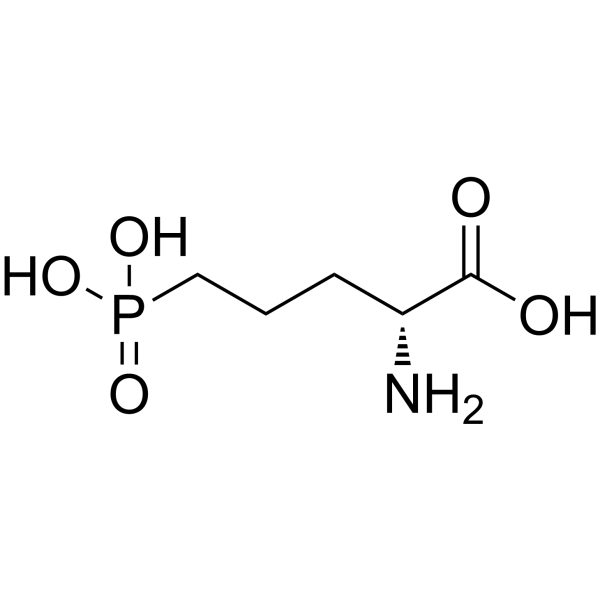
    MRZ 2-514 is an antagonist of the strychnine-insensitive modulatory site of the NMDA receptor (glycineB), with Ki of 33 μM.
    MRZ 2-514
  • HY-P99624

    CR4098

    RABV Infection
    Foravirumab (CR4098) is a monoclonal antibody against rabies virus glycoprotein antigenic site III .
    Foravirumab
  • HY-150138

    GV 150526

    iGluR Neurological Disease
    Gavestinel (GV 150526) is a selective and potent the glycine site of the NMDA receptor antagonist. Gavestinel has neuroprotectant effects .
    Gavestinel
  • HY-P1220A

    Sodium Channel Neurological Disease
    Huwentoxin-IV TFA is a potent and selective sodium channel blocker, inhibits neuronal Nav1.7, Nav1.2, Nav1.3 and Nav1.4 with IC50s of 26, 150, 338 and 400 nM, respectively. Huwentoxin-IV TFA preferentially blocks peripheral nerve subtype Nav1.7 by binding neurotoxin receptor site 4. Huwentoxin-IV TFA has analgesic effects on animal models of inflammatory and neuropathic pain .
    Huwentoxin-IV TFA
  • HY-120994B

    PKA Neurological Disease Inflammation/Immunology
    Sp-8-CPT-cAMPS, a cAMP analog, is a potent and selective activator of the cAMP-dependent protein kinas A (PKA I and PKA II). Sp-8-CPT-cAMPS selects site A of RI compares to site A of RII by 153-fold and site B of RII compares to site B of RI by 59-fold .
    Sp-8-CPT-cAMPS
  • HY-121242

    VEL-5026

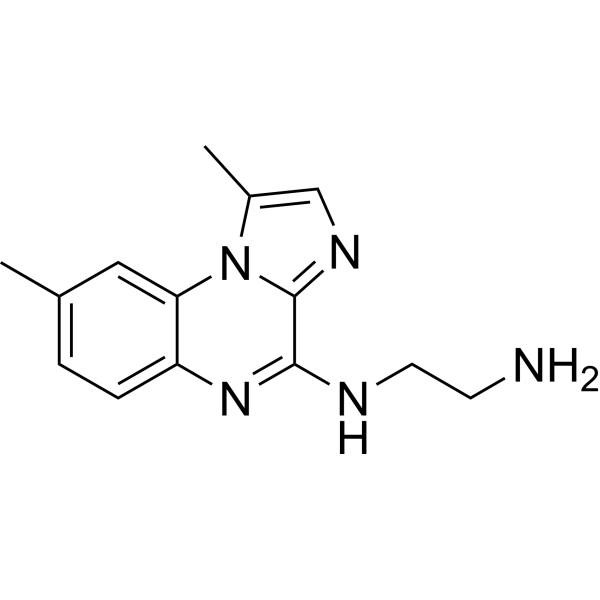
    Photosystem II Others
    Buthidazole is a selective herbicide for weed control in corn. Buthidazole inhibits photosynthetic electron transport at two distinct sites in the photosynthetic electron transport chain. The major site of inhibition was on the reducing side of photosystem II. Another site of electron transport inhibition is on the oxidizing side of photosystem II. Buthidazole inhibits corn photosynthesis and prevents starch accumulation in bundle sheath chloroplasts and some ultrastructural disruption of mesophyl chloroplasts of corn plants .
    Buthidazole
  • HY-P0294A

    6X His Tag TFA

    Biochemical Assay Reagents Others
    Hexa-His TFA is a peptide consisting of 6 His residues, used as a metal binding site for the recombinant protein .
    Hexa-His TFA
  • HY-115749

    6′-Methoxyluciferin

    Fluorescent Dye Others
    D-Luciferin 6′-methyl ether (6′-Methoxyluciferin; compound 19a) is a potent luciferase from the North American firefly Photinus pyralis (PpyLuc) inhibitor with an IC50 of 0.1 µM. D-Luciferin 6′-methyl ether, a D-luciferin analog, shows non-specific interactions at ATP- and luciferin-binding sites of the PpyLuc active site .
    D-Luciferin 6′-methyl ether
  • HY-115527

    SHP2 Cancer
    SHP244 is a conformational inhibitor targeting the "latch allosteric site" (site 2) of the SHP2 protein with an IC50 value for SHP2 WT of 60 μM. SHP244 has no significant effect on the level of p-ERK alone. SHP244 combined with RMC-4550 (HY-116009) ("tunnel site" site 1 inhibitor) can reduce p-ERK and inhibit the rebound of p-ERK, thereby reducing drug resistance. SHP244 can be used to study drug resistance in FGFR-driven cancers .
    SHP244
  • HY-106969A

    Glycine Receptor (GlyR) iGluR Cardiovascular Disease Neurological Disease
    ZD 9379 sodium is a competitive glycine/NMDA receptor antagonist, with an IC50 value of 75 nM (glutamate site). ZD 9379 sodium selectively antagonizes the glycine binding site (GlyB site) on the NMDA receptor, inhibiting the binding of glycine to the NMDA receptor and alleviating excitotoxicity. ZD 9379 sodium reduces the frequency of cortical spreading depression (SDs), alleviates energy depletion in the ischemic penumbra, and delays the expansion of infarction. ZD 9379 sodium reduces the infarct volume and improves neurological function in mouse models. ZD 9379 sodium can be used in studies of acute ischemic stroke, etc .
    ZD 9379 sodium
  • HY-N7437

    Opioid Receptor DNA/RNA Synthesis Neurological Disease Inflammation/Immunology
    Akuammidine, isolated from the seeds of Picralima nitida, shows a preference for μ-opioid binding sites with Ki values of 0.6, 2.4 and 8.6 μM at μ-, σ- and κ-opioid binding sites, respectively. Akuammidine possesses anti-inflammatory and anti-asthmatic properties .
    Akuammidine
  • HY-169847

    SARS-CoV Dengue Virus Infection
    ZK-806450 is a compound with antiviral activity. ZK-806450 has a high binding potential to the allosteric binding site of the SARS-CoV-2 3CL protease. ZK-806450 can also specifically and stably bind to the GAG site of the dengue virus envelope protein .
    ZK-806450
  • HY-P11331

    Proteasome Others
    Az-NC-002 is a Proteasome trypsin-like site (β2) and immunoproteasome β2i-specific active probe. Az-NC-002 has weak off-target effects with no significant inhibition for Cathepsin D (HY-P2750), but this inhibition reacts outside of the active site or influence on a small fraction of the enzyme .
    Az-NC-002
  • HY-P2548

    EGFR Others
    pp60 (v-SRC) Autophosphorylation Site, Phosphorylated is the phosphorylated peptide of an EGFR substrate. pp60 (v-SRC) Autophosphorylation Site, Phosphorylated can be used for the screening of EGFR Kinase inhibitors via phosphorylated-substrate quantification .
    pp60 (v-SRC) Autophosphorylation Site, Phosphorylated
  • HY-P1220

    Sodium Channel Neurological Disease
    Huwentoxin-IV is a potent and selective sodium channel blocker, inhibits neuronal Nav1.7, Nav1.2, Nav1.3 and Nav1.4 with IC50s of 26, 150, 338 and 400 nM, respectively. Huwentoxin-IV preferentially blocks peripheral nerve subtype Nav1.7 by binding neurotoxin receptor site 4. Huwentoxin-IV has analgesic effects on animal models of inflammatory and neuropathic pain .
    Huwentoxin-IV
  • HY-162728

    Opioid Receptor Neurological Disease
    RO-76 is a mu opioid receptor (μOR) selective partial agonist. RO-76 binds to μOR-G-protein complex with an EC50 value of 454 nM. RO-76 reduces β-Arrestin-1/2 recruitment. RO-76 shows antinociception activity .
    RO-76
  • HY-120994A

    PKA Neurological Disease Inflammation/Immunology
    Rp-8-CPT-cAMPS, a cAMP analog, is a potent and competitive antagonist of cAMP-induced activation of cAMP-dependent PKA I and II. Rp-8-CPT-cAMPS preferentially selects site A of RI compares to site A of RII and site B of RII compares to site B of RI .
    Rp-8-CPT-cAMPS
  • HY-P11406

    Fluorescent Dye Others
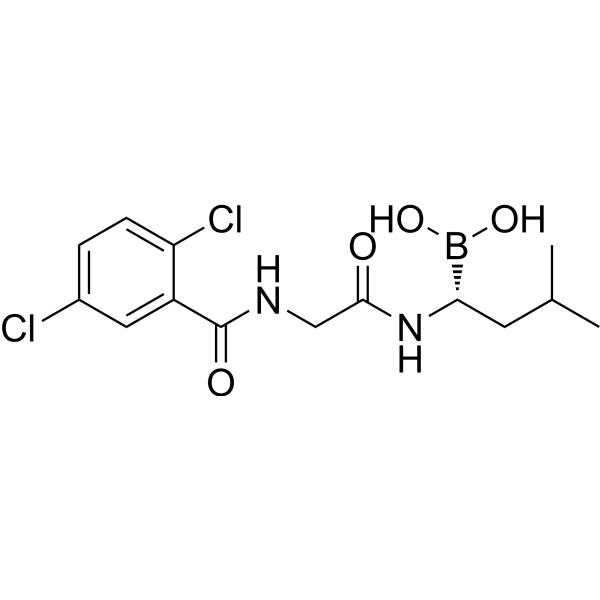
    Ac-RSLK-AMC is a fluorogenic substrate, can be used to measure the enzymatic activities of site-1 protease (S1P) .
    Ac-RSLK-AMC
  • HY-101804

    CDDD-1815

    Adrenergic Receptor Cardiovascular Disease
    (E)-Alprenoxime is the isomer of the Alprenoxime. Alprenoxime is a site-activated ocular β-blocker.
    (E)-Alprenoxime
  • HY-15736

    Sodium Channel Neurological Disease
    Sodium Channel inhibitor 1 is a state-dependent voltage-gated NaV1.7 inhibitor with an IC50 of 0.087 μM. Sodium Channel inhibitor 1 can be used for research of pain .
    Sodium Channel inhibitor 1
  • HY-10050

    Neurokinin Receptor Neurological Disease
    CJ-17493 is a neurokinin-1 (NK1) receptor antagonist, with a Ki of 0.2 nM. CJ-17493 shows moderate affinity for the verapamil-binding site of L-type Ca 2+ channels (IC50 = 164 nM) and site 2 of sodium channels (IC50 = 48 nM). CJ-17493 can be used for the study of neurological diseases .
    CJ-17493
  • HY-W753281

    SARS-CoV Infection
    Dexamethasone metasulfobenzoate sodium is a SARS-CoV-2 exonuclease (ExoN) inhibitor that binds to the catalytic site of ExoN .
    Dexamethasone metasulfobenzoate sodium
  • HY-161800

    Aminoacyl-tRNA Synthetase Infection
    Aminoacyl tRNA synthetase-IN-3 (compound 36K3) is an inhibitor of lysine tRNA synthetase (PfLysRS) from Plasmodium falciparum (IC50=59.2 nM), which inhibits the activity of PfLysRS by occupying the ATP binding site and L-lysine binding site of PfLysRS. Aminoacyl tRNA synthetase-IN-3 can be used in the development of antimalarial drugs .
    Aminoacyl tRNA synthetase-IN-3
  • HY-P3812

    DYRK Neurological Disease
    Woodtide is a substrate for the DYRK (DYRK) family of kinases whose sequence is based on that around the DYRK phosphorylation site in FKHR .
    Woodtide
  • HY-P4037

    HCV Infection
    HCV Core Protein (107-114) is a least immunogenic residue of the major linear HCV core regions. HCV Core Protein (107-114) is identified as the binding site within the region 101-118, which contains two residues differing between genotypes Ⅰ/Ⅱ and Ⅲ/Ⅵ. HCV Core Protein (107-114) might be a potential site for dissemination of HCV serotypes .
    HCV Core Protein (107-114)
  • HY-P3744

    EGFR Others
    pp60v-src Autophosphorylation site is a synthetic peptide. pp60v-src Autophosphorylation site can be used for various biochemical studies .
    pp60v-src Autophosphorylation site
  • HY-P3745

    PKA Others
    H1-7 (histone H1 phosphorylation site), PKA Substrate, a synthetic polypeptide, can be used as PKA substrate .
    H1-7 (histone H1 phosphorylation site), PKA Substrate
  • HY-120994

    PKA Neurological Disease Inflammation/Immunology
    Rp-8-CPT-cAMPS sodium, a cAMP analog, is a potent and competitive antagonist of cAMP-induced activation of cAMP-dependent PKA I and II. Rp-8-CPT-cAMPS sodium preferentially selects site A of RI compares to site A of RII and site B of RII compares to site B of RI .
    Rp-8-CPT-cAMPS sodium
  • HY-118168

    Galosfen

    Topoisomerase Others
    A9387 is an inhibitor of the Tn3 Resolvase, which promotes site-specific recombination reactions between two directly repeated recombination sites. Several inhibitors have been isolated that inhibit this event. A9387 inhibits the binding of resolvase to the res site .
    A 9387
  • HY-149484

    Cholinesterase (ChE) Neurological Disease
    AChE/BChE-IN-15 (Compound 6d) is an AChE/BChE inhibitor, with IC50s of 20 nM and 220 nM respectively. AChE/BChE-IN-15 binds to both catalytic anionic site (CAS) and peripheral anionic site (PAS) in the active sites of AChE and BChE. AChE/BChE-IN-15 can be used for research of Alzheimer’s disease .
    AChE/BChE-IN-15
  • HY-126054

    Topoisomerase Others
    A1062 is an inhibitor for Tn3 encoded resolvase with IC50 in micromolar level. A1062 suppresses the binding of resolvase proteins to res sites, and blocks resolvase-induced site-specific recombination .
    A1062
  • HY-137530

    8-Methylamino-cAMP

    PKA Others
    8-MA-cAMP (8-Methylamino-cAMP) is a cyclic AMP analog that acts as a site-selective PKA agonist with similar affinity for the B site of type I and type II protein kinase A. 8-MA-cAMP is used in conjunction with priming analogs that show site A preference, such as 8-piperidinyl cAMP, to achieve selective stimulation of type I .
    8-MA-cAMP
  • HY-101796

    Ras SOS1 Cancer
    NSC-70220 is a selective and allosteric SOS1 inhibitor. NSC-70220 inhibits allosteric site activation, and partially inhibited catalytic site activation. NSC-70220 has an anticancer effect .
    NSC-70220
  • HY-100998

    iGluR Neurological Disease
    Metaphit is a specific PCPantagonist and site-directed acylating agent of the [3H]phencyclidine binding site in rat brain homogenates . Metaphit prevents PCP-induced locomotor behavior through presynaptic mechanisms .
    Metaphit

Inquiry Online

Your information is safe with us. * Required Fields.

Salutation


Country or Region *

Applicant Name *


Organization Name *

Department *


Email Address *


Product Name *

Cat. No.


Requested quantity *

Phone Number *


Remarks

Inquiry Online

Inquiry Information

Product Name:
Cat. No.:
Quantity:
MCE Japan Authorized Agent:

