



HADA hydrochloride
Based on 15 publication(s) in Google Scholar
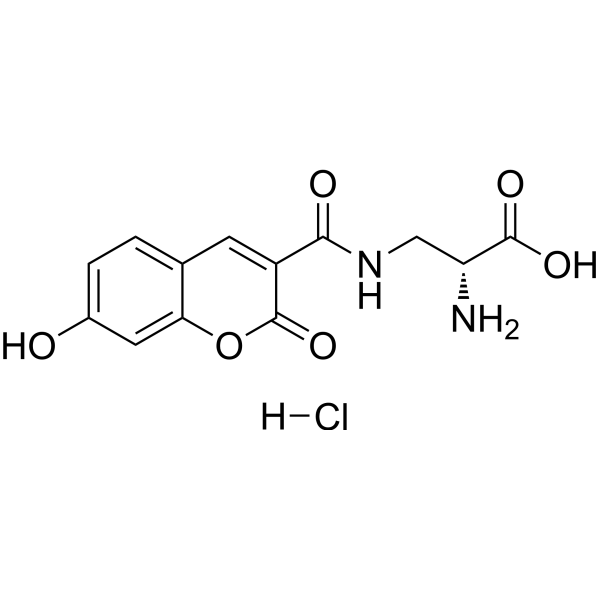
HADA hydrochloride (HCC-Amino-D-alanine hydrochloride) is a blue (λem~450 nm) fluorescent D-amino acid (FDAA). FDAAs are efficiently incorporated into the peptidoglycans (PGs) of diverse bacterial species at the sites of PG biosynthesis, allowing specific and covalent probing of bacterial growth with minimal perturbation.
For research use only. We do not sell to patients.
- Purity : 98.01%
- CAS No.: 2253733-10-5
- Formula: C13H13ClN2O6
- Molecular Weight:328.71
-
Storage:
4°C, sealed storage, away from moisture
* In solvent : -80°C, 2 years; -20°C, 1 year (sealed storage, away from moisture)

To place orders, for customer services and technical support, please contact: MedChemExpress USA
Tel: 609-228-6898 E-mail: [email protected] [email protected]


-
 Biological Activity
-
Chemical Information
-
Solvent & Solubility
- Protocols
- Purity & Documentation
- References
-
 Help & FAQs


-
HY-Y0320
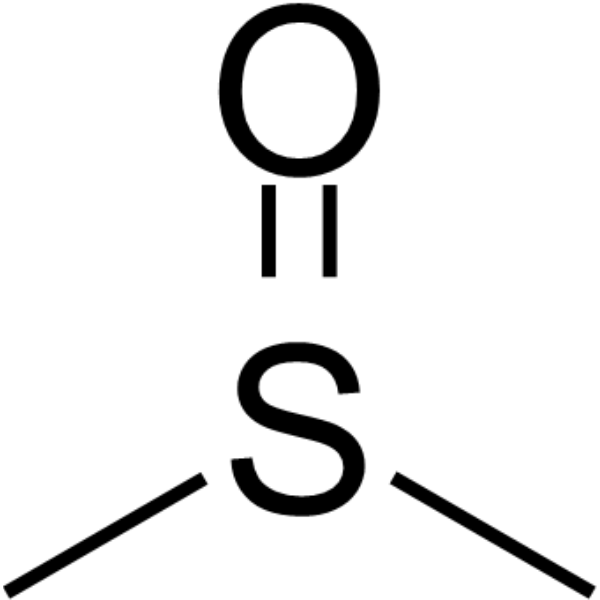
Dimethyl sulfoxide, meets analytical specification of Ch.P.Aprotic Solvent -
HY-D1117
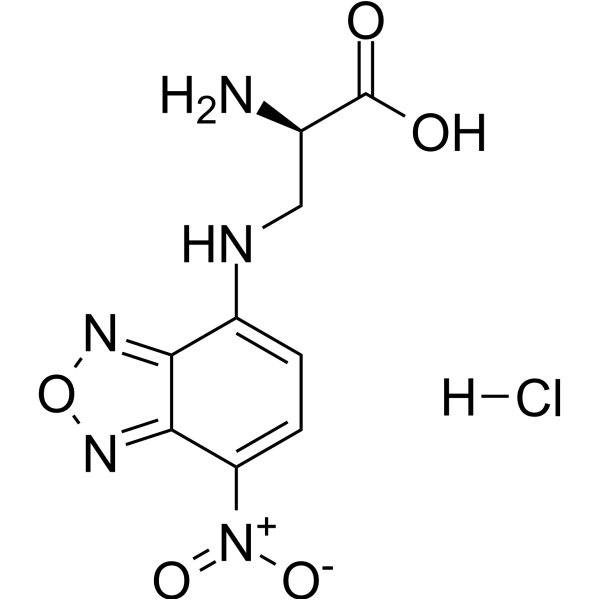
NADA-greenFluorescent Probe -
HY-15559
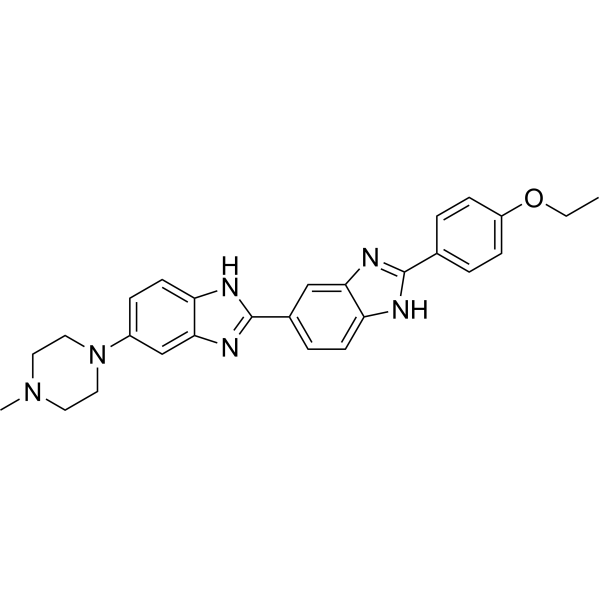
Hoechst 33342DNA Fluorescent Stain -
HY-D0718
Nile RedHydrophobic Fluorescent Stain -
HY-D0815
Propidium IodideFluorochrome -
HY-D0969
DiOFluorescent Probe -

HY-P1363A
β-Amyloid (1-42), humanAmyloid β Peptide -
HY-10583
Y-27632 dihydrochlorideROCK Inhibitor -
HY-K1004
SYBR Green I Nucleic Acid Gel Stain -
HY-103466
FM4-64Red Fluorescent Dye
Publications Citing Use of MedChemExpress (MCE) HADA hydrochloride
More- Adv Mater. 2025 Mar;37(9):e2414437. [Abstract]
- Cell Host Microbe. 2026 Jun 3:S1931-3128(26)00181-2. [Abstract]
- J Extracell Vesicles. 2025 Jul;14(7):e70131. [Abstract]
- Microbiol Res. 2025 Sep 24:302:128350. [Abstract]
- Pharmaceuticals (Basel). 2025 Sep 28;18(10):1458. [Abstract]
- BMC Microbiol. 2025 Oct 2;25(1):621. [Abstract]
- mBio. 2025 Apr 9;16(4):e0297524. [Abstract]
- mBio. 2024 Jun 12;15(6):e0067924. [Abstract]
- PLoS Pathog. 2026 Jul 16;22(7):e1014242.
- bioRxiv. 2026 Sep 19:2026.09.17.752130.
- SSRN. 2026 Apr 24.
- bioRxiv. 2026 Apr 16.
- bioRxiv. 2025 Oct 3.
- University of Leicester
- bioRxiv. 2023 Feb 20:2023.02.19.529137. [Abstract]
 Customer Validation & Images

-
Cell Imaging/Staining
-
Cell Imaging/Staining
-
Cell Imaging/Staining
-
Cell Imaging/Staining


Biological Activity
Description
In Vitro
Guide (Following is our recommended protocol. This protocol only provides a guideline, and should be modified according to your specific needs)[2].
1. Solution preparation
1.1 Preparation of stock solution
Solvent: DMSO
Concentration: 250 mM is recommended.
1.2 Preparation of working solution
Dilute to 250 μM with cell culture medium (optimized according to the experiment).
Note: The working solution should be prepared and used immediately. Keep it away from light.
2. S. aureus strains staining
2.1 Inoculate the S. aureus strain in a culture dish.
2.2 Add HADA hydrochloride (250 μM) to the cells.
2.3 Incubate cells at room temperature or 37 °C for 30 min (optimized according to the experiment).
2.4 Aspirate the dye working solution, wash 2-3 times with culture medium, 5 minutes each time, and observe using a fluorescence microscope.
MedChemExpress (MCE) has not independently confirmed the accuracy of these methods. They are for reference only.


Chemical Information
-
CAS No. 2253733-10-5
-
Appearance Solid
-
Molecular Weight 328.71
-
Formula C13H13ClN2O6
-
Color White to off-white
-
SMILES
N[C@H](CNC(C1=CC2=CC=C(O)C=C2OC1=O)=O)C(O)=O.[H]Cl
-
Synonyms
HCC-Amino-D-alanine hydrochloride
-
Shipping
Room temperature in continental US; may vary elsewhere.
-
Storage
4°C, sealed storage, away from moisture
* In solvent : -80°C, 2 years; -20°C, 1 year (sealed storage, away from moisture)


Publications (15)
-
Journal Impact Factor
-
Most Recent
-
Adv Mater
Directional Freeze-Casting Cryogel Loaded with Quaternized Chitosan Modified Gallium Metal-Organic Frameworks to Capture and Eradicate the Resistant Bacteria for Guided Regeneration in Infected Bone Defects. [Abstract]2025 Mar;37(9):e2414437. PMID: 39846310 -
Cell Host Microbe
Uric acid promotes dietary lipid absorption through microbiome and metabolomic remodeling via a liver-gut endocrine axis. [Abstract]2026 Jun 3:S1931-3128(26)00181-2. PMID: 42235504 -
J Extracell Vesicles
Unveiling a Novel Mechanism of Enhanced Secretion, Cargo Loading, and Accelerated Dynamics of Bacterial Extracellular Vesicles Following Antibiotic Exposure. [Abstract]2025 Jul;14(7):e70131. PMID: 40704571 -
Microbiol Res
2025 Sep 24:302:128350. PMID: 41014824
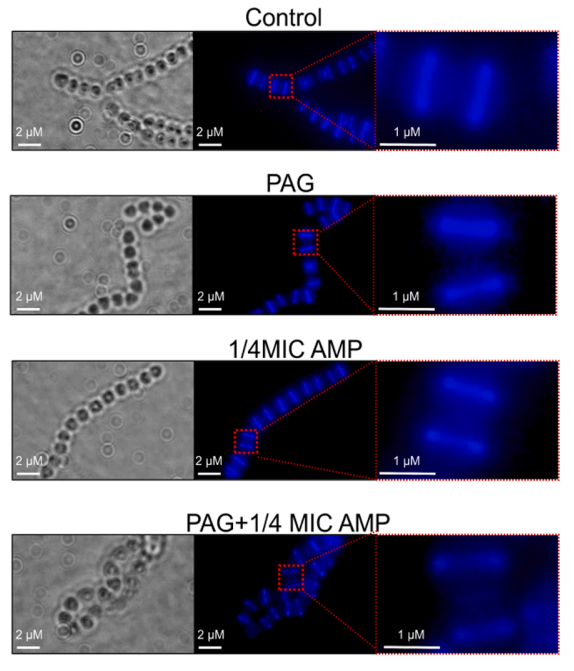
HADA hydrochloride purchased from MedChemExpress. Usage Cited in: Microbiol Res. 2025 Sep 24:302:128350. [Abstract]
Fluorescence microscopy of AR-GBS labeled with HADA hydrochloride (250 μM; 30 min) following treatment with 20 mM PAG plus 1/4 MIC AMP.
-
Pharmaceuticals (Basel)
Synergistic Antimicrobial Effects of Baicalin Combined with Kanamycin Against MRSA: Underlying Mechanisms and Diminished Colonization on Lettuce. [Abstract]2025 Sep 28;18(10):1458. PMID: 41155571
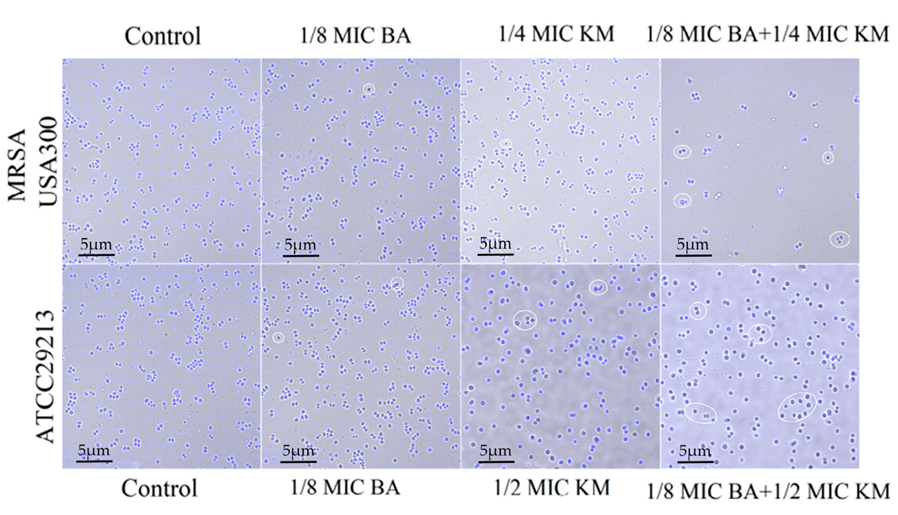
HADA hydrochloride purchased from MedChemExpress. Usage Cited in: Pharmaceuticals (Basel). 2025 Sep 28;18(10):1458. [Abstract]
The impact of BA in combination with KM on bacterial peptidoglycan synthesis was tracked using HADA hydrochloride (250 μM; 30 min). Peptidoglycan synthesis in MRSA USA300 and Staphylococcus aureus ATCC29213, observed via confocal laser scanning microscopy (CLSM). Scale bar = 5 μm. The regions of interest are marked by white circles, where a decrease in fluorescence intensity and abnormal morphology of some cells can be observed.
-
BMC Microbiol
Prophylactic efficacy of probiotics and their metabolites against Staphylococcus epidermidis. [Abstract]2025 Oct 2;25(1):621. PMID: 41039273 -
mBio
Deficiency in peptidoglycan recycling promotes β-lactam sensitivity in Caulobacter crescentus. [Abstract]2025 Apr 9;16(4):e0297524. PMID: 40066998
HADA hydrochloride purchased from MedChemExpress. Usage Cited in: mBio. 2025 Apr 9;16(4):e0297524. [Abstract]
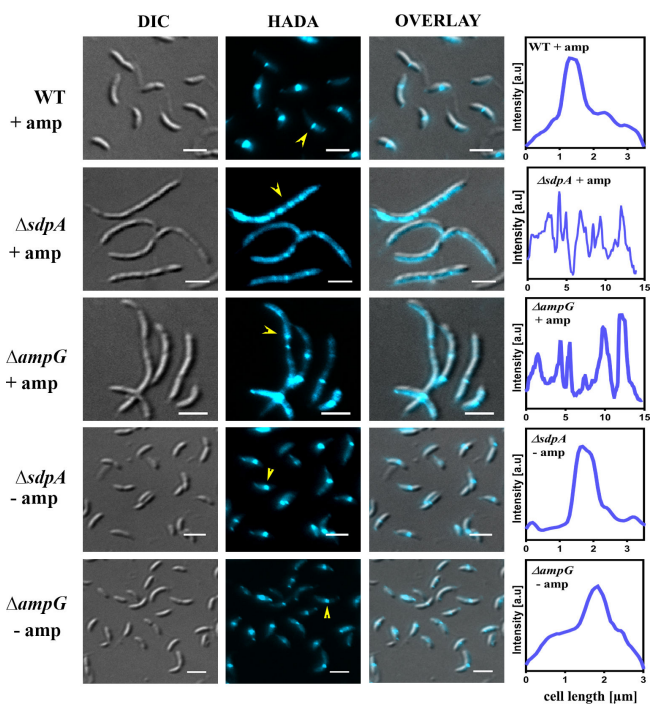
Ampicillin affects the incorporation of newly synthesized cell wall in PG recycling mutants. HADA labeling of strains CB15N, RP47 (∆sdpA), and RP56 (∆ampG) in the presence (+ amp) and absence (- amp) of ampicillin. Overnight cultures were diluted in PYE media, grown to 0.1 OD600, and treated with 40 µg/mL ampicillin for 4 h. Cells were collected, washed with minimal media, and incubated with 0.5 mM HADA hydrochloride for 15 min at 30°C. Cells were washed with minimal media again and imaged using a Nikon Fluorescence Microscope CFP filter. A representative cell (yellow arrowheads) was selected from each strain condition shown, and their fluorescence profiles were extracted along the cell length axis. Fluorescence intensity (arbitrary units [a.u.]) is plotted against the position along the entire cell length (scale bar = 3 µm).
-
mBio
Phage protein Gp11 blocks Staphylococcus aureus cell division by inhibiting peptidoglycan biosynthesis. [Abstract]2024 Jun 12;15(6):e0067924. PMID: 38752726
HADA hydrochloride purchased from MedChemExpress. Usage Cited in: mBio. 2024 Jun 12;15(6):e0067924. [Abstract]
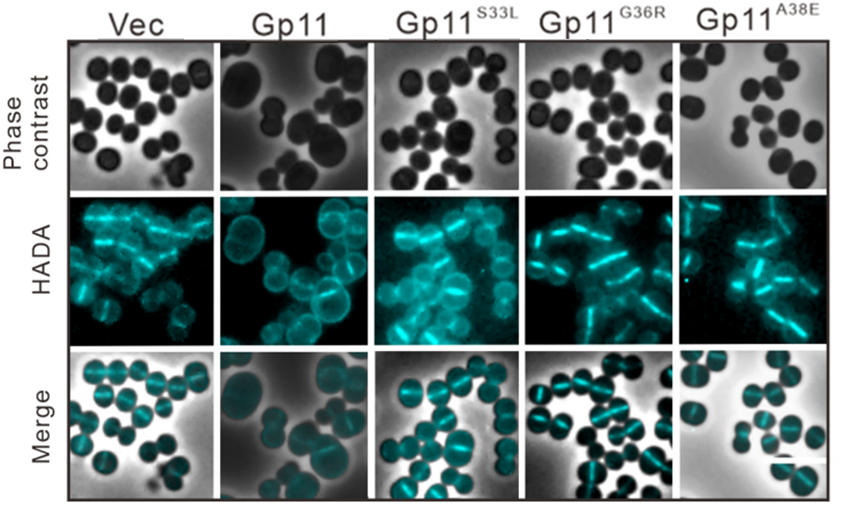
S. aureus cells expressing Gp11 or its mutants were stained with the fluorescent cell wall marker HADA hydrochloride (250 μM; 30 min) and analyzed by phase-contrast and fluorescence microscopy. The results showed that compared to controls, Gp11 overexpression resulted in a more diffuse HADA signal localized to multiple intracellular sites, including the cell periphery and partial septa. Scale bars, 2.5 µm.
-
-
-
-
-
-
University of Leicester
-
bioRxiv
2023 Feb 20:2023.02.19.529137. PMID: 36865163


Solvent & Solubility
In Vitro:
DMSO : 125 mg/mL (380.27 mM; Need ultrasonic; Hygroscopic DMSO has a significant impact on the solubility of product, please use newly opened DMSO)
Please refer to the solubility information to select the appropriate solvent. Once prepared, please aliquot and store the solution to prevent product inactivation from repeated freeze-thaw cycles.
Storage method and period of stock solution: -80°C, 2 years; -20°C, 1 year (sealed storage, away from moisture). When stored at -80°C, please use it within 2 years. When stored at -20°C, please use it within 1 year.
Please refer to the solubility information to select the appropriate solvent. Once prepared, please aliquot and store the solution to prevent product inactivation from repeated freeze-thaw cycles.
Storage method and period of stock solution: -80°C, 2 years; -20°C, 1 year (sealed storage, away from moisture). When stored at -80°C, please use it within 2 years. When stored at -20°C, please use it within 1 year.
Concentration (start) × Volume (start) = Concentration (final) × Volume (final)


Purity & Documentation
-
Data Sheet (284 KB)
-
SDS (393 KB)
- English - EN (393 KB)
- Français - FR (393 KB)
- Deutsch - DE (393 KB)
- Norwegian - NO (393 KB)
- Español - ES (393 KB)
- Swedish - SV (393 KB)
- Italian - IT (393 KB)
- Korean - KR (393 KB)
- Portuguese - PT (393 KB)
-
Handling Instructions (2659 KB)
References
[1]. Erkin Kuru, et al. Synthesis of fluorescent D-amino acids and their use for probing peptidoglycan synthesis and bacterial growth in situ. Nat Protoc. 2015 Jan;10(1):33-52. [Content Brief]
[2]. Xu Q, et al. Phage protein Gp11 blocks Staphylococcus aureus cell division by inhibiting peptidoglycan biosynthesis. mBio. 2024 Jun 12;15(6):e0067924. [Content Brief]


Complete Stock Solution Preparation Table
Please refer to the solubility information to select the appropriate solvent. Once prepared, please aliquot and store the solution to prevent product inactivation from repeated freeze-thaw cycles.
Storage method and period of stock solution: -80°C, 2 years; -20°C, 1 year (sealed storage, away from moisture). When stored at -80°C, please use it within 2 years. When stored at -20°C, please use it within 1 year.
| Optional Solvent | Concentration Solvent Mass | 1 mg | 5 mg | 10 mg | 25 mg |
|---|---|---|---|---|---|
| DMSO | 1 mM | 3.0422 mL | 15.2110 mL | 30.4220 mL | 76.0549 mL |
| 5 mM | 0.6084 mL | 3.0422 mL | 6.0844 mL | 15.2110 mL | |
| 10 mM | 0.3042 mL | 1.5211 mL | 3.0422 mL | 7.6055 mL | |
| 15 mM | 0.2028 mL | 1.0141 mL | 2.0281 mL | 5.0703 mL | |
| 20 mM | 0.1521 mL | 0.7605 mL | 1.5211 mL | 3.8027 mL | |
| 25 mM | 0.1217 mL | 0.6084 mL | 1.2169 mL | 3.0422 mL | |
| 30 mM | 0.1014 mL | 0.5070 mL | 1.0141 mL | 2.5352 mL | |
| 40 mM | 0.0761 mL | 0.3803 mL | 0.7605 mL | 1.9014 mL | |
| 50 mM | 0.0608 mL | 0.3042 mL | 0.6084 mL | 1.5211 mL | |
| 60 mM | 0.0507 mL | 0.2535 mL | 0.5070 mL | 1.2676 mL | |
| 80 mM | 0.0380 mL | 0.1901 mL | 0.3803 mL | 0.9507 mL | |
| 100 mM | 0.0304 mL | 0.1521 mL | 0.3042 mL | 0.7605 mL |


HADA hydrochloride Related Classifications
HY-131045 Related Classifications
 Powered by Bioz