



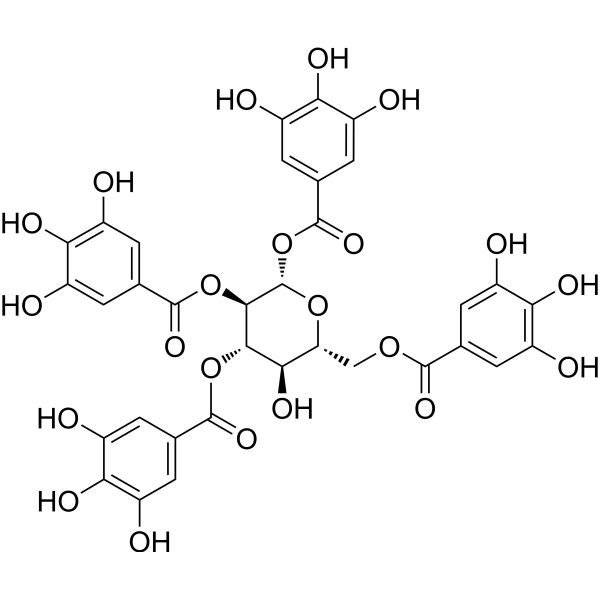
1,2,3,6-Tetragalloylglucose
Based on 2 publication(s) in Google Scholar
1,2,3,6-Tetragalloylglucose (TEgG) is a competitive inhibitor of UDP-glucuronyltransferase UGT1A1, targeting the competitive substrate binding site of UGT1A1. 1,2,3,6-Tetragalloylglucose inhibits UGT1A1-mediated β-estradiol 3-glucuronidation and SN-38 glucuronidation with IC50 of 6.01 μM and 4.31 μM, respectively, and binds to UGT1A1 with Ki of 3.55 μM. 1,2,3,6-Tetragalloylglucose also induces tumor cell apoptosis, inhibit cell proliferation, activates caspase-3 and induces DNA fragmentation in HL-60 cells. 1,2,3,6-Tetragalloylglucose also inhibits HIV integrase and reverse transcriptase, and inhibits HCV protease.
For research use only. We do not sell to patients.
- Purity : 99.08%
- CAS No.: 79886-50-3
- Formula: C34H28O22
- Molecular Weight:788.57
-
Storage:
4°C, protect from light
* In solvent : -80°C, 6 months; -20°C, 1 month (protect from light)

To place orders, for customer services and technical support, please contact: MedChemExpress USA
Tel: 609-228-6898 E-mail: [email protected] [email protected]


-
 Biological Activity
-
Chemical Information
-
Solvent & Solubility
- Purity & Documentation
- References
-
 Help & FAQs


-
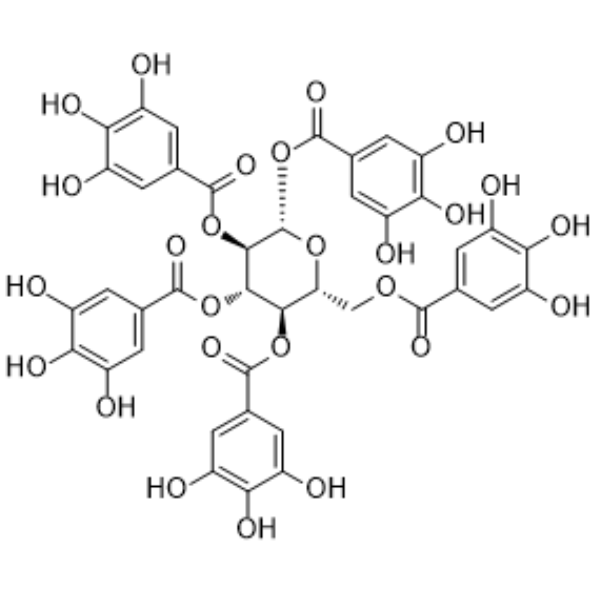
HY-N0527
Pentagalloylglucose -
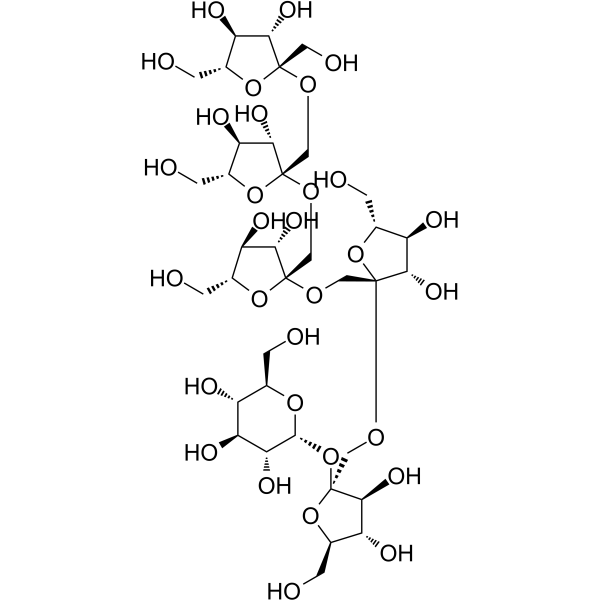
HY-N6838
1,1,1,1-Kestohexaose -
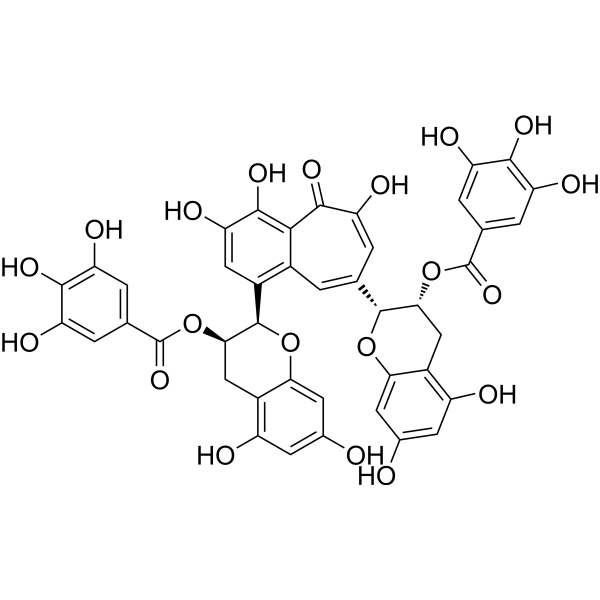
HY-N1992
Theaflavin 3,3'-digallate -
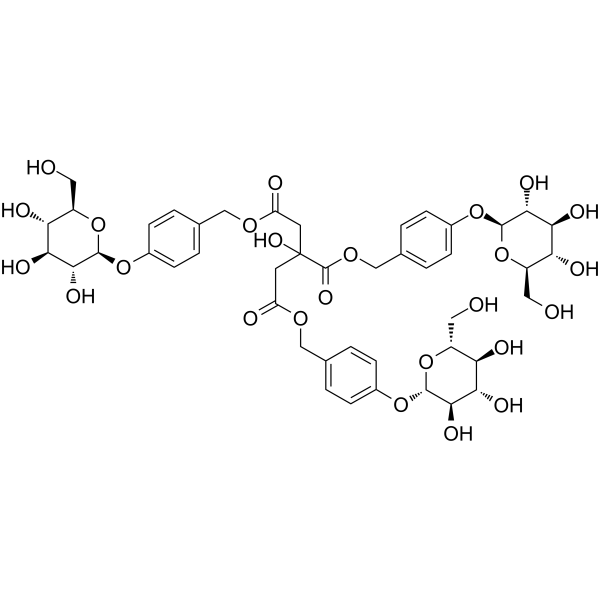
HY-N2031
Parishin -
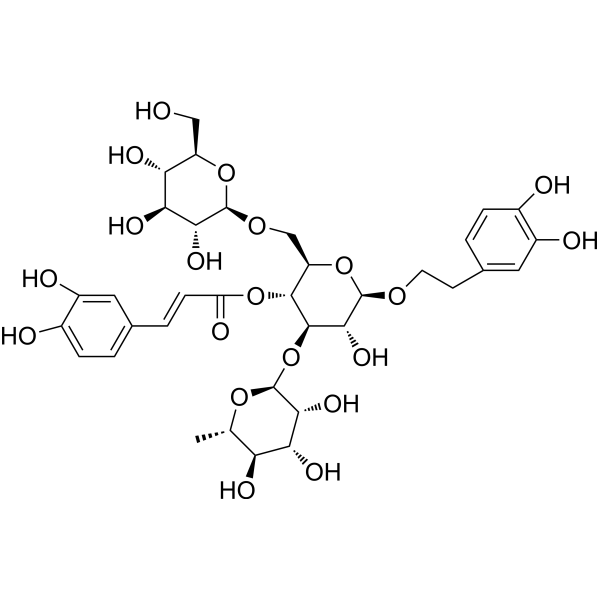
HY-N0020
Echinacoside -
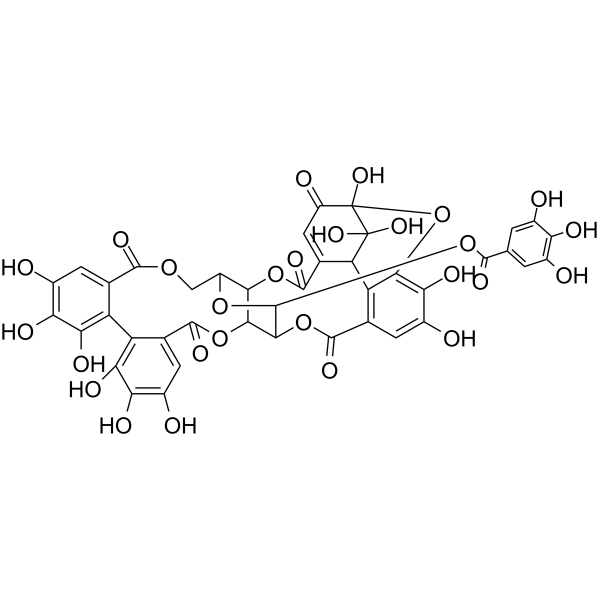
HY-N0472
Geraniin -
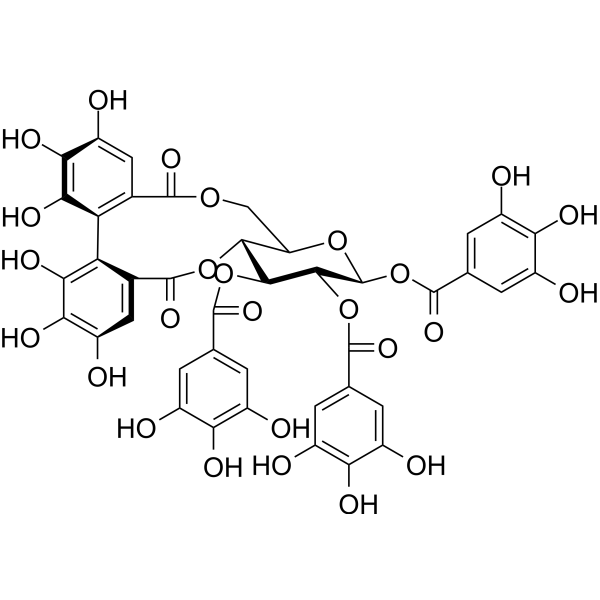
HY-N9386
Tellimagrandin II -
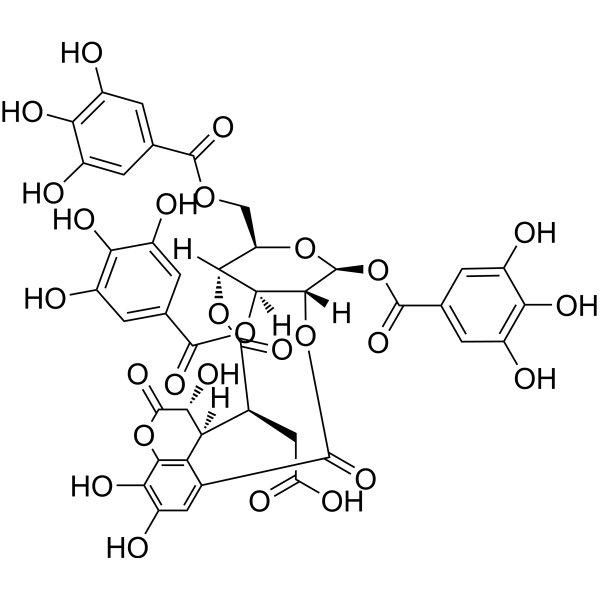
HY-N2033
Chebulinic acid -
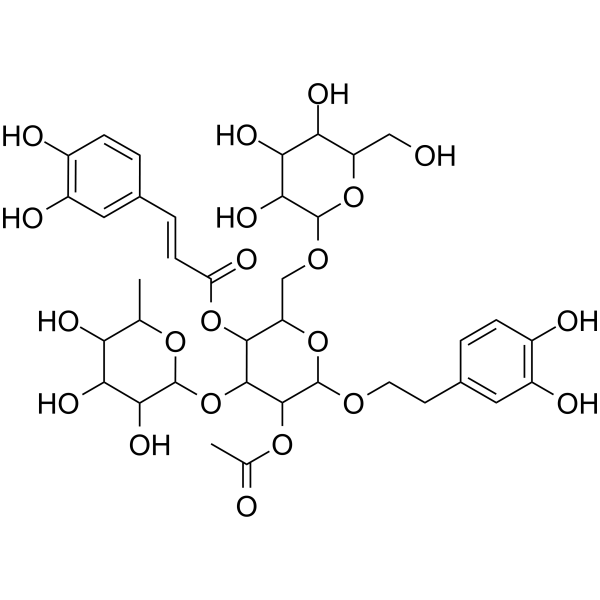
HY-N2155
Tubuloside A -
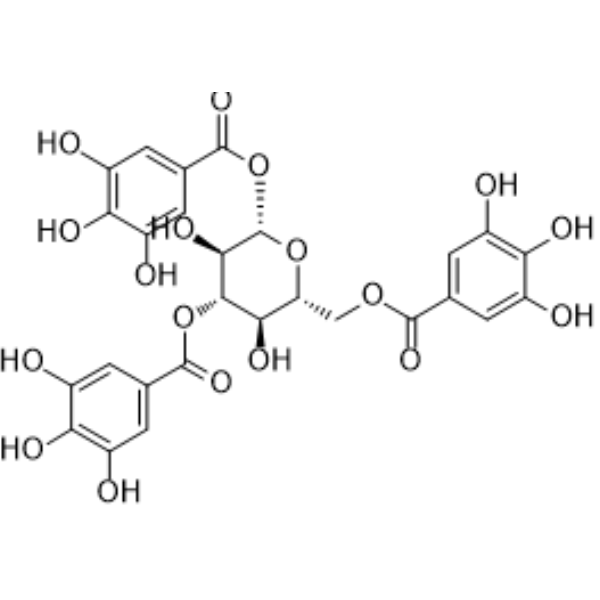
HY-N6006
1,3,6-Tri-O-galloyl-beta-D-glucose -
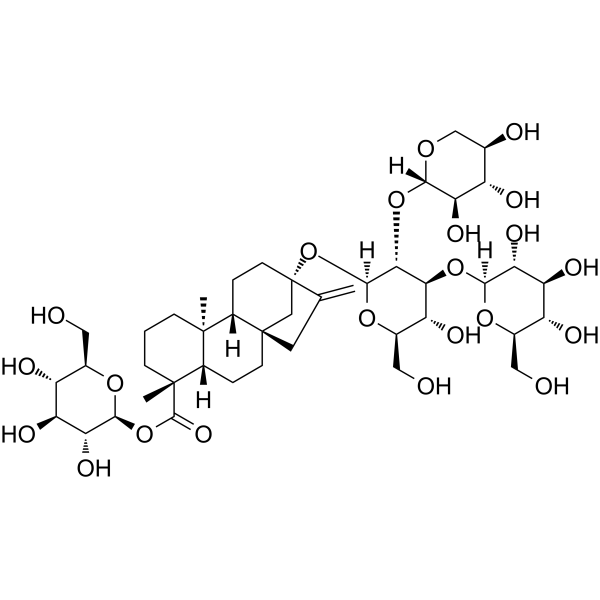
HY-N6887
Rebaudioside F -
HY-N2124
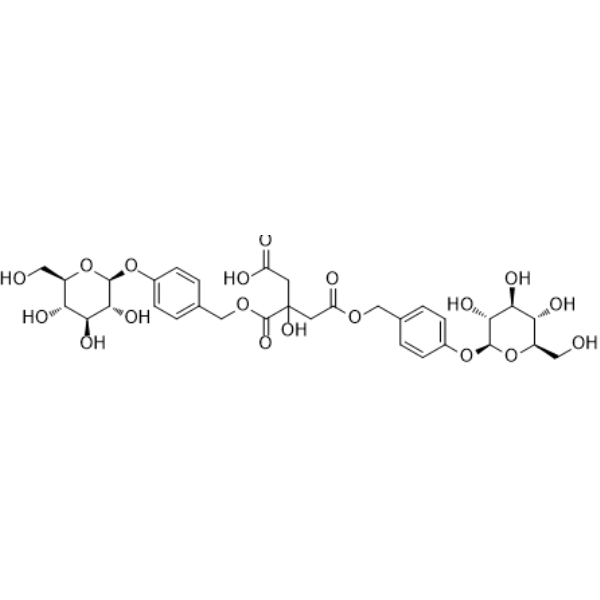
Parishin B
Publications Citing Use of MedChemExpress (MCE) 1,2,3,6-Tetragalloylglucose
More

Biological Activity
Description
IC50 & Target
Ki: 1.68 μM (UGT1A1)[1].
Cellular Effect
|
Cell Line

|
Type | Value | Description | References |
|---|---|---|---|---|
| A549 | ED50 |
>10 μg/mL
Compound: 8
|
Cytotoxicity against human A549 cells by tetrazolium salt-based colorimetric assay
Cytotoxicity against human A549 cells by tetrazolium salt-based colorimetric assay
|
[PMID: 1431932] |
| HCT-8 | ED50 |
>10 μg/mL
Compound: 8
|
Cytotoxicity against human HCT8 cells by tetrazolium salt-based colorimetric assay
Cytotoxicity against human HCT8 cells by tetrazolium salt-based colorimetric assay
|
[PMID: 1431932] |
| KB | ED50 |
>10 μg/mL
Compound: 8
|
Cytotoxicity against human KB cells by tetrazolium salt-based colorimetric assay
Cytotoxicity against human KB cells by tetrazolium salt-based colorimetric assay
|
[PMID: 1431932] |
| TE-671 | ED50 |
>10 μg/mL
Compound: 8
|
Cytotoxicity against human TE671 cells by tetrazolium salt-based colorimetric assay
Cytotoxicity against human TE671 cells by tetrazolium salt-based colorimetric assay
|
[PMID: 1431932] |
In Vitro
1,2,3,6-Tetragalloylglucose competitively inhibits UGT1A1-mediated β-estradiol 3-glucuronidation and SN-38 glucuronidation in UGT1A1 enzyme activity assays[1].
1,2,3,6-Tetragalloylglucose (100 μM; 3-48 h) induces apoptosis of HL-60 cells, activates caspase-3, and leads to DNA fragmentation[2].
MedChemExpress (MCE) has not independently confirmed the accuracy of these methods. They are for reference only.
-
Cell Line:HL-60 cells
-
Concentration:100 µM, 150 µM
-
Incubation Time:3-48 h
-
Result:Inhibited cell viability with the IC50 value of 134 µM.
-
Cell Line:HL-60 cells
-
Concentration:100 µM
-
Incubation Time:3-48 h
-
Result:Induced apoptosis in HL-60 cells within 3-48 h, as evidenced by morphological features such as plasma membrane blebbing and cell shrinkage, increased percentage of apoptotic cells detected by flow cytometry, activation of caspase-3, and induction of internucleosomal DNA fragmentation.
In Vivo
MedChemExpress (MCE) has not independently confirmed the accuracy of these methods. They are for reference only.


Chemical Information
-
CAS No. 79886-50-3
-
Appearance Solid
-
Molecular Weight 788.57
-
Formula C34H28O22
-
Color White to off-white
-
SMILES
O=C(C1=CC(O)=C(O)C(O)=C1)O[C@@H]2[C@H]([C@@H]([C@@H](COC(C3=CC(O)=C(O)C(O)=C3)=O)O[C@H]2OC(C4=CC(O)=C(O)C(O)=C4)=O)O)OC(C5=CC(O)=C(O)C(O)=C5)=O
-
Synonyms
TeGG
-
Structure Classification
-
Initial Source
-
Shipping
Room temperature in continental US; may vary elsewhere.
-
Storage
4°C, protect from light
* In solvent : -80°C, 6 months; -20°C, 1 month (protect from light)


Publications (2)
-
Journal Impact Factor
-
Most Recent
-
Bioorg Chem
Investigation of tyrosinase inhibitory components in Camellia reticulata and the inhibitory mechanism, binding behavior of TeGG to tyrosinase. [Abstract]2026 Aug 5:177:109914. PMID: 42060987 -
Ren Fail
Targeting LRH-1 alleviates diabetes-induced lipotoxicity in podocytes: role of PLIN5-mediated lipid droplet turnover. [Abstract]2026 Dec;48(1):2670806. PMID: 42135621


Solvent & Solubility
In Vitro:
DMSO : 100 mg/mL (126.81 mM; Need ultrasonic; Hygroscopic DMSO has a significant impact on the solubility of product, please use newly opened DMSO)
Please refer to the solubility information to select the appropriate solvent. Once prepared, please aliquot and store the solution to prevent product inactivation from repeated freeze-thaw cycles.
Storage method and period of stock solution: -80°C, 6 months; -20°C, 1 month (protect from light). When stored at -80°C, please use it within 6 months. When stored at -20°C, please use it within 1 month.
Please refer to the solubility information to select the appropriate solvent. Once prepared, please aliquot and store the solution to prevent product inactivation from repeated freeze-thaw cycles.
Storage method and period of stock solution: -80°C, 6 months; -20°C, 1 month (protect from light). When stored at -80°C, please use it within 6 months. When stored at -20°C, please use it within 1 month.
Concentration (start) × Volume (start) = Concentration (final) × Volume (final)
In Vivo:
Select the appropriate dissolution method based on your experimental animal and administration route.
- For the following dissolution methods, please ensure to first prepare a clear stock solution using an In Vitro approach and then sequentially add co-solvents:
- To ensure reliable experimental results, the clarified stock solution can be appropriately stored based on storage conditions. As for the working solution for In Vivo experiments, it is recommended to prepare freshly and use it on the same day.
- The percentages shown for the solvents indicate their volumetric ratio in the final prepared solution. If precipitation or phase separation occurs during preparation, heat and/or sonication can be used to aid dissolution.
Add each solvent one by one: 10% DMSO 40% PEG300 5% Tween-80 45% Saline
Solubility: ≥ 2.5 mg/mL (3.17 mM); Clear solution
This protocol yields a clear solution of ≥ 2.5 mg/mL (saturation unknown).
Taking 1 mL working solution as an example, add 100 μL DMSO stock solution (25.0 mg/mL) to 400 μL PEG300, and mix evenly; then add 50 μL Tween-80 and mix evenly; then add 450 μL Saline to adjust the volume to 1 mL.
Preparation of Saline: Dissolve 0.9 g sodium chloride in ddH₂O and dilute to 100 mL to obtain a clear Saline solution.
Add each solvent one by one: 10% DMSO 90% (20% SBE-β-CD in Saline)
Solubility: ≥ 2.5 mg/mL (3.17 mM); Clear solution
This protocol yields a clear solution of ≥ 2.5 mg/mL (saturation unknown).
Taking 1 mL working solution as an example, add 100 μL DMSO stock solution (25.0 mg/mL) to 900 μL 20% SBE-β-CD in Saline, and mix evenly.
Preparation of 20% SBE-β-CD in Saline (4°C, storage for one week): 2 g SBE-β-CD powder is dissolved in 10 mL Saline, completely dissolve until clear.
In Vivo Dissolution Calculator
Please enter the basic information of animal experiments:
-
-
-
-
Recommended: Prepare an additional quantity of animals to account for potential losses during experiments.
Please enter your animal formula composition:
-
%DMSO +
Recommended: Keep the proportion of DMSO in working solution below 2% if your animal is weak.
-
%+
-
+%Tween-80 + +
-
%Saline +
The co-solvents required include: DMSO, . All of co-solvents are available by MedChemExpress (MCE). , Tween 80. All of co-solvents are available by MedChemExpress (MCE).
Working solution concentration: 0.22 mg/mL
Method for preparing stock solution: mg drug dissolved in μL DMSO. Stock solution concentration: mg/mL. * In solvent : -80°C, 6 months; -20°C, 1 month (protect from light)
1. Take μL DMSO stock solution;
2. Add μL .
μL , mix evenly;
3. Then add μL Tween 80, mix evenly;
4. Then add μL
Please ensure that the stock solution in the first step is dissolved to a clear state, and add co-solvents in sequence. You can use ultrasonic heating (ultrasonic cleaner, recommended frequency 20-40 kHz), vortexing, etc. to assist dissolution.


Purity & Documentation
-
Data Sheet (285 KB)
-
SDS (252 KB)
- English - EN (252 KB)
- Français - FR (252 KB)
- Deutsch - DE (252 KB)
- Norwegian - NO (252 KB)
- Español - ES (252 KB)
- Swedish - SV (252 KB)
- Italian - IT (252 KB)
- Korean - KR (252 KB)
- Portuguese - PT (252 KB)
-
Handling Instructions (2659 KB)
References
[1]. Park JB, et al. Identification and characterization of in vitro inhibitors against UDP-glucuronosyltransferase 1A1 in uva-ursi extracts and evaluation of in vivo uva-ursi-drug interactions. Food Chem Toxicol. 2018 Oct;120:651-661. [Content Brief]
[3]. Zhang J, et al. Anti-cancer, anti-diabetic and other pharmacologic and biological activities of penta-galloyl-glucose. Pharm Res. 2009 Sep;26(9):2066-80. [Content Brief]


Complete Stock Solution Preparation Table
Please refer to the solubility information to select the appropriate solvent. Once prepared, please aliquot and store the solution to prevent product inactivation from repeated freeze-thaw cycles.
Storage method and period of stock solution: -80°C, 6 months; -20°C, 1 month (protect from light). When stored at -80°C, please use it within 6 months. When stored at -20°C, please use it within 1 month.
| Optional Solvent | Concentration Solvent Mass | 1 mg | 5 mg | 10 mg | 25 mg |
|---|---|---|---|---|---|
| DMSO | 1 mM | 1.2681 mL | 6.3406 mL | 12.6812 mL | 31.7030 mL |
| 5 mM | 0.2536 mL | 1.2681 mL | 2.5362 mL | 6.3406 mL | |
| 10 mM | 0.1268 mL | 0.6341 mL | 1.2681 mL | 3.1703 mL | |
| 15 mM | 0.0845 mL | 0.4227 mL | 0.8454 mL | 2.1135 mL | |
| 20 mM | 0.0634 mL | 0.3170 mL | 0.6341 mL | 1.5851 mL | |
| 25 mM | 0.0507 mL | 0.2536 mL | 0.5072 mL | 1.2681 mL | |
| 30 mM | 0.0423 mL | 0.2114 mL | 0.4227 mL | 1.0568 mL | |
| 40 mM | 0.0317 mL | 0.1585 mL | 0.3170 mL | 0.7926 mL | |
| 50 mM | 0.0254 mL | 0.1268 mL | 0.2536 mL | 0.6341 mL | |
| 60 mM | 0.0211 mL | 0.1057 mL | 0.2114 mL | 0.5284 mL | |
| 80 mM | 0.0159 mL | 0.0793 mL | 0.1585 mL | 0.3963 mL | |
| 100 mM | 0.0127 mL | 0.0634 mL | 0.1268 mL | 0.3170 mL |


1,2,3,6-Tetragalloylglucose Related Classifications
HY-111832 Related Classifications
 Powered by Bioz