



Sodium bromide

Based on 1 Customer Validation
Sodium bromide (NSC 77384; Sanibrom 40) is a GABA-ergic system modulator that crosses the blood-brain barrier, and it effectively reduces and blocks epileptiform discharges. Sodium bromide exerts significant anticonvulsant effects by enhancing GABA-ergic inhibitory functions, such as increasing the amplitude of inhibitory postsynaptic currents and paired-pulse inhibition. Sodium bromide specifically enhances stimulation-induced extracellular alkalosis without affecting baseline pH or subsequent acidosis processes. Sodium bromide exhibits species-specific pharmacokinetic characteristics, competes with chloride ions for renal tubular reabsorption sites, and serves as a marker for extracellular fluid volume. Sodium bromide can be used in the research of epilepsy and related neurological diseases.
Nur für Forschungszwecke. Wir verkaufen nicht an Patienten.
- Reinheit : 100.7%
- CAS. Nr.: 7647-15-6
- Formel: BrNa
- Molecular Weight:102.89
-
Speicherung:
Store at room temperature, keep dry and cool.
In solvent -80°C, 1 year , -20°C, 6 months


To place orders, for customer services and technical support, please contact: MedChemExpress USA
Tel: 609-228-6898 E-mail: [email protected] [email protected]


-
 Biologische Aktivität
-
Chemical Information
-
Lösungsmittel & Löslichkeit
- Reinheit & Dokumentation
- Verweise
-
 Help & FAQs


-

HY-108536D
Calcium chloride dihydrate, for cell culture, 99%Biochemical Reagent -
HY-Y0344D
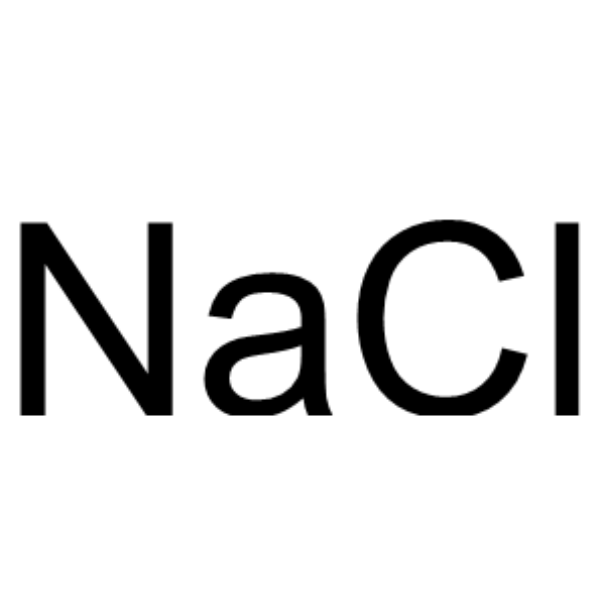
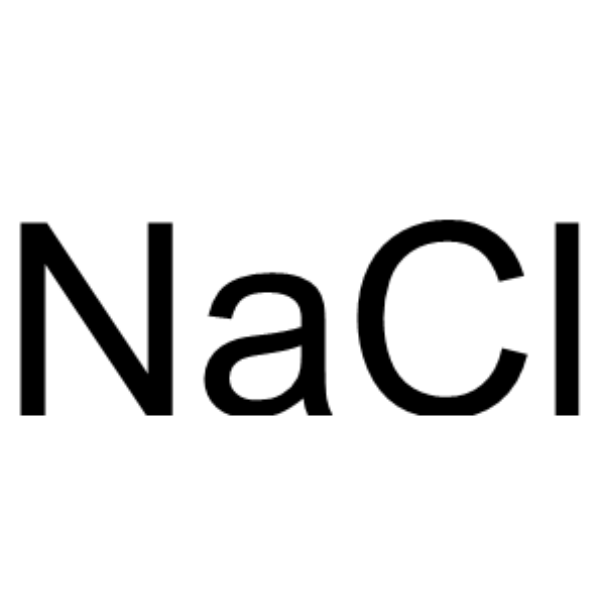
Sodium chloride, for cell cultureBiochemical Assay Reagent -
HY-ER013C
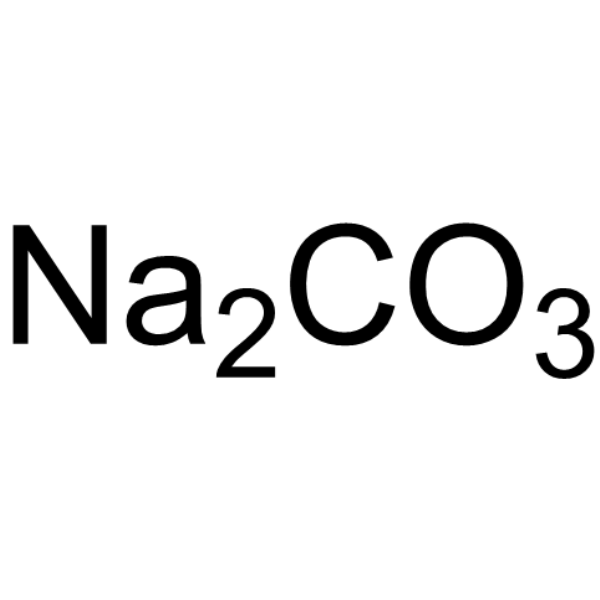
Sodium carbonate anhydrous, 99.8%Biochemical Reagent -
HY-Y0317H
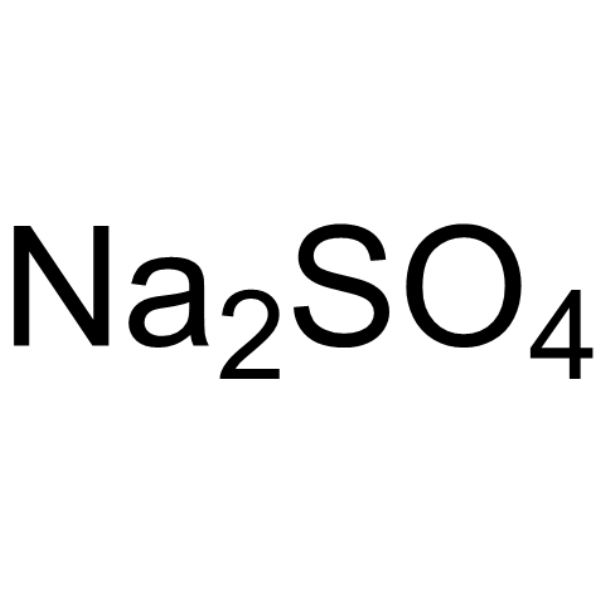
Sodium sulfate anhydrous, for cell cultureDrying Agent -
HY-Y0344I
Sodium chloride, meets analytical specification of Ph. Eur. BP USP, ≤0.00002% AlBiochemical Reagent -
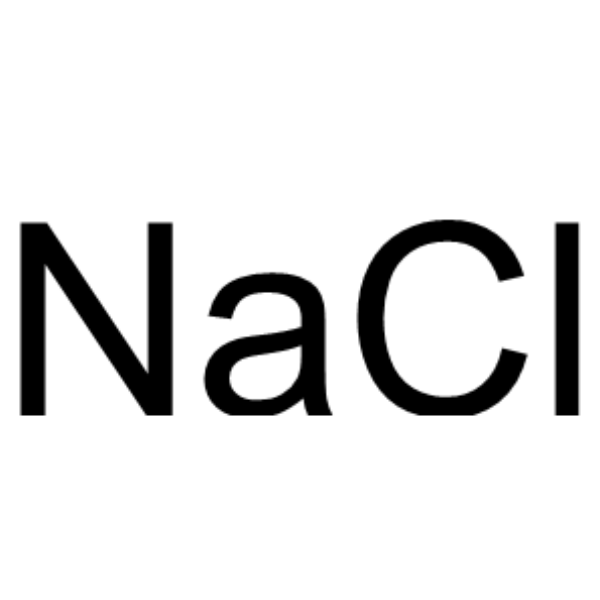
HY-Y0344J
Sodium chloride, for molecular biologyInorganic Salt -
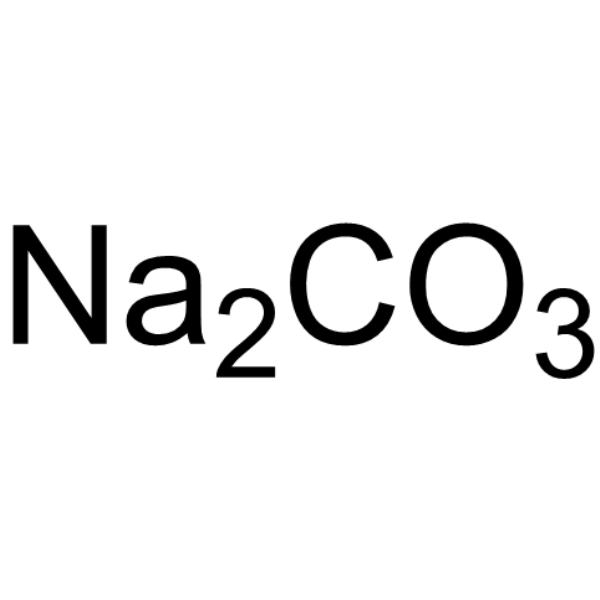
HY-ER013B
Sodium carbonate anhydrous, 99.999% trace metals basisBiochemical Reagent -

HY-Y1673
Potassium bromide, 99%Anticonvulsant/Sedative -

HY-W116336B
Zinc oxide, 99.99% metals basisBiochemical Assay Reagents -

HY-Y0283
Potassium iodide ,meet Ch.PBiochemical Reagent


Biologische Aktivität
Beschreibung
In Vitro
Sodium bromide (1-11 mM; ≥15-20 min) concentration-dependently reduces and blocks low-Ca2+-induced epileptiform discharges in rat hippocampal area CA1, with complete block at 11 mM[1].
Sodium bromide (3-20 mM; ≥15-20 min) concentration-dependently reduces and blocks low-Mg2+-induced short recurrent discharges in rat hippocampal areas CA1 and CA3, with complete block at 20 mM[1].
Sodium bromide (1-7 mM; ≥15-20 min) concentration-dependently reduces and blocks low-Mg2+-induced seizure-like events in rat medial entorhinal cortex, with complete block at 7 mM[1].
Sodium bromide (1-30 mM; ≥15-20 min) concentration-dependently reduces and blocks low-Mg2+-induced late recurrent discharges in rat medial entorhinal cortex, with complete block at 30 mM[1].
Sodium bromide (1-5 mM; ≥15-20 min) at 5 mM enhances paired-pulse inhibition in rat hippocampal area CA1, indicating increased GABAergic inhibition[1].
MedChemExpress (MCE) has not independently confirmed the accuracy of these methods. They are for reference only.
In Vivo
MedChemExpress (MCE) has not independently confirmed the accuracy of these methods. They are for reference only.
-
Animal Model:mixed-breed mares (15-21 years of age)[2]
-
Dosage:30 mg/kg
-
Administration:i.v.; single dose (administered over 3 minutes)
-
Result:Achieved a maximum mean serum bromide concentration of 115.4 μg/mL, with concentrations stabilizing by 5 hours post-administration.
Reached a mean corrected bromide space of 0.218 L/kg (steady-state volume of distribution) and 0.216 L/kg (5-hour serum bromide concentration), with no significant difference between values.
Induced a statistically significant increase in measured serum chloride concentration at 1 hour (96.8 mmol/L to 97.8 mmol/L, P = .012) and 6 hours (96.8 mmol/L to 98.0 mmol/L, P = .034) post-administration, a pseudohyperchloremia.
Showed no significant changes in serum sodium, potassium, or total CO2 concentrations, or in plasma total protein concentrations.
Clinical Trial
| NCT Number | Sponsor | Condition | Start Date |
Phase

|
|---|---|---|---|---|
| NCT01329991 | 2011-05 | PHASE1 |


Chemical Information
-
CAS. Nr. 7647-15-6
-
Appearance Solid
-
Molecular Weight 102.89
-
Formel BrNa
-
Color White to off-white
-
SMILES
[Na]Br
-
Synonyms
NSC 77384; Sanibrom 40
-
Versand
Room temperature in continental US; may vary elsewhere.
-
Speicherung
Store at room temperature, keep dry and cool
In solvent -80°C 1 year -20°C 6 months


Lösungsmittel & Löslichkeit
In Vitro:
H2O : ≥ 100 mg/mL (971.91 mM)
DMSO : 33.33 mg/mL (323.94 mM; ultrasonic and warming and heat to 60°C; Hygroscopic DMSO has a significant impact on the solubility of product, please use newly opened DMSO)
* "≥" means soluble, but saturation unknown.
Please refer to the solubility information to select the appropriate solvent. Once prepared, please aliquot and store the solution to prevent product inactivation from repeated freeze-thaw cycles.
Storage method and period of stock solution: -80°C, 1 year; -20°C, 6 months. When stored at -80°C, please use it within 1 year. When stored at -20°C, please use it within 6 months.
* Note: If you choose water as the stock solution, please dilute it to the working solution, then filter and sterilize it with a 0.22 μm filter before use.
Please refer to the solubility information to select the appropriate solvent. Once prepared, please aliquot and store the solution to prevent product inactivation from repeated freeze-thaw cycles.
Storage method and period of stock solution: -80°C, 1 year; -20°C, 6 months. When stored at -80°C, please use it within 1 year. When stored at -20°C, please use it within 6 months.
* Note: If you choose water as the stock solution, please dilute it to the working solution, then filter and sterilize it with a 0.22 μm filter before use.
Konzentration (Stammlösung) × Volumen (Stammlösung) = Konzentration (Ziellösung) × Volumen (Ziellösung)
In Vivo:
Select the appropriate dissolution method based on your experimental animal and administration route.
- For the following dissolution methods, please ensure to first prepare a clear stock solution using an In Vitro approach and then sequentially add co-solvents:
- To ensure reliable experimental results, the clarified stock solution can be appropriately stored based on storage conditions. As for the working solution for In Vivo experiments, it is recommended to prepare freshly and use it on the same day.
- The percentages shown for the solvents indicate their volumetric ratio in the final prepared solution. If precipitation or phase separation occurs during preparation, heat and/or sonication can be used to aid dissolution.
Add each solvent one by one: 10% DMSO 40% PEG300 5% Tween-80 45% Saline
Solubility: ≥ 3.33 mg/mL (32.36 mM); Clear solution
This protocol yields a clear solution of ≥ 3.33 mg/mL (saturation unknown).
Taking 1 mL working solution as an example, add 100 μL DMSO stock solution (33.3 mg/mL) to 400 μL PEG300, and mix evenly; then add 50 μL Tween-80 and mix evenly; then add 450 μL Saline to adjust the volume to 1 mL.
Preparation of Saline: Dissolve 0.9 g sodium chloride in ddH₂O and dilute to 100 mL to obtain a clear Saline solution.
Add each solvent one by one: 10% DMSO 90% (20% SBE-β-CD in Saline)
Solubility: ≥ 3.33 mg/mL (32.36 mM); Clear solution
This protocol yields a clear solution of ≥ 3.33 mg/mL (saturation unknown).
Taking 1 mL working solution as an example, add 100 μL DMSO stock solution (33.3 mg/mL) to 900 μL 20% SBE-β-CD in Saline, and mix evenly.
Preparation of 20% SBE-β-CD in Saline (4°C, storage for one week): 2 g SBE-β-CD powder is dissolved in 10 mL Saline, completely dissolve until clear.
In Vivo Dissolution Calculator
Please enter the basic information of animal experiments:
-
-
-
-
Recommended: Prepare an additional quantity of animals to account for potential losses during experiments.
Working solution concentration: 0.22 mg/mL
This product has good water solubility, please refer to the measured solubility data in water/PBS/Saline for details.


Reinheit & Dokumentation
-
Data Sheet (277 KB)
-
SDS (557 KB)
- English - EN (557 KB)
- Français - FR (557 KB)
- Deutsch - DE (557 KB)
- Norwegian - NO (557 KB)
- Español - ES (557 KB)
- Swedish - SV (557 KB)
- Italian - IT (557 KB)
- Korean - KR (557 KB)
- Portuguese - PT (557 KB)
-
Handling Instructions (2659 KB)
Verweise
[1]. Meierkord H, et al. Sodium bromide: effects on different patterns of epileptiform activity, extracellular pH changes and GABAergic inhibition. Naunyn Schmiedebergs Arch Pharmacol. 2000;361(1):25-32. [Content Brief]
[2]. Fielding CL, et al. Pharmacokinetics and clinical utility of sodium bromide (NaBr) as an estimator of extracellular fluid volume in horses. J Vet Intern Med. 2003;17(2):213-217. [Content Brief]


Complete Stock Solution Preparation Table
Please refer to the solubility information to select the appropriate solvent. Once prepared, please aliquot and store the solution to prevent product inactivation from repeated freeze-thaw cycles.
Storage method and period of stock solution: -80°C, 1 year; -20°C, 6 months. When stored at -80°C, please use it within 1 year. When stored at -20°C, please use it within 6 months.
| Optional Solvent | Concentration Solvent Mass | 1 mg | 5 mg | 10 mg | 25 mg |
|---|---|---|---|---|---|
| DMSO / H2O | 1 mM | 9.7191 mL | 48.5956 mL | 97.1912 mL | 242.9779 mL |
| 5 mM | 1.9438 mL | 9.7191 mL | 19.4382 mL | 48.5956 mL | |
| 10 mM | 0.9719 mL | 4.8596 mL | 9.7191 mL | 24.2978 mL | |
| 15 mM | 0.6479 mL | 3.2397 mL | 6.4794 mL | 16.1985 mL | |
| 20 mM | 0.4860 mL | 2.4298 mL | 4.8596 mL | 12.1489 mL | |
| 25 mM | 0.3888 mL | 1.9438 mL | 3.8876 mL | 9.7191 mL | |
| 30 mM | 0.3240 mL | 1.6199 mL | 3.2397 mL | 8.0993 mL | |
| 40 mM | 0.2430 mL | 1.2149 mL | 2.4298 mL | 6.0744 mL | |
| 50 mM | 0.1944 mL | 0.9719 mL | 1.9438 mL | 4.8596 mL | |
| 60 mM | 0.1620 mL | 0.8099 mL | 1.6199 mL | 4.0496 mL | |
| 80 mM | 0.1215 mL | 0.6074 mL | 1.2149 mL | 3.0372 mL | |
| 100 mM | 0.0972 mL | 0.4860 mL | 0.9719 mL | 2.4298 mL |
* Note: If you choose water as the stock solution, please dilute it to the working solution, then filter and sterilize it with a 0.22 μm filter before use.


Sodium bromide Related Classifications
HY-Y0282 Related Classifications
 Powered by Bioz
Keywords
- Sodium
- 7647-15-6
- NSC 77384
- Sanibrom 40
- NSC77384
- NSC-77384
- Sanibrom40
- Sanibrom 40
- Sanibrom-40
- Environmental Pollutants
- GABA? receptor
- extracellular fluid volume
- renal tubular reabsorption
- rat hippocampal area CA3
- rat hippocampal area CA1
- rat medial entorhinal cortex
- epilepsy
- GABAergic system
- horses
- blood-brain barrier
- Inhibitor
- inhibitor
- inhibit