



Rabbit Thrombin
Based on 8 publication(s) in Google Scholar
Rabbit Thrombin is a serine protease. Rabbit Thrombin forms a covalent complex with antithrombin III and reversibly binds endothelial cell surface high-affinity sites. Rabbit Thrombin regulates VEGF and Ang-2, potentiates VEGF mitogenic activity and protects endothelial cells from apoptosis. Rabbit Thrombin can be used for the research of hindlimb ischemia.
연구목적의 판매만을 진행합니다. 환자를 대상으로 한 판매는 하지 않습니다.
- CAS No.: 9002-04-4
-
보관:
Please store the product under the recommended conditions in the Certificate of Analysis.


To place orders, for customer services and technical support, please contact: MedChemExpress USA
Tel: 609-228-6898 E-mail: [email protected] [email protected]


-
 Biological Activity
-
Chemical Information
- Protocol
- 순도&문서
- References
-
 Help & FAQs


-

HY-114164
Thrombin (MW 37kDa)Procoagulant/Anticoagulant -

HY-114164G
Murine ThrombinMurine Serine Protease -

HY-114164D
Rat ThrombinThrombin -

HY-114164C
Thrombin, Pig bloodPAR Activator -

HY-114164H
Human α-Thrombin (Lyophilized)Ser Protease -
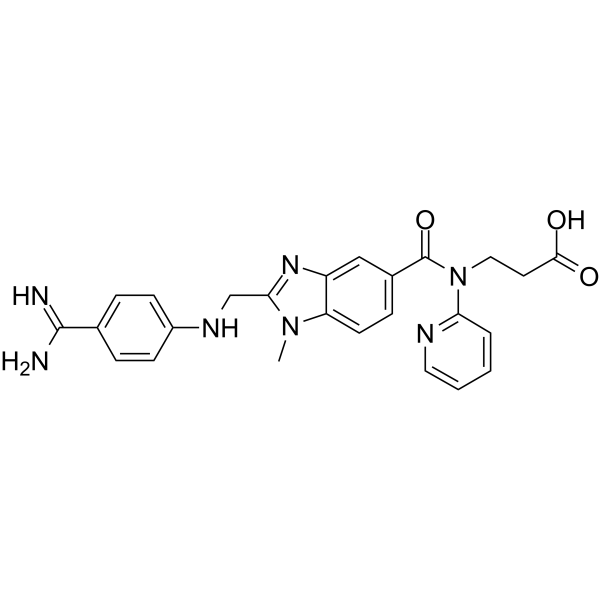
HY-10163
DabigatranThrombin Inhibitor -
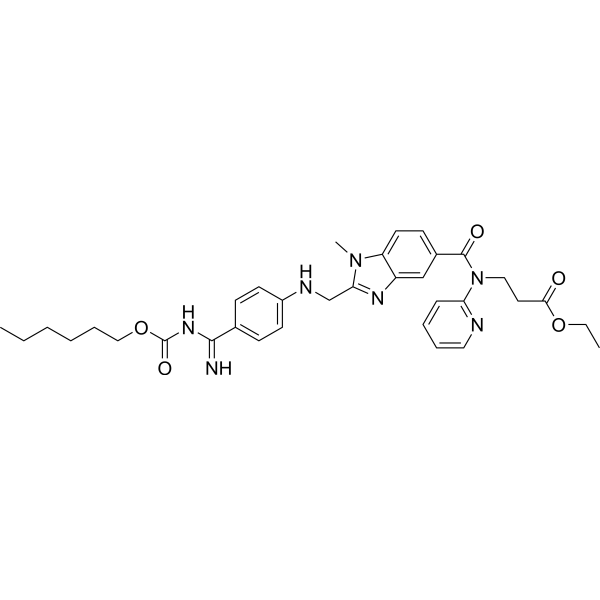
HY-10274
Dabigatran etexilateAntithrombotic Agent -
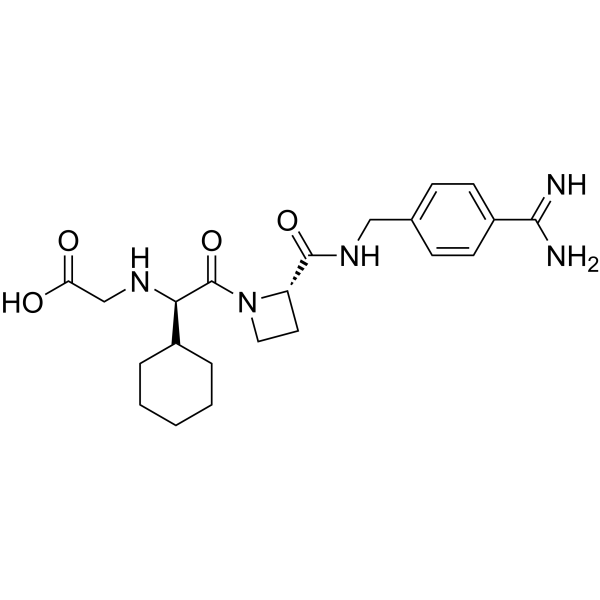
HY-129056
MelagatranThrombin Inhibitor -

HY-10163R
Dabigatran (Standard)Thrombin Inhibitor -
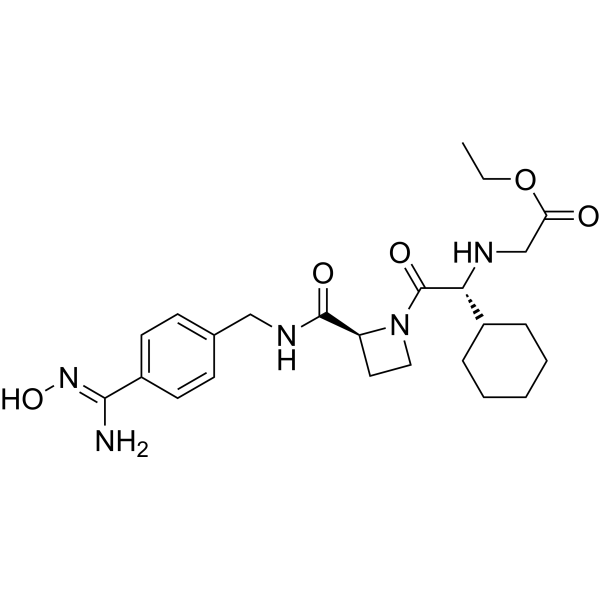
HY-10787
XimelagatranThrombin Inhibitor
Publications Citing Use of MedChemExpress (MCE) Rabbit Thrombin
More- Cancer Commun (Lond). 2025 Feb;45(2):143-166. [Abstract]
- Allergy. 2022 Jul;77(7):2104-2120. [Abstract]
- Stem Cell Res Ther. 2020 Feb 21;11(1):76. [Abstract]
- Front Pharmacol. 2022 Jan 10;12:792263. [Abstract]
- Antiviral Res. 2023 Jun:214:105606. [Abstract]
- Mol Carcinog. 2024 Jul;63(7):1288-1302. [Abstract]
- University of Utah. 2026.
- bioRxiv. 2026 Mar 5:2026.03.03.709348. [Abstract]
 Customer Validation & Images

-
Flow Cytometry
-
Cell Imaging/Staining
-
Cell Migration/Invasion Assay
-
WB
-
ELISA
All VEGFR Isoforms
More

Biological Activity
제품 설명
In Vitro
Rabbit Thrombin forms a complex with Antithrombin III in rabbit whole blood in vitro[1].
MedChemExpress (MCE) has not independently confirmed the accuracy of these methods. They are for reference only.
In Vivo
Rabbit Thrombin (500-15000 IU; intramuscular; single administration) promotes dose-dependent arteriogenesis and hemodynamic recovery in a rabbit hindlimb ischemia model[2].
MedChemExpress (MCE) has not independently confirmed the accuracy of these methods. They are for reference only.
-
Animal Model:New Zealand White (male, approximately 6-month-old, weight 3.0-4.0 kg, bilateral femoral artery surgical excision to induce hindlimb ischemia)[2]
-
Dosage:500 IU; 1500 IU; 5000 IU; 15,000 IU
-
Administration:intramuscular; single administration
-
Result:Induced a 30.2% increase in total collateral vessel area and length compared to control ischemic limbs.
Doubled the arteriolar count per optical field in adductor muscle compared to control limbs.
Increased saphenous artery peak enhancement by 100.9% compared to control limbs.
Reduced time-to-peak enhancement significantly.
Achieved a semiquantitative slope method perfusion score of 5.7, which was not significantly inferior to normal nonoperated limbs (score 6.5).
Evoked a pronounced arteriogenic response in both treated and contralateral control limbs, with total collateral vessel area of 10,879 pixels (treated) and 10,384 pixels (control), compared to 5882 pixels in ischemic internal control limbs.
Increased mean collateral diameter in both treated (2.77 pixels) and control (2.75 pixels) limbs compared to normal nonoperated subjects (2.66 pixels).
Increased saphenous artery peak enhancement by 70-80% compared to normal subjects, with significantly delayed time-to-peak intervals.
Achieved a semiquantitative perfusion score of 5.4, similar to normal limbs.
Increased arteriolar counts in both treated and contralateral control limbs, but caused abundant inflammatory cell infiltration in the treated limb.
Did not produce statistically significant increases in collateral vessel area or length compared to control limbs.


Chemical Information
-
CAS No. 9002-04-4
-
Appearance Solid
-
Color White to off-white
-
SMILES
[Rabbit Thrombin]
-
선적
Room temperature in continental US; may vary elsewhere.
-
보관
Please store the product under the recommended conditions in the Certificate of Analysis.


Publications (8)
-
Journal Impact Factor
-
Most Recent
-
Cancer Commun (Lond)
Reciprocal tumor-platelet interaction through the EPHB1-EFNB1 axis in the liver metastatic niche promotes metastatic tumor outgrowth in pancreatic ductal adenocarcinoma. [Abstract]2025 Feb;45(2):143-166. PMID: 39648610
Rabbit Thrombin purchased from MedChemExpress. Usage Cited in: Cancer Commun (Lond). 2025 Feb;45(2):143-166. [Abstract]
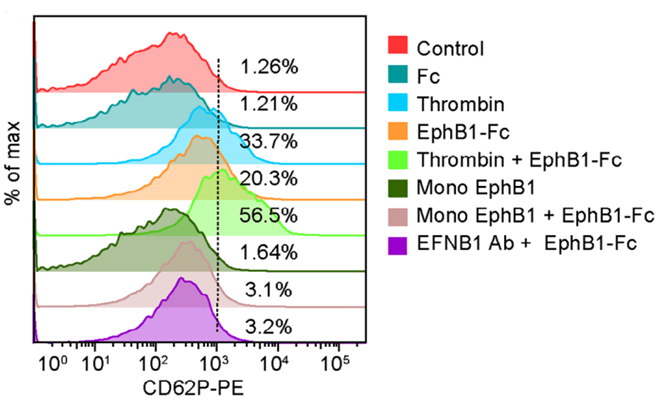
Platelets were treated with Fc fragment, Thrombin (1 µg/mL; 2 h), EphB1‐Fc, Thrombin + EphB1‐Fc, mono EphB1, mono EphB1 + EphB1‐Fc, or EFNB1 Ab + EphB1‐Fc. Platelets without treatment served as controls. CD62P expression in activated platelets was tested by flow cytometry analysis. Representative flow cytometry analysis of CD62P expression is presented on the left. The right graph shows the percentage of CD62P+ platelets. Data were presented as the means ± SD, with n = 3 per group.
-
Allergy
2022 Jul;77(7):2104-2120. PMID: 34995358
Rabbit Thrombin purchased from MedChemExpress. Usage Cited in: Allergy. 2022 Jul;77(7):2104-2120. [Abstract]
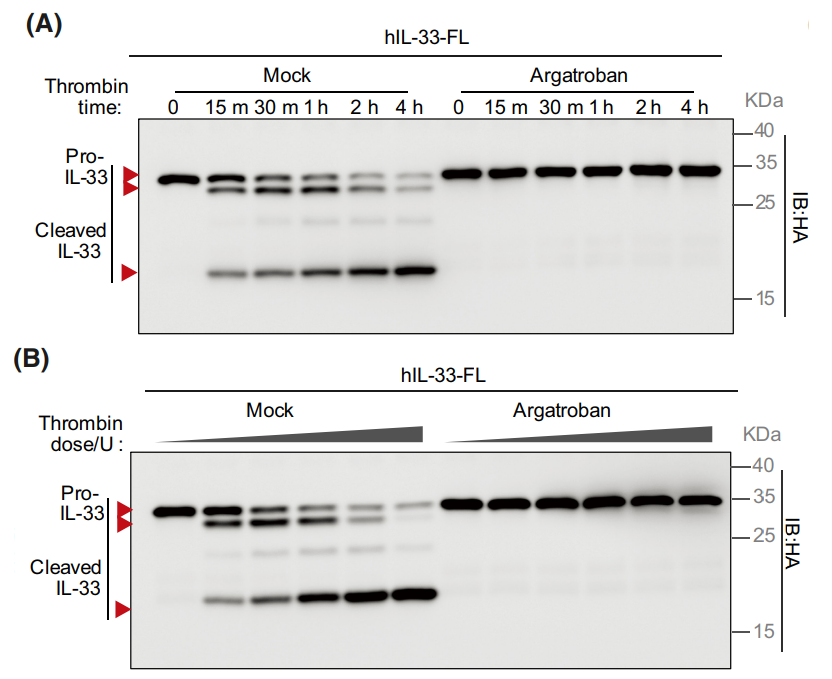
Western blots for the HA tag on RRL-expressed IL-33 showing the Thrombin cleavage of human pro-IL-33 into the two main forms, ~18 and ~25 kDa, and the inhibition of these cleavage events by the Thrombin inhibitor Argatroban (50 μg/ml). Cleavage occurred in a time-dependent manner (15 min, 30 min, 1 h, 2 h and 4 h; 0.075 U Thrombin; 15 μL buffer) (A) and a dose-dependent manner (0.01875, 0.0375, 0.075, 0.15 and 0.3 U; RT for 1 h; 15 μL buffer) (B).
Rabbit Thrombin purchased from MedChemExpress. Usage Cited in: Allergy. 2022 Jul;77(7):2104-2120. [Abstract]
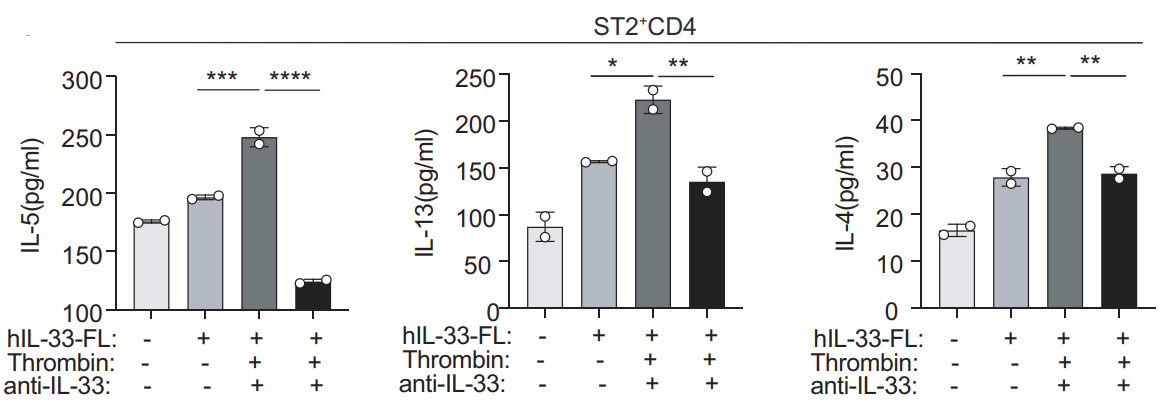
L-33-dependent IL-5, IL-13 and IL-4 production by ST2+ CD4 cells incubated with or without Thrombin (50 pg RRL; 0.075 U Thrombin; RT for 1 h) and with or without a neutralizing hIL-33 mAb. The bars and error bars represent the mean ± SEM; *p < .05; **p < .01; ***p < .001.
-
Stem Cell Res Ther
Effects of SW033291 on the myogenesis of muscle-derived stem cells and muscle regeneration. [Abstract]2020 Feb 21;11(1):76. PMID: 32085799 -
Front Pharmacol
Hsp47 Inhibitor Col003 Attenuates Collagen-Induced Platelet Activation and Cerebral Ischemic-Reperfusion Injury in Rats. [Abstract]2022 Jan 10;12:792263. PMID: 35082674 -
Antiviral Res
Omicsynin B4 potently blocks coronavirus infection by inhibiting host proteases cathepsin L and TMPRSS2. [Abstract]2023 Jun:214:105606. PMID: 37076089 -
Mol Carcinog
Baicalein promotes KDM4E to induce BICD1 and inhibit triple-negative breast cancer progression by blocking PAR1 signaling. [Abstract]2024 Jul;63(7):1288-1302. PMID: 38607237
Rabbit Thrombin purchased from MedChemExpress. Usage Cited in: Mol Carcinog. 2024 Jul;63(7):1288-1302. [Abstract]
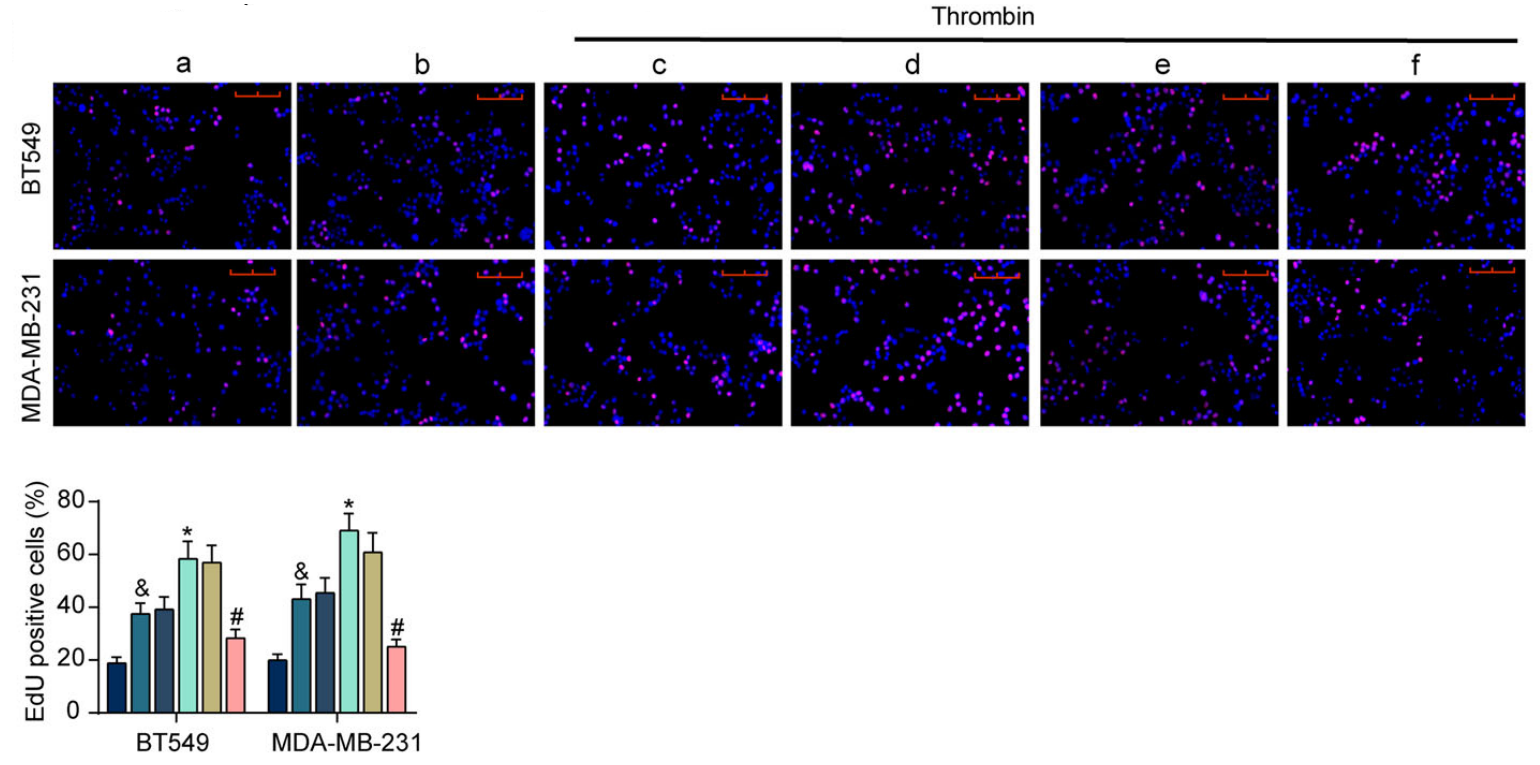
Effect of knockdown of KDM4E and combined overexpression of BICD1 on the proliferative activity of Thrombin (1 pM)-activated TNBC cells detected by EdU staining (scale bar: 50 μm).
Rabbit Thrombin purchased from MedChemExpress. Usage Cited in: Mol Carcinog. 2024 Jul;63(7):1288-1302. [Abstract]
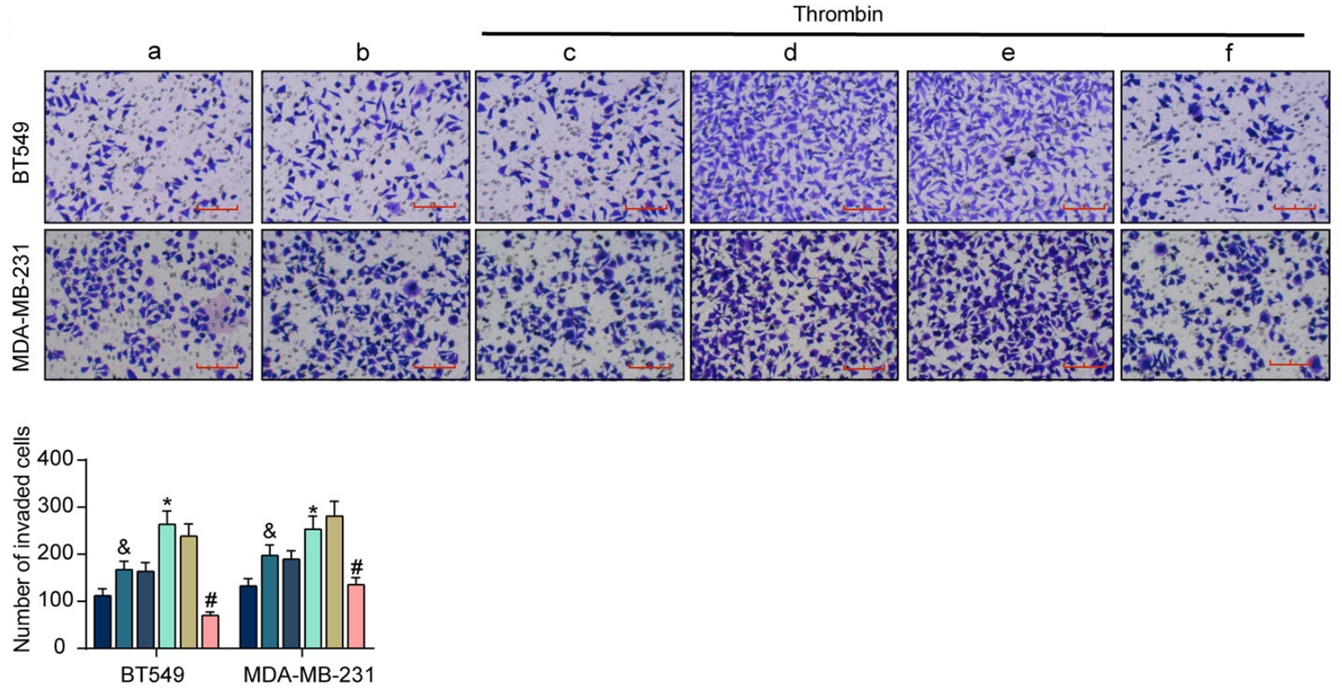
Effect of knockdown of KDM4E and combined overexpression of BICD1 on the invasive activity of Thrombin (1 pM)-activated TNBC cells detected by Transwell assay (scale bar: 50 μm). *p < 0.05 versus the sh-scramble group, #p < 0.05 versus the sh-KDM4E + oe-NC group, &p < 0.05 versus the blank group.
-
-
bioRxiv
Protease-Activated Receptor 1 as an Endogenous Model of Peptidergic Gαq-Gα12-Biased G Protein Signaling. [Abstract]2026 Mar 5:2026.03.03.709348. PMID: 41847045


순도&문서
-
Data Sheet (269 KB)
-
SDS (419 KB)
- English - EN (419 KB)
- Français - FR (419 KB)
- Deutsch - DE (419 KB)
- Norwegian - NO (419 KB)
- Español - ES (419 KB)
- Swedish - SV (419 KB)
- Italian - IT (419 KB)
- Korean - KR (419 KB)
- Portuguese - PT (419 KB)
-
Handling Instructions (2659 KB)
References
[1]. Lollar P, et al. Clearance of thrombin from circulation in rabbits by high-affinity binding sites on endothelium. Possible role in the inactivation of thrombin by antithrombin III. J Clin Invest. 1980;66(6):1222-1230. [Content Brief]
[2]. Katsanos K, et al. Thrombin promotes arteriogenesis and hemodynamic recovery in a rabbit hindlimb ischemia model. J Vasc Surg. 2009;49(4):1000-1012. [Content Brief]

Calculators
Concentration (start) × Volume (start) = Concentration (final) × Volume (final)


Rabbit Thrombin Related Classifications
HY-114164E Related Classifications
 Powered by Bioz