



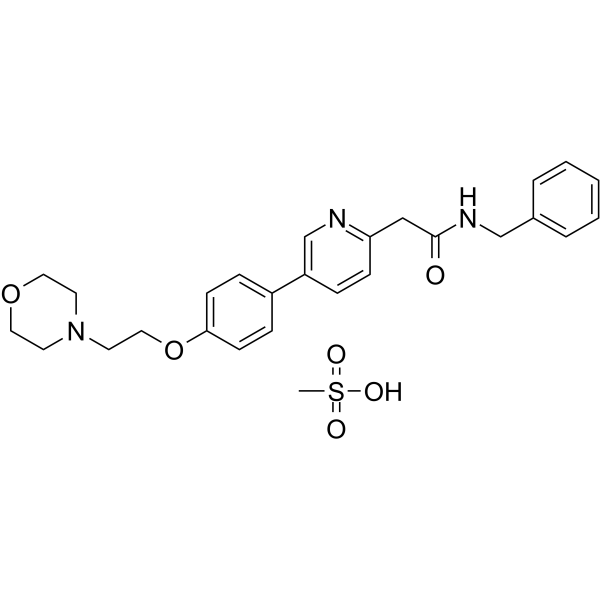
Tirbanibulin Mesylate
Based on 10 publication(s) in Google Scholar
Tirbanibulin Mesylate (KX2-391 Mesylate) is an inhibitor of Src that targets the peptide substrate site of Src, with GI50 of 9-60 nM in cancer cell lines.
For research use only. We do not sell to patients.
- Purity : 99.94%
- CAS No.: 1080645-95-9
- Formula: C27H33N3O6S
- Molecular Weight:527.63
-
Storage:
-20°C, protect from light, stored under nitrogen
* In solvent : -80°C, 6 months; -20°C, 1 month (protect from light, stored under nitrogen)

To place orders, for customer services and technical support, please contact: MedChemExpress USA
Tel: 609-228-6898 E-mail: [email protected] [email protected]


-
 Biological Activity
-
Chemical Information
-
Solvent & Solubility
- Purity & Documentation
- References
-
 Help & FAQs


-
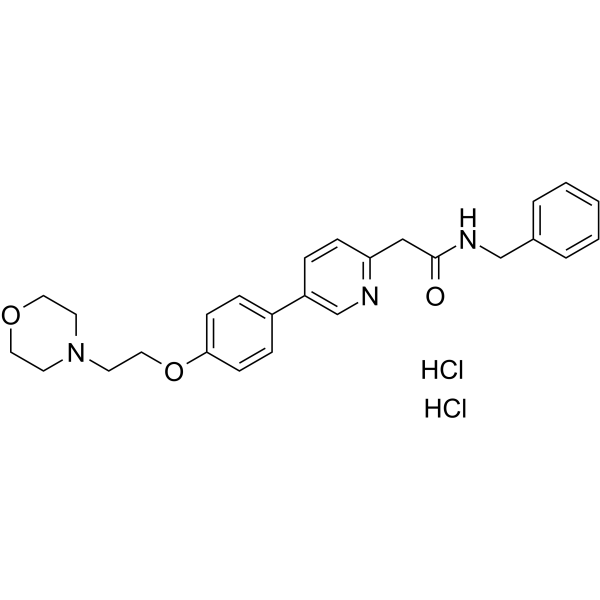
HY-10340A
Tirbanibulin dihydrochloride -
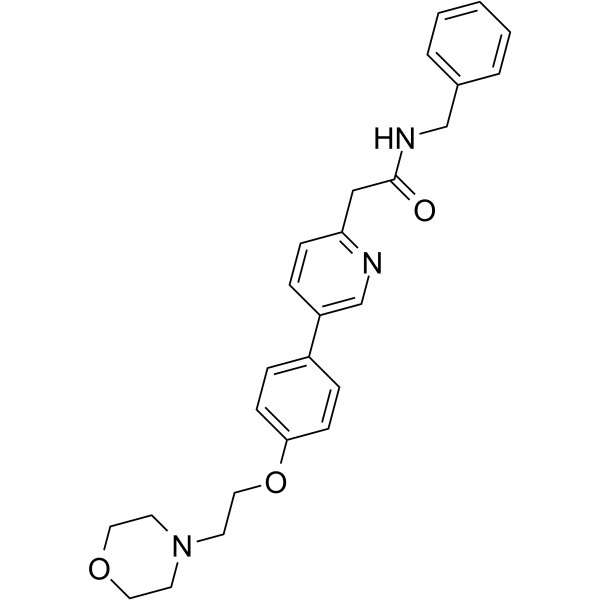
HY-10340
TirbanibulinSrc Inhibitor -

HY-10340AR
Tirbanibulin dihydrochloride (Standard)Src Inhibitor -

HY-10340BR
Tirbanibulin Mesylate (Standard)Src Inhibitor -
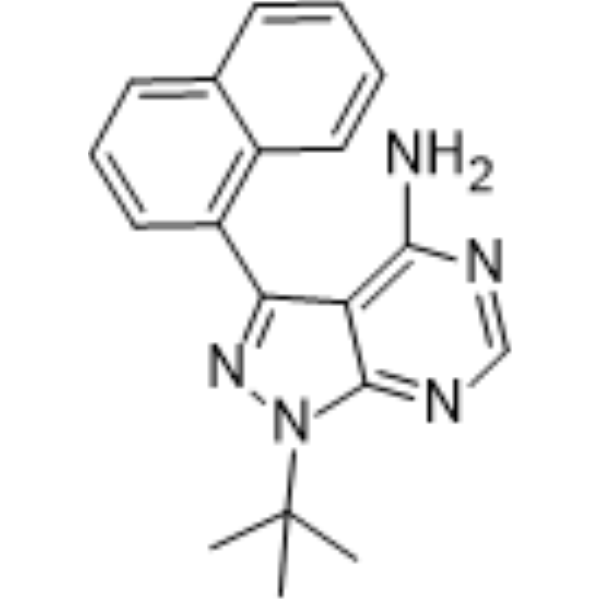
HY-13941
1-Naphthyl PP1Src Inhibitor -
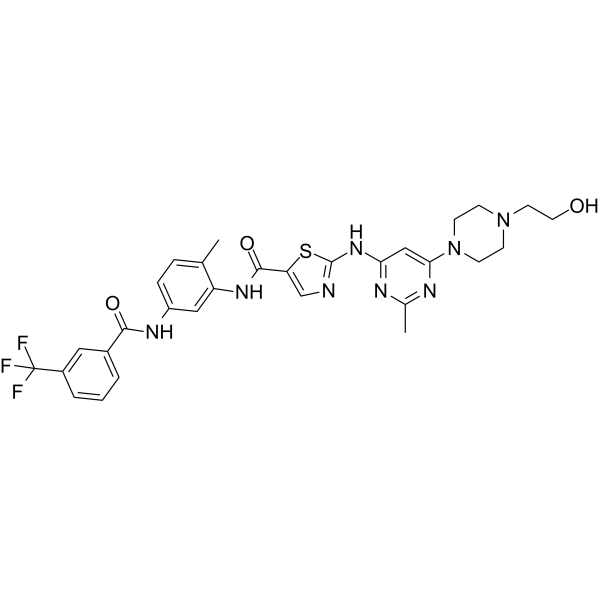
HY-112182
UM-164c-Src Inhibitor -
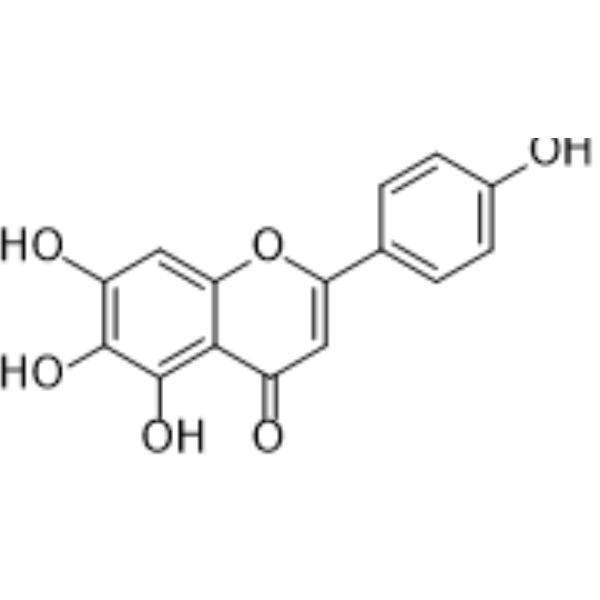
HY-N0752
ScutellareinAutophagy Inducer -
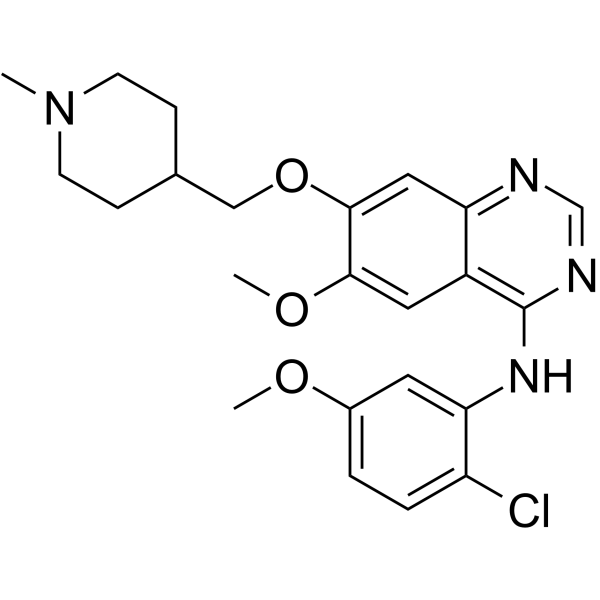
HY-13561
AZM475271Src Inhibitor -
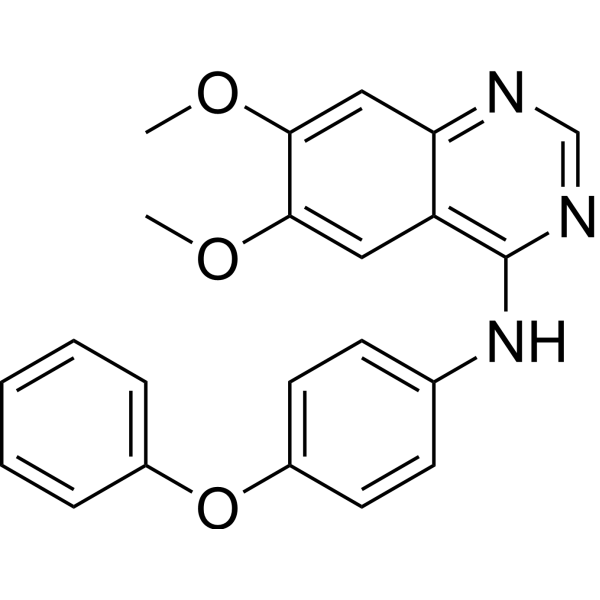
HY-101053
Src Inhibitor 1Src Inhibitor -

HY-10340R
Tirbanibulin (Standard)Src Inhibitor -
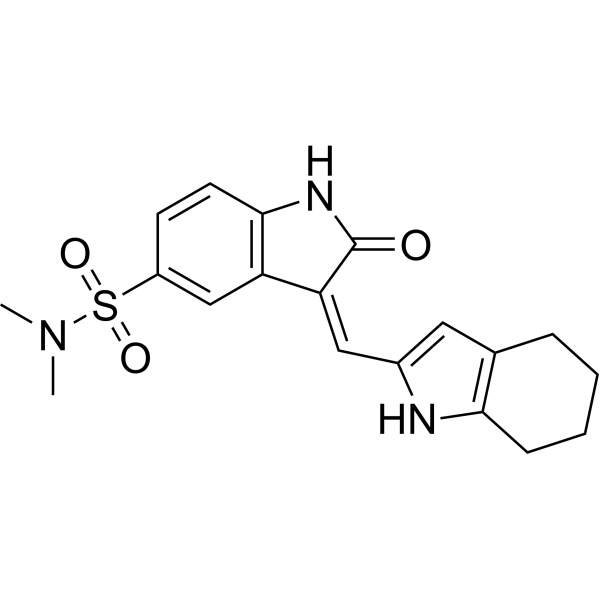
HY-B0789
SU6656Src Inhibitor -
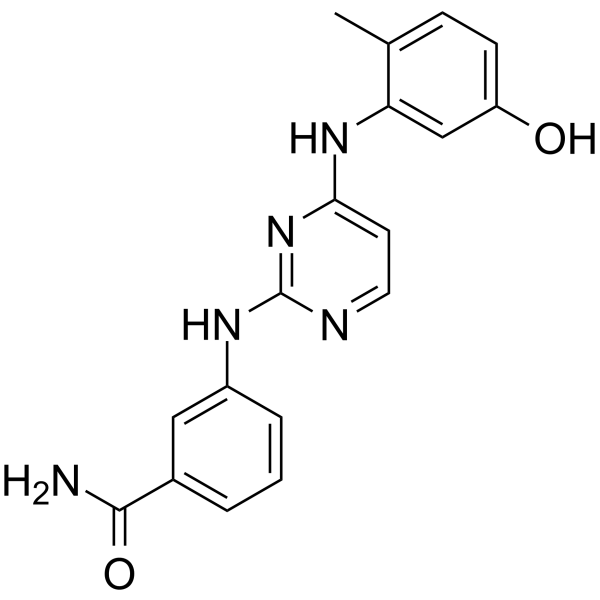
HY-10644
Lck inhibitor 2Tyrosine Kinase Inhibitor
Publications Citing Use of MedChemExpress (MCE) Tirbanibulin Mesylate
More- Cancer Cell. 2024 Apr 8;42(4):682-700.e12. [Abstract]
- Nat Commun. 2024 Sep 9;15(1):7885. [Abstract]
- Sci Transl Med. 2018 Jul 18;10(450):eaaq1093. [Abstract]
- J Exp Clin Cancer Res. 2025 Jul 8;44(1):195. [Abstract]
- Int Immunopharmacol. 2026 Oct 1:186:117092.
- Microbiol Spectr. 2026 Mar 17:e0362025. [Abstract]
- J Biol Chem. 2019 Nov 29;294(48):18099-18108. [Abstract]
- Brain Res. 2020 Jun 1:1736:146782. [Abstract]
- University of Colorado Denver. 2024.
- bioRxiv. 2023 Dec 14.
 Customer Validation & Images

-
Cell Migration/Invasion Assay
-
Flow Cytometry
-
Cell Imaging/Staining
-
WB
-
Cell Proliferation/Viability Assay


Biological Activity
Description
IC50 & Target
GI50: 9 nM (Src, in HuH7 cells), 13 nM (Src, in PLC/PRF/5 cells), 26 nM (Src, in Hep3B cells), 60 nM (Src, in HepG2 cells)[1]
In Vitro
Tirbanibulin Mesylate (KX2-391 Mesylate) is a Src inhibitor that is directed to the Src substrate pocket. Tirbanibulin (KX2-391) shows steep dose-response curves against Huh7 (GI50=9 nM), PLC/PRF/5 (GI50=13 nM), Hep3B (GI50=26 nM), and HepG2 (GI50=60 nM), four hepatic cell cancer (HCC) cell lines[1]. Tirbanibulin Mesylate (KX2-391 Mesylate) is found to inhibit certain leukemia cells that are resistant to current commercially available drugs, such as those derived from chronic leukemia cells with the T3151 mutation. Tirbanibulin Mesylate (KX2-391 Mesylate) is evaluated in engineered Src driven cell growth assays inNIH3T3/c-Src527F and SYF/c-Src527F cells and exhibits GI50 with 23 nM and 39 nM, respectively[2].
MedChemExpress (MCE) has not independently confirmed the accuracy of these methods. They are for reference only. .
In Vivo


Chemical Information
-
CAS No. 1080645-95-9
-
Appearance Solid
-
Molecular Weight 527.63
-
Formula C27H33N3O6S
-
Color White to off-white
-
SMILES
O=C(NCC1=CC=CC=C1)CC2=NC=C(C3=CC=C(OCCN4CCOCC4)C=C3)C=C2.CS(=O)(O)=O
-
Synonyms
KX2-391 Mesylate; KX01 Mesylate
-
Shipping
Room temperature in continental US; may vary elsewhere.
-
Storage
-20°C, protect from light, stored under nitrogen
* In solvent : -80°C, 6 months; -20°C, 1 month (protect from light, stored under nitrogen)


Publications (10)
-
Journal Impact Factor
-
Most Recent
-
Cancer Cell
PDGFRα+ITGA11+ fibroblasts foster early-stage cancer lymphovascular invasion and lymphatic metastasis via ITGA11-SELE interplay. [Abstract]2024 Apr 8;42(4):682-700.e12. PMID: 38428409 -
Nat Commun
Defective N-glycosylation of IL6 induces metastasis and tyrosine kinase inhibitor resistance in lung cancer. [Abstract]2024 Sep 9;15(1):7885. PMID: 39251588
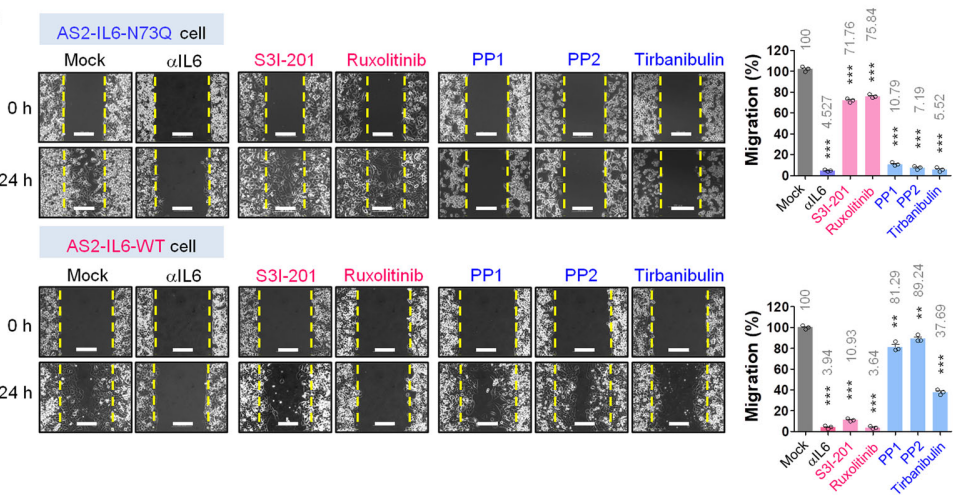
Tirbanibulin Mesylate purchased from MedChemExpress. Usage Cited in: Nat Commun. 2024 Sep 9;15(1):7885. [Abstract]
Effect of IL6 antibody (5 μg/mL), JAK-STAT3 inhibitors (S3I-201 = 10 μM, ruxolitinib = 2.5 μM), and SRC inhibitors (PP1 = 10 μM, PP2 = 10 μM, Tirbanibulin = 10 μM) on the migration of AS2-IL6-WT and AS2-IL6-N73Q cells through the space made by culture inserts. Images were obtained at 0 and 24 h.
-
Sci Transl Med
PP2A inhibition is a druggable MEK inhibitor resistance mechanism in KRAS-mutant lung cancer cells. [Abstract]2018 Jul 18;10(450):eaaq1093. PMID: 30021885 -
J Exp Clin Cancer Res
Genomic profiling of a collection of patient-derived xenografts and cell lines identified ixabepilone as an active drug against chemo-resistant osteosarcoma. [Abstract]2025 Jul 8;44(1):195. PMID: 40624718 -
-
Microbiol Spectr
Repurposing flufenamic acid as a putative PmrB-directed adjuvant to restore colistin activity in Klebsiella pneumoniae. [Abstract]2026 Mar 17:e0362025. PMID: 41842337 -
J Biol Chem
Reversible binding of the anticancer drug KXO1 (tirbanibulin) to the colchicine-binding site of β-tubulin explains KXO1's low clinical toxicity. [Abstract]2019 Nov 29;294(48):18099-18108. PMID: 31628188
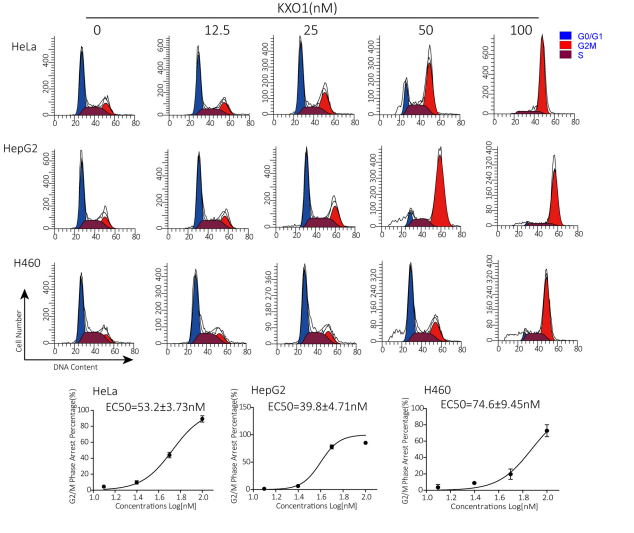
Tirbanibulin Mesylate purchased from MedChemExpress. Usage Cited in: J Biol Chem. 2019 Nov 29;294(48):18099-18108. [Abstract]
Tirbanibulin (KXO1; 0, 12.5, 25, 50, 100 nM; 16 h) induced cell cycle arrest at G2/M phase in HeLa, HepG2, and H460 cells.
Tirbanibulin Mesylate purchased from MedChemExpress. Usage Cited in: J Biol Chem. 2019 Nov 29;294(48):18099-18108. [Abstract]
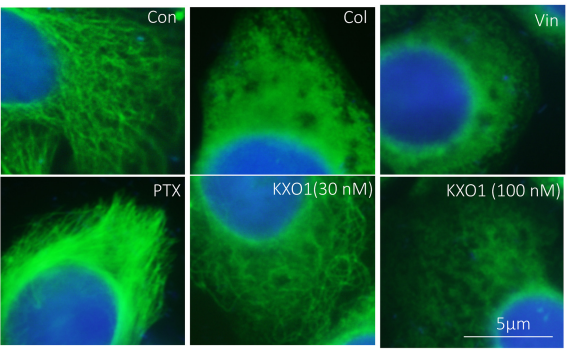
HeLa cells were treated with 100 nM paclitaxel (PTX), 100 nM vinblastine (Vin), 100 nM colchicine (Col), or 30 or 100 nM Tirbanibulin(KXO1) for 16 h, and microtubule morphology was monitored by immunofluorescence.
Tirbanibulin Mesylate purchased from MedChemExpress. Usage Cited in: J Biol Chem. 2019 Nov 29;294(48):18099-18108. [Abstract]
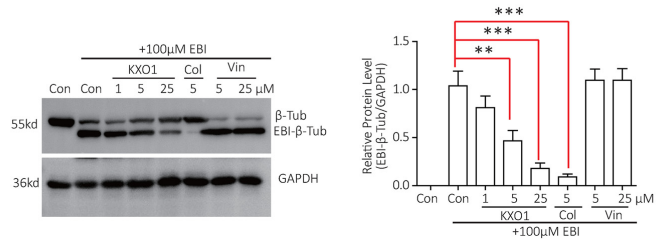
Tirbanibulin (KXO1; 1 5 25 nM; 16 h) was incubated for 2 h before being treated with 100 μM EBI for another 2 h. Tirbanibulin inhibited the formation of the EBI-tubulin complex, but vinblastine did not, thus confirming KXO1 binding to the colchicine site on tubulin.
Tirbanibulin Mesylate purchased from MedChemExpress. Usage Cited in: J Biol Chem. 2019 Nov 29;294(48):18099-18108. [Abstract]
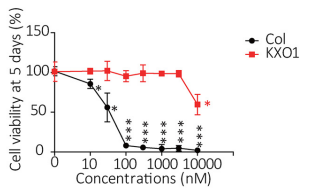
Tirbanibulin (KXO1; 0-10000 nM; 5 days) reduced cell viability at 100000 nM in HeLa cells.
Tirbanibulin Mesylate purchased from MedChemExpress. Usage Cited in: J Biol Chem. 2019 Nov 29;294(48):18099-18108. [Abstract]
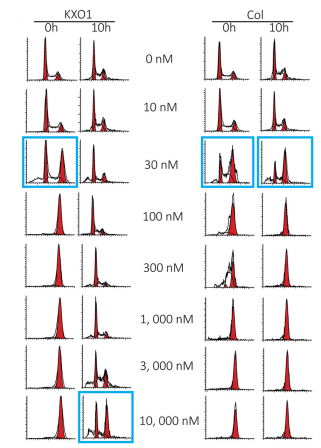
Tirbanibulin (KXO1; 0-10000 nM; 10 h) was a totally reversible tubulin inhibitor.
-
Brain Res
Donepezil promotes neurogenesis via Src signaling pathway in a rat model of chronic cerebral hypoperfusion. [Abstract]2020 Jun 1:1736:146782. PMID: 32184165 -
-


Solvent & Solubility
In Vitro:
DMSO : 100 mg/mL (189.53 mM; Need ultrasonic; Hygroscopic DMSO has a significant impact on the solubility of product, please use newly opened DMSO)
Please refer to the solubility information to select the appropriate solvent. Once prepared, please aliquot and store the solution to prevent product inactivation from repeated freeze-thaw cycles.
Storage method and period of stock solution: -80°C, 6 months; -20°C, 1 month (protect from light, stored under nitrogen). When stored at -80°C, please use it within 6 months. When stored at -20°C, please use it within 1 month.
Please refer to the solubility information to select the appropriate solvent. Once prepared, please aliquot and store the solution to prevent product inactivation from repeated freeze-thaw cycles.
Storage method and period of stock solution: -80°C, 6 months; -20°C, 1 month (protect from light, stored under nitrogen). When stored at -80°C, please use it within 6 months. When stored at -20°C, please use it within 1 month.
Concentration (start) × Volume (start) = Concentration (final) × Volume (final)
In Vivo:
Select the appropriate dissolution method based on your experimental animal and administration route.
- For the following dissolution methods, please ensure to first prepare a clear stock solution using an In Vitro approach and then sequentially add co-solvents:
- To ensure reliable experimental results, the clarified stock solution can be appropriately stored based on storage conditions. As for the working solution for In Vivo experiments, it is recommended to prepare freshly and use it on the same day.
- The percentages shown for the solvents indicate their volumetric ratio in the final prepared solution. If precipitation or phase separation occurs during preparation, heat and/or sonication can be used to aid dissolution.
Add each solvent one by one: 10% DMSO 40% PEG300 5% Tween-80 45% Saline
Solubility: ≥ 2.5 mg/mL (4.74 mM); Clear solution
This protocol yields a clear solution of ≥ 2.5 mg/mL (saturation unknown).
Taking 1 mL working solution as an example, add 100 μL DMSO stock solution (25.0 mg/mL) to 400 μL PEG300, and mix evenly; then add 50 μL Tween-80 and mix evenly; then add 450 μL Saline to adjust the volume to 1 mL.
Preparation of Saline: Dissolve 0.9 g sodium chloride in ddH₂O and dilute to 100 mL to obtain a clear Saline solution.
Add each solvent one by one: 10% DMSO 90% (20% SBE-β-CD in Saline)
Solubility: ≥ 2.5 mg/mL (4.74 mM); Clear solution
This protocol yields a clear solution of ≥ 2.5 mg/mL (saturation unknown).
Taking 1 mL working solution as an example, add 100 μL DMSO stock solution (25.0 mg/mL) to 900 μL 20% SBE-β-CD in Saline, and mix evenly.
Preparation of 20% SBE-β-CD in Saline (4°C, storage for one week): 2 g SBE-β-CD powder is dissolved in 10 mL Saline, completely dissolve until clear.
In Vivo Dissolution Calculator
Please enter the basic information of animal experiments:
-
-
-
-
Recommended: Prepare an additional quantity of animals to account for potential losses during experiments.
Please enter your animal formula composition:
-
%DMSO +
Recommended: Keep the proportion of DMSO in working solution below 2% if your animal is weak.
-
%+
-
+%Tween-80 + +
-
%Saline +
The co-solvents required include: DMSO, . All of co-solvents are available by MedChemExpress (MCE). , Tween 80. All of co-solvents are available by MedChemExpress (MCE).
Working solution concentration: 0.22 mg/mL
Method for preparing stock solution: mg drug dissolved in μL DMSO. Stock solution concentration: mg/mL. * In solvent : -80°C, 6 months; -20°C, 1 month (protect from light, stored under nitrogen)
1. Take μL DMSO stock solution;
2. Add μL .
μL , mix evenly;
3. Then add μL Tween 80, mix evenly;
4. Then add μL
Please ensure that the stock solution in the first step is dissolved to a clear state, and add co-solvents in sequence. You can use ultrasonic heating (ultrasonic cleaner, recommended frequency 20-40 kHz), vortexing, etc. to assist dissolution.


Purity & Documentation
-
Data Sheet (274 KB)
-
SDS (393 KB)
- English - EN (393 KB)
- Français - FR (393 KB)
- Deutsch - DE (393 KB)
- Norwegian - NO (393 KB)
- Español - ES (393 KB)
- Swedish - SV (393 KB)
- Italian - IT (393 KB)
- Korean - KR (393 KB)
- Portuguese - PT (393 KB)
-
Handling Instructions (2659 KB)
References
[1]. Lau GM, et al. Expression of Src and FAK in hepatocellular carcinoma and the effect of Src inhibitors on hepatocellular carcinoma in vitro. Dig Dis Sci, 2009, 54(7), 1465-1474. [Content Brief]
[2]. Fallah-Tafti A, et al. Thiazolyl N-benzyl-substituted acetamide derivatives: synthesis, Src kinase inhibitory and anticancer activities. Eur J Med Chem, 2011, 46(10), 4853-4858. [Content Brief]


Complete Stock Solution Preparation Table
Please refer to the solubility information to select the appropriate solvent. Once prepared, please aliquot and store the solution to prevent product inactivation from repeated freeze-thaw cycles.
Storage method and period of stock solution: -80°C, 6 months; -20°C, 1 month (protect from light, stored under nitrogen). When stored at -80°C, please use it within 6 months. When stored at -20°C, please use it within 1 month.
| Optional Solvent | Concentration Solvent Mass | 1 mg | 5 mg | 10 mg | 25 mg |
|---|---|---|---|---|---|
| DMSO | 1 mM | 1.8953 mL | 9.4763 mL | 18.9527 mL | 47.3817 mL |
| 5 mM | 0.3791 mL | 1.8953 mL | 3.7905 mL | 9.4763 mL | |
| 10 mM | 0.1895 mL | 0.9476 mL | 1.8953 mL | 4.7382 mL | |
| 15 mM | 0.1264 mL | 0.6318 mL | 1.2635 mL | 3.1588 mL | |
| 20 mM | 0.0948 mL | 0.4738 mL | 0.9476 mL | 2.3691 mL | |
| 25 mM | 0.0758 mL | 0.3791 mL | 0.7581 mL | 1.8953 mL | |
| 30 mM | 0.0632 mL | 0.3159 mL | 0.6318 mL | 1.5794 mL | |
| 40 mM | 0.0474 mL | 0.2369 mL | 0.4738 mL | 1.1845 mL | |
| 50 mM | 0.0379 mL | 0.1895 mL | 0.3791 mL | 0.9476 mL | |
| 60 mM | 0.0316 mL | 0.1579 mL | 0.3159 mL | 0.7897 mL | |
| 80 mM | 0.0237 mL | 0.1185 mL | 0.2369 mL | 0.5923 mL | |
| 100 mM | 0.0190 mL | 0.0948 mL | 0.1895 mL | 0.4738 mL |


Tirbanibulin Mesylate Related Classifications
HY-10340B Related Classifications
 Powered by Bioz