Delivery of temperature sensitive items including proteins and kits will be paused on 6/19 for the Juneteenth holiday. For urgent orders please contact customer service.
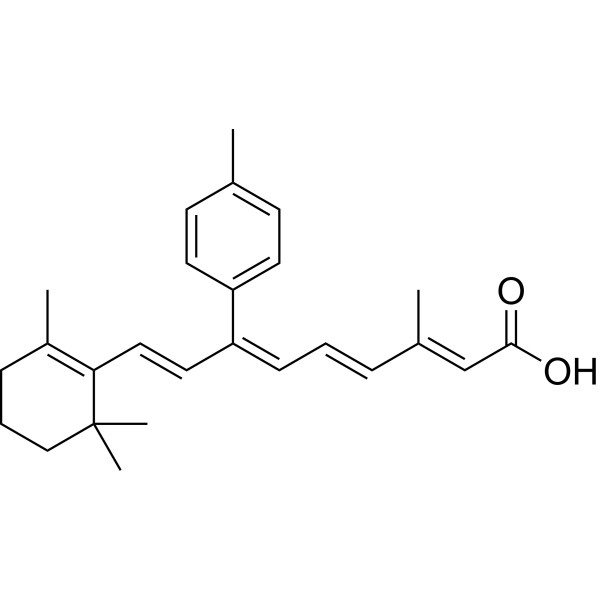
SR 11302 is an activator protein-1(AP-1) transcription factor inhibitor. SR 11302 is a retinoid that specifically inhibits AP-1 activity without activating the transcription of retinoic acid response element (RARE) [1].
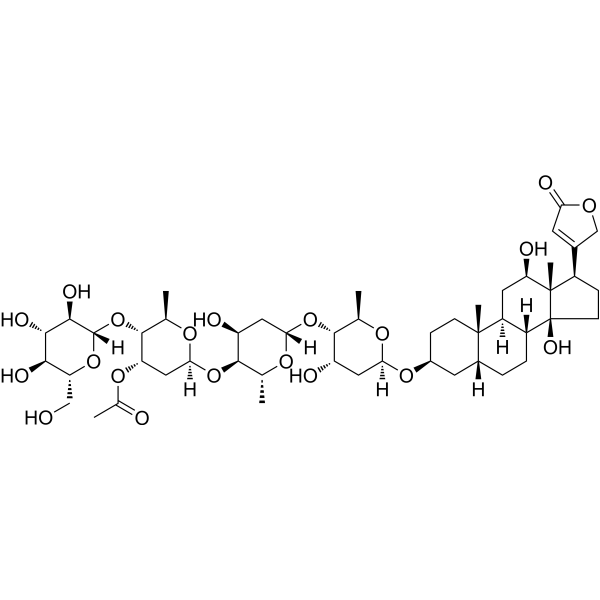
Lanatoside C is a cardiac glycoside, can be used in the treatment of congestive heart failure and cardiac arrhythmia.Lanatoside C has an IC50 of 0.19 μM for dengue virus infection in HuH-7 cells. Lanatoside C can effectively inhibit all four serotypes of dengue virus, flavivirus Kunjin, alphavirus Chikungunya, Sindbis virus and the human enterovirus 71[1] .
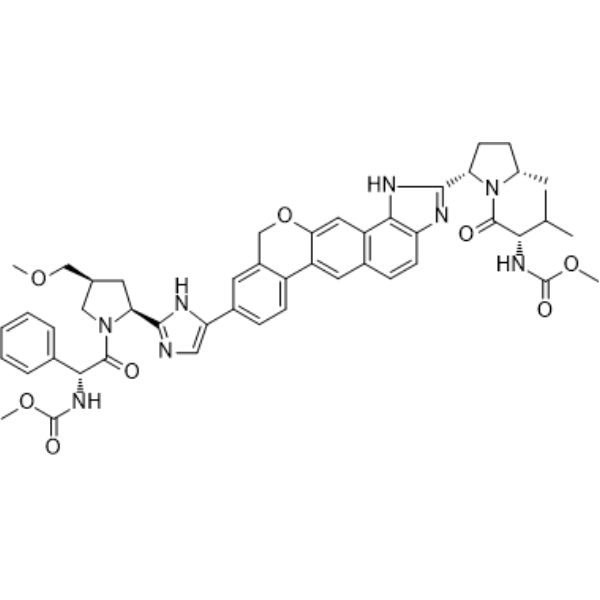
Velpatasvir (VEL, GS-5816) is a novel pan-genotypic hepatitis C virus (HCV) nonstructuralprotein 5A (NS5A) inhibitor with activity against genotype 1 (GT1) to GT6 HCV replicons. Velpatasvir is also a SARS-CoV 3CL pro inhibitor with an IC50 of 2.16 μM .
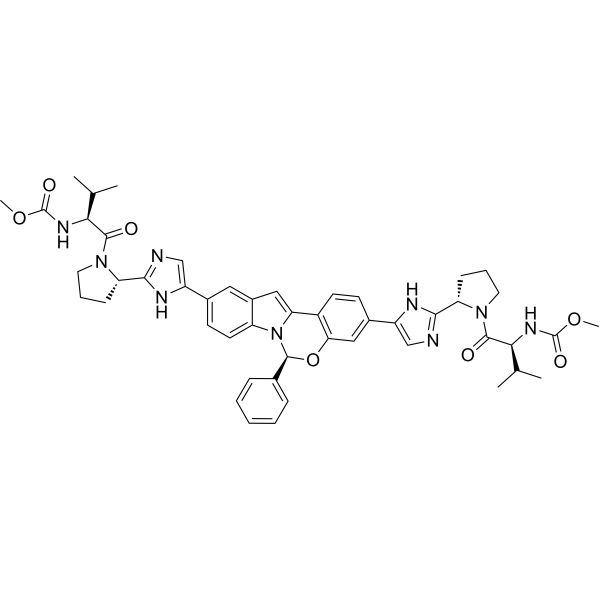
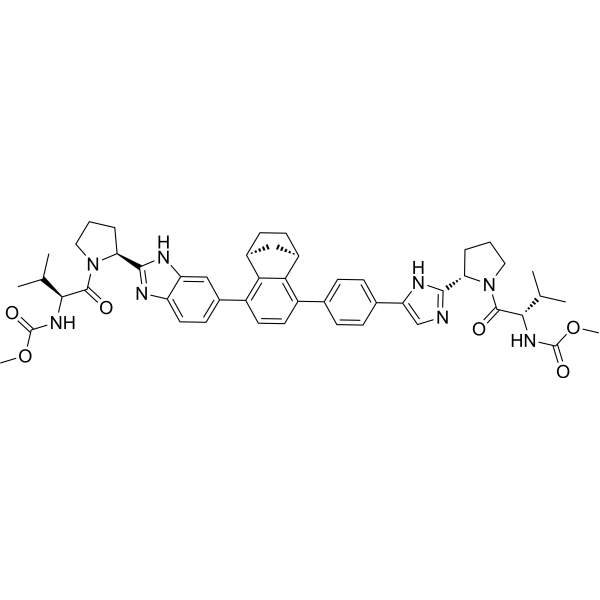
Elbasvir (MK-8742) is a hepatitis C virusnonstructuralprotein 5A (HCV NS5A) inhibitor with EC50s of 4, 3 and 3 nM against genotype 1a, 1b, and 2a, respectively.
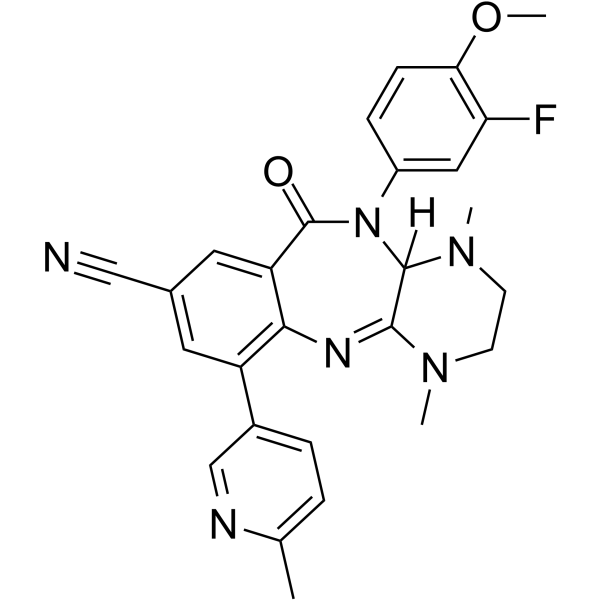
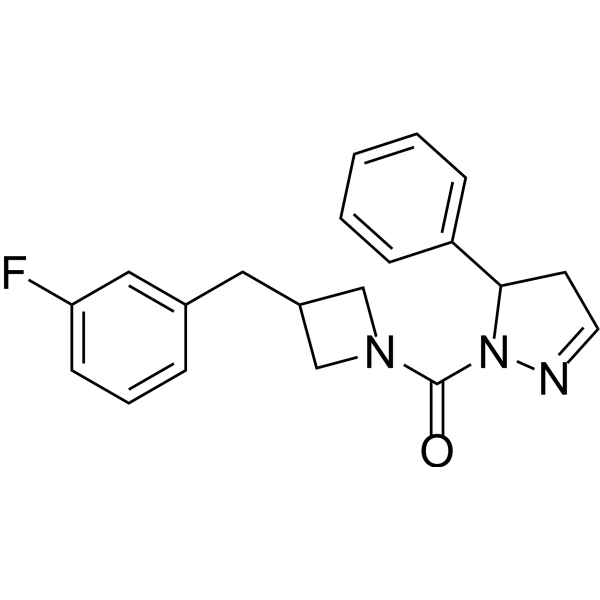
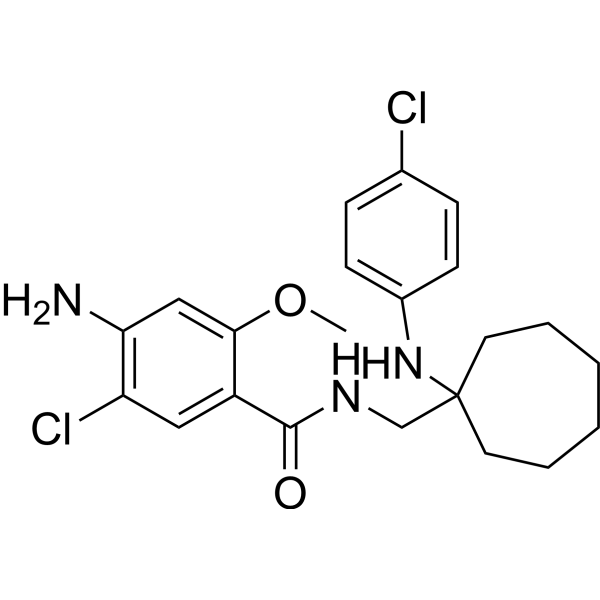
STING agonist-1 (G10) is human-specific STING agonist that elicits antiviral activity against emerging Alphaviruses. G10 potently blocks replication of Alphavirus species Venezuelan Equine Encephalitis Virus (VEEV) with IC90 of 24.57 μM [1].
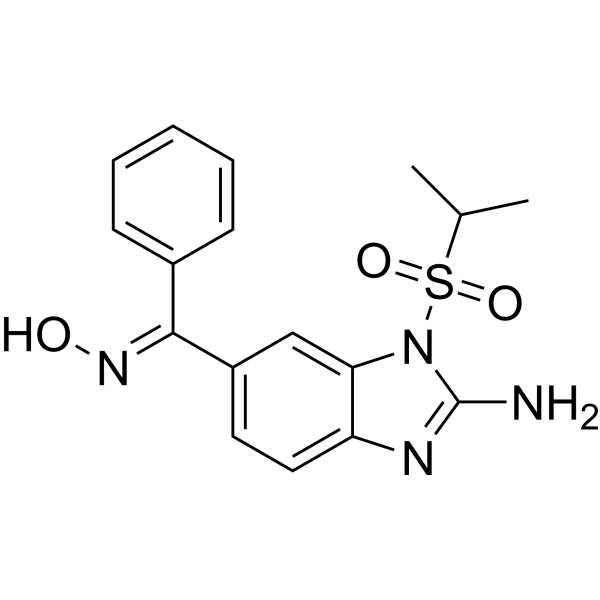
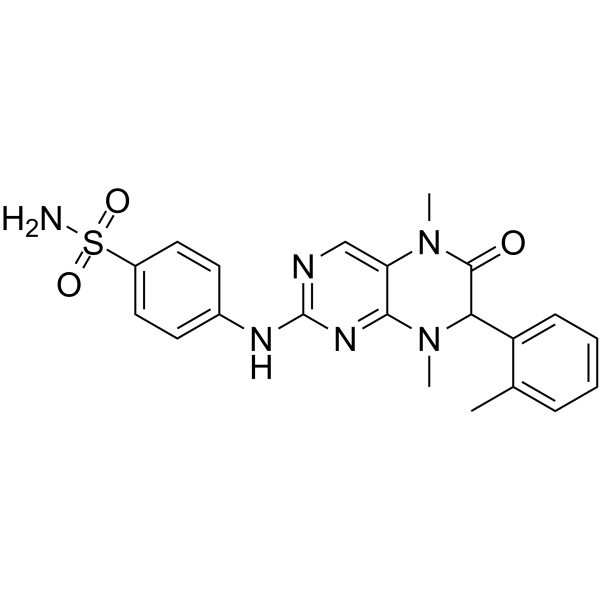
SP-100030 is a potent NF-κB and activator protein-1(AP-1) double inhibitor (IC50s=50 and 50 nM, respectively). SP-100030 inhibits IL-2, IL-8, and TNF-alpha production in Jurkat and other T cell lines. SP-100030 decreases murine collagen-induced arthritis (CIA) [1] .
Dofequidar (MS-209 free base) is an orally active quinoline compoundthat blocks P-glycoprotein (P-gp) and multidrug resistance-associated protein-1(MDR-1). Dofequidar has highly potent reversing effect on multidrug-resistant tumor cells. Dofequidar competitively inhibits ABCB1/P-gp, ABCC1/MRP-1, blocks the efflux of chemotherapeutic agents, increases the drug concentration in cancer cells, and enhances the chemotherapeutic effect [1] .
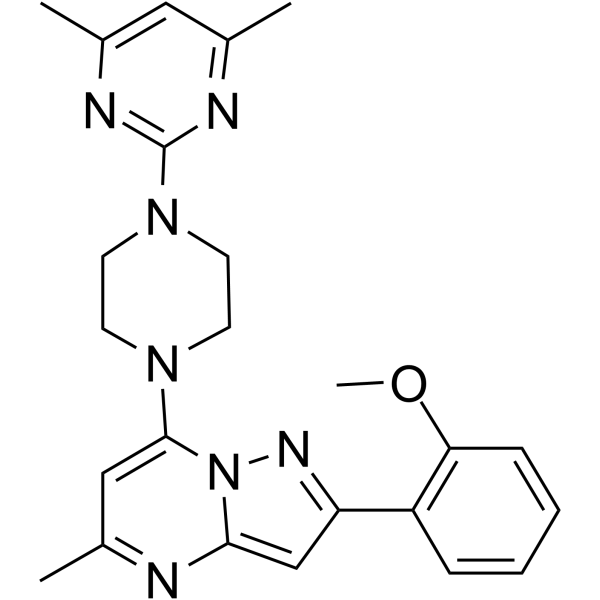
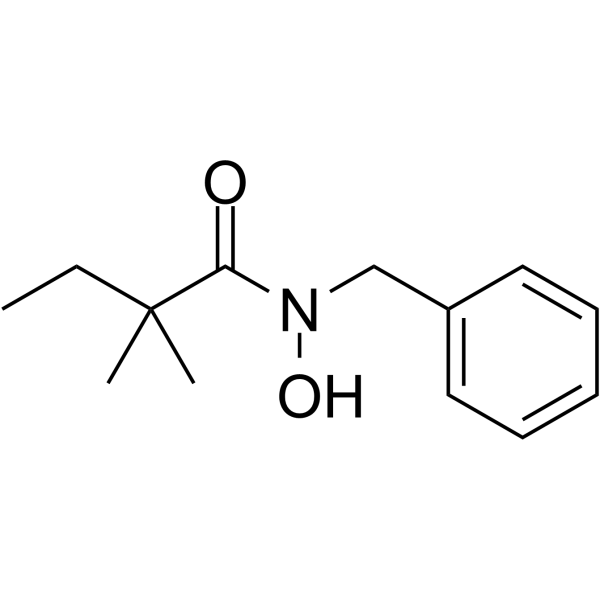
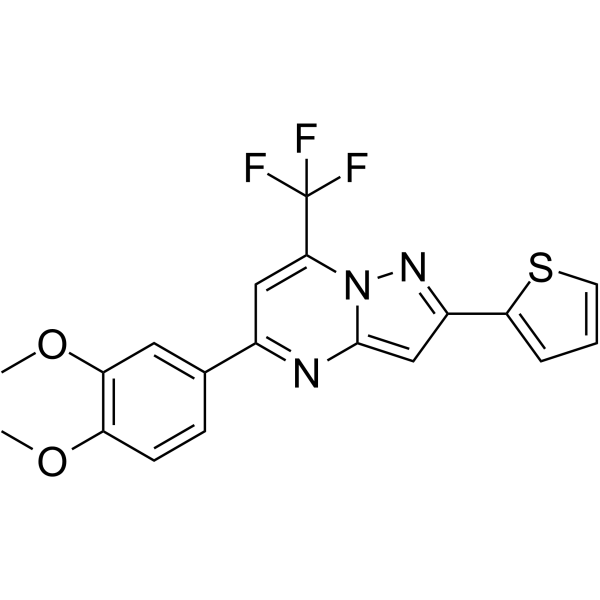
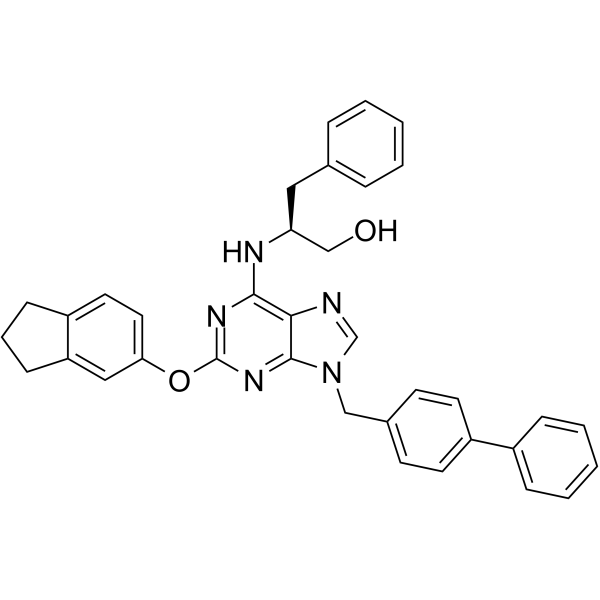
icFSP1 is a potent ferroptosis suppressor protein-1(FSP1) inhibitor. icFSP1 triggers subcellular relocalization of FSP1 from the membrane and FSP1 condensation, in synergism with GPX4 inhibition. icFSP1 induces ferroptosis. icFSP1 shows antitumor activity against melanoma. [1].
Murine Fibrinogen is a native fibrinogen derived from mouse plasma. Murine Fibrinogen acts as a cerebrovascular permeability enhancer. Murine Fibrinogen activates matrix metalloproteinase-9 (MMP-9), downregulates the expression of vascular endothelial cadherin (VE-cadherin), and upregulates the expression of plasmalemmal vesicle-associated protein-1(PV-1). Murine Fibrinogen increases macromolecular leakage from pial veins, thereby disrupting the microvascular integrity of cerebral blood vessels. Murine Fibrinogen can be used in studies related to cerebrovascular dysfunction [1].
NIC3 is a selective nucleus accumbens-associated protein-1(NAC1) inhibitor, binds to the conserved Leu-90 of NAC1, prevents its homodimerization, and leads to proteasomal NAC1 degradation. Anti-cancer activity [1].
Fimasartan (BRA-657) is an orally effective angiotensin receptor AT1 non-peptide antagonist. Fimasartan has antihypertensive effects. Fimasartan improves neuroinflammation and brain injury mediated by NLRP3 inflammatome after intracerebral hemorrhage, and has neuroprotective effect. Fimasartan inhibits the expression of inducible nitric oxide synthase through the inactivation of NF-κB and activator protein-1[1] .
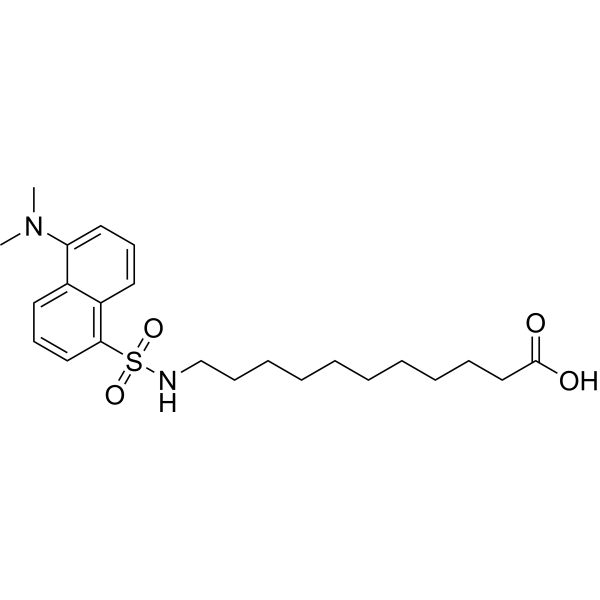
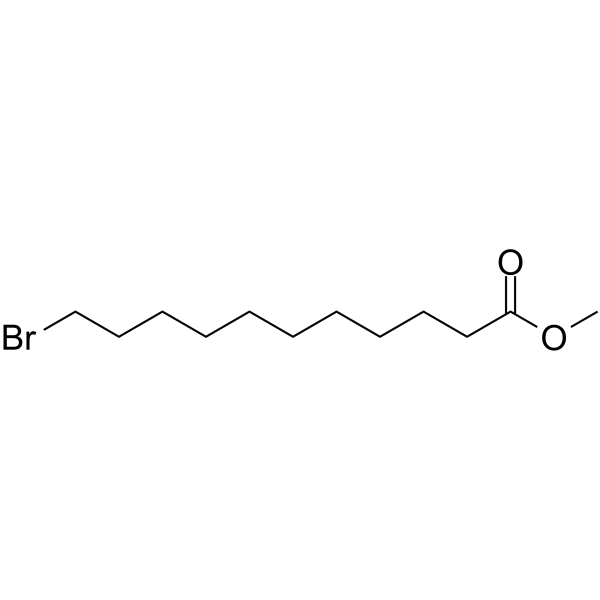
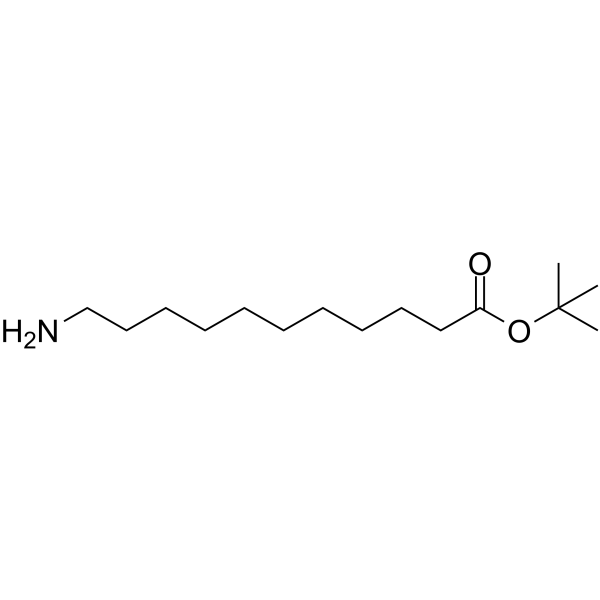
DAUDA (11-(dansylamino) undecanoic acid) is an environment-sensitive fluorescent fatty acid analogue. DAUDA alters its intensities and fluorescent emission spectra on entry into binding proteins. DAUDA is used to determine the relative affinity of natural fatty acids for polymorphs of the Schistosoma mansoni Sm14 fatty acid-binding protein[1].
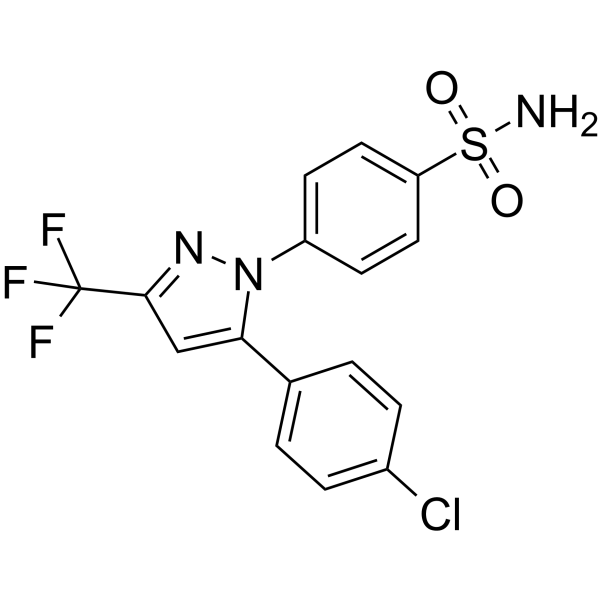
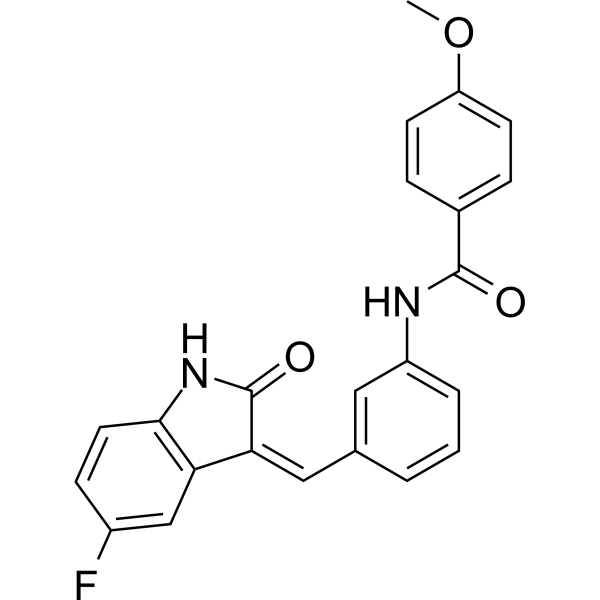
SC-236 is an orally active COX-2 specific inhibitor (IC50 = 10 nM) and a PPARγ agonist. SC-236 suppresses activator protein-1(AP-1) through c-Jun NH2-terminal kinase. SC-236 exerts anti-inflammatory effects by suppressing phosphorylation of ERK in a murine model [1] .
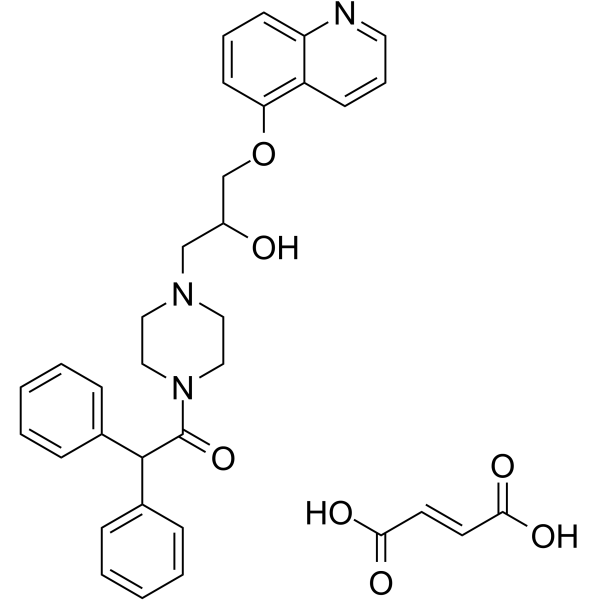
Dofequidar fumarate (MS-209) is an orally active quinoline compoundthat blocks P-glycoprotein (P-gp) and multidrug resistance-associated protein-1(MDR-1). Dofequidar fumarate has highly potent reversing effect on multidrug-resistant tumor cells. Dofequidar fumarate competitively inhibits ABCB1/P-gp, ABCC1/MRP-1, blocks the efflux of chemotherapeutic agents, increases the drug concentration in cancer cells, and enhances the chemotherapeutic effect [1] .
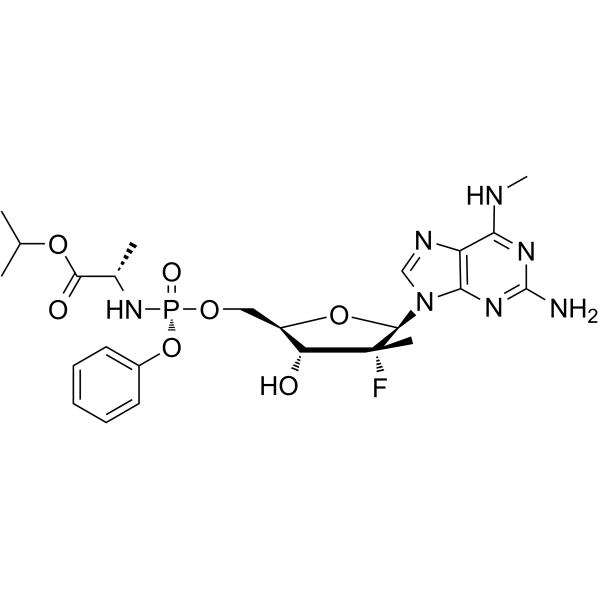
Arbemnifosbuvir is a nidovirus DdRp-associated nucleotidyltransferase (NiRAN) domain of non-structuralprotein 12 (nsp12)-interfering drugs. Arbemnifosbuvir can be used for SARS-CoVs infection research [1].
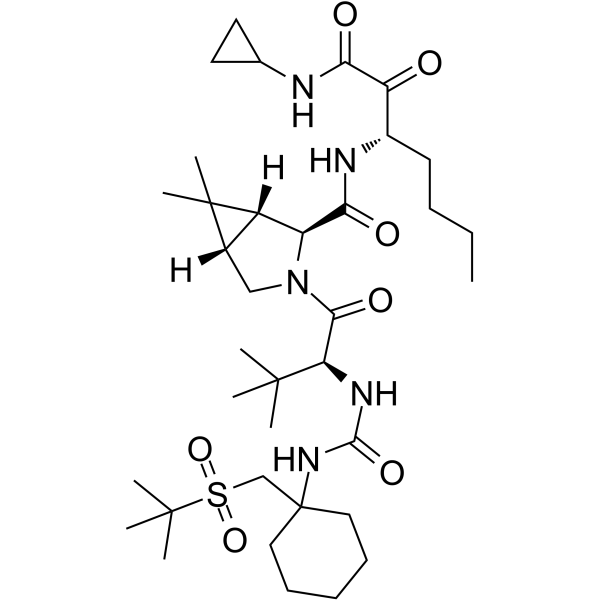
Narlaprevir (SCH 900518) is a selective and orally bioavailable NS3 protease inhibitor with a Ki value of 6 nM and an EC90 value of 40 nM [1]. Narlaprevir also inhibits the HCV nonstructuralprotein 3 serine protease . Narlaprevir is also a SARS-CoV 3CL pro inhibitor with an IC50 of 2.3 μM .
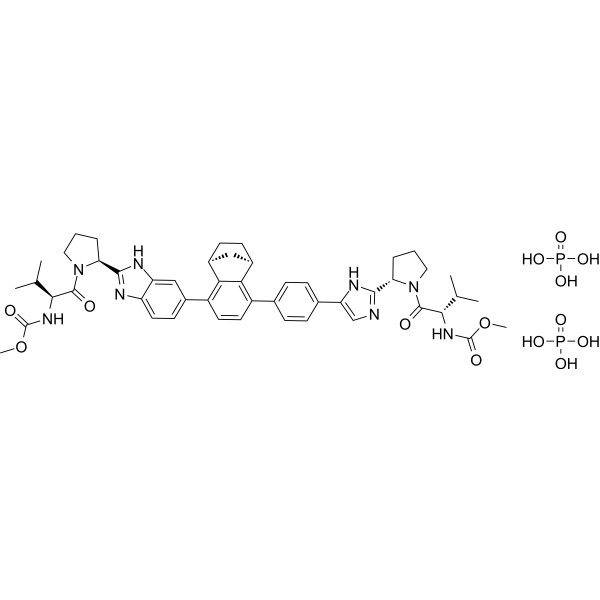
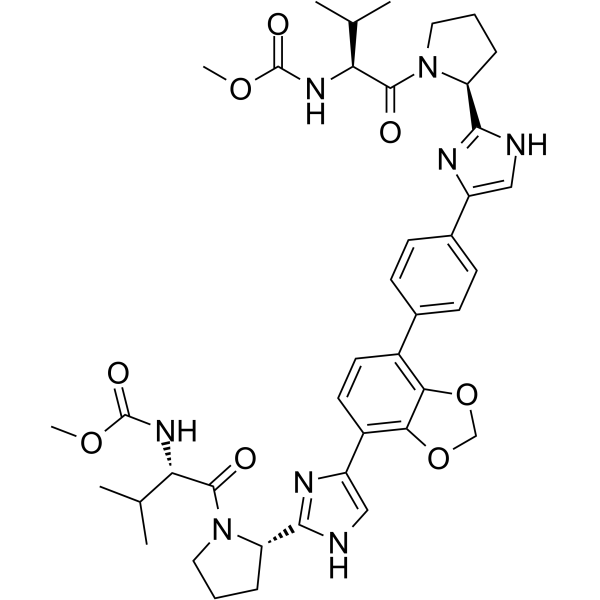
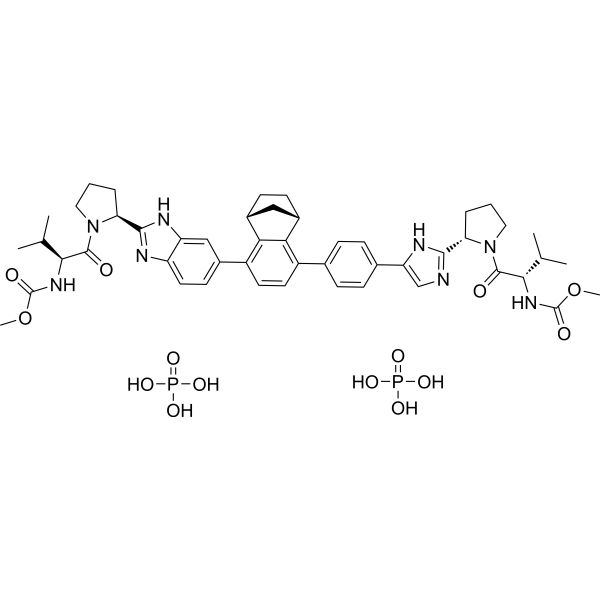
Yimitasvir diphosphate (Emitasvir diphosphate; DAG-181 diphosphate) is an orally active inhibitor of hepatitis C virus (HCV) nonstructuralprotein 5A (NS5A). Yimitasvir diphosphate is applicable to research related to HCV infection [1].
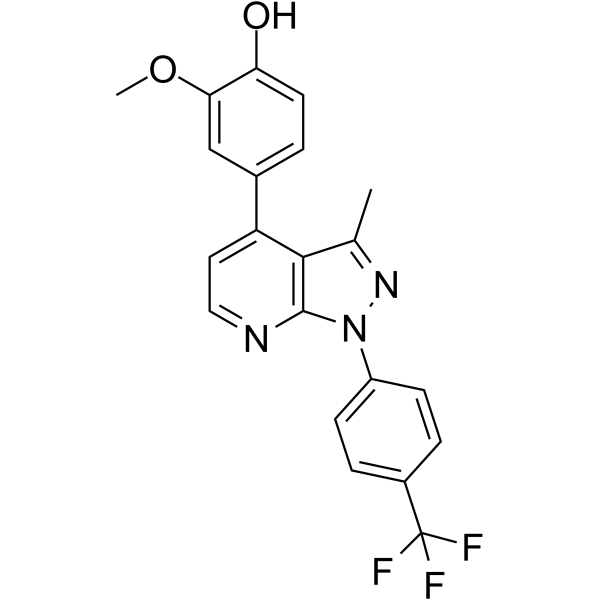
ML303 is a pyrazolopyridine influenza virusnonstructuralprotein 1(NS1) antagonist (IC90 = 155 nM), with an EC50 of 0.7 μM for Influenza A virus H1N1[1].
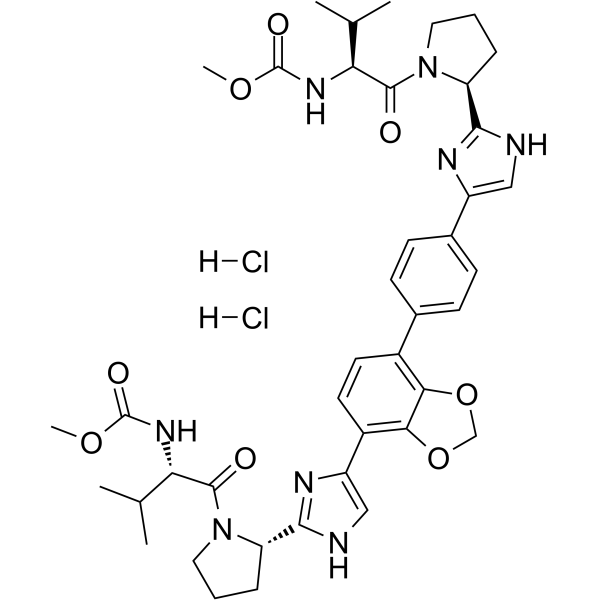
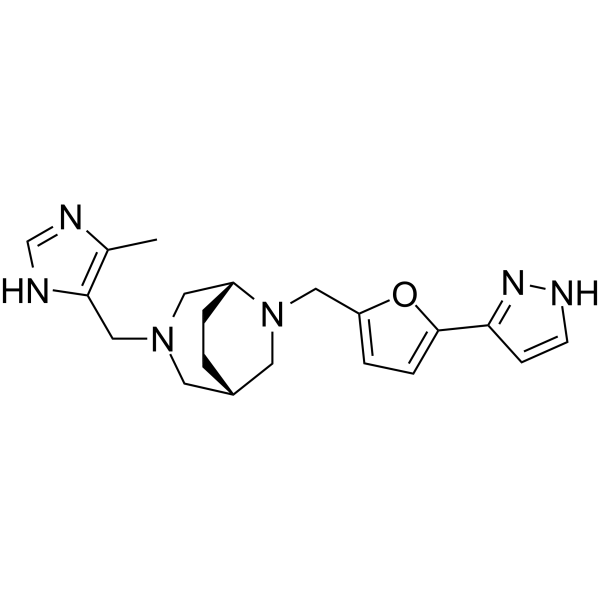
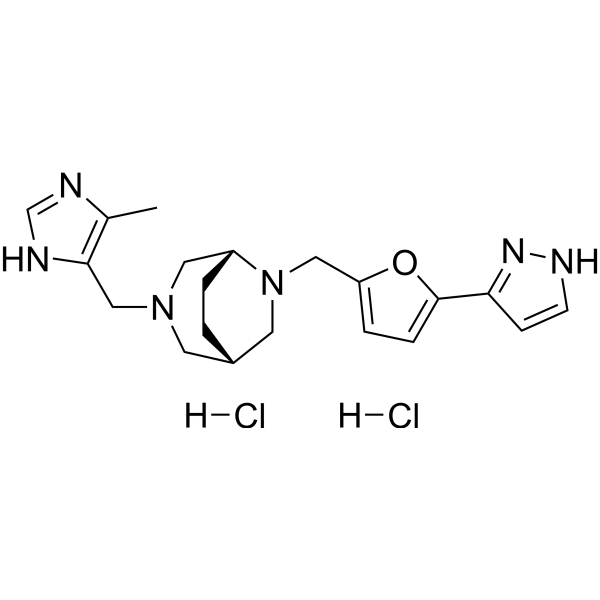
Coblopasvir (KW-136) dihydrochloride is a pangenotypic non-structuralprotein 5A (NS5A) inhibitor. Coblopasvir dihydrochloride can be used for research of chronic hepatitis C virus infection [1].
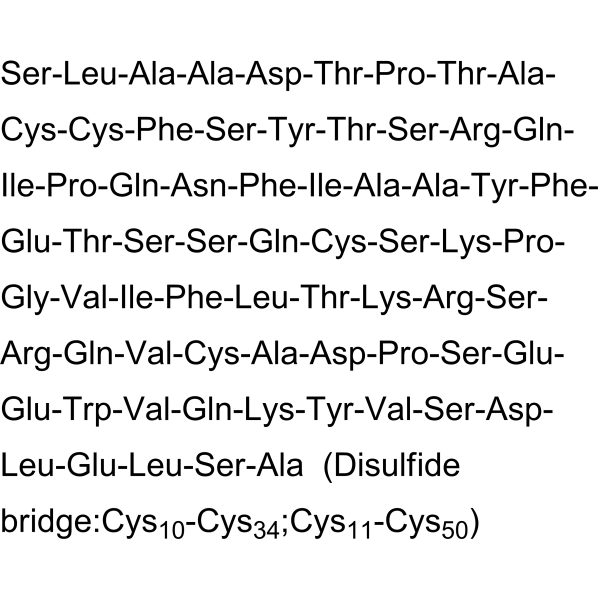
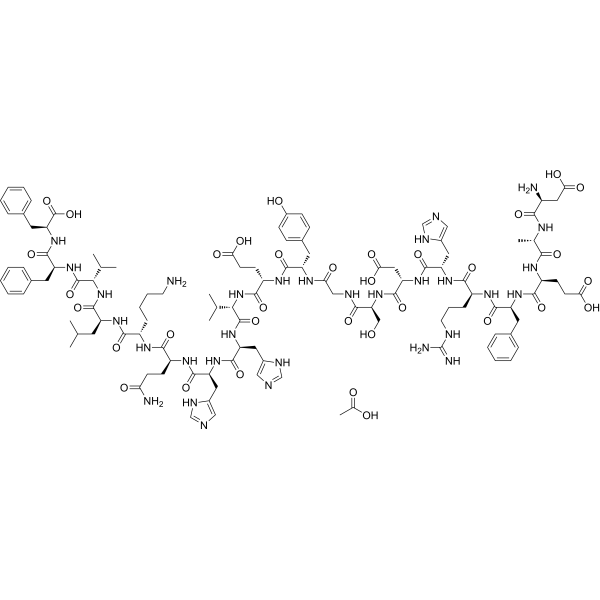
pTH-Related Protein (1-34) (human, mouse, rat), a fragment of parathyroid hormone-related protein, is an anabolic agent. pTH-Related Protein (1-34) (human, mouse, rat) can be used for postmenopausal osteoporosis study [1].
INCB 3284 is a potent, selective and orally bioavailable human CCR2 antagonist, inhibiting monocyte chemoattractant protein-1 binding to hCCR2, with an IC50 of 3.7 nM. INCB 3284 can be used in the research of acute liver failure.
(6E)-SR 11302 is a E-isomer of SR 11302. SR 11302 is an activator protein-1(AP-1) transcription factor inhibitor. SR 11302 is a retinoid that specifically inhibits AP-1 activity without activating the transcription of retinoic acid response element (RARE) [1].
Sirtuin modulator 8 is a sirtuin modulator that can activate Sirtuin activity. Sirtuin modulator 8 significantly downregulates the expression of monocyte chemoattractant protein-1 (MCP-1) and upregulates the expression of fibroblast growth factor 21 (FGF21). Sirtuin modulator 8 regulates the expression of inflammation- and metabolism-related genes, showing potential for studying metabolic diseases (such as diabetes, obesity) and inflammatory diseases [1].
Velpatasvir (Standard) is the analytical standard of Velpatasvir. This product is intended for research and analytical applications. Velpatasvir (VEL, GS-5816) is a novel pan-genotypic hepatitis C virus (HCV) nonstructuralprotein 5A (NS5A) inhibitor with activity against genotype 1 (GT1) to GT6 HCV replicons. Velpatasvir is also a SARS-CoV 3CL pro inhibitor with an IC50 of 2.16 μM .
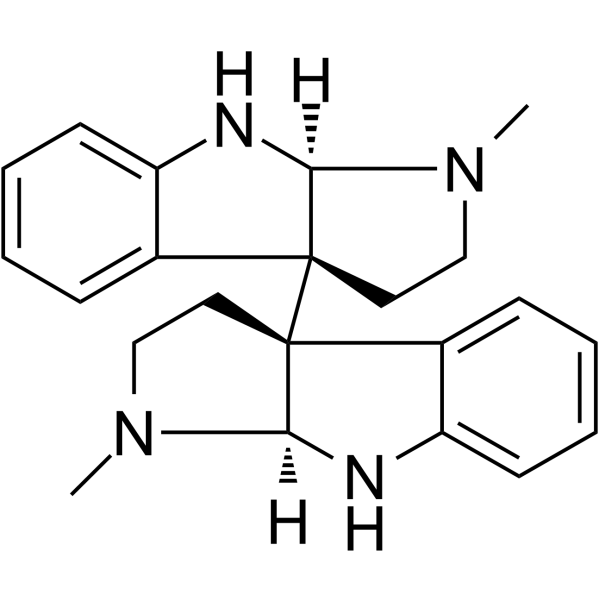
Chimonanthine is an alkaloid of Chimonanthus praecox, inhibits tyrosinase and tyrosine-related protein-1 mRNA expression, amd inhibits melanogenesis [1].
Yimitasvir (Emitasvir; DAG-181) is an orally active inhibitor of hepatitis C virus (HCV) nonstructuralprotein 5A (NS5A). Yimitasvir is applicable to research related to HCV infection [1].
MyD88-IN-4 is a MyD88 inhibitor. MyD88-IN-4 exerts antiviral effects by up-regulating IFN-β, and anti-inflammatory effects by inhibiting pro-inflammatory cytokine production. MyD88-IN-4 prevents MyD88 homodimer formation and its interaction with IRF3/IRF7. MyD88-IN-4 demonstrates efficacy against encephalitic alphavirus infections by reducing viral replication and improving survival in VEEV TC-83-infected mouse models. MyD88-IN-4 can be used for the study of alphavirus infections, bacterial toxin-related diseases, and sepsis [1].
Encephalitic alphavirus-IN-1 has antiviral activity for VEEV and EEEV with EC50s of 0.24 μM and 0.16 μM, respectively. Encephalitic alphavirus-IN-1 has robust mouse plasma stability, and no obvious cytotoxicity [1].
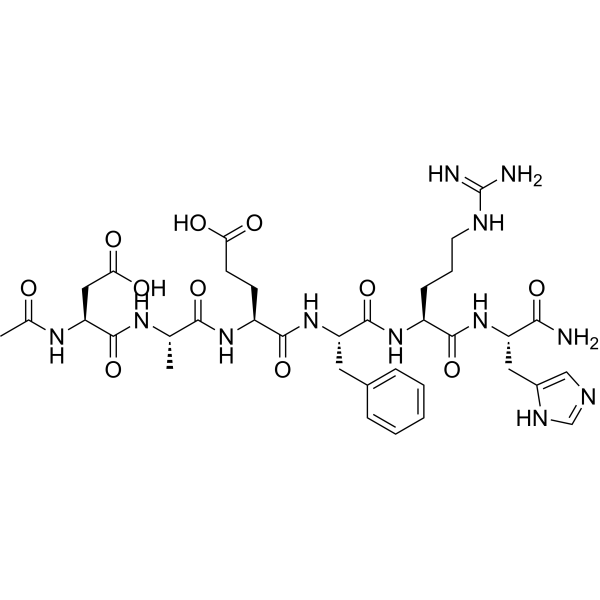
Acetyl-Amyloid β-Protein (1-6) amide is a hexapeptide that contains a potential copper(II) binding site. Acetyl-Amyloid β-Protein (1-6) amide can be used for research of Alzheimer's disease and related disorders [1].
pTH-Related Protein (1-37) (human, mouse, rat), the peptide analogue of pTH-Related Protein (pTHrP). pTHrP refers to parathyroid-hormone-related protein, involved in physiological regulation of bone formation [1].
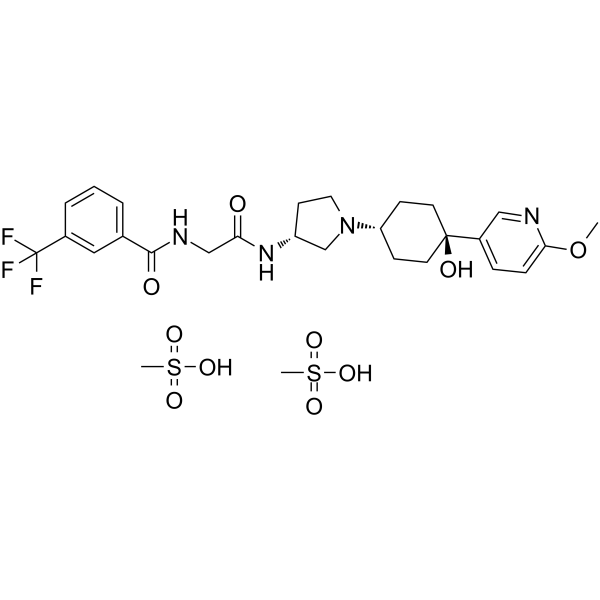
INCB 3284 dimesylate is a potent, selective and orally bioavailable human CCR2 antagonist, inhibiting monocyte chemoattractant protein-1 binding to hCCR2, with an IC50 of 3.7 nM. INCB 3284 dimesylate can be used in the research of acute liver failure.
MSP-1 P2 is a synthetic peptide of merozoite surface protein-1 (MSP-1). MSP-1 P2 stimulates umbilical cord blood lymphocytes to produce IFN-γ and IL-13, and this immune response is primarily mediated by CD4+ T cells. MSP-1 P2 can be used as a specific antigen stimulus to detect T cell responses and cytokine levels [1].
Anti-Mouse/Human TYRP1 Antibody (TA99) is a mouse-derived IgG2a κ type antibody inhibitor, targeting to mouse/human TYRP1. Anti-Mouse/Human TYRP1 Antibody (TA99) binds to Tyrp1 (tyrosinase related protein-1) on tumor. Anti-Mouse/Human TYRP1 Antibody (TA99) enhances infiltration of the tumor by CD8 + T cells. Anti-Mouse/Human TYRP1 Antibody (TA99) can be used for the research of melanoma [1].
Coblopasvir (KW-136) is a pangenotypic non-structuralprotein 5A (NS5A) inhibitor. Coblopasvir can be used for research of chronic hepatitis C virus infection [1].
BDGR-651 is an efficient and selective inhibitor of the Chikungunya virus (CHIKV) with an EC50 in NHDF cells of 0.86 μM, and the therapeutic index (SI) of 22.1. BDGR-651 exhibits dose-dependent protective effects when infecting Vero E6 cells, with its EC50 being 6 μM. BDGR-651 can be used for research on CHIKV infection [1].
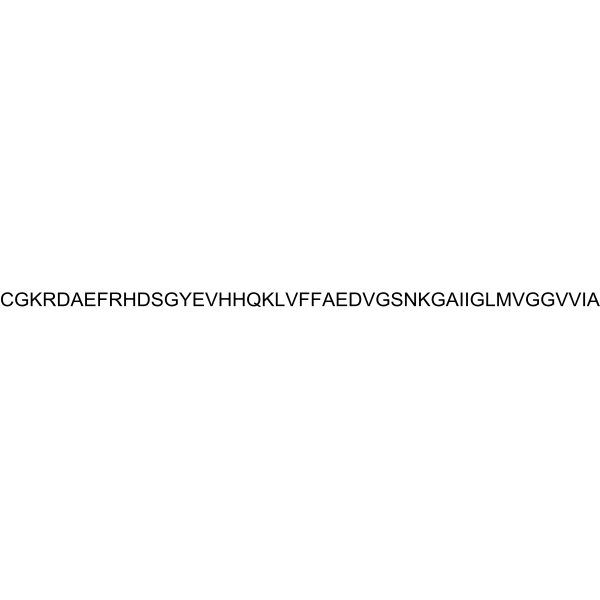
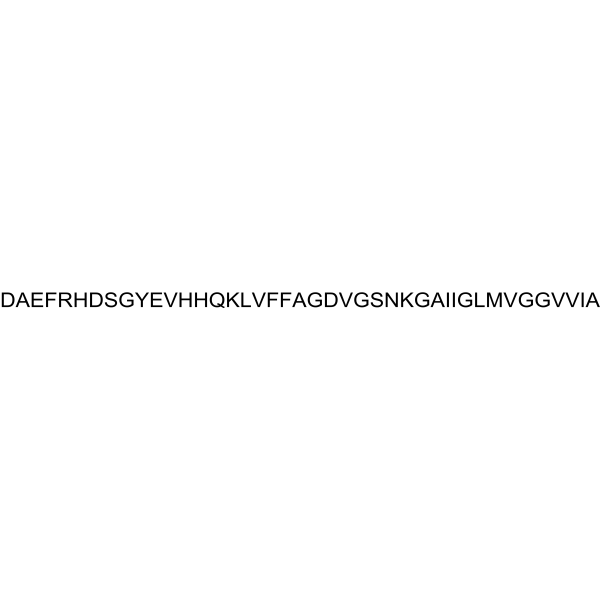
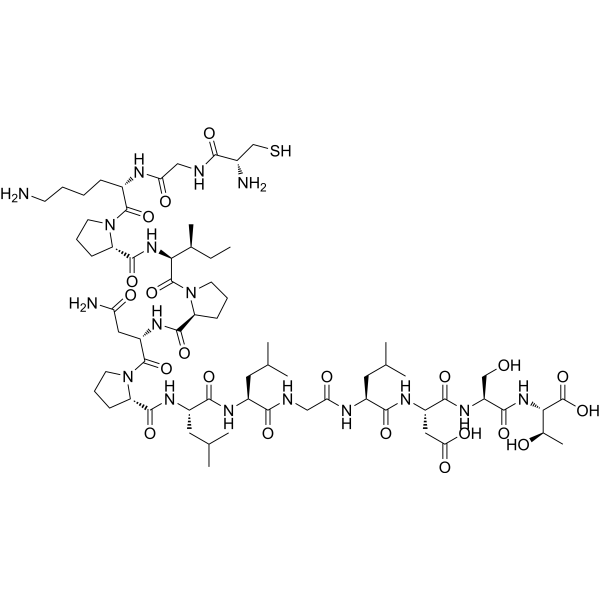
Cys-Gly-Lys-Arg-Amyloid β-Protein (1-42) is a peptide fragment of amyloid β-protein (Aβ). Cys-Gly-Lys-Arg-Amyloid β-Protein (1-42) can be used in research of Alzheimer's disease [1].
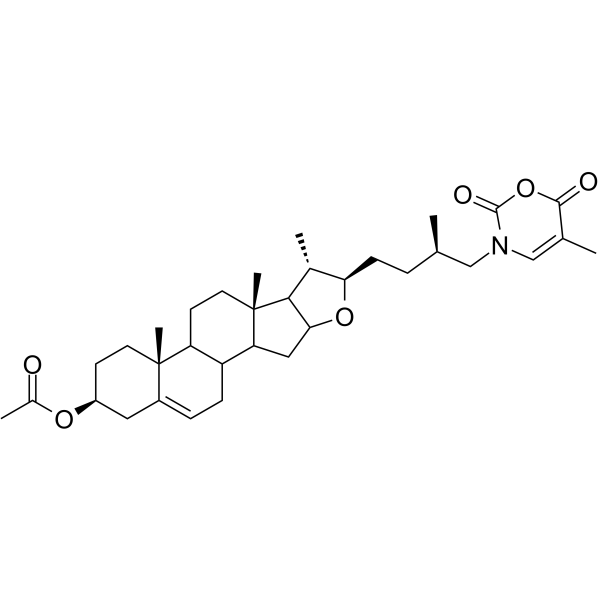
Lanatoside C (Standard) is the analytical standard of Lanatoside C. This product is intended for research and analytical applications. Lanatoside C is a cardiac glycoside, can be used in the treatment of congestive heart failure and cardiac arrhythmia.Lanatoside C has an IC50 of 0.19 μM for dengue virus infection in HuH-7 cells. Lanatoside C can effectively inhibit all four serotypes of dengue virus, flavivirus Kunjin, alphavirus Chikungunya, Sindbis virus and the human enterovirus 71[1] .
SARS-CoV-2 nsp13-IN-2 (Compound C2) is a SARS-CoV-2non-structuralprotein 13 (nsp13) small-molecule inhibitor with an IC50 of 42 μM against nsp13 ssDNA + ATPase [1].
Anti-Mouse Delta-like protein 1/DLL1 Antibody (HMD1-5) is an anti-mouse Delta-like protein 1/DLL1 IgG monoclonal antibody. Anti-Mouse Delta-like protein 1/DLL1 Antibody (HMD1-5) can reverse the inhibition of Treg cells. Anti-Mouse Delta-like protein 1/DLL1 Antibody (HMD1-5) can inhibit the upregulation of GLT-1 expression induced by endothelial cells. Anti-Mouse Delta-like protein 1/DLL1 Antibody (HMD1-5) reduces autoimmune response by reducing B cell activation. Anti-Mouse Delta-like protein 1/DLL1 Antibody (HMD1-5) can be used for research on inflammation conditions such as lupus nephritis [1] .
Elbasvir (Standard) is the analytical standard of Elbasvir. This product is intended for research and analytical applications. Elbasvir (MK-8742) is a hepatitis C virusnonstructuralprotein 5A (HCV NS5A) inhibitor with EC50s of 4, 3 and 3 nM against genotype 1a, 1b, and 2a, respectively.
pTH-Related Protein (1-34) amide (human, mouse, rat) (Human PTHrP-(1-34)NH2) is a N-terminal fragments of PTHrP. pTH-Related Protein (1-34) amide (human, mouse, rat) induces hypercalcemia, and can be used for research of humoral hypercalcaemia of malignancy [1].
MRL-1237 is an inhibitor of the replication of several enteroviruses targeting the non-structuralprotein 2C of the virus. MRL-1237 shows effective inhibition against poliovirus and various other enteroviruses. MRL-1237 does not inhibit the NTPase (ATPase) activity of 2C protein. MRL-1237 can be used for the research of infection [1].
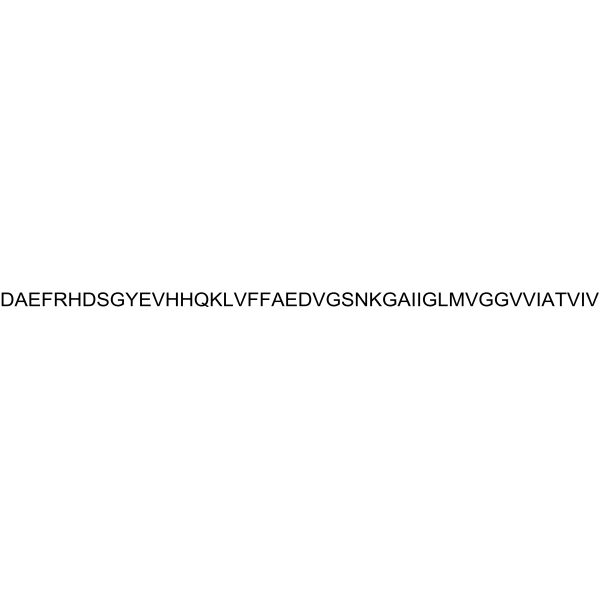
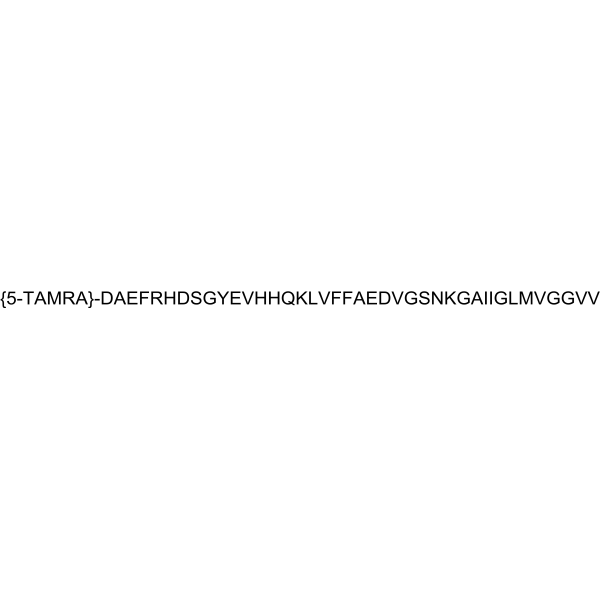
(Glu20)-Amyloid β-Protein (1-42) is a slower fibrillizing variant of amyloid β-protein (Aβ). The Glu20 mutation reduces the aggregation propensity of Aβ42 and prevents accumulation of the slowly fibrillizing peptide. Amyloid β-protein is the primary component of both vascular and parenchymal amyloid deposits in Alzheimer's disease [1] .
CHIKV nsP2 protease-IN-3 (Compound 5) is an irreversible covalent inhibitor targeting the nonstructuralprotein 2 (nsP2) cysteine protease of chikungunya virus (CHIKV) (IC50=0.5 μM). CHIKV nsP2 protease-IN-3 inhibits viral RNA replication. CHIKV nsP2 protease-IN-3 is promising for research of alphaviruses [1].
CID15997213 is a blood-brain barrier penetrating antiviral agent. CID15997213 targets the amino-terminal domain of the VEEVnonstructuralprotein 2 (nsP2). CID15997213 shows alphavirus-specific antiviral effect, inhibiting VEEV and Western equine encephalitis virus[1].
Yimitasvir (Emitasvir) diphosphate is an orally active hepatitis C virus (HCV) nonstructuralprotein 5A (NS5A) inhibitor and can be used for research of chronic hepatitis C virus infection [1].
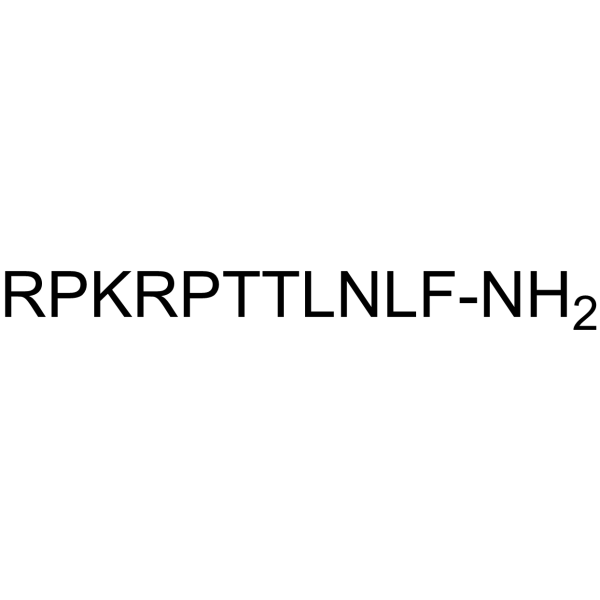
JIP-1(153-163) (TI-JIP) is a peptide inhibitor of c-JNK, based on residues 153-163 of JNK-interacting protein-1 (JIP-1) (Modifications: Phe-11 = C-terminal amide) [1].
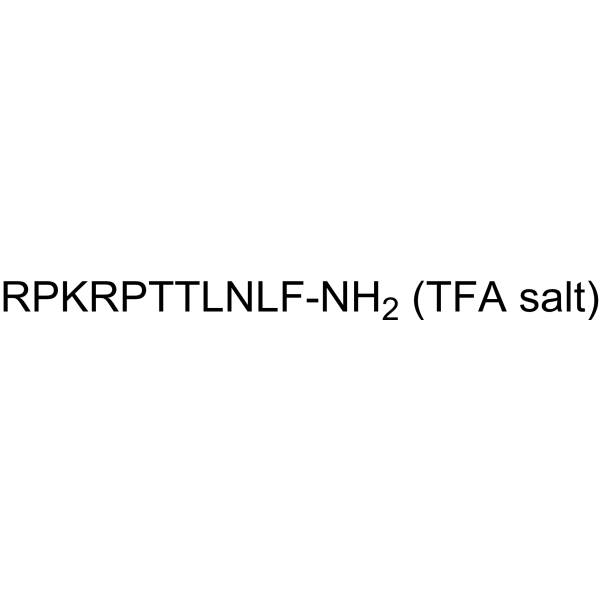
JIP-1(153-163) TFA (TI-JIP TFA) is a peptide inhibitor of c-JNK, based on residues 153-163 of JNK-interacting protein-1 (JIP-1) (Modifications: Phe-11 = C-terminal amide) [1].
KK4A peptide is a small peptide derived from nonstructuralprotein 4A (NS4A) of hepatitis C virus (HCV) that significantly increases the catalytic efficiency of NS3 protease. The KK4A peptide may be used to gain insights into the function and mechanism of the HCV NS3 protease, thereby advancing research into HCV infection [1].
Nagrestipen, a human macrophage inflammatory protein-1alpha (MIP-1α) variant, also known as ECI 301. Nagrestipen has antitumor activity and can be used in therapeutic trials to study cancer, tumors, metastases, radiation oncology, and tumor metastasis [1].
NS2 (114-121), Influenza, the 114-121 fragment of influenza nonstructuralprotein 2 (NS2), is a influenza-derived epitope. NS2 (114-121), Influenza can be used for the research of CD8 + cytotoxic T lymphocyte (CTL) in antiviral immune responses [1].
Q8, an effective antiangiogenic drug, is a CysLt1 antagonist (IC50 of 4.9 μM). Q8 is sufficient to reduce cellular levels of NF-κB and calpain-2 and secreted levels of the proangiogenic proteins intercellular adhesion molecule-1, vascular cell adhesion protein-1, and VEGF [1].
VAP-1-IN-3 (compound 136) is a potent amine oxidase vascular adhesion protein-1(VAP-1) inhibitor, with an IC50 of 0.13 μM for VAP-1 isolated from bovine plasma. VAP-1-IN-3 can be used for the research of inflammatory [1].
SC-236 is an orally active COX-2 specific inhibitor (IC50 = 10 nM) and a PPARγ agonist. SC-236 suppresses activator protein-1 (AP-1) through c-Jun NH2-terminal kinase. SC-236 exerts anti-inflammatory effects by suppressing phosphorylation of ERK in a murine model [1] .
Dofequidar (MS-209) sesquifumarate is an orally active quinoline compoundthat blocks P-glycoprotein (P-gp) and multidrug resistance-associated protein-1 (MDR-1). Dofequidar sesquifumarate has highly potent reversing effect on multidrug-resistant tumor cells. Dofequidar sesquifumarate competitively inhibits ABCB1/P-gp, ABCC1/MRP-1, blocks the efflux of chemotherapeutic agents, increases the drug concentration in cancer cells, and enhances the chemotherapeutic effect [1] .
CHIKV nsP2 protease-IN-2 (Compound 2o) is a allosteric nonstructuralprotein 2 helicase (nsP2hel) inhibitor with IC50s of 0.5 μM and 0.9 μM for nsP2 ATPase and RNA unwindase, respectively. CHIKV nsP2 protease-IN-2 has broad-spectrum antialphaviral activity against chikungunya virus (CHIKV), Mayaro virus (MAYV), and Venezuelan equine encephalitis virus (VEEV) (EC50 of 120 nM for CHIKV-nLuc). CHIKV nsP2 protease-IN-2 can be used for alphaviruses infections research [1].
R-1 sodium is a RNA aptamer that bind to Non-structuralprotein 1 (NS1) (Kd = 1.62 ± 0.30 nM). R-1 sodium inhibits the interaction of NS1 with tripartite motif-containing protein 25 (TRIM25), and suppression of NS1 enabled retinoic acid inducible gene I (
R-2 sodium is a RNA aptamer that bind to Non-structuralprotein 1 (NS1) (Kd = 1.92 ± 0.27 nM). R-2 sodium inhibits the interaction of NS1 with tripartite motif-containing protein 25 (TRIM25), and suppression of NS1 enabled retinoic acid inducible gene I (
HIV-1 tat Protein (1-9) occurs extracellularly and has a role in the immunosuppression of non-HIV-1-infected T cells in acquired AIDS. HIV-1 tat Protein (1-9) is an inhibitor of DP IV. HIV-1 tat Protein (1-9) can be synthesized by phase peptide synthesis with Fmoc (N-(9-fluorenyl)methoxycarbonyl) technique using the peptide synthesizer 431A. HIV-1 tat Protein (1-9) can be studied in research on HIV-1[1].
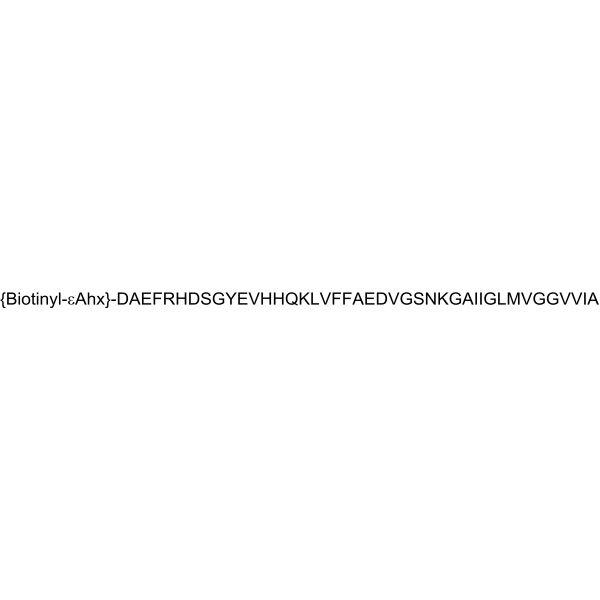
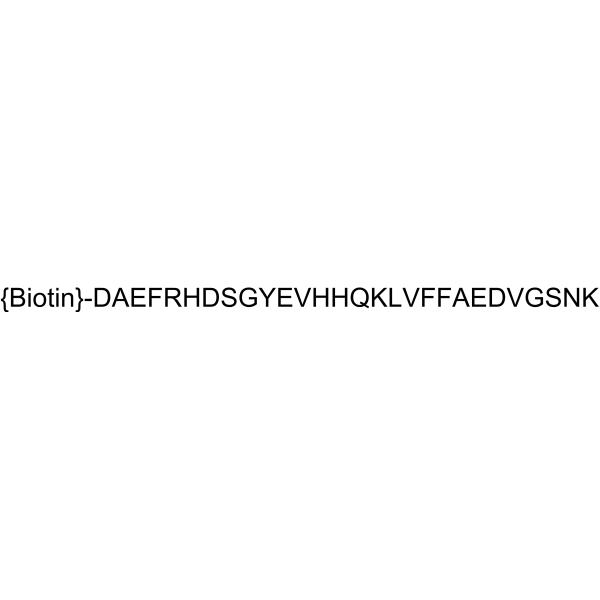
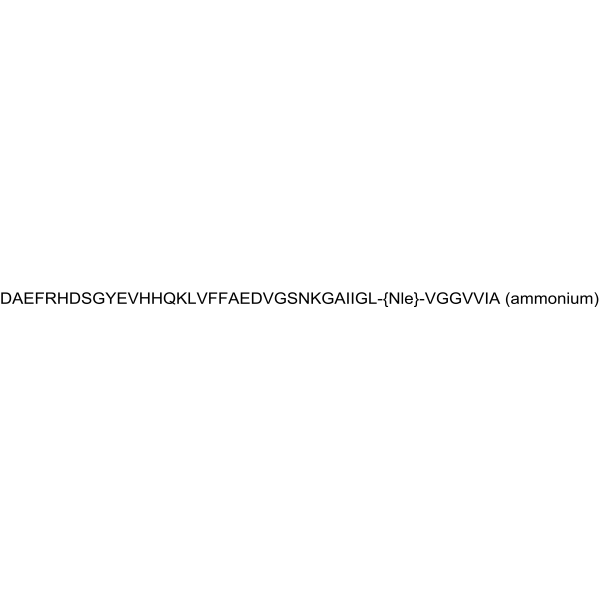
Biotinyl-Amyloid β-Protein (1-42) ammonium is a biotinylated Amyloid β-Protein (1-42) (HY-P1363). Biotinyl-Amyloid β-Protein (1-42) ammonium can be used for the research of Aβ1-42 converts to Aβ1-40 in brain [1].
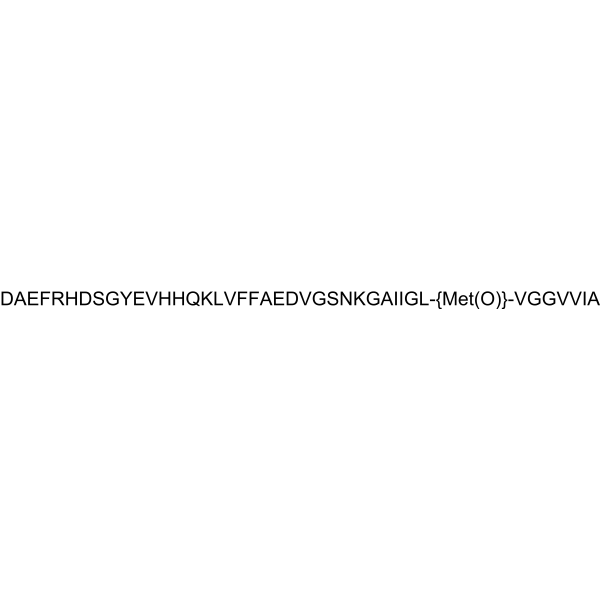
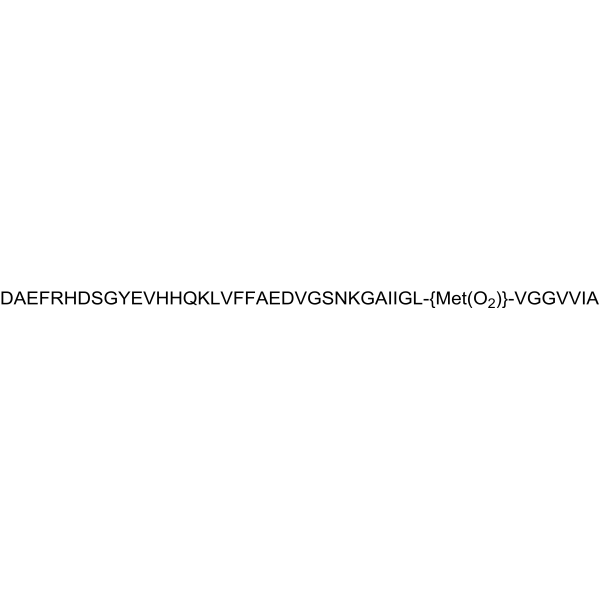
(Met(O)35)-Amyloid β-Protein (1-42) is the oxidation form of Met35 in Aβ42. (Met(O)35)-Amyloid β-Protein (1-42) can yield an oligomer size distribution characteristic of Aβ40. (Met(O)35)-Amyloid β-Protein (1-42) can be used in the research of Alzheimer’s disease (AD) [1].
(Gln22)-Amyloid β-Protein (1-42) is a Dutch mutation (E22Q) form of β-Amyloid (1-42) (HY-P1363). (Gln22)-Amyloid β-Protein (1-42) exhibits enhanced fibrillogenic and pathogenic properties [1].
1"-α-Azido-RDPr (Compound 11) is an analog of adenosine diphosphate ribose, and exhibits inhibitory efficacy against the SARS-CoV-2 nonstructuralprotein macodomain SARS-CoV-2 NSP3 Mac1 with an IC50 of 30 nM [1].
SARS-CoV-2 nsp13-IN-3 (Compound C3) is a SARS-CoV-2non-structuralprotein 13 (nsp13) small-molecule inhibitor with an IC50 of 32 μM against nsp13 ssDNA + ATPase [1].
CHIKV nsP2 protease-IN-1(compound J13) is an oral active non-structuralprotein 2 protease inhibitor with the EC50 of 0.39 μM aganist of CHIKV S27. CHIKV nsP2 protease-IN-1 can be used for study of Chikungunya virus[1].
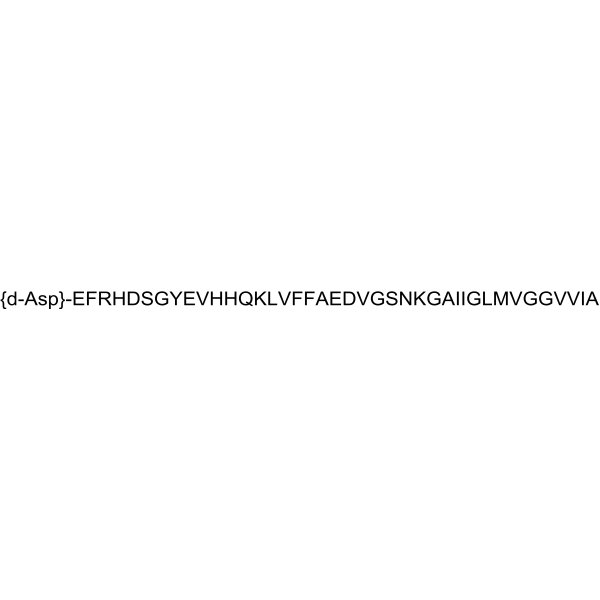
(D-Asp1)-Amyloid β-Protein (1-42) is a peptide fragment of amyloid β-protein (Aβ). Amyloid β-protein is the primary component of both vascular and parenchymal amyloid deposits in Alzheimer's disease [1].
(Gly22)-Amyloid β-Protein (1-42) is a peptide fragment of amyloid β-protein (Aβ). Amyloid β-protein is the primary component of both vascular and parenchymal amyloid deposits in Alzheimer's disease. Mutation of Glu22 to Gly22 in Aβ can increase aggregation [1] .
RU-0415529 is an orally active inhibitor for SARS-CoV-2 nonstructuralprotein 14 (NSP14) with an IC50 of 356 nM. RU-0415529 binds to the SAH-stabilized cap binding pocket, inhibits viral RNA methylation and the viral replication. RU-0415529 exhibits anti-infectious activity in mouse models [1].
Hepatitis C Virus S5A/5B is a synthetic peptide substrate. Hepatitis C Virus S5A/5B mimics the NS5A/5B junction of the nonstructuralprotein (NS), served as the substrate for the study of HCV NS3 protease activity [1].
GS-9851 (PSI-7851) is a HCV nonstructuralprotein 5B (NS5B) inhibitor with potential activity for the study of HCV infection. GS-9851 shows good tolerability with initial HCV genotype 1 infection. GS-9851 is rapidly cleared from the body with a half-life of approximately 1 hour [1].
Narlaprevir (Standard) is the analytical standard of Narlaprevir. This product is intended for research and analytical applications. Narlaprevir (SCH 900518) is a selective and orally bioavailable NS3 protease inhibitor with a Ki value of 6 nM and an EC90 value of 40 nM [1]. Narlaprevir also inhibits the HCV nonstructuralprotein 3 serine protease . Narlaprevir is also a SARS-CoV 3CLpro inhibitor with an IC50 of 2.3 μM .
SARS-CoV-2 nsp13-IN-6 (compound C5) is a potent SARS-CoV-2 non-structuralprotein 13 (nsp13) inhibitor with IC50 values of 27 and 33 μM for ssDNA + ATPase and ssDNA - ATPase. SARS-CoV-2 nsp13-IN-6 can be used for researching anti-COVID-19 [1].
TEI-6122 is a 7-thiaprostaglandin E1 derivative. TEI-6122 can reduce urinary protein and suppressthe increase of blood urea nitrogen. TEI-6122 can inhibit monocyte chemoattractant protein-1 induced chemotaxis. TEI-6122 can be used for the research of inflammation, such as nephritis [1] .
AMY109 is an anti-human interleukin-8 (IL-8) monoclonal antibody, with a Ka of 36.8 pM for human IL-8, and a Ka of 380 pM for cynomolgus monkey IL-8. AMY109 binds to human and cynomolgus monkey IL-8 in a pH-dependent manner, inhibits IL-8-mediated activation of CXCR1 and CXCR2, and blocks the downstream biological activities of IL-8. AMY109 inhibits neutrophil recruitment to endometriotic lesions and suppresses monocyte chemoattractant protein-1 production by neutrophils. AMY109 is applicable to research related to endometriosis [1].
TDI-014925 (Compound 58) is a SARS-CoV-2 methyltransferase nonstructuralprotein 14 (NSP14) inhibitor with an IC50 of 0.2 nM. TDI-014925 has an antiviral activity with significant microsomal stability and no CYP inhibitory activity. TDI-014925 can be used for COVID-19 research [1].
3-O-Caffeoyl-5-O-feruloylquinic acid is a quinic acid-based phenolic compound that can be isolated from Eryngium bourgatii. 3-O-Caffeoyl-5-O-feruloylquinic acid regulates free radical scavenging and inflammatory pathways, exerting antioxidant activity through electron transfer and hydrogen atom transfer mechanisms. It also inhibits TNF-α-induced reactive oxygen species (ROS) production and the production of monocyte chemoattractant protein-1(MCP-1) and its transcripts in human umbilical vein endothelial cells (HUVECs).
Dofequidar (fumarate) (Standard) is the analytical standard of Dofequidar (fumarate). This product is intended for research and analytical applications. Dofequidar fumarate (MS-209) is an orally active quinoline compoundthat blocks P-glycoprotein (P-gp) and multidrug resistance-associated protein-1 (MDR-1). Dofequidar fumarate has highly potent reversing effect on multidrug-resistant tumor cells. Dofequidar fumarate competitively inhibits ABCB1/P-gp, ABCC1/MRP-1, blocks the efflux of chemotherapeutic agents, increases the drug concentration in cancer cells, and enhances the chemotherapeutic effect [1] .
CHVB-032 is an antiviral agent and SFV nsP1 inhibitor. CHVB-032 inhibits the methyltransferase and guanylyltransferase activities of nsP1, blocks viral RNA capping process, and suppresses post-entry steps in CHIKV replication. CHVB-032 inhibits CHIKV replication across different isolates, but shows no activity against other alphaviruses. CHVB-032 can be used in research related to chikungunya fever and CHIKV infection [1] .
Anti-West Nile virus NS1 Antibody (10NS1) reacts with non-structuralprotein 1 (NS1) of West Nile virus (WNV). Anti-West Nile virus NS1 Antibody (10NS1) offers significant protection against flaviviral infections in vivo. Recommend Isotype Controls: Mouse IgG2a kappa, Isotype Control (HY-P99978) [1].
Nesbuvir (Standard) is the analytical standard of Nesbuvir. This product is intended for research and analytical applications. Nesbuvir is a nonnucleoside inhibitor of the hepatitis C virus (HCV) nonstructuralprotein 5B (NS5B) polymerase.
TD-6450 (Compound 51) is an orally active HCV1A inhibitor. TD-6450 inhibits the pan-genotypic nonstructuralprotein 5A (NS5A). TD-6450 can be used for research on diseases such as hepatitis [1].
XJ5 is a non-nucleoside covalent inhibitor of Nsp12 (IC50=0.12 μM), which is the non-structuralprotein 12 of the virus. XJ5 has the potential to be an antiviral inhibitor of SARS-CoV-2 [1].
LRH-0003 is an inhibitor of the Macrodomain 1(Mac1) of nonstructuralprotein 3 (NSP3) from SARS-CoV-2, with an IC50 value of 1.7 μM. LRH-0003 can be used for the research antiviral infection targeting SARS-CoV-2 [1].
6-Hydroxypyridin-3-ylboronic acid is a heterocyclic building block, which can be used in the synthesis of non-nucleoside inhibitors of hepatitis C virus (HCV) RNA-dependent RNA polymerase nonstructuralprotein 5B (NS5B). 6-Hydroxypyridin-3-ylboronic acid has also been used in the synthesis of mammalian target of rapamycin (mTOR) inhibitors [1] .
3′-Deoxy CTP is a nucleotide analogue and a mandatory chain terminator. 3′-Deoxy CTP can cause chain termination by lacking the 3′-hydroxyl group, inhibiting the RNA synthesis activity of HCVnonstructuralprotein (NS5B) polymerase and blocking viral replication. 3′-Deoxy CTP can be used to study the chain termination mechanism of HCV polymerase and the development of antiviral drugs [1].
ATPase-IN-8 is an anti-enteroviral agent that inhibits the viral non-structuralprotein 2C, with an IC50 of 1.4 μM against CV-B3 2C ATPase. ATPase-IN-8 exhibits significant anti-enteroviral activity and acts as a potent, selective inhibitor of CV-B3 and EV-D68. ATPase-IN-8 can be used for research on enteroviral infections [1].
Filibuvir is an orally active, selective non-nucleoside inhibitor of the HCV nonstructural 5B protein (NS5B) RNA-dependent RNA polymerase (RdRp). Filibuvir binds noncovalently in the thumb II allosteric pocket of NS5B. Filibuvir inhibits genotype 1a and 1b replicons with EC50s of 59 nM for both isoforms, respectively [1]. Filibuvir preferentially inhibits elongative RNA synthesis and potently decreases viral RNA accumulation .
Ruzasvir (MK-8408) is an orally active inhibitor for genotypic HCV nonstructuralprotein 5A (NS5A), which inhibits the replication of NS5A mutants GT1a, GT1a L31V, GT1a Y93H, GT2b, GT3a and GT4a with EC90 ranging from 0.003 to 0.067 nM. Ruzasvir exhibits good pharmacokinetic characters in rhesus monkey model [1].
Velpatasvir-d3 (GS-5816-d3) is deuterium labeled Velpatasvir. Velpatasvir (VEL, GS-5816) is a novel pan-genotypic hepatitis C virus (HCV) nonstructuralprotein 5A (NS5A) inhibitor with activity against genotype 1 (GT1) to GT6 HCV replicons. Velpatasvir is also a SARS-CoV 3CL pro inhibitor with an IC50 of 2.16 μM [1] .
A-837093 sodium is a potent and orally active inhibitor of the hepatitis C virus (HCV) nonstructuralprotein 5B (NS5B) polymerase. A-837093 sodium shows potencies against polymerases derived from both HCV genotypes 1a (IC50 = 1.25 nM) and 1b (IC50 = 0.33 nM). A-837093 sodium exhibits antiviral efficacy in HCV-infected chimpanzees. A-837093 sodium can be used for HCV infection research [1].
RdRP-IN-9 (Compound 6b) is a reversible covalent allosteric inhibitor of RdRp. RdRP-IN-9 demonstrates high anti-coronavirus activity, with an EC50 value of 0.68 μM against HCoV-OC43 RdRP-IN-9 exerts a more prolonged antiviral effect by reversibly acylating Cys12 in the NiRAN domain of non-structuralprotein 12 (nsp 12) and exhibits synergistic anti-coronavirus activity with Molnupiravir (HY-135853) [1].
(S)-Velpatasvir- 13C,d3 ((S)-GS-5816- 13C,d3) is 13C labeled Velpatasvir. Velpatasvir (VEL, GS-5816) is a novel pan-genotypic hepatitis C virus (HCV) nonstructuralprotein 5A (NS5A) inhibitor with activity against genotype 1 (GT1) to GT6 HCV replicons. Velpatasvir is also a SARS-CoV 3CL pro inhibitor with an IC50 of 2.16 μM .
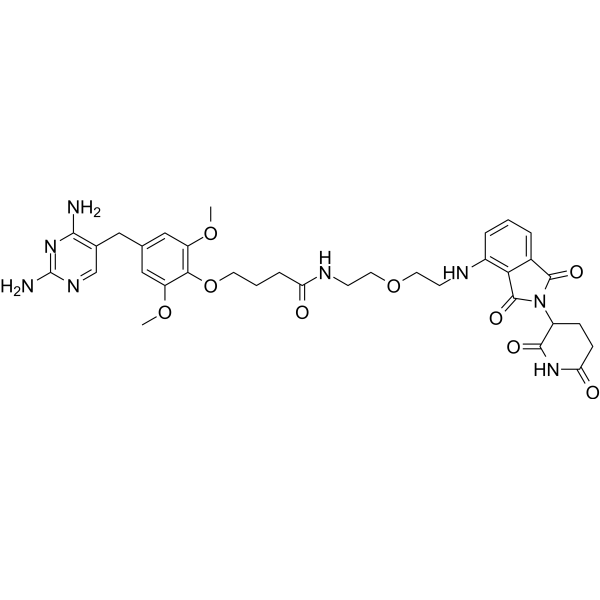
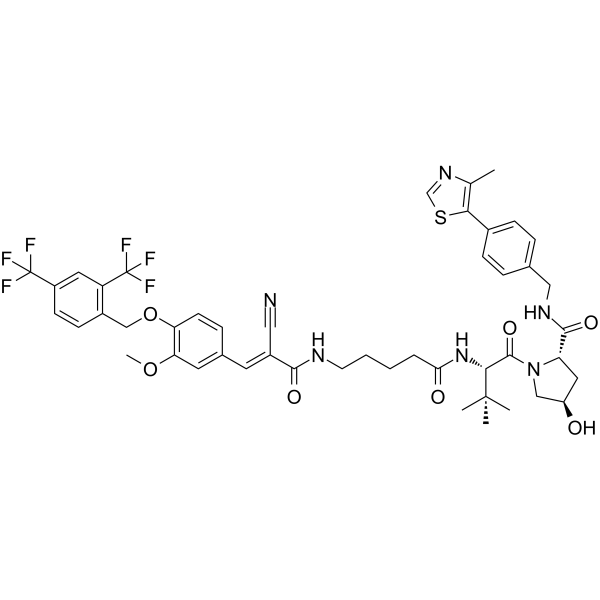
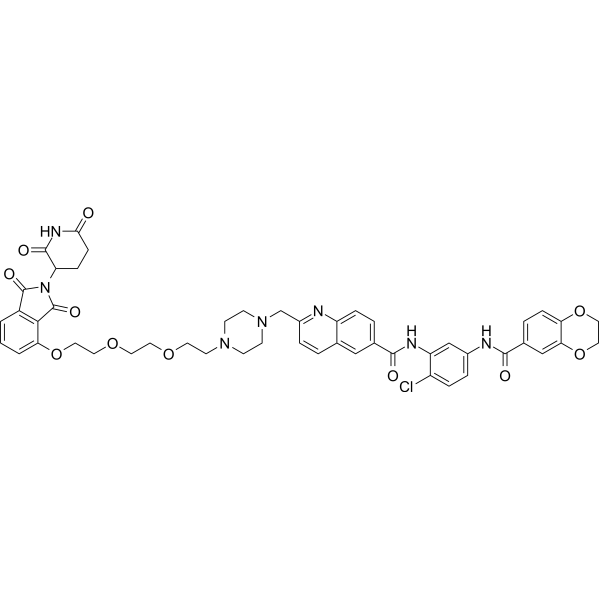
RPG-01-132 is a DENV capsid protein PROTAC degrader, with a DC50 of 2.4 μM. RPG-01-132 blocks viral assembly, eliminates viral particles, and interferes with the non-structural functions of capsid protein. RPG-01-132 exhibits significant antiviral activity against all four DENV serotypes and the ST148 (HY-121663)-resistant DENV2 mutant strain. RPG-01-132 is applicable to research related to dengue virus infection [1].
Velpatasvir- 13C,d3 (GS-5816- 13C,d3) is 13C and deuterium labeled Velpatasvir. Velpatasvir (VEL, GS-5816) is a novel pan-genotypic hepatitis C virus (HCV) nonstructuralprotein 5A (NS5A) inhibitor with activity against genotype 1 (GT1) to GT6 HCV replicons. Velpatasvir is also a SARS-CoV 3CL pro inhibitor with an IC50 of 2.16 μM [1] .
Mosnodenvir (JNJ-1802) is an orally active pan serotype dengue virus (DENV) inhibitor, with EC50 values ranging from 0.057 to 11 nM for four dengue virus (DENV) serotypes. Mosnodenvir blocks viral replication by inhibiting the formation of complexes between two viral proteins, nonstructuralprotein 3 (NS3) and NS4B, thereby preventing the formation of new viral RNA. Mosnodenvir exhibits picomolar to nanomolar antiviral activity in vitro and has antiviral efficacy in mice and non-human primates [1] .
SARS-CoV-2 nsp13-IN-1 (compound C1) is a potent nsp13 (non-structuralprotein 13) inhibitor. SARS-CoV-2 nsp13-IN-1 only inhibits nsp13 ssDNA + ATPase, with an IC50 of 6 μM. SARS-CoV-2 nsp13-IN-1 does not inhibit ssDNA - ATPase. SARS-CoV-2 nsp13-IN-1 can be used for COVID-19 research [1].
Paritaprevir (ABT-450) is a potent, orally active and antiviral non-structuralprotein 3/4A (NS3/4A) protease inhibitor with EC50s of 1 and 0.21 nM against HCV 1a and 1b, respectively. Paritaprevir is also a SARS-CoV 3CL pro inhibitor with an IC50 of 1.31 μM. Paritaprevir is metabolized primarily by cytochrome P450 (CYP) 3A. The plasma concentration and half-life of Paritaprevir can be enhanced by Ritonavir (a CYP450 inhibitor) [1] .
(+)-Mosnodenvir is an isomer of Mosnodenvir (HY-153810). Mosnodenvir (JNJ-1802) is an orally active pan serotype dengue virus (DENV) inhibitor, with EC50 values ranging from 0.057 to 11 nM for four dengue virus (DENV) serotypes. Mosnodenvir blocks viral replication by inhibiting the formation of complexes between two viral proteins, nonstructuralprotein 3 (NS3) and NS4B, thereby preventing the formation of new viral RNA. Mosnodenvir exhibits picomolar to nanomolar antiviral activity in vitro and has antiviral efficacy in mice and non-human primates [1].
3′-Deoxy CTP trisodium is the sodium salt form of 3′-Deoxy CTP (HY-171587). 3′-Deoxy CTP trisodium is a nucleotide analogue and a mandatory chain terminator. 3′-Deoxy CTP trisodium can cause chain termination by lacking the 3′-hydroxyl group, inhibiting the RNA synthesis activity of HCVnonstructuralprotein (NS5B) polymerase and blocking viral replication. 3′-Deoxy CTP trisodium can be used to study the chain termination mechanism of HCV polymerase and the development of antiviral drugs [1].
GSK5852 (GSK2485852) is an HCV NS5B polymerase inhibitor, with an IC50 value of 50 nM. GSK5852 displays antiviral activity and inhibits HCV with EC50s of 3.0 nM (genotype 1a, GT1a) and 1.7 nM (GT1b), respectively [1] .
NSC-323241 is a potent STT3A-mediated mega protein complex assembly inhibitor. NSC-323241 disrupts he endoplasmic reticulum (ER) mega complex nucleated by STT3A during dengue virus (DENV) and Zika virus (ZIKV) infection. NSC-323241 targets the binding of STT3A subcomplex with viral nonstructuralproteins (e.g., NS2B, NS3) and host translocon proteins, disrupting the formation of viral replication microenvironment. NSC-323241 is promising for research of flavivirus infection, such as dengue fever and Zika virus[1].
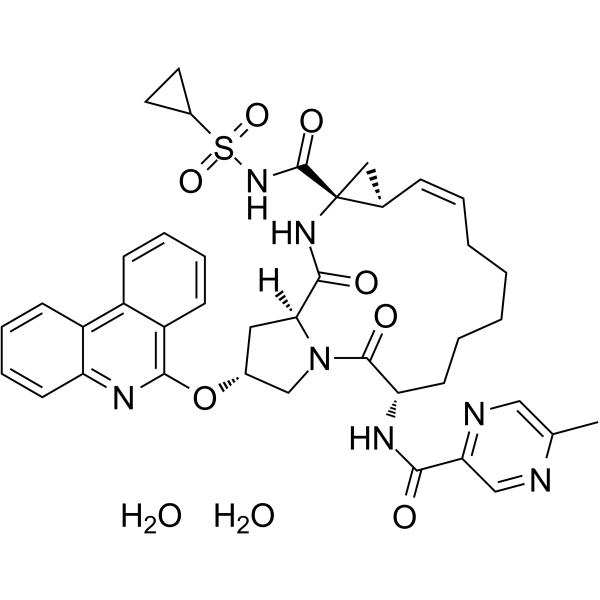
Paritaprevir (ABT-450) dihydrate is a potent, orally active and antiviral non-structuralprotein 3/4A (NS3/4A) protease inhibitor with EC50s of 1 and 0.21 nM against HCV 1a and 1b, respectively. Paritaprevir dihydrate is also a SARS-CoV 3CL pro inhibitor with an IC50 of 1.31 μM. Paritaprevir dihydrate is metabolized primarily by cytochrome P450 (CYP) 3A. The plasma concentration and half-life of Paritaprevir dihydrate can be enhanced by Ritonavir (a CYP450 inhibitor) [1] .
Paritaprevir (Standard) is the analytical standard of Paritaprevir. This product is intended for research and analytical applications. Paritaprevir (ABT-450) is a potent, orally active and antiviral non-structuralprotein 3/4A (NS3/4A) protease inhibitor with EC50s of 1 and 0.21 nM against HCV 1a and 1b, respectively. Paritaprevir is also a SARS-CoV 3CLpro inhibitor with an IC50 of 1.31 μM. Paritaprevir is metabolized primarily by cytochrome P450 (CYP) 3A. The plasma concentration and half-life of Paritaprevir can be enhanced by Ritonavir (a CYP450 inhibitor) [1] .
Antiviral agent 86 is an anti-coronavirus agent. Antiviral agent 86 acts as a binder of coronavirus non-structuralprotein 15 (nsp15), with a Kd value of 67 μM against human targets. Antiviral agent 86 inhibits the replication of HCoV-229E and SARS-CoV-2. Antiviral agent 86 exerts inhibitory effects at the post-entry lifecycle stage of coronaviruses in host cells and inhibits the formation of viral double-stranded RNA (dsRNA). Antiviral agent 86 exhibits an additive antiviral effect when used in combination with GS-441524. Antiviral agent 86 can be used in studies related to coronavirus infections [1].
DBPR110 is a nonstructuralprotein 5A (NS5A) inhibitor with inhibitory activity against hepatitis C virus (HCV). DBPR110 exhibited a 50% effective concentration (EC50) of 3.9 ± 0.9 pM and a selectivity index value of over 12,800,000 by reducing HCV1b replicon reporter expression. DBPR110 also effectively reduced the activity of HCV2a replicon with an EC50 of 228.8 pM and a selectivity index value of over 173,130. DBPR110 showed synergy with interferon alpha (IFN-α), NS3 protease inhibitors, and NS5B polymerase inhibitors. The results of DBPR110 suggest that it may be an effective small molecule inhibitor against HCV NS5A [1].
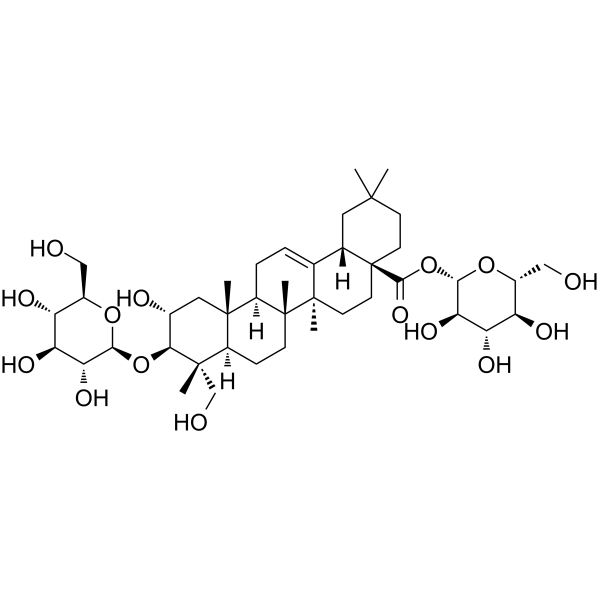
Chikusetsusaponin IVa methyl ester (CME) is a natural triterpenoid saponin compound. Chikusetsusaponin IVa methyl ester induces G0/G1 cell cycle arrest and apoptosis in colon cancer cells by inhibiting the Wnt/β-catenin signaling pathway. By inhibiting the NF-κB and AP-1 signaling pathways, Chikusetsusaponin IVa methyl ester significantly reduces the production of NO, PGE₂ and pro-inflammatory cytokines (TNF-α,IL-6, IL-1β), and downregulates the levels of iNOS and COX-2. Chikusetsusaponin IVa methyl ester can be used in researches on colorectal cancer and inflammation [1] .
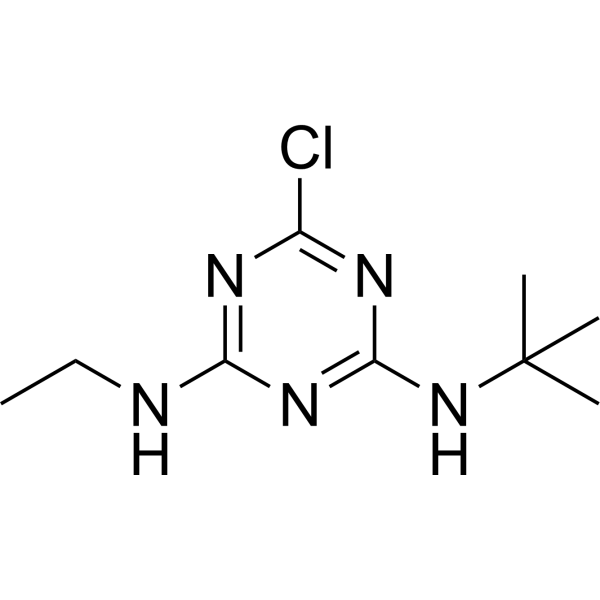
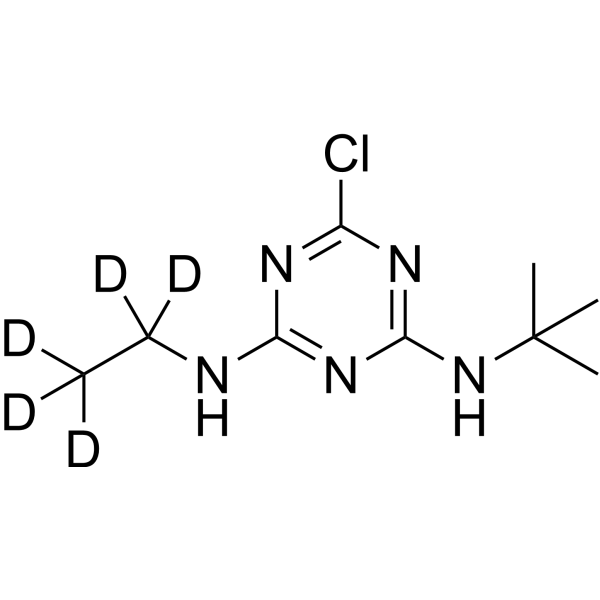
Terbuthylazine is an inhibitor of acetolactate syntase (ALS), is a selective herbicide.Terbuthylazine blocks electron transport in photosystem II via interaction with the D1-protein .
STX-100 (BG00011) is a humanized monoclonal antibody targeting αVβ6 integrin. STX-100 specifically binds αVβ6 integrin, blocks latent TGF-β activation via latency-associated peptide (LAP) interaction prevention, and reduces profibrotic responses. STX-100 can be used for the research of idiopathic pulmonary fibrosis, and cancer [1] .
β-Amyloid (1-28) is a β-Amyloid protein fragment involved in metal binding. Beta-amyloid is a peptide that forms amyloid plaques in the brains of Alzheimer's disease (AD) patients.
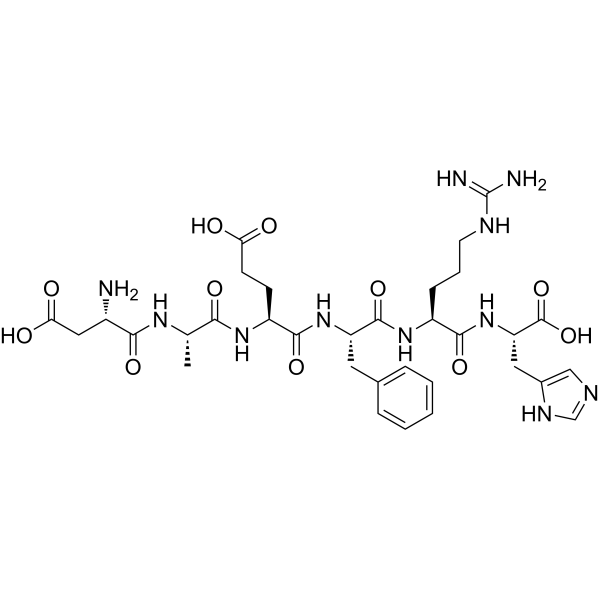
β-Amyloid (1-15) is a fragment of β-Amyloid peptide. Beta-amyloid is a peptide that forms amyloid plaques in the brains of Alzheimer's disease (AD) patients.
β-Amyloid (1-16) is a β-Amyloid protein fragment involved in metal binding. Beta-amyloid is a peptide that forms amyloid plaques in the brains of Alzheimer's disease (AD) patients.
Murine Thrombin is a murine serine protease that plays a central role in blood coagulation. Murine Thrombin stimulates macrophages to polarize into a unique phenotype characterized by anti-inflammatory and pro-repair properties. Murine Thrombin activates PAR1, induces the production of MCP-1, MMP3 and VEGF in mouse intervertebral discs, and causes degradation of the cartilage matrix and destruction of intervertebral disc structure. Murine Thrombin activity increases significantly in paraoxon-induced status epilepticus [1] .
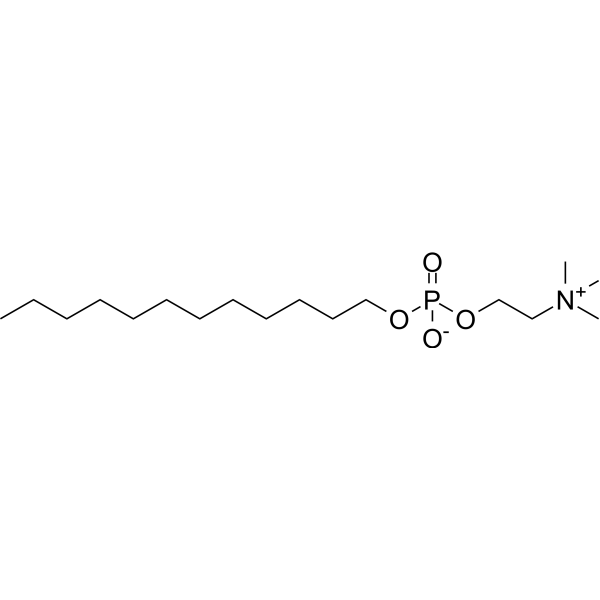
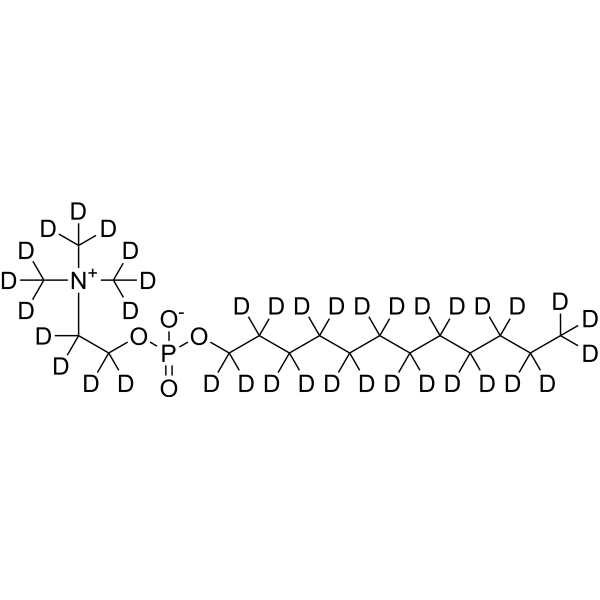
Dodecylphosphocholine-d388 is the deuterium labeled Dodecylphosphocholine. Dodecylphosphocholine is a detergent widely utilized in NMR studies of membrane proteins .
Isomazole (323MHb) hydrochloride is a cardiotonic agent. Isomazole hydrochloridei increases the calcium sensitivity in atrial fibers and has a direct effect on contractile proteins .
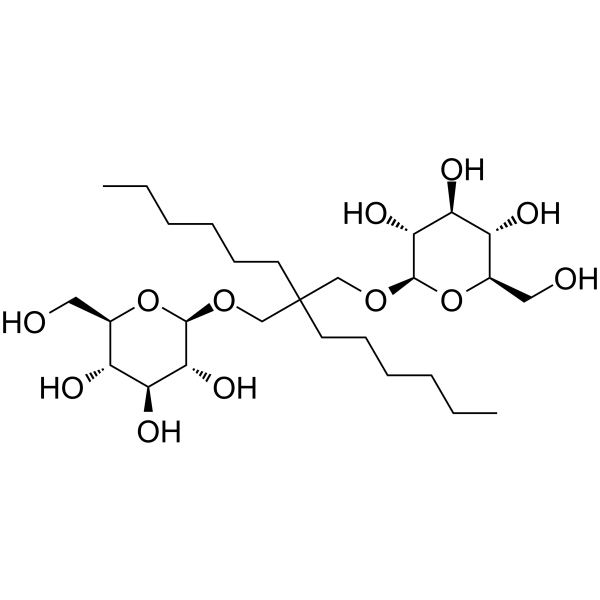
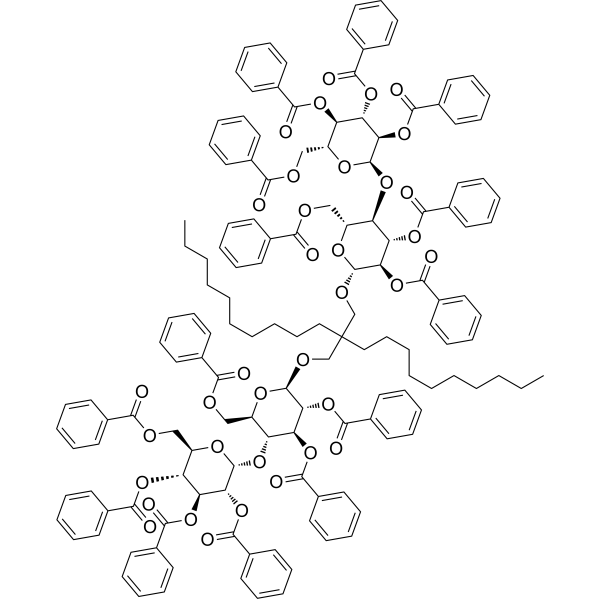
MNG-14a is an amphiphilic compound that can be used to aid the isolation of membrane proteins, and functional and structural determination of membrane proteins .
Abacavir 5′-phosphate is a substrate for adenosine deaminase-like protein 1 (ADAL1). Abacavir 5′-phosphate is promising for research of HIV infection [1].
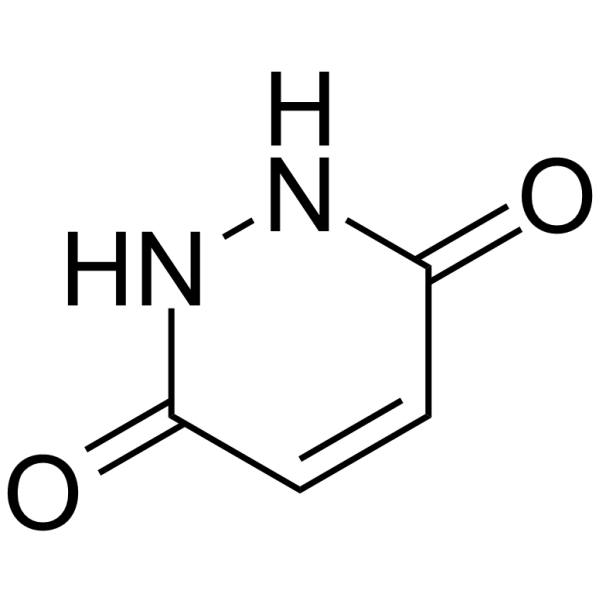
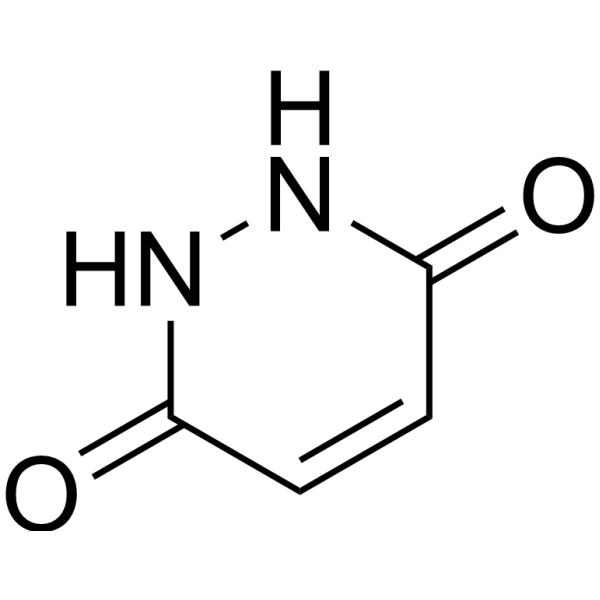
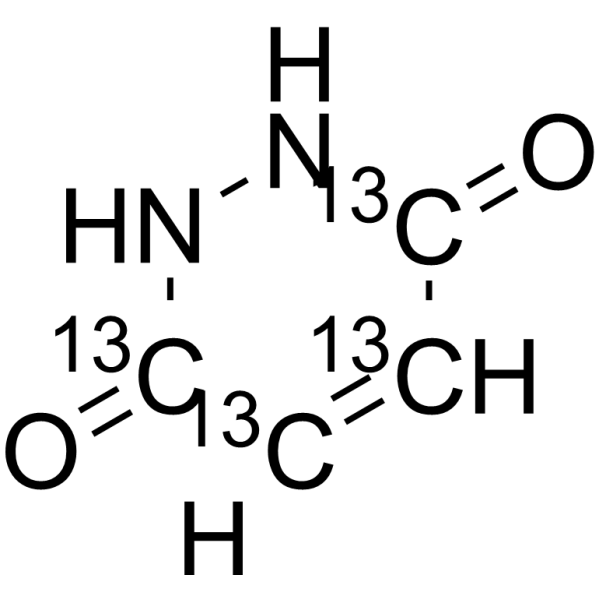
Maleic hydrazide is extensively used as a systemic plant growth regulator and as a herbicide. Maleic hydrazide acts as an inhibitor of the synthesis of nucleic acids and proteins .
Justicisaponin I can be used as an anti-fertility agent. Justicisaponin I stabilizes the acrosome membrane of sperm, and inhibits the release of acid hydrolase and sperm proteins .
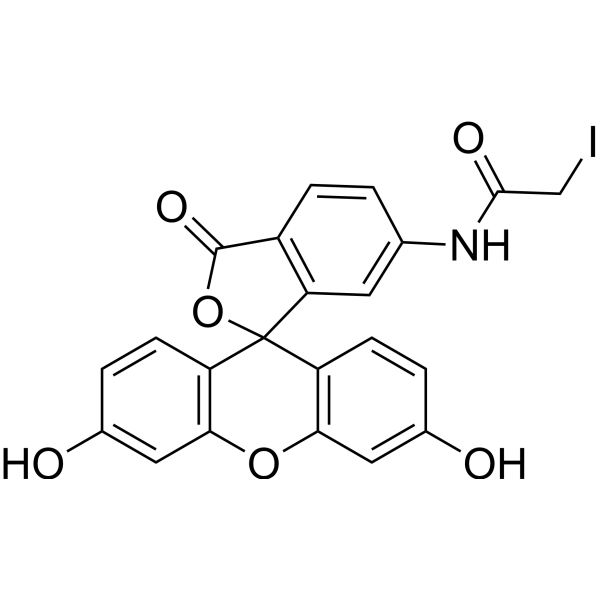
6-Iodoacetamidofluorescein, a sulphhydryl-specific fluorescent dye, and can be used to selectively label the -SH groups of nuclear matrix polypeptides and proteins .
Anticancer agent 294 (Example 2) is an anticancer agent that has inhibitory activity against apoptosis inhibitor protein 1(cIAP1) with an IC50 of 15 nM [1].
Urofollitropin is a protein extract of human menopausal urine. Urofollitropin has the function of promoting follicle development and maturation, but contains very small amounts of urinary proteins .
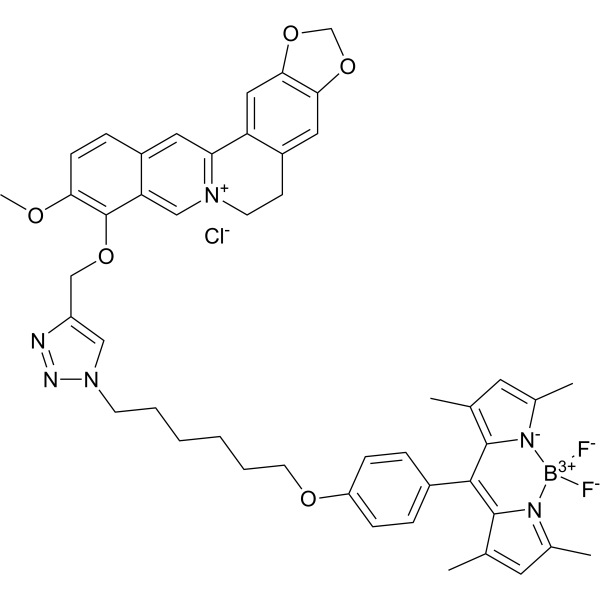
BBR-BODIPY is a fluorescent probe that allows screening its interaction with the targeted cells. BBR-BODIPY induces apoptosis and changes the expression of apoptosis-related proteins .
Hapten Dca is an immunizing hapten. Hapten Dca is activated by a solution of N, N′-disuccinimidyl carbonate. Hapten Dca with a carboxyl functional group is conjugated to proteins .
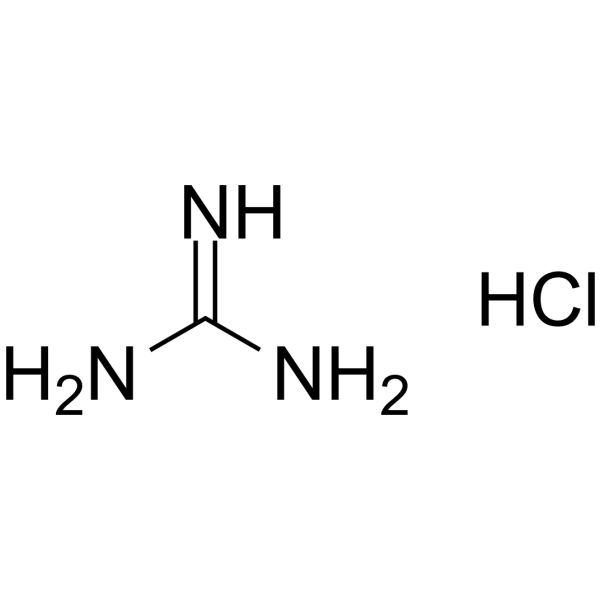
Guanidine (hydrochloride) (Standard) is the analytical standard of Guanidine (hydrochloride). This product is intended for research and analytical applications. Guanidine hydrochloride (Guanidinium chloride) a strong chaotrope, is also a strong denaturant of proteins .
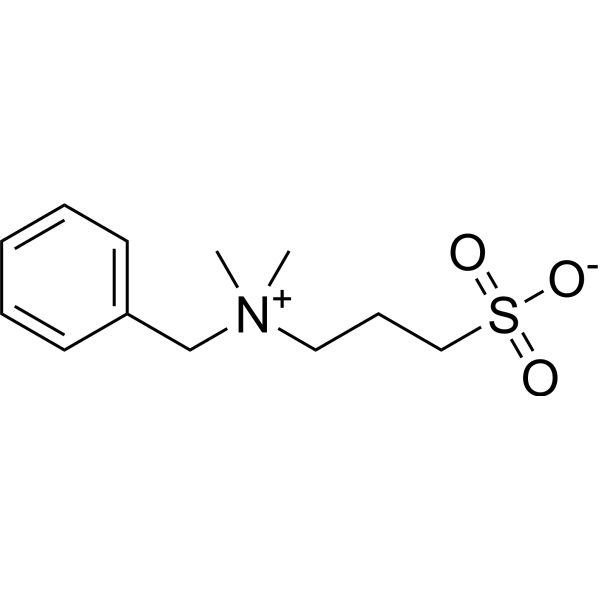
NDSB-256 is a non-stain remover sulfabetaine. NDSB-256 prevents protein aggregation and promotes denaturation of chemically and thermally denatured proteins .
NSC308848 is a potent apoptosis inducer in a Myc-dependent manner. NSC308848 inhibits Myc transactivation and interferes with the DNA-binding activity of Myc family proteins .
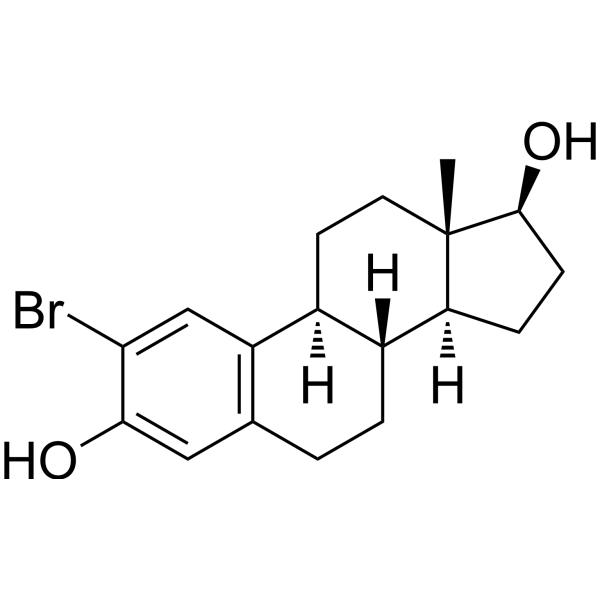
2-Bromoestradiol is a estrogen 2-hydroxylase inhibitor. 2-Bromoestradiol decreases irreversible binding of radiolabeled estradiol metabolite(s) to microsomal proteins .
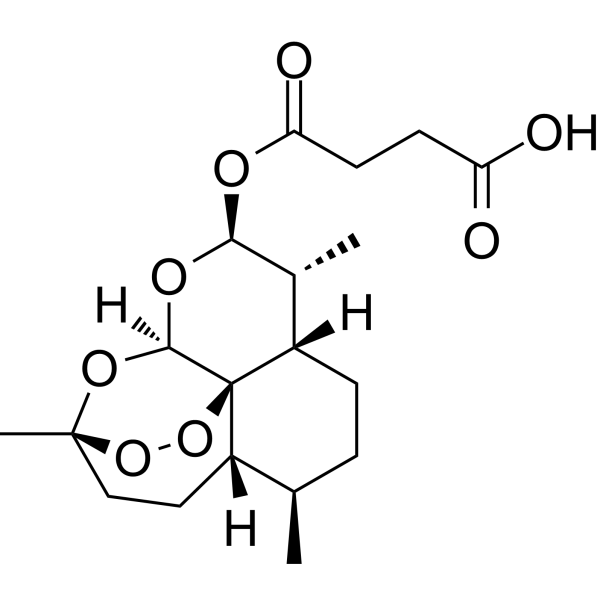
Artesunate (Standard) is the analytical standard of Artesunate. This product is intended for research and analytical applications. Artesunate is an inhibitor of both STAT-3 and exported protein 1 (EXP1).
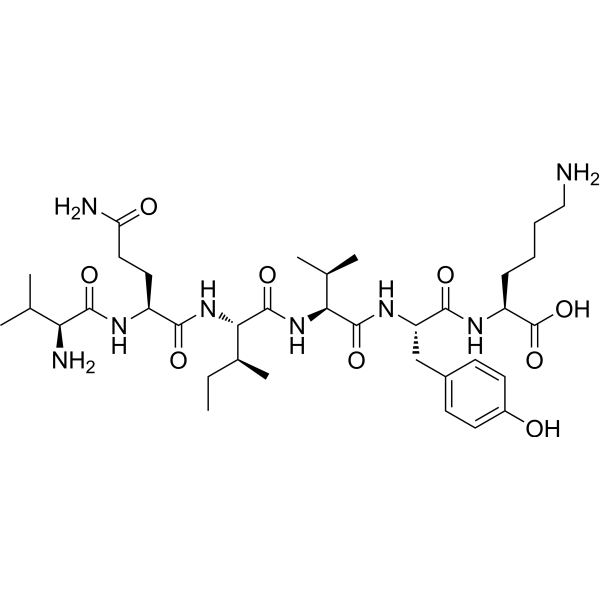
PHF6 (VQIVYK) is a self-assembly sequence capable of initiating the full-length tau protein aggregation and is mapped to the third microtubule-binding repeat region of the tau protein .
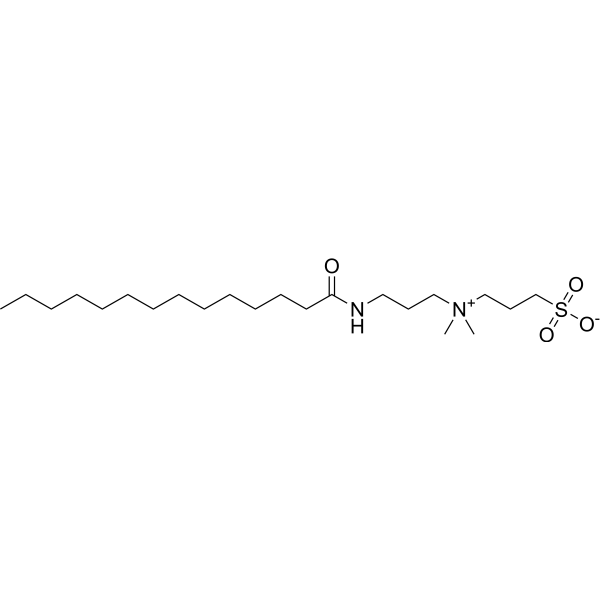
ASB-14 (Amidosulfobetaine-14) is a zwitterionic amidosulfobetaine surfactant with membrane protein solubilizing. ASB-14 can be used for the preparative extraction and solubilization of proteins .
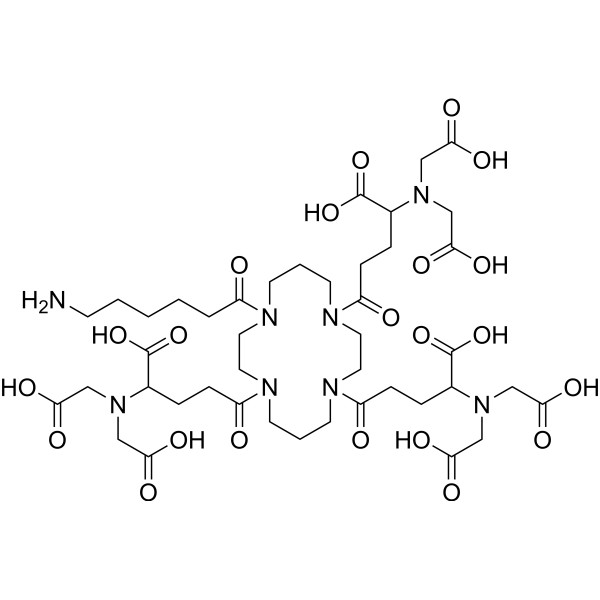
tris-NTA TFA is a His-tagged protein ligand. tris-NTA TFA can be used alone or in combination with a fluorophore for purification and detection of His-tagged proteins .
Retifanlimab is an anti-programmed cell death protein 1 (anti-PD-1) monoclonal antibody (mAb). Retifanlimab can be used for the research of gastroesophageal adenocarcinoma (GEA) [1].
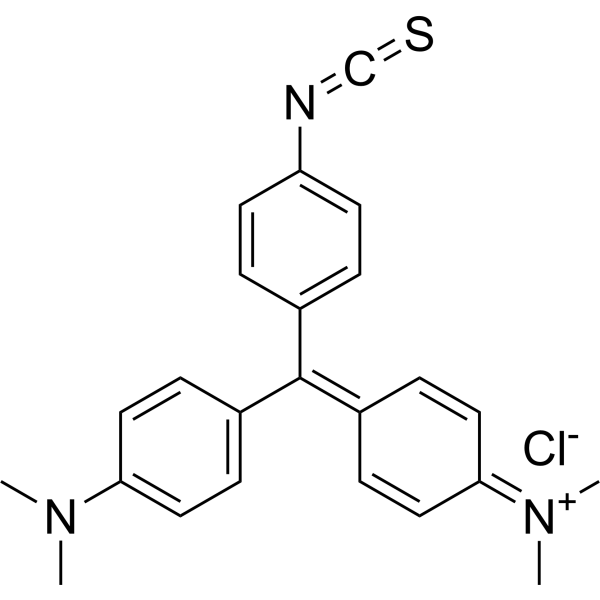
Malachite green isothiocyanate is an amine-reactive probe that reacts with amines to give the corresponding thiourea. Malachite green isothiocyanate is a reagent that has been used for the measurement of concentration of protein .
Rat Thrombin is a Na +-activated, allosteric serine protease that plays opposing functional roles in blood coagulation. Thrombin recognition sequence and can be used to digest GST-tagged proteins .
Peptidylprolyl isomerase is an enzyme that catalyzes the cis-trans isomerization of peptidylprolyl amino groups. Peptidylprolyl isomerase may be involved in cellulase modification. Peptidylprolyl isomerase also functions as a chaperone protein .
CAP 37 (20-44) is a peptide based on amino acid residues 20 through 44 of CAP37. CAP37, a Cationic antimicrobial protein of 37 kDa, is a multifunctional protein .
Aspartic acid proteinase is a type of proteolytic enzyme, which is characterized by its action via two critical aspartic acid residues in the active site, which facilitate the hydrolysis of peptide bonds in proteins .
Rabbit Thrombin is a Na +-activated, allosteric serine protease that plays opposing functional roles in blood coagulation. Thrombin recognition sequence and can be used to digest GST-tagged proteins .
CAMK2 is involved in the regulation of cellular processes in a variety of tissues. CaMK2β Recombinant Human Active Protein Kinase is obtained by expressing CaMK2β proteins .
CAMK2 is involved in the regulation of cellular processes in a variety of tissues. CaMK2α Recombinant Human Active Protein Kinase is obtained by expressing CaMK2αproteins .
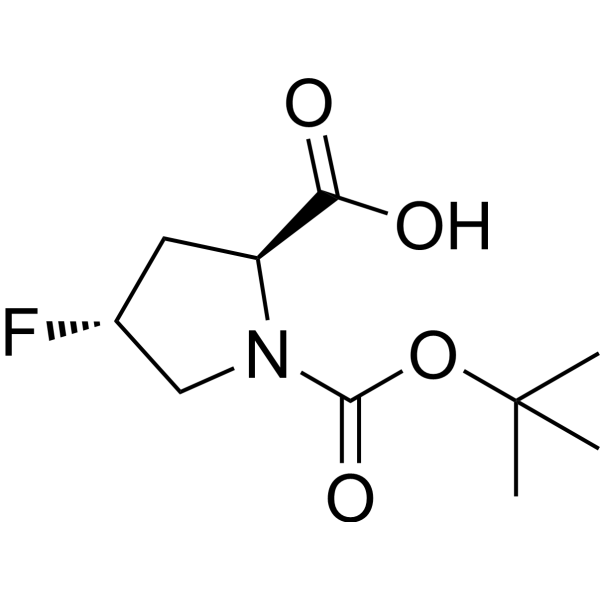
N-Boc-trans-4-fluoro-L-proline is a non-natural amino acid substitute used to construct monoclonal antibodies that specifically target the seed conformation of tau protein .
ZGL-18 is an uncoupling protein 1 (UCP1)-inspired mitochondrial uncoupler. ZGL-18 activates brown adipocytes and reduces mitochondrial membrane potential [1].
Spermidine-alkyne trihydrochloride is a Spermidine (HY-B1776) derivative endowed with an alkyne handle. Spermidine-alkyne trihydrochloride is a Spermidine probe, which can be used for the determination of the Spermidine binding to cellular proteins .
Spermidine-alkyne is a Spermidine (HY-B1776) derivative endowed with an alkyne handle. Spermidine-alkyne is a Spermidine probe, which can be used for the determination of the Spermidine binding to cellular proteins .
GNE684 is a potent inhibitor of potent receptor interacting protein 1(RIP1), with mean Kiapp values of 21 nM, 189 nM and 691 nM for human mouse and rat RIP1, respectively [1].
DCP-Bio3 is a biotinylated probe that can detect labeled proteins in polyacrylamide gels. DCP-Bio3 can be used in research for the identification of oxidized and modified proteins .
HibK is is a new type of histone mark that is widely distributed in histone proteins. HibK as a useful tool can be used for probing post-translational modification by site-specifically incorporate HibK into proteins .
RFI-641 is a selective inhibitor of the respiratory syncytial virus (RSV), with an IC50 of 50 nM. RFI-641 inhibit binding and fusion of enveloped virus via interaction with the viral fusion protein .
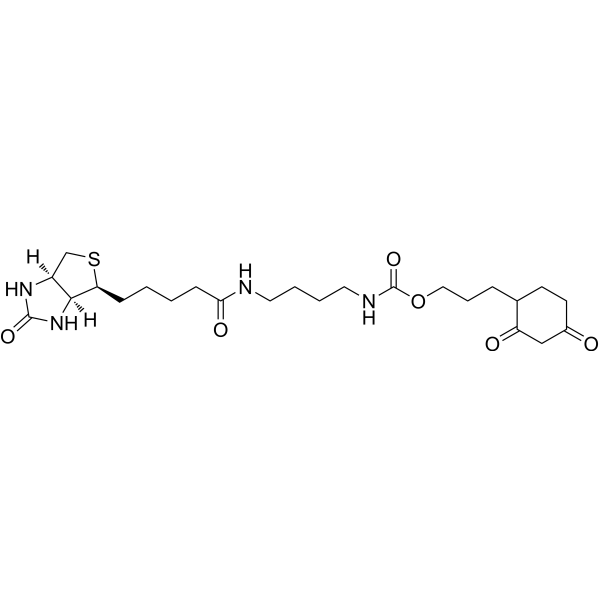
Biotinylated leptomycin B is a compound used to quantify nuclear export protein 1 (XPO1) occupancy and is used to study the interaction of SINE compounds with XPO1 and the response of cancer cells to related compounds.
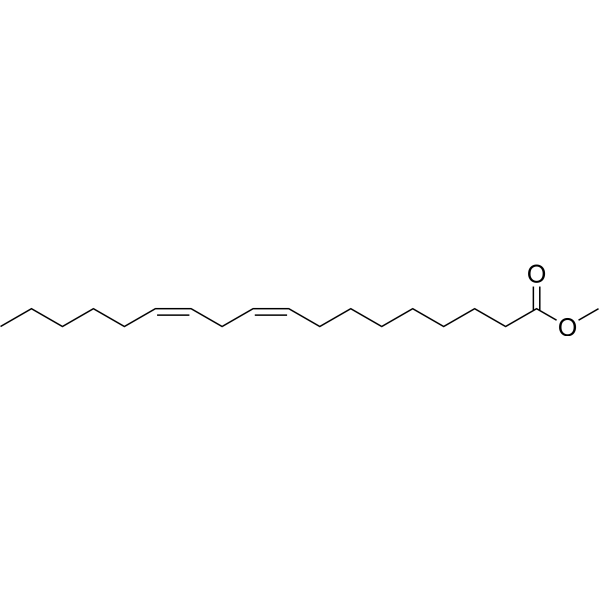
Methyl linoleate, a major active constituent of Sageretia thea fruit (HFSF), is a major anti-melanogenic compound. Methyl linoleate downregulates microphthalmia-associated transcription factor (MITF) and tyrosinase-related proteins .
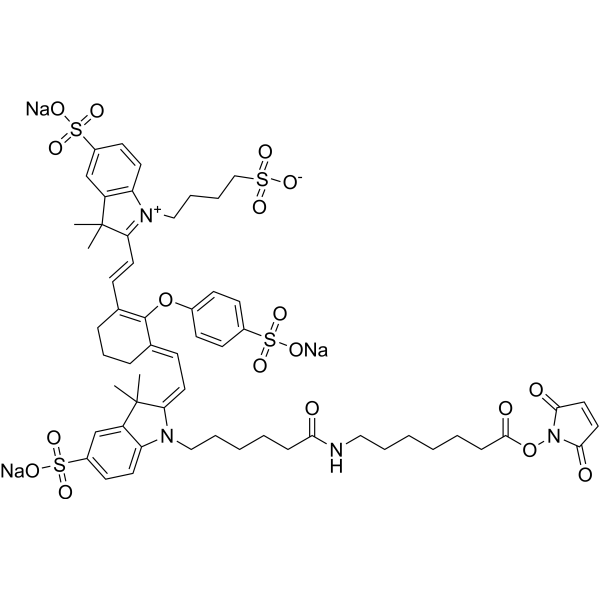
800CW maleimide is an infrared dye that can be used for labeling molecules that contain free sulfhydryl (–SH) groups (Ex: 778 nm; Em: 796 nm). 800CW maleimide binds to plasma proteins .
TAT TFA (YGRKKRRQRRR) is derived from the transactivator of transcription (TAT) of human immunodeficiency virus (HIV-1) and is a cell-penetrating peptide. TAT can increase the yields and the solubility of heterologous proteins .
Ocipumaltib (Example 2) is an inhibitor of mucosa associated lymphoid tissue protein 1(MALT1). Ocipumaltib is an antitumor agent. Ocipumaltib can be studied in research for cancer, infection, neurological and hematological diseases [1].
ZW290 is a compound to activate brown adipose tissue (BAT) thermogenic function. ZW290 increases the expression of uncoupling Protein 1 (UCP1) protein and inhibits ATP synthesis in BAT [1].
11:0 PC (1,2-Diundecanoyl-sn-glycero-3-phosphocholine) is a phosphatidylcholine, which plays a role in the folding of intact, functionally competent integral membrane proteins .
Guanidine- 13C hydrochloride (Guanidinium- 13C chloride) is the 13C-labeled Guanidine hydrochloride (HY-B0178A). Guanidine hydrochloride (Guanidinium chloride) a strong chaotrope, is also a strong denaturant of proteins .
IETP2 targets low-density lipoprotein receptor-related protein 1(LRP1) with a KD of 738 nM and can be used for drug- and imaging agents delivery across the blood-labyrinth barrier (BLB) [1].
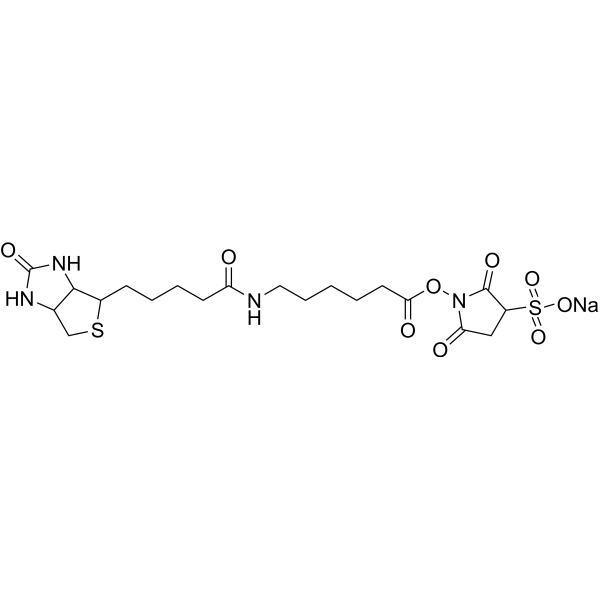
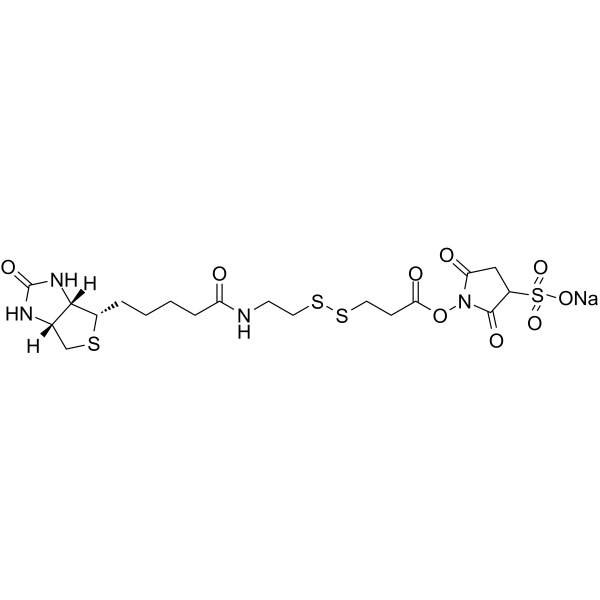
Sulfo-NHS-SS-biotin sodium is a long-chain cleavable and cell-impermeant amine-reactive biotinylation reagent. Sulfo-NHS-SS-biotin sodium can be used for the labeling and purifying of cell-surface protein .
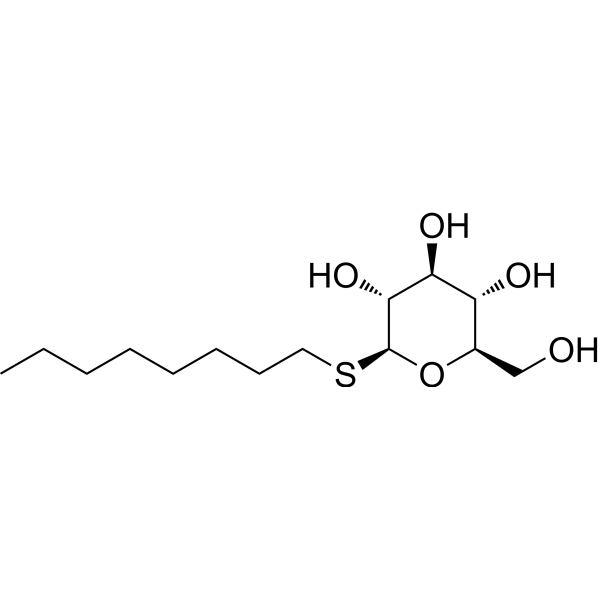
Octyl β-D-thioglucopyranoside is a non-ionic detergent that can be used in the field of membrane biochemistry. Octyl β-D-thioglucopyranoside has the ability to solubilize E. coli membrane proteins .
PHF6 (VQIVYK) TFA is a self-assembly sequence capable of initiating the full-length tau protein aggregation. PHF6 TFA is mapped to the third microtubule-binding repeat region of the tau protein .
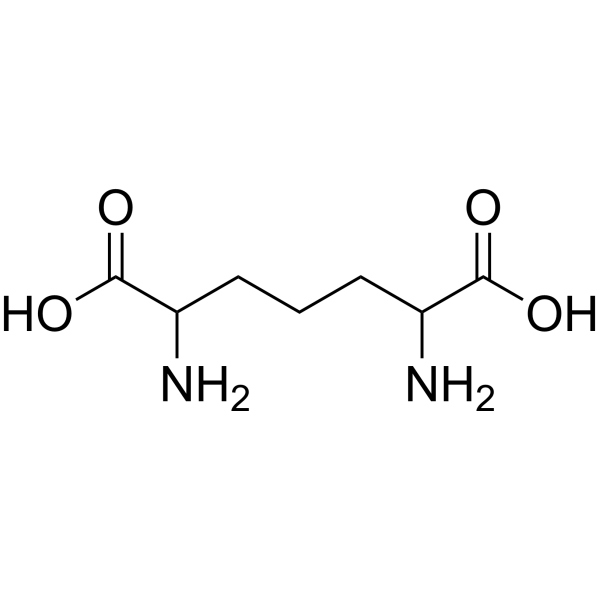
2,6-Diaminopimelic acid is a endogenous metabolite produced in bacteria and is a component of cell wall. 2,6-Diaminopimelic acid is essential for microbial metabolism and is a potential marker for quantification of microbial proteins .
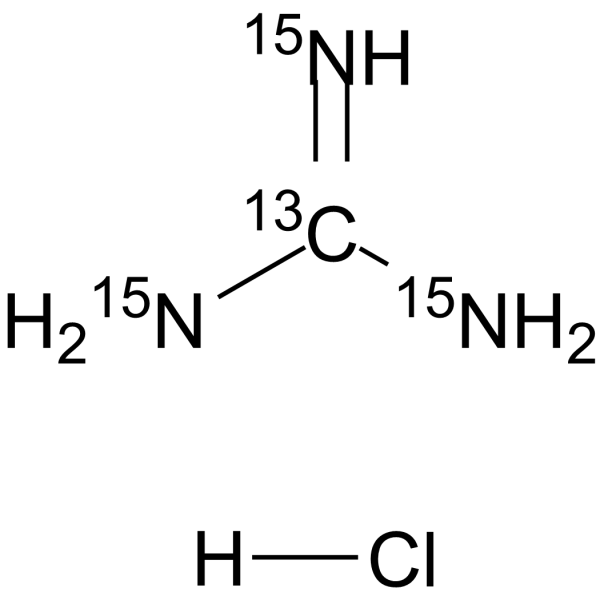
Guanidine- 13C, 15N3 (hydrochloride)is the 13C-labeled and 15N-labeled Guanidine hydrochloride. Guanidine hydrochloride (Guanidinium chloride) a strong chaotrope, is also a strong denaturant of proteins .
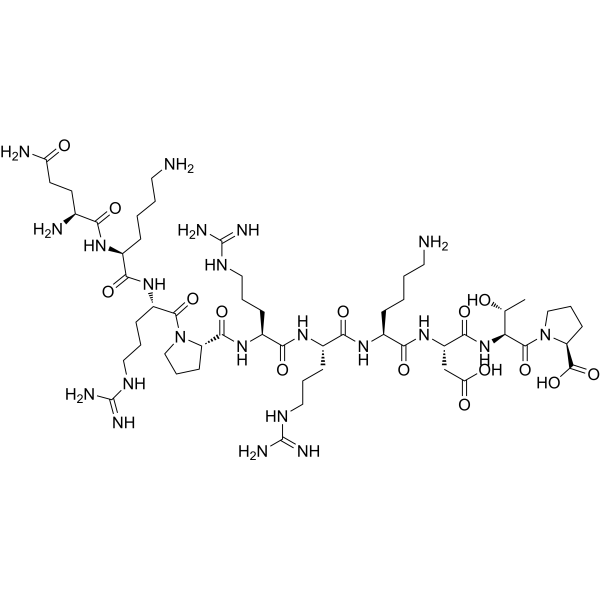
TKD (450-463) is a 14-mer peptide (TKDNNLLGRFELSG). TKD (450-463) is able to stimulate the cytolytic and proliferative activity of NK cells at concentrations equivalent to full-length Hsp70 protein .
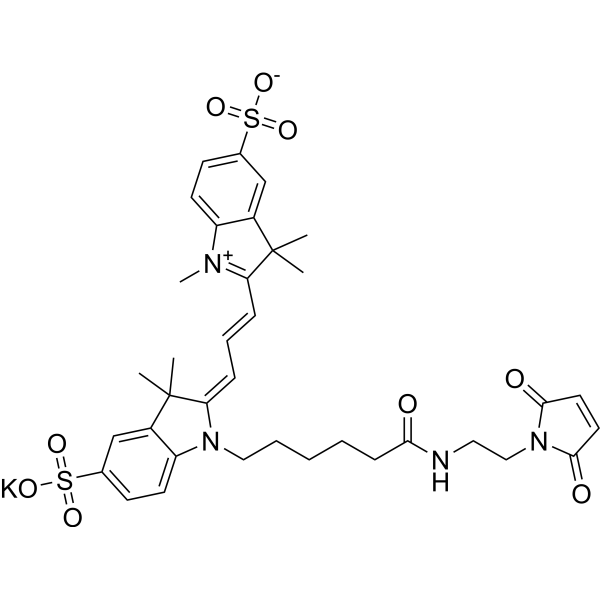
Sulfo-Cy3 maleimide potassium is a fluorescent dye with a maleimide functionality at the end a short alkyl linker. Sulfo-Cy3 maleimide potassium can be used for the labeling of antibodies and other labile proteins .
TAT (YGRKKRRQRRR) is derived from the transactivator of transcription (TAT) of human immunodeficiency virus-1 (HIV-1) and is a cell-penetrating peptide. TAT can increase the yields and the solubility of heterologous proteins .
HMGB1-IN-3 (compound E) is a glycyrrhizic acid derivative with strong inhibitory activity against HMGB1 (high mobility group protein 1) and can be used in the study of intracerebral hemorrhage [1].
G-Subtide is a G-substrate peptide localized in Purkinje cells of the cerebellum. G-Subtide has little activity distinct from background and is a preferentially phosphorylated peptide substrate of recombinant PfPKG2 protein .
Proquinazid is a Bcl-2 and PCNA modulator, oxidative stress inducer, genotoxin and apoptosis inducer. Proquinazid causes DNA damage and also triggers apoptosis by regulating pro-apoptotic and anti-apoptotic proteins .
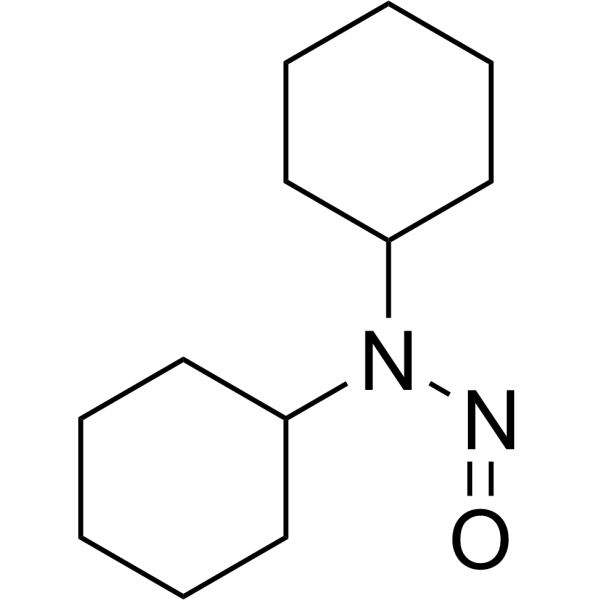
N-Nitrosodicyclohexylamine (NDCHA) is a N-nitrosocompound with anti-androgenic activities. N-Nitrosodicyclohexylamine shows the competitive binding to androgen receptor (AR) against 5α-dihydrotestosterone and decreased the level of AR protein .
AEX HQ Anion-exchange resin (POROS 50HQ) is AEX commonly used filler. AEX HQ Anion-exchange resin is HQ strong anion exchange resin and can purify targeting protein .
6-Alkyne-NAD+ sodium is a nicotinamide adenine dinucleotide (NAD) analogue. 6-Alkyne-NAD+ sodium can be used as a fluorescent probe coupled with fluorescent labels for marking ADP-ribose polymerase substrate proteins .
ZINC866533340 is a ligand for 5-HT receptor 5-HT2A with Ki of 1.6 nM. ZINC866533340 is used in AlphaFold2 technology to determines three-dimensional structure of proteins .
Biotin-BS contains two different ligands, methyl-bestatin (MeBS) for cIAP1 and biotin, which are connected by linkers. MeBS as a ligand for cellular inhibitor of apoptosis protein 1 (cIAP1) ubiquitin ligase [1].
Quercetin 7,4′-diglucoside is a flavonol diglucoside and a derivative of Quercetin (HY-18085) that can be found in Allium cepa L. Quercetin is a natural flavonoid compound that can activate or inhibit the activity of many proteins .
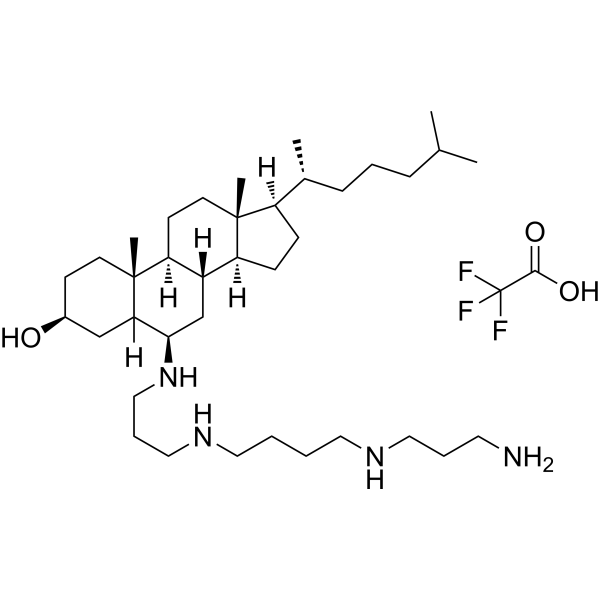
Claramine TFA is a steroidal polyamine. Claramine TFA can regulate the properties of lipid membranes and protect cells from various biological toxins, including misfolded protein oligomers and toxins derived from biological proteins .
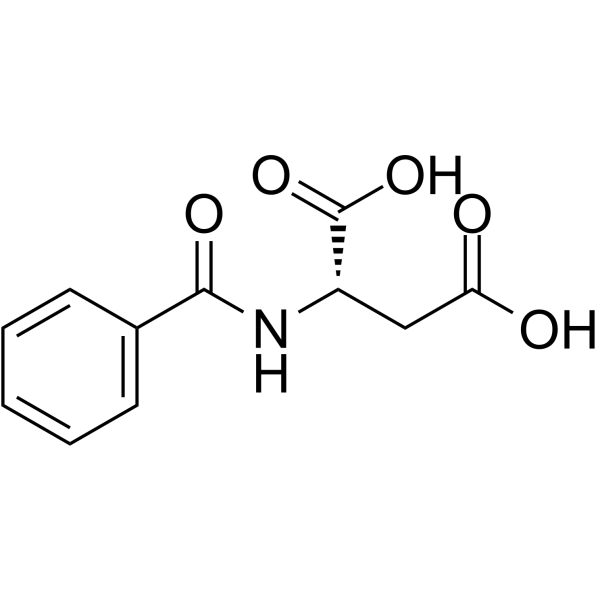
N-benzoyl-L-aspartic acid (Standard) is the analytical standard of N-benzoyl-L-aspartic acid. This product is intended for research and analytical applications. N-benzoyl-L-aspartic acid, a major metabolite of benzyl glucosinolate, can be used for modification of peptides or proteins .
Transcriptional Intermediary Factor 2 (TIF2) (740-753) is a TIF-2 coactivator peptide composed of 14 amino acids and covers the residue range 740-753 of TIF-2 protein .
Imidazole-4-pyruvic acid is derived from histidine catalyzed by histidine transaminase. Imidazole-4-pyruvic acid can be used as a precursor for selective His-labeling in E.coli overexpressed proteins .
GRP-60367 hydrochloride is a first-in-class small-molecule rabies virus (RABV) entry inhibitor with nanomolar potency against some RABV strains. GRP-60367 hydrochloride specifically targets the RABV G protein .
Imidazole-4-pyruvic acid is derived from histidine catalyzed by histidine transaminase. Imidazole-4-pyruvic acid can be used as a precursor for selective His-labeling in E.coli overexpressed proteins .
Pucotenlimab (HX008) is a humanized immunoglobulin G4 (IgG4) anti programmed cell death protein 1(anti-PD-1) monoclonal antibody. Pucotenlimab can be used for the research of tumor [1].
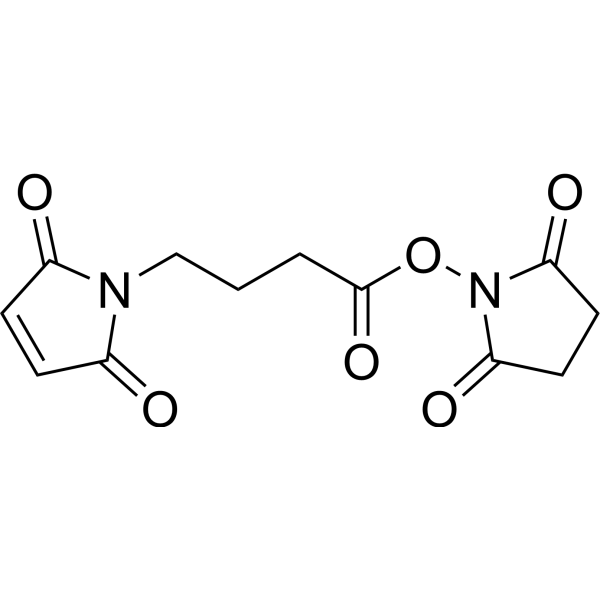
GMBS is a heterobifunctional crosslinker targeting primary amines and sulfhydryl groups. GMBS can be used for chemical crosslinking of proteins and crosslinking mass spectrometry (CXMS) to study protein folding and map interfaces between interacting proteins .
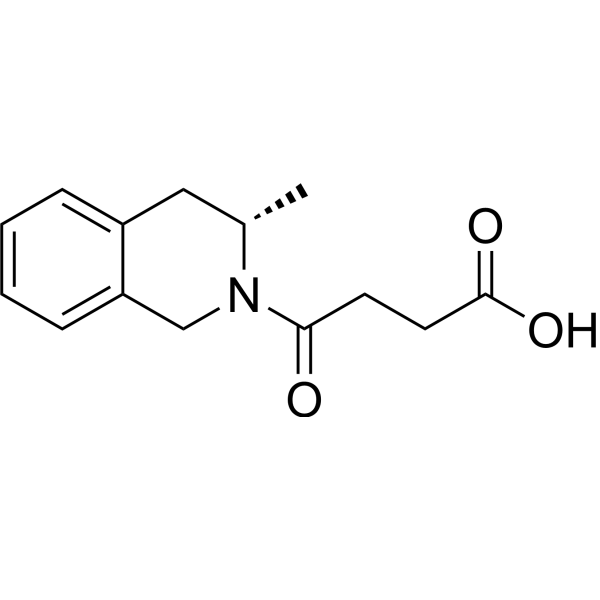
MIQ-N-succinate is a hapten with a four-carbon chain. MIQ-N-succinate consist of MIQ and succinic anhydride. MIQ-N-succinate has a carboxylic acid end group to attach to the lysine residues on the carrier proteins .
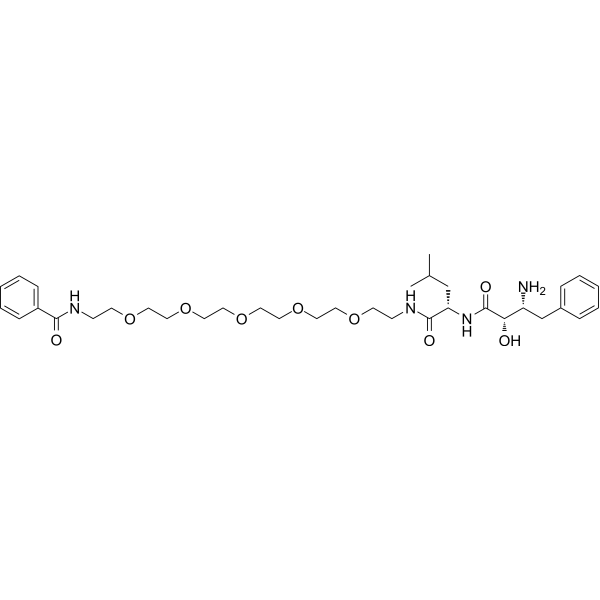
BzNH-BS contains two different ligands, methyl-bestatin (MeBS) for cIAP1 and benzoyl-amide, which are connected by linkers. MeBS as a ligand for cellular inhibitor of apoptosis protein 1 (cIAP1) ubiquitin ligase [1].
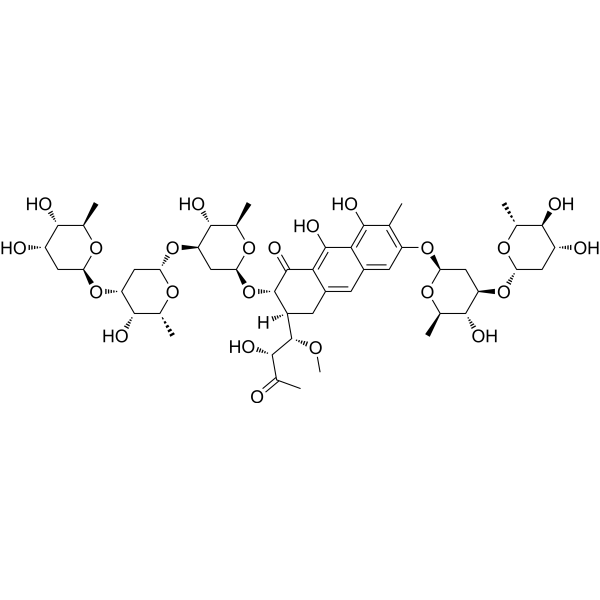
Demycarosyl-3D-β-D-digitoxosylmithramycin SK is a Mithramycin analog with good anti-tumor activity, which can prevent the proliferation and growth of tumor cells by binding and inhibiting DNA-binding proteins .
PB830 (compound 41) is a potent receptor interacting protein 1 kinase (RIP1) Inhibitor with an IC50 of <100 nM for human RIP1. PB830 has an EC50 of 1-100 nM in the cell necrosis assay [1].
KRAS ligand 5 is the target protein ligand for PROTAC K-Ras Degrader-3 (HY-168054). PROTAC K-Ras Degrader-3 can specifically degrade KRAS mutated proteins .
Bovine calmodulin can be used for the in vitro phosphorylation assay of recombinant retinoic acid-induced gene I protein. Bovine calmodulin has also been used in studies of the hydrolysis and deamidation of the endopeptide Glu-C protein .
NCGC00351170 is an antiplatelet agent that disrupts the calcium and integrin-binding protein 1(CIB1)-αIIbβ3 interaction. NCGC00351170 inhibits thrombin-induced human platelet aggregation [1].
Z-Arg-Arg-βNA acetate is a sensitive dipeptide substrate of the protease Cathepsin B and resistant to proteases H and L. Z-Arg-Arg-βNA acetate can serve as an important tool for distinguishing non-Cathepsin B type proteins .
Sp-TTPαS is a competitivesterile alpha motif and HD domain containing protein 1(SAMHD1) hydrolysis inhibitor. Sp-TTPαS competitively inhibits SAMHD1 triphosphohydrolase activity with a Ki value of 46 µM [1].
TAT-PAK18 R192A is an inactive Tat-Pak peptide. TAT-PAK18 R192A does not have any effect in the translocation of Rac1 triggered by any of the interrogated proteins .
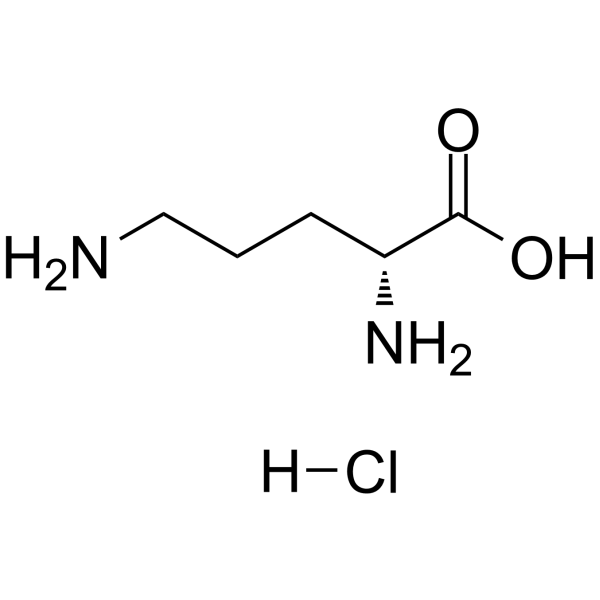
D-Ornithine ((R)-Ornithine) hydrochloride is a constituent of bacterial cell wall. D-Ornithine hydrochloride promotes the production of L-arginine (HY-N0455). D-Ornithine hydrochloride enhances the expression of pyrrolysine-containing proteins .
Phaseolus vulgaris Lectin-M is a sticky protein form of lectin. Phaseolus vulgaris Lectin-M is mainly used to stimulate the proliferation of peripheral mononuclear cells, promote the production of certain cytokines and the expression of membrane surface proteins 。
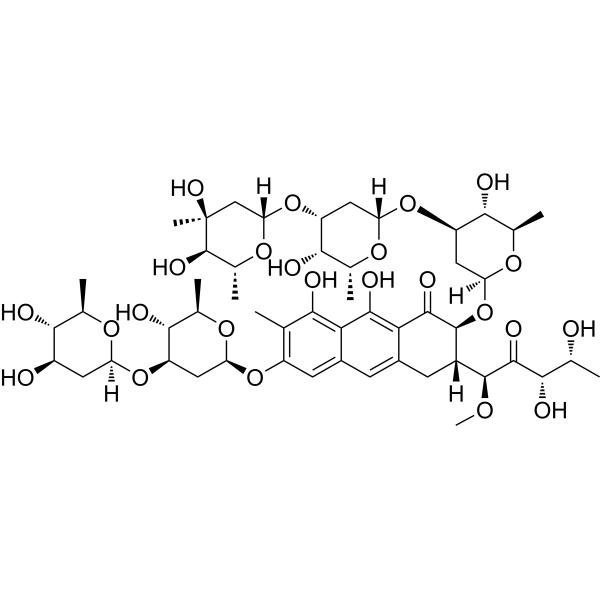
Plicamycin (Mithramycin A) is a selective specificity protein 1(Sp1) inhibitor. Plicamycin inhibits the growth of various cancers by decreasing Sp1protein. Plicamycin inhibits GSTM2 promoter activity and protein expression [1] .
NPD4928, a GPX4 inhibitor, enhances RSL3 (HY-100218A)-dependent ferroptosis. NPD4928 binds to ferroptosis suppressor protein 1 (FSP1) and inhibits its enzymatic activity [1].
RIPA-56 is a highly potent, selective, and metabolically stable inhibitor of receptor-interacting
protein 1(RIP1) with an IC50 of 13 nM. RIPA-56 can be used for the treatment of systemic inflammatory response syndrome [1].
N-Methylacetamide is a hydrogen bond-forming agent that mimics the intermolecular interactions of intrinsically disordered proteins. N-Methylacetamide is used to investigate the hydration properties of peptide bonds, peptide bond-water interactions, and the aggregation of intrinsically disordered proteins .
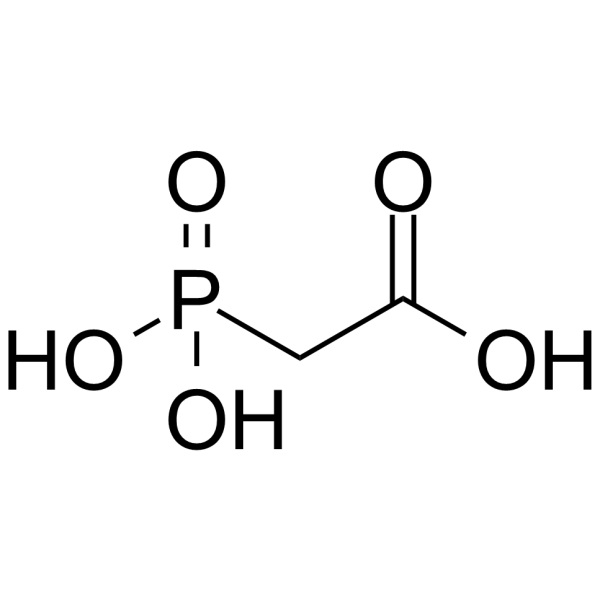
Phosphonoacetic acid is an endogenous metabolite and antiviral agent. Phosphonoacetic acid is active against orthopoxviruses and herpes viruses. Phosphonoacetic acid can inhibit HSV DNA synthesis and virus-specific DNA polymerase activity, and affect the synthesis of late viral proteins .
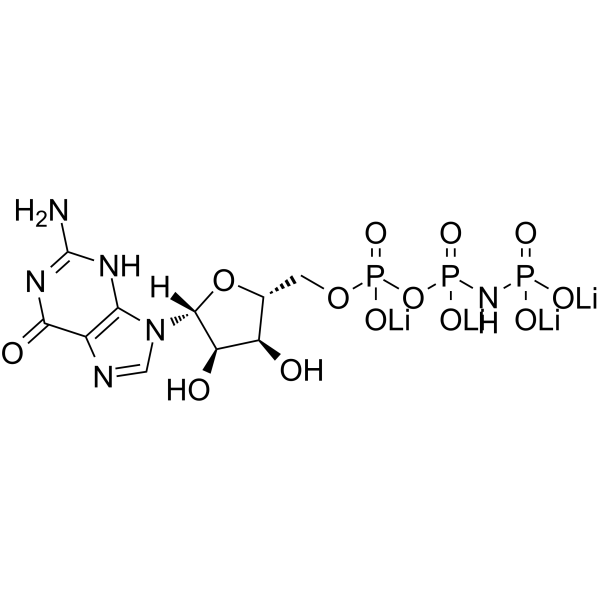
Guanylyl imidodiphosphate lithium (Gpp (NH) p lithium) is a non-hydrolyzable GTP analog. Guanylyl imidodiphosphate lithium increases adenylate cyclase activity. Guanylyl imidodiphosphate lithium binds to and irreversibly activates G proteins .
ATP-ArN3 is a UV-activatable ATP-crosslinker analog. ATP-ArN3 relys on UV irradiation to activate the aryl azide (ArN3) crosslinking group and conjugate substrate to kinases and associated proteins .
PTC258 is a specific and orally active splicing modulator of Elongator complex protein 1 gene (ELP1). PTC258 increases the expression of ELP1 in vitro and in vivo. PTC258 is well tolerated in mouse model [1].
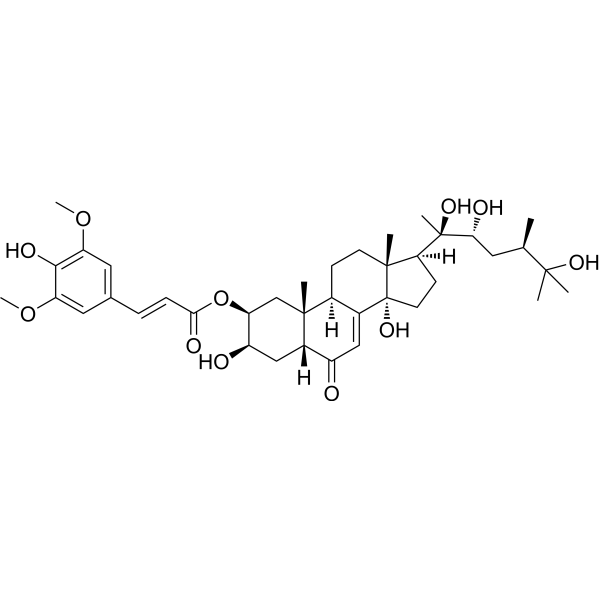
2-O-Sinapoyl makisterone A (compound 2), a sinapinic acid-ecdysterone hybrid, is a selective inhibitor of COX-2. 2-O-Sinapoyl makisterone A significantly inhibits the expression of COX-2 protein .
Human GATA1 mRNA encodes the human GATA binding protein 1 (GATA1) which belongs to the GATA family. GATA1 plays an important role in erythroid development by regulating the switch of fetal hemoglobin to adult hemoglobin.
ATPase-IN-3 (compound 6) is a ATPase inhibitor. ATPase-IN-3 has Gastroprotective effect in ethanol-induced gastric ulcers by contribution of anti-apoptotic (BCL-2) and tumor suppressor (P53) proteins .
TAT (TAT(47-57)) acetate is derived from the transactivator of transcription (TAT) of human immunodeficiency virus-1 (HIV-1) and is a cell-penetrating peptide. TAT acetate can increase the yields and the solubility of heterologous proteins .
VAS 3947, a specific NADPH oxidase (NOX) inhibitor, exerts a potent antiplatelet effect. VAS3947 induces apoptosis independently of anti-NOX activity, via UPR activation, mainly due to aggregation and misfolding of proteins .
Protein E7(43-62) TFA is an E7-derived peptide with anti-tumor effects (short peptide spanning the 43th to 62th amino acid residues in the E7 protein) .
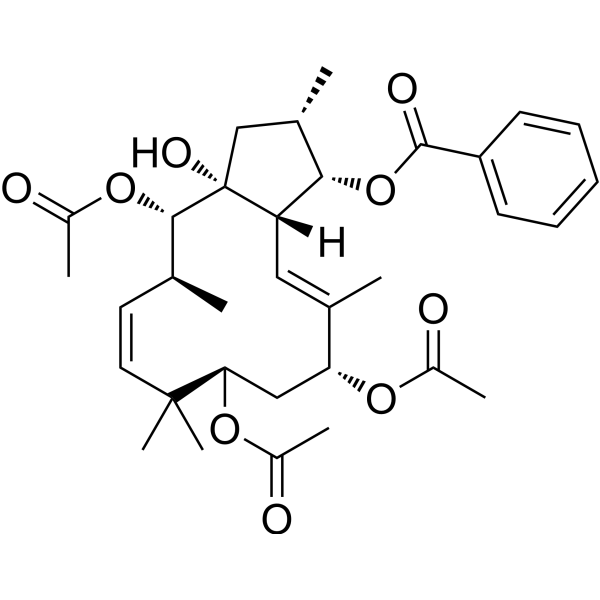
Euphornin is a anticaner agent, that can be isolated from E. helioscopia. Euphornin induces apoptosis via caspase-mediated pathways. Euphornin induces cell cycle arrest by increasing the level of the phospho-CDK1 (Tyr15) protein .
SGC2085 is a potent and selective inhibitor of coactivator associated arginine methyltransferase 1(CARM1) with an IC50 of 50 nM. SGC2085 also selectively inhibits PRMT6 with an IC50 value of 5.2 μM, but not other PRMT proteins .
NIC is a host invasion inhibitor. NIC can suppress host invasion by interacting with the major invasion-related protein, merozoite surface protein 1(MSP-1). NIC prevents the invasion of Plasmodium falciparum and Plasmodium vivax into the host [1].
2,6-Dichloropurine riboside is an antitumor and antiviral agent, which can be used for infections caused by mycoplasma. 2,6-Dichloropurine riboside also can be used to synthesize the photoaffinity probes for nucleotide binding sites in proteins .
Sp-TTPαS tetrasodium is a competitivesterile alpha motif and HD domain containing protein 1(SAMHD1) hydrolysis inhibitor. Sp-TTPαS tetrasodium competitively inhibits SAMHD1 triphosphohydrolase activity with a Ki value of 46 µM [1].
SGC2085 hydrochloride is a potent and selective inhibitor of coactivator associated arginine methyltransferase 1(CARM1) with an IC50 of 50 nM. SGC2085 hydrochloride also selectively inhibits PRMT6 with an IC50 value of 5.2 μM, but not other PRMT proteins .
Picaridin (Standard) is the analytical standard of Picaridin. This product is intended for research and analytical applications. Picaridin (Lcaridin) is a broad spectrum arthropod repellent. The repellent and deterrent activities of Picaridin involve olfactory sensing in mosquitoes, and ticks, via their interactions with odorant receptor proteins .
E3 ligase Ligand 10 is a ligand for E3 ubiquitin ligase. E3 ligase Ligand 10 can be connected to the ligand for protein by a linker to form PROTACs. PROTACs are inducers of ubiquitination-mediated degradation of cancer-promoting proteins .
E3 ligase Ligand 18 is a ligand for E3 ubiquitin ligase. E3 ligase Ligand 18 can be connected to the ligand for protein by a linker to form PROTACs. PROTACs are inducers of ubiquitination-mediated degradation of cancer-promoting proteins .
E3 ligase Ligand 14 is a ligand for E3 ubiquitin ligase. E3 ligase Ligand 14 can be connected to the ligand for protein by a linker to form PROTACs. PROTACs are inducers of ubiquitination-mediated degradation of cancer-promoting proteins .
Reversan (CBLC4H10) inhibits drug efflux mediated by P-glycoprotein (Pgp) and multidrug resistance protein 1(MRP1), and exhibits oral activity. Reversan shows activity against glioblastoma multiforme and neuroblastoma models [1] .
Human IGFBP1 mRNA encodes the human insulin like growth factor binding protein 1 (IGFBP1) protein, a member of the insulin-like growth factor binding protein (IGFBP) family. IGFBP1 is important in cell migration and metabolism.
E3 ligase Ligand 8 is a ligand for E3 ubiquitin ligase. E3 ligase Ligand 8 can be connected to the ligand for protein by a linker to form PROTACs. PROTACs are inducers of ubiquitination-mediated degradation of cancer-promoting proteins .
Cross-linked dextran G 25 is a dextran chromatography medium. Cross-linked dextran G 25 separates from 1 to 5 kD (spherical proteins) and can be used for the separation of peptides as well as for the desalting and buffer replacement of large molecule proteins .
E3 ligase Ligand 13 is a ligand for E3 ubiquitin ligase. E3 ligase Ligand 13 can be connected to the ligand for protein by a linker to form PROTACs. PROTACs are inducers of ubiquitination-mediated degradation of cancer-promoting proteins .
Z226407860 is a RING-box protein 1(RBX1) inhibitor. Z226407860 reduces house dust mite-induced airway epithelial injury and ROS accumulation by inhibiting RBX1. Z226407860 can be used for the research of asthma [1].
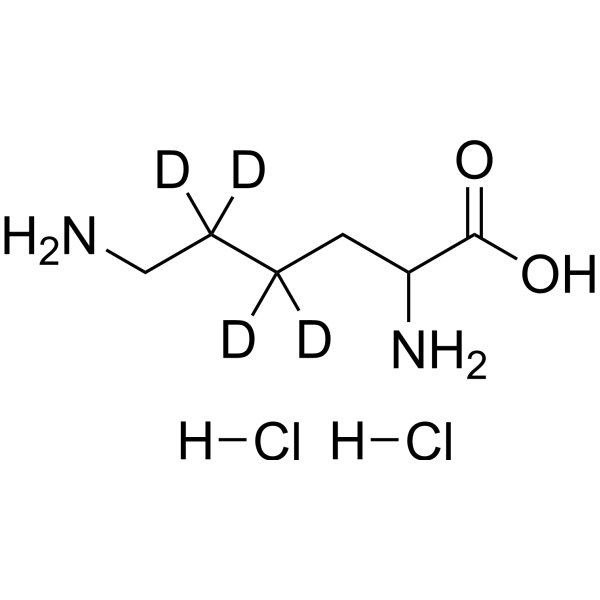
DL-Lysine-4,4,5,5-d4 (dihydrochloride) is the deuterium labeled DL-Lysine. DL-Lysine is a racemic mixture of the D-Lysine and L-Lysine. Lysine is an α-amino acid that is used in the biosynthesis of proteins .
Maleic hydrazide (Standard) is the analytical standard of Maleic hydrazide. This product is intended for research and analytical applications. Maleic hydrazide is extensively used as a systemic plant growth regulator and as a herbicide. Maleic hydrazide acts as an inhibitor of the synthesis of nucleic acids and proteins .
Enviroxime (LY122772) is an antiviral compound that inhibits the replication of rhinoviruses and enteroviruses. Enviroxime blocks the replication of plus-strand viral RNA by targeting the viral 3A coding region. Enviroxime can be a useful tool for investigating the natural function of the 3A protein .
Terbuthylazine-d9 is the deuterium labeled Terbuthylazine (HY-B1847). Terbuthylazine is an inhibitor of acetolactate syntase (ALS), is a selective herbicide. Terbuthylazine blocks electron transport in photosystem II via interaction with the D1-protein.
FUBP1-IN-1 is a potent FUSE binding protein 1(FUBP1) inhibitor which interferes with the binding of FUBP1 to its single stranded target DNA FUSE sequence , with an IC50 value of 11.0 μM [1].
Botryodiplodin is a mycotoxin isolated from Penicillium roqueforti. Botryodiplodin inhibits the growth of some Gram-positive and Gram-negative bacteria and can also induce DNA-protein cross-links in mammalian cells, inhibiting the synthesis of DNA, RNA, and protein .
AMPK is an αβγ heterotrimeric serinethreonine kinase activated by decreasing concentrations of adenosine triphosphate (ATP) and increasing AMP concentrations. AMPK alpha1 Recombinant Human Active Protein Kinase is obtained by co-expressing AMPKα1proteins .
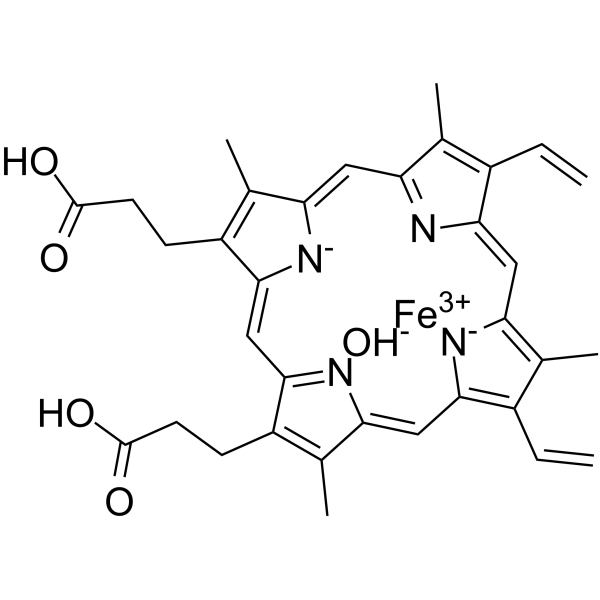
Hematin, an iron-containing porphyrin, inhibits the activity of clotting factors and also fibrin clot lysis through the mechanism of binding to and inactivation of hemostatic proteins . Hematin can be used for the research of acute porphyrias and cancer [1] .
E3 ligase Ligand 9 is a ligand for E3 ubiquitin ligase. E3 ligase Ligand 9 can be connected to the ligand for protein by a linker to form PROTACs or SNIPERs. PROTACs are inducers of ubiquitination-mediated degradation of cancer-promoting proteins .
Protein Disulfide Isomerase, Human, an oxidoreductase, is a mainly endoplasmic reticulum (ER) resident protein. Protein Disulfide Isomerase, Human plays an important role in maintaining cellular homeostasis through thiol oxidation/reduction cycling, chaperone action, and isomerization of client proteins .
Terbuthylazine-d5 is the deuterium labeled Terbuthylazine (HY-B1847) [1]. Terbuthylazine is an inhibitor of acetolactate syntase (ALS), is a selective herbicide. Terbuthylazine blocks electron transport in photosystem II via interaction with the D1-protein.
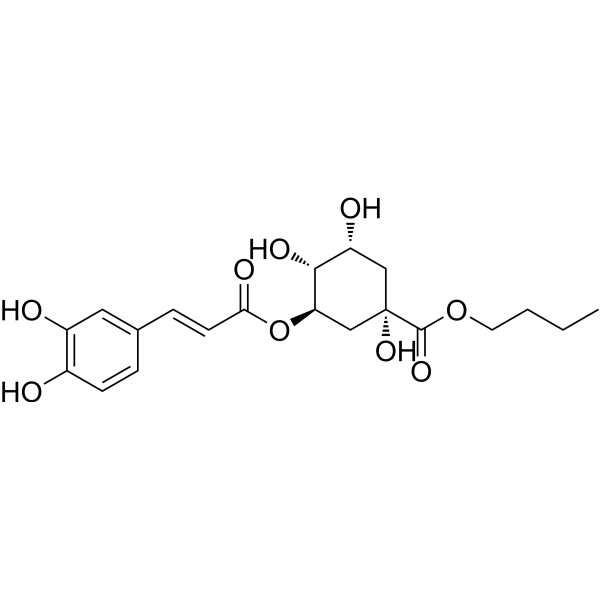
Chlorogenic acid butyl ester, a caffeoylquinic acid, is a potent melanogenesis inhibitor. Chlorogenic acid butyl ester inhibits the expression of microphtalmia-associated transcription factor (MITF), tyrosinase, tyrosinerelated protein 1(TRP-1), and TRP-2. Chlorogenic acid butyl ester also shows antioxidant activity [1].
Mdivi-1 (Standard) is the analytical standard of Mdivi-1. This product is intended for research and analytical applications. Mdivi-1 is a selective dynamin-related protein 1 (Drp1) inhibitor. Mdivi-1 is a mitochondrial division/mitophagy inhibitor.
Anti-SARS-CoV-2 Spike mAb (CR3022) is a a CHO cell derived human monoclonal IgG1 antibody. It binds to both S1 domain of SARS-CoV/SARS-CoV-2 Spike protein .
FATP1-IN-2 (compound 12a), an arylpiperazine derivative, is an orally active fatty acid transport protein 1(FATP1) inhibitor (human IC50=0.43 μM, mouse IC50=0.39 μM) [1].
SBP1 peptide is a chemically synthesized 23-mer peptide fragment of the ACE2 PD α1 helix. SBP1 peptide associates with micromolar affinity to insect-derived SARS-CoV-2-RBD protein .
Pertussis Toxin is a protein-based AB5-type exotoxin produced by the bacterium Bordetella pertussis, which causes whooping cough. Pertussis Toxin inhibits G protein-coupled receptor (GPR) signaling through Gi proteins .
LY2023-001 is a potent G2019S LRRK2 inhibitor with an IC50 of 12.9 nM. LY2023-001 formed stable hydrogen bonds with Glu1948, and Ala1950 in the G2019S LRRK2 protein .
HYOU1-IN-1 (Compound 33) is an inhibitor of hypoxia-upregulated protein 1(HYOU1) with anti-inflammatory activity. HYOU1-IN-1 can be used in research on the regulation of fibroblast activation, chronic inflammation, and fibrotic diseases [1].
Anti-inflammatory agent 23 (Compound 4m) is an anti-inflammatory agent. Anti-inflammatory agent 23 inhibits the production of NO activated by LPS with an IC50 of 0.449 μM. Anti-inflammatory agent 23 has a good affinity for p65 protein .
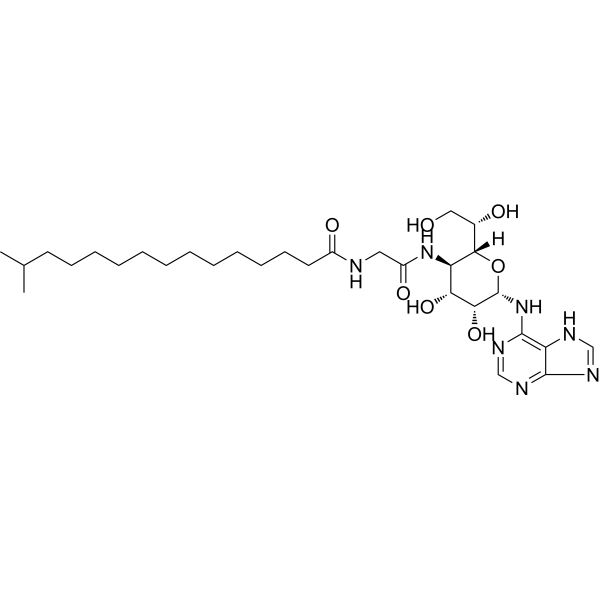
Spicamycin, an adenine nucleoside antibiotic with antifungal and antitumor activities. Spicamycin is also a potent inducer of differentiation of myeloid leukemia cells. Spicamycin induces apoptosis in NB4 cells via down-regulation of Bcl-2 expression and modulation of PML protein .
Terbuthylazine (Standard) is the analytical standard of Terbuthylazine (HY-B1847). This product is intended for research and analytical applications. Terbuthylazine is an inhibitor of acetolactate syntase (ALS), is a selective herbicide. Terbuthylazine blocks electron transport in photosystem II via interaction with the D1-protein.
Phaseolus vulgaris Lectin-P is the protein form of Phytohemagglutinin before the separation and purification of Phytohemagglutinin-L (PHA-L) and PHA-E. Phaseolus vulgaris Lectin-P can be used to stimulate the proliferation of peripheral mononuclear cells, promote the production of certain cytokines and the expression of membrane surface proteins .
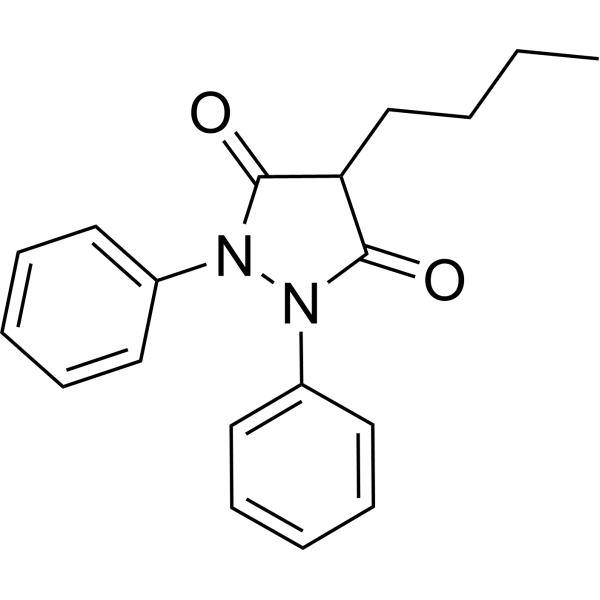
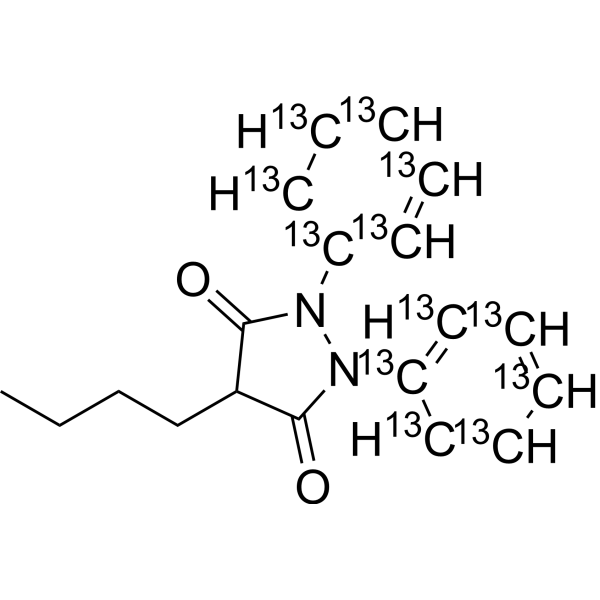
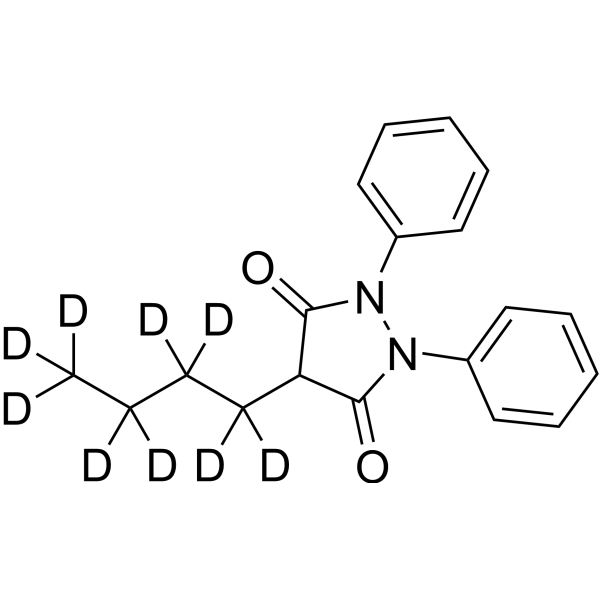
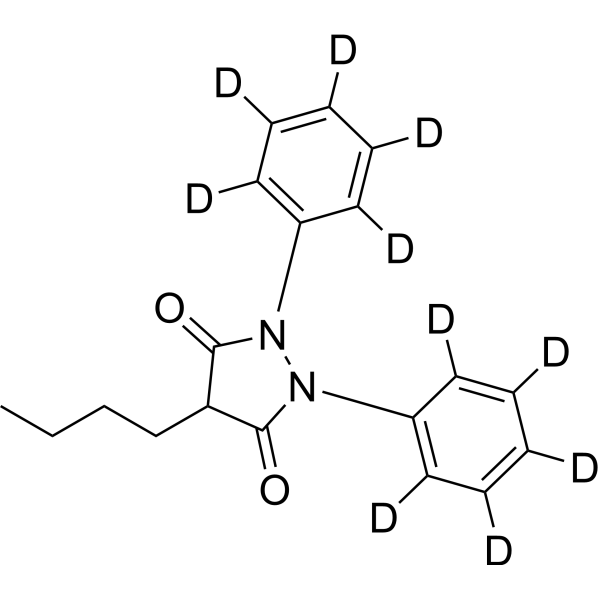
Phenylbutazone is an efficient reducing cofactor for the peroxidase activity of prostaglandin H synthase (PHS). Phenylbutazone, a hepatotoxin, is a nonsteroidal anti-inflammatory agent (NSAID). Phenylbutazone induces muscle blind-like protein 1 (MBNL1) expression and has the potential for ankylosing spondylitis research [1] .
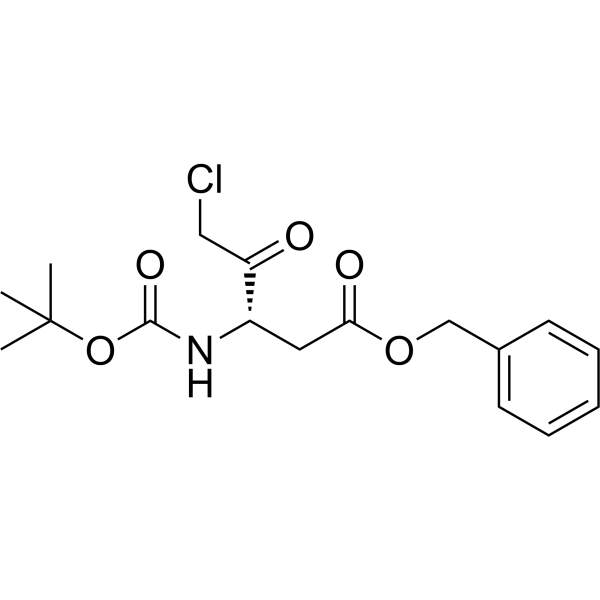
Boc-Asp(OBzl)-CMK is an inhibitor for IL-1 converting enzyme (ICE, caspase1). Boc-Asp(OBzl)-CMK prevents death of CHP100 neuroblastoma cell, and IL-1β release elicited by the viral coat protein .
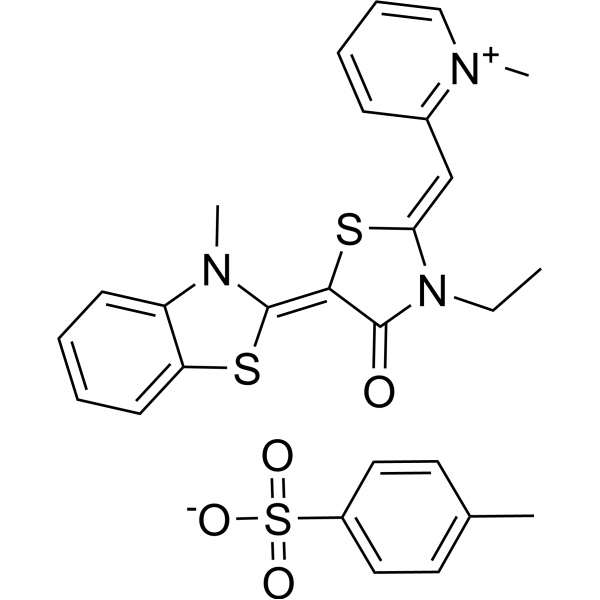
YM-1 tosylate is a stable MKT-077 (HY-15096) analog and an orally active Hsp70 inhibitor. YM-1 tosylate induces cell death of HeLa cells and up-regulates the level of p53 and p21proteins .
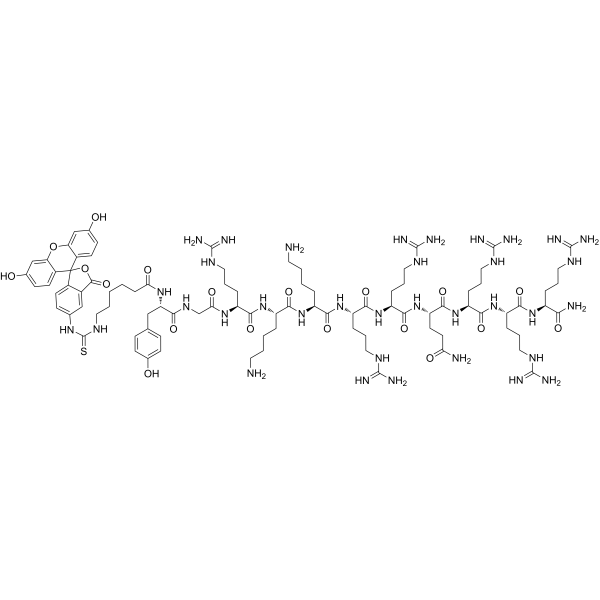
FITC-LC-TAT (47-57) acetate is a FITC-labeled TAT peptide (HY-P0281) (λex: 493 nm, λem: 522 nm). Derived from the trans-activator of transcription (TAT) of immunodeficiency virus(HIV-1), TAT enhances the yield of heterologous proteins .
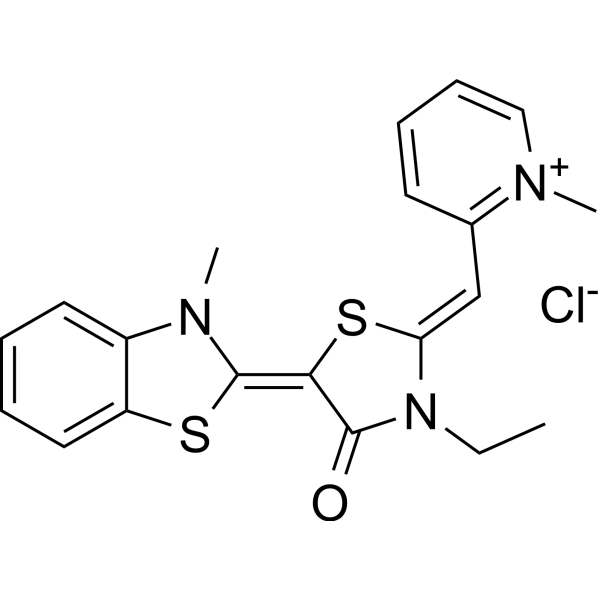
YM-1 is a stable MKT-077 (HY-15096) analog and an orally active Hsp70 inhibitor. YM-1 induces cell death of HeLa cells and up-regulates the level of p53 and p21proteins .
CLIP-TMR (BC-TMR) is a TMR-labeled CLIP tag fluorescent probe. CLIP-TMR combines the high specificity recognition ability of the CLIP-tag and the excellent optical performance of the TMR fluorophore, and can be used for the specific labeling and visualization of the HCV NS5A protein .
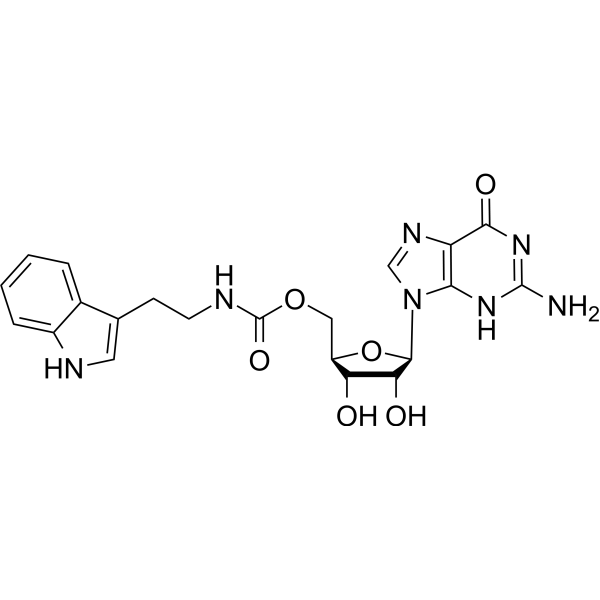
Tryptamine guanosine carbamate (TpGc) is a selective HINT1 (histidine triad nucleotide-binding protein 1) inhibitor (Ki=34 μM, Kd=3.65 μM). Tryptamine guanosine carbamate significantly enhances morphine antinociception while preventing the development of tolerance [1].
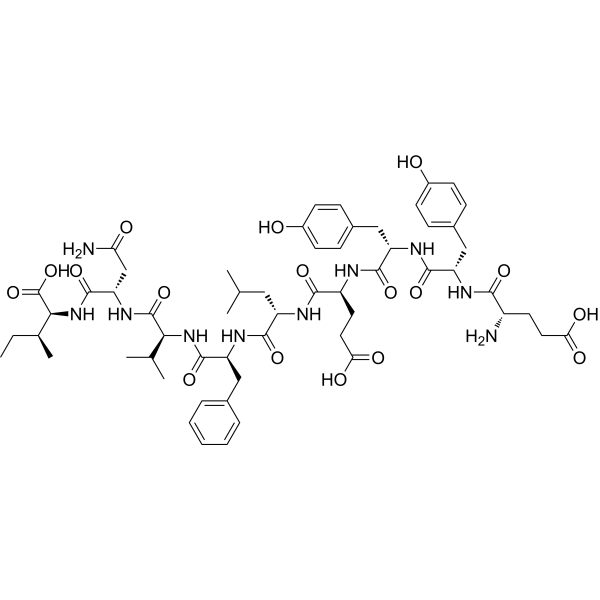
Asudemotide (S-588410) is a peptide of human DEP domain-containing protein 1A. Asudemotide is an immunostimulant. Asudemotide has a sequence of H-Glu-Tyr-Tyr-Glu-Leu-Phe-Val-Asn-Ile-OH. Asudemotide induces a tumor immune response in esophageal cancer. [1].
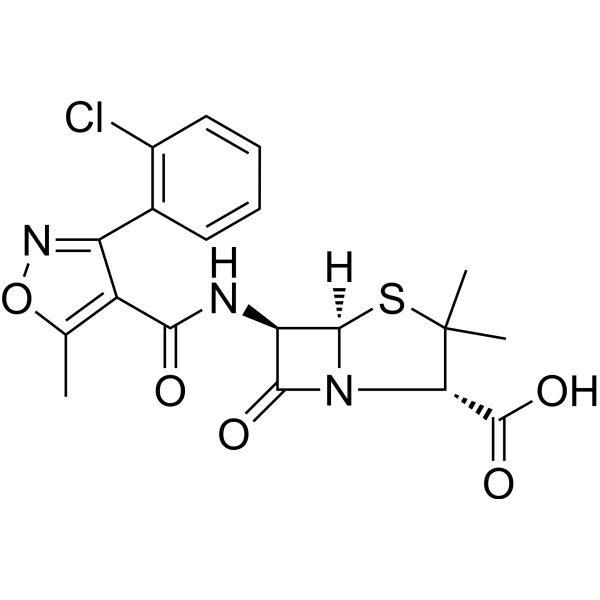
Cloxacillin is an orally active antibacterial agent and β-lactamase inhibitor with an IC50 of 0.04 µM. Cloxacillin can suppress the S. aureus-induced inflammatory response by inhibiting the activation of MAPKs, NF-кB and NLRP3-related proteins .
FITC-LC-TAT (47-57) is a FITC-labeled TAT peptide (HY-P0281) (λex: 493 nm, λem: 522 nm). Derived from the trans-activator of transcription (TAT) of human immunodeficiency virus(HIV-1), TAT enhances the yield of heterologous proteins .
CaMK1 is present in several cell types and may be involved in various cellular processes. CaMK1 exists as different isoforms (α, β, γ and δ). CaMK1β Recombinant Human Active Protein Kinase is obtained by expressing CaMK1β proteins .
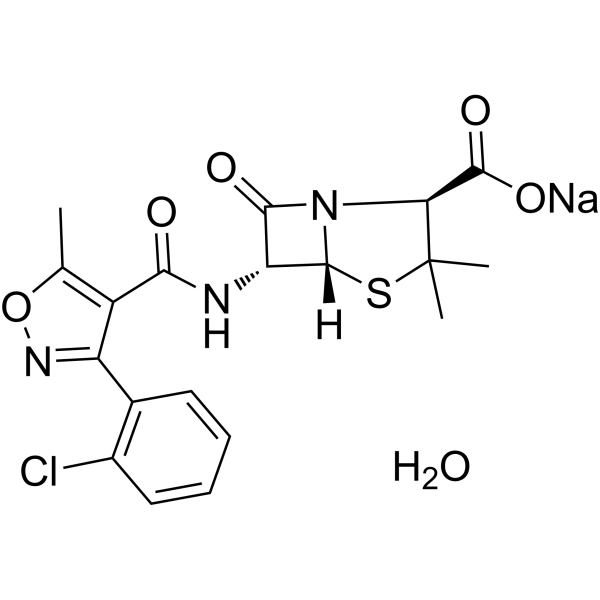
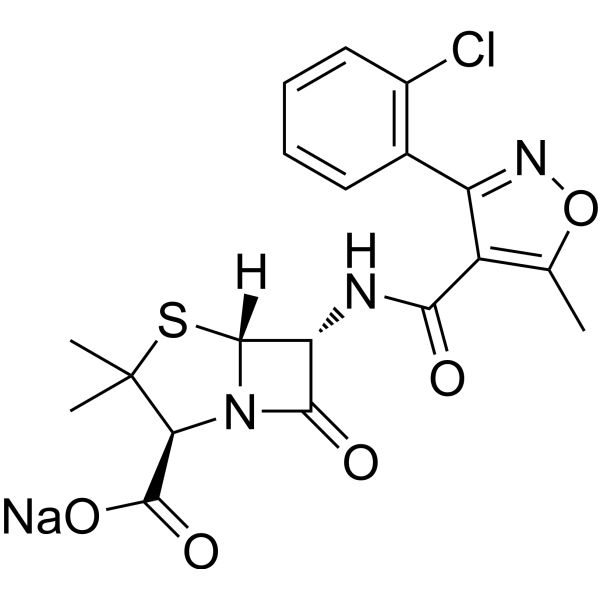
Cloxacillin sodium monohydrate is an orally active antibacterial agent and β-lactamase inhibitor with an IC50 of 0.04 µM. Cloxacillin sodium monohydrate can suppress the S. aureus-induced inflammatory response by inhibiting the activation of MAPKs, NF-кB and NLRP3-related proteins .
Cbz-B3A is a potent and selective inhibitor of mTORC1 signaling that appear to bind to ubiquilins 1, 2, and 4, and Cbz-B3A inhibits the phosphorylation of eIF4E-binding protein 1 (4EBP1).
Cloxacillin sodium is an orally active antibacterial agent and β-lactamase inhibitor with an IC50 of 0.04 µM. Cloxacillin sodium can suppress the S. aureus-induced inflammatory response by inhibiting the activation of MAPKs, NF-кB and NLRP3-related proteins .
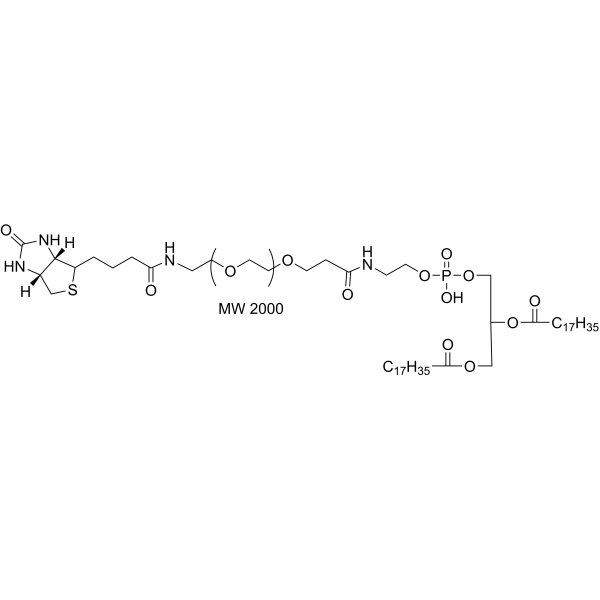
DSPE-PEG45-BG is a SNAP-tag reactive phospholipid-anchored molecule that enables targeted localization and spatiotemporal controlled immobilization of proteins on phospholipid membranes. DSPE-PEG45-BG can be applied to any SNAP-tag fusion protein .
hrv 3c Protease is a protease originated from human rhinoviruses. hrv 3c Protease recognizes the sequence LEVLFQGP and cleaves precisely between the Q and GP residues. hrv 3c Protease can be used to remove additional tags from the target proteins .
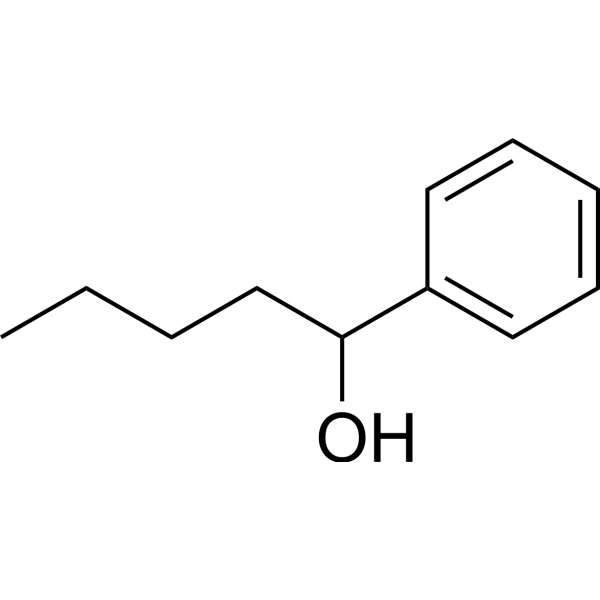
Fenipentol (1-Phenyl-1-pentanol), a synthetic derivative of an ingredient of Curcuma longa that is used as a condiment and dye. Fenipentol is also an orally active choleretic agent that plays an important role in release of secretin, gastrin, and pancreatic secretion of bicarbonate and protein .
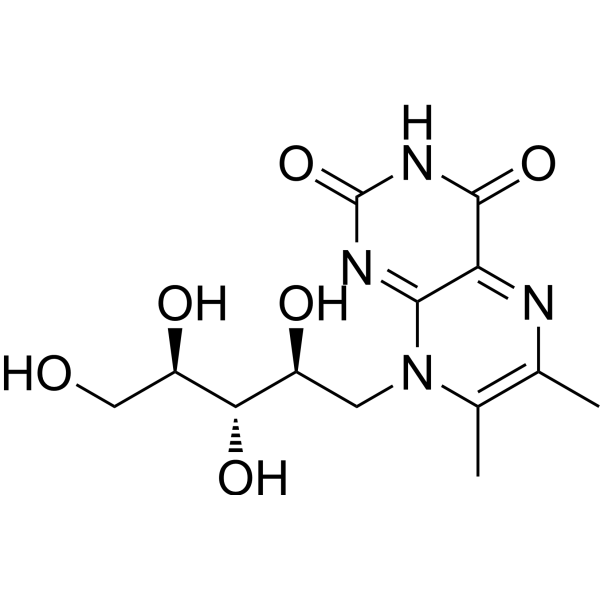
6,7-Dimethyl-8-ribityllumazine is a direct biosynthetic precursor of Riboflavin (RBF; HY-B0456). 6,7-Dimethyl-8-ribityllumazine is a noncovalently bound fluorophore of Lumazine protein (LumP), which is a fluorescent accessory protein .
V5 Epitope Tag Peptide TFA is a tag peptide derived from a small epitope present on the P and V proteins of the paramyxovirus of simian virus 5. V5 Epitope Tag Peptide TFA can be used for protein separation and purification, and competitive elution with target proteins .
T4 UvsY Protein is an accessory protein for in vitro catalysis of strand exchange. T4 UvsY Protein enhances strand exchange by UvsX protein by interacting specifically with UvsX protein. UvsY protein enhances the rate of single-stranded-DNA-dependent ATP hydrolysis by UvsX protein .
BChE-IN-39 (Compound 7c) is a selective inhibitor for butyrylcholinesterase (BChE) with an IC50 of 0.08 μM (IC50=3.98 μM for AChE). BChE-IN-39 downregulates the GSK-3β expression, inhibits the hyperphosphorylation of tau protein .
FLAC6 is a potent fluorinated detergent that can be used to solubilize membrane proteins (the native adenosine receptor A2AR, a G protein-coupled receptor, and two native transporters AcrB and BmrA). FLAC6 can maintain the structural and functional integrity of different membrane proteins .
QS11 is an inhibitor of ARFGAP1 (ADP-ribosylation factor GTPase-activating protein 1), with an EC50 of 1.5 μM. QS11 activates Wnt/β-catenin signaling through an effect on protein trafficking. QS11 inhibits migration of ARFGAP overexpressing breast cancer cells [1].
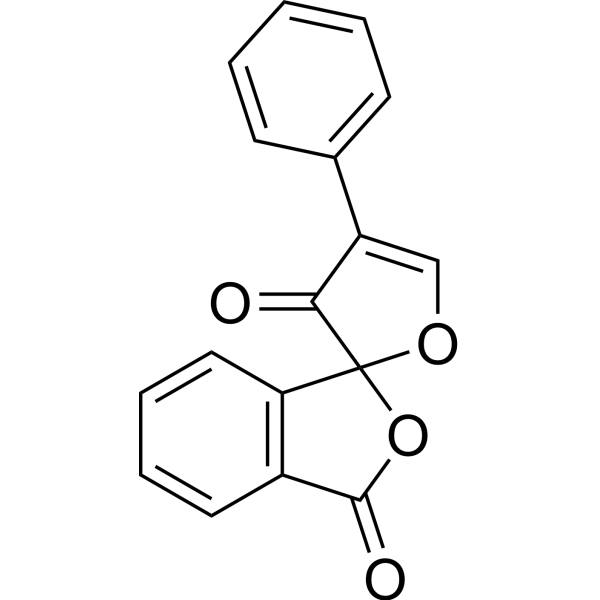
Fluorescamine is a spirocyclic compound that is non-fluorescent. Fluorescamine reacts rapidly with primary amine groups in proteins under alkaline conditions to generate products with strong fluorescence (Ex/Em: 390/475 nm). Fluorescamine can be used to detect amine-containing compounds, including amino acids, peptides, and proteins .
Abazistobart is an immunostimulant and antineoplastic agent targeting the programmed cell death protein 1(PDCD1). Abazistobart is a chimeric and humanized monoclonal antibody that specifically binds to PDCD1 to block the relevant signaling pathway, thereby activating the immune system and exerting antineoplastic activity. Abazistobart is promising for research of cancers [1].
XL44, an hRpn13 binder, induces hRpn13-dependent apoptosis and also restricts cell viability by a PCLAF-dependent mechanism. XL44 induces ubiquitin-dependent loss of hRpn13 Pru and ubiquitin-independent loss of select KEN box containing proteins .
IHMT-MST1-58 is a potent, selective mammalian and orally active STE20-like protein 1 kinase (MST1) inhibitor with IC50 value of 23 nM. IHMT-MST1-58 can be used for the research of Type 1/2 diabetes [1].
Methyl linoleate (Standard) is the analytical standard of Methyl linoleate. This product is intended for research and analytical applications. Methyl linoleate, a major active constituent of Sageretia thea fruit (HFSF), is a major anti-melanogenic compound. Methyl linoleate downregulates microphthalmia-associated transcription factor (MITF) and tyrosinase-related proteins .
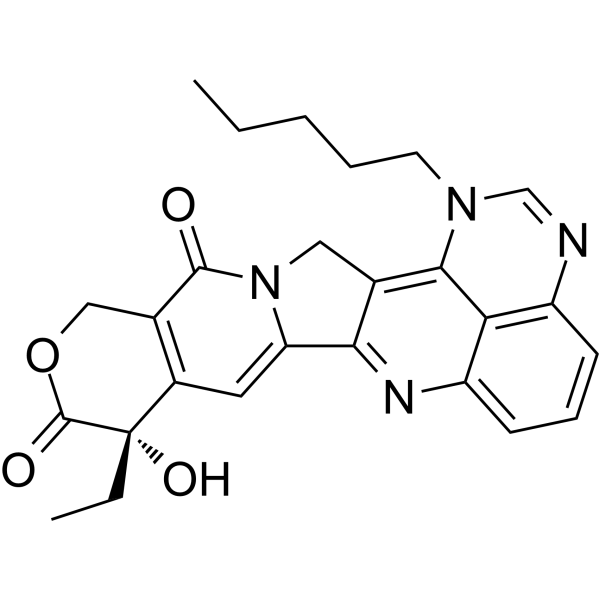
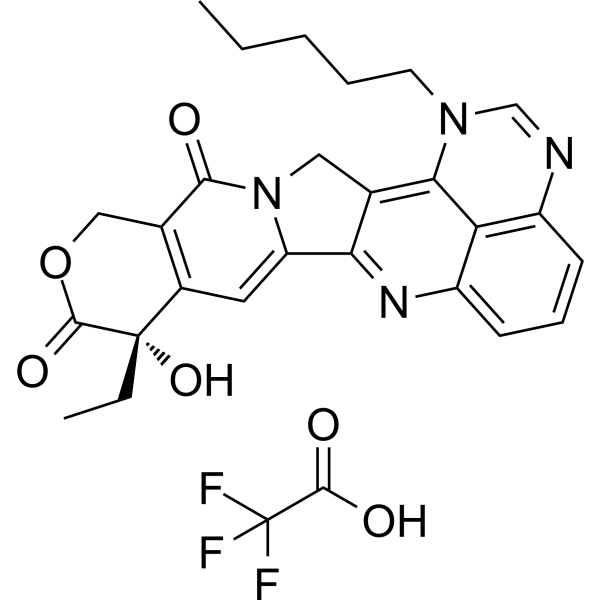
CH-0793076 (TP3076), a hexacyclic camptothecin analog, is active drug and major metabolite of TP300. CH-0793076 inhibits DNA topoisomerase I with an IC50 of 2.3 μM. CH-0793076 is efficacious against cells expressing BCRP (breast cancer resistance protein) .
NiCur is a potent and selective CBP histone acetyltransferase (HAT) inhibitor with an IC50 value of 0.35 μΜ. NiCur, which blocks CBP HAT activity and downregulates p53 activation upon genotoxic stress. NiCur can be used for performing mechanistic studies without affecting the expression of target proteins .
ADPRP is an intranuclear enzyme whose main activity is to use NAD+ (nicotinamide adenine dinucleotide) as a substrate to add ADP-ribose units to chromatin-bound proteins, including the ADPRP enzyme itself. This process, called poly(ADP-ribosylation), is a post-translational modification that regulates the interaction between DNA and nuclear proteins .
N-Nitrosodicyclohexylamine (Standard) is the analytical standard of N-Nitrosodicyclohexylamine. This product is intended for research and analytical applications. N-Nitrosodicyclohexylamine (NDCHA) is a N-nitrosocompound with anti-androgenic activities. N-Nitrosodicyclohexylamine shows the competitive binding to androgen receptor (AR) against 5α-dihydrotestosterone and decreased the level of AR protein .
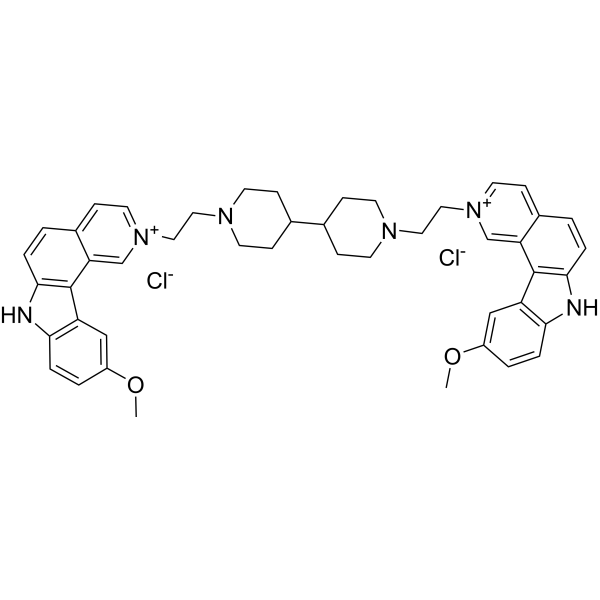
Ditercalinium chloride is an anticancer agent. Ditercalinium chloride inhibits human DNA polymerase gamma activity. Ditercalinium chloride can deplete mitochondrial DNA in both mouse and human cells. Ditercalinium chloride is a potential ligand against the COMMD10-AP3S1 fusion protein .
Sp1-IN-1 is a selective specificity protein 1(Sp1) inhibitor. Sp1-IN-1 inhibits the proliferation of Hela cells and MCF-7 cells. Sp1-IN-1 can be used to the studies of cervical cancer and breast cancer [1].
RIPK1-IN-4 (compound 8) is a potent and selective type II kinase inhibitor of receptor interacting protein 1(RIP1) kinase and binds to a DLG-out inactive form of RIP1 with an IC50s of 16 nM and 10 nM for RIP1 and ADP-Glo kinase [1].
FOXM1-IN-1 is a potent FOXM1 inhibitor with an IC50 value of 2.65 µM. FOXM1-IN-1 shows antiproliferative activity. FOXM1-IN-1 decreases the the expression of FOXM1, PLK1, CDC25B protein .
Alkyne-PEG5000-NH2 is an alkyne-functionalized bifunctional PEG derivative that can be used to modify proteins, peptides, and other materials. The alkyne group reacts with azides in aqueous solution in a copper-catalyzed manner. PEGylation can increase solubility and stability and reduce the immunogenicity of peptides and proteins .
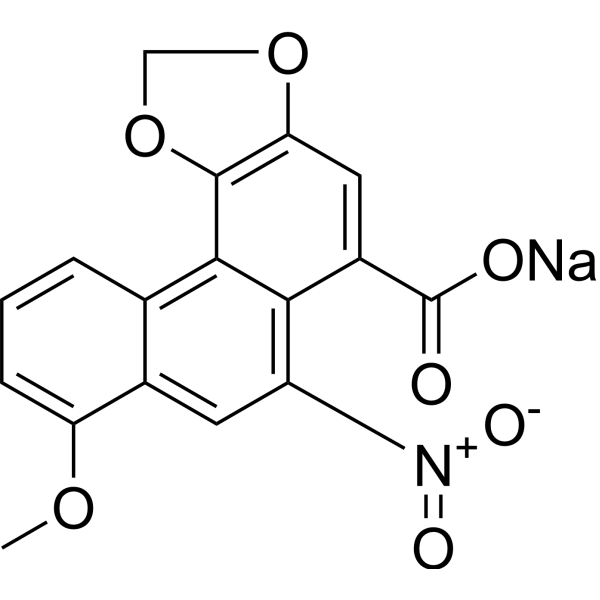
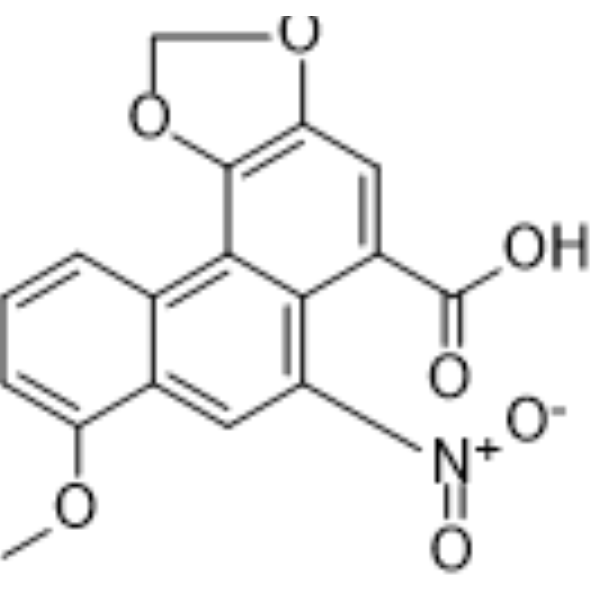
Aristolochic acid A (Aristolochic acid I) sodium is the main component of plant extract Aristolochic acids, which are found in various herbal plants of genus Aristolochia and Asarum. Aristolochic acid A sodium significantly reduces both activator protein 1 (AP-1) and NF-κB activities. Aristolochic acid A sodium reduces BLCAP gene expression in human cell lines [1].
Alkyne-PEG10000-NH2 is an alkyne-functionalized bifunctional PEG derivative that can be used to modify proteins, peptides, and other materials. The alkyne group reacts with azides in aqueous solution in a copper-catalyzed manner. PEGylation can increase solubility and stability and reduce the immunogenicity of peptides and proteins .
Alkyne-PEG1000-NH2 is an alkyne-functionalized bifunctional PEG derivative that can be used to modify proteins, peptides, and other materials. The alkyne group reacts with azides in aqueous solution in a copper-catalyzed manner. PEGylation can increase solubility and stability and reduce the immunogenicity of peptides and proteins .
ZK-806450 is a compound with antiviral activity. ZK-806450 has a high binding potential to the allosteric binding site of the SARS-CoV-2 3CL protease. ZK-806450 can also specifically and stably bind to the GAG site of the dengue virus envelope protein .
Alkyne-PEG3400-NH2 is an alkyne-functionalized bifunctional PEG derivative that can be used to modify proteins, peptides, and other materials. The alkyne group reacts with azides in aqueous solution in a copper-catalyzed manner. PEGylation can increase solubility and stability and reduce the immunogenicity of peptides and proteins .
N-Phthaloylglycine- 13C2, 15N (Phthaloyl glycine- 13C2, 15N) is the 13C- and 15N-labeled N-Phthaloylglycine (HY-W014665). N-Phthaloylglycine (Phthaloyl glycine) is an FX-type hapten that attaches to free amine groups of proteins .
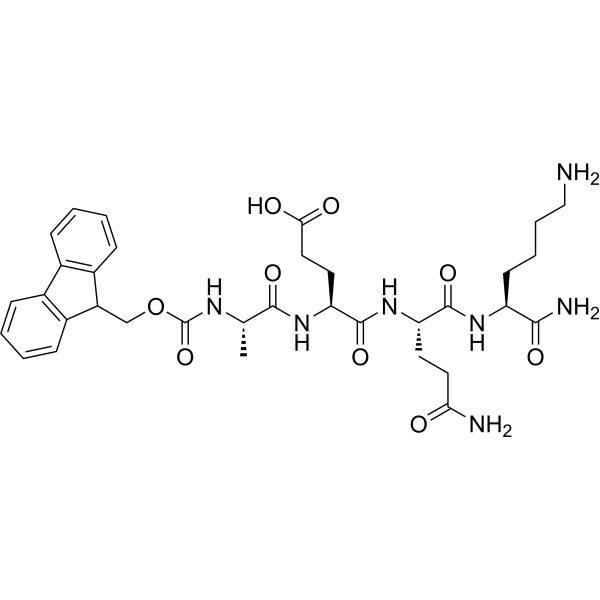
Fmoc-Ala-Glu-Gln-Lys-NH2 (AEQK) is a tetrapeptide. Fmoc-Ala-Glu-Gln-Lys-NH2 is the inactive control for Fmoc-Ala-Glu-Asn-Lys-NH2 (AENK) peptide inhibitor. AENK blocks proteolysis of UNC5C protein .
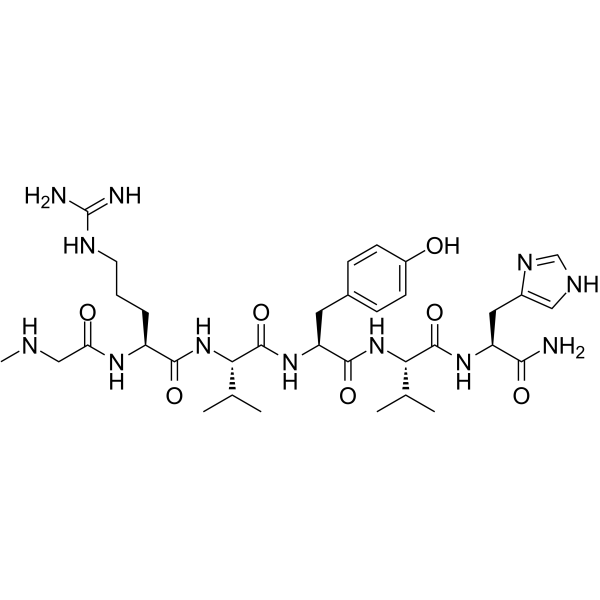
Sar-Arg-Val-Tyr-Val-His-NH2 is a Gq-biased agonists, exhibits 10-fold larger molecular efficacies at the AT1R-Gq fusion protein compared with the AT1R-βarr2 fusion protein .
Alkyne-PEG20000-NH2 is an alkyne-functionalized bifunctional PEG derivative that can be used to modify proteins, peptides, and other materials. The alkyne group reacts with azides in aqueous solution in a copper-catalyzed manner. PEGylation can increase solubility and stability and reduce the immunogenicity of peptides and proteins .
FTAC6 (C6F-TAC) is a lipophobic surfactant. FTAC6 does not solubilize biological membranes as a non-detergent and can substitute for detergents to keep membrane proteins soluble and improves stability after conventional solubilization. FTAC6 can be utilized in in vitro synthesis of membrane proteins .
Alkyne-PEG40000-NH2 is an alkyne-functionalized bifunctional PEG derivative that can be used to modify proteins, peptides, and other materials. The alkyne group reacts with azides in aqueous solution in a copper-catalyzed manner. PEGylation can increase solubility and stability and reduce the immunogenicity of peptides and proteins .
Boc-L-Ala-OH-3- 13C is a 13C-labeled Boc-L-Ala-OH (HY-41121). Boc-L-Ala-OH (Boc-Ala-OH) shows excellent affinity with ATP. Boc-L-Ala-OH contains an amino acid moiety, and an acylamide bond like that of the peptide and protein .
Uracil is a pyrimidine derivative and one of the four nucleobases in the nucleic acid of RNA. Uracil is a frequently occurring DNA base damage that results from the spontaneous or chemically induced deamination of cytosine and is mutagenic at the level of replication. Uracil could potentially alter transcriptional fidelity, resulting in production of mutant proteins .
CaMKK2 is a serine/threonine protein kinase and the central component of a Ca 2+-calmodulin activated signalling pathway. CaMKK2 is highly enriched in brain neurons and regulates energy metabolism and neuronal processes. CAMKK2 Recombinant Human Active Protein Kinase is obtained by expressing CAMKK2 proteins .
LC3B ligand 2 is a ligand for E3 ubiquitin ligase. LC3B ligand 2 can be connected to the ligand for protein by a linker to form PROTAC PCSK9 autophagic degrader 2 (HY-176043). PROTACs are inducers of ubiquitination-mediated degradation of cancer-promoting proteins .
Boc-L-Ala-OH-2- 13C is a 13C-labeled Boc-L-Ala-OH (HY-41121). Boc-L-Ala-OH (Boc-Ala-OH) shows excellent affinity with ATP. Boc-L-Ala-OH contains an amino acid moiety, and an acylamide bond like that of the peptide and protein .
Alkyne-PEG2000-NH2 is an alkyne-functionalized bifunctional PEG derivative that can be used to modify proteins, peptides, and other materials. The alkyne group reacts with azides in aqueous solution in a copper-catalyzed manner. PEGylation can increase solubility and stability and reduce the immunogenicity of peptides and proteins .
5-Chloroisoquinoline (compound 42) is an inhibitor of SARM1 (Sterile alpha and toll/interleukin receptor (TIR) motif containing protein 1), an enzyme involved in axon degeneration that catalyzes multiple activities through a ternary complex mechanism. 5-Chloroisoquinoline can be used in the study of neurodegenerative diseases or axon degeneration [1].
Biricodar dicitrate (VX 710-3) is the dicitrate salt form of Biricodar (HY-13574A). Biricodar dicitrate is an inhibitor for P-glycoprotein and multidrug resistance-associated protein 1(MRP-1), which increases the accumulation of chemotherapy drugs within cancer cells and shows effective chemosensitizing activity in multidrug resistant cells [1].
Phosphonoacetic acid (Standard) is the analytical standard of Phosphonoacetic acid (HY-128744). This product is intended for research and analytical applications. Phosphonoacetic acid is an endogenous metabolite and antiviral agent. Phosphonoacetic acid is active against orthopoxviruses and herpes viruses. Phosphonoacetic acid can inhibit HSV DNA synthesis and virus-specific DNA polymerase activity, and affect the synthesis of late viral proteins .
(S)-E3 ligase Ligand 42 is a ligand for E3 ubiquitin ligase. (S)-E3 ligase Ligand 42 can be connected to the ligand for protein by a linker to form GDC-2992 (HY-156751A). PROTACs are inducers of ubiquitination-mediated degradation of cancer-promoting proteins .
D-Ornithine (hydrochloride) (Standard) is the analytical standard of D-Ornithine (hydrochloride). This product is intended for research and analytical applications. D-Ornithine ((R)-Ornithine) hydrochloride is a constituent of bacterial cell wall. D-Ornithine hydrochloride promotes the production of L-arginine (HY-N0455). D-Ornithine hydrochloride enhances the expression of pyrrolysine-containing proteins .
CK1δ/CK1εliagnd-1 is the ligand for CK1δ/CK1ε that can be used for synthesis of CK1 PROTAC degrader AH078 (HY-170859) as the ligand for target protein .
Phenylbutazone- 13C12 is the 13C12 labeled Phenylbutazone. Phenylbutazone is an efficient reducing cofactor for the peroxidase activity of prostaglandin H synthase (PHS). Phenylbutazone, a hepatotoxin, is a nonsteroidal anti-inflammatory agent (NSAID). Phenylbutazone induces muscle blind-like protein 1 (MBNL1) expression and has the potential for ankylosing spondylitis research.
FATP1-IN-1 (compound 5k) is a fatty acid transport protein 1(FATP1) inhibitor. FATP1-IN-1 is an inhibition of recombinant human or mouse acyl-CoA synthetase activity of FATP1, with the IC50 values of 0.046 μM or 0.60 μM, respectively [1].
Phenylbutazone-d9 is the deuterium labeled Phenylbutazone. Phenylbutazone is an efficient reducing cofactor for the peroxidase activity of prostaglandin H synthase (PHS). Phenylbutazone, a hepatotoxin, is a nonsteroidal anti-inflammatory agent (NSAID). Phenylbutazone induces muscle blind-like protein 1 (MBNL1) expression and has the potential for ankylosing spondylitis research [1] .
Human NEUROD1 mRNA encodes the human neuronal differentiation 1 (NEUROD1)protein, a member of the NeuroD family of basic helix-loop-helix (bHLH) transcription factors. NEUROD1 forms heterodimers with other bHLH proteins and activates transcription of genes that contain a specific DNA sequence known as the E-box.
CH-0793076 (TP3076) TFA, a hexacyclic camptothecin analog, is active drug and major metabolite of TP300. CH-0793076 TFA inhibits DNA topoisomerase I with an IC50 of 2.3 μM. CH-0793076 TFA is efficacious against cells expressing BCRP (breast cancer resistance protein) .
OICR-41103N is the negative control form of OICR-41103 (HY-175343). OICR-41103 is an effective, selective, cell-active DCAF1 small molecule chemical probe (Ki<2 nM) that targets the DCAF1 WDR domain and replaces the viral Vpr protein .
Aristolochic acid A (Aristolochic acid I; TR 1736) is the main component of plant extract Aristolochic acids, which are found in various herbal plants of genus Aristolochia and Asarum. Aristolochic acid A significantly reduces both activator protein 1 (AP-1) and NF-κB activities. Aristolochic acid A reduces BLCAP gene expression in human cell lines [1].
E913 is a CCR5 antagonist that competes with the binding of antibodies to CCR5 which recognize the C-terminal half of the second extracellular loop (ECL2B) of CCR5. E913 can specifically block the binding of macrophage inflammatory protein-1alpha (MIP-1alpha) to CCR5 (IC50 = 0.002 μM) and MIP-1alpha-elicited cellular Ca 2+ mobilization (IC50 = 0.02 μM). E913 inhibits the replication of laboratory and primary R5 HIV-1 strains as well as various multidrug-resistant monocyte/macrophage tropic (R5) HIV-1 (IC50 = 0.03-0.06 μM). E913 can be used for the research of infection, such as HIV-1 infection [1].
E3 ligase Ligand 42 is an E3 ubiquitin ligase ligand. E3 ligase Ligand 42 can be connected to the target protein ligand through a linker and can be used to synthesize PROTAC AR Degrader-6 (HY-156751). PROTAC can induce ubiquitination degradation of cancer-promoting proteins .
(6S)-Tetrahydrofolic acid is 1000-fold more active than the (6R) form at promoting the binding of fluorodeoxyuridylate to thymidylate synthase and 600-fold more active as a growth factor of P. cerevisiae. (6S)-Tetrahydrofolic acid also has a low affinity and high dissociation rate for folate-binding protein .
Phenylbutazone(diphenyl-d10) is the deuterium labeled Phenylbutazone. Phenylbutazone is an efficient reducing cofactor for the peroxidase activity of prostaglandin H synthase (PHS). Phenylbutazone, a hepatotoxin, is a nonsteroidal anti-inflammatory agent (NSAID). Phenylbutazone induces muscle blind-like protein 1 (MBNL1) expression and has the potential for ankylosing spondylitis research [1] .
L57 acetate is a Low-density lipoprotein receptor-related protein 1(LRP1)-binding peptide. L57 acetate exhibits high affinity to LRP1 with Ki of 45 nM. L57 acetate exhibits blood-brain barrier (BBB) permeability and plasma stability. L57 acetate can be utilized as the carrier for CNS drug delivery [1].
T2AA hydrochloride is a non-peptide small molecule PCNA inhibitor T2 amino alcohol (T2AA) that lacks thyroid hormone activity. T2AA hydrochloride inhibits the interaction of PCNA/PIP-box peptide (IC50=~1 μM) and the interaction of PCNA with full-length p21 protein .
MK2-IN-1 (compound 1) is a potent and selecitve MAPKAPK2 (MK2) inhibitor with an IC50 of 0.11 uM for MK2 and an EC50 of 0.35 uM for pHSP27. MK2-IN-1 impaires the phosphorylation level of serine residues in the Tfcp2l1protein .
ZINC36617540 is a novel Nef protein inhibitor with anti-HIV activity. ZINC36617540 exhibits superior binding affinity by binding to Nef protein. ZINC36617540 shows a similar binding mode to the prototype molecule B9 in molecular docking. The mechanism of action of ZINC36617540 mainly depends on its hydrophobic and electrostatic interactions with Nef protein .
MK2-IN-1 hydrochloride (compound 1) is a potent and selecitve MAPKAPK2 (MK2) inhibitor with an IC50 of 0.11 uM for MK2 and an EC50 of 0.35 uM for pHSP27. MK2-IN-1 hydrochloride impaires the phosphorylation level of serine residues in the Tfcp2l1protein .
Br-C10-methyl ester is a PROTAC linker, which refers to the alkyl/ether composition. Br-C10-methyl ester is used in the synthesis of a series of PROTACs (MS432). PROTACs contain two different ligands connected by a linker; one is the VHL ligand portion and the other is for the target protein .
IQ-1S is a prospective inhibitor of NF-κB/activating protein 1(AP-1) activity with an IC50 of 1.8 μM. IQ-1 has binding affinity (Kd values) in the nanomolar range for all three JNKs with Kds of 87 nM, 360 nM, and 390 nM for JNK3, JNK2, and JNK1, respectively.
Phospholipid-PEG5000-Biotin is a phospholipid PEG derivative, can be used for modify liposome and cells surface, and pancreatic islets for cell transplantation. Phospholipid is a class of lipid containing a hydrophilic “head” and two hydrophobic “tails”; PEG is a hydrophilic and water-soluble polymer with low toxicity; Biotin is an enzyme co-factor, can be used for labeling protein .
(R,S,S)-VH032-Me is a ligand for E3 ubiquitin ligase. (R,S,S)-VH032-Me can be connected to the ligand for protein by a linker to form dTAGV-1-NEG (HY-145514A). PROTACs are inducers of ubiquitination-mediated degradation of cancer-promoting proteins .
BG-PEG-NH2 is an amine terminated phenylguanine derivative with a polyethylene glycol (PEG) chain. BG-PEG-NH2 is an important building block for synthesizing SNAP tag labeled probes. BG-PEG-NH2 is suitable for coupling reactions in aqueous or buffer solutions, coupling of markers, and labeling of intracellular or cell surface proteins .
SGC2085 (Standard) is the analytical standard of SGC2085 (HY-100565). This product is intended for research and analytical applications. SGC2085 is a potent and selective inhibitor of coactivator associated arginine methyltransferase 1 (CARM1) with an IC50 of 50 nM. SGC2085 also selectively inhibits PRMT6 with an IC50 value of 5.2 μM, but not other PRMT proteins .
Reversan (Standard) is the analytical standard of Reversan (HY-107643). This product is intended for research and analytical applications. Reversan (CBLC4H10) inhibits drug efflux mediated by P-glycoprotein (Pgp) and multidrug resistance protein 1 (MRP1), and exhibits oral activity. Reversan shows activity against glioblastoma multiforme and neuroblastoma models [1] .
GSK481 is a highly potent, selective, and specific receptor interacting protein 1 (RIP1) kinase inhibitor with an IC50 of 1.3 nM, which inhibits Ser 166 phosphorylation in wild-type human RIP1 (IC50=2.8 nM). GSK481 also exhibits excellent translation in the U937 cellular assay with an IC50 of 10 nM [1].
Phenylbutazone (Standard) is the analytical standard of Phenylbutazone. This product is intended for research and analytical applications. Phenylbutazone is an efficient reducing cofactor for the peroxidase activity of prostaglandin H synthase (PHS). Phenylbutazone, a hepatotoxin, is a nonsteroidal anti-inflammatory agent (NSAID). Phenylbutazone induces muscle blind-like protein 1 (MBNL1) expression and has the potential for ankylosing spondylitis research [1] .
PROTAC ERRα Degrader-3 is a potent and selective ERRα degrader based on von Hippel-Lindau ligand. PROTAC ERRα Degrader-3 is capable of specifically degrading ERRαprotein by >80% at a concentration of 30 nM. PROTAC ERRα Degrader-3 is inactive against ERRβ and ERRγ proteins .
L57 is a low-density lipoprotein receptor-related protein 1 (LRP1)-binding peptide. L57 exhibits high affinity for LRP1, with an EC50 of 45 nM. L57 possesses blood-brain barrier (BBB) permeability and plasma stability. L57 can serve as a carrier for central nervous system drug delivery [1].
RIPA-56 (Standard) is the analytical standard of RIPA-56 (HY-101032). This product is intended for research and analytical applications. RIPA-56 is a highly potent, selective, and metabolically stable inhibitor of receptor-interacting
protein 1 (RIP1) with an IC50 of 13 nM. RIPA-56 can be used for the treatment of systemic inflammatory response syndrome [1].
Cloxacillin (sodium) (Standard) is the analytical standard of Cloxacillin (sodium). This product is intended for research and analytical applications. Cloxacillin sodium is an orally active antibacterial agent and β-lactamase inhibitor with an IC50 of 0.04 μM. Cloxacillin sodium can suppress the S. aureus-induced inflammatory response by inhibiting the activation of MAPKs, NF-кB and NLRP3-related proteins .
Cloxacillin (sodium monohydrate) (Standard) is the analytical standard of Cloxacillin (sodium monohydrate). This product is intended for research and analytical applications. Cloxacillin sodium monohydrate is an orally active antibacterial agent and β-lactamase inhibitor with an IC50 of 0.04 μM. Cloxacillin sodium monohydrate can suppress the S. aureus-induced inflammatory response by inhibiting the activation of MAPKs, NF-кB and NLRP3-related proteins .
Autophagy inducer 3 has autophagy induced activity. Autophagy inducer 3 possesses robust autophagic cell death in diverse cancer cells sparing normal counterpart. Autophagy inducer 3 induces lethal autophagy by formation of characteristic autophagic vacuoles, LC3 puncta formation, upregulation of signature autophagy markers like Beclin and Atg family proteins .
Corr4A is a chemical corrector, which can be used for cystic fibrosis. Corr4A interacts directly with the cystic fibrosis transmembrane conductance regulator (CFTR) or affects indirectly its folding process. Corr4A increases the expression of CFTR ΔF508 on the cell surface, thereby improving its transport to the plasma membrane and increasing the stability of the rescued mutant protein .
CHI3L1-IN-1 (Compound 30) is an inhibitor for Chitinase-3-like protein 1(CHI3L1) (YKL-40) with IC50 of 50 nM. CHI3L1-IN-1 inhibits hERG channel with an IC50 of 2.3 μM [1].
Phospholipid-PEG2000-Biotin is a Biotin labeled phospholipid PEG derivative, can be used for modify liposome and cells surface, and pancreatic islets for cell transplantation. Phospholipid is a class of lipid containing a hydrophilic "head" and two hydrophobic "tails" ; PEG is a hydrophilic and water-soluble polymer with low toxicity; Biotin is an enzyme co-factor, can be used for labeling protein .
BPN-15477 is a potent SMC (splicing modulator compound) that restores correct splicing of ELP1 (Elongator complex protein 1) exon 20. BPN-15477 corrects splicing of the ELP1 transcript, significantly increases the level of functional proteinin vivo in all tissues, including brain. BPN-15477 can be used for frontotemporal dementia research [1].
NI-42 (compound 13-d), a structurally orthogonal chemical probe for the BRPFs, is a biased, potent inhibitor of the BRD of the BRPFs (IC50s of BRPF1/2/3=7.9/48/260 nM; Kds of BRPF1/2/3=40/210/940 nM) with excellent selectivity over nonclass IV BRD proteins .
Syringolin A is a plant elicitor that can be produced by the plant pathogen Pseudomonas syringae pv. syringae. Syringolin A exhibits anti-proliferative activity against a variety of cancer cells (IC50 for SK-N-SH, LAN-1, SKOV3 is 20-25 µM), induces apoptosis in SK-N-SH through upregulation of p53 expression and downregulation of Akt/PKB proteins .
Risedronic acid (Risedronate) sodium, a bisphosphonate, is a potent anti-resorption agent that inhibits osteoclast-mediated bone resorption and changes the bone metabolism. Risedronic acid sodium suppresses osteoblast differentiation and induced caspase- and isoprenoid depletion-dependent apoptosis. Risedronic acid sodium inhibits blood stages of Plasmodium falciparum (IC50 of 20.3 μM). Risedronic acid sodium inhibits the transfer of the farnesyl pyrophosphate group to parasite proteins .
Ap4A (P1,P4-Di-(adenosine-5')-tetraphosphate) is a conserved second messenger in organisms ranging from bacteria to humans. Ap4A binds to the histidine triad nucleotide-binding protein 1 (HINT1) activates the transcription of genes downstream of MITF. Ap4A induces apoptosis[1] .
Polymethacrylate Copolymer N−C4−52−6.9 is a polymer that consists of hydrophobic butylmethacrylate and cationic methacroylcholine chloride monomers. Polymethacrylate Copolymer N−C4−52−6.9 is able to solubilise lipid bilayers into nanodiscs. Polymethacrylate Copolymer N−C4−52−6.9 can be utilized in structure and functional studies on membrane proteins .
CEX Cation-exchange resin 1 is an ion exchange chromatography resin based on monodisperse polystyrene/divinylbenzene (PS-DVB). The particle size of CEX Cation-exchange resin 1 is 50μm and the ligand is -CH2CH2CH2SO3-. CEX Cation-exchange resin 1 can be used for the separation and purification of antibodies, VLPs, viruses and proteins .
Coelonin is a dihydrophenanthrene with anti-inflammation activity. Coelonin inhibits LPS-induced PTEN phosphorylation. Coelonin inhibits NF-κB activation and p27Kip1 degradation by regulating the PI3K/AKT pathway negatively. Coelonin can inhibit IκBα phosphorylation and degradation and increases the expression of IκBαprotein .
IQ-1S free acid is a prospective inhibitor of NF-κB/activating protein 1(AP-1) activity with an IC50 of 2.3±0.41 μM. IQ-1S free acid has binding affinity (Kd values) in the nanomolar range for all three JNKs with Kds of 100 nM, 240 nM, and 360 nM for JNK3, JNK1, and JNK2, respectively.
ICCB-19 hydrochloride is a TRADD (TNFRSF1A associated via death domain) inhibitor. ICCB-19 hydrochloride binds with N-terminal domain of TRADD (TRADD-N), disrupting its binding to both TRADD-C and TRAF2. ICCB-19 hydrochloride is indirect inhibitor of RIPK1 kinase activity. ICCB-19 hydrochloride effectively induces autophagy and the degradation of long-lived proteins .
Antitumor agent-133 (compound 4d) is a bis-isatin derivative, with activities against Huh1 (IC50=17.13 μM) and Huh7 (IC50=8.27 μM). Antitumor agent-133 induces cell autophagy and inhibits tumor growth through regulation of LC3BII, ATG5 and p62 proteins .
GSPT1 degrader-9 (Compound F) is a cereblon-based molecular glue degrader for G1 to S phase transition protein 1(GSPT1) that degrades GSPT1 with a rate of 95% (1 μM) GSPT1 and 86% (0.1 μM). GSPT1 degrader-9 inhibits the cell viability of HL-60 with an IC50 of 9.2 nM [1].
DHEA Benzophenone-biotin is a photoactive DHEA (HY-14650) analog containing Biotin (HY-B0511) and Benzophenone (HY-Y0546) groups. DHEA Benzophenone-biotin inhibits plasma membrane binding of DHEA, activates endothelial NO synthase. DHEA Benzophenone-biotin cross-links to plasma membrane DHEA binding sites upon UV irradiation to identify associated proteins .
MDEG-541 is a potent MYC-MAX degrader. MDEG-541 is a PROTAC that based on the MYC-MAX dimerization inhibitor 10058-F4 derivative 28RH and Thalidomide (HY-14658). MDEG-541 shows antiproliferative activity. MDEG-541 decreases the expression of GSPT1, MYC, GSPT2, PLK1protein .
8-NBD-cAMP sodium is a fluorescently labeled cyclic adenosine phosphate (cAMP) analogue. 8-NBD-cAMP sodium retains a similar biological activity to cAMP, regulating their activity by binding to specific proteins such as EPACs or PKA. 8-NBD-cAMP sodium can be used in fluorescent competitive binding experiments to evaluate the binding affinity of newly synthesized EPAC1 agonists to EPAC1proteins .
Ap4A tetraammonium (P1,P4-Di-(adenosine-5')-tetraphosphate tetraammonium) is a conserved second messenger in organisms ranging from bacteria to humans. Ap4A tetraammonium binds to the histidine triad nucleotide-binding protein 1 (HINT1) activates the transcription of genes downstream of MITF. Ap4A tetraammonium induces apoptosis[1] .
Fluorescamine (Standard) is the analytical standard of Fluorescamine (HY-D0715). This product is intended for research and analytical applications. Fluorescamine is a spirocyclic compound that is non-fluorescent. Fluorescamine reacts rapidly with primary amine groups in proteins under alkaline conditions to generate products with strong fluorescence (Ex/Em : 390/475 nm). Fluorescamine can be used to detect amine-containing compounds, including amino acids, peptides, and proteins .
tert-Butyl 11-aminoundecanoate (compound 6b) is a PROTAC linker, which refers to the PEG composition. tert-Butyl 11-aminoundecanoate can be used in the synthesis of a series of PROTACs. PROTACs contain two different ligands connected by a linker; one is a ligand for an E3 ubiquitin ligase and the other is for the target protein. PROTACs exploit the intracellular ubiquitin-proteasome system to selectively degrade target proteins .
DRP1i27 is a potent inhibitor of human Drp1 (dynamin-related protein 1). DRP1i27 binds to the GTPase site of Drp1, with hydrogen bonds to Gln34 and Asp218. DRP1i27 targets Drp1-mediated mitochondrial fission in cell line models and protects against simulated ischemia-reperfusion injury [1].
Chem-0199 is an Adipocyte Enhancer-Binding Protein 1(AEBP1) inhibitor. Chem-0199 can disrupt the interaction between AEBP1 and CKAP4, thereby enhances antitumor immunity. Chem-0199 can inhibit Akt phosphorylation (p-Akt) and downregulates PD-L1 expression. Chem-0199 can be used for the research of cancer, such as colon cancer [1].
N-TCO-L-lysine is a non-canonical amino acid. N-TCO-L-lysine contains a trans-cyclooctene (TCO) bioorthogonal reactive linker. N-TCO-L-lysine undergoes a bioorthogonal click reaction with SiR-Tz to enable fluorescent labeling of endogenously expressed proteins with site-specific incorporation. When used in combination with SiR-Tz, N-TCO-L-lysine allows super-resolution and live-cell imaging of endogenous proteins .
Aristolochic acid A (Standard) is the analytical standard of Aristolochic acid A. This product is intended for research and analytical applications. Aristolochic acid A (Aristolochic acid I; TR 1736) is the main component of plant extract Aristolochic acids, which are found in various herbal plants of genus Aristolochia and Asarum. Aristolochic acid A significantly reduces both activator protein 1 (AP-1) and NF-κB activities. Aristolochic acid A reduces BLCAP gene expression in human cell lines [1].
DRP1i27 dihydrochloride is a potent inhibitor of human Drp1 (dynamin-related protein 1). DRP1i27 dihydrochloride binds to the GTPase site of Drp1, with hydrogen bonds to Gln34 and Asp218. DRP1i27 dihydrochloride targets Drp1-mediated mitochondrial fission in cell line models and protects against simulated ischemia-reperfusion injury [1].
Ginseng Extract is a ginseng extract, and its components include: Ginsenosides. Ginseng Extract is an excellent animal nutrition feed additive that can reduce the negative effects of heat stress on animal physiology. Studies have shown that Ginseng Extract can prolong the survival time of Caenorhabditis elegans under heat stress, and its mechanism is related to the upregulation of gene expression of specific heat shock proteins and tight junction proteins. .
afi-FSP1-1 is a Ferroptosis suppressor protein 1(FSP1) inhibitor with an Ki of 0.283 μM. afi-FSP1-1 has a superior binding capacity to FSP1-FAD-NAD+. afi-FSP1-1 can induces ferroptosis in cancer cells. afi-FSP1-1 can be used for cancers research [1].
Phthalimide-PEG4-MPDM-OH is a PROTAC linker, which refers to the PEGs composition. Phthalimide-PEG4-MPDM-OH can be used in the synthesis of a series of PROTACs. PROTACs contain two different ligands connected by a linker; one is a ligand for an E3 ubiquitin ligase and the other is for the target protein. PROTACs exploit the intracellular ubiquitin-proteasome system to selectively degrade target proteins .
ATV03 is an anti-influenza virus agent with excellent anti-influenza A and B virus activity. ATV03 inhibits anti-influenza A (H3N2) and anti-influenza B with EC50 values of 0.78 nM and 2.02 nM, respectively. ATV03 exerts anti-influenza activity by inhibiting polymerase acidic protein (PA) and RNA-dependent RNA polymerase (RdRp), as well as disrupting nuclear protein .
FUBP1-IN-1 (Standard) is the analytical standard of FUBP1-IN-1 (HY-100758). This product is intended for research and analytical applications. FUBP1-IN-1 is a potent FUSE binding protein 1 (FUBP1) inhibitor which interferes with the binding of FUBP1 to its single stranded target DNA FUSE sequence , with an IC50 value of 11.0 μM [1].
NICE-01 (AP1867-PEG2-JQ1; AP-PEG2-JQ1) is a bifunctional compound that bind to proteins in separate cellular compartments that can induce nuclear import of cytosolic cargoes, using nuclear-localized bromodomain-containing protein 4 (BRD4) as a “carrier” for co-import and nuclear trapping of cytosolic proteins .
Anti-YB-1 Antibody (21A3) is a mouse-derived IgG1 chimeric antibody inhibitor, targeting to human YB-1. Anti-YB-1 Antibody (21A3) reacts with human Y-box binding protein 1 (YB-1). Anti-YB-1 Antibody (21A3) can be used for the detections of immunohistochemistry, western blot and flow cytometry [1].
NSC-80141 is a Kinesin-5 inhibitor. NSC-80141 exerts selective inhibitory activity against human kinesin-5 (HsEg5) (IC50: 9.4 μM), while shows weak inhibitory activity against Plasmodium kinesin-5 (PvEg5) (IC50: 27.3 μM). NSC-80141 serves as a tool compound for distinguishing human and Plasmodium homologous proteins .
SHR-1802 is a humanized anti-LAG-3 monoclonal antibody.SHR-1802 specifically binds to LAG-3 and inhibits its binding to major histocompatibility complex class II (MHC-II), fibrinogen-like protein 1 (FGL1), galectin-3, and liver sinusoidal endothelial cell lectin.SHR-1802 can be used for the research of advanced solid tumors [1].
Phthalimide-PEG4-PDM-OTBS is a PROTAC linker, which refers to the PEGs composition. Phthalimide-PEG4-PDM-OTBS can be used in the synthesis of a series of PROTACs. PROTACs contain two different ligands connected by a linker; one is a ligand for an E3 ubiquitin ligase and the other is for the target protein. PROTACs exploit the intracellular ubiquitin-proteasome system to selectively degrade target proteins .
SP11 is a mitochondrial fission protein 1(Fis1) inhibitor with an IC50 of 9.4 μM. SP11 binds only to activated Fis1 by engaging Cys41. SP11 preserves mitochondrial integrity and function during oxidative stress, inhibits hydrogen peroxide-induced mitochondrial ROS production, mitochondrial fragmentation, and Drp1 mitochondrial translocation. SP11 can be used for the research of parkinson’s disease [1].
AKT is the oncogenic protein kinase that regulates essential cellular functions such as migration, proliferation, differentiation, apoptosis, and metabolism. Mammalian cells are characterized by the expression of three different Akt isoforms, Akt1, Akt2, and Akt3. AKT1 E17K is a mutant of AKT1. AKT1 E17K Recombinant Human Active Protein Kinase is obtained by expressing AKT1 E17K proteins .
(S,S,S)-AHPC ((S,S,S)-VH032-NH2) hydrochloride is a von Hippel-Lindau (VHL) amino building block. (S,S,S)-AHPC (Compound 27) is a ligand used as a negative control for (S,R,S)-AHPC (HY-125845). (S,R,S)-AHPC is the VH032-based VHL ligand used in the recruitment of the VHL protein .
(S,S,S)-AHPC ((S,S,S)-VH032-NH2) is a von Hippel-Lindau (VHL) amino building block. (S,S,S)-AHPC (Compound 27) is a ligand used as a negative control for (S,R,S)-AHPC (HY-125845). (S,R,S)-AHPC is the VH032-based VHL ligand used in the recruitment of the VHL protein .
And1 degrader 1 (Compound A15) is a degrader of the acidic nucleoplasmic DNA-binding protein 1(And1), which can significantly induce the degradation of And1 in NSCLC cells. And1 degrader 1 (5 μM) combined with Olaparib (HY-10162) (1 μM) effectively inhibits the proliferation of A549 and H460 cells. And1 degrader 1 can be used in cancer research [1].
Cholesterol (from animal) is the major sterol in mammals. It is making up 20-25% of structural component of the plasma membrane. Plasma membranes are highly permeable to water but relatively impermeable to ions and protons. Cholesterol (from animal) plays an important role in determining the fluidity and permeability characteristics of the membrane as well as the function of both the transporters and signaling proteins . Cholesterol (from animal) is also an endogenous estrogen-related receptor α (ERRα) agonist .
ZBP1PROTAC-1 (2a+aptamer) is a Z-DNA binding protein 1 (ZBP1) PROTAC. ZBP1PROTAC-1 consists of a DNA aptamer (specifically binds to ZBP1) and an E3 enzyme-recruiting unit. ZBP1PROTAC-1 combines the high specificity of DNA aptamers with the degradation-inducing capabilities of PROTACs, providing a powerful tool for targeted protein degradation [1].
YL-5092 is a selective YT521-B homology (YTH) domain-containing protein 1(YTHDC1) inhibitor with an IC50 of 7.4 nM and a KD of 29.6 nM. YL-5092 can suppress cancer cell proliferation and induce cell G0/G1 phase arrest and apoptosis. YL-5092 can be used for the research of cancer, such as acute myeloid leukemia (AML) [1].
AMPK is an αβγ heterotrimeric serinethreonine kinase activated by decreasing concentrations of adenosine triphosphate (ATP) and increasing AMP concentrations. AMPK α1β1γ1 Recombinant Human Active Protein Kinase is an ortholog of AMPK. AMPK α1β1γ1 Recombinant Human Active Protein Kinase is obtained by co-expressing AMPKα1, AMPKβ1, and AMPKγ1proteins .
EAPB0503 is a quinoline compound with anti-tumor activity, showing strong cytotoxicity against melanoma cells in vitro (IC50=200 nM). EAPB0503 can induce specific cell cycle arrest in mitosis of CML cells and directly activate apoptosis, leading to an increase in the G0 cell population, disruption of mitochondrial membrane potential, PARP cleavage, and DNA fragmentation. EAPB0503 also reduces the levels of BCR-ABLprotein .
NDNA4 (compound 17) is a selective inhibitor of Hsp90α (IC50: 0.34 μM). NDNA4 is a permanently charged analog with low membrane permeability and low cytotoxicity against Ovcar-8 and MCF-10A ((IC50 >100 μM)). NDNA4 prevents disruption of hERG channel maturation without generating a heat shock response or causing degradation of Hsp90α-dependent client proteins .
Cholesterol- 18O is the 18O-labeled Cholesterol. Cholesterol is the major sterol in mammals. It is making up 20-25% of structural component of the plasma membrane. Plasma membranes are highly permeable to water but relatively impermeable to ions and protons. Cholesterol plays an important role in determining the fluidity and permeability characteristics of the membrane as well as the function of both the transporters and signaling proteins . Cholesterol is also an endogenous estrogen-related receptor α (ERRα) agonist .
Cholesterol-d1 is the deuterium labeled Cholesterol. Cholesterol is the major sterol in mammals. It is making up 20-25% of structural component of the plasma membrane. Plasma membranes are highly permeable to water but relatively impermeable to ions and protons. Cholesterol plays an important role in determining the fluidity and permeability characteristics of the membrane as well as the function of both the transporters and signaling proteins . Cholesterol is also an endogenous estrogen-related receptor α (ERRα) agonist .
Cholesterol-d7 is the deuterium labeled Cholesterol. Cholesterol is the major sterol in mammals. It is making up 20-25% of structural component of the plasma membrane. Plasma membranes are highly permeable to water but relatively impermeable to ions and protons. Cholesterol plays an important role in determining the fluidity and permeability characteristics of the membrane as well as the function of both the transporters and signaling proteins . Cholesterol is also an endogenous estrogen-related receptor α (ERRα) agonist .
DDB1ligand-1 is a DNA damage-binding protein 1(DDB1) ligand. DDB1ligand-1 binds to a unique pocket on the β propeller C (BPC) domain of DDB1, induces conformational changes, and blocks the canonical DCAF/HBx peptide binding site of DDB1. DDB1ligand-1 engages full-length DDB1 in cellular settings and supports PROTAC development research [1].
187-1, N-WASP inhibitor, a 14-aa cyclic peptide, is an allosteric neural Wiskott-Aldrich syndrome protein (N-WASP) inhibitor. 187-1, N-WASP inhibitor potently inhibits actin assembly induced by phosphatidylinositol 4,5-bisphosphate (PIP2) with an IC50 of 2 μM. 187-1, N-WASP inhibitor prevents the activation of Arp2/3 complex by N-WASP by stabilizing the autoinhibited state of the protein .
Cholesterol-d6 is the deuterium labeled Cholesterol. Cholesterol is the major sterol in mammals. It is making up 20-25% of structural component of the plasma membrane. Plasma membranes are highly permeable to water but relatively impermeable to ions and protons. Cholesterol plays an important role in determining the fluidity and permeability characteristics of the membrane as well as the function of both the transporters and signaling proteins . Cholesterol is also an endogenous estrogen-related receptor α (ERRα) agonist .
Cholesterol- 13C3 is the 13C-labeled Cholesterol. Cholesterol is the major sterol in mammals. It is making up 20-25% of structural component of the plasma membrane. Plasma membranes are highly permeable to water but relatively impermeable to ions and protons. Cholesterol plays an important role in determining the fluidity and permeability characteristics of the membrane as well as the function of both the transporters and signaling proteins . Cholesterol is also an endogenous estrogen-related receptor α (ERRα) agonist .
SMN-C2, an analog of RG-7916, is a selective modulator of SMN2 gene splicing that acts by binding SMN2 pre-mRNA, thereby increasing far upstream element binding protein 1 (FUBP1) and KH-spliced RNA binding Protein affinity regulator protein (KHSRP) to the SMN2 pre-mRNA complex. SMN-C2 can be used in spinal muscular atrophy (SMA) research [1].
Cholesterol (Standard) is the analytical standard of Cholesterol. This product is intended for research and analytical applications. Cholesterol is the major sterol in mammals. It is making up 20-25% of structural component of the plasma membrane. Plasma membranes are highly permeable to water but relatively impermeable to ions and protons. Cholesterol plays an important role in determining the fluidity and permeability characteristics of the membrane as well as the function of both the transporters and signaling proteins . Cholesterol is also an endogenous estrogen-related receptor α (ERRα) agonist .
MyoMed 205 is an orally active muscle ring finger protein 1(MuRF1) inhibitor. MyoMed-205 reduces ubiquitination and subsequent proteasomal degradation of muscle proteins by inhibiting MuRF1 activity. MyoMed 205 augments muscle performance, attenuates muscle weight loss and alleviates disease-induced weight loss. MyoMed 205 can be used for the research of cancer cachexia, type 2 diabetes mellitus, and heart failure with preserved ejection fraction [1] .
Sulfo-Cy3 Azide is a water-soluble fluorogenic dye containing an azide group, which enables Click Chemistry. Sulfo-Cy3 Azide can be used for the labeling of sensitive molecules such as proteins . It contains an azide group and can undergo copper-catalyzed azide-alkyne cycloaddition (CuAAc) with molecules containing alkyne groups. It can also undergo ring strain-promoted alkyne-azide cycloaddition (SPAAC) with molecules containing DBCO or BCN groups.
Cholesterol-d4 is deuterium labeled Cholesterol. Cholesterol is the major sterol in mammals. It is making up 20-25% of structural component of the plasma membrane. Plasma membranes are highly permeable to water but relatively impermeable to ions and protons. Cholesterol plays an important role in determining the fluidity and permeability characteristics of the membrane as well as the function of both the transporters and signaling proteins . Cholesterol is also an endogenous estrogen-related receptor α (ERRα) agonist .
Anti-CD71 Antibody (OKT-9) is a kind of mouse IgG1 κ chimeric antibody, targeting to human CD71. Anti-CD71 Antibody (OKT-9) can recognize CD71 also known as Transferrin receptor protein 1 (TfR1). Anti-CD71 Antibody (OKT-9) can be used for the detections of immunohistochemistry, immunofluorescence and flow cytometry in cancer, such as leukemia and lymphoma [1].
Cholesterol-d6-1 is the deuterium labeled Cholesterol. Cholesterol is the major sterol in mammals. It is making up 20-25% of structural component of the plasma membrane. Plasma membranes are highly permeable to water but relatively impermeable to ions and protons. Cholesterol plays an important role in determining the fluidity and permeability characteristics of the membrane as well as the function of both the transporters and signaling proteins . Cholesterol is also an endogenous estrogen-related receptor α (ERRα) agonist .
HINT1-IN-1 (Compound 8) is the inhibitor for histidine triad nucleotide-binding protein 1(HINT1) with a Ki of 1.14 μM. HINT1-IN-1 affects the cross-regulation between μ-opioid receptor (MOR) and NMDA receptor (NMDAR). HINT1-IN-1 enhances the analgesic effect of morphine without causing opioid tolerance and has independent analgesic effects in mouse model [1].
1,2-Dihydropyridazine-3,6-dione-3,4,5,6- 13C4 (1,2-Dihydro-3,6-pyridazine- 13C4-dione) is 13C labeled Maleic hydrazide. Maleic hydrazide is extensively used as a systemic plant growth regulator and as a herbicide. Maleic hydrazide acts as an inhibitor of the synthesis of nucleic acids and proteins .
CCT367766 is a potent and the third generation heterobifunctional and Cereblon-based pirin targeting protein degradation probe (PDP, or PROTAC), depletes pirin protein expression at low concentration. CCT367766 exhibits a moderate affinity for the CRBN-DDB1 complex with an IC50 value of 490 nM. CCT367766 reveals a good affinity for the recombinant pirin and CRBN with Kd values of 55 nM and 120 nM, respectively. CCT367766 provides a potential chemical tool to study a largely unexplored protein .
Cholesterol- 13C2 is the 13C labeled Cholesterol. Cholesterol is the major sterol in mammals. It is making up 20-25% of structural component of the plasma membrane. Plasma membranes are highly permeable to water but relatively impermeable to ions and protons. Cholesterol plays an important role in determining the fluidity and permeability characteristics of the membrane as well as the function of both the transporters and signaling proteins . Cholesterol is also an endogenous estrogen-related receptor α (ERRα) agonist .
iFSP1 is a potent, selective and glutathione-independent inhibitor of ferroptosis suppressor protein 1(FSP1) (AIFM2) with an EC50 of 103 nM. iFSP1 selectively induces ferroptosis in GPX4-knockout cells which overexpressed FSP1. iFSP1 is able to sensitize a variety of human cancer cell lines to the ferroptosis inducer, such as (1S,3R)-RSL3 (HY-100218A) [1].
HDAC-IN-48 is a potent HDAC inhibitor. HDAC-IN-48 is a hybrid molecule with great cytotoxic profile (GI50~20 nM). HDAC-IN-48 consists of harmacophores of SAHA and CETZOLE molecules. HDAC-IN-48 induces ferroptosis and inhibits HDACproteins . HDAC-IN-48 is a click chemistry reagent, it contains an Alkyne group and can undergo copper-catalyzed azide-alkyne cycloaddition (CuAAc) with molecules containing Azide groups.
Cholesterol- 13C5 is the 13C-labeled Cholesterol. Cholesterol is the major sterol in mammals. It is making up 20-25% of structural component of the plasma membrane. Plasma membranes are highly permeable to water but relatively impermeable to ions and protons. Cholesterol plays an important role in determining the fluidity and permeability characteristics of the membrane as well as the function of both the transporters and signaling proteins . Cholesterol is also an endogenous estrogen-related receptor α (ERRα) agonist .
Oxazolone is a haptenizing agent that induces acute or chronic inflammation of the large intestine and is used to construct models of colitis. Oxazolone can cause Th1/Th2-dependent colitis with weight loss and diarrhea. Oxazolone-induced inflammation can be mitigated by neutralizing anti-IL-4 or anti-TNF-α antibodies or decoy IL-13R2-α-FC proteins .
Imdevimab (REGN10987) is a human monoclonal antibody that targets SARS-CoV-2virus. Imdevimab can be used in combination with Casirivimab (HY-P99341) to reduce viral load and transiently increases anti-receptor-binding domain IgG titers. Imdevimab maintains most of its neutralization activity against viruses with B.1.1.7, B.1.351 and mink cluster 5 spike proteins .
CPI1 is a multidrug resistance protein 1(MRP1) inhibitor with a Ki value of 100 nM. CPI1 binds to the same substrate-binding site as leukotriene C4, stabilizes MRP1 in an apo-like inward-facing conformation, blocks the conformational changes required for ATP hydrolysis and substrate transport, and inhibits the ATPase activity of human and bovine MRP1. CPI1 serves as a tool for investigating the substrate transport mechanism of MRP1. CPI1 is applicable to research related to cancer multidrug resistance [1].
Phthalimide-PEG3-C2-OTs (Compound 5) is a PROTAC linker, which refers to the PEGs composition. Phthalimide-PEG3-C2-OTs can be used in the synthesis of a series of PROTACs. PROTACs contain two different ligands connected by a linker; one is a ligand for an E3 ubiquitin ligase and the other is for the target protein. PROTACs exploit the intracellular ubiquitin-proteasome system to selectively degrade target proteins .
NH2-C4-NH-Boc (compound 15) is a PROTAC linker, which refers to the Alkyl/ether composition. NH2-C4-NH-Boc can be used in the synthesis of a series of PROTACs. PROTACs contain two different ligands connected by a linker; one is a ligand for an E3 ubiquitin ligase and the other is for the target protein. PROTACs exploit the intracellular ubiquitin-proteasome system to selectively degrade target proteins .
NDNA3 (compound 14) is a selective inhibitor of Hsp90α (IC50: 0.51 μM). NDNA3 is a permanently charged analog with low membrane permeability and low toxicity to Ovcar-8 (IC50: 12.66 μM) and MCF-10A (IC50: 11.72 μM) cells. NDNA3 prevents disruption of hERG channel maturation without generating a heat shock response or causing degradation of Hsp90α-dependent client proteins .
(Rac)-Azide-phenylalanine is a racemate of Azide-phenylalanine. Azide-phenylalanine is a phenylalanine derivative and a non-natural amino acid. Azide-phenylalanine can be site-specifically incorporated into proteins and used to label proteins . (Rac)-Azide-phenylalanine is a click chemistry reagent, it contains an Azide group and can undergo copper-catalyzed azide-alkyne cycloaddition reaction (CuAAc) with molecules containing Alkyne groups. It can also undergo strain-promoted alkyne-azide cycloaddition (SPAAC) reactions with molecules containing DBCO or BCN groups.
(S,R,S)-AHPC monohydrochloride (Standard) (VH032-NH2 monohydrochloride (Standard)) is the analytical standard of (S,R,S)-AHPC monohydrochloride (HY-101763A). This product is intended for research and analytical applications. (S,R,S)-AHPC (VH032-NH2; VHL ligand 1) hydrochloride is the VH032-based VHL ligand used in the recruitment of the von Hippel-Lindau (VHL) protein .
IALYLQQNW is a specific nonapeptide sequence derived from the tumor-associated antigen latent membrane protein 1 (LMP1) encoded by Epstein-Barr virus (EBV). As a latent T-cell epitope, IALYLQQNW is able to activate EBV-specific cytotoxic T lymphocytes (CTLs), which are able to recognize and kill EBV-infected cells expressing LMP1. IALYLQQNW plays an important role in the immune response against EBV-associated tumors and can be used in the study of Hodgkin's disease and nasopharyngeal carcinoma [1].
(S,R,S)-AHPC-Me hydrochloride (VHL ligand 2 hydrochloride) is the (S,R,S)-AHPC-based VHL ligand used in the recruitment of the von Hippel-Lindau (VHL) protein . (S,R,S)-AHPC-Me hydrochloride can be used to synthesize ARV-771, a von Hippel-Landau (VHL) E3 ligase-based BET PROTAC degrader. ARV-771 potently degrades BET protein in castration-resistant prostate cancer (CRPC) cells with a DC50 <1 nM .
(S,R,S)-AHPC-Me dihydrochloride (VHL ligand 2 dihydrochloride) is the (S,R,S)-AHPC-based VHL ligand used in the recruitment of the von Hippel-Lindau (VHL) protein . (S,R,S)-AHPC-Me dihydrochloride can be used to synthesize ARV-771, a von Hippel-Landau (VHL) E3 ligase-based BET PROTAC degrader. ARV-771 potently degrades BET protein in castration-resistant prostate cancer (CRPC) cells with a DC50 <1 nM .
NI-42 (Standard) is the analytical standard of NI-42 (HY-101121). This product is intended for research and analytical applications. NI-42 (compound 13-d), a structurally orthogonal chemical probe for the BRPFs, is a biased, potent inhibitor of the BRD of the BRPFs (IC50s of BRPF1/2/3=7.9/48/260 nM; Kds of BRPF1/2/3=40/210/940 nM) with excellent selectivity over nonclass IV BRD proteins .
8-Azido-cADPR, with its photoactive azido group, is a potent photoaffinity probe. 8-Azido-cADPR can be used for the identification and characterization of cADPR-binding proteins . 8-Azido-cADPR is a click chemistry reagent, it contains an Azide group and can undergo copper-catalyzed azide-alkyne cycloaddition reaction (CuAAc) with molecules containing Alkyne groups. It can also undergo strain-promoted alkyne-azide cycloaddition (SPAAC) reactions with molecules containing DBCO or BCN groups.
GSK481 (Standard) is the analytical standard of GSK481 (HY-100131). This product is intended for research and analytical applications. GSK481 is a highly potent, selective, and specific receptor interacting protein 1 (RIP1) kinase inhibitor with an IC50 of 1.3 nM, which inhibits Ser166 phosphorylation in wild-type human RIP1 (IC50=2.8 nM). GSK481 also exhibits excellent translation in the U937 cellular assay with an IC50 of 10 nM [1].
187-1, N-WASP inhibitor TFA, a 14-aa cyclic peptide, is an allosteric neural Wiskott-Aldrich syndrome protein (N-WASP) inhibitor. 187-1, N-WASP inhibitor TFA potently inhibits actin assembly induced by phosphatidylinositol 4,5-bisphosphate (PIP2) with an IC50 of 2 μM. 187-1, N-WASP inhibitor TFA prevents the activation of Arp2/3 complex by N-WASP by stabilizing the autoinhibited state of the protein .
Ac-H-FluNox is an acetylated cell-compatible prodrug of H-FluNox (HY-D2339). Ac-H-FluNox undergoes intracellular hydrolysis of its acetyl group by esterases to generate H-FluNox, which then undergoes a deoxygenation reaction with labile heme to form a fluorescent product. Ac-H-FluNox detects fluctuations of labile heme in living cells, acute labile heme release upon nitric oxide stimulation, and accumulation of labile heme following inhibition of heme export proteins .
7-Octynoic acid (compound 42) is a PROTAC linker and can be used in the synthesis of a series of PROTACs. PROTACs contain two different ligands connected by a linker; one is a ligand for an E3 ubiquitin ligase and the other is for the target protein. PROTACs exploit the intracellular ubiquitin-proteasome system to selectively degrade target proteins . 7-Octynoic acid is a click chemistry reagent, it contains an Alkyne group and can undergo copper-catalyzed azide-alkyne cycloaddition (CuAAc) with molecules containing Azide groups.
SMTIN-T140 (compound 6a) is a potent TRAP1 (tumor-necrosis-factor-receptor associated protein 1) inhibitor, with an IC50 of 1.646 μM. SMTIN-T140 shows anticancer activity. SMTIN-T140 leads to mitochondrial dysfunction, increases mitochondrial ROS production and activates AMPK. SMTIN-T140 potently suppressed tumor growth without any noticeable in vivo toxicity in a mouse model xenografted with PC3 prostate cancer cells [1].
(Rac)-Chem-0199 is the racemic mixture of Chem-0199 (HY-178193). Chem-0199 is an Adipocyte Enhancer-Binding Protein 1 (AEBP1) inhibitor. Chem-0199 can disrupt the interaction between AEBP1 and CKAP4, thereby enhances antitumor immunity. Chem-0199 can inhibit Akt phosphorylation (p-Akt) and downregulates PD-L1 expression. Chem-0199 can be used for the research of cancer, such as colon cancer [1].
PLK1-IN-10 (Compound 4Bb) is an orally active PLK1 PBD (polo-box domain) inhibitor. PLK1-IN-10 blocks the interaction of PLK1 with the cell division regulator protein 1 (PRC1) and decreases the protein expression of the CDK1-Cyclin B1 complex. PLK1-IN-10 reacts with glutathione (GSH) to increase cellular oxidative stress, ultimately leading to cell death [1].
(S,R,S)-AHPC-Me (VHL ligand 2) is the (S,R,S)-AHPC-based VHL ligand used in the recruitment of the von Hippel-Lindau (VHL) protein . (S,R,S)-AHPC-Me can be used to synthesize ARV-771, a von Hippel-Landau (VHL) E3 ligase-based BET PROTAC degrader. ARV-771 potently degrades BET protein in castration-resistant prostate cancer (CRPC) cells with a DC50 <1 nM .
CCT367766 formic is a potent and the third generation heterobifunctional and Cereblon-based pirin targeting protein degradation probe (PDP, or PROTAC), depletes pirin protein expression at low concentration. CCT367766 formic exhibits a moderate affinity for the CRBN-DDB1 complex with an IC50 value of 490 nM. CCT367766 formic reveals a good affinity for the recombinant pirin and CRBN with Kd values of 55 nM and 120 nM, respectively. CCT367766 formic provides a potential chemical tool to study a largely unexplored protein .
CHD1Li 6.11 is a potent and orally active Chromodomain Helicase DNA Binding Protein 1 Like(CHD1L) (oncogenic gene) inhibitor (IC50 = 3.3 µM for cat-CHD1L recombinant protein). CHD1Li 6.11 can inhibit EMT, induce mesenchymal-epithelial transition (reverse EMT) and promote apoptosis in tumor organoid models. CHD1Li 6.11 can be used for the research of cancer, such as colorectal cancer [1].
5-Formyl-2'-deoxyuridine is a product formed when the 5-methyl group of thymine in DNA undergoes oxidation due to exposure to gamma radiation or certain chemical agents. Serving as a biomarker of oxidative DNA damage, 5-formyl-2'-deoxyuridine is employed in investigations of DNA damage and repair mechanisms. Additionally, 5-Formyl-2'-deoxyuridine can be used in studies involving chemically crosslinking with peptides derived from the RecA protein .
Antibacterial agent 189 (compound 3a) is a potent antimicrobial agent. Antibacterial agent 189 offers high binding energy against the target OMPA/exo-1,3-beta-glucanase proteins. Antibacterial agent 189 exhibits the potent antimicrobial activities against E. coli, P. aeruginosa, S. aureus, B. subtilis, C. Albicans and A. flavus. Antibacterial agent 189 shows high binding energy against target SMO and SUFU/GLI-1proteins .
TLR4/NF-κB-IN-1 (Compound 7x) is an orally available inhibitor that specifically targets the TLR4/NF-κB signaling pathway, offering anti-inflammatory effects and the ability to cross the blood-brain barrier. TLR4/NF-κB-IN-1 can reduce acute neuroinflammation in mice caused by LPS (HY-D1056) and downregulate the expression of TLR4, P-NF-κB and P-IκB-αproteins .
1-Palmitoyl-2-oleoyl-sn-glycero-3-phosphatidylglycerol (POPG) is an anionic phosphatidylglycerol that often serves as a key component to co-construct model phospholipid bilayers with phosphatidylcholine (e.g., at a 3:1 POPC:POPG ratio) for investigating the structure and dynamics of transmembrane proteins. 1-Palmitoyl-2-oleoyl-sn-glycero-3-phosphatidylglycerol acts as a fundamental material for mimicking the physicochemical properties of biological membranes and enables the elucidation of membrane protein interaction mechanisms [1] .
CHI3L1-IN-4 (Compound 8) is a Chitinase-3-Like Protein 1(CHI3L1) inhibitor with a Kd of 6.8 μM. CHI3L1-IN-4 significantly reduces glioblastoma (GBM) spheroids viability and attenuates phospho-STAT3 levels by disrupting CHI3L1 pathway. CHI3L1-IN-4 can be used for GBM research [1].
SETDB1-TTD-IN-1 TFA is a potent, selective and endogenous binder competitive ligand of SET domain bifurcated protein 1 tandem tudor domain (SETDB1-TTD) that binds to TTD, with a Kd of 88 nM. SETDB1-TTD-IN-1 TFA increases SETDB1 methyltransferase activity. SETDB1-TTD-IN-1 TFA can be used for the research of biological functions and disease associations of SETDB1-TTD[1] .
CHI3L1-IN-2 (Compound 36) is a CHI3L1 (Chitinase-3-Like Protein 1) inhibitor. CHI3L1-IN-2 inhibits the? interaction between CHI3L1 and heparan sulfate (CHI3L1:HSIII), with an IC50 of 26 nM. CHI3L1, also known as YKL-40, is a glycoprotein associated with inflammation, fibrosis, and cancer [1].
Boc-C1-PEG3-C4-OH is a PROTAC linker, which refers to the Alkyl/ether composition. Boc-C1-PEG3-C4-OH can be used in the synthesis of a series of PROTACs. PROTACs contain two different ligands connected by a linker; one is a ligand for an E3 ubiquitin ligase and the other is for the target protein. PROTACs exploit the intracellular ubiquitin-proteasome system to selectively degrade target proteins .
MALT1-IN-13 (compound 10m) is inhibitor for mucosa-associated lymphoid tissue lymphoma translocation protein 1(MALT1), which to binds MALT1 protease covalently and irreversibly, inhibits MALT1 with the IC50 of 1.7 μM. MALT1-IN-13 inhibits proliferation against ABC-DLBCL and induces apoptosis in ABC-DLBCL HBL1. MALT1-IN-13 regulates mTOR and PI3K-Akt pathways [1].
β-Naphthoflavone-CH2-OH (β-NF-CH2-OH) is a ligand for arylhydrocarbon receptor (AhR) E3 ligase. β-Naphthoflavone-CH2-OH can be connected to the ligand for protein by a linker to form PROTACs or SNIPERs (e.g., β-naphthoflavone-JQ1) that recruit the AhR E3 ligase complex by incorporating AhR ligands into chimeric molecules. PROTACs are inducers of ubiquitination-mediated degradation of cancer-promoting proteins .
FUBP1-IN-2 (compound 9) is a potent FUBP1 (far upstream binding protein 1) inhibitor. FUBP1-IN-2 inhibits the KH4 FUBP1-FUSE interaction in a gel shift assay. FUBP1-IN-2 binds to FUBP1 in a ChIP assay. FUBP1-IN-2 reduces both c-Myc mRNA and protein expression, increases p21 mRNA and protein expression, and depletes intracellular polyamines [1].
Doramapimod GMP (BIRB 796 GMP) is an orally active inhibitor for p38 MAPK, with IC50s of 38, 65, 200 and 520 nM, for p38α, p38β, p38γ, p38δ. Doramapimod exhibits cytotoxicity and antitumor activity against multiple myeloma, synergizes with multidrug resistance protein 1 (ABCB1) and aurora kinase inhibitor VX680, promoting their antitumor efficacy against oral epidermoid carcinoma and cervical cancer. Doramapimod also exhibits anti-inflammatory activity [1].
PM-1, a derivative of Thioflavin-T (ThT; HY-D0218), is a small but highly specific plasma membrane (PM) fluorescent dye for specific and long-time membrane imaging of living and fixed cells. PM-1 is embedded directly into the cell membrane and exhibits a very long retention time on the plasma membrane with a half-life of approximately 15 h. PM-1 can be used in combination with protein labeling probes to study ectodomain shedding and endocytosis processes of cell surface proteins .
Alkyne-phenol (Alk-Ph) is a clickable ascorbate peroxidase 2 (APEX2) probe. Alkyne-phenol substantially improves APEX-labeling efficiency in intact yeast cells, as it is more cell wall-permeant than APEX2 substrate biotin-phenol (BP). Alkyne-phenol also facilitates the identification of APEX-labeling sites, allowing the unambiguous assignment of membrane topology of mitochondrial proteins . Alkyne-phenol is a click chemistry reagent, it contains an Alkyne group and can undergo copper-catalyzed azide-alkyne cycloaddition (CuAAc) with molecules containing Azide groups.
Lipoprotein Lipase, Burkholderia sp. (EC 3.1.1.34) belongs to the lipase gene family and is a water-soluble enzyme that hydrolyzes triglycerides in lipoproteins (such as those in chylomicrons and very low-density lipoproteins (VLDL)) into two free fatty acid molecules and one monoacylglycerol molecule. Lipoprotein also participates in promoting cellular uptake of chylomicron remnants, cholesterol-rich lipoproteins, and free fatty acids. Lipoprotein requires ApoC-II as a cofactor. Lipoprotein attaches to the luminal surface of capillary endothelial cells via glycosylphosphatidylinositol high-density lipoprotein-binding protein 1 (GPIHBP1) and heparan sulfate proteoglycan.
KM91104 is a cell-permeable V-ATPase a3-b2 inhibitor (IC50 = 2.3 µM). KM91104 reduces the metabolic activity, cell proliferation capacity and V-ATPase subunit protein expression levels of primary human hepatic stellate cells, increases intracellular ATP levels and decreases cytoplasmic pH. KM91104 reduces TLR4 expression on the surface of oligodendrocyte precursor cells, blocks the ENV-TLR4 interaction, and reverses oligodendrocyte myelination defects induced by ENVprotein .
Nitroaspirin (NCX 4016) is a nitric oxide (NO) donor and a nitro-derivative of Aspirin, which combines with Nitroaspirin to inhibit cyclooxygenase. Nitroaspirin (NCX 4016) has antithrombotic and anti-platelet properties and acts as a direct and irreversible inhibitor of COX-1. Nitroaspirin (NCX 4016) causes significant induction of cell cycle arrest and apoptosis in Cisplatin-resistant human ovarian cancer cells via down-regulation of EGFR/PI3K/STAT3 signaling and modulation of Bcl-2 family proteins .
PROTAC TBL1X degrader-1 (Compound TD11) is a PROTAC degrader for Transducin β-like protein 1 X-linked(TBL1X), and exhibits cytotoxicity in lymphoma cell Riva, Pfeiffer and Granta-519 with IC50 of 0.795, 0.397 and 0.522 μM, respectively. (Pink: ligand for target protein: TBL1X ligand 1 (HY-168191); Black: linker (HY-168193); Blue: ligand for E3 ligase: Thalidomide 4-fluoride (HY-41547)) [1]
Lipoprotein lipase, Bovine (EC 3.1.1.34) belongs to the lipase gene family and is a water-soluble enzyme that hydrolyzes triglycerides in lipoproteins (such as those in chylomicrons and very low-density lipoproteins (VLDL)) into two free fatty acid molecules and one monoacylglycerol molecule. Lipoprotein also participates in promoting cellular uptake of chylomicron remnants, cholesterol-rich lipoproteins, and free fatty acids. Lipoprotein requires ApoC-II as a cofactor. Lipoprotein attaches to the luminal surface of capillary endothelial cells via glycosylphosphatidylinositol high-density lipoprotein-binding protein 1 (GPIHBP1) and heparan sulfate proteoglycan.
WY165 is a bifunctional molecule comprising TR79, an activator of the mitochondrial protease complex caseinolytic protease P (ClpP), linked to desthiobiotin. WY165 mediates selective degradation of monomeric streptavidin (mSA) and its fusion proteins localized to the mitochondrial matrix with a DC50 of 197 nM. WY165 restores mitochondrial morphology by reducing the level of mSA fused to short transmembrane protein 1 (mSA-STMP1) in cells overexpressing mSA-STMP1. WY165 can be used for research in cancer, neurodegenerative diseases, cardiovascular diseases, and metabolic diseases [1].
Tryptone is a peptide-rich bacterial culture medium component that can regulate bacterial cell surface proteins and biofilm-related genes. Tryptone promotes the expression and assembly of bacterial adhesion proteins (such as LapA and LapF) by providing peptide substances as structural factors, enhancing cell surface hydrophobicity and intercellular adhesion, thereby stabilizing the biofilm matrix and supporting the maturation and maintenance of bacterial biofilms. The peptide mixture contained in Tryptone can specifically regulate the transcription of bacterial adhesion-related genes (such as activating LapA and inhibiting LapF), affecting the synthesis and localization of biofilm structuralproteins .
Lisavanbulin (BAL-101553) dihydrochloride is the prodrug of the microtubule targeting agent Avanbulin (BAL 27862) (HY-106008). Lisavanbulin dihydrochloride exhibits antitumor activity, especially in tumors that express high levels of end-binding protein 1. Lisavanbulin dihydrochloride has ability to target tumor cell proliferation and affects the tumor microenvironment by reducing tumor microvasculature. Lisavanbulin dihydrochloride is also a spindle assembly checkpoint activator. Lisavanbulin dihydrochloride induces cell cycle arrest and subsequent death or aberrant chromosome segregation. Lisavanbulin dihydrochloride can be studied in research for diffuse large B cell lymphoma (DLBCL) and glioblastoma [1] .
ZW-1226 is a dual Tyrosyl DNA phosphodiesterase 2 (TDP2) and Multidrug resistance-associated protein 1(MRP1) inhibitor with IC50 values of 0.2 and 0.5 μM, respectively. ZW-1226 exhibits selectivity over other ABC transporters. ZW-1226 elevates intracellular GSH levels, and reverses MRP1-mediated drug resistance. ZW-1226 can be used for the research of leukemia, non-small-cell lung cancer, and multidrug resistant small-cell lung cancer [1] .
12(S)-HPETE is a 12-hydroxyeicosatetraenoic acid. 12(S)-HPETE has the function of regulating vascular tone. 12(S)-HPETE induces the expression of c-Fos and c-Jun protein and increases activating protein 1(AP-1) activity in vascular smooth muscle cells.12(S)-HPETE may play a physiological role in vasomotor regulation through endothelium itself and crosstalk between blood cells and endothelium. 12(S)-HPETE can be used in the study of cerebrovascular tension [1] .
MKC8866, a salicylaldehyde analog, is a potent, selective IRE1 RNase inhibitor with an IC50 of 0.29 μM in human vitro. MKC8866 strongly inhibits Dithiothreitol-induced X-box-binding protein 1-spliced (XBP1s) expression with an EC50 of 0.52 μM and unstresses RPMI 8226 cells with an IC50 of 0.14 μM [1]. MKC8866 inhibits IRE1 RNase in breast cancer cells leading to the decreased production of pro-tumorigenic factors and it can inhibits prostate cancer (PCa) tumor growth .
MR-16728 hydrochloride is a compound that promotes the release of acetylcholine and has activity that enhances the release of acetylcholine. MR-16728 hydrochloride inhibits acetylcholine release induced by KCl depolarization. MR-16728 hydrochloride also inhibits Ca(2+)-ATPase activity in pure presynaptic membranes. The half-maximal effect of MR-16728 hydrochloride occurs at a concentration of 13.5 μM. MR-16728 hydrochloride significantly enhances the release of acetylcholine in the presence of low concentrations of calcium (approximately 10 μM range). Enhanced acetylcholine release was also observed with MR-16728 hydrochloride in proteoliposomes loaded with mediator proteins .
TrxR-IN-3 (Compound 2c) is a potent inhibitor of TrxR. TrxR-IN-3 exhibits potent antiproliferative activities against five human cancer cell lines, especially against breast tumor cells. TrxR-IN-3 increases ROS levels and resulted in marked apoptosis by regulating apoptosis-related proteins expressed in the breast cancer cells. TrxR-IN-3 also triggers the formation of autophagosomes and autolysosomes by promoting the expression of LC3-II and Beclin-1 and diminishing the expression of LC3-I and p62 proteins .
CAY10526 is an inhibitor of Y-box binding protein 1(YB-1) and microsomal prostaglandin E2 synthase 1(mPGES1). CAY10526 inhibits the production of PGE2 by suppressing YB-1 and mPGES1. CAY10526 induces cell apoptosis (apoptosis) and inhibits the JAK/STAT, TGF-β/Smad3 and PI3K/AKT signaling pathways. CAY10526 can be used in research related to melanoma, prostate cancer, esophageal adenocarcinoma, T-cell lymphoma, etc [1] .
IQ-1S (free acid) (Standard) is the analytical standard of IQ-1S (free acid) (HY-100233). This product is intended for research and analytical applications. IQ-1S free acid is a prospective inhibitor of NF-κB/activating protein 1 (AP-1) activity with an IC50 of 2.3±0.41 μM. IQ-1S free acid has binding affinity (Kd values) in the nanomolar range for all three JNKs with Kds of 100 nM, 240 nM, and 360 nM for JNK3, JNK1, and JNK2, respectively.
Cholesterol (GMP Like) is Cholesterol (HY-N0322) produced by using GMP like guidelines. GMP Like small molecules works appropriately as an auxiliary reagent for cell therapy manufacture. Cholesterol is the major sterol in mammals. It is making up 20-25% of structural component of the plasma membrane. Plasma membranes are highly permeable to water but relatively impermeable to ions and protons. Cholesterol plays an important role in determining the fluidity and permeability characteristics of the membrane as well as the function of both the transporters and signaling proteins . Cholesterol is also an endogenous estrogen-related receptor α (ERRα) agonist .
Lisavanbulin (BAL-101553) is the prodrug of the microtubule targeting agent Avanbulin (BAL 27862) (HY-106008). Lisavanbulin is a BBB-penetrant and orally active antitumor agent, especially in tumors that express high levels of end-binding protein 1. Lisavanbulin has ability to target tumor cell proliferation and affects the tumor microenvironment by reducing tumor microvasculature. Lisavanbulin is also a spindle assembly checkpoint activator. Lisavanbulin induces cell cycle arrest and subsequent death or aberrant chromosome segregation. Lisavanbulin can be studied in research for diffuse large B cell lymphoma (DLBCL) and glioblastoma [1] .
KB05yne is a site-selective, alkyne-functionalized electrophilic "probe" fragment probe designed for covalent ligand discovery, with preferential reactivity toward specific cysteine residues in proteins. KB05yne strongly labels wild-type target proteins (e.g., CDKN2AIP, HPCAL1) but does not label their cysteine-to-alanine mutants, confirming site-specific cysteine reactivity. KB05yne can be used for the discovery and optimization of site-specific covalent ligands, and is applicable to proteins with diverse structures and functions, especially in studies targeting cysteine residues in cancer-related or difficult-to-purify proteins .
PtdIns-(3,4,5)-P3-biotin sodium is a Biotin-labeled PtdIns-(3,4,5)-P3 (PI(3,4,5)P3). PI(3,4,5)P3 is a substrate of nuclear phosphatidylinositol 5-phosphatase (PIP5Pase). PI(3,4,5)P3 binds to the N-terminus of RAP1 (repressor activator protein 1) and controls its DNA binding activity [1].
Boc-C1-PEG3-C4-OBn (PROTAC Linker 15) is a PROTAC linker, which refers to the PEG composition. Boc-C1-PEG3-C4-OBn can be used in the synthesis of a series of PROTACs, such as PROTAC SGK3 degrader-1 (HY-125878). PROTACs contain two different ligands connected by a linker; one is a ligand for an E3 ubiquitin ligase and the other is for the target protein. PROTACs exploit the intracellular ubiquitin-proteasome system to selectively degrade target proteins .
HDAC6/8/BRPF1-IN-1 is a dual inhibitor of both HDAC6/8 and the bromodomain and PHD finger containing protein 1(BRPF1). HDAC6/8/BRPF1-IN-1 has inhibitory activity for HDAC1, HDAC6 and HDAC8 with IC50 values of 797 nM, 344 nM and 908 nM, respectively. HDAC6/8/BRPF1-IN-1 has inhibitory activity for BRPF1 with an Kd value of 175.2 nM. HDAC6/8/BRPF1-IN-1 can be used for the research of cancer [1].
GIT1-IN-1 is an inhibitor of ARF GTPase-activating protein 1(GIT1) with a KD of 6.2 μM. GIT1-IN-1 induces apoptosis (apoptosis) in liver and colon cancer cells, arrests the cell cycle at the G2/M phase, and inhibits cell proliferation, colony formation and migration. GIT1-IN-1 inhibits the activities of MEK and ERK, reduces the expression level of cyclin D1, and stabilizes cyclin B1protein in liver and colon cancer cells. GIT1-IN-1 can be used in the research of liver cancer and colon cancer [1].
4-Azidobutylamine is a PROTAC linker, which refers to the alkyl chain composition. 4-Azidobutylamine can be used in the synthesis of a series of PROTACs. PROTACs contain two different ligands connected by a linker; one is a ligand for an E3 ubiquitin ligase and the other is for the target protein. PROTACs exploit the intracellular ubiquitin-proteasome system to selectively degrade target proteins . 4-Azidobutylamine is a click chemistry reagent, it contains an Azide group and can undergo copper-catalyzed azide-alkyne cycloaddition reaction (CuAAc) with molecules containing Alkyne groups. It can also undergo strain-promoted alkyne-azide cycloaddition (SPAAC) reactions with molecules containing DBCO or BCN groups.
Nurr1 agonist 12 (Compound 37) is the agonist for nuclear receptor-associated protein 1(Nurr1) that activates the transcriptional activity of Nurr1 with an EC50 of 0.06 μM. Nurr1 agonist 12 activates the human response elements NBRE, NurRE, and DR5 with EC50 of 0.07 μM, 0.027 μM, and 0.014 μM, respectively. Nurr1 agonist 12 induces the expression of Nurr1-regulated neurotrophic genes, such as tyrosine hydroxylase (TH), SOD1/2, BDNF, Sestrin 3, and BIRC5 (Survivin). Nurr1 agonist 12 exhibits neuroprotective efficacy against Paraquat-induced neurotoxicity [1].
Metformin (1,1-Dimethylbiguanide) inhibits the mitochondrial respiratory chain in the liver, leading to AMPK activation and enhancing insulin sensitivity, and can be used in the study of type 2 diabetes. Metformin exerts central glucose-lowering effects by inhibiting Ras-related protein 1 (Rap1) in SF1 hypothalamic neurons. Metformin also inhibits liver oxidative stress, nitrosative stress, inflammation, and apoptosis caused by liver ischemia/reperfusion injury. In addition, Metformin regulates the expression of autophagy-related proteins by activating AMPK and inhibiting the mTOR signaling pathway, thereby inducing tumor cell autophagy and inhibiting the growth of renal cell carcinoma in vitro and in vivo [1] .
MKC8866 (Standard) is the analytical standard of MKC8866 (HY-104040). This product is intended for research and analytical applications. MKC8866, a salicylaldehyde analog, is a potent, selective IRE1 RNase inhibitor with an IC50 of 0.29 μM in human vitro. MKC8866 strongly inhibits Dithiothreitol-induced X-box-binding protein 1-spliced (XBP1s) expression with an EC50 of 0.52 μM and unstresses RPMI 8226 cells with an IC50 of 0.14 μM [1]. MKC8866 inhibits IRE1 RNase in breast cancer cells leading to the decreased production of pro-tumorigenic factors and it can inhibits prostate cancer (PCa) tumor growth .
Metformin (1,1-Dimethylbiguanide) hydrochloride inhibits the mitochondrial respiratory chain in the liver, leading to AMPK activation and enhancing insulin sensitivity, and can be used in the study of type 2 diabetes. Metformin hydrochloride exerts central glucose-lowering effects by inhibiting Ras-related protein 1 (Rap1) in SF1 hypothalamic neurons. Metformin hydrochloride also inhibits liver oxidative stress, nitrosative stress, inflammation, and apoptosis caused by liver ischemia/reperfusion injury. In addition, Metformin hydrochloride regulates the expression of autophagy-related proteins by activating AMPK and inhibiting the mTOR signaling pathway, thereby inducing tumor cell autophagy and inhibiting the growth of renal cell carcinoma in vitro and in vivo [1] .
IL4I1-IN-1 (Compound Ex 232 pg 200) is a selective interleukin 4-induced protein 1(IL4I1) inhibitor with an EC50 of 2 nM. IL4I1-IN-1 inhibits IL4I1-mediated oxidative deamination of phenylalanine, reducing the production of phenylpyruvate, H2O2 and NH3. IL4I1-IN-1 is promising for research of cancers with high IL4I1 expression, such as endometrial carcinoma, ovarian cancer, and triple-negative breast cancer [1].
Metformin (1,1-Dimethylbiguanide) glycinate inhibits the mitochondrial respiratory chain in the liver, leading to AMPK activation and enhancing insulin sensitivity, and can be used in the study of type 2 diabetes. Metformin glycinate exerts central glucose-lowering effects by inhibiting Ras-related protein 1 (Rap1) in SF1 hypothalamic neurons. Metformin glycinate also inhibits liver oxidative stress, nitrosative stress, inflammation, and apoptosis caused by liver ischemia/reperfusion injury. In addition, Metformin glycinate regulates the expression of autophagy-related proteins by activating AMPK and inhibiting the mTOR signaling pathway, thereby inducing tumor cell autophagy and inhibiting the growth of renal cell carcinoma in vitro and in vivo [1] .
1-Oleoyl-sn-glycero-3-phosphocholine (18:1 Lyso PC), a lysophospholipid, is a GPR82 inhibitor. 1-Oleoyl-sn-glycero-3-phosphocholine abrogates constitutive Gi-coupled GPR82 activity, shifts active/inactive equilibrium to inactive, suppresses Gi protein activation, increases cAMP production, and decreases GTPγS binding to Gαi proteins. 1-Oleoyl-sn-glycero-3-phosphocholine contributes to adipocyte lipolysis regulation.1-Oleoyl-sn-glycero-3-phosphocholine exhibits reduced serum levels in mouse models of steatohepatitis, linked to hepatic Lpcat1-4 up-regulation [1] .
Fidasimtamab is a bispecific antibody targeting human epidermal growth factor receptor 2 (Her2) and programmed death protein 1(PD-1), with a Ka of 3.55e-10 M for human Her2 and a Ka of 1.17e-9 M for human PD-1. Fidasimtamab cross-links Her2-positive tumor cells with PD-1-positive T cells to form immune synapses, blocks PD-1-ligand interactions, preserves antibody-dependent cellular cytotoxicity, induces gasdermin B (GSDMB)-mediated pyroptosis, and activates T cells. Fidasimtamab is applicable to relevant research on Her2-positive gastric cancer [1].
ZBP1 Covalent PROTAC-1 is a covalent Z-DNA binding protein 1ZBP1 PROTAC degrader, with its DC50 being 25.69 nM. ZBP1 Covalent PROTAC-1 integrates the ligand that recruits the VHL E3 ubiquitin ligase and the DNA aptamer (Aptamer Z3) with the specific Zα domain that can bind to ZBP1, which has a high affinity (KD = 2.71 nM) with ZBP1. After degrading ZBP1, the phosphorylation levels of downstream signaling molecules RIPK3 and MLKL significantly decrease. ZBP1 Covalent PROTAC-1, encapsulated by nano-liposomes, significantly improves the survival rate of mice infected with influenza A virus (IAV) after administration via the trachea [1].
NH2-C4-NH-Boc-d8 is the deuterium labeled NH2-C4-NH-Boc (HY-40178). NH2-C4-NH-Boc (compound 15) is a PROTAC linker, which refers to the Alkyl/ether composition. NH2-C4-NH-Boc can be used in the synthesis of a series of PROTACs. PROTACs contain two different ligands connected by a linker; one is a ligand for an E3 ubiquitin ligase and the other is for the target protein. PROTACs exploit the intracellular ubiquitin-proteasome system to selectively degrade target proteins .
Tigemonam is an orally active monobactam antibiotic with a Ki of 0.86 μM against Enterobacter cloacae P99 β-lactamase and 50.8 μM against Escherichia coliTEM-1 β-lactamase. Tigemonam binds to penicillin-binding proteins 1a, 3, and 4, inhibits bacterial cell wall synthesis, and exhibits bactericidal activity against aerobic gram-negative bacteria including Enterobacteriaceae, Haemophilus influenzae, and Neisseria gonorrhoeae. Tigemonam resists hydrolysis by multiple β-lactamase enzymes, reduces bacterial load in systemic, pyelonephritic, lung, and thigh muscle infections in rodents, and shows minimal difference between minimum inhibitory and bactericidal concentrations. Tigemonam can be used for the research of gram-negative bacterial infections, acute pyelonephritis, lung infection, and thigh muscle infection [1] .
Murrayafoline A is a carbazole alkaloid that can be extracted from Murraya tetramera. Murrayafoline A directly targets Specificity protein 1(Sp1), thereby inhibiting NF-κB and MAPK signaling pathways. Murrayafoline a induces a G0/G1-phase arrest in platelet-derived growth factor (PDGF)-stimulated vascular smooth muscle cells. Murrayafoline A attenuates the Wnt/β-catenin pathway by promoting the degradation of intracellular β-cateninproteins. Murrayafoline A enhances the contraction of rat ventricular myocytes and L-type calcium current by activating protein kinase C. Murrayafoline A inhibits LPS (HY-D1056)-induced neuroinflammation in vivo. Murrayafoline A can be used for the study of inflammation, vascular complications and colon cancer [1] .
Metformin hydrochloride (Standard) is the analytical standard of Metformin hydrochloride (HY-17471A). This product is intended for research and analytical applications. Metformin (1,1-Dimethylbiguanide) hydrochloride inhibits the mitochondrial respiratory chain in the liver, leading to AMPK activation and enhancing insulin sensitivity, and can be used in the study of type 2 diabetes. Metformin hydrochloride exerts central glucose-lowering effects by inhibiting Ras-related protein 1 (Rap1) in SF1 hypothalamic neurons. Metformin hydrochloride also inhibits liver oxidative stress, nitrosative stress, inflammation, and apoptosis caused by liver ischemia/reperfusion injury. In addition, Metformin hydrochloride regulates the expression of autophagy-related proteins by activating AMPK and inhibiting the mTOR signaling pathway, thereby inducing tumor cell autophagy and inhibiting the growth of renal cell carcinoma in vitro and in vivo [1] .
CDK2-IN-31 is a CCNE1:CDK2 complex inhibitor with an IC50 of 0.13 μM. CDK2-IN-31 binds to a cryptic allosteric pocket at the CCNE1:CDK2 interface, inducing structural rearrangements of the CDK2 A-loop that disrupt the kinase's active conformation and interfere with substrate binding. CDK2-IN-31 inhibits phosphorylation of retinoblastoma protein 1 (RB1) in CCNE1-dependent ovarian cancer cells. CDK2-IN-31 impairs coenrichment of proteinPRC1 with CCNE1-N112C:CDK2 complexes. CDK2-IN-31 can be used for the research of ovarian cancer [1].
4-Azidobutylamine (Standard) is the analytical standard of 4-Azidobutylamine (HY-108374). This product is intended for research and analytical applications. 4-Azidobutylamine is a PROTAC linker, which refers to the alkyl chain composition. 4-Azidobutylamine can be used in the synthesis of a series of PROTACs. PROTACs contain two different ligands connected by a linker; one is a ligand for an E3 ubiquitin ligase and the other is for the target protein. PROTACs exploit the intracellular ubiquitin-proteasome system to selectively degrade target proteins . 4-Azidobutylamine is a click chemistry reagent, it contains an Azide group and can undergo copper-catalyzed azide-alkyne cycloaddition reaction (CuAAc) with molecules containing Alkyne groups. It can also undergo strain-promoted alkyne-azide cycloaddition (SPAAC) reactions with molecules containing DBCO or BCN groups.
CHAPS is a cholic acid-derived, sulfobetaine-type zwitterionic detergent and micelle-forming agent. CHAPS exhibits properties of weak cationic or nonionic surfactants in different solution systems, undergoes micellization, and forms small, loose hydrophilic aggregates that are temperature-dependent. CHAPS stabilizes mononucleosomes under different ionic strengths, reduces nucleosome sequence specificity, promotes sliding of histone cores along DNA, solubilizes Tamm-Horsfall protein to reduce its interference with urinary exosome isolation, and maintains vesicle structure and the activity of related proteins at the same time. CHAPS is used to recover native folded fusion proteins, enhance the binding capacity of GST fusion proteins, and restore GST enzyme activity. However, CHAPS cannot refold proteins denatured by urea, guanidine hydrochloride or heat, nor can it construct the structure of intrinsically disordered proteins. CHAPS is commonly used in research on the separation and purification of membrane proteins .
CHAPS hydrate is a cholic acid-derived, sulfobetaine-type zwitterionic detergent and micelle-forming agent. CHAPS hydrate exhibits properties of weak cationic or nonionic surfactants in different solution systems, undergoes micellization, and forms small, loose hydrophilic aggregates that are temperature-dependent. CHAPS hydrate stabilizes mononucleosomes under different ionic strengths, reduces nucleosome sequence specificity, promotes sliding of histone cores along DNA, solubilizes Tamm‑Horsfall protein to reduce its interference with urinary exosome isolation, and maintains vesicle structure and the activity of related proteins at the same time. CHAPS hydrate is used to recover native folded fusion proteins, enhance the binding capacity of GST fusion proteins, and restore GST enzyme activity. However, CHAPS hydrate cannot refold proteins denatured by urea, guanidine hydrochloride or heat, nor can it construct the structure of intrinsically disordered proteins. CHAPS hydrate is commonly used in research on the separation and purification of membrane proteins .
Lipid C2 is an ionizable cationic lipid that has been used in the formation of lipid nanoparticles (LNP) for mRNA delivery in vivo. LNPs containing Lipid C2 and encapsulating an mRNA reporter selectively accumulate in the liver and spleen but not the heart, lungs, or kidneys in mice. LNP containing Lipid C2 and encapsulating mRNA encoding the Epstein-Barr virus (EBV) protein latent membrane protein 2 (LMP-2), in combination with an anti-programmed cell death protein 1 (PD-1) antibody, decrease tumor volume and reverse T cell exhaustion, as well as increase the percentage of CD3 +CD8 + central and CD3 +CD8 + effector memory T cells and decrease the percentage of CD3 + T cells expressing Pd-1, in the spleen in a CT26 murine EBV-infected colon cancer model [1].
Metformin- 13C2 (1,1-Dimethylbiguanide- 13C2) hydrochloride is the 13C-labeled Metformin hydrochloride (HY-17471A). Metformin (1,1-Dimethylbiguanide) hydrochloride inhibits the mitochondrial respiratory chain in the liver, leading to AMPK activation and enhancing insulin sensitivity, and can be used in the study of type 2 diabetes. Metformin hydrochloride exerts central glucose-lowering effects by inhibiting Ras-related protein 1 (Rap1) in SF1 hypothalamic neurons. Metformin hydrochloride also inhibits liver oxidative stress, nitrosative stress, inflammation, and apoptosis caused by liver ischemia/reperfusion injury. In addition, Metformin hydrochloride regulates the expression of autophagy-related proteins by activating AMPK and inhibiting the mTOR signaling pathway, thereby inducing tumor cell autophagy and inhibiting the growth of renal cell carcinoma in vitro and in vivo [1] .
Murrayafoline A (Standard) is the analytical standard of Murrayafoline A (HY-W100287). This product is intended for research and analytical applications. Murrayafoline A is a carbazole alkaloid that can be extracted from Murraya tetramera. Murrayafoline A directly targets Specificity protein 1 (Sp1), thereby inhibiting NF-κB and MAPK signaling pathways. Murrayafoline a induces a G0/G1-phase arrest in platelet-derived growth factor (PDGF)-stimulated vascular smooth muscle cells. Murrayafoline A attenuates the Wnt/β-catenin pathway by promoting the degradation of intracellular β-catenin proteins. Murrayafoline A enhances the contraction of rat ventricular myocytes and L-type calcium current by activating protein kinase C. Murrayafoline A inhibits LPS (HY-D1056)-induced neuroinflammation in vivo. Murrayafoline A can be used for the study of inflammation, vascular complications and colon cancer [1] .
Metformin-d6(1,1-Dimethylbiguanide-d6) is a deuterated labeled Metformin (HY-B0627). Metformin (1,1-Dimethylbiguanide) inhibits the mitochondrial respiratory chain in the liver, leading to AMPK activation and enhancing insulin sensitivity, and can be used in the study of type 2 diabetes. Metformin exerts central glucose-lowering effects by inhibiting Ras-related protein 1 (Rap1) in SF1 hypothalamic neurons. Metformin also inhibits liver oxidative stress, nitrosative stress, inflammation, and apoptosis caused by liver ischemia/reperfusion injury. In addition, Metformin regulates the expression of autophagy-related proteins by activating AMPK and inhibiting the mTOR signaling pathway, thereby inducing tumor cell autophagy and inhibiting the growth of renal cell carcinoma in vitro and in vivo [1] .
Z-VAD-FMK is a pan-caspase inhibitor and also an ICE-like protease inhibitor, which inhibits apoptosis by preventing the processing of CPP32 to its active form. Z-VAD-FMK sensitivity varies primarily due to differential expression of receptor-interacting protein 1(RIP1). Z-VAD-FMK limits the cryopreservation-induced apoptosis by reducing caspase-3 activity of in vitro produced bovine embryos. Z-VAD-FMK is immunosuppressive in vitro and inhibits T cell proliferation without blocking the processing of caspase-8 and caspase-3. Z-VAD-FMK leads to a decrease in intracellular glutathione (GSH) with a concomitant increase in reactive oxygen species (ROS) levels in activated T cells. Z-VAD-FMK is due to oxidative stress via the depletion of GSH. Z-VAD-FMK can be used for the study of acute pancreatitis [1] .
Z-VAD-FMK is a pan-caspase inhibitor and also an ICE-like protease inhibitor, which inhibits apoptosis by preventing the processing of CPP32 to its active form. Z-VAD-FMK sensitivity varies primarily due to differential expression of receptor-interacting protein 1(RIP1). Z-VAD-FMK limits the cryopreservation-induced apoptosis by reducing caspase-3 activity of in vitro produced bovine embryos. Z-VAD-FMK is immunosuppressive in vitro and inhibits T cell proliferation without blocking the processing of caspase-8 and caspase-3. Z-VAD-FMK leads to a decrease in intracellular glutathione (GSH) with a concomitant increase in reactive oxygen species (ROS) levels in activated T cells. Z-VAD-FMK is due to oxidative stress via the depletion of GSH. Z-VAD-FMK can be used for the study of acute pancreatitis [1] .
Sulfo-NHS-SS-biotin sodium is a long-chain cleavable and cell-impermeant amine-reactive biotinylation reagent. Sulfo-NHS-SS-biotin sodium can be used for the labeling and purifying of cell-surface protein .
Fluorescamine is a spirocyclic compound that is non-fluorescent. Fluorescamine reacts rapidly with primary amine groups in proteins under alkaline conditions to generate products with strong fluorescence (Ex/Em: 390/475 nm). Fluorescamine can be used to detect amine-containing compounds, including amino acids, peptides, and proteins .
Ac-H-FluNox is an acetylated cell-compatible prodrug of H-FluNox (HY-D2339). Ac-H-FluNox undergoes intracellular hydrolysis of its acetyl group by esterases to generate H-FluNox, which then undergoes a deoxygenation reaction with labile heme to form a fluorescent product. Ac-H-FluNox detects fluctuations of labile heme in living cells, acute labile heme release upon nitric oxide stimulation, and accumulation of labile heme following inhibition of heme export proteins .
DAUDA (11-(dansylamino) undecanoic acid) is an environment-sensitive fluorescent fatty acid analogue. DAUDA alters its intensities and fluorescent emission spectra on entry into binding proteins. DAUDA is used to determine the relative affinity of natural fatty acids for polymorphs of the Schistosoma mansoni Sm14 fatty acid-binding protein[1].
Fenipentol (1-Phenyl-1-pentanol), a synthetic derivative of an ingredient of Curcuma longa that is used as a condiment and dye. Fenipentol is also an orally active choleretic agent that plays an important role in release of secretin, gastrin, and pancreatic secretion of bicarbonate and protein .
Sulfo-Cy3 Azide is a water-soluble fluorogenic dye containing an azide group, which enables Click Chemistry. Sulfo-Cy3 Azide can be used for the labeling of sensitive molecules such as proteins . It contains an azide group and can undergo copper-catalyzed azide-alkyne cycloaddition (CuAAc) with molecules containing alkyne groups. It can also undergo ring strain-promoted alkyne-azide cycloaddition (SPAAC) with molecules containing DBCO or BCN groups.
PM-1, a derivative of Thioflavin-T (ThT; HY-D0218), is a small but highly specific plasma membrane (PM) fluorescent dye for specific and long-time membrane imaging of living and fixed cells. PM-1 is embedded directly into the cell membrane and exhibits a very long retention time on the plasma membrane with a half-life of approximately 15 h. PM-1 can be used in combination with protein labeling probes to study ectodomain shedding and endocytosis processes of cell surface proteins .
BBR-BODIPY is a fluorescent probe that allows screening its interaction with the targeted cells. BBR-BODIPY induces apoptosis and changes the expression of apoptosis-related proteins .
Sulfo-Cy3 maleimide potassium is a fluorescent dye with a maleimide functionality at the end a short alkyl linker. Sulfo-Cy3 maleimide potassium can be used for the labeling of antibodies and other labile proteins .
800CW maleimide is an infrared dye that can be used for labeling molecules that contain free sulfhydryl (–SH) groups (Ex: 778 nm; Em: 796 nm). 800CW maleimide binds to plasma proteins .
Cholesterol (GMP Like) is Cholesterol (HY-N0322) produced by using GMP like guidelines. GMP Like small molecules works appropriately as an auxiliary reagent for cell therapy manufacture. Cholesterol is the major sterol in mammals. It is making up 20-25% of structural component of the plasma membrane. Plasma membranes are highly permeable to water but relatively impermeable to ions and protons. Cholesterol plays an important role in determining the fluidity and permeability characteristics of the membrane as well as the function of both the transporters and signaling proteins . Cholesterol is also an endogenous estrogen-related receptor α (ERRα) agonist .
Z-VAD-FMK is a pan-caspase inhibitor and also an ICE-like protease inhibitor, which inhibits apoptosis by preventing the processing of CPP32 to its active form. Z-VAD-FMK sensitivity varies primarily due to differential expression of receptor-interacting protein 1(RIP1). Z-VAD-FMK limits the cryopreservation-induced apoptosis by reducing caspase-3 activity of in vitro produced bovine embryos. Z-VAD-FMK is immunosuppressive in vitro and inhibits T cell proliferation without blocking the processing of caspase-8 and caspase-3. Z-VAD-FMK leads to a decrease in intracellular glutathione (GSH) with a concomitant increase in reactive oxygen species (ROS) levels in activated T cells. Z-VAD-FMK is due to oxidative stress via the depletion of GSH. Z-VAD-FMK can be used for the study of acute pancreatitis [1] .
6-Iodoacetamidofluorescein, a sulphhydryl-specific fluorescent dye, and can be used to selectively label the -SH groups of nuclear matrix polypeptides and proteins .
CLIP-TMR (BC-TMR) is a TMR-labeled CLIP tag fluorescent probe. CLIP-TMR combines the high specificity recognition ability of the CLIP-tag and the excellent optical performance of the TMR fluorophore, and can be used for the specific labeling and visualization of the HCV NS5A protein .
DSPE-PEG45-BG is a SNAP-tag reactive phospholipid-anchored molecule that enables targeted localization and spatiotemporal controlled immobilization of proteins on phospholipid membranes. DSPE-PEG45-BG can be applied to any SNAP-tag fusion protein .
BG-PEG-NH2 is an amine terminated phenylguanine derivative with a polyethylene glycol (PEG) chain. BG-PEG-NH2 is an important building block for synthesizing SNAP tag labeled probes. BG-PEG-NH2 is suitable for coupling reactions in aqueous or buffer solutions, coupling of markers, and labeling of intracellular or cell surface proteins .
Fluorescamine (Standard) is the analytical standard of Fluorescamine (HY-D0715). This product is intended for research and analytical applications. Fluorescamine is a spirocyclic compound that is non-fluorescent. Fluorescamine reacts rapidly with primary amine groups in proteins under alkaline conditions to generate products with strong fluorescence (Ex/Em : 390/475 nm). Fluorescamine can be used to detect amine-containing compounds, including amino acids, peptides, and proteins .
Tryptone is a peptide-rich bacterial culture medium component that can regulate bacterial cell surface proteins and biofilm-related genes. Tryptone promotes the expression and assembly of bacterial adhesion proteins (such as LapA and LapF) by providing peptide substances as structural factors, enhancing cell surface hydrophobicity and intercellular adhesion, thereby stabilizing the biofilm matrix and supporting the maturation and maintenance of bacterial biofilms. The peptide mixture contained in Tryptone can specifically regulate the transcription of bacterial adhesion-related genes (such as activating LapA and inhibiting LapF), affecting the synthesis and localization of biofilm structuralproteins .
CHAPS hydrate is a cholic acid-derived, sulfobetaine-type zwitterionic detergent and micelle-forming agent. CHAPS hydrate exhibits properties of weak cationic or nonionic surfactants in different solution systems, undergoes micellization, and forms small, loose hydrophilic aggregates that are temperature-dependent. CHAPS hydrate stabilizes mononucleosomes under different ionic strengths, reduces nucleosome sequence specificity, promotes sliding of histone cores along DNA, solubilizes Tamm‑Horsfall protein to reduce its interference with urinary exosome isolation, and maintains vesicle structure and the activity of related proteins at the same time. CHAPS hydrate is used to recover native folded fusion proteins, enhance the binding capacity of GST fusion proteins, and restore GST enzyme activity. However, CHAPS hydrate cannot refold proteins denatured by urea, guanidine hydrochloride or heat, nor can it construct the structure of intrinsically disordered proteins. CHAPS hydrate is commonly used in research on the separation and purification of membrane proteins .
Aristolochic acid A (Aristolochic acid I) sodium is the main component of plant extract Aristolochic acids, which are found in various herbal plants of genus Aristolochia and Asarum. Aristolochic acid A sodium significantly reduces both activator protein 1 (AP-1) and NF-κB activities. Aristolochic acid A sodium reduces BLCAP gene expression in human cell lines [1].
1-Palmitoyl-2-oleoyl-sn-glycero-3-phosphatidylglycerol (POPG) is an anionic phosphatidylglycerol that often serves as a key component to co-construct model phospholipid bilayers with phosphatidylcholine (e.g., at a 3:1 POPC:POPG ratio) for investigating the structure and dynamics of transmembrane proteins. 1-Palmitoyl-2-oleoyl-sn-glycero-3-phosphatidylglycerol acts as a fundamental material for mimicking the physicochemical properties of biological membranes and enables the elucidation of membrane protein interaction mechanisms [1] .
NDSB-256 is a non-stain remover sulfabetaine. NDSB-256 prevents protein aggregation and promotes denaturation of chemically and thermally denatured proteins .
Octyl β-D-thioglucopyranoside is a non-ionic detergent that can be used in the field of membrane biochemistry. Octyl β-D-thioglucopyranoside has the ability to solubilize E. coli membrane proteins .
Cholesterol (GMP Like) is Cholesterol (HY-N0322) produced by using GMP like guidelines. GMP Like small molecules works appropriately as an auxiliary reagent for cell therapy manufacture. Cholesterol is the major sterol in mammals. It is making up 20-25% of structural component of the plasma membrane. Plasma membranes are highly permeable to water but relatively impermeable to ions and protons. Cholesterol plays an important role in determining the fluidity and permeability characteristics of the membrane as well as the function of both the transporters and signaling proteins . Cholesterol is also an endogenous estrogen-related receptor α (ERRα) agonist .
11:0 PC (1,2-Diundecanoyl-sn-glycero-3-phosphocholine) is a phosphatidylcholine, which plays a role in the folding of intact, functionally competent integral membrane proteins .
Alkyne-PEG5000-NH2 is an alkyne-functionalized bifunctional PEG derivative that can be used to modify proteins, peptides, and other materials. The alkyne group reacts with azides in aqueous solution in a copper-catalyzed manner. PEGylation can increase solubility and stability and reduce the immunogenicity of peptides and proteins .
Z-VAD-FMK is a pan-caspase inhibitor and also an ICE-like protease inhibitor, which inhibits apoptosis by preventing the processing of CPP32 to its active form. Z-VAD-FMK sensitivity varies primarily due to differential expression of receptor-interacting protein 1(RIP1). Z-VAD-FMK limits the cryopreservation-induced apoptosis by reducing caspase-3 activity of in vitro produced bovine embryos. Z-VAD-FMK is immunosuppressive in vitro and inhibits T cell proliferation without blocking the processing of caspase-8 and caspase-3. Z-VAD-FMK leads to a decrease in intracellular glutathione (GSH) with a concomitant increase in reactive oxygen species (ROS) levels in activated T cells. Z-VAD-FMK is due to oxidative stress via the depletion of GSH. Z-VAD-FMK can be used for the study of acute pancreatitis [1] .
ASB-14 (Amidosulfobetaine-14) is a zwitterionic amidosulfobetaine surfactant with membrane protein solubilizing. ASB-14 can be used for the preparative extraction and solubilization of proteins .
Malachite green isothiocyanate is an amine-reactive probe that reacts with amines to give the corresponding thiourea. Malachite green isothiocyanate is a reagent that has been used for the measurement of concentration of protein .
Bovine calmodulin can be used for the in vitro phosphorylation assay of recombinant retinoic acid-induced gene I protein. Bovine calmodulin has also been used in studies of the hydrolysis and deamidation of the endopeptide Glu-C protein .
Phaseolus vulgaris Lectin-P is the protein form of Phytohemagglutinin before the separation and purification of Phytohemagglutinin-L (PHA-L) and PHA-E. Phaseolus vulgaris Lectin-P can be used to stimulate the proliferation of peripheral mononuclear cells, promote the production of certain cytokines and the expression of membrane surface proteins .
Alkyne-PEG40000-NH2 is an alkyne-functionalized bifunctional PEG derivative that can be used to modify proteins, peptides, and other materials. The alkyne group reacts with azides in aqueous solution in a copper-catalyzed manner. PEGylation can increase solubility and stability and reduce the immunogenicity of peptides and proteins .
Alkyne-PEG2000-NH2 is an alkyne-functionalized bifunctional PEG derivative that can be used to modify proteins, peptides, and other materials. The alkyne group reacts with azides in aqueous solution in a copper-catalyzed manner. PEGylation can increase solubility and stability and reduce the immunogenicity of peptides and proteins .
Phospholipid-PEG5000-Biotin is a phospholipid PEG derivative, can be used for modify liposome and cells surface, and pancreatic islets for cell transplantation. Phospholipid is a class of lipid containing a hydrophilic “head” and two hydrophobic “tails”; PEG is a hydrophilic and water-soluble polymer with low toxicity; Biotin is an enzyme co-factor, can be used for labeling protein .
Polymethacrylate Copolymer N−C4−52−6.9 is a polymer that consists of hydrophobic butylmethacrylate and cationic methacroylcholine chloride monomers. Polymethacrylate Copolymer N−C4−52−6.9 is able to solubilise lipid bilayers into nanodiscs. Polymethacrylate Copolymer N−C4−52−6.9 can be utilized in structure and functional studies on membrane proteins .
Phospholipid-PEG2000-Biotin is a Biotin labeled phospholipid PEG derivative, can be used for modify liposome and cells surface, and pancreatic islets for cell transplantation. Phospholipid is a class of lipid containing a hydrophilic "head" and two hydrophobic "tails" ; PEG is a hydrophilic and water-soluble polymer with low toxicity; Biotin is an enzyme co-factor, can be used for labeling protein .
Phaseolus vulgaris Lectin-M is a sticky protein form of lectin. Phaseolus vulgaris Lectin-M is mainly used to stimulate the proliferation of peripheral mononuclear cells, promote the production of certain cytokines and the expression of membrane surface proteins 。
Alkyne-PEG10000-NH2 is an alkyne-functionalized bifunctional PEG derivative that can be used to modify proteins, peptides, and other materials. The alkyne group reacts with azides in aqueous solution in a copper-catalyzed manner. PEGylation can increase solubility and stability and reduce the immunogenicity of peptides and proteins .
Alkyne-PEG1000-NH2 is an alkyne-functionalized bifunctional PEG derivative that can be used to modify proteins, peptides, and other materials. The alkyne group reacts with azides in aqueous solution in a copper-catalyzed manner. PEGylation can increase solubility and stability and reduce the immunogenicity of peptides and proteins .
Alkyne-PEG3400-NH2 is an alkyne-functionalized bifunctional PEG derivative that can be used to modify proteins, peptides, and other materials. The alkyne group reacts with azides in aqueous solution in a copper-catalyzed manner. PEGylation can increase solubility and stability and reduce the immunogenicity of peptides and proteins .
Alkyne-PEG20000-NH2 is an alkyne-functionalized bifunctional PEG derivative that can be used to modify proteins, peptides, and other materials. The alkyne group reacts with azides in aqueous solution in a copper-catalyzed manner. PEGylation can increase solubility and stability and reduce the immunogenicity of peptides and proteins .
TAT (YGRKKRRQRRR) is derived from the transactivator of transcription (TAT) of human immunodeficiency virus-1 (HIV-1) and is a cell-penetrating peptide. TAT can increase the yields and the solubility of heterologous proteins .
PHF6 (VQIVYK) is a self-assembly sequence capable of initiating the full-length tau protein aggregation and is mapped to the third microtubule-binding repeat region of the tau protein .
β-Amyloid (1-16) is a β-Amyloid protein fragment involved in metal binding. Beta-amyloid is a peptide that forms amyloid plaques in the brains of Alzheimer's disease (AD) patients.
V5 Epitope Tag Peptide TFA is a tag peptide derived from a small epitope present on the P and V proteins of the paramyxovirus of simian virus 5. V5 Epitope Tag Peptide TFA can be used for protein separation and purification, and competitive elution with target proteins .
L57 is a low-density lipoprotein receptor-related protein 1 (LRP1)-binding peptide. L57 exhibits high affinity for LRP1, with an EC50 of 45 nM. L57 possesses blood-brain barrier (BBB) permeability and plasma stability. L57 can serve as a carrier for central nervous system drug delivery [1].
TAT TFA (YGRKKRRQRRR) is derived from the transactivator of transcription (TAT) of human immunodeficiency virus (HIV-1) and is a cell-penetrating peptide. TAT can increase the yields and the solubility of heterologous proteins .
FITC-LC-TAT (47-57) acetate is a FITC-labeled TAT peptide (HY-P0281) (λex: 493 nm, λem: 522 nm). Derived from the trans-activator of transcription (TAT) of immunodeficiency virus(HIV-1), TAT enhances the yield of heterologous proteins .
L57 acetate is a Low-density lipoprotein receptor-related protein 1(LRP1)-binding peptide. L57 acetate exhibits high affinity to LRP1 with Ki of 45 nM. L57 acetate exhibits blood-brain barrier (BBB) permeability and plasma stability. L57 acetate can be utilized as the carrier for CNS drug delivery [1].
pTH-Related Protein (1-34) (human, mouse, rat), a fragment of parathyroid hormone-related protein, is an anabolic agent. pTH-Related Protein (1-34) (human, mouse, rat) can be used for postmenopausal osteoporosis study [1].
β-Amyloid (1-15) is a fragment of β-Amyloid peptide. Beta-amyloid is a peptide that forms amyloid plaques in the brains of Alzheimer's disease (AD) patients.
PHF6 (VQIVYK) TFA is a self-assembly sequence capable of initiating the full-length tau protein aggregation. PHF6 TFA is mapped to the third microtubule-binding repeat region of the tau protein .
Myelin Basic Protein (1-11) is an encephalitogenic epitope of myelin basic protein (MBP). Myelin Basic Protein (1-11) can be used for induction of experimental autoimmune encephalomyelitis (EAE) [1] .
β-Amyloid (1-28) is a β-Amyloid protein fragment involved in metal binding. Beta-amyloid is a peptide that forms amyloid plaques in the brains of Alzheimer's disease (AD) patients.
GALA (TFA) is a biological active peptide (GALA, a pH-sensitive fusogenic peptide, is a promising method to accelerate this step in order to enhance the expression of the desired proteins.) .
Urofollitropin is a protein extract of human menopausal urine. Urofollitropin has the function of promoting follicle development and maturation, but contains very small amounts of urinary proteins .
N-Boc-trans-4-fluoro-L-proline is a non-natural amino acid substitute used to construct monoclonal antibodies that specifically target the seed conformation of tau protein .
Z-Arg-Arg-βNA acetate is a sensitive dipeptide substrate of the protease Cathepsin B and resistant to proteases H and L. Z-Arg-Arg-βNA acetate can serve as an important tool for distinguishing non-Cathepsin B type proteins .
FITC-LC-TAT (47-57) is a FITC-labeled TAT peptide (HY-P0281) (λex: 493 nm, λem: 522 nm). Derived from the trans-activator of transcription (TAT) of human immunodeficiency virus(HIV-1), TAT enhances the yield of heterologous proteins .
Sar-Arg-Val-Tyr-Val-His-NH2 is a Gq-biased agonists, exhibits 10-fold larger molecular efficacies at the AT1R-Gq fusion protein compared with the AT1R-βarr2 fusion protein .
Acetyl-Amyloid β-Protein (1-6) amide is a hexapeptide that contains a potential copper(II) binding site. Acetyl-Amyloid β-Protein (1-6) amide can be used for research of Alzheimer's disease and related disorders [1].
pTH-Related Protein (1-37) (human, mouse, rat), the peptide analogue of pTH-Related Protein (pTHrP). pTHrP refers to parathyroid-hormone-related protein, involved in physiological regulation of bone formation [1].
ST-tag peptide is a short peptide light label with intrinsic binding affinity to streptavidin and is used as an affinity tag for recombinant proteins .
CAP 37 (20-44) is a peptide based on amino acid residues 20 through 44 of CAP37. CAP37, a Cationic antimicrobial protein of 37 kDa, is a multifunctional protein .
Asp-Val is a dipeptide formed from L-alpha-aspartyl and L-valine residues. Asp-Val has a role as a metabolite. Asp-Val can be isolated from an enzymatic hydrolysate of food proteins .
Protein E7(43-62) TFA is an E7-derived peptide with anti-tumor effects (short peptide spanning the 43th to 62th amino acid residues in the E7 protein) .
Acetyl-Heme-Binding Protein 1 (1-21) (human) is a short peptide. It consists of the first 21 amino acids of the hemopexin Acetyl-Heme-Binding Protein 1. Acetyl-Heme-Binding Protein 1 can bind to heme and play a role in heme metabolism and hemoglobin release [1].
MSP-1 P2 is a synthetic peptide of merozoite surface protein-1 (MSP-1). MSP-1 P2 stimulates umbilical cord blood lymphocytes to produce IFN-γ and IL-13, and this immune response is primarily mediated by CD4+ T cells. MSP-1 P2 can be used as a specific antigen stimulus to detect T cell responses and cytokine levels [1].
Cys-Gly-Lys-Arg-Amyloid β-Protein (1-42) is a peptide fragment of amyloid β-protein (Aβ). Cys-Gly-Lys-Arg-Amyloid β-Protein (1-42) can be used in research of Alzheimer's disease [1].
pTH-Related Protein (1-34) amide (human, mouse, rat) (Human PTHrP-(1-34)NH2) is a N-terminal fragments of PTHrP. pTH-Related Protein (1-34) amide (human, mouse, rat) induces hypercalcemia, and can be used for research of humoral hypercalcaemia of malignancy [1].
(Glu20)-Amyloid β-Protein (1-42) is a slower fibrillizing variant of amyloid β-protein (Aβ). The Glu20 mutation reduces the aggregation propensity of Aβ42 and prevents accumulation of the slowly fibrillizing peptide. Amyloid β-protein is the primary component of both vascular and parenchymal amyloid deposits in Alzheimer's disease [1] .
TKD (450-463) is a 14-mer peptide (TKDNNLLGRFELSG). TKD (450-463) is able to stimulate the cytolytic and proliferative activity of NK cells at concentrations equivalent to full-length Hsp70 protein .
2x HA tag peptide is a tag peptide (YPYDVPDYAYPYDVPDYA) with a hemagglutinin HA tag. 2x HA tag peptide is often used to be fused to the 5' end of the target protein to label the protein .
TAT (TAT(47-57)) acetate is derived from the transactivator of transcription (TAT) of human immunodeficiency virus-1 (HIV-1) and is a cell-penetrating peptide. TAT acetate can increase the yields and the solubility of heterologous proteins .
Asudemotide (S-588410) is a peptide of human DEP domain-containing protein 1A. Asudemotide is an immunostimulant. Asudemotide has a sequence of H-Glu-Tyr-Tyr-Glu-Leu-Phe-Val-Asn-Ile-OH. Asudemotide induces a tumor immune response in esophageal cancer. [1].
Cullin-Associated NEDD8-Dissociated Protein 1 (548-566) is a polypeptide that can be found by peptide screening. Peptide screening is a research tool that pools active peptides primarily by immunoassay. Peptide screening can be used for protein interaction, functional analysis, epitope screening, especially in the field of agent research and development [1].
JIP-1(153-163) (TI-JIP) is a peptide inhibitor of c-JNK, based on residues 153-163 of JNK-interacting protein-1 (JIP-1) (Modifications: Phe-11 = C-terminal amide) [1].
JIP-1(153-163) TFA (TI-JIP TFA) is a peptide inhibitor of c-JNK, based on residues 153-163 of JNK-interacting protein-1 (JIP-1) (Modifications: Phe-11 = C-terminal amide) [1].
KK4A peptide is a small peptide derived from nonstructuralprotein 4A (NS4A) of hepatitis C virus (HCV) that significantly increases the catalytic efficiency of NS3 protease. The KK4A peptide may be used to gain insights into the function and mechanism of the HCV NS3 protease, thereby advancing research into HCV infection [1].
Nagrestipen, a human macrophage inflammatory protein-1alpha (MIP-1α) variant, also known as ECI 301. Nagrestipen has antitumor activity and can be used in therapeutic trials to study cancer, tumors, metastases, radiation oncology, and tumor metastasis [1].
NS2 (114-121), Influenza, the 114-121 fragment of influenza nonstructuralprotein 2 (NS2), is a influenza-derived epitope. NS2 (114-121), Influenza can be used for the research of CD8 + cytotoxic T lymphocyte (CTL) in antiviral immune responses [1].
HIV-1 tat Protein (1-9) occurs extracellularly and has a role in the immunosuppression of non-HIV-1-infected T cells in acquired AIDS. HIV-1 tat Protein (1-9) is an inhibitor of DP IV. HIV-1 tat Protein (1-9) can be synthesized by phase peptide synthesis with Fmoc (N-(9-fluorenyl)methoxycarbonyl) technique using the peptide synthesizer 431A. HIV-1 tat Protein (1-9) can be studied in research on HIV-1[1].
Biotinyl-Amyloid β-Protein (1-42) ammonium is a biotinylated Amyloid β-Protein (1-42) (HY-P1363). Biotinyl-Amyloid β-Protein (1-42) ammonium can be used for the research of Aβ1-42 converts to Aβ1-40 in brain [1].
(Gly22)-amyloid beta-protein(1-40) (Arctic variant Ab40ARC (E22G)) is a peptide. (Gly22)-amyloid beta-protein(1-40) can be used for the research of Alzheimer's disease [1].
(Met(O)35)-Amyloid β-Protein (1-42) is the oxidation form of Met35 in Aβ42. (Met(O)35)-Amyloid β-Protein (1-42) can yield an oligomer size distribution characteristic of Aβ40. (Met(O)35)-Amyloid β-Protein (1-42) can be used in the research of Alzheimer’s disease (AD) [1].
(Gln22)-Amyloid β-Protein (1-42) is a Dutch mutation (E22Q) form of β-Amyloid (1-42) (HY-P1363). (Gln22)-Amyloid β-Protein (1-42) exhibits enhanced fibrillogenic and pathogenic properties [1].
(Gln22,Asn23)-Amyloid β-Protein (1-40) is a peptide. (Gln22,Asn23)-Amyloid β-Protein (1-40) can be used for the research of Cerebral Amyloid Angiopathy Mutations [1].
Amyloid β-Protein (1-12) is a polypeptide that can be found by peptide screening. Peptide screening is a research tool that pools active peptides primarily by immunoassay. Peptide screening can be used for protein interaction, functional analysis, epitope screening, especially in the field of agent research and development [1].
Amyloid β-Protein (1-24) is a polypeptide that can be found by peptide screening. Peptide screening is a research tool that pools active peptides primarily by immunoassay. Peptide screening can be used for protein interaction, functional analysis, epitope screening, especially in the field of agent research and development [1].
(D-Asp1)-Amyloid β-Protein (1-42) is a peptide fragment of amyloid β-protein (Aβ). Amyloid β-protein is the primary component of both vascular and parenchymal amyloid deposits in Alzheimer's disease [1].
(Gly22)-Amyloid β-Protein (1-42) is a peptide fragment of amyloid β-protein (Aβ). Amyloid β-protein is the primary component of both vascular and parenchymal amyloid deposits in Alzheimer's disease. Mutation of Glu22 to Gly22 in Aβ can increase aggregation [1] .
(Val2)-Amyloid β-Protein (1-6) is a polypeptide that can be found by peptide screening. Peptide screening is a research tool that pools active peptides primarily by immunoassay. Peptide screening can be used for protein interaction, functional analysis, epitope screening, especially in the field of agent research and development [1].
Hepatitis C Virus S5A/5B is a synthetic peptide substrate. Hepatitis C Virus S5A/5B mimics the NS5A/5B junction of the nonstructuralprotein (NS), served as the substrate for the study of HCV NS3 protease activity [1].
(Ile5,Trp23,Tyr36)-pTH-Related Protein (1-36) (human, mouse, rat) is a polypeptide that can be found by peptide screening. Peptide screening is a research tool that pools active peptides primarily by immunoassay. Peptide screening can be used for protein interaction, functional analysis, epitope screening, especially in the field of agent research and development [1].
Ac-Asp-Glu-Asp(EDANS)-Glu-Glu-Abu-ψ-(COO)Ala-Ser-Lys(DABCYL)-NH2 (HCV NS3 protease substrate) is a biological active peptide. (This peptide is a HCV protease substrate incorporating an ester bond between residues P1 and P1. Due to ready transesterification of the scissile bond to the acyl-enzyme intermediate, this substrate shows very high kcat/Km values, enabling detection of activity with subnanomolar nonstructuralprotein 3 (NS3 protease) concentrations. It is widely used for the continuous assay of NS3 protease activity. Substrate cleavage is proportional to the enzyme concentration with a detection limit for NS3 between 1 nM and 250 pM.
IETP2 targets low-density lipoprotein receptor-related protein 1(LRP1) with a KD of 738 nM and can be used for drug- and imaging agents delivery across the blood-labyrinth barrier (BLB) [1].
G-Subtide is a G-substrate peptide localized in Purkinje cells of the cerebellum. G-Subtide has little activity distinct from background and is a preferentially phosphorylated peptide substrate of recombinant PfPKG2 protein .
Transcriptional Intermediary Factor 2 (TIF2) (740-753) is a TIF-2 coactivator peptide composed of 14 amino acids and covers the residue range 740-753 of TIF-2 protein .
TAT-PAK18 R192A is an inactive Tat-Pak peptide. TAT-PAK18 R192A does not have any effect in the translocation of Rac1 triggered by any of the interrogated proteins .
TRV120056 is a Gq-biased agonists, exhibits 10-fold larger molecular efficacies at the AT1R-Gq fusion protein compared with the AT1R-βarr2 fusion protein .
SBP1 peptide is a chemically synthesized 23-mer peptide fragment of the ACE2 PD α1 helix. SBP1 peptide associates with micromolar affinity to insect-derived SARS-CoV-2-RBD protein .
Boc-Asp(OBzl)-CMK is an inhibitor for IL-1 converting enzyme (ICE, caspase1). Boc-Asp(OBzl)-CMK prevents death of CHP100 neuroblastoma cell, and IL-1β release elicited by the viral coat protein .
Fmoc-Ala-Glu-Gln-Lys-NH2 (AEQK) is a tetrapeptide. Fmoc-Ala-Glu-Gln-Lys-NH2 is the inactive control for Fmoc-Ala-Glu-Asn-Lys-NH2 (AENK) peptide inhibitor. AENK blocks proteolysis of UNC5C protein .
TRP-1(106-130) acetate is a peptide sequence derived from tyrosinase-related protein 1 (TRP-1), which can be used to specifically activate and amplify T cells that recognize this antigen sequence [1].
TRP-1(106-130) is a peptide sequence derived from tyrosinase-related protein 1 (TRP-1), which can be used to specifically activate and amplify T cells that recognize this antigen sequence [1].
187-1, N-WASP inhibitor, a 14-aa cyclic peptide, is an allosteric neural Wiskott-Aldrich syndrome protein (N-WASP) inhibitor. 187-1, N-WASP inhibitor potently inhibits actin assembly induced by phosphatidylinositol 4,5-bisphosphate (PIP2) with an IC50 of 2 μM. 187-1, N-WASP inhibitor prevents the activation of Arp2/3 complex by N-WASP by stabilizing the autoinhibited state of the protein .
CPI1 is a multidrug resistance protein 1(MRP1) inhibitor with a Ki value of 100 nM. CPI1 binds to the same substrate-binding site as leukotriene C4, stabilizes MRP1 in an apo-like inward-facing conformation, blocks the conformational changes required for ATP hydrolysis and substrate transport, and inhibits the ATPase activity of human and bovine MRP1. CPI1 serves as a tool for investigating the substrate transport mechanism of MRP1. CPI1 is applicable to research related to cancer multidrug resistance [1].
IALYLQQNW is a specific nonapeptide sequence derived from the tumor-associated antigen latent membrane protein 1 (LMP1) encoded by Epstein-Barr virus (EBV). As a latent T-cell epitope, IALYLQQNW is able to activate EBV-specific cytotoxic T lymphocytes (CTLs), which are able to recognize and kill EBV-infected cells expressing LMP1. IALYLQQNW plays an important role in the immune response against EBV-associated tumors and can be used in the study of Hodgkin's disease and nasopharyngeal carcinoma [1].
187-1, N-WASP inhibitor TFA, a 14-aa cyclic peptide, is an allosteric neural Wiskott-Aldrich syndrome protein (N-WASP) inhibitor. 187-1, N-WASP inhibitor TFA potently inhibits actin assembly induced by phosphatidylinositol 4,5-bisphosphate (PIP2) with an IC50 of 2 μM. 187-1, N-WASP inhibitor TFA prevents the activation of Arp2/3 complex by N-WASP by stabilizing the autoinhibited state of the protein .
Fidasimtamab is a bispecific antibody targeting human epidermal growth factor receptor 2 (Her2) and programmed death protein 1(PD-1), with a Ka of 3.55e-10 M for human Her2 and a Ka of 1.17e-9 M for human PD-1. Fidasimtamab cross-links Her2-positive tumor cells with PD-1-positive T cells to form immune synapses, blocks PD-1-ligand interactions, preserves antibody-dependent cellular cytotoxicity, induces gasdermin B (GSDMB)-mediated pyroptosis, and activates T cells. Fidasimtamab is applicable to relevant research on Her2-positive gastric cancer [1].
STX-100 (BG00011) is a humanized monoclonal antibody targeting αVβ6 integrin. STX-100 specifically binds αVβ6 integrin, blocks latent TGF-β activation via latency-associated peptide (LAP) interaction prevention, and reduces profibrotic responses. STX-100 can be used for the research of idiopathic pulmonary fibrosis, and cancer [1] .
Retifanlimab is an anti-programmed cell death protein 1 (anti-PD-1) monoclonal antibody (mAb). Retifanlimab can be used for the research of gastroesophageal adenocarcinoma (GEA) [1].
Imdevimab (REGN10987) is a human monoclonal antibody that targets SARS-CoV-2virus. Imdevimab can be used in combination with Casirivimab (HY-P99341) to reduce viral load and transiently increases anti-receptor-binding domain IgG titers. Imdevimab maintains most of its neutralization activity against viruses with B.1.1.7, B.1.351 and mink cluster 5 spike proteins .
Pucotenlimab (HX008) is a humanized immunoglobulin G4 (IgG4) anti programmed cell death protein 1(anti-PD-1) monoclonal antibody. Pucotenlimab can be used for the research of tumor [1].
Anti-CD71 Antibody (OKT-9) is a kind of mouse IgG1 κ chimeric antibody, targeting to human CD71. Anti-CD71 Antibody (OKT-9) can recognize CD71 also known as Transferrin receptor protein 1 (TfR1). Anti-CD71 Antibody (OKT-9) can be used for the detections of immunohistochemistry, immunofluorescence and flow cytometry in cancer, such as leukemia and lymphoma [1].
Anti-Mouse/Human TYRP1 Antibody (TA99) is a mouse-derived IgG2a κ type antibody inhibitor, targeting to mouse/human TYRP1. Anti-Mouse/Human TYRP1 Antibody (TA99) binds to Tyrp1 (tyrosinase related protein-1) on tumor. Anti-Mouse/Human TYRP1 Antibody (TA99) enhances infiltration of the tumor by CD8 + T cells. Anti-Mouse/Human TYRP1 Antibody (TA99) can be used for the research of melanoma [1].
Anti-Mouse Delta-like protein 1/DLL1 Antibody (HMD1-5) is an anti-mouse Delta-like protein 1/DLL1 IgG monoclonal antibody. Anti-Mouse Delta-like protein 1/DLL1 Antibody (HMD1-5) can reverse the inhibition of Treg cells. Anti-Mouse Delta-like protein 1/DLL1 Antibody (HMD1-5) can inhibit the upregulation of GLT-1 expression induced by endothelial cells. Anti-Mouse Delta-like protein 1/DLL1 Antibody (HMD1-5) reduces autoimmune response by reducing B cell activation. Anti-Mouse Delta-like protein 1/DLL1 Antibody (HMD1-5) can be used for research on inflammation conditions such as lupus nephritis [1] .
Anti-SARS-CoV-2 Spike mAb (CR3022) is a a CHO cell derived human monoclonal IgG1 antibody. It binds to both S1 domain of SARS-CoV/SARS-CoV-2 Spike protein .
Abazistobart is an immunostimulant and antineoplastic agent targeting the programmed cell death protein 1(PDCD1). Abazistobart is a chimeric and humanized monoclonal antibody that specifically binds to PDCD1 to block the relevant signaling pathway, thereby activating the immune system and exerting antineoplastic activity. Abazistobart is promising for research of cancers [1].
Anti-YB-1 Antibody (21A3) is a mouse-derived IgG1 chimeric antibody inhibitor, targeting to human YB-1. Anti-YB-1 Antibody (21A3) reacts with human Y-box binding protein 1 (YB-1). Anti-YB-1 Antibody (21A3) can be used for the detections of immunohistochemistry, western blot and flow cytometry [1].
AMY109 is an anti-human interleukin-8 (IL-8) monoclonal antibody, with a Ka of 36.8 pM for human IL-8, and a Ka of 380 pM for cynomolgus monkey IL-8. AMY109 binds to human and cynomolgus monkey IL-8 in a pH-dependent manner, inhibits IL-8-mediated activation of CXCR1 and CXCR2, and blocks the downstream biological activities of IL-8. AMY109 inhibits neutrophil recruitment to endometriotic lesions and suppresses monocyte chemoattractant protein-1 production by neutrophils. AMY109 is applicable to research related to endometriosis [1].
Anti-West Nile virus NS1 Antibody (10NS1) reacts with non-structuralprotein 1 (NS1) of West Nile virus (WNV). Anti-West Nile virus NS1 Antibody (10NS1) offers significant protection against flaviviral infections in vivo. Recommend Isotype Controls: Mouse IgG2a kappa, Isotype Control (HY-P99978) [1].
SHR-1802 is a humanized anti-LAG-3 monoclonal antibody.SHR-1802 specifically binds to LAG-3 and inhibits its binding to major histocompatibility complex class II (MHC-II), fibrinogen-like protein 1 (FGL1), galectin-3, and liver sinusoidal endothelial cell lectin.SHR-1802 can be used for the research of advanced solid tumors [1].
Cholesterol (from animal) is the major sterol in mammals. It is making up 20-25% of structural component of the plasma membrane. Plasma membranes are highly permeable to water but relatively impermeable to ions and protons. Cholesterol (from animal) plays an important role in determining the fluidity and permeability characteristics of the membrane as well as the function of both the transporters and signaling proteins . Cholesterol (from animal) is also an endogenous estrogen-related receptor α (ERRα) agonist .
Aristolochic acid A (Aristolochic acid I; TR 1736) is the main component of plant extract Aristolochic acids, which are found in various herbal plants of genus Aristolochia and Asarum. Aristolochic acid A significantly reduces both activator protein 1 (AP-1) and NF-κB activities. Aristolochic acid A reduces BLCAP gene expression in human cell lines [1].
TAT (YGRKKRRQRRR) is derived from the transactivator of transcription (TAT) of human immunodeficiency virus-1 (HIV-1) and is a cell-penetrating peptide. TAT can increase the yields and the solubility of heterologous proteins .
Lanatoside C is a cardiac glycoside, can be used in the treatment of congestive heart failure and cardiac arrhythmia.Lanatoside C has an IC50 of 0.19 μM for dengue virus infection in HuH-7 cells. Lanatoside C can effectively inhibit all four serotypes of dengue virus, flavivirus Kunjin, alphavirus Chikungunya, Sindbis virus and the human enterovirus 71[1] .
Uracil is a pyrimidine derivative and one of the four nucleobases in the nucleic acid of RNA. Uracil is a frequently occurring DNA base damage that results from the spontaneous or chemically induced deamination of cytosine and is mutagenic at the level of replication. Uracil could potentially alter transcriptional fidelity, resulting in production of mutant proteins .
2,6-Diaminopimelic acid is a endogenous metabolite produced in bacteria and is a component of cell wall. 2,6-Diaminopimelic acid is essential for microbial metabolism and is a potential marker for quantification of microbial proteins .
Cholesterol (Standard) is the analytical standard of Cholesterol. This product is intended for research and analytical applications. Cholesterol is the major sterol in mammals. It is making up 20-25% of structural component of the plasma membrane. Plasma membranes are highly permeable to water but relatively impermeable to ions and protons. Cholesterol plays an important role in determining the fluidity and permeability characteristics of the membrane as well as the function of both the transporters and signaling proteins . Cholesterol is also an endogenous estrogen-related receptor α (ERRα) agonist .
Methyl linoleate, a major active constituent of Sageretia thea fruit (HFSF), is a major anti-melanogenic compound. Methyl linoleate downregulates microphthalmia-associated transcription factor (MITF) and tyrosinase-related proteins .
Phosphonoacetic acid is an endogenous metabolite and antiviral agent. Phosphonoacetic acid is active against orthopoxviruses and herpes viruses. Phosphonoacetic acid can inhibit HSV DNA synthesis and virus-specific DNA polymerase activity, and affect the synthesis of late viral proteins .
D-Ornithine ((R)-Ornithine) hydrochloride is a constituent of bacterial cell wall. D-Ornithine hydrochloride promotes the production of L-arginine (HY-N0455). D-Ornithine hydrochloride enhances the expression of pyrrolysine-containing proteins .
Artesunate (Standard) is the analytical standard of Artesunate. This product is intended for research and analytical applications. Artesunate is an inhibitor of both STAT-3 and exported protein 1 (EXP1).
Coelonin is a dihydrophenanthrene with anti-inflammation activity. Coelonin inhibits LPS-induced PTEN phosphorylation. Coelonin inhibits NF-κB activation and p27Kip1 degradation by regulating the PI3K/AKT pathway negatively. Coelonin can inhibit IκBα phosphorylation and degradation and increases the expression of IκBαprotein .
Murrayafoline A is a carbazole alkaloid that can be extracted from Murraya tetramera. Murrayafoline A directly targets Specificity protein 1(Sp1), thereby inhibiting NF-κB and MAPK signaling pathways. Murrayafoline a induces a G0/G1-phase arrest in platelet-derived growth factor (PDGF)-stimulated vascular smooth muscle cells. Murrayafoline A attenuates the Wnt/β-catenin pathway by promoting the degradation of intracellular β-cateninproteins. Murrayafoline A enhances the contraction of rat ventricular myocytes and L-type calcium current by activating protein kinase C. Murrayafoline A inhibits LPS (HY-D1056)-induced neuroinflammation in vivo. Murrayafoline A can be used for the study of inflammation, vascular complications and colon cancer [1] .
Euphornin is a anticaner agent, that can be isolated from E. helioscopia. Euphornin induces apoptosis via caspase-mediated pathways. Euphornin induces cell cycle arrest by increasing the level of the phospho-CDK1 (Tyr15) protein .
Chlorogenic acid butyl ester, a caffeoylquinic acid, is a potent melanogenesis inhibitor. Chlorogenic acid butyl ester inhibits the expression of microphtalmia-associated transcription factor (MITF), tyrosinase, tyrosinerelated protein 1(TRP-1), and TRP-2. Chlorogenic acid butyl ester also shows antioxidant activity [1].
Ap4A (P1,P4-Di-(adenosine-5')-tetraphosphate) is a conserved second messenger in organisms ranging from bacteria to humans. Ap4A binds to the histidine triad nucleotide-binding protein 1 (HINT1) activates the transcription of genes downstream of MITF. Ap4A induces apoptosis[1] .
Chimonanthine is an alkaloid of Chimonanthus praecox, inhibits tyrosinase and tyrosine-related protein-1 mRNA expression, amd inhibits melanogenesis [1].
Syringolin A is a plant elicitor that can be produced by the plant pathogen Pseudomonas syringae pv. syringae. Syringolin A exhibits anti-proliferative activity against a variety of cancer cells (IC50 for SK-N-SH, LAN-1, SKOV3 is 20-25 µM), induces apoptosis in SK-N-SH through upregulation of p53 expression and downregulation of Akt/PKB proteins .
Lanatoside C (Standard) is the analytical standard of Lanatoside C. This product is intended for research and analytical applications. Lanatoside C is a cardiac glycoside, can be used in the treatment of congestive heart failure and cardiac arrhythmia.Lanatoside C has an IC50 of 0.19 μM for dengue virus infection in HuH-7 cells. Lanatoside C can effectively inhibit all four serotypes of dengue virus, flavivirus Kunjin, alphavirus Chikungunya, Sindbis virus and the human enterovirus 71[1] .
(6S)-Tetrahydrofolic acid is 1000-fold more active than the (6R) form at promoting the binding of fluorodeoxyuridylate to thymidylate synthase and 600-fold more active as a growth factor of P. cerevisiae. (6S)-Tetrahydrofolic acid also has a low affinity and high dissociation rate for folate-binding protein .
12(S)-HPETE is a 12-hydroxyeicosatetraenoic acid. 12(S)-HPETE has the function of regulating vascular tone. 12(S)-HPETE induces the expression of c-Fos and c-Jun protein and increases activating protein 1(AP-1) activity in vascular smooth muscle cells.12(S)-HPETE may play a physiological role in vasomotor regulation through endothelium itself and crosstalk between blood cells and endothelium. 12(S)-HPETE can be used in the study of cerebrovascular tension [1] .
Justicisaponin I can be used as an anti-fertility agent. Justicisaponin I stabilizes the acrosome membrane of sperm, and inhibits the release of acid hydrolase and sperm proteins .
Guanidine (hydrochloride) (Standard) is the analytical standard of Guanidine (hydrochloride). This product is intended for research and analytical applications. Guanidine hydrochloride (Guanidinium chloride) a strong chaotrope, is also a strong denaturant of proteins .
Demycarosyl-3D-β-D-digitoxosylmithramycin SK is a Mithramycin analog with good anti-tumor activity, which can prevent the proliferation and growth of tumor cells by binding and inhibiting DNA-binding proteins .
2-O-Sinapoyl makisterone A (compound 2), a sinapinic acid-ecdysterone hybrid, is a selective inhibitor of COX-2. 2-O-Sinapoyl makisterone A significantly inhibits the expression of COX-2 protein .
Methyl linoleate (Standard) is the analytical standard of Methyl linoleate. This product is intended for research and analytical applications. Methyl linoleate, a major active constituent of Sageretia thea fruit (HFSF), is a major anti-melanogenic compound. Methyl linoleate downregulates microphthalmia-associated transcription factor (MITF) and tyrosinase-related proteins .
Phosphonoacetic acid (Standard) is the analytical standard of Phosphonoacetic acid (HY-128744). This product is intended for research and analytical applications. Phosphonoacetic acid is an endogenous metabolite and antiviral agent. Phosphonoacetic acid is active against orthopoxviruses and herpes viruses. Phosphonoacetic acid can inhibit HSV DNA synthesis and virus-specific DNA polymerase activity, and affect the synthesis of late viral proteins .
D-Ornithine (hydrochloride) (Standard) is the analytical standard of D-Ornithine (hydrochloride). This product is intended for research and analytical applications. D-Ornithine ((R)-Ornithine) hydrochloride is a constituent of bacterial cell wall. D-Ornithine hydrochloride promotes the production of L-arginine (HY-N0455). D-Ornithine hydrochloride enhances the expression of pyrrolysine-containing proteins .
Aristolochic acid A (Standard) is the analytical standard of Aristolochic acid A. This product is intended for research and analytical applications. Aristolochic acid A (Aristolochic acid I; TR 1736) is the main component of plant extract Aristolochic acids, which are found in various herbal plants of genus Aristolochia and Asarum. Aristolochic acid A significantly reduces both activator protein 1 (AP-1) and NF-κB activities. Aristolochic acid A reduces BLCAP gene expression in human cell lines [1].
Ginseng Extract is a ginseng extract, and its components include: Ginsenosides. Ginseng Extract is an excellent animal nutrition feed additive that can reduce the negative effects of heat stress on animal physiology. Studies have shown that Ginseng Extract can prolong the survival time of Caenorhabditis elegans under heat stress, and its mechanism is related to the upregulation of gene expression of specific heat shock proteins and tight junction proteins. .
3-O-Caffeoyl-5-O-feruloylquinic acid is a quinic acid-based phenolic compound that can be isolated from Eryngium bourgatii. 3-O-Caffeoyl-5-O-feruloylquinic acid regulates free radical scavenging and inflammatory pathways, exerting antioxidant activity through electron transfer and hydrogen atom transfer mechanisms. It also inhibits TNF-α-induced reactive oxygen species (ROS) production and the production of monocyte chemoattractant protein-1(MCP-1) and its transcripts in human umbilical vein endothelial cells (HUVECs).
Chikusetsusaponin IVa methyl ester (CME) is a natural triterpenoid saponin compound. Chikusetsusaponin IVa methyl ester induces G0/G1 cell cycle arrest and apoptosis in colon cancer cells by inhibiting the Wnt/β-catenin signaling pathway. By inhibiting the NF-κB and AP-1 signaling pathways, Chikusetsusaponin IVa methyl ester significantly reduces the production of NO, PGE₂ and pro-inflammatory cytokines (TNF-α,IL-6, IL-1β), and downregulates the levels of iNOS and COX-2. Chikusetsusaponin IVa methyl ester can be used in researches on colorectal cancer and inflammation [1] .
Quercetin 7,4′-diglucoside is a flavonol diglucoside and a derivative of Quercetin (HY-18085) that can be found in Allium cepa L. Quercetin is a natural flavonoid compound that can activate or inhibit the activity of many proteins .
Imidazole-4-pyruvic acid is derived from histidine catalyzed by histidine transaminase. Imidazole-4-pyruvic acid can be used as a precursor for selective His-labeling in E.coli overexpressed proteins .
Imidazole-4-pyruvic acid is derived from histidine catalyzed by histidine transaminase. Imidazole-4-pyruvic acid can be used as a precursor for selective His-labeling in E.coli overexpressed proteins .
Murrayafoline A (Standard) is the analytical standard of Murrayafoline A (HY-W100287). This product is intended for research and analytical applications. Murrayafoline A is a carbazole alkaloid that can be extracted from Murraya tetramera. Murrayafoline A directly targets Specificity protein 1 (Sp1), thereby inhibiting NF-κB and MAPK signaling pathways. Murrayafoline a induces a G0/G1-phase arrest in platelet-derived growth factor (PDGF)-stimulated vascular smooth muscle cells. Murrayafoline A attenuates the Wnt/β-catenin pathway by promoting the degradation of intracellular β-catenin proteins. Murrayafoline A enhances the contraction of rat ventricular myocytes and L-type calcium current by activating protein kinase C. Murrayafoline A inhibits LPS (HY-D1056)-induced neuroinflammation in vivo. Murrayafoline A can be used for the study of inflammation, vascular complications and colon cancer [1] .
Putative Polypeptide N-Acetylgalactosaminyltransferase-Like protein 1; Polypeptide GalNAc Transferase-Like protein 1; GalNAc-T-Like protein 1; pp-GaNTase-Like protein 1; protein-UDP Acetylgalactosaminyltransferase-Like protein 1; UDP-GalNAc:Polypeptide N-Acety
GALNTL1 protein plays a pivotal role in O-linked oligosaccharide biosynthesis by catalyzing the crucial initial step—the transfer of an N-acetyl-D-galactosamine residue to a serine or threonine residue on the protein receptor. This enzymatic activity is fundamental for the glycosylation processes that modulate the structure and function of various proteins, impacting diverse cellular functions. GALNTL1 Protein, Human (HEK293, His) is the recombinant human-derived GALNTL1 protein, expressed by HEK293 , with C-6*His labeled tag.
Reg1; Lithostathine-1; Islet of Langerhans regenerating protein 1; REG 1; Pancreatic stone protein 1; PSP; Pancreatic thread protein 1; PTP; Regenerating protein 1
The Kirrel1/NEPH1 protein is essential for the normal function of the glomerular filtration barrier, helping to maintain a stable podocyte structure and interdigitated foot processes connected by specialized cell-to-cell junctions called slit septa. Additionally, it acts as a signaling protein that requires the presence of TEC kinase to fully transactivate the transcription factor AP-1. Kirrel1/NEPH1 Protein, Mouse (HEK293, His) is the recombinant mouse-derived Kirrel1/NEPH1 protein, expressed by HEK293 , with C-6*His labeled tag.
The Kirrel1/NEPH1 protein is essential for the normal function of the glomerular filtration barrier in the kidney, maintaining stable podocyte structure through finger-like foot processes and gap septal cell-cell junctions. As a signaling molecule, it requires TEC kinase to fully activate the transcription factor AP-1. Kirrel1/NEPH1 Protein, Human (HEK293, His) is the recombinant human-derived Kirrel1/NEPH1 protein, expressed by HEK293 , with C-His labeled tag.
The Kirrel1/NEPH1 protein is essential for the normal function of the glomerular filtration barrier in the kidney, maintaining stable podocyte structure through finger-like foot processes and gap septal cell-cell junctions. As a signaling molecule, it requires TEC kinase to fully activate the transcription factor AP-1. Kirrel1/NEPH1 Protein, Human (HEK293, Fc) is the recombinant human-derived Kirrel1/NEPH1 protein, expressed by HEK293 , with C-hFc labeled tag.
Follistatin-like 1 (FSTL1) protein is a secreted glycoprotein that contributes to angiogenesis, immune response regulation, and cell proliferation. It aids in the development of the central nervous system, skeletal system, lungs and ureters. Follistatin-like 1/FSTL1 Protein, Human (His) is the recombinant human-derived Follistatin-like 1/FSTL1 protein, expressed by E. coli , with C-6*His labeled tag.
TAB1; TGF-beta-activated kinase 1 and MAP3K7-binding protein 1; Mitogen-activated protein kinase kinase kinase 7-interacting protein 1; TGF-beta-activated kinase 1-binding protein 1; TAK1-binding protein 1
The TAB1 protein is a key adapter that activates JNK, NF-kappa-B, and proinflammatory cytokines in response to TLR and cytokine stimulation. It binds to MAP3K7/TAK1, inducing autophosphorylation and full activation. TAB1 Protein, Human is the recombinant human-derived TAB1 protein, expressed by E. coli , with tag free.
TAB1; TGF-beta-activated kinase 1 and MAP3K7-binding protein 1; Mitogen-activated protein kinase kinase kinase 7-interacting protein 1; TGF-beta-activated kinase 1-binding protein 1; TAK1-binding protein 1
The TAB1 protein is a key adapter that activates JNK, NF-kappa-B, and proinflammatory cytokines in response to TLR and cytokine stimulation. It binds to MAP3K7/TAK1, inducing autophosphorylation and full activation. TAB1 Protein, Human (His) is the recombinant human-derived TAB1 protein, expressed by E. coli , with N-6*His labeled tag.
SWSAP1, an ATPase selectively activated by single-stranded DNA, is vital for homologous recombination repair (HRR). In addition to ATPase activity, SWSAP1 independently binds DNA. Teaming up with ZSWIM7, it forms a complex crucial for HRR, with mutual stabilization. SWSAP1 interacts with key HRR proteins—RAD51, RAD51B, RAD51C, RAD51D, and XRCC3—underscoring its role in facilitating homologous recombination repair processes. SWSAP1 Protein, Human (His) is the recombinant human-derived SWSAP1 protein, expressed by E. coli , with N-6*His labeled tag.
APLP-1 protein is involved in postsynaptic function and synaptic processes. Its processing produces ALID1, which activates transcription through APBB1 binding. APLP-1 Protein, Mouse (HEK293, His) is the recombinant mouse-derived APLP-1 protein, expressed by HEK293 , with C-His labeled tag.
The Follistatin-like 1/FSTL1 protein binds calcium ions and heparin. It is involved in endothelial cell differentiation, migration, and BMP signaling regulation. FSTL1 also contributes to hematopoietic stem cell homeostasis. It is located in the extracellular region and is expressed in tissues like the heart and lung. The Alliance of Genome Resources supports its function. Follistatin-like 1/FSTL1 Protein, Rat (HEK293, His) is the recombinant rat-derived Follistatin-like 1/FSTL1 protein, expressed by HEK293 , with C-10*His labeled tag.
The Tulp1 protein is critical for normal development and function of photoreceptor synapses, affecting long-term survival. It interacts with cytoskeletal proteins and may be involved in protein transport within photoreceptor cells. Tulp1 Protein, Human (His) is the recombinant human-derived Tulp1 protein, expressed by E. coli , with N-His labeled tag.
The Follistatin-like 1/FSTL1 protein binds calcium ions and heparin. It is involved in endothelial cell differentiation, migration, and BMP signaling regulation. FSTL1 also contributes to hematopoietic stem cell homeostasis. It is located in the extracellular region and is expressed in tissues like the heart and lung. The Alliance of Genome Resources supports its function. Follistatin-like 1/FSTL1 Protein, Rat (HEK293, His, solution) is the recombinant rat-derived Follistatin-like 1/FSTL1 protein, expressed by HEK293 , with C-10*His labeled tag.
glycosylphosphatidylinositol-anchored high density lipoprotein-binding protein1; GPI anchored high density lipoprotein binding protein 1; GPI-Anchored HDL-Binding protein 1; GPIHBP1; GPI-HBP1; GPI-HBP1LOC338328; HBP1; High density lipoprotein-binding protein 1; H
The GPIHBP1 protein mediates lipid metabolism by transporting lipoprotein lipase LPL, anchoring it in capillaries, and preventing loss of activity. It has a crucial role in chylomicron lipolysis, triglyceride metabolism, and overall lipid homeostasis. GPIHBP1 Protein, Human (HEK293, Fc) is the recombinant human-derived GPIHBP1 protein, expressed by HEK293 , with C-hFc labeled tag.
The IGFBP-1 protein is an insulin-like growth factor binding protein that extends the half-life of IGF and modulates its growth-promoting effects in cell cultures, thereby inhibiting or stimulating these responses. Crucially, it alters the interaction between IGF and its cell surface receptors and promotes cell migration. IGFBP-1 Protein, Mouse (SUMO, His) is the recombinant mouse-derived IGFBP-1 protein, expressed by E. coli , with N-6*His, N-SUMO labeled tag.
IGFBP-1 protein extends the half-life of IGFs and modulates their activity. It can inhibit or stimulate IGFs' growth-promoting effects, altering their interaction with receptors and fine-tuning signaling pathways. IGFBP-1 promotes cell migration and binds to both IGF1 and IGF2, highlighting its versatile role in modulating IGF signaling pathways. IGFBP-1 Protein, Human (HEK293, His) is the recombinant human-derived IGFBP-1 protein, expressed by HEK293 , with C-6*His labeled tag.
Bcl-2-like protein 1 Protein, Human (His) is an important apoptosis regulating gene that codes for both an anti-apoptotic (Bcl-xL) and a pro-apoptotic (Bcl-xS) splice variant.
AE-binding protein 1/Aebp1 Protein, Mouse (His-SUMO) plays a critical role in regulating adipogenesis, and the proinflammation process in macrophages, including macrophage cholesterol homeostasis, foam cell formation and the development of atherosclerosis.
CEMP1 protein may play a key role in the development of periodontal tissue, promoting the differentiation of periodontal ligament cells into cementoblasts and promoting cementum formation. CEMP1 exhibits affinity for hydroxyapatite, suggesting involvement in cementum biomineralization. CEMP1 Protein, Human (P.pastoris, His) is the recombinant human-derived CEMP1 protein, expressed by P. pastoris , with N-His labeled tag.
HSPBP1; Hsp70-binding protein 1; HspBP1; Heat shock protein-binding protein 1; Hsp70-binding protein 2; HspBP2; Hsp70-interacting protein 1; Hsp70-interacting protein 2
HSPBP1 protein regulates HSPA1A chaperone activity by inducing conformational changes in the ATP-binding domain and disrupting ATP binding. This interference inhibits the STUB1-mediated ubiquitination process and blocks chaperone-assisted degradation of immature CFTR. HSPBP1 Protein, Human is the recombinant human-derived HSPBP1 protein, expressed by E. coli , with tag free.
Follistatin-like 1 (FSTL1) protein is a secreted glycoprotein that contributes to angiogenesis, immune response regulation, and cell proliferation. It aids in the development of the central nervous system, skeletal system, lungs and ureters. Follistatin-like 1/FSTL1 Protein, Human (HEK293, His) is the recombinant human-derived Follistatin-like 1/FSTL1 protein, expressed by HEK293 , with C-6*His labeled tag.
Follistatin-like 1 (FSTL1) is a secreted glycoprotein that plays multiple roles in angiogenesis, immune regulation, and cell differentiation. It positively affects the development of the central nervous system, skeletal system, lungs and ureters. Follistatin-like 1/FSTL1 Protein, Mouse (HEK293, His) is the recombinant mouse-derived Follistatin-like 1/FSTL1 protein, expressed by HEK293 , with C-6*His labeled tag.
The IGFBP-1 protein is an insulin-like growth factor binding protein that extends the half-life of IGF and modulates its growth-promoting effects in cell cultures, thereby inhibiting or stimulating these responses. Crucially, it alters the interaction between IGF and its cell surface receptors and promotes cell migration. IGFBP-1 Protein, Mouse (HEK293, His) is the recombinant mouse-derived IGFBP-1 protein, expressed by HEK293 , with C-10*His tag.
WDHD1 Protein is a core replisome component that serves as a replication initiation factor. It directly binds to the CMG complex, acting as a hub to recruit other proteins to the replication fork. WDHD1 interacts with POLA1, MCM10, DNA2, CDC45, and GINS2, linking it to the CMG helicase complex. WDHD1 Protein, Human (HEK293, FLAG) is the recombinant human-derived WDHD1 protein, expressed by HEK293 , with C-Flag labeled tag.
PRTFDC1 protein, with minimal phosphoribosyltransferase activity, shows low in vitro detection levels. It binds GMP, IMP, and PRPP, yet its involvement in purine metabolism or salvage is not expected. Functioning as a homodimer, its structural configuration highlights its role in cellular processes. PRTFDC1 Protein, Human (His) is the recombinant human-derived PRTFDC1 protein, expressed by E. coli , with N-His labeled tag.
protein cereblon; CRBN; AD-006; DNA damage-binding protein 1; DDB p127 subunit; XAP1; UV-damaged DNA-binding factor; HBV X-associated protein 1 (XAP-1); Damage-specific DNA-binding protein 1; DDBa
protein cereblon; CRBN; AD-006; DNA damage-binding protein 1; DDB p127 subunit; XAP1; UV-damaged DNA-binding factor; HBV X-associated protein 1 (XAP-1); Damage-specific DNA-binding protein 1; DDBa
Insulin-like growth factor 2 mRNA-binding protein 1; IGF2 mRNA-binding protein 1; IMP-1; IMP1; Coding region determinant-binding protein (CRD-BP); IGF-II mRNA-binding protein 1; VICKZ family member 1; Zipcode-binding protein 1 (ZBP-1); IGF2BP1; CRDBP; VICKZ1; ZBP1
protein cereblon; CRBN; AD-006; DNA damage-binding protein 1; DDB p127 subunit; XAP1; UV-damaged DNA-binding factor; HBV X-associated protein 1 (XAP-1); Damage-specific DNA-binding protein 1; DDBa
CRBN-DDB1, CUL4, and Rbx1 form an E3 ubiquitin ligase complex. CRBN-DDB1 is necessary for lenalidomide (HY-A0003) and pomalidomide (HY-10984) to exert T cell immunomodulatory functions and upregulate IL-2 and TNF-α. CRBN-DDB1 mediates the anti-proliferative and cell cycle arrest effects of both classes of drugs in myeloma cells and regulates p21WAF1 expression. CRBN-DDB1 can serve as a molecular glue platform to recruit novel small molecule degraders and target kinases such as WEE1 and CK1α. CRBN-DDB1 protein, Human (sf9, His, Avi) is a recombinant CRBN-DDB1 protein expressed from Sf9 insect cells with N-His, N-Avi tags.
protein cereblon; CRBN; AD-006; DNA damage-binding protein 1; DDB p127 subunit; XAP1; UV-damaged DNA-binding factor; HBV X-associated protein 1 (XAP-1); Damage-specific DNA-binding protein 1; DDBa
The DDB1-CRBN complex is a crucial component of the E3 ubiquitin ligase system. CRBN-DDB1 is widely used in targeted protein degradation (TPD) and oncology research, it is essential for studying the mechanism of immunomodulatory drugs (IMiDs) and discovering novel PROTACs. CRBN-DDB1 Protein, Human (Biotinylated, sf9, Avi) is a recombinant protein expressed by Sf9 insect cells , with Avi labeled tag.
protein cereblon; CRBN; AD-006; DNA damage-binding protein 1; DDB p127 subunit; XAP1; UV-damaged DNA-binding factor; HBV X-associated protein 1 (XAP-1); Damage-specific DNA-binding protein 1; DDBa
CRBN-DDB1(ΔBPB) Protein, Human (Biotinylated, sf9, Avi) is the recombinant human-derived CRBN-DDB1, expressed by Sf9 insect cells , with Avi labeled tag,
HSPBP1; Hsp70-binding protein 1; HspBP1; Heat shock protein-binding protein 1; Hsp70-binding protein 2; HspBP2; Hsp70-interacting protein 1; Hsp70-interacting protein 2
HSPBP1 protein regulates HSPA1A chaperone activity by inducing conformational changes in the ATP-binding domain and disrupting ATP binding. This interference inhibits the STUB1-mediated ubiquitination process and blocks chaperone-assisted degradation of immature CFTR. HSPBP1 Protein, Human (E88G, His) is the recombinant human-derived HSPBP1 protein, expressed by E. coli , with N-6*His labeled tag.
LRRFIP1 is a transcriptional repressor that preferentially binds to GC-rich sequences (5'-AGCCCCCGGCG-3') and may regulate the expression of TNF, EGFR, and PDGFA. It inhibits PDGFA, which controls smooth muscle cell proliferation after arterial injury. LRRFIP1 Protein, Human is the recombinant human-derived LRRFIP1 protein, expressed by E. coli.
WDHD1 Protein is a core replisome component that serves as a replication initiation factor. It directly binds to the CMG complex, acting as a hub to recruit other proteins to the replication fork. WDHD1 interacts with POLA1, MCM10, DNA2, CDC45, and GINS2, linking it to the CMG helicase complex. WDHD1 Protein, Human (HEK293, His, Strep) is the recombinant human-derived WDHD1 protein, expressed by HEK293 , with N-10*His, N-Strep labeled tag.
HBP1 is a transcriptional repressor that regulates target genes by binding specifically to promoter regions, specifically favoring the sequence 5'-TTCATTCATTCA-3'.Its key role in the cell cycle and Wnt pathway involves promoting enhanced binding to the histone H1.0 promoter through the RB1 interaction.HBP1 Protein, Human (His) is the recombinant human-derived HBP1 protein, expressed by E.coli , with N-His labeled tag.
The MUSTN1 protein emerged as a potential regulator of musculoskeletal development and regeneration, coordinating key molecular events. Its specificity highlights its role in the complex signaling pathways that control musculoskeletal tissue. MUSTN1 Protein, Human (His) is the recombinant human-derived MUSTN1 protein, expressed by E. coli , with N-His labeled tag.
MCP-1/CCL2 Protein, Mouse is a cytokine belonging to the CC chemokine family that interacts with the CCR2 chemokine receptor on the cell surface to mediate inflammatory immune responses, viral infections, and tumorigenesis. MCP-1/CCL2 Protein, Mouse is a mouse MCP-1/CCL2 (Q24-R96) expressed by E.coil.
Cell cycle-associated protein 1; Cytoplasmic activation- and proliferation-associated protein 1; GPI-anchored membrane protein 1; GPI-anchored protein p137; Membrane component chromosome 11 surface marker 1; RNA granule protein 105
UGRP1, a secreted cytokine-like protein, interacts with pathogens (L.monocytogenes, P.aeruginosa, yeast) and binds to MARCO. It strongly inhibits PLA2G1B activity, exerting anti-inflammatory and anti-fibrotic effects in the lung. UGRP1 may contribute to fetal lung development, inhibits FSH and LH production in the pituitary, and interacts with APOA1. Structurally, UGRP1 exists as a homodimer, with diverse physiological roles. UGRP1 Protein, Human is the recombinant human-derived UGRP1 protein, expressed by E. coli , with tag free.
LIMS1 is an adapter protein that critically connects β-integrin to the actin cytoskeleton and cell surface receptors. It mediates important cellular processes and competes with LIMS2 by linking to integrin-linked protein kinase 1 (ILK) through its first LIM domain. LIMS1 Protein, Mouse (sf9, His) is the recombinant mouse-derived LIMS1 protein, expressed by sf9 insect cells , with N-10*His labeled tag.
The LRRN1/NLRR-1 protein is expressed only in the brain, suggesting that it may be involved in neural processes, suggesting a role in neuronal development, synaptic function, or other neural functions within the central nervous system.Its brain-specific expression suggests a contribution to complex molecular mechanisms controlling neural development, maintenance, or signaling pathways.LRRN1/NLRR-1 Protein, Mouse (HEK293, His) is the recombinant mouse-derived LRRN1/NLRR-1 protein, expressed by HEK293 , with C-His labeled tag.
The JOSD1 protein is a versatile player in ubiquitin dynamics and exhibits deubiquitinase activity by cleaving monoubiquitinated probes in vitro. When ubiquitinated, JOSD1 can cleave “Lys-63”-linked and “Lys-48”-linked polyubiquitin chains in vitro, suggesting its potential for deubiquitination. JOSD1 Protein, Human is the recombinant human-derived JOSD1 protein, expressed by E. coli , with tag free.
BMP-7 protein is an important member of the TGF-β superfamily and is critical in embryogenesis, hematopoiesis, neurogenesis and bone morphogenesis. It activates canonical BMP signaling through ACVR1 and ACVR2A, phosphorylates and activates ACVR1, which in turn phosphorylates SMAD1/5/8 for target gene transcriptional regulation. Animal-Free BMP-7 Protein, Human (His) is the recombinant human-derived animal-FreeBMP-7 protein, expressed by E. coli , with C-His labeled tag. This product is for cell culture use only.
The CRABP1 protein is present in the cytoplasm and is involved in regulating the entry of retinoic acid into nuclear retinoic acid receptors. As an important molecular player, CRABP1 may mediate the complex process of interaction between retinoic acid and its nuclear receptor. CRABP1 Protein, Human is the recombinant human-derived CRABP1 protein, expressed by E. coli , with tag free.
The NINJ1 protein is an important mediator of programmed cell death, inducing plasma membrane rupture in necroptosis and pyroptosis. NINJ1 is activated by Gasdermin or MLKL, oligomerizes, releases DAMPs and exacerbates inflammation. NINJ1 Protein, Mouse (Cell-Free, His) is the recombinant mouse-derived NINJ1 protein, expressed by E. coli Cell-free , with N-10*His labeled tag.
WBP1 protein interacts with NEDD4, indicating a regulatory connection.It also engages with the WW domains of YAP1, WWP1, and WWP2, implicating its role in related signaling pathways.Additionally, WBP1 interacts with WWOX, showcasing its multifaceted involvement in cellular functions and regulatory networks.Further exploration is needed to understand the specific mechanisms and functional implications of these associations.WBP1 Protein, Human (His) is the recombinant human-derived WBP1 protein, expressed by E.coli , with N-6*His labeled tag.
The BOLA1 protein plays a critical role in assembling mitochondrial iron-sulfur (Fe-S) clusters and promoting their insertion into specific mitochondrial proteins. It may cooperate with the monothiol glutaredoxin GLRX5 in this process, underscoring its role in mitochondrial Fe-S cluster biogenesis. BOLA1 Protein, Human (His) is the recombinant human-derived BOLA1 protein, expressed by E. coli , with N-His labeled tag.
LYG1, a classical secretory protein, belongs to the lysozyme G family. LYG1 inhibits tumor growth by promoting the activation, proliferation, and function of CD4+ T cells. LYG1 also has a hydrolase activity and is involved in the degradation of peptidoglycans from bacterial membranes. LYG1 Protein, Human (sf9, His) is the recombinant human-derived LYG1 protein, expressed by Sf9 insect cells , with C-His labeled tag.
The JOSD1 protein is a versatile player in ubiquitin dynamics and exhibits deubiquitinase activity by cleaving monoubiquitinated probes in vitro. When ubiquitinated, JOSD1 can cleave “Lys-63”-linked and “Lys-48”-linked polyubiquitin chains in vitro, suggesting its potential for deubiquitination. JOSD1 Protein, Human (GST) is the recombinant human-derived JOSD1 protein, expressed by E. coli , with N-GST labeled tag.
rHuDCN1-like protein 1/DCUN1D1, His; DCN1-Like protein 1; DCUN1 Domain-Containing protein 1; Defective in Cullin Neddylation protein 1-Like protein 1; Squamous Cell Carcinoma-Related Oncogene; DCUN1D1; DCUN1L1; RP42; SCCRO
DCN1-like protein 1 (DCUN1D1) is an important component of the E3 ubiquitin ligase complex and promotes neddylation of the cullin component within the E3 cullin-RING ubiquitin ligase complex. By binding to the cullin-RBX1 complex in the cytoplasm, DCUN1D1 promotes its nuclear translocation, enhances E2-NEDD8 thioester recruitment, and optimizes protein orientation for efficient NEDD8 transfer. DCN1-like protein 1/DCUN1D1 Protein, Human (His) is the recombinant human-derived DCN1-like protein 1/DCUN1D1 protein, expressed by E. coli , with N-6*His labeled tag.
The IDO-2 protein plays a key role in cellular processes, catalyzing the initial and rate-limiting steps in the catabolism of the essential amino acid tryptophan in the kynurenine pathway. This enzymatic activity has been confirmed in multiple studies, establishing IDO-2 as a key regulator of tryptophan metabolism with important implications for immune regulation. IDO-2 Protein, Human (His) is the recombinant human-derived IDO-2 protein, expressed by E. coli , with C-6*His labeled tag.
SCGB3A2 is a secreted cytokine-like protein that interacts with pathogens (Listeria monocytogenes, Pseudomonas aeruginosa, yeast) and binds to the scavenger receptor MARCO. It strongly inhibits PLA2G1B activity and regulates lipid metabolism. SCGB3A2 Protein, Mouse (His, GST) is the recombinant mouse-derived SCGB3A2 protein, expressed by E. coli , with N-GST, N-6*His labeled tag.
GBP1 Protein belongs to the dynamin superfamily of large GTPases. GBP1 plays important roles in innate immunity against a diverse range of bacterial, viral and protozoan pathogens. It hydrolyzes GTP to GMP in two consecutive cleavage reactions. GBP1 also acts as a positive regulator of inflammasome assembly by promoting the release of inflammasome ligands from bacteria. In addition, it exhibits antiviral activity against influenza virus. GBP1 Protein, Human (HEK293, His) is the recombinant human-derived GBP1 protein, expressed by HEK293 , with C-10*His labeled tag.
TMIGD1 is a potential regulator that affects multiple cellular processes, including adhesion, migration, proliferation, and morphology. Its protective effect against oxidative damage in renal epithelial cells promotes cell survival. TMIGD1 Protein, Human (HEK293, His) is the recombinant human-derived TMIGD1 protein, expressed by HEK293 , with C-His labeled tag.
Vitelline membrane outer layer protein 1 homolog (VMO1) is first characterized in the outer layer of the vitelline membrane of hen’s eggs, where VMO1is present together with lysozyme, VMO2, and ovomucin. VMO1 is a secreted protein and exerts important functions in inner ear and tear film, VMO1 may also interact with glycosylated proteins. VMO1 Protein, Human (HEK293) is the recombinant human-derived VMO1 protein, expressed by HEK293 , with tag free.
The LMCD1 protein is a transcriptional cofactor that regulates GATA6 by blocking its DNA binding, thereby inhibiting transcriptional activation in lung and heart tissues. It inhibits GATA6-mediated transactivation of tissue-specific promoters, which is critical for developmental processes. LMCD1 Protein, Human (His) is the recombinant human-derived LMCD1 protein, expressed by E. coli , with N-6*His, C-6*His labeled tag.
TMIGD1 is a potential regulator that affects multiple cellular processes, including adhesion, migration, proliferation, and morphology. Its protective effect against oxidative damage in renal epithelial cells promotes cell survival. TMIGD1 Protein, Human (HEK293, Fc) is the recombinant human-derived TMIGD1 protein, expressed by HEK293 , with C-mFc labeled tag.
The CRMP1 protein is indispensable for class 3 semaphorin-mediated signaling that drives cytoskeletal remodeling critical for axonal guidance. CRMP1 downstream of SEMA3A induces FLNA dissociation from F-actin, promoting actin cytoskeleton reorganization and growth cone collapse. CRMP1 Protein, Human is the recombinant human-derived CRMP1 protein, expressed by E. coli , with tag free.
DKK-1 Proteinas are potent antagonists of canonical Wnt signaling, inhibiting LRP5/6-Wnt interactions and forming a ternary complex with KREMEN to promote LRP5/6 internalization.In addition to its proapoptotic function by antagonizing KREMEN1 independently of Wnt, DKK-1 also exhibits antiapoptotic activity. DKK-1 Protein, Human (HEK293, N-His) is the recombinant human-derived DKK-1 protein, expressed by HEK293 , with N-8*His labeled tag.
Cryptic Protein, Human(HEK 293, His), a member of the epidermal growth factor-Cripto/FRL-1/Cryptic (EGF-CFC) gene family, is involved in the evolutionarily conserved establishment of left-right lateral asymmetry.
HSF1 is a stress-inducible transcription factor that coordinates the heat shock response by binding to the heat shock element (HSE) and activating heat shock genes. In unstressed cells, it remains inactive in multichaperone complexes. HSF1 Protein, Human (His) is the recombinant human-derived HSF1 protein, expressed by E. coli , with N-6*His labeled tag.
The BIN1 protein is essential for controlling plasma membrane curvature and shape and is essential for the formation of T-tubules in muscle cells. It acts as a negative regulator of endocytosis and affects intracellular vesicle sorting. BIN1 Protein, Human (His) is the recombinant human-derived BIN1 protein, expressed by E. coli , with N-His labeled tag.
CSRP1 protein may contribute to neuronal development through its interactions with ASCC1, ASCC2, and TRIP4. These connections suggest a regulatory role for CSRP1 in molecular events involved in neuronal growth and differentiation. Understanding the dynamics of CSRP1 interactions with these proteins could enhance our knowledge of neuronal development and facilitate targeted interventions in neurological contexts. CSRP1 Protein, Mouse (His) is the recombinant mouse-derived CSRP1 protein, expressed by E. coli , with C-His labeled tag.
SMOC1 Protein is a matricellular protein that interferes with growth factor receptor signalling. SMOC1 Protein plays essential roles in both eye and limb development and is a regulator of osteoblast differentiation. SMOC1 Protein, Human (HEK293, His) is the recombinant human-derived SMOC1 protein, expressed by HEK293 , with C-8*His labeled tag.
TMX1 Protein is a member of the protein disulfide isomerase (PDI) family and is a transmembrane thiol isomerase. TMX1 Protein can participate in various redox reactions, reversibly oxidizes to disulfide through its active center thiol, and catalyzes the thiol-disulfide exchange reaction. In addition, TMX1 Protein negatively regulates the activation of αibβ3 integrin and platelet aggregation outside the cell. TMX1 Protein, Human (HEK293, Fc) is the recombinant human-derived TMX1 protein, expressed by HEK293 , with C-mFc labeled tag.
The Ninjurin-1 protein is a key player in programmed cell death, driving plasma membrane rupture in the necroptosis and pyroptosis pathways.Ninjurin-1 oligomerizes downstream of gasdermin or MLKL activation, inducing cell lysis and releasing inflammatory DAMPs.Ninjurin-1 Protein, Rat (HEK293, Fc) is the recombinant rat-derived Ninjurin-1 protein, expressed by HEK293 , with N-hFc labeled tag.
The RKIP/PEBP1 protein has diverse binding capabilities and can interact with ATP, opioids, and phosphatidylethanolamine. It acts as a serine protease inhibitor, effectively inhibiting thrombin, neuroproteases, and chymotrypsin. RKIP/PEBP1 Protein, Human is the recombinant human-derived RKIP/PEBP1 protein, expressed by E. coli , with tag free.
Vitelline membrane outer layer protein 1 homolog (VMO1) is first characterized in the outer layer of the vitelline membrane of hen鈥檚 eggs, where VMO1is present together with lysozyme, VMO2, and ovomucin. VMO1 is a secreted protein and exerts important functions in inner ear and tear film, VMO1 may also interact with glycosylated proteins. VMO1 Protein, Human (HEK293, His) is the recombinant human-derived VMO1 protein, expressed by HEK293 , with C-6*His labeled tag.
PARM-1 Protein is a highly glycosylated, mucin-like type 1 transmembrane protein primarily located at the plasma membrane and in the endocytic pathway. PARM-1 is also a pro-proliferative and anti-apoptotic glycoprotein involved in the endoplasmic reticulum (ER) stress response, and its presence in most human tissues with especially high expression in heart, kidney and placenta. PARM-1 may regulate TLP1 expression and telomerase activity, thus enabling certain prostatic cells to resist apoptosis. PARM-1 Protein, Human (HEK293, His) is the recombinant human-derived PARM-1 protein, expressed by HEK293 , with C-His labeled tag.
CDNF (cerebral dopamine neurotrophic factor) functions as an important trophic factor, providing unique support to dopamine neurons. Its protective effect has a clear role in preventing 6-hydroxydopamine (6-OHDA)-induced degeneration of dopaminergic neurons. CDNF Protein, Human (HEK293, Fc) is the recombinant human-derived CDNF protein, expressed by HEK293 , with C-hFc labeled tag.
Vitelline membrane outer layer protein 1 homolog (VMO1) is first characterized in the outer layer of the vitelline membrane of hen鈥檚 eggs, where VMO1is present together with lysozyme, VMO2, and ovomucin. VMO1 is a secreted protein and exerts important functions in inner ear and tear film, VMO1 may also interact with glycosylated proteins. VMO1 Protein, Human (HEK293, Fc) is the recombinant human-derived VMO1 protein, expressed by HEK293 , with C-mFc labeled tag.
The APPBP1-UBA3/NEDD8 E1 protein is the regulatory subunit in the UBA3-NAE1 E1 enzyme complex and activates NEDD8 by adenylating its C-terminal glycine with ATP. This forms the NEDD8-UBA3 thioester, which is transferred to the catalytic cysteine of UBE2M. APPBP1-UBA3/NEDD8 E1 Protein, Human is a recombinant protein dimer complex containing human-derived APPBP1-UBA3/NEDD8 E1 protein, expressed by E. coli , with tag free. APPBP1-UBA3/NEDD8 E1 Protein, Human, has molecular weight of 60 kDa (APP-BP1) 50 kDa (UBA3).
ZNHIT1 is a key chromatin remodeling protein that regulates gene expression by promoting the incorporation of histone variants H2AZ1/H2A.Z. In muscle differentiation, ZNHIT1 is recruited to the MYOG promoter, mediating H2AZ1 binding and inducing muscle-specific gene expression. ZNHIT1 Protein, Human (His) is the recombinant human-derived ZNHIT1 protein, expressed by E. coli , with N-6*His labeled tag.
HINT1; Adenosine 5'-monophosphoramidase HINT1; Desumoylating isopeptidase HINT1; Histidine triad nucleotide-binding protein 1; protein kinase C inhibitor 1; protein kinase C-interacting protein 1; PKCI-1
PKCi protein has adenosine 5'-monophosphate amidase activity and can hydrolyze compounds such as AMP-NH2. It also acts on AMP-morpholidate, GMP-morpholidate, lysyl-AMP, Met-AMP, His-AMP, Asp-AMP, lysyl-GMP and AMP-N-alanine methyl ester. PKCi Protein, Human (H114A) is the recombinant human-derived PKCi protein, expressed by E. coli , with tag free.
HINT1; Adenosine 5'-monophosphoramidase HINT1; Desumoylating isopeptidase HINT1; Histidine triad nucleotide-binding protein 1; protein kinase C inhibitor 1; protein kinase C-interacting protein 1; PKCI-1
PKCi protein has adenosine 5'-monophosphate amidase activity and can hydrolyze compounds such as AMP-NH2. It also acts on AMP-morpholidate, GMP-morpholidate, lysyl-AMP, Met-AMP, His-AMP, Asp-AMP, lysyl-GMP and AMP-N-alanine methyl ester. PKCi Protein, Human (H114A, His) is the recombinant human-derived PKCi protein, expressed by E. coli , with N-6*His labeled tag.
TFRC protein promotes cellular iron uptake through receptor-mediated endocytosis. TFRC is essential for erythroid and nervous system development and plays a crucial role in iron homeostasis. TFRC Protein, Human (HEK293, His) is the recombinant human-derived TFRC protein, expressed by HEK293 , with N-6*His labeled tag.
Stratifin (14-3-3 sigma), encoded by SFN, functions as a multifaceted adapter protein that binds to partners through phosphoserine or phosphothreonine motifs and participates in a variety of cellular processes. It regulates epithelial cell growth and protein synthesis through keratin 17 (KRT17), and may affect MDM2 autoubiquitination and activate p53. Stratifin Protein, Human is the recombinant mouse-derived Stratifin protein, expressed by E. coli , with tag free.
TFRC protein promotes cellular iron uptake through receptor-mediated endocytosis. TFRC is essential for erythroid and nervous system development and plays a crucial role in iron homeostasis. TFRC Protein, Human (HEK293, hFc) is the recombinant human-derived TFRC protein, expressed by HEK293 , with C-hFc labeled tag.
IGFBP-1 Protein, a member of the insulin-like growth factor-binding protein (IGFBP) family, extends IGFs' half-life and modulates their growth-promoting effects on cell culture, inhibiting or stimulating these responses. Crucially, it alters the interaction between IGFs and their cell surface receptors and promotes cell migration. Notably versatile, IGFBP-1 shows equal binding affinity for both IGF1 and IGF2, underscoring its diverse role in modulating the biological activities of insulin-like growth factors. IGFBP-1 Protein, Rhesus Macaque (HEK293, His) is the recombinant Rhesus Macaque-derived IGFBP-1 protein, expressed by HEK293 , with C-His labeled tag.
The ECM1 protein is a multifaceted player that negatively regulates bone mineralization and affects endochondral bone formation. In addition to bone biology, it stimulates endothelial cell proliferation and angiogenesis and exerts regulatory control on MMP9 proteolytic activity. ECM1 Protein, Rat (HEK293, His) is the recombinant rat-derived ECM1 protein, expressed by HEK293 , with C-His labeled tag.
ECM1 Protein, an extracellular matrix protein, is involved in various biological processes, including skin development, wound healing, and angiogenesis. It supports cell adhesion and migration, and regulates the structure and function of the extracellular matrix. Understanding the functions of ECM1 Protein is important for studying tissue remodeling and developing therapeutic strategies for ECM1-related disorders and diseases. ECM1 Protein, Mouse (HEK293, His) is the recombinant mouse-derived ECM1 protein, expressed by HEK293 , with C-His labeled tag.
The NETO1 protein complexly maintains neuronal circuits as an auxiliary subunit of NMDARs, which is critical for the abundance of GRIN2A-containing NMDARs in the postsynaptic density. It regulates long-term NMDA receptor-dependent synaptic plasticity and cognition, particularly in spatial learning and memory. NETO1 Protein, Human (HEK293, His) is the recombinant human-derived NETO1 protein, expressed by HEK293 , with C-His labeled tag.
The CSRP1 protein is a protein that may be involved in neuronal development. It is known to interact with three other proteins: ASCC1, ASCC2 and TRIP4. CSRP1 Protein, Human (His) is the recombinant human-derived CSRP1 protein, expressed by E. coli , with C-His labeled tag.
MCEMP1, a lung-specific surface protein, is a type II transmembran protein. MCEMP1 is primarily expressed in myeloid lineage immune cells and plays a critical in allergic and inflammatory lung diseases. MCEMP1 is an adaptor for KIT receptor to promotes stem cell factor-mediated mast cell proliferation. MCEMP1 also participates in the chemotaxis, adhesion, and migration of circulating monocytes. MCEMP1 Protein, Human (HEK293, Fc) is the recombinant human-derived MCEMP1 protein, expressed by HEK293 , with N-mFc labeled tag.
BVES protein is a cell adhesion molecule that is essential for the paracellular permeability barrier of tight junctions in epithelial cells. BVES Protein, Human (GST) is the recombinant human-derived BVES protein, expressed by E. coli , with N-GST labeled tag.
The CDCP1 protein has been implicated in cell adhesion and matrix association, suggesting a role in important cellular interactions. Its phosphorylation suggests a dynamic function in regulating anchorage, migration, proliferation, or differentiation. CDCP1 Protein, Mouse (HEK293, Fc) is the recombinant mouse-derived CDCP1 protein, expressed by HEK293 , with C-hFc labeled tag.
THSD1 protein actively regulates the assembly of nascent focal adhesions and affects the attachment of endothelial cells to the extracellular matrix. As a key player, THSD1 forms a complex with PTK2/FAK1, TLN1 and VCL and contributes to focal adhesion dynamics. THSD1 Protein, Mouse (HEK293, His) is the recombinant mouse-derived THSD1 protein, expressed by HEK293 , with C-His labeled tag.
The BRPF1 protein is a key scaffold in HAT complexes such as MOZ/MORF and HBO1, and has histone H3 acetyltransferase activity. In the HBO1 complex, BRPF1 directs the specificity of KAT7/HBO1 for H3K14ac. BRPF1 Protein, Human is the recombinant human-derived BRPF1 protein, expressed by E. coli , with tag free.
LCP1 Protein, an actin-binding regulator, plays a crucial role in T-cell activation, responding to costimulation signals through TCR/CD3 and CD2 or CD28. It modulates the cell surface expression of IL2RA/CD25 and CD69 and interacts with AIF1 and actin. LCP1's involvement in immune responses and T-cell activation underscores its significance in cellular processes. LCP1 Protein, Human (P.pastoris, His) is the recombinant human-derived LCP1 protein, expressed by P. pastoris , with N-6*His labeled tag.
ABP1/AOC1 Protein, Human (HEK293, His), a recombinant human Amiloride-binding protein 1 produced in HEK293 cells, has a His tag at the C-terminus. Amiloride-binding protein 1 is a membrane-associated amine oxidase and mainly metabolizes histamine and putrescine.
PD-1 protein is an inhibitory receptor on T cells that maintains immune tolerance by binding to CD274/PDCD1L1 and CD273/PDCD1LG2. It blocks T cell activation by binding to CD3-TCR and recruiting PTPN11/SHP-2 to dephosphorylate key signaling molecules. PD-1 Protein, Human (HEK293, mFc) is the recombinant human-derived PD-1 protein, expressed by HEK293 , with C-mFc labeled tag.
ZW10 interactor (ZWINT) is clearly involved in kinetochore function. ZWINT interacts with ZW10, a kinetochore protein, possibly regulating the association between ZW10 and kinetochores. ZWINT is required for kinetochore formation and spindle checkpoint activity and remains detectable on the kinetochore until late anaphase. ZWINT has a uniform distribution in the cytoplasm of interphase cells. ZWINT/ZW10 interactor Protein, Human (His) is the recombinant human-derived ZWINT/ZW10 interactor protein, expressed by E. coli , with N-6*His labeled tag.
VCAM-1/CD106 Protein, a cell adhesion molecule, is expressed on endothelial cells and plays a key role in leukocyte recruitment during inflammation.It interacts with integrins on leukocytes, facilitating their adhesion and migration across the blood vessel walls.VCAM-1/CD106 Protein is implicated in various inflammatory diseases and may serve as a potential therapeutic target for intervention.VCAM-1/CD106 Protein, Mouse (HEK293, Fc) is the recombinant mouse-derived VCAM-1/CD106 protein, expressed by HEK293 , with C-hFc labeled tag.
TFRC is a key protein in cellular iron uptake, coordinating receptor-mediated endocytosis of the ligand transferrin into specialized endosomes, where endosomal acidification triggers iron release.TFRC actively regulates T and B cell proliferation through iron uptake.TFRC Protein, Mouse (HEK293, His) is the recombinant mouse-derived TFRC protein, expressed by HEK293 , with N-8*His labeled tag.
DKK-1 Proteinas are potent antagonists of canonical Wnt signaling, inhibiting LRP5/6-Wnt interactions and forming a ternary complex with KREMEN to promote LRP5/6 internalization.In addition to its proapoptotic function by antagonizing KREMEN1 independently of Wnt, DKK-1 also exhibits antiapoptotic activity.DKK-1 Protein, Human (HEK293, Fc) is the recombinant human-derived DKK-1 protein, expressed by HEK293 , with C-hFc labeled tag.
DKK-1 protein antagonizes canonical Wnt signaling by inhibiting LRP5/6-Wnt interaction and forming a ternary complex with KREMEN, thereby promoting LRP5/6 internalization. In addition to its Wnt-dependent role, DKK1 has Wnt-independent anti-apoptotic activity by inhibiting the pro-apoptotic function of KREMEN1. DKK-1 Protein, Mouse (HEK293, His) is the recombinant mouse-derived DKK1 protein, expressed by HEK293 , with C-His labeled tag.
SFRP1 Protein is a secreted glycoprotein member of the SFRP family.SFRP1 Protein can act as an inhibitor of Wnt signaling and is capable of resisting vascular cell proliferation.SFRP1 Protein, Mouse (CHO, His) is the recombinant mouse-derived SFRP1 protein, expressed by CHO , with C-10*His labeled tag.
IGFBP-1 Protein is a member of the insulin-like growth factor binding protein (IGFBP) family that binds insulin-like growth factor (IGFs) I and II to extend the half-life of IGFs. IGFBP-1 inhibits proliferation, invasion, migration and apoptosis of HTR-8/SVneo cells by inducing MMP-26 expression. IGFBP1 may be a new prognostic factor and a target of molecular targeted therapy for gastric cancer. IGFBP-1 Protein, Canine (HEK293, His) is the recombinant canine-derived IGFBP-1 protein, expressed by HEK293 , with C-His labeled tag.
The LSP1 protein may play an important role in mediating neutrophil activation and chemotaxis, suggesting its involvement in immune responses. LSP1 is known to bind actin and may influence cytoskeletal dynamics critical for cell migration. LSP1 Protein, Human (HEK293, His) is the recombinant human-derived LSP1 protein, expressed by HEK293 , with C-His labeled tag.
CYTL1 protein is specifically expressed in CD34+ hematopoietic cells, indicating that it exists selectively in this hematopoietic cell subpopulation. This targeted expression pattern suggests a potential role in maintaining or differentiating CD34+ cells, emphasizing the importance of CYTL1 in the complex molecular processes that control blood cell development. CYTL1 Protein, Human (HEK293, mFc) is the recombinant human-derived CYTL1 protein, expressed by HEK293 , with C-mFc labeled tag.
IFN-β protein is a recombinant protein that does not use any animal-derived components in its production. It is used in biomedical research and drug manufacturing as a therapeutic agent for a variety of diseases, including multiple sclerosis. Ficolin-1 Protein, Human (HEK293, His) is the recombinant human-derived Ficolin-1 protein, expressed by HEK293 , with C-His labeled tag.
PYHIN1 Protein, a major mediator of IFN's tumor suppressor activity in breast cancer cells, facilitates the ubiquitination and degradation of MDM2, leading to p53/TP53 stabilization. It also promotes the ubiquitination and degradation of HDAC1, enhancing maspin expression and impairing the invasive activity of cancer cells. PYHIN1 interacts with MDM2 in these regulatory processes. PYHIN1 Protein, Human (FLAG) is the recombinant human-derived PYHIN1 protein, expressed by E. coli , with C-Flag labeled tag.
The BRPF1 protein is a key scaffold in HAT complexes such as MOZ/MORF and HBO1, and has histone H3 acetyltransferase activity. In the HBO1 complex, BRPF1 directs the specificity of KAT7/HBO1 for H3K14ac. BRPF1 Protein, Human (His) is the recombinant human-derived BRPF1 protein, expressed by E. coli , with N-6*His labeled tag.
The MCP-1/CCL2 protein, as a CCR2 ligand, induces potent chemotactic responses and intracellular calcium mobilization in monocytes and basophils, without affecting neutrophils or eosinophils.It is critical for neuropathic pain and enhances NMDA-mediated synaptic transmission in neurons containing dopamine D1 and D2 receptors, possibly involving MAPK/ERK-dependent GRIN2B/NMDAR2B phosphorylation.Animal-Free MCP-1/CCL2 Protein, Mouse (His) is the recombinant mouse-derived animal-FreeMCP-1/CCL2 protein, expressed by E.coli , with N-His labeled tag.This product is for cell culture use only.
Growth factor-like peptide; Leader protein; Non-structural protein 10; Non-structural protein 2; Non-structural protein 3; Non-structural protein 4; Non-structural protein 6; Non-structural protein 7; Non-structural protein 8; Non-structural protein 9; Papain-like proteinase; p65 homolog
Replicase 1AB polyprotein Protein, SARS-CoV (Cell-Free, His) is the recombinant Virus-derived Replicase 1AB polyprotein protein, expressed by E. coli Cell-free, with N-10*His labeled tag.
MR1 & B2M; Major histocompatibility complex class I-related protein 1; MR1;
MHC class I-related protein 1;
Class I histocompatibility antigen-like protein; MR1
PLRP1 Protein is a protein that encoded by PNLIPRP1 genne. PLRP1 is produced by pancreatic acinar cells and expressed in the pancreas. PLRP1 is involved in lipid catabolic process, acting as a negative regulator of pancreatic lipase activity by competing with pancreatic lipase for colipase occupancy. And it may function as inhibitor of dietary triglyceride digestion. PLRP1 Protein, Human (HEK293, His) is the recombinant human-derived PLRP1 protein, expressed by HEK293 , with C-6*His labeled tag.
SECTM1 Protein potentially influences thymocyte signaling, indicating a role in thymic regulatory mechanisms. Its interaction with CD7 suggests involvement in cellular processes, potentially influencing thymocyte-associated signaling pathways. SECTM1's significance in thymocyte function and interaction with CD7 hints at a role in modulating immune responses and cellular communication within the thymic microenvironment. SECTM1 Protein, Human (HEK293, His) is the recombinant human-derived SECTM1 protein, expressed by HEK293 , with C-6*His labeled tag.
The PCDH1 protein has been implicated in cell-cell interactions and adhesion, suggesting a role in important cellular processes. Its involvement in cell adhesion highlights its importance in forming and maintaining cell junctions. PCDH1 Protein, Human (HEK293, His) is the recombinant human-derived PCDH1 protein, expressed by HEK293 , with C-6*His labeled tag.
PD-1 (programmed cell death 1) protein negatively regulates immune responses and affects processes such as apoptosis and tolerance induction. It is a transmembrane protein found on the outside of the plasma membrane and expressed in the retina. PD-1 Protein, Mouse (HEK293, His-Fc) is the recombinant mouse-derived PD-1 protein, expressed by HEK293 , with C-hFc, C-8*His labeled tag.
SFRP1 protein is a soluble Frizzled-related protein (sFRP) that regulates Wnt signaling by directly interacting with Wnt, affecting cell growth and differentiation. Notably, it reduces intracellular β-catenin levels and affects Wnt pathway components. SFRP1 Protein, Human (HEK293, His) is the recombinant human-derived SFRP1 protein, expressed by HEK293 , with C-His labeled tag.
ROM1 protein is involved in rod outer segment (ROS) morphogenesis, and may work with PRPH2 to maintain the structure of the curved intervertebral disc and organize ROS, thus affecting the intervertebral disc diameter. In addition, ROM1 is involved in protecting the retinal outer nuclear layer. ROM1 Protein, Human (His) is the recombinant human-derived ROM1 protein, expressed by E. coli , with N-His labeled tag.
PCBP1, a single-stranded nucleic acid binding protein with a specific affinity for oligo dC, is crucial for erythropoiesis when paired with PCBP2, potentially impacting mRNA splicing. In poliovirus infection, PCBP1 plays a vital role in initiating viral RNA replication alongside the viral protein 3CD, showcasing its multifunctional capacity in nucleic acid binding and involvement in fundamental cellular and viral processes. PCBP1 Protein, Human (His) is the recombinant human-derived PCBP1 protein, expressed by E. coli , with N-His labeled tag.
The CISD1 protein acts as an L-cysteine aminotransferase, mediating the reversible transfer between L-cysteine and 2-oxoglutarate. Facilitated by the pyridoxal 5'-phosphate (PLP) cofactor, this process produces 2-oxo-3-sulfanylpropionate and L-glutamic acid. CISD1 Protein, Human (His) is the recombinant human-derived CISD1 protein, expressed by E. coli , with N-His, N-6*His labeled tag.
CTHRC1, with predicted Wnt-protein and frizzled binding activity, influences cell migration. Located in the extracellular matrix, this protein, implicated in Barrett's esophagus, exhibits biased expression in lung (RPKM 46.1) and muscle (RPKM 36.6), suggesting its role in diverse physiological processes across tissues. CTHRC1 Protein, Rat (HEK293, His) is the recombinant rat-derived CTHRC1 protein, expressed by HEK293 , with C-His labeled tag.
The OSTM1 protein is indispensable for the maturation and function of osteoclasts and melanocytes. It forms a heteromer with CLCN7, with CLCN7 as the α subunit and OSTM1 as the β subunit. OSTM1 Protein, Human (HEK293, His) is the recombinant human-derived OSTM1 protein, expressed by HEK293 , with C-His labeled tag.
CL-L1/COLEC10, operating as a lectin, displays distinct sugar-binding preferences, with a hierarchy of galactose > mannose = fucose > N-acetylglucosamine > N-acetylgalactosamine. Apart from its sugar-binding role, CL-L1/COLEC10 functions as a chemoattractant, suggesting potential engagement in the modulation of cell migration. CL-L1/COLEC10 Protein, Mouse (HEK293, Fc) is the recombinant mouse-derived CL-L1/COLEC10 protein, expressed by HEK293 , with N-hFc labeled tag.
The MUCL1 protein has the potential to serve as a diagnostic marker for metastatic breast cancer, providing utility in identifying and characterizing this disease stage. It can serve as a molecular marker to aid diagnosis and evaluation and have an impact on treatment planning and prognosis. MUCL1 Protein, Human (HEK293, His) is the recombinant human-derived MUCL1 protein, expressed by HEK293 , with C-His labeled tag.
OSTM1 Protein is crucial for osteoclast and melanocyte maturation and function, forming heteromers with alpha subunits (CLCN7) to create chloride channel 7. OSTM1 Protein, Mouse (HEK293, His) is the recombinant mouse-derived OSTM1 protein, expressed by HEK293 , with C-His labeled tag.
The SRFBP1 protein is a potential regulator of multiple cellular processes and is involved in aging-associated transcriptional activation of cardiac genes and the biosynthesis/processing of SLC2A4 in adipocytes. Its multifaceted effects extend into metabolic pathways, involving interactions with SRF and formation of complexes with SRF cofactors ARID2, MYOCD, and NKX2-5, highlighting its role in transcriptional regulation. SRFBP1 Protein, Human (sf9, His-GST) is the recombinant human-derived SRFBP1 protein, expressed by Sf9 insect cells , with N-His, N-GST labeled tag.
The CKAP1/TBCB protein plays a key role in the tubulin folding pathway, binding to α-tubulin folding intermediates after chaperone interactions, which is critical for tubulin heterodimer transition. It regulates heterodimer dissociation and may act as a negative regulator of axonal growth. CKAP1/TBCB Protein, Human (His) is the recombinant human-derived CKAP1/TBCB protein, expressed by E. coli , with N-His labeled tag.
PD-1 protein is an inhibitory receptor on T cells that maintains immune tolerance by binding to CD274/PDCD1L1 and CD273/PDCD1LG2. It blocks T cell activation by binding to CD3-TCR and recruiting PTPN11/SHP-2 to dephosphorylate key signaling molecules. PD-1 Protein, Human (Biotinylated, HEK293, His) is the recombinant human-derived PD-1 protein, expressed by HEK293 , with C-His labeled tag.
SMOC1 Protein is a matricellular protein that interferes with growth factor receptor signalling. SMOC1 Protein plays essential roles in both eye and limb development and is a regulator of osteoblast differentiation. SMOC1 Protein, Human (408a.a, HEK293, His) is the recombinant human-derived SMOC1 protein, expressed by HEK293 , with C-His labeled tag.
ALC1; Amplified in liver cancer 1; Amplified in liver cancer protein 1; chd1l; CHD1L_HUMAN; CHDL; Chromodomain helicase DNA binding protein 1 like; Chromodomain-helicase-DNA-binding protein 1-like; FLJ22530
CHD1L protein is the ATP-binding subunit of the mitochondrial potassium channel and cooperates with CCDC51/MITOK to form a complex to promote ATP-dependent potassium current across the inner membrane (mitoK(ATP) channel). ABCB8 is essential for mitochondrial iron transport, affects cardiac function, and regulates the maturation of cytosolic iron-sulfur-containing enzymes. CHD1L Protein, Human (His-SUMO) is the recombinant human-derived CHD1L protein, expressed by E. coli , with N-His, N-SUMO labeled tag.
ZWINT, a vital MIS12 complex component, is essential for kinetochore and spindle checkpoint activity. It plays a pivotal role in ZW10 targeting to the kinetochore in prometaphase, forming interactions with ZW10, MIS12, and NDC80 subunit of the NDC80 complex. ZWINT's engagement with KNL1, CETN3, DSN1, and PMF1 underscores its multifaceted role in orchestrating kinetochore complex assembly and functionality during mitosis. ZWINT/ZW10 interactor Protein, Human (GST) is the recombinant human-derived ZWINT/ZW10 interactor protein, expressed by E. coli , with N-GST labeled tag.
The PD-1 protein is expressed on antigen-activated T cells and can induce and maintain immune tolerance to itself.PD-1 binds to CD274/PDCD1L1 and CD273/PDCD1LG2, transmits inhibitory signals, inhibits T cell activation and regulates immune responses.PD-1 Protein, Mouse (HEK293, Fc) is the recombinant mouse-derived PD-1 protein, expressed by HEK293 , with C-hFc labeled tag.
PD-1 Protein is an important immune regulatory molecule expressed on the surface of activated immune cells. By binding to its ligands (PD-L1/PD-L2), the PD-1 Protein exerts immunosuppressive effects. PD-1 Protein can be used in the research of tumors, autoimmune diseases, and other conditions. PD-1 Protein, Mouse (HEK293, His) is a recombinant PD-1 protein expressed by HEK293 cells and carries a C-6*His tag and glycosylation modification.
FGL1 protein is the main ligand of LAG3 and can inhibit antigen-specific T cell activation, mediating the inhibitory function of LAG3 independently of MHC-II binding. FGL1 is secreted by liver cells and contributes to their growth. FGL1 Protein, Human (HEK293, mFc) is the recombinant human-derived FGL1 protein, expressed by HEK293 , with C-mFc labeled tag.
SP-10/ACRV1 Protein is a testis-specific acrosomal matrix protein, which is evolutionarily conserved among mammals. The gene coding for the SP-10 protein, Acrv1, served as an outstanding model to understand the regulation of male germ-cell-specific gene transcription. The human and mouse SP-10 proteins share homology in the carboxyl terminal region, but contain distinct amino termini. SP-10 probably has an important role in human sperm function, is a promising contraceptive vaccine immunogen for humans, and can serve as a marker protein. SP-10/ACRV1 Protein, Human (HEK293, C-His) is the recombinant human-derived SP-10/ACRV1 protein, expressed by HEK293 , with C-6*His labeled tag.
The PNLIPRP1 protein acts as an inhibitor of dietary triglyceride digestion and lacks lipase activity on various substrates. This regulatory effect suggests an effect on the breakdown of dietary triglycerides. PNLIPRP1 Protein, Dog (P.pastoris, His) is the recombinant dog-derived PNLIPRP1 protein, expressed by P. pastoris , with N-His labeled tag.
PD-1 protein is an inhibitory receptor on T cells that maintains immune tolerance by binding to CD274/PDCD1L1 and CD273/PDCD1LG2. It blocks T cell activation by binding to CD3-TCR and recruiting PTPN11/SHP-2 to dephosphorylate key signaling molecules. PD-1 Protein, Human (Biotinylated, HEK293, His-Avi) is the recombinant human-derived PD-1 protein, expressed by HEK293 , with C-Avi, C-6*His labeled tag.
Bcl-XL protein forms heterodimers with BAX, BAK, or BCL2, but its antiapoptotic activity does not require heterodimerization with BAX. Bcl-XL Protein, Mouse (His, solution) is the recombinant mouse-derived Bcl-XL protein, expressed by E. coli , with C-His labeled tag.
Programmed cell death protein 1 (PDCD1) is an immune-inhibitory receptor which delivers inhibitory signals upon binding to ligands CD274/PDCD1L1 and CD273/PDCD1LG2, playing a critical role in induction and maintenance of immune tolerance to self. PDCD1 plays a role in anti-tumor immunity and is involved in safeguarding against autoimmunity, but PDCD1-mediated inhibitory pathway is also exploited by tumors to attenuate anti-tumor immunity. PD-1 Protein, Canine (Biotinylated, HEK293, His-Avi) is the recombinant canine-derived PD-1 protein, expressed by HEK293 , with C-Avi, C-His labeled tag.
FGL1 Protein, a potent immune suppressive molecule, inhibits antigen-specific T-cell activation as a major ligand for LAG3. It crucially contributes to LAG3-mediated T-cell inhibitory functions, independently of MHC class II. Secreted by hepatocytes, FGL1 also promotes their growth. The homodimeric form of the protein interacts with LAG3, specifically engaging with its Ig-like domains 1 and 2 through the Fibrinogen C-terminal domain. FGL1 Protein, Mouse (sf9, His) is the recombinant mouse-derived FGL1 protein, expressed by Sf9 insect cells , with C-His labeled tag.
The FGL1 protein has signaling receptor binding activity and negatively regulates T cell activation and immune response. It is involved in adipose tissue development, cholesterol metabolism, and response to stilbenoid. FGL1 is located in the extracellular region and is orthologous to the human FGL1 gene. It is primarily expressed in the liver at the E18 stage. FGL1 Protein, Mouse (HEK293, hFc) is the recombinant mouse-derived FGL1 protein, expressed by HEK293 , with C-hFc labeled tag.
DKK-1 Proteinas are potent antagonists of canonical Wnt signaling, inhibiting LRP5/6-Wnt interactions and forming a ternary complex with KREMEN to promote LRP5/6 internalization. In addition to its proapoptotic function by antagonizing KREMEN1 independently of Wnt, DKK-1 also exhibits antiapoptotic activity. DKK-1 Protein, Cynomolgus/Rhesus Macaque (HEK293, Fc) is the recombinant Rhesus Macaque-derived DKK-1 protein, expressed by HEK293 , with C-mFc labeled tag.
The FGL1 protein is a key immunosuppressant that acts as the primary ligand of LAG3 to inhibit antigen-specific T cell activation. FGL1 is essential for the T cell suppressor function of LAG3, which is independent of MHC class II (MHC-II) binding. FGL1 is secreted by hepatocytes and actively promotes their growth. FGL1 Protein, Rat (sf9, His) is the recombinant rat-derived FGL1 protein, expressed by Sf9 insect cells , with C-His labeled tag.
The METTL1 protein is a catalytic component of the METTL1-WDR4 methyltransferase complex, which promotes the formation of N(7)-methylguanine in tRNA, mRNA, and miRNA. METTL1 Protein, Human (His) is the recombinant human-derived METTL1 protein, expressed by E. coli , with N-His labeled tag.
AARSD1 Protein actively functions in trans to edit the amino acid moiety from incorrectly charged tRNA(Ala). AARSD1 Protein, Human (His) is the recombinant human-derived AARSD1 protein, expressed by E. coli , with N-His labeled tag.
CREB3L1 protein is located on the endoplasmic reticulum membrane and is converted into a transcription factor processing cyclic AMP response element binding protein 3-like protein 1. During endoplasmic reticulum stress or DNA damage, it translocates to the Golgi apparatus, is cleaved by S1P/MBTPS1 and S2P/MBTPS2, and releases a cytoplasmic domain that activates gene transcription in the nucleus. CREB3L1 Protein, Human (HEK293, His) is the recombinant human-derived CREB3L1 protein, expressed by HEK293 , with C-His labeled tag.
As a component of the PAQosome complex, the PDRG1 protein may play a role in chaperone-mediated protein folding. PAQosome is composed of multiple protein complexes, including PDRG1, and coordinates the biogenesis of multiple protein complexes. PDRG1 Protein, Human (His) is the recombinant human-derived PDRG1 protein, expressed by E. coli , with N-His labeled tag.
FGL1 is a specific hepatocyte mitogen, regulates the expression of proliferative factors, promoting liver regeneration and repairing liver injury. FGL1 inhibits T-cell activation by binding to LAG3. FGL1 promotes cell proliferation by activating the ERK/p-ERK pathway. FGL1 inhibits apoptosis of non-small cell lung cancer (NSCLC) cells by inhibiting PARP1/caspase 3 pathway. FGL1 Protein, Cynomolgus (HEK293, Fc) is the recombinant cynomolgus-derived FGL1 protein, expressed by HEK293 , with C-hFc labeled tag.
FGL1 is a specific hepatocyte mitogen, regulates the expression of proliferative factors, promoting liver regeneration and repairing liver injury. FGL1 inhibits T-cell activation by binding to LAG3. FGL1 promotes cell proliferation by activating the ERK/p-ERK pathway. FGL1 inhibits apoptosis of non-small cell lung cancer (NSCLC) cells by inhibiting PARP1/caspase 3 pathway. FGL1 Protein, Cynomolgus (sf9, His) is the recombinant cynomolgus-derived FGL1 protein, expressed by Sf9 insect cells , with C-His labeled tag.
PNLIPRP1 Protein, a potential inhibitor of dietary triglyceride digestion, likely modulates lipid metabolism. In vitro analyses reveal its lack of detectable lipase activity, suggesting a unique role as an enzyme inhibitor rather than an active participant in triglyceride hydrolysis. This characteristic underscores PNLIPRP1's potential regulatory impact on lipid digestion processes. PNLIPRP1 Protein, Rat (HEK293, His) is the recombinant rat-derived PNLIPRP1 protein, expressed by HEK293 , with C-His labeled tag.
CDNF (cerebral dopamine neurotrophic factor) functions as an important trophic factor, providing unique support to dopamine neurons. Its protective effect has a clear role in preventing 6-hydroxydopamine (6-OHDA)-induced degeneration of dopaminergic neurons. Animal-Free CDNF Protein, Human (His) is the recombinant human-derived animal-FreeCDNF protein, expressed by E. coli , with C-His labeled tag.This product is for cell culture use only.
Bcl-XL protein forms heterodimers with BAX, BAK, or BCL2, but its antiapoptotic activity does not require heterodimerization with BAX. Bcl-XL Protein, Mouse (C-His) is the recombinant mouse-derived Bcl-XL, expressed by E. coli , with C-6*His labeled tag.
FGL1 protein is the main ligand of LAG3 and can inhibit antigen-specific T cell activation, mediating the inhibitory function of LAG3 independently of MHC-II binding. FGL1 is secreted by liver cells and contributes to their growth. FGL1 Protein, Human (HEK293, His) is the recombinant human-derived FGL1 protein, expressed by HEK293 , with C-6*His labeled tag.
DKK-1 Proteinas are potent antagonists of canonical Wnt signaling, inhibiting LRP5/6-Wnt interactions and forming a ternary complex with KREMEN to promote LRP5/6 internalization. In addition to its proapoptotic function by antagonizing KREMEN1 independently of Wnt, DKK-1 also exhibits antiapoptotic activity. DKK-1 Protein, Cynomolgus/Rhesus Macaque (HEK293, His) is the recombinant cynomolgus/rhesus macaque-derived DKK1 protein, expressed by HEK293, with C-His labeled tag.
FGL1 protein is the main ligand of LAG3 and can inhibit antigen-specific T cell activation, mediating the inhibitory function of LAG3 independently of MHC-II binding. FGL1 is secreted by liver cells and contributes to their growth. FGL1 Protein, Human (HEK293, Fc) is the recombinant human-derived FGL1 protein, expressed by HEK293, with C-hFc labeled tag.
TFF2 Protein, a pivotal regulator in the gastrointestinal tract, inhibits gastrointestinal motility and gastric acid secretion. Its potential role as a structural component in gastric mucus is indicated, suggesting contributions to glycoprotein stabilization through interactions with carbohydrate side chains. This multifunctional role underscores TFF2's importance in preserving the integrity and homeostasis of the gastric environment. TFF2 Protein, Human (His) is the recombinant human-derived TFF2 protein, expressed by E. coli , with N-6*His labeled tag.
The dermapontin (DPT) protein mediates adhesion by binding to integrins on the cell surface and serves as a communication link between dermal fibroblasts and the extracellular matrix. It enhances TGFB1 activity, inhibits cell proliferation, accelerates collagen fiber formation, and stabilizes its resistance to low-temperature dissociation. Dermatopontin/DPT Protein, Mouse (HEK293, Fc) is the recombinant mouse-derived Dermatopontin/DPT protein, expressed by HEK293 , with C-hFc labeled tag.
FGL1 protein is the main ligand of LAG3 and can inhibit antigen-specific T cell activation, mediating the inhibitory function of LAG3 independently of MHC-II binding. FGL1 is secreted by liver cells and contributes to their growth. FGL1 Protein, Human (HEK293, His, solution) is the recombinant human-derived FGL1 protein, expressed by HEK293 , with C-6*His labeled tag.
PD-1 protein is an inhibitory receptor on T cells that maintains immune tolerance by binding to CD274/PDCD1L1 and CD273/PDCD1LG2. It blocks T cell activation by binding to CD3-TCR and recruiting PTPN11/SHP-2 to dephosphorylate key signaling molecules. PD-1 Protein, Human (147a.a, HEK293, His) is the recombinant human-derived PD-1 protein, expressed by HEK293 , with C-6*His labeled tag.
The GGACT protein uses its enzymatic activity to break cross-links between lysine and glutamate residues, actively promoting the degradation of proteins cross-linked by transglutaminase. In addition, GGACT catalyzes the formation of 5-oxo-L-proline from the substrate L-γ-glutamyl-L-ε-lysine. GGACT Protein, Human (HEK293, His) is the recombinant human-derived GGACT protein, expressed by HEK293 , with N-6*His labeled tag.
The UBAP1 protein is a component of the ESCRT-I complex (PubMed:21757351, PubMed:22405001, PubMed:31203368) and binds to ubiquitinated cargo proteins, promoting their sorting into multivesicular bodies (MVBs) (PubMed:21757351, PubMed :22405001). UBAP1 Protein, Human (His) is the recombinant human-derived UBAP1 protein, expressed by E. coli , with C-6*His labeled tag.
NOTCH1 Protein acts as a receptor for membrane-bound ligands (JAG1, JAG2, and DLL1), determining cell fate.Upon activation, NICD forms a transcriptional activator complex, influencing differentiation, proliferation, and apoptosis.NOTCH1 negatively regulates angiogenesis, endothelial cell behavior, and impacts various developmental processes.It interacts with multiple partners, illustrating its involvement in signaling networks.NOTCH1 Protein, Mouse (HEK293, His) is the recombinant mouse-derived NOTCH1 protein, expressed by HEK293 , with C-6*His labeled tag.
NOTCH1 Protein acts as a receptor for membrane-bound ligands (JAG1, JAG2, and DLL1), determining cell fate.Upon activation, NICD forms a transcriptional activator complex, influencing differentiation, proliferation, and apoptosis.NOTCH1 negatively regulates angiogenesis, endothelial cell behavior, and impacts various developmental processes.It interacts with multiple partners, illustrating its involvement in signaling networks.NOTCH1 Protein, Mouse (sf9, His) is the recombinant mouse-derived NOTCH1 protein, expressed by Sf9 insect cells , with C-His labeled tag.
NOTCH1 protein is a receptor for the ligands JAG1, JAG2 and DLL1 and is critical for cell fate decisions. Upon ligand activation, NICD forms a transcriptional activator complex with RBPJ/RBPSUH and activates genes in the cleavage site enhancer. NOTCH1 Protein, Human (HEK293, Fc) is the recombinant human-derived NOTCH1 protein, expressed by HEK293 , with C-hFc labeled tag.
KEAP1 in the BCR E3 ubiquitin ligase complex complex regulates cellular responses to oxidative stress by ubiquitinating NFE2L2/NRF2. As an oxidative stress sensor, KEAP1 normally promotes NFE2L2/NRF2 degradation. KEAP1 Protein, Human (sf9) is the recombinant human-derived KEAP1 protein, expressed by Sf9 insect cells , with tag free.
CRELD1 Protein, acting as a protein disulfide isomerase, aids in the correct folding and assembly of proteins, crucial for cellular homeostasis. It also contributes to the proper localization of acetylcholine receptors (AChRs) to the plasma membrane, emphasizing its significance in maintaining protein structure and membrane receptor distribution. CRELD1 Protein, Human (HEK293, His) is the recombinant human-derived CRELD1 protein, expressed by HEK293 , with C-His labeled tag.
The CRELD1 protein is a member of the protein disulfide isomerase family and is actively involved in rearrangements of disulfide bonds that contribute to important cellular processes. Of particular note is the role of CRELD1 in promoting the localization of acetylcholine receptors (AChR) to the plasma membrane. CRELD1 Protein, Mouse (HEK293, Fc) is the recombinant mouse-derived CRELD1 protein, expressed by HEK293 , with C-hFc labeled tag.
The CRELD1 protein is a member of the protein disulfide isomerase family and is actively involved in rearrangements of disulfide bonds that contribute to important cellular processes. Of particular note is the role of CRELD1 in promoting the localization of acetylcholine receptors (AChR) to the plasma membrane. CRELD1 Protein, Mouse (HEK293, His) is the recombinant mouse-derived CRELD1 protein, expressed by HEK293 , with C-His labeled tag.
PGLYRP1/PGRP-S Protein plays a vital role in the innate immune response.It recognizes bacterial peptidoglycan and activates antimicrobial defense mechanisms.PGLYRP1/PGRP-S Protein interacts with other immune molecules, enhancing immune responses against bacterial infections.Understanding its functions can aid in developing strategies to combat bacterial pathogens.PGLYRP1/PGRP-S Protein, Mouse (HEK293, His) is the recombinant mouse-derived PGLYRP1/PGRP-S protein, expressed by HEK293 , with C-His labeled tag.
The TM2D1 protein may be involved in amyloid beta-induced apoptosis by interacting with beta-APP42, especially amyloid beta protein 42 (APP beta-APP42). This suggests a role in molecular pathways associated with amyloid-induced cell death. TM2D1 Protein, Human (HEK293, Fc) is the recombinant human-derived TM2D1 protein, expressed by HEK293 , with C-mFc labeled tag.
Ficolin-1 functions locally after inflammatory lesions in monocyte, macrophage, and granulocyte secretion, and is also present in serum, suggesting that it may play a role in systemic immunity. Ficolins recognize and bind to pathogens, leading to neutralization and conditioning, which subsequently activates the complement lectin pathway. Ficolin-1 Protein, Rhesus Macaque (HEK293, Fc) is the recombinant Rhesus Macaque-derived Ficolin-1 protein, expressed by HEK293 , with C-hFc labeled tag.
FGL1 protein is the main ligand of LAG3 and can inhibit antigen-specific T cell activation, mediating the inhibitory function of LAG3 independently of MHC-II binding. FGL1 is secreted by liver cells and contributes to their growth. FGL1 Protein, Human (HEK293, mFc, solution) is the recombinant human-derived FGL1 protein, expressed by HEK293 , with C-mFc labeled tag.
Stratifin (14-3-3 sigma), encoded by SFN, functions as a multifaceted adapter protein that binds to partners through phosphoserine or phosphothreonine motifs and participates in a variety of cellular processes. It regulates epithelial cell growth and protein synthesis through keratin 17 (KRT17), and may affect MDM2 autoubiquitination and activate p53. Stratifin Protein, Human (N-His, C-Myc) is the recombinant human-derived Stratifin protein, expressed by E. coli , with N-10*His, C-Myc labeled tag.
KCTD1 protein is a potential transcriptional regulator that inhibits AP-2 family members (TFAP2A, TFAP2B, TFAP2C). The formation of its homodimer indicates self-association, while the interaction with AP-2 members through the BTB domain emphasizes its role in complex molecular interactions. KCTD1 Protein, Human (sf9) is the recombinant human-derived KCTD1 protein, expressed by sf9 insect cells , with tag free.
PYHIN1 Protein, a major mediator of IFN's tumor suppressor activity in breast cancer cells, facilitates the ubiquitination and degradation of MDM2, leading to p53/TP53 stabilization. It also promotes the ubiquitination and degradation of HDAC1, enhancing maspin expression and impairing the invasive activity of cancer cells. PYHIN1 interacts with MDM2 in these regulatory processes. PYHIN1 Protein, Human (His, Strep) is the recombinant human-derived PYHIN1 protein, expressed by E. coli , with N-Strep, N-6*His labeled tag.
KEAP1 in the BCR E3 ubiquitin ligase complex complex regulates cellular responses to oxidative stress by ubiquitinating NFE2L2/NRF2. As an oxidative stress sensor, KEAP1 normally promotes NFE2L2/NRF2 degradation. KEAP1 Protein, Mouse (His, SUMO) is the recombinant human-derived KEAP1 protein, expressed by E. coli , with N-6*His, N-SUMO.
PD-1 protein is an inhibitory receptor on T cells that maintains immune tolerance by binding to CD274/PDCD1L1 and CD273/PDCD1LG2. It blocks T cell activation by binding to CD3-TCR and recruiting PTPN11/SHP-2 to dephosphorylate key signaling molecules. PD-1 Protein, Human (HEK293, Llama Fc) is the recombinant human-derived PD-1 protein, expressed by HEK293, with C-Llama Fc labeled tag.
Interleukin-8 (IL-8), also known as CXCL8 or NAP-1, is a pro-inflammatory CXC chemokine. IL-8 acts on human neutrophils via two receptors, CXCR1 and CXCR2. IL-8 has a conserved Glu-Leu-Arg (ELR) N-terminal motif, and is an agonist for CXCR1/CXCR2. IL-8 is produced by various cells including leukocytes, endothelial cells, and epithelial cells. IL-8/CXCL8 Protein, Human (HEK293, His) is produced in HEK293 cells with six C-Terminal His-tags. It consists of 79 amino acids (E21-S99).
The NLRP3 protein acts as a sensor in the NLRP3 inflammasome, which is activated in response to membrane defects caused by pathogens or damage signals. It assembles the inflammasome complex, including NLRP3, CASP1, and PYCARD/ASC. NLRP3 Protein, Mouse (His-SUMO) is the recombinant mouse-derived NLRP3 protein, expressed by E. coli , with N-SUMO, N-6*His labeled tag.
IL-8/CXCL8 protein, a vital chemotactic factor, orchestrates inflammatory responses by attracting neutrophils, basophils, and T-cells to clear pathogens. It activates neutrophils and binds to CXCR1/CXCR2 receptors, initiating downstream signaling pathways. IL-8/CXCL8 homodimerizes, disrupted by tick evasin-3, and interacts with TNFAIP6, potentially regulating chemokine activity in the inflammatory microenvironment. Animal-Free IL-8/CXCL8 Protein, Pig (His) is the recombinant pig-derived animal-FreeIL-8/CXCL8 protein, expressed by E. coli , with C-His labeled tag. This product is for cell culture use only.
PRADC1 Protein, Human (HEK293, His) is a recombinant human protease-associated domain-containing 1 (PRADC1) produced in HEK293 cells, with His tag. PRADC1 is a metabolic-responsive secretory protein that modulates physical activity and adiposity.
THSD1 Protein positively regulates nascent focal adhesion assembly, influencing endothelial cell attachment to the extracellular matrix. It forms a complex with PTK2/FAK1, TLN1, and VCL, interacting specifically with TLN1. THSD1 Protein, Human (HEK293, His) is the recombinant human-derived THSD1 protein, expressed by HEK293 , with C-6*His labeled tag.
The PACSIN1 protein has multiple functions in cell dynamics, reorganizing microtubules and the actin cytoskeleton. PACSIN1 interacts with MAPT, reduces microtubule stability and inhibits MAPT-induced polymerization. PACSIN1 Protein, Human (HEK293, His) is the recombinant human-derived PACSIN1 protein, expressed by HEK293 , with C-6*His labeled tag.
Plexin domain-containing protein 1 (PLXDC1) is critical in endothelial cell capillary morphogenesis, interacting with NID1 and possibly binding to CTTN. These interactions implicate its broader involvement in cellular responses and multiple cellular functions within the extracellular matrix. PLXDC1 Protein, Mouse (P.pastoris, His) is the recombinant mouse-derived Plexin domain-containing protein 1 protein, expressed by P. pastoris , with N-His labeled tag.
The multifunctional and redox-sensitive HMGB1/HMG-1 protein plays multiple roles in cellular compartments. In the nucleus, it serves as a major chromatin-associated non-histone protein involved in key processes such as replication, transcription, chromatin remodeling, V(D)J recombination, DNA repair, and genome stability. HMGB1/HMG-1 Protein, Human (His) is the recombinant human-derived HMGB1/HMG-1 protein, expressed by E. coli , with C-6*His labeled tag.
FGL1 protein is the main ligand of LAG3 and can inhibit antigen-specific T cell activation, mediating the inhibitory function of LAG3 independently of MHC-II binding. FGL1 is secreted by liver cells and contributes to their growth. FGL1 Protein, Human (Biotinylated, HEK293, Avi-His) is the recombinant human-derived FGL1 protein, expressed by HEK293 , with C-Avi, C-6*His labeled tag.
GASP-1/WFIKKN2, a multifaceted protease inhibitor with distinct domains, potentially inhibits serine proteases and metalloproteases. Its intriguing role involves inhibiting mature myostatin activity, leaving activin unaffected. GASP-1/WFIKKN2's engagement with both mature and propeptide forms of myostatin/MSTN adds complexity to the regulatory landscape of protease activities in biological systems. GASP-1/WFIKKN2 Protein, Human (HEK293, His) is the recombinant human-derived GASP-1/WFIKKN2 protein, expressed by HEK293 , with C-His labeled tag.
ADAMTSL1/Punctin Protein, a member of the ADAMTS family, encodes a unique secreted protein lacking metalloproteinase and disintegrin-like domains but retaining other ADAMTS domains, including the thrombospondin type 1 motif. Likely involved in crucial extracellular matrix functions, alternative splicing generates multiple transcript variants, each encoding distinct proteins. ADAMTSL1/Punctin Protein, Human (sf9, His) is the recombinant human-derived ADAMTSL1/Punctin protein, expressed by Sf9 insect cells , with C-His labeled tag.
BCCIP proteins contribute to interphase microtubule organization and anchoring as well as spindle pole organization and stability during mitosis. BCCIP protein may induce cell cycle arrest by enhancing CDK2 inhibition and participate in DNA damage repair through homologous recombination with BRCA2. BCCIP Protein, Human (sf9) is the recombinant human-derived BCCIP protein, expressed by Sf9 insect cells, with tag free.
AspF9 protein, characterized by a GPI-like anchor, incorporates a phosphoceramide lipid group. The specific anchor position for this protein remains undetermined. AspF9 Protein, Neosartorya fumigata (HEK293, His) is the recombinant AspF9 protein, expressed by HEK293 , with C-His labeled tag.
The CARHSP1 protein critically regulates post-transcriptional gene expression by binding to mRNA, affecting its stability and influencing RNA homeostasis.Furthermore, in vitro binding of CARHSP1 to single-stranded DNA demonstrates the versatility of the molecular interaction.CARHSP1 Protein, Human is the recombinant human-derived CARHSP1 protein, expressed by E.coli , with tag free.
KEAP1 in the BCR E3 ubiquitin ligase complex complex regulates cellular responses to oxidative stress by ubiquitinating NFE2L2/NRF2. As an oxidative stress sensor, KEAP1 normally promotes NFE2L2/NRF2 degradation. KEAP1 Protein, Human (sf9) is the recombinant human-derived KEAP1 protein, expressed by Sf9 insect cells , with tag free.
YAP1 is a multifunctional transcriptional regulator and an important downstream target in the Hippo signaling pathway, affecting organ size control and tumor suppression through proliferation and apoptosis regulation. STK3/MST2 and STK4/MST1 phosphorylate together with SAV1, inactivating YAP1 and WWTR1/TAZ oncoproteins. YAP1 Protein, Human (His) is the recombinant human-derived YAP1 protein, expressed by E. coli, with C-10*His labeled tag.
Clusterin-like protein 1/CLUL1 Protein belongs to the clusterin family.Clusterin-like protein 1/CLUL1 Protein, Human (HEK293, His) is the recombinant human-derived Clusterin-like protein 1/CLUL1 protein, expressed by HEK293 , with C-6*His labeled tag.
The LYVE-1 protein is a ligand-specific transporter that regulates molecular transport between the trans-Golgi network (TGN) and the plasma membrane. It plays a key role in autocrine cell growth regulation, mediating the uptake and catabolism of growth regulators through cell surface retention sequences. LYVE-1 Protein, Human (HEK293, His) is the recombinant human-derived LYVE-1 protein, expressed by HEK293 , with C-6*His labeled tag.
Uteroglobin; Clara cell phospholipid-binding protein; CCPBP; Clara cells 10 kDa secretory protein; CC10; Secretoglobin family 1A member 1; Urinary protein 1; UP-1; UP1; Urine protein 1; SCGB1A1; CCSP; UGB
Uteroglobin/SCGB1A1 Protein displays diverse binding, including phosphatidylcholine, phosphatidylinositol, polychlorinated biphenyls (PCB), and weakly binds progesterone. It acts as a robust inhibitor of phospholipase A2, structurally forming a disulfide-linked antiparallel homodimer. Controversy surrounds its interaction with LMBR1L, necessitating further investigation. Uteroglobin/SCGB1A1 Protein, Human (HEK293, His) is the recombinant human-derived Uteroglobin/SCGB1A1 protein, expressed by HEK293 , with C-6*His labeled tag.
SIRT1 is an NAD-dependent protein deacetylase that integrates multiple cellular functions—cell cycle progression, DNA damage response, metabolism, apoptosis, and autophagy—by regulating the acetylation of various target proteins.SIRT1 responds to changes in the NAD(+)/NADH ratio caused by factors such as glucose deprivation, affecting chromatin remodeling through histone deacetylation, resulting in transcriptional regulation. SIRT1 Protein, Human (His) is the recombinant human-derived SIRT1 protein, expressed by E.coli , with N-6*His labeled tag.
CXCL3 is a chemoattractant for neutrophils and belongs to CXC chemokine subfamily. CXCL3 is a secreted growth factor that signals through its cognate receptor CXCR2. CXCL3 is involved in many immune responses including wound healing, cancer metastasis, and angiogenesis. DCIP-1/CXCL3 Protein, Mouse is produced in E. coli , and consists of 73 amino acids (A28-S100).
The multifunctional and redox-sensitive HMGB1/HMG-1 protein plays multiple roles in cellular compartments. In the nucleus, it serves as a major chromatin-associated non-histone protein involved in key processes such as replication, transcription, chromatin remodeling, V(D)J recombination, DNA repair, and genome stability. HMGB1/HMG-1 Protein, Human is the recombinant human-derived HMGB1/HMG-1 protein, expressed by E. coli , with tag free.
PD-1 protein is an inhibitory receptor on T cells that maintains immune tolerance by binding to CD274/PDCD1L1 and CD273/PDCD1LG2. It blocks T cell activation by binding to CD3-TCR and recruiting PTPN11/SHP-2 to dephosphorylate key signaling molecules. PD-1 Protein, Human (C93S, HEK293, His) is the recombinant human-derived PD-1 protein, expressed by HEK293 , with C-6*His labeled tag and C93S mutation.
MBIP protein inhibits MAP3K12 activity and prevents activation of the JNK/SAPK pathway. It is an important component of the ATAC complex, a histone acetyltransferase complex targeting histones H3 and H4. MBIP Protein, Human (His) is the recombinant human-derived MBIP protein, expressed by E. coli , with N-6*His labeled tag.
The PITHD1 protein is a key regulator of cell dynamics, specifically promoting megakaryocyte differentiation by upregulating RUNX1 expression. It does this by activating the proximal promoter of the RUNX1 gene and enhancing the translational activity of the internal ribosome entry site (IRES) element. PITHD1 Protein, Human (Myc, His) is the recombinant human-derived PITHD1 protein, expressed by E. coli , with N-His, C-Myc labeled tag.
KCIP-1 protein serves as the linker of TNFRSF1A/TNFR1 and mediates its interaction with FADD. Overexpression induces TNF-induced responses: apoptosis and NF-κ-B activation. KCIP-1 Protein, Mouse (P.pastoris, His) is the recombinant mouse-derived KCIP-1 protein, expressed by P. pastoris , with N-6*His labeled tag.
VCAM-1/CD106 proteins expressed on endothelial cells critically regulate leukocyte adhesion through integrin interactions, initiating calcium channel activation and RAC1-mediated transendothelial migration during inflammation. VCAM-1/CD106 Protein, Human (HEK293, Fc) is the recombinant human-derived VCAM-1/CD106 protein, expressed by HEK293 , with C-hFc labeled tag.
VCAM-1 protein is a member of the immunoglobulin superfamily.It can act as a regulator of capillary formation and liver fibrosis, and can promote liver fibrosis.VCAM-1 Protein plays an important role in immune response and inflammatory response.VCAM-1/CD106 Protein, Mouse (HEK293, His) is the recombinant mouse-derived VCAM-1/CD106 protein, expressed by HEK293 , with C-His labeled tag.
EBP1 protein participates in the signal transduction pathway regulated by ERBB3 and is related to growth regulation. As an androgen receptor (AR) corepressor, it is regulated by the ERBB3 ligand neregulin-1/heregulin (HRG). EBP1 Protein, Human (His) is the recombinant human-derived EBP1 protein, expressed by E. coli , with N-His labeled tag.
KEAP1 in the BCR E3 ubiquitin ligase complex complex regulates cellular responses to oxidative stress by ubiquitinating NFE2L2/NRF2. As an oxidative stress sensor, KEAP1 normally promotes NFE2L2/NRF2 degradation. KEAP1 Protein, Human (sf9, His-GST) is the recombinant human-derived KEAP1 protein, expressed by Sf9 insect cells , with N-His, N-GST labeled tag.
VSNL1 mediates rhodopsin phosphorylation inhibition in vitro and its activity is dependent on calcium levels. This implies that VSNL1 plays a role in regulating rhodopsin phosphorylation dynamics, which is critical for photoreceptor cell signaling. VSNL1 Protein, Human is the recombinant human-derived VSNL1 protein, expressed by E. coli , with tag free.
The CARHSP1 protein critically regulates post-transcriptional gene expression by binding to mRNA, affecting its stability and influencing RNA homeostasis.Furthermore, in vitro binding of CARHSP1 to single-stranded DNA demonstrates the versatility of the molecular interaction.CARHSP1 Protein, Human (His) is the recombinant human-derived CARHSP1 protein, expressed by E.coli , with N-6*His labeled tag.
CL-L1/COLEC10, operating as a lectin, displays distinct sugar-binding preferences, with a hierarchy of galactose > mannose = fucose > N-acetylglucosamine > N-acetylgalactosamine. Apart from its sugar-binding role, CL-L1/COLEC10 functions as a chemoattractant, suggesting potential engagement in the modulation of cell migration. CL-L1/COLEC10 Protein, Cynomolgus (HEK293, Fc) is the recombinant cynomolgus-derived CL-L1/COLEC10 protein, expressed by HEK293 , with N-hFc labeled tag.
FGL1 protein is the main ligand of LAG3 and can inhibit antigen-specific T cell activation, mediating the inhibitory function of LAG3 independently of MHC-II binding. FGL1 is secreted by liver cells and contributes to their growth. FGL1 Protein, Human (249a.a, HEK293, Fc) is the recombinant human-derived FGL1 protein, expressed by HEK293, with N-hFc labeled tag.
Nonstructural protein 1/NS1 plays multiple roles in viral infection.It inhibits cellular pre-mRNA processing by binding to CPSF4 and PABPN1, disrupting normal 3' end processing and halting host protein synthesis.Non-structural protein 1/NS1 Protein, H1N1 (His) is the recombinant Virus-derived Non-structural protein 1/NS1 protein, expressed by E.coli , with N-His labeled tag.
The CCT2 protein is an important component of the chaperone-containing T complex (TRiC), a molecular chaperone that assists in protein folding through ATP hydrolysis. CCT2 Protein, Human (His-SUMO) is the recombinant human-derived CCT2 protein, expressed by E. coli , with N-6*His, N-SUMO labeled tag.
The UBAC1 protein is a non-catalytic component of the KPC complex and contributes to polyubiquitination, targeting proteins such as CDKN1B and NFKB1. The KPC complex regulates the cell cycle by ubiquitinating and degrading CDKN1B during G1 phase. UBAC1 Protein, Human (GST) is the recombinant human-derived UBAC1 protein, expressed by E. coli , with N-GST labeled tag.
The GDF-5 protein is critical in bone and cartilage formation, complexly regulating chondrogenic tissue differentiation through dual pathways. It positively affects cartilage formation by inducing SMAD protein signaling by binding to BMPR1B and BMPR1A. Animal-Free GDF-5 Protein, Human (His) is the recombinant human-derived animal-FreeGDF-5 protein, expressed by E. coli , with C-His labeled tag. This product is for cell culture use only.
rHuEukaryotic translation initiation factor 4E-binding protein 1/EIF4EBP1, His; Eukaryotic Translation Initiation Factor 4E-Binding protein 1; 4E-BP1; eIF4E-Binding protein 1; Phosphorylated Heat- and Acid-Stable protein Regulated by Insulin 1; PHAS-I; EIF4EBP1
EIF4EBP1 is a translation initiation repressor protein that complexly regulates EIF4E activity. In the hypophosphorylated state, EIF4EBP1 competes with EIF4G1/EIF4G3 to inhibit translation by binding to EIF4E. EIF4EBP1 Protein, Human (His) is the recombinant human-derived EIF4EBP1 protein, expressed by E. coli , with N-6*His labeled tag.
ASPN protein acts as a negative regulator in periodontal ligament (PDL) differentiation and mineralization, preventing ossification and maintaining homeostasis of the tooth support system. It inhibits BMP2-induced cell differentiation by blocking the binding of BMP2 to BMPR1B, thereby preventing BMP-dependent activation of SMAD proteins. ASPN Protein, Human (His-SUMO) is the recombinant human-derived ASPN protein, expressed by E. coli , with N-6*His, N-SUMO labeled tag.
Delta-like protein 1 (DLL1) is a transmembrane ligand for NOTCH1, NOTCH2, and NOTCH3 receptors and participates in cis- and trans-interactions with their extracellular domains. Upon interaction, DLL1 induces mechanical forces that promote Notch signaling by triggering NICD nuclear accumulation. Delta-like protein 1/DLL1 Protein, Rat (HEK293, Fc) is the recombinant rat-derived Delta-like protein 1/DLL1 protein, expressed by HEK293 , with C-hFc labeled tag.
Delta-like protein 1 (DLL1) is a transmembrane ligand for NOTCH1, NOTCH2, and NOTCH3 receptors and participates in cis- and trans-interactions with their extracellular domains. Upon interaction, DLL1 induces mechanical forces that promote Notch signaling by triggering NICD nuclear accumulation. Delta-like protein 1/DLL1 Protein, Rat (HEK293, His) is the recombinant rat-derived Delta-like protein 1/DLL1 protein, expressed by HEK293 , with C-His labeled tag.
CFHR1, a key complement regulator, actively engages in the finely tuned complement system. Dimerized CFHR1 demonstrates avidity for tissue-bound complement fragments, challenging CFH. It also associates with lipoproteins, suggesting involvement in lipid metabolism. With a unique head-to-tail homodimeric structure, CFHR1 forms heterodimers with CFHR2 or CFHR5, showcasing its versatile role in complement-related processes. CFHR1 Protein, Human (HEK293, His) is the recombinant human-derived CFHR1 protein, expressed by HEK293 , with C-6*His labeled tag.
Ragulator Complex protein LAMTOR3; Late Endosomal/Lysosomal Adaptor and MAPK and MTOR Activator 3; MEK-Binding Partner 1; Mp1; Mitogen-Activated protein Kinase Kinase 1-Interacting protein 1; Mitogen-Activated protein Kinase Scaffold protein 1; LAMTOR3; MAP2K1IP
The MAPKSP1 protein, also known as porphobilinogen deaminase (HMBS), is crucial in the heme biosynthetic pathway and catalyzes the sequential polymerization of four porphobilinogen molecules to form hydroxymethyl bixane. The process begins with the assembly of the dipyrromethane cofactor of porphobilinogen or preuroporphyrinogen. MAPKSP1 Protein, Human (His) is the recombinant human-derived MAPKSP1 protein, expressed by E. coli , with N-6*His labeled tag.
As a chaperone with ATPase activity, TRAP1 protein plays a crucial role in protecting mitochondrial function and polarization, especially downstream of PINK1 and mitochondrial complex I. TRAP1 acts as a negative regulator of mitochondrial respiration, affecting the balance between oxidative phosphorylation and aerobic glycolysis. TRAP1 Protein, Human (GST) is the recombinant human-derived TRAP1 protein, expressed by E. coli , with N-GST labeled tag.
Collectin-11/CL-K1 Protein is a secreted protein that activates tyrosine kinase receptors (EGFR, HER3) and ERK, JNK, and AKT signaling pathways to promote cell proliferation. Collectin-11/CL-K1 Protein plays an important role in innate immunity and apoptosis. Collectin-11/CL-K1 Protein, Mouse (HEK293, His) is the recombinant mouse-derived Collectin-11/CL-K1 protein, expressed by HEK293 , with C-6*His labeled tag.
RBP1 Protein, a cytoplasmic retinol-binding protein, functions in retinol uptake, storage, and retinoid homeostasis by accepting retinol from the transport protein STRA6. The interaction between RBP1 and STRA6 occurs specifically in the retinol-free apoprotein state. RBP1 Protein, Human is the recombinant human-derived RBP1 protein, expressed by E. coli , with tag free.
VSNL1 mediates rhodopsin phosphorylation inhibition in vitro and its activity is dependent on calcium levels. This implies that VSNL1 plays a role in regulating rhodopsin phosphorylation dynamics, which is critical for photoreceptor cell signaling. VSNL1 Protein, Human (His) is the recombinant human-derived VSNL1 protein, expressed by E. coli , with N-6*His labeled tag.
VCAM-1 protein is a member of the immunoglobulin superfamily.It can act as a regulator of capillary formation and liver fibrosis, and can promote liver fibrosis.VCAM-1 Protein plays an important role in immune response and inflammatory response.VCAM-1/CD106 Protein, Mouse (HEK293, His-Fc) is the recombinant mouse-derived VCAM-1/CD106 protein, expressed by HEK293 , with C-hFc, C-His labeled tag.
The ARL2BP protein cooperates with ARL2 to play a crucial role in the nuclear translocation, retention, and transcriptional activity of STAT3, highlighting its cellular involvement. As a potential effector of ARL2, ARL2BP forms a complex with ARL2, SLC25A6, and ARL3. ARL2BP Protein, Human (His) is the recombinant human-derived ARL2BP protein, expressed by E. coli , with N-6*His labeled tag.
GLIPR1 protein is a member of the CRISP (cysteine-rich secreted protein) family and is a multifunctional protein involved in a variety of cellular processes. It is primarily known for its role in cancer development and progression. GLIPR1 Protein, Mouse (HEK293, His) is the recombinant mouse-derived GLIPR1 protein, expressed by HEK293 , with C-His labeled tag.
Mid1-interacting protein 1 plays a role in the regulation of lipogenesis in liver and up-regulates ACACA enzyme activity. Mid1-interacting protein 1 required for efficient lipid biosynthesis, including triacylglycerol, diacylglycerol and phospholipid. Mid1-interacting protein 1 involved in stabilization of microtubules. MID1IP1 Protein, Human (His) is the recombinant human-derived MID1IP1 protein, expressed by E. coli , with N-His labeled tag.
BCCIP proteins contribute to interphase microtubule organization and anchoring as well as spindle pole organization and stability during mitosis. BCCIP protein may induce cell cycle arrest by enhancing CDK2 inhibition and participate in DNA damage repair through homologous recombination with BRCA2. BCCIP Protein, Human (sf9, His-GST) is the recombinant human-derived BCCIP protein, expressed by Sf9 insect cells , with N-His, N-GST labeled tag.
Syntaxin-BP1 protein critically regulates synaptic vesicle docking and fusion, binds GTP-binding proteins and ensures efficient neurotransmission. It interacts with syntaxin in a 1:1 ratio and shows specificity for syntaxin 1, 2, and 3 (excluding syntaxin 4). Syntaxin-BP1 Protein, Human (sf9, His-GST) is the recombinant human-derived Syntaxin-BP1 protein, expressed by Sf9 insect cells , with N-His, N-GST labeled tag.
KCIP-1 protein serves as the linker of TNFRSF1A/TNFR1 and mediates its interaction with FADD. Overexpression induces TNF-induced responses: apoptosis and NF-κ-B activation. KCIP-1 Protein, Mouse (P.pastoris, His, solution) is the recombinant mouse-derived KCIP-1 protein, expressed by P. pastoris , with N-6*His labeled tag.
KCTD1 protein is a potential transcriptional regulator that inhibits AP-2 family members (TFAP2A, TFAP2B, TFAP2C). The formation of its homodimer indicates self-association, while the interaction with AP-2 members through the BTB domain emphasizes its role in complex molecular interactions. KCTD1 Protein, Human (sf9, His, Strep) is the recombinant human-derived KCTD1 protein, expressed by sf9 insect cells , with N-Strep, N-8*His labeled tag.
CTHRC1 Protein, Human (HEK293, His) is a negative regulator of collagen matrix deposition. CTHRC1, a secreted 28-kDa protein, is a glycosylated protein with a signal sequence.
DLL1 protein is a transmembrane ligand for NOTCH1, NOTCH2 and NOTCH3 receptors and participates in cis- and trans-interactions. Trans interactions trigger mechanical forces through clathrin-mediated endocytosis, involving ligand ubiquitination, EPN1 interactions, and actin polymerization. Delta-like protein 1/DLL1 Protein, Mouse (HEK293, His, solution) is the recombinant mouse-derived Delta-like protein 1/DLL1 protein, expressed by HEK293 , with C-His labeled tag.
DLL1 protein is a transmembrane ligand for NOTCH1, NOTCH2 and NOTCH3 receptors and participates in cis- and trans-interactions. Trans interactions trigger mechanical forces through clathrin-mediated endocytosis, involving ligand ubiquitination, EPN1 interactions, and actin polymerization. Delta-like protein 1/DLL1 Protein, Mouse (HEK293, His) is the recombinant mouse-derived Delta-like protein 1/DLL1 protein, expressed by HEK293 , with C-His labeled tag.
CXCL3 is a chemoattractant for neutrophils and belongs to CXC chemokine subfamily. CXCL3 is a secreted growth factor that signals through its cognate receptor CXCR2. CXCL3 is involved in many immune responses including wound healing, cancer metastasis, and angiogenesis. DCIP-1/CXCL3 Protein, Mouse (P.pastoris) is produced in P.pastoris , and consists of 73 amino acids (A28-S100).
ASXL1 Protein, Human (GST) is a recombinant human Additional Sex Combs-like Protein 1 (ASXL1) expressed in E. coli with a GST tag. ASXLs make biological and functional roles in development, cancer, and transcription.
FLRT1 is a key player in FGF-mediated signaling, activating MAP kinase and enhancing neurite outgrowth through FGFR1-mediated signaling.It helps increase the number and length of neurites. FLRT1 Protein, Human (HEK293, His) is the recombinant human-derived FLRT1 protein, expressed by HEK293 , with C-His labeled tag.
EPDR1 (ependymin related 1) is a type II transmembrane protein and related to calcium-dependent cell adhesion. EPDR1 is closely related to pathological or developmental processes of various tumors including breast cancer (BRCA), hepatocellular carcinoma (HCC), colorectal cancer, and bladder cancer (BLCA). EPDR1 Protein, Human (HEK293, His) is the recombinant human-derived EPDR1 protein, expressed by HEK293 , with C-6*His labeled tag.
ZBP1 is an important innate sensor that defends against viruses by recognizing Z-RNA structures and inducing PANoptosis. It binds Z-RNA through TNF-α family members and stimulates RIPK3 and MLKL to activate necroptosis. ZBP1 Protein, Human (His) is the recombinant human-derived ZBP1 protein, expressed by E. coli , with C-6*His labeled tag.
PAP proteins play a dual regulatory role in cell growth, exhibiting different effects depending on the specific growth factors involved. In fibroblasts, it exerts a positive regulatory effect by enhancing PDGFA-stimulated cell growth. PAP Protein, Human (His) is the recombinant human-derived PAP protein, expressed by E. coli , with N-6*His labeled tag.
SPARCL1 protein has important functions such as calcium ion, collagen and extracellular matrix binding. SPARCL1 mainly plays a role in glutamatergic synaptic membrane adhesion. SPARCL1 Protein, Mouse (HEK293, His) is the recombinant mouse-derived SPARCL1 protein, expressed by HEK293 , with C-His, C-10*His labeled tag.
The FNDC4 protein is an anti-inflammatory factor in the intestine and colon that regulates macrophages by downregulating pro-inflammatory gene expression and affecting phagocytosis. It does this by modulating key pathways associated with macrophage activation, in part through STAT3 activation and signaling. FNDC4 Protein, Human (HEK293, Fc) is the recombinant human-derived FNDC4 protein, expressed by HEK293 , with C-mFc labeled tag.
VSTM1 interacts with S100A10 protein, inducing the dimerization of ANXA2/p36. This suggests a regulatory role in protein phosphorylation, with ANXA2 monomer being the preferred target for tyrosine-specific kinase in vitro. The resulting heterotetramer comprises two light chains of S100A10/p11 and two heavy chains of ANXA2/p36. Furthermore, VSTM1 engages with SCN10A and TASOR, indicating its participation in diverse molecular interactions. VSTM1 Protein, Human (HEK293, Fc) is the recombinant human-derived VSTM1 protein, expressed by HEK293 , with C-hFc labeled tag.
NOTCH1 protein is a receptor for the ligands JAG1, JAG2 and DLL1 and is critical for cell fate decisions. Upon ligand activation, NICD forms a transcriptional activator complex with RBPJ/RBPSUH and activates genes in the cleavage site enhancer. NOTCH1 Protein, Mouse (CHO, mFc) is the recombinant mouse-derived NOTCH1 protein, expressed by CHO , with C-mFc labeled tag.
KBTBD2 in the BCR E3 ubiquitin ligase complex is a key regulator in the insulin signaling pathway and affects the insulin sensitivity of adipocytes. Its effects are manifested by regulating PIK3R1/p85alpha abundance by coordinating the ubiquitination process for PIK3R1 degradation. KBTBD2 Protein, Human (sf9) is the recombinant human-derived KBTBD2 protein, expressed by sf9 insect cells , with tag free.
IL-8/CXCL8 protein, a vital chemotactic factor, orchestrates inflammatory responses by attracting neutrophils, basophils, and T-cells to clear pathogens. It activates neutrophils and binds to CXCR1/CXCR2 receptors, initiating downstream signaling pathways. IL-8/CXCL8 homodimerizes, disrupted by tick evasin-3, and interacts with TNFAIP6, potentially regulating chemokine activity in the inflammatory microenvironment. Animal-Free IL-8/CXCL8 Protein, Human (His) is the recombinant human-derived animal-FreeIL-8/CXCL8 protein, expressed by E. coli , with C-His labeled tag. This product is for cell culture use only.
The hERG protein is the α subunit of voltage-gated potassium channels and is critical for mediating cardiac delayed rectifier potassium current (IKr). It lacks individual channel activity but dynamically affects properties by forming heterotetramers with other isoforms. hERG Protein, Human (HEK293, GFP, His) is the recombinant human-derived hERG protein, expressed by HEK293 , with C-10*His, C-GFP labeled tag.
The hERG protein is the α subunit of voltage-gated potassium channels and is critical for mediating cardiac delayed rectifier potassium current (IKr). It lacks individual channel activity but dynamically affects properties by forming heterotetramers with other isoforms. hERG Protein, Human (HEK293) is the recombinant human-derived hERG protein, expressed by HEK293, with tag free.
IL-8/CXCL8 protein, a vital chemotactic factor, orchestrates inflammatory responses by attracting neutrophils, basophils, and T-cells to clear pathogens. It activates neutrophils and binds to CXCR1/CXCR2 receptors, initiating downstream signaling pathways. IL-8/CXCL8 homodimerizes, disrupted by tick evasin-3, and interacts with TNFAIP6, potentially regulating chemokine activity in the inflammatory microenvironment. IL-8/CXCL8 Protein, Human (HEK293) is the recombinant human-derived IL-8/CXCL8 protein, expressed by HEK293, with tag free.
CDNF (cerebral dopamine neurotrophic factor) functions as an important trophic factor, providing unique support to dopamine neurons. Its protective effect has a clear role in preventing 6-hydroxydopamine (6-OHDA)-induced degeneration of dopaminergic neurons. CDNF Protein, Human (HEK293, His) is the recombinant human-derived CDNF protein, expressed by HEK293 , with C-6*His labeled tag.
As an E3-type SUMO ligase, ZBED1 protein catalyzes CHD3/Mi2-α sumoylation, relieves transcriptional repression and promotes the recruitment of RNA polymerase II to gene promoters. This positively regulates H1-5, RPS6, RPL10A and RPL12 transcription, enhancing cell proliferation and growth. ZBED1 Protein, Human (His) is the recombinant human-derived ZBED1 protein, expressed by E. coli , with C-6*His labeled tag.
CRISP-1 protein plays a crucial role in promoting the functional maturation of spermatozoa during their transition from the testis to the ductus deferens. Its involvement underscores its significance in the complex regulatory network governing male reproductive physiology, emphasizing its potential impact on sperm functionality and fertility as these cells navigate through the reproductive tract. CRISP-1 Protein, Mouse (HEK293, Fc) is the recombinant mouse-derived CRISP-1 protein, expressed by HEK293 , with C-hFc labeled tag.
CRISP-1 protein plays a crucial role in promoting the functional maturation of spermatozoa during their transition from the testis to the ductus deferens. Its involvement underscores its significance in the complex regulatory network governing male reproductive physiology, emphasizing its potential impact on sperm functionality and fertility as these cells navigate through the reproductive tract. CRISP-1 Protein, Mouse (HEK293, His) is the recombinant mouse-derived CRISP-1 protein, expressed by HEK293 , with C-His labeled tag.
TSC22D1 Protein, a positive modulator of cell death during mammary gland involution in response to TGFB3, forms a heterodimer with TSC22D4/THG1. Its interactions with histone H1-2 and GNL3 underscore TSC22D1's versatile role in molecular processes, emphasizing its potential significance in various cellular contexts. TSC22/TSC22D1 Protein, Human (His) is the recombinant human-derived TSC22/TSC22D1 protein, expressed by E. coli , with N-His labeled tag.
The GCAP1 protein is a key regulator in the visual system, regulating retinal guanylyl cyclase activity in response to intracellular calcium concentration. Under low calcium conditions, GCAP1 stimulates retinal guanylyl cyclase to return rod photoreceptors to the dark state. GCAP1 Protein, Human (sf9) is the recombinant human-derived GCAP1 protein, expressed by Sf9 insect cells, with tag free.
TSC22D1 protein, possessing RNA polymerase II binding activity, regulates apoptotic and cell proliferation processes. It is found in the cytoplasm and nucleus and expressed in multiple structures like the alimentary system and central nervous system. With ubiquitous expression observed, TSC22D1 likely regulates diverse cellular processes across tissues. TSC22/TSC22D1 Protein, Mouse (His) is the recombinant mouse-derived TSC22/TSC22D1 protein, expressed by E. coli , with N-His labeled tag.
WISP1/CCN4 Protein, a member of the CCN family, is involved in cellular processes such as proliferation, migration, and differentiation. It is implicated in diseases like cancer and fibrosis. The potential therapeutic targeting of WISP1/CCN4 Protein and its role in disease pathogenesis make it a subject of interest in biomedical research. WISP1/CCN4 Protein, Human (HEK293, His) is the recombinant human-derived WISP1/CCN4, expressed by HEK293, with C-His labeled tag.
The multifunctional and redox-sensitive HMGB1/HMG-1 protein plays multiple roles in cellular compartments. In the nucleus, it serves as a major chromatin-associated non-histone protein involved in key processes such as replication, transcription, chromatin remodeling, V(D)J recombination, DNA repair, and genome stability. Animal-Free HMGB1/HMG-1 Protein, Human (His) is the recombinant human-derived animal-FreeHMGB1/HMG-1 protein, expressed by E. coli , with C-His, C-His labeled tag. This product is for cell culture use only.
DCIP-1/CXCL3 Protein, a CXCR2 ligand, exhibits chemotactic activity for neutrophils, implicating its role in inflammation. It may autonomously affect endothelial cells. The protein's chemotactic activity implies a potential regulatory role in recruiting and activating neutrophils in response to inflammatory stimuli. Animal-Free DCIP-1/CXCL3 Protein, Mouse (His) is the recombinant mouse-derived animal-FreeDCIP-1/CXCL3 protein, expressed by E. coli , with N-His labeled tag. This product is for cell culture use only.
ZRANB1 is a ubiquitin thioesterase that specifically hydrolyzes “Lys-29”-linked and “Lys-33”-linked diubiquitins, with additional activity on “Lys-63”-linked chains. It positively regulates the Wnt pathway by deubiquitinating APC, an inhibitor of Wnt-mediated transcription. ZRANB1 Protein, Human (sf9) is the recombinant human-derived ZRANB1 protein, expressed by sf9 insect cells , with tag free.
ADIPOR1 Protein, a receptor for adiponectin (ADIPOQ), crucially regulates glucose and lipid metabolism, maintaining homeostasis and healthy body weight. Upon ADIPOQ binding, ADIPOR1 activates AMPK, promoting fatty acid oxidation and glucose uptake while inhibiting gluconeogenesis. ADIPOR1 interacts with APPL2, negatively regulating signaling, and with APPL1, enhancing ADIPOQ-induced recruitment and positive regulation of adiponectin signaling. ADIPOR1 Protein, Human (Cell-Free) is the recombinant human-derived ADIPOR1 protein, expressed by E. coli Cell-free , with tag free.
Matrix protein 1/M1 Protein is pivotal in virus replication, spanning entry, uncoating, assembly, and budding. Binding to ribonucleocapsids inhibits viral transcription, and interaction with NEP aids nuclear export. M1 forms a shell on the inner virion membrane, binding the RNP. During entry, M1 dissociates from the RNP, allowing nuclear transport for transcription. M1 influences virion shape, determining infectivity, with filamentous virions crucial for cell-to-cell spread and spherical virions for aerosol-based transmission. Matrix protein 1/M1 Protein, H7N9 (EPI439506, His) is the recombinant Virus-derived Matrix protein 1/M1 protein, expressed by E. coli , with C-His labeled tag.
Matrix protein 1/M1 Protein is pivotal in virus replication, spanning entry, uncoating, assembly, and budding.Binding to ribonucleocapsids inhibits viral transcription, and interaction with NEP aids nuclear export.M1 forms a shell on the inner virion membrane, binding the RNP.During entry, M1 dissociates from the RNP, allowing nuclear transport for transcription.M1 influences virion shape, determining infectivity, with filamentous virions crucial for cell-to-cell spread and spherical virions for aerosol-based transmission.Matrix Protein 1/M1 Protein, H3N2 (AFM71858, His) is the recombinant Virus-derived Matrix protein 1/M1 protein, expressed by E.coli , with N-His labeled tag.
Cystatin S (CST4) protein strongly inhibits papain and ficin, showing potent inhibition. Although it partially inhibits stem bromelain and bovine cathepsin C, it does not block the activity of porcine cathepsin B or clostridial protease. Cystatin S/CST4 Protein, Human (HEK293, His) is the recombinant human-derived Cystatin S/CST4 protein, expressed by HEK293 , with C-6*His labeled tag.
Collectin-11/CL-K1 is an important lectin in innate immunity, apoptosis, and embryogenesis that recognizes sugars presenting high mannose oligosaccharides with at least one terminal α-1,2-linked mannose epitope protein. It also recognizes fucosylated glycans and lipopolysaccharides. Collectin-11/CL-K1 Protein, Human (HEK293, His) is the recombinant human-derived Collectin-11/CL-K1 protein, expressed by HEK293 , with C-6*His labeled tag.
PODXL proteins coordinate multiple cellular functions, acting as anti-adhesion and pro-adhesion molecules. In podocytes, it maintains open filtration pathways through charge repulsion and promotes migration and cell-cell contacts in an integrin-dependent manner. PODXL Protein, Human (P.pastoris, His) is the recombinant human-derived PODXL protein, expressed by P. pastoris , with N-His labeled tag.
The FCRL1 protein may act as an activation coreceptor in B cells, suggesting involvement in B cell activation and differentiation processes. The dual role of FCRL1 makes it a key player in regulating B cell responses and enhancing signaling pathways associated with B cell activation. FCRL1 Protein, Human (HEK293, His) is the recombinant human-derived FCRL1 protein, expressed by HEK293 , with C-His labeled tag.
The SLITRK1 protein is critical in synaptogenesis, promoting excitatory synaptic differentiation and synaptic maturation. Its effects extend to enhancing the growth of neuronal dendrites, emphasizing its importance in neuronal development. SLITRK1 Protein, Human (HEK293, His) is the recombinant human-derived SLITRK1 protein, expressed by HEK293 , with C-His labeled tag.
The CHI3L1 protein is a carbohydrate-binding lectin with a preference for chitin that is involved in tissue remodeling and cellular adaptation to environmental changes. It is involved in Th2 inflammation, IL-13-induced inflammation, allergen sensitization, inflammatory cell apoptosis, dendritic cell accumulation, M2 macrophage differentiation and pathogenic intestinal bacterial invasion. CHI3L1 Protein, Mouse (HEK293, His) is the recombinant mouse-derived CHI3L1 protein, expressed by HEK293 , with C-10*His labeled tag.
LEDGF p52 protein is involved in essential functions, such as DNA-binding and chromatin binding activity. It positively regulates transcription and plays a role in mRNA 5'-splice site recognition. The protein is located in heterochromatin, the nuclear periphery, and the nucleoplasm. It is ubiquitously expressed in various tissues, including the brain (RPKM 41.2), ovary (RPKM 33.4), and 24 other tissues. LEDGF p52 Protein, Human is the recombinant human-derived LEDGF p52 protein, expressed by E. coli , with tag free.
DKK-1 Protein, with co-receptor and lipoprotein receptor binding activities, crucially regulates ossification and neuron death positively. Primarily located in the extracellular space, DKK-1 is implicated in anodontia, showing biased expression in kidney (RPKM 4.7), brain (RPKM 0.6), and two other tissues. Its role in the WNT signaling pathway and impact on visual epilepsy highlight its significance in developmental and neurological contexts. DKK-1 Protein, Rat (HEK293, His) is the recombinant rat-derived DKK-1 protein, expressed by HEK293 , with C-6*His labeled tag.
The COPS5 protein is a possible protease subunit of the COP9 signalosome complex (CSN) and regulates the ubiquitin conjugation pathway by demethylating the cullin subunit of the SCF-type E3 ligase complex. This activity reduces Ubl ligase activity, affecting complexes such as SCF, CSA, or DDB2. COPS5 Protein, Human is the recombinant human-derived COPS5 protein, expressed by E. coli , with tag free.
ZRANB1 is a ubiquitin thioesterase that specifically hydrolyzes “Lys-29”-linked and “Lys-33”-linked diubiquitins, with additional activity on “Lys-63”-linked chains. It positively regulates the Wnt pathway by deubiquitinating APC, an inhibitor of Wnt-mediated transcription. ZRANB1 Protein, Human (sf9, His) is the recombinant human-derived ZRANB1 protein, expressed by sf9 insect cells , with C-8*His labeled tag.
GLIPR1 Protein is a protein with similarity to both the pathogenesis-related protein (PR) superfamily and the cysteine-rich secretory protein (CRISP) family. It may function as a tumor inducer or a tumor suppressor. GLIPR1 promotes cell survival, growth, chemoresistance, and metastasis of glioma by multiple mechanisms, including the activation of STAT3 and CXCR4 signaling. GLIPR1 Protein, Human (HEK293, His) is the recombinant human-derived GLIPR1 protein, expressed by HEK293 , with C-6*His labeled tag.
rMuLeucine-rich repeats and immunoglobulin-like domains protein 1/LRIG1, His; Leucine-rich repeats and immunoglobulin-like domains protein 1; LIG-1; Lrig1
The LRIG1 protein acts as a negative feedback regulator of receptor tyrosine kinase signaling by promoting receptor ubiquitination and accelerating intracellular degradation.Its extracellular LRR and Ig-like domains can interact with EGFR/ERBB1, ERBB2, ERBB3 and ERBB4.LRIG1 Protein, Mouse (HEK293, His) is the recombinant mouse-derived LRIG1 protein, expressed by HEK293 , with C-6*His labeled tag.
rHuDnaJ homolog subfamily B member 1/HSP40, His; DnaJ Homolog Subfamily B Member 1; DnaJ protein Homolog 1; Heat Shock 40 kDa protein 1; HSP40; Heat Shock protein 40; Human DnaJ protein 1; hDj-1; DNAJB1; DNAJ1; HDJ1; HSPF1
HSP40/DNAJB1 protein, a key player in cellular processes, interacts with HSP70 to enhance ATPase activity and stimulate HSC70-HIP association. It negatively regulates HSF1 transcriptional activity in heat shock response recovery, and interacts with DNAJC3 and HSF1, inhibiting their transcriptional activity. These multifaceted interactions showcase HSP40/DNAJB1's intricate regulatory functions in stress responses and protein folding. HSP40/DNAJB1 Protein, Human (His) is the recombinant human-derived HSP40/DNAJB1 protein, expressed by E. coli , with C-6*His labeled tag.
MAD2L1 is a critical spindle assembly checkpoint component that delays anaphase until correct chromosome alignment. During prophase, it forms a heterotetrameric complex with MAD1L1 at unattached kinetochores, recruiting O-MAD2 and aiding transformation. MAD2L1 Protein, Human (His-SUMO) is the recombinant human-derived MAD2L1 protein, expressed by E. coli , with N-SUMO, N-6*His labeled tag.
Proline-rich acidic protein 1 (PRAP1) is a lipid-binding protein which promotes lipid absorption; negatively regulates the apoptotic process; gets involved in p53/TP53-dependent cell survival after DNA damage; causes cell cycle arrest; maintains normal growth homeostasis in epithelial cells and suppress mitotic spindle assembly checkpoint in hepatocellular carcinomas. PRAP1 Protein, Human (HEK293, His) is the recombinant human-derived PRAP1 protein, expressed by HEK293 , with C-6*His labeled tag.
The SEPHS1 protein catalyzes the synthesis of selenophosphate, a key step in selenium metabolism involving the conversion of selenide and ATP.This enzyme activity is the basis for selenoprotein biosynthesis and effectively promotes the incorporation of selenium into selenocysteine.SEPHS1 Protein, Human (HEK293, His) is the recombinant human-derived SEPHS1 protein, expressed by HEK293 , with C-6*His labeled tag.
VSTM1 interacts with S100A10 protein, inducing the dimerization of ANXA2/p36. This suggests a regulatory role in protein phosphorylation, with ANXA2 monomer being the preferred target for tyrosine-specific kinase in vitro. The resulting heterotetramer comprises two light chains of S100A10/p11 and two heavy chains of ANXA2/p36. Furthermore, VSTM1 engages with SCN10A and TASOR, indicating its participation in diverse molecular interactions. VSTM1 Protein, Human (119a.a, HEK293, His) is the recombinant human-derived VSTM1 protein, expressed by HEK293 , with C-6*His labeled tag.
DKK-1 Protein, with co-receptor and lipoprotein receptor binding activities, crucially regulates ossification and neuron death positively. Primarily located in the extracellular space, DKK-1 is implicated in anodontia, showing biased expression in kidney (RPKM 4.7), brain (RPKM 0.6), and two other tissues. Its role in the WNT signaling pathway and impact on visual epilepsy highlight its significance in developmental and neurological contexts. DKK-1 Protein, Rat (HEK293, His, solution) is the recombinant rat-derived DKK-1 protein, expressed by HEK293 , with C-His labeled tag.
The SLITRK1 protein is critical in synaptogenesis, promoting excitatory synaptic differentiation and synaptic maturation. Its effects extend to enhancing the growth of neuronal dendrites, emphasizing its importance in neuronal development. SLITRK1 Protein, Human (HEK293, His-Fc) is the recombinant human-derived SLITRK1 protein, expressed by HEK293 , with C-hFc, C-His labeled tag.
SPARCL1 protein has important functions such as calcium ion, collagen and extracellular matrix binding. SPARCL1 mainly plays a role in glutamatergic synaptic membrane adhesion. SPARCL1 Protein, Mouse (283a.a, HEK293, His) is the recombinant mouse-derived SPARCL1 protein, expressed by HEK293 , with N-His labeled tag.
The GCAP1 protein is a key regulator in the visual system, regulating retinal guanylyl cyclase activity in response to intracellular calcium concentration. Under low calcium conditions, GCAP1 stimulates retinal guanylyl cyclase to return rod photoreceptors to the dark state. GCAP1 Protein, Human (sf9, His-GST) is the recombinant human-derived GCAP1 protein, expressed by Sf9 insect cells , with N-His, N-GST labeled tag.
Ataxin-3 is a deubiquitinating enzyme that maintains proteostasis, regulates transcription, and is involved in cytoskeletal dynamics, myogenesis, and degradation of misfolded chaperone substrates. It trims long polyubiquitin chains and interacts with STUB1/CHIP to limit ubiquitin chain length, preventing further elongation. Ataxin-3 Protein, Human (His) is the recombinant human-derived Ataxin-3 protein, expressed by E. coli , with N-6*His labeled tag.
KBTBD2 in the BCR E3 ubiquitin ligase complex is a key regulator in the insulin signaling pathway and affects the insulin sensitivity of adipocytes. Its effects are manifested by regulating PIK3R1/p85alpha abundance by coordinating the ubiquitination process for PIK3R1 degradation. KBTBD2 Protein, Human (sf9, His, Strep) is the recombinant human-derived KBTBD2 protein, expressed by sf9 insect cells , with N-Strep, N-8*His labeled tag.
DLL1 protein is a transmembrane ligand for NOTCH1, NOTCH2 and NOTCH3 receptors and participates in cis- and trans-interactions. Trans interactions trigger mechanical forces involving clathrin-mediated endocytosis, ligand ubiquitination, EPN1 interactions, and actin polymerization. Delta-like protein 1/DLL1 Protein, Human (HEK293, His) is the recombinant human-derived Delta-like protein 1/DLL1 protein, expressed by HEK293 , with C-6*His labeled tag.
Matrix protein 1 (M1) plays a key role in viral replication, entry, uncoating, assembly, and budding.Binding to ribonucleocapsids inhibits viral transcription, and interaction with NEP facilitates nuclear export.Matrix protein 1/M1 Protein, H1N1 (Q8BAC3, His) is the recombinant Virus-derived Matrix protein 1/M1 protein, expressed by E.coli , with N-His labeled tag.
Matrix protein 1/M1 Protein is pivotal in virus replication, spanning entry, uncoating, assembly, and budding. Binding to ribonucleocapsids inhibits viral transcription, and interaction with NEP aids nuclear export. M1 forms a shell on the inner virion membrane, binding the RNP. During entry, M1 dissociates from the RNP, allowing nuclear transport for transcription. M1 influences virion shape, determining infectivity, with filamentous virions crucial for cell-to-cell spread and spherical virions for aerosol-based transmission. Matrix protein 1/M1 Protein, H1N1 (NP_040978, His) is the recombinant Virus-derived Matrix protein 1/M1 protein, expressed by E. coli , with N-His labeled tag.
GOLM1 Protein, amid partial comprehension, acts as a cellular response protein to viral infections, with an intricate role yet to be fully understood. Interactions with DYM suggest potential links to cellular dynamics or host-virus interactions. Further investigation is crucial to delineate GOLM1's specific contributions and implications in cellular defense mechanisms against viral infections. GOLM1 Protein, Human (HEK293, His) is the recombinant human-derived GOLM1 protein, expressed by HEK293 , with C-6*His labeled tag.
The PRDX3 protein is a thiol-specific peroxidase that plays a key role in cellular defense by reducing hydrogen peroxide and organic hydroperoxides to water and alcohols. It detoxifies peroxides and cooperates with MAP3K13 to regulate NF-kappa-B activation. PRDX3 Protein, Human is the recombinant human-derived PRDX3 protein, expressed by E. coli , with tag free.
TREML1 (triggering receptor expressed on myeloid cells, like 1) is a cell surface receptor that may play a role in innate and adaptive immune responses. When phosphorylated, TREML1 interacts with the proteins PTPN6 and PTPN11, suggesting that it may be involved in regulating signaling pathways related to immune processes. TREML1 Protein, Human (HEK293, His) is the recombinant human-derived TREML1 protein, expressed by HEK293 , with C-6*His labeled tag.
NPDC-1 protein critically hinders oncogenic transformation in neural and non-neural cells, suppressing neural cell proliferation. Its multifaceted impact extends to transcriptional regulation, emphasizing its role as a regulator with implications for mitigating oncogenic processes and modulating cellular proliferation in diverse cell systems. NPDC-1 Protein, Human (HEK293, His) is the recombinant human-derived NPDC-1 protein, expressed by HEK293 , with C-6*His labeled tag.
Integrin beta-like protein 1 (ITGBL1) is a beta integrin-related protein that is a member of the EGF-like protein family, containing integrin-like cysteine-rich repeats and may has integrin binding activity. ITGBL1 might be involved in cell adhesion mediated by integrin; cell-matrix adhesion; and integrin-mediated signaling pathway. ITGBL1 Protein, Human (Myc, His) is the recombinant human-derived ITGBL1 protein, expressed by E. coli , with C-Myc, N-10*His labeled tag.
RIPK1 protein is a serine-threonine kinase that centrally regulates TNF-mediated apoptosis, necroptosis, and inflammatory pathways. Functionally, it plays a kinase-dependent role in the regulation of cell death and a kinase-independent scaffolding function in the control of inflammatory signaling and cell survival. RIPK1 Protein, Human (sf9, His, GST) is the recombinant human-derived RIPK1 protein, expressed by sf9 insect cells , with N-8*His, N-GST labeled tag.
CADM3 Protein is crucial for cell-cell adhesion through calcium-independent homophilic and heterophilic interactions with IGSF4, NECTIN1, and NECTIN3. It can regulate cell-cell junctions through its interaction with EPB41L1. CADM3 Protein forms homodimers and trans-heterodimers with NECTIN3, and interacts with EPB41L1, DLG3, PALS2, and CASK. CADM3 Protein, Human (HEK293, His) is the recombinant human-derived CADM3 protein, expressed by HEK293 , with C-6*His labeled tag.
The CDK15ic protein, functioning as an antiapoptotic kinase, counteracts TRAIL/TNFSF10-induced apoptosis by phosphorylating BIRC5 at 'Thr-34'. This regulatory role crucially inhibits programmed cell death triggered by TRAIL/TNFSF10, highlighting the heterodimer's active contribution to antiapoptotic signaling. CDK15-CCNY Heterodimer Protein, Human (sf9) is a recombinant protein dimer complex containing human-derived CDK15-CCNY Heterodimer protein, expressed by sf9 insect cells , with tag free.
DMP-1 protein exhibits dual functions in osteoblast differentiation. In undifferentiated osteoblast nuclei, its nonphosphorylated form activates osteoblast-specific genes. DMP-1 Protein, Human (HEK293, His) is the recombinant human-derived DMP-1 protein, expressed by HEK293 , with C-6*His labeled tag.
The HYOU1 protein plays a crucial role in coordinating cytoprotective mechanisms in response to hypoxia, indicating its importance in cellular stress responses. It involves a potential molecular chaperone function and is actively involved in the protein folding process. HYOU1 Protein, Human (HEK293, His) is the recombinant human-derived HYOU1 protein, expressed by HEK293 , with C-10*His labeled tag.
SPESP1 protein is crucial for sperm fertilization ability. SPESP1 Protein, Human (HEK293, His) is the recombinant human-derived SPESP1 protein, expressed by HEK293 , with C-6*His labeled tag.
PLXDC1 Protein, a cell surface transmembrane protein, that is also a highly expressed protein in the vascular endothelium of human tumors. Under normal and pathological conditions, PLXDC1 is involved in angiogenesis. It is expressed on the surface of tumor cells, that is highly expressed in GC cells and is likely correlated with tumor invasion and migration. The unique angiogenic function of PLXDC1 can be used in tumor anti-angiogenesis and immune research. PLXDC1 Protein, Human (HEK293, His) is the recombinant human-derived PLXDC1 protein, expressed by HEK293 , with C-6*His labeled tag.
Interferon tau-1 (IFNT1) serves as an important paracrine hormone that initiates maternal recognition of pregnancy. After interacting with endometrial receptors, possibly type I interferon receptors, IFNT1 blocks estrogen receptor expression and prevents estrogen-induced upregulation of oxytocin receptor expression. Interferon tau-1/IFNT1 Protein, Bovine (P.pastoris, His) is the recombinant bovine-derived Interferon tau-1/IFNT1 protein, expressed by P. pastoris , with N-His labeled tag.
cGAS is a cytosolic DNA sensor. cGAS binds double-stranded DNA (dsDNA) and catalyzes the generation of cyclic guanosine-adenylate (cGAMP), which in turn activates the STING protein. cGAS induces the production of type I interferon (IFN-I) and pro-inflammatory cytokines. cGAS Protein, Human (His) is a recombinant cGAS protein expressed in E. coli with a C-6*His tag.
Fc receptor-like protein 1 (Fcrl1) is a cell-surface membrane protein that belongs to FCRL family. Fcrl1 is a BCR co-receptor and enhance signaling through the B cell receptor. Fcrl1 promotes B cell proliferation and calcium mobilization. Fcrl1 is a biomarker and an important target in B cell lymphoproliferative disorders. FCRL1 Protein, Mouse (203a.a, HEK293, His) is the recombinant mouse-derived FCRL1 protein, expressed by HEK293 , with C-6*His labeled tag.
GZF1, a transcriptional repressor, regulates gene expression by binding to the GZF1 responsive element (GRE) with the consensus sequence 5'-TGCGCN[TG][CA]TATA-3'. Its role includes potential regulation of VSX2/HOX10 expression, and it interacts with NCL, suggesting a molecular association that contributes to its transcriptional modulatory activities. GZF1 Protein, Human (sf9) is the recombinant human-derived GZF1 protein, expressed by sf9 insect cells , with tag free.
The MYST1 protein is a histone acetyltransferase associated with transcriptional activation and potential regulation of gene expression. In addition to transcription, MYST1 may also affect ATM function. MYST1 Protein, Human is the recombinant human-derived MYST1 protein, expressed by E. coli , with tag free.
The COPS5 protein is a possible protease subunit of the COP9 signalosome complex (CSN) and regulates the ubiquitin conjugation pathway by demethylating the cullin subunit of the SCF-type E3 ligase complex. This activity reduces Ubl ligase activity, affecting complexes such as SCF, CSA, or DDB2. COPS5 Protein, Human (Sf9, Fc) is the recombinant human-derived COPS5 protein, expressed by sf9 insect cells, with C-hFc labeled tag.
Hyaluronidase-1/HYAL1 Protein is implicated in tumor progression, suggesting its role in cancer advancement. It also inhibits TGFB1-enhanced cell growth, revealing its regulatory function. HYAL1's dual impact on promoting tumor progression and inhibiting specific cellular processes underscores its complex involvement in cellular behavior and potential significance in tumorigenesis. Hyaluronidase-1/HYAL1 Protein, Human (HEK293, His, solution) is the recombinant human-derived Hyaluronidase-1/HYAL1 protein, expressed by HEK293 , with C-6*His labeled tag.
ANKFY1 is a proposed Rab5 effector that critically participates in endosomal dynamics by binding to PI(3)P, promoting homotypic early endosomal fusion and participating in heterotypic fusion. It plays a crucial role in macropinocytosis, is dependent on Rab5-GTP, and is essential for the correct localization of activated tyrosine kinase receptors such as PDGFRB. ANKFY1 Protein, Human (sf9, His, Strep) is the recombinant human-derived ANKFY1 protein, expressed by sf9 insect cells , with N-Strep, N-8*His labeled tag.
Hyaluronidase-1/HYAL1 Protein is implicated in tumor progression, suggesting its role in cancer advancement. It also inhibits TGFB1-enhanced cell growth, revealing its regulatory function. HYAL1's dual impact on promoting tumor progression and inhibiting specific cellular processes underscores its complex involvement in cellular behavior and potential significance in tumorigenesis. Hyaluronidase-1/HYAL1 Protein, Human (HEK293, C-His) is the recombinant human-derived Hyaluronidase-1/HYAL1, expressed by HEK293, with C-6*His labeled tag. The total length of Hyaluronidase-1/HYAL1 Protein, Human (HEK293, C-His) is 414 a.a..
The SLC44A1 protein acts as a choline/H+ and high-affinity ethanolamine/H+ antiporter and is critical for regulating cellular choline and ethanolamine transport. Its dual function actively redistributes intracellular ethanolamine and balances the CDP-Cho and CDP-Etn arms of the Kennedy pathway. SLC44A1 Protein, Human (HEK293) is the recombinant human-derived SLC44A1 protein, expressed by HEK293.
Ubiquitin is a multifunctional protein that can form covalently linked isopeptide bonds in various states, including mono- and polyubiquitin chains. ubiquitin Protein, Human (HA) is the recombinant human-derived ubiquitin protein, expressed by E. coli , with N-HA labeled tag.
rHuHippocalcin-like protein 1/HPCAL1, His; Hippocalcin-Like protein 1; Calcium-Binding protein BDR-1; HLP2; Visinin-Like protein 3; VILIP-3; HPCAL1; BDR1
The HLP2/HPCAL1 protein emerged as a potential regulator of calcium-dependent rhodopsin phosphorylation, suggesting a role in regulating this critical process of visual signal transduction. Its complex interactions with calcium-mediated pathways suggest its importance in the precise control of rhodopsin function, influencing visual signaling. HLP2/HPCAL1 Protein, Human (His) is the recombinant human-derived HLP2/HPCAL1 protein, expressed by E. coli , with N-6*His labeled tag.
MAP1LC3A is a key ubiquitin-like modifier essential for autophagosome vacuole formation, ensuring cellular homeostasis. As part of the GABARAP/GATE-16 subfamily, it plays a crucial role in late autophagosome maturation. MAP1LC3A Protein, Human (His) is the recombinant human-derived MAP1LC3A protein, expressed by E. coli , with C-6*His labeled tag.
CNDP2 Protein, an enzyme, plays a vital role in the metabolism of carnosine and homocarnosine. Dysregulation of CNDP2 Protein has been linked to diabetic nephropathy and neurodegenerative disorders. Targeting CNDP2 Protein may offer potential therapeutic strategies by regulating carnosine metabolism, improving renal function, and potentially treating these conditions. CNDP2 Protein, Mouse (HEK293, His) is the recombinant mouse-derived CNDP2 protein, expressed by HEK293 , with C-6*His labeled tag.
The CD99L2 protein plays a critical role in late leukocyte extravasation, helping cells to overcome the endothelial basement membrane. It acts independently at the same site as PECAM1, coordinating but uniquely participating in the complex process of leukocyte migration. CD99L2 Protein, Human (HEK293, His) is the recombinant human-derived CD99L2 protein, expressed by HEK293 , with C-6*His labeled tag.
The SKP1 protein is a component of the SCF ubiquitin ligase complex and targets cell cycle progression and signal transduction. SKP1 Protein, Human (Biotinylated, HEK293, His-Avi) is the recombinant human-derived SKP1 protein, expressed by HEK293 , with C-Avi, N-His labeled tag.
CD99L2 Protein is crucial in aiding leukocytes during a late stage of extravasation by facilitating the overcoming of the endothelial basement membrane barrier. Independently acting at the same site as PECAM1, CD99L2 serves as a homophilic adhesion molecule, even though its interactions may not be essential for cell aggregation. CD99L2 Protein, Mouse (HEK293, Fc) is the recombinant mouse-derived CD99L2 protein, expressed by HEK293 , with C-hFc labeled tag.
CD99L2 Protein is crucial in aiding leukocytes during a late stage of extravasation by facilitating the overcoming of the endothelial basement membrane barrier. Independently acting at the same site as PECAM1, CD99L2 serves as a homophilic adhesion molecule, even though its interactions may not be essential for cell aggregation. CD99L2 Protein, Mouse (HEK293, His) is the recombinant mouse-derived CD99L2 protein, expressed by HEK293 , with C-His labeled tag.
The CLIC1 protein exhibits specific lysophospholipase activity and plays a critical role in mediating cellular responses to oxidative stress. As a member of the chloride intracellular channel family, CLIC1 is involved in a variety of physiological processes, including cell volume regulation, membrane potential regulation, and regulation of cell cycle progression. CLIC1 Protein, Human (N-His) is the recombinant human-derived CLIC1 protein, expressed by E. coli , with N-6*His labeled tag.
VCAM-1/CD106 proteins expressed on endothelial cells critically regulate leukocyte adhesion through integrin interactions, initiating calcium channel activation and RAC1-mediated transendothelial migration during inflammation. VCAM-1/CD106 Protein, Human (Biotinylated, HEK293, hFc) is the recombinant human-derived VCAM-1/CD106 protein, expressed by HEK293 , with C-hFc labeled tag.
Non-histone chromosomal protein HMG-14; HMGN1; High mobility group nucleosome-binding domain-containing protein 1; HMG14; High Mobility Group Nucleosome Binding Domain 1
The HMGN1 protein is a key player in the immune response, binding to the Fc region of immunoglobulin alpha and specifically promoting the production of cytokines. HMGN1 is intricately related to the Fc epsilon RI gamma 2 receptor, can induce tyrosine phosphorylation of gamma 2, and actively participates in the complex coordination of immune signaling pathways. HMGN1 Protein, Human is the recombinant human-derived HMGN1 protein, expressed by E. coli , with tag free.
FABP1/L-FABP Protein facilitates cholesterol uptake in hepatocytes via lipoproteins, binding cholesterol, free fatty acids, coenzyme A derivatives, bilirubin, and small molecules within the cytoplasm. It may also participate in intracellular lipid transport processes. FABP1/L-FABP Protein, Mouse (His) is the recombinant mouse-derived FABP1/L-FABP protein, expressed by E. coli , with N-6*His labeled tag.
The DPP8 protein cleaves N-terminal dipeptides from proteins with Pro or Ala at position 2. DPP8 Protein, Human (sf9) is the recombinant human-derived DPP8 protein, expressed by sf9 insect cells , with tag free.
The IGSF1 protein acts as a coreceptor in inhibin signaling and is able to critically antagonize activin A signaling regardless of the presence of inhibin B. It plays a key role in the specific antagonism of inhibin B to activin-stimulated transcription and interacts with INHA. IGSF1 Protein, Human (Cell-Free, His) is the recombinant human-derived IGSF1 protein, expressed by E. coli Cell-free , with N-10*His labeled tag.
SLC25A19, a pivotal mitochondrial transporter, facilitates thiamine diphosphate uptake into mitochondria. While the specifics of its antiporter activity regarding the influence of membrane potential or proton electrochemical gradient remain unclear, SLC25A19's role as a transporter underscores its importance in mitochondrial processes, particularly the transport of thiamine diphosphate, a vital coenzyme in various metabolic pathways. SLC25A19 Protein, Human (Cell-Free, His) is the recombinant human-derived SLC25A19 protein, expressed by E. coli Cell-free , with N-10*His labeled tag.
rHuMANSC domain-containing protein 1/MANSC1, His ; MANSC Domain-Containing protein 1; Loss of Heterozygosity 12 Chromosomal Region 3 protein; MANSC1; LOH12CR3
rHuEarly growth response protein 1/EGR1, His; EGR-1; Early growth response protein 1; Zif268; zinc finger protein 225; NGFI-A ; nerve growth factor-induced protein A;
The EGR1/ZNF225 protein is a multifunctional transcriptional regulator that binds to the EGR site in the promoter of target genes and is independent of cytosine methylation. It controls the transcription of multiple target genes, affecting responses to growth factors, DNA damage, and ischemia. EGR1/ZNF225 Protein, Human (His) is the recombinant human-derived EGR1/ZNF225 protein, expressed by E. coli , with N-6*His labeled tag.
The NLRP3 protein acts as a sensor in the NLRP3 inflammasome, which is activated in response to membrane defects. It forms a complex with CASP1 and PYCARD/ASC, promotes the release of IL1B, IL18 and GSDMD, and induces pyroptosis. NLRP3 Protein, Human (His) is the recombinant human-derived NLRP3, expressed by E. coli, with C-6*His labeled tag.
VISTA/B7-H5 Protein is a B7 family member that maintains T cell and myeloid quiescence and is a promising target for combination cancer immunotherapy. VISTA not only acts as a ligand expressed on antigenpresenting cells, but also functions as a receptor on T cells. VISTA inhibits T cell activation, proliferation, and cytokine production. VISTA/B7-H5 Protein, Cynomolgus (HEK293, His) is the recombinant cynomolgus-derived VISTA/B7-H5 protein, expressed by HEK293 , with C-6*His labeled tag.
VISTA/B7-H5 Protein is a B7 family member that maintains T cell and myeloid quiescence and is a promising target for combination cancer immunotherapy. VISTA not only acts as a ligand expressed on antigenpresenting cells, but also functions as a receptor on T cells. VISTA inhibits T cell activation, proliferation, and cytokine production. VISTA/B7-H5 Protein, Cynomolgus (HEK293, Fc) is the recombinant cynomolgus-derived VISTA/B7-H5 protein, expressed by HEK293 , with C-hFc labeled tag.
VISTA/B7-H5 protein, an immunoregulatory receptor, inhibits T-cell response and may regulate embryonic stem cell differentiation by inhibiting BMP4 signaling. It also stimulates MMP14-mediated MMP2 activation, suggesting a role in matrix metalloproteinase processes. These roles highlight the significance of VISTA/B7-H5 in immune regulation, embryonic development, and extracellular matrix dynamics. VISTA/B7-H5 Protein, Rat (HEK293, Fc) is the recombinant rat-derived VISTA/B7-H5 protein, expressed by HEK293 , with C-hFc labeled tag.
VISTA/B7-H5 Protein is a type I transmembrane protein expressed primarily in white blood cells that inhibits T cell function. VISTA/B7-H5 Protein promotes embryonic stem cell differentiation by inhibiting BMP4 signaling and stimulates MMP14 mediated MMP2 activation. VISTA/B7-H5 Protein is highly expressed in tumors. VISTA/B7-H5 Protein, Mouse (HEK293, Fc) is the recombinant mouse-derived VISTA/B7-H5 protein, expressed by HEK293 , with C-hFc labeled tag.
NCK1 protein is an adapter protein that binds to tyrosine phosphorylated receptors (KDR, PDGFRB) and cellular substrates and plays a key role in the dephosphorylation of EIF2S1 by PP1. It contributes to the efficient activation of DNA damage response effector (CHEK2) and ELK1-dependent transcriptional activation in Ras signaling. NCK1 Protein, Human (His) is the recombinant human-derived NCK1 protein, expressed by E. coli , with N-6*His labeled tag.
GZF1, a transcriptional repressor, regulates gene expression by binding to the GZF1 responsive element (GRE) with the consensus sequence 5'-TGCGCN[TG][CA]TATA-3'. Its role includes potential regulation of VSX2/HOX10 expression, and it interacts with NCL, suggesting a molecular association that contributes to its transcriptional modulatory activities. GZF1 Protein, Human (sf9, His, Strep) is the recombinant human-derived GZF1 protein, expressed by sf9 insect cells , with N-Strep, N-8*His labeled tag.
The DPP8 protein cleaves N-terminal dipeptides from proteins with Pro or Ala at position 2. DPP8 Protein, Human (sf9, His) is the recombinant human-derived DPP8 protein, expressed by sf9 insect cells , with N-8*His labeled tag.
VISTA/B7-H5 protein is an immune regulatory receptor that can inhibit the activation of T cells and regulate immune responses as a ligand and receptor. VISTA/B7-H5 Protein, Rhesus Macaque (HEK293, His) is the recombinant Rhesus Macaque-derived VISTA/B7-H5 protein, expressed by HEK293 , with C-His labeled tag.
VISTA/B7-H5 protein is an immune regulatory receptor that can inhibit the activation of T cells and regulate immune responses as a ligand and receptor. VISTA/B7-H5 Protein, Rhesus Macaque (HEK293, Fc) is the recombinant Rhesus Macaque-derived VISTA/B7-H5 protein, expressed by HEK293 , with C-hFc labeled tag.
C1QTNF1/CTRP1 Protein, Human (HEK293, His) is a recombinant human C1q/TNF-related protein 1 (CTRP1) produced in HEK293 cells, with His tag. CTRP1 is an adipokine that is mainly expressed in adipose-derived cells and adipocytes.
The UBA5 protein activates UFM1 in ufmylation, linking the C-terminal glycine residue of UFM1 to a cysteine residue in E1. UBA5 Protein, Human (His) is the recombinant human-derived UBA5 protein, expressed by E. coli , with N-6*His labeled tag.
Cytosolic β-glucosidase/GBA3 is a multifunctional neutral cytosolic β-glucosidase that displays broad substrate specificity, suggesting a possible involvement in glycosylceramide catabolism. Although it exhibits significant glucosylceramidase activity in vitro, its in vivo relevance is unclear. Cytosolic beta-Glucosidase/GBA3 Protein, Human (GST) is the recombinant human-derived Cytosolic beta-Glucosidase/GBA3 protein, expressed by E. coli , with N-GST labeled tag.
FCRL1 Protein, a potential activating coreceptor in B-cells, may play a role in B-cell activation and differentiation. Although the precise mechanisms are under investigation, FCRL1's presence suggests involvement in intricate signaling pathways associated with B-cell function and immune responses. FCRL1 Protein, Mouse (Q8R4Y0-2, HEK293, His) is the recombinant mouse-derived FCRL1 protein, expressed by HEK293 , with C-His labeled tag.
The SLC44A1 protein acts as a choline/H+ and high-affinity ethanolamine/H+ antiporter and is critical for regulating cellular choline and ethanolamine transport. Its dual function actively redistributes intracellular ethanolamine and balances the CDP-Cho and CDP-Etn arms of the Kennedy pathway. SLC44A1 Protein, Human (sf9, His, MBP, FLAG) is the recombinant human-derived SLC44A1 protein, expressed by sf9 insect cells , with N-MBP, C-Flag, N-8*His labeled tag.
rHuCell growth regulator with EF hand domain protein 1/CGREF1, His; Cell Growth Regulator with EF Hand Domain protein 1; Cell Growth Regulatory Gene 11 protein; Hydrophobestin; CGREF1; CGR11
VISTA/B7-H5 protein, an immunoregulatory receptor, inhibits T-cell response and may regulate embryonic stem cell differentiation by inhibiting BMP4 signaling. It also stimulates MMP14-mediated MMP2 activation, suggesting a role in matrix metalloproteinase processes. These roles highlight the significance of VISTA/B7-H5 in immune regulation, embryonic development, and extracellular matrix dynamics. VISTA/B7-H5 Protein, Human (Biotinylated, HEK293, His-Avi) is the recombinant human-derived VISTA/B7-H5 protein, expressed by HEK293 , with C-Avi, C-His labeled tag.
The CD38 protein plays a key role in cell signaling, proficiently synthesizing cyclic ADP-ribose (cADPR) as a critical second messenger for glucose-induced insulin secretion. It also promotes the synthesis of the calcium mobilizer niacin-adenine dinucleotide phosphate (NAADP+). CD38 Protein, Human (HEK293, mFc) is the recombinant human-derived CD38 protein, expressed by HEK293, with C-mFc labeled tag.
FABP1/L-FABP Protein, Human (His) is a Recombinant FABP1 Protein with a His-flag. FABP1 Protein is a cytoplasm protein and belongs to the calycin superfamily and FABP family.
The TMED1 protein may facilitate vesicular protein trafficking in the early secretory pathway, acting as a cargo receptor on the luminal side to incorporate secretory cargo into transport vesicles. It is involved in the formation of the vesicle shell on the cytoplasmic side and positively affects IL-33-mediated IL-8 and IL-6 production by interacting with IL1RL1. TMED1 Protein, Human (HEK293, His) is the recombinant human-derived TMED1 protein, expressed by HEK293 , with C-10*His labeled tag.
TMED1, or Transmembrane p24 trafficking protein 1, is a member of the EMP24/GP25L family. TMED1 Protein, Mouse (HEK293, Fc) is the recombinant mouse-derived TMED1 protein, expressed by HEK293 , with C-hFc labeled tag.
The multifunctional and redox-sensitive HMGB1/HMG-1 protein plays multiple roles in cellular compartments. In the nucleus, it serves as a major chromatin-associated non-histone protein involved in key processes such as replication, transcription, chromatin remodeling, V(D)J recombination, DNA repair, and genome stability. HMGB1/HMG-1 Protein, Human (HEK293, mFc) is the recombinant human-derived HMGB1/HMG-1 protein, expressed by HEK293, with C-mFc labeled tag.
The SLC11A1 protein is a macrophage-specific antiporter that transports metal ions reversibly through proton gradients. It localizes to late endosomal lysosomal membranes and transports divalent cations into acidic compartments, affecting antibacterial activity. SLC11A1 Protein, Human (HEK293, His-MBP, FLAG) is the recombinant human-derived SLC11A1 protein, expressed by sHEK293 , with N-8*His-MBP, C-Flag labeled tag.
Blastokinin; CC10; CC16; CCPBP; CCSP; Clara cell phospholipid binding protein; Clara cell phospholipid-binding protein; Clara cell specific 10 kD protein; Clara cells 10 kDa secretory protein; OTTHUMP00000236107; SCGB1A1; Secretoglobin family 1A member 1; Secretoglobin, family 1A, member 1 uteroglobin; ; UG; UGB; UP-1; UP1; Urinary protein 1; Urine protein 1; UTER_HUMAN; Uteroglobin
Uteroglobin/SCGB1A1 Protein displays diverse binding, including phosphatidylcholine, phosphatidylinositol, polychlorinated biphenyls (PCB), and weakly binds progesterone. It acts as a robust inhibitor of phospholipase A2, structurally forming a disulfide-linked antiparallel homodimer. Controversy surrounds its interaction with LMBR1L, necessitating further investigation. Uteroglobin/SCGB1A1 Protein, Human is the recombinant human-derived Uteroglobin/SCGB1A1 protein, expressed by E. coli , with tag free.
CKBBP1; CKII beta binding protein 1; CKII beta-binding protein 1; Rbx 2; Rbx2; RBX2_HUMAN; Regulator of cullins 2; RING box protein 2; RING finger protein 7; RING-box protein 2; RNF 7; RNF7; ROC 2; ROC2; SAG; Sensitive to apoptosis gene; Sensitive to apoptosis gene protein; Zinc RING finger protein SAG
CKBBP1; CKII beta binding protein 1; CKII beta-binding protein 1; Rbx 2; Rbx2; RBX2_HUMAN; Regulator of cullins 2; RING box protein 2; RING finger protein 7; RING-box protein 2; RNF 7; RNF7; ROC 2; ROC2; SAG; Sensitive to apoptosis gene; Sensitive to apoptosis gene protein; Zinc RING finger protein SAG
The multifunctional and redox-sensitive HMGB1/HMG-1 protein plays multiple roles in cellular compartments. In the nucleus, it serves as a major chromatin-associated non-histone protein involved in key processes such as replication, transcription, chromatin remodeling, V(D)J recombination, DNA repair, and genome stability. HMGB1/HMG-1 Protein, Human (HEK293, His, solution) is the recombinant human-derived HMGB1/HMG-1 protein, expressed by HEK293 , with C-6*His labeled tag.
Nectin-1 Protein mediates cell-cell contacts through homophilic or heterophilic trans-dimer formation, engaging in heterophilic interactions with Nectin-3 and Nectin-4. It also promotes neurite outgrowth. In microbial infection, Nectin-1 serves as a receptor for herpes simplex virus 1 (HHV-1), herpes simplex virus 2 (HHV-2), and pseudorabies virus (PRV). Nectin-1 Protein, Human (HEK293, His) is the recombinant human-derived Nectin-1 protein, expressed by HEK293 , with C-6*His labeled tag.
The ARL2BP protein cooperates with ARL2 to play a crucial role in the nuclear translocation, retention, and transcriptional activity of STAT3, highlighting its cellular involvement. As a potential effector of ARL2, ARL2BP forms a complex with ARL2, SLC25A6, and ARL3. ARL2BP Protein, Human (GST) is the recombinant human-derived ARL2BP protein, expressed by E. coli , with N-GST labeled tag.
Nectin-1 is critical in cell adhesion and synaptogenesis, promotes neurite outgrowth, and serves as a receptor for alphaherpesviruses, including HSV-1, HSV-2, and pseudorabies virus. It promotes viral entry and is involved in homodimerization, trans-heterodimerization with NECTIN3, and interactions with FGFR, AFDN, and HSV glycoprotein D. Nectin-1 Protein, Mouse (HEK293, Fc) is the recombinant mouse-derived Nectin-1 protein, expressed by HEK293 , with C-hFc labeled tag.
Nectin-1 is critical in cell adhesion and synaptogenesis, promotes neurite outgrowth, and serves as a receptor for alphaherpesviruses, including HSV-1, HSV-2, and pseudorabies virus. It promotes viral entry and is involved in homodimerization, trans-heterodimerization with NECTIN3, and interactions with FGFR, AFDN, and HSV glycoprotein D. Nectin-1 Protein, Mouse (HEK293, His) is the recombinant mouse-derived Nectin-1 protein, expressed by HEK293 , with C-His labeled tag.
Nectin-1 Protein, with carbohydrate and virion binding activities, plays pivotal roles in axon guidance, synapse assembly, and viral entry. Located in dendrites, growth cone membranes, and synapses, Nectin-1 is implicated in human conditions like cleft lip and ectodermal dysplasia. Its biased expression, especially in Kidney (RPKM 45.4) and Brain (RPKM 31.3), underscores its significance in diverse physiological contexts. Nectin-1 Protein, Rat (HEK293, Fc) is the recombinant rat-derived Nectin-1 protein, expressed by HEK293 , with C-hFc labeled tag.
Nectin-1 Protein, with carbohydrate and virion binding activities, plays pivotal roles in axon guidance, synapse assembly, and viral entry. Located in dendrites, growth cone membranes, and synapses, Nectin-1 is implicated in human conditions like cleft lip and ectodermal dysplasia. Its biased expression, especially in Kidney (RPKM 45.4) and Brain (RPKM 31.3), underscores its significance in diverse physiological contexts. Nectin-1 Protein, Rat (HEK293, His) is the recombinant rat-derived Nectin-1 protein, expressed by HEK293 , with C-His labeled tag.
FABP1/L-FABP Protein is crucial for lipoprotein-mediated cholesterol uptake in hepatocytes, specifically binding cholesterol, free fatty acids, coenzyme A derivatives, and bilirubin within the cytoplasm. It may also participate in intracellular lipid transport, sharing similarities with other proteins. FABP1/L-FABP Protein, Human (His, solution) is the recombinant human-derived FABP1/L-FABP protein, expressed by E. coli , with N-6*His labeled tag.
TRPA1; Transient receptor potential cation channel subfamily A member 1; Ankyrin-like with transmembrane domains protein 1; Transformation-sensitive protein p120; Wasabi receptor
The TRPA1 protein is a receptor-activated nonselective cation channel that is critical for pain detection and may affect cold sensation, oxygen sensing, cough reflex, itch, and inner ear function. It responds to inflammatory mediators and irritants such as allyl thiocyanate (AITC), cinnamic aldehyde, diallyl disulfide (DADS), and acrolein. TRPA1 Protein, Human (HEK293, His, MBP, FLAG) is the recombinant human-derived TRPA1 protein, expressed by HEK293 , with N-10*His, N-MBP, C-Flag labeled tag.
The CHAC1 protein cleaves glutathione, inducing apoptosis via the ATF4-ATF3-DDIT3/CHOP cascade. It acts as a negative regulator of the Notch signaling pathway, promoting neurogenesis by inhibiting Notch cleavage. CHAC1 Protein, Human is the recombinant human-derived CHAC1 protein, expressed by E. coli , with C-Strep.
The CHAC1 protein cleaves glutathione, inducing apoptosis via the ATF4-ATF3-DDIT3/CHOP cascade. It acts as a negative regulator of the Notch signaling pathway, promoting neurogenesis by inhibiting Notch cleavage. CHAC1 Protein, Human (His, Strep) is the recombinant human-derived CHAC1 protein, expressed by E. coli , with C-Strep, N-6*His labeled tag.
The multifunctional and redox-sensitive HMGB1/HMG-1 protein plays multiple roles in cellular compartments. In the nucleus, it serves as a major chromatin-associated non-histone protein involved in key processes such as replication, transcription, chromatin remodeling, V(D)J recombination, DNA repair, and genome stability. HMGB1/HMG-1 Protein, Human (HEK293, His) is the recombinant human-derived HMGB1/HMG-1 protein, expressed by HEK293 , with C-6*His labeled tag.
C7, also known as complement component C7 protein, is a key component of the membrane attack complex (MAC) and plays a key role in innate and adaptive immune responses. As a component of MAC, C7 actively participates in the formation of target cell plasma membrane pores. C7/Complement component C7 Protein, Human (HEK293, C-10*His) is the recombinant human-derived C7/Complement component C7 protein, expressed by HEK293, with C-10*His labeled tag.
Nectin-1 Protein mediates cell-cell contacts through homophilic or heterophilic trans-dimer formation, engaging in heterophilic interactions with Nectin-3 and Nectin-4. It also promotes neurite outgrowth. In microbial infection, Nectin-1 serves as a receptor for herpes simplex virus 1 (HHV-1), herpes simplex virus 2 (HHV-2), and pseudorabies virus (PRV). Nectin-1 Protein, Human (HEK293, Fc) is the recombinant human-derived Nectin-1 protein, expressed by HEK293, with C-hFc labeled tag.
As a cell adhesion molecule, AOC3 protein plays a key role in lymphocyte extravasation and recycling by promoting the binding of lymphocytes to peripheral lymph node vascular endothelial cells, independent of L-selectin. In addition to its role in cell adhesion, AOC3 exhibits semicarbazide-sensitive monoamine oxidase activity, contributing to its enzymatic function. AOC3 Protein, Human (HEK293, His) is the recombinant human-derived AOC3 protein, expressed by HEK293 , with C-6*His labeled tag.
Syntenin-1; Melanoma differentiation-associated protein 9; Pro-TGF-alpha cytoplasmic domain-interacting protein 18; Scaffold protein Pbp1; Syndecan-binding protein 1; SDCBP; MDA9; SYCL;
Syntenin-1 is a multifunctional adapter protein that coordinates multiple cellular processes, including transmembrane protein trafficking, neural and immune regulation, exosome biogenesis, and tumorigenesis. It actively regulates TGFB1 signaling and enhances SMAD2/3 activation, TGFB1-induced epithelial-mesenchymal transition (EMT), and cell migration. Syntenin-1 Protein, Human (C-His) is the recombinant human-derived Syntenin-1 protein, expressed by E. coli , with C-6*His labeled tag.
The TIM-1/KIM-1/HAVCR protein is a phosphatidylserine receptor that is critical for B cell homeostasis, affecting generation, expansion, and inhibitory functions. As a P-selectin/SELPLG ligand, it facilitates trafficking of activated T cells during inflammation and controls T cell accumulation in the inflamed central nervous system. TIM-1/KIM-1/HAVCR Protein, Mouse (HEK293, C-His) is the recombinant mouse-derived TIM-1/KIM-1/HAVCR protein, expressed by HEK293 , with C-6*His labeled tag.
Syntenin-1; Melanoma differentiation-associated protein 9; Pro-TGF-alpha cytoplasmic domain-interacting protein 18; Scaffold protein Pbp1; Syndecan-binding protein 1; SDCBP; MDA9; SYCL;
Syntenin-1 protein is known to mediate Syndecan signaling and has a PDZ domain that binds transmembrane proteins. It affects cytoskeletal membrane organization, cell adhesion, protein trafficking, and transcription factor activation. Syntenin-1 Protein, Human (N-His) is the recombinant human-derived Syntenin-1 protein, expressed by E. coli , with N-6*His labeled tag.
The CHI3L1 protein is a binding lectin that lacks chitinase activity. CHI3L1 contributes to tissue remodeling, cellular adaptation to environmental changes, and T helper type 2 inflammatory responses. CHI3L1 also controls hyperoxia-induced injury, inflammation, and epithelial cell apoptosis. Animal-Free CHI3L1 Protein, Human (His) is the recombinant human-derived animal-FreeCHI3L1 protein, expressed by E. coli , with C-His labeled tag. This product is for cell culture use only.
The OTUD7B protein acts as a negative regulator to inhibit the non-canonical NF-kappa-B pathway by deubiquitinating TRAF3, thereby inhibiting B cell responses. It prevents degradation of “Lys-48”-linked polyubiquitin chains on TRAF3 during atypical NF-kappa-B stimulation, avoiding overactivation of the pathway and affecting mucosal immunity. OTUD7B Protein, Human (sf9) is the recombinant human-derived OTUD7B protein, expressed by sf9 insect cells , with tag free.
Nonstructural protein 2/NS2 protein plays a crucial role in the influenza virus life cycle by mediating the nuclear export of capsid genomic RNA and is the link between the viral ribonucleoprotein complex (RNP) and the host cell nuclear export machinery. Important ties. Non-structural protein 2/NS2 Protein, H1N1 (His) is the recombinant Virus-derived Non-structural protein 2/NS2 protein, expressed by E. coli , with N-His labeled tag.
CKBBP1; CKII beta binding protein 1; CKII beta-binding protein 1; Rbx 2; Rbx2; RBX2_HUMAN; Regulator of cullins 2; RING box protein 2; RING finger protein 7; RING-box protein 2; RNF 7; RNF7; ROC 2; ROC2; SAG; Sensitive to apoptosis gene; Sensitive to apoptosis gene protein; Zinc RING finger protein SAG
CD177 Protein, Human (HEK293, His) is a recombinant human CD177 expressed in HEK 293 cells with a His tag at the N-terminus. CD177 Protein is an important biomarker of myeloproliferative diseases.
Kallikrein-4 Protein is crucial in enamel formation, particularly during tooth maturation, playing a significant role in clearing enamel proteins and contributing to the structural patterning of the crystalline matrix. Its involvement underscores its importance in intricate tooth development processes, emphasizing its role in proper dental structure and function. Kallikrein-4 Protein, Human (H197Q, HEK293, His) is the recombinant human-derived Kallikrein-4 protein, expressed by HEK293 , with C-6*His labeled tag and H197Q mutation.
STUB1 protein is an E3 ubiquitin protein ligase that cooperates with ATXN3 to regulate ubiquitin chain length on substrates and prevent chain extension. It ubiquitinates NOS1 through Hsp70/Hsp40 and regulates chaperone complexes (Hsp70, Hsc70, Hsp90). STUB1 Protein, Human is the recombinant human-derived STUB1 protein, expressed by E. coli , with tag free.
The ULBP1/RAET1I protein is critical in the cytotoxicity of natural killer cells and can bind to and activate the KLRK1/NKG2D receptor. This mechanism highlights the importance of ULBP1/RAET1I in mediating cytotoxic responses. ULBP1/RAET1I Protein, Human (HEK293, His) is the recombinant human-derived ULBP1/RAET1I protein, expressed by HEK293 , with C-6*His labeled tag.
CHID1 Protein, a saccharide- and LPS-binder, implies roles in pathogen sensing and endotoxin neutralization. Its ligand specificity, linked to oligosaccharide length, shows a preference for chitotetraose. CHID1's interaction with STAB1 suggests potential involvement in cellular processes related to STAB1 interactions. CHID1 Protein, Human (His) is the recombinant human-derived CHID1 protein, expressed by E. coli , with N-His labeled tag.
The OTUD7B protein acts as a negative regulator to inhibit the non-canonical NF-kappa-B pathway by deubiquitinating TRAF3, thereby inhibiting B cell responses. It prevents degradation of “Lys-48”-linked polyubiquitin chains on TRAF3 during atypical NF-kappa-B stimulation, avoiding overactivation of the pathway and affecting mucosal immunity. OTUD7B Protein, Human (sf9, His, Strep) is the recombinant human-derived OTUD7B protein, expressed by sf9 insect cells , with N-Strep, N-8*His labeled tag.
NLRP1; NACHT; LRR and PYD domains-containing protein 1; Caspase recruitment domain-containing protein 7; Death effector filament-forming ced-4-like apoptosis protein; Nucleotide-binding domain and caspase recruitment domain
The NLRP1 protein is a key sensor in the NLRP1 inflammasome and can trigger pyroptosis in response to multiple pathogen-related signals. It acts as a pattern recognition receptor (PRR), recognizes pathogens and damage-related signals, and initiates inflammasome complex formation and CASP1 activation. NLRP1 Protein, Human is the recombinant human-derived NLRP1 protein, expressed by E. coli , with tag free.
NLRP1; NACHT; LRR and PYD domains-containing protein 1; Caspase recruitment domain-containing protein 7; Death effector filament-forming ced-4-like apoptosis protein; Nucleotide-binding domain and caspase recruitment domain
The NLRP1 protein is a key sensor in the NLRP1 inflammasome and can trigger pyroptosis in response to multiple pathogen-related signals. It acts as a pattern recognition receptor (PRR), recognizes pathogens and damage-related signals, and initiates inflammasome complex formation and CASP1 activation. NLRP1 Protein, Human (His) is the recombinant human-derived NLRP1 protein, expressed by E. coli , with N-6*His labeled tag.
The SLC46A1 protein is a proton-coupled folate symporter that utilizes the H(+) gradient in the proximal jejunum to drive folate absorption. It transports folate from the blood to the cerebrospinal fluid and exhibits alternating outward- and inward-open conformational states at acidic pH. SLC46A1 Protein, Human (HEK293, His, MBP, FLAG) is the recombinant human-derived SLC46A1 protein, expressed by HEK293 , with N-MBP, C-Flag, N-8*His labeled tag.
STUB1 protein is an E3 ubiquitin protein ligase that cooperates with ATXN3 to regulate ubiquitin chain length on substrates and prevent chain extension. It ubiquitinates NOS1 through Hsp70/Hsp40 and regulates chaperone complexes (Hsp70, Hsc70, Hsp90). STUB1 Protein, Human (His) is the recombinant human-derived STUB1 protein, expressed by E. coli , with His tag.
VISTA/B7-H5 protein, an immunoregulatory receptor, inhibits T-cell response and may regulate embryonic stem cell differentiation by inhibiting BMP4 signaling. It also stimulates MMP14-mediated MMP2 activation, suggesting a role in matrix metalloproteinase processes. These roles highlight the significance of VISTA/B7-H5 in immune regulation, embryonic development, and extracellular matrix dynamics. VISTA/B7-H5 Protein, Human (HEK293, His) is the recombinant human-derived VISTA/B7-H5 protein, expressed by HEK293 , with C-6*His labeled tag.
The CHI3L1 protein is a binding lectin that lacks chitinase activity. CHI3L1 contributes to tissue remodeling, cellular adaptation to environmental changes, and T helper type 2 inflammatory responses. CHI3L1 also controls hyperoxia-induced injury, inflammation, and epithelial cell apoptosis. CHI3L1 Protein, Human (HEK293, His) is the recombinant human-derived CHI3L1 protein, expressed by HEK293 , with C-6*His labeled tag.
The USAG1 protein emerges as a potential modulator in the complex process of endometrial receptivity and sensitization of implanted decidual cells. By enhancing Wnt signaling and inhibiting TGF-β signaling, USAG1 plays a regulatory role in key molecular pathways during these reproductive events. USAG-1 Protein, Mouse (HEK293, His) is the recombinant mouse-derived USAG1 protein, expressed by HEK293 , with C-10*His tag.
LAMP1/CD107a Protein, Human (HEK293, His) is a recombinant human CD107a expressed in HEK 293 cells with a His tag at the N-terminus. LAMP1/CD107a Protein can be used as a functional marker for the identification of natural killer cell activity.
LAMP1/CD107a Protein, Human (HEK293, Fc) is a recombinant human CD107a expressed in HEK 293 cells with a C-Fc tag at the C-terminus. LAMP1/CD107a Protein can be used as a functional marker for the identification of natural killer cell activity.
Importin alpha-1/KPNA2 is essential for nuclear protein import, acting as an adapter for the nuclear receptor KPNB1. It directly binds the substrate to the nuclear localization signal to form a complex that docks with the nuclear pore complex mediated by KPNB1. Importin alpha-1/KPNA2 Protein, Human (His) is the recombinant human-derived Importin alpha-1/KPNA2 protein, expressed by E. coli , with N-6*His labeled tag.
The ABCC1 protein plays a key role in cellular physiology, mediating the ATP-dependent export of a variety of substrates, including drugs and organic anions. Notably, it confers resistance to anticancer drugs, actively reducing their intracellular accumulation. ABCC1 Protein, Bovine (HEK293, GFP, Strep, His) is the recombinant bovine-derived ABCC1 protein, expressed by HEK293 , with C-10*His, C-GFP, C-StrepII labeled tag.
KIF11; Kinesin-like protein KIF11; Kinesin-like protein 1; Kinesin-like spindle protein HKSP; Kinesin-related motor protein Eg5; Thyroid receptor-interacting protein 5; TR-interacting protein 5; TRIP-5
KIF11 Protein, a pivotal motor protein, orchestrates mitotic spindle formation and aids in Golgi-to-surface protein transport. Beyond mitosis, it engages in complex interactions, binding to thyroid hormone receptor, participating in chromatin remodeling, and interacting with NEK6, RARRES1, and AGBL2. This multifaceted role highlights KIF11's diverse contributions to cellular processes. KIF11 Protein, Human is the recombinant human-derived KIF11 protein, expressed by E. coli , with tag free.
The TRPV2 protein is a calcium-permeable nonselective cation channel with outward rectification and may be regulated by growth factors such as IGF1, PDGF, and morphogenetic neuropeptide/tau activator. TRPV2 Protein, Rat (Cell-Free, His) is the recombinant rat-derived TRPV2 protein, expressed by E. coli Cell-free , with N-10*His labeled tag.
Interferon-induced transmembrane protein 1; Dispanin subfamily A member 2a (DSPA2a); Interferon-induced protein 17; Interferon-inducible protein 9-27; Leu-13 antigen; CD225; IFITM1; IFI17
GABARAPL1/GEC-1 is a multifunctional ubiquitin-like modifier that contributes to cell surface expression of kappa-type opioid receptors and contributes to autophagy, shaping autophagosome vacuoles.Unlike LC3, which is involved in phagophore elongation, the GABARAP/GATE-16 subfamily plays a crucial role in late autophagosome maturation.GABARAPL1/GEC-1 Protein, Human (His) is the recombinant human-derived GABARAPL1/GEC-1 protein, expressed by E.coli , with N-6*His labeled tag.
Zinc Finger and BTB Domain-Containing protein 17; Myc-Interacting Zinc Finger protein 1; Miz-1; Zinc Finger protein 151; Zinc Finger protein 60; ZBTB17; MIZ1; ZNF151; ZNF60
The ZBTB17 protein is a multifunctional transcription factor that functions as a binding partner-based activator or repressor and a targeted regulator of cell cycle progression. It is essential for early lymphocyte development, preventing apoptosis and ensuring lineage commitment. ZBTB17 Protein, Human (His) is the recombinant human-derived ZBTB17 protein, expressed by E. coli , with N-6*His labeled tag.
The ULBP1/RAET1I protein is critical in the cytotoxicity of natural killer cells and can bind to and activate the KLRK1/NKG2D receptor. This mechanism highlights the importance of ULBP1/RAET1I in mediating cytotoxic responses. ULBP1/RAET1I Protein, Human (Biotinylated, HEK293, mFc-Avi) is the recombinant human-derived ULBP1 protein, expressed by HEK293 , with C-Avi, C-mFc labeled tag.
KIF11; Kinesin-like protein KIF11; Kinesin-like protein 1; Kinesin-like spindle protein HKSP; Kinesin-related motor protein Eg5; Thyroid receptor-interacting protein 5; TR-interacting protein 5; TRIP-5
KIF11 Protein, a pivotal motor protein, orchestrates mitotic spindle formation and aids in Golgi-to-surface protein transport. Beyond mitosis, it engages in complex interactions, binding to thyroid hormone receptor, participating in chromatin remodeling, and interacting with NEK6, RARRES1, and AGBL2. This multifaceted role highlights KIF11's diverse contributions to cellular processes. KIF11 Protein, Human (His) is the recombinant human-derived KIF11 protein, expressed by E. coli , with N-6*His labeled tag.
VCPIP1; Deubiquitinating protein VCPIP1; Valosin-containing protein p97/p47 complex-interacting protein 1; Valosin-containing protein p97/p47 complex-interacting protein p135; VCP/p47 complex-interacting 135-kDa protein
The VCPIP1 protein is a multifunctional deubiquitinating enzyme that plays a crucial role in a variety of cellular processes. It is an integral component of DNA repair and postmitotic Golgi and endoplasmic reticulum reassembly, promoting VCP-mediated Golgi stacking and tER formation. VCPIP1 Protein, Human (sf9) is the recombinant human-derived VCPIP1 protein, expressed by sf9 insect cells , with tag free.
Dmrpa1; Drosophila Replication protein A; DRPA; HSSB; Human single stranded DNA binding protein ; MST075; MSTP075; p70; REPA1; Replication factor A; Replication factor A protein 1; Replication protein A 70 kDa DNA-binding subunit; Replication protein A 70kDa DNA binding subunit; Replication protein A1 70kDa; Replication protein A1; RF A; RF-A protein 1; RFA; RFA1_HUMAN; RP A; RP-A p70; RPA 70; RPA; rpa1; Single stranded binding protein 70; Single-stranded DNA-binding protein
The FGF-4 protein coordinates embryonic development, cell proliferation and differentiation and is critical for normal limb and heart valve development. FGF-4 may promote embryonic molar tooth bud development by inducing key gene expression. FGF-4 Protein, Human (153a.a) is the recombinant human-derived FGF-4 protein, expressed by E. coli , with tag free.
The FGF-4 protein coordinates embryonic development, cell proliferation and differentiation and is critical for normal limb and heart valve development. FGF-4 may promote embryonic molar tooth bud development by inducing key gene expression. Animal-Free FGF-4 Protein, Human (His) is the recombinant human-derived animal-FreeFGF-4 protein, expressed by E. coli , with C-His labeled tag.This product is for cell culture use only.
VCPIP1; Deubiquitinating protein VCPIP1; Valosin-containing protein p97/p47 complex-interacting protein 1; Valosin-containing protein p97/p47 complex-interacting protein p135; VCP/p47 complex-interacting 135-kDa protein
The VCPIP1 protein is a multifunctional deubiquitinating enzyme that plays a crucial role in a variety of cellular processes. It is an integral component of DNA repair and postmitotic Golgi and endoplasmic reticulum reassembly, promoting VCP-mediated Golgi stacking and tER formation. VCPIP1 Protein, Human (sf9, His) is the recombinant human-derived VCPIP1 protein, expressed by sf9 insect cells , with C-8*His labeled tag.
rHuCUB domain-containing protein 1/CDCP1, His; CUB domain-containing protein 1; Membrane glycoprotein gp140; Subtractive immunization M plus HEp3-associated 135 kDa protein; SIMA135; Transmembrane and associated with src kinases; CD318; TRASK
CDCP1 protein may be involved in cell adhesion and extracellular matrix association. Phosphorylation of CDCP1 may regulate the balance between anchorage and migration, proliferation, and differentiation. CDCP1 Protein, Human (312a.a, HEK293, His) is the recombinant human-derived CDCP1 protein, expressed by HEK293 , with C-6*His labeled tag.
KLF6 Protein, a transcriptional activator, binds GC box motifs and may contribute to B-cell growth and development. It interacts with ZZEF1. KLF6 Protein, Human is the recombinant human-derived KLF6 protein, expressed by E. coli , with tag free.
NHP2L1 is integral to ribosome biogenesis and is a key member of the small subunit (SSU) processing group, the precursor of the eukaryotic ribosomal small subunit. The SSU processing group assembles in the nucleolus and cooperates with the folding, modification, rearrangement, cleavage and targeted degradation of nascent pre-rRNA promoted by RNA exosomes. NHP2L1 Protein, Human (His) is the recombinant human-derived NHP2L1 protein, expressed by E. coli , with N-6*His labeled tag.
The FGF-4 protein coordinates embryonic development, cell proliferation and differentiation and is critical for normal limb and heart valve development. FGF-4 may promote embryonic molar tooth bud development by inducing key gene expression. FGF-4 Protein, Human (136a.a) is the recombinant human-derived FGF-4 protein, expressed by E. coli , with tag free.
The RNF216 protein accepts ubiquitin from specific enzymes and transfers it to the substrate, promoting its ubiquitination. It has antiviral activity, inhibits TNF- and IL-1-mediated NF-kappa-B activation, and promotes TNF- and RIP-mediated apoptosis. RNF216 Protein, Human is the recombinant human-derived RNF216 protein, expressed by E. coli , with tag free.
The RNF216 protein accepts ubiquitin from specific enzymes and transfers it to the substrate, promoting its ubiquitination. It has antiviral activity, inhibits TNF- and IL-1-mediated NF-kappa-B activation, and promotes TNF- and RIP-mediated apoptosis. RNF216 Protein, Human (His) is the recombinant human-derived RNF216 protein, expressed by E. coli , with N-6*His labeled tag.
The histone chaperone ASF1A/ASF1A protein is a key player in chromatin dynamics, supporting histone deposition, coordinating exchange, and aiding in removal during nucleosome assembly and disassembly, as has been confirmed by multiple studies.ASF1A cooperates with CAF-1 to promote replication-dependent chromatin assembly and with HIRA to promote replication-independent assembly.Histone chaperone ASF1A/ASF1A Protein, Human (T7-His) is the recombinant human-derived Histone chaperone ASF1A/ASF1A protein, expressed by E.coli , with N-T7, C-6*His labeled tag.
CISH 1; CISH1; Cytokine inducible SH2 protein 1; JAB; JAK binding protein; JAK-binding protein; Janus kinase binding protein ; SOCS 1; TEC interacting protein 3; Tec-interacting protein 3; TIP 3
The SOCS1 protein is an important negative regulator that inhibits type I and type II interferon signaling as well as cytokines such as IL2, IL4, IL6, and LIF. It downregulates the signaling of the JAK/STAT pathway by inhibiting JAK proteins and IFNGR1. SOCS1 Protein, Human (P.pastoris, His) is the recombinant human-derived SOCS1 protein, expressed by P. pastoris , with N-His labeled tag.
ABC 29; ABC29; ABCC 1; ABCC; Abcc1; ATP binding cassette sub family C CFTR/MRP; member 1; ATP binding cassette sub-family C member 1; ATP binding cassette subfamily C member 1; ATP binding cassette transporter variant ABCC1delta ex13; ATP binding cassette transporter variant ABCC1delta ex13&14; ATP binding cassette transporter variant ABCC1delta ex25; ATP binding cassette transporter variant ABCC1delta ex25&26; ATP binding cassette, sub-family C CFTR/MRP; , member 1; ATP-binding cassette sub-family C member 1; DKFZp686N04233; DKFZp781G125; GS X; GSX; Leukotriene C4; transporter; LTC4 transporter; MRP 1; MRP; MRP1; MRP1_HUMAN; Multidrug resistance associated protein 1; Multidrug resistance protein; Multidrug resistance-associated protein 1; Multiple drug resistance associated protein; Multiple drug resistance protein 1
ABCC1, Human (His) is a multitasking ATP-binding cassette (ABC) transporter. ABCC1, Human plays a part in inflammatory and other immunological diseases, age-related macular degeneration, cardiovascular disease, and certain neurological disorders as well as tumor progression.
Clusterin/APOJ Protein, Human (HEK 293, His) expresses in HEK 293 cells with a His tag at the C-terminus. Clusterin (CLU) is a multifunctional glycoprotein that has been implicated in several physiological and pathological states, including Alzheimer’s disease (AD).
DCBLD2 Protein is a novel platelet membrane receptor that recruits TRAF6 through EGFR phosphorylation and stimulates AKT to promote tumorigenesis. The DCBLD2 Protein has multiple functions during development as well as in vascular and tumor biology, such as influencing cell proliferation and tumorigenesis. DCBLD2 Protein, Human (HEK293, His) is the recombinant human-derived DCBLD2 protein, expressed by HEK293 , with C-6*His labeled tag.
Adapter protein TKS5; Five SH3 domain-containing protein; SH3 and PX domain-containing protein 2A; SH3 multiple domains protein 1; Sh3md1; Sh3pxd2a; SPD2A_HUMAN; TKs5; Tyrosine kinase substrate with five SH3 domains
SH3PXD2A is an adapter protein that plays a crucial role in the formation of invadopodia and podosomes, thereby enhancing the invasiveness of cancer cells. It interacts with ADAM, NOX and phosphoinositides and contributes to a variety of cellular processes. SH3PXD2A Protein, Human (Myc, His) is the recombinant human-derived SH3PXD2A protein, expressed by E. coli , with N-His, C-Myc labeled tag.
Oma1 protein is an important metalloprotease in the inner mitochondrial membrane that is activated in response to stressors and cleaves targets such as OPA1, UQCC3, and DELE1. Under conditions of loss of membrane potential, Oma1 cleaves OPA1, thereby negatively regulating fusion. OMA1 Protein, Human (Cell-Free, His-SUMO) is the recombinant human-derived OMA1 protein, expressed by E. coli Cell-free , with N-His, N-SUMO labeled tag.
The SDF-1 α/CXCL12 protein acts as a chemoattractant with specific activity on T lymphocytes and monocytes (excluding neutrophils).It activates the CXC chemokine receptor CXCR4, inducing a rapid and transient rise in intracellular calcium ions and promoting chemotaxis.Animal-Free SDF-1 alpha/CXCL12 Protein, Mouse (His) is the recombinant mouse-derived animal-FreeSDF-1 alpha/CXCL12 protein, expressed by E.coli , with C-His labeled tag.This product is for cell culture use only.
The sFRP-3 protein is a soluble Frizzled-related protein that modulates Wnt signaling by directly interacting with Wnt, thereby regulating cell growth and differentiation. Known as FRZB, it acts as a Wnt8 signaling antagonist with crucial effects on limb skeletogenesis. sFRP-3 Protein, Mouse (HEK293, His) is the recombinant mouse-derived sFRP-3 protein, expressed by HEK293 , with C-6*His labeled tag.
SUMO1 Protein is a member of the SUMO (small ubiquitin-like modifier) protein family. SUMO1 binds to target proteins as part of a post-translational modification system. It is involved in a variety of cellular processes, such as nuclear transport, transcriptional regulation, apoptosis, and protein stability. SUMO1 also regulates the function of several proteins via non-covalent interactions. SUMO1 Protein, Human (His) is the recombinant human-derived SUMO1 protein, expressed by E. coli , with N-6*His labeled tag.
B7-H2/ICOSLG Protein, a ligand for T-cell receptor ICOS, critically costimulates T-cell proliferation and cytokine secretion. It induces B-cell proliferation and supports plasma cell differentiation, playing a key role in local tissue responses to inflammation. B7-H2/ICOSLG also modulates the secondary immune response by co-stimulating memory T-cell function. In molecular interactions, it has been observed to interact with CTLA4 in vitro. B7-H2/ICOSLG Protein, Human (HEK293, His-Avi) is the recombinant human-derived B7-H2/ICOSLG protein, expressed by HEK293 , with C-Avi, C-His labeled tag.
Dynamin-1-like protein; EC:3.6.5.5; Dnm1p/Vps1p-like protein (DVLP); Dynamin family member proline-rich carboxyl-terminal domain less (Dymple); Dynamin-like protein; Dynamin-like protein 4; Dynamin-like protein IV (HdynIV); Dynamin-related protein 1; DNM1L; DLP1; DRP1
The EIF3M protein is a component of the eIF-3 complex and promotes protein synthesis initiation (eg, mRNA recruitment, scanning, and ribosomal subunit attachment) (PubMed:17403899, PubMed:25849773). EIF3M Protein, Human (His-SUMO) is the recombinant human-derived EIF3M protein, expressed by E. coli , with N-His, N-SUMO labeled tag.
Copper transport 1 homolog; Copper transporter 1; COPT1; COPT1_HUMAN; CTR1; hCTR1; High affinity copper uptake protein 1; SLC31A1; solute carrier family 31 copper tansporters; member 1; Solute carrier family 31 member 1
The SLC31A1 protein is an important uniporter that can transport copper(1+) from the extracellular space into the cytoplasm with remarkable specificity and deliver it directly to molecular chaperones such as ATOX1. This process tightly regulates intracellular copper(1+) levels and may be involved in intestinal copper absorption. SLC31A1 Protein, Human (Cell-Free, His-SUMO) is the recombinant human-derived SLC31A1 protein, expressed by E. coli Cell-free , with N-SUMO, N-6*His labeled tag.
B7-H2/ICOSLG Protein, a ligand for T-cell receptor ICOS, critically costimulates T-cell proliferation and cytokine secretion. It induces B-cell proliferation and supports plasma cell differentiation, playing a key role in local tissue responses to inflammation. B7-H2/ICOSLG also modulates the secondary immune response by co-stimulating memory T-cell function. In molecular interactions, it has been observed to interact with CTLA4 in vitro. B7-H2/ICOSLG Protein, Human (Biotinylated, HEK293, His-Avi) is the recombinant human-derived B7-H2/ICOSLG protein, expressed by HEK293 , with C-Avi, C-His labeled tag.
IL-36RN protein tightly regulates immunity by inhibiting the activity of interleukin 36 (IL36A, IL36B, IL36G).It binds to the IL-36 receptor (IL1RL2), preventing binding to IL1RAP and blocking downstream signaling.Animal-Free IL-36RN Protein, Human (His) is the recombinant human-derived animal-FreeIL-36RN protein, expressed by E.coli , with C-His labeled tag.This product is for cell culture use only.
IL-36RN Protein inhibits IL36A, IL36B and IL36G receptors by binding to IL1RL2/IL-36R, blocking their association with IL1RAP and inhibiting downstream signaling. It is an important component of the IL-36 signaling system and participates in the local inflammatory response of the epithelial barrier. Animal-Free IL-36RN Protein, Mouse (His) is the recombinant mouse-derived animal-FreeIL-36RN protein, expressed by E. coli , with C-His labeled tag. This product is for cell culture use only.
TMEFF2; transmembrane protein with EGF like and two follistatin like domains 2; TR; HPP1; TPEF; TR-2; TENB2; CT120.2; tomoregulin-2; cancer/testis antigen family 120, member 2; hyperplastic polyposis protein 1; transmembrane protein TENB2; transmembrane protein with EGF-like and two follistatin-like domains
TMEFF2/Tomoregulin-2 protein serves as a potential survival factor for hippocampal and midbrain neurons, supporting neuronal cell viability.In addition, its shed form may upregulate cancer cell proliferation by promoting ERK1/2 phosphorylation.TMEFF2/Tomoregulin-2 Protein, Human (HEK293, His) is the recombinant human-derived TMEFF2/Tomoregulin-2 protein, expressed by HEK293 , with C-10*His labeled tag.
MAP1LC3B is a key ubiquitin-like modifier essential for the formation of autophagosome vacuoles, which maintains cellular homeostasis. In mitophagy, it regulates mitochondrial number, suppresses reactive oxygen species and ensures energy efficiency. MAP1LC3B Protein, Human is the recombinant human-derived MAP1LC3B protein, expressed by E. coli , with tag free.
RBCK1 is an E3 ubiquitin protein ligase that cooperates with specific E2 enzymes such as UBE2L3/UBCM4 to transfer ubiquitin to substrates. It acts as an E3 ligase that oxidizes IREB2, relying on heme and oxygen for IREB2 ubiquitination. RBCK1 Protein, Human is the recombinant human-derived RBCK1 protein, expressed by E. coli , with tag free.
HOME1_HUMAN; Homer ; HOMER 1A; HOMER 1B ; HOMER 1C; Homer homolog 1 (Drosophila); homer homolog 1; Homer protein homolog 1; homer scaffolding protein 1; Homer; Drosophila; homolog of; 1; Homer; neuronal immediate early gene; 1 ; Homer-1; Homer1; HOMER1A; HOMER1B; HOMER1C; SYN47 ; Ves 1
GOLM1 Protein, amid partial comprehension, acts as a cellular response protein to viral infections, with an intricate role yet to be fully understood. Interactions with DYM suggest potential links to cellular dynamics or host-virus interactions. Further investigation is crucial to delineate GOLM1's specific contributions and implications in cellular defense mechanisms against viral infections. GOLM1 Protein, Human (His) is the recombinant human-derived GOLM1 protein, expressed by E. coli , with N-6*His labeled tag.
ANO1/Anoctamin-1 protein, a calcium-activated chloride channel (CaCC), is involved in ion transport, smooth muscle contraction, and mucus secretion. ANO1/Anoctamin-1 Protein, Human (N-His, C-Myc) is the recombinant human-derived ANO1/Anoctamin-1 protein, expressed by E. coli , with C-Myc, N-10*His labeled tag.
GOLM1 Protein, amid partial comprehension, acts as a cellular response protein to viral infections, with an intricate role yet to be fully understood. Interactions with DYM suggest potential links to cellular dynamics or host-virus interactions. Further investigation is crucial to delineate GOLM1's specific contributions and implications in cellular defense mechanisms against viral infections. GOLM1 Protein, Human (His, Solution) is the recombinant human-derived GOLM1 protein, expressed by E. coli , with N-6*His labeled tag.
MAP1LC3B is a key ubiquitin-like modifier essential for the formation of autophagosome vacuoles, which maintains cellular homeostasis. In mitophagy, it regulates mitochondrial number, suppresses reactive oxygen species and ensures energy efficiency. MAP1LC3B Protein, Human (His) is the recombinant human-derived MAP1LC3B protein, expressed by E. coli , with C-His.
NS5 Protein is part of the flavivirus RNA replication complex (RC) composed of viral non-structural proteins and host-cell cofactors. NS5 is the largest flavivirus protein, the most conserved, which act as two domains, the RNA-dependent RNA polymerase (RdRp) and RNA methyltransferase enzyme (MTase). NS5 plays a fundamental role in flavivirus replication, viral RNA methylation, RNA polymerization, and host immune system evasion. NS5 Protein, Dengue virus 2 (His) is the recombinant Virus-derived NS5 protein, expressed by E. coli , with N-His labeled tag.
The cGAS protein is a nucleotidyl transferase that crucially mediates innate immunity by catalyzing the formation of 2',3'-cGAMP from ATP and GTP upon binding to double-stranded DNA (dsDNA). As a DNA sensor, cGAS detects exogenous and endogenous DNA, triggering STING1 activation and type I interferon production. cGAS Protein, Human (His-SUMO) is the recombinant human-derived cGAS protein, expressed by E. coli , with N-6*His, N-SUMO labeled tag.
RAF1 is a kinase that links Ras GTPases to the MAPK/ERK cascade, influencing cell fate decisions. Activated RAF1 initiates the MAPK cascade and phosphorylates MEK1/2 and ERK1/2. RAF1 Protein, Human (Y340D, Y341D, sf9, His, GST) is the recombinant human-derived RAF1, expressed by Sf9 insect cells, with His, GST labeled tag.
PBP1A (penicillin-binding protein 1A) is involved in cell wall formation and plays a crucial role in the synthesis of cross-linked peptidoglycan from lipid intermediates. The enzyme has a bifunctional structure. The penicillin-insensitive transglycosylase N-terminal domain is responsible for the formation of linear glycan chains, and the penicillin-sensitive transpeptidase C-terminal domain promotes the cross-linking of peptide subunits. PBP1A Protein, Mycobacterium tuberculosis is the recombinant PBP1A protein, expressed by E. coli , with tag free.
PBP1A (penicillin-binding protein 1A) is involved in cell wall formation and plays a crucial role in the synthesis of cross-linked peptidoglycan from lipid intermediates. The enzyme has a bifunctional structure. The penicillin-insensitive transglycosylase N-terminal domain is responsible for the formation of linear glycan chains, and the penicillin-sensitive transpeptidase C-terminal domain promotes the cross-linking of peptide subunits. PBP1A Protein, Mycobacterium tuberculosis (His) is the recombinant PBP1A protein, expressed by E. coli , with N-6*His labeled tag.
Heat shock 70 kDa protein 1-like; Heat shock 70 kDa protein 1-Hom; HSP70-Hom; Heat shock protein family A member 1L; HSPA1L; Homo sapiens; Human; Heat shock 70 kDa protein 1L
CHMP1B; C18orf2Charged multivesicular body protein 1b; CHMP1.5; Chromatin-modifying protein 1b; CHMP1b; Vacuolar protein sorting-associated protein 46-2; Vps46-2; hVps46-2
TCL1A protein plays a crucial role in cell signaling by actively enhancing the phosphorylation and activation of AKT1, AKT2, and AKT3 while promoting the nuclear translocation of AKT1. Additionally, it aids cell proliferation, stabilizes mitochondrial membrane potential, and promotes cell survival. TCL1A Protein, Human (His) is the recombinant human-derived TCL1A protein, expressed by E. coli , with N-His labeled tag.
The CDKN1A protein critically controls cell cycle progression and mediates DNA damage-induced G2 arrest through p53/TP53-dependent and CREB3L1-mediated p53-independent pathways. It inhibits cyclin-dependent kinase activity, blocking cell cycle progression by preventing phosphorylation of key substrates. CDKN1A Protein, Human (GST) is the recombinant human-derived CDKN1A protein, expressed by E. coli , with N-GST labeled tag.
The ATXN3L protein is a deubiquitinating enzyme that exhibits multiple activities by cleaving “Lys-48”-linked and “Lys-63”-linked polyubiquitin chains in vitro. It functions as a specific deubiquitinase for the transcription factor KLF5 and contributes to the stability regulation of KLF5. ATXN3L Protein, Human (sf9, FLAG) is the recombinant human-derived ATXN3L protein, expressed by sf9 insect cells , with C-Flag labeled tag.
MIP-1 alpha/CCL3 protein, a monokine with inflammatory and chemokinetic properties, binds to CCR1, CCR4, and CCR5 receptors. Produced by CD8+ T-cells, it inhibits various strains of HIV-1, HIV-2, and SIV in a dose-dependent manner. Additionally, MIP-1 alpha/CCL3 self-associates and forms a heterodimer with MIP-1-beta(3-69). Animal-Free MIP-1 alpha/CCL3 Protein, Human (His) is the recombinant human-derived animal-FreeMIP-1 alpha/CCL3 protein, expressed by E. coli , with N-His. This product is for cell culture use only.
MIP-1 alpha/CCL3 protein, a monokine, displays inflammatory, pyrogenic, and chemokinetic properties.It induces potent chemotaxis in eosinophils and activates calcium release in neutrophils via high-affinity receptor binding.Animal-Free MIP-1 alpha/CCL3 Protein, Mouse (His) is the recombinant mouse-derived animal-FreeMIP-1 alpha/CCL3 protein, expressed by E.coli , with N-His labeled tag.This product is for cell culture use only.
The ATXN3L protein is a deubiquitinating enzyme that exhibits multiple activities by cleaving “Lys-48”-linked and “Lys-63”-linked polyubiquitin chains in vitro. It functions as a specific deubiquitinase for the transcription factor KLF5 and contributes to the stability regulation of KLF5. ATXN3L Protein, Human (sf9, His, FLAG) is the recombinant human-derived ATXN3L protein, expressed by sf9 insect cells , with C-Flag, N-8*His labeled tag.
IFITM3/Fragilis protein, a member of the IFITM family, has antiviral properties. It impedes the entry of viral pathogens, including influenza A, Ebola, and SARS-CoV-2, into cells. This protein is ubiquitously expressed in various tissues, such as the liver (RPKM 370.9) and placenta (RPKM 358.2), among others. IFITM3/Fragilis Protein, Human (HEK293, Fc) is the recombinant human-derived IFITM3/Fragilis protein, expressed by HEK293 , with N-mFc labeled tag.
RPRD1B, is a necessary scaffolding protein that maintains genetic integrity by regulating resolution of R-loops at both the transcription termination and DNA double-strand break (DSB) repair levels. In endometrial cancers, RPRD1B accelerates cell cycle through up-regulating Cyclin D1, CDK4, and CDK6. In addition, RPRD1B enhancse transcription of CCND1 and promotes cell proliferation by interacting with RNA polymerase II. RPRD1B enhances the β-Catenin·TCF4 transcriptional activity in response to Wnt signaling. RPRD1B Protein, Human (HEK293, N-His) is the recombinant human-derived RPRD1B protein, expressed by HEK293 , with N-6*His labeled tag.
CCL4 Protein, Human is a small cytokine of the CC chemokine subfamily that binds to the CCR5 chemokine receptor on the cell surface, promotes leukocyte aggregation under various inflammatory conditions, and contributes to immune protection against human immunodeficiency virus type 1. CCL4 Protein, Human is a recombinant human CCL4 (A24-N92) expressed by E. coli.
The HSP70/HSPA1B protein is an important molecular chaperone that ensures proteome integrity by protecting against stress, aiding in protein folding, activating proteolysis, and regulating protein complex assembly. It remains accurately folded through the ATP cycle and co-chaperones such as HSP40, BAG1/2/3, HOPX and STUB1. HSP70/HSPA1B Protein, Human (SF9, His) is the recombinant human-derived HSP70/HSPA1B protein, expressed by Sf9 insect cells , with N-His labeled tag.
The HSP70/HSPA1A protein is an important molecular chaperone that protects proteome integrity by counteracting stress, aiding protein folding, activating misfolded proteolysis, and regulating protein complex dynamics. In protein quality control systems, it ensures accurate protein folding, controls substrate targeting for degradation through the ATP cycle, and interacts with co-chaperones such as HSP40, BAG1/2/3, HOPX, and STUB1. HSP70/HSPA1A Protein, Human (HEK293, His) is the recombinant human-derived HSP70/HSPA1A protein, expressed by HEK293 , with N-His labeled tag.
CCR1 Protein, a C-C chemokine receptor, binds MIP-1-alpha, RANTES, and, to a lesser extent, MIP-1-beta or MCP-1, initiating signal transduction and elevating intracellular calcium levels. This receptor is crucial in modulating stem cell proliferation, regulating processes vital for tissue homeostasis and immune responses. CCR1's interaction with CREB3 suggests its involvement in complex signaling networks governing cellular functions. CCR1 Protein, Mouse (Cell-Free, His) is the recombinant mouse-derived CCR1 protein, expressed by E. coli Cell-free , with N-10*His labeled tag. The total length of CCR1 Protein, Mouse (Cell-Free, His) is 355 a.a., with molecular weight of 43.7 kDa.
The HDGF protein acts as a transcriptional repressor and was previously thought to have mitogenic activity for fibroblasts and be a heparin-binding protein. However, recent studies have shown that it does not exhibit mitogenic activity for fibroblasts and does not bind heparin. Animal-Free HDGF Protein, Human (His) is the recombinant human-derived animal-FreeHDGF protein, expressed by E. coli , with C-His labeled tag.This product is for cell culture use only.
HDGF Protein, a transcriptional repressor, promotes fibroblast mitogenic activity. Existing as a monomer or domain-swapped homodimer, it interacts with nuclear proteins NCL and YBX1/YB1. Animal-Free HDGF Protein, Mouse (His) is the recombinant mouse-derived animal-FreeHDGF protein, expressed by E. coli , with C-His labeled tag. This product is for cell culture use only.
Outer membrane porin C/OmpC Protein facilitates substance transport across the bacterial outer membrane, forming homotrimeric pores for passive diffusion of small molecules, crucial for maintaining cell envelope permeability. Outer membrane porin C/OmpC Protein, E.coli (Myc, His-SUMO) is the recombinant E. coli-derived Outer membrane porin C/OmpC protein, expressed by E. coli , with N-His, C-Myc, N-SUMO labeled tag.
CCL4 protein, a monokine, acts as a homodimer and displays inflammatory and chemokinetic properties. CCL4 Protein, Rat is the recombinant rat-derived CCL4 protein, expressed by E. coli , with tag free.
Outer membrane porin C (OmpC) functions as a channel, creating pores that facilitate passive diffusion of small molecules across the bacterial outer membrane. In the context of microbial infection, OmpC plays a role in supporting the entry of colicin E5 even in the absence of its primary receptor OmpF. Outer membrane porin C/OmpC Protein, E.coli (His-SUMO) is the recombinant E. coli-derived Outer membrane porin C/OmpC protein, expressed by E. coli , with N-His, N-SUMO labeled tag.
The HDGF protein acts as a transcriptional repressor and was previously thought to have mitogenic activity for fibroblasts and be a heparin-binding protein. However, recent studies have shown that it does not exhibit mitogenic activity for fibroblasts and does not bind heparin. HDGF Protein, Human (His) is the recombinant human-derived HDGF protein, expressed by E. coli , with C-6*His labeled tag.
The DENND1A protein is a guanine nucleotide exchange factor (GEF) that coordinates clathrin-mediated endocytosis through activation of RAB35. It catalyzes the conversion of inactive GDP-bound RAB35 into its active GTP-bound state, regulating synaptic vesicle dynamics and other processes. DENND1A Protein, Human (His-SUMO) is the recombinant human-derived DENND1A, expressed by E. coli, with N-SUMO, N-6*His labeled tag. The total length of DENND1A Protein, Human (His-SUMO) is 559 a.a..
The CCL3 protein is a single factor with inflammatory and chemotactic properties that attracts immune cells such as monocytes, neutrophils, eosinophils, basophils, and lymphocytes. It is critical in pulmonary TNF-α production, neutrophil recruitment, and lung injury and may serve as an autocrine mediator of TNF-α production by macrophages. MIP-1 alpha/CCL3 Protein, Rat is the recombinant rat-derived MIP-1 alpha/CCL3 protein, expressed by E. coli , with tag free.
KDM3B protein is a histone demethylase that mainly targets "Lys-9" of histone H3, catalyzes demethylation and produces formaldehyde and succinic acid by-products. In addition to histone modifications, KDM3B has been implicated in tumor suppressor activity, indicating its importance in cellular processes, gene expression regulation, and epigenetic modifications. KDM3B Protein, Human (Myc, His-SUMO) is the recombinant human-derived KDM3B protein, expressed by E. coli , with C-Myc, N-SUMO, N-His labeled tag.
Regenerating islet-derived protein 3-gamma; REG-3-gamma; Pancreatitis-associated protein 1B; REG3G; PAP-1B; Regenerating islet-derived protein III-gamma
REG-3 gamma/REG3G protein is a bactericidal C-type lectin that specifically targets Gram-positive bacteria by binding to the peptidoglycan surface moiety, mediating bacterial killing. It limits bacterial colonization of intestinal epithelial surfaces and limits microbiota-induced adaptive immune responses. REG-3 gamma/REG3G Protein, Human (HEK293, Fc) is the recombinant human-derived REG-3 gamma/REG3G protein, expressed by HEK293 , with C-hFc labeled tag.
Regenerating islet-derived protein 3-gamma; REG-3-gamma; Pancreatitis-associated protein 1B; REG3G; PAP-1B; Regenerating islet-derived protein III-gamma
REG-3 gamma/REG3G protein is a bactericidal C-type lectin that specifically targets Gram-positive bacteria by binding to the peptidoglycan surface moiety, mediating bacterial killing. It limits bacterial colonization of intestinal epithelial surfaces and limits microbiota-induced adaptive immune responses. REG-3 gamma/REG3G Protein, Human (HEK293, His) is the recombinant human-derived REG-3 gamma/REG3G protein, expressed by HEK293 , with C-6*His labeled tag.
HDGF Protein, a transcriptional repressor, promotes fibroblast mitogenic activity. Existing as a monomer or domain-swapped homodimer, it interacts with nuclear proteins NCL and YBX1/YB1. HDGF Protein, Mouse (P. pastoris, N-His, C-Myc) is the recombinant mouse-derived HDGF protein, expressed by P. pastoris , with C-Myc, N-10*His labeled tag.
LAG-1/CCL4L1 protein acts as a chemokine and can induce chemotaxis in cells expressing CCR5 or CCR1, indicating its role in cell migration (chemotaxis). Furthermore, it demonstrated the ability to inhibit HIV replication, particularly in CCR5-expressing peripheral blood mononuclear cells, suggesting a potential impact on antiviral defense mechanisms. LAG-1/CCL4L1 Protein, Human is the recombinant human-derived LAG-1/CCL4L1 protein, expressed by E. coli , with tag free.
SH2D1A protein regulates receptors of the SLAM family (SLAMF1, CD244, LY9, CD84, SLAMF6, and SLAMF7). SH2D1A Protein, Human (His) is the recombinant human-derived SH2D1A protein, expressed by E. coli , with N-6*His labeled tag.
CCL4 protein, with inflammatory and chemokinetic properties, acts as a monokine and self-associates to form homodimers.CCL4 Protein, Mouse is the recombinant mouse-derived CCL4 protein, expressed by E.coli , with tag free.
CCL4 protein, with inflammatory and chemokinetic properties, acts as a monokine and self-associates to form homodimers.Animal-Free CCL4 Protein, Mouse (His) is the recombinant mouse-derived animal-FreeCCL4 protein, expressed by E.coli , with N-His labeled tag.This product is for cell culture use only.
REG1A Protein inhibits spontaneous calcium carbonate precipitation and is linked to neuronal sprouting in the brain. Additionally, it contributes to the regeneration of brain and pancreas tissues. REG-1 alpha/REG1A Protein, Human (HEK293, His) is the recombinant human-derived REG-1 alpha/REG1A protein, expressed by HEK293 , with C-6*His labeled tag.
The JMJD1C protein is a possible histone demethylase that centrally affects the histone code by targeting “Lys-9” of histone H3. Its enzymatic activity produces formaldehyde and succinic acid. JMJD1C Protein, Human (His-SUMO-Myc) is the recombinant human-derived JMJD1C protein, expressed by E. coli , with C-Myc, N-SUMO, N-10*His labeled tag.
CCR1 Protein-VLP, Human (HEK293, His) is recommended for animal immunization, ELISA. It is not recommended for receptor-ligand interaction detection and SPR/BLI assay since there are other irrelevant membrane proteins of the host on the VLP envelope, and the receptor-ligand interaction will have strong background interference. High requirements for chips and experimental protocols are needed for SPR/BLI assays. If VLP control is required, it is recommended HY-P701236. Tags can only be detected under denaturing conditions.
Neutrophil cytoplasmic factor 1 (NCF1) is essential for activation of the NADPH oxidase complex, which is essential for superoxide production. It cooperates with NCF2 to form a core association in the complex, interacting with NCF4, CYBB and CYBA. Neutrophil cytosol factor 1 Protein, Human (His) is the recombinant human-derived Neutrophil cytosol factor 1 protein, expressed by E. coli , with C-6*His labeled tag.
rHuMyelin protein zero-like protein 1/MPZL1, His; Myelin protein zero-like 1; isoform CRA_b; cDNA FLJ78597; highly similar to Homo sapiens myelin protein zero-like 1 (MPZL1); transcript variant 1; mRNA ; cDNA; FLJ96614; Homo sapiens myelin protein zero-like 1 (MPZL1); Mrna
MPZL1 protein is a cell surface receptor that participates in signal transduction by recruiting PTPN11/SHP-2 to the cell membrane. MPZL1 Protein, Human (HEK293, His) is the recombinant human-derived MPZL1 protein, expressed by HEK293 , with C-6*His labeled tag.
KDM2A; Lysine-specific demethylase 2A; CXXC-type zinc finger protein 8; F-box and leucine-rich repeat protein 11; F-box protein FBL7; F-box protein Lilina; F-box/LRR-repeat protein 11; JmjC domain-containing histone demethylation protein 1A; [Histone-H3]-lysine-36 demethylase 1A
The KDM2A protein is a histone demethylase targeting "Lys-36" of histone H3. It plays a key role in the histone code, especially the demethylation of dimethylated H3 "Lys-36". Methylation. In addition to histone demethylation, KDM2A also recognizes and binds phosphorylated proteins, promoting their ubiquitination and degradation. KDM2A Protein, Human is the recombinant human-derived KDM2A protein, expressed by E. coli , with tag free.
KDM2A; Lysine-specific demethylase 2A; CXXC-type zinc finger protein 8; F-box and leucine-rich repeat protein 11; F-box protein FBL7; F-box protein Lilina; F-box/LRR-repeat protein 11; JmjC domain-containing histone demethylation protein 1A; [Histone-H3]-lysine-36 demethylase 1A
The KDM2A protein is a histone demethylase targeting "Lys-36" of histone H3. It plays a key role in the histone code, especially the demethylation of dimethylated H3 "Lys-36". Methylation. In addition to histone demethylation, KDM2A also recognizes and binds phosphorylated proteins, promoting their ubiquitination and degradation. KDM2A Protein, Human (His) is the recombinant human-derived KDM2A protein, expressed by E. coli , with N-6*His labeled tag.
Cholesterol-d7 is the deuterium labeled Cholesterol. Cholesterol is the major sterol in mammals. It is making up 20-25% of structural component of the plasma membrane. Plasma membranes are highly permeable to water but relatively impermeable to ions and protons. Cholesterol plays an important role in determining the fluidity and permeability characteristics of the membrane as well as the function of both the transporters and signaling proteins . Cholesterol is also an endogenous estrogen-related receptor α (ERRα) agonist .
Cholesterol- 13C2 is the 13C labeled Cholesterol. Cholesterol is the major sterol in mammals. It is making up 20-25% of structural component of the plasma membrane. Plasma membranes are highly permeable to water but relatively impermeable to ions and protons. Cholesterol plays an important role in determining the fluidity and permeability characteristics of the membrane as well as the function of both the transporters and signaling proteins . Cholesterol is also an endogenous estrogen-related receptor α (ERRα) agonist .
Cholesterol-d6 is the deuterium labeled Cholesterol. Cholesterol is the major sterol in mammals. It is making up 20-25% of structural component of the plasma membrane. Plasma membranes are highly permeable to water but relatively impermeable to ions and protons. Cholesterol plays an important role in determining the fluidity and permeability characteristics of the membrane as well as the function of both the transporters and signaling proteins . Cholesterol is also an endogenous estrogen-related receptor α (ERRα) agonist .
Cholesterol-d6-1 is the deuterium labeled Cholesterol. Cholesterol is the major sterol in mammals. It is making up 20-25% of structural component of the plasma membrane. Plasma membranes are highly permeable to water but relatively impermeable to ions and protons. Cholesterol plays an important role in determining the fluidity and permeability characteristics of the membrane as well as the function of both the transporters and signaling proteins . Cholesterol is also an endogenous estrogen-related receptor α (ERRα) agonist .
Cholesterol- 13C3 is the 13C-labeled Cholesterol. Cholesterol is the major sterol in mammals. It is making up 20-25% of structural component of the plasma membrane. Plasma membranes are highly permeable to water but relatively impermeable to ions and protons. Cholesterol plays an important role in determining the fluidity and permeability characteristics of the membrane as well as the function of both the transporters and signaling proteins . Cholesterol is also an endogenous estrogen-related receptor α (ERRα) agonist .
Cholesterol-d4 is deuterium labeled Cholesterol. Cholesterol is the major sterol in mammals. It is making up 20-25% of structural component of the plasma membrane. Plasma membranes are highly permeable to water but relatively impermeable to ions and protons. Cholesterol plays an important role in determining the fluidity and permeability characteristics of the membrane as well as the function of both the transporters and signaling proteins . Cholesterol is also an endogenous estrogen-related receptor α (ERRα) agonist .
Cholesterol-d1 is the deuterium labeled Cholesterol. Cholesterol is the major sterol in mammals. It is making up 20-25% of structural component of the plasma membrane. Plasma membranes are highly permeable to water but relatively impermeable to ions and protons. Cholesterol plays an important role in determining the fluidity and permeability characteristics of the membrane as well as the function of both the transporters and signaling proteins . Cholesterol is also an endogenous estrogen-related receptor α (ERRα) agonist .
Metformin-d6(1,1-Dimethylbiguanide-d6) is a deuterated labeled Metformin (HY-B0627). Metformin (1,1-Dimethylbiguanide) inhibits the mitochondrial respiratory chain in the liver, leading to AMPK activation and enhancing insulin sensitivity, and can be used in the study of type 2 diabetes. Metformin exerts central glucose-lowering effects by inhibiting Ras-related protein 1 (Rap1) in SF1 hypothalamic neurons. Metformin also inhibits liver oxidative stress, nitrosative stress, inflammation, and apoptosis caused by liver ischemia/reperfusion injury. In addition, Metformin regulates the expression of autophagy-related proteins by activating AMPK and inhibiting the mTOR signaling pathway, thereby inducing tumor cell autophagy and inhibiting the growth of renal cell carcinoma in vitro and in vivo [1] .
Dodecylphosphocholine-d388 is the deuterium labeled Dodecylphosphocholine. Dodecylphosphocholine is a detergent widely utilized in NMR studies of membrane proteins .
Phenylbutazone(diphenyl-d10) is the deuterium labeled Phenylbutazone. Phenylbutazone is an efficient reducing cofactor for the peroxidase activity of prostaglandin H synthase (PHS). Phenylbutazone, a hepatotoxin, is a nonsteroidal anti-inflammatory agent (NSAID). Phenylbutazone induces muscle blind-like protein 1 (MBNL1) expression and has the potential for ankylosing spondylitis research [1] .
Cholesterol- 13C5 is the 13C-labeled Cholesterol. Cholesterol is the major sterol in mammals. It is making up 20-25% of structural component of the plasma membrane. Plasma membranes are highly permeable to water but relatively impermeable to ions and protons. Cholesterol plays an important role in determining the fluidity and permeability characteristics of the membrane as well as the function of both the transporters and signaling proteins . Cholesterol is also an endogenous estrogen-related receptor α (ERRα) agonist .
Phenylbutazone- 13C12 is the 13C12 labeled Phenylbutazone. Phenylbutazone is an efficient reducing cofactor for the peroxidase activity of prostaglandin H synthase (PHS). Phenylbutazone, a hepatotoxin, is a nonsteroidal anti-inflammatory agent (NSAID). Phenylbutazone induces muscle blind-like protein 1 (MBNL1) expression and has the potential for ankylosing spondylitis research.
Velpatasvir-d3 (GS-5816-d3) is deuterium labeled Velpatasvir. Velpatasvir (VEL, GS-5816) is a novel pan-genotypic hepatitis C virus (HCV) nonstructuralprotein 5A (NS5A) inhibitor with activity against genotype 1 (GT1) to GT6 HCV replicons. Velpatasvir is also a SARS-CoV 3CL pro inhibitor with an IC50 of 2.16 μM [1] .
Guanidine- 13C, 15N3 (hydrochloride)is the 13C-labeled and 15N-labeled Guanidine hydrochloride. Guanidine hydrochloride (Guanidinium chloride) a strong chaotrope, is also a strong denaturant of proteins .
Cholesterol- 18O is the 18O-labeled Cholesterol. Cholesterol is the major sterol in mammals. It is making up 20-25% of structural component of the plasma membrane. Plasma membranes are highly permeable to water but relatively impermeable to ions and protons. Cholesterol plays an important role in determining the fluidity and permeability characteristics of the membrane as well as the function of both the transporters and signaling proteins . Cholesterol is also an endogenous estrogen-related receptor α (ERRα) agonist .
Metformin- 13C2 (1,1-Dimethylbiguanide- 13C2) hydrochloride is the 13C-labeled Metformin hydrochloride (HY-17471A). Metformin (1,1-Dimethylbiguanide) hydrochloride inhibits the mitochondrial respiratory chain in the liver, leading to AMPK activation and enhancing insulin sensitivity, and can be used in the study of type 2 diabetes. Metformin hydrochloride exerts central glucose-lowering effects by inhibiting Ras-related protein 1 (Rap1) in SF1 hypothalamic neurons. Metformin hydrochloride also inhibits liver oxidative stress, nitrosative stress, inflammation, and apoptosis caused by liver ischemia/reperfusion injury. In addition, Metformin hydrochloride regulates the expression of autophagy-related proteins by activating AMPK and inhibiting the mTOR signaling pathway, thereby inducing tumor cell autophagy and inhibiting the growth of renal cell carcinoma in vitro and in vivo [1] .
(S)-Velpatasvir- 13C,d3 ((S)-GS-5816- 13C,d3) is 13C labeled Velpatasvir. Velpatasvir (VEL, GS-5816) is a novel pan-genotypic hepatitis C virus (HCV) nonstructuralprotein 5A (NS5A) inhibitor with activity against genotype 1 (GT1) to GT6 HCV replicons. Velpatasvir is also a SARS-CoV 3CL pro inhibitor with an IC50 of 2.16 μM .
Velpatasvir- 13C,d3 (GS-5816- 13C,d3) is 13C and deuterium labeled Velpatasvir. Velpatasvir (VEL, GS-5816) is a novel pan-genotypic hepatitis C virus (HCV) nonstructuralprotein 5A (NS5A) inhibitor with activity against genotype 1 (GT1) to GT6 HCV replicons. Velpatasvir is also a SARS-CoV 3CL pro inhibitor with an IC50 of 2.16 μM [1] .
Terbuthylazine-d5 is the deuterium labeled Terbuthylazine (HY-B1847) [1]. Terbuthylazine is an inhibitor of acetolactate syntase (ALS), is a selective herbicide. Terbuthylazine blocks electron transport in photosystem II via interaction with the D1-protein.
N-Phthaloylglycine- 13C2, 15N (Phthaloyl glycine- 13C2, 15N) is the 13C- and 15N-labeled N-Phthaloylglycine (HY-W014665). N-Phthaloylglycine (Phthaloyl glycine) is an FX-type hapten that attaches to free amine groups of proteins .
Boc-L-Ala-OH-3- 13C is a 13C-labeled Boc-L-Ala-OH (HY-41121). Boc-L-Ala-OH (Boc-Ala-OH) shows excellent affinity with ATP. Boc-L-Ala-OH contains an amino acid moiety, and an acylamide bond like that of the peptide and protein .
Boc-L-Ala-OH-2- 13C is a 13C-labeled Boc-L-Ala-OH (HY-41121). Boc-L-Ala-OH (Boc-Ala-OH) shows excellent affinity with ATP. Boc-L-Ala-OH contains an amino acid moiety, and an acylamide bond like that of the peptide and protein .
Phenylbutazone-d9 is the deuterium labeled Phenylbutazone. Phenylbutazone is an efficient reducing cofactor for the peroxidase activity of prostaglandin H synthase (PHS). Phenylbutazone, a hepatotoxin, is a nonsteroidal anti-inflammatory agent (NSAID). Phenylbutazone induces muscle blind-like protein 1 (MBNL1) expression and has the potential for ankylosing spondylitis research [1] .
1,2-Dihydropyridazine-3,6-dione-3,4,5,6- 13C4 (1,2-Dihydro-3,6-pyridazine- 13C4-dione) is 13C labeled Maleic hydrazide. Maleic hydrazide is extensively used as a systemic plant growth regulator and as a herbicide. Maleic hydrazide acts as an inhibitor of the synthesis of nucleic acids and proteins .
Guanidine- 13C hydrochloride (Guanidinium- 13C chloride) is the 13C-labeled Guanidine hydrochloride (HY-B0178A). Guanidine hydrochloride (Guanidinium chloride) a strong chaotrope, is also a strong denaturant of proteins .
DL-Lysine-4,4,5,5-d4 (dihydrochloride) is the deuterium labeled DL-Lysine. DL-Lysine is a racemic mixture of the D-Lysine and L-Lysine. Lysine is an α-amino acid that is used in the biosynthesis of proteins .
Terbuthylazine-d9 is the deuterium labeled Terbuthylazine (HY-B1847). Terbuthylazine is an inhibitor of acetolactate syntase (ALS), is a selective herbicide. Terbuthylazine blocks electron transport in photosystem II via interaction with the D1-protein.
NH2-C4-NH-Boc-d8 is the deuterium labeled NH2-C4-NH-Boc (HY-40178). NH2-C4-NH-Boc (compound 15) is a PROTAC linker, which refers to the Alkyl/ether composition. NH2-C4-NH-Boc can be used in the synthesis of a series of PROTACs. PROTACs contain two different ligands connected by a linker; one is a ligand for an E3 ubiquitin ligase and the other is for the target protein. PROTACs exploit the intracellular ubiquitin-proteasome system to selectively degrade target proteins .
ECM1; Extracellular matrix protein 1; Secretory component p85
WB, IHC-F, IHC-P, ICC/IF, FC, IP
Human, Rat
Extracellular Matrix Protein 1 Antibody (YA2787) is a Rabbit-derived and non-conjugated IgG monoclonal antibody, targeting to Extracellular Matrix Protein 1.
DNA topoisomerase 2 binding protein 1 antibody; DNA topoisomerase 2-binding protein 1 antibody; DNA topoisomerase II binding protein 1 antibody; DNA topoisomerase II binding protein antibody; DNA topoisomerase II-beta-binding protein 1 antibody; DNA topoisomerase II-binding protein 1 antibody; DNA topoisomerase IIbeta binding protein 1 antibody; Hypothetical protein KIAA0259 [Fragment] antibody; KIAA0259 antibody; TOP2BP1 antibody; DNA topoisomerase 2 binding protein 1 antibody; DNA topoisomerase 2-binding protein 1 antibody; DNA topoisomerase II binding protein 1 antibody; DNA topoisomerase II binding protein antibody; DNA topoisomerase II-beta-binding protein 1 antibody; DNA topoisomerase II-binding protein 1 antibody; DNA topoisomerase IIbeta binding protein 1 antibody; Hypothetical protein KIAA0259 [Fragment] antibody; KIAA0259 antibody; TOP2BP1 antibody; TOPB1_HUMAN antibody; TOPBP 1 antibody; TopBP1 antibody; Topoisomerase (DNA) II binding protein 1 antibody; Topoisomerase II binding protein 1 antibody;
WB, IHC-P
Human
TopBP1 Antibody (YA6819) is a Rabbit-derived and non-conjugated IgG monoclonal antibody, targeting to TopBP1.
ECM1; Extracellular matrix protein 1; Secretory component p85
WB, IHC-F, IHC-P, ICC/IF, FC, IP
Human, Rat
Extracellular Matrix Protein 1 Antibody (YA2787) is a Rabbit-derived and non-conjugated IgG monoclonal antibody, targeting to Extracellular Matrix Protein 1.
TAB1; MAP3K7IP1; TGF-beta-activated kinase 1 and MAP3K7-binding protein 1; Mitogen-activated protein kinase kinase kinase 7-interacting protein 1; TGF-beta-activated kinase 1-binding protein 1; TAK1-binding protein 1
WB
Human, Mouse, Rat, Bovine, Dog, Pig
TAB1 Antibody (YA5163) is a Mouse-derived and non-conjugated monoclonal antibody, targeting to TAB1.
ZO1_HUMAN; Tight junction protein ZO-1; TJP1; ZO1; Tight junction protein 1; Zona occludens protein 1; Zonula occludens protein 1; ZO1 tight junction protein;
WB, IHC-P, ICC/IF
Human, Mouse, Rat, Monkey
ZO-1/TJP1 Antibody (YA3430) is a Rabbit-derived and non-conjugated IgG monoclonal antibody, targeting to ZO-1/TJP1.
Adiponectin receptor protein 1; Progestin and adipoQ receptor family member I; CGI-45; PAQR1; ADIPOR1
WB, IHC-P, ICC/IF, FC
Human, Mouse, Rat
Adiponectin receptor protein 1 Antibody (YA2700) is a Rabbit-derived and non-conjugated IgG monoclonal antibody, targeting to Adiponectin receptor protein 1.
Synaptophysin Like Protein 1 Antibody (YA2124) is a Rabbit-derived and non-conjugated IgG monoclonal antibody, targeting to Synaptophysin Like Protein 1.
Damage specific DNA binding protein 1; Damage-specific DNA-binding protein 1; DDB 1; DDB p127 subunit; Ddb1; DDB1_HUMAN; DDBa; DNA damage binding protein 1; DNA damage-binding protein 1; DNA damage-binding protein a; HBV X-associated protein 1; UV damaged DNA binding factor; UV damaged DNA binding protein 1; UV DDB 1; UV DDB1; UV-damaged DNA-binding factor; UV-damaged DNA-binding protein 1; UV-DDB 1; UV-DDB1; X associated protein 1; XAP 1; XAP-1; XAP1; Xeroderma pigmentosum group E complementing protein; Xeroderma pigmentosum group E-complementing protein; XPCE; XPE; XPE BF; XPE binding factor; XPE-BF; XPE-binding factor.
WB, IHC-P, ICC/IF, IP, FC, IF-Tissue
Human, Mouse, Rat
DDB1 Antibody (YA5274) is a Rabbit-derived and non-conjugated monoclonal antibody, targeting to DDB1.
Synaptophysin Like Protein 1 Antibody (YA2124) is a Rabbit-derived and non-conjugated IgG monoclonal antibody, targeting to Synaptophysin Like Protein 1.
LRRFIP1; GCF2; TRIP; Leucine-rich repeat flightless-interacting protein 1; LRR FLII-interacting protein 1; GC-binding factor 2; TAR RNA-interacting protein
WB
Human
LRRFIP1 Antibody (YA5133) is a Mouse-derived and non-conjugated monoclonal antibody, targeting to LRRFIP1.
HINT1; HINT; PKCI1; PRKCNH1; Histidine triad nucleotide-binding protein 1; Adenosine 5'-monophosphoramidase; protein kinase C inhibitor 1; protein kinase C-interacting protein 1; PKCI-1
WB, ICC/IF, IP
Human
HINT1 Antibody (YA2983) is a Rabbit-derived and non-conjugated IgG monoclonal antibody, targeting to HINT1.
PIAS1; DDXBP1; E3 SUMO-protein ligase PIAS1; DEAD/H box-binding protein 1; Gu-binding protein; GBP; protein inhibitor of activated STAT protein 1; RNA helicase II-binding protein
WB, IHC-P, ICC/IF, FC
Human, Mouse, Rat
PIAS1 Antibody (YA2217) is a Rabbit-derived and non-conjugated IgG monoclonal antibody, targeting to PIAS1.
HINT1; HINT; PKCI1; PRKCNH1; Histidine triad nucleotide-binding protein 1; Adenosine 5'-monophosphoramidase; protein kinase C inhibitor 1; protein kinase C-interacting protein 1; PKCI-1
WB, ICC/IF, IP
Human
HINT1 Antibody (YA2983) is a Rabbit-derived and non-conjugated IgG monoclonal antibody, targeting to HINT1.
Nuclear Mitotic Apparatus Protein 1 Antibody (YA1526) is a Rabbit-derived and non-conjugated IgG monoclonal antibody, targeting to Nuclear Mitotic Apparatus Protein 1.
Nuclear Mitotic Apparatus Protein 1 Antibody (YA6350) is a Rabbit-derived and non-conjugated IgG monoclonal antibody, targeting to Nuclear Mitotic Apparatus Protein 1.
HAND1; BHLHA27; EHAND; Heart- and neural crest derivatives-expressed protein 1; Class A basic helix-loop-helix protein 27; bHLHa27; Extraembryonic tissues; heart, autonomic nervous system and neural crest derivatives-expressed protein 1; eH
WB, IHC-P, ELISA
Human, Mouse, Rat
HAND1 Antibody is a Rabbit-derived and non-conjugated polyclonal antibody, targeting to HAND1.
ACDCR1; ADIPO R1; Adiponectin receptor protein 1; ADIPOR 1; ADIPOR1; CGI-45; CGI-45 protein; FLJ25385; PAQR1; Progestin and adipoQ receptor family member I; TESBP1A; ADR1_HUMAN.
ICC/IF, IHC-P, FC
Human, Mouse
Adiponectin receptor protein 1 Antibody (YA638) is a Rabbit-derived and non-conjugated IgG monoclonal antibody, targeting to Adiponectin receptor protein 1.
EIF4EBP1; Eukaryotic translation initiation factor 4E-binding protein 1; 4E-BP1; eIF4E-binding protein 1; Phosphorylated heat- and acid-stable protein regulated by insulin 1; PHAS-I
WB, IHC-P, IP
Human, Mouse, Rat, Hamster
eIF4EBP1 Antibody (YA650) is a Rabbit-derived and non-conjugated IgG monoclonal antibody, targeting to eIF4EBP1.
HAND1; BHLHA27; EHAND; Heart- and neural crest derivatives-expressed protein 1; Class A basic helix-loop-helix protein 27; bHLHa27; Extraembryonic tissues; heart, autonomic nervous system and neural crest derivatives-expressed protein 1; eH
FC, ELISA
Human
HAND1 Antibody (YA4887) is a Mouse-derived and non-conjugated monoclonal antibody, targeting to HAND1.
EIF4EBP1; Eukaryotic translation initiation factor 4E-binding protein 1; 4E-BP1; eIF4E-binding protein 1; Phosphorylated heat- and acid-stable protein regulated by insulin 1; PHAS-I
WB, IHC-P, ICC/IF, IP, ELISA
Human, Mouse, Rat
eIF4EBP1 Antibody (YA6024) is a Rabbit-derived and non-conjugated IgG monoclonal antibody, targeting to eIF4EBP1.
EIF4EBP1; Eukaryotic translation initiation factor 4E-binding protein 1; 4E-BP1; eIF4E-binding protein 1; Phosphorylated heat- and acid-stable protein regulated by insulin 1; PHAS-I
WB, IHC-P, IP
Human, Mouse, Rat
Phospho-eIF4EBP1 (Thr46) Antibody (YA230) is a Rabbit-derived and non-conjugated IgG monoclonal antibody, targeting to Phospho-eIF4EBP1 (Thr46).
EIF4EBP1; Eukaryotic translation initiation factor 4E-binding protein 1; 4E-BP1; eIF4E-binding protein 1; Phosphorylated heat- and acid-stable protein regulated by insulin 1; PHAS-I
WB, IHC-P, IP
Human, Mouse, Rat, Hamster
eIF4EBP1 Antibody (YA650) is a Rabbit-derived and non-conjugated IgG monoclonal antibody, targeting to eIF4EBP1.
HAND1; BHLHA27; EHAND; Heart- and neural crest derivatives-expressed protein 1; Class A basic helix-loop-helix protein 27; bHLHa27; Extraembryonic tissues; heart, autonomic nervous system and neural crest derivatives-expressed protein 1; eH
FC, ELISA
Human
HAND1 Antibody (YA4887) is a Mouse-derived and non-conjugated monoclonal antibody, targeting to HAND1.
DNAJB1; DNAJ1; HDJ1; HSPF1; DnaJ homolog subfamily B member 1; DnaJ protein homolog 1; Heat shock 40 kDa protein 1; HSP40; Heat shock protein 40; Human DnaJ protein 1; hDj-1
WB
Human
Hsp40 Antibody (YA731) is a Mouse-derived and non-conjugated IgG monoclonal antibody, targeting to Hsp40.
EIF4EBP1; Eukaryotic translation initiation factor 4E-binding protein 1; 4E-BP1; eIF4E-binding protein 1; Phosphorylated heat- and acid-stable protein regulated by insulin 1; PHAS-I
WB, ICC/IF, ELISA
Human, Mouse, Rat
Phospho-eIF4EBP1(Thr37/46) Antibody (YA5780) is a Rabbit-derived and non-conjugated IgG monoclonal antibody, targeting to Phospho-eIF4EBP1(Thr37/46).
EIF4EBP1; Eukaryotic translation initiation factor 4E-binding protein 1; 4E-BP1; eIF4E-binding protein 1; Phosphorylated heat- and acid-stable protein regulated by insulin 1; PHAS-I
WB, IHC-P, IP
Human, Mouse, Rat
Phospho-eIF4EBP1 (Thr46) Antibody (YA230) is a Rabbit-derived and non-conjugated IgG monoclonal antibody, targeting to Phospho-eIF4EBP1 (Thr46).
ATOX1 antibody; ATOX1_HUMAN antibody; ATX1 antibody; ATX1 antioxidant protein 1 homolog (yeast) antibody; ATX1 antioxidant protein 1 homolog antibody; Copper transport protein antibody; Copper transport protein ATOX1 antibody; HAH1 antibody; Metal transport protein antibody; Metal transport protein ATX1 antibody; ATOX1 antibody; ATOX1_HUMAN antibody; ATX1 antibody; ATX1 antioxidant protein 1 homolog (yeast) antibody; ATX1 antioxidant protein 1 homolog antibody; Copper transport protein antibody; Copper transport protein ATOX1 antibody; HAH1 antibody; Metal transport protein antibody; Metal transport protein ATX1 antibody; MGC138453 antibody; MGC138455 antibody;
WB, ICC/IF, IHC-P, FC
Human
ATOX1 Antibody (YA6470) is a Rabbit-derived and non-conjugated IgG monoclonal antibody, targeting to ATOX1.
DNAJB1; DNAJ1; HDJ1; HSPF1; DnaJ homolog subfamily B member 1; DnaJ protein homolog 1; Heat shock 40 kDa protein 1; HSP40; Heat shock protein 40; Human DnaJ protein 1; hDj-1
WB
Human
Hsp40 Antibody (YA731) is a Mouse-derived and non-conjugated IgG monoclonal antibody, targeting to Hsp40.
TRIM28; KAP1; RNF96; TIF1B; Transcription intermediary factor 1-beta; TIF1-beta; E3 SUMO-protein ligase TRIM28; KRAB-associated protein 1; KAP-1; KRAB-interacting protein 1; KRIP-1; Nuclear corepressor KAP-1; RING finger protein 96; Tripart
WB, IHC-P, IP, Dot Blot, ICC/IF
Human, Mouse, Rat
Phospho-KAP1 (Ser824) Antibody (YA9816) is a Rabbit-derived and non-conjugated IgG Recombinant, Monoclonal antibody, targeting to Phospho-KAP1 (Ser824).
BSP-1 antibody;
BSP1 antibody;
HsMAD1 antibody;
JV4-1 antibody;
JV41 antibody;
MAD homolog 1 antibody;
MAD mothers against decapentaplegic homolog 1 antibody;
Mad related protein 1 antibody;
Mad-related protein 1 antibody;
MADH1 antibody;
MADR1 antibody;
Mothers against decapentaplegic homolog 1 antibody;
Mothers against DPP homolog 1 antibody;
SMA- AND MAD-RELATED protein 1 antibody;
SMAD 1 antibody
WB, IHC-P, ICC/IF
Human, Mouse, Rat
Phospho-Smad1/5/9 (S463/S465/S467)Antibody(YA3567) is a Rabbit-derived and non-conjugated IgG monoclonal antibody, targeting to Phospho-Smad1/5/9 (S463/S465/S467).
Basic domain helix loop helix protein class B 1; Basic helix loop helix protein class B 1; BHLHB; bHLHB1; bHLHe19; Class B basic helix loop helix protein 1; Class B basic helix-loop-helix protein 1; class E basic helix loop helix protein 19
WB
Human, Mouse, Rat
Olig2 Antibody (YA1012) is a Mouse-derived and non-conjugated IgG1 monoclonal antibody, targeting to Olig2.
Basic domain helix loop helix protein class B 1; Basic helix loop helix protein class B 1; BHLHB; bHLHB1; bHLHe19; Class B basic helix loop helix protein 1; Class B basic helix-loop-helix protein 1; class E basic helix loop helix protein 19
WB, IHC-P
Human, Mouse, Rat
Olig2 Antibody (YA1013) is a Rabbit-derived and non-conjugated IgG monoclonal antibody, targeting to Olig2.
C21; DC42; F box like/WD repeat containing protein TBL1XR1; F-box-like/WD repeat-containing protein TBL1XR1; FLJ12894; IRA1; Nuclear receptor corepressor/HDAC3 complex subunit; Nuclear receptor corepressor/HDAC3 complex subunit TBLR1; TBL1 related protein 1; TBL1-related protein 1; TBL1R_HUMAN; TBL1XR1; Transducin (beta) like 1 X linked receptor 1; Transducin beta like 1X related protein 1; Transducin beta-like 1X-related protein 1.
WB, IHC-F, IHC-P, ICC/IF
Human, Mouse
TBLR1 Antibody (YA1052) is a Mouse-derived and non-conjugated IgG1 monoclonal antibody, targeting to TBLR1.
C21; DC42; F box like/WD repeat containing protein TBL1XR1; F-box-like/WD repeat-containing protein TBL1XR1; FLJ12894; IRA1; Nuclear receptor corepressor/HDAC3 complex subunit; Nuclear receptor corepressor/HDAC3 complex subunit TBLR1; TBL1 related protein 1; TBL1-related protein 1; TBL1R_HUMAN; TBL1XR1; Transducin (beta) like 1 X linked receptor 1; Transducin beta like 1X related protein 1; Transducin beta-like 1X-related protein 1.
WB, IHC-P, ICC/IF
Human, Mouse, Rat
TBLR1 Antibody (YA1053) is a Rabbit-derived and non-conjugated IgG monoclonal antibody, targeting to TBLR1.
C21; DC42; F box like/WD repeat containing protein TBL1XR1; F-box-like/WD repeat-containing protein TBL1XR1; FLJ12894; IRA1; Nuclear receptor corepressor/HDAC3 complex subunit; Nuclear receptor corepressor/HDAC3 complex subunit TBLR1; TBL1 related protein 1; TBL1-related protein 1; TBL1R_HUMAN; TBL1XR1; Transducin (beta) like 1 X linked receptor 1; Transducin beta like 1X related protein 1; Transducin beta-like 1X-related protein 1.
WB, IHC-P, ICC/IF
Human, Monkey
TBLR1 Antibody (YA1084) is a Mouse-derived and non-conjugated IgG1 monoclonal antibody, targeting to TBLR1.
C21; DC42; F box like/WD repeat containing protein TBL1XR1; F-box-like/WD repeat-containing protein TBL1XR1; FLJ12894; IRA1; Nuclear receptor corepressor/HDAC3 complex subunit; Nuclear receptor corepressor/HDAC3 complex subunit TBLR1; TBL1 related protein 1; TBL1-related protein 1; TBL1R_HUMAN; TBL1XR1; Transducin; beta; like 1 X linked receptor 1; Transducin beta like 1X related protein 1; Transducin beta-like 1X-related protein 1.
WB, IHC-P, ICC/IF
Human, Mouse
TBLR1 Antibody (YA5202) is a Mouse-derived and non-conjugated monoclonal antibody, targeting to TBLR1.
C21; DC42; F box like/WD repeat containing protein TBL1XR1; F-box-like/WD repeat-containing protein TBL1XR1; FLJ12894; IRA1; Nuclear receptor corepressor/HDAC3 complex subunit; Nuclear receptor corepressor/HDAC3 complex subunit TBLR1; TBL1 related protein 1; TBL1-related protein 1; TBL1R_HUMAN; TBL1XR1; Transducin (beta) like 1 X linked receptor 1; Transducin beta like 1X related protein 1; Transducin beta-like 1X-related protein 1.
WB, IHC-P, ICC/IF
Human, Monkey
TBLR1 Antibody (YA1084) is a Mouse-derived and non-conjugated IgG1 monoclonal antibody, targeting to TBLR1.
EG5; HKSP; KIF11; KIF11_HUMAN; kinesin family member 11; Kinesin like protein 1; Kinesin like spindle protein HKSP; Kinesin-like protein 1; Kinesin-like protein KIF11; Kinesin-like spindle protein HKSP; Kinesin-related motor protein Eg5; KNSL1; MCLMR; Thyroid receptor interacting protein 5; Thyroid receptor-interacting protein 5; TR-interacting protein 5; TRIP-5; TRIP5.
WB, IP, ICC/IF
Human
Eg5 Antibody (YA5181) is a Mouse-derived and non-conjugated monoclonal antibody, targeting to Eg5.
DNA repair protein XRCC1; RCC; X ray repair complementing defective repair in chinese hamster; X ray repair complementing defective repair in chinese hamster cells 1; X ray Repair Complementing Defective Repair in Chinese Hamster Cells; X ray repair cross complementing protein 1; X ray repair, complementing defective, repair in Chinese hamster; X-ray repair cross-complementing protein 1; XRCC 1; Xrcc1; XRCC1_HUMAN.
WB
Human
XRCC1 Antibody (YA5297) is a Mouse-derived and non-conjugated monoclonal antibody, targeting to XRCC1.
Phospho-HSF1 (Ser303/Ser307) Antibody (YA188) is a Rabbit-derived and non-conjugated IgG monoclonal antibody, targeting to Phospho-HSF1 (Ser303/Ser307).
VDAC1; VDAC; Voltage-dependent anion-selective channel protein 1; VDAC-1; hVDAC1; Outer mitochondrial membrane protein porin 1; Plasmalemmal porin; Porin 31HL; Porin 31HM
WB, IHC-P, ICC/IF, IP, ELISA
Human, Mouse, Rat
VDAC1 Antibody (YA6199) is a Rabbit-derived and non-conjugated IgG monoclonal antibody, targeting to VDAC1.
FAK family kinase-interacting protein of 200 kDa antibody; FIP200 antibody; RB1-inducible coiled-coil protein 1 antibody; RB1CC1 antibody; RBCC1_HUMAN antibody
WB, IHC-P, ICC/IF, FC
Human, Mouse, Rat
FIP200 Antibody (YA6986) is a Mouse-derived and non-conjugated IgG1 monoclonal antibody, targeting to FIP200.
Phospho-HSF1 (Ser303/Ser307) Antibody (YA188) is a Rabbit-derived and non-conjugated IgG monoclonal antibody, targeting to Phospho-HSF1 (Ser303/Ser307).
RAP80, RXRIP110, UIMC1, BRCA1-A complex subunit RAP80, Receptor-associated protein 80, Retinoid X receptor-interacting protein 110, Ubiquitin interaction motif-containing protein 1
IHC-P, ICC/IF, FC, ELISA
Human
RAP80 Antibody (YA4438) is a Mouse-derived and non-conjugated IgG1 monoclonal antibody, targeting to RAP80.
Adult T cell leukemia derived PMA responsive, APR, APR_HUMAN, ATL-derived, Immediate early response protein APR, Immediate-early-response protein APR, NOXA, Phorbol 12 myristate 13 acetate induced protein 1, Phorbol-12-myristate-13-acetate-induced protein 1, PMA induced protein 1
WB, IHC-P
Human, Mouse, Rat
NOXA Antibody (YA9675) is a Rabbit-derived and non-conjugated IgG Recombinant,Monoclonal antibody, targeting to NOXA.
Ac2-121; AL022808; E3 ubiquitin-protein ligase UHRF1; FLJ21925; Hnp95 Huhrf1; HuNp95; ICBP90; Inverted CCAAT box binding protein of 90 kDa; Inverted CCAAT box binding protein, 90-Kd; Inverted CCAAT box-binding protein of 90 kDa; Liver regeneration-related protein LRRG126; MGC138707; NP95; Nuclear phosphoprotein, 95-KD; Nuclear protein 95; Nuclear zinc finger protein Np95; RING finger protein 106; RNF106; Transcription factor ICBP90; Ubiquitin like containing PHD and RING finger domains protein 1; Ubiquitin like PHD and RING finger domain containing protein 1; Ubiquitin-like PHD and RING finger domain-containing protein 1; Ubiquitin-like protein containing PHD and RING finger domains 1; Ubiquitin-like with PHD and ring finger domains 1; Ubiquitin-like, containing PHD and RING finger domains, 1; Ubiquitin-like-containing PHD and RING finger domains protein 1; UHRF1; UHRF1_HUMAN.
WB
Human, Mouse
UHRF1(N-term) Antibody (YA5175) is a Mouse-derived and non-conjugated monoclonal antibody, targeting to UHRF1(N-term).
CAMEO antibody;
heart odd homeobox 1 protein antibody;
HOD antibody;
Homeodomain-only protein antibody;
HOP antibody;
HOP homeobox antibody;
HOP_HUMAN antibody;
HOPX antibody;
LAGY antibody;
Lung cancer-associated Y protein antibody;
NECC1 antibody;
Not expressed in choriocarcinoma clone 1 antibody;
Not expressed in choriocarcinoma protein 1 antibody;
OB1 antibody;
odd homeobox 1 protein antibody;
Odd homeobox protein 1 antibody;
OTTHUMP00000158970 antibody;
SMAP31 antibody;
TOTO antibody;
WB, IP
Human
HOPX Antibody (YA846) is a Rabbit-derived and non-conjugated IgG monoclonal antibody, targeting to HOPX.
CAMEO antibody;
heart odd homeobox 1 protein antibody;
HOD antibody;
Homeodomain-only protein antibody;
HOP antibody;
HOP homeobox antibody;
HOP_HUMAN antibody;
HOPX antibody;
LAGY antibody;
Lung cancer-associated Y protein antibody;
NECC1 antibody;
Not expressed in choriocarcinoma clone 1 antibody;
Not expressed in choriocarcinoma protein 1 antibody;
OB1 antibody;
odd homeobox 1 protein antibody;
Odd homeobox protein 1 antibody;
OTTHUMP00000158970 antibody;
SMAP31 antibody;
TOTO antibody;
WB, IP
Human
HOPX Antibody (YA846) is a Rabbit-derived and non-conjugated IgG monoclonal antibody, targeting to HOPX.
SHC1; SHC; SHCA; SHC-transforming protein 1; SHC-transforming protein 3; SHC-transforming protein A; Src homology 2 domain-containing-transforming protein C1; SH2 domain protein C1
WB, IHC-P, ICC/IF, FC
Human, Mouse, Rat
SHC Antibody (YA2394) is a Rabbit-derived and non-conjugated IgG monoclonal antibody, targeting to SHC.
Phospho-Jun/JunD (Ser73/Ser100) Antibody (YA2606) is a Rabbit-derived and non-conjugated IgG monoclonal antibody, targeting to Phospho-Jun/JunD (Ser73/Ser100).
PEF1, Penta-EF-Hand Domain Containing 1, Peflin, PEF1A, PEF protein With A Long N-Terminal Hydrophobic Domain, ABP32, Epididymis Secretory Sperm Binding protein, Penta-EF Hand Domain-Containing protein 1
WB FC ICC/IF IHC-P
Human, mouse, rat
PEF1 Antibody (YA9769) is a Rabbit-derived and non-conjugated IgG Monoclonal, Recombinant antibody, targeting to PEF1.
Basic helix loop helix PAS protein MOP2; Basic-helix-loop-helix-PAS protein MOP2; bHLHe73; Class E basic helix-loop-helix protein 73; ECYT4; Endothelial PAS domain containing protein 1; Endothelial pas domain protein 1; Endothelial PAS domain-containing protein 1; EPAS 1; EPAS-1; EPAS1; EPAS1_HUMAN; HIF 1 alpha like factor; HIF-1-alpha-like factor; HIF-2-alpha; HIF2-alpha; HIF2A; HLF; Hypoxia inducible factor 2 alpha; Hypoxia inducible factor 2 alpha subunit; Hypoxia-inducible factor 2-alpha; Member of PAS protein 2; Member of pas superfamily 2; MOP 2; MOP2; PAS domain-containing protein 2; PASD2.
WB, IHC-P, FC
Human, Mouse, Rat
HIF-2 alpha Antibody (YA3517) is a Rabbit-derived and non-conjugated IgG monoclonal antibody, targeting to HIF-2 alpha.
Phospho-Jun/JunD (Ser73/Ser100) Antibody (YA2606) is a Rabbit-derived and non-conjugated IgG monoclonal antibody, targeting to Phospho-Jun/JunD (Ser73/Ser100).
FLJ96580 antibody; HDGF antibody; HDGF_HUMAN antibody; Hepatoma derived growth factor antibody; Hepatoma-derived growth factor antibody; High mobility group protein 1 like 2 antibody; High mobility group protein 1-like 2 antibody; HMG-1L2 antibody; HMG1L2 antibody;
WB, IHC-P, ICC/IF, FC, IF-Tissue
Human, Mouse, Rat
HDGF Antibody (YA6591) is a Rabbit-derived and non-conjugated IgG monoclonal antibody, targeting to HDGF.
RCHY1; ARNIP; CHIMP; PIRH2; RNF199; ZNF363; RING finger and CHY zinc finger domain-containing protein 1; Androgen receptor N-terminal-interacting protein; CH-rich-interacting match with PLAG1; E3 ubiquitin-protein ligase Pirh2; RING finger
WB
Human
Pirh2 Antibody (YA1743) is a Rabbit-derived and non-conjugated IgG monoclonal antibody, targeting to Pirh2.
RCHY1; ARNIP; CHIMP; PIRH2; RNF199; ZNF363; RING finger and CHY zinc finger domain-containing protein 1; Androgen receptor N-terminal-interacting protein; CH-rich-interacting match with PLAG1; E3 ubiquitin-protein ligase Pirh2; RING finger
WB, ICC/IF, IP
Human, Mouse
Pirh2 Antibody (YA5020) is a Rabbit-derived and non-conjugated monoclonal antibody, targeting to Pirh2.
KIF11; EG5; KNSL1; TRIP5; Kinesin-like protein KIF11; Kinesin-like protein 1; Kinesin-like spindle protein HKSP; Kinesin-related motor protein Eg5; Thyroid receptor-interacting protein 5; TR-interacting protein 5; TRIP-5
WB, ICC/IF, IP
Human
Eg5 Antibody (YA776) is a Mouse-derived and non-conjugated IgG1 monoclonal antibody, targeting to Eg5.
TRAF4; CART1; MLN62; RNF83; TNF receptor-associated factor 4; Cysteine-rich domain associated with RING and Traf domains protein 1; Metastatic lymph node gene 62 protein; MLN 62; RING finger protein 83
WB, ICC/IF, FC
Human, Mouse
TRAF4 Antibody (YA2808) is a Rabbit-derived and non-conjugated IgG monoclonal antibody, targeting to TRAF4.
C20orf21; DACA 1; DACA-1; Dermatomyositis associated with cancer putative autoantigen 1; YTH domain family 1; YTH domain family member 1; YTH domain family protein 1; YTHD1; YTHD1_HUMAN; Ythdf1;
WB, IHC-P, ICC/IF, IP, ELISA
Human, Mouse, Rat
YTHDF1 Antibody (YA6237) is a Rabbit-derived and non-conjugated IgG monoclonal antibody, targeting to YTHDF1.
KIF11; EG5; KNSL1; TRIP5; Kinesin-like protein KIF11; Kinesin-like protein 1; Kinesin-like spindle protein HKSP; Kinesin-related motor protein Eg5; Thyroid receptor-interacting protein 5; TR-interacting protein 5; TRIP-5
WB, ICC/IF, IP
Human
Eg5 Antibody (YA776) is a Mouse-derived and non-conjugated IgG1 monoclonal antibody, targeting to Eg5.
Basic domain helix loop helix protein class B 1 antibody; Basic helix loop helix protein class B 1 antibody; BHLHB antibody; bHLHB1 antibody; bHLHe19 antibody; Class B basic helix loop helix protein 1 antibody; Class B basic helix-loop-helix protein 1 antibody; class E basic helix loop helix protein 19 antibody; Class E basic helix-loop-helix protein 19 antibody; Human protein kinase C binding protein RACK17 antibody; Basic domain helix loop helix protein class B 1 antibody; Basic helix loop helix protein class B 1 antibody
WB, IHC-P, IHC-F, ICC/IF, IF-Tissue, mIHC
Human, Mouse, Rat, Monkey, Pig
Olig2 Antibody(YA6613) is a Rabbit-derived and non-conjugated IgG monoclonal antibody, targeting to Olig2.
FCRL4; FCRH4, IFGP2, IRTA1; Fc receptor-like protein 4; CD307d; FcR-like protein 4; FcRL4; Fc receptor homolog 4 (FcRH4); IFGP family protein 2 (hIFGP2); Immune receptor translocation-associated protein 1
IHC-P
Human
FCRL4 Antibody (YA1272) is a Rabbit-derived and non-conjugated IgG monoclonal antibody, targeting to FCRL4.
BOP; CD8 beta opposite; CD8b opposite; Histone lysine N methyltransferase SMYD1; KMT3D; SET and MYND domain-containing protein 1; SMYD1; SMYD1_HUMAN; Zinc finger MYND domain containing 18; ZMYND18; ZMYND22; zinc finger, MYND domain containing 18.
WB
Rat
SMYD1 Antibody (YA5193) is a Mouse-derived and non-conjugated monoclonal antibody, targeting to SMYD1.
Hypoxia-inducible factor 1-alpha; HIF-1-alpha; HIF1-alpha; ARNT-interacting protein; Basic-helix-loop-helix-PAS protein MOP1; Class E basic helix-loop-helix protein 78; bHLHe78; Member of PAS protein 1; PAS domain-containing protein 8;
IHC-P, WB
Human, Mouse, Rat
HIF1 alpha Antibody (YA5403) is a Mouse-derived and non-conjugated monoclonal antibody, targeting to HIF1 alpha.
RBMY1A1; RBM1; RBM2; YRRM1; YRRM2; RNA-binding motif protein, Y chromosome, family 1 member A1 ; RNA-binding motif protein 1; RNA-binding motif protein 2; Y chromosome RNA recognition motif 1; hRBMY;
WB, IHC-P
Human
RBMY1A1 Antibody (YA5985) is a Rabbit-derived and non-conjugated IgG monoclonal antibody, targeting to RBMY1A1.
One twenty two protein antibody; One-twenty two protein 1 antibody; OTT antibody; OTT1 antibody; Putative RNA-binding protein 15 antibody; RBM15 antibody; RBM15_HUMAN antibody; RNA binding motif protein 15 antibody; RNA-binding motif protein 15 antibody
WB, IHC-P
Human, Mouse, Rat, Monkey
Rbm15 Antibody (YA6983) is a Mouse-derived and non-conjugated IgG1 monoclonal antibody, targeting to Rbm15.
HIF1A; BHLHE78; MOP1; PASD8; Hypoxia-inducible factor 1-alpha; HIF-1-alpha; HIF1-alpha; ARNT-interacting protein; Basic-helix-loop-helix-PAS protein MOP1; Class E basic helix-loop-helix protein 78; bHLHe78; Member of PAS protein 1; PAS doma
WB, ICC/IF, ELISA
Human, Mouse, Rat
HIF1 alpha Antibody is a Rabbit-derived and non-conjugated IgG polyclonal antibody, targeting to HIF1 alpha.
SKP1; EMC19; OCP2; SKP1A; TCEB1L; S-phase kinase-associated protein 1; Cyclin-A/CDK2-associated protein p19; Organ of Corti protein 2; OCP-2; Organ of Corti protein II; OCP-II; RNA polymerase II elongation factor-like protein; SIII; Transcr
WB, ICC/IF
Human, Mouse, Rat
SKP1 Antibody (YA1974) is a Rabbit-derived and non-conjugated IgG monoclonal antibody, targeting to SKP1.
ARNTL; BHLHE5; BMAL1; MOP3; PASD3; Aryl hydrocarbon receptor nuclear translocator-like protein 1; Basic-helix-loop-helix-PAS protein MOP3; Brain and muscle ARNT-like 1; Class E basic helix-loop-helix protein 5; bHLHe5; Member of PAS protein
WB, IHC-P, ICC/IF, ELISA
Human
BMAL1 Antibody (YA4751) is a Mouse-derived and non-conjugated monoclonal antibody, targeting to BMAL1.
HIF1A; BHLHE78; MOP1; PASD8; Hypoxia-inducible factor 1-alpha; HIF-1-alpha; HIF1-alpha; ARNT-interacting protein; Basic-helix-loop-helix-PAS protein MOP1; Class E basic helix-loop-helix protein 78; bHLHe78; Member of PAS protein 1; PAS doma
WB, IHC-P, IHC-F, ICC/IF, IP, FC
Human
HIF1 alpha Antibody (YA4893) is a Rabbit-derived and non-conjugated monoclonal antibody, targeting to HIF1 alpha.
FCRL4; FCRH4, IFGP2, IRTA1; Fc receptor-like protein 4; CD307d; FcR-like protein 4; FcRL4; Fc receptor homolog 4 (FcRH4); IFGP family protein 2 (hIFGP2); Immune receptor translocation-associated protein 1
IHC-P
Human
FCRL4 Antibody (YA1272) is a Rabbit-derived and non-conjugated IgG monoclonal antibody, targeting to FCRL4.
BHE40_HUMAN antibody; bHLHB2 antibody; bHLHe40 antibody; Class B Basic Helix Loop Helix protein 2 antibody; Class B basic helix-loop-helix protein 2 antibody; Class E basic helix loop helix protein 40 antibody; Class E basic helix-loop-helix protein 40 antibody; Clast5 antibody; DEC1 antibody; Differentially expressed in chondrocytes protein 1 antibody; BHE40_HUMAN antibody; bHLHB2 antibody; bHLHe40 antibody; Class B Basic Helix Loop Helix protein 2 antibody; Class B basic helix-loop-helix protein 2 antibody; Class E basic helix loop helix protein 40 antibody; Class E basic helix-loop-helix protein 40 antibody; Clast5 antibody; DEC1 antibody; Differentially expressed in chondrocytes protein 1 antibody; E47 interaction protein 1 antibody; EIP1 antibody; Enhancer of split and hairy related protein 2 antibody; Enhancer-of-split and hairy-related protein 2 antibody; SHARP 2 antibody; SHARP-2 antibody; Stimulated by retinoic acid gene 13 protein antibody; STRA13 antibody;
WB, IHC-P, ICC/IF
Human
SHARP2 Antibody (YA6764) is a Rabbit-derived and non-conjugated IgG monoclonal antibody, targeting to SHARP2.
MRC1; CLEC13D; CLEC13DL; MRC1L1; Macrophage mannose receptor 1; MMR; C-type lectin domain family 13 member D; C-type lectin domain family 13 member D-like; Macrophage mannose receptor 1-like protein 1; CD206
WB, IHC-P, ICC/IF, IP, ELISA
Human, Mouse, Rat
Macrophage mannose receptor 1 Antibody (YA6042) is a Rabbit-derived and non-conjugated IgG monoclonal antibody, targeting to Macrophage mannose receptor 1.
SKP1; EMC19; OCP2; SKP1A; TCEB1L; S-phase kinase-associated protein 1; Cyclin-A/CDK2-associated protein p19; Organ of Corti protein 2; OCP-2; Organ of Corti protein II; OCP-II; RNA polymerase II elongation factor-like protein; SIII; Transcr
WB, ICC/IF
Human, Mouse, Rat
SKP1 Antibody (YA1974) is a Rabbit-derived and non-conjugated IgG monoclonal antibody, targeting to SKP1.
HIF1A; BHLHE78; MOP1; PASD8; Hypoxia-inducible factor 1-alpha; HIF-1-alpha; HIF1-alpha; ARNT-interacting protein; Basic-helix-loop-helix-PAS protein MOP1; Class E basic helix-loop-helix protein 78; bHLHe78; Member of PAS protein 1; PAS doma
WB, IHC-P, IHC-F, ICC/IF, IP, FC
Human
HIF1 alpha Antibody (YA4893) is a Rabbit-derived and non-conjugated monoclonal antibody, targeting to HIF1 alpha.
Dmrpa1; Drosophila Replication protein A; DRPA; DSSB; HSSB; Human single stranded DNA binding protein; MST075; MSTP075; p70; REPA 1; REPA1; Replication factor A; Replication factor A protein 1; Replication protein A 70 kDa DNA-binding subunit; Replication protein A 70kDa DNA binding subunit; Replication protein A1; 70kD; Replication protein A1; 70kD; Replication protein A1 70kDa; Replication protein A1; RF A; RF-A protein 1; RFA; RFA1_HUMAN; RP A; RP-A p70; RPA 1; RPA 70; RPA; RPA1; Single stranded binding protein 70; Single stranded DNA binding protein; Single-stranded DNA-binding protein; Ssb70.
WB, ICC/IF, IP
Human, Monkey, Mouse, Rat
RPA70 Antibody (YA5280) is a Mouse-derived and non-conjugated monoclonal antibody, targeting to RPA70.
SMAD1; BSP1; MADH1; MADR1; Mothers against decapentaplegic homolog 1; MAD homolog 1; Mothers against DPP homolog 1; JV4-1; Mad-related protein 1; SMAD family member 1; SMAD 1; Smad1; hSMAD1; Transforming growth factor-beta-signaling protein
WB, IP
Human, Rat
Phospho-Smad1 (Ser463/Ser465) Antibody (YA153) is a Rabbit-derived and non-conjugated IgG monoclonal antibody, targeting to Phospho-Smad1 (Ser463/Ser465).
ABC20; ABCB1; ATP binding cassette, sub family B(MDR/TAP), member 1; ATP-binding cassette sub-family B member 1; CD243; CLCS; Colchicin sensitivity; Doxorubicin resistance; GP170; MDR1; MDR1_HUMAN; Multidrug resistance 1; Multidrug resistance protein 1; P glycoprotein 1; P gp; PGY1.
IHC-P, IF-Tissue, IHC-F, WB
Human, Mouse, Rat
P Glycoprotein Antibody (YA6354) is a Rabbit-derived and non-conjugated IgG monoclonal antibody, targeting to P Glycoprotein.
4E-BP2; 4EBP2; 4EBP2_HUMAN; eIF4E binding protein 2; eIF4E-binding protein 2; Eif4ebp2; Eukaryotic translation initiation factor 4E binding protein 1; Eukaryotic translation initiation factor 4E-binding protein 2; PHASII; phosphorylated, heat and acid stable regulated by insulin protein II.
WB
Transfected
eIF4EBP2 Antibody (YA5314) is a Mouse-derived and non-conjugated monoclonal antibody, targeting to eIF4EBP2.
ARNTL; BHLHE5; BMAL1; MOP3; PASD3; Aryl hydrocarbon receptor nuclear translocator-like protein 1; Basic-helix-loop-helix-PAS protein MOP3; Brain and muscle ARNT-like 1Class E basic helix-loop-helix protein 5; bHLHe5; Member of PAS protein 3; PAS domain-containing protein 3; bHLH-PAS protein JAP3
WB, IHC-P, ICC/IF, IP, ELISA
Human, Mouse, Rat
BMAL1 Antibody (YA5883) is a Rabbit-derived and non-conjugated IgG monoclonal antibody, targeting to BMAL1.
SMAD1; BSP1; MADH1; MADR1; Mothers against decapentaplegic homolog 1; MAD homolog 1; Mothers against DPP homolog 1; JV4-1; Mad-related protein 1; SMAD family member 1; SMAD 1; Smad1; hSMAD1; Transforming growth factor-beta-signaling protein
WB, IP
Human, Rat
Phospho-Smad1 (Ser463/Ser465) Antibody (YA153) is a Rabbit-derived and non-conjugated IgG monoclonal antibody, targeting to Phospho-Smad1 (Ser463/Ser465).
Basic domain helix loop helix protein class B 1; Basic helix loop helix protein class B 1; BHLHB; bHLHB1; bHLHe19; Class B basic helix loop helix protein 1; Class B basic helix-loop-helix protein 1; class E basic helix loop helix protein 19; Class E basic helix-loop-helix protein 19; Human protein kinase C binding protein RACK17; Olig2; OLIG2_HUMAN; Oligo2; Oligodendrocyte lineage transcription factor 2; Oligodendrocyte specific bHLH transcription factor 2; Oligodendrocyte transcription factor 2; OTTHUMP00000067569; OTTHUMP00000067570; PRKCBP2; protein kinase C binding protein 2; protein kinase C binding protein RACK17; protein kinase C-binding protein 2; protein kinase C-binding protein RACK17; RACK17.
WB, ICC/IF, ELISA
Human, Mouse
Olig2 Antibody (YA5279) is a Mouse-derived and non-conjugated IgG monoclonal antibody, targeting to Olig2.
HOME1_HUMAN antibody; Homer antibody; HOMER 1A antibody; HOMER 1B antibody; HOMER 1C antibody; Homer homolog 1 (Drosophila) antibody; homer homolog 1 antibody; Homer protein homolog 1 antibody; homer scaffolding protein 1 antibody; Homer, Drosophila, homolog of, 1 antibody; HOME1_HUMAN antibody; Homer antibody; HOMER 1A antibody; HOMER 1B antibody; HOMER 1C antibody; Homer homolog 1 (Drosophila) antibody; homer homolog 1 antibody; Homer protein homolog 1 antibody; homer scaffolding protein 1 antibody; Homer, Drosophila, homolog of, 1 antibody; Homer, neuronal immediate early gene, 1 antibody; Homer-1 antibody; Homer1 antibody; HOMER1A antibody; HOMER1B antibody; HOMER1C antibody; SYN47 antibody; Ves 1 antibody;
WB, IHC-P, IHC-F
Mouse, Rat
Homer1 Antibody (YA6602) is a Rabbit-derived and non-conjugated IgG monoclonal antibody, targeting to Homer1.
ABC20; ABCB1; ATP binding cassette, sub family B; MDR/TAP; , member 1; ATP-binding cassette sub-family B member 1; CD243; CLCS; Colchicin sensitivity; Doxorubicin resistance; GP170; MDR1; MDR1_HUMAN; Multidrug resistance 1; Multidrug resistance protein 1; P glycoprotein 1; P gp; P-glycoprotein 1; PGY1
IHC-P, WB, ICC/IF, ELISA
Human, Mouse
P Glycoprotein Antibody (YA5626) is a Mouse-derived and non-conjugated IgG1 monoclonal antibody, targeting to P Glycoprotein.
ABC20; ABCB1; ATP binding cassette, sub family B; MDR/TAP; , member 1; ATP-binding cassette sub-family B member 1; CD243; CLCS; Colchicin sensitivity; Doxorubicin resistance; GP170; MDR1; MDR1_HUMAN; Multidrug resistance 1; Multidrug resistance protein 1; P glycoprotein 1; P gp; P-glycoprotein 1; PGY1
IHC-P, ELISA
Human, Mouse
P Glycoprotein Antibody (YA5747) is a Mouse-derived and non-conjugated IgG1 monoclonal antibody, targeting to P Glycoprotein.
ABC20; ABCB1; ATP binding cassette, sub family B; MDR/TAP; , member 1; ATP-binding cassette sub-family B member 1; CD243; CLCS; Colchicin sensitivity; Doxorubicin resistance; GP170; MDR1; MDR1_HUMAN; Multidrug resistance 1; Multidrug resistance protein 1; P glycoprotein 1; P gp; P-glycoprotein 1; PGY1
WB, IHC-P, ICC/IF, IP, ELISA
Human
P Glycoprotein Antibody (YA6028) is a Rabbit-derived and non-conjugated IgG monoclonal antibody, targeting to P Glycoprotein.
and NACHT-containing protein antibody; CARD 12 antibody; CARD antibody; CARD LRR and NACHT containing protein 1 antibody; CARD LRR and NACHT containing protein antibody; CARD12 antibody; Caspase recruitment domain containing protein 12 antibody; Caspase recruitment domain family member 12 antibody; Caspase recruitment domain-containing protein 12 antibody; CLAN 1 antibody
WB, ICC/IF
Human, Mouse
Phospho-NLRC4 (S533) Antibody (YA6970) is a Rat-derived and non-conjugated IgG2b monoclonal antibody, targeting to Phospho-NLRC4 (S533).
EBI; F box like/WD repeat protein TBL1X; F-box-like/WD repeat-containing protein TBL1X; SMAP 55; SMAP55; TBL 1; TBL 1X; TBL1; TBL1X; TBL1X_HUMAN; Transducin; beta; like 1; Transducin; beta; like 1 X linked; Transducin; beta; like 1X linked; Transducin beta like 1 X linked; Transducin beta like 1X; Transducin beta like 1X protein; Transducin beta like protein 1, X linked; Transducin beta-like protein 1X; Transducin-beta-like protein 1; X-linked.
WB, ICC/IF
Human
TBL1X Antibody (YA5178) is a Mouse-derived and non-conjugated monoclonal antibody, targeting to TBL1X.
Beta Actin Antibody is a non-conjugated and Mouse origined IgG1 monoclonal antibody, targeting to Beta Actin. It can be used as a loading control antibody.
B cell antigen receptor Ig beta associated protein 1; BPM 90; BPM L; BPM-L; BPM90; BPML; IBAP 1; Imp 9; Importin 9; Novel centrosomal protein RanBPM; RAN binding protein 9; Ran binding protein centrosomal; Ran Binding protein in the Microtubule organizing center; Ran binding protein M; Ran BP9; Ran-binding protein 9; Ran-binding protein M; RANB9_HUMAN; RanBP 7; RANBP 9; RanBP7; RanBP9; RanBPM.
WB, ICC/IF
Human, Mouse, Rat
RanBP9 Antibody (YA1995) is a Rabbit-derived and non-conjugated IgG monoclonal antibody, targeting to RanBP9.
B cell antigen receptor Ig beta associated protein 1; BPM 90; BPM L; BPM-L; BPM90; BPML; IBAP 1; Imp 9; Importin 9; Novel centrosomal protein RanBPM; RAN binding protein 9; Ran binding protein centrosomal; Ran Binding protein in the Microtubule organizing center; Ran binding protein M; Ran BP9; Ran-binding protein 9; Ran-binding protein M; RANB9_HUMAN; RanBP 7; RANBP 9; RanBP7; RanBP9; RanBPM.
WB, ICC/IF, IP
Human
RanBP9 Antibody (YA5234) is a Mouse-derived and non-conjugated monoclonal antibody, targeting to RanBP9.
B cell Oct binding protein 1; B cell specific coactivator OBF 1; B cell specific coactivator OBF1; B-cell-specific coactivator OBF-1; BOB 1; BOB-1; OBF 1; OBF1; OBF1_HUMAN; OCA B; OCA-B; OCAB; OCT binding factor 1; OCT-binding factor 1; POU class 2 associating factor 1; POU domain class 2 associating factor 1; POU domain class 2-associating factor 1; Pou2af1
IHC-P, WB, ICC/IF, ELISA
Human, Mouse
BOB1 Antibody (YA5521) is a Mouse-derived and non-conjugated IgG2a monoclonal antibody, targeting to BOB1.
BPY2IP1, C19orf5, MAP8, VCY2IP1, MAP1S, Microtubule-associated protein 1S, MAP-1S, BPY2-interacting protein 1, Microtubule-associated protein 8, Variable charge Y chromosome 2-interacting protein 1, VCY2-interacting protein 1, VCY2IP-1
WB, IP, ELISA
human
MAP-1S Antibody (YA8935) is a Mouse-derived and non-conjugated IgG2a monoclonal antibody, targeting to MAP-1S.
DNA helicase V, far upstream element (FUSE) binding protein 1, Far upstream element (FUSE) binding protein 4, Far upstream element binding protein 1, far upstream element binding protein, Far upstream element-binding protein 1, FBP, FUBP, Fubp1, FUBP1_HUMAN
WB, ICC/IF, IF-Tissue, IHC-P, FC
Human, Mouse, Rat
FUBP1 Antibody (YA9692) is a Rabbit-derived and non-conjugated IgG Recombinant,Monoclonal antibody, targeting to FUBP1.
NALP2, NBS1, PAN1, PYPAF2, NLRP2, Nucleotide-binding site protein 1, PYRIN domain and NACHT domain-containing protein 1, PYRIN-containing APAF1-like protein 2
WB, ICC/IF, IF-Tissue, IP, ELISA
human, mouse, rat
NALP2 Antibody (YA8930) is a Mouse-derived and non-conjugated IgG1 monoclonal antibody, targeting to NALP2.
NR2F2, ARP1, TFCOUP2, COUP transcription factor 2, COUP-TF2, Apolipoprotein A-I regulatory protein 1, ARP-1, COUP transcription factor II, COUP-TF II, Nuclear receptor subfamily 2 group F member 2, Apolipoprotein A-I regulatory protein 1, Apolipoprotein AI regulatory protein 1, ARP-1,
WB, IHC-P, ICC/IF, IP
Human, Mouse, Rat
NR2F2 Antibody (YA9791) is a Rabbit-derived and non-conjugated IgG Monoclonal antibody, targeting to NR2F2.
CJS antibody; Gli 2 antibody; GLI family zinc finger 2 antibody; GLI Kruppel family member GLI2 antibody; GLI2 antibody; GLI2_HUMAN antibody; Glioma associated oncogene family zinc finger antibody; HPE9 antibody; Oncogene GLI2 antibody; PHS2 antibody; CJS antibody; Gli 2 antibody; GLI family zinc finger 2 antibody; GLI Kruppel family member GLI2 antibody; GLI2 antibody; GLI2_HUMAN antibody; Glioma associated oncogene family zinc finger antibody; HPE9 antibody; Oncogene GLI2 antibody; PHS2 antibody; Tax helper protein 1 antibody; Tax helper protein 2 antibody; Tax helper protein antibody; Tax responsive element 2 holding protein antibody; Tax responsive element 25 bp sequence binding protein antibody; THP antibody; THP1 antibody; THP2 antibody; Zinc finger protein GLI2 antibody;
WB
Human, Mouse, Rat
Gli2 Antibody (YA6586) is a Rabbit-derived and non-conjugated IgG monoclonal antibody, targeting to Gli2.
bHLHa1, class A basic helix loop helix protein 1, Class A basic helix-loop-helix protein 1, NDF2_HUMAN, NDR2, NDRF, neuroD related factor, NeuroD-related factor, NeuroD2, neurogenic basic helix loop helix protein
WB, IHC-P
Human, Rat, Mouse
NeuroD2 Antibody (YA9737) is a Rabbit-derived and non-conjugated IgG Recombinant,Monoclonal antibody, targeting to NeuroD2.
SELENBP1 (Selenium Binding Protein 1) Antibody (YA7832) is a Mouse-derived and non-conjugated IgG2a monoclonal antibody, targeting to SELENBP1 (Selenium Binding Protein 1).
SELENBP1 (Selenium Binding Protein 1) Antibody (YA7832) is a Mouse-derived and non-conjugated IgG2a monoclonal antibody, targeting to SELENBP1 (Selenium Binding Protein 1).
p38 (phospho T180 + Y182); p-p38 (phospho T180 + Y182); p38 (phospho T180/Y182); CSAID Binding protein 1; CSAID binding protein; CSAID-binding protein; Csaids binding protein; CSBP 1; CSBP 2; CSBP; CSBP1; CSBP2; CSPB 1; CSPB1; Cytokine suppressive anti inflammatory drug binding protein; Cytokine suppressive anti-inflammatory drug-binding protein; EXIP; MAP kinase 14; MAP kinase MXI2; MAP kinase p38 alpha; MAPK 14; MAPK14; MAX interacting protein 2; MAX-interacting protein 2; Mitogen Activated protein Kinase 14; Mitogen activated protein kinase p38 alpha; Mitogen-activated protein kinase 14; Mitogen-activated protein kinase p38 alpha; MK14_HUMAN; Mxi 2; Mxi2; p38 ALPHA; p38; p38 MAP kinase; p38 MAPK; p38 mitogen activated protein kinase; p38ALPHA; p38alpha Exip; PRKM14; PRKM15; RK; SAPK 2A; SAPK2A; Stress Activated protein Kinase 2A.
WB, IHC-P, FC, ICC/IF, ELISA
Human, Mouse
Phospho-p38 alpha/MAPK14 (Thr180+Tyr182) Antibody is a Rabbit-derived and non-conjugated IgG polyclonal antibody, targeting to Phospho-p38 alpha/MAPK14 (Thr180+Tyr182).
ATP dependent DNA helicase II 80 kDa subunit; ATP dependent DNA helicase II 86 Kd subunit; ATP dependent DNA helicase II; ATP-dependent DNA helicase 2 subunit 2; ATP-dependent DNA helicase II 80 kDa subunit; CTC box binding factor 85 kDa; CTC box-binding factor 85 kDa subunit; CTC85; CTCBF; DNA repair protein XRCC5; Double strand break rejoining; FLJ39089; G22P2; KARP 1; KARP1; Ku 80; Ku autoantigen 80kDa; Ku80; Ku86; Ku86 autoantigen related protein 1; KUB 2; KUB2; Lupus Ku autoantigen protein p86; NFIV; Nuclear factor IV; Thyroid lupus autoantigen; Thyroid-lupus autoantigen; TLAA; X ray repair complementing defective repair in Chinese hamster cells 5; double strand break rejoining; X-ray repair complementing defective repair in Chinese hamster cells 5; double-strand-break rejoining; X-ray repair cross-complementing protein 5; Xray repair complementing defective repair in Chinese hamster cells 5; XRCC 5; XRCC5; XRCC5_HUMAN.
WB, ICC/IF, IP
Human, Monkey
Ku80 Antibody (YA5291) is a Mouse-derived and non-conjugated monoclonal antibody, targeting to Ku80.
Pleckstrin homology domain-containing family A member 4, PH domain-containing family A member 4, Phosphoinositol 3-phosphate-binding protein 1, PEPP-1, PLEKHA4, PEPP1
WB, IHC-P, FC
Human
PLEKHA4(N-term) Antibody is a Rabbit-derived and non-conjugated IgG polyclonal antibody, targeting to PLEKHA4.
Anti TCL1A; P14 TCL1; T cell leukemia 1; TCL1; TCL1 PEN; Tcl1a
WB, IHC-P, ICC/IF, FC
Human
T Cell Leukemia/Lymphoma Protein 1A Antibody (YA1704) is a Rabbit-derived and non-conjugated IgG monoclonal antibody, targeting to T Cell Leukemia/Lymphoma Protein 1A.
Activator protein 1, AP 1, AP-1, AP1, cJun, Enhancer Binding protein AP1, Jun Activation Domain Binding protein, JUN, Jun oncogene, JUN protein
WB, ICC/IF, FC
Human, Mouse, Rat
Phospho-c-Jun (S73)+JunD (S100) Antibody (YA9720) is a Rabbit-derived and non-conjugated IgG Recombinant,Monoclonal antibody, targeting to Phospho-c-Jun(S73)+JunD(S100) .
C3orf37, DC12, SRAPD1, HMCES, Abasic site processing protein HMCES, Embryonic stem cell-specific 5-hydroxymethylcytosine-binding protein, Peptidase HMCES, SRAP domain-containing protein 1, ES cell-specific 5hmC-binding protein
WB, ICC/IF, IF-Tissue, IP, ELISA
human, mouse, rat
HMCES Antibody (YA9053) is a Mouse-derived and non-conjugated IgG1 monoclonal antibody, targeting to HMCES.
Anti TCL1A; Lymphoma/leukemia, T-cell; Oncogene TCL-1; Oncogene TCL1; P14 TCL1; P14 TCL1 protein; protein p14 TCL1; T cell leukemia 1; T cell lymphoma 1; T cell lymphoma 1A; T-cell leukemia/lymphoma 1A; T-cell leukemia/lymphoma protein 1A; TCL 1 protein; TCL1; TCL1 oncogene; TCL1 PEN; Tcl1a; TCL1A; TCL1A_HUMAN
IHC-P, WB, ICC/IF, ELISA
Human
T Cell Leukemia/Lymphoma Protein 1A Antibody (YA5620) is a Mouse-derived and non-conjugated IgG2a monoclonal antibody, targeting to T Cell Leukemia/Lymphoma Protein 1A.
CD307b, FCRH2, IFGP4, IRTA4, SPAP1, UNQ9236/PRO31998, FCRL2, Fc receptor-like protein 2, FcR-like protein 2, FcRL2, Fc receptor homolog 2, IFGP family protein 4, Immunoglobulin receptor translocation-associated protein 4, SH2 domain-containing phosphatase anchor protein 1, FcRH2
FC, ELISA
Human
FCRL2/CD307B Antibody (YA7121) is a Mouse-derived and non-conjugated IgG1 monoclonal antibody, targeting to FCRL2/CD307B.
Mannose Receptor; C-type lectin domain family 13 member D; CD 206; CD206; CD206 antigen; CLEC13D; CLEC13DL; Macrophage mannose receptor; Mannose receptor C type 1; MMR; MRC 1; MRC-1; MRC1_HUMAN; Macrophage mannose receptor 1; MRC1L1; C-type lectin domain family 13 member D-like; Macrophage mannose receptor 1-like protein 1.
WB
Human, Rat
Macrophage mannose receptor 1 Antibody (YA3531) is a Rabbit-derived and non-conjugated IgG monoclonal antibody, targeting to Macrophage mannose receptor 1.
Mannose Receptor; C-type lectin domain family 13 member D; CD 206; CD206; CD206 antigen; CLEC13D; CLEC13DL; Macrophage mannose receptor; Mannose receptor C type 1; MMR; MRC 1; MRC-1; MRC1_HUMAN; Macrophage mannose receptor 1; MRC1L1; C-type lectin domain family 13 member D-like; Macrophage mannose receptor 1-like protein 1.
WB
Human, Rat
Macrophage mannose receptor 1 Antibody (YA3531) is a Rabbit-derived and non-conjugated IgG monoclonal antibody, targeting to Macrophage mannose receptor 1.
Alkyne-phenol (Alk-Ph) is a clickable ascorbate peroxidase 2 (APEX2) probe. Alkyne-phenol substantially improves APEX-labeling efficiency in intact yeast cells, as it is more cell wall-permeant than APEX2 substrate biotin-phenol (BP). Alkyne-phenol also facilitates the identification of APEX-labeling sites, allowing the unambiguous assignment of membrane topology of mitochondrial proteins . Alkyne-phenol is a click chemistry reagent, it contains an Alkyne group and can undergo copper-catalyzed azide-alkyne cycloaddition (CuAAc) with molecules containing Azide groups.
7-Octynoic acid (compound 42) is a PROTAC linker and can be used in the synthesis of a series of PROTACs. PROTACs contain two different ligands connected by a linker; one is a ligand for an E3 ubiquitin ligase and the other is for the target protein. PROTACs exploit the intracellular ubiquitin-proteasome system to selectively degrade target proteins . 7-Octynoic acid is a click chemistry reagent, it contains an Alkyne group and can undergo copper-catalyzed azide-alkyne cycloaddition (CuAAc) with molecules containing Azide groups.
Sulfo-Cy3 Azide is a water-soluble fluorogenic dye containing an azide group, which enables Click Chemistry. Sulfo-Cy3 Azide can be used for the labeling of sensitive molecules such as proteins . It contains an azide group and can undergo copper-catalyzed azide-alkyne cycloaddition (CuAAc) with molecules containing alkyne groups. It can also undergo ring strain-promoted alkyne-azide cycloaddition (SPAAC) with molecules containing DBCO or BCN groups.
4-Azidobutylamine is a PROTAC linker, which refers to the alkyl chain composition. 4-Azidobutylamine can be used in the synthesis of a series of PROTACs. PROTACs contain two different ligands connected by a linker; one is a ligand for an E3 ubiquitin ligase and the other is for the target protein. PROTACs exploit the intracellular ubiquitin-proteasome system to selectively degrade target proteins . 4-Azidobutylamine is a click chemistry reagent, it contains an Azide group and can undergo copper-catalyzed azide-alkyne cycloaddition reaction (CuAAc) with molecules containing Alkyne groups. It can also undergo strain-promoted alkyne-azide cycloaddition (SPAAC) reactions with molecules containing DBCO or BCN groups.
1"-α-Azido-RDPr (Compound 11) is an analog of adenosine diphosphate ribose, and exhibits inhibitory efficacy against the SARS-CoV-2 nonstructuralprotein macodomain SARS-CoV-2 NSP3 Mac1 with an IC50 of 30 nM [1].
Spermidine-alkyne is a Spermidine (HY-B1776) derivative endowed with an alkyne handle. Spermidine-alkyne is a Spermidine probe, which can be used for the determination of the Spermidine binding to cellular proteins .
HDAC-IN-48 is a potent HDAC inhibitor. HDAC-IN-48 is a hybrid molecule with great cytotoxic profile (GI50~20 nM). HDAC-IN-48 consists of harmacophores of SAHA and CETZOLE molecules. HDAC-IN-48 induces ferroptosis and inhibits HDACproteins . HDAC-IN-48 is a click chemistry reagent, it contains an Alkyne group and can undergo copper-catalyzed azide-alkyne cycloaddition (CuAAc) with molecules containing Azide groups.
(Rac)-Azide-phenylalanine is a racemate of Azide-phenylalanine. Azide-phenylalanine is a phenylalanine derivative and a non-natural amino acid. Azide-phenylalanine can be site-specifically incorporated into proteins and used to label proteins . (Rac)-Azide-phenylalanine is a click chemistry reagent, it contains an Azide group and can undergo copper-catalyzed azide-alkyne cycloaddition reaction (CuAAc) with molecules containing Alkyne groups. It can also undergo strain-promoted alkyne-azide cycloaddition (SPAAC) reactions with molecules containing DBCO or BCN groups.
8-Azido-cADPR, with its photoactive azido group, is a potent photoaffinity probe. 8-Azido-cADPR can be used for the identification and characterization of cADPR-binding proteins . 8-Azido-cADPR is a click chemistry reagent, it contains an Azide group and can undergo copper-catalyzed azide-alkyne cycloaddition reaction (CuAAc) with molecules containing Alkyne groups. It can also undergo strain-promoted alkyne-azide cycloaddition (SPAAC) reactions with molecules containing DBCO or BCN groups.
Anticancer agent 294 (Example 2) is an anticancer agent that has inhibitory activity against apoptosis inhibitor protein 1(cIAP1) with an IC50 of 15 nM [1].
Cholesterol (from animal) is the major sterol in mammals. It is making up 20-25% of structural component of the plasma membrane. Plasma membranes are highly permeable to water but relatively impermeable to ions and protons. Cholesterol (from animal) plays an important role in determining the fluidity and permeability characteristics of the membrane as well as the function of both the transporters and signaling proteins . Cholesterol (from animal) is also an endogenous estrogen-related receptor α (ERRα) agonist .
1-Oleoyl-sn-glycero-3-phosphocholine (18:1 Lyso PC), a lysophospholipid, is a GPR82 inhibitor. 1-Oleoyl-sn-glycero-3-phosphocholine abrogates constitutive Gi-coupled GPR82 activity, shifts active/inactive equilibrium to inactive, suppresses Gi protein activation, increases cAMP production, and decreases GTPγS binding to Gαi proteins. 1-Oleoyl-sn-glycero-3-phosphocholine contributes to adipocyte lipolysis regulation.1-Oleoyl-sn-glycero-3-phosphocholine exhibits reduced serum levels in mouse models of steatohepatitis, linked to hepatic Lpcat1-4 up-regulation [1] .
Tryptamine guanosine carbamate (TpGc) is a selective HINT1 (histidine triad nucleotide-binding protein 1) inhibitor (Ki=34 μM, Kd=3.65 μM). Tryptamine guanosine carbamate significantly enhances morphine antinociception while preventing the development of tolerance [1].
5-Formyl-2'-deoxyuridine is a product formed when the 5-methyl group of thymine in DNA undergoes oxidation due to exposure to gamma radiation or certain chemical agents. Serving as a biomarker of oxidative DNA damage, 5-formyl-2'-deoxyuridine is employed in investigations of DNA damage and repair mechanisms. Additionally, 5-Formyl-2'-deoxyuridine can be used in studies involving chemically crosslinking with peptides derived from the RecA protein .
1-Palmitoyl-2-oleoyl-sn-glycero-3-phosphatidylglycerol (POPG) is an anionic phosphatidylglycerol that often serves as a key component to co-construct model phospholipid bilayers with phosphatidylcholine (e.g., at a 3:1 POPC:POPG ratio) for investigating the structure and dynamics of transmembrane proteins. 1-Palmitoyl-2-oleoyl-sn-glycero-3-phosphatidylglycerol acts as a fundamental material for mimicking the physicochemical properties of biological membranes and enables the elucidation of membrane protein interaction mechanisms [1] .
R-1 sodium is a RNA aptamer that bind to Non-structuralprotein 1 (NS1) (Kd = 1.62 ± 0.30 nM). R-1 sodium inhibits the interaction of NS1 with tripartite motif-containing protein 25 (TRIM25), and suppression of NS1 enabled retinoic acid inducible gene I (
R-2 sodium is a RNA aptamer that bind to Non-structuralprotein 1 (NS1) (Kd = 1.92 ± 0.27 nM). R-2 sodium inhibits the interaction of NS1 with tripartite motif-containing protein 25 (TRIM25), and suppression of NS1 enabled retinoic acid inducible gene I (
Human IGFBP1 mRNA encodes the human insulin like growth factor binding protein 1 (IGFBP1) protein, a member of the insulin-like growth factor binding protein (IGFBP) family. IGFBP1 is important in cell migration and metabolism.
Human NEUROD1 mRNA encodes the human neuronal differentiation 1 (NEUROD1)protein, a member of the NeuroD family of basic helix-loop-helix (bHLH) transcription factors. NEUROD1 forms heterodimers with other bHLH proteins and activates transcription of genes that contain a specific DNA sequence known as the E-box.
Phospholipid-PEG5000-Biotin is a phospholipid PEG derivative, can be used for modify liposome and cells surface, and pancreatic islets for cell transplantation. Phospholipid is a class of lipid containing a hydrophilic “head” and two hydrophobic “tails”; PEG is a hydrophilic and water-soluble polymer with low toxicity; Biotin is an enzyme co-factor, can be used for labeling protein .
Phospholipid-PEG2000-Biotin is a Biotin labeled phospholipid PEG derivative, can be used for modify liposome and cells surface, and pancreatic islets for cell transplantation. Phospholipid is a class of lipid containing a hydrophilic "head" and two hydrophobic "tails" ; PEG is a hydrophilic and water-soluble polymer with low toxicity; Biotin is an enzyme co-factor, can be used for labeling protein .
Lipid C2 is an ionizable cationic lipid that has been used in the formation of lipid nanoparticles (LNP) for mRNA delivery in vivo. LNPs containing Lipid C2 and encapsulating an mRNA reporter selectively accumulate in the liver and spleen but not the heart, lungs, or kidneys in mice. LNP containing Lipid C2 and encapsulating mRNA encoding the Epstein-Barr virus (EBV) protein latent membrane protein 2 (LMP-2), in combination with an anti-programmed cell death protein 1 (PD-1) antibody, decrease tumor volume and reverse T cell exhaustion, as well as increase the percentage of CD3 +CD8 + central and CD3 +CD8 + effector memory T cells and decrease the percentage of CD3 + T cells expressing Pd-1, in the spleen in a CT26 murine EBV-infected colon cancer model [1].
Human GATA1 mRNA encodes the human GATA binding protein 1 (GATA1) which belongs to the GATA family. GATA1 plays an important role in erythroid development by regulating the switch of fetal hemoglobin to adult hemoglobin.
Cholesterol (GMP Like) is Cholesterol (HY-N0322) produced by using GMP like guidelines. GMP Like small molecules works appropriately as an auxiliary reagent for cell therapy manufacture. Cholesterol is the major sterol in mammals. It is making up 20-25% of structural component of the plasma membrane. Plasma membranes are highly permeable to water but relatively impermeable to ions and protons. Cholesterol plays an important role in determining the fluidity and permeability characteristics of the membrane as well as the function of both the transporters and signaling proteins . Cholesterol is also an endogenous estrogen-related receptor α (ERRα) agonist .
Z-VAD-FMK is a pan-caspase inhibitor and also an ICE-like protease inhibitor, which inhibits apoptosis by preventing the processing of CPP32 to its active form. Z-VAD-FMK sensitivity varies primarily due to differential expression of receptor-interacting protein 1(RIP1). Z-VAD-FMK limits the cryopreservation-induced apoptosis by reducing caspase-3 activity of in vitro produced bovine embryos. Z-VAD-FMK is immunosuppressive in vitro and inhibits T cell proliferation without blocking the processing of caspase-8 and caspase-3. Z-VAD-FMK leads to a decrease in intracellular glutathione (GSH) with a concomitant increase in reactive oxygen species (ROS) levels in activated T cells. Z-VAD-FMK is due to oxidative stress via the depletion of GSH. Z-VAD-FMK can be used for the study of acute pancreatitis [1] .
Inquiry Online
Your information is safe with us. * Required Fields.
Western blot analysis of extracts from THP-1(lane 2(20μg), Jurkat (lane 3(20μg) and NIH3T3(lane 4(20μg) using FOXO1A (HY-P80132) Rabbit mAb. Proteins were transferred
to a PVDF membrane and blocked with 5% non-fat milk in TBST for 2 hour at room temperature. The primary antibody (1/1000) and Loading control antibody (Beta Actin, HY-P80438, 1/10000) was
used in 5% non-fat milk in TBST at 4°C overnight. Goat Anti-Mouse/Rabbit IgG-HRP Secondary Antibody (1/10000) was used for 1 hour at room temperature.
Western blot analysis of extracts from THP-1(lane 2(20μg), Jurkat (lane 3(20μg) and NIH3T3(lane 4(20μg) using FOXO1A (HY-P80132) Rabbit mAb. Proteins were transferred
to a PVDF membrane and blocked with 5% non-fat milk in TBST for 2 hour at room temperature. The primary antibody (1/1000) and Loading control antibody (Beta Actin, HY-P80438, 1/10000) was
used in 5% non-fat milk in TBST at 4°C overnight. Goat Anti-Mouse/Rabbit IgG-HRP Secondary Antibody (1/10000) was used for 1 hour at room temperature.
Western blot analysis of extracts from THP-1(lane 2(20μg), Jurkat (lane 3(20μg) and NIH3T3(lane 4(20μg) using FOXO1A (HY-P80132) Rabbit mAb. Proteins were transferred
to a PVDF membrane and blocked with 5% non-fat milk in TBST for 2 hour at room temperature. The primary antibody (1/1000) and Loading control antibody (Beta Actin, HY-P80438, 1/10000) was
used in 5% non-fat milk in TBST at 4°C overnight. Goat Anti-Mouse/Rabbit IgG-HRP Secondary Antibody (1/10000) was used for 1 hour at room temperature.
Western blot analysis of extracts from THP-1(lane 2(20μg), Jurkat (lane 3(20μg) and NIH3T3(lane 4(20μg) using FOXO1A (HY-P80132) Rabbit mAb. Proteins were transferred
to a PVDF membrane and blocked with 5% non-fat milk in TBST for 2 hour at room temperature. The primary antibody (1/1000) and Loading control antibody (Beta Actin, HY-P80438, 1/10000) was
MedchemExpress Validation 03
Western blot analysis of extracts from THP-1(lane 2(20μg), Jurkat (lane 3(20μg) and NIH3T3(lane 4(20μg) using FOXO1A (HY-P80132) Rabbit mAb. Proteins were transferred
MedchemExpress Validation 04
Western blot analysis of extracts from THP-1(lane 2(20μg), Jurkat (lane 3(20μg) and NIH3T3(lane 4(20μg) using FOXO1A (HY-P80132) Rabbit mAb. Proteins were transferred
to a PVDF membrane and blocked with 5% non-fat milk in TBST for 2 hour at room temperature. The primary antibody (1/1000) and Loading control antibody (Beta Actin, HY-P80438, 1/10000) was
used in 5% non-fat milk in TBST at 4°C overnight. Goat Anti-Mouse/Rabbit IgG-HRP Secondary Antibody (1/10000) was used for 1 hour at room temperature.
MedchemExpress Validation
Western blot analysis of extracts from THP-1(lane 2(20μg), Jurkat (lane 3(20μg) and NIH3T3(lane 4(20μg) using FOXO1A (HY-P80132) Rabbit mAb. Proteins were transferred
to a PVDF membrane and blocked with 5% non-fat milk in TBST for 2 hour at room temperature. The primary antibody (1/1000) and Loading control antibody (Beta Actin, HY-P80438, 1/10000) was
used in 5% non-fat milk in TBST at 4°C overnight. Goat Anti-Mouse/Rabbit IgG-HRP Secondary Antibody (1/10000) was used for 1 hour at room temperature.
Western blot analysis of extracts from THP-1(lane 2(20μg), Jurkat (lane 3(20μg) and NIH3T3(lane 4(20μg) using FOXO1A (HY-P80132) Rabbit mAb. Proteins were transferred
to a PVDF membrane and blocked with 5% non-fat milk in TBST for 2 hour at room temperature. The primary antibody (1/1000) and Loading control antibody (Beta Actin, HY-P80438, 1/10000) was
used in 5% non-fat milk in TBST at 4°C overnight. Goat Anti-Mouse/Rabbit IgG-HRP Secondary Antibody (1/10000) was used for 1 hour at room temperature.
MedchemExpress Validation
Western blot analysis of extracts from THP-1(lane 2(20μg), Jurkat (lane 3(20μg) and NIH3T3(lane 4(20μg) using FOXO1A (HY-P80132) Rabbit mAb. Proteins were transferred
to a PVDF membrane and blocked with 5% non-fat milk in TBST for 2 hour at room temperature. The primary antibody (1/1000) and Loading control antibody (Beta Actin, HY-P80438, 1/10000) was
used in 5% non-fat milk in TBST at 4°C overnight. Goat Anti-Mouse/Rabbit IgG-HRP Secondary Antibody (1/10000) was used for 1 hour at room temperature.
MedchemExpress Validation
Western blot analysis of extracts from THP-1(lane 2(20μg), Jurkat (lane 3(20μg) and NIH3T3(lane 4(20μg) using FOXO1A (HY-P80132) Rabbit mAb. Proteins were transferred
to a PVDF membrane and blocked with 5% non-fat milk in TBST for 2 hour at room temperature. The primary antibody (1/1000) and Loading control antibody (Beta Actin, HY-P80438, 1/10000) was
used in 5% non-fat milk in TBST at 4°C overnight. Goat Anti-Mouse/Rabbit IgG-HRP Secondary Antibody (1/10000) was used for 1 hour at room temperature.
MedchemExpress Validation
Western blot analysis of extracts from THP-1(lane 2(20μg), Jurkat (lane 3(20μg) and NIH3T3(lane 4(20μg) using FOXO1A (HY-P80132) Rabbit mAb. Proteins were transferred
to a PVDF membrane and blocked with 5% non-fat milk in TBST for 2 hour at room temperature. The primary antibody (1/1000) and Loading control antibody (Beta Actin, HY-P80438, 1/10000) was
used in 5% non-fat milk in TBST at 4°C overnight. Goat Anti-Mouse/Rabbit IgG-HRP Secondary Antibody (1/10000) was used for 1 hour at room temperature.
MedchemExpress Validation
Western blot analysis of extracts from THP-1(lane 2(20μg), Jurkat (lane 3(20μg) and NIH3T3(lane 4(20μg) using FOXO1A (HY-P80132) Rabbit mAb. Proteins were transferred
to a PVDF membrane and blocked with 5% non-fat milk in TBST for 2 hour at room temperature. The primary antibody (1/1000) and Loading control antibody (Beta Actin, HY-P80438, 1/10000) was
used in 5% non-fat milk in TBST at 4°C overnight. Goat Anti-Mouse/Rabbit IgG-HRP Secondary Antibody (1/10000) was used for 1 hour at room temperature.
MedchemExpress Validation
Western blot analysis of extracts from THP-1(lane 2(20μg), Jurkat (lane 3(20μg) and NIH3T3(lane 4(20μg) using FOXO1A (HY-P80132) Rabbit mAb. Proteins were transferred
to a PVDF membrane and blocked with 5% non-fat milk in TBST for 2 hour at room temperature. The primary antibody (1/1000) and Loading control antibody (Beta Actin, HY-P80438, 1/10000) was
used in 5% non-fat milk in TBST at 4°C overnight. Goat Anti-Mouse/Rabbit IgG-HRP Secondary Antibody (1/10000) was used for 1 hour at room temperature.
MedchemExpress Validation
Western blot analysis of extracts from THP-1(lane 2(20μg), Jurkat (lane 3(20μg) and NIH3T3(lane 4(20μg) using FOXO1A (HY-P80132) Rabbit mAb. Proteins were transferred
to a PVDF membrane and blocked with 5% non-fat milk in TBST for 2 hour at room temperature. The primary antibody (1/1000) and Loading control antibody (Beta Actin, HY-P80438, 1/10000) was
used in 5% non-fat milk in TBST at 4°C overnight. Goat Anti-Mouse/Rabbit IgG-HRP Secondary Antibody (1/10000) was used for 1 hour at room temperature.
MedChemExpress values your privacy and your trust is important to us. We use cookies to enhance your website experience. Some cookies are necessary to run the website.
Privacy and Cookie Policy