



Based on 1 Customer Validation
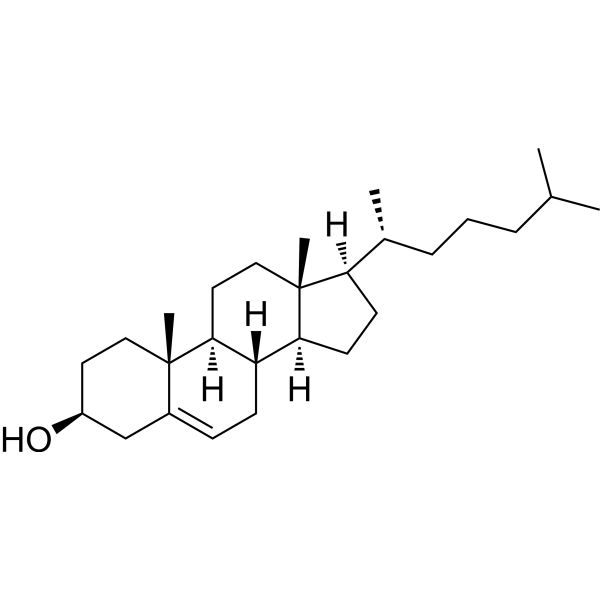
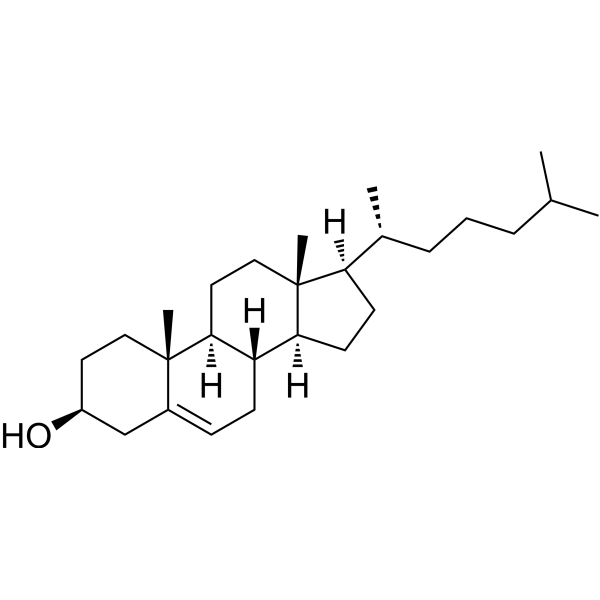
Cholesterol (GMP Like, synthetic) is Cholesterol (synthetic) (HY-N0322E) produced by using GMP like guidelines. GMP Like small molecules works appropriately as an auxiliary reagent for cell therapy manufacture. Cholesterol (synthetic) is a synthetic form of cholesterol. It is a lipid that sustains vital functions. Cholesterol (synthetic) can be used in research on cardiovascular diseases.
For research use only. We do not sell to patients.
- Purity : 99.89%
- CAS No.: 57-88-5
- Formula: C27H46O
- Molecular Weight:386.65
-
Storage:
Please store the product under the recommended conditions in the Certificate of Analysis.


To place orders, for customer services and technical support, please contact: MedChemExpress USA
Tel: 609-228-6898 E-mail: [email protected] [email protected]


-
 Biological Activity
-
Chemical Information
- Purity & Documentation
- References
-
 Help & FAQs


-
HY-N0322
Cholesterol (from animal)ERRα Agonist -
HY-N0322R
Cholesterol (Standard) -

HY-N0322E
Cholesterol (synthetic)ERRα Agonist -

HY-N0322D
Cholesterol (from plant)ERRα Agonist -
HY-B0141
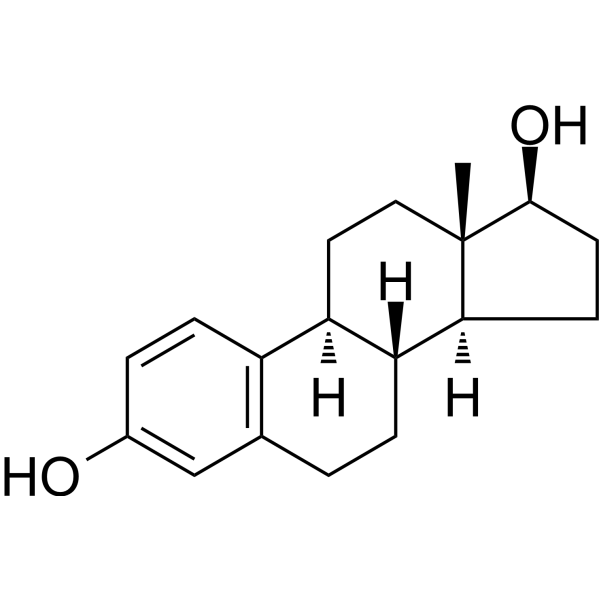
EstradiolHuman Endogenous Metabolite -
HY-N0437
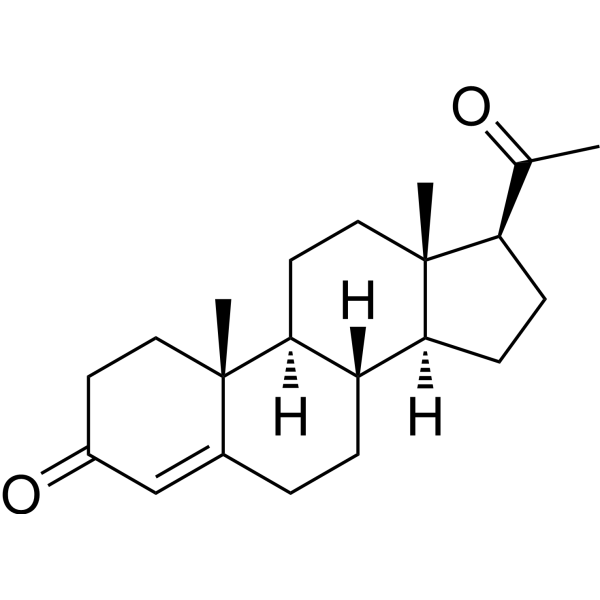
ProgesteroneEndogenous Metabolite -
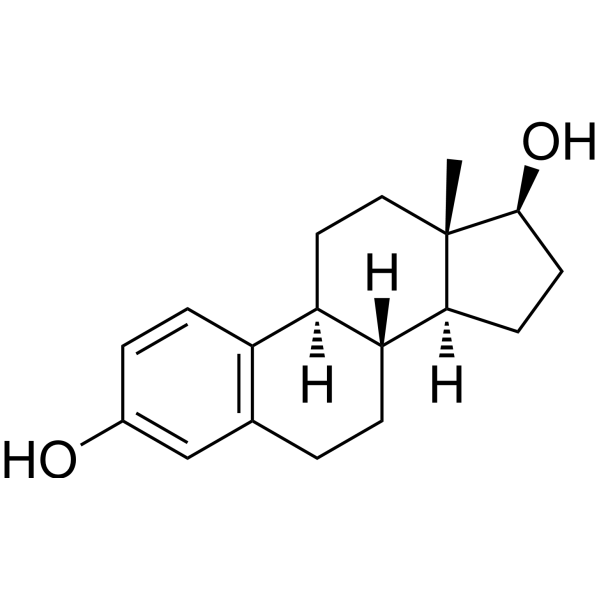
HY-B0141R
Estradiol (Standard) -
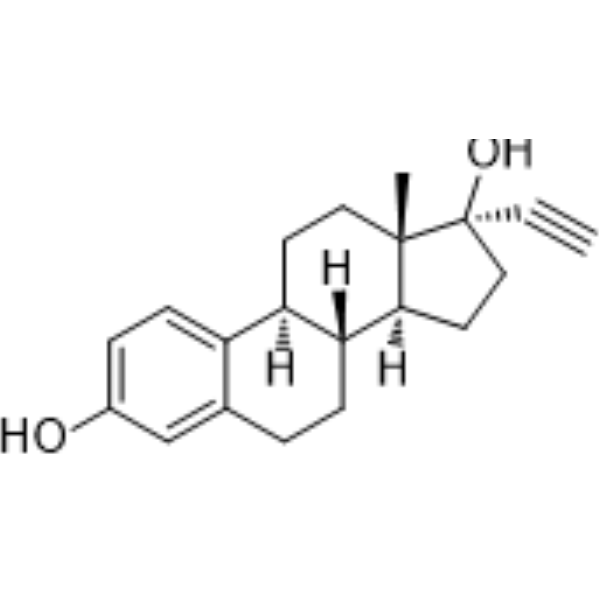
HY-B0216
EthinylestradiolEndogenous Metabolite -
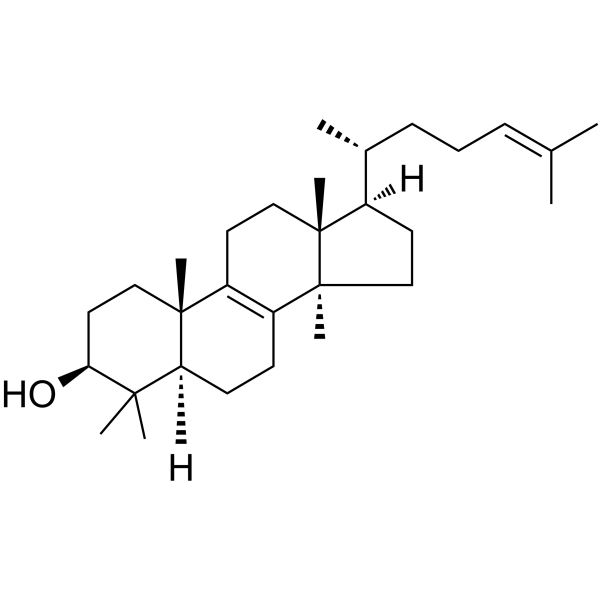
HY-W020033
Lanosterol -
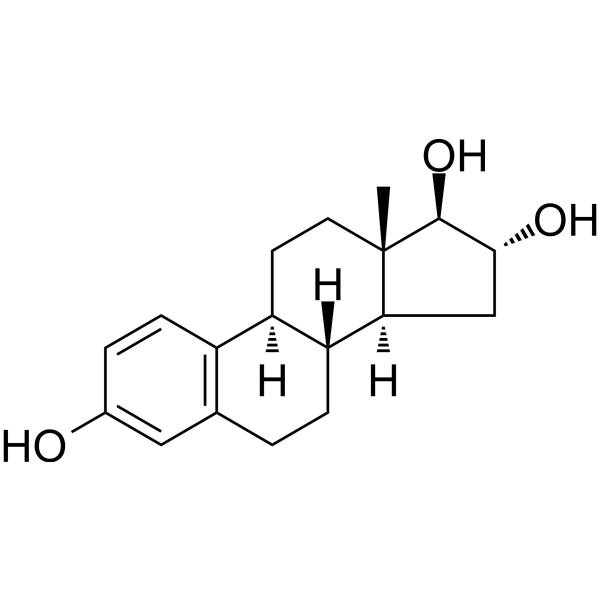
HY-B0412
EstriolEstrogen -
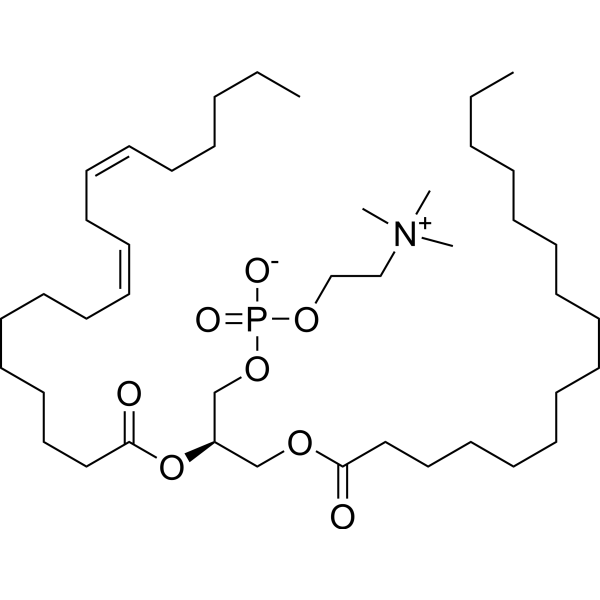
HY-B2235
LecithinEndogenous Metabolite -
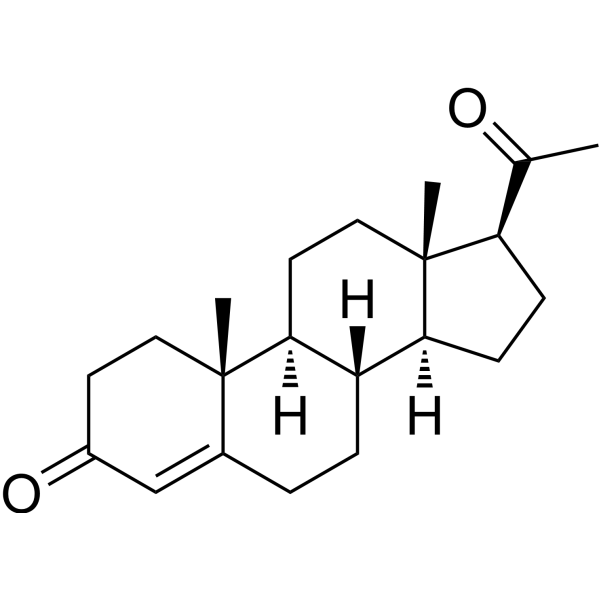
HY-N0437R
Progesterone (Standard)
All Endogenous Metabolite Isoforms
More

Biological Activity
Description
Cellular Effect
|
Cell Line

|
Type | Value | Description | References |
|---|---|---|---|---|
| A549 | IC50 |
>20 μM
Compound: b1
|
Antiproliferative activity against human A549 cells assessed as reduction in cell viability incubated for 48 hrs by MTS assay
Antiproliferative activity against human A549 cells assessed as reduction in cell viability incubated for 48 hrs by MTS assay
|
[PMID: 30822712] |
| BJ | IC50 |
>50 μM
Compound: Cholesterol
|
Cytotoxicity against human BJ cells after 72 hrs by calcein AM assay
Cytotoxicity against human BJ cells after 72 hrs by calcein AM assay
|
[PMID: 22417637] |
| CCRF-CEM | IC50 |
>50 μM
Compound: Cholesterol
|
Cytotoxicity against human CEM cells after 72 hrs by calcein AM assay
Cytotoxicity against human CEM cells after 72 hrs by calcein AM assay
|
[PMID: 22417637] |
| HeLa | IC50 |
>50 μM
Compound: Cholesterol
|
Cytotoxicity against human HeLa cells after 72 hrs by calcein AM assay
Cytotoxicity against human HeLa cells after 72 hrs by calcein AM assay
|
[PMID: 22417637] |
| HL-60 | IC50 |
>20 μM
Compound: b1
|
Antiproliferative activity against human HL60 cells assessed as reduction in cell viability incubated for 48 hrs by MTS assay
Antiproliferative activity against human HL60 cells assessed as reduction in cell viability incubated for 48 hrs by MTS assay
|
[PMID: 30822712] |
| HT-29 | IC50 |
>50 μM
Compound: 1
|
Cytotoxicity against human HT-29 cells after 48 hrs by Alamar Blue assay
Cytotoxicity against human HT-29 cells after 48 hrs by Alamar Blue assay
|
[PMID: 19473028] |
| MCF7 | IC50 |
>20 μM
Compound: b1
|
Antiproliferative activity against human MCF7 cells assessed as reduction in cell viability incubated for 48 hrs by MTS assay
Antiproliferative activity against human MCF7 cells assessed as reduction in cell viability incubated for 48 hrs by MTS assay
|
[PMID: 30822712] |
| MCF7 | IC50 |
>50 μM
Compound: Cholesterol
|
Cytotoxicity against human MCF7 cells after 72 hrs by calcein AM assay
Cytotoxicity against human MCF7 cells after 72 hrs by calcein AM assay
|
[PMID: 22417637] |
| SMMC-7721 | IC50 |
>20 μM
Compound: b1
|
Antiproliferative activity against human SMMC7721 cells assessed as reduction in cell viability incubated for 48 hrs by MTS assay
Antiproliferative activity against human SMMC7721 cells assessed as reduction in cell viability incubated for 48 hrs by MTS assay
|
[PMID: 30822712] |
| SW480 | IC50 |
>20 μM
Compound: b1
|
Antiproliferative activity against human SW480 cells assessed as reduction in cell viability incubated for 48 hrs by MTS assay
Antiproliferative activity against human SW480 cells assessed as reduction in cell viability incubated for 48 hrs by MTS assay
|
[PMID: 30822712] |
| Vero | IC50 |
>128 μg/mL
Compound: 6
|
Cytotoxicity against african green monkey Vero cells
Cytotoxicity against african green monkey Vero cells
|
[PMID: 18818073] |


Chemical Information
-
CAS No. 57-88-5
-
Appearance Solid
-
Molecular Weight 386.65
-
Formula C27H46O
-
Color White to off-white
-
SMILES
O[C@H](C1)CC[C@@]2(C)C1=CC[C@]3([H])[C@]2([H])CC[C@@]4(C)[C@@]3([H])CC[C@]4([H])[C@@H](CCCC(C)C)C
-
Shipping
Room temperature in continental US; may vary elsewhere.
-
Storage
Please store the product under the recommended conditions in the Certificate of Analysis.


Purity & Documentation
-
Data Sheet (265 KB)
-
SDS (252 KB)
- English - EN (252 KB)
- Français - FR (252 KB)
- Deutsch - DE (252 KB)
- Norwegian - NO (252 KB)
- Español - ES (252 KB)
- Swedish - SV (252 KB)
- Italian - IT (252 KB)
- Korean - KR (252 KB)
- Portuguese - PT (252 KB)
-
Handling Instructions (2659 KB)
References

Calculators
Concentration (start) × Volume (start) = Concentration (final) × Volume (final)


Cholesterol (GMP Like, synthetic) Related Classifications
HY-N0322GL Related Classifications
 Powered by Bioz