



TAB1 Antibody (YA1951)
(Synonyms: MAP3K7IP1; TAB1; TAK1 binding protein 1)
Based on 1 Customer Validation
TAB1 Antibody (YA1951) is a Rabbit-derived and non-conjugated IgG monoclonal antibody, targeting to TAB1.
-
Host:
Rabbit
-
Isotype:
IgG
-
Application:
WB, IHC-P, ICC/IF, IP, FC
-
Reactivity :
Human, Mouse, Rat
-
Formulation:
Supplied in rabbit IgG in 50mM Tris-Glycine(pH 7.4), 0.15M NaCl, 40%Glycerol, 0.01% sodium azide and 0.05% BSA.
-
Conjugation:
Non-conjugated


To place orders, for customer services and technical support, please contact: MedChemExpress USA
Tel: 609-228-6898 E-mail: [email protected] [email protected]





Applications
| Application |
WB

WB: Western Blot
|
IHC-P
IHC-P: Immunohistochemistry-Paraffin
|
ICC/IF
ICC/IF: Immunocytochemistry/
Immunofluorescence |
IP
IP: Immunoprecipitation
|
FC
FC: Flow Cytometry
|
|---|---|---|---|---|---|
| Dilution Ratio | 1:1000-1:2000 | 1:100-1:200 | 1:50-1:200 | 1:40 | 1:50-1:100 |


Product Details
TAB1 Antibody (YA1951) is a Rabbit-derived and non-conjugated IgG monoclonal antibody, targeting to TAB1.
-
Host Rabbit

-
Clonality Recombinant,Monoclonal

-
Species ReactivityHuman, Mouse, Rat
-
Observed Molecular WeightObserved band size: 55 kDa
Note: Due to possible protein modifications or aggregation, the molecular weight should be confirmed by actual measurement, and the predicted value is for reference only.

-
Calculated Molecular Weight Predicted band size: 55 kDa

Entrez Gene: 10454 Human ; 66513 Mouse ;
SwissProt: Q15750 Human ; Q8CF89 Mouse ;
OMIM: 602615 Human
A synthesized peptide derived from human TAB1 aa450-504/504.
Endogenous
Affinity Chromatography
Non-conjugated
Unmodified
IgG


Product Properties
-
Appearance
Solution
-
Formulation
Supplied in rabbit IgG in 50mM Tris-Glycine(pH 7.4), 0.15M NaCl, 40%Glycerol, 0.01% sodium azide and 0.05% BSA.
-
Concentration
Batch-dependent, Please check the COA for the concentration of each lot. Check Lot Concentration
-
Storage & Stability
Stored at -20°C for 1 year. Avoid repeated freeze / thaw cycles.
-
Shipping
Shipping with blue ice.


Verification Images
-
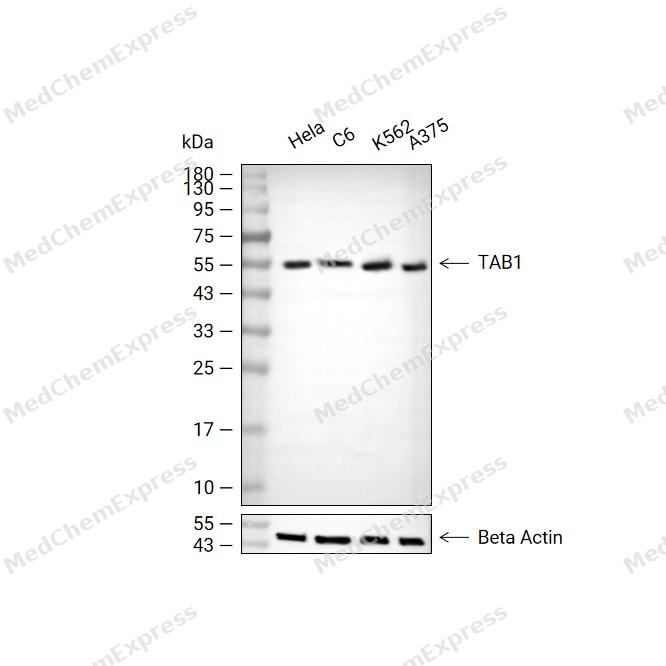 Western blot analysis of extracts from Hela (lane 2, 20ug), C6 (lane 3, 20ug), K562 (lane 4, 20ug) and A375 (lane 5, 20ug) using TAB1 Antibody (HY-P82206). Proteins were transferred to a PVDF membrane and blocked with 5% non-fat milk in TBST at 4°C overnight. The primary antibody (1/1000) and Loading control antibody (Beta Actin, HY-P80993, 1/10,000) was used in 5% non-fat milk in TBST for 2 hour at room temperature. Goat Anti-Rabbit IgG-HRP Secondary Antibody (HY-P8001, 1/10,000) was used for 1 hour at room temperature.
 -
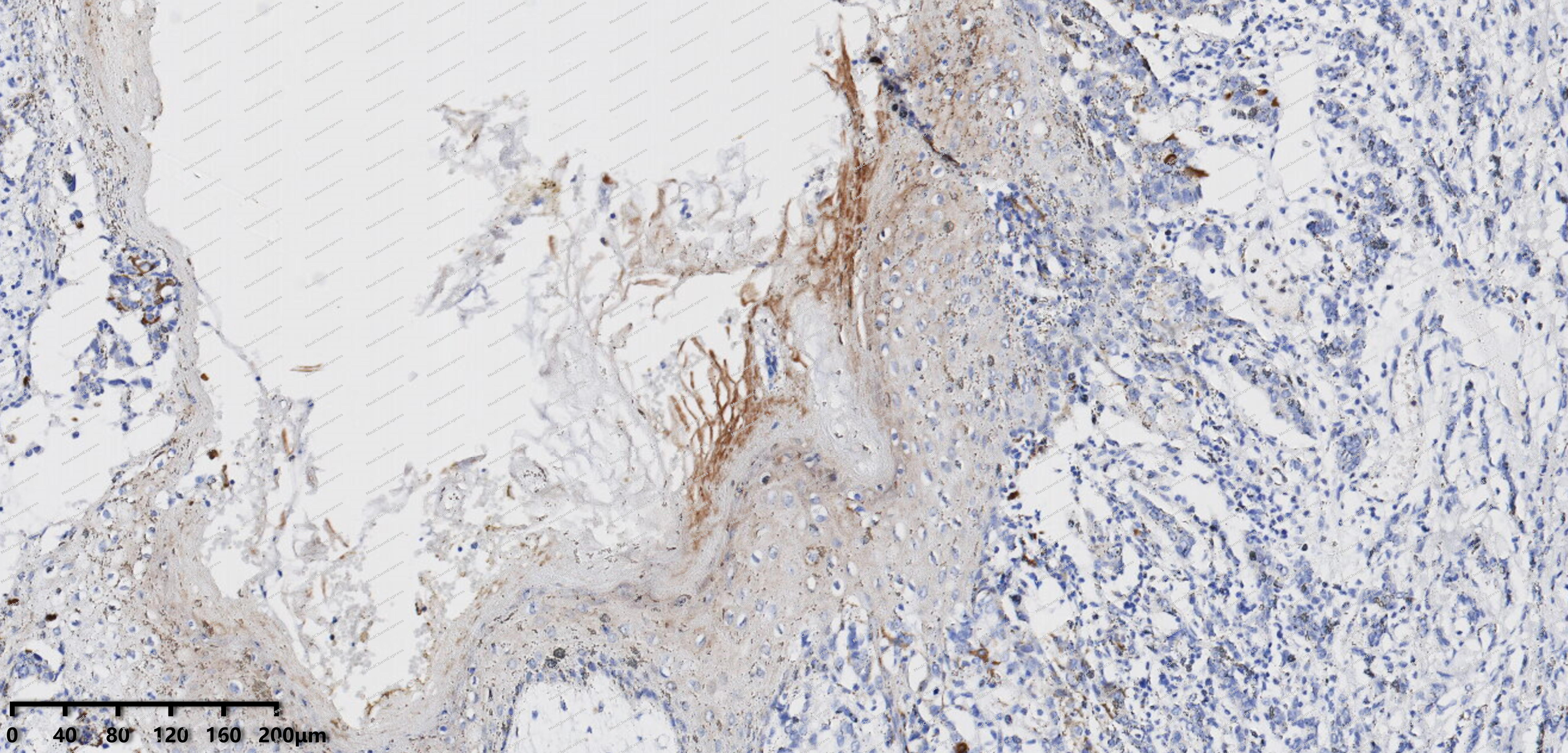 Immunohistochemical analysis of paraffin-embedded human breast cancer tissue using TAB1 antibody was performed. The section was pretreated using high-temperature mediated EDTA antigen retrieval buffer (pH 9.0), for 20 minutes. The tissues were incubated with primary antibody (HY-P82206, 1:100 dilution) at room temperature for 20 minutes. Detection was performed using an HRP conjugated compact polymer system. DAB was used as the chromogen. The tissues were counterstained with hematoxylin and mounted with neutral balsam mounting medium.
 -
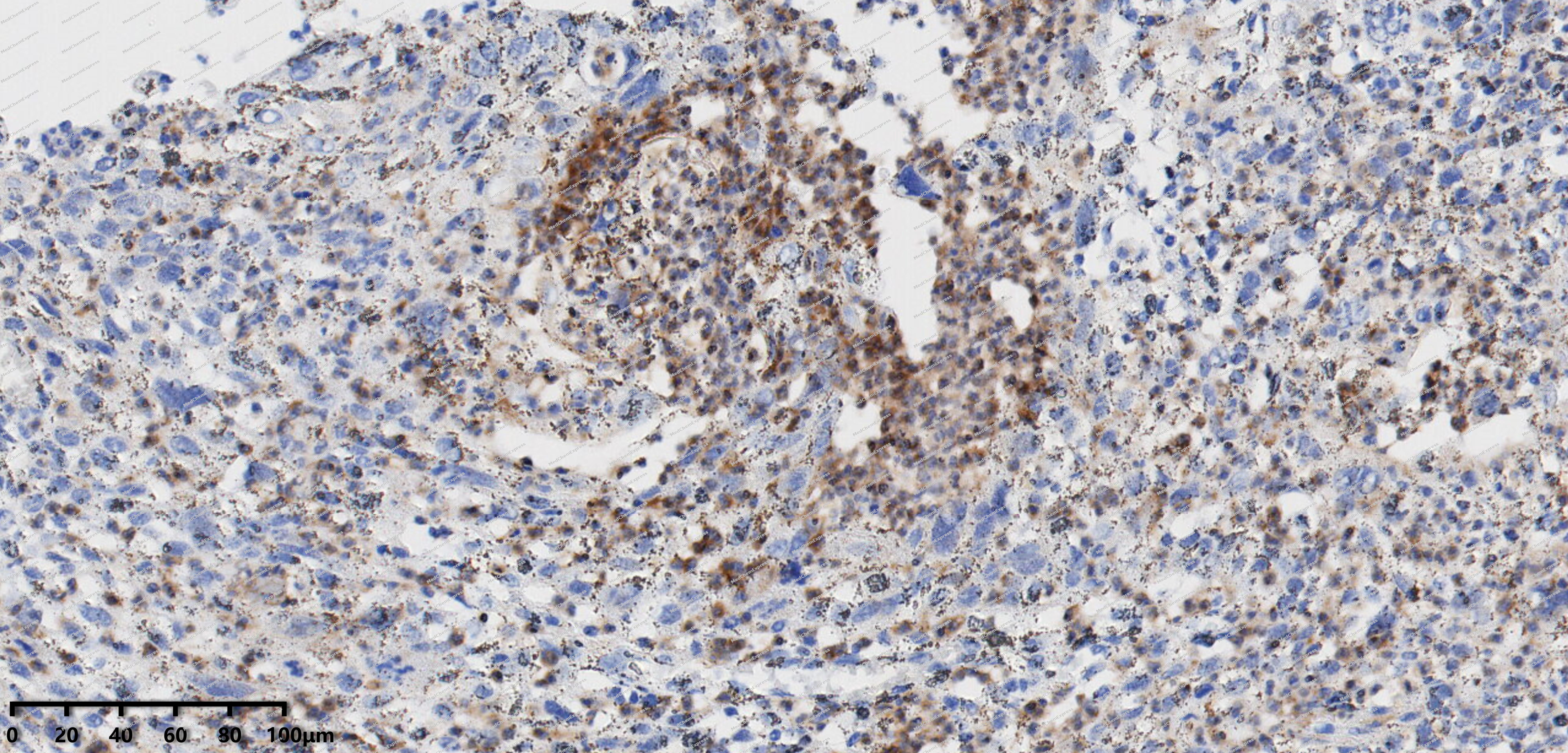 Immunohistochemical analysis of paraffin-embedded human esophagus tissue using TAB1 antibody was performed. The section was pretreated using high-temperature mediated EDTA antigen retrieval buffer (pH 9.0), for 20 minutes. The tissues were incubated with primary antibody (HY-P82206, 1:100 dilution) at room temperature for 20 minutes. Detection was performed using an HRP conjugated compact polymer system. DAB was used as the chromogen. The tissues were counterstained with hematoxylin and mounted with neutral balsam mounting medium.
 -
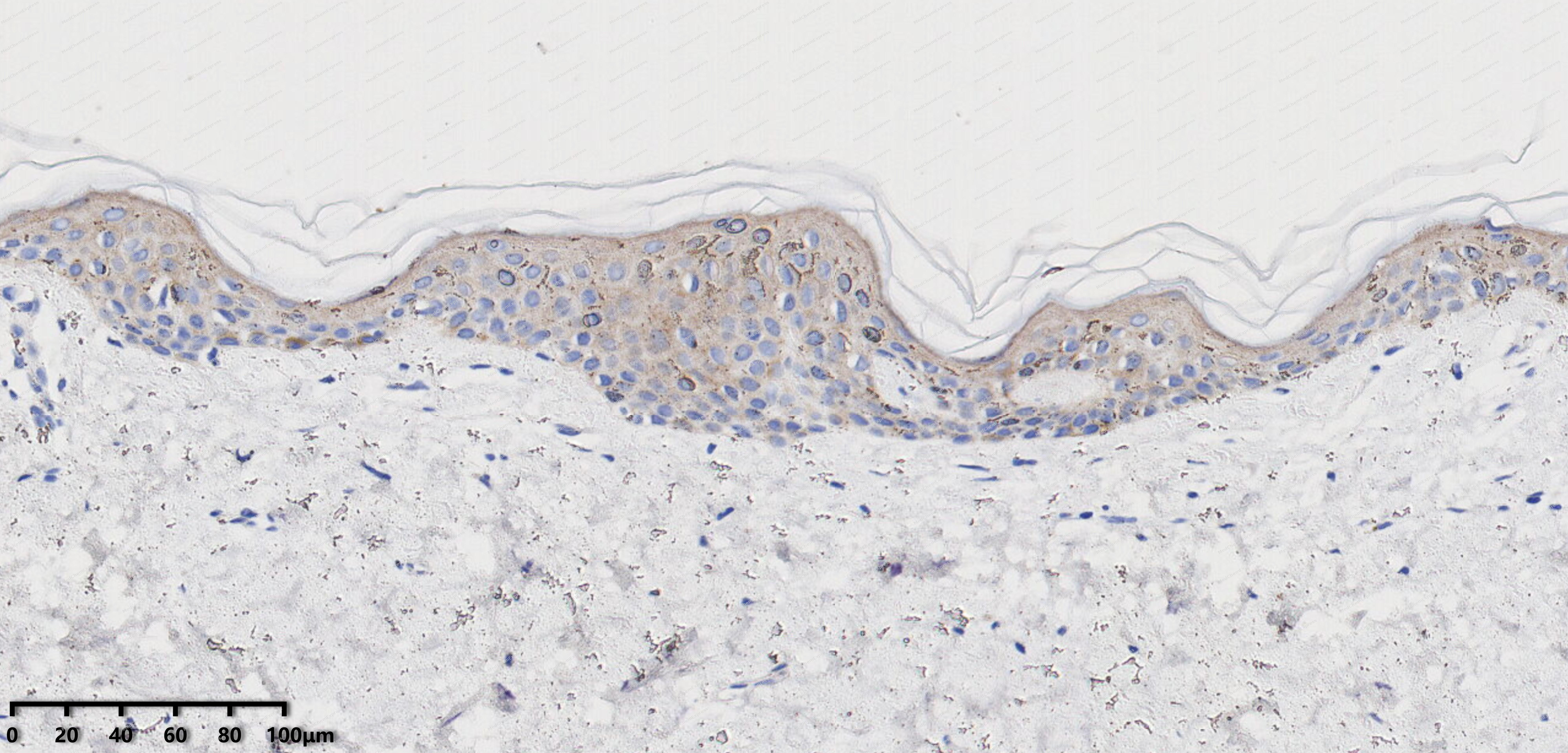 Immunohistochemical analysis of paraffin-embedded human melanoma tissue using TAB1 antibody was performed. The section was pretreated using high-temperature mediated EDTA antigen retrieval buffer (pH 9.0), for 20 minutes. The tissues were incubated with primary antibody (HY-P82206, 1:100 dilution) at room temperature for 20 minutes. Detection was performed using an HRP conjugated compact polymer system. DAB was used as the chromogen. The tissues were counterstained with hematoxylin and mounted with neutral balsam mounting medium.
 -
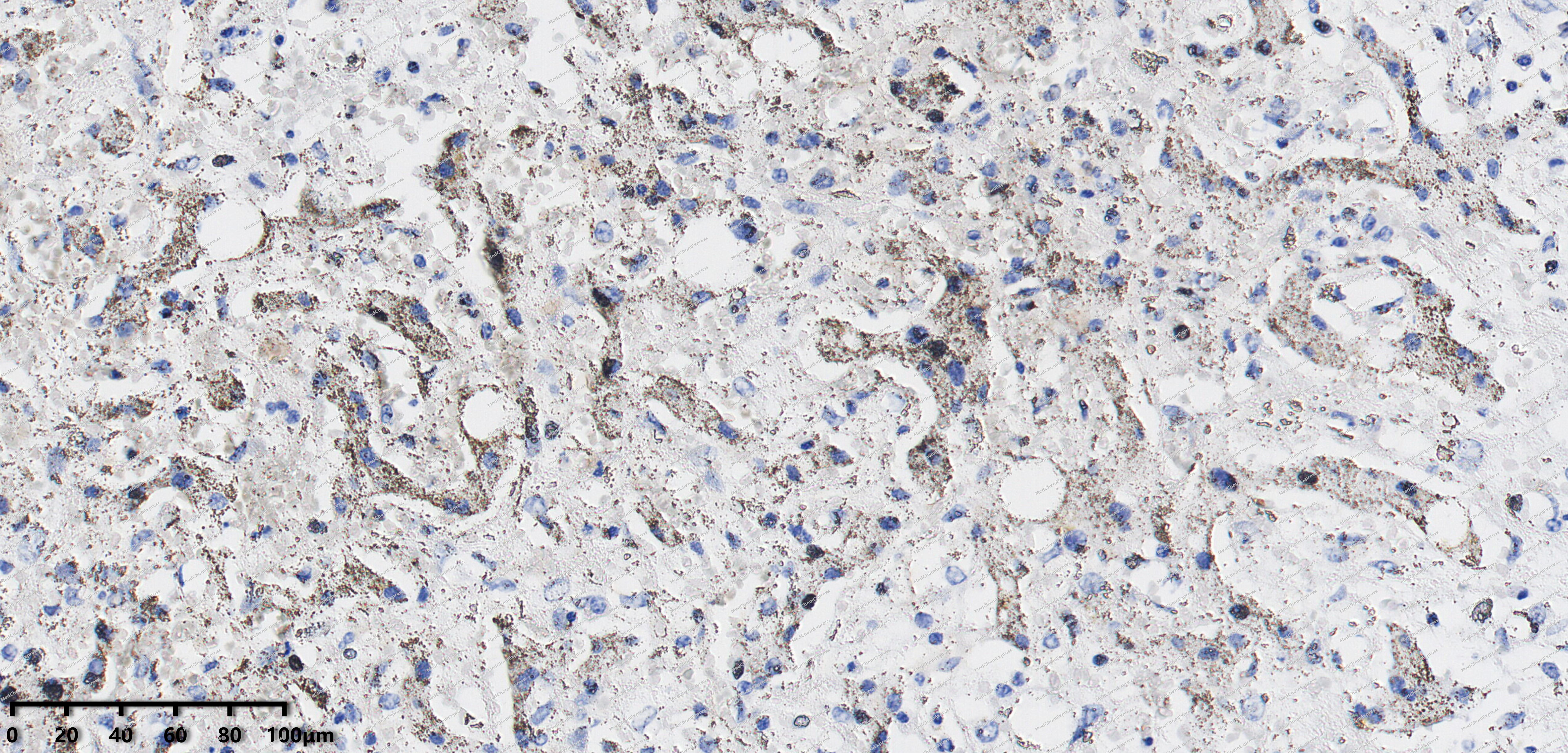 Immunohistochemical analysis of paraffin-embedded human Liver cyst tissue using TAB1 antibody was performed. The section was pretreated using high-temperature mediated EDTA antigen retrieval buffer (pH 9.0), for 20 minutes. The tissues were incubated with primary antibody (HY-P82206, 1:100 dilution) at room temperature for 20 minutes. Detection was performed using an HRP conjugated compact polymer system. DAB was used as the chromogen. The tissues were counterstained with hematoxylin and mounted with neutral balsam mounting medium.
 -
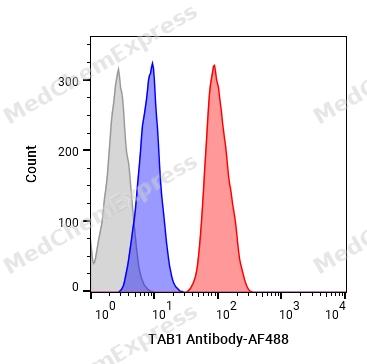 Flow cytometric analysis of 1X10⁶ NIH-3T3 cells labeling TAB1 Antibody(HY-P82206, red). Cells were fixed with 4% paraformaldehyde and permeabilised with 90% methanol. Then stained with the primary antibody at 1/100 dilution for an hour at 4℃. AF488-conjugated Goat Anti-Rabbit IgG H&L (HY-P8002) was used as the secondary antibody at 1/1,000 dilution for 30 minutes at 4℃. Rabbit IgG Isotype Control (HY-P80879, blue) was used as the isotype control, cells without incubation with primary antibody were used as the unlabeled control (black).


Background
-
Function
TAB1 is key adapter protein that plays an essential role in JNK and NF-kappa-B activation and proinflammatory cytokines production in response to stimulation with TLRs and cytokines. Mechanistically, associates with the catalytic domain of MAP3K7/TAK1 to trigger MAP3K7/TAK1 autophosphorylation leading to its full activation. Similarly, associates with MAPK14 and triggers its autophosphorylation and subsequent activation. In turn, MAPK14 phosphorylates TAB1 and inhibits MAP3K7/TAK1 activation in a feedback control mechanism. Also plays a role in recruiting MAPK14 to the TAK1 complex for the phosphorylation of the TAB2 and TAB3 regulatory subunits[1][2][3][4][5][6][7][8][9].
-
Subcellular Localization
Cytoplasm, cytosol; Endoplasmic reticulum membrane; Peripheral membrane protein; Cytoplasmic side
-
Expression
Tissue_specificity:general expression -
Isoforms & Post-Translational Modification
Q15750 has 2 isomers: Q15750-1: 54644 Da (predicted); Q15750-2: 49917 Da (predicted).
Phosphorylated at all three sites Ser-423, Thr-431 and Ser-438 by MAPK14 when cells were exposed to cellular stresses, or stimulated with TNF-alpha, IL1 or LPS (PubMed:14592977). These phosphorylations inhibit TAK1 activation by a feedback control mechanism (PubMed:14592977). Dephosphorylated by DUSP14 at Ser-438, leading to TAB1-MAP3K7/TAK1 complex inactivation in T-cells (PubMed:24403530);Ubiquitinated by MAP3K1 with 'Lys-63'-linked polyubiquitin; leading to activation of TAK1 and of JNK and p38 MAP kinases following EGF and TGF-beta stimulation (PubMed:25260751). Ubiquitinated by ITCH with 'Lys-48'-linked polyubiquitin; leading to proteasomal degradation (PubMed:25714464). Ubiquitinated by RNF114 during maternal-to-zygotic transition; leading to degradation (By similarity);(Microbial infection) Deubiquitinated by Y.enterocolitica YopP;O-GlcNAcylated at Ser-395 by OGT is required for full MAP3K7/TAK1 activation upon stimulation with IL-1 or osmotic stress (PubMed:22307082). Deglycosylated at Ser-395 by OGA (PubMed:28939839) -
Subunit
Interacts with XIAP and BIRC7 (PubMed:11865055, PubMed:17560374). Interacts with TRAF6 and MAP3K7; during IL-1 signaling (PubMed:10094049, PubMed:10838074, PubMed:11323434, PubMed:8638164). Identified in the TRIKA2 complex composed of MAP3K7, TAB1 and TAB2 (PubMed:11460167). Interacts with TRAF6 and MAPK14; these interactions allow MAPK14 autophosphorylation (PubMed:11847341). Interacts with STING1; interaction takes place following cGAMP activation and promotes TAB1 recruitment to the endoplasmic reticulum, triggering MAP3K7/TAK1 activation and STING1 phosphorylation (PubMed:37832545)
-
SwissProt ID
-
Synonyms
MAP3K7IP1; TAB1; TAK1 binding protein 1
-
Research Field
Signal Transduction


Documentation
-
Data Sheet (262 KB)
-
SDS (251 KB)
- English - EN (251 KB)
- Français - FR (251 KB)
- Deutsch - DE (251 KB)
- Norwegian - NO (251 KB)
- Español - ES (251 KB)
- Swedish - SV (251 KB)
- Italian - IT (251 KB)
- Korean - KR (251 KB)
- Portuguese - PT (251 KB)
-
User Guide for Antibodies (1077 KB)
References
[1]. Pathak S, et al. O-GlcNAcylation of TAB1 modulates TAK1-mediated cytokine release. EMBO J. 2012 Mar 21;31(6):1394-404. [Content Brief]
[2]. Yang CY, et al. Dual-specificity phosphatase 14 (DUSP14/MKP6) negatively regulates TCR signaling by inhibiting TAB1 activation. J Immunol. 2014 Feb 15;192(4):1547-57. [Content Brief]
[3]. Sakurai H, et al. Phosphorylation-dependent activation of TAK1 mitogen-activated protein kinase kinase kinase by TAB1. FEBS Lett. 2000 Jun 2;474(2-3):141-5. [Content Brief]
[4]. Charlaftis N, et al. The MEKK1 PHD ubiquitinates TAB1 to activate MAPKs in response to cytokines. EMBO J. 2014 Nov 3;33(21):2581-96. [Content Brief]
[5]. Ma M, et al. TAK1 is an essential kinase for STING trafficking. Mol Cell. 2023 Nov 2;83(21):3885-3903.e5. [Content Brief]
[6]. Ge B, et al. MAPKK-independent activation of p38alpha mediated by TAB1-dependent autophosphorylation of p38alpha. Science. 2002 Feb 15;295(5558):1291-4. [Content Brief]
[7]. Thapa D, et al. TAB1-Induced Autoactivation of p38α Mitogen-Activated Protein Kinase Is Crucially Dependent on Threonine 185. Mol Cell Biol. 2018 Mar 1;38(5):. [Content Brief]
[8]. Cheung PC, et al. Feedback control of the protein kinase TAK1 by SAPK2a/p38alpha. EMBO J. 2003 Nov 3;22(21):5793-805. [Content Brief]
[9]. Mendoza H, et al. Roles for TAB1 in regulating the IL-1-dependent phosphorylation of the TAB3 regulatory subunit and activity of the TAK1 complex. Biochem J. 2008 Feb 1;409(3):711-22. [Content Brief]

 Powered by Bioz
