



S100A4 Antibody (YA084)
(Synonyms: 18A2 antibody; 42A antibody; calcium Placental protein antibody; Calvasculin antibody; CAPL antibody; Fibroblast specific protein 1 (FSP1) antibody; Fibroblast specific protein 1 antibody; Fibroblast specific protein antibody; FSP1 antibody; Leukemia multidrug resistance associated protein antibody; Malignant transformation suppression 1 (MTS1) antibody; Malignant transformation suppression 1 antibody; Metastasin antibody; MTS1 antibody; OTTHUMP00000015467 antibody; OTTHUMP00000015468 antibody; P9KA antibody; PEL98 antibody; Placental calcium-binding protein antibody; Protein Mts1 antibody; Protein S100 A4 antibody; Protein S100-A4 antibody; S100 calcium binding protein A4 (calcium protein, calvasculin, metastasin, murine placental homolog) antibody; S100 calcium binding protein A4 antibody; S100 calcium-binding protein A4 antibody; S100a4 antibody; S10A4_HUMAN antibody; )
Based on 1 Customer Validation
S100A4 Antibody (YA084) is a Rabbit-derived and non-conjugated IgG monoclonal antibody, targeting to S100A4.
-
Host:
Rabbit
-
Isotype:
IgG
-
Application:
WB, ICC/IF, IHC-P, IP, FC
-
Reactivity :
Human, Mouse
-
Formulation:
Supplied in 1*TBS (pH7.4), 0.05% BSA and 40% Glycerol. Preservative: 0.05% Sodium Azide.
-
Conjugation:
Non-conjugated


To place orders, for customer services and technical support, please contact: MedChemExpress USA
Tel: 609-228-6898 E-mail: [email protected] [email protected]





Applications
| Application |
WB

WB: Western Blot
|
ICC/IF
ICC/IF: Immunocytochemistry/
Immunofluorescence |
IHC-P
IHC-P: Immunohistochemistry-Paraffin
|
FC
FC: Flow Cytometry
|
IP
IP: Immunoprecipitation
|
|---|---|---|---|---|---|
| Dilution Ratio | 1:1000 | 1:50-1:200 | 1:50-1:200 | 1:50-1:100 | Use at an assay dependent concentration. |


Product Details
S100A4 Antibody (YA084) is a Rabbit-derived and non-conjugated IgG monoclonal antibody, targeting to S100A4.
-
Host Rabbit

-
Clonality Recombinant,Monoclonal

-
Species ReactivityHuman, Mouse
-
Observed Molecular WeightObserved band size: 12 kDa
Note: Due to possible protein modifications or aggregation, the molecular weight should be confirmed by actual measurement, and the predicted value is for reference only.

-
Calculated Molecular Weight Predicted band size: 12 kDa

Synthetic peptide corresponding to Human S100A4.AA range:1-101.
Endogenous
Protein A affinity purified.
Non-conjugated
Unmodified
IgG


Product Properties
-
Appearance
Solution
-
Formulation
Supplied in 1*TBS (pH7.4), 0.05% BSA and 40% Glycerol. Preservative: 0.05% Sodium Azide.
-
Concentration
Batch-dependent, Please check the COA for the concentration of each lot. Check Lot Concentration
-
Storage & Stability
Stored at -20°C for 1 year. Avoid repeated freeze / thaw cycles.
-
Shipping
Shipping with blue ice.


Verification Images
-
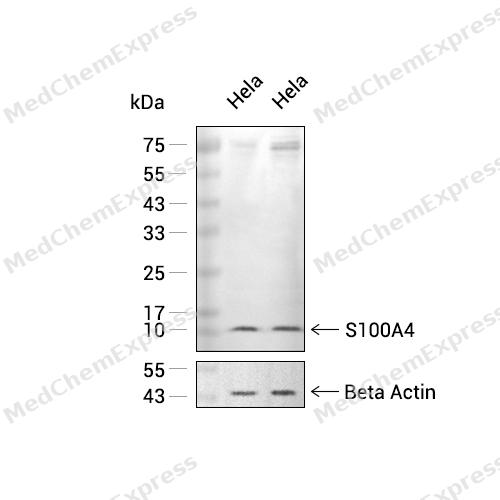 Western blot analysis of extracts from Hela (lane 2(20μg) and Hela (lane 3(40μg)using PARP1 (HY-P80317) Rabbit mAb. Proteins were transferred to a PVDF membrane and blocked with 5% defatted milk powder in TBST for 2 hour at room temperature. The primary antibody (HY-P80317, 1/1000) and Loading control antibody (Beta Actin, HY-P80438, 1/3000) was used in 5% defatted milk powder in TBST at 4°C overnight. Goat Anti-Mouse/Rabbit IgG-HRP Secondary Antibody (HY-P8004/HY-P8001, 1/10,000) was used for 1 hour at room temperature.
 -
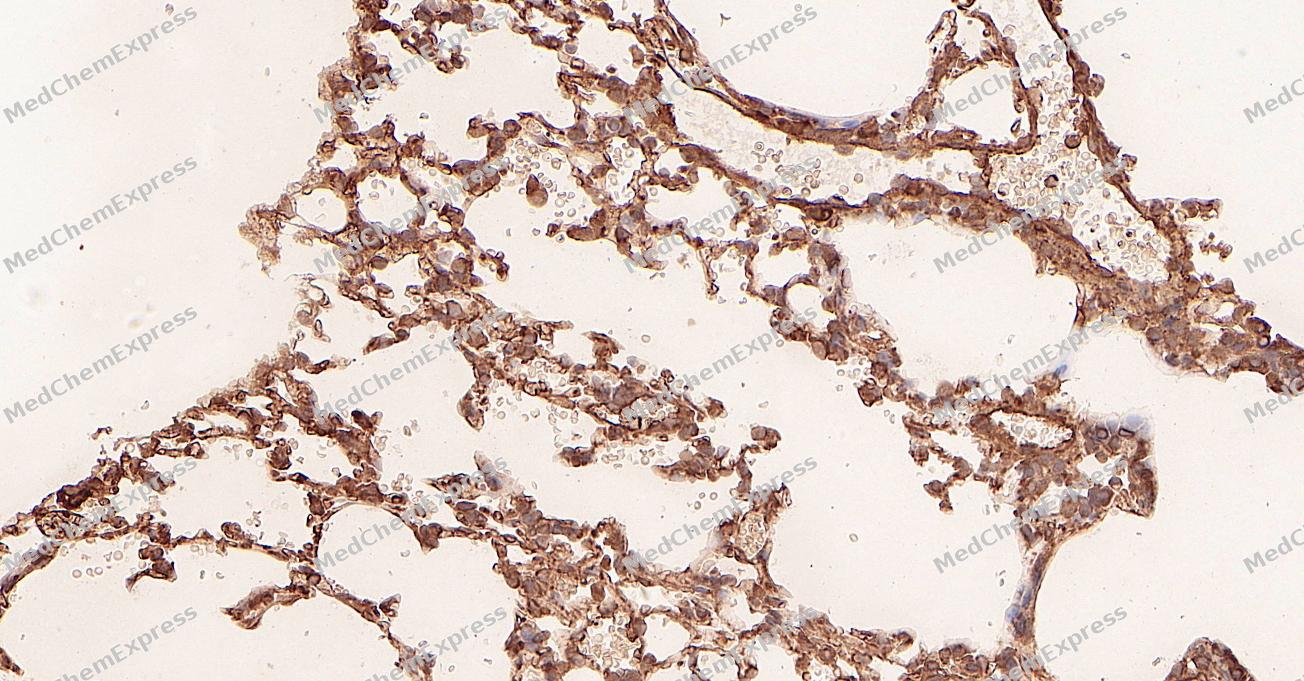 Immunohistochemical analysis of paraffin-embedded Mouse lung tissue using S100A4 Antibody. The section was pre-treated using heat mediated antigen retrieval with Tris-EDTA buffer (pH 9.0) for 8 minutes. The tissues were blocked in QuickBlock for 20 minutes at room temperature, washed with ddH2O and PBS, and then probed with the primary antibody (HY-P80317, 1/100) in 4℃ overnight. The detection was performed using an HRP conjugated compact polymer system. DAB was used as the chromogen. Tissues were counterstained with hematoxylin and mounted with DPX.
 -
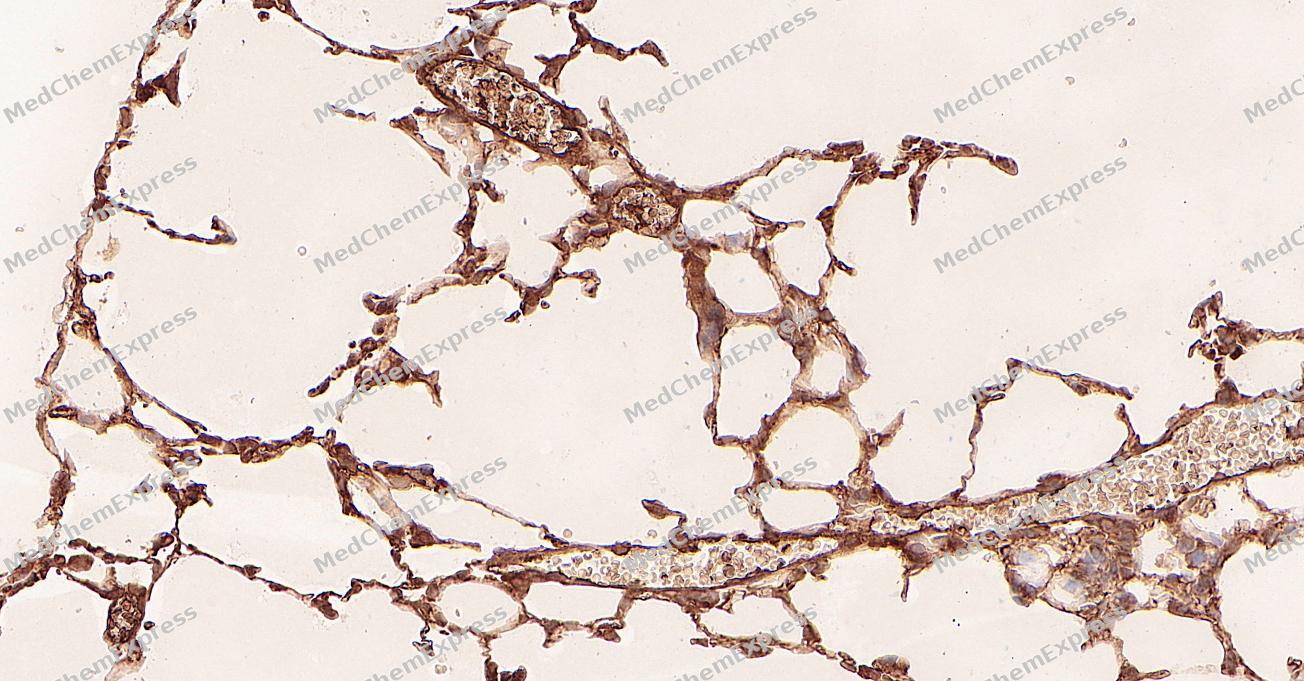 Immunohistochemical analysis of paraffin-embedded Mouse lung tissue using S100A4 Antibody. The section was pre-treated using heat mediated antigen retrieval with Tris-EDTA buffer (pH 9.0) for 8 minutes. The tissues were blocked in QuickBlock for 20 minutes at room temperature, washed with ddH2O and PBS, and then probed with the primary antibody (HY-P80317, 1/100) in 4℃ overnight. The detection was performed using an HRP conjugated compact polymer system. DAB was used as the chromogen. Tissues were counterstained with hematoxylin and mounted with DPX.
 -
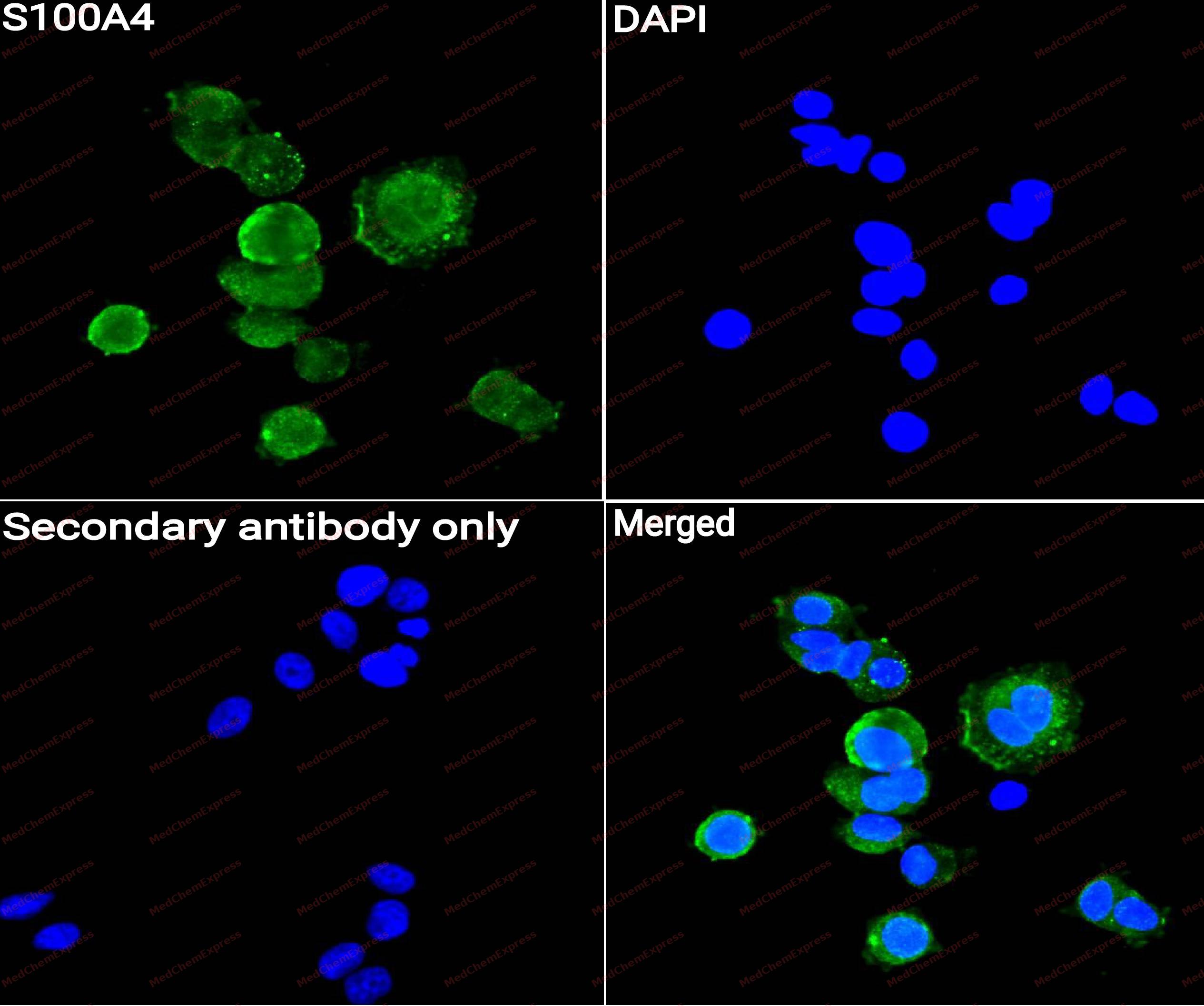 Immunocytochemistry analysis of MCF-7 cells labeling S100A4 with S100A4 antibody(HY-P80317)at 1/50 dilution. Cells were fixed in 4% paraformaldehyde for 15 minutes at room temperature, permeabilized with 0.1% Triton X-100 for 10 minutes at room temperature, then blocked with QuickBlock™ Blocking Buffer for Immunol Staining for 10 min at room temperature. Cells were then incubated with S100A4 antibody (HY-P80317) at 1/50 dilution in QuickBlock™ Blocking Buffer for Immunol Staining at 4 ℃. Alexa Fluor® 488-conjugated AffiniPure Goat Anti-Rabbit IgG H&L(HY-P8002, Green) was used as the secondary antibody at 1/1,000 dilution. PBS instead of the primary antibody was used as the secondary antibody only control. The Nuclear counterstain was DAPI (Blue).
 -
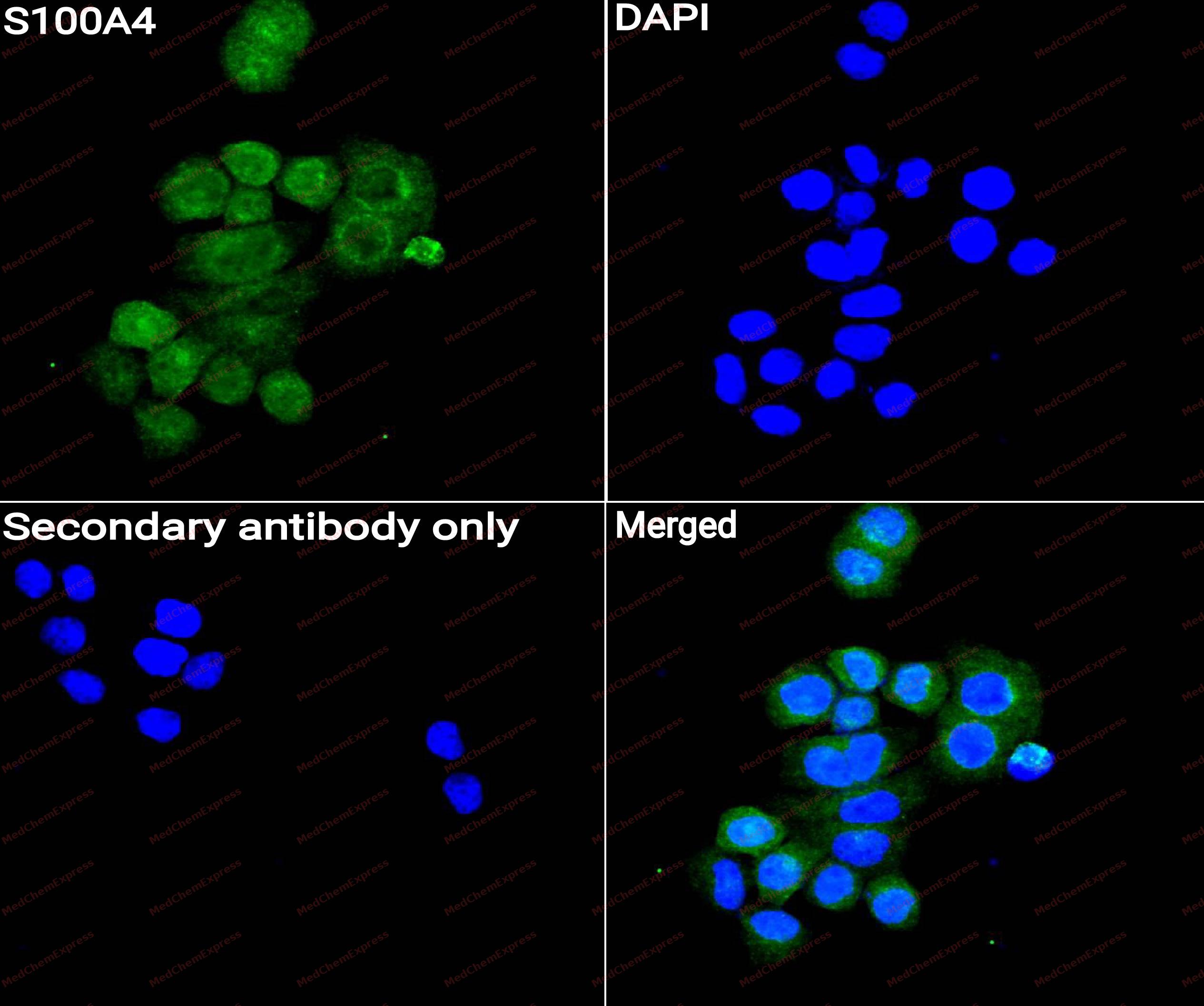 Immunocytochemistry analysis of Hela cells labeling S100A4 with S100A4 antibody(HY-P80317) at 1/50 dilution. Cells were fixed in 4% paraformaldehyde for 15 minutes at room temperature, permeabilized with 0.1% Triton X-100 for 10 minutes at room temperature, then blocked with QuickBlock™ Blocking Buffer for Immunol Staining for 10 min at room temperature. Cells were then incubated with S100A4 antibody(HY-P80317)at 1/50 dilution in QuickBlock™ Blocking Buffer for Immunol Staining at 4 ℃. Alexa Fluor® 488-conjugated AffiniPure Goat Anti-Rabbit IgG H&L(HY-P8002, Green) was used as the secondary antibody at 1/1,000 dilution. PBS instead of the primary antibody was used as the secondary antibody only control. The Nuclear counterstain was DAPI (Blue).
 -
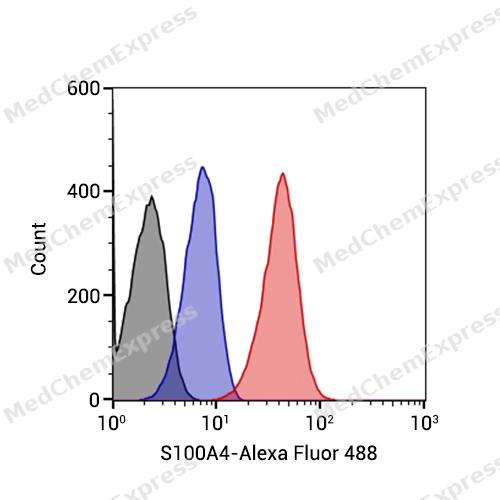 Flow cytometric analysis of 1X10^6 Jurkat cells labeling S100A4 Antibody(HY-P80317, red). Cells were fixed with 4% paraformaldehyde and permeabilised with 90% methanol. Then stained with the primary antibody at 1/50 dilution for an hour at 4℃. Alexa Fluor® 488-conjugated AffiniPure Goat Anti-Rabbit IgG H&L (HY-P8002) was used as the secondary antibody at 1/1,000 dilution for 30 minutes at 4℃. Rabbit IgG Isotype Control (HY-P80879, blue) was used as the isotype control, cells without incubation with primary antibody were used as the unlabeled control (black).


Background
-
Function
S100A4 is a member of the S100 family of low molecular weight calcium-binding proteins that modulate intracellular and extracellular signaling processes[1]. Mechanistically, S100A4 interacts with cytoskeletal elements, including actin and non-muscle myosin, to regulate cell motility, migration, and invasion, contributing to tissue remodeling and metastasis[2][3]. In disease models, S100A4 expression is elevated in fibrotic tissues, various cancers, and neurological disorders, where it promotes progression by activating RAGE-mediated pathways and influencing epithelial-mesenchymal transition[1][3]. Compared with related isoforms such as S100A1 and S100B, S100A4 exhibits lower basal expression in normal tissues but higher inducibility under pathological stress, indicating isoform-specific regulation[1][4]. Experimental inhibition of S100A4 using small-molecule antagonists or peptide-based inhibitors suppresses motility and metastasis in vitro and in vivo, highlighting its utility as a target for translational research[1][5]. For experimental applications, S100A4 can serve as a biomarker for tumor aggressiveness and as a modulator of fibroblast and immune cell function in tissue remodeling assays[1][2]. Collectively, S100A4 represents a distinct functional isoform within the S100 family, integrating calcium-dependent signaling with cytoskeletal regulation and disease pathogenesis.
-
Subcellular Localization
Secreted; Nucleus; Cytoplasm
-
Expression
Tissue_specificity:general expression -
Subunit
Homodimer. Interacts with PPFIBP1 in a calcium-dependent mode (PubMed:11836260). Interacts with PGLYRP1; this complex acts as a chemoattractant that promotes lymphocyte movement (PubMed:26654597, PubMed:30713770). Interacts with MYH9; this interaction increases cell motility (PubMed:16707441). Interacts with Annexin 2/ANXA2 (PubMed:28669632). Interacts with TP53; this interaction promotes TP53 degradation (PubMed:23752197, PubMed:32442400). Interacts with CCR5 (PubMed:30713770). Interacts with FCGR3A; this interaction inhibits PKC-dependent phosphorylation of FCGR3A
-
SwissProt ID
-
Synonyms
18A2 antibody; 42A antibody; calcium Placental protein antibody; Calvasculin antibody; CAPL antibody; Fibroblast specific protein 1 (FSP1) antibody; Fibroblast specific protein 1 antibody; Fibroblast specific protein antibody; FSP1 antibody; Leukemia multidrug resistance associated protein antibody; Malignant transformation suppression 1 (MTS1) antibody; Malignant transformation suppression 1 antibody; Metastasin antibody; MTS1 antibody; OTTHUMP00000015467 antibody; OTTHUMP00000015468 antibody; P9KA antibody; PEL98 antibody; Placental calcium-binding protein antibody; Protein Mts1 antibody; Protein S100 A4 antibody; Protein S100-A4 antibody; S100 calcium binding protein A4 (calcium protein, calvasculin, metastasin, murine placental homolog) antibody; S100 calcium binding protein A4 antibody; S100 calcium-binding protein A4 antibody; S100a4 antibody; S10A4_HUMAN antibody;
-
Research Field
Cardiovascular


Documentation
-
Data Sheet (262 KB)
-
SDS (254 KB)
- English - EN (254 KB)
- Français - FR (254 KB)
- Deutsch - DE (254 KB)
- Norwegian - NO (254 KB)
- Español - ES (254 KB)
- Swedish - SV (254 KB)
- Italian - IT (254 KB)
- Korean - KR (254 KB)
- Portuguese - PT (254 KB)
-
User Guide for Antibodies (1077 KB)
References
[1]. Delangre E, et al. S100 Proteins in Fatty Liver Disease and Hepatocellular Carcinoma. Int J Mol Sci. 2022 Sep 20;23(19):11030. [Content Brief]
[2]. Kraus C, et al. S100A1 in cardiovascular health and disease: closing the gap between basic science and clinical therapy. J Mol Cell Cardiol. 2009 Oct;47(4):445-55. [Content Brief]
[3]. Wilder PT, et al. Targeting S100 Calcium-Binding Proteins with Small Molecule Inhibitors. Methods Mol Biol. 2019;1929:291-310. [Content Brief]
[5]. Martínez-Aguilar J, et al. A multiplexed, targeted mass spectrometry assay of the S100 protein family uncovers the isoform-specific expression in thyroid tumours. BMC Cancer. 2015;15:199. [Content Brief]

 Powered by Bioz
