



HIF1 alpha Antibody
(Synonyms: HIF1A; BHLHE78; MOP1; PASD8; Hypoxia-inducible factor 1-alpha; HIF-1-alpha; HIF1-alpha; ARNT-interacting protein; Basic-helix-loop-helix-PAS protein MOP1; Class E basic helix-loop-helix protein 78; bHLHe78; Member of PAS protein 1; PAS doma)Based on 9 publication(s) in Google Scholar
HIF1 alpha Antibody is a Rabbit-derived and non-conjugated IgG polyclonal antibody, targeting to HIF1 alpha.
-
Host:
Rabbit
-
Isotype:
IgG
-
Application:
WB, ICC/IF, ELISA
-
Reactivity :
Human, Mouse, Rat
-
Formulation:
Supplied in 1*PBS (pH 7.3), 50% glycerol and 0.5% BSA. Preservative: 0.02% sodium azide.
-
Conjugation:
Non-conjugated


To place orders, for customer services and technical support, please contact: MedChemExpress USA
Tel: 609-228-6898 E-mail: [email protected] [email protected]



-

HY-P80914
TNF alpha Antibody -
HY-P81051
Nrf2 Antibody(YA895) -
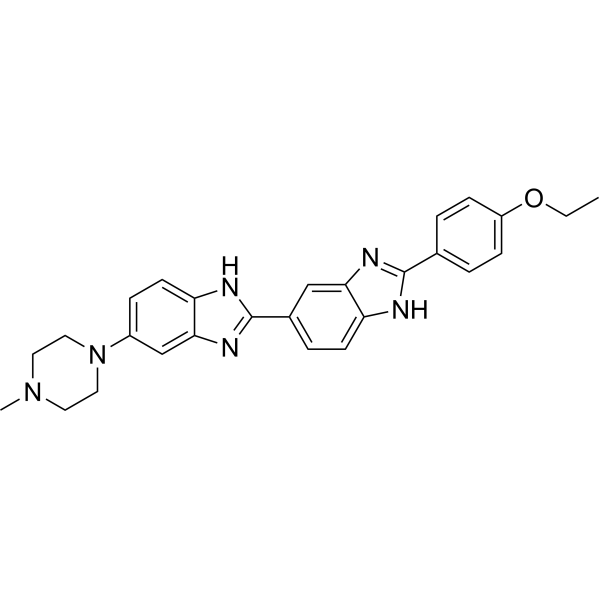
HY-15559
Hoechst 33342 -
HY-P80720
IL-1 beta Antibody -
HY-P80450
GPX4 Antibody (YA399) -
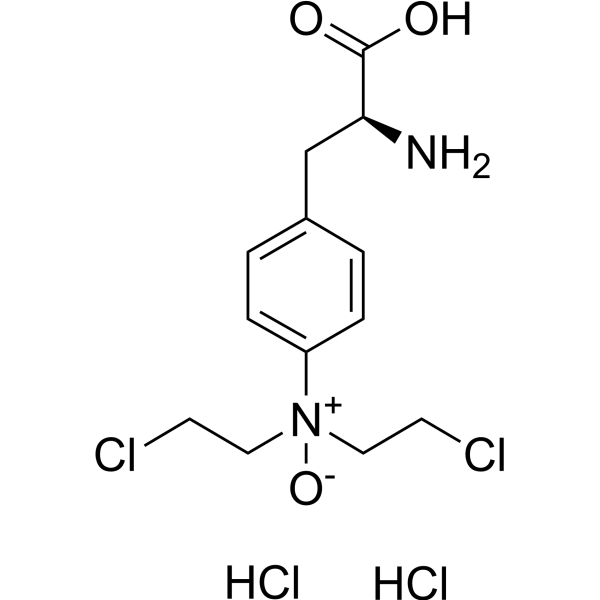
HY-10231
PX-478 -
HY-K0301
Cell Counting Kit-8 -
HY-P80929
VEGFA Antibody (YA013) -

HY-K0320
ROS Assay Kit -
HY-P8001
HRP-conjugated Goat Anti-Rabbit IgG H&L -
HY-P80494
Glucose Transporter GLUT1 Antibody (YA410) -
HY-P80246
NLRP3 Antibody (YA266)
Publications Citing Use of MedChemExpress (MCE) HIF1 alpha Antibody
More- Adv Funct Mater. 2025 Apr 01.
- Adv Sci (Weinh). 2025 Sep 17:e12127. [Abstract]
- Acta Biomater. 2026 Apr:214:498-511. [Abstract]
- Nutr Diabetes. 2024 Oct 7;14(1):83. [Abstract]
- Int Immunopharmacol. 2026 Jun 1:178:116593. [Abstract]
- Chem Biol Drug Des. 2026 Mar;107(3):e70279. [Abstract]
- Clin Transl Oncol. 2026 Feb 25. [Abstract]
- SSRN. 2025 Sep 23.
- Biomed Pharmacother. 2025 Jun:187:118109. [Abstract]

 9 Publications Citing Use of MCE HIF1 alpha Antibody (3)
-
IF
-
IF
-
IF


Applications
| Application |
WB

WB: Western Blot
|
ICC/IF
ICC/IF: Immunocytochemistry/
Immunofluorescence |
ELISA
ELISA: Enzyme Linked Immunosorbent Assay
|
|---|---|---|---|
| Dilution Ratio | 1:500-1:1000 | 1:50-1:200 | 1:10000 |


Product Details
HIF1 alpha Antibody is a Rabbit-derived and non-conjugated IgG polyclonal antibody, targeting to HIF1 alpha.
-
Host Rabbit

-
Clonality Polyclonal

-
Species ReactivityHuman, Mouse, Rat
-
Observed Molecular WeightObserved band size: 92-130 kDa
Note: Due to possible protein modifications or aggregation, the molecular weight should be confirmed by actual measurement, and the predicted value is for reference only.

-
Calculated Molecular Weight Predicted band size: 93 kDa

Entrez Gene: 3091 Human ; 15251 Mouse ; 29560 Rat
SwissProt: Q16665 Human ; Q61221 Mouse ; O35800 Rat
OMIM: 603348 Human
Synthetic peptide corresponding to Human HIF-1 alpha.AA range:328-377.
Endogenous
affinity purified
Non-conjugated
Unmodified
IgG


Product Properties
-
Appearance
Solution
-
Formulation
Supplied in 1*PBS (pH 7.3), 50% glycerol and 0.5% BSA. Preservative: 0.02% sodium azide.
-
Concentration
Batch-dependent, Please check the COA for the concentration of each lot. Check Lot Concentration
-
Storage & Stability
Stored at -20°C for 1 year. Avoid repeated freeze / thaw cycles.
-
Shipping
Shipping with blue ice.


Publications (9)
-
Journal Impact Factor
-
Most Recent
-
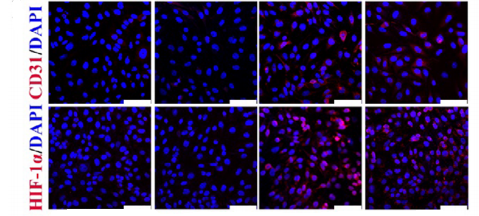
HIF1 alpha Antibody purchased from MedChemExpress. Usage Cited in: Adv Funct Mater. 2025 Apr 01.
Representative immunofluorescence images of CD31 and HIF-1α in HUVECs co-cultured with the upper periosteum scaffold for 3 days.
-
Adv Sci (Weinh)
2025 Sep 17:e12127. PMID: 40959857
HIF1 alpha Antibody purchased from MedChemExpress. Usage Cited in: Adv Sci (Weinh). 2025 Sep 17:e12127. [Abstract]
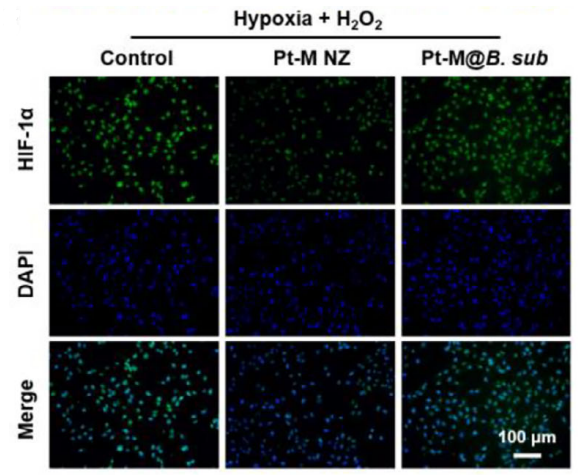
Immunofluorescence staining images of HIF-1α on HaCaT cells. For HIF-1α detection, similarly plated cells underwent 6 h hypoxia (0.1% O2, 5% CO2), received identical treatments during 8 h extended hypoxia, then were fixed with 4% PFA, permeabilized with 0.1% Triton X-100, blocked with 1% BSA (1 h, RT), incubated with HIF-1α antibody (HY-P80704) overnight (4 °C), stained with secondary antibody (1 h, RT, dark), counterstained with DAPI (30 min, RT, dark), mounted with antifade medium, and finally imaged using inverted fluorescence microscopy.
-
Acta Biomater
Absorbable microspheres co-delivering HIF-1α inhibitor augment transarterial chemoembolization by reversing tumor hypoxia and immunosuppression. [Abstract]2026 Apr:214:498-511. PMID: 41796928 -
Nutr Diabetes
Non-pharmacological interventions of intermittent fasting and pulsed radiofrequency energy (PRFE) combination therapy promote diabetic wound healing. [Abstract]2024 Oct 7;14(1):83. PMID: 39375333 -
Int Immunopharmacol
Silicosis amelioration by chaetocin: a novel therapeutic strategy targeting the HIF1α-mediated PI3K/AKT/MMP9 pathway. [Abstract]2026 Jun 1:178:116593. PMID: 41930873 -
Chem Biol Drug Des
Tetrahydropalmatine Alleviates Osteoarthritis-Associated Pain and Inflammation by Suppressing KDM4A/MDM2/HIF-1α-Mediated M1 Macrophage Polarization. [Abstract]2026 Mar;107(3):e70279. PMID: 41857767 -
Clin Transl Oncol
Apigenin 7-glucoside reprograms tumor metabolism and enhances immunotherapy efficacy in colorectal cancer via DLX5. [Abstract]2026 Feb 25. PMID: 41739401 -
Biomed Pharmacother
Methyleugenol alleviates pulmonary vascular remodeling in rats with high-altitude pulmonary hypertension by improving pulmonary smooth muscle cell function. [Abstract]2025 Jun:187:118109. PMID: 40306181
HIF1 alpha Antibody purchased from MedChemExpress. Usage Cited in: Biomed Pharmacother. 2025 Jun:187:118109. [Abstract]
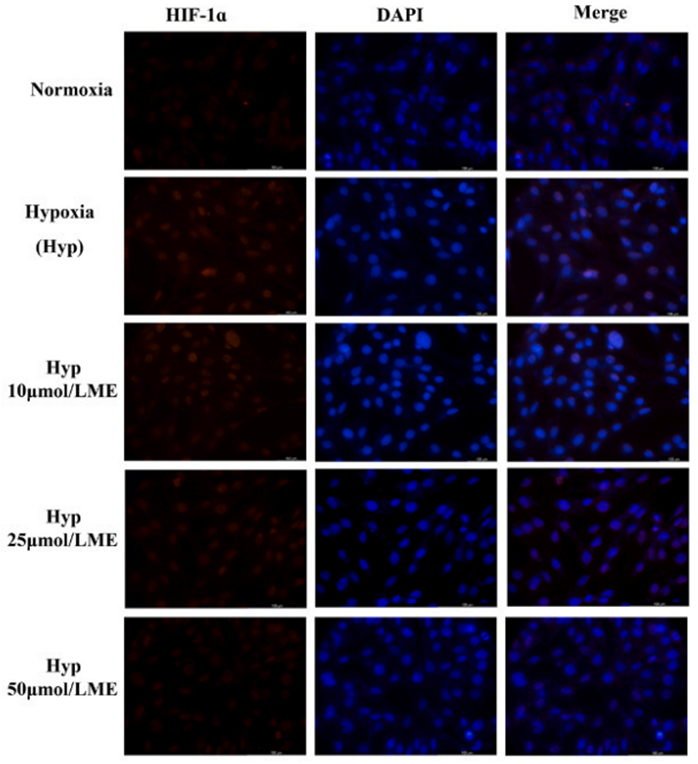
Effects of ME on ROS,Ca2+ and HIF-1α levels in PASMCs. Fluorescence pattern of HIF-1α content in each group.


Verification Images
-
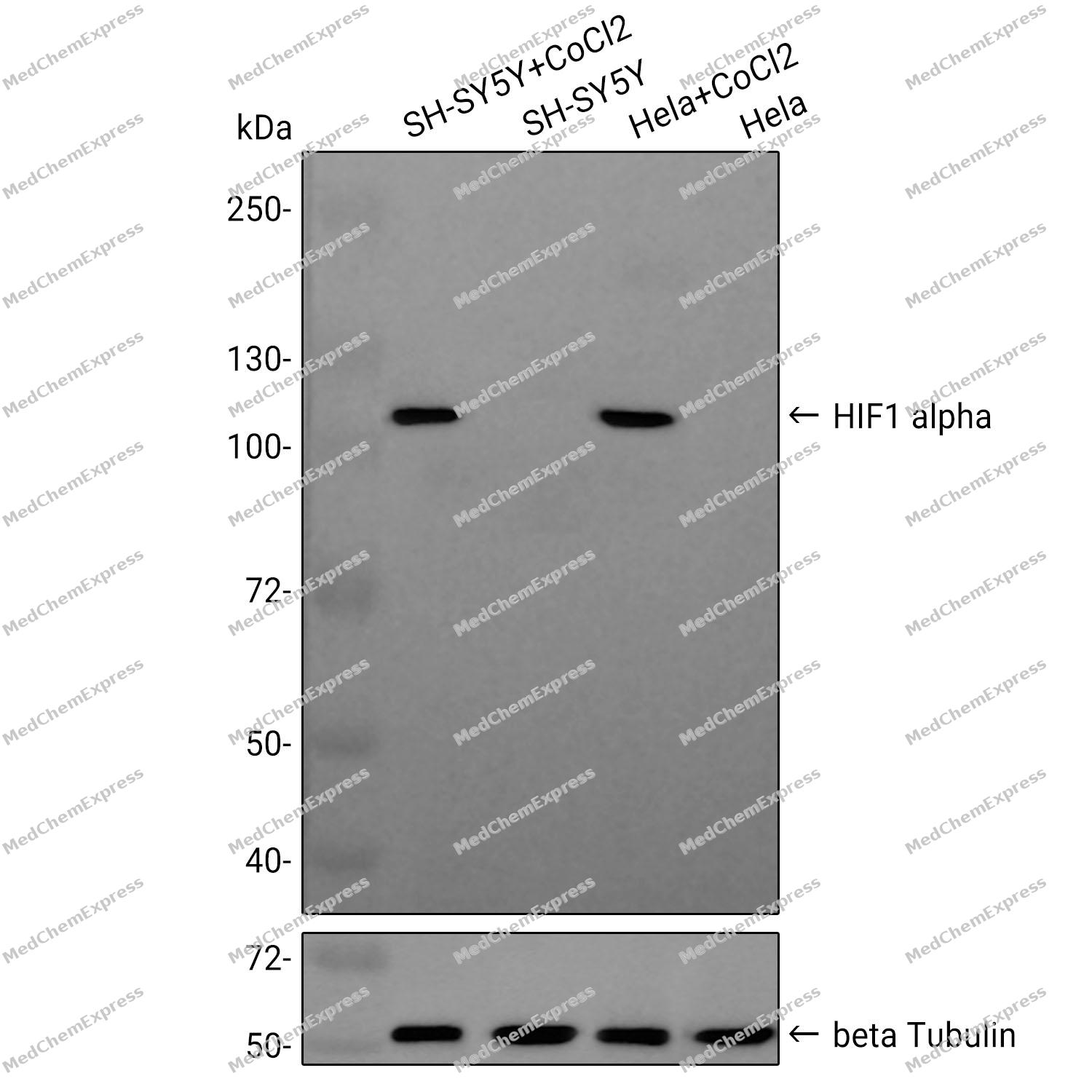 Western blot analysis was performed on extracts from SH-SY5Y+CoCl2 (lane 1, 15 μg), SH-SY5Y (lane 2, 15 μg), Hela+CoCl2 (lane 3, 15 μg), and Hela (lane 4, 15 μg) using HIF1 alpha Rabbit pAb. Proteins were transferred to a PVDF membrane and blocked with 5% non - fat milk in TBST at 4°C overnight. The primary antibody (1:1000 dilution) and the loading control antibody (beta-Tubulin(HRP), HY-P80955A, 1:5000 dilution) were incubated in 5% non-fat milk in TBST for 1 hour at 37°C. Goat Anti - Rabbit IgG - HRP Secondary Antibody (1:20000 dilution) was then applied for 40 minutes at 37°C.
 -
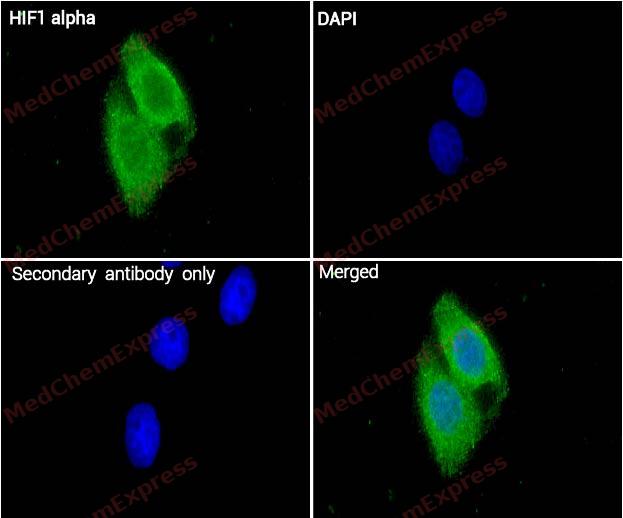 Immunocytochemistry analysis of Hela cells labeling HIF1 alpha with HIF1 alpha Antibody (HY-P80704) at 1/100 dilution. Cells were fixed in 4% paraformaldehyde for 15 minutes at room temperature, permeabilized with 0.1% Triton X-100 in PBS for 15 minutes at room temperature, then blocked with quick block buffer for 10 minutes at room temperature. Cells were then incubated with HIF1 alpha Antibody (HY-P80704) at 1/100 dilution in quick block buffer overnight at 4 ℃. AF488-conjugated Goat Anti-Rabbit IgG H&L (HY-P8002, Green) was used as the secondary antibody at 1/1,000 dilution. PBS instead of the primary antibody was used as the secondary antibody only control. The Nuclear counterstain was DAPI (Blue).
 -
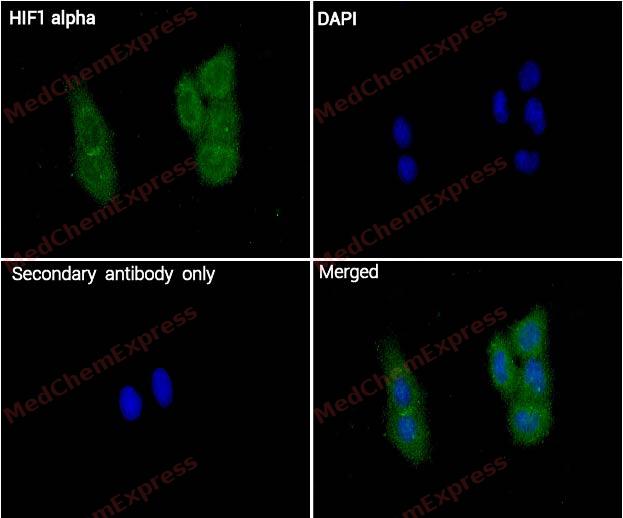 Immunocytochemistry analysis of Hela cells labeling HIF1 alpha with HIF1 alpha Antibody (HY-P80704) at 1/200 dilution. Cells were fixed in 4% paraformaldehyde for 15 minutes at room temperature, permeabilized with 0.1% Triton X-100 in PBS for 15 minutes at room temperature, then blocked with quick block buffer for 10 minutes at room temperature. Cells were then incubated with HIF1 alpha Antibody (HY-P80704) at 1/200 dilution in quick block buffer overnight at 4 ℃. AF488-conjugated Goat Anti-Rabbit IgG H&L (HY-P8002, Green) was used as the secondary antibody at 1/1,000 dilution. PBS instead of the primary antibody was used as the secondary antibody only control. The Nuclear counterstain was DAPI (Blue).


Background
-
Function
HIF1 alpha functions as a master transcriptional regulator of the adaptive response to hypoxia. Under hypoxic conditions, activates the transcription of over 40 genes, including erythropoietin, glucose transporters, glycolytic enzymes, vascular endothelial growth factor, HILPDA, and other genes whose protein products increase oxygen delivery or facilitate metabolic adaptation to hypoxia. Plays an essential role in embryonic vascularization, tumor angiogenesis and pathophysiology of ischemic disease. Heterodimerizes with ARNT; heterodimer binds to core DNA sequence 5'-TACGTG-3' within the hypoxia response element (HRE) of target gene promoters. Activation requires recruitment of transcriptional coactivators such as CREBBP and EP300. Activity is enhanced by interaction with NCOA1 and/or NCOA2. Interaction with redox regulatory protein APEX1 seems to activate CTAD and potentiates activation by NCOA1 and CREBBP. Involved in the axonal distribution and transport of mitochondria in neurons during hypoxia; (Microbial infection) Upon infection by human coronavirus SARS-CoV-2, is required for induction of glycolysis in monocytes and the consequent pro-inflammatory state. In monocytes, induces expression of ACE2 and cytokines such as IL1B, TNF, IL6, and interferons. Promotes human coronavirus SARS-CoV-2 replication and monocyte inflammatory response[1][2][3][4][5][6][7][8][9][10][11][12][13][14][15].
-
Subcellular Localization
Cytoplasm; Nucleus; Nucleus speckle
-
Expression
Tissue_specificity:This gene is expressed in most tissues, with the highest expression levels in the kidneys and heart. Due to intratumoral hypoxia and mutations encoding oncoproteins and tumor suppressor genes, this gene is overexpressed in most common human cancers and their metastases. Compared to the pituitary gland, pituitary tumors show higher expression levels of this gene.
Induction:Under reduced oxygen tension. Induced also by various receptor-mediated factors such as growth factors, cytokines, and circulatory factors such as PDGF, EGF, FGF2, IGF2, TGFB1, HGF, TNF, IL1B/interleukin-1 beta, angiotensin-2 and thrombin. However, this induction is less intense than that stimulated by hypoxia. Repressed by HIPK2 and LIMD1 -
Isoforms & Post-Translational Modification
Q16665 has 3 isomers: Q16665-1: 92670 Da (predicted); Q16665-2: 82746 Da (predicted); Q16665-3: 95634 Da (predicted).
S-nitrosylation of Cys-800 may be responsible for increased recruitment of p300 coactivator necessary for transcriptional activity of HIF-1 complex;Requires phosphorylation for DNA-binding. Phosphorylation at Ser-247 by CSNK1D/CK1 represses kinase activity and impairs ARNT binding (PubMed:20699359, PubMed:20889502). Phosphorylation by GSK3-beta and PLK3 promote degradation by the proteasome (By similarity);Sumoylated; with SUMO1 under hypoxia (PubMed:15465032, PubMed:15776016, PubMed:17610843). Sumoylation is enhanced through interaction with RWDD3 (PubMed:17956732). Both sumoylation and desumoylation seem to be involved in the regulation of its stability during hypoxia (PubMed:15465032, PubMed:15776016, PubMed:17610843). Sumoylation can promote either its stabilization or its VHL-dependent degradation by promoting hydroxyproline-independent HIF1A-VHL complex binding, thus leading to HIF1A ubiquitination and proteasomal degradation (PubMed:15465032, PubMed:15776016, PubMed:17610843). Desumoylation by SENP1 increases its stability amd transcriptional activity (By similarity). There is a disaccord between various publications on the effect of sumoylation and desumoylation on its stability and transcriptional activity (Probable);Acetylation of Lys-532 by ARD1 increases interaction with VHL and stimulates subsequent proteasomal degradation (PubMed:12464182). Deacetylation of Lys-709 by SIRT2 increases its interaction with and hydroxylation by EGLN1 thereby inactivating HIF1A activity by inducing its proteasomal degradation (PubMed:24681946);Polyubiquitinated; in normoxia, following hydroxylation and interaction with VHL. Lys-532 appears to be the principal site of ubiquitination. Clioquinol, the Cu/Zn-chelator, inhibits ubiquitination through preventing hydroxylation at Asn-803. Ubiquitinated by E3 ligase VHL (PubMed:25615526). Deubiquitinated by UCHL1 (PubMed:25615526);In normoxia, is hydroxylated on Pro-402 and Pro-564 in the oxygen-dependent degradation domain (ODD) by EGLN1/PHD2 and EGLN2/PHD1 (PubMed:11292861, PubMed:11566883, PubMed:12351678, PubMed:15776016, PubMed:25974097). EGLN3/PHD3 has also been shown to hydroxylate Pro-564 (PubMed:11292861, PubMed:11566883, PubMed:12351678, PubMed:15776016, PubMed:25974097). The hydroxylated prolines promote interaction with VHL, initiating rapid ubiquitination and subsequent proteasomal degradation (PubMed:11292861, PubMed:11566883, PubMed:12351678, PubMed:15776016, PubMed:25974097). Deubiquitinated by USP20 (PubMed:11292861, PubMed:11566883, PubMed:12351678, PubMed:15776016, PubMed:25974097). Under hypoxia, proline hydroxylation is impaired and ubiquitination is attenuated, resulting in stabilization (PubMed:11292861, PubMed:11566883, PubMed:12351678, PubMed:15776016, PubMed:25974097). In normoxia, is hydroxylated on Asn-803 by HIF1AN, thus abrogating interaction with CREBBP and EP300 and preventing transcriptional activation (PubMed:12080085). This hydroxylation is inhibited by the Cu/Zn-chelator, Clioquinol (PubMed:12080085). Repressed by iron ion, via Fe(2+) prolyl hydroxylase (PHD) enzymes-mediated hydroxylation and subsequent proteasomal degradation (PubMed:28296633);The iron and 2-oxoglutarate dependent 3-hydroxylation of asparagine is (S) stereospecific within HIF CTAD domains;(Microbial infection) Glycosylated at Arg-18 by enteropathogenic E.coli protein NleB1: arginine GlcNAcylation enhances transcription factor activity and impairs glucose metabolism -
Subunit
Interacts with the ARNT; forms a heterodimer that binds core DNA sequence 5'-TACGTG-3' within the hypoxia response element (HRE) of target gene promoters (PubMed:10944113, PubMed:20699359). Interacts with COPS5; the interaction increases the transcriptional activity of HIF1A through increased stability (By similarity). Interacts with EP300 (via TAZ-type 1 domains); the interaction is stimulated in response to hypoxia and inhibited by CITED2 (PubMed:11959990, PubMed:12778114, PubMed:16543236, PubMed:16973622, PubMed:8917528, PubMed:9887100). Interacts with CREBBP (via TAZ-type 1 domains) (PubMed:11959977, PubMed:8917528). Interacts with NCOA1, NCOA2, APEX1 and HSP90 (PubMed:10202154, PubMed:10594042). Interacts (hydroxylated within the ODD domain) with VHLL (via beta domain); the interaction, leads to polyubiquitination and subsequent HIF1A proteasomal degradation (PubMed:14757845). During hypoxia, sumoylated HIF1A also binds VHL; the interaction promotes the ubiquitination of HIF1A (PubMed:10944113, PubMed:11006129, PubMed:12004076, PubMed:12050673, PubMed:16862177). Interacts with SENP1; the interaction desumoylates HIF1A resulting in stabilization and activation of transcription (By similarity). Interacts (via the ODD domain) with NAA10; the interaction appears not to acetylate HIF1A nor have any affect on protein stability, during hypoxia (PubMed:12464182, PubMed:16288748). Interacts with RWDD3; the interaction enhances HIF1A sumoylation (PubMed:17956732, PubMed:23469069). Interacts with TSGA10 (By similarity). Interacts with HIF3A (By similarity). Interacts with RORA (via the DNA binding domain); the interaction enhances HIF1A transcription under hypoxia through increasing protein stability (PubMed:18658046). Interaction with PSMA7 inhibits the transactivation activity of HIF1A under both normoxic and hypoxia-mimicking conditions (PubMed:11389899). Interacts with USP20 (PubMed:15776016). Interacts with RACK1; promotes HIF1A ubiquitination and proteasome-mediated degradation (PubMed:17244529). Interacts (via N-terminus) with USP19 (PubMed:22128162). Interacts with SIRT2 (PubMed:24681946). Interacts (deacetylated form) with EGLN1 (PubMed:24681946). Interacts with CBFA2T3 (PubMed:25974097). Interacts with HSP90AA1 and HSP90AB1 (PubMed:26517842). Interacts with DCUN1D1; this interaction increases the interaction between VHL and DCUN1D1 (PubMed:23401859). Interacts with HIF1AN (PubMed:12446723)
-
SwissProt ID
-
Synonyms
HIF1A; BHLHE78; MOP1; PASD8; Hypoxia-inducible factor 1-alpha; HIF-1-alpha; HIF1-alpha; ARNT-interacting protein; Basic-helix-loop-helix-PAS protein MOP1; Class E basic helix-loop-helix protein 78; bHLHe78; Member of PAS protein 1; PAS doma
-
Research Field
Cardiovascular
Documentation
-
Data Sheet (235 KB)
-
SDS (252 KB)
- English - EN (252 KB)
- Français - FR (252 KB)
- Deutsch - DE (252 KB)
- Norwegian - NO (252 KB)
- Español - ES (252 KB)
- Swedish - SV (252 KB)
- Italian - IT (252 KB)
- Korean - KR (252 KB)
- Portuguese - PT (252 KB)
-
User Guide for Antibodies (1077 KB)

 Powered by Bioz
