



Reversan
Based on 2 publication(s) in Google Scholar
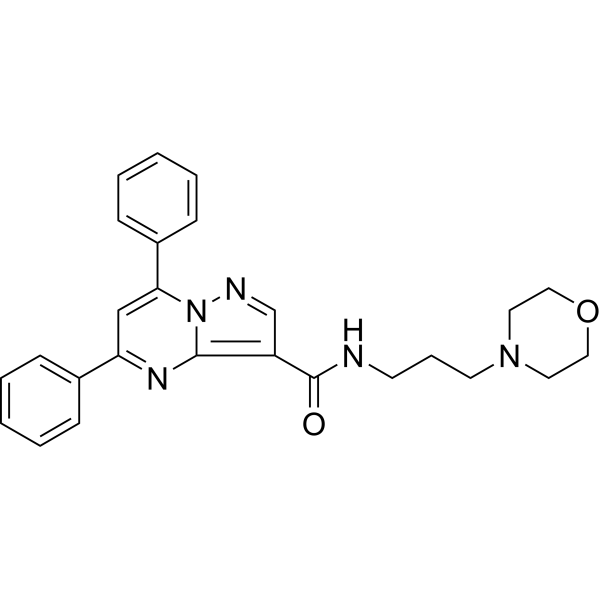
Reversan (CBLC4H10) inhibits drug efflux mediated by P-glycoprotein (Pgp) and multidrug resistance protein 1 (MRP1), and exhibits oral activity. Reversan shows activity against glioblastoma multiforme and neuroblastoma models.
For research use only. We do not sell to patients.
- Purity : 99.57%
- CAS No.: 313397-13-6
- Formula: C26H27N5O2
- Molecular Weight:441.52
-
Storage:Powder -20°C, 3 years , 4°C, 2 years ; In solvent -80°C, 6 months , -20°C, 1 month

To place orders, for customer services and technical support, please contact: MedChemExpress USA
Tel: 609-228-6898 E-mail: [email protected] [email protected]


-
 Biological Activity
-
Chemical Information
-
Solvent & Solubility
- Purity & Documentation
- References
-
 Help & FAQs


-
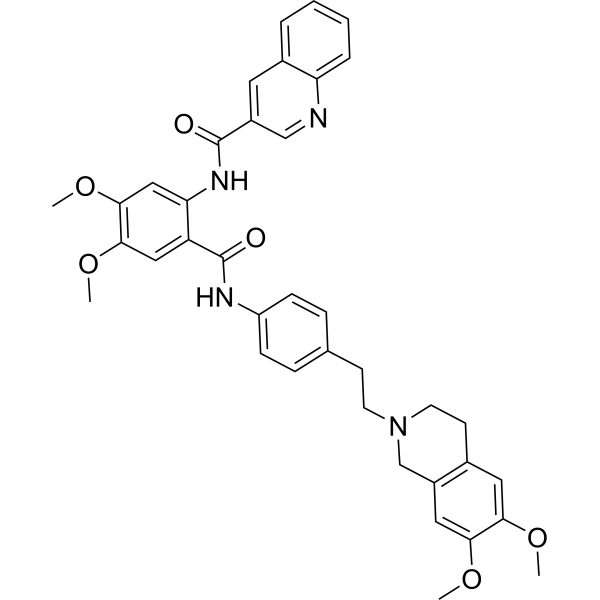
HY-10550
TariquidarP-gp Inhibitor -
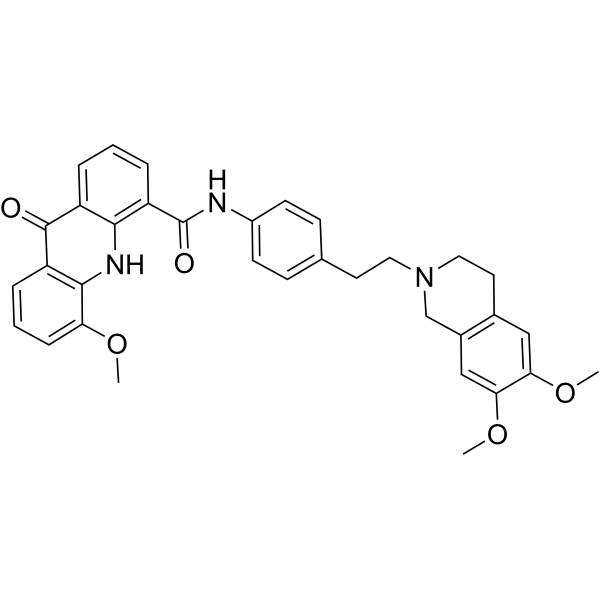
HY-50879
ElacridarP-gp And BCRP Dual-Inhibitor -
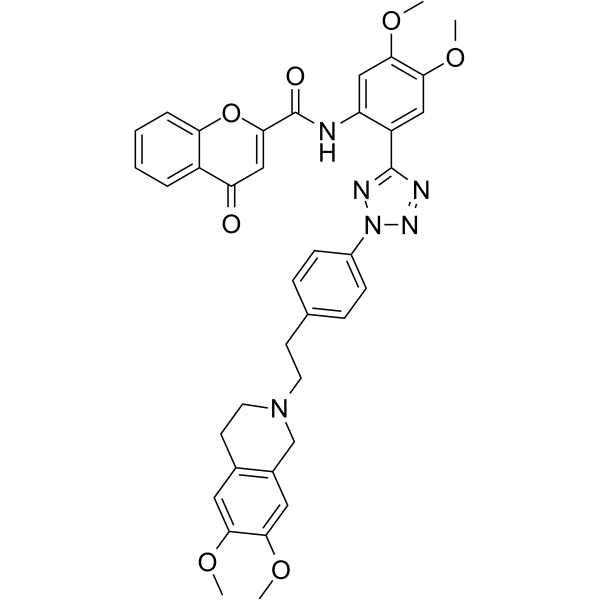
HY-13646
EncequidarP-glycoprotein Inhibitor -
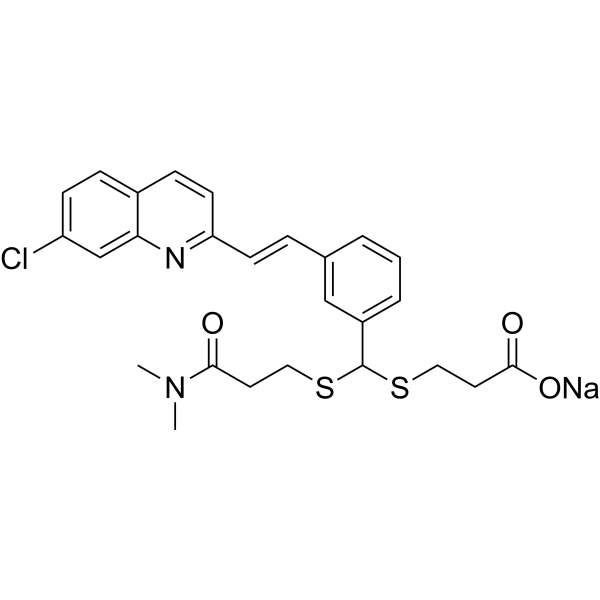
HY-19989A
MK-571 sodiumABCC1/MRP4 Inhibitor -
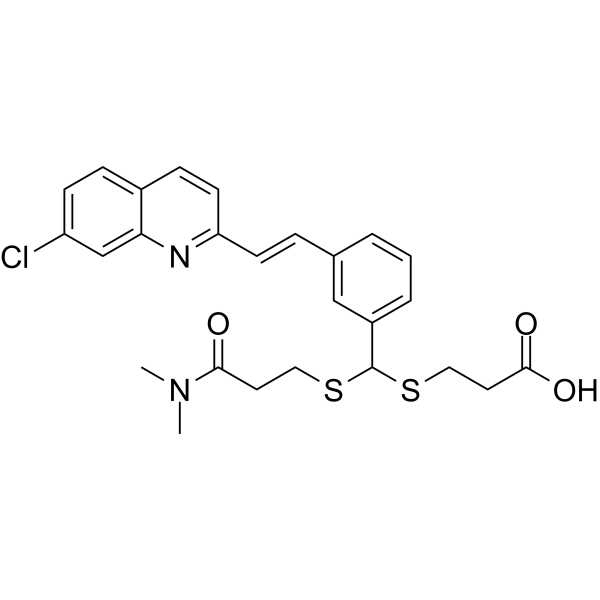
HY-19989
MK-571ABCC1/MRP4 Inhibitor -
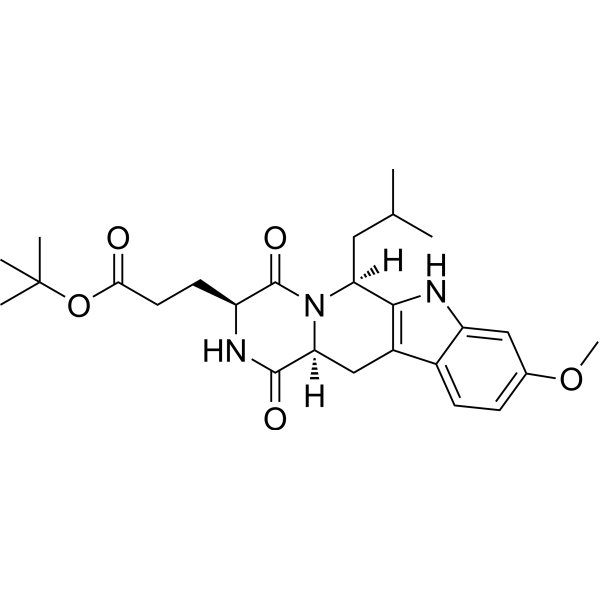
HY-10010
Ko 143BCRP/ABCG2 Inhibitor -
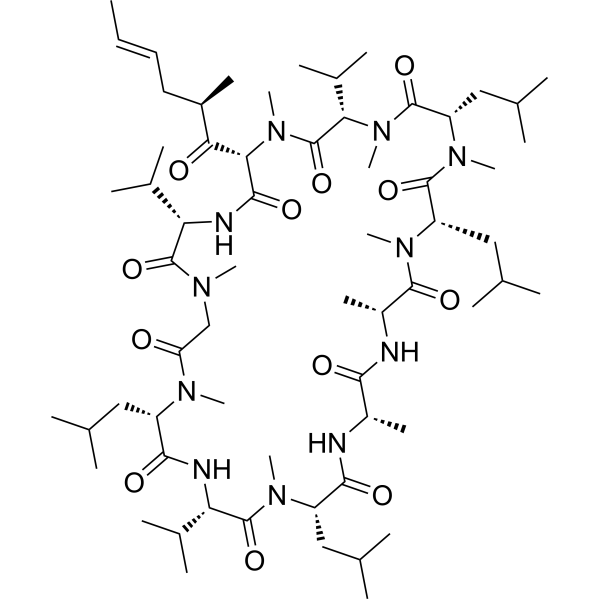
HY-17384
ValspodarP-glycoprotein Inhibitor -
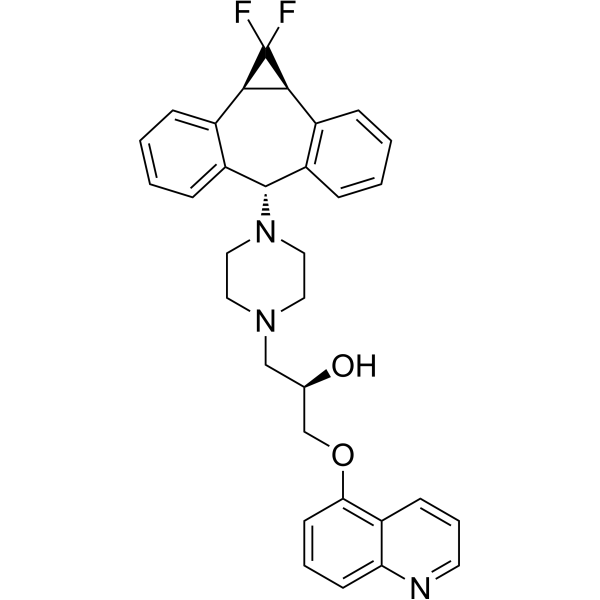
HY-15255
ZosuquidarP-gp Inhibitor -
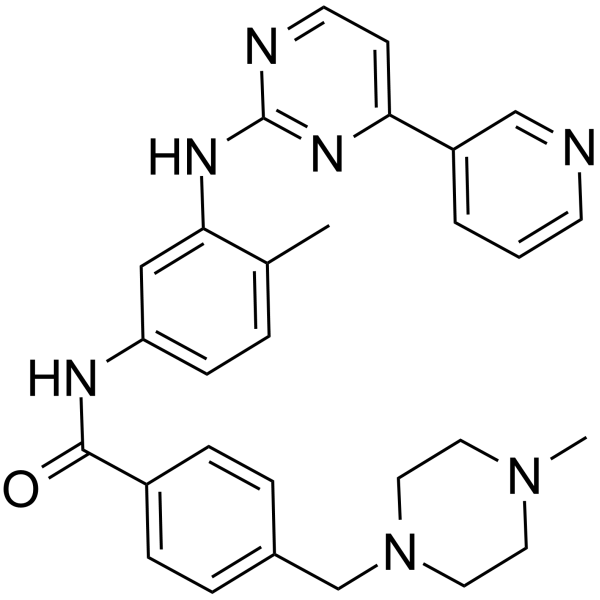
HY-15463
ImatinibTyrosine Kinases Inhibitor -
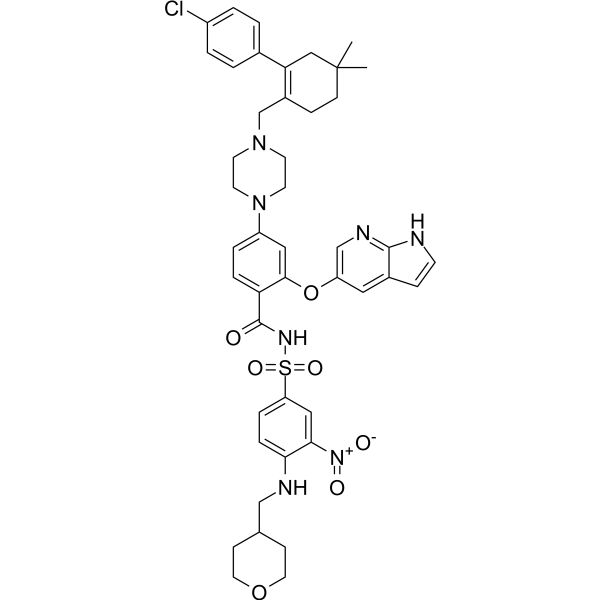
HY-15531
VenetoclaxBCL-2 Inhibitor -
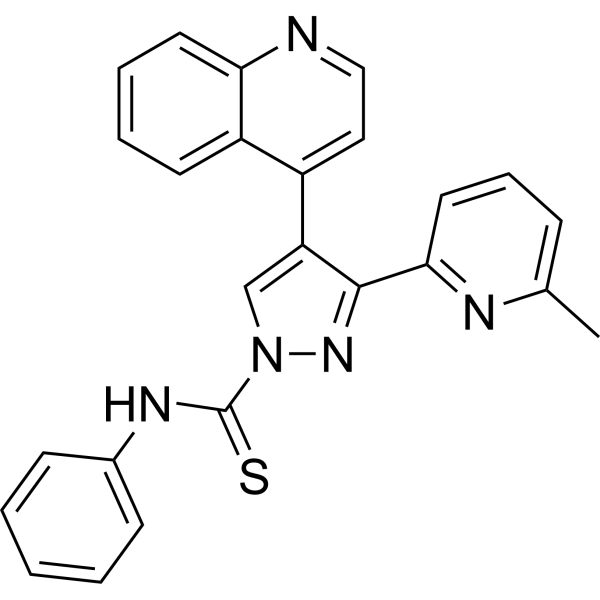
HY-10432
A 83-01ALK4/5/7 Inhibitor -
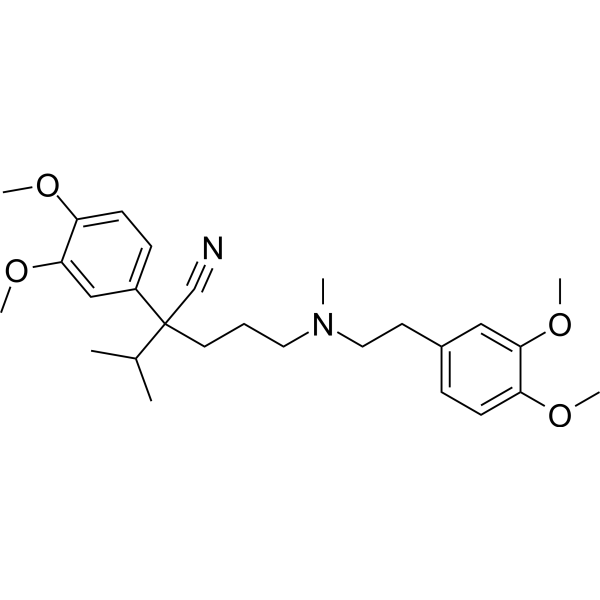
HY-14275
VerapamilCalcium Channel Blocker
Publications Citing Use of MedChemExpress (MCE) Reversan
More

Biological Activity
Description
IC50 & Target
Multidrug resistance-associated protein 1, P-glycoprotein[1]
Cellular Effect
|
Cell Line

|
Type | Value | Description | References |
|---|---|---|---|---|
| A7R5 | IC50 |
>100 μM
Compound: Reversan
|
Antagonist activity at calcium channel in rat A7R5 cells assessed as inhibition of Cacl2/KCl-induced increase in intracellular Ca2+ incubated for 15 mins prior to Cacl2/KCl challenge by fluorescence assay
Antagonist activity at calcium channel in rat A7R5 cells assessed as inhibition of Cacl2/KCl-induced increase in intracellular Ca2+ incubated for 15 mins prior to Cacl2/KCl challenge by fluorescence assay
|
[PMID: 25311564] |
| MDCK-II | IC50 |
4.3 μM
Compound: Reversan
|
Inhibition of human MRP1 transfected in MDCK2 cells assessed as inhibition of calcein-AM efflux
Inhibition of human MRP1 transfected in MDCK2 cells assessed as inhibition of calcein-AM efflux
|
[PMID: 26774038] |
| MES-SA | EC50 |
18.4 μM
Compound: Reversan
|
Modulation of P-gp mediated drug efflux in human MES-SA cells assessed as accumulation of rhodamine-123 incubated for 15 mins prior to rhodamine-123 addition measured after 1 hr by fluorescence analysis
Modulation of P-gp mediated drug efflux in human MES-SA cells assessed as accumulation of rhodamine-123 incubated for 15 mins prior to rhodamine-123 addition measured after 1 hr by fluorescence analysis
|
[PMID: 25311564] |
| NCI-H69 | EC50 |
9.8 μM
Compound: Reversan
|
Modulation of MRP1 mediated drug efflux in doxorubicin-resistant human H69 cells assessed as accumulation of calcein AM incubated for 15 mins prior to calcein AM addition measured after 30 mins by fluorescence analysis
Modulation of MRP1 mediated drug efflux in doxorubicin-resistant human H69 cells assessed as accumulation of calcein AM incubated for 15 mins prior to calcein AM addition measured after 30 mins by fluorescence analysis
|
[PMID: 25311564] |
In Vitro
Reversan (15 μM; 7 h) pre-treatment of A172 and U251 GBM cell lines significantly enhances temozolomide-, vincristine-, and etoposide-induced cell death, as measured by reduced cell viability in MTT assays[1].
Reversan (15 μM; 7 h) pre-treatment of MZ-327 and MZ-18 primary GBM cell lines significantly enhances temozolomide-, vincristine-, and etoposide-induced cell death, as measured by reduced cell viability in MTT assays[1].
Reversan (15 μM; 7 h) pre-treatment of MZ-304 and MZ-256 recurrent GBM cell lines significantly enhances temozolomide-, vincristine-, and etoposide-induced cell death, as measured by reduced cell viability in MTT assays[1].
Reversan (15 μM; 7 h) pre-treatment of U251, MZ-327, and MZ-256 GBM cell lines does not significantly affect cell proliferation rates[1].
Reversan (15 μM; 7 h) pre-treatment of U251, MZ-327, and MZ-256 GBM cell lines does not significantly alter cell migration as measured by 2D wound closure assays[1].
Reversan (10 μM; 24 h) induces MRP1 inhibition in MRP1-overexpressing MCF7/VP-LacZ cells, as measured by increased doxorubicin-mediated p53-responsive reporter activity[2].
Reversan (10 μM; 10 min pre-incubation plus 100 min co-incubation with daunorubicin) selectively increases accumulation of the MRP1 substrate daunorubicin in MRP1-overexpressing MCF7/VP cells but not parental MCF7 cells[2].
Reversan (5 μM; 18 h co-incubation with chemotherapeutic drugs) selectively sensitizes MRP1-overexpressing MCF7/VP cells to MRP1 substrate drugs, with 14.6-fold sensitization to vincristine, 11.6-fold to etoposide, and 3.8-fold to doxorubicin, but no effect on non-MRP1 substrates[2].
Reversan (10 μM; 18 h co-incubation with chemotherapeutic drugs) sensitizes multiple MRP1-expressing human tumor cell lines to MRP1 substrate drugs, with the strongest effect in SK-RC45 cells treated with vincristine[2].
Reversan (10 μM; 18 h co-incubation with substrate drugs) does not inhibit MRP2, MRP3, MRP4, or MRP5, but does inhibit P-gp to significantly sensitize P-gp-overexpressing cells to vincristine[2].
Reversan (10 μM; 18 h co-incubation with etoposide) is a potent MRP1 inhibitor, increasing MCF7/VP cell sensitivity to etoposide 25-fold and demonstrating 6-8 times greater potency than most tested reference MRP1 modulators[2].
MedChemExpress (MCE) has not independently confirmed the accuracy of these methods. They are for reference only.
-
Cell Line:U251, MZ-327, MZ-256 (GBM cell lines)
-
Concentration:15 μM
-
Incubation Time:7 h (pre-incubated prior to seeding)
-
Result:Did not change the wound closure (cell migration) abilities of any of the GBM cell lines assessed, with no significant differences compared to control cells.
-
Cell Line:MRP1-overexpressing MCF7/VP human breast cancer cells
-
Concentration:5 μM
-
Incubation Time:18 h (co-incubated with chemotherapeutic drugs)
-
Result:Sensitized cells to vincristine, etoposide , and doxorubicin.
Did not increase sensitivity to non-MRP1 substrates cisplatin or paclitaxel.
-
Cell Line:MRP1-overexpressing BE(2)-C neuroblastoma cells, MRP1-overexpressing HCT116 colon cancer cells, MRP1-overexpressing SK-RC45 renal cell carcinoma cells
-
Concentration:10 μM
-
Incubation Time:18 h (co-incubated with chemotherapeutic drugs)
-
Result:Sensitized BE(2)-C cells to vincristine, etoposide, and doxorubicin.
Sensitized HCT116 cells to vincristine, etoposide, and doxorubicin.
Sensitized SK-RC45 cells to vincristine, etoposide, and doxorubicin.
In Vivo
Reversan (10 mg/kg; i.p./p.o.; daily; 5 consecutive days) significantly increases the survival of hMYCN transgenic mice with neuroblastoma when co-administered with vincristine or etoposide, doubling to tripling survival time relative to chemotherapy alone[2].
Reversan (10 mg/kg; i.p.) in combination with etoposide increases neutrophil counts (protecting against etoposide-induced neutropenia) and enhances etoposide's efficacy against BE(2)-C human neuroblastoma xenografts in nude mice[2].
MedChemExpress (MCE) has not independently confirmed the accuracy of these methods. They are for reference only.
-
Animal Model:BALB/c mice (gender unspecified for toxicity study; 7-week-old female for vincristine toxicity interaction study)[2]
-
Dosage:25 mg/kg; 50 mg/kg; 100 mg/kg (single dose toxicity); 10 mg/kg (vincristine combination)
-
Administration:i.p.; single dose (toxicity); i.p.; daily; 5 consecutive days (vincristine combination)
-
Result:Showed no adverse effects including no changes in body weight, mortality, or morbidity.
Did not significantly alter vincristine's toxicity profile, with no increased weight loss, poor health, or lethality relative to vincristine alone when co-administered.
-
Animal Model:hMYCN transgenic mice (neuroblastoma model, n≥10 per group)[2]
-
Dosage:10 mg/kg (vincristine/etoposide combination)
-
Administration:i.p.; daily; 5 consecutive days (vincristine/etoposide combination); p.o. (etoposide combination, frequency/duration unspecified)
-
Result:Increased median mouse survival from 16.2 days (vincristine alone) to 36.5 days when co-administered with vincristine, compared to 4.9 days in saline controls.
Increased median mouse survival from 11 days (etoposide alone) to 16 days when co-administered with etoposide, compared to 4.9 days in saline controls.
Showed equal efficacy via oral and i.p.
administration at increasing etoposide's efficacy.
Did not increase the efficacy of cyclophosphamide relative to cyclophosphamide alone.
-
Animal Model:BALB/c background nude mice (BE(2)-C human neuroblastoma xenografts)[2]
-
Dosage:10 mg/kg (etoposide combination)
-
Administration:i.p. (etoposide combination, schedule unspecified)
-
Result:Resulted in a ~2-fold significant increase in neutrophil counts relative to etoposide alone, with no significant changes in lymphocyte, monocyte, eosinophil, basophil, or platelet counts.
Enhanced etoposide's efficacy against BE(2)-C xenografts.


Chemical Information
-
CAS No. 313397-13-6
-
Appearance Solid
-
Molecular Weight 441.52
-
Formula C26H27N5O2
-
Color Off-white to light yellow
-
SMILES
O=C(C1=C2N(C(C3=CC=CC=C3)=CC(C4=CC=CC=C4)=N2)N=C1)NCCCN5CCOCC5
-
Synonyms
CBLC4H10
-
Shipping
Room temperature in continental US; may vary elsewhere.
-
Storage
Powder -20°C 3 years 4°C 2 years In solvent -80°C 6 months -20°C 1 month


Publications (2)
-
Journal Impact Factor
-
Most Recent
-
Cancer Discov
HER2 heterogeneous breast cancer models reveal novel therapeutic targets and subclonal dynamics during evolution to resistance to HER2-targeted therapies. [Abstract]2026 Apr 2. PMID: 41925564 -
Cancer Res
Targeted KRASG12V Degradation in vivo Elicits Lung Adenocarcinoma Regression with Subsequent Relapse from Dysregulated Proteolysis. [Abstract]2026 May 27:10.1158/0008-5472.CAN-25-5172. PMID: 42200804


Solvent & Solubility
In Vitro:
DMSO : 13 mg/mL (29.44 mM; Need ultrasonic; Hygroscopic DMSO has a significant impact on the solubility of product, please use newly opened DMSO)
Please refer to the solubility information to select the appropriate solvent. Once prepared, please aliquot and store the solution to prevent product inactivation from repeated freeze-thaw cycles.
Storage method and period of stock solution: -80°C, 6 months; -20°C, 1 month. When stored at -80°C, please use it within 6 months. When stored at -20°C, please use it within 1 month.
Please refer to the solubility information to select the appropriate solvent. Once prepared, please aliquot and store the solution to prevent product inactivation from repeated freeze-thaw cycles.
Storage method and period of stock solution: -80°C, 6 months; -20°C, 1 month. When stored at -80°C, please use it within 6 months. When stored at -20°C, please use it within 1 month.
Concentration (start) × Volume (start) = Concentration (final) × Volume (final)
In Vivo:
Select the appropriate dissolution method based on your experimental animal and administration route.
- For the following dissolution methods, please ensure to first prepare a clear stock solution using an In Vitro approach and then sequentially add co-solvents:
- To ensure reliable experimental results, the clarified stock solution can be appropriately stored based on storage conditions. As for the working solution for In Vivo experiments, it is recommended to prepare freshly and use it on the same day.
- The percentages shown for the solvents indicate their volumetric ratio in the final prepared solution. If precipitation or phase separation occurs during preparation, heat and/or sonication can be used to aid dissolution.
Add each solvent one by one: 10% DMSO 90% (20% SBE-β-CD in Saline)
Solubility: 1.56 mg/mL (3.53 mM); Suspended solution; Need ultrasonic
This protocol yields a suspended solution of 1.56 mg/mL. Suspended solution can be used for oral and intraperitoneal injection.
Taking 1 mL working solution as an example, add 100 μL DMSO stock solution (15.6 mg/mL) to 900 μL 20% SBE-β-CD in Saline, and mix evenly.
Preparation of 20% SBE-β-CD in Saline (4°C, storage for one week): 2 g SBE-β-CD powder is dissolved in 10 mL Saline, completely dissolve until clear.
In Vivo Dissolution Calculator
Please enter the basic information of animal experiments:
-
-
-
-
Recommended: Prepare an additional quantity of animals to account for potential losses during experiments.
Please enter your animal formula composition:
-
%DMSO +
Recommended: Keep the proportion of DMSO in working solution below 2% if your animal is weak.
-
%+
-
+%Tween-80 + +
-
%Saline +
The co-solvents required include: DMSO, . All of co-solvents are available by MedChemExpress (MCE). , Tween 80. All of co-solvents are available by MedChemExpress (MCE).
Working solution concentration: 0.22 mg/mL
Method for preparing stock solution: mg drug dissolved in μL DMSO. Stock solution concentration: mg/mL.
1. Take μL DMSO stock solution;
2. Add μL .
μL , mix evenly;
3. Then add μL Tween 80, mix evenly;
4. Then add μL
Please ensure that the stock solution in the first step is dissolved to a clear state, and add co-solvents in sequence. You can use ultrasonic heating (ultrasonic cleaner, recommended frequency 20-40 kHz), vortexing, etc. to assist dissolution.


Purity & Documentation
-
Data Sheet (281 KB)
-
SDS (254 KB)
- English - EN (254 KB)
- Français - FR (254 KB)
- Deutsch - DE (254 KB)
- Norwegian - NO (254 KB)
- Español - ES (254 KB)
- Swedish - SV (254 KB)
- Italian - IT (254 KB)
- Korean - KR (254 KB)
- Portuguese - PT (254 KB)
-
Handling Instructions (2659 KB)
References
[1]. Tivnan A, et al. Inhibition of multidrug resistance protein 1 (MRP1) improves chemotherapy drug response in primary and recurrent glioblastoma multiforme. Front Neurosci. 2015;9:218. Published 2015 Jun 16. [Content Brief]
[2].
Catherine A Burkhart, et al. Small-molecule multidrug resistance-associated protein 1 inhibitor reversan increases the therapeutic index of chemotherapy in mouse models of neuroblastoma. Cancer Res
. 2009 Aug 15;69(16):6573-80.
[Content Brief]


Complete Stock Solution Preparation Table
Please refer to the solubility information to select the appropriate solvent. Once prepared, please aliquot and store the solution to prevent product inactivation from repeated freeze-thaw cycles.
Storage method and period of stock solution: -80°C, 6 months; -20°C, 1 month. When stored at -80°C, please use it within 6 months. When stored at -20°C, please use it within 1 month.
| Optional Solvent | Concentration Solvent Mass | 1 mg | 5 mg | 10 mg | 25 mg |
|---|---|---|---|---|---|
| DMSO | 1 mM | 2.2649 mL | 11.3245 mL | 22.6490 mL | 56.6226 mL |
| 5 mM | 0.4530 mL | 2.2649 mL | 4.5298 mL | 11.3245 mL | |
| 10 mM | 0.2265 mL | 1.1325 mL | 2.2649 mL | 5.6623 mL | |
| 15 mM | 0.1510 mL | 0.7550 mL | 1.5099 mL | 3.7748 mL | |
| 20 mM | 0.1132 mL | 0.5662 mL | 1.1325 mL | 2.8311 mL | |
| 25 mM | 0.0906 mL | 0.4530 mL | 0.9060 mL | 2.2649 mL |


Reversan Related Classifications
HY-107643 Related Classifications
 Powered by Bioz