



MK2-IN-1 hydrochloride
Based on 6 publication(s) in Google Scholar
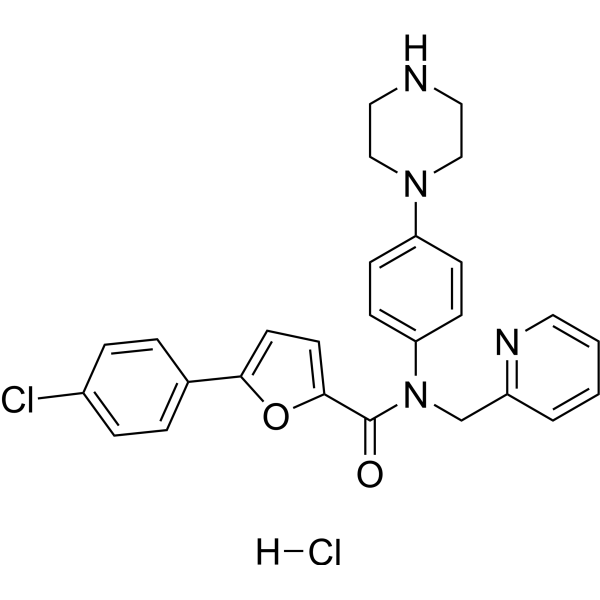
MK2-IN-1 hydrochloride (compound 1) is a potent and selecitve MAPKAPK2 (MK2) inhibitor with an IC50 of 0.11 uM for MK2 and an EC50 of 0.35 uM for pHSP27. MK2-IN-1 hydrochloride impaires the phosphorylation level of serine residues in the Tfcp2l1 protein.
For research use only. We do not sell to patients.
- Purity : 98.24%
- CAS No.: 1314118-94-9
- Formula: C27H26Cl2N4O2
- Molecular Weight:509.43
-
Storage:
4°C, stored under nitrogen
* In solvent : -80°C, 2 years; -20°C, 1 year (stored under nitrogen)

To place orders, for customer services and technical support, please contact: MedChemExpress USA
Tel: 609-228-6898 E-mail: [email protected] [email protected]


-
 Biological Activity
-
Chemical Information
-
Solvent & Solubility
- Protocols
- Purity & Documentation
- References
-
 Help & FAQs


-
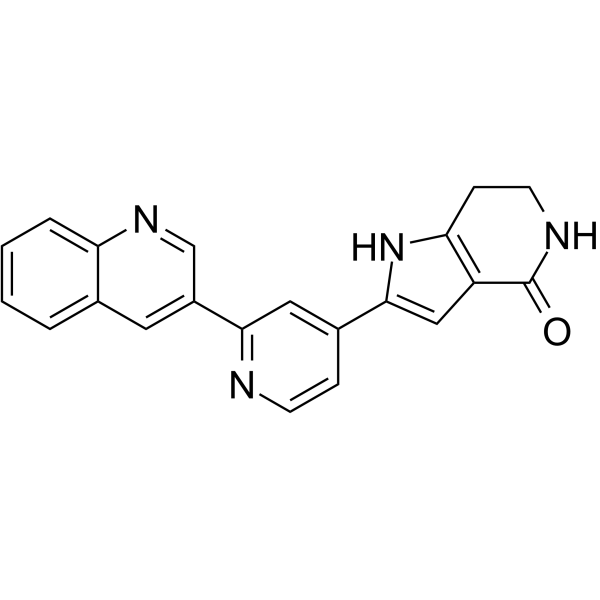
HY-131249
MK2-IN-3MK-2 Inhibitor -

HY-107427
PF-3644022MK2 Inhibitor -
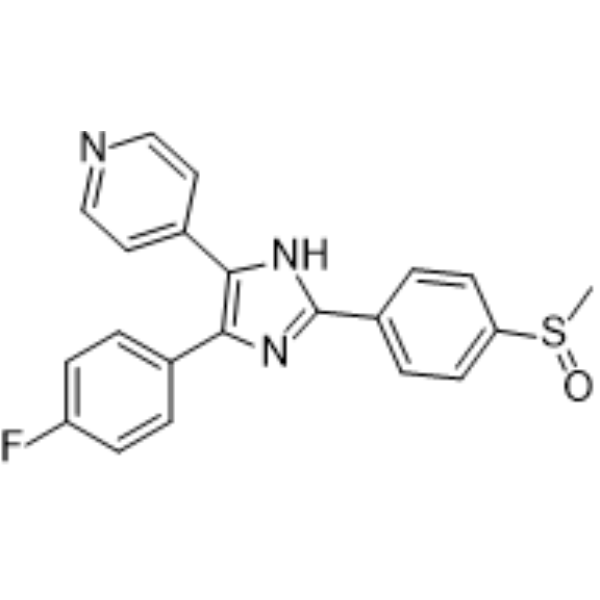
HY-10256
Adezmapimodp38 MAPK Inhibitor -
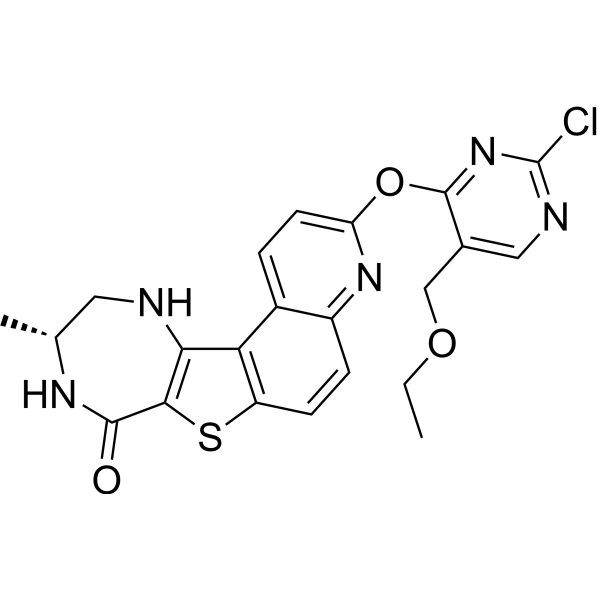
HY-139504
GamcemetinibMK2 Inhibitor -
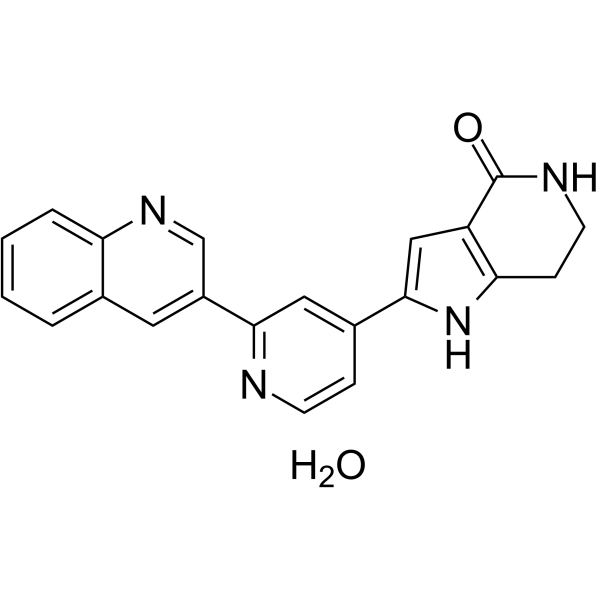
HY-112457
MK2-IN-3 hydrateMK-2 Inhibitor -
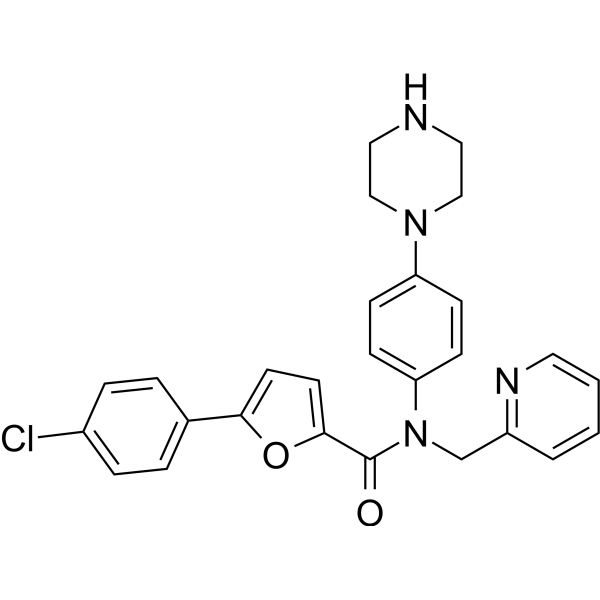
HY-12834
MK2-IN-1MAPKAPK2 Inhibitor -
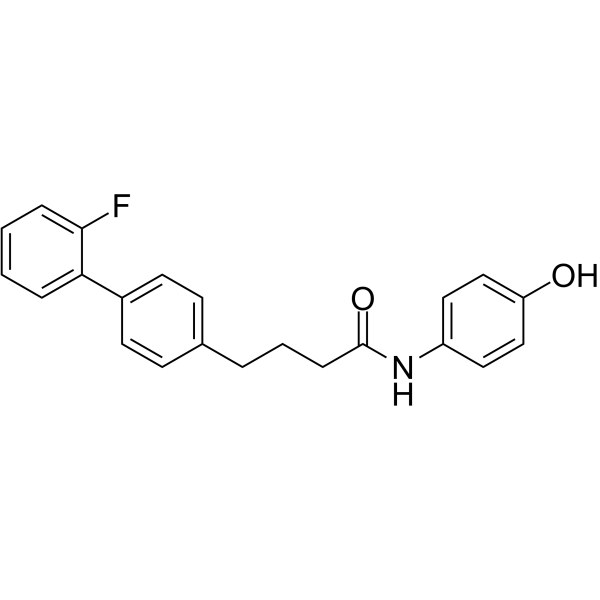
HY-108643
CMPD1MK2 Inhibitor -
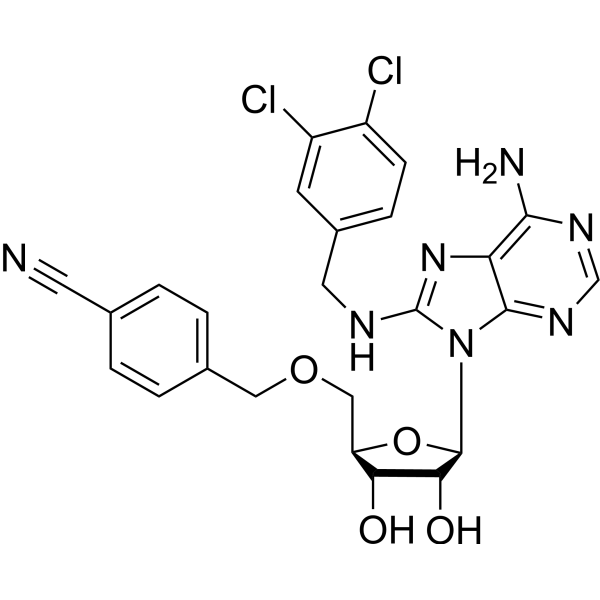
HY-10941
VER-155008Hsp70 Inhibitor -
HY-15205
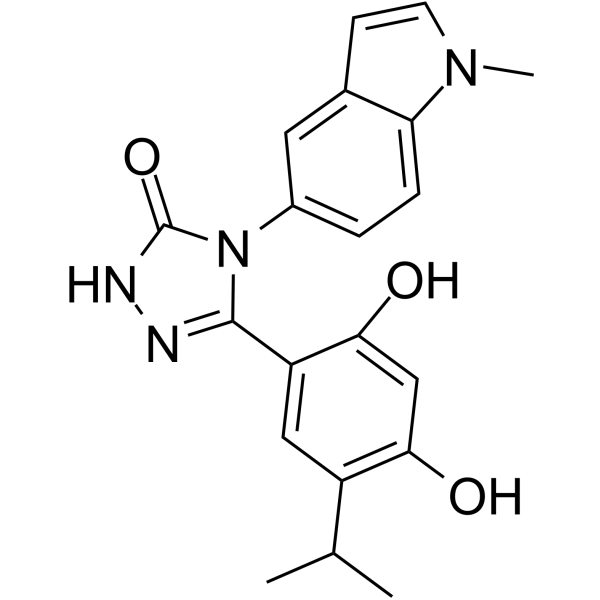
GanetespibHSP90 Inhibitor -

HY-139553
ZunsemetinibMK2 Pathway Inhibitor -
HY-19356
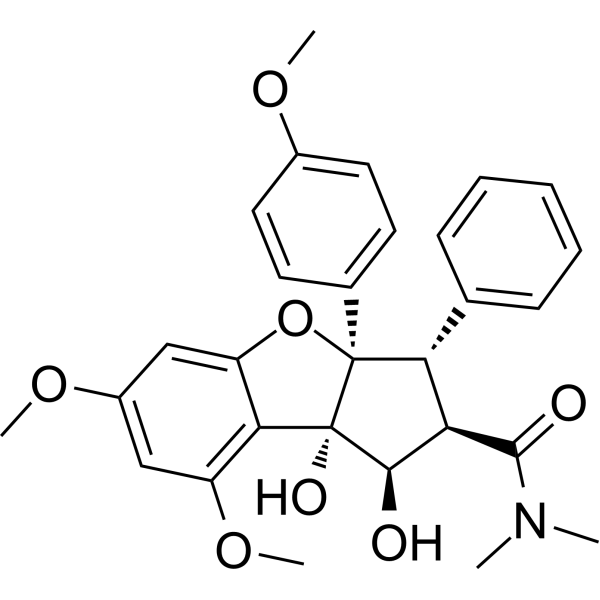
RocaglamideNF-κB Inhibitor -
HY-112389
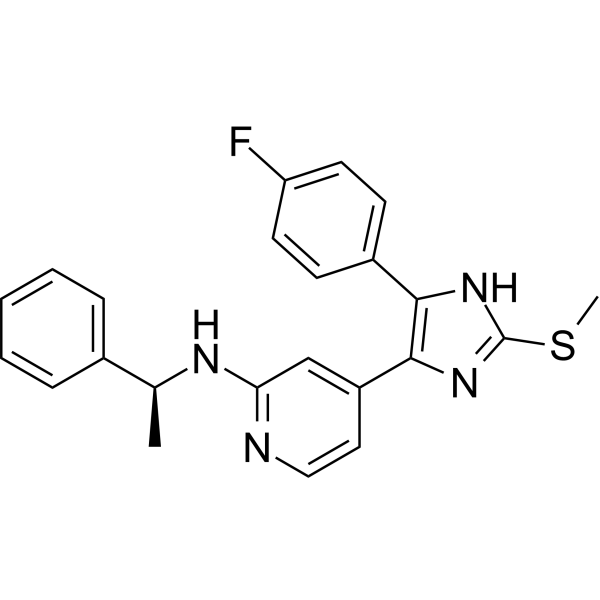
p38 MAP Kinase Inhibitor IIIp38 MAPK Inhibitor
Publications Citing Use of MedChemExpress (MCE) MK2-IN-1 hydrochloride
More

Biological Activity
Description
In Vitro
MK2-IN-1 (purchased from MCE; 5 μM; 0.5-8 h) hydrochloride gradually increases Tfcp2l1 protein level without a change in the Tfcp2l1 transcript level within 2 h[2].
MK2-IN-1 hydrochloride induces more alkaline phosphatase (AP)-positive colonies than the other factors in a short time[2].
MedChemExpress (MCE) has not independently confirmed the accuracy of these methods. They are for reference only. Further protocols information, click here.
-
Cell Line:46C mouse embryonic stem cells (mESCs)
-
Concentration:5 μM
-
Incubation Time:0.5, 1, 2, 8 h
-
Result:The Tfcp2l1 protein level gradually increased without a change in the Tfcp2l1 transcript level within 2 h.


Chemical Information
-
CAS No. 1314118-94-9
-
Appearance Solid
-
Molecular Weight 509.43
-
Formula C27H26Cl2N4O2
-
Color Light yellow to pink
-
SMILES
O=C(C1=CC=C(C2=CC=C(Cl)C=C2)O1)N(C3=CC=C(N4CCNCC4)C=C3)CC5=NC=CC=C5.[H]Cl
-
Shipping
Room temperature in continental US; may vary elsewhere.
-
Storage
4°C, stored under nitrogen
* In solvent : -80°C, 2 years; -20°C, 1 year (stored under nitrogen)


Publications (6)
-
Journal Impact Factor
-
Most Recent
-
-
Cell Death Dis
Quantitative analysis of phosphoproteome in necroptosis reveals a role of TRIM28 phosphorylation in promoting necroptosis-induced cytokine production. [Abstract]2021 Oct 23;12(11):994. PMID: 34689152 -
Cell Rep
MK2 promotes Tfcp2l1 degradation via β-TrCP ubiquitin ligase to regulate mouse embryonic stem cell self-renewal. [Abstract]2021 Nov 2;37(5):109949. PMID: 34731635 -
J Pharmacol Exp Ther
Clinically Advanced p38 Inhibitors Suppress DUX4 Expression in Cellular and Animal Models of Facioscapulohumeral Muscular Dystrophy. [Abstract]2019 Aug;370(2):219-230. PMID: 31189728 -
Biol Pharm Bull
Stress Response Kinase MK2 Induces Non-canonical Activation of EphA2 in EML4-ALK Lung Cancer Cells. [Abstract]2025;48(2):172-176. PMID: 40024717 -


Solvent & Solubility
In Vitro:
H2O : ≥ 100 mg/mL (196.30 mM)
DMSO : 100 mg/mL (196.30 mM; Need ultrasonic; Hygroscopic DMSO has a significant impact on the solubility of product, please use newly opened DMSO)
* "≥" means soluble, but saturation unknown.
Please refer to the solubility information to select the appropriate solvent. Once prepared, please aliquot and store the solution to prevent product inactivation from repeated freeze-thaw cycles.
Storage method and period of stock solution: -80°C, 2 years; -20°C, 1 year (stored under nitrogen). When stored at -80°C, please use it within 2 years. When stored at -20°C, please use it within 1 year.
* Note: If you choose water as the stock solution, please dilute it to the working solution, then filter and sterilize it with a 0.22 μm filter before use.
Please refer to the solubility information to select the appropriate solvent. Once prepared, please aliquot and store the solution to prevent product inactivation from repeated freeze-thaw cycles.
Storage method and period of stock solution: -80°C, 2 years; -20°C, 1 year (stored under nitrogen). When stored at -80°C, please use it within 2 years. When stored at -20°C, please use it within 1 year.
* Note: If you choose water as the stock solution, please dilute it to the working solution, then filter and sterilize it with a 0.22 μm filter before use.
Concentration (start) × Volume (start) = Concentration (final) × Volume (final)
In Vivo:
Select the appropriate dissolution method based on your experimental animal and administration route.
- For the following dissolution methods, please ensure to first prepare a clear stock solution using an In Vitro approach and then sequentially add co-solvents:
- To ensure reliable experimental results, the clarified stock solution can be appropriately stored based on storage conditions. As for the working solution for In Vivo experiments, it is recommended to prepare freshly and use it on the same day.
- The percentages shown for the solvents indicate their volumetric ratio in the final prepared solution. If precipitation or phase separation occurs during preparation, heat and/or sonication can be used to aid dissolution.
Add each solvent one by one: 10% DMSO 40% PEG300 5% Tween-80 45% Saline
Solubility: ≥ 1.67 mg/mL (3.28 mM); Clear solution
This protocol yields a clear solution of ≥ 1.67 mg/mL (saturation unknown).
Taking 1 mL working solution as an example, add 100 μL DMSO stock solution (16.7 mg/mL) to 400 μL PEG300, and mix evenly; then add 50 μL Tween-80 and mix evenly; then add 450 μL Saline to adjust the volume to 1 mL.
Preparation of Saline: Dissolve 0.9 g sodium chloride in ddH₂O and dilute to 100 mL to obtain a clear Saline solution.
Add each solvent one by one: 10% DMSO 90% (20% SBE-β-CD in Saline)
Solubility: ≥ 1.67 mg/mL (3.28 mM); Clear solution
This protocol yields a clear solution of ≥ 1.67 mg/mL (saturation unknown).
Taking 1 mL working solution as an example, add 100 μL DMSO stock solution (16.7 mg/mL) to 900 μL 20% SBE-β-CD in Saline, and mix evenly.
Preparation of 20% SBE-β-CD in Saline (4°C, storage for one week): 2 g SBE-β-CD powder is dissolved in 10 mL Saline, completely dissolve until clear.
In Vivo Dissolution Calculator
Please enter the basic information of animal experiments:
-
-
-
-
Recommended: Prepare an additional quantity of animals to account for potential losses during experiments.
Working solution concentration: 0.22 mg/mL
This product has good water solubility, please refer to the measured solubility data in water/PBS/Saline for details.

Protocols
-
Kinase activity and phosphorylation assays
Kinase activity assays measure the ability of kinases to transfer phosphate groups from ATP to specific substrates, while phosphorylation assays detect the presence and levels of phosphorylated proteins. Common methods include radiolabeled ATP incorporation (e. g. ,), ADP release detection via bioluminescence (e. g. ,[3]), enzyme-linked immunosorbent assays (ELISA) for phospho-specific epitopes (e. g. ,[6]), and microtiter-based formats for high-throughput screening (e. g. ,[8]). The ADP-Glo assay quantifies kinase activity by measuring ADP produced during phosphorylation using a luciferase-based system. Radiometric assays involve autoradiography or scintillation counting after incorporation of 32P-labeled ATP into substrate proteins. ELISA-based approaches rely on phospho-specific antibodies to detect activated kinases in cell lysates or purified samples.
-
Western Blot
Western blotting (WB) is a commonly used experimental method in molecular biology, biochemistry, and immunogenetics for identifying and quantifying target proteins. It combines gel electrophoresis with immunoassay, enabling researchers to analyze protein expression, post-translational modifications, and molecular weight.
-
Cell Cytotoxicity Assay
Cytotoxicity assays are usually based on the assessment of cell membrane damage, which can also be indirectly detected by measuring cell viability. Detection methods include MTT assay, CKK-8 assay, LDH assay and ATP assay, etc.
-
Protocol for Kinase activity and phosphorylation assays
Kinase activity assays measure transfer of phosphate from ATP to a protein or peptide substrate, generating phosphorylated substrate, ADP, or incorporated radiolabeled phosphate as the readout; phosphorylation assays measure site-specific phosphorylation in cells or tissues as a proxy for kinase-pathway activation, inhibition, or substrate regulation. Phosphorylation can be detected by phospho-specific Western blot, immunoprecipitation kinase assay, phospho-immunofluorescence, phospho-flow cytometry, luminescent ADP detection, radiolabeled ATP incorporation, or reporter-based pathway assays, and these readouts can be applied to cancer cells, primary neurons, mouse tumors, organoids, inflammatory macrophages, ferroptosis studies, and mitophagy studies when the kinase target is biologically relevant.


Purity & Documentation
-
Data Sheet (278 KB)
-
SDS (393 KB)
- English - EN (393 KB)
- Français - FR (393 KB)
- Deutsch - DE (393 KB)
- Norwegian - NO (393 KB)
- Español - ES (393 KB)
- Swedish - SV (393 KB)
- Italian - IT (393 KB)
- Korean - KR (393 KB)
- Portuguese - PT (393 KB)
-
Handling Instructions (2659 KB)
References
[1]. Rao AU, et al. Facile synthesis of tetracyclic azepine and oxazocine derivatives and their potential as MAPKAP-K2 (MK2) inhibitors. Bioorg Med Chem Lett. 2012 Jan 15;22(2):1068-72. [Content Brief]
[2]. Huang X, et al. A three-step protocol for lead optimization: quick identification of key conformational features and functional groups in the SAR studies of non-ATP competitive MK2 (MAPKAPK2) inhibitors. Bioorg Med Chem Lett. 2012 Jan 1;22(1):65-70. [Content Brief]
[3]. Huang X, et al. Discovery and Hit-to-Lead Optimization of Non-ATP Competitive MK2 (MAPKAPK2) Inhibitors. ACS Med Chem Lett. 2011 Jun 24;2(8):632-7. [Content Brief]
[4]. Yan Zhang, et al. MK2 promotes Tfcp2l1 degradation via β-TrCP ubiquitin ligase to regulate mouse embryonic stem cell self-renewal. Cell Rep. 2021 Nov 2;37(5):109949. [Content Brief]


Complete Stock Solution Preparation Table
Please refer to the solubility information to select the appropriate solvent. Once prepared, please aliquot and store the solution to prevent product inactivation from repeated freeze-thaw cycles.
Storage method and period of stock solution: -80°C, 2 years; -20°C, 1 year (stored under nitrogen). When stored at -80°C, please use it within 2 years. When stored at -20°C, please use it within 1 year.
| Optional Solvent | Concentration Solvent Mass | 1 mg | 5 mg | 10 mg | 25 mg |
|---|---|---|---|---|---|
| H2O / DMSO | 1 mM | 1.9630 mL | 9.8149 mL | 19.6298 mL | 49.0745 mL |
| 5 mM | 0.3926 mL | 1.9630 mL | 3.9260 mL | 9.8149 mL | |
| 10 mM | 0.1963 mL | 0.9815 mL | 1.9630 mL | 4.9074 mL | |
| 15 mM | 0.1309 mL | 0.6543 mL | 1.3087 mL | 3.2716 mL | |
| 20 mM | 0.0981 mL | 0.4907 mL | 0.9815 mL | 2.4537 mL | |
| 25 mM | 0.0785 mL | 0.3926 mL | 0.7852 mL | 1.9630 mL | |
| 30 mM | 0.0654 mL | 0.3272 mL | 0.6543 mL | 1.6358 mL | |
| 40 mM | 0.0491 mL | 0.2454 mL | 0.4907 mL | 1.2269 mL | |
| 50 mM | 0.0393 mL | 0.1963 mL | 0.3926 mL | 0.9815 mL | |
| 60 mM | 0.0327 mL | 0.1636 mL | 0.3272 mL | 0.8179 mL | |
| 80 mM | 0.0245 mL | 0.1227 mL | 0.2454 mL | 0.6134 mL | |
| 100 mM | 0.0196 mL | 0.0981 mL | 0.1963 mL | 0.4907 mL |
* Note: If you choose water as the stock solution, please dilute it to the working solution, then filter and sterilize it with a 0.22 μm filter before use.


MK2-IN-1 hydrochloride Related Classifications
HY-12834A Related Classifications
 Powered by Bioz