



INCB 3284
Based on 2 publication(s) in Google Scholar
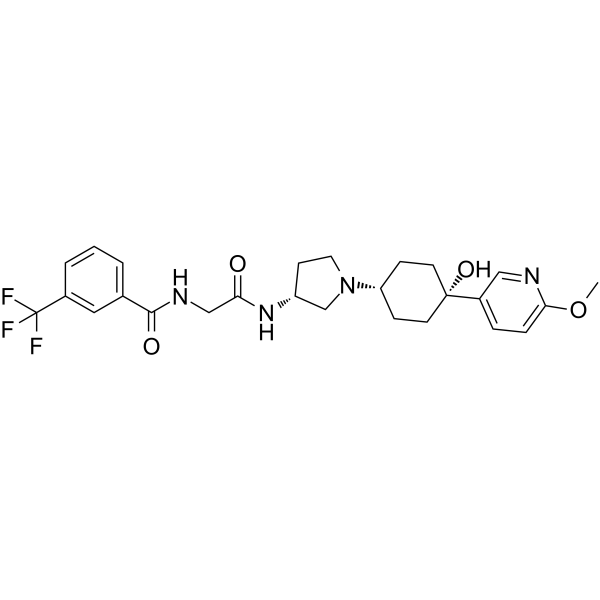
INCB 3284 is a potent, selective and orally bioavailable human CCR2 antagonist, inhibiting monocyte chemoattractant protein-1 binding to hCCR2, with an IC50 of 3.7 nM. INCB 3284 can be used in the research of acute liver failure.
For research use only. We do not sell to patients.
- Purity : 99.30%
- CAS No.: 887401-92-5
- Formula: C26H31F3N4O4
- Molecular Weight:520.54
-
Storage:Powder -20°C, 3 years , 4°C, 2 years ; In solvent -80°C, 2 years , -20°C, 1 year

To place orders, for customer services and technical support, please contact: MedChemExpress USA
Tel: 609-228-6898 E-mail: [email protected] [email protected]


-
 Biological Activity
-
Chemical Information
-
Solvent & Solubility
- Purity & Documentation
- References
-
 Help & FAQs


-
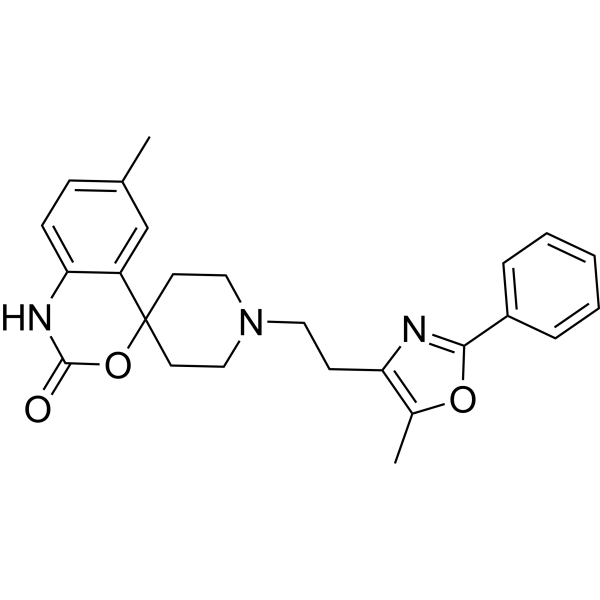
HY-15418
RS 504393CCR2 Antagonist -
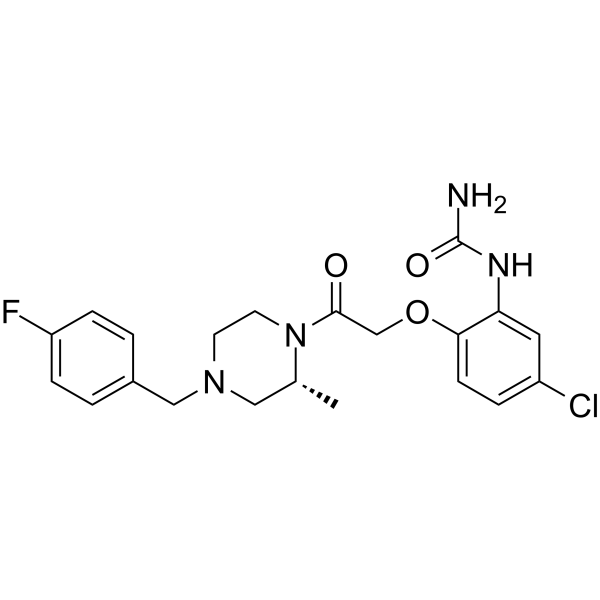
HY-12080
BX471CCR1 Antagonist -
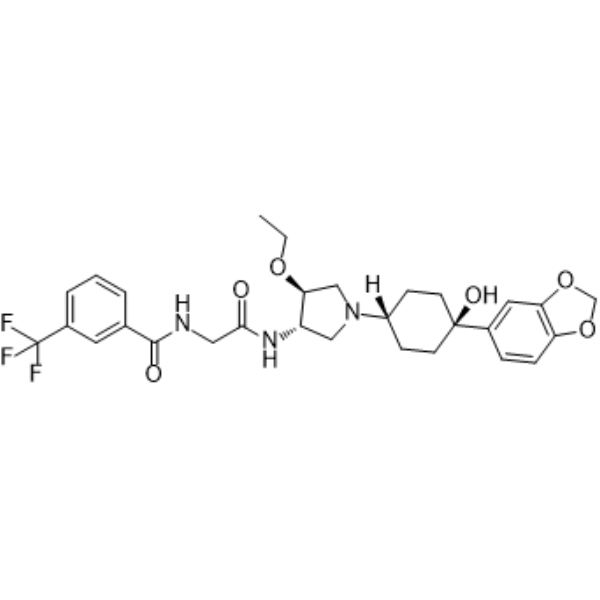
HY-50674
INCB3344CCR2 Antagonis -
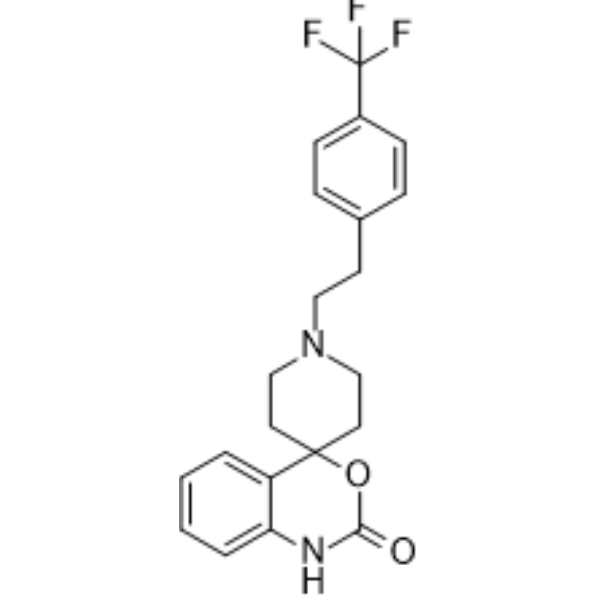
HY-18611A
AbaucinCCR Antagonist -
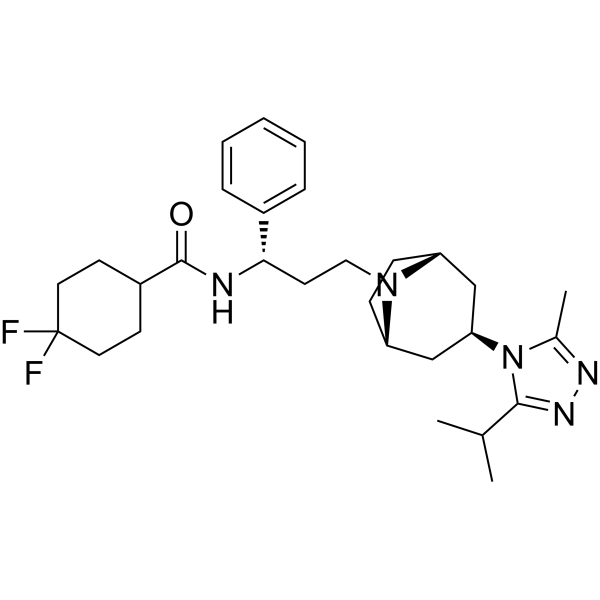
HY-13004
MaravirocCCR5 Antagonist -
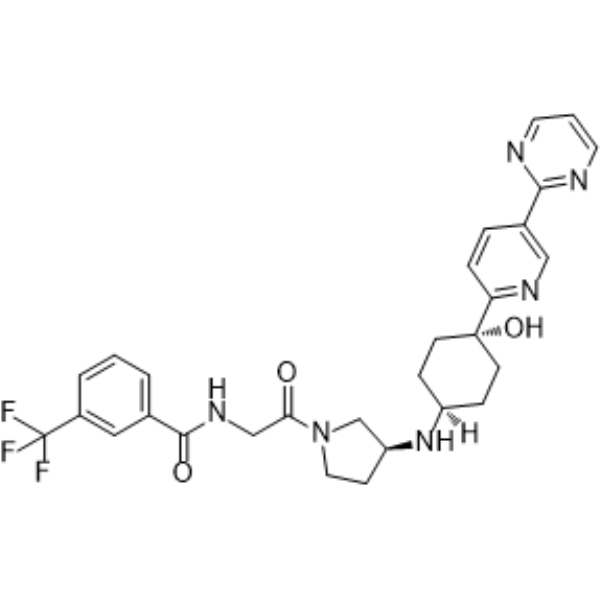
HY-13245
PF-4136309CCR2 Antagonist -
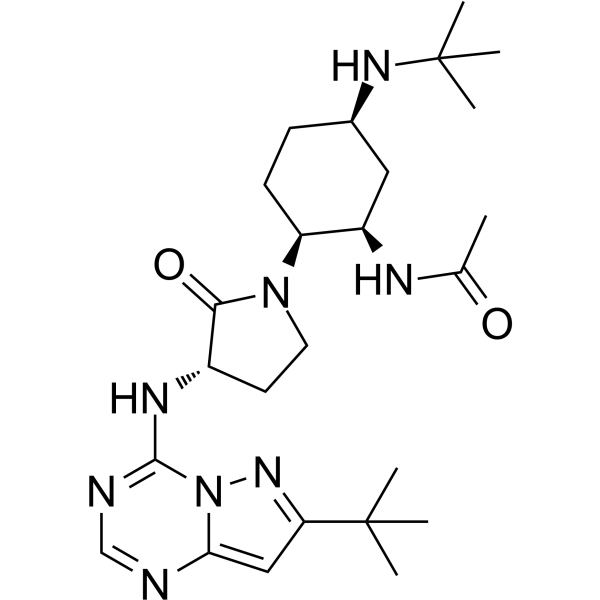
HY-109593
BMS-813160CCR2/CCR5 Antagonist -
![CCR2-RA-[R]](https://file.medchemexpress.com/product_pic/hy-50081.gif)
HY-50081
CCR2-RA-[R]CCR Antagonist -
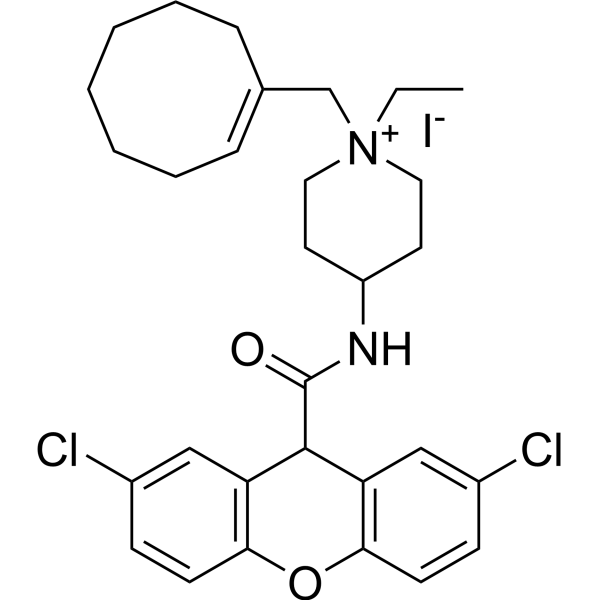
HY-103360
J-113863CCR1 Antagonist -
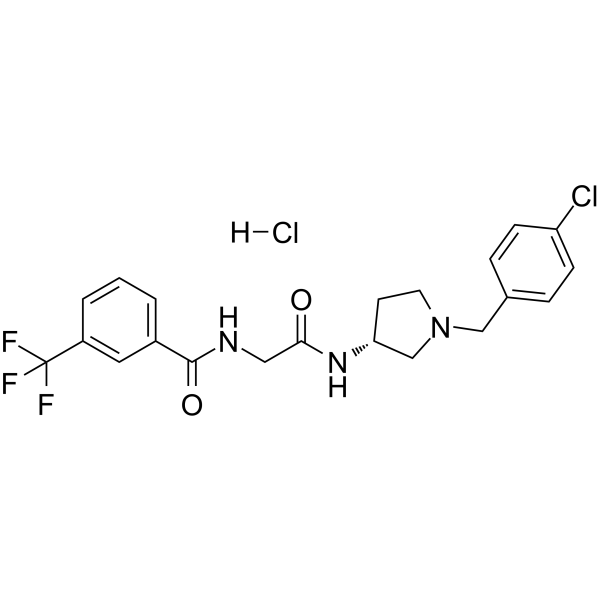
HY-103362
CCR2 antagonist 4 hydrochlorideCCR2b Antagonist -
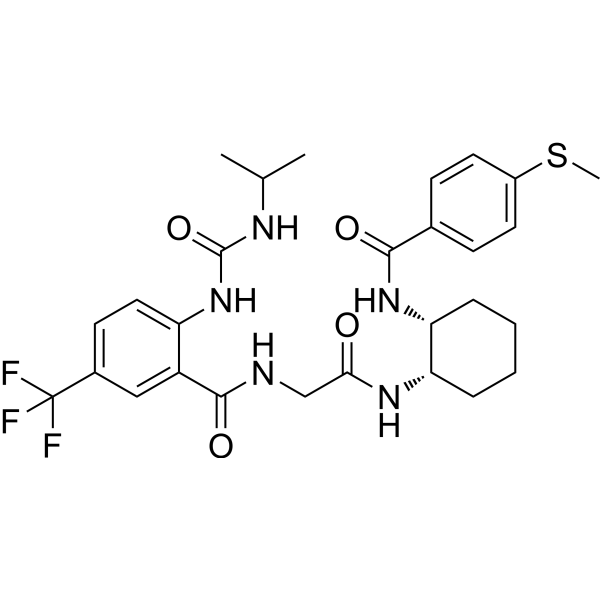
HY-101908
BMS CCR2 22CCR2 Antagonist -
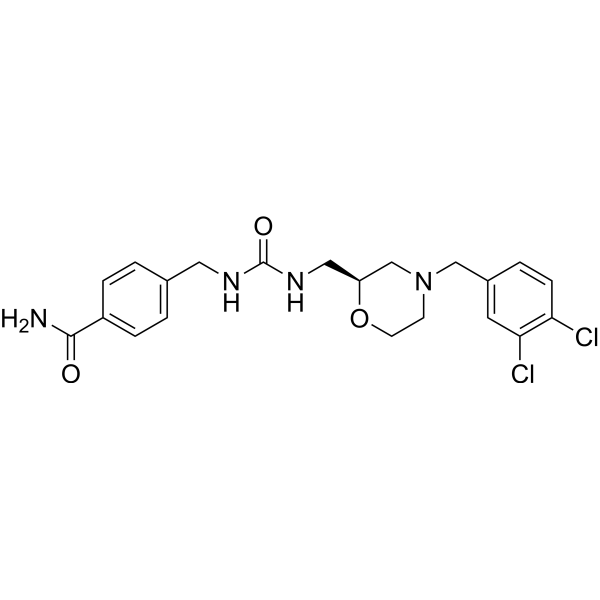
HY-107051
GW 766994CCR3 Antagonist
Publications Citing Use of MedChemExpress (MCE) INCB 3284
More

Biological Activity
Description
IC50 & Target
[1]|
MCP-1-hCCR2 3.7 nM (IC50) |
In Vitro
INCB 3284 is a pentent, selective and orally bioavailable human CCR2 antagonist, inhibiting monocyte chemoattractant protein-1 binding to hCCR2, with an IC50 of 3.7 nM. INCB 3284 also causes an IC50 of 4.7 nM in antagonism of chemotaxis activity, an IC50 of 84 μM in inhibition of the hERG potassium current. However, INCB 3284 has no effec on CCR1, CCR3, CCR5, CXCR3, and CXCR5, or additional GPCRs at a concentration of 1 μM. Moreover, INCB 3284 potently inhibits CCR2-mediated signaling events such as intracellular calcium mobilization and ERK phosphorylation with IC50 values of 6 and 2.6 nM, respectively[1].
MedChemExpress (MCE) has not independently confirmed the accuracy of these methods. They are for reference only.
In Vivo
MedChemExpress (MCE) has not independently confirmed the accuracy of these methods. They are for reference only.


Chemical Information
-
CAS No. 887401-92-5
-
Appearance Solid
-
Molecular Weight 520.54
-
Formula C26H31F3N4O4
-
Color Off-white to yellow
-
SMILES
O=C(NCC(N[C@H]1CN([C@H]2CC[C@@](C3=CC=C(OC)N=C3)(O)CC2)CC1)=O)C4=CC=CC(C(F)(F)F)=C4
-
Shipping
Room temperature in continental US; may vary elsewhere.
-
Storage
Powder -20°C 3 years 4°C 2 years In solvent -80°C 2 years -20°C 1 year


Publications (2)
-
Journal Impact Factor
-
Most Recent
-
Acta Pharm Sin B
Choroid plexus CCL2‒CCR2 signaling orchestrates macrophage recruitment and cerebrospinal fluid hypersecretion in hydrocephalus. [Abstract]2024 Oct;14(10):4544-4559. PMID: 39525574 -
Cell Commun Signal
Targeting CCL2-CCR2 signaling pathway alleviates macrophage dysfunction in COPD via PI3K-AKT axis. [Abstract]2024 Jul 17;22(1):364. PMID: 39014433


Solvent & Solubility
In Vitro:
DMSO : ≥ 83.3 mg/mL (160.03 mM; Hygroscopic DMSO has a significant impact on the solubility of product, please use newly opened DMSO)
H2O : < 0.1 mg/mL (insoluble)
* "≥" means soluble, but saturation unknown.
Please refer to the solubility information to select the appropriate solvent. Once prepared, please aliquot and store the solution to prevent product inactivation from repeated freeze-thaw cycles.
Storage method and period of stock solution: -80°C, 2 years; -20°C, 1 year. When stored at -80°C, please use it within 2 years. When stored at -20°C, please use it within 1 year.
Please refer to the solubility information to select the appropriate solvent. Once prepared, please aliquot and store the solution to prevent product inactivation from repeated freeze-thaw cycles.
Storage method and period of stock solution: -80°C, 2 years; -20°C, 1 year. When stored at -80°C, please use it within 2 years. When stored at -20°C, please use it within 1 year.
Concentration (start) × Volume (start) = Concentration (final) × Volume (final)
In Vivo:
Select the appropriate dissolution method based on your experimental animal and administration route.
- For the following dissolution methods, please ensure to first prepare a clear stock solution using an In Vitro approach and then sequentially add co-solvents:
- To ensure reliable experimental results, the clarified stock solution can be appropriately stored based on storage conditions. As for the working solution for In Vivo experiments, it is recommended to prepare freshly and use it on the same day.
- The percentages shown for the solvents indicate their volumetric ratio in the final prepared solution. If precipitation or phase separation occurs during preparation, heat and/or sonication can be used to aid dissolution.
Add each solvent one by one: 10% DMSO 40% PEG300 5% Tween-80 45% Saline
Solubility: ≥ 2.5 mg/mL (4.80 mM); Clear solution
This protocol yields a clear solution of ≥ 2.5 mg/mL (saturation unknown).
Taking 1 mL working solution as an example, add 100 μL DMSO stock solution (25.0 mg/mL) to 400 μL PEG300, and mix evenly; then add 50 μL Tween-80 and mix evenly; then add 450 μL Saline to adjust the volume to 1 mL.
Preparation of Saline: Dissolve 0.9 g sodium chloride in ddH₂O and dilute to 100 mL to obtain a clear Saline solution.
Add each solvent one by one: 10% DMSO 90% (20% SBE-β-CD in Saline)
Solubility: ≥ 2.5 mg/mL (4.80 mM); Clear solution
This protocol yields a clear solution of ≥ 2.5 mg/mL (saturation unknown).
Taking 1 mL working solution as an example, add 100 μL DMSO stock solution (25.0 mg/mL) to 900 μL 20% SBE-β-CD in Saline, and mix evenly.
Preparation of 20% SBE-β-CD in Saline (4°C, storage for one week): 2 g SBE-β-CD powder is dissolved in 10 mL Saline, completely dissolve until clear.
In Vivo Dissolution Calculator
Please enter the basic information of animal experiments:
-
-
-
-
Recommended: Prepare an additional quantity of animals to account for potential losses during experiments.
Please enter your animal formula composition:
-
%DMSO +
Recommended: Keep the proportion of DMSO in working solution below 2% if your animal is weak.
-
%+
-
+%Tween-80 + +
-
%Saline +
The co-solvents required include: DMSO, . All of co-solvents are available by MedChemExpress (MCE). , Tween 80. All of co-solvents are available by MedChemExpress (MCE).
Working solution concentration: 0.22 mg/mL
Method for preparing stock solution: mg drug dissolved in μL DMSO. Stock solution concentration: mg/mL.
1. Take μL DMSO stock solution;
2. Add μL .
μL , mix evenly;
3. Then add μL Tween 80, mix evenly;
4. Then add μL
Please ensure that the stock solution in the first step is dissolved to a clear state, and add co-solvents in sequence. You can use ultrasonic heating (ultrasonic cleaner, recommended frequency 20-40 kHz), vortexing, etc. to assist dissolution.


Purity & Documentation
-
Data Sheet (273 KB)
-
SDS (393 KB)
- English - EN (393 KB)
- Français - FR (393 KB)
- Deutsch - DE (393 KB)
- Norwegian - NO (393 KB)
- Español - ES (393 KB)
- Swedish - SV (393 KB)
- Italian - IT (393 KB)
- Korean - KR (393 KB)
- Portuguese - PT (393 KB)
-
Handling Instructions (2659 KB)
References
[1]. Xue CB, et al. Discovery of INCB3284, a Potent, Selective, and Orally Bioavailable hCCR2 Antagonist. ACS Med Chem Lett. 2011 Mar 31;2(6):450-4. [Content Brief]
[2]. McMillin M, et al. Neuronal CCL2 is upregulated during hepatic encephalopathy and contributes to microglia activation and neurological decline. J Neuroinflammation. 2014 Jul 10;11:121. [Content Brief]


Complete Stock Solution Preparation Table
Please refer to the solubility information to select the appropriate solvent. Once prepared, please aliquot and store the solution to prevent product inactivation from repeated freeze-thaw cycles.
Storage method and period of stock solution: -80°C, 2 years; -20°C, 1 year. When stored at -80°C, please use it within 2 years. When stored at -20°C, please use it within 1 year.
| Optional Solvent | Concentration Solvent Mass | 1 mg | 5 mg | 10 mg | 25 mg |
|---|---|---|---|---|---|
| DMSO | 1 mM | 1.9211 mL | 9.6054 mL | 19.2108 mL | 48.0271 mL |
| 5 mM | 0.3842 mL | 1.9211 mL | 3.8422 mL | 9.6054 mL | |
| 10 mM | 0.1921 mL | 0.9605 mL | 1.9211 mL | 4.8027 mL | |
| 15 mM | 0.1281 mL | 0.6404 mL | 1.2807 mL | 3.2018 mL | |
| 20 mM | 0.0961 mL | 0.4803 mL | 0.9605 mL | 2.4014 mL | |
| 25 mM | 0.0768 mL | 0.3842 mL | 0.7684 mL | 1.9211 mL | |
| 30 mM | 0.0640 mL | 0.3202 mL | 0.6404 mL | 1.6009 mL | |
| 40 mM | 0.0480 mL | 0.2401 mL | 0.4803 mL | 1.2007 mL | |
| 50 mM | 0.0384 mL | 0.1921 mL | 0.3842 mL | 0.9605 mL | |
| 60 mM | 0.0320 mL | 0.1601 mL | 0.3202 mL | 0.8005 mL | |
| 80 mM | 0.0240 mL | 0.1201 mL | 0.2401 mL | 0.6003 mL | |
| 100 mM | 0.0192 mL | 0.0961 mL | 0.1921 mL | 0.4803 mL |


INCB 3284 Related Classifications
HY-15450A Related Classifications
 Powered by Bioz