



MICU1 Antibody (YA5426)
(Synonyms: Calcium uptake protein 1, mitochondrial; Atopy-related autoantigen CALC; ara CALC; Calcium-binding atopy-related autoantigen 1; allergen Hom s 4)
Based on 1 Customer Validation
MICU1 Antibody (YA5426) is a Mouse-derived and non-conjugated monoclonal antibody, targeting to MICU1.
-
Host:
Mouse
-
Application:
WB, ICC/IF, IHC-P
-
Reactivity :
Human, Mouse, Rat
-
Formulation:
Supplied in PBS, pH 7.4, containing 0.5%BSA, 0.02% sodium azide as Preservative and 50% Glycerol.
-
Conjugation:
Non-conjugated


To place orders, for customer services and technical support, please contact: MedChemExpress USA
Tel: 609-228-6898 E-mail: [email protected] [email protected]





Applications
| Application |
WB

WB: Western Blot
|
IHC-P
IHC-P: Immunohistochemistry-Paraffin
|
ICC/IF
ICC/IF: Immunocytochemistry/
Immunofluorescence |
|---|---|---|---|
| Dilution Ratio | 1:1000-2000 | 1:100-200 | 1:200 |


Product Details
MICU1 Antibody (YA5426) is a Mouse-derived and non-conjugated monoclonal antibody, targeting to MICU1.
-
Host Mouse

-
Clonality Monoclonal

-
Species ReactivityHuman, Mouse, Rat
-
Observed Molecular WeightObserved band size: 55 kDa
Note: Due to possible protein modifications or aggregation, the molecular weight should be confirmed by actual measurement, and the predicted value is for reference only.

Recombinant Protein of MICU1
affinity chromatography.
Non-conjugated
Unmodified


Product Properties
-
Appearance
Liquid
-
Formulation
Supplied in PBS, pH 7.4, containing 0.5%BSA, 0.02% sodium azide as Preservative and 50% Glycerol.
-
Concentration
Batch-dependent, Please check the COA for the concentration of each lot. Check Lot Concentration
-
Storage & Stability
Stored at -20°C for 1 year. Avoid repeated freeze / thaw cycles.
-
Shipping
Shipping with blue ice.


Verification Images
-
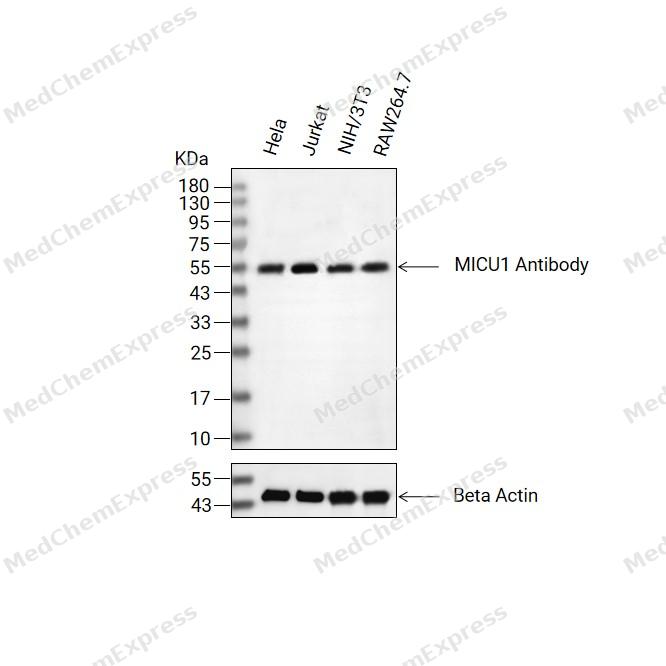 Western blot analysis of extracts from Hela(lane 2(20ug) , Jurkat(lane 3(20ug) and NIH/3T3(lane 4(20ug) , RAW264.7(lane 5(20ug) using MICU1 Antibody (HY-P85734) Mouse mAb. Proteins were transferred to a PVDF membrane and blocked with 5% non-fat milk in TBST for 2 hour at room temperature. The primary antibody (1/1000) and Loading control antibody (Beta Actin, HY-P83730, 1/10000) was used in 5% non-fat milk in TBST at 4°C overnight. Goat Anti-Mouse/Rabbit IgG-HRP Secondary Antibody (1/10000) was used for 1 hour at room temperature.
 -
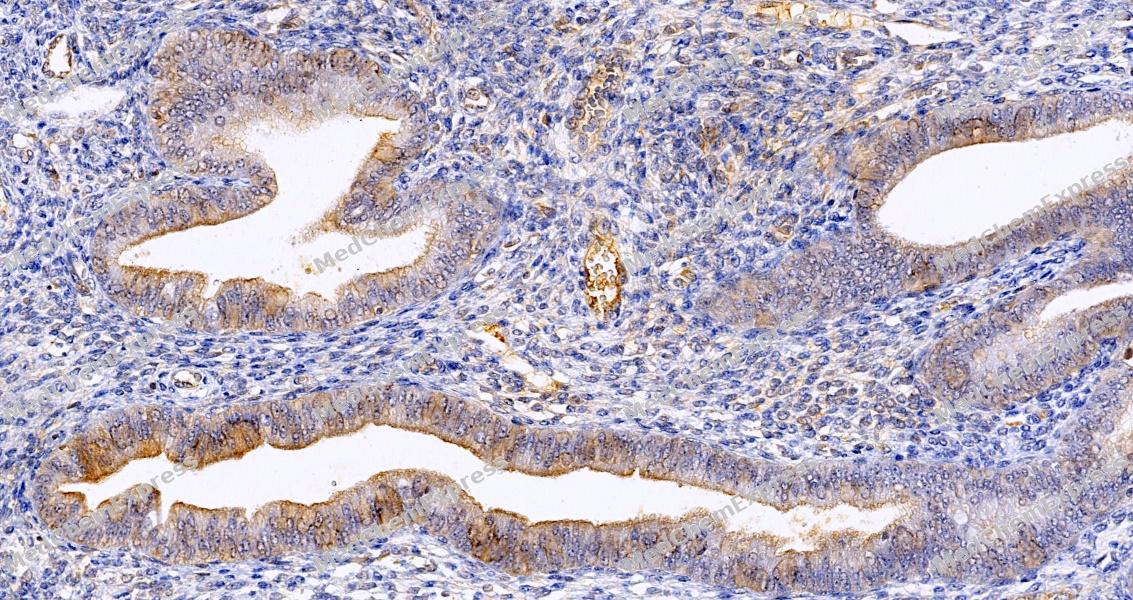 Immunohistochemical analysis of paraffin-embedded human endometrium tissue using MICU1 Antibody (HY-P85734, 1/200). The section was pretreated using heat mediated antigen retrieval with sodium citrate buffer (pH 6.0) for 8 minutes. The tissues were blocked with quick block buffer for 0.5 hours at room temperature, washed with PBS and PBST, and then incubated with the primary antibody overnight at 4℃. The detection was performed using an HRP conjugated compact polymer system. DAB was used as the chromogen. Tissues were counterstained with hematoxylin and mounted with DPX.
 -
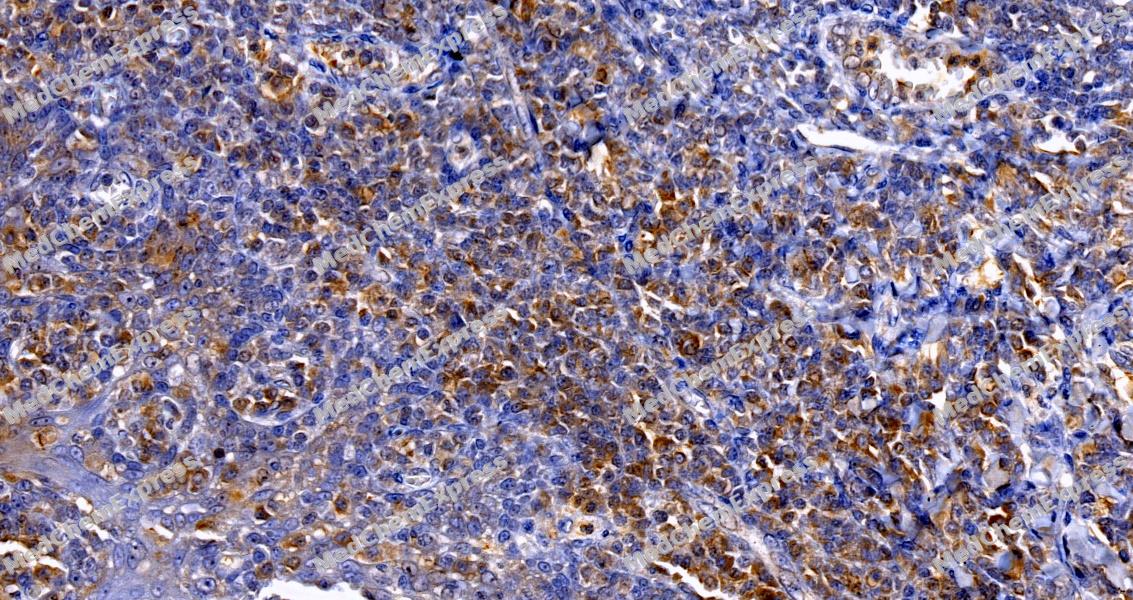 Immunohistochemical analysis of paraffin-embedded human tonsil tissue using MICU1 Antibody (HY-P85734, 1/200). The section was pretreated using heat mediated antigen retrieval with sodium citrate buffer (pH 6.0) for 8 minutes. The tissues were blocked with quick block buffer for 0.5 hours at room temperature, washed with PBS and PBST, and then incubated with the primary antibody overnight at 4℃. The detection was performed using an HRP conjugated compact polymer system. DAB was used as the chromogen. Tissues were counterstained with hematoxylin and mounted with DPX.
 -
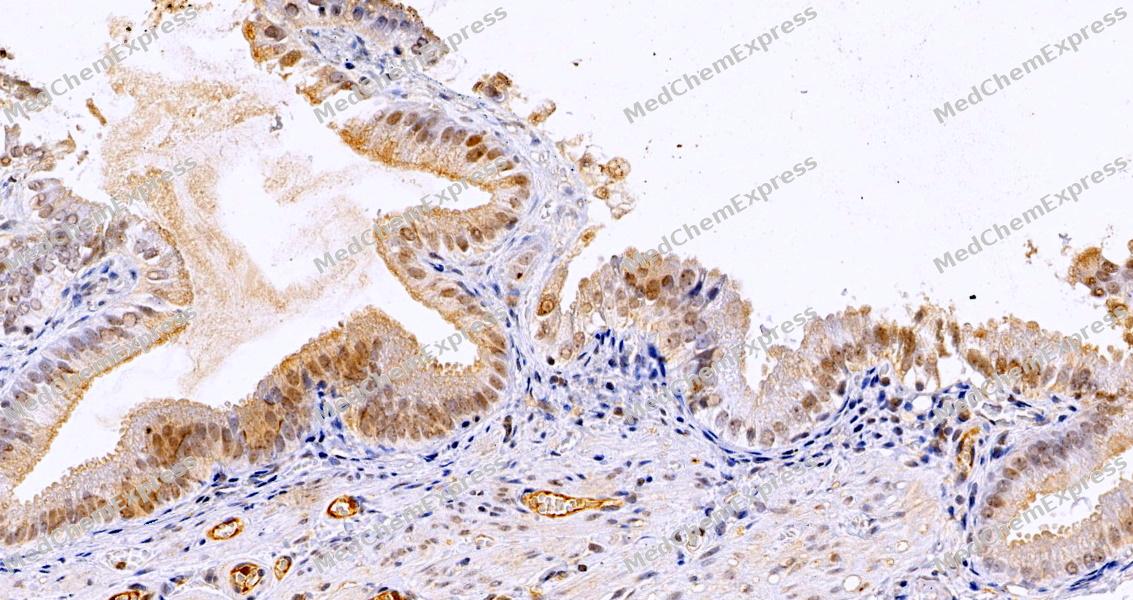 Immunohistochemical analysis of paraffin-embedded human gallbladder tissue using MICU1 Antibody (HY-P85734, 1/200). The section was pretreated using heat mediated antigen retrieval with sodium citrate buffer (pH 6.0) for 8 minutes. The tissues were blocked with quick block buffer for 0.5 hours at room temperature, washed with PBS and PBST, and then incubated with the primary antibody overnight at 4℃. The detection was performed using an HRP conjugated compact polymer system. DAB was used as the chromogen. Tissues were counterstained with hematoxylin and mounted with DPX.
 -
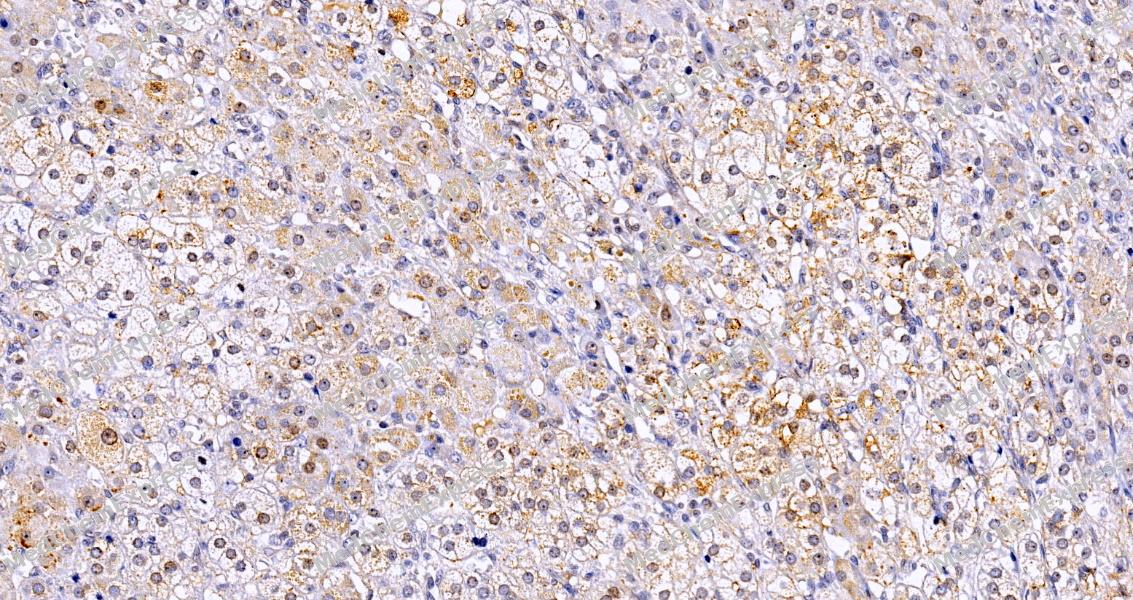 Immunohistochemical analysis of paraffin-embedded human adrenal gland tissue using MICU1 Antibody (HY-P85734, 1/200). The section was pretreated using heat mediated antigen retrieval with sodium citrate buffer (pH 6.0) for 8 minutes. The tissues were blocked with quick block buffer for 0.5 hours at room temperature, washed with PBS and PBST, and then incubated with the primary antibody overnight at 4℃. The detection was performed using an HRP conjugated compact polymer system. DAB was used as the chromogen. Tissues were counterstained with hematoxylin and mounted with DPX.
 -
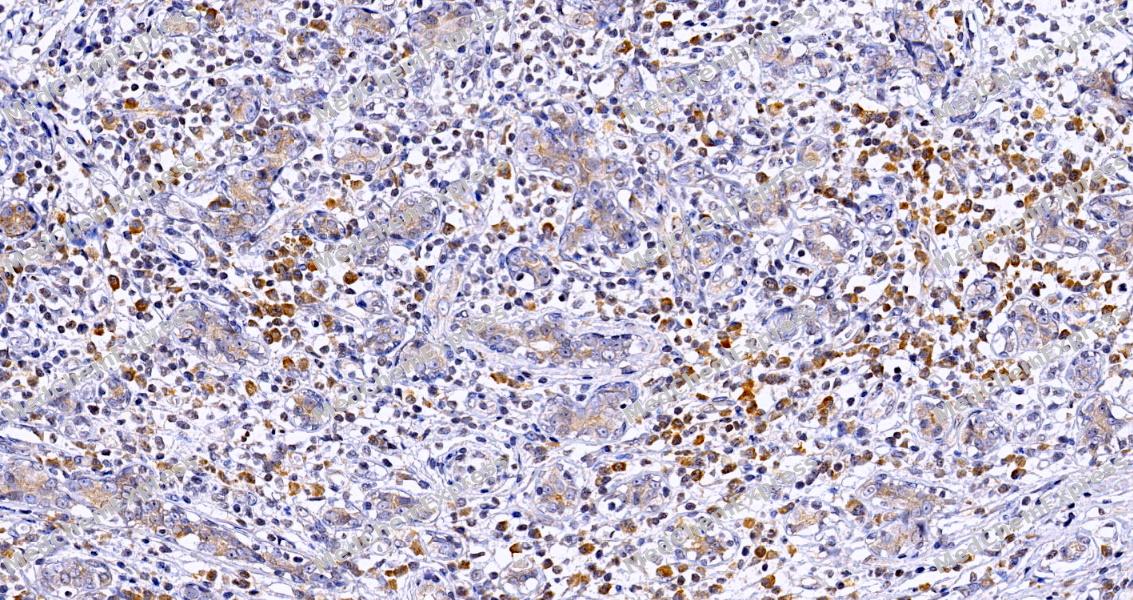 Immunohistochemical analysis of paraffin-embedded human breast tissue using MICU1 Antibody (HY-P85734, 1/200). The section was pretreated using heat mediated antigen retrieval with sodium citrate buffer (pH 6.0) for 8 minutes. The tissues were blocked with quick block buffer for 0.5 hours at room temperature, washed with PBS and PBST, and then incubated with the primary antibody overnight at 4℃. The detection was performed using an HRP conjugated compact polymer system. DAB was used as the chromogen. Tissues were counterstained with hematoxylin and mounted with DPX.
 -
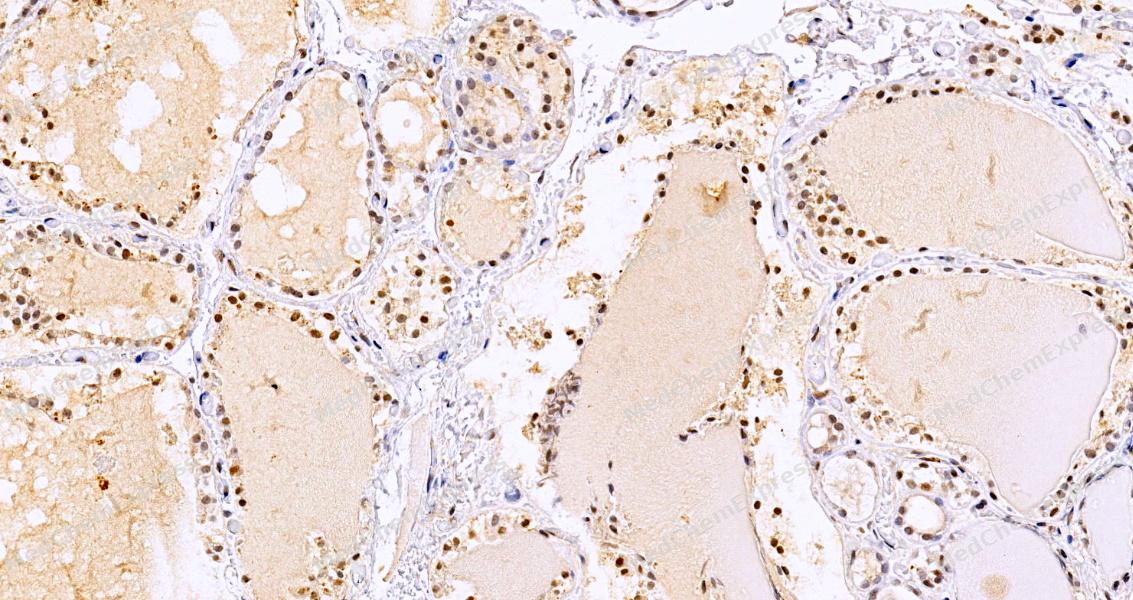 Immunohistochemical analysis of paraffin-embedded human thyroid gland tissue using MICU1 Antibody (HY-P85734, 1/200). The section was pretreated using heat mediated antigen retrieval with sodium citrate buffer (pH 6.0) for 8 minutes. The tissues were blocked with quick block buffer for 0.5 hours at room temperature, washed with PBS and PBST, and then incubated with the primary antibody overnight at 4℃. The detection was performed using an HRP conjugated compact polymer system. DAB was used as the chromogen. Tissues were counterstained with hematoxylin and mounted with DPX.
 -
 Immunocytochemistry analysis of A431 cells labeling MICU1 with MICU1 Antibody (HY-P85734) at 1/200 dilution. Cells were fixed in 4% paraformaldehyde for 15 minutes at room temperature, permeabilized with 0.1% Triton X-100 in PBS for 15 minutes at room temperature, then blocked with quick block buffer for 10 minutes at room temperature. Cells were then incubated with MICU1 Antibody (HY-P85734) at 1/200 dilution in quick block buffer overnight at 4 ℃.AF488-conjugated Goat Anti-Mouse IgG H&L (HY-P8005, Green) was used as the secondary antibody at 1/1,000 dilution. PBS instead of the primary antibody was used as the secondary antibody only control. The Nuclear counterstain was DAPI (Blue).
 -
 Immunocytochemistry analysis of Hela cells labeling MICU1 with MICU1 Antibody (HY-P85734) at 1/200 dilution. Cells were fixed in 4% paraformaldehyde for 15 minutes at room temperature, permeabilized with 0.1% Triton X-100 in PBS for 15 minutes at room temperature, then blocked with quick block buffer for 10 minutes at room temperature. Cells were then incubated with MICU1 Antibody (HY-P85734) at 1/200 dilution in quick block buffer overnight at 4 ℃.AF488-conjugated Goat Anti-Mouse IgG H&L (HY-P8005, Green) was used as the secondary antibody at 1/1,000 dilution. PBS instead of the primary antibody was used as the secondary antibody only control. The Nuclear counterstain was DAPI (Blue).


Background
-
Function
MICU1 is a Calcium sensor of the mitochondrial calcium uniporter (MCU) channel, which senses calcium level via its EF-hand domains. MICU1 and MICU2 (or MICU3) form a disulfide-linked heterodimer that stimulates and inhibits MCU activity, depending on the concentration of calcium. At low calcium levels, MICU1 occludes the pore of the MCU channel, preventing mitochondrial calcium uptake. At higher calcium levels, calcium-binding to MICU1 and MICU2 (or MICU3) induces a conformational change that weakens MCU-MICU1 interactions and moves the MICU1-MICU2 heterodimer away from the pore, allowing calcium permeation through the MCU channel. Also required to protect against manganese toxicity by preventing manganese uptake by MCU: mechanistically, manganese-binding to its EF-hand domains does not induce any conformational change, maintaining MCU pore occlusion. Also acts as a barrier for inhibitors of the MCU channel, such as ruthenium red or its derivative Ru360. Acts as a regulator of mitochondrial cristae structure independently of its ability to regulate the mitochondrial calcium uniporter channel. Regulates glucose-dependent insulin secretion in pancreatic beta-cells by regulating mitochondrial calcium uptake. Induces T-helper 1-mediated autoreactivity, which is accompanied by the release of IFNG; Isoform that regulates mitochondrial calcium uniporter (MCU) in the skeletal muscle. Compared to other isoforms, this isoform has higher affinity for calcium, promoting mitochondrial calcium uptake at lower calcium concentrations. This allows a rapid response of mitochondrial metabolism and ensures sustained ATP production needed for resistance and strenuous exercise[1][2][3][4][5][6][7][8][9][10][11][12][13][14][15][16][17][18][19][20][21][22][23][24][25][26][27][28][29].
-
Subcellular Localization
Mitochondrion intermembrane space; Mitochondrion inner membrane; Mitochondrion intermembrane space; Mitochondrion inner membrane
-
Expression
Tissue_specificity:Expressed in epithelial cell lines. Strongly expressed in epidermal keratinocytes and dermal endothelial cells -
Isoforms & Post-Translational Modification
Q9BPX6 has 6 isomers: Q9BPX6-1: 54351 Da (predicted); Q9BPX6-2: 45975 Da (predicted); Q9BPX6-3: 54582 Da (predicted); Q9BPX6-4: 32122 Da (predicted); Q9BPX6-5: 31931 Da (predicted); Q9BPX6-6: 54928 Da (predicted).
Phosphorylation at Ser-122 by AKT1 impairs its maturation and stability;Asymmetric dimethylation at Arg-455 by PRMT1 decreases the calcium sensitivity of MICU1 by promoting interaction with UCP2;Degraded by YME1L1 when not complexed as homodimer or heterodimer (PubMed:36206740). Not degraded when complexed as homodimer or heterodimer; the presence of the interchain disulfide bond protecting MICU1 from degradation by YME1L1 (PubMed:36206740) -
Subunit
Heterodimer; disulfide-linked; heterodimerizes with MICU2 or MICU3 (PubMed:24560927, PubMed:28615291, PubMed:31397067, PubMed:32148862, PubMed:32494073, PubMed:32790952). Homodimer; disulfide-linked (PubMed:36206740). Component of the uniplex complex, composed of MCU, EMRE/SMDT1, MICU1 and MICU2 (or MICU3) in a 4:4:1:1 stoichiometry (PubMed:21685886, PubMed:23101630, PubMed:23178883, PubMed:24231807, PubMed:24332854, PubMed:26341627, PubMed:26387864, PubMed:27099988, PubMed:32494073, PubMed:32667285, PubMed:32762847, PubMed:32862359). The composition of calcium sensors within the uniplex complex can differ depending on tissues: a MICU1 homodimer can be present instead of the MICU1-MICU2 heterodimer in skeletal-muscle and kidney (PubMed:36206740). MICU1 is recruited to the uniplex complex by EMRE/SMDT1, and it associates with MCU at low calcium levels, occluding the pore of the MCU channel (PubMed:30454562, PubMed:30638448, PubMed:32494073, PubMed:37036971, PubMed:37126688). Associates with the MICOS complex (PubMed:37098122). Interacts with SLC25A23 (PubMed:24430870). Interacts with CHCHD4/MIA40; which introduces the interchain disulfide bond with MICU2 (PubMed:26387864). Interacts (when methylated) with UCP2; leading to decrease the calcium sensitivity of MICU1 (PubMed:27642082)
-
SwissProt ID
-
Synonyms
Calcium uptake protein 1, mitochondrial; Atopy-related autoantigen CALC; ara CALC; Calcium-binding atopy-related autoantigen 1; allergen Hom s 4


Documentation
-
Data Sheet (235 KB)
-
SDS (252 KB)
- English - EN (252 KB)
- Français - FR (252 KB)
- Deutsch - DE (252 KB)
- Norwegian - NO (252 KB)
- Español - ES (252 KB)
- Swedish - SV (252 KB)
- Italian - IT (252 KB)
- Korean - KR (252 KB)
- Portuguese - PT (252 KB)
-
User Guide for Antibodies (1077 KB)

 Powered by Bioz
