4 Results for "

S180 sarcoma cells

" in MedChemExpress (MCE) Product Catalog:
Products (4)

4 Results for "S180 sarcoma cells" in MCE Product Catalog:

4
4 Cited Publications
Cat. No.: HY-P1408
CAS No.: 404882-00-4
Target:  

Integrin VEGFR

Research Areas:  

Cancer

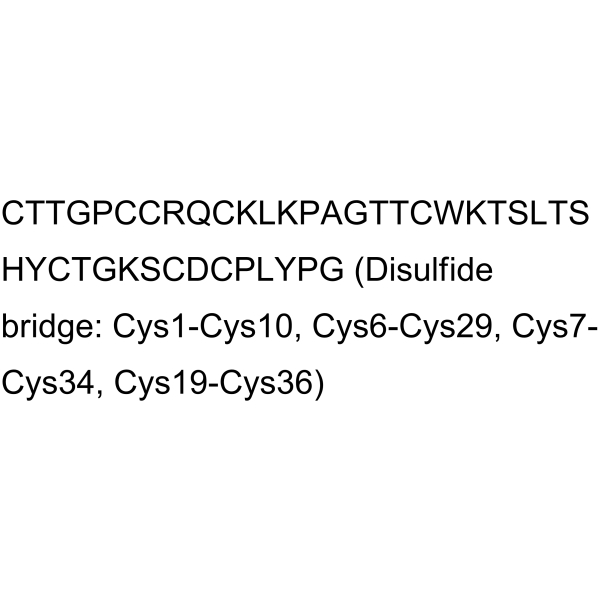
Obtustatin is a non-RGD disintegrin consisting of 41 residues. Obtustatin inhibits the adhesion of α1β1 integrin to type IV Collagen (HY-NP003), blocks α1β1 integrin signaling in endothelial cells, and suppresses FGF2-induced angiogenesis. Obtustatin inhibits tumor progression in mouse models and upregulates VEGF expression in sarcoma-bearing mice. Obtustatin can be used in research related to Lewis lung carcinoma and S-180 sarcoma .
Cat. No.: HY-204056
CAS No.: 1884341-01-8
Target:  

Telomerase

Research Areas:  

Cancer

Telomerase-IN-8 is an orally active telomerase inhibitor, with an IC50 value of 0.98 μM. Telomerase-IN-8 exhibits potent antiproliferative activity against multiple tumor cell lines, including PC3, Bcap-37, MGC-803 and HepG2. Telomerase-IN-8 demonstrates potent antitumor efficacy in S180 sarcoma or HepG2 hepatoma xenograft mice. Telomerase-IN-8 can be used for the study of telomerase-targeted anticancer .
Cat. No.: HY-108164
CAS No.: 584-28-1
Purity:  98.08%
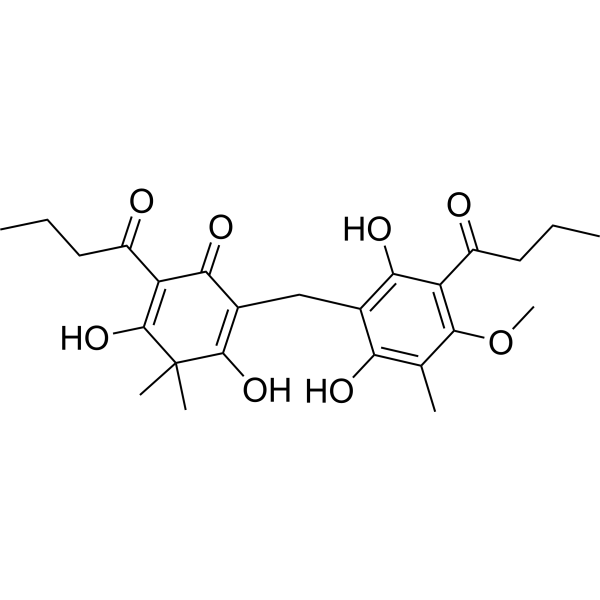
Aspidin BB is a phloroglucinol derivative, which can be isolated from the aerial part of Dryopteris championii. Aspidin BB has anticancer activity. Aspidin BB induces cell cycle arrest and apoptosis in human ovarian HO-8910 cells .
Cat. No.: HY-121365
CAS No.: 71522-58-2
Target:  

Bacterial

Research Areas:  

Infection

Forphenicinol is an immunomodulator and a derivative of the bacterial metabolite forphenicine. It increases the phagocytosis of yeast by peritoneal macrophages isolated from thioglycolate-stimulated mice. Forphenicinol (100 μg/animal) prevents cyclophosphamide-induced suppression of delayed-type hypersensitivity (DTH), as well as enhances DTH in response to the hapten oxazolone or sheep red blood cells in mice. It enhances the bactericidal activity of macrophages against P. aeruginosa in mice when administered at a dose of 0.5 mg/kg.2 Forphenicinol (15.6-1,000 μg/animal) increases survival in a mouse model of P. aeruginosa infection. It also inhibits tumor growth in S180 sarcoma and IMC carcinoma mouse xenograft models when administered at doses ranging from 0.05 to 5 mg/kg per day.

