



RD3-0028
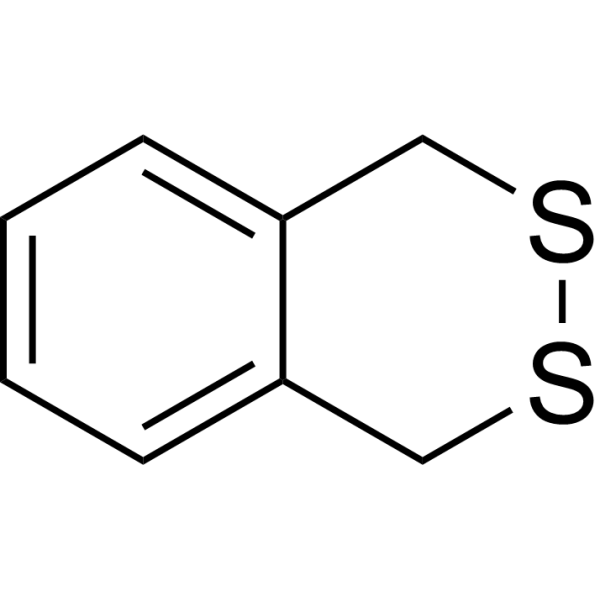
RD3-0028 is a potent and selective inhibitor of RSV replication with an EC50 of 4.5 μM.
For research use only. We do not sell to patients.
- CAS No.: 3886-39-3
- Formula: C8H8S2
- Molecular Weight:168.28
-
Storage:
Please store the product under the recommended conditions in the Certificate of Analysis.


-
 Biological Activity
-
Chemical Information
- Protocol
- Purity & Documentation
- References
-
 Help & FAQs




Biological Activity
EC50: 4.5 μM (RSV)[1]
RD3-0028 has a 50% effective concentration of 4.5 μM and a 50% cytotoxic concentration of 271.0μM which is superior to that of ribavirin. RD3-0028 inhibits different RSV strains at a low concentration (4.5-11.0 μM) using the MTT method. Using the MTT method, EC50 values of RD3-0028 against tested strains are lower than those of ribavirin. RD3-0028 does not inhibit the replication of measles virus, influenza A virus, herpes simplex virus types 1 and 2, or human cytomegalovirus[1].
MedChemExpress (MCE) has not independently confirmed the accuracy of these methods. They are for reference only.
MedChemExpress (MCE) has not independently confirmed the accuracy of these methods. They are for reference only.


Chemical Information
-
CAS No. 3886-39-3
-
Molecular Weight 168.28
-
Formula C8H8S2
-
SMILES
C12=CC=CC=C1CSSC2
-
Shipping
Room temperature in continental US; may vary elsewhere.
-
Storage
Please store the product under the recommended conditions in the Certificate of Analysis.

Protocol
50 mL of HeLa cell suspensions (30000 cells/well) and the Long strain of RSV(25 TCID50/well) in MEM supplemented with 0.1% bovine serum albumin and antibiotics are added to each well in a 96-well round-bottomed microtiter plate that is filled with 50mL of MM in the presence or absence of several concentrations of RD3-0028. The anti-RSV assay is performed primarily with the MTT method[1].
MedChemExpress (MCE) has not independently confirmed the accuracy of these methods. They are for reference only.
Mouse: Aerosols are generated from reservoirs containing 0.3 to 7.0 mg of RD3-0028 per mL. Solutions of ribavirin are prepared in saline containing 2.5 to 60 mg/mL. Mice are treated intraperitoneally with 100 mg of cyclophosphamide per kg of body weight 5 days before virus inoculation. The mice are weighed, anesthetized with sodium pentobarbital (50 mg/kg), and inoculated intranasally with approximately 105 PFU of RSV A2 in 50 mL (day 0). From day 1 through day 3, the mice are exposed to the RD3-0028 or ribavirin aerosol. Placebo consisted of 10% DMSO-saline containing 1% Tween 80. On day 4, the day on which untreated mice had the maximum RSV pulmonary titer, all animals are killed and the lungs of each mouse are removed and for virus quantification[2].
Rat: 14C-RD3-0028 is dissolved in 10% dimethyl sulphoxide (DMSO)/saline containing 1% Tween 80 for administration by the aerosol route. The aerosol is generated using a head-exposure chamber, mono-position, with a mist generator. The mass median aerodynamic diameter of the aerosol particle is 2.1 mm. Rats are exposed to the 14C-RD3-0028 aerosol for 15min and killed at indicated times after the end of exposure. Because the aerosol treatment with 14C-RD3-0028 exposed the rat to 8.8 mg (91.5 kBq)/animal, the solution of this compound is orally administered at a dose of 8.8 mg/body[3].
MedChemExpress (MCE) has not independently confirmed the accuracy of these methods. They are for reference only.


Purity & Documentation
References
[1]. Watanabe W, et al. Novel anti-respiratory syncytial(RS) viral compounds: benzodithiin derivatives. Biochem Biophys Res Commun. 1998 Aug 28;249(3):922-6. [Content Brief]
[2]. Sudo K, et al. Efficacy of RD3-0028 aerosol treatment against respiratory syncytial virus infection in immunosuppressed mice. Antimicrob Agents Chemother. 1999 Apr;43(4):752-7. [Content Brief]
[3]. Sudo K, et al. Pharmacokinetics of a benzodithiin (RD3-0028) following aerosol treatment in rat. [Content Brief]

Calculators
Concentration (start) × Volume (start) = Concentration (final) × Volume (final)


 Powered by Bioz