



Luzindole (Standard)
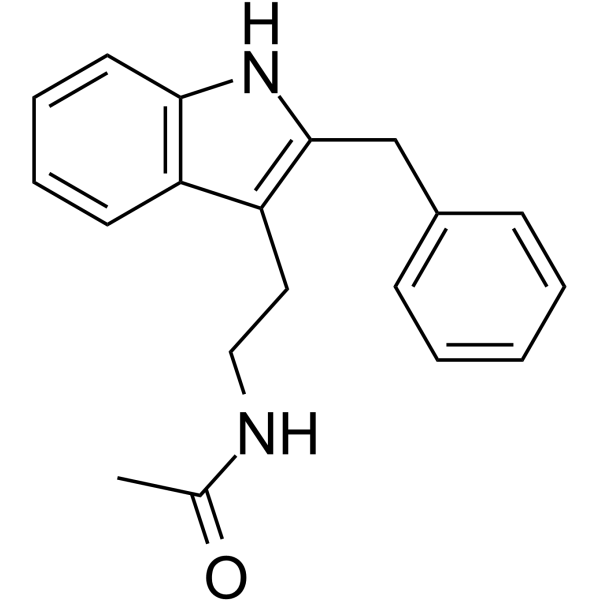
Luzindole (Standard) is the analytical standard of Luzindole. This product is intended for research and analytical applications. Luzindole (N-0774) is a selective melatonin receptor antagonist. Luzindole preferentially targets MT2 (Mel1b) over MT1 (Mel1a) with Ki values of 10.2 and 158 nM for human MT2 and MT1, respectively. Luzindole suppresses experimental autoimmune encephalomyelitis (EAE), and exerts antidepressant-like activity.
Nur für Forschungszwecke. Wir verkaufen nicht an Patienten.
- CAS. Nr.: 117946-91-5
- Formel: C19H20N2O
- Molecular Weight:292.37
-
Speicherung:
Please store the product under the recommended conditions in the Certificate of Analysis.


To place orders, for customer services and technical support, please contact: MedChemExpress USA
Tel: 609-228-6898 E-mail: [email protected] [email protected]


-
 Product Information
-
Chemical Information
- Reinheit & Dokumentation
-
 Help & FAQs


-
HY-101254
LuzindoleMelatonin Receptor Antagonist -
HY-100609
4-P-PDOTMT2 Receptor Antagonist -
HY-A0014
RamelteonMT1/2 Inhibitor -
HY-14803
TasimelteonDual Melatonin Receptor Agonist -
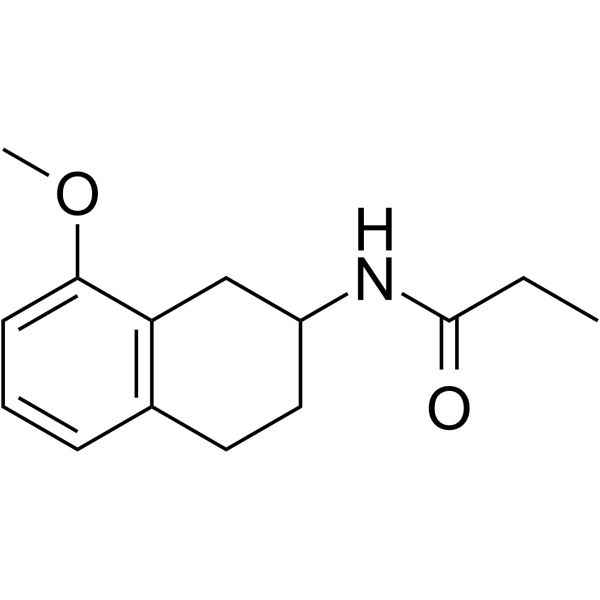
HY-101358
8-M-PDOTMT2 Receptor Agonist -
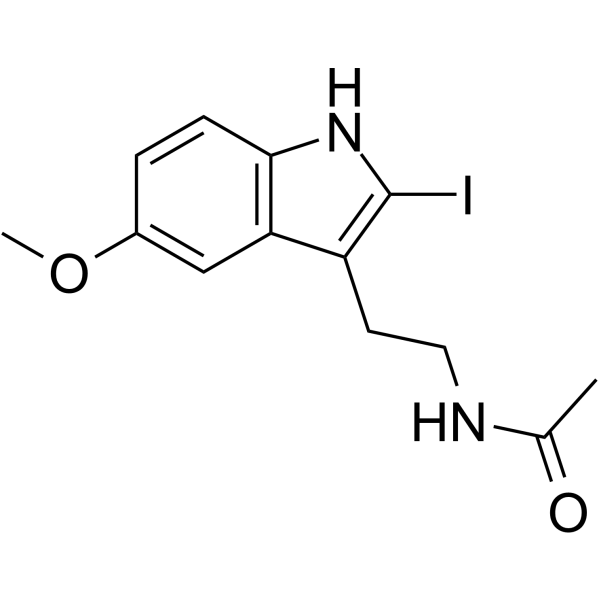
HY-101176
2-IodomelatoninMT1 Agonist -
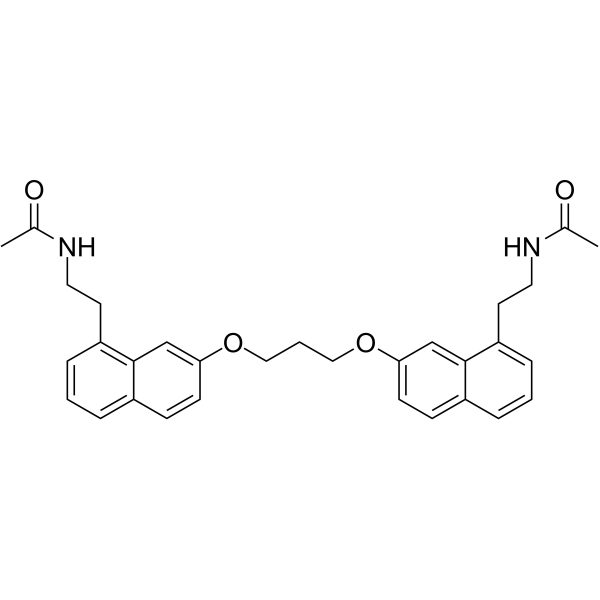
HY-122136
S26131MT1 Antagonist -
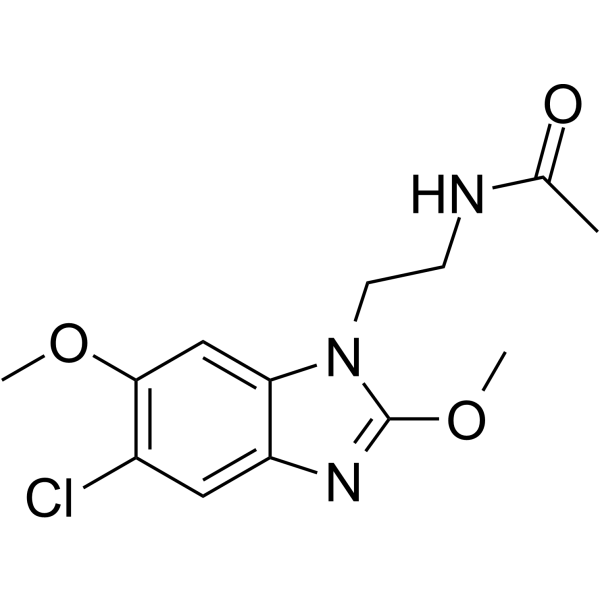
HY-138626
ACH-000143Melatonin Receptor Agonist -
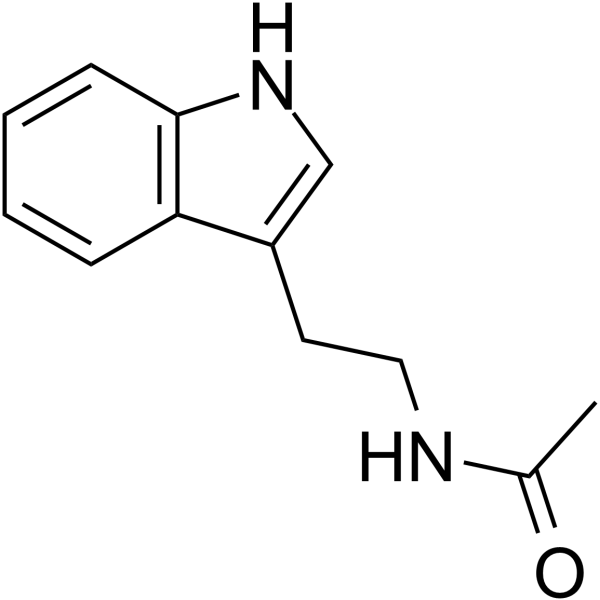
HY-100908
N-AcetyltryptamineMelatonin Receptor Mixed Agonist-Antagonist -

HY-100609R
4-P-PDOT (Standard)MT2 Receptor Antagonist -
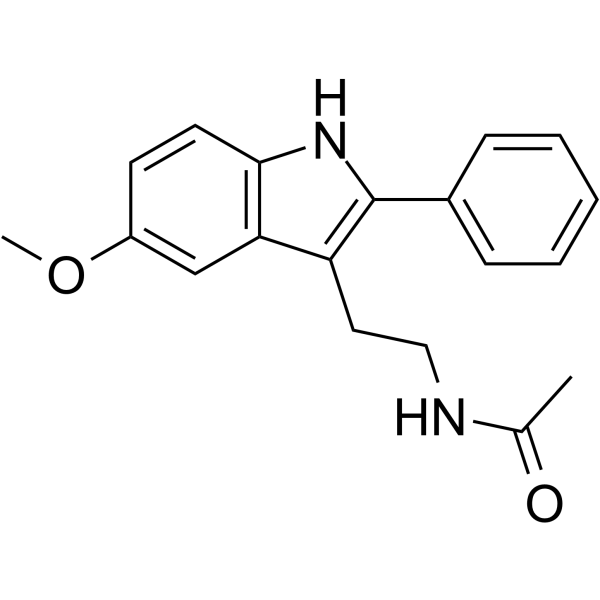
HY-101074
UCM 608Melatonin Agonist -
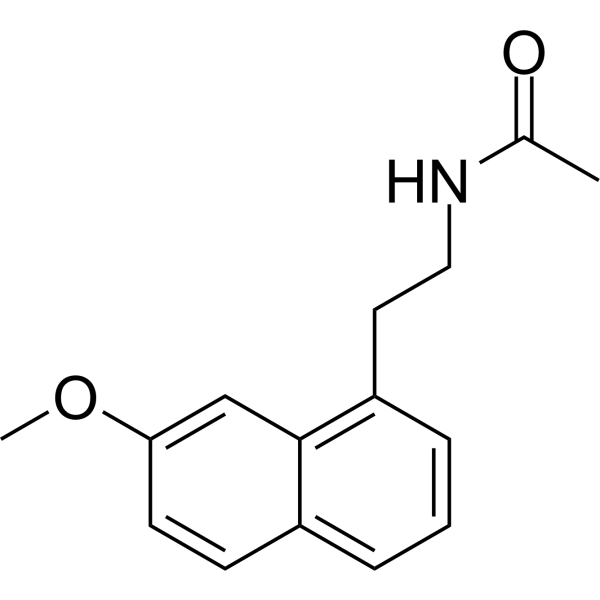
HY-17038
AgomelatineMT1/2 Agonist


Product Information
Information
Anwendung
The compound is the grade of analytical standard, which is the reference standard supplied assay. It is commonly used in qualitative, quantitative and methodological research experiments in HPLC, GC and MS.


Chemical Information
-
CAS. Nr. 117946-91-5
-
Molecular Weight 292.37
-
Formel C19H20N2O
-
SMILES
CC(NCCC1=C(CC2=CC=CC=C2)NC3=C1C=CC=C3)=O
-
Synonyms
N-0774 (Standard)
-
Versand
Room temperature in continental US; may vary elsewhere.
-
Speicherung
Please store the product under the recommended conditions in the Certificate of Analysis.


Reinheit & Dokumentation
Verweise
[1]. Dubocovich ML, et al. Melatonin receptor antagonists that differentiate between the human Mel1a and Mel1b recombinant subtypes are used to assess the pharmacological profile of the rabbit retina ML1 presynaptic heteroreceptor. Naunyn Schmiedebergs Arch Pharmacol. 1997 Mar;355(3):365-75. [Content Brief]
[2]. Constantinescu CS, et al. Luzindole, a melatonin receptor antagonist, suppresses experimental autoimmune encephalomyelitis. Pathobiology. 1997;65(4):190-4. [Content Brief]
[3]. Dubocovich ML Antidepressant-like activity of the melatonin receptor antagonist, luzindole (N-0774), in the mouse behavioral despair test. Eur J Pharmacol. 1990 Jul 3;182(2):313-25. [Content Brief]

Calculators
Konzentration (Stammlösung) × Volumen (Stammlösung) = Konzentration (Ziellösung) × Volumen (Ziellösung)


Luzindole (Standard) Related Classifications
HY-101254R Related Classifications
 Powered by Bioz