



NS1652

Based on 1 Customer Validation
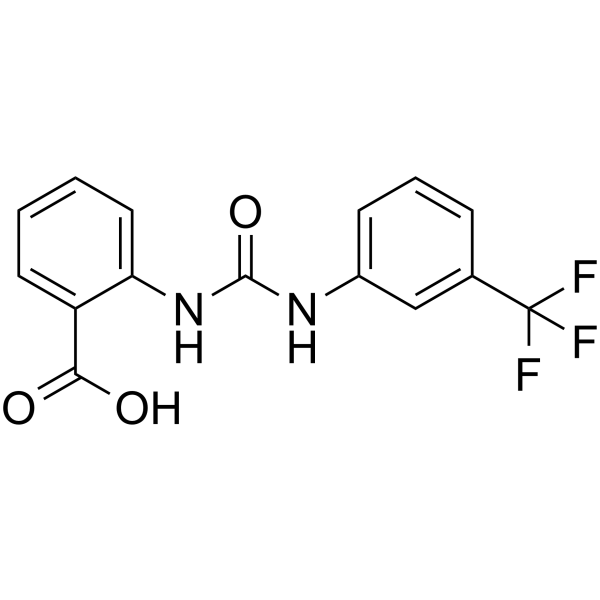
NS1652 is a reversible anion conductance inhibitor, blocks chloride channel, with an IC50 of 1.6 μM in human and mouse red blood cells.
For research use only. We do not sell to patients.
- Purity : 99.76%
- CAS No.: 1566-81-0
- Formula: C15H11F3N2O3
- Molecular Weight:324.25
-
Storage:Powder -20°C, 3 years , 4°C, 2 years ; In solvent -80°C, 2 years , -20°C, 1 year

To place orders, for customer services and technical support, please contact: MedChemExpress USA
Tel: 609-228-6898 E-mail: [email protected] [email protected]


-
 Biological Activity
-
Chemical Information
-
Solvent & Solubility
- Purity & Documentation
- References
-
 Help & FAQs


-
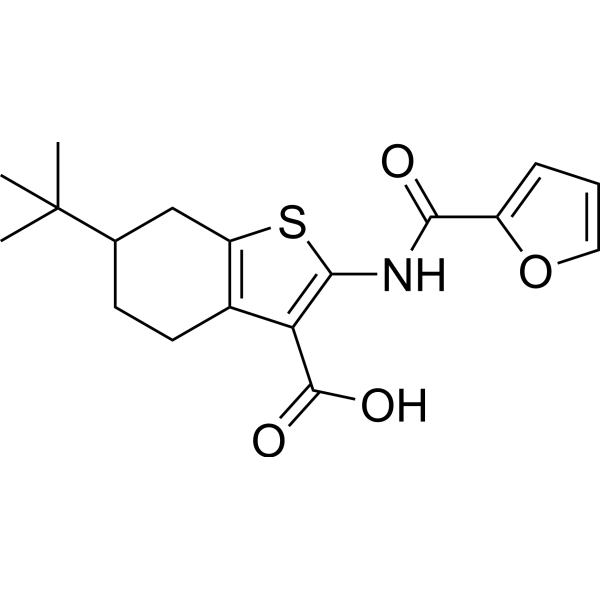
HY-100611
CaCCinh-A01TMEM16A Inhibitor -
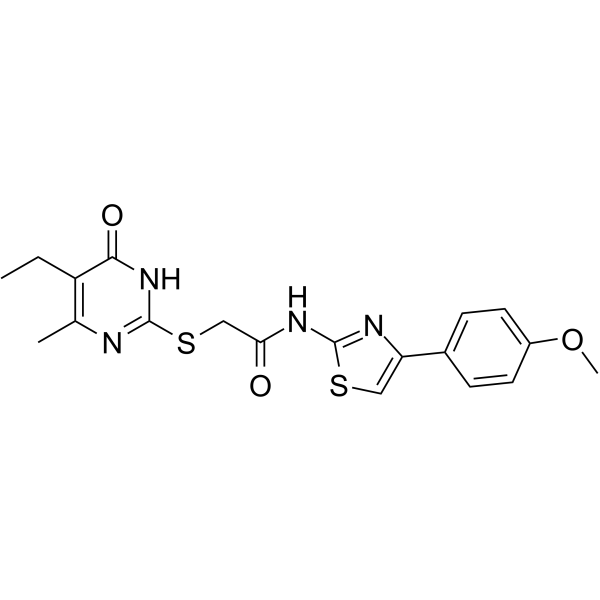
HY-100612
T16Ainh-A01TMEM16A Inhibitor -
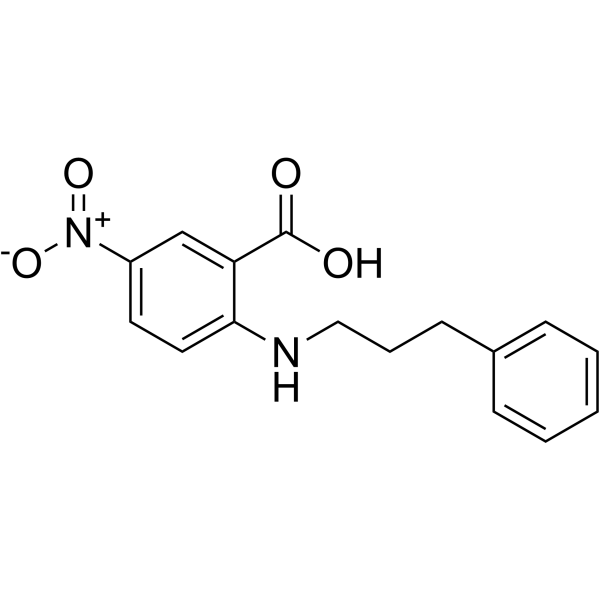
HY-101012
NPPBORCC Blocker -
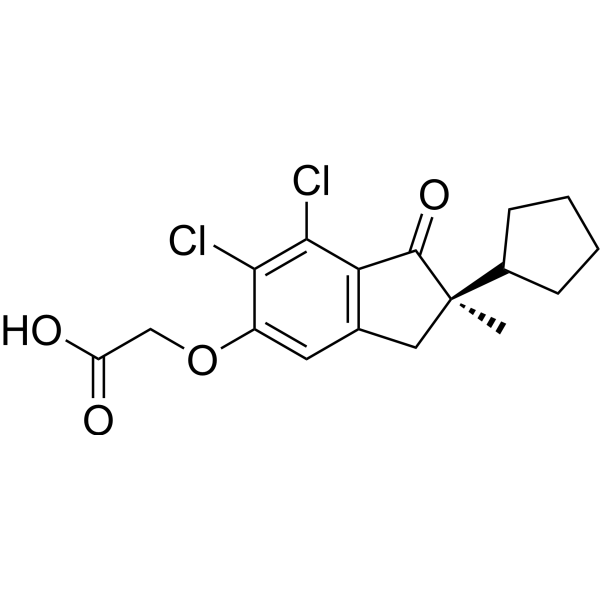
HY-12693
R(+)-MethylindazoneChloride Channel Inhibitor -
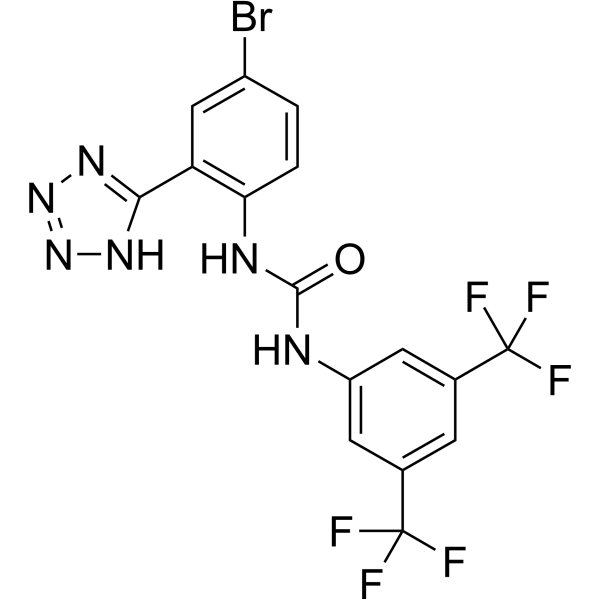
HY-105917
EmidurdarAnion Channel Inhibitor -
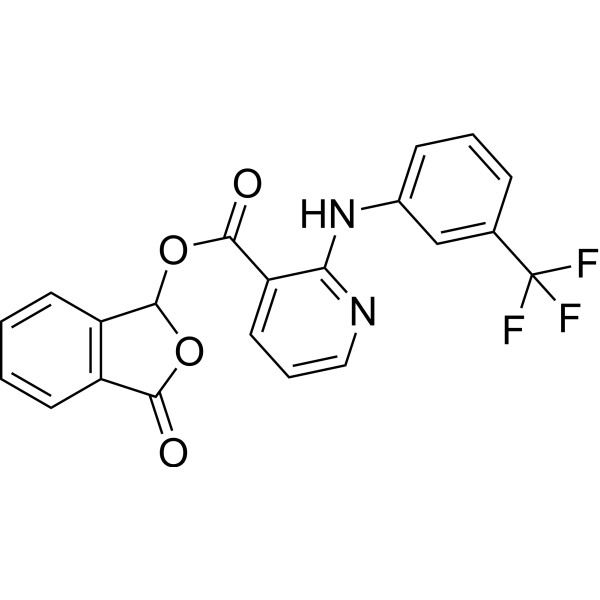
HY-103370
TalniflumateCaCC Blocker -
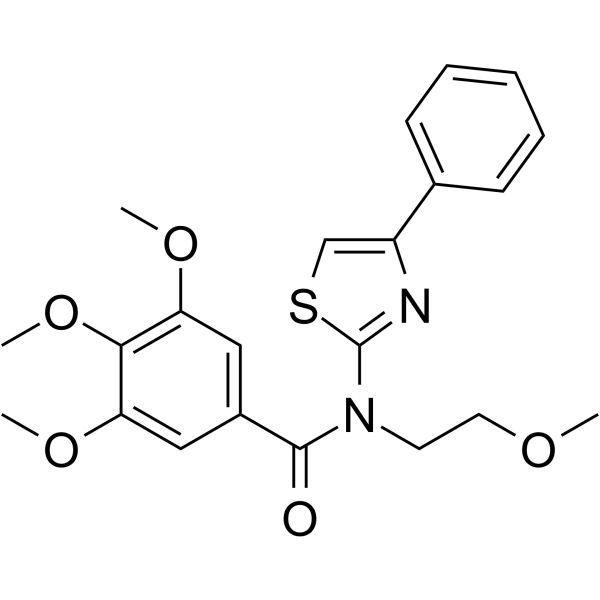
HY-103368
EactTMEM16A Activator -

HY-100244R
NS1652 (Standard)Anion Conductance Inhibitor -
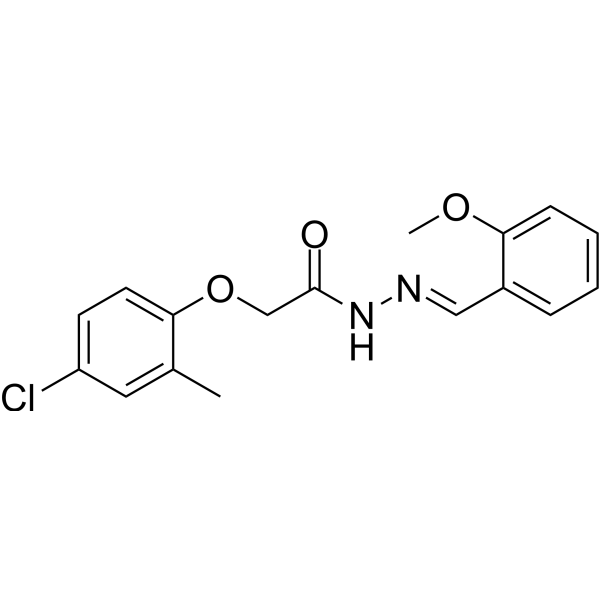
HY-119981
Ani9Chloride Channel Inhibitor -
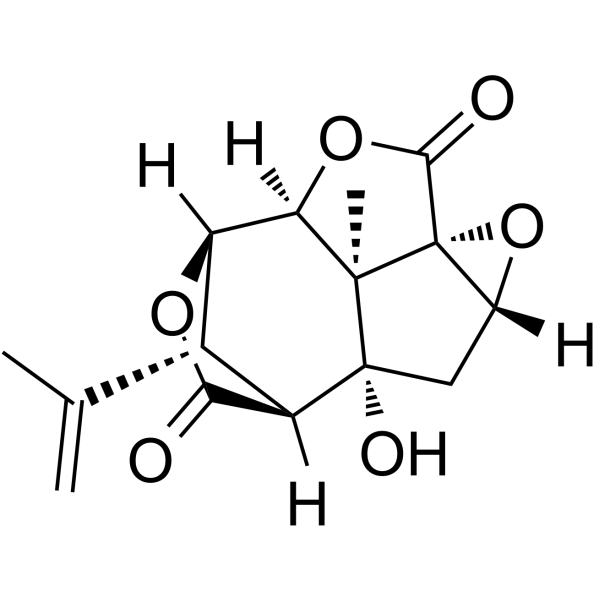
HY-B1494
PicrotoxininGABA Antagonist/Cl Blocker -
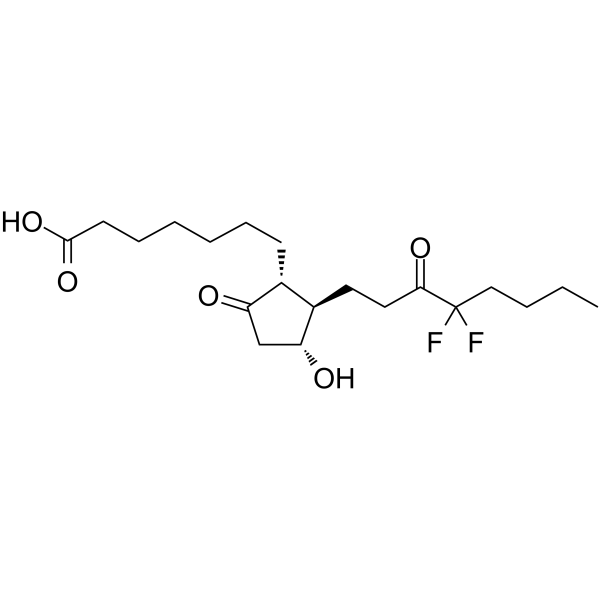
HY-B0679
LubiprostoneGastrointestinal Agent -
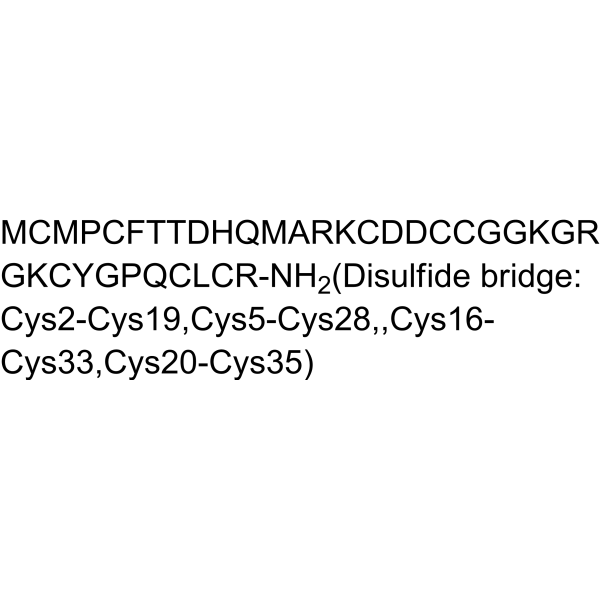
HY-P0173A
ChlorotoxinAntitumor Agent


Biological Activity
Description
IC50 & Target
IC50: 1.6 μM (chloride channel, human and mouse red blood cell)[1]
Cellular Effect
|
Cell Line

|
Type | Value | Description | References |
|---|---|---|---|---|
| HEK293 | IC50 |
72 μM
Compound: 2a
|
In vitro inhibitory activity against human ionotropic glutamate receptor ionotropic kainate 1 (GluR-5) expressed in HEK293 cells.
In vitro inhibitory activity against human ionotropic glutamate receptor ionotropic kainate 1 (GluR-5) expressed in HEK293 cells.
|
[PMID: 14667236] |
In Vitro
NS1652 potently inhibits the chloride conductance (IC50, 1.6 μM) in human and mouse red blood cells, but only weakly inhibits VRAC (IC50, 125 μM) in HEK293 cells. NS1652 markedly blocks the NO production with an IC50 of 3.1 μM in BV2 cells. NS1652 also down-regulates iNOS expression at 3 μM, and completely abolishes at 10 μM in BV2 cells[1]. NS1652 (0, 1.0, 3.3, 10, and 20 μM) causes increasing hyperpolarization due to inhibition of the chloride conductance in normal erythrocytes. NS1652 lowers the net KCl loss from deoxygenated sickle cells from about 12 mM cells/h to about 4 mM cells/h. NS1652 (20 μM) completely and reversiblely inhibits the red cell Cl-conductance[2].
MedChemExpress (MCE) has not independently confirmed the accuracy of these methods. They are for reference only.
In Vivo
MedChemExpress (MCE) has not independently confirmed the accuracy of these methods. They are for reference only.


Chemical Information
-
CAS No. 1566-81-0
-
Appearance Solid
-
Molecular Weight 324.25
-
Formula C15H11F3N2O3
-
Color White to off-white
-
SMILES
O=C(O)C1=CC=CC=C1NC(NC2=CC=CC(C(F)(F)F)=C2)=O
-
Shipping
Room temperature in continental US; may vary elsewhere.
-
Storage
Powder -20°C 3 years 4°C 2 years In solvent -80°C 2 years -20°C 1 year


Solvent & Solubility
In Vitro:
DMSO : 5 mg/mL (15.42 mM; Need ultrasonic; Hygroscopic DMSO has a significant impact on the solubility of product, please use newly opened DMSO)
Please refer to the solubility information to select the appropriate solvent. Once prepared, please aliquot and store the solution to prevent product inactivation from repeated freeze-thaw cycles.
Storage method and period of stock solution: -80°C, 2 years; -20°C, 1 year. When stored at -80°C, please use it within 2 years. When stored at -20°C, please use it within 1 year.
Please refer to the solubility information to select the appropriate solvent. Once prepared, please aliquot and store the solution to prevent product inactivation from repeated freeze-thaw cycles.
Storage method and period of stock solution: -80°C, 2 years; -20°C, 1 year. When stored at -80°C, please use it within 2 years. When stored at -20°C, please use it within 1 year.
Concentration (start) × Volume (start) = Concentration (final) × Volume (final)


Purity & Documentation
-
Data Sheet (274 KB)
-
SDS (396 KB)
- English - EN (396 KB)
- Français - FR (396 KB)
- Deutsch - DE (396 KB)
- Norwegian - NO (396 KB)
- Español - ES (396 KB)
- Swedish - SV (396 KB)
- Italian - IT (396 KB)
- Korean - KR (396 KB)
- Portuguese - PT (396 KB)
-
Handling Instructions (2659 KB)
References
[1]. Kjaer K, et al. Chloride channel blockers inhibit iNOS expression and NO production in IFNgamma-stimulated microglial BV2 cells. Brain Res. 2009 Jul 24;1281:15-24. [Content Brief]
[2]. Bennekou P, et al. Volume control in sickle cells is facilitated by the novel anion conductance inhibitor NS1652. Blood. 2000 Mar 1;95(5):1842-8. [Content Brief]


Complete Stock Solution Preparation Table
Please refer to the solubility information to select the appropriate solvent. Once prepared, please aliquot and store the solution to prevent product inactivation from repeated freeze-thaw cycles.
Storage method and period of stock solution: -80°C, 2 years; -20°C, 1 year. When stored at -80°C, please use it within 2 years. When stored at -20°C, please use it within 1 year.
| Optional Solvent | Concentration Solvent Mass | 1 mg | 5 mg | 10 mg | 25 mg |
|---|---|---|---|---|---|
| DMSO | 1 mM | 3.0840 mL | 15.4202 mL | 30.8404 mL | 77.1010 mL |
| 5 mM | 0.6168 mL | 3.0840 mL | 6.1681 mL | 15.4202 mL | |
| 10 mM | 0.3084 mL | 1.5420 mL | 3.0840 mL | 7.7101 mL | |
| 15 mM | 0.2056 mL | 1.0280 mL | 2.0560 mL | 5.1401 mL |


NS1652 Related Classifications
HY-100244 Related Classifications
 Powered by Bioz