3 Results for "

pDNA

" in MedChemExpress (MCE) Product Catalog:
Products (3)

3 Results for "pDNA" in MCE Product Catalog:

Cat. No.: HY-155882
CAS No.: 80506-64-5
Synonyms: mPEG750-NH2
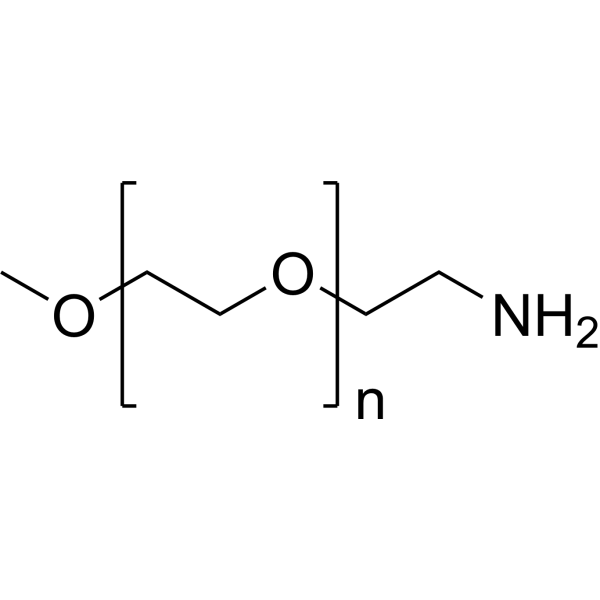
mPEG750-amine (mPEG750-NH2) is a chemical modification reagent for nanoparticles, capable of covalently binding to Ad-PVA to form Ad-PVA-PEG polymers. mPEG750-amine stabilizes gene delivery complexes by providing steric hindrance, reducing particle aggregation, while enhancing the water solubility and serum stability of the complex, reducing carrier cytotoxicity, and assisting in the efficient condensation of pDNA by cationic components to form nanoparticles that can be endocytosed by cells. mPEG750-amine can also be used to synthesize folate-conjugated polymer micelles for encapsulating the anticancer agent Camptothecin (HY-16560). Folate-conjugated polymer micelles are effective carriers for poorly soluble anticancer drugs, capable of avoiding macrophages and acting through folate receptor (FR)-mediated endocytosis to target tumor cells. mPEG750-amine can be applied to research in the field of non-viral gene delivery, as a component of gene delivery vectors, facilitating the safe and efficient delivery of nucleic acid drugs to target cells .
Cat. No.: HY-112766
CAS No.: 201036-16-0
Purity:  ≥98.0%
Target:  

Liposome

Research Areas:  

Others

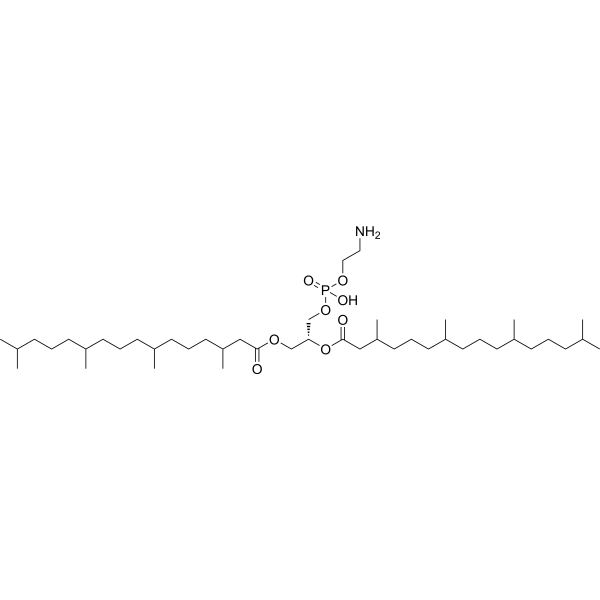
DPyPE is a neutral phosphatidylethanolamine lipid composed of a polyisoprene alkyl chain with two pyridine-containing phosphine ligands. DPyPE is mainly used in liposome formulations and to enhance the efficiency of gene delivery in vitro and in vivo. For example, DPyPE can be mixed with cationic lipids such as VC1052 (HY-156616) (in a 1:1 ratio) to form the vaccine adjuvant Vaxfectin (HY-142998). DPyPE assists VC1052 in binding to negatively charged pDNA to form a uniform liposome complex by regulating the fluidity and stability of the liposome membrane .
Cat. No.: HY-142998
CAS No.: 370108-99-9
Purity:  98.12%
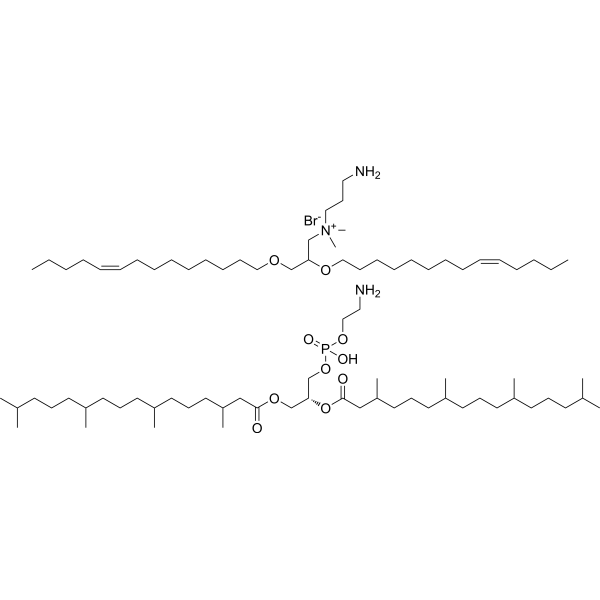
Vaxfectin is a second-generation cationic lipid-based suspension that adjuvants effectively both pDNA and protein-based vaccines. Vaxfectin can boost the immune response against a range of pDNA-expressed pathogenic antigens in vivo. Vaxfectin can increase IgG titers and give rise to an IL-6 dependent enhancement of the humoral immune response without altering the Th1 type immune response. Vaxfectin can be studied for vaccine formulation .

