



Tartrazine
Based on 2 publication(s) in Google Scholar
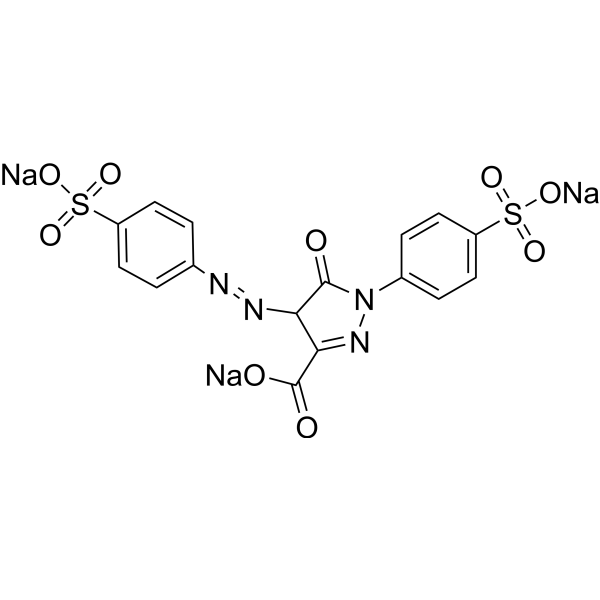
Tartrazine (Acid Yellow 23; FD&C Yellow No. 5) is an orally active azo acid dye, orange-yellow powder, soluble in water and turns yellow. Tartrazine is mainly used as a synthetic lemon yellow azo dye for food coloring. Tartrazine is the most stable colorant.Tartrazine induces mitochondria-mediated Apoptosis. Tartrazine can cause neurodevelopmental toxicity, cytotoxicity, and genotoxicity.
For research use only. We do not sell to patients.
- Purity : 99.78%
- CAS No.: 1934-21-0
- Formula: C16H9N4Na3O9S2
- Molecular Weight:534.36
-
Storage:
4°C, sealed storage, away from moisture and light
* In solvent : -80°C, 6 months; -20°C, 1 month (sealed storage, away from moisture and light)

To place orders, for customer services and technical support, please contact: MedChemExpress USA
Tel: 609-228-6898 E-mail: [email protected] [email protected]


-
 Biological Activity
-
Chemical Information
-
Solvent & Solubility
- Purity & Documentation
- References
-
 Help & FAQs


-
HY-D0249
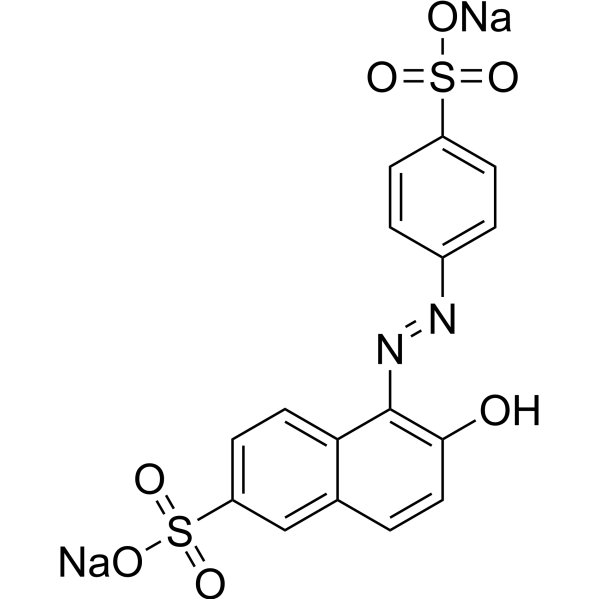
Sunset Yellow FCFAzo Dye -
HY-D0915
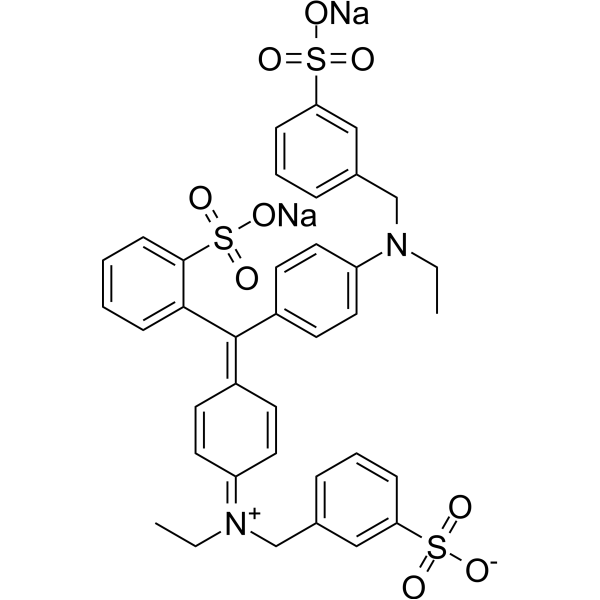
Brilliant Blue FCFColorant -
HY-D0914
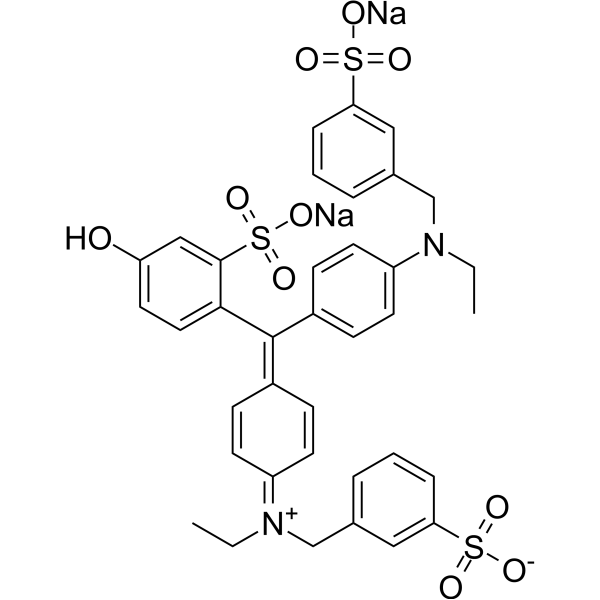
Fast Green FCFSea Green Triarylmethane Food Dye -
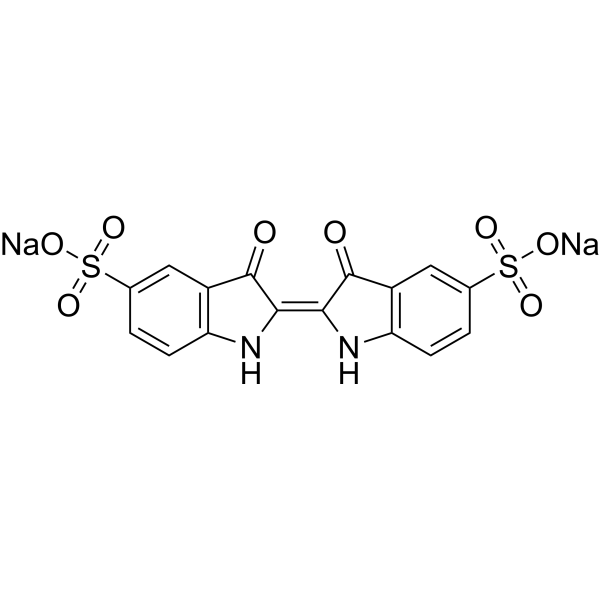
HY-W040226
Indigo carmine -
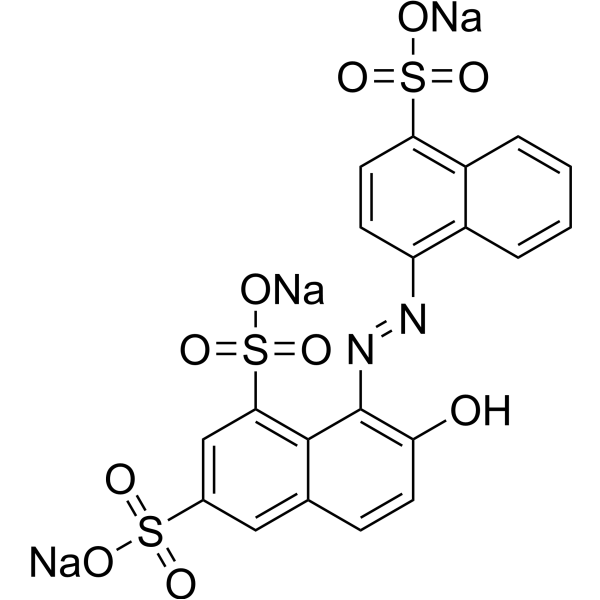
HY-D0193
Ponceau 4RColourant -
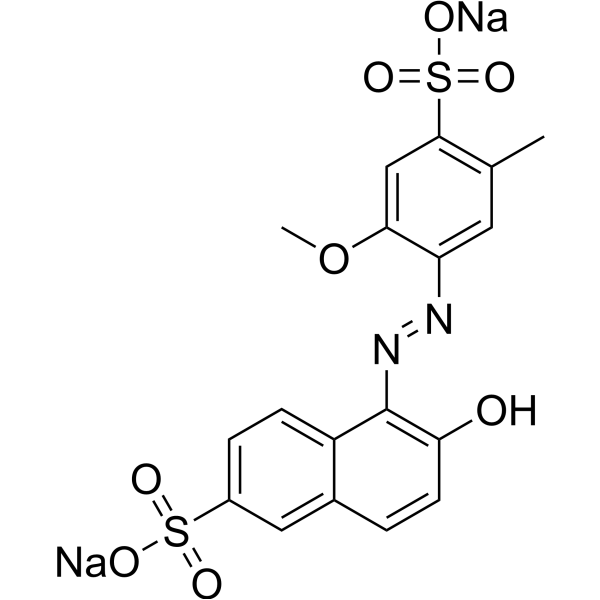
HY-123630
Allura Red ACFood Colourant -
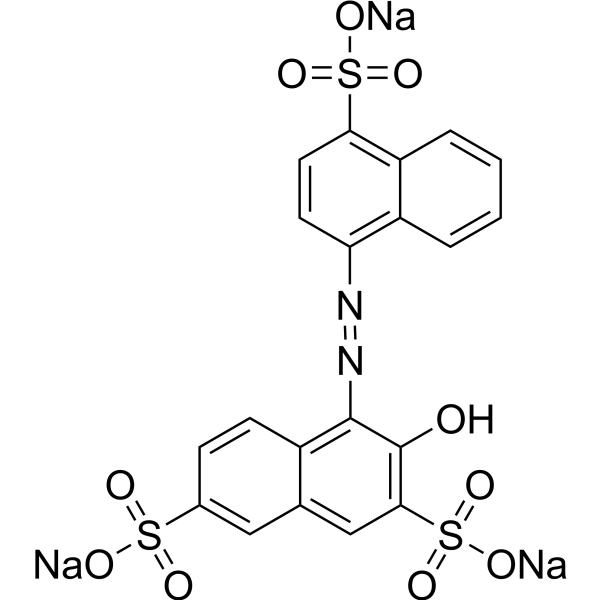
HY-D0307A
AmaranthOrganic Azo Dye -
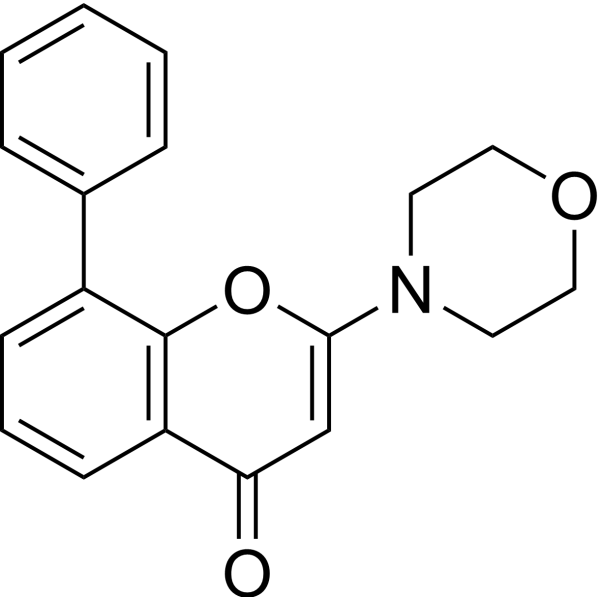
HY-10108
LY294002PI3K Inhibitor -
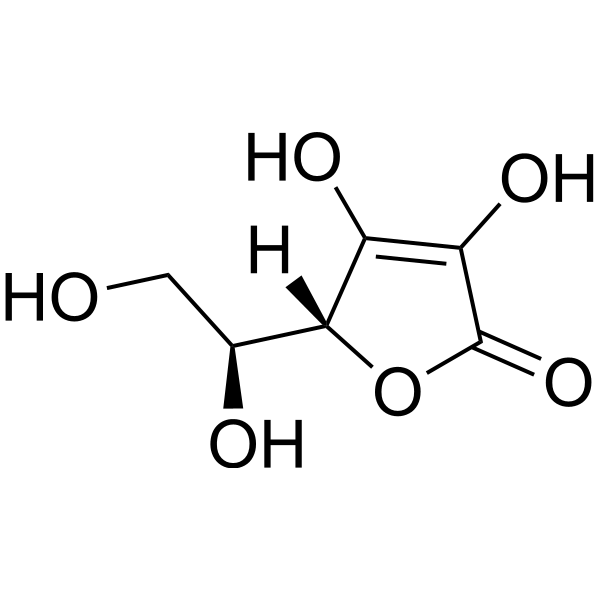
HY-B0166
L-Ascorbic acidAntioxidant -
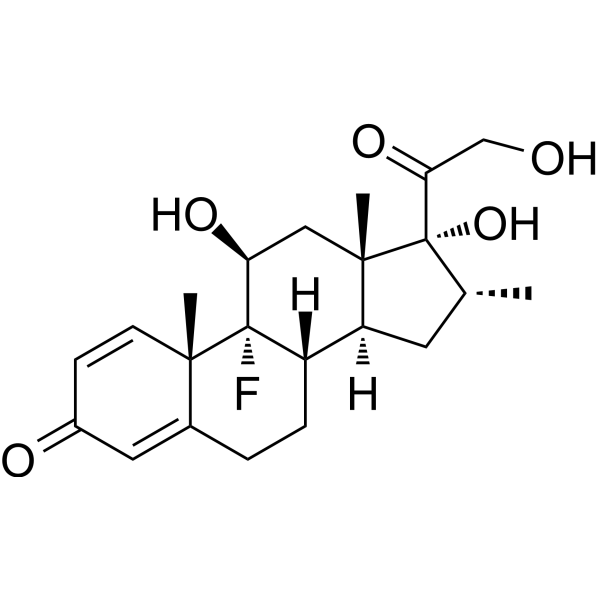
HY-14648
DexamethasoneGR Agonist -
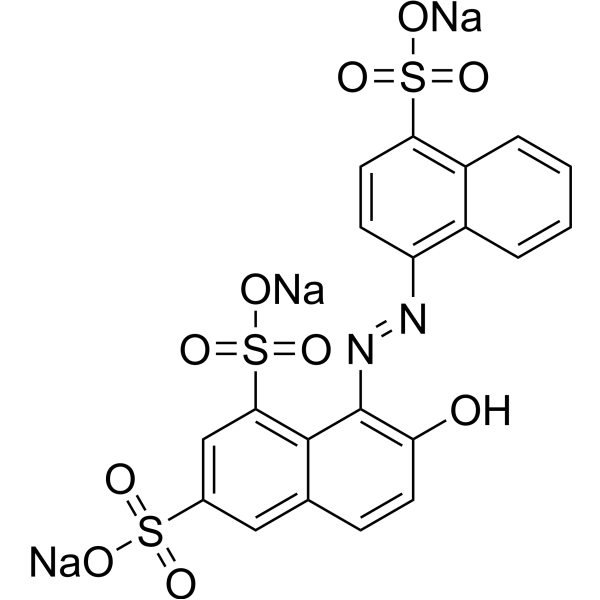
HY-D0193A
Ponceau 4R (85%)Food Colorant -
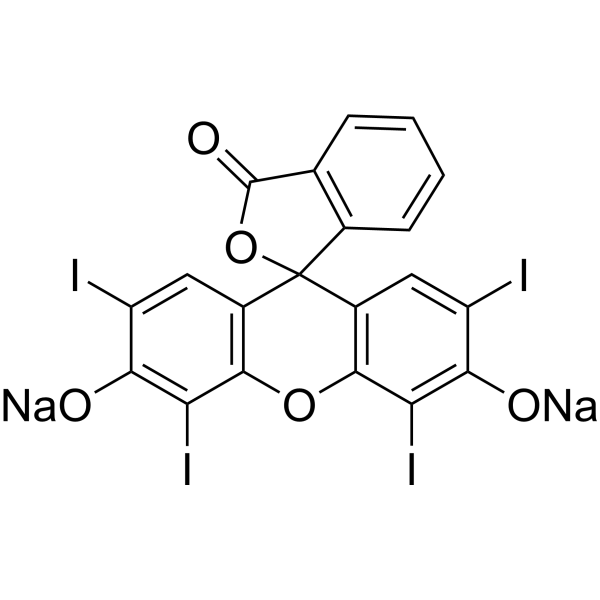
HY-D0259
Erythrosine BFluorescent Dyes
Publications Citing Use of MedChemExpress (MCE) Tartrazine
More

Biological Activity
Description
In Vitro
Tartrazine (12.5-100 μg/mL, 72 h) shows cytotoxic and mutagenic effects on eukaryotic cells (MN01, FGH)[1].
Tartrazine (5-20 μg/mL) induces chromosomal aberrations in mammalian cells (M. muntjac cells) [3].
Tartrazine (2500 ?μg/mL, 48 h) showes cytotoxic activity in human lymphocytes due to significant decrease in mitotic index (MI) in the absence of S9 mix[4].
Tartrazine (10-2000 μM, 3-24 h) can be regarded as toxic in CHO cells, with decreasing intracellular GSH, increasing MDA levels)[5].
Tartrazine (0-1000 μg/mL, 6 h) disrupts vascular formation in human primary endothelial cells[8].
Tartrazine (0.25-64.0 mM) has significant genotoxicity, although has no cytotoxic effects[9].
Tartrazine (6.25-800 ?mg/L, 96 h) induces neurodevelopmental toxicity via mitochondria-mediated apoptosis in zebrafish embryos[10].
MedChemExpress (MCE) has not independently confirmed the accuracy of these methods. They are for reference only.
-
Cell Line:MN01, FGH
-
Concentration:1.56, 3.12, 6.25, 12.5, 25, 50, 100 μg/mL
-
Incubation Time:72 h
-
Result:Showed significant cytotoxic effects on the MN01 from 25 μg/mL to the highest test concentration (100 μg/mL) for MN01 (normal stomach human cell line) and from 12.5 to 100 μg/mL for FGH (normal fibroblast human cell line).
In Vivo
Tartrazine (72 mg/kg, p.o., 60 days) is capable of producing free radicals, which in turn cause damage to the cellular compartment system of rat testis[6].
Tartrazine (200 mg/kg, p.o., 60 days) shows diffuse vacuolar degeneration in hepatic parenchyma in rats[7].
Tartrazine (175-700 mg/kg for mice, 125-500 mg/kg for rats, p.o., once a day for 30 d) produces a few adverse effects in learning and memory functions in animals (mice and rats)[11].
MedChemExpress (MCE) has not independently confirmed the accuracy of these methods. They are for reference only.


Chemical Information
-
CAS No. 1934-21-0
-
Appearance Solid
-
Molecular Weight 534.36
-
Formula C16H9N4Na3O9S2
-
Color Orange to red
-
SMILES
O=C(C(C1N=NC2=CC=C(S(=O)(O[Na])=O)C=C2)=NN(C3=CC=C(S(=O)(O[Na])=O)C=C3)C1=O)O[Na]
-
Synonyms
Acid Yellow 23; FD&C Yellow No. 5
-
Shipping
Room temperature in continental US; may vary elsewhere.
-
Storage
4°C, sealed storage, away from moisture and light
* In solvent : -80°C, 6 months; -20°C, 1 month (sealed storage, away from moisture and light)


Publications (2)
-
Journal Impact Factor
-
Most Recent
-
Biomaterials
2026 Jun 22:335:124394. PMID: 42341361 -
Sci Rep
Simple and rapid determination of tartrazine in fake saffron using the metal organic framework (Fe SA MOF@CNF) by HPLC/PDA. [Abstract]2024 Apr 8;14(1):8217. PMID: 38589481


Solvent & Solubility
In Vitro:
H2O : 50 mg/mL (93.57 mM; Need ultrasonic)
DMSO : 35 mg/mL (65.50 mM; ultrasonic and warming and heat to 60°C; Hygroscopic DMSO has a significant impact on the solubility of product, please use newly opened DMSO)
Please refer to the solubility information to select the appropriate solvent. Once prepared, please aliquot and store the solution to prevent product inactivation from repeated freeze-thaw cycles.
Storage method and period of stock solution: -80°C, 6 months; -20°C, 1 month (sealed storage, away from moisture and light). When stored at -80°C, please use it within 6 months. When stored at -20°C, please use it within 1 month.
* Note: If you choose water as the stock solution, please dilute it to the working solution, then filter and sterilize it with a 0.22 μm filter before use.
Please refer to the solubility information to select the appropriate solvent. Once prepared, please aliquot and store the solution to prevent product inactivation from repeated freeze-thaw cycles.
Storage method and period of stock solution: -80°C, 6 months; -20°C, 1 month (sealed storage, away from moisture and light). When stored at -80°C, please use it within 6 months. When stored at -20°C, please use it within 1 month.
* Note: If you choose water as the stock solution, please dilute it to the working solution, then filter and sterilize it with a 0.22 μm filter before use.
Concentration (start) × Volume (start) = Concentration (final) × Volume (final)


Purity & Documentation
-
Data Sheet (292 KB)
-
SDS (644 KB)
- English - EN (644 KB)
- Français - FR (644 KB)
- Deutsch - DE (644 KB)
- Norwegian - NO (644 KB)
- Español - ES (644 KB)
- Swedish - SV (644 KB)
- Italian - IT (644 KB)
- Korean - KR (644 KB)
- Portuguese - PT (644 KB)
-
Handling Instructions (2659 KB)
References
[1]. Dos Santos JR, et al. Cytotoxic and mutagenic effects of the food additive tartrazine on eukaryotic cells. BMC Pharmacol Toxicol. 2022 Dec 23;23(1):95. [Content Brief]
[2]. Khayyat L, et al. Tartrazine induces structural and functional aberrations and genotoxic effects in vivo. PeerJ. 2017 Feb 23;5:e3041. [Content Brief]
[3]. Patterson RM, et al. Tartrazine-induced chromosomal aberrations in mammalian cells. Food Chem Toxicol. 1982 Aug;20(4):461-5. [Content Brief]
[4]. Atlı Şekeroğlu Z, et al. Effects of tartrazine on proliferation and genetic damage in human lymphocytes. Toxicol Mech Methods. 2017 Jun;27(5):370-375. [Content Brief]
[8]. Thanh DD, et al. The food dye Tartrazine disrupts vascular formation both in zebrafish larvae and in human primary endothelial cells. Sci Rep. 2024 Dec 5;14(1):30367. [Content Brief]
[9]. Soares BM, et al. Effects on DNA repair in human lymphocytes exposed to the food dye tartrazine yellow. Anticancer Res. 2015 Mar;35(3):1465-74. [Content Brief]
[10]. Haridevamuthu B, Murugan R, Seenivasan B, Meenatchi R, Pachaiappan R, Almutairi BO, Arokiyaraj S, M K K, et al. Synthetic azo-dye, Tartrazine induces neurodevelopmental toxicity via mitochondria-mediated apoptosis in zebrafish embryos. J Hazard Mater. 2024 Jan 5;461:132524. [Content Brief]
[11]. Gao Y, et al. Effect of food azo dye tartrazine on learning and memory functions in mice and rats, and the possible mechanisms involved. J Food Sci. 2011 Aug;76(6):T125-9. [Content Brief]


Complete Stock Solution Preparation Table
Please refer to the solubility information to select the appropriate solvent. Once prepared, please aliquot and store the solution to prevent product inactivation from repeated freeze-thaw cycles.
Storage method and period of stock solution: -80°C, 6 months; -20°C, 1 month (sealed storage, away from moisture and light). When stored at -80°C, please use it within 6 months. When stored at -20°C, please use it within 1 month.
| Optional Solvent | Concentration Solvent Mass | 1 mg | 5 mg | 10 mg | 25 mg |
|---|---|---|---|---|---|
| DMSO / H2O | 1 mM | 1.8714 mL | 9.3570 mL | 18.7140 mL | 46.7849 mL |
| 5 mM | 0.3743 mL | 1.8714 mL | 3.7428 mL | 9.3570 mL | |
| 10 mM | 0.1871 mL | 0.9357 mL | 1.8714 mL | 4.6785 mL | |
| 15 mM | 0.1248 mL | 0.6238 mL | 1.2476 mL | 3.1190 mL | |
| 20 mM | 0.0936 mL | 0.4678 mL | 0.9357 mL | 2.3392 mL | |
| 25 mM | 0.0749 mL | 0.3743 mL | 0.7486 mL | 1.8714 mL | |
| 30 mM | 0.0624 mL | 0.3119 mL | 0.6238 mL | 1.5595 mL | |
| 40 mM | 0.0468 mL | 0.2339 mL | 0.4678 mL | 1.1696 mL | |
| 50 mM | 0.0374 mL | 0.1871 mL | 0.3743 mL | 0.9357 mL | |
| 60 mM | 0.0312 mL | 0.1559 mL | 0.3119 mL | 0.7797 mL | |
| H2O | 80 mM | 0.0234 mL | 0.1170 mL | 0.2339 mL | 0.5848 mL |
* Note: If you choose water as the stock solution, please dilute it to the working solution, then filter and sterilize it with a 0.22 μm filter before use.


Tartrazine Related Classifications
HY-D0257 Related Classifications
 Powered by Bioz