



Previtamin D3
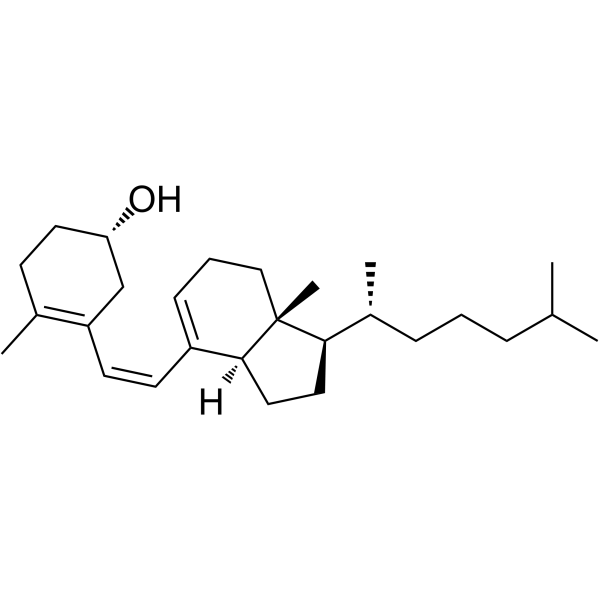
Previtamin D3 is an orally active, thermolabile steroidal compound that generates vitamin D3, as well as biologically inactive lumisterol and tachysterol. Previtamin D3 is synthesized in the skin of humans and rats via the UV-B-mediated photoconversion of 7-dehydrocholesterol. Previtamin D3 lacks direct anti-rachitic activity, and its in vivo activity relies on the vitamin D3 it produces. Previtamin D3 can be used in studies related to rickets and vitamin D metabolism.
For research use only. We do not sell to patients.
- CAS No.: 1173-13-3
- Formula: C27H44O
- Molecular Weight:384.64
-
Storage:
-80°C, protect from light, stored under nitrogen

To place orders, for customer services and technical support, please contact: MedChemExpress USA
Tel: 609-228-6898 E-mail: [email protected] [email protected]


-
 Biological Activity
-
Chemical Information
- Purity & Documentation
- References
-
 Help & FAQs


-
HY-10001
CalcipotriolVitamin D3 Analog -
HY-15254
3-O-(2-Aminoethyl)-25-hydroxyvitamin D3Vitamin D3 Derivative -
HY-15398A
5,6-trans-Vitamin D3Photoproduct of Vitamin D3 -
HY-50919
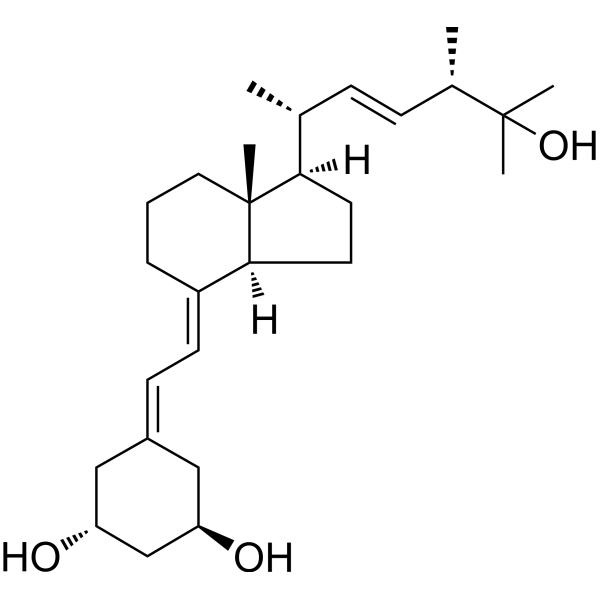
ParicalcitolVitamin D Receptor Agonist -
HY-32339
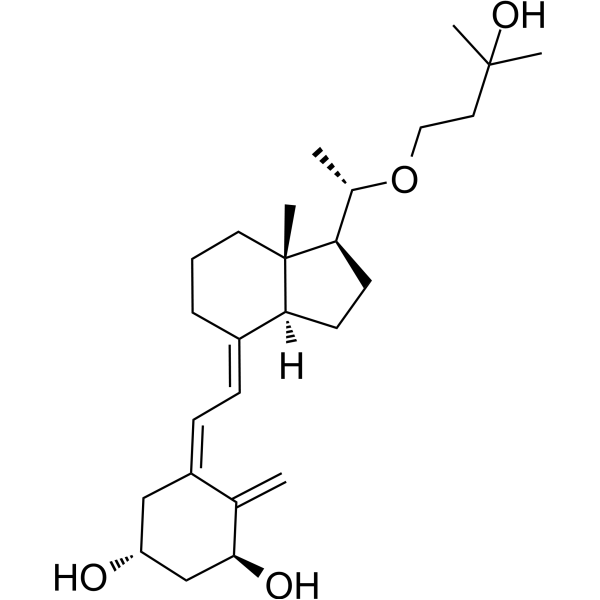
MaxacalcitolVDR Agonist -
HY-10001A
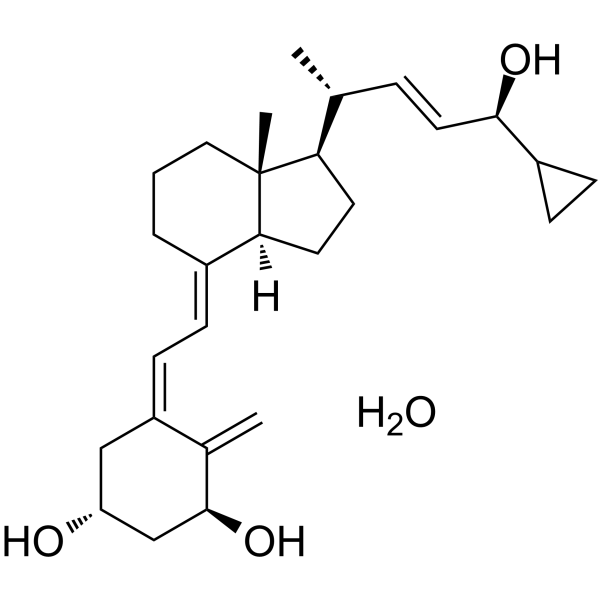
Calcipotriol monohydrateVitamin D3 Analog -
HY-32346
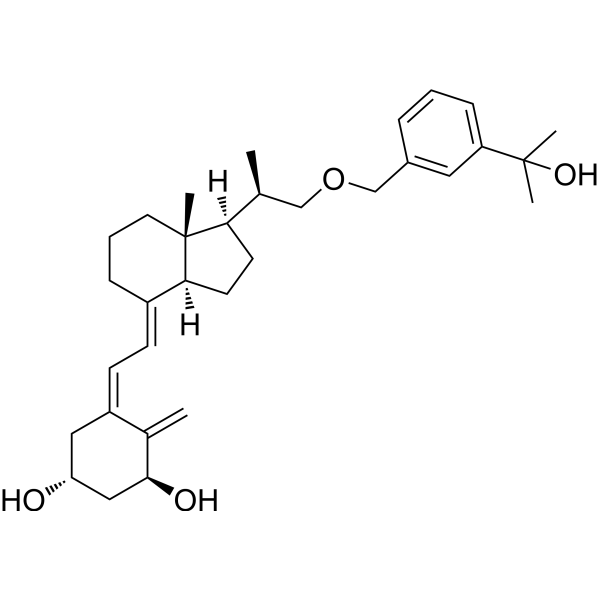
AtocalcitolVitamin D3 Analogue -
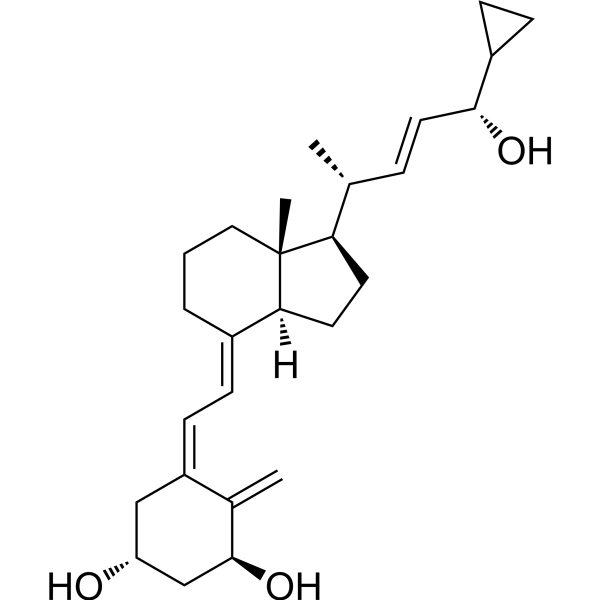
HY-10001R
Calcipotriol (Standard)Vitamin D3 Analog -
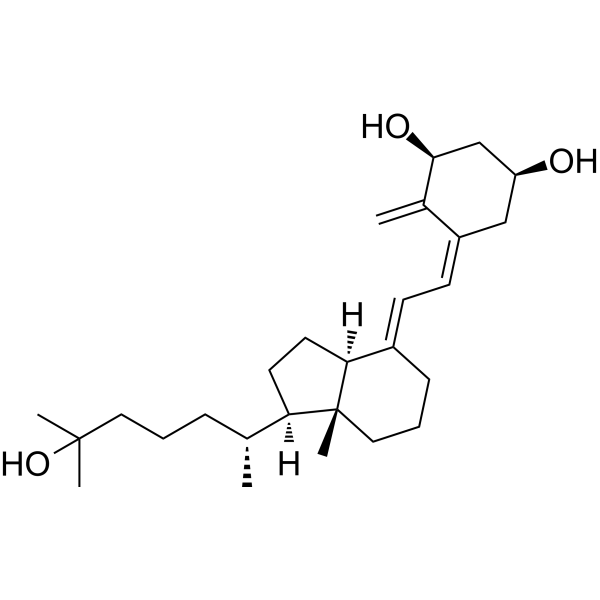
HY-10002A
(1S)-Calcitriol1α,25(OH)2D3 Metabolite -
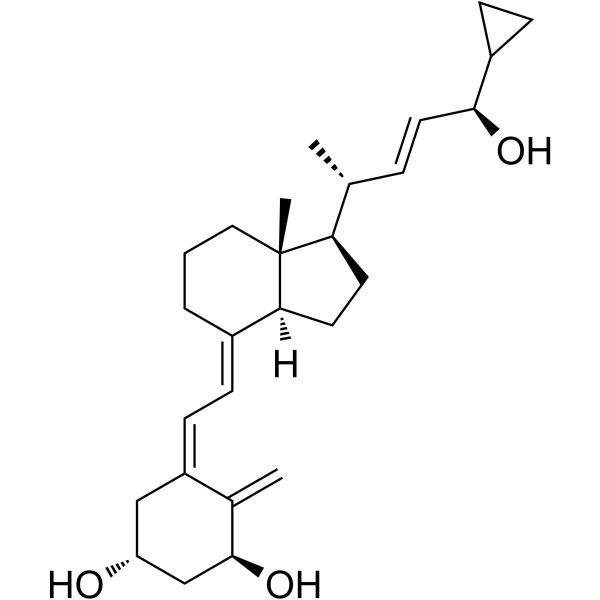
HY-15266
24R-CalcipotriolVitamin D Analog -
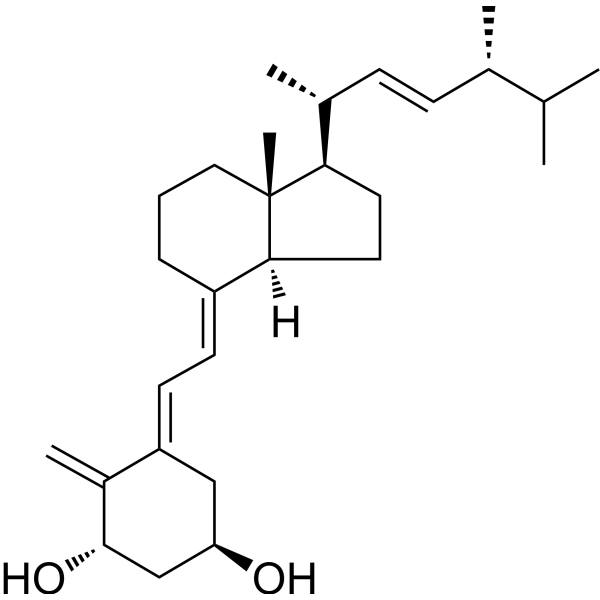
HY-75992
trans-DoxercalciferolVitamin D Receptor Activator -
HY-13294
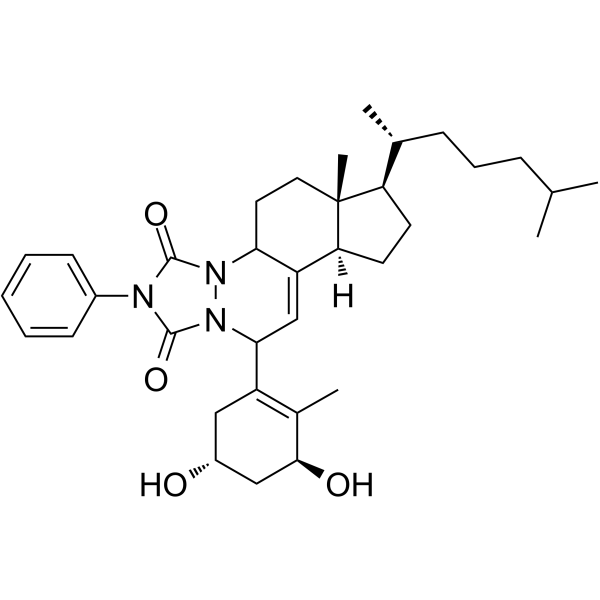
Impurity C of AlfacalcidolAlfacalcidol Impurity


Biological Activity
Description
In Vitro
Previtamin D3 undergoes temperature-dependent first-order interconversion with vitamin D3 in ethanol, with faster isomerization at higher temperatures[2].
MedChemExpress (MCE) has not independently confirmed the accuracy of these methods. They are for reference only.
In Vivo
Previtamin D3 (28-111 μg/1000 g consumed diet; p.o.; 7 doses at 3 to 4 day intervals) exhibits 35% of the antirachitic activity of pure vitamin D3 in rachitic North Holland Blue chicks, with this activity hypothesized to originate exclusively from vitamin D3 formed via in vivo isomerization[2].
MedChemExpress (MCE) has not independently confirmed the accuracy of these methods. They are for reference only.
-
Animal Model:Vitamin-D-deficient rats[1]
-
Dosage:0.2 J/cm2
-
Administration:topical skin exposure; single dose
-
Result:Identified radiolabeled previtamin D3 as the main photoproduct in UV-exposed skin extracts, with no vitamin D3 detected right after irradiation.
Verified previtamin D3 using mass spectrometry and UV spectroscopy, and validated its thermal conversion to vitamin D3 via characteristic spectral changes.
-
Animal Model:North Holland Blue (1-day-old, mixed sex, weight-homogeneous groups, rachitogenic diet-induced rickets)[2]
-
Dosage:28 μg/1000 g consumed diet; 44 μg/1000 g consumed diet; 70 μg/1000 g consumed diet; 111 μg/1000 g consumed diet
-
Administration:p.o.; 7 doses at 3 to 4 day intervals
-
Result:Recorded dose-dependent reductions in mean t.m.t.-distance values in chick assays, and displayed an antirachitic activity ratio of 0.35 (95% CI, 0.29-0.42) relative to pure vitamin D3.


Chemical Information
-
CAS No. 1173-13-3
-
Appearance Oil
-
Molecular Weight 384.64
-
Formula C27H44O
-
Color Colorless to light yellow
-
SMILES
O[C@@H]1CC(/C=C\C2=CCC[C@]3(C)[C@@H]([C@H](C)CCCC(C)C)CC[C@@]23[H])=C(C)CC1
-
Shipping
Shipping with dry ice.
-
Storage
-80°C, protect from light, stored under nitrogen


Purity & Documentation
-
Data Sheet (271 KB)
-
SDS (480 KB)
- English - EN (480 KB)
- Français - FR (480 KB)
- Deutsch - DE (480 KB)
- Norwegian - NO (480 KB)
- Español - ES (480 KB)
- Swedish - SV (480 KB)
- Italian - IT (480 KB)
- Korean - KR (480 KB)
- Portuguese - PT (480 KB)
-
Handling Instructions (2659 KB)
References

Calculators
Concentration (start) × Volume (start) = Concentration (final) × Volume (final)


Previtamin D3 Related Classifications
HY-130705 Related Classifications
 Powered by Bioz