



Tachysterol 3
Tachysterol 3 is a photoproduct of Previtamin D3 (HY-130705). Previtamin D3 is an orally active, thermolabile steroidal compound that generates vitamin D3, as well as biologically inactive lumisterol and tachysterol. Previtamin D3 is synthesized in the skin of humans and rats via the UV-B-mediated photoconversion of 7-dehydrocholesterol. Previtamin D3 lacks direct anti-rachitic activity, and its in vivo activity relies on the vitamin D3 it produces. Previtamin D3 can be used in studies related to rickets and vitamin D metabolism.
For research use only. We do not sell to patients.
- CAS No.: 17592-07-3
- Formula: C27H44O
- Molecular Weight:384.64
-
Storage:
-80°C, protect from light, stored under nitrogen
* The compound is unstable in solutions, freshly prepared is recommended.

To place orders, for customer services and technical support, please contact: MedChemExpress USA
Tel: 609-228-6898 E-mail: [email protected] [email protected]


-
 Biological Activity
-
Chemical Information
-
Solvent & Solubility
- Purity & Documentation
- References
-
 Help & FAQs


-
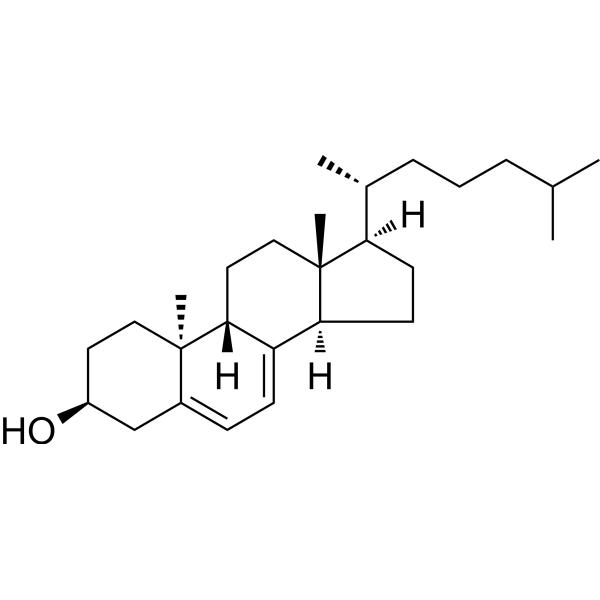
HY-112023
Lumisterol 3 (purity>90%)Vitamin D3 Isomer -
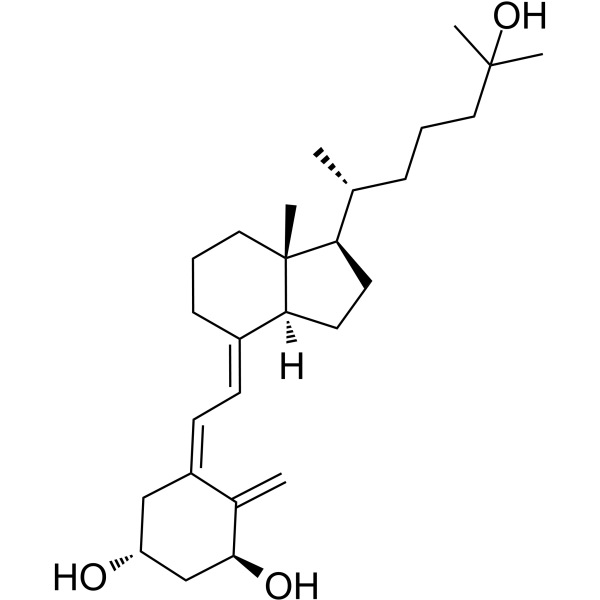
HY-10002
CalcitriolVDR Agonist -
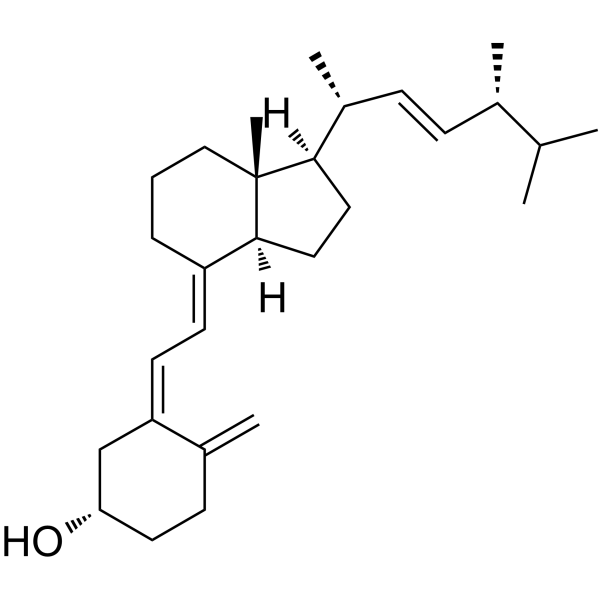
HY-76542
Vitamin D2Vitamin D Supplement -

HY-10002R
Calcitriol (Standard)VDR Agonist -
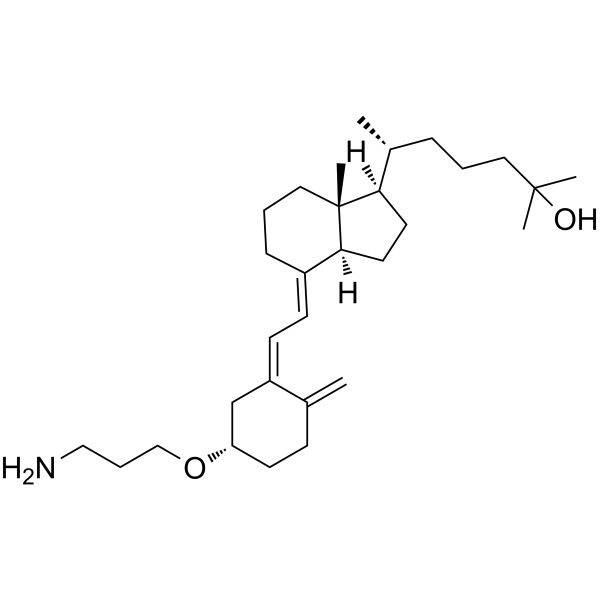
HY-15254
3-O-(2-Aminoethyl)-25-hydroxyvitamin D3Vitamin D3 Derivative -
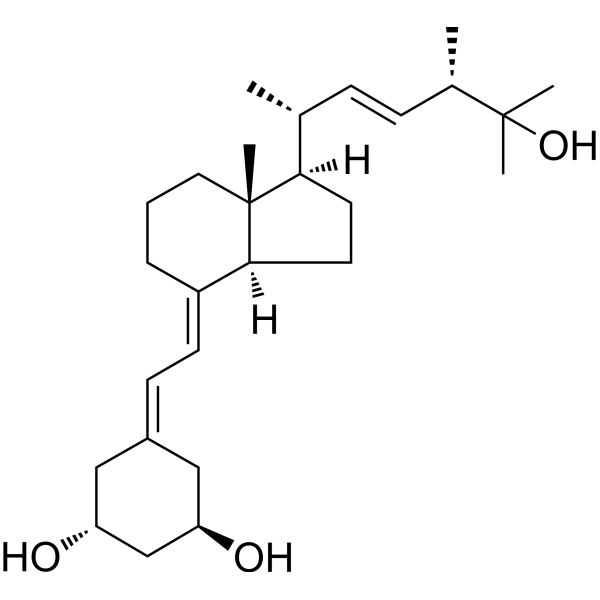
HY-50919
ParicalcitolVitamin D Receptor Agonist -
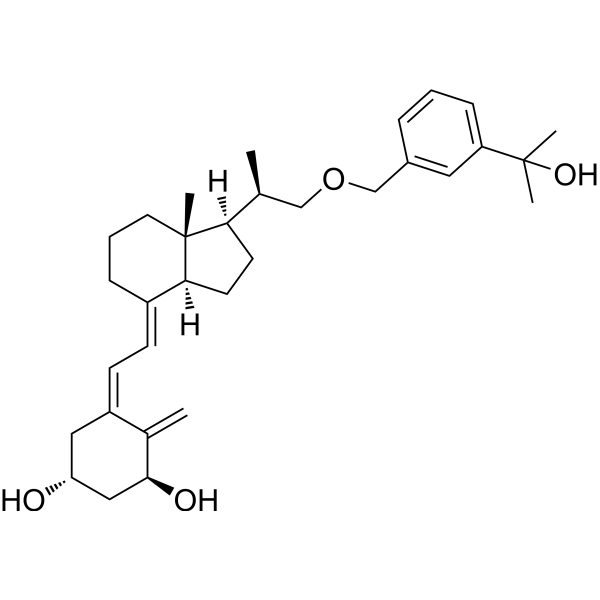
HY-32346
AtocalcitolVitamin D3 Analogue -
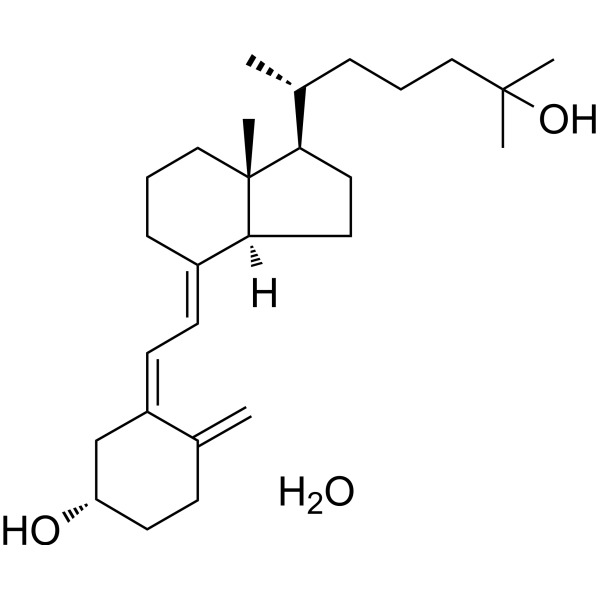
HY-32351A
Calcifediol monohydrateVDR Ligand -

HY-N10508
Calcitroic acidVitamin D Receptor Ligand -
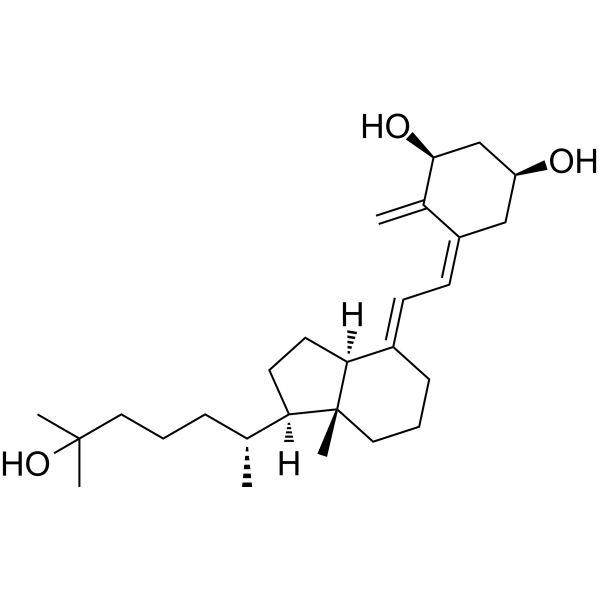
HY-10002A
(1S)-Calcitriol1α,25(OH)2D3 Metabolite -
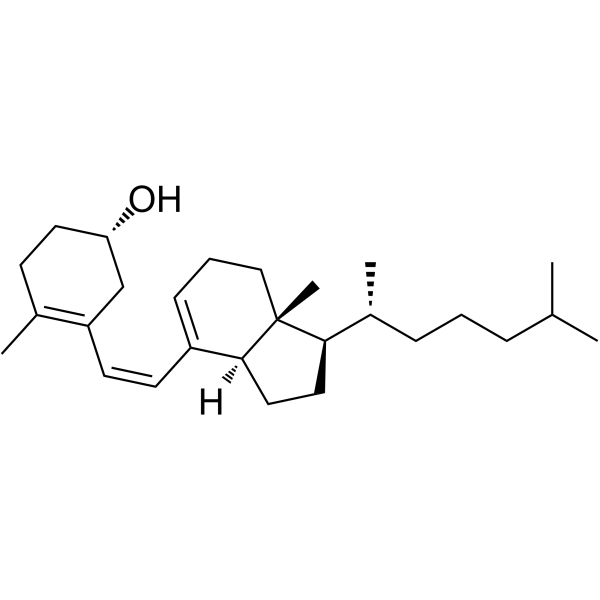
HY-130705
Previtamin D3Steroidal Compound -
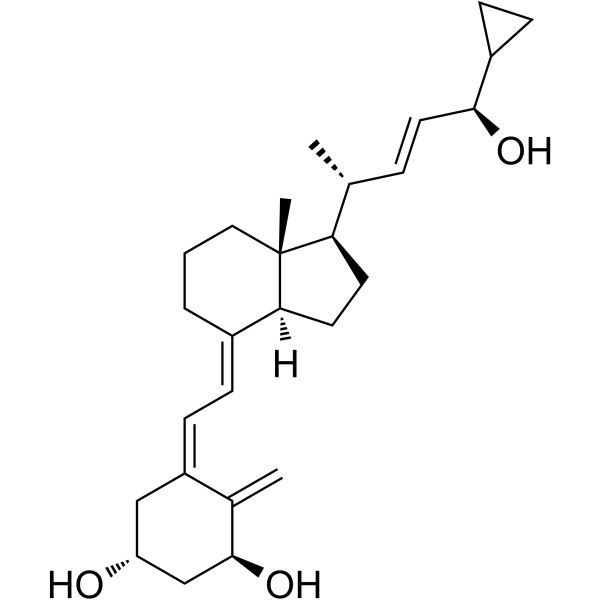
HY-15266
24R-CalcipotriolVitamin D Analog
All Endogenous Metabolite Isoforms
More

Biological Activity
Description
IC50 & Target
|
Human Endogenous Metabolite |
In Vitro
Tachysterol 3 can be hydroxylated by CYP11A1 and CYP27A1[2].
Tachysterol 3 is detected in human serum at a concentration of 7.3 ± 2.5 ng/mL[2].
Tachysterol 3 hydroxyderivatives show high-affinity binding to the ligan-binding domain (LBD) of the liver X receptor (LXR) α and β, and the peroxisome proliferator-activated receptor γ (PPARγ) in LanthaScreen TR-FRET coactivator assays[2].
MedChemExpress (MCE) has not independently confirmed the accuracy of these methods. They are for reference only. .


Chemical Information
-
CAS No. 17592-07-3
-
Appearance Oil
-
Molecular Weight 384.64
-
Formula C27H44O
-
Color Colorless to light yellow
-
SMILES
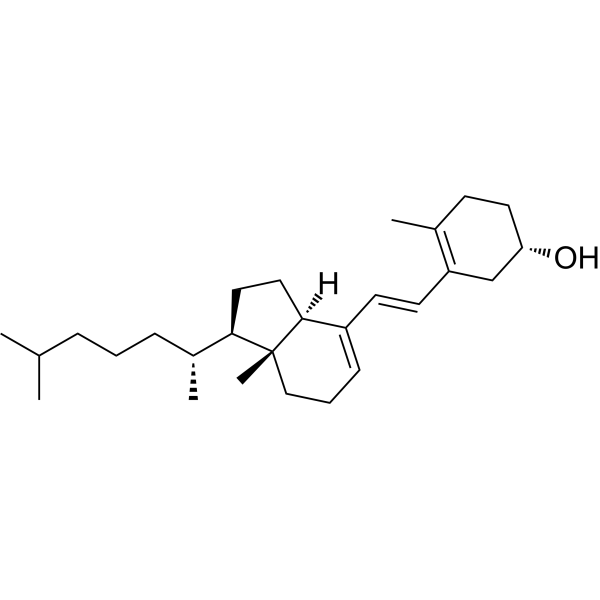
O[C@@H]1CC(/C=C/C2=CCC[C@]3(C)[C@@H]([C@H](C)CCCC(C)C)CC[C@@]23[H])=C(C)CC1
-
Structure Classification
-
Initial Source
-
Shipping
Shipping with dry ice.
-
Storage
-80°C, protect from light, stored under nitrogen
* The compound is unstable in solutions, freshly prepared is recommended.


Solvent & Solubility
In Vitro:
DMSO : 100 mg/mL (259.98 mM; Need ultrasonic; Hygroscopic DMSO has a significant impact on the solubility of product, please use newly opened DMSO)
Please refer to the solubility information to select the appropriate solvent. The compound is unstable in solutions, freshly prepared is recommended.
Please refer to the solubility information to select the appropriate solvent. The compound is unstable in solutions, freshly prepared is recommended.
Concentration (start) × Volume (start) = Concentration (final) × Volume (final)
In Vivo:
Select the appropriate dissolution method based on your experimental animal and administration route.
- For the following dissolution methods, please ensure to first prepare a clear stock solution using an In Vitro approach and then sequentially add co-solvents:
- To ensure reliable experimental results, the clarified stock solution can be appropriately stored based on storage conditions. As for the working solution for In Vivo experiments, it is recommended to prepare freshly and use it on the same day.
- The percentages shown for the solvents indicate their volumetric ratio in the final prepared solution. If precipitation or phase separation occurs during preparation, heat and/or sonication can be used to aid dissolution.
Add each solvent one by one: 10% DMSO 40% PEG300 5% Tween-80 45% Saline
Solubility: ≥ 2.5 mg/mL (6.50 mM); Clear solution
This protocol yields a clear solution of ≥ 2.5 mg/mL (saturation unknown).
Taking 1 mL working solution as an example, add 100 μL DMSO stock solution (25.0 mg/mL) to 400 μL PEG300, and mix evenly; then add 50 μL Tween-80 and mix evenly; then add 450 μL Saline to adjust the volume to 1 mL.
Preparation of Saline: Dissolve 0.9 g sodium chloride in ddH₂O and dilute to 100 mL to obtain a clear Saline solution.
Add each solvent one by one: 10% DMSO 90% (20% SBE-β-CD in Saline)
Solubility: 2.5 mg/mL (6.50 mM); Suspended solution; Need ultrasonic
This protocol yields a suspended solution of 2.5 mg/mL. Suspended solution can be used for oral and intraperitoneal injection.
Taking 1 mL working solution as an example, add 100 μL DMSO stock solution (25.0 mg/mL) to 900 μL 20% SBE-β-CD in Saline, and mix evenly.
Preparation of 20% SBE-β-CD in Saline (4°C, storage for one week): 2 g SBE-β-CD powder is dissolved in 10 mL Saline, completely dissolve until clear.
In Vivo Dissolution Calculator
Please enter the basic information of animal experiments:
-
-
-
-
Recommended: Prepare an additional quantity of animals to account for potential losses during experiments.
Please enter your animal formula composition:
-
%DMSO +
Recommended: Keep the proportion of DMSO in working solution below 2% if your animal is weak.
-
%+
-
+%Tween-80 + +
-
%Saline +
The co-solvents required include: DMSO, . All of co-solvents are available by MedChemExpress (MCE). , Tween 80. All of co-solvents are available by MedChemExpress (MCE).
Working solution concentration: 0.22 mg/mL
Method for preparing stock solution: mg drug dissolved in μL DMSO. Stock solution concentration: mg/mL. * The compound is unstable in solutions, freshly prepared is recommended.
1. Take μL DMSO stock solution;
2. Add μL .
μL , mix evenly;
3. Then add μL Tween 80, mix evenly;
4. Then add μL
Please ensure that the stock solution in the first step is dissolved to a clear state, and add co-solvents in sequence. You can use ultrasonic heating (ultrasonic cleaner, recommended frequency 20-40 kHz), vortexing, etc. to assist dissolution.


Purity & Documentation
-
Data Sheet (272 KB)
-
SDS (480 KB)
- English - EN (480 KB)
- Français - FR (480 KB)
- Deutsch - DE (480 KB)
- Norwegian - NO (480 KB)
- Español - ES (480 KB)
- Swedish - SV (480 KB)
- Italian - IT (480 KB)
- Korean - KR (480 KB)
- Portuguese - PT (480 KB)
-
Handling Instructions (2659 KB)
References
[1]. Cecilia Cisneros, et al. The Role of Tachysterol in Vitamin D Photosynthesis - A Non-Adiabatic Molecular Dynamics Study. Phys Chem Chem Phys. 2017 Feb 22;19(8):5763-5777. [Content Brief]
[2]. Slominski AT, et al. Metabolic activation of tachysterol3 to biologically active hydroxyderivatives that act on VDR, AhR, LXRs, and PPARγ receptors. FASEB J. 2022 Aug;36(8):e22451. [Content Brief]


Complete Stock Solution Preparation Table
Please refer to the solubility information to select the appropriate solvent. The compound is unstable in solutions, freshly prepared is recommended.
| Optional Solvent | Concentration Solvent Mass | 1 mg | 5 mg | 10 mg | 25 mg |
|---|---|---|---|---|---|
| DMSO | 1 mM | 2.5998 mL | 12.9992 mL | 25.9983 mL | 64.9958 mL |
| 5 mM | 0.5200 mL | 2.5998 mL | 5.1997 mL | 12.9992 mL | |
| 10 mM | 0.2600 mL | 1.2999 mL | 2.5998 mL | 6.4996 mL | |
| 15 mM | 0.1733 mL | 0.8666 mL | 1.7332 mL | 4.3331 mL | |
| 20 mM | 0.1300 mL | 0.6500 mL | 1.2999 mL | 3.2498 mL | |
| 25 mM | 0.1040 mL | 0.5200 mL | 1.0399 mL | 2.5998 mL | |
| 30 mM | 0.0867 mL | 0.4333 mL | 0.8666 mL | 2.1665 mL | |
| 40 mM | 0.0650 mL | 0.3250 mL | 0.6500 mL | 1.6249 mL | |
| 50 mM | 0.0520 mL | 0.2600 mL | 0.5200 mL | 1.2999 mL | |
| 60 mM | 0.0433 mL | 0.2167 mL | 0.4333 mL | 1.0833 mL | |
| 80 mM | 0.0325 mL | 0.1625 mL | 0.3250 mL | 0.8124 mL | |
| 100 mM | 0.0260 mL | 0.1300 mL | 0.2600 mL | 0.6500 mL |


Tachysterol 3 Related Classifications
HY-130705A Related Classifications
 Powered by Bioz