



SBI-115
Based on 36 publication(s) in Google Scholar
SBI-115 is a TGR5 (GPCR19) antagonist. SBI-115 decreases hepatic cystogenesis with polycystic liver diseases via inhibiting TGR5.
For research use only. We do not sell to patients.
- Purity: 99.58%
- CAS No.: 882366-16-7
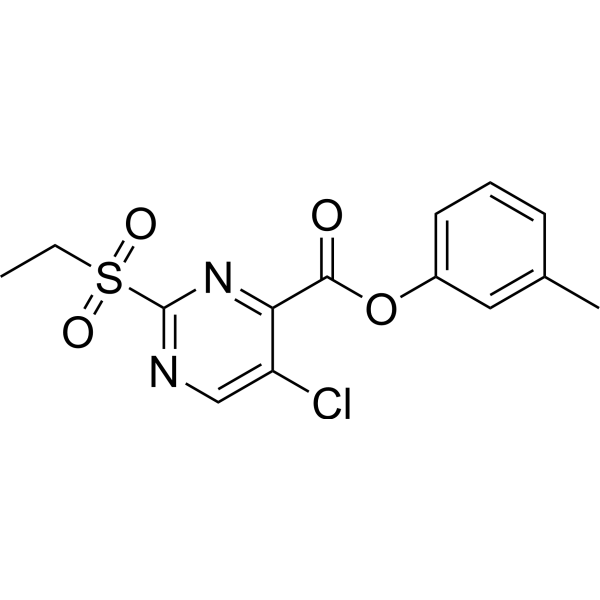
- Formula: C14H13ClN2O4S
- Molecular Weight:340.78
-
Storage:Powder -20°C, 3 years , 4°C, 2 years ; In solvent -80°C, 6 months , -20°C, 1 month


-
 Biological Activity
-
Chemical Information
-
Solvent & Solubility
- Purity & Documentation
- References
-
 Help & FAQs
-

GPCR/G Protein Compound Library
HY-L006
-
Immunology/Inflammation Compound Library
HY-L007
-
Covalent Screening Library
HY-L036
-
Anti-Obesity Compound Library
HY-L087
-
Lipid Metabolism Compound Library
HY-L091
-
Heterocyclic Compound Library
HY-L138
-
Membrane Protein-targeted Compound Library
HY-L149
-
Membrane Receptor-targeted Compound Library
HY-L150
-
Bioactive Compound Library Max
HY-L181
-
MCE Bioactive Compound Library
HY-L001V
-
Covalent Screening Library Plus
HY-L036P
-
Bioactive Compound Library
HY-L001
-
High-Throughput Bioactive Compound Library
HY-L205
-
Lactylation Compound Library
HY-L249


Publications Citing Use of MedChemExpress (MCE) SBI-115
More- Nat Commun. 2022 Oct 14;13(1):6081. [Abstract]
- Acta Pharm Sin B. 2022 Feb;12(2):787-800. [Abstract]
- J Adv Res. 2025 Apr 22:S2090-1232(25)00278-4. [Abstract]
- Microbiome. 2024 Feb 5;12(1):20. [Abstract]
- Pharmacol Res. 2024 Jun 20:107275. [Abstract]
- Pharmacol Res. 2022 Oct:184:106459. [Abstract]
- NPJ Biofilms Microbiomes. 2023 Feb 8;9(1):8. [Abstract]
- Int J Biol Macromol. 2025 Mar 19:142276. [Abstract]
- Phytomedicine. 2026 Jan 1:153:157761. [Abstract]
- Phytomedicine. 2024 Oct 29:135:156175. [Abstract]
- Phytomedicine. 2023 Oct:119:154982. [Abstract]
- Food Science and Human Wellness. 2023 Nov;12(6);2061-2072.
- Cell Rep. 2024 Oct 10;43(10):114830. [Abstract]
- J Anim Sci Biotechnol. 2025 Oct 30;16(1):142. [Abstract]
- Mol Med. 2025 Jan 29;31(1):31. [Abstract]
- J Agric Food Chem. 2025 Aug 6;73(31):19442-19459. [Abstract]
- J Agric Food Chem. 2025 Jun 4;73(22):13439-13454. [Abstract]
- Acta Physiol. 2026 Feb;242(2):e70163. [Abstract]
- Food Funct. 2024 May 7;15(9):5088-5102. [Abstract]
- Nutrients. 2023 Jan 4;15(2):255. [Abstract]
- J Nutr Biochem. 2025 Jan 20:109844. [Abstract]
- J Nutr Biochem. 2024 Jan:123:109507. [Abstract]
- Biomolecules. 2025 Jun 28;15(7):943. [Abstract]
- Int Immunopharmacol. 2025 Dec 24:170:116056. [Abstract]
- Int Immunopharmacol. 2024 Aug 6:140:112831. [Abstract]
- iScience. 2021 May 5;24(6):102508. [Abstract]
- Aquacult Rep. February 2022, 100997.
- Microb Pathog. 2026 Jan:210:108187. [Abstract]
- Discov Oncol. 2022 Jun 11;13(1):46. [Abstract]
- Front Neurol. 2024 Apr 24:15:1334319. [Abstract]
- Biochem Biophys Res Commun. 2025 Feb 4:751:151453. [Abstract]
- Transl Pediatr. 2025 Jun 27;14(6):1213-1229. [Abstract]
- STAR Protoc. 2021 Nov 5;2(4):100938. [Abstract]
- bioRxiv. 2026 Apr 19:2026.04.15.718788. [Abstract]
- bioRxiv. 2025 Nov 8.
- Universidad de Córdoba. 2025.
 Customer Validation & Images

-
WB
-
RT-PCR
-
Flow Cytometry
-
Cell Migration/Invasion Assay
-
Flow Cytometry


Biological Activity
SBI-115 (100-200 μM, 24 hours) inhibits proliferation triggered by pre-treatment of cystic cholangiocytes with Taurolithocholic acid (TLCA) in shRNA-transfected ADPKD cholangiocytes[1].
MedChemExpress (MCE) has not independently confirmed the accuracy of these methods. They are for reference only.
-
Cell Line:shRNA-transfected ADPKD cholangiocytes
-
Concentration:100, 200 µM
-
Incubation Time:24 hours
-
Result:Inhibited proliferation (by 32-48%) triggered by pre-treatment of cystic cholangiocytes with TLCA.


Chemical Information
-
CAS No. 882366-16-7
-
Appearance Solid
-
Molecular Weight 340.78
-
Formula C14H13ClN2O4S
-
Color White to off-white
-
SMILES
O=C(C1=NC(S(=O)(CC)=O)=NC=C1Cl)OC2=CC=CC(C)=C2
-
Shipping
Room temperature in continental US; may vary elsewhere.
-
Storage
Powder -20°C 3 years 4°C 2 years In solvent -80°C 6 months -20°C 1 month


Publications (36)
-
Journal Impact Factor
-
Most Recent
-
Nat Commun
2022 Oct 14;13(1):6081. PMID: 36241632
SBI-115 purchased from MedChemExpress. Usage Cited in: Nat Commun. 2022 Oct 14;13(1):6081. [Abstract]
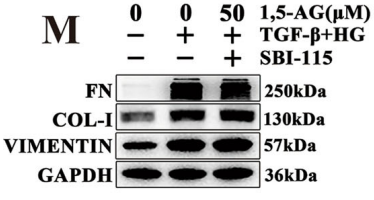
SBI-115 (10 μM, 48 h) inhibited 1,5-AG-induced expression of collagen I and vimentin in primary mouse renal tubular epithelial cells.
-
Acta Pharm Sin B
TGR5 deficiency activates antitumor immunity in non-small cell lung cancer via restraining M2 macrophage polarization. [Abstract]2022 Feb;12(2):787-800. PMID: 35256947
SBI-115 purchased from MedChemExpress. Usage Cited in: Acta Pharm Sin B. 2022 Feb;12(2):787-800. [Abstract]
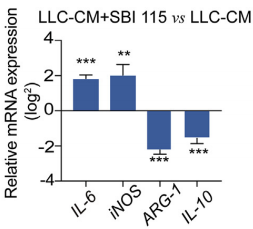
SBI-115 (10 μM, 48 h) decreased the upregulation of M2 markers, accompanied by increased expression of the M1 marker, in BMDMs that were cultured with CM collected from LLC cell culture.
SBI-115 purchased from MedChemExpress. Usage Cited in: Acta Pharm Sin B. 2022 Feb;12(2):787-800. [Abstract]
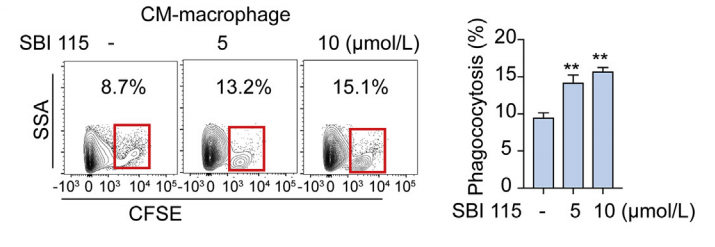
SBI-115 (5 or 10 μM, 48 h) resulted in increased tumor phagocytic capacity of CM-treated BMDMs.
SBI-115 purchased from MedChemExpress. Usage Cited in: Acta Pharm Sin B. 2022 Feb;12(2):787-800. [Abstract]
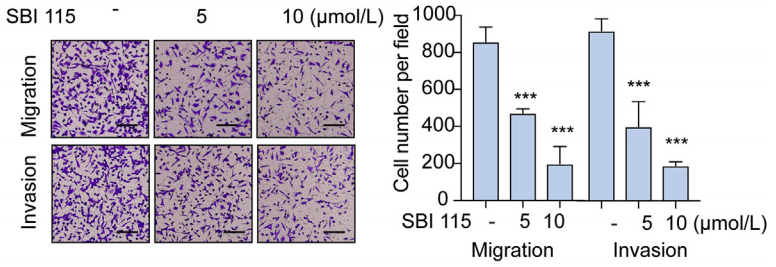
SBI-115 (5 or 10 μM, 48 h) inhibited CM-macrophage-induced Lewis lung carcinoma cell migration and invasion.
SBI-115 purchased from MedChemExpress. Usage Cited in: Acta Pharm Sin B. 2022 Feb;12(2):787-800. [Abstract]
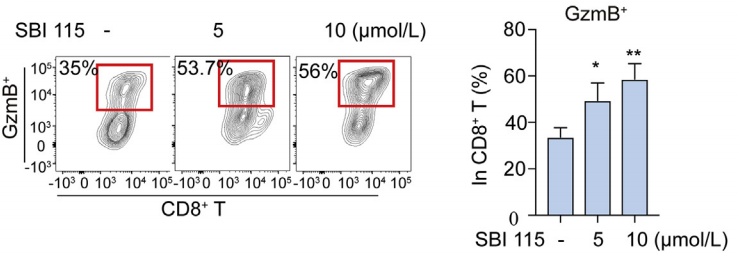
SBI-115 (5 or 10 μM, 48 h) increased the percentage of granzyme B⁺ cells among CD8b⁺ T cells co-cultured with Lewis lung carcinoma CM-educated BMDMs.
-
J Adv Res
A novel TGR5 agonist Sauchinone ameliorates IMQ induced murine psoriasis by regulating macrophage polarization. [Abstract]2025 Apr 22:S2090-1232(25)00278-4. PMID: 40274226 -
Microbiome
2024 Feb 5;12(1):20. PMID: 38317217 -
Pharmacol Res
Lactobacillus rhamnosus GG ameliorates triptolide-induced liver injury through modulation of the bile acid-FXR axis. [Abstract]2024 Jun 20:107275. PMID: 38908615 -
Pharmacol Res
GPBAR1 preserves neurite and synapse of dopaminergic neurons via RAD21-OPCML signaling: Role in preventing Parkinson's disease in mouse model and human patients. [Abstract]2022 Oct:184:106459. PMID: 36152741 -
NPJ Biofilms Microbiomes
Gut microbiota-mediated secondary bile acid alleviates Staphylococcus aureus-induced mastitis through the TGR5-cAMP-PKA-NF-κB/NLRP3 pathways in mice. [Abstract]2023 Feb 8;9(1):8. PMID: 36755021 -
Int J Biol Macromol
Salidroside attenuates NASH through regulating bile acid-FXR/TGR5 signaling pathway via targeting gut microbiota. [Abstract]2025 Mar 19:142276. PMID: 40118401 -
Phytomedicine
Huodan Qinghua formula inhibits CD36 membrane localisation via the TGR5-DHHC4 pathway to ameliorate lipotoxic damage in diabetic cardiomyopathy. [Abstract]2026 Jan 1:153:157761. PMID: 41678909 -
Phytomedicine
Yi-Fei-San-Jie Chinese medicine formula reverses immune escape by regulating deoxycholic acid metabolism to inhibit TGR5/STAT3/PD-L1 axis in lung cancer. [Abstract]2024 Oct 29:135:156175. PMID: 39515098 -
Phytomedicine
Red ginseng extracts ameliorate high-fat diet-induced obesity and insulin resistance by activating the intestinal TGR5-mediated bile acids signaling pathway. [Abstract]2023 Oct:119:154982. PMID: 37531904 -
-
Cell Rep
Gut Bacteroides ovatus ameliorates renal fibrosis by promoting the production of HDCA through upregulation of Clostridium scindens. [Abstract]2024 Oct 10;43(10):114830. PMID: 39392759 -
J Anim Sci Biotechnol
Taurodeoxycholic, taurocholic, and glycocholic acids promote hepatic gluconeogenesis via TGR5 in dairy cows. [Abstract]2025 Oct 30;16(1):142. PMID: 41163235 -
Mol Med
2025 Jan 29;31(1):31. PMID: 39881219 -
J Agric Food Chem
Synbiotic Intervention with Inulin and Lactiplantibacillus plantarum LPm77 Attenuates Type 2 Diabetes via Enhanced TUDCA Metabolism and Gut-Liver Axis Modulation. [Abstract]2025 Aug 6;73(31):19442-19459. PMID: 40708558 -
J Agric Food Chem
Probiotic Combination of Limosilactobacillus fermentum HF07 and Lactococcus lactis HF08 Targeting Gut Microbiota-Secondary Bile Acid Metabolism Ameliorates Inflammation and Intestinal Barrier Dysfunction in Aging Colitis. [Abstract]2025 Jun 4;73(22):13439-13454. PMID: 40391947 -
Acta Physiol
Activation of TGR5 Alleviates Renal Fibrosis by Promoting NEDD4L-Mediated p-Smad2/3 Ubiquitination. [Abstract]2026 Feb;242(2):e70163. PMID: 41536162 -
Food Funct
Taurocholic acid ameliorates hypertension through the activation of TGR5 in the hypothalamic paraventricular nucleus. [Abstract]2024 May 7;15(9):5088-5102. PMID: 38666497 -
Nutrients
Bifidobacterium pseudocatenulatum-Mediated Bile Acid Metabolism to Prevent Rheumatoid Arthritis via the Gut-Joint Axis. [Abstract]2023 Jan 4;15(2):255. PMID: 36678126 -
J Nutr Biochem
2025 Jan 20:109844. PMID: 39842616 -
J Nutr Biochem
Oleanolic acid promotes skeletal muscle fiber type transformation by activating TGR5-mediated CaN signaling pathway. [Abstract]2024 Jan:123:109507. PMID: 37890712 -
Biomolecules
Significant Reduction of Chenodeoxycholic Acid and Glycochenodeoxycholic Acid in the Elderly with Severe COVID-19. [Abstract]2025 Jun 28;15(7):943. PMID: 40723815 -
Int Immunopharmacol
Taurodeoxycholic acid alleviates intestinal inflammation by modulating gut microbiota and TGR5-NF-kappaB axis in DSS-induced colitis. [Abstract]2025 Dec 24:170:116056. PMID: 41448004 -
Int Immunopharmacol
Targeting TGR5 to mitigate liver fibrosis: Inhibition of hepatic stellate cell activation through modulation of mitochondrial fission. [Abstract]2024 Aug 6:140:112831. PMID: 39111149 -
iScience
2021 May 5;24(6):102508. PMID: 34142026 -
-
Microb Pathog
Lithocholic acid exerts antiviral activity against porcine epidemic diarrhea virus by enhancing TGR5-mediated type III interferon production. [Abstract]2026 Jan:210:108187. PMID: 41242567 -
Discov Oncol
Investigation of the potential role of TGR5 in pancreatic cancer by a comprehensive molecular experiments and the liquid chromatography mass spectrometry (LC-MS) based metabolomics. [Abstract]2022 Jun 11;13(1):46. PMID: 35689739 -
Front Neurol
Smooth muscle contractile responses to bile acids in mouse ileum require TGR5 but not ASBT. [Abstract]2024 Apr 24:15:1334319. PMID: 38721114 -
Biochem Biophys Res Commun
Python-derived 16α-Hydroxylated Bile Acid, Pythocholic Acid is a ligand for TGR5, not farnesoid X receptors and vitamin D receptors. [Abstract]2025 Feb 4:751:151453. PMID: 39923459 -
Transl Pediatr
Chenodeoxycholic acid activates the TGR5/TRPA1-5-HT pathway to regulate intestinal motility in breastfed infants and mouse models. [Abstract]2025 Jun 27;14(6):1213-1229. PMID: 40688229 -
STAR Protoc
Marker-based assays for studying gut transit in gnotobiotic and conventional mouse models. [Abstract]2021 Nov 5;2(4):100938. PMID: 34806048 -
bioRxiv
A microbiota-derived bile acid overcomes antibiotic-induced hyporesponsiveness to immune checkpoint therapy by enhancing CD8 + T cell antitumor immunity. [Abstract]2026 Apr 19:2026.04.15.718788. PMID: 42039389 -
-


Solvent & Solubility
DMSO : 100 mg/mL (293.44 mM; Need ultrasonic; Hygroscopic DMSO has a significant impact on the solubility of product, please use newly opened DMSO)
Please refer to the solubility information to select the appropriate solvent. Once prepared, please aliquot and store the solution to prevent product inactivation from repeated freeze-thaw cycles.
Storage method and period of stock solution: -80°C, 6 months; -20°C, 1 month. When stored at -80°C, please use it within 6 months. When stored at -20°C, please use it within 1 month.
Please refer to the solubility information to select the appropriate solvent. Once prepared, please aliquot and store the solution to prevent product inactivation from repeated freeze-thaw cycles.
Storage method and period of stock solution: -80°C, 6 months; -20°C, 1 month. When stored at -80°C, please use it within 6 months. When stored at -20°C, please use it within 1 month.
Concentration (start) × Volume (start) = Concentration (final) × Volume (final)
Select the appropriate dissolution method based on your experimental animal and administration route.
- For the following dissolution methods, please ensure to first prepare a clear stock solution using an In Vitro approach and then sequentially add co-solvents:
- To ensure reliable experimental results, the clarified stock solution can be appropriately stored based on storage conditions. As for the working solution for In Vivo experiments, it is recommended to prepare freshly and use it on the same day.
- The percentages shown for the solvents indicate their volumetric ratio in the final prepared solution. If precipitation or phase separation occurs during preparation, heat and/or sonication can be used to aid dissolution.
Add each solvent one by one: 10% DMSO 40% PEG300 5% Tween-80 45% Saline
Solubility: ≥ 2.5 mg/mL (7.34 mM); Clear solution
This protocol yields a clear solution of ≥ 2.5 mg/mL (saturation unknown).
Taking 1 mL working solution as an example, add 100 μL DMSO stock solution (25.0 mg/mL) to 400 μL PEG300, and mix evenly; then add 50 μL Tween-80 and mix evenly; then add 450 μL Saline to adjust the volume to 1 mL.
Preparation of Saline: Dissolve 0.9 g sodium chloride in ddH₂O and dilute to 100 mL to obtain a clear Saline solution.
For the following dissolution methods, please prepare the working solution directly:
It is recommended to prepare fresh solutions and use them promptly within a short period of time.
The percentages shown for the solvents indicate their volumetric ratio in the final prepared solution. If precipitation or phase separation occurs during preparation, heat and/or sonication can be used to aid dissolution.
Add each solvent one by one: Corn Oil
Solubility: 5 mg/mL (14.67 mM); Suspended solution; Need ultrasonic
Please enter the basic information of animal experiments:
-
-
-
-
Recommended: Prepare an additional quantity of animals to account for potential losses during experiments.
Please enter your animal formula composition:
-
%DMSO +
Recommended: Keep the proportion of DMSO in working solution below 2% if your animal is weak.
-
%+
-
+%Tween-80 + +
-
%Saline +
The co-solvents required include: DMSO, . All of co-solvents are available by MedChemExpress (MCE). , Tween 80. All of co-solvents are available by MedChemExpress (MCE).
Working solution concentration: 0.22 mg/mL
Method for preparing stock solution: mg drug dissolved in μL DMSO. Stock solution concentration: mg/mL.
1. Take μL DMSO stock solution;
2. Add μL .
μL , mix evenly;
3. Then add μL Tween 80, mix evenly;
4. Then add μL
Please ensure that the stock solution in the first step is dissolved to a clear state, and add co-solvents in sequence. You can use ultrasonic heating (ultrasonic cleaner, recommended frequency 20-40 kHz), vortexing, etc. to assist dissolution.


Purity & Documentation
-
Data Sheet (274 KB)
-
SDS (393 KB)
- English - EN (393 KB)
- Français - FR (393 KB)
- Deutsch - DE (393 KB)
- Norwegian - NO (393 KB)
- Español - ES (393 KB)
- Swedish - SV (393 KB)
- Italian - IT (393 KB)
- Korean - KR (393 KB)
- Portuguese - PT (393 KB)
-
Handling Instructions (2659 KB)
References


Complete Stock Solution Preparation Table
Please refer to the solubility information to select the appropriate solvent. Once prepared, please aliquot and store the solution to prevent product inactivation from repeated freeze-thaw cycles.
Storage method and period of stock solution: -80°C, 6 months; -20°C, 1 month. When stored at -80°C, please use it within 6 months. When stored at -20°C, please use it within 1 month.
| Optional Solvent | Concentration Solvent Mass | 1 mg | 5 mg | 10 mg | 25 mg |
|---|---|---|---|---|---|
| DMSO | 1 mM | 2.9344 mL | 14.6722 mL | 29.3444 mL | 73.3611 mL |
| 5 mM | 0.5869 mL | 2.9344 mL | 5.8689 mL | 14.6722 mL | |
| 10 mM | 0.2934 mL | 1.4672 mL | 2.9344 mL | 7.3361 mL | |
| 15 mM | 0.1956 mL | 0.9781 mL | 1.9563 mL | 4.8907 mL | |
| 20 mM | 0.1467 mL | 0.7336 mL | 1.4672 mL | 3.6681 mL | |
| 25 mM | 0.1174 mL | 0.5869 mL | 1.1738 mL | 2.9344 mL | |
| 30 mM | 0.0978 mL | 0.4891 mL | 0.9781 mL | 2.4454 mL | |
| 40 mM | 0.0734 mL | 0.3668 mL | 0.7336 mL | 1.8340 mL | |
| 50 mM | 0.0587 mL | 0.2934 mL | 0.5869 mL | 1.4672 mL | |
| 60 mM | 0.0489 mL | 0.2445 mL | 0.4891 mL | 1.2227 mL | |
| 80 mM | 0.0367 mL | 0.1834 mL | 0.3668 mL | 0.9170 mL | |
| 100 mM | 0.0293 mL | 0.1467 mL | 0.2934 mL | 0.7336 mL |


 Powered by Bioz