



Leflunomide-d4

Based on 1 Customer Validation
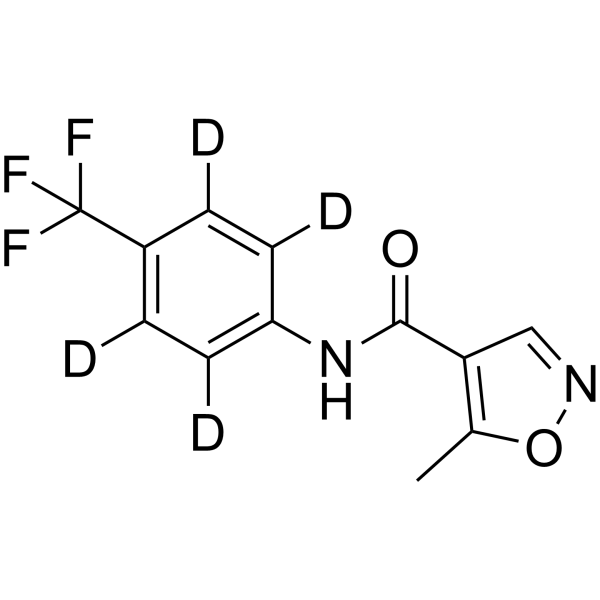
Leflunomide-d4 (HWA486-d4) is the deuterium labeled Leflunomide. Leflunomide is a pyrimidine synthesis inhibitor, inhibiting dihydroorotate dehydrogenase (DHODH), and acts as a disease-modifying antirheumatic agent.
연구목적의 판매만을 진행합니다. 환자를 대상으로 한 판매는 하지 않습니다.
- Purity : 99.5%
- CAS No.: 1189987-23-2
- 화학식: C12H5D4F3N2O2
- 분자량:274.23
-
보관:Powder -20°C, 3 years ; In solvent -80°C, 6 months , -20°C, 1 month

To place orders, for customer services and technical support, please contact: MedChemExpress USA
Tel: 609-228-6898 E-mail: [email protected] [email protected]


-
 Biological Activity
-
Chemical Information
- 순도&문서
- References
-
 Help & FAQs


-
HY-W097453S2
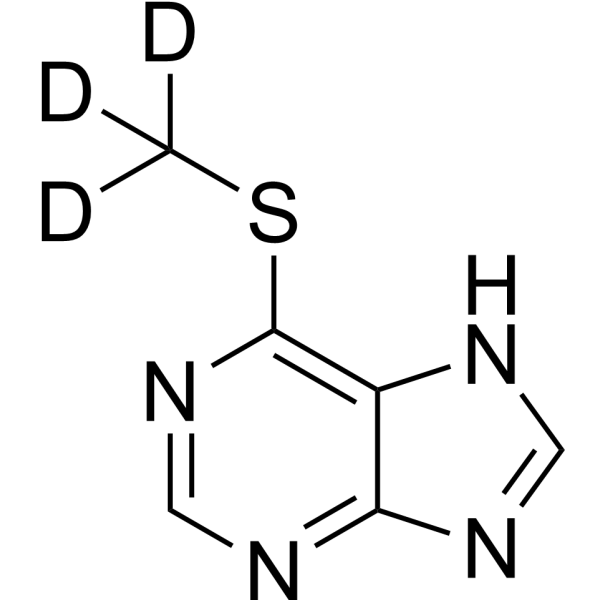
6-(Methylthio)purine-d3-1Stable Isotope -
HY-127087
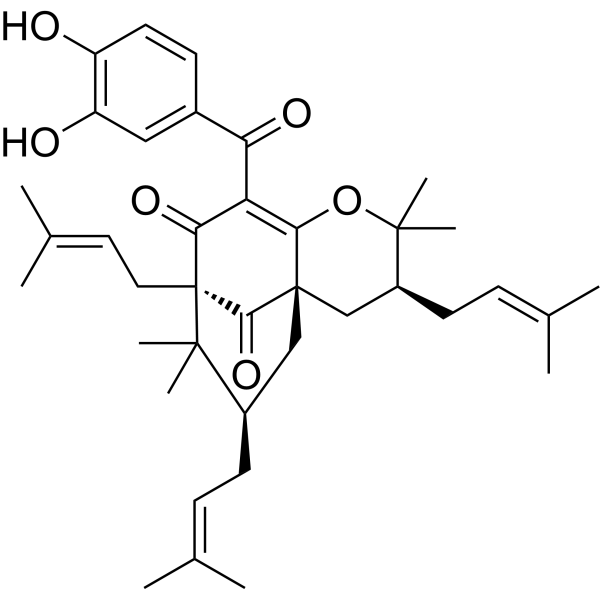
IsogarcinolChE Inhibitor -
HY-100659
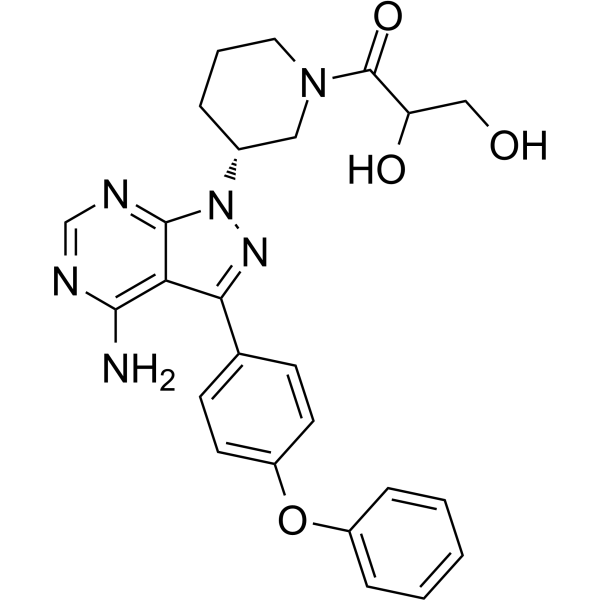
Dihydrodiol-IbrutinibBTK Inhibitor -
HY-112477
Chk2-IN-1Chk2 Inhibitor -
HY-B1455S
Clindamycin-d3 hydrochlorideStable Isotope -
HY-B0674S
Ebastine-d5Stable Isotope -

HY-23188
Loratadine-d5-1Stable Isotope -
HY-B0333S2
Sulfamethizole-d4-1Stable Isotope -
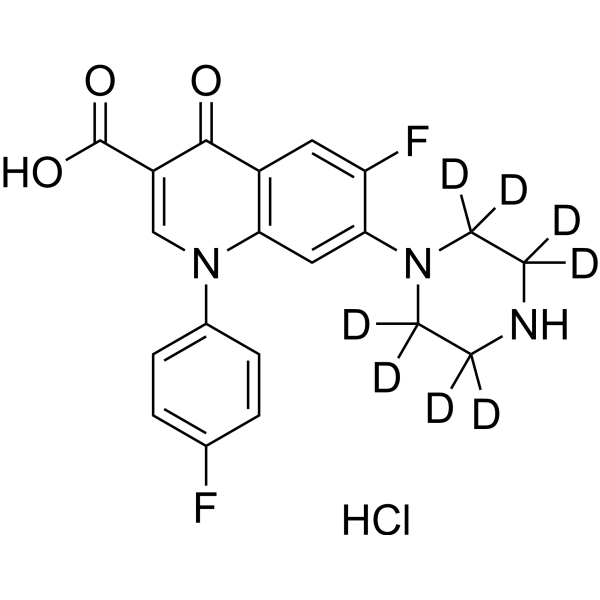
HY-B0343AS
Sarafloxacin-d8 hydrochlorideStable Isotope -
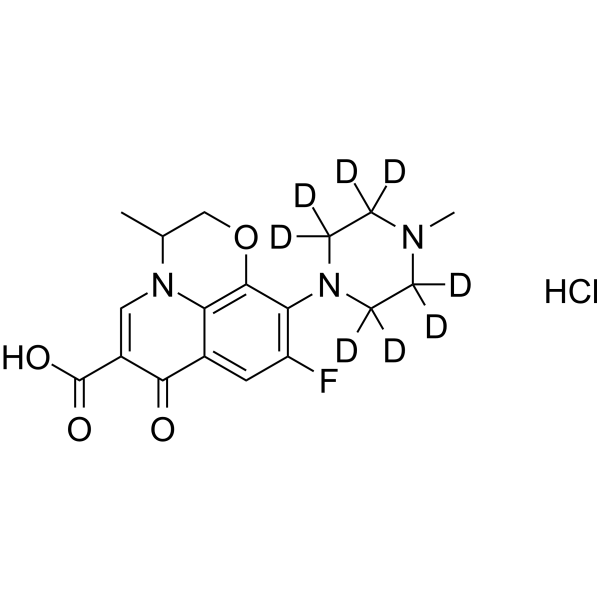
HY-B0125AS
Ofloxacin-d8 hydrochlorideStable Isotope -

HY-12784AS1
Cycloguanil-d6 hydrochlorideStable Isotope


Biological Activity
제품 설명
In Vitro
Stable heavy isotopes of hydrogen, carbon, and other elements have been incorporated into drug molecules, largely as tracers for quantitation during the drug development process. Deuteration has gained attention because of its potential to affect the pharmacokinetic and metabolic profiles of drugs[1].
MedChemExpress (MCE) has not independently confirmed the accuracy of these methods. They are for reference only.
신청
1. This compound can be used as a tracer
2. This compound can be used as an internal standard for quantitative analysis by NMR, GC-MS, or LC-MS.


Chemical Information
-
CAS No. 1189987-23-2
-
Unlabeled CAS 75706-12-6
-
Appearance Solid
-
분자량 274.23
-
화학식 C12H5D4F3N2O2
-
Color White to off-white
-
SMILES
C(NC1=C(C(=C(C(F)(F)F)C(=C1[2H])[2H])[2H])[2H])(=O)C2=C(C)ON=C2
-
선적
Room temperature in continental US; may vary elsewhere.
-
보관
Powder -20°C 3 years In solvent -80°C 6 months -20°C 1 month


순도&문서
-
Data Sheet (270 KB)
-
SDS (421 KB)
- English - EN (421 KB)
- Français - FR (421 KB)
- Deutsch - DE (421 KB)
- Norwegian - NO (421 KB)
- Español - ES (421 KB)
- Swedish - SV (421 KB)
- Italian - IT (421 KB)
- Korean - KR (421 KB)
- Portuguese - PT (421 KB)
-
Handling Instructions (2659 KB)
References
[1]. Russak EM, et al. Impact of Deuterium Substitution on the Pharmacokinetics of Pharmaceuticals. Ann Pharmacother. 2019;53(2):211-216. [Content Brief]
[2]. Davis JP, et al. The immunosuppressive metabolite of leflunomide is a potent inhibitor of human dihydroorotate dehydrogenase. Biochemistry. 1996 Jan 30;35(4):1270-3. [Content Brief]
[3]. Xu X, et al. Inhibition of protein tyrosine phosphorylation in T cells by a novel immunosuppressive agent, leflunomide. J Biol Chem. 1995 May 26;270(21):12398-403. [Content Brief]
[4]. Fox RI, et al. Mechanism of action for leflunomide in rheumatoid arthritis. Clin Immunol. 1999 Dec;93(3):198-208. [Content Brief]

Calculators
Concentration (start) × Volume (start) = Concentration (final) × Volume (final)


Leflunomide-d4 Related Classifications
HY-B0083S Related Classifications
 Powered by Bioz