4 Results for "

IKVAV

" in MedChemExpress (MCE) Product Catalog:
Products (4)

4 Results for "IKVAV" in MCE Product Catalog:

1
1 Cited Publications
Cat. No.: HY-P4322
CAS No.: 131167-89-0
Target:  

ERK Akt

Research Areas:  

Neurological Disease Cancer

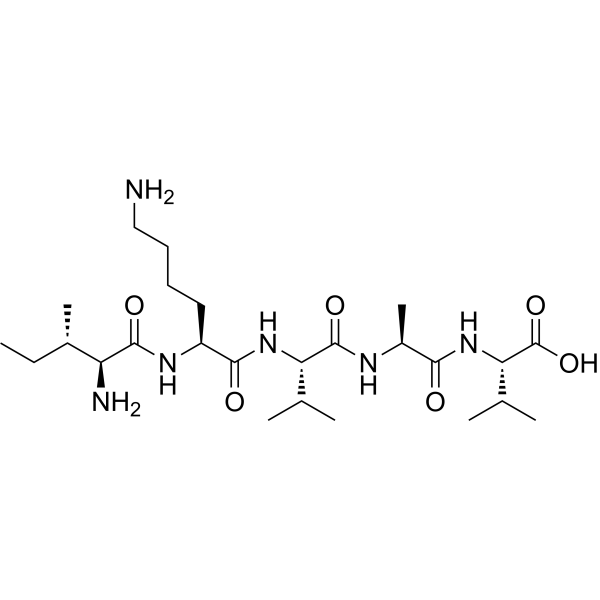
H-Ile-Lys-Val-Ala-Val-OH is one of the most potent active sites of laminin-1. H-Ile-Lys-Val-Ala-Val-OH promotes cell adhesion, neurite outgrowth, and tumor growth. H-Ile-Lys-Val-Ala-Val-OH stimulates BMMSC population growth and proliferation by activating MAPK/ERK1/2 and PI3K/Akt signalling pathways .
Cat. No.: HY-P5353
CAS No.: 131435-36-4
Synonyms: IKVAV sequence; Laminin A-chain fragment
Target:  

Peptides

Research Areas:  

Others

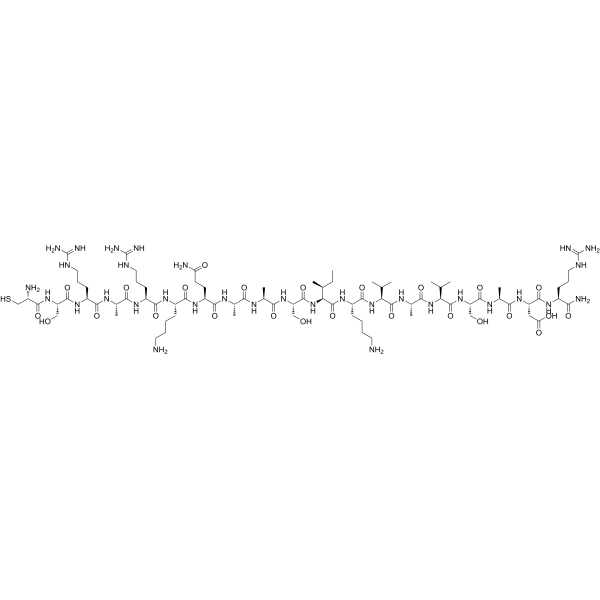
PA22-2 (IKVAV sequence; Laminin A-chain fragment) is a biological active peptide. (This peptide is derived from mouse laminin a1 . Cell matrix substrate constituted with this peptide can promote neurite outgrowth.)
Cat. No.: HY-P5350
CAS No.: 809281-07-0
Target:  

Peptides

Research Areas:  

Others

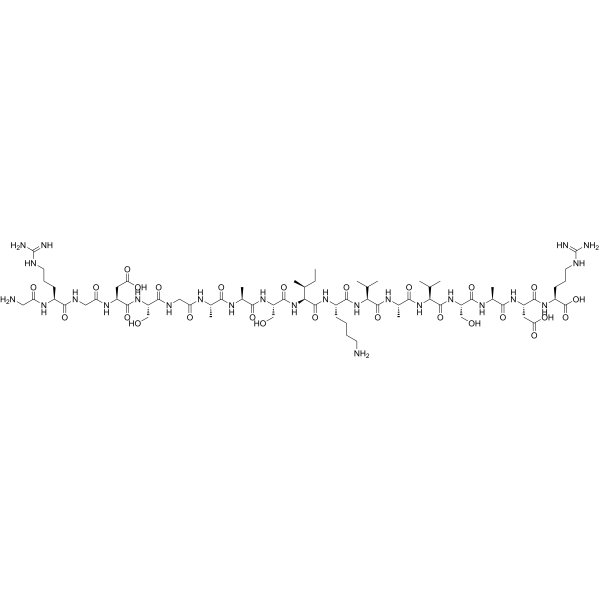
FN-A208 is a biological active peptide. (This peptide is a fusion of A208, derived from murine laminin a1, and the active site of fibronectin (GRGDS), with a glycine spacer. This peptide forms amyloid-like fibrils and promotes formation of actin stress fibers that mediate fibroblast cell attachment, offering it potential as a bioadhesive for tissue regeneration and engineering. FN-A208 interacts with IKVAV receptors and integrins. Its activity is disrupted by the presence of EDTA.)
Cat. No.: HY-P11753
CAS No.: 1187540-64-2
IKVAVC is a derivative peptide of IKVAV with an artificially added cysteine (Cys) at its C-terminus. IKVAVC retains all the biological activities of the original IKVAV, mainly acting as a neural adhesion/differentiation signaling peptide, and is equipped with an engineered linker arm that enables covalent conjugation to molecular materials. IKVAV inhibits the migration and activation of fibroblasts, downregulates the TGF-β1 signaling pathway and endoplasmic reticulum stress, and promotes nerve repair. IKVAV regulates the phenotype of macrophages, shifting them from the pro-inflammatory M1 type to the pro-reparative M2 type .

