



PGK1
PGK1 catalyzes an ATP-producing step in glycolysis and supports tumor-cell metabolic fitness through glucose metabolism[1]. Mechanistically, mitochondrial PGK1 phosphorylates PDHK1 Thr338, activates PDHK1, inhibits the PDH complex, reduces mitochondrial pyruvate utilization, increases lactate production, and promotes brain tumorigenesis[2]. Under hypoxia or glutamine deprivation, PGK1 phosphorylates Beclin1 Ser30, enhances VPS34-Beclin1 activity, and drives stress-induced autophagy linked to glioblastoma prognosis[3]. In liver cancer models, PGK1 depletion reduced proliferation and tumorigenesis, while PGK1 acetylation promoted liver cancer progression[4]. Compared with PGK2, PGK1 represents the cytoplasmic isoform, whereas PGK2 is sperm-specific; PGK2 keeps an essentially identical active site but differs in C-terminal regions away from the active site[5]. For experimental applications, NG52 inhibited PGK1 kinase activity, restored PDH activity, reversed the Warburg effect, and suppressed glioma xenograft growth[1]. Ilicicolin H acted as a non-ATP-competitive PGK1 inhibitor that reduced glucose uptake, lactate production, and hepatocellular carcinoma proliferation[6]. Structure-based screening also identified CHR-6494 and Z57346765 as PGK1-binding inhibitors that reduced PGK1 metabolic enzyme activity and inhibited kidney renal clear cell carcinoma growth[7].- PGK1 connects glycolytic ATP production with PDHK1-PDH control and tumor metabolic remodeling[1][2]. - PGK1 differs from sperm-specific PGK2 mainly by expression context and distal structural regions[5]. - PGK1 inhibitors support mechanistic studies of glycolysis, autophagy, and cancer-cell proliferation[1][6][7].
References:
- [1]. Wang WL, et al. Pharmacologically inhibiting phosphoglycerate kinase 1 for glioma with NG52. Acta Pharmacol Sin. 2021 Apr;42(4):633-640. [Content Brief]
- [2]. Li X, et al. Mitochondria-Translocated PGK1 Functions as a Protein Kinase to Coordinate Glycolysis and the TCA Cycle in Tumorigenesis. Mol Cell. 2016 Mar 3;61(5):705-719. [Content Brief]
- [3]. Qian X, et al. Phosphoglycerate Kinase 1 Phosphorylates Beclin1 to Induce Autophagy. Mol Cell. 2017 Mar 2;65(5):917-931.e6. [Content Brief]
- [4]. Hu H, et al. Acetylation of PGK1 promotes liver cancer cell proliferation and tumorigenesis. Hepatology. 2017 Feb;65(2):515-528. [Content Brief]
- [5]. Sawyer GM, et al. X-ray analysis of phosphoglycerate kinase 2, a sperm-specific isoform from Mus musculus. Proteins. 2008 May 15;71(3):1134-44. [Content Brief]
- [6]. Li M, et al. A novel inhibitor of PGK1 suppresses the aerobic glycolysis and proliferation of hepatocellular carcinoma. Biomed Pharmacother. 2023 Feb;158:114115. [Content Brief]
- [7]. He Y, et al. Novel inhibitors targeting the PGK1 metabolic enzyme in glycolysis exhibit effective antitumor activity against kidney renal clear cell carcinoma in vitro and in vivo. Eur J Med Chem. 2024 Mar 5;267:116209. [Content Brief]
All Product Categories
-
PGK1 Related Products (7)
Related Products (7)

-
Z57346765
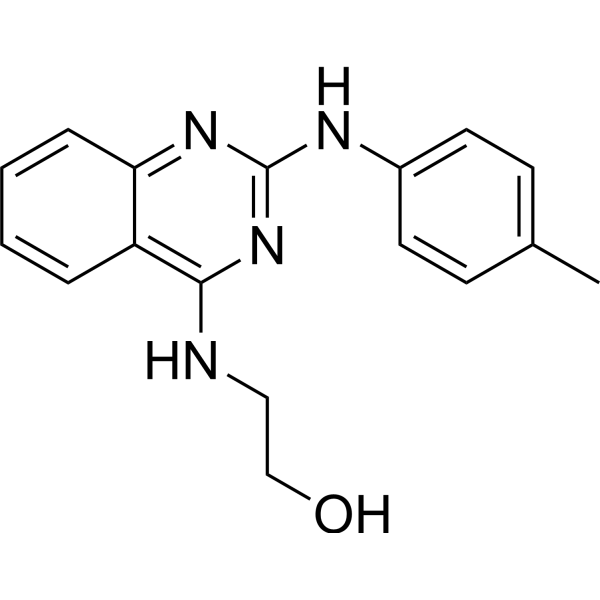 0 ImagesZ57346765 is an inhibitor that targets the ADP-binding pocket of PGK1, with a Kd of 20.9 μM for human PGK1, and exhibits anticancer activity. Z57346765 reduces the activity of the metabolic enzyme PGK1 during glycolysis, regulates lipid peroxidation and cancer cell proliferation, and promotes lipid peroxidation in cervical cancer cells. Z57346765 inhibits the proliferation of cervical cancer and clear cell renal cell carcinoma cells in xenograft mouse models, and induces the expression of genes associated with cell metabolism, DNA replication and cell cycle. Z57346765 is used in research related to cervical cancer, clear cell renal cell carcinoma and breast cancer.
-
PGK1-IN-1
 0 ImagesPGK1-IN-1 (Compound 6e) is a potent and selective PGK1 inhibitor (IC50: 33 nM). PGK1-IN-1 inhibits PGK1-mediated glycolytic metabolism and reduces glucose consumption/lactate production. PGK1-IN-1 enhances Nrf2 accumulation and HO-1 expression, and suppresses the transcription and protein levels of the inflammatory cytokines IL-1β and IL-6. PGK1-IN-1 ameliorates Dextran sulfate sodium (DSS) (HY-116282C)-induced experimental colitis in mice. PGK1-IN-1 can be used for research of inflammatory bowel disease (IBD).
-
AT-051/43421517
 0 ImagesAT-051/43421517 is a PGK1 activator with a Kd of 2.45 μM. AT-051/43421517 induces enhanced glycolytic metabolism and maintains TCA cycle activity, while inhibiting ROS production and Apoptosis. AT-051/43421517 reduces Aβ deposition and Tau hyperphosphorylation. AT-051/43421517 alleviates neuropathological damage in the brains of 3×Tg-AD mice. AT-051/43421517 improves cognitive impairment. AT-051/43421517 can be used for research on Alzheimer's disease and Parkinson's disease.
-
Ilicicolin H
 0 ImagesIlicicolin H is a selective and non-ATP-competitive phosphoglycerate kinase 1 (PGK1) (IC50 = 9.02 μM) and mitochondrial cytochrome bc1 reductase (IC50 = 2-3 ng/mL) inhibitor. Ilicicolin H directly binds to PGK1 with KD of 60 μM .Ilicicolin H can inhibit cell proliferation and induce apoptosis. Ilicicolin H can inhibit the lactate production and glucose uptake of hepatocellular carcinoma (HCC) cells. Ilicicolin H has a broad antifungal spectrum including C. albicans, Cryptococcus and A. fumigatus. Ilicicolin H can be used for the researches of cancer and infection, such as hepatocellular carcinoma (HCC) and C. albicans infection.
-
PGK1-IN-3
 0 ImagesCat. No.: HY-184191CAS No.: 1185003-32-0PGK1-IN-3 is an orally active PGK1 inhibitor with human PGK1 IC50 values of 0.48 μM and human PGK1 Kd of 63 nM. PGK1-IN-3 binds to the ADP-binding pocket of PGK1, inhibits glycolysis, and reduces glucose consumption and lactate production. PGK1-IN-3 can be used for the research of pancreatic cancer.
-
PGK1-IN-2
 0 ImagesCat. No.: HY-178989CAS No.: 3054148-68-1PGK1-IN-2 (Compound 60) is a PGK1 inhibitor with an IC50 of 8.24 μM. PGK1-IN-2 demonstrates a significant ability to inhibit the proliferation of osteosarcoma cells. PGK1-IN-2 interferes with the glycolytic pathway of tumor cells by inhibiting PGK1. PGK1-IN-2 inhibits cell migration and invasion, and induces cell S phase and G2-M phase cycle arrest. PGK1-IN-2 may kill cells by inducing cuproptosis. PGK1-IN-2 shows a significant anti-tumor effect in the MNNG-HOS osteosarcoma xenograft mouse model. PGK1-IN-2 can be used for the study of osteosarcoma.
-
DC-PGKI
 0 ImagesCat. No.: HY-177944CAS No.: 2829198-49-2DC-PGKI is an orally active ATP-competitive PGK1 inhibitor(IC50 = 0.16 Μm, Kd = 99.08 nM). DC-PGKI stabilizes PGK1 in vitro and in vivo, and suppresses both glycolytic activity and the kinase function of PGK1. DC-PGKI-mediated inhibition of PGK1 leads to the accumulation of NRF2 (nuclear factor-erythroid factor 2-related factor 2, NFE2L2), which then translocates to the nucleus, binds to the proximal regions of IL-1β and IL-6 genes, and suppresses the LPS-induced expression of these genes. DC-PGKI can be used for the study of colitis.



