



Tezosentan

Based on 1 Customer Validation
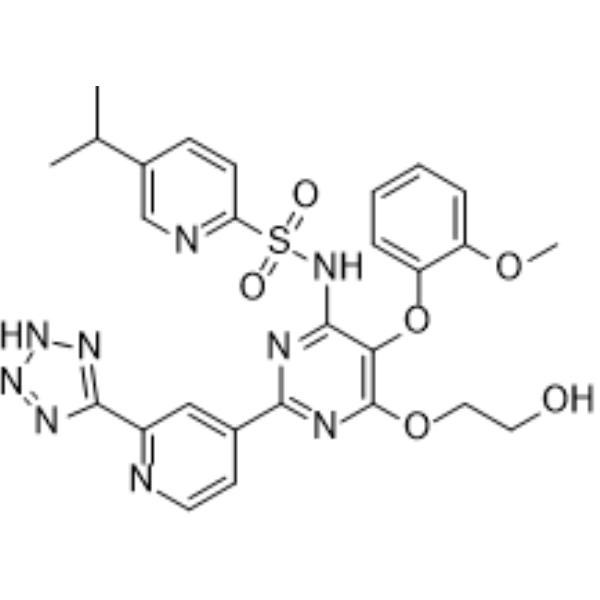
Tezosentan (RO 610612) is an endothelin (ET) receptor antagonist, with pA2s of 9.5, 7.7 for ETA and ETB receptors, respectively.
Nos produits utilisent uniquement pour la recherche. Nous ne vendons pas aux patients.
- Pureté : 98.27%
- CAS No.: 180384-57-0
- Formule: C27H27N9O6S
- Masse moléculaire:605.63
-
Stockage:
4°C, sealed storage, away from moisture and light
* In solvent : -80°C, 6 months; -20°C, 1 month (sealed storage, away from moisture and light)

To place orders, for customer services and technical support, please contact: MedChemExpress USA
Tel: 609-228-6898 E-mail: [email protected] [email protected]


-
 Activité biologique
-
Chemical Information
-
Solvant et solubilité
- Pureté et documentation
- Références
-
 Help & FAQs


-
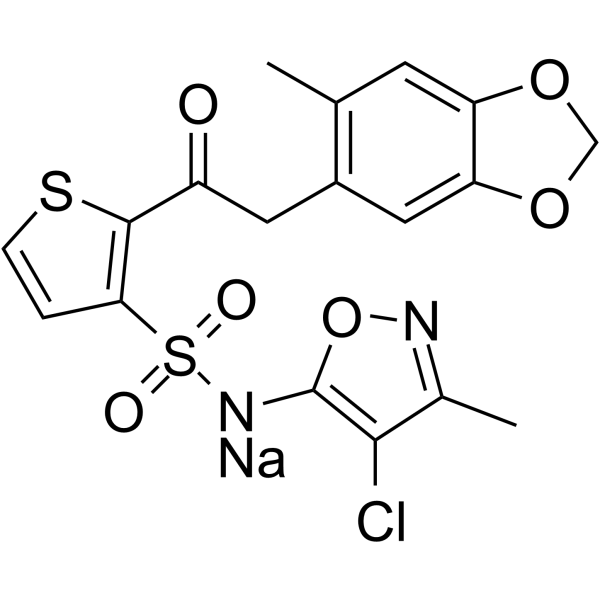
HY-11103
Sitaxsentan sodiumEndothelin A Receptor Antagonist -
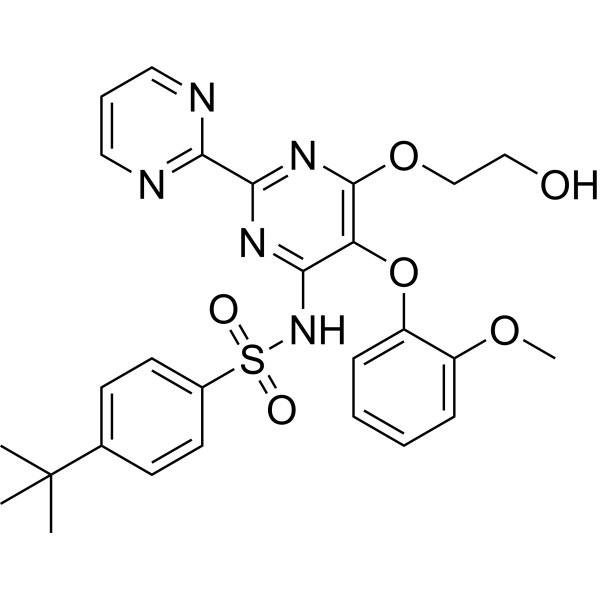
HY-A0013
BosentanET-1 Inhibtior -
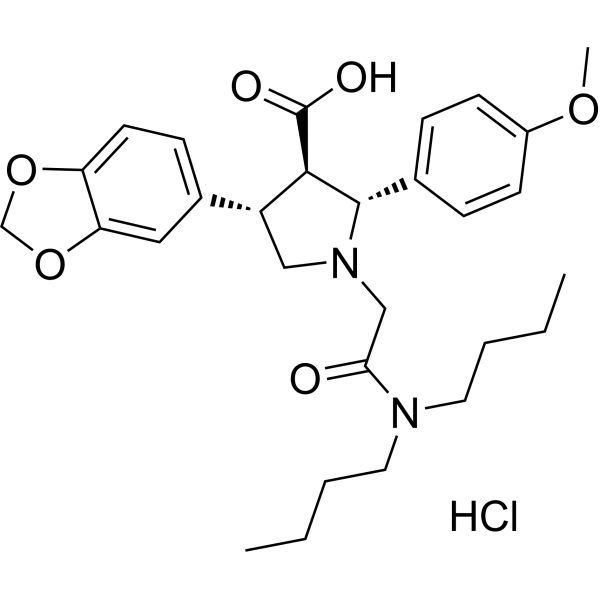
HY-15403A
Atrasentan hydrochlorideETA Receptor Antagonist -
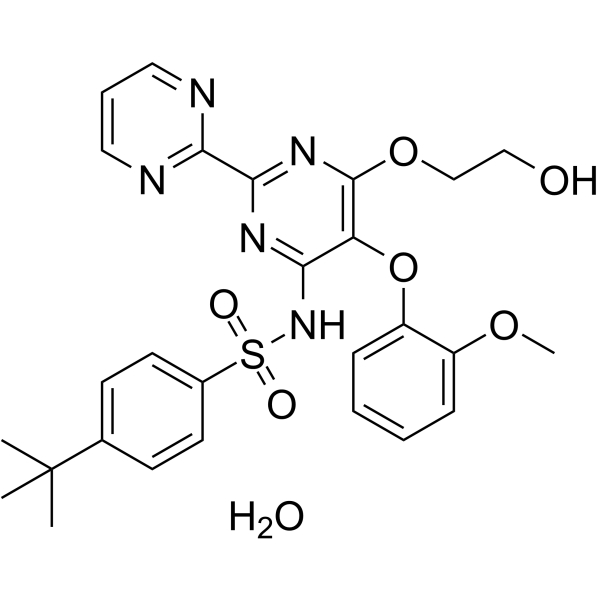
HY-A0013A
Bosentan hydrateET1 Receptor Antagonist -
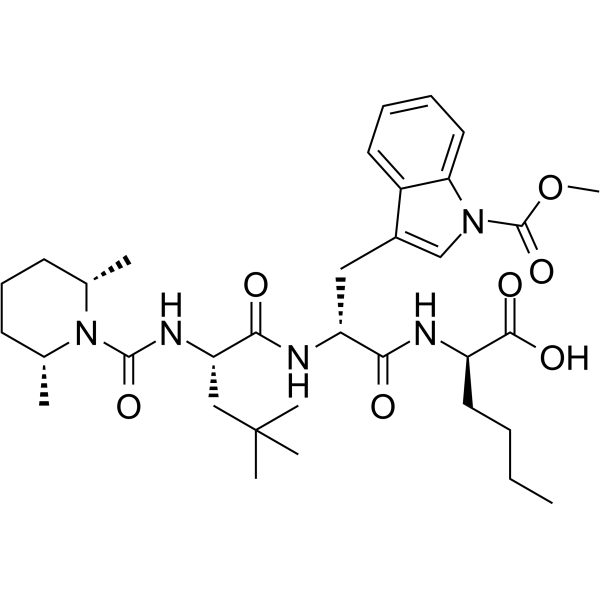
HY-15894A
BQ-788ETB Receptor Antagonist -
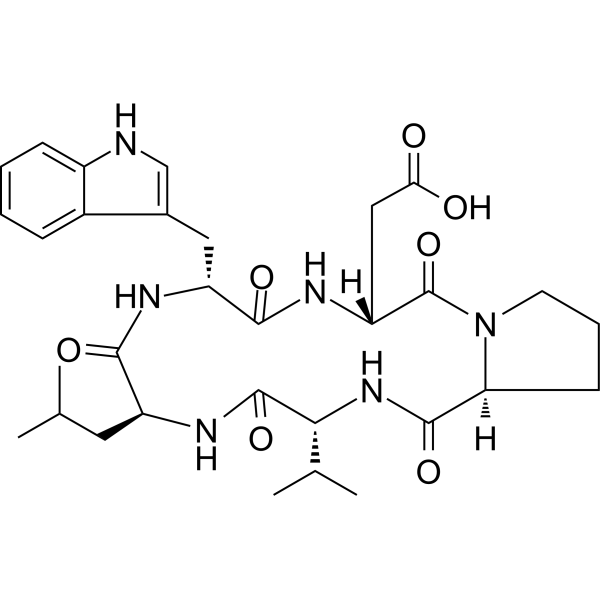
HY-12378
BQ-123ETA Receptor Antagonist -
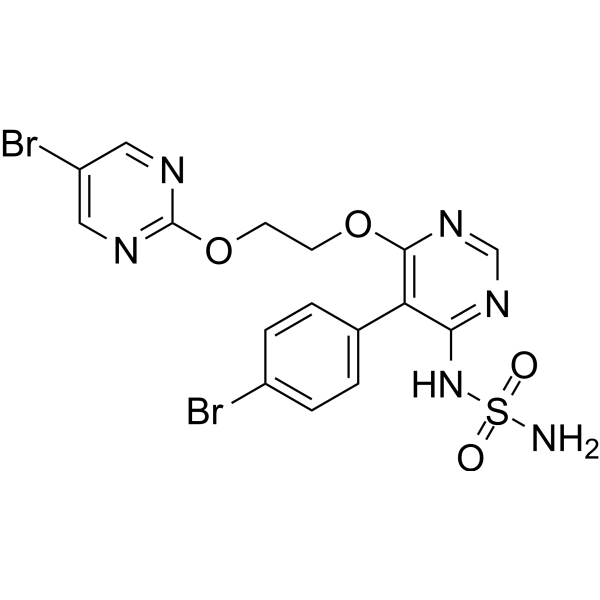
HY-15895
AprocitentanEndothelin Receptor Antagonist -
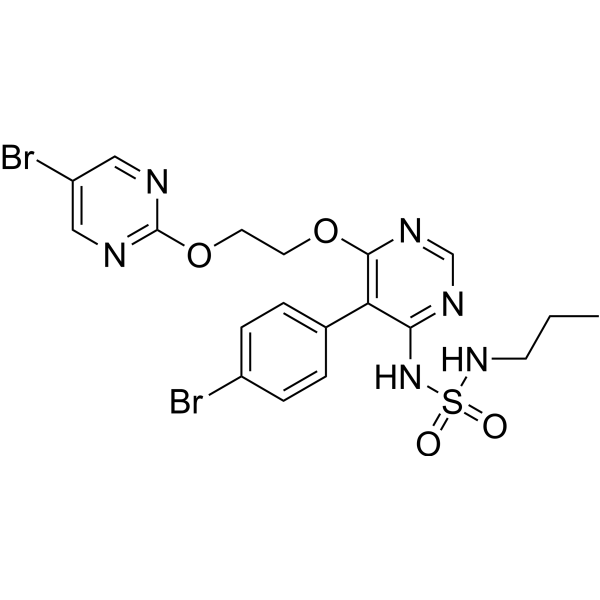
HY-14184
MacitentanETA/ETB Antagonist -
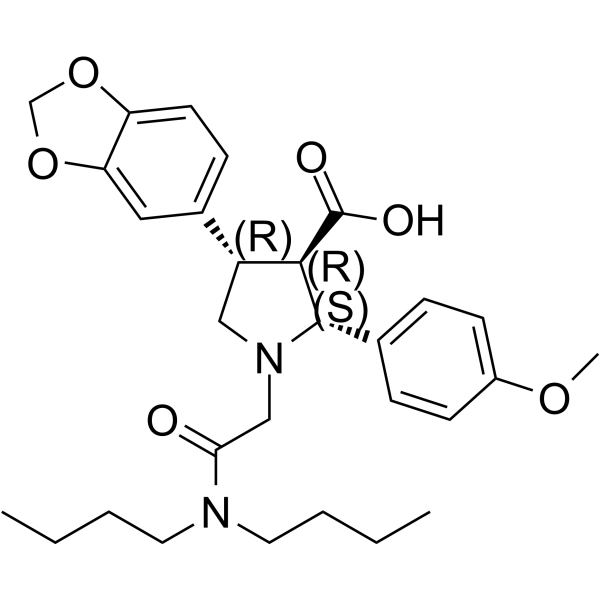
HY-15403
AtrasentanEndothelin Receptor Antagonist -
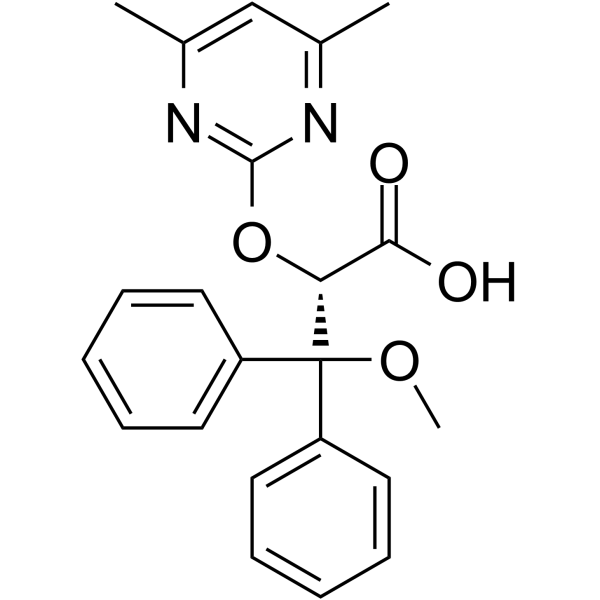
HY-13209
Ambrisentan -
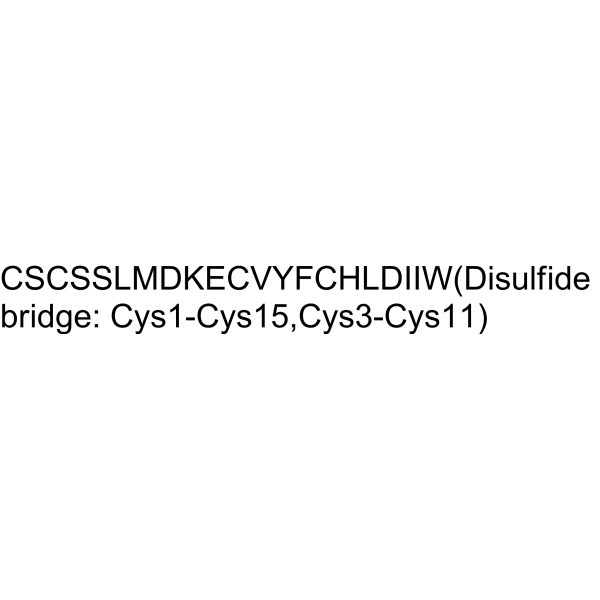
HY-P0202
Endothelin 1 (swine, human)Vasoconstrictor -

HY-16465
IRL-1620ETB Agonist


Activité biologique
Description
IC50 & Target
|
ETA 9.5 (pA2) |
ETB 7.7 (pA2) |
Cellular Effect
|
Cell Line

|
Type | Value | Description | References |
|---|---|---|---|---|
| CHO | IC50 |
18 nM
Compound: 23
|
Displacement of 125I-ET1 from ETA receptor (unknown origin) expressed in CHO cells
Displacement of 125I-ET1 from ETA receptor (unknown origin) expressed in CHO cells
|
[PMID: 27321813] |
In Vitro
Affinity of Tezosentan for the ET receptors is assessed in different cells and tissues. Tezosentan inhibits the specific 125I-labeled ET-1 binding to ETA receptors with an inhibitory potency (Ki) of 0.3 nM on CHO cells and of 18 nM on membranes of baculovirus-infected insect cells. Similarly, Tezosentan inhibits the specific binding of 125I-labeled ET-1, ET-3, or sarafotoxin S6c to ETB receptors with an inhibitory affinity of 10 to 21 nM. Tezosentan up to a concentration of 1 μM did not exhibit any binding inhibitory activity in 27 radioligand binding assays different from ET binding. On H1 central, 5-hydroxytryptamine2A, and vasopressin V1 receptors, Tezosentan (1 μM) induces a weak inhibition of less than 20%[1].
MedChemExpress (MCE) has not independently confirmed the accuracy of these methods. They are for reference only. .
In Vivo
MedChemExpress (MCE) has not independently confirmed the accuracy of these methods. They are for reference only.
Essai clinique
| NCT Number | Sponsor | Condition | Start Date |
Phase
|
|---|---|---|---|---|
| NCT01329991 | Plexxikon| | 2011-05 | PHASE1 |


Chemical Information
-
CAS No. 180384-57-0
-
Appearance Solid
-
Masse moléculaire 605.63
-
Formule C27H27N9O6S
-
Color Off-white to light yellow
-
SMILES
O=S(C1=NC=C(C(C)C)C=C1)(NC2=NC(C3=CC(C4=NNN=N4)=NC=C3)=NC(OCCO)=C2OC5=CC=CC=C5OC)=O
-
Synonyms
RO 610612
-
Livraison
Room temperature in continental US; may vary elsewhere.
-
Stockage
4°C, sealed storage, away from moisture and light
* In solvent : -80°C, 6 months; -20°C, 1 month (sealed storage, away from moisture and light)


Solvant et solubilité
In Vitro:
DMSO : 50 mg/mL (82.56 mM; Need ultrasonic; Hygroscopic DMSO has a significant impact on the solubility of product, please use newly opened DMSO)
Please refer to the solubility information to select the appropriate solvent. Once prepared, please aliquot and store the solution to prevent product inactivation from repeated freeze-thaw cycles.
Storage method and period of stock solution: -80°C, 6 months; -20°C, 1 month (sealed storage, away from moisture and light). When stored at -80°C, please use it within 6 months. When stored at -20°C, please use it within 1 month.
Please refer to the solubility information to select the appropriate solvent. Once prepared, please aliquot and store the solution to prevent product inactivation from repeated freeze-thaw cycles.
Storage method and period of stock solution: -80°C, 6 months; -20°C, 1 month (sealed storage, away from moisture and light). When stored at -80°C, please use it within 6 months. When stored at -20°C, please use it within 1 month.
Concentration (start) × Volume (start) = Concentration (final) × Volume (final)


Pureté et documentation
-
Fiche technique (279 KB)
-
SDS (420 KB)
- English - EN (420 KB)
- Français - FR (420 KB)
- Deutsch - DE (420 KB)
- Norwegian - NO (420 KB)
- Español - ES (420 KB)
- Swedish - SV (420 KB)
- Italian - IT (420 KB)
- Korean - KR (420 KB)
- Portuguese - PT (420 KB)
-
Instruction de manipulation (2659 KB)
Références


Complete Stock Solution Preparation Table
Please refer to the solubility information to select the appropriate solvent. Once prepared, please aliquot and store the solution to prevent product inactivation from repeated freeze-thaw cycles.
Storage method and period of stock solution: -80°C, 6 months; -20°C, 1 month (sealed storage, away from moisture and light). When stored at -80°C, please use it within 6 months. When stored at -20°C, please use it within 1 month.
| Optional Solvent | Concentration Solvent Mass | 1 mg | 5 mg | 10 mg | 25 mg |
|---|---|---|---|---|---|
| DMSO | 1 mM | 1.6512 mL | 8.2559 mL | 16.5117 mL | 41.2793 mL |
| 5 mM | 0.3302 mL | 1.6512 mL | 3.3023 mL | 8.2559 mL | |
| 10 mM | 0.1651 mL | 0.8256 mL | 1.6512 mL | 4.1279 mL | |
| 15 mM | 0.1101 mL | 0.5504 mL | 1.1008 mL | 2.7520 mL | |
| 20 mM | 0.0826 mL | 0.4128 mL | 0.8256 mL | 2.0640 mL | |
| 25 mM | 0.0660 mL | 0.3302 mL | 0.6605 mL | 1.6512 mL | |
| 30 mM | 0.0550 mL | 0.2752 mL | 0.5504 mL | 1.3760 mL | |
| 40 mM | 0.0413 mL | 0.2064 mL | 0.4128 mL | 1.0320 mL | |
| 50 mM | 0.0330 mL | 0.1651 mL | 0.3302 mL | 0.8256 mL | |
| 60 mM | 0.0275 mL | 0.1376 mL | 0.2752 mL | 0.6880 mL | |
| 80 mM | 0.0206 mL | 0.1032 mL | 0.2064 mL | 0.5160 mL |


Tezosentan Related Classifications
HY-17351 Related Classifications
 Powered by Bioz